The raffinate obtained after fractionating neem seeds in a Clextral BC 21 twin-screw extruder is used as a base for manufacturing an agromaterial by thermo-pressing. Its composition and characteristics have been determined in order to assess its suitability for providing a coherent material. The manufacturing conditions for this agricultural material have been studied using a design of experiments (Doehlert matrix) in order to optimize the parameters in the temperature range between 180 and 200°C and the pressure range between 60 and 300 kg/cm2. Increasing the duration of hot pressing increases the rigidity and densification of the material. Thermogravimetric analysis of the agromaterial shows that its constituents are not degraded by temperature during shaping. Dynamic mechanical analysis (DMA) of the material highlighted the rigidity of the agromaterial obtained (elastic modulus between 1500 and 2300 MPa). However, the flexural strength results (nearly 0.5 MPa) reveal that these materials are fragile. The comparison of water adsorption isotherms shows that the thermo-pressed agromaterial is less hygroscopic than the raffinate and can be stored at up to 90% relative humidity without risk of degradation by microorganisms. The azadirachtin content of the material (between 10.58 mg/kg DM and 13.14 mg/kg DM) could give it the advantage of providing protection against insect attacks.
Most of the energy resources needed to empower human activities come from fossil fuels. This is the case for plastics, which are used as materials in a number of areas such as packaging, buildings, transportation, equipment (electrical, electronic, and household appliances), industry, etc. These plastics, obtained from synthetic polymers derived from petroleum and used on a large scale, are very little or not at all biodegradable. They now bring about a real environmental problem due to their significant contribution to soil and water pollution. Given that polymers are a real threat to the environment, biopolymers offer a relevant alternative. This is the reason why the plant-based resources covery materials rich in biopolymers are the chosen options. These biopolymers, whose properties are comparable to those of petroleum-based polymers, have the advantage of being biodegradable and environmentally friendly.
It is within this context that, in recent years, research has intensified to develop agromaterials from plant materials, by-products, and/or co-products of their processing. Several studies have been conducted on the recovery of plant materials, by-products, or co-products from processing into homogeneous or composite agromaterials, such as beet pulp 1, whole sunflower extrusion raffinate 2, 3, sunflower meal 4, 5, kenaf stems 6, wheat straw 7, sugarcane bagasse 8, hemp starch 9, herbaceous biomass fibers 10, coriander straw 11, wood fibers 12, hemp fibers 13, tomato pomace 14 and Sargassum seaweed 15.
Let us specify that the valorization of by-products or co-products from primary agro-industrial processing has attracted considerable interest 3. Thus, in the context of the valorization of neem seeds by twin-screw extruder fractionation, the raffinate obtained, which is rich in parietal fibers, must find a suitable use.
The objective of this study is to evaluate the value of neem seed extrusion raffinate as an agromaterial through thermo-pressing by studying the conditions of its shaping and assessing its quality.
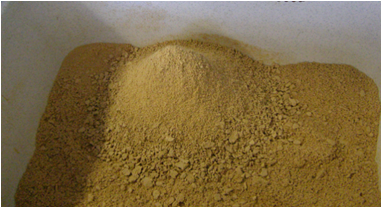
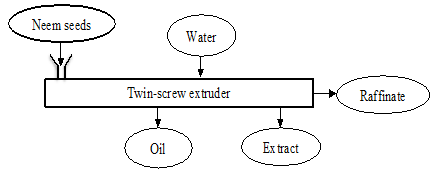
The biological material is a raffinate obtained from neem seeds (Figure 1) by fractionation using a Clextral BC 21 twin-screw extruder to obtain oil and azadirachtin emulsion according to the configuration described in Figure 2.


All chemical reagents, standards and solvents were of the analytical type (HPLC grade), from Sigma-Aldrich, France.
2.3. Dry MatterThe dry matter (DM) content was determined according to French standard NF V 03-103. It corresponds to the mass loss undergone by a sample of about 1 g after drying in an oven at 103°C until a constant mass.
2.4. Minerals ContentThe ash content was determined by mass loss from the dry matter through its incineration in a muffle oven, electrically heated at 550°C for 3 hours (NF V 03-922). The sample was then cooled in a desiccator and weighed as it reached room temperature.
2.5. Lipids ContentThe lipid contents have been determined by using the standardized Soxhlet method (NF ISO 734-1) which consists in extracting the lipids contained from the matter with cyclohexane for minimum 6 hours. An amount of about 30 g of seeds have been used. The Soxhlet extractor was equipped at its base with a 250 mL flask in which 200 mL of solvent are introduced. The oil used for the tocopherols analysis was extracted by cold centrifugation using cyclohexane.
2.6. Proteins AnalysisThe proteins content in the raffinate from neem seeds obtained by twin screw fractionation were determined by the Kjeldahl method according to French standard NF V 18-100. It consists in determining the total nitrogen content in the sample to obtain an ammonium salt. This analysis consists of transformation by mineralization of organic nitrogen in the treated sample (400 mg) and also consists of an acid-base determination of inorganic nitrogen (ammonia).
2.7. Parietal FibersThe method of Van Soest and Wine 16, 17, 18 also known as ADF-NDF assay makes it possible to determine lignins, celluloses and hemicelluloses. It is based on the difference in solubility of the components. The NDF (Neutral Detergent Fiber) attacks and solubilizes all the compounds except the cellulose, hemicellulose and lignin. The first ADF (Acid Detergent Fiber) permanganate attack solubilized the compounds except cellulose and lignin. The second ADF attack left only cellulose. These attacks are carried out in a device called a Tecator Fibertec M1017.
2.8. Extraction, Purification, and Dosage of AzadirachtinApproximately 5 g of raffinate or finely ground thermo-pressed plates is placed in a small centrifuge tube. 10 mL of absolute methanol is added. The mixture is vortexed for three minutes and then centrifuged at 3,000 g for 10 minutes using a Sigma 6-16K centrifuge. This operation is repeated three times in order to exhaust the amount of azadirachtin contained in the sample. The methanol extracts are mixed and purified, then filtered by using a 0.22 µm PTFE filter.
The azadirachtin extracts, purified and filtered using the methods described above, are measured using high-performance liquid chromatography with a Dionex Ultimate 3000 device equipped with a C18 column (100 × 3 mm Omnispher 3 C18), maintained at 30°C, and a UV-visible detector. The wavelength is maintained at 215 nm. The mobile phase consists of a mixture of acetonitrile and water, at a flow rate of 0.8 mL/min. The injection volume is 20 µL. The mobile phase flow rate gradient is programmed as follows: 20% acetonitrile from 0 to 5 min, increase from 20 to 65% between 5 and 15 min, and maintained at 65% for 5 minutes.
2.9. Particles Size DistributionThe particle size distribution of neem seed cake obtained after extrusion in a BC 21 twin-screw extruder is determined using a Bioblock Scientific vibrating sieve manufactured by Retsch and equipped with standard sieves (ASTM). A 100 g sample is sieved for 12 minutes at 70% of the maximum vibration intensity of the sieves. The measurements are repeated three times and the particle size distribution is determined from the average of the three tests.
2.10. Shaping Neem Seed Raffinate by Thermo-pressingThermocompression of fibrous material using a low-thickness heated plate press is a method that allows their ability to form coherent agromaterials to be evaluated. Thermocompression tests using 10 g of neem seed extrusion raffinate are carried out in a square mold (5 cm × 5 cm) using a MAPA 50 hydraulic press equipped with heating plates.
The mold used to shape the plates is cubic, measuring 5 cm. The plates are shaped in several stages: heating, filling, closing the mold, increasing the pressure at a rate of 10 bar/second, maintaining the set pressure for four, one (1), two (2), three (3), or four (4) minutes, releasing the pressure at a rate of 2 bar/second, opening the mold, and removing it. The cooled plates are then cut into 5 cm × 1 cm test pieces and conditioned in a climate chamber at 60% relative humidity and 25°C for at least one week before being characterized. Thermogravimetric analysis is performed on the test piece with the highest density and modulus of elasticity, under the following molding conditions: temperature 200°C, pressure 200 kg/cm2, and duration 4 minutes.
2.11. Experimental Range for Optimizing Thermo-pressing ParametersThe influence of temperature and pressure during thermo-pressing for a holding time of 2 minutes is studied for a temperature range between 180 and 200°C (Table 1). In this temperature range, the degradation of biopolymers remains very limited.
The bending test specimens are conditioned in a climatic chamber at 25°C and 60% relative humidity for at least one week in accordance with ISO 178. The JFC H5KT test bench is used for the bending tests. The Q.MAT 4.53 software is used to record test parameters and to acquire and process data.
The test bench is equipped with a three-point bending module and a 100 N load cell. The distance between the two support points of the test specimen is 30 mm. The compression point presses down on the test piece at a speed of 3 mm/min. The Q.MAT 4.53 software calculates the modulus of elasticity and the stress at flexural failure.
2.13. Thermogravimetric Analysis (TGA)The analyses are performed on finely ground and balanced samples. They are carried out using a TGA-50 Series thermobalance, in air, with the temperature rising at 5°C/min from ambient temperature to 750°C in air. Data is acquired during the temperature rise.
2.14. Dynamic Mechanical Thermal Analysis of SolidsDynamic mechanical thermal analyses are performed using the Triton Dynamic Mechanical Analysis (DMA) device, controlled by Triton DMA software, which also allows dynamic mechanical spectra to be processed (relaxation temperatures, spectrum comparison, etc.).
This technology makes it possible to study both the thermal and dynamic mechanical behavior of powders and test specimens. In all cases, the material is first dehydrated (2 to 3 days of vacuum drying at 60°C in the presence of P2O5) before being fixed in the 2-point bending system (one fixing remains stationary while the other oscillates).
The powder is placed in a small metal pouch, inert from a relaxation point of view, with approximate dimensions of 30 mm×7mm×1.3 mm. The test specimens analyzed are approximately 25 mm long, 10 mm wide, and 2.7 mm thick.
The analysis is performed at multiple frequencies (1 Hz, 5 Hz, and 10 Hz), with the movable jaw, 5 mm away from the fixed jaw, moving at an amplitude of 50 µm. The temperature range is from -50°C to 250°C, at a rate of 3°C/min.
2.15. Water Adsorption of MaterialsThis analysis is performed manually or automatically using the Dynamic Vapor Sorption device (SMS, Great Britain), in accordance with French standard NF X 15-014.
It measures the mass of atmospheric water adsorbed by the samples to be analyzed until they reach equilibrium.
The samples were previously equilibrated in a climate chamber (60% relative humidity at 25°C) for two weeks. The mass and dry matter content of each sample are known.
Water uptake is assessed by conditioning the samples for three weeks in a climate chamber containing a saturated potassium chloride saline solution, which gives it a relative humidity of 85% at 25°C in the free space of the chamber (French Standard NF X 15-014). To prevent the proliferation of microorganisms, a small amount of crystallized thymol is also placed in the chamber.
When the samples are finally balanced (after approximately three weeks), they are weighed again. The mass of adsorbed water is then calculated based on the water activity (aw) at the 25°C isotherm: aw = 0.60 for a relative humidity of 60% and aw = 0.85 for a relative humidity of 85%. Water uptake is expressed.
The results of the characterization of neem seed raffinate (Table 2) show that it consists mainly of parietal fibers (nearly 79%), which are not very lignified (less than 5%) and rich in cellulose (around 49%), with approximately 8% other constituents and 3.7% mineral matter. This low proportion of lipids and proteins in the extraction raffinate can be explained by their high yields during the fractionation process, with nearly 92% of the lipids and around 74% of the proteins in the seeds being recovered.
The fibrous structure of this extrusion raffinate can be used in the manufacture of agromaterials, as has been the case for sunflower cake 2, 4, 5 and other oilseeds such as Jatropha 19.
The results of the particle size distribution analysis of this raffinate (Figure 3) show that only 13.1% of particles are smaller than 250 µm, which could correspond mainly to almond fibers, that represent 10% of the fibers in the seeds. The majority of the raffinate, 86.9%, has a size between 250 µm and 1.6 mm, linked to the shell fibers.
Several characterizations of thermal and thermomechanical properties and behavior in relation to water make it possible to evaluate the suitability of extrusion raffinate for use as a good agromaterial.
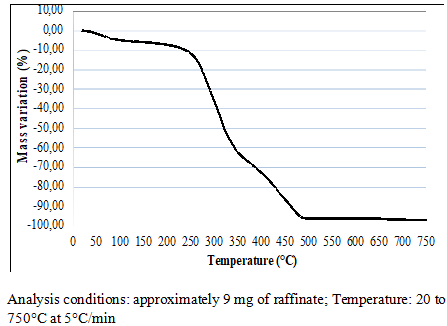
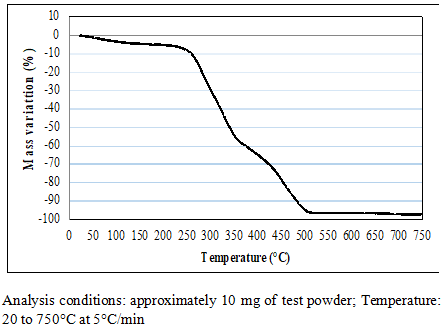
Thermogravimetric analysis (TGA) of the neem seed extrusion raffinate (Figure 3) shows that between 20 and 110°C, the material undergoes a mass loss of approximately 4%, which corresponds mainly to water evaporation and probably to the entrainment of minor volatile organic compounds. Above 110°C and up to 250°C, the observed mass loss (7 to 8%) could be attributed to the degradation of other thermolabile organic constituents (non-lipid, non-protein, and non-fibrous). The significant loss of mass (approximately 85%) observed between 250°C and 480°C is due to the degradation of biopolymers, including parietal fibers (cellulose, hemicelluloses, and lignins), which represent the majority of the compounds in the neem seed extrusion raffinate (nearly 79%). Indeed, degradation temperatures range from 270°C to 330°C for hemicelluloses 20, from 320°C to 380°C for celluloses, and around 420°C for lignins 4, 21, 22, 23, 24. Thus, the initial degradation between 250°C and approximately 325°C can be attributed to that of hemicelluloses and, to a lesser extent, to that of lipids and proteins. Between 325°C and 480°C, the degradation corresponds to that of cellulose and lignins. Between 480°C and 750°C, the constant residual mass corresponds to that of minerals. These results enable us to clearly define the temperature range to be used for transforming the material into agromaterial during thermopressing. A temperature range between 150°C and 250°C will limit the degradation of biopolymers.

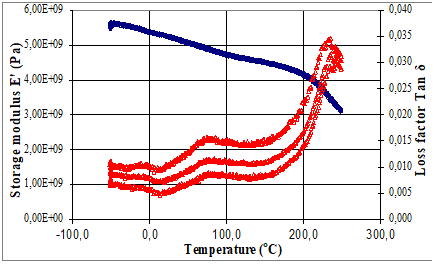
Dynamic Mechanical Analysis (DMA) at frequencies of 1 Hz, 5 Hz, and 10 Hz of the neem seed extrusion raffinate allows to study its viscoelastic behavior (Figure 4).
The conservation modulus (E'), which reflects the energy conserved and restored by the material through its reversible deformation (elasticity of the material), decreases almost linearly with increasing temperature between -50°C and 200°C and drops rapidly above 200°C. This conservation modulus is higher than those obtained for sunflower cake 4 and extruded sunflower cake 5. The greater rigidity of neem raffinate compared to sunflower raffinate can be explained by its higher content of parietal constituents, particularly cellulose (49.41%), which predisposes it to provide more rigid materials.
The loss factor (Tan δ), which is used to evaluate the energy loss measured at the three frequencies, has an almost superimposable pattern. It has two maxima, one less pronounced at around 75°C and the other more pronounced at around 230°C. These maxima reflect the material's transition from a glassy (solid) state to a rubbery (liquid) state, which is the glass transition zone. While the interpretation of the first transition is not obvious, the transition reflected by the maximum loss factor around 230°C could be attributed to the glass transition of the biopolymers in the neem seed extrusion raffinate, particularly the fibers, or to their degradation. It should be noted that around this temperature there is an inflection and an acceleration in the decrease in the conservation modulus (E'). The glass transition temperature (Tg) of cellulose is thought to be 200°C 4, that of hemicelluloses between 150 and 200°C 20, and that of lignins around 220°C 4. These results further confirm this hypothesis. Thus, the dynamic mechanical analysis of neem seed cake and its constituents has made it possible, on the one hand, to determine their elastic behavior as a function of temperature and, on the other hand, to highlight the existence of a transition that modifies the characteristics of its biopolymers as a function of temperature. It also revealed the rigidity and elasticity of the material, a characteristic that allows us to classify its biopolymers as thermoplastics.

The water adsorption isotherm of neem seed extrusion raffinate as a function of relative humidity (RH) at 25°C (Figure 5) shows a slight inflection in the low relative humidity range (between 0 and 15%). As in the case of sunflower cake 4, this corresponds to the formation of a monolayer of water on the easily accessible polar groups of the raffinate and its biopolymers, particularly polysaccharide, hemicellulose, and cellulose groups. Between 15% and 70% relative humidity, the amount of water adsorbed by the meal increases gradually and almost linearly. The second inflection point on the isotherm appears between relative humidities of 70% and 80%. It corresponds to the end of the formation of the polymer hydration monolayer. At high relative humidities above 80%, water adsorption by the raffinate increases more rapidly. This behavior of neem seed extrusion raffinate with regard to water is comparable to that of oilseed meal such as sunflower 4 and Jatropha 19. Neem seed extrusion raffinate can therefore be stored at up to 75% relative humidity without significant risk of degradation by microorganisms (water content below 12%). It should be noted, however, that above 75% RH, water adsorption will remain lower (< 20%) than that observed for protein-rich cake (>30% to 90% RH for sunflower cake). This can be attributed to their high fiber content.

Thermopressing molding of fibrous materials in a hot plate press in the form of a thin plate is a method that allows their ability to form coherent agromaterials to be evaluated. It has been studied by numerous researchers for various lignocellulosic materials 1, 2, 3, 4, 5 10, 15 25, 26, 27, 28. The dimensional and mechanical characteristics of the boards are determined after stabilization in a climate chamber at 60% relative humidity and 25°C for at least one week.
The operating conditions and experimental results obtained by carrying out a test plan based on a Doehlert matrix are shown in Table 4.
In the experimental field studied, variations in tensile strength, ranging from 0.5 to 0.6 MPa, remain low, unlike those in density (1.17 to 1.27) and modulus of elasticity (1420 to 2005 MPa). The calculation of the coefficients of a second-degree polynomial model linking the coded variables to these last two responses (Table 5) shows that several of them are significant in terms of their calculated standard deviation:
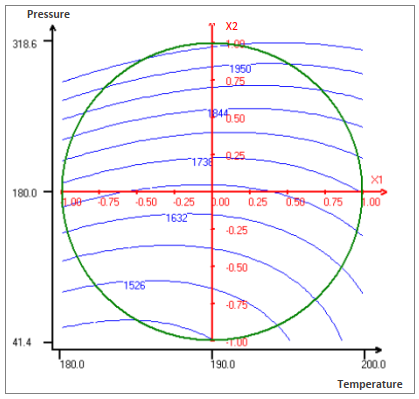
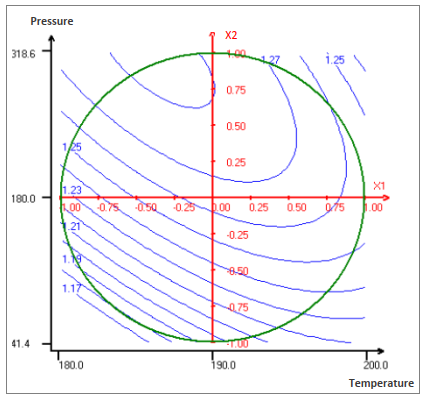
ME= (1672±66.041) + (11.112±53.922) X1 + (271.422±53.936) X2 – (63.138±107.873)X1X2 + (58±93.396) X12 + (71.367±93.445) X22
d = 1.2645±5.10-4 + (0.0153±4.10-4) X1 + (0.0416±4.10-4) X2 – (0.0347±8.10-4) X1X2 – (0.0250±7.10-4) X12 – (0.0277±7.10-4) X22
Comparison of the experimental values for elastic modulus and density with their corresponding calculated values (Table 6) shows that the models satisfactorily represent all of the results. The maximum deviations are ±52.112 MPa for elastic moduli (ME) and ±0.0048 for densities (d), and the correlation coefficients (R²) are 0.93 for elastic modulus and 0.98 for density.
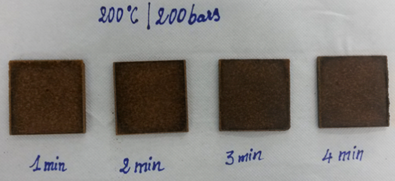
Thermo-pressing tests carried out on extruded neem seed raffinate for varying durations (1 min, 2 min, 3 min, and 4 min) show that at the same temperature and pressure, 200°C and 200 kg/cm2 respectively, the dimensional and mechanical characteristics of the material obtained vary significantly. In fact, increasing the duration of thermo-pressing leads to a decrease in thickness, densification, and an increase in the strength of the plates.
Analysis of the isoresponse curves plotted as a function of temperature and thermocompression pressure based on these equations shows that between 180 and 190°C, increasing the pressure from 60 to 300 kg/cm2 densifies the material (Figure 6). The effect of the temperature increase, in interaction with that of the pressure, becomes less noticeable above 200 kg/cm2.
The modulus of elasticity is particularly sensitive to thermocompression pressure (Figure 7). It increases by one third of its value (1500 to 2000 MPa) for a pressure increase from 50 to 300 kg/cm2.


The agromaterial formed from neem seed raffinate by thermocompression (Figure 8) was initially characterized to determine the effect of its forming parameters on its density and flexural modulus.

Indeed, these guidelines were experimentally validated by producing a new series of test specimens (Table 7). The effects of the two factors interact positively, but at 200°C, it is the increase in pressure (300 kg/cm2) that allows the highest density (approximately 1.28) and modulus of elasticity (approximately 2040 MPa) to be achieved for a duration of 2 minutes. It should be noted that increasing the latter also increases the density and modulus of elasticity at 200°C and for 200 kg/cm2, these two responses increase by 4% and 31% respectively (Table 8). Even though the modulus increases significantly with the densification of the material obtained for increasing hot pressing times, the correlation is not established with regard to the overall results. And the flexural strength varies little around 0.5 MPa.
These mechanical characterization results show that, within the experimental range of thermo-pressing explored, the materials obtained from neem seed extrusion raffinates are relatively rigid (modulus of elasticity between 1500 and 2300 MPa) and brittle (breaking strength close to 0.5 MPa). From comparison, materials obtained from agro-fibers derived from thermomechanical defibration in a twin-screw extruder of herbaceous biomass (particle size ≤ 1 mm) and thermo-pressed under similar conditions (190°C, 180 kg/cm2), are much less rigid (modulus of elasticity in the range of 300 to 1000 MPa) but more resistant (breaking stress of 6 to 8 MPa), with lower densities (1 to 1.1) 10.
Thermogravimetric analysis of the test piece with the highest density and modulus of elasticity (200°C, 200 kg/cm2, 4 min) produces a thermogram (Figure 9) that is almost identical to that obtained for the extrusion raffinate. This confirms that during thermopressing between 160 and 200°C, the biopolymers in the raffinate fibers are not degraded.

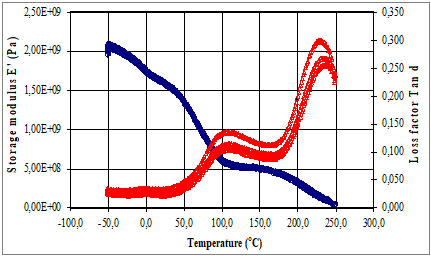
The analysis of the viscoelastic behavior of this material using dynamic mechanical analysis (Figure 10) confirms the existence of two transitions corresponding to a maximum in the loss factors Tan δ, associated with a change in the slope of the evolution of the conservation modulus. The first, around 110°C, could be attributed to non-fibrous constituents capable of forming adhesive joints between the fibers during hot pressing, which would ensure the cohesion of the densified assembly during cooling and relaxation. In the test specimen thus provided, the softening of these adhesive joints due to the transition of its constituents, which appears to begin at 50°C as in the native extrusion raffinate, would result in a drop in the conservation modulus, which stabilizes at a value of 5.108 Pa at 110°C and remains close to this value up to 160-170°C. Above these temperatures, the conservation modulus drops again and a maximum loss factor appears at 230°C.
As in the case of native extrusion raffinate, where this transition occurs at the same temperature, it could be attributed to the biopolymers in the fibers, whose softening contributes to the drop in the material's conservation modulus. During thermo-pressing at a temperature between 170 and 200°C, the two transition phenomena of the raffinate constituents contribute to the densification of the material, beyond the simple phenomenon of rearrangement of particle stacks, their irreversible deformation, and the collapse of structures leading to a decrease in porosity. At 170°C, under 200 kg/cm2, the density of the material obtained after 2 minutes of holding is 1.23. At 200°C, under the same pressure, the density reaches 1.245 after 2 minutes of holding and 1.28 after 4 minutes.
However, although a phenomenon of self-bonding between fibers during the transition attributable to their constituent biopolymers cannot be ruled out, its contribution to the cohesion of the material, reflected in its flexural strength, appears insufficient to significantly improve it in this temperature range. This breaking strength is thought to be mainly due to the glue joints formed between the fibers during the transition of the other non-fibrous constituents, and its low value is linked to their low proportion in the neem seed extrusion raffinate, particularly proteins (<3.5%). By comparison, the flexural strength of materials obtained from sunflower seed meal thermally pressed under similar conditions, which still contain 30% protein, is significantly higher (10 to 20 MPa) 4.
These materials, obtained by thermo-pressing the extrusion raffinate of neem seeds, are therefore dense, relatively low-strength, but very rigid (high flexural modulus). This latter characteristic, which can be attributed to the fibrous fraction, could be advantageously exploited for the manufacture of protective or finishing layers on the surface of other agromaterials, especially since this coating material is not very sensitive to water.

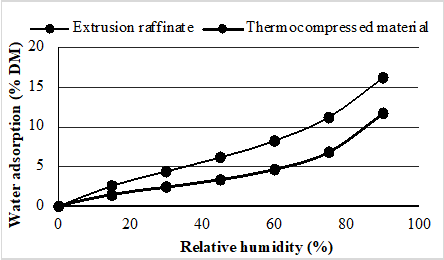
Whether they are composites combining a thermoplastic matrix with a filler or fiber reinforcement, or a fiber matrix bonded by a thermosetting resin, the sensitivity to water of this type of material when the fibers are of plant origin is well known 2, 4, 9, 30. In our case, this results in the thermo-pressed plates coming apart when immersed in water. However, the thermo-pressing conditions have a significant impact on the material's performance under these extreme conditions of contact with water: the denser the material and the higher its modulus of elasticity, the better its performance in water (Table 9). A comparison of the isotherms for humid atmospheric water adsorption of the thermo-pressed material and the extrusion raffinate (Figure 11) provides a better understanding of its sensitivity to water.
The presence of residual azadirachtin in this protective layer (Table 10) could also give the thermoformed material resistance to insect attack.
The raffinate produced by twin-screw extruder fractionation, which is mainly fibrous, is used as an agromaterial through thermo-pressing. The study of its thermal and thermomechanical properties and its behavior in relation to water has made it possible to define the conditions for its shaping.
Increasing the duration of thermo-pressing between 1 and 4 minutes has a positive effect on the quality of the agromaterial obtained.
The results obtained from a test plan, in particular the isoresponse curves, show that increasing the pressure densifies the material and that the modulus of elasticity is particularly sensitive to thermo-pressing pressure. Thermo-pressing the extrusion raffinate of neem seeds produces agromaterials that are relatively rigid (modulus of elasticity between 1500 and 2300 MPa) but fragile (breaking strength close to 0.5 MPa). The presence of residual azadirachtin in these materials, ranging from 11.5 to 13.1 mg/g, may create resistance to insect attack.
The study of the behavior of the agromaterial shows that the denser the material and the higher its modulus of elasticity, the better its performance in water. And comparing its atmospheric water adsorption isotherm with that of the raffinate allows us to see that the material is less hygroscopic than the original raffinate.

The raffinate produced by twin-screw extruder fractionation, which is mainly fibrous, is used as an agromaterial through thermo-pressing. The study of its thermal and thermomechanical properties and its behavior in relation to water has made it possible to define the conditions for its shaping.
Increasing the duration of thermo-pressing between 1 and 4 minutes has a positive effect on the quality of the agromaterial obtained.
The results obtained from a test plan, in particular the isoresponse curves, show that increasing the pressure densifies the material and that the modulus of elasticity is particularly sensitive to thermo-pressing pressure. Thermo-pressing the extrusion raffinate of neem seeds produces agromaterials that are relatively rigid (modulus of elasticity between 1500 and 2300 MPa) but fragile (breaking strength close to 0.5 MPa). The presence of residual azadirachtin in these materials, ranging from 11.5 to 13.1 mg/g, may create resistance to insect attack.
The study of the behavior of the agromaterial shows that the denser the material and the higher its modulus of elasticity, the better its performance in water. And comparing its atmospheric water adsorption isotherm with that of the raffinate allows us to see that the material is less hygroscopic than the original raffinate.
| [1] | Rouilly, A, Nouveaux agromatériaux composites à matrice protéique et polysaccharidique : étude du fractionnement, de la transformation et de la mise en forme par extrusion et par injection-moulage de la pulpe de betterave et du tourteau de tournesol, Thèse de Doctorat, INP, Toulouse, 2002. | ||
| In article | |||
| [2] | Evon, P, Nouveau procédé de bioraffinage du tournesol plante entière par fractionnement thermo-mécano-chimique en extrudeur bi-vis ; étude de l’extraction aqueuse des lipides et de la mise en forme du raffinat en agromatériaux par thermomoulage, Thèse de Doctorat, INP, Toulouse, 2008. | ||
| In article | |||
| [3] | Evon, P., Jégat, L., Labonne, L., Véronèse, T., Ballas, S., Tricoulet, L., Li, J. and Geelen, D, Bio-based materials from sunflower co-products, a way to generate economical value with low environmental footprint, OCL, 30 (25). Dec.2023. | ||
| In article | View Article | ||
| [4] | Geneau, C, Procédé d’élaboration d’agromatériau composite naturel par extrusion bi-vis et injection moulage de tourteau de tournesol, Thèse de Doctorat, INP, Toulouse, 2006. | ||
| In article | |||
| [5] | Humbert, J, Études, élaboration et production d’agrocomposite à partir de tourteau de tournesol : étude du procédé d’extrusion-formulation-granulation et d’injection moulage, Thèse de Doctorat, INP, Toulouse, 2008. | ||
| In article | |||
| [6] | Nenonene, A.Y, Élaboration et caractérisation mécanique de panneaux de particules de tiges de Kénaf et de bioadhésifs à base de colle d’os, de tannin ou mucilage, Thèse de Doctorat, INP, Toulouse, 2009. | ||
| In article | |||
| [7] | Halvarsson, S., Edlund, H. and Norgren, M, Manufacture of non-resin wheat straw fibreboards, Industrial Crops and Products, 29. 437-445. Mar.2009. | ||
| In article | View Article | ||
| [8] | Nonaka, S., Umemura, K. and Kawai, S, Characterization of bagasse binderless particleboard manufactured in high-temperature range, Journal of Wood Science, 59. 50-56. Oct.2013. | ||
| In article | View Article | ||
| [9] | Umurigirwa-Vasseur, B.S, Élaboration et caractérisation d’un agro matériau chanvre-amidon pour le Bâtiment, Thèse de Doctorat, Université de Reims, Champagne-Ardenne, 2014. | ||
| In article | |||
| [10] | Rigal, M, Fractionnement de fibres de biomasses herbacées endémiques ou cultivées dans une zone d’estuaire : éco-conception de matériaux pour la construction, Thèse de Doctorat, INP, Toulouse, 2015. | ||
| In article | |||
| [11] | Uitterhaegen, E., Labonn, L., Merah, O., Talou, T., Ballas, S., Véronèse, T. and , P, Impact of thermomechanical fiber pre-treatment using twin-screw extrusion on the production and properties of renewable binderless coriander fiberboards, International Journal of Molecular Sciences, 18. 1539. Jul.2017. | ||
| In article | View Article PubMed | ||
| [12] | Thieblesson, L.M, Élaboration et caractérisation de matériaux issus de ressources locales recyclées ou biossourcées, Thèse de Doctorat, Université de Rennes 1, Rennes, 2018. | ||
| In article | |||
| [13] | Grégoire, M, Extraction des fibres de chanvre pour des composites structuraux optimisation du potentiel mécanique des fibres pour des applications concernant des matériaux composites 100% bio-sourcés, Thèse de Doctorat, INP, Toulouse, 2021. | ||
| In article | |||
| [14] | Jamaleddine, A, Bioraffinage des drêches de tomates : procédés d'obtention de molécules d'intérêts biologiques et d'agromatériaux, Thèse de Doctorat, INP, Toulouse, 2022. | ||
| In article | |||
| [15] | Bauta, J, Étude de la transformation thermomécanique d'algues Sargasses (Sargassum spp.) en vue de la production d'agromatériaux innovants, Thèse de Doctorat, INP, Toulouse, 2024. | ||
| In article | |||
| [16] | Van Soest, P.J, Use of detergents in the analysis of fibrious feeds: a rapid method for the determination of fiber and lignin. Journal of the American Oil Chemists Society, 46. 829-835. Oct.1963. | ||
| In article | View Article | ||
| [17] | Van Soest P.J. and Wine, R.H, Use of detergents in the analysis of fibrious feeds: determination of plant cell wall constituents. Journal of the American Oil Chemists Society, 50. Feb.1967. | ||
| In article | View Article | ||
| [18] | Van Soest, P.J. and Wine, R, Determination of lignin and cellulose in acid detergent fiber with permanganate. Journal of the American Oil Chemists Society, 51. 780-784. Jul. 968. | ||
| In article | View Article | ||
| [19] | Evon, P., Kartika, I.A. and Rigal, L, New Renewable and Biodegradable Particleboards from Jatropha Press Cakes. Journal of Renewable Materials, 2, 52-65. Feb.2014. | ||
| In article | View Article | ||
| [20] | Maréchal, P, Analyse des principaux facteurs impliqués dans le fractionnement combiné de pailles et de sons de blé en extrudeur bi-vis: obtention d’agromatériaux. Thèse de Doctorat, INP, Toulouse, 2001. | ||
| In article | |||
| [21] | Lalou, A, Mise au point d’un procédé d’extraction des hemicelluloses à partir d’un substrat végétal ligno-cellulosique : application au cas des coques de tournesol. Thèse de Doctorat, INP, Toulouse, 1995. | ||
| In article | |||
| [22] | Hatakeyama, T. and Hatakeyama, H, Thermal properties of green polymers and biocomposites. Springer Science & Business Media, 2006. | ||
| In article | |||
| [23] | Theng, D., Arbat, G., Delgado-Aguilar, M., Ngo, B., Labonne L., Mutjé, P. and Evon, P, Production of fiberboards from rice straw thermo-mechanical extrudates using thermopressing: influence of fiber morphology, water addition and lignin content. Eur J Wood Wood Prod, 77. 15-32. Jan.2019. | ||
| In article | View Article | ||
| [24] | Hidayat, H., Keijsers, E.R.P., Prijanto, U., Van Dam, J.E.G. and Heeres, H.J, Preparation and properties of binderless boards from Jatropha curcas L. seed cake. Industrial Crops Products, 52. 245-254. Jan.2014. | ||
| In article | View Article | ||
| [25] | Silvestre, F., Gaset, A., Rigal, L, and Leyris, J, Method for making shaped objects from a vegetable raw material by pressing, European Patent 0,987,089. 2000. | ||
| In article | |||
| [26] | Orliac, O, Valorisation des protéines de tournesol: étude de leur comportement thermique, rhéologique et de leur réactivité chimique - Application à la fabrication de nouveaux matériaux biodégradables. Thèse de Doctorat, INP, Toulouse, 2002. | ||
| In article | |||
| [27] | Abdillahi, H, Propriétés barrière et mécaniques d’agromatériaux thermoplastiques à base de farine de blé et de polyesters biossourcés et biodégradables. Thèse de Doctorat, INP, Toulouse, 2014. | ||
| In article | |||
| [28] | Jallabert, B, Étude du comportement sous pression mécanique uniaxiale de la cellulose et de l’amidon (natif et amorphe): influence de la température et du taux d’hydratation. Thèse de Doctorat, INP, Toulouse, 2014. | ||
| In article | |||
| [29] | Pintiaux, T, Étude d’un procédé de mise en forme de matières naturelles lignocellulosiques par thermocompression uniaxiale haute pression. Thèse de Doctorat, INP, Toulouse, 2015. | ||
| In article | |||
| [30] | Stanojlovic-Davidovic, A, Matériaux biodégradables à base d’amidon expansé renforcé de fibres naturelles - Application à l’emballage alimentaire. Thèse de Doctorat, Université du Sud Toulon-Var, Toulon, 2006. | ||
| In article | |||
Published with license by Science and Education Publishing, Copyright © 2026 Djibril Diedhiou, Mamadou Faye, Moussa Bagha Diedhiou, Laure Candy, Virginie Vandenbossche, Oumar Sock and Luc Rigal
 This work is licensed under a Creative Commons Attribution 4.0 International License. To view a copy of this license, visit
http://creativecommons.org/licenses/by/4.0/
This work is licensed under a Creative Commons Attribution 4.0 International License. To view a copy of this license, visit
http://creativecommons.org/licenses/by/4.0/
| [1] | Rouilly, A, Nouveaux agromatériaux composites à matrice protéique et polysaccharidique : étude du fractionnement, de la transformation et de la mise en forme par extrusion et par injection-moulage de la pulpe de betterave et du tourteau de tournesol, Thèse de Doctorat, INP, Toulouse, 2002. | ||
| In article | |||
| [2] | Evon, P, Nouveau procédé de bioraffinage du tournesol plante entière par fractionnement thermo-mécano-chimique en extrudeur bi-vis ; étude de l’extraction aqueuse des lipides et de la mise en forme du raffinat en agromatériaux par thermomoulage, Thèse de Doctorat, INP, Toulouse, 2008. | ||
| In article | |||
| [3] | Evon, P., Jégat, L., Labonne, L., Véronèse, T., Ballas, S., Tricoulet, L., Li, J. and Geelen, D, Bio-based materials from sunflower co-products, a way to generate economical value with low environmental footprint, OCL, 30 (25). Dec.2023. | ||
| In article | View Article | ||
| [4] | Geneau, C, Procédé d’élaboration d’agromatériau composite naturel par extrusion bi-vis et injection moulage de tourteau de tournesol, Thèse de Doctorat, INP, Toulouse, 2006. | ||
| In article | |||
| [5] | Humbert, J, Études, élaboration et production d’agrocomposite à partir de tourteau de tournesol : étude du procédé d’extrusion-formulation-granulation et d’injection moulage, Thèse de Doctorat, INP, Toulouse, 2008. | ||
| In article | |||
| [6] | Nenonene, A.Y, Élaboration et caractérisation mécanique de panneaux de particules de tiges de Kénaf et de bioadhésifs à base de colle d’os, de tannin ou mucilage, Thèse de Doctorat, INP, Toulouse, 2009. | ||
| In article | |||
| [7] | Halvarsson, S., Edlund, H. and Norgren, M, Manufacture of non-resin wheat straw fibreboards, Industrial Crops and Products, 29. 437-445. Mar.2009. | ||
| In article | View Article | ||
| [8] | Nonaka, S., Umemura, K. and Kawai, S, Characterization of bagasse binderless particleboard manufactured in high-temperature range, Journal of Wood Science, 59. 50-56. Oct.2013. | ||
| In article | View Article | ||
| [9] | Umurigirwa-Vasseur, B.S, Élaboration et caractérisation d’un agro matériau chanvre-amidon pour le Bâtiment, Thèse de Doctorat, Université de Reims, Champagne-Ardenne, 2014. | ||
| In article | |||
| [10] | Rigal, M, Fractionnement de fibres de biomasses herbacées endémiques ou cultivées dans une zone d’estuaire : éco-conception de matériaux pour la construction, Thèse de Doctorat, INP, Toulouse, 2015. | ||
| In article | |||
| [11] | Uitterhaegen, E., Labonn, L., Merah, O., Talou, T., Ballas, S., Véronèse, T. and , P, Impact of thermomechanical fiber pre-treatment using twin-screw extrusion on the production and properties of renewable binderless coriander fiberboards, International Journal of Molecular Sciences, 18. 1539. Jul.2017. | ||
| In article | View Article PubMed | ||
| [12] | Thieblesson, L.M, Élaboration et caractérisation de matériaux issus de ressources locales recyclées ou biossourcées, Thèse de Doctorat, Université de Rennes 1, Rennes, 2018. | ||
| In article | |||
| [13] | Grégoire, M, Extraction des fibres de chanvre pour des composites structuraux optimisation du potentiel mécanique des fibres pour des applications concernant des matériaux composites 100% bio-sourcés, Thèse de Doctorat, INP, Toulouse, 2021. | ||
| In article | |||
| [14] | Jamaleddine, A, Bioraffinage des drêches de tomates : procédés d'obtention de molécules d'intérêts biologiques et d'agromatériaux, Thèse de Doctorat, INP, Toulouse, 2022. | ||
| In article | |||
| [15] | Bauta, J, Étude de la transformation thermomécanique d'algues Sargasses (Sargassum spp.) en vue de la production d'agromatériaux innovants, Thèse de Doctorat, INP, Toulouse, 2024. | ||
| In article | |||
| [16] | Van Soest, P.J, Use of detergents in the analysis of fibrious feeds: a rapid method for the determination of fiber and lignin. Journal of the American Oil Chemists Society, 46. 829-835. Oct.1963. | ||
| In article | View Article | ||
| [17] | Van Soest P.J. and Wine, R.H, Use of detergents in the analysis of fibrious feeds: determination of plant cell wall constituents. Journal of the American Oil Chemists Society, 50. Feb.1967. | ||
| In article | View Article | ||
| [18] | Van Soest, P.J. and Wine, R, Determination of lignin and cellulose in acid detergent fiber with permanganate. Journal of the American Oil Chemists Society, 51. 780-784. Jul. 968. | ||
| In article | View Article | ||
| [19] | Evon, P., Kartika, I.A. and Rigal, L, New Renewable and Biodegradable Particleboards from Jatropha Press Cakes. Journal of Renewable Materials, 2, 52-65. Feb.2014. | ||
| In article | View Article | ||
| [20] | Maréchal, P, Analyse des principaux facteurs impliqués dans le fractionnement combiné de pailles et de sons de blé en extrudeur bi-vis: obtention d’agromatériaux. Thèse de Doctorat, INP, Toulouse, 2001. | ||
| In article | |||
| [21] | Lalou, A, Mise au point d’un procédé d’extraction des hemicelluloses à partir d’un substrat végétal ligno-cellulosique : application au cas des coques de tournesol. Thèse de Doctorat, INP, Toulouse, 1995. | ||
| In article | |||
| [22] | Hatakeyama, T. and Hatakeyama, H, Thermal properties of green polymers and biocomposites. Springer Science & Business Media, 2006. | ||
| In article | |||
| [23] | Theng, D., Arbat, G., Delgado-Aguilar, M., Ngo, B., Labonne L., Mutjé, P. and Evon, P, Production of fiberboards from rice straw thermo-mechanical extrudates using thermopressing: influence of fiber morphology, water addition and lignin content. Eur J Wood Wood Prod, 77. 15-32. Jan.2019. | ||
| In article | View Article | ||
| [24] | Hidayat, H., Keijsers, E.R.P., Prijanto, U., Van Dam, J.E.G. and Heeres, H.J, Preparation and properties of binderless boards from Jatropha curcas L. seed cake. Industrial Crops Products, 52. 245-254. Jan.2014. | ||
| In article | View Article | ||
| [25] | Silvestre, F., Gaset, A., Rigal, L, and Leyris, J, Method for making shaped objects from a vegetable raw material by pressing, European Patent 0,987,089. 2000. | ||
| In article | |||
| [26] | Orliac, O, Valorisation des protéines de tournesol: étude de leur comportement thermique, rhéologique et de leur réactivité chimique - Application à la fabrication de nouveaux matériaux biodégradables. Thèse de Doctorat, INP, Toulouse, 2002. | ||
| In article | |||
| [27] | Abdillahi, H, Propriétés barrière et mécaniques d’agromatériaux thermoplastiques à base de farine de blé et de polyesters biossourcés et biodégradables. Thèse de Doctorat, INP, Toulouse, 2014. | ||
| In article | |||
| [28] | Jallabert, B, Étude du comportement sous pression mécanique uniaxiale de la cellulose et de l’amidon (natif et amorphe): influence de la température et du taux d’hydratation. Thèse de Doctorat, INP, Toulouse, 2014. | ||
| In article | |||
| [29] | Pintiaux, T, Étude d’un procédé de mise en forme de matières naturelles lignocellulosiques par thermocompression uniaxiale haute pression. Thèse de Doctorat, INP, Toulouse, 2015. | ||
| In article | |||
| [30] | Stanojlovic-Davidovic, A, Matériaux biodégradables à base d’amidon expansé renforcé de fibres naturelles - Application à l’emballage alimentaire. Thèse de Doctorat, Université du Sud Toulon-Var, Toulon, 2006. | ||
| In article | |||