Investigation mycobiota associate with marine water fishes (flathead mullet and blue spot mullet) investigation revealed the presence of variety of fungal species, particularly, toxigenic species, such as, Aspergillus spp, Penicillium spp and Fusarium spp. These results are indication of the spoilage of fishes which caught from Suez Canal and are risky for human consumption and hazardous to human health in this important area of Egypt. The results showed also, the presence of several genera of different fungi including Aspergillus spp., Mucor sp., Penicillium spp., Yeast sp., Fusarium spp., Scopiolariopsis sp., Alternaria sp., Cladosporium sp. The data also showed that, Aspergillus spp. Fusarium spp. and Penicillium spp., were the most present in all fish samples.
Fish and fish product are considered as preferable source of high nutritional values and highly desirable food due to its high quality animal protein content as its exceptional richness in calcium and phosphorus and its generous supply of s- complex vitamins. Fish provide a large percent of animal protein consumed by the world population. In tropical and subtropical countries, 60 percent of the people depend on fish for 40 percent or more of their protein 1. Bacterial and fungal contamination of fish is considered the main cause of signs of spoilage as off flavor and unpalatable taste and it may constitute a public health hazard as well as many of economic losses 2, 3, 4. At the time of harvest, fish carries a high microbial load on the surface of their skins, in their intestinal tracts and in their gills. The type and number of microorganisms that live in fish vary according to the season, the species and the natural habitat. Additional contamination may occur during the harvesting, handling or processing of the fish, also during the storage and transportation “Fish and Fishery Products Hazards and Controls Guidance, Fourth Edition—April 2011”.
Some molds are capable of producing mycotoxins, and some of these mycotoxins can cause some degree of acute toxicity when given in high amounts and are the potential carcinogens 5. Aspergillus, Fusarium, and Penicillium are the three most important genera of toxigenic fungi in the tropics 6. The presence of toxigenic fungi, some producing mycotoxin in marine fish has increased in recent years owing to the increasing marine environment pollution from sewage, industrial effluents and other fundamental pollutant. 7. Contamination of fish feeds by mycotoxins and the possible transfer of these toxins into farmed fish and fish-derived products for human consumption remain a serious food safety concern 8.
Fish and other marine organisms that live in contaminated coastal water pose a microbial microbiota dependent on the existing in the waters where they live. In the mucus that covers the external surface of the fish, it has been identified fungal biota. Regardless of the type of nourishment of the fish, which ingest fungi on their food, it is registered a large number of these microorganisms in their digestive tract and epidermis, where also it has been identified species of genus Penicillium spp Aspergillus spp Fusarium solani 9. Little attention has been given to the widespread occurrence of fungi, their presence and significance in aquatic environments 10, 11. However 12 isolated 8 species of fungi from eggs and brood stock of rainbow trout (Oncorhynchus mykiss). These isolates were Penicillium spp, Acreomonium spp, Alternaria spp, Fusarium solani, Aspergillus spp, Mucor spp, Saprolegnia spp. and Cladosporium spp.
The presence of diverse fungal biota and mycotoxins producing fungi (Aspergillus spp., Fusarium spp., and Penicillium spp.,) in aquatic capture fish indicated the degree of habitat and handlers contamination. Their presence represents a potential hazard to humans, especially the immunocompromised consumers such as cases of HIV/AIDS.
This study was aimed to investigate the fungal biota associated with apparently healthy (flathead mullet” Mugil cephalus” & blue spot mullet” Crenimugil seheli”) has been caught from Suez Canal in Port Said governorate and to evaluate the hygienic health hazard of fish contaminated with some food borne mycotoxigenic fungi.
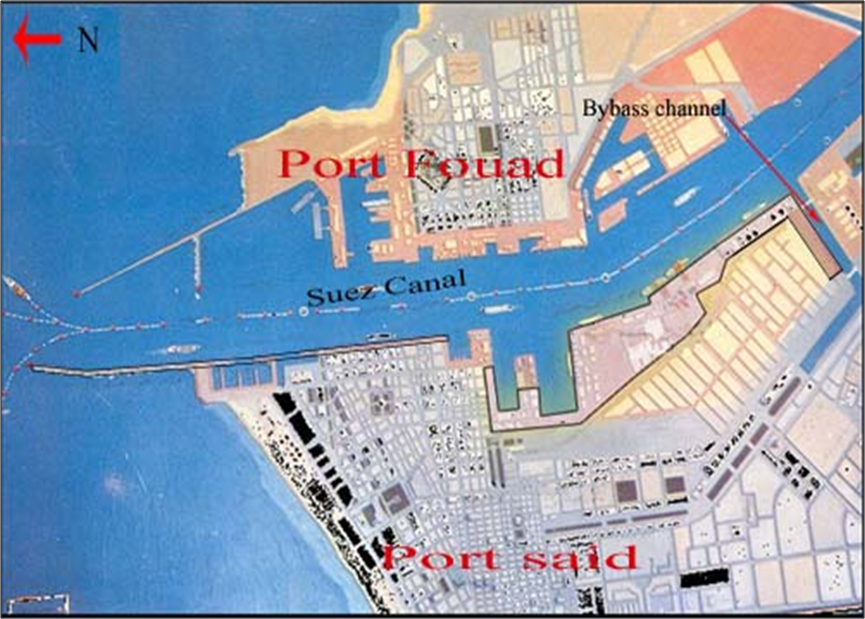
The canal is an artificial waterway running north to south across the Isthmus of Suez in north-eastern Egypt; it connects Port Said on the Mediterranean Sea with the Gulf of Suez, an arm of the Red Sea. The canal provides a shortcut for ships operating between European or American ports and ports located in southern Asia, eastern Africa, and Oceania, by avoiding the need to sail around Africa. Strategically and economically it is one of the most important waterways in the world (Figure 1).

The Suez Canal is rich in many types of good fish, as a result of the assemblage of the waters of the Red Sea with the waters of the Mediterranean Sea and the good nature of pastures. Fishing is carried out along the channel, especially the different types of mullet. In this research, mullet fishes have been caught from the canal were obtained, from different sites, adjacent Port Said.
2.2. Sampling MethodologyFour fish samples (400 – 500 gram each) of flathead & blue spot mullet from market caught from different locations in Suez Canal were collected near Port Said district (sample every fifteen days). Samples were transferred to the laboratory in tight polyethylene bags and kept at low temperature until plating out.
2.3. Fungal Biota IsolationTow techniques, Warcup – plate (Warcup, 1950) and dilution – plate (Waksman, 1927) were adopted throughout this investigation for counting and isolation.
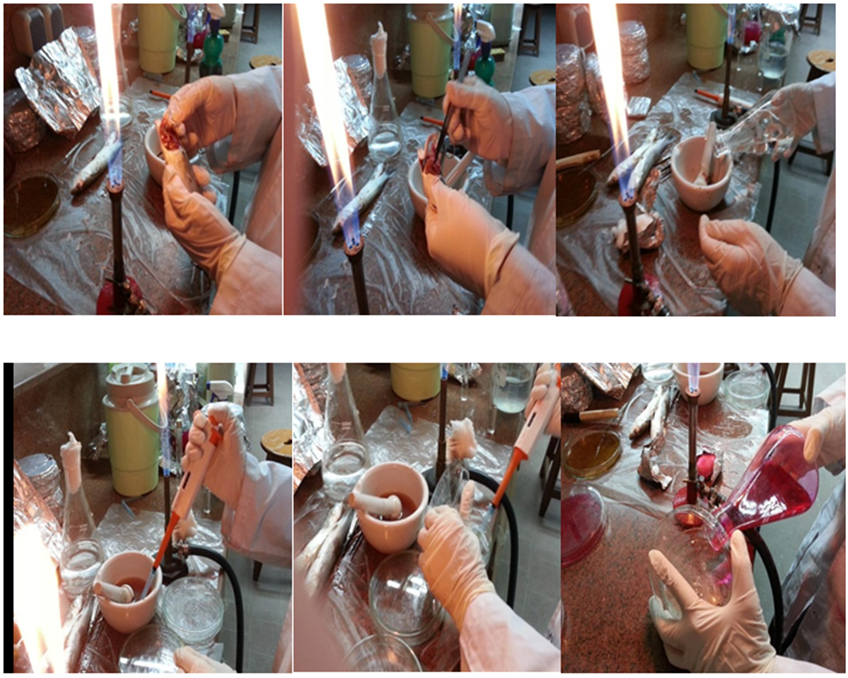
Dilution plate 13 technique was applied, throughout this search, in order to get as good diversity as possible (while Warcup – plate were rejected due to over count and over contamination with bacterial biota). Czapek’s yeast extract agar (CYA) and potato dextrose agar (PDA) as isolation media and supplemented with Rose Bengal (1/15,000) and chloramphenicol (50 ppm) for suppression of bacterial growth 14. Ten grams of each fish part (skin & muscle, gills, intestine) was homogenized in 100 ml sterile water then diluted to 1/1000. One milliliter of the diluted sample (10−3) was aseptically transferred into a sterile Petri dish then pour media. To obtain as much species as possible, six plates isolation medium were prepared from every fish part. After inoculating, plates were incubated at 27°C for 5 to 7 days, thereafter; developing colonies were identified and counted (Figure 2).

Taxonomic identification of isolated fungi using phenotypic (macroscopic & microscopic) approach down to the species level on standard media for proper characterization; while mucoracious fungi on MEA & PDA, Hyphomycetes on PCA & PDA, Aspergillus and Penicillium on MEA & CYA. For species identification, the following references have been consulted: 15 for Penicillium; 16 for Aspergillus; 17, 18, 19 for dematiaceous hyphomycetes, and more dematiaceous hyphomycetes; 20 for Fusarium; 21 for miscellaneous fungi.
2.5. Phylogenetic Tree AnalysisTo draw the phylogenetic tree, deduced amino acid sequences of Aspergillus flavus O-methylsterigmatocystin oxidoreductase were alignment by using (L-INS-i) of MAFFT version 7 (http://mafft.cbrc.jp/alignment/server/), then the resulted alignments were taken to Gblocks (http://molevol.cmima.csic.es/castresana/Gblocks_server.html) to remove gaps and predict homologous genes depending on conserved amino acids, then finally phylogenetic tree was drawn using the Neighbouring-Joining method by Mega7 software 22, 23, 24, 25.
2.6. Statistical AnalysisThe data obtained were analyzed using the CoStat system for Windows, Version 6.311 (CoHort software, Berkeley, CA 94701). Comparing means were estimated by ANOVA type two way completely randomized designs. A value of P < 0.05 was used to indicate significant deviation.
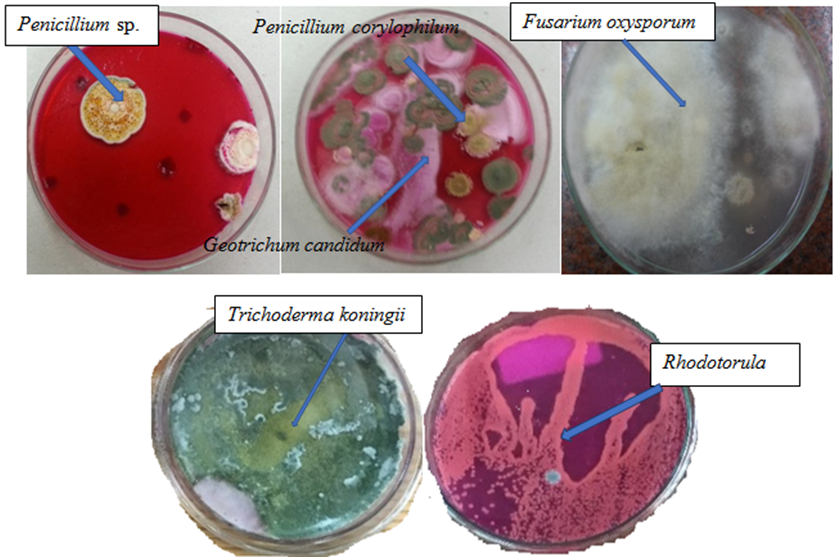
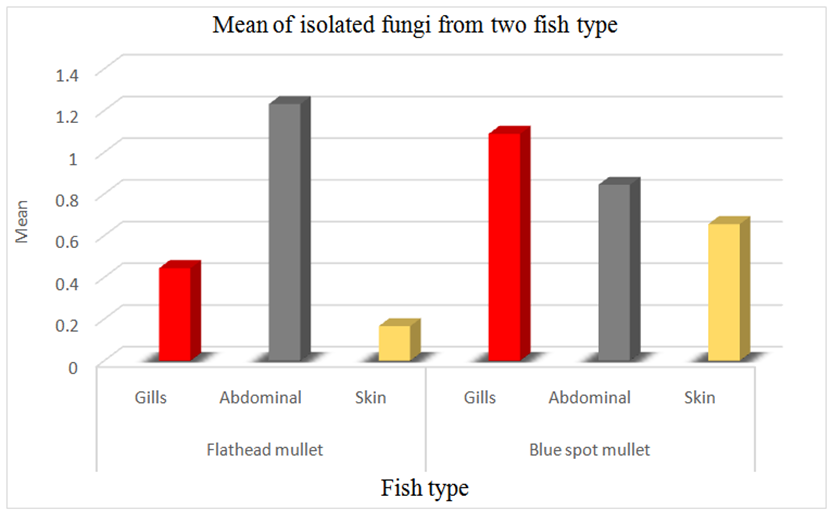
During this part of the study, a total number of 16 species has been reported from the two different fish species investigated i.e. flathead mullet & blue spot mullet (Table 1 & Table 2) of which Aspergillus comes first by being represented by 3 species. It is followed by Fusarium and Penicillium which is represented by 2 species each. The reminder genera were represented by only 1 species for each (Figure 3, Figure 4).


The distribution pattern of mycobiota based on the presence/absence in fish part (skin, gill, intestine) under investigation showed that recorded taxa could be temporarily classified into three groups (Table 1, Table 2 & Table 3).
Group 1, comprises taxa of occurrence restricted to one part only (8 species) e,g. Acremonium sp, Aspergillus versicolor, Fusarium solani .
Group 2, consists of species occurring in two fish parts (6 species) e.g. Alternaria alternarta, Aspergillus flavus, Fusarium oxysporum and Trichoderma koningii.
Group 3, contains species of common occurrence to almost all fish parts (3 species) e.g. Aspergillus niger, Aspergillus terreus, Cladosporium cladosporioides and Penicillium canescens.
The data of Table 1 showed that the significant differences for the mean fungi isolated from flathead mullet and blue spot mullet fish, as well as the significant differences for the mean amongst different fish parts (gill, abdomen and skin).
Data of Table 3 and Figure 4 also revealed that, the prevailing genus is Aspergillus and Penicillium by showing a spectrum of three species each. The remaining taxa were represented only by two or one species.
In view of spectrum of species the range of species varied among fish type and fish parts. While flathead mullet revealed 14 species blue spot mullet appeared 11 species only. The richness of species in intestine showed the highest spectrum by obtaining15 species; followed by gill by accommodating 11 species. Skin came last one by being revealed only 9 species (Figure 4).
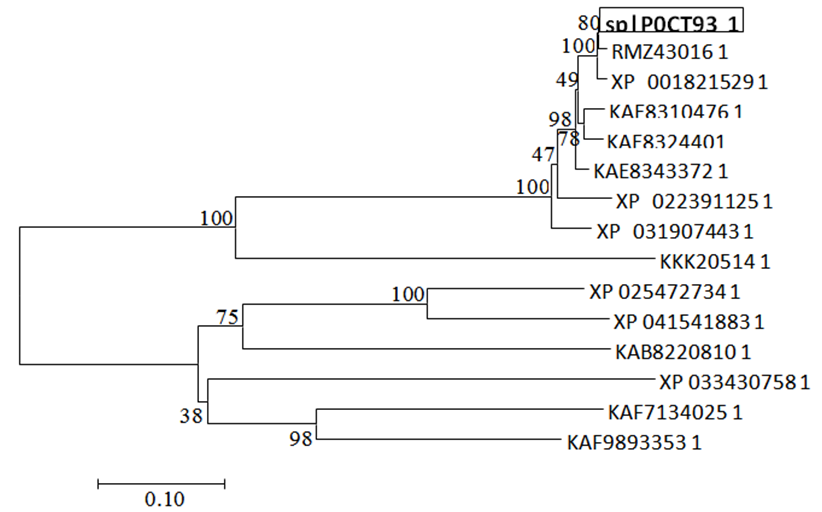
3.3. Phylogenetic TreePhylogenetic tree-Gene sequence data of selected fungal isolate show that all of the isolates having>99 to 100% similarity of previously deposited within the GenBank. The sequence reads were deposited at NCBI GenBank and obtained accession numbers (Table 4). The phylogenetic tree analysis of identified fungal species was constructed to determine their affiliations (Figure 5).

The Neighbor-Joining method was used to infer the evolutionary history 22. The percentage of replicate trees in the bootstrap test (1000 replicates) are shown next to the branches in which the associated taxa clustered together 23. The tree is drawn to scale, with branch lengths in the same units as those of the evolutionary distances used to infer the phylogenetic tree. Using the JTT matrix-based method, the evolutionary distances were computed and are in the units of the number of amino acid substitutions per site 24. The analysis involved 15 amino acid sequences. All positions containing gaps and missing data were eliminated. There were a total of 474 positions in the final dataset. Evolutionary analyses were conducted in MEGA7 25.
O-methylsterigmatocystin oxidoreductase enzyme is a part of the gene cluster that mediates the biosynthesis of aflatoxins. This essential protein in aflatoxin biosynthesis is a group of polyketide-derived furanocoumarins, and part of the most toxic and carcinogenic compounds among the known mycotoxins 25.
In the present investigation, the main intention has been to survey the fungal biota associated with the marine fishes, flathead and blue spot mullet.
The result showed that there was no fish of marine water sample that was free from fungi, an indication that the entire marine water samples were contaminated by fungi. The contamination could have arisen from different sources which include air, source of water and from sewage; industrial effluents and other fundamental pollutant have been responsible for the introduction of these organisms into the marine water.
From fish samples, representing flathead mullet and blue spot mullet, a total number of 16 species were reported. Taxa from Hyphomycetes accounted for the major part of the mycobiota (14 species) followed by Zygomycetes (1 species).
In view of species richness, the genera Aspergillus, Fusarium and Penicillium were the richest by being represented by 3, 2, and 2 species respectively. The reminder genera accounted only by one species.
Regarding fish species, the flathead mullet accommodated the richest by being represented by 14 species, while the blue spot mullet accounted only by 11 species.
Concerning fish part, the abdomen of Flathead mullet comes first by revealing 11 species followed gills have been revealed 8 species, while skin obtained only 4 species. In case of Blue spot mullet, gills accounted 7 species followed by abdomen represented by 6 species, skin comes last by revealing 4 species.
Worthy to be mentioned, during this investigation it was able to isolate many taxa that able to produce mycotoxins e.g. Aspergillus, Fusarium, Penicillium and Stachybotrys. Occurrence of toxigenic fungi in significant numbers as reported in the present study reflects the possible risk to human health, as these fungi are the sources of highly potent mycotoxins which are carcinogenic.
The data shown in Table 3 show the significant differences for the mean fungi isolation from flathead mullet and blue spot mullet fish, as well as the significant differences for the mean between the gills, abdomen and skin isolation areas.
The results indicate that the fungal taxa: Alternaria alternata, Mucor sp. and Myrothecium verrucaria were not isolated from the flathead mullet fish, while they were isolated from the blue spot mullet fish. Consequently, the significant differences in the mean isolation appeared in favor of the last fish, while the significant differences in the mean isolation of the flathead mullet fish in favor of the fungi Nigrospora oryzae, Penicillium canescens, Stachybotrys chartarum, Penicillium sp., Scopulariopsis brevicaulis and Syncephalstarum racemosum as they were not isolated from the blue spot mullet fish.
The fungi Aspergillus niger, Trichoderma koningii, and Geotrichum candidum were isolated from the flathead mullet fish and blue spot mullet and there were no significant differences between the isolation mean.
The fungi Fusarium oxysporum and Penicillium sp, were isolated from the flathead mullet fish and blue spot mullet and there were significant differences between the isolation mean.
The results showed that the fungi were isolated from the three isolation regions, the gills, abdomen, and skin are separated, and that only two fungi were isolated from all areas together, namely Aspergillus niger and Fusarium oxysporum.
There are certain fungi which cause fish diseases. Shahbazian, et al., 26 isolated Penicillium expansum, Penicillium citrinium; Aspergillus terruse, Aspergillus clivatus; Alternaria spp; Saprolegnia parasitic, Saprolegnial apponica, Saprolegnia ferax and Saprolegnia hypogyna and 7 other species of fungi from infected eggs of rainbow trout, Oncorhynchus mykiss in Iran. However, Fadaeifard, et al., 27 isolated 8 species of fungi from eggs and brood stock of rainbow trout O. mykiss. These isolates were Penicillium spp, Acreomonium spp, Alternaria spp, Fusarium solani, Aspergillus spp, Mucor spp, Saprolegnia spp. and Cladosporium spp. Primary infections in fishes and fish eggs by oomycetes are also reported 28. Although, infection as a result of microbial contamination does not usually result in disease but environmental stress may upset the balance between the potential pathogens and their hosts. In such environment the chances of infection increases.
The isolation of Aspergillus spp, in this study is in agreement with the work of 29. The presence of A. flavus in these samples might probably makes the consumption of a fish hazardous to man according to the findings of 30 which was also identified in the study. The works of 31 also identified, A. niger, A. flavus which pose potential health hazard to its numerous consumers which was also isolated in this study. The isolation of A. niger A. terreus, A. flavus as contaminants of fish and fish water is in agreement with similar findings earlier by 32 in Zambia. Isolation of moulds belonging to the following genera Aspergillus spp, and Scopulariopsis brevicaulis in this study agreed with the findings reported by 33 and 34 which was also identified the same organism from fish.
Pollution of fish with mycotoxins produced by fungi such as Aspergillus, Fusarium, Penicillium and Stachybotrys likely lead to accumulation of these toxins in fish tissues. The risk for mycotoxins contamination may occur as a result of nourishment by the contaminant fish tissues in considerable quantities. Aflatoxins, Ochratoxin A and sterigmatocystin are thermostable and have an ability to accumulate in the organism 35. Subsequently processing of fish does not remove or reduce the presence of mycotoxins in fish tissues. However, there are a lot studies in which the pollution with mycotoxin mainly Aspergillus has been treat e.g. 36, 37.
Phylogenetic analysis show the majority of Aspergillus different species in containing one of important gene O-methylsterigmatocystin oxidoreductase in the aflatoxin biosynthesis which is believed to be found in the polluted area of fish environment 25.
The diversity and density of fungi may be, in fact, valid indicators of marine water pollution and whether they represent a health hazard to the users of these marine fishes are questions to be addressed by further microbiological investigation and epidemiological surveys. However, an action plan to protect Suez Canal in Port Said governorate and the surrounding environment from sewage, industrial effluents and other fundamental pollutant should be devised. More investigation needed to confirm different fungus in mycotoxins production.
| [1] | WRI (World Resources Institute). (1994). World Resources 1994-5. Oxford University Press, New York, 400. | ||
| In article | |||
| [2] | Håstein, T., Hjeltnes, B., Lillehaug, A., Utne Skåre, J., Berntssen, M. and Lundebye, A.K. (2006). Food Safety Hazards That Occur during the Production Stage: Challenges for Fish Farming and the Fishing Industry. Revue Scientifique et Technique, 25, 607-625. | ||
| In article | View Article | ||
| [3] | Hassan, A.H.M., Noor-El Deen, A.E., Galal, H.M., Sohad, M., Dorgham, M.A., Bakry, M.A. and Hakim, A.S. (2012). Further Characterization of Enterobacteriaceae Isolated from Cultured Freshwater Fish in Kafr El Shiek Governorate: Clinical, Biochemical and Histopathological Study with Emphasis on Treatment Trials. Global Veterinaria, 9, 617-629. | ||
| In article | |||
| [4] | Zaky, M.M.M. and Salem, M.A.M. (2015). Environmental Factors Influencing Antibiotic Resistant Bacterial Pathogens in Polluted Lake Manzala, Egypt. Journal of Bacteriology & Parasitology, 6, Article ID: 1000249. | ||
| In article | |||
| [5] | M. E. Zain, “Impact of mycotoxins on humans and animals,” Journal of Saudi Chemical Society, vol. 15, no. 2, pp. 129-144, 2011. | ||
| In article | View Article | ||
| [6] | S. Bankole, M. Schollenberger, and W. Drochner, “Mycotoxins in food systems in sub saharan Africa: a review,” Mycotoxin Research, vol. 22, no. 3, pp. 163-169, 2006. | ||
| In article | View Article PubMed | ||
| [7] | Mahmoud M. M. Zaky, Mohsen E. Ibrahim (2017). Screening of Bacterial and Fungal Biota Associated with Oreochromis niloticus in Lake Manzala and Its Impact on Human Health. Health, 9, 697-714. http://www.scirp.org/journal/health. | ||
| In article | View Article | ||
| [8] | M. C. Ch´avez-S´anchez, C. A. Mart´ınez Palacios, and I. Osorio Moreno, “Pathological effects of feeding young Oreochromis niloticus diets supplemented with different levels of aflatoxin B1,” Aquaculture, vol. 127, no. 1, pp. 49-60, 1994. | ||
| In article | View Article | ||
| [9] | Alam, M., Hasan, N.A., Sadique, A., Bhuiyan, N.A., Ahmed, K.U., Nusrin, S., Nair, G.B., Siddique, A.K., Sack, R.B., Sack, D.A., Huq, A. and Colwell, R.R. (2006). Seasonal Cholera Caused by Vibrio cholerae Serogroups O1 and O139 in the Coastal Aquatic Environment of Bangladesh. Applied Environmental Microbiology, 72, 4096-4104. | ||
| In article | View Article PubMed | ||
| [10] | Pitlik, S., Berger, S.A. and Huminer, D. (1987). Nonenteric Infections Acquired through Contact with Water. Reviews of Infectious Diseases, 9, 54-63. | ||
| In article | View Article PubMed | ||
| [11] | Arvanitidou, M., Kanellou, K. and Vagiona, D.G. (2005). Diversity of Salmonella spp. and Fungi in Northern Greek Rivers and Their Correlation to Fecal Pollution Indicators. Environmental Research, 99, 278-284. | ||
| In article | View Article PubMed | ||
| [12] | Fadaeifard, F.F., Raissy, M., Bahrami, H., Rahimi, E. and Najafipoor, A. (2011). Freshwater Fungi Isolated from Eggs and Broodstocks with an Emphasis on Saprolegnia in Rainbow Trout Farms in West Iran. African Journal of Microbiology Research, 4, 3647-3651. | ||
| In article | |||
| [13] | Garrett, S.D. (1981). Soil Fungi and Soil Fertility. 2nd Edition, The Macmillan Company, Oxford, New York. | ||
| In article | |||
| [14] | Smith, N.R. and Dawson, V.T. (1944) The Bacteriostatic Action of Rose Bengal in Media Used for the Plate Counts of Soil Fungi. Soil Science, 58, 467-471. | ||
| In article | View Article | ||
| [15] | Pitt, J.I. (1980). The Genus Penicillium and Its Teleomorphic States Eupenicillium and Talaromyces. Academic Press, London, 634 p. | ||
| In article | |||
| [16] | Raper, K.B. and Fennell, D.I. (1965). The Genus Aspergillus. Williams & Wilkins, Baltimore. | ||
| In article | |||
| [17] | Ellis, M.B. (1971). Dematiaceous Hyphomycetes. Commonwealth Mycological Institute, Kew, Surrey, England, 608. | ||
| In article | |||
| [18] | Ellis, M.B. (1976). More dematiaceous hyphomycetes. Commonwealth Mycological Institute, Kew, Surrey, England, 507. | ||
| In article | |||
| [19] | Booth, C. (1971). Fusarium, Laboratory Guide to the Identification of the Major Species. Commonwealth Mycological Institute, Kew, Surrey, England. | ||
| In article | |||
| [20] | Domsch, K.H., Gams, W. and Anderson, T.H. (2007). Compendium of Soil Fungi. IHW-Verl, Eching, 672 p. | ||
| In article | |||
| [21] | Guarro, J., Gene, J., Stchigel, A.M. and Figueras, M.J. (2012). Atlas of Soil Ascomycetes. Issue 10 of CBS Biodiversity Series, Holland. | ||
| In article | |||
| [22] | Saitou, N. and Nei, M. (1987). The Neighbor-Joining Method: A New Method for Reconstructing Phylogenetic Trees. Molecular Biology and Evolution, 4, 406-425. | ||
| In article | |||
| [23] | Jones, D.T., Taylor, W.R. and Thornton, J.M. (1992). The Rapid Generation of Mutation Data Matrices from Protein Sequences. Computer Applications in the Biosciences, 8, 275-282. | ||
| In article | View Article PubMed | ||
| [24] | Felsenstein, J., (1985). Confidence limits on phylogenies: an approach using the bootstrap. Evolution 39:783-791. | ||
| In article | View Article PubMed | ||
| [25] | Kumar, S., Stecher, G. and Tamura, K. (2016). MEGA7: Molecular Evolutionary Genetics Analysis Version 7.0 for Bigger Datasets. Molecular Biology and Evolution, 33, 1870-1874. | ||
| In article | View Article PubMed | ||
| [26] | Shahbazain N, Ebrahimzadeh M, Soltani M, Khosravi AR, Mirzagai S, et al. (2010). Fungal contamination in rainbow trout eggs in Kermanshah Province propagation with emphasis on Saprolegniaceae. Iranian J Fish Sci 9: 151-160. | ||
| In article | |||
| [27] | Fadaeifard F, Raissay M, Bahrami H, Rahimi E, Najafipoor A (2011). Freshwater fungi isolated from eggs and broodstocks with an emphasis on saprolegnia in rainbow trout farms in West Iran. Afr J Microbiology Res 4(22): 3647-3651. | ||
| In article | |||
| [28] | Walser CA, Phelps RP. (1993). The use of formaline and Iodine to control Saprolegnia infection on channel catfish, Ictaluruspunctatus eggs. J Appl Aqua 3: 269-278. | ||
| In article | View Article | ||
| [29] | Adebayo-Tayo,B.C.;A.A.Onilude, A.A. Ogunjobi, J.S Gbolagade and M. O. Oladapo (2006). Detection of Fungi and Aflatoxin in shelved bush mango seeds(Irvinia spp)stored for Sale in Uyo, Eastern Nigeria. | ||
| In article | |||
| [30] | Akande, G.R.; and J.G. Tobor, (1992). Improved utilization and increased availability of fishing products as an effective control of aggravated animal protein deficiency induced malnutrition in Nigerian proceedings of the 10th annual conference of the fisheries Society of Nigeria Pp: 18-31. | ||
| In article | |||
| [31] | Clucas, I. J. and Ward, A. R. (1996). Post-harvest fisheries development: a guide to handling Preservation, Processing and Quality. Chatham Maritime, Kent, U.K. | ||
| In article | |||
| [32] | Abdel-Alim, K. (1992). The role of fish in transmitting bacterial and fungal diseases to man. M.V.Sc. Thesis, Faculty of Vet. Med., Alexandria University. | ||
| In article | |||
| [33] | Khalil, R.H. (1993). Some studies on mycotic infection in some freshwater fish with special reference to its control. Thesis; M.Sc.; Fish Diseases & Hygiene Alex. Univ. Fac. of Vet. Med. | ||
| In article | |||
| [34] | Philips, S. and Wallbridge, A. (1977). The mycoflora associated with dry tropical Fish In “Handling processing and Marketing of tropical fish” Tropical produces Institute, London Pp, 353-356. | ||
| In article | |||
| [35] | Galvano, F., Ritieni, A., Piva, G. and Pietri, A. (2005). Mycotoxin in the Human Food Chain. In: Diaz, D., Ed., The Mycotoxin Blue Book, Nottingham University Press, UK, 187-224. | ||
| In article | |||
| [36] | Lass-Florl, C., Rief, A., Speth, C., Leitner, S., Wurzner, R. and Dierich, M.P. (2005). In Vitro Activities of Amphotericin B and Voriconazole against Aleurioconidia from Aspergillus terreus. Antimicrobial Agents and Chemotherapy, 49, 2539-2540. | ||
| In article | View Article PubMed | ||
| [37] | Steinbach, W.J., Perfect, J.R., Schell, W.A., Walsh, J. and Benjamin, D.K. (2004). In Vitro Analyses, Animal Models, and 60 Clinical Cases of Invasive Aspergillus terreus Infection. Antimicrobial Agents and Chemotherapy, 48, 3217-3225. | ||
| In article | View Article PubMed | ||
Published with license by Science and Education Publishing, Copyright © 2021 Moataz M. Tawfik, Mohsen E. Ibrahim and Mohamed A. I. Mansour
 This work is licensed under a Creative Commons Attribution 4.0 International License. To view a copy of this license, visit
http://creativecommons.org/licenses/by/4.0/
This work is licensed under a Creative Commons Attribution 4.0 International License. To view a copy of this license, visit
http://creativecommons.org/licenses/by/4.0/
| [1] | WRI (World Resources Institute). (1994). World Resources 1994-5. Oxford University Press, New York, 400. | ||
| In article | |||
| [2] | Håstein, T., Hjeltnes, B., Lillehaug, A., Utne Skåre, J., Berntssen, M. and Lundebye, A.K. (2006). Food Safety Hazards That Occur during the Production Stage: Challenges for Fish Farming and the Fishing Industry. Revue Scientifique et Technique, 25, 607-625. | ||
| In article | View Article | ||
| [3] | Hassan, A.H.M., Noor-El Deen, A.E., Galal, H.M., Sohad, M., Dorgham, M.A., Bakry, M.A. and Hakim, A.S. (2012). Further Characterization of Enterobacteriaceae Isolated from Cultured Freshwater Fish in Kafr El Shiek Governorate: Clinical, Biochemical and Histopathological Study with Emphasis on Treatment Trials. Global Veterinaria, 9, 617-629. | ||
| In article | |||
| [4] | Zaky, M.M.M. and Salem, M.A.M. (2015). Environmental Factors Influencing Antibiotic Resistant Bacterial Pathogens in Polluted Lake Manzala, Egypt. Journal of Bacteriology & Parasitology, 6, Article ID: 1000249. | ||
| In article | |||
| [5] | M. E. Zain, “Impact of mycotoxins on humans and animals,” Journal of Saudi Chemical Society, vol. 15, no. 2, pp. 129-144, 2011. | ||
| In article | View Article | ||
| [6] | S. Bankole, M. Schollenberger, and W. Drochner, “Mycotoxins in food systems in sub saharan Africa: a review,” Mycotoxin Research, vol. 22, no. 3, pp. 163-169, 2006. | ||
| In article | View Article PubMed | ||
| [7] | Mahmoud M. M. Zaky, Mohsen E. Ibrahim (2017). Screening of Bacterial and Fungal Biota Associated with Oreochromis niloticus in Lake Manzala and Its Impact on Human Health. Health, 9, 697-714. http://www.scirp.org/journal/health. | ||
| In article | View Article | ||
| [8] | M. C. Ch´avez-S´anchez, C. A. Mart´ınez Palacios, and I. Osorio Moreno, “Pathological effects of feeding young Oreochromis niloticus diets supplemented with different levels of aflatoxin B1,” Aquaculture, vol. 127, no. 1, pp. 49-60, 1994. | ||
| In article | View Article | ||
| [9] | Alam, M., Hasan, N.A., Sadique, A., Bhuiyan, N.A., Ahmed, K.U., Nusrin, S., Nair, G.B., Siddique, A.K., Sack, R.B., Sack, D.A., Huq, A. and Colwell, R.R. (2006). Seasonal Cholera Caused by Vibrio cholerae Serogroups O1 and O139 in the Coastal Aquatic Environment of Bangladesh. Applied Environmental Microbiology, 72, 4096-4104. | ||
| In article | View Article PubMed | ||
| [10] | Pitlik, S., Berger, S.A. and Huminer, D. (1987). Nonenteric Infections Acquired through Contact with Water. Reviews of Infectious Diseases, 9, 54-63. | ||
| In article | View Article PubMed | ||
| [11] | Arvanitidou, M., Kanellou, K. and Vagiona, D.G. (2005). Diversity of Salmonella spp. and Fungi in Northern Greek Rivers and Their Correlation to Fecal Pollution Indicators. Environmental Research, 99, 278-284. | ||
| In article | View Article PubMed | ||
| [12] | Fadaeifard, F.F., Raissy, M., Bahrami, H., Rahimi, E. and Najafipoor, A. (2011). Freshwater Fungi Isolated from Eggs and Broodstocks with an Emphasis on Saprolegnia in Rainbow Trout Farms in West Iran. African Journal of Microbiology Research, 4, 3647-3651. | ||
| In article | |||
| [13] | Garrett, S.D. (1981). Soil Fungi and Soil Fertility. 2nd Edition, The Macmillan Company, Oxford, New York. | ||
| In article | |||
| [14] | Smith, N.R. and Dawson, V.T. (1944) The Bacteriostatic Action of Rose Bengal in Media Used for the Plate Counts of Soil Fungi. Soil Science, 58, 467-471. | ||
| In article | View Article | ||
| [15] | Pitt, J.I. (1980). The Genus Penicillium and Its Teleomorphic States Eupenicillium and Talaromyces. Academic Press, London, 634 p. | ||
| In article | |||
| [16] | Raper, K.B. and Fennell, D.I. (1965). The Genus Aspergillus. Williams & Wilkins, Baltimore. | ||
| In article | |||
| [17] | Ellis, M.B. (1971). Dematiaceous Hyphomycetes. Commonwealth Mycological Institute, Kew, Surrey, England, 608. | ||
| In article | |||
| [18] | Ellis, M.B. (1976). More dematiaceous hyphomycetes. Commonwealth Mycological Institute, Kew, Surrey, England, 507. | ||
| In article | |||
| [19] | Booth, C. (1971). Fusarium, Laboratory Guide to the Identification of the Major Species. Commonwealth Mycological Institute, Kew, Surrey, England. | ||
| In article | |||
| [20] | Domsch, K.H., Gams, W. and Anderson, T.H. (2007). Compendium of Soil Fungi. IHW-Verl, Eching, 672 p. | ||
| In article | |||
| [21] | Guarro, J., Gene, J., Stchigel, A.M. and Figueras, M.J. (2012). Atlas of Soil Ascomycetes. Issue 10 of CBS Biodiversity Series, Holland. | ||
| In article | |||
| [22] | Saitou, N. and Nei, M. (1987). The Neighbor-Joining Method: A New Method for Reconstructing Phylogenetic Trees. Molecular Biology and Evolution, 4, 406-425. | ||
| In article | |||
| [23] | Jones, D.T., Taylor, W.R. and Thornton, J.M. (1992). The Rapid Generation of Mutation Data Matrices from Protein Sequences. Computer Applications in the Biosciences, 8, 275-282. | ||
| In article | View Article PubMed | ||
| [24] | Felsenstein, J., (1985). Confidence limits on phylogenies: an approach using the bootstrap. Evolution 39:783-791. | ||
| In article | View Article PubMed | ||
| [25] | Kumar, S., Stecher, G. and Tamura, K. (2016). MEGA7: Molecular Evolutionary Genetics Analysis Version 7.0 for Bigger Datasets. Molecular Biology and Evolution, 33, 1870-1874. | ||
| In article | View Article PubMed | ||
| [26] | Shahbazain N, Ebrahimzadeh M, Soltani M, Khosravi AR, Mirzagai S, et al. (2010). Fungal contamination in rainbow trout eggs in Kermanshah Province propagation with emphasis on Saprolegniaceae. Iranian J Fish Sci 9: 151-160. | ||
| In article | |||
| [27] | Fadaeifard F, Raissay M, Bahrami H, Rahimi E, Najafipoor A (2011). Freshwater fungi isolated from eggs and broodstocks with an emphasis on saprolegnia in rainbow trout farms in West Iran. Afr J Microbiology Res 4(22): 3647-3651. | ||
| In article | |||
| [28] | Walser CA, Phelps RP. (1993). The use of formaline and Iodine to control Saprolegnia infection on channel catfish, Ictaluruspunctatus eggs. J Appl Aqua 3: 269-278. | ||
| In article | View Article | ||
| [29] | Adebayo-Tayo,B.C.;A.A.Onilude, A.A. Ogunjobi, J.S Gbolagade and M. O. Oladapo (2006). Detection of Fungi and Aflatoxin in shelved bush mango seeds(Irvinia spp)stored for Sale in Uyo, Eastern Nigeria. | ||
| In article | |||
| [30] | Akande, G.R.; and J.G. Tobor, (1992). Improved utilization and increased availability of fishing products as an effective control of aggravated animal protein deficiency induced malnutrition in Nigerian proceedings of the 10th annual conference of the fisheries Society of Nigeria Pp: 18-31. | ||
| In article | |||
| [31] | Clucas, I. J. and Ward, A. R. (1996). Post-harvest fisheries development: a guide to handling Preservation, Processing and Quality. Chatham Maritime, Kent, U.K. | ||
| In article | |||
| [32] | Abdel-Alim, K. (1992). The role of fish in transmitting bacterial and fungal diseases to man. M.V.Sc. Thesis, Faculty of Vet. Med., Alexandria University. | ||
| In article | |||
| [33] | Khalil, R.H. (1993). Some studies on mycotic infection in some freshwater fish with special reference to its control. Thesis; M.Sc.; Fish Diseases & Hygiene Alex. Univ. Fac. of Vet. Med. | ||
| In article | |||
| [34] | Philips, S. and Wallbridge, A. (1977). The mycoflora associated with dry tropical Fish In “Handling processing and Marketing of tropical fish” Tropical produces Institute, London Pp, 353-356. | ||
| In article | |||
| [35] | Galvano, F., Ritieni, A., Piva, G. and Pietri, A. (2005). Mycotoxin in the Human Food Chain. In: Diaz, D., Ed., The Mycotoxin Blue Book, Nottingham University Press, UK, 187-224. | ||
| In article | |||
| [36] | Lass-Florl, C., Rief, A., Speth, C., Leitner, S., Wurzner, R. and Dierich, M.P. (2005). In Vitro Activities of Amphotericin B and Voriconazole against Aleurioconidia from Aspergillus terreus. Antimicrobial Agents and Chemotherapy, 49, 2539-2540. | ||
| In article | View Article PubMed | ||
| [37] | Steinbach, W.J., Perfect, J.R., Schell, W.A., Walsh, J. and Benjamin, D.K. (2004). In Vitro Analyses, Animal Models, and 60 Clinical Cases of Invasive Aspergillus terreus Infection. Antimicrobial Agents and Chemotherapy, 48, 3217-3225. | ||
| In article | View Article PubMed | ||