Background: Infection with hepatitis B virus are often occult, as positive result but no symptoms, so this will cause increase of infection without knowing. Pregnant women suffer always form complications regarding the gestation itself or related issues cause miscarriage, which may be devastated if it became adaily routine making history for coming future. Therefore, this study aimed to guage prevalence of infection with hepatitis B virus by different methods so as to make sure of the techniques regarding the result and to ascertain how the virus has been spread among recurrent miscarriage history women in Gezira state-Sudan. Material and method: Whole blood samples were obtained from each participant, serum was separated for detection of antibodies IgG and IgM of HBV via ICT and EISA, and EDTA added blood later used for DNA extraction so as to perform PCR genotype for HBV. Laboratory work was conducted at Alneelain University-faculty of medical laboratory science-microbiology department. Data analyzed using SPSS version 21. Result: Ninety women were enrolled in each arm of study. All samples enrolled during this study were provides a positive 4 (4.4%) for IgG antibodies for HbV by ELISA. However, There have been abig difference in miscarriage and non miscarriage serum IgM and pcr -positivity for HbV (0 (0%)%) vs 90 (100%) and borderline4(4.4%). by ELISA. In logistic multivairte analysis of the predictors for miscarriage (OR=000, 95%Cl=0.000-0.000, P value= 0.993) IgM sero-negative for miscarriage. Other significant risk factors include microcytic hypochromic anemia, vaginal bleeding, pre-eclampsia and case history. Conclusion: In the current study HBV Immunodiagnostic and molecular negatively isn’t related to miscarriage. . hould be introduced for pregnant women during this setting.further research is required.
Hepatitis B virus may be is a partially double-stranded DNA virus belongs to the Hepadnaviridae family, within the genus of Orthohepadnavirus 1. It is the causative agent of hepatitis B infection, leading to both acute and chronic hepatitis infections. Chronic HBV infection can reach hepatoma (HCC) and liver cirrhosis and subsequently result in death. Therefore, it is considered a life-threatening virus world-wide, resulting in significant rates of mortality 2. The prevalence of HBV infection among women of childbearing age varies among countries, because it increased in China 2-8 % 3, 4 but low incidence within the USA as only 0.4 % located 5. Consistent with the foremost recent and robust estimates, 3.61% of the worldwide population is chronically infected, as expressed by the prevalence of hepatitis B surface antigen (HBsAg)-positivity 6. The transmission routes differ according to the entity of HBV endemicity: In areas of high prevalence (> 7%), vertical transmission prevails, whereas in low endemic regions (prevalence < 2%), sexual transmission is that the major culprit 7. The way and therefore the timing of transmission are crucial factors influencing the probability of developing chronic HBV infection: Indeed, this chance are higher in subjects infected perinatally (up to 90%) in comparison with rate of chronicity in adults after the acute phase (< 1%) 8. Around 15%-40% of peopole affected by chronic hepatitis develop cirrhosis 9.
Most pregnant women with HBV infection are chronic carriers, indicated by positive hepatitis B surface antigen (HBsAg) status. HBsAg expression has also been found in cells of the ovarian follicle or placental capillary endothelium 10. The virus is transmitted by parenteral route, sexual contact and vertical transmission 11, 12. About 10% of transmission occurs in utero. Most of the vertical transmission occurs intrapartum 9. Mothers who are both positive for Hepatitis B s antigen (HBsAg) and HBeAg have up to 90% chance of transmitting the disease to their neonates. Neonatal transmission mainly occurs at, or around the time of birth through the bleding of maternal blood and genital secretions. Approximately 25% of the carrier neonate will die from cirrhosis or hepatic carcinoma between late childhood and adulthood. Hepatitis B virus is not teratogenic 11, 12. Pregnancy does not alter the explanation of hepatitis B infection. About 90% of pregnant women will clear the infection abit like other adults. About 1% of pregnant women will develop fulminant hepatitis, leading to massive hepatic necrosis. About 10% of pregnant women who are positive for HBsAg will become chronic carriers, and 10% of those chronic carriers will develop cirrhosi and hepatoma 13.
Although HBV carrier status is comparatively common among pregnant women, especially in highly endemic countries, there is a paucity of knowledge regarding the impact of maternal HBV infection on the danger for adverse pregnancy outcomes. The limited studies on this issue have always yielded conflicting results 14.
Miscarriage’ is defined because the spontaneous loss of a pregnancy during the primary 24 weeks of gestation 15. Miscarriage is one among the foremost common yet under-studied adverse pregnancy outcomes. Majority of cases the consequences of a miscarriage may be unreported 16. A little number (0.5-1%) of girls wishing to possess children may experience three or more successive miscarriages, a condition referred to as ‘recurrent miscarriage 16. ‘Early miscarriage’ is defined as pregnancy loss during the primary trimester of pregnancy (less than 12 weeks of gestation) and occurs in up to at least in five pregnancies. ‘Late miscarriage’ occurs during the trimester (12-24 weeks of gestation) and is a smaller amount common, occurring in 1-2% of pregnancies 17. Manystudies are conducted at an equivalent manner, as miscarriage has different causes and influence on community at wide base and on parents for specific, like a Nigerian study, which was conducted at the antenatal care unit of 4 hospitals within Kaduna Metropolis, between August and December 2011, blood samples were collected from 800 consenting pregnant women, the plasma were screened for hepatitis B surface antigen (HBsAg) using first response HBsAg card and therefore the reactive sera were confirmed with enzyme-linked immunosorbent assay. Other serological markers of hepatitis B virus (HBV) were detected using the one-step HBV multi-5 test kit.Of the 800 pregnant women screened, 31 (3.9%) tested positive for HBsAg. Just one of the 31 HBsAg positive women had developed the hepatitis B surface antibody, 16 (51.6%) had the envelop antibody, 18 (58.1%) had the hepatitis B core antibody (anti-HBc), and two (6.5%) had hepatitis B envelop antigen (HBeAg). The highest prevalence of HBsAg was recorded among women in age bracket 21-25 years old (P = 0.968) 18.
This was a case control study conducted at Antenatal Care Clinic of Gezira state in central of Sudan region. The study was conducted among pregnant women with history of miscarriage, all participants were 90 pregnant women, and that they were sorted to 2 groups consistent with history of abortion. Case group with abortion history and control group with no abortion history. blood samples were withdrew so as to get serum in plane containers, then they were processed for viral screening for HBV by immunochromatography test (ICT), then enzyme linked immuno sorbent assay (ELISA) manufactured by Beijing technology-China and eventually later Nested Muliplex PCR (Polymerase Chain Reaction) for detection of HBV genotypes, which was performed after DNA extraction in several mixture for every sample, the top product for every sample was visualized by UV tranilluminator, the dimensions of PCR products were estimated consistent with to the migration pattern of 50bp DNA ladder. HBV was detected by amplification of pre-S1 through S genes using universal primers, (P1) sense primer, (S1-2) antisense primer, for detection of all HBV genotypes consistent with described methods by Naito et al. (2001). The reaction mixture total volume 25 µl within the PCR reaction, containing 5 µl of DNA mixed with2µl 10 pmol of every primers forward and reverse primer (Table 1), 5 µl of 2 mM dNTPmix, 2 µl of 25 mM MgCl2, 2.5 U Taq, 1x buffer and ddH2O DNA Polymerase (intron biotechnology south Korea) The thermo cycler (heal force, China ) was programmed toincubate the samples for initial denaturation at 94°C for five minutes, followed by 40 cycles consisted of denaturation at 94°C for 1 minutes, annealing at 55°C for 1 minutes and elongation at 72°C for two minutes. The final Elongation was 72°C for five minutes. Genotyping Method Genotyping system supported nested PCR, using type specific primersfor determination of six genotypes A through F of HBV according toprevious method described by Naito et al. (2001). The nested PCR primers were designed on the idea of the conserved nature of the nucleotide sequences in regions of the pre-S1 through S genes. The genotypes can determined consistent with differences within the sizes of amplified DNA, in respective of the six HBV genotypes (Table 1). Two nested PCRs were performed in deferent mixture for each sample. (mix A) applied for identification of genotypes A, B, C and (mix B) for genotypes D, E, F. 3µL aliquot of the first-round PCR product was added to each of mix A and blend B. The nested PCR mixture made from 25 µl iwithin the PCR reaction, containing 5 µl of DNA mixed with2µl 10 pmol of every primers forward and reverse primer(Table 1) ,5 µl of 2 mM dNTPmix, 2 µl of 25 mM MgCl2, 2.5 U Taq, 1x buffer and ddH2O DNA Polymerase (intron biotechnology south Korea). The nested PCRs were amplified with the following parameters; preheating at 94°C for five minutes, 20 cycles of amplification at94°C for 30 s, 58°C for 30 s, and 72°C for 30 s, , with the final elongation at 72°C for five minutes.PCR products were electrophoresed during a 1.5% agarose gel and stained with ethidium bromide. The PCR bands were then visualized by UV transilluminator. The sizes of PCR products were estimated consistent with the migration pattern of a 50bp DNA ladder. The genotypes of HBV wered etermined consistent with the amplified size of PCR product (Table 1).
The specimens where analyzed for detection of HBV core IgM antibodies by commercially available enzyme-linked immunosorbent assay ʽHBV core IgM ELISA” kit Beijing technology-China was used. The reagents have positive and negative controls were already to be used solution that specific for HBV. Samples giving absorbance greater than or adequate to the cut-off value 1.0 IU\ml considered as reactive result, samples giving absorbance not up to the cut-off 1.0 IU\ml considered as non reactiveresult and samples with absorbance cut-off ratio between 0.9 and 1.1considered borderline (cut-off = mean of three negative controls× 2.1).
2.1. Statistical AnalysisThe collected data were analyzed using IBMSPSS version 21 and double checked before analysis. Means and proportions of the socio-demographic and clinical characteristics were calculated for HBV seropositive groups. Univariate and multivariate logistic multivariate analysis were used for HBV IgG and IgM seropositive groups as variable and, socio-demographic and obstetrics variables as independent variables, Odds ratio OR with 95% confidence interval was calculated and statistical significance was defined as P value <0.05.
Fortyfive women were enrolled in each arm of study. Sero detection of IgG and IgM antibodiy of Hbv by using ELISA techniques, total of 45 miscarriage women(cases) for IgM0(0%) positive for HBVand1(1.1%) borderline and 45(100%)negative for Hbv by ELISA technique . a complete of 45 non-miscarriage women (control) for IgM0(0%) positive, 3(3.3%) borderline and 45(100%) negative by ELISA technique. And for IgG antibody of miscarriage 1 (1.1 %) positive, 44(48.8%) negative by ELISA technique. And IgG for non-miscarriage 3(3.3%) positive, 41(46.7%) negative by ELIAS technique. (Table 1).
Demographic variables between Case and control which showed that was significant difference within the age(26.02 ± 0.8531 vs 30.89 ± 0.9504P=0.0003 "-7.409 to -2.324"), biomax index (25.66 ± 0.6089 vs27.85 ± 0.5751P0.0104 "-3.860 to -0.5250"), MCV( ), MCHC( ), MPV( ), RDWCV( ), RWDSD( ) while there was no significant difference between case and control include RBCs( ) Socio-demographical and clinical characteristic of case and control in Al-Gazeera Hospital with P value (95% confidence interval). (Table 2)
Univariate and statistical method showed that preeclampsia, microcytic hypo-chromic anemia, vaginal bleeding, and menstruation cycle and biomass index were significantly associated related to miscarriage in both univariate and multivariate. While diabetic patient, age, and case history were significant relate to miscarriage in univariate analysis (Table 3).
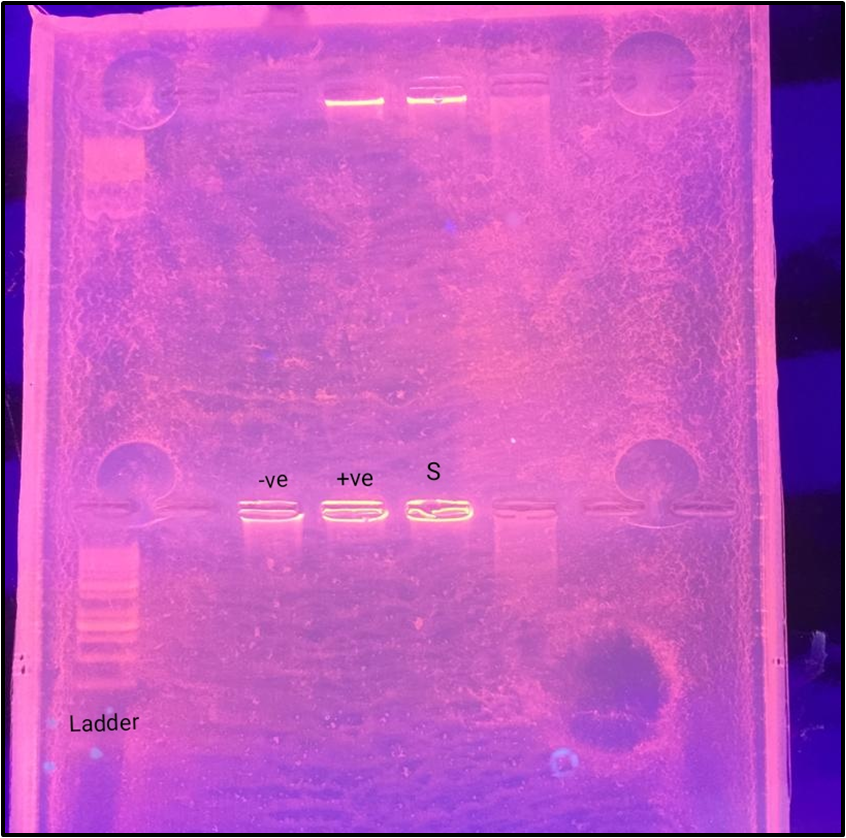
For analyses of the PCR amplication 10 µl of implified samples was electrophoresed on a 2% agarose gel made in TBE buffer and visualized by UV illumination after ethidium bromide (10 mg/ml) staining. Positive and negative controls were also treated as samples. The amplified (353bp) DNA fragment was verified with 100 bp DNA ladder to function an indicator for the sizes of the bands, border line result obtained but with PCR negative for HBV existence as in.
Globally, hepatitis B virus (HBV) may be a potentially known life-threatening infection of the liver 19. So maternal hepatitis always find an honest care so as to attenuate risk in consequence of pregnant path. during this study different methods or techniques were considered to seek out potential missed positive result for infection with hepatitis B virus among pregnant women. ICT, ELISA and PCR were used for such purpose. ICT gave one positive result for HBV, ELISA gave as border line result, means almost positive, so confirmed by PCR which revealed that negative, so there one 100 percent (100%) negative results for HBV infection. Our finding has an agreement with study conducted to detect HBV by means of quantitative method and molecular technique for undetected HBsAg 20. Same objective an engine for a prospective cohort study at the Obstetrics & Gynecology Hospital of Nantong University conducted among pregnant women for HBV infection, considering miscarriage, stillbirth and preterm birth. But different outcome, because the proportion of miscarriage was significantly higher among the HBV carriers than the controls (9.36 % vs 5.70 %; P <0.001), women with HBV carrier status were still more likely to possess miscarriage (adjusted OR 1.71, 95 % CI 1.23-2.38). Additionally, the incidences of other maternal and neonatal outcomes were similar between the 2 groups 21. Other Gambian study was performed among pregnant women to assess HBV infection; 426 pregnant women were recruited from our antenatal clinics and tested for HBsAg. Serum Hepatitis B surface antigen (HBsAg) was tested using commercial rapid diagnostic Elisa kits at the purpose of care. A prevalence rate of 9.20% among all pregnant women studied was found. Women who were likely to have been vaccinated had a prevalence rate of two.30% whiles those unlikely to possess been vaccinated had a prevalence of 13.71%. There was a statistically significant difference between those likely to possess been vaccinated and peopole unlikely to possess been vaccinated. The prevalence of hepatitis B infection was very high among pregnant women at EFSTH as within the high endemic zone that is quite than 8%. However, the prevalence rate is less than the national average of 15%. The prevalence is of moderate endemicity among the ladies who likely received vaccination during childhood 22.
Limitation of this study thanks to to low number of participants and ladies who likely received vaccination during childhood.
Decreased prevalence of hepatitis B viral infection among women with history of abortion and absence. Using screening, quantitative and molecular techniques made the ensure of HBV result absolutely satisfied.
| [1] | Shen, T.; Yan, X.-M. Hepatitis B virus genetic mutations and evolution in liver diseseses. World J. Gastroenterol. WJG 2014, 20, 5435. | ||
| In article | View Article PubMed | ||
| [2] | World Health Organization. Hepatitis B. (1 January 2019). | ||
| In article | |||
| [3] | Huang Y, Li L, Sun X, Lu M, Liu H, Tang G, Wang D, Hutin YJ. Screening of pregnant women for hepatitis B virus surface antigen (HBsAg) and subsequent management, Qiandongnan prefecture, Guizhou, China, 2010.Vaccine. 2013; 31(Suppl 9): J62-J65. | ||
| In article | View Article PubMed | ||
| [4] | Lao TT, Sahota DS, Law LW, Cheng YK, Leung TY. Age-specific prevalence of hepatitis B virus infection in young pregnant women, Hong Kong Special Administrative Region of China. Bull World Health Organ. 2014;92(11):782-789. | ||
| In article | View Article PubMed | ||
| [5] | Sorrell MF, Belongia EA, Costa J, Gareen IF, Grem JL, Inadomi JM, Kern ER, McHugh JA, Petersen GM, Rein MF, et al. National Institutes of Health consensus development conference statement: management of hepatitis B. Hepatol. 2009; 49(5 Suppl): S4-S12. | ||
| In article | View Article PubMed | ||
| [6] | Schweitzer A, Horn J, Mikolajczyk RT, Krause G, Ott JJ. Estimations of worldwide prevalence of chronic hepatitis B virus infection: a systematic review of data published between 1965 and 2013. Lancet. 2015; 386: 1546-1555. | ||
| In article | View Article | ||
| [7] | Trépo C, Chan HL, Lok A. Hepatitis B virus infection. Lancet. 2014; 384: 2053-2063. | ||
| In article | View Article | ||
| [8] | Fattovich G, Bortolotti F, Donato F. Natural history of chronic hepatitis B: special emphasis on disease progression and prognostic factors. J Hepatol. 2008; 48: 335-352. | ||
| In article | View Article PubMed | ||
| [9] | Maddrey WC. Hepatitis B: an important public health issue. J Med Virol. 2000; 61: 362-366. | ||
| In article | View Article | ||
| [10] | Yu M, Jiang Q, Gu X, Ju L, Ji Y, Wu K, Jiang H. Correlation between vertical transmission of hepatitis B virus and the expression of HBsAg in ovarian follicles and placenta. PLoS One. 2013; 8(1): e54246. | ||
| In article | View Article PubMed | ||
| [11] | Dutta DC. Hepatitis B viral infection in pregnancy. Mita S (Ed).5th edition.Textbook of obstetrics; 2009.New central book agency (P) ltd. Pg 289-291. | ||
| In article | |||
| [12] | Baawuaga EM, Enenebeaku MNO, Okopi JA, Damen JG. Hepatitis B virus (HBV) infection among pregnant women in Makurdi, Nigeria. J Biomed Res. 2008; 11: 155-159. | ||
| In article | View Article | ||
| [13] | Vallet-Pichard A, Pol S. Hepatitis B virus treatment beyond the guidelines: special populations and consideration of treatment withdrawal. TherAdv Gastroenterol. 2014; 7(4):148-155. | ||
| In article | View Article PubMed | ||
| [14] | Ai-Ming Cui,# Xiao-Yan Cheng,# Jian-Guo Shao,# Hai-Bo Li, Xu-Lin Wang, Yi Shen, Li-Jing Mao, Sheng Zhang, Hai-Yun Liu, Lei Zhang, and Gang Qin. Maternal hepatitis B virus carrier status and pregnancy outcomes: a prospective cohort study. BMC Pregnancy Childbirth.2016; 16: 87. | ||
| In article | View Article PubMed | ||
| [15] | Engelhard IM, van den Hout MA, Arntz A. Posttraumatic stress disorder after pregnancy loss. Gen Hosp Psychiatry 2001; 23: 62-66. | ||
| In article | View Article | ||
| [16] | Bulletti C, Flamigni C, Giacomucci E. Reproductive failure due to spontaneous abortion and recurrent miscarriage. Hum Reprod Update 1996; 2: 118-136. | ||
| In article | View Article PubMed | ||
| [17] | Hay P. Bacterial vaginosis and miscarriage. Curr Opin Infect Dis 2004; 17: 41-44. | ||
| In article | View Article PubMed | ||
| [18] | Henrietta Oneh Aba and Maryam Aminu.Seroprevalence of hepatitis B virus serological markers among pregnant Nigerian women. Ann Afr Med. 2016 Jan-Mar; 15(1): 20-27. | ||
| In article | View Article PubMed | ||
| [19] | WHO. Hepatitis B Fact sheet N° 204 2015. | ||
| In article | |||
| [20] | Yue-Ping Liu and Chun-Yan Yao. Rapid and quantitative detection of hepatitis B virus World J Gastroenterol. 2015 Nov 14; 21(42): 11954-11963. | ||
| In article | View Article PubMed | ||
| [21] | Ai-Ming Cui,# Xiao-Yan Cheng,# Jian-Guo Shao, # Hai-Bo Li, Xu-Lin Wang, Yi Shen, Li-Jing Mao, Sheng Zhang, Hai-Yun Liu, Lei Zhang, and Gang Qin. Maternal hepatitis B virus carrier status and pregnancy outcomes: a prospective cohort study BMC Pregnancy Childbirth. 2016; 16: 87. | ||
| In article | View Article PubMed | ||
| [22] | Mustapha Bittaye, Patrick Idoko, Bissallah Ahmed Ekele, Samuel Amenyi Obed & Ousman Nyan. Hepatitis B virus sero-prevalence amongst pregnant women in the Gambia. BMC Infectious Diseases. Volume 19, Article number: 259 (2019). | ||
| In article | View Article PubMed | ||
Published with license by Science and Education Publishing, Copyright © 2020 Maab Abdalbaset, Osama Mohammed Khair and Nadir Abuzeid
 This work is licensed under a Creative Commons Attribution 4.0 International License. To view a copy of this license, visit
http://creativecommons.org/licenses/by/4.0/
This work is licensed under a Creative Commons Attribution 4.0 International License. To view a copy of this license, visit
http://creativecommons.org/licenses/by/4.0/
| [1] | Shen, T.; Yan, X.-M. Hepatitis B virus genetic mutations and evolution in liver diseseses. World J. Gastroenterol. WJG 2014, 20, 5435. | ||
| In article | View Article PubMed | ||
| [2] | World Health Organization. Hepatitis B. (1 January 2019). | ||
| In article | |||
| [3] | Huang Y, Li L, Sun X, Lu M, Liu H, Tang G, Wang D, Hutin YJ. Screening of pregnant women for hepatitis B virus surface antigen (HBsAg) and subsequent management, Qiandongnan prefecture, Guizhou, China, 2010.Vaccine. 2013; 31(Suppl 9): J62-J65. | ||
| In article | View Article PubMed | ||
| [4] | Lao TT, Sahota DS, Law LW, Cheng YK, Leung TY. Age-specific prevalence of hepatitis B virus infection in young pregnant women, Hong Kong Special Administrative Region of China. Bull World Health Organ. 2014;92(11):782-789. | ||
| In article | View Article PubMed | ||
| [5] | Sorrell MF, Belongia EA, Costa J, Gareen IF, Grem JL, Inadomi JM, Kern ER, McHugh JA, Petersen GM, Rein MF, et al. National Institutes of Health consensus development conference statement: management of hepatitis B. Hepatol. 2009; 49(5 Suppl): S4-S12. | ||
| In article | View Article PubMed | ||
| [6] | Schweitzer A, Horn J, Mikolajczyk RT, Krause G, Ott JJ. Estimations of worldwide prevalence of chronic hepatitis B virus infection: a systematic review of data published between 1965 and 2013. Lancet. 2015; 386: 1546-1555. | ||
| In article | View Article | ||
| [7] | Trépo C, Chan HL, Lok A. Hepatitis B virus infection. Lancet. 2014; 384: 2053-2063. | ||
| In article | View Article | ||
| [8] | Fattovich G, Bortolotti F, Donato F. Natural history of chronic hepatitis B: special emphasis on disease progression and prognostic factors. J Hepatol. 2008; 48: 335-352. | ||
| In article | View Article PubMed | ||
| [9] | Maddrey WC. Hepatitis B: an important public health issue. J Med Virol. 2000; 61: 362-366. | ||
| In article | View Article | ||
| [10] | Yu M, Jiang Q, Gu X, Ju L, Ji Y, Wu K, Jiang H. Correlation between vertical transmission of hepatitis B virus and the expression of HBsAg in ovarian follicles and placenta. PLoS One. 2013; 8(1): e54246. | ||
| In article | View Article PubMed | ||
| [11] | Dutta DC. Hepatitis B viral infection in pregnancy. Mita S (Ed).5th edition.Textbook of obstetrics; 2009.New central book agency (P) ltd. Pg 289-291. | ||
| In article | |||
| [12] | Baawuaga EM, Enenebeaku MNO, Okopi JA, Damen JG. Hepatitis B virus (HBV) infection among pregnant women in Makurdi, Nigeria. J Biomed Res. 2008; 11: 155-159. | ||
| In article | View Article | ||
| [13] | Vallet-Pichard A, Pol S. Hepatitis B virus treatment beyond the guidelines: special populations and consideration of treatment withdrawal. TherAdv Gastroenterol. 2014; 7(4):148-155. | ||
| In article | View Article PubMed | ||
| [14] | Ai-Ming Cui,# Xiao-Yan Cheng,# Jian-Guo Shao,# Hai-Bo Li, Xu-Lin Wang, Yi Shen, Li-Jing Mao, Sheng Zhang, Hai-Yun Liu, Lei Zhang, and Gang Qin. Maternal hepatitis B virus carrier status and pregnancy outcomes: a prospective cohort study. BMC Pregnancy Childbirth.2016; 16: 87. | ||
| In article | View Article PubMed | ||
| [15] | Engelhard IM, van den Hout MA, Arntz A. Posttraumatic stress disorder after pregnancy loss. Gen Hosp Psychiatry 2001; 23: 62-66. | ||
| In article | View Article | ||
| [16] | Bulletti C, Flamigni C, Giacomucci E. Reproductive failure due to spontaneous abortion and recurrent miscarriage. Hum Reprod Update 1996; 2: 118-136. | ||
| In article | View Article PubMed | ||
| [17] | Hay P. Bacterial vaginosis and miscarriage. Curr Opin Infect Dis 2004; 17: 41-44. | ||
| In article | View Article PubMed | ||
| [18] | Henrietta Oneh Aba and Maryam Aminu.Seroprevalence of hepatitis B virus serological markers among pregnant Nigerian women. Ann Afr Med. 2016 Jan-Mar; 15(1): 20-27. | ||
| In article | View Article PubMed | ||
| [19] | WHO. Hepatitis B Fact sheet N° 204 2015. | ||
| In article | |||
| [20] | Yue-Ping Liu and Chun-Yan Yao. Rapid and quantitative detection of hepatitis B virus World J Gastroenterol. 2015 Nov 14; 21(42): 11954-11963. | ||
| In article | View Article PubMed | ||
| [21] | Ai-Ming Cui,# Xiao-Yan Cheng,# Jian-Guo Shao, # Hai-Bo Li, Xu-Lin Wang, Yi Shen, Li-Jing Mao, Sheng Zhang, Hai-Yun Liu, Lei Zhang, and Gang Qin. Maternal hepatitis B virus carrier status and pregnancy outcomes: a prospective cohort study BMC Pregnancy Childbirth. 2016; 16: 87. | ||
| In article | View Article PubMed | ||
| [22] | Mustapha Bittaye, Patrick Idoko, Bissallah Ahmed Ekele, Samuel Amenyi Obed & Ousman Nyan. Hepatitis B virus sero-prevalence amongst pregnant women in the Gambia. BMC Infectious Diseases. Volume 19, Article number: 259 (2019). | ||
| In article | View Article PubMed | ||