This study evaluates the microbiological quality of natural juices sold at the Dembé Market in N’Djamena, Chad. It aims to assess their safety and potential microbiological risks to consumers. A descriptive cross-sectional study was conducted from November 6, 2024, to January 6, 2025. Sixteen samples of natural juices were aseptically collected from various production and sales locations and then analyzed at the Food Quality Control Center (CECOQDA). The analyses focused on pH, total mesophilic aerobic flora, yeasts and molds, staphylococci, coliforms, Escherichia coli, Bacillus cereus, and Salmonella spp. The results indicate that the microbiological quality is generally inadequate. Thirteen out of sixteen samples (81.25%) exceeded the acceptable limit for total mesophilic aerobic flora, while nine (56.25%) showed excessive contamination by yeasts and molds. Staphylococcal contamination was the most significant problem, with 14 samples (87.5%) failing to meet standards. Coliforms also exceeded the limit in 13 samples (81.25%). Only samples 14 and 15 simultaneously met all the selected microbiological criteria. However, no exceedances of the thresholds were observed for E. coli, Bacillus cereus, and Salmonella. The pH values, ranging from 5.3 to 6.0, indicate relatively low to moderate acidity, which may promote the survival or growth of certain microorganisms. The results primarily suggest general hygiene deficiencies related to preparation, handling, equipment, water, and storage conditions. It is therefore necessary to strengthen good hygiene practices, water quality, equipment cleaning, and storage conditions.
Food safety is a major global public health issue, particularly in low- and middle-income countries (Lake et al., 2026) 1. Foodborne illnesses represent a significant health and socioeconomic burden, with an estimated 866 million cases and 1.52 million deaths annually 1. Controlling microbiological risks at all stages of the food chain therefore remains essential to protecting consumer health. Foods sold in markets are particularly vulnerable to contamination due to sometimes inadequate hygiene, water supply, and storage conditions 2. Poor sanitation and improper handling practices can promote the presence of indicator microorganisms and pathogens in these foods 3. Among the products in question, fruit juices are widely consumed due to their accessibility, freshness, and nutritional value. In particular, they are a source of vitamins, minerals, and various bioactive compounds; however, their nutritional value does not guarantee their microbiological safety 4. Fresh juices prepared without heat treatment can be contaminated by raw materials, water, utensils, containers, surfaces, and the hands of those handling them. The point-of-sale environment—including dust, dirt, and storage conditions—can also contribute to their contamination. In Ghana, 5 identified microbial contamination in fresh cut fruit sold in markets and transportation terminals. These findings underscore the importance of hygiene practices in preventing microbiological risks associated with ready-to-eat fresh produce. In Tanzania, 6 also reported high levels of contamination in fresh juices sold by street vendors in Dar es Salaam. The presence of total coliforms, fecal coliforms, and high levels of aerobic flora indicates health risks linked to poor preparation and marketing conditions. Previous studies had also detected significant levels of contamination, particularly by Escherichia coli, in juices sold on the streets of Dar es Salaam 7. In general, limited access to safe drinking water, inadequate sanitation facilities, and poor hygiene practices among vendors are factors that contribute to contamination 2. Microbiological contamination of fresh fruits and vegetables sold in public markets thus remains a major public health concern in Africa 8. In this context, the microbiological assessment of natural juices is essential for evaluating their sanitary quality and identifying potential risks associated with their consumption. In N’Djamena, where these beverages are commonly prepared and sold in markets, on the streets, and in public spaces, available data on their microbiological quality remain limited. This study therefore seeks to determine the microbiological quality of natural juices sold in the Dembé market and to assess the potential risks they may pose to consumers. The overall objective is to evaluate the microbiological quality of natural juices sold in the Dembé market in N’Djamena, Chad, in order to assess their sanitary quality and contribute to the prevention of microbiological risks.
This is a descriptive cross-sectional study evaluating the microbiological quality of natural juices sold at the Dembé Market in the city of N’Djamena. The study was conducted over a two-month period, from November 6, 2024, to January 6, 2025.
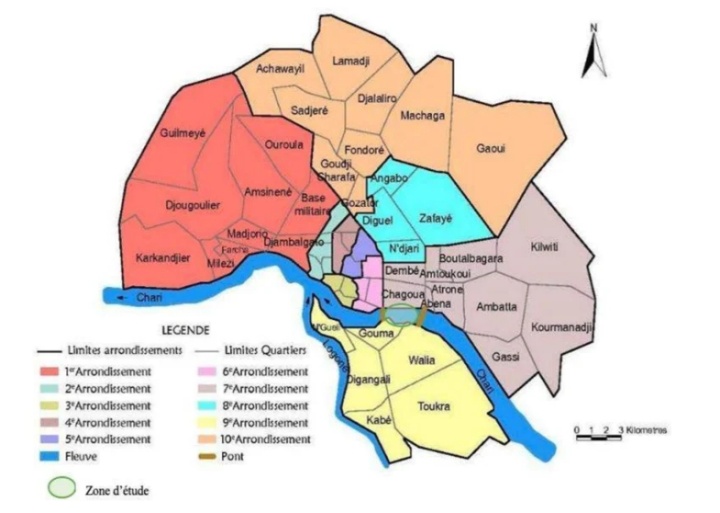
2.2. Study Context and LocationThe study was conducted at the Dembé Market in N’Djamena, the capital of the Republic of Chad. Formerly known as Fort-Lamy, the city was founded in 1900 and is located in the southwestern part of the country, at the confluence of the Chari and Logone Rivers, across from the Cameroonian city of Kousséri. N’Djamena is located between 12°06′–12°07′ N and 15°03′–15°04′ E, on an alluvial plain characterized by gentle slopes and an elevation ranging from 293 to 298 m. Data from the second General Population and Housing Census (RGPH2) indicate that the city of N’Djamena had a population of 1,092,066 in 2009, confirming its demographic significance on a national scale 9.
Samples were collected from various production and sales locations for natural juices on the streets of N’Djamena. Microbiological analyses of the samples were conducted at the Food Quality Control Center (CECOQDA).

A total of sixteen (16) samples of natural juices were collected from various production and sales sites in the Dembé market in the city of N’Djamena. Sampling was conducted under aseptic conditions to minimize the risk of external contamination and ensure the reliability of the microbiological results 10. Each sample was identified by a code corresponding to the site and the type of juice collected. After collection, the samples were placed in sterile, hermetically sealed containers and promptly transported to the laboratory for analysis. During transport, they were kept in a cooler at a temperature of ≤ 4 °C to limit the growth of microorganisms. The volume collected was sufficient to allow for the completion of all planned microbiological analyses.
2.4. Microbiological Quality AnalysisThe evaluation of the microbiological quality of the juices involved detecting and/or counting various microorganisms that serve as indicators of hygienic quality, as well as—depending on the selected parameters—certain pathogenic microorganisms. The analyses were conducted in accordance with standardized microbiological methods and the technical procedures in effect at the CECOQDA laboratory.
Decimal dilutions were prepared to gradually reduce the microbial concentration of the samples and, after inoculation, obtain a colony count sufficient for reliable enumeration.
• Procedure
Prior to analysis, each juice sample was thoroughly homogenized to ensure the most uniform distribution possible of the microorganisms present in the product. A specified amount of the sample was then taken using sterile equipment and added to a suitable diluent, specifically buffered peptone water (BPW), to prepare the stock suspension. From this suspension, successive decimal dilutions were prepared. For each dilution, 1 mL of the previous suspension was aseptically transferred into a tube containing 9 mL of sterile TPE, then homogenized using a vortex mixer. This procedure yields successive dilutions of 10⁻¹, 10⁻², 10⁻³, and so on, depending on the presumed microbial load of the sample. All procedures were performed under strict aseptic conditions to prevent any cross-contamination between samples and the various dilutions.
Microbial counting was performed using the various decimal dilutions prepared earlier. After inoculation onto the appropriate culture media, the plates were incubated under conditions specific to each microorganism being tested. After incubation, characteristic colonies were counted on plates that had a sufficient number of colonies to allow for a reliable count. The results were expressed in colony-forming units per milliliter (CFU/mL) of juice.
The microbial concentration was calculated using the following formula:
|
When multiple samples from different dilutions were selected for the calculation, the microbial concentration was determined in accordance with the calculation rules of the standardized method used. The results were then compared to the microbiological criteria applicable to the fruit juices and beverages in question, in order to assess their microbiological quality and compliance with health standards.
The pH of the beverages was measured using a pH meter that had been previously calibrated with reference buffer solutions. After calibration, the electrode was rinsed with distilled water and then immersed in the sample. Once the displayed value had stabilized, the pH was read and recorded. pH measurement is an important physicochemical parameter in interpreting the microbiological quality of beverages, as the acidity of the product influences the growth and survival of microorganisms. Measurement and handling procedures were performed in accordance with general good practices applicable to microbiological food analysis 10.
• Procedure
For liquid samples, 1 mL of the sample was aseptically transferred to a sterile Petri dish. An appropriate volume of pre-melted PCA (Plate Count Agar) was then added. The contents of the dish were homogenized using circular motions to ensure uniform distribution of the inoculum throughout the medium. The same procedure was performed using the various decimal dilutions of the sample. After the medium solidified, the dishes were incubated aerobically at 30°C for 72 hours. Colonies were counted on plates showing an interpretable number of colonies, and the results were expressed in colony-forming units per milliliter (CFU/mL).
• Procedure
The yeast and mold count was performed by surface plating. A volume of 0.1 mL of the sample or its decimal dilutions was aseptically deposited onto the surface of Petri dishes pre-filled with Sabouraud culture medium. The inoculum was spread evenly using a sterile spreading loop. The dishes were then incubated at 25°C for 72 hours. After incubation, the yeast and mold colonies were counted, and the results were expressed in CFU/mL.
• Procedure
The detection and enumeration of coagulase-positive staphylococci were performed by surface plating on an appropriate selective agar medium. A specified amount of the sample or stock suspension was plated onto the surface of the medium. The various decimal dilutions were also inoculated under the same conditions. The plates were incubated aerobically at a temperature between 34 and 38°C for 24 to 48 hours, depending on the method used. Characteristic colonies were then examined and, when necessary, confirmed by the coagulase test.
• Procedure
The detection and enumeration of Escherichia coli were performed on TBX (Tryptone Bile X-glucuronide) medium. A 1 mL volume of the sample or of each of the selected dilutions was aseptically transferred into sterile Petri dishes. Approximately 15 mL of TBX agar was then added. After mixing, the dishes were allowed to stand until the medium solidified. The dishes were then incubated at 44°C for 24 hours 12. Characteristic colonies were observed and counted.
• Procedure
The detection and enumeration of suspected Bacillus cereus were performed on MYP (Mannitol Egg Yolk Polymyxin) medium. A 0.1 mL volume of the sample or decimal dilutions was surface-inoculated onto Petri dishes containing MYP medium. The dishes were then incubated at 30°C for 24 hours. Colonies exhibiting the expected morphological characteristics on MYP medium were counted.
• Procedure
The detection of Salmonella spp. was performed using a method consisting of several successive steps: nonselective pre-enrichment, selective enrichment, isolation, biochemical confirmation, and, if necessary, serological confirmation.
Pre-enrichment: 25 g of sample are mixed with 225 mL of buffered peptone water (EPT), then incubated at 37°C for 18 h.
Selective enrichment: 0.1 mL of the pre-enrichment was inoculated into RVS and MKTTn broths, then incubated at 41.5°C and 37°C, respectively, for 24 hours.
Isolation: The enriched cultures are inoculated onto XLD and Hektoen agar, then incubated at 37°C for 24 h.
Preliminary identification: Colonies exhibiting a characteristic Salmonella appearance are selected and streaked onto a non-selective medium (GO or TSA).
Biochemical confirmation: Suspected colonies are identified using the API 20E panel after incubation at 37 °C for 24 hours.
Serological confirmation: Identified strains are confirmed by agglutination with specific O, H, and Vi antisera, in accordance with 13.
• Procedure
Coliform counts were performed on VRBL medium (bile agar with crystal violet and neutral red) using the deep plating method. A 1 mL volume of the sample and the selected decimal dilutions was aseptically transferred into sterile Petri dishes. Approximately 15 mL of VRBL agar was then added. After homogenization, the dishes were allowed to stand until the medium solidified. The dishes were then incubated at 37 °C for 24 hours. Characteristic colonies were counted, and the results were expressed in CFU/mL.
The results of the count were expressed in CFU/mL. For microorganisms tested for qualitatively, the results were expressed as presence or absence in the analyzed sample volume, depending on the method used. The microbiological quality of the juices was assessed based on microbiological criteria and food safety standards. The results made it possible to evaluate the level of contamination in the various samples and to identify any potential microbiological risks associated with their consumption.
2.5. Data Processing and AnalysisThe data obtained during the microbiological analyses were recorded on a data collection form and then entered into Microsoft Excel 2010. The data were verified to identify any data entry errors, missing values, or inconsistencies. The microbiological results were expressed in colony-forming units per milliliter (CFU/mL) when a count was applicable. The data were then organized into tables and graphs.
2.6. Ethical ConsiderationsThis study was conducted in accordance with the ethical principles applicable to scientific research and the relevant institutional requirements. Ethical approval was obtained from the INSTA Ethics Committee. The information collected as part of the study was used exclusively for scientific purposes. The data were kept confidential, and access to them was restricted to authorized personnel. No information that would allow for the direct identification of the individuals involved in the collected data was disclosed.
The pH values of the analyzed juices range from 5.3 to 6.0. The majority of the samples (14 samples) have a pH of 6.0, while samples 1 and 12 have a slightly lower value of 5.3. These results indicate that the juices studied have relatively low to moderate acidity. The variation observed among the samples could be related, in particular, to the type and degree of ripeness of the fruits used, as well as to the conditions under which the juices were prepared and stored.
3.2. Total Mesophilic Flora at 30°C
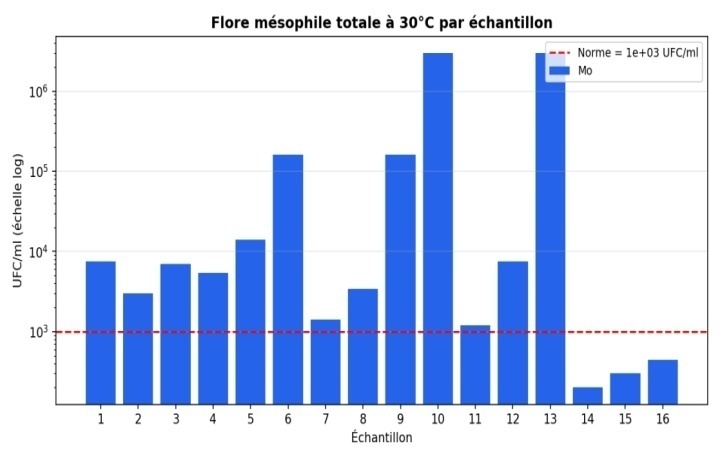
Thirteen out of sixteen samples—or 81.25%—had a microbial count exceeding the permissible limit of 10³ CFU/mL. Samples 10 and 13 had the highest contamination levels, reaching 3.0 × 10⁶ CFU/mL, which is approximately 3,000 times the limit. In contrast, only samples 14, 15, and 16 met the standard, with counts ranging from 2.0 × 10² to 4.4 × 10² CFU/mL. The fact that the limit was exceeded in the vast majority of samples indicates insufficient microbiological quality and may reflect inadequate hygiene conditions during the preparation, handling, transport, or storage of the juices.
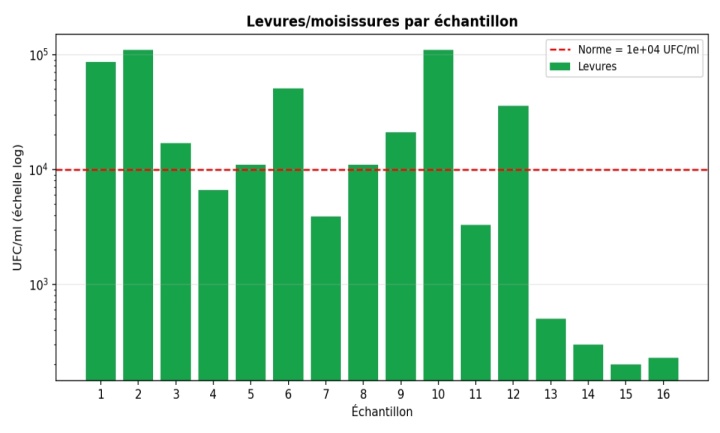
3.3. Yeasts and MoldsNine out of sixteen samples—or 56.25%—had a fungal count exceeding the acceptable limit of 10⁴ CFU/mL. The highest concentrations were observed in samples 2 and 10, with a count of 1.1 × 10⁵ CFU/mL. In contrast, samples 4, 7, 11, 13, 14, 15, and 16 remained within the standard. This high frequency of non-compliance indicates significant fungal contamination in the juices analyzed. It may be caused by inadequate storage conditions, including prolonged storage, repeated exposure to ambient air, or a break in the cold chain. These conditions, particularly in the presence of high temperatures and high humidity, can promote the growth of yeasts and molds.


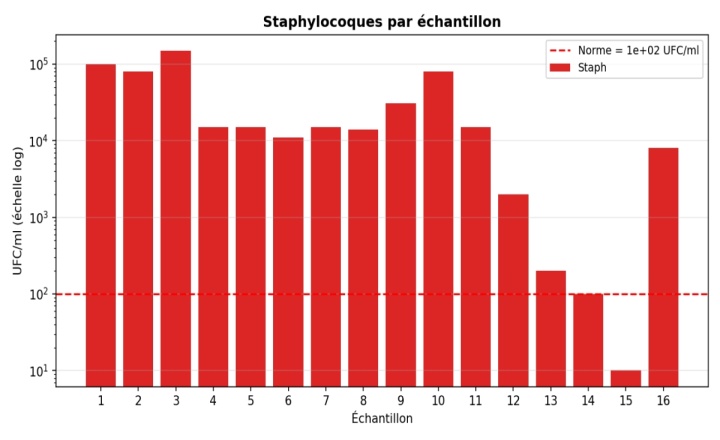
This is the most critical parameter in the study, with fourteen out of sixteen samples (87.5%) showing a count exceeding the permissible limit of 10² CFU/mL. The highest level of contamination was recorded in sample 3, with a value of 1.5 × 10⁵ CFU/mL—approximately 1,500 times the regulatory limit. Only samples 14 and 15 met the standard. The high frequency of staphylococcal contamination indicates inadequate hygiene conditions during the handling and preparation of the juices. This may be linked, in particular, to practices such as direct manual contact with the product, insufficient handwashing, or improper use of personal protective equipment.
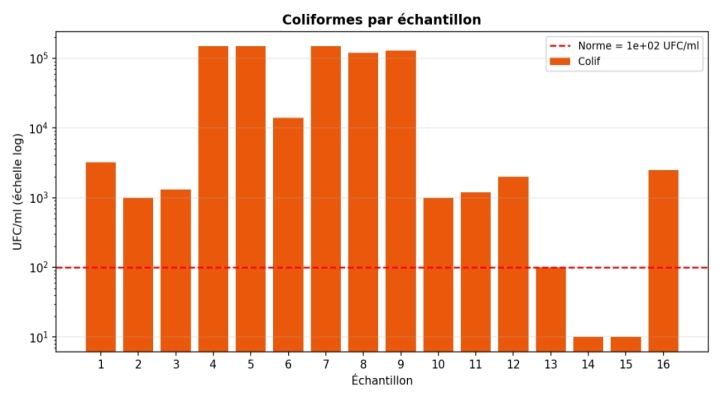
3.5. ColiformsAn analysis of Figure 5 shows that thirteen out of sixteen samples—or 81.25%—exceed the permissible limit of 10² CFU/mL. The highest contamination levels were observed in samples 4, 5, and 7, with values reaching 1.5 × 10⁵ CFU/mL. In contrast, only samples 13, 14, and 15 meet the standard. The simultaneous exceedance of the limits for this parameter, total mesophilic aerobic flora, and staphylococci highlights a general failure of hygiene conditions during the various stages of preparation, handling, storage, and marketing of juices in the informal sales channel.

Of the sixteen samples analyzed, only samples 14 and 15 simultaneously meet all the regulatory microbiological criteria established for the four parameters studied. Sample 13 is close to compliance but remains noncompliant because it exceeds the permissible limits for total mesophilic aerobic flora and staphylococci. The non-compliances observed mainly concern microbiological indicators associated with hygiene and handling conditions during the preparation, storage, and marketing of juices:
n Total mesophilic aerobic flora: 13 out of 16 samples non-compliant (81.25%);
n Yeast and mold: 9 out of 16 samples non-compliant (56.25%);
n Staphylococci: 14 out of 16 samples non-compliant (87.5%);
n Coliforms: 13 out of 16 samples non-compliant (81.25%).
Conversely, the results obtained for Escherichia coli, Bacillus cereus, and Salmonella—which are not shown in the graph because the values were consistent across all sixteen samples—indicate that none of the established thresholds were exceeded. Taken together, these results suggest that the main microbiological deficiencies observed are more closely associated with general shortcomings in hygiene and handling practices than with confirmed fecal contamination or the detectable presence of specific pathogens.
n Hydrogen ion concentration (pH)
The pH values obtained in this study (5.3 to 6.0) are relatively high compared to those reported in several studies on fresh fruit juices. 14, for example, recorded values ranging from 2.9 to 4.2 for various passion fruit, pineapple, and mango juices. The authors emphasize that pH is an important factor in juice stability and that it influences how juices are affected by microorganisms. The relatively high values observed in our study could thus make these juices less hostile to the growth of certain bacteria than highly acidic juices. This hypothesis is consistent with recent work by 15, which showed that fresh, unpasteurized juices can have high levels of aerobic microorganisms, coliforms, and yeasts/molds, even when certain pathogens such as Salmonella and E. coli are not detected. Furthermore, differences in pH among the samples can be attributed to several factors, including the species and variety of fruit used, their degree of ripeness, any dilution of the juice, and storage conditions 14.
n Assessment of Total Mesophilic Aerobic Flora and the Hygienic Quality of Juices
Total mesophilic aerobic flora is an important indicator of the overall microbiological quality of food. In particular, it allows for an assessment of hygiene conditions during preparation, handling, and storage. In this study, 13 out of 16 samples (81.25%) exceeded the acceptable limit of 10³ CFU/mL. Samples 10 and 13 had the highest contamination levels, at 3.0 × 10⁶ CFU/mL. This value is approximately 3,000 times the regulatory limit. Only samples 14, 15, and 16 were compliant, with counts ranging from 2.0 × 10² to 4.4 × 10² CFU/mL. The high rate of noncompliance reflects the overall unsatisfactory microbiological quality of the juices. These results are similar to those reported by 16, who found that 85.9% of juices in Ethiopia were noncompliant. These authors specifically linked the contamination to washing practices, storage conditions, and the training of handlers. In Tanzania, 7 also reported high levels of contamination in juices sold through informal channels. They emphasized the importance of hygienic conditions in preparation and sales areas. In Ethiopia, 17 observed high levels of total viable flora in juices sold in cafes and restaurants. More recently, 18 reported unsatisfactory bacteriological quality in 76.6% of the juices studied. In particular, they identified handler training, contact surfaces, vendor practices, and pH as associated factors. The contamination observed in our study could thus result from several sources throughout the production chain. Fruit, water, utensils, work surfaces, the hands of handlers, and the environment may all contribute to this contamination. 19 also highlighted the role of poor hygiene practices in the contamination of fruit beverages sold in markets.
These results show that conditions related to preparation, storage, and street vending need to be better controlled. The non-compliance rate of 81.25% is therefore a cause for concern regarding the sanitary quality of the juices studied. It underscores the need to strengthen good hygiene practices, particularly handwashing, fruit washing, equipment disinfection, water quality, and storage conditions.
n Fungal Contamination of Fruit Juices
Testing for yeast and mold is an important indicator of the microbiological quality and stability of fruit juices. In our study, 9 out of 16 samples (56.25%) had a count exceeding the acceptable limit of 10⁴ CFU/mL. The highest counts were observed in samples 2 and 10, at 1.1 × 10⁵ CFU/mL. In contrast, samples 4, 7, 11, 13, 14, 15, and 16 complied with the established limit.
This high proportion of noncompliant samples indicates significant fungal contamination in the juices analyzed. Yeasts and molds are particularly prevalent in fresh juices due to their ability to grow in acidic, nutrient-rich environments. 14 demonstrated that the microbiological quality of fresh, unpasteurized juices is strongly influenced by preparation and storage conditions. The authors also emphasized the importance of physicochemical parameters, particularly pH, in the microbiological stability of juices. Comparable results were reported by 15, who detected yeast and mold in several commercially available fresh fruit and vegetable juices. This contamination can originate from the fruit itself, water, utensils, work surfaces, or the preparation environment. Handling juices under inadequate hygienic conditions can also promote secondary contamination. Furthermore, prolonged storage can allow for the gradual multiplication of fungal microorganisms initially present in the product. Repeated exposure of juices to ambient air is another factor that promotes the introduction of mold spores and yeast cells. These factors can be particularly significant in street vending settings, where control over temperature and the environment is often limited. 7 thus emphasized the importance of hygiene and storage conditions for the microbiological quality of juices sold through informal channels. Similarly, 16 linked the contamination of fresh juices to several improper preparation, handling, and storage practices.
In this study, the high temperatures that may characterize storage conditions can therefore promote the growth of yeasts and molds. The non-compliance rate of 56.25% is thus a cause for concern regarding the stability and microbiological quality of the juices. It highlights the need to improve storage conditions, reduce shelf life, and limit the products’ exposure to the environment. Adherence to good hygiene and storage practices, combined with proper temperature control, therefore appears essential for reducing fungal contamination of juices.
n Staphylococcal Contamination and Hygiene Conditions of Juices
Staphylococcal contamination is the most critical microbiological parameter in this study. In fact, 14 out of 16 samples (87.5%) exceeded the acceptable limit of 10² CFU/mL. Sample 3 had the highest bacterial load, at 1.5 × 10⁵ CFU/mL, which is approximately 1,500 times the limit. Only samples 14 and 15 met the established standard. This high rate of contamination indicates inadequate hygiene conditions during the preparation and handling of the juices. Staphylococci can originate, in particular, from the skin and nasal flora of those handling the juices, making their presence a possible indicator of human-derived contamination. 20 demonstrated that freshly prepared juices can be contaminated by various microorganisms due to inadequate hygiene practices. Similarly, 16 highlighted the influence of handlers’ practices, utensil hygiene, and preparation conditions on juice contamination. 15 also reported significant contamination of commercially available fresh juices when hygiene conditions are not properly controlled. In our context, contamination could be facilitated by direct manual contact, inadequate handwashing, and improperly cleaned equipment. Repeated handling and exposure of juices to the environment during street vending can also promote secondary contamination. These findings are consistent with those in 7, which highlighted the importance of hygiene conditions in the contamination of juices sold through informal channels. The high bacterial load observed in sample 3 particularly underscores the importance of strengthening preventive measures. However, the presence of staphylococci alone does not confirm the presence of Staphylococcus aureus or toxins without specific identification. Thus, the 87.5% non-compliance rate underscores the need to improve handwashing practices and the 10 of juices.
n Overall Assessment of the Microbiological Quality and Hygiene Level of Juices
The overall analysis shows that the microbiological quality of the juices studied is inadequate, since only samples 14 and 15 simultaneously meet the established criteria. Sample 13 remains noncompliant due to exceeding the limits for total mesophilic aerobic flora and staphylococci. Staphylococci had the highest non-compliance rate (87.5%), followed by total mesophilic aerobic flora and coliforms (81.25% each). Yeasts and molds were also present in a significant proportion of the samples (56.25%). This predominance of indicator microorganisms reflects a general lack of adequate hygiene during the preparation, handling, and storage of juices. Comparable results were reported by 16, who linked the contamination of fresh juices to handling practices, utensil cleaning, and storage conditions. Similarly, 7 highlighted the inadequate microbiological quality of juices sold through informal channels in Dar es Salaam, Tanzania. These authors emphasized, in particular, the importance of hygiene conditions in food preparation and sales areas. 15 also reported significant contamination of commercially available fresh juices when preparation and handling practices are not adequately controlled. The contamination observed may originate from water, fruit, utensils, work surfaces, the hands of those handling the product, and the environment. Informal sales conditions, particularly repeated handling and inadequate storage, can exacerbate this contamination. On the other hand, the fact that the thresholds for E. coli, Bacillus cereus, and Salmonella typhi were not exceeded is a positive finding. However, this alone is not sufficient to guarantee the safety of the juices, given the high levels of indicator microorganisms observed. Thus, the results suggest that the main shortcomings are related to general hygiene deficiencies rather than detectable contamination by the targeted pathogens. Strengthening good hygiene practices, water quality, equipment cleaning, and storage conditions is therefore essential to improve the sanitary quality of the juices.
At the conclusion of this study, the evaluation of the microbiological and physicochemical quality of fruit juices sold at the Dembé market revealed that their overall sanitary quality was inadequate. pH values ranging from 5.3 to 6.0 indicate that the juices are slightly to moderately acidic, while microbiological analyses reveal high rates of noncompliance for several indicators. Total mesophilic aerobic flora exceeded the permissible limit in 81.25% of the samples, coliforms in 81.25%, yeasts and molds in 56.25%, and staphylococci in 87.5% of the samples. These results primarily indicate inadequate hygiene conditions during the preparation, handling, transport, storage, and marketing of the juices. On the other hand, the results for Escherichia coli, Bacillus cereus, and Salmonella remain in compliance with the established criteria, which is a positive finding. However, their compliance is not sufficient to guarantee the overall safety of the products, given the high levels observed for hygiene indicator microorganisms. In total, only two out of sixteen samples (12.5%) simultaneously met all the microbiological criteria examined. This situation highlights the need to strengthen good hygiene and manufacturing practices, including hand and fruit washing, the use of water of satisfactory quality, the cleaning and disinfection of equipment, the protection of juices from environmental contamination, and adherence to proper storage conditions. These measures are essential for reducing microbial contamination and improving the sanitary quality of fruit juices sold on the market, particularly in the context of informal sales.
This study has certain limitations that should be taken into account when interpreting the results. First, the sample size, limited to 16 samples, remains relatively small and does not allow the results to be generalized to all the products studied. Further studies, involving a larger sample size and covering multiple sampling sites, would be necessary to confirm and better characterize the observed trends. Second, the cross-sectional nature of the study does not allow for the establishment of a causal relationship or the precise identification of sources and routes of contamination. Finally, since the study was conducted over a specific period and under specific sampling conditions, seasonal variations and environmental factors that could influence microbiological contamination could not be fully assessed. These limitations underscore the importance of conducting longitudinal studies with broader sampling and an in-depth analysis of the risk factors associated with contamination.
| [1] | Lake, R. J., Devleesschauwer, B., Majowicz, S. E., Robertson, L. J., Sletting Jakobsen, L., Agudo, A., Pires, S. M., Kirk, M. D., Scallan Walter, E., Keddy, K. H., et al. (2026). WHO estimates of the global, regional, and national burden of 42 foodborne infectious and chemical hazards, 2000–21: an updated data synthesis. The Lancet Global Health. 2026; 14: 103994. | ||
| In article | View Article PubMed | ||
| [2] | Desye, B., Tesfaye, A. H., Daba, C., & Berihun, G. (2023). Food safety knowledge, attitude, and practice of street food vendors and associated factors in low- and middle-income countries: A systematic review and meta-analysis. PLOS ONE, 18(7), e0287996. | ||
| In article | View Article PubMed | ||
| [3] | Microbiology of street food: understanding risks to improve safety. (2023). Journal of Applied Microbiology, 134. | ||
| In article | View Article PubMed | ||
| [4] | Dissanayake, I. H., Zak, V., Kaur, K., Jaye, K., Ayati, Z., Chang, D., Li, C. G., & Bhuyan, D. J. (2023). Australian native fruits and vegetables: Chemical composition, nutritional profile, bioactivity and potential valorization by industries. Critical Reviews in Food Science and Nutrition, 63(27), 8511–8544. | ||
| In article | View Article PubMed | ||
| [5] | Boampong, K., Essiaw-Quayson, G., Sarpong, V., & Larbi, J. A. (2023). Microbial Quality of Some Fresh-Cut Ready-to-Eat Fruits Sold in Some Markets and Bus Terminals in the Kumasi Metropolis, Ghana. Journal of Food Quality, 2023, 9495339. | ||
| In article | View Article | ||
| [6] | Rubaratuka, J. I., Mrema, G. D., & Lyimo, T. J. (2024). Microbial Quality of Fresh Juices Sold by Street Vendors and Associated Human Health Risks: The Case of Ilala Ward, Dar es Salaam City, Tanzania. Tanzania Journal of Science, 49(5), 996–1010. | ||
| In article | View Article | ||
| [7] | Simforian, E., Nonga, H. E., & Ndabikunze, B. K. (2015). Assessment of microbiological quality of raw fruit juice vended in Dar es Salaam city, Tanzania. Food Control, 57, 302–307. | ||
| In article | View Article | ||
| [8] | Sane, S., Tene, S. D., Diouara, A. A. M., Coundoul, S., Mbengue, M., & Dieye, Y. (2024). Bacterial community in fresh fruits and vegetables sold in streets and open-air markets of Dakar, Senegal. BMC Microbiology, 24, 471. | ||
| In article | View Article PubMed | ||
| [9] | INSEED. (2012). Deuxième Recensement Général de la Population et de l’Habitat (RGPH2, 2009): Résultats globaux définitifs. N’Djamena, Tchad: Institut National de la Statistique, des Études Économiques et Démographiques, 155 p. | ||
| In article | |||
| [10] | (ISO, 2024). Microbiology of the food chain — General requirements and guidance for microbiological examinations. ISO 7218: 2024. Geneva: International Organization for Standardization. | ||
| In article | |||
| [11] | Silva, N. da, Taniwaki, M. H., Junqueira, V. C. A., Silveira, N. F. A., Okazaki, M. M., & Gomes, R. A. R. (2019). Microbiological Examination Methods of Food and Water: A Laboratory Manual (2nd ed.). CRC Press, Boca Raton, p 25. | ||
| In article | |||
| [12] | ISO. (2001). Microbiology of food and animal feeding stuffs — Horizontal method for the enumeration of beta-glucuronidase-positive Escherichia coli — Part 2. ISO 16649-2:2001. Geneva: International Organization for Standardization. | ||
| In article | |||
| [13] | ISO. (2017). Microbiology of the food chain — Horizontal method for the detection, enumeration and serotyping of Salmonella — Part 1: Detection of Salmonella spp. ISO 6579-1:2017. Geneva: International Organization for Standardization. | ||
| In article | |||
| [14] | Kaddumukasa, P. P., Imathiu, S. M., Mathara, J. M., & Nakavuma, J. L. (2017). Influence of physicochemical parameters on storage stability: Microbiological quality of fresh unpasteurized fruit juices. Food Science & Nutrition, 5(6), 1098–1105. | ||
| In article | View Article PubMed | ||
| [15] | Lee, S., Han, A., Jo, S., Cheon, H., Song, H., Jang, A.-R., Kim, D., & Lee, S.-Y. (2022). Microbiological quality and safety of commercial fresh fruit and vegetable juices in Korea. LWT, 153, 112432. | ||
| In article | View Article | ||
| [16] | Mengistu, D. A., Baraki, N., & Tesema, T. G. (2020). Pathogenic bacterial species in locally prepared fresh fruit juices sold in juice houses of Eastern Ethiopia. Microbiology Insights, 14, 1–8. | ||
| In article | View Article PubMed | ||
| [17] | Fufa, B. K., & Liben, M. D. (2018). Microbiological quality of fruit juices sold in cafes and restaurants of Shewarobit town, Amhara, Ethiopia. African Journal of Microbiology Research, 12(26), 623–628. | ||
| In article | View Article | ||
| [18] | Abie, A. B., Berihun, G., & Berhanu, L. (2026). Bacteriological quality and associated factors of locally prepared fresh fruit juices in Northeast Ethiopia. Scientific Reports, 16, 17391. | ||
| In article | View Article PubMed | ||
| [19] | Sharma, N., Singh, K., Toor, D., Pai, S. S., Chakraborty, R., & Khan, K. M. (2020). Antibiotic resistance in microbes from street fruit drinks and hygiene behavior of the vendors in Delhi, India. International Journal of Environmental Research and Public Health, 17(13), 4829. | ||
| In article | View Article PubMed | ||
| [20] | Aneja, K. R., Dhiman, R., Aggarwal, N. K., Kumar, V., & Kaur, M. (2014). Microbes associated with freshly prepared juices of citrus and carrots. International Journal of Food Science, 2014, 408085. | ||
| In article | View Article PubMed | ||
Published with license by Science and Education Publishing, Copyright © 2026 ALI Barka Mahamat, AHAMAT Djabir Attye, Brahim Adoum Ahmat, ABDOULAYE Brahim, ALI Senoussi Moukhtar and Soudy Imar DJIBRINE
 This work is licensed under a Creative Commons Attribution 4.0 International License. To view a copy of this license, visit
http://creativecommons.org/licenses/by/4.0/
This work is licensed under a Creative Commons Attribution 4.0 International License. To view a copy of this license, visit
http://creativecommons.org/licenses/by/4.0/
| [1] | Lake, R. J., Devleesschauwer, B., Majowicz, S. E., Robertson, L. J., Sletting Jakobsen, L., Agudo, A., Pires, S. M., Kirk, M. D., Scallan Walter, E., Keddy, K. H., et al. (2026). WHO estimates of the global, regional, and national burden of 42 foodborne infectious and chemical hazards, 2000–21: an updated data synthesis. The Lancet Global Health. 2026; 14: 103994. | ||
| In article | View Article PubMed | ||
| [2] | Desye, B., Tesfaye, A. H., Daba, C., & Berihun, G. (2023). Food safety knowledge, attitude, and practice of street food vendors and associated factors in low- and middle-income countries: A systematic review and meta-analysis. PLOS ONE, 18(7), e0287996. | ||
| In article | View Article PubMed | ||
| [3] | Microbiology of street food: understanding risks to improve safety. (2023). Journal of Applied Microbiology, 134. | ||
| In article | View Article PubMed | ||
| [4] | Dissanayake, I. H., Zak, V., Kaur, K., Jaye, K., Ayati, Z., Chang, D., Li, C. G., & Bhuyan, D. J. (2023). Australian native fruits and vegetables: Chemical composition, nutritional profile, bioactivity and potential valorization by industries. Critical Reviews in Food Science and Nutrition, 63(27), 8511–8544. | ||
| In article | View Article PubMed | ||
| [5] | Boampong, K., Essiaw-Quayson, G., Sarpong, V., & Larbi, J. A. (2023). Microbial Quality of Some Fresh-Cut Ready-to-Eat Fruits Sold in Some Markets and Bus Terminals in the Kumasi Metropolis, Ghana. Journal of Food Quality, 2023, 9495339. | ||
| In article | View Article | ||
| [6] | Rubaratuka, J. I., Mrema, G. D., & Lyimo, T. J. (2024). Microbial Quality of Fresh Juices Sold by Street Vendors and Associated Human Health Risks: The Case of Ilala Ward, Dar es Salaam City, Tanzania. Tanzania Journal of Science, 49(5), 996–1010. | ||
| In article | View Article | ||
| [7] | Simforian, E., Nonga, H. E., & Ndabikunze, B. K. (2015). Assessment of microbiological quality of raw fruit juice vended in Dar es Salaam city, Tanzania. Food Control, 57, 302–307. | ||
| In article | View Article | ||
| [8] | Sane, S., Tene, S. D., Diouara, A. A. M., Coundoul, S., Mbengue, M., & Dieye, Y. (2024). Bacterial community in fresh fruits and vegetables sold in streets and open-air markets of Dakar, Senegal. BMC Microbiology, 24, 471. | ||
| In article | View Article PubMed | ||
| [9] | INSEED. (2012). Deuxième Recensement Général de la Population et de l’Habitat (RGPH2, 2009): Résultats globaux définitifs. N’Djamena, Tchad: Institut National de la Statistique, des Études Économiques et Démographiques, 155 p. | ||
| In article | |||
| [10] | (ISO, 2024). Microbiology of the food chain — General requirements and guidance for microbiological examinations. ISO 7218: 2024. Geneva: International Organization for Standardization. | ||
| In article | |||
| [11] | Silva, N. da, Taniwaki, M. H., Junqueira, V. C. A., Silveira, N. F. A., Okazaki, M. M., & Gomes, R. A. R. (2019). Microbiological Examination Methods of Food and Water: A Laboratory Manual (2nd ed.). CRC Press, Boca Raton, p 25. | ||
| In article | |||
| [12] | ISO. (2001). Microbiology of food and animal feeding stuffs — Horizontal method for the enumeration of beta-glucuronidase-positive Escherichia coli — Part 2. ISO 16649-2:2001. Geneva: International Organization for Standardization. | ||
| In article | |||
| [13] | ISO. (2017). Microbiology of the food chain — Horizontal method for the detection, enumeration and serotyping of Salmonella — Part 1: Detection of Salmonella spp. ISO 6579-1:2017. Geneva: International Organization for Standardization. | ||
| In article | |||
| [14] | Kaddumukasa, P. P., Imathiu, S. M., Mathara, J. M., & Nakavuma, J. L. (2017). Influence of physicochemical parameters on storage stability: Microbiological quality of fresh unpasteurized fruit juices. Food Science & Nutrition, 5(6), 1098–1105. | ||
| In article | View Article PubMed | ||
| [15] | Lee, S., Han, A., Jo, S., Cheon, H., Song, H., Jang, A.-R., Kim, D., & Lee, S.-Y. (2022). Microbiological quality and safety of commercial fresh fruit and vegetable juices in Korea. LWT, 153, 112432. | ||
| In article | View Article | ||
| [16] | Mengistu, D. A., Baraki, N., & Tesema, T. G. (2020). Pathogenic bacterial species in locally prepared fresh fruit juices sold in juice houses of Eastern Ethiopia. Microbiology Insights, 14, 1–8. | ||
| In article | View Article PubMed | ||
| [17] | Fufa, B. K., & Liben, M. D. (2018). Microbiological quality of fruit juices sold in cafes and restaurants of Shewarobit town, Amhara, Ethiopia. African Journal of Microbiology Research, 12(26), 623–628. | ||
| In article | View Article | ||
| [18] | Abie, A. B., Berihun, G., & Berhanu, L. (2026). Bacteriological quality and associated factors of locally prepared fresh fruit juices in Northeast Ethiopia. Scientific Reports, 16, 17391. | ||
| In article | View Article PubMed | ||
| [19] | Sharma, N., Singh, K., Toor, D., Pai, S. S., Chakraborty, R., & Khan, K. M. (2020). Antibiotic resistance in microbes from street fruit drinks and hygiene behavior of the vendors in Delhi, India. International Journal of Environmental Research and Public Health, 17(13), 4829. | ||
| In article | View Article PubMed | ||
| [20] | Aneja, K. R., Dhiman, R., Aggarwal, N. K., Kumar, V., & Kaur, M. (2014). Microbes associated with freshly prepared juices of citrus and carrots. International Journal of Food Science, 2014, 408085. | ||
| In article | View Article PubMed | ||