In Côte d'Ivoire, urbanization has led to an increasing consumption of pastries that causes intoxication concerns due to lack of hygiene in handling food. This study aims at evaluating Staphylococcus aureus prevalence in pastry shops in Abidjan, particularly in Yopougon. This, in the prospect of preventing food poisoning originating from these products. A survey was conducted among 400 pastry customers to identify the most consumed products. Staphylococcus aureus strains were isolated on Baird Parker medium enriched with egg yolk, and identified using classical bacteriology techniques. In addition, search for virulence or enterotoxic genes by PCR was carried out. Outcomes of survey revealed that croissants (29.5%) and chocolate-bread (22%) were the most consumed products. Then, crescents were the most contaminated products (41.50%), followed by chocolate-bread (38.30%). Cream cakes showed lower contamination with a frequency rate of 23.70%. Furthermore, prevalence of Staphylococcus aureus varied according to processing site. To illustrate, for Roadside (BR) it represented 38.8%, and for Larger Crowd areas (GA) 55.1% with a maximum prevalence of 61% in crescents. Sea (9.68%) and Sed (16.08%) genes were respectively detected predominantly in crescents, accounting for 41.07% and 50.53% of the positive mobile genetic elements, while the Seb, Sec, and See genes were not detected. These results highlight the need to strengthen health controls and hygiene practices to limit health risks associated with consumption of pastry products.
In developing countries, rapid urbanization has promoted advent of certain food products; most of which are consumed by people in communities 1. The food products offered by the bread, pastry and cold meats industry have considerably expanded their offer in recent years in Côte d'Ivoire. Nowadays, in bakeries and pastries, there are different shapes of bread and creams 2. Among others, crescents and other bakeries like brioches, cakes, likewise cold meats, ice creams and creams. Bakery, and pastry food offered by these small and medium-sized companies (MSC) and supermarkets (Fastfoods) in different cities in Côte d'Ivoire are varied, and affordable to common people. These food products represent an essential parameter of modern lifestyle 3. Although, these ready-to-eat foods play a vital role in the food industry; that is, they are particularly reservoirs of food poisoning pathogens; making them potential vectors for foodborne pathogens spread 4. Indeed, several cases of food poisoning associated with consumption of these products have been reported worldwide 5. According to the WHO estimates counts in 2019, among other community-based foodborne illnesses (CFIs), nine million cases of typhoid fever per year were of concern, including about 110,000 deaths 6. In Côte d'Ivoire, cases of food poisoning continue to increase every year 7. According to data provided by press 8 releases in May 2022, 250 people were victims of food poisoning caused by Staphylococcus aureus in the city of Bondoukou, consecutive of ice cream consumption. Studies previously carried out on the microbiological quality of lettuce and tomatoes from markets in Abidjan and on 4th range salads sold in supermarkets in the city of Abidjan, reported presence of Salmonella spp., Escherichia coli and Listeria monocytogenes, Staphylococcus aureus with pathogenic potential, with loads exceeding the WHO recommended limits 9 10. Also, strains isolated from ready-to-eat foods showed a multidrug- resistance profile to several antibiotics 9 10 11 families. However, there is a scarecity of data available upon bakery products, pastries and pastries sold in the municipality of Yopougon. In addition, there is a lack of data as to microbiological quality of the foods aforementioned at this site of Yopougon (Côte d'Ivoire). Therefore, this work was initiated to determine the virulence markers of Staphylococcus aureus strains in pastry products sold in Abidjan to assess public health risks among consumers.
Biological material used in this study consisted of pastry products (crescents, chocolate bread, and creamed cakes). These products came from nine (9) pastry shops located in the county of Yopougon, District of Abidjan, the economical capital of Côte d'Ivoire. Pastries were divided into three (3) categories, namely three (3) for roadside (BR), three (3) around high-traffic areas (GA) such as bus stations and markets, and three (3) in personal homes (PM). Reference strain S. aureus ATCC 29213 THL (BioMérieux, France) was used for culture media and bacterial strains quality control.
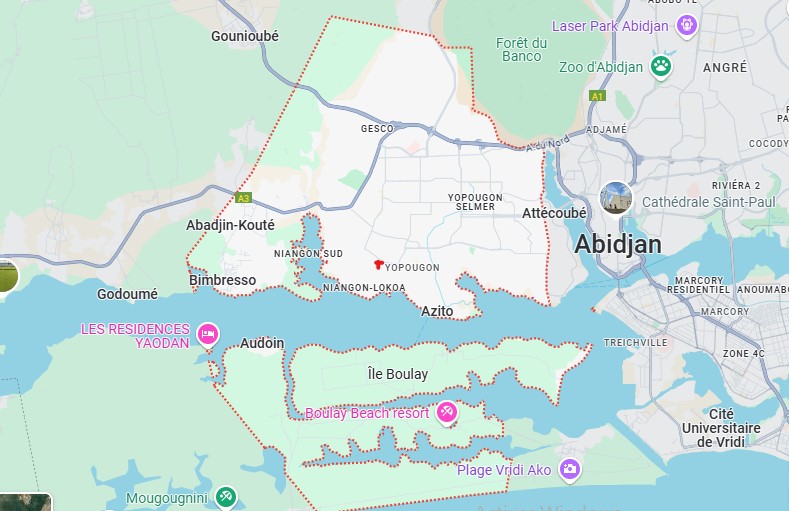
2.2. MethodsStudy sites the cross-sectional study was carried out in the district of Abidjan. Located in the south of the country and made up of fourteen cities, the district of Abidjan is the economical capital of Côte d'Ivoire (Figure 1). It hosts more than 50% of the total number of pastry houses in the country; and its high population density justifies the choice of this district as a study site.
Pastry Products Consumption Survey was conducted in February 2021: objective of this survey was to identify and establish a ranking of pastry products most consumed by populations. To achieve this goal, data collection and analysis methodology was implemented at different points of sale, using an individual questionnaire with a single visit on different sites, randomly chosen in the county of Yopougon. A sample of 400 customers of these foodstuff companies responded to the questionnaire administered by interviewers. These latter benefited from pastry shop staff assistance, as recommended by their managers to facilitate interaction with participants. These surveys were carried out through a participatory approach. From data collected, a ranking of the most consumed pastry products was established in decreasing order. The sample size of the population to be surveyed was calculated using the following WHO probabilistic formula 12:
 | (1) |
N: sample size, P: estimated expected proportion (prevalence rate), Q: the value of (1-P), E: the tolerated margin of error (statistical risk in %), L: reduced deviation for the accepted statistical risk (1.96 for the 5% risk). The previous relationship for p equal to 0.5 gives a minimum, to be representative, of 384 samples 13.
Prospective survey carried out prior to this study permitted to select 3 types of pastry products, namely: Crescents, Chocolate bread and Creamed cakes. A batch of 3 samples per type of pastry will be taken per site visit, in 09 different pastry settings in Yopougon. A total of 05 sampling operations were carried out to collect 1.215 samples. Each sample was labelled (site, date and time of collection, type of pastry), put in a sterile ≪ Stomacher ≫ bag, placed in a cooler and sent to the laboratory for analysis. Then samples were distributed according to site of origin as shown in the Table 1.

For microbiological analysis, 25 g of each sample, were taken according to the type of pastry, mixed with 225 mL of brain broth (BCC) in stomacher bags (CM0941, Oxoid, Wesel, Germany). The mixture was aseptically homogenized after addition of 0.01% potassium tellurite (SR0030, Oxoid) 14. The whole set (sachet and its content) was incubated at 37°C for 1 to 3 hours for enrichment. From this suspension, serial dilutions were performed up to dilution 10-4 by taking 1 mL from suspension and adding it to 9 mL of buffered peptone water (BioRad, Paris, France). Then inoculum was obtained by spreading 0.1 mL of each dilution's suspension on the surface of Baird Parker agar (Biokar Diagnostics, France) along with egg yolk 15 16, followed by Incubation at 37°C for 48 hours. Characteristic colonies of Staphylococcus aureus on Baird Parker (black colonies) were then isolated for further analyses. In addition, identification of Staphylococcus strains was carried out using classical bacteriological techniques. This includes, the Gram staining test, mode of bacteria aggregation, catalase test, identification of the genus using respiratory type, as well as culture on Chapman agar to verify tolerance to NaCl. The species diagnosis was carried out using two specific tests: the DNase test and the free staphylocoagulase. For the DNase test, a colony of Staphylococcus was inoculated on DNA agar, incubated at 37°C for 24 hours, and then covered with 5 mL of hydrochloric acid (1 N) for 2 minutes. The presence of a clear halo around the colonies confirmed the production of DNase, characteristic of Staphylococcus aureus 17. For the staphylocoagulase test, an isolated colony was collected and emulsified in 5 mL of heart-brain broth (BCC) distributed in haemolysis tubes. After incubation, 0.5 mL aliquots of the bacterial suspension were transferred to new haemolysis tubes, to which 0.5 mL of rabbit plasma was added. A positive reaction, marked by the formation of a clot (coagulum), highlighted the production of free staphylocoagulase, thus confirming the identification of Staphylococcus aureus.
DNA extraction: The bacterial DNA extracts were obtained by following the CTAB protocol, in line with a work done 18. To do this, 1.5 mL of bacterial preculture in LB medium was centrifuged at 16,000 rpm for 5 minutes to sediment the cells. After removing the supernatant, 1.5 mL of CTAB1 extraction buffer (consisting of 20 g/L CTAB, 1.4 mol/L NaCl, 0.1 mol/L Tris and 0.02 mol/L Na-EDTA, pH adjusted to 8.0 with HCl or NaOH) and 5 μL RNase (20 mg/mL) were added and vortex-homogenised. The tubes were then incubated at 60 °C for 30 minutes, with stirring after 15 minutes to resuspend the material. Then, 10 μL of proteinase K (20 mg/mL) was added, and the tubes were vortexed and incubated for another 30 minutes at 60 °C, with stirring after 15 minutes. After a 10-minute centrifugation at 15.000 g, 900 μL of supernatant was transferred to a new single-use cup containing 900 μL of chloroform and vortexed for 30 seconds. After a 15-minute centrifugation at 15.000 g, 650 μL of supernatant was transferred to a new 2 mL cup, followed by the addition of 1.300 μL of CTAB2 precipitation buffer (5 g/L CTAB, 0.04 mol/L NaCl). This mixture was incubated for 60 minutes at room temperature without stirring. After 15 minutes of centrifugation at 15.000 g, the supernatant was removed. To purify the DNA, 700 μL of NaCl solution (CTAB3) and 700 μL of chloroform were added to the pellet and vortexed for 30 seconds. This mixture was centrifuged for 10 minutes at 15.000 g, and 600 μL of aqueous phase was transferred to a new 2 mL cup. Then, 1.200 μL of cold isopropanol (-20 °C) was added and manually reversed 4 to 5 times. The tubes were incubated for 20 minutes at room temperature, followed by centrifugation for 15 minutes at 15.000 g. After removal of the supernatant, 500 μL of 70% ethanol was added to the pellet, which was gently inverted 4 to 5 times. A 10-minute centrifugation at 15.000 g was performed, followed by removal of the supernatant. The open tubes were then dried in an oven at 55°C for 30 minutes. The extracted DNA was suspended in 30μL of TE buffer and stored at -20°C.
Gene amplification: The search for the virulence of S. aureus focused on the characterisation of five stereotyped enterotoxins (sea, seb, sec, sed, see), and thermostable proteins involved in food poisoning. To do this, multiplex amplifications were performed, one for the sea, seb and see genes, and the second for the sec and sed genes, using the primers listed in Table 2. Amplification was performed in a mini thermal cycler (bio™ miniPCR), following a protocol 19. Amplification began with initial denaturation (94°C/5min), followed by cyclic denaturation (94°C/2 min). The hybridisation stage was performed at 57°C for 2 minn, the cyclic elongation at 72°C for 1 min and the final elongation at 72°C for 7 min. In short, this reaction has 35 cycles. The reaction mixture consisted of 2 μL of DNA (at a concentration of 10 ng/μL), 4 μL of Master Mix (5X), 1 μL of each primer, and 14 μL of water, for a final volume of 20 μL. The volumes were adjusted according to the conditions of the multiplex amplifications. The PCR products were then analysed by electrophoresis on an agarose gel at 2%.
It was carried out by tests such as ANOVA through the R software using the R Commander package and concerned the calculation of averages. Also, the paired t-test was used to verify the significance of S. aureus contamination between the different collection sites. Thus, the observed difference between the means of the compared groups is considered significant, if the p-value is less than 0.05.
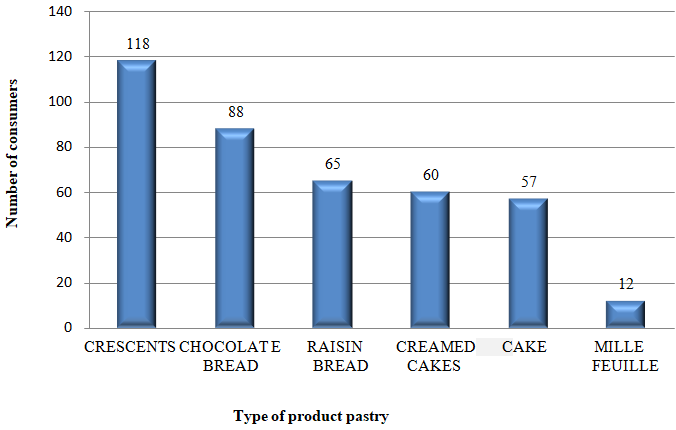
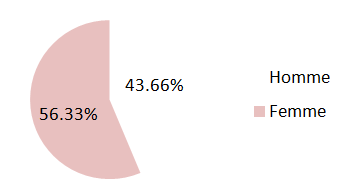
Figure 2 shows the distribution of the collected pastry samples according to consumer preferences. The analysis of these data shows that crescents, with 118 consumers, are the most popular, followed by chocolate bread (88 consumers), indicating a strong preference for these two products. Raisin bread (65 consumers) and creamed cakes (60 consumers) occupy intermediate positions, while cake (57 consumers) is slightly less popular. Finally, mille-feuille is the least selected, with only 12 consumers choosing it. The socio-demographic profile of the respondents in the three communes showed that pastry products are more consumed by women with a proportion of 56.33% compared to 43.66% of men (Figure 3), a sex ratio of 0.77.


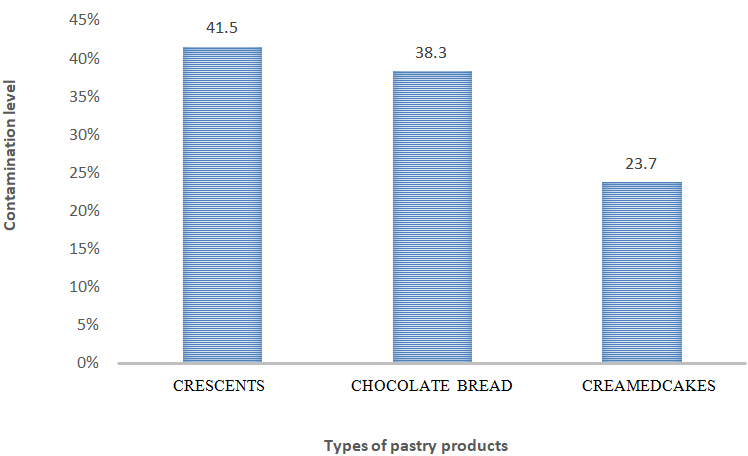
Table 3 shows the rate of S. aureus contamination by type of pastry products for each structure group. The analysis showed that the samples collected were contaminated with the S. aureus species in all types of structures, with a higher contamination rate in cream cakes, followed by crescents and subsequently in chocolate-breads in all these structures in general. Samples from markets and bus stations (GA) were the most contaminated with an average of 20.33 ± 4.93 for croissant, 13.00 ± 3.61 for chocolate bread and 22.00 ± 7.94 for creamed cakes. Averages of contaminated samples are shown in Table 3. Analyses of averages in accordance with ANOVA tests, stipulate that there is no significant difference between the different types of contaminated samples for the same site. However, the contamination of samples by this microorganism differs from one site to another (p-value = 0.02778). Pastry products such as crescents, chocolate bread and creamed cakes revealed prevalences of S. aureus contamination of 41.5%, 38.3% and 23.7% respectively (Figure 4).

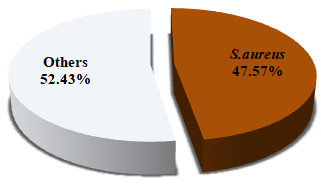
Perfoming different identification methods allowed to obtain 578 strains of S. aureus, with a prevalence rate of 47.57% (Figure 5) from samples analysed (1215). As for sampling sites, prevalence of samples collected at the edge of main roads (BR) reached 38.8%, and that of personal dwellings (PM) showed 48.9% while high-traffic areas (GAs) held the highest rate of 55.1%, (Table 4) (p< 0.05). As far as different products analysed are concerned, prevalence of 61% for S. aureus was determined in crescents (the highest prevalence), followed by 51% for chocolate bread and the lowest (30.6%) was recorded in creamed cakes (Table 5) (p < 0,05).

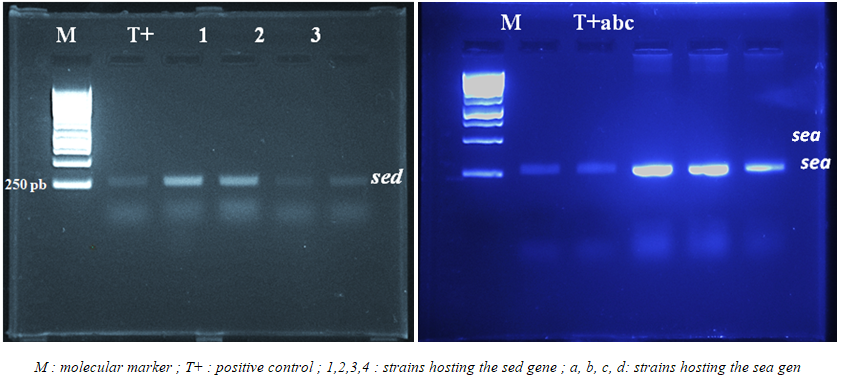
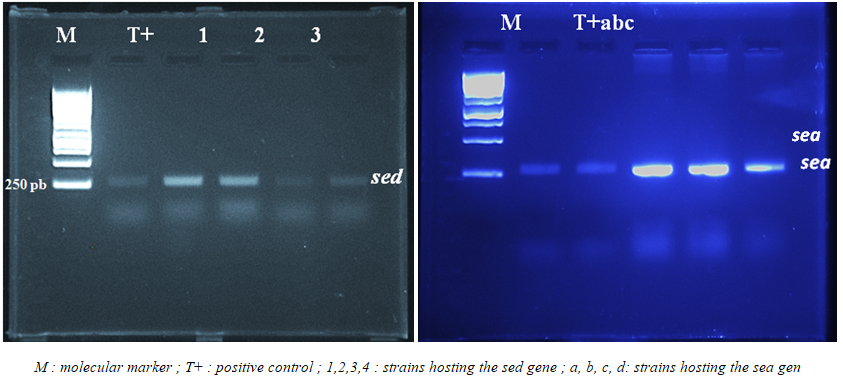
Genes, such as sea, seb, sec, sed and see, characteristic of virulence were sought for in these strains of S. aureus. The sea gene was detected in 56 isolates among the 578 strains analysed, representing a prevalence of 9.68% (Table 6). Distribution of this gene in the different types of products studied (Table 7), showed that 41.07% of positive isolates originate from crescents samples (23/56) 25%, from chocolate bread (14/56), and 33.92% from creamed cakes (19/56). The sed gene had a prevalence of 16.08% and was found in 93 isolates (Table 6). The distribution of this gene in the products examined revealed that 50.53% of positive isolates were from crescents (47/93), 31.18% from chocolate bread (29/93), and 18.27% from creamed cakes (17/93) (Table 7). Results were presented in electrophoretic profiles, as shown in Figure 6 and Figure 7. However, the seb, sec and see genes were not detected.

The consumer survey carried out as part of this study revealed that among the food products of interest, five types of pastries, namely Crescents, Chocolate Bread, raisin bread, creamed cakes and cakes are the most consumed, crescent being the most popular. It was also noticed that pastries are consumed more by women, accounting for 62% as. compared to 38% for men. These results are different from those obtained in Ethiopia 20, where urban consumers prefer biscuits, 'Difo Dabo' or 'Abesha Dabo', cakes and white bread, with biscuits preferred by 83% of the consumers. However, this study confirms research findings in France 21, which show a greater proportion of women's catering budget (25%), spent on meals in settings such as cafeterias, snack bars, tea rooms and fast food outlets, compared to only 18% for men. Microbiological analyses revealed that pastry products collected (crescent, Chocolate Bread and creamed cakes) were contaminated with the S. aureus species; and levels of contamination varied from one sample to another. However, statistical analyses did not reveal any significant difference between the level of contamination of different samples from the same site. Furthermore, contamination frequencies of crescents, chocolate Bread and creamed cakes were estimated to reach 41.5%, 38.3% and 23.7% respectively. As for contamination rates of different sites, statistical tests proved significant difference from one site to another (p-value = 0.02778). As a result, samples from markets and bus stations (GA) were the most contaminated with an average rate of 20.33 ± 4.93 % for crescents, 13.00 ± 3.61 % for chocolate Bread and 22.00 ± 7.94 % for the creamed cakes. The higher contamination rate of pastry products from areas of great affluence (market, bus stations) could be explained by the larger flow of travellers, customers, and traders on these sites, with air heavily polluted by smoke and dust. Additionally, closer proximity of sellers to other types of activity, proliferation of all types of garbage, their proximity to pipes generally exposed to open air in these places, are source of contamination. In a study reported in 2015, contamination levels also vary depending on the sampling site 22. Indeed, samples from sites located in the household vicinity and public buildings are less contaminated than those taken from markets and bus stations (areas of high affluence). Contamination rates of samples from different sampling sites range from 45 to 100 % for markets and bus stations, and from 5 to 40 % for household sites. Results from present study are also in agreement with another one conducted in Montenegro 23, which states that ready-to-eat food handlers' behaviour has a very significant negative influence on hygienic quality. From a general point of view, out of all samples collected, prevalence of 47.57% attributed to S. aureus was determined (578 /1215).
For sampling sites, prevalence of hand-track (BR) samples was 38.8%, 48.9%, and 55.1% for personal dwellings (PM), and high-traffic (TG) respectively. The prevalence of S. aureus in high-traffic areas was the highest (p< 0.05). Compared to the different products analysed, prevalence of 61% of S. aureus was determined in crescents (the highest prevalence), followed by 51% for chocolate Bread and the lowest (30.6%) was recorded in creamed cakes. According to earlier studies, contamination from S. aureus originates from external environment, during various manipulations 24. Predominance of S. aureus in crescent could therefore be explained by the fact that this pastry product is the most consumed; and therefore the most handled during sales. Indeed, according to surveys carried out, crescents are the first pastry products most consumed by populations in Côte d'Ivoire. This, followed by chocolate Bread.
Humans are natural reservoir of S. aureus. To illustrate, about one third of the population is colonized without symptoms at nasal level 25. Previous studies have identified several types of food as important vectors of Staphylococcus aureus contamination. For example, a study found presence of S. aureus in rice, macaroni, and salads in Benin, with contamination rates of 35%, 60%, and 85%, respectively; with an overall contamination rate of 56.25% 26. The highest contamination rate was observed in salads, that exceeds the accepted standards, and could be due to poor environmental hygiene, and the fact that salad is a dish eaten cold 26. Another study also found Staphylococcus bacteria in 23.1% of their food samples, a result that is consistent with our data for custard cakes, with a contamination rate of 23.7% 27. In addition, studies conducted in Brazil 28, and in Ethiopia 29, showed prevalence rate of S. aureus to reach 39.9% and 36.5%, respectively, in ready-to-eat foods. Similarly, a study revealed a 31.6% level of S. aureus in pastry creams 30. These results are closer to our data for creamed cakes, whereby prevalence of S. aureus is 30%. A particular higher rate of 62% was found in ready-to-eat foods in Nigeria; which is found consistent as compared to results obtained for chocolate Bread (51%) and crescents (61%), where contamination rates are also high 31. However, a study in Korea reported lower rates than our study, with rates of 17.3% and 5.98%, respectively, in ready-to-eat foods 32. This difference could be explained by the fact that samples originated from hot meals, whith higher temperature that prevent S. aureus to survive. The higher level of contamination observed in pastries and pastry creams could be related to the ingredients used, such as milk, or improper handling and non-cooking of certain creams 33. In addition, climatic conditions (ambient temperature between 25°C and 30 °C) can amplify the level of contamination due to poor product conservation 34 35.
This promotes multiplication of bacteria, including S. aureus, which can produce enterotoxins responsible for gastrointestinal disorders when consumed after exposure to room temperature. Outcomes of this study indicate that consumption of pastry products sold in the county of Yopougon could be associated with risks of food poisoning due to presence of the sea and sed genes, with prevalences of 9.68% and 16.08% respectively. This, because staphylococcal enterotoxins (SEs) are primarily responsible for foodborne illnesses. These toxins, which are particularly stable, are resistant to proteolytic enzymes such as pepsin, trypsin and chymotrypsin; and also heat-resistant, therefore being able to survive to a temperature of 100°C for 30 minutes 36. These results are similar to other ones, which detected staphylococcal enterotoxin genes from food poisoning isolates 37 38. Similarly, a study carried out in Taiwan found several SE genes in food products, including sea (29.2%) and sed (2.0%) 37. Recent studies carried out in Côte d'Ivoire on health risks associated with virulent and antibiotic-resistant bacteria in ready-to-eat salads have also detected these two virulence genes in S. aureus, with prevalence of 55.55% (sea) and 44.44% (sed) respectively 18. Investigation authors highlighted that presence of these genes has major epidemiological and public health implications. They emphasized on the urgent need to strengthen food safety regulations and practices for ready-to-eat products in urban food markets. Staphylococcal enterotoxins are often associated with pIB485 plasmids, and their horizontal transfer could be responsible for the dissemination of virulence 37. Thus, the staphylococcal enterotoxins identified by this transfer mechanism are emetic toxins and agents responsible for staphylococcal food poisoning (SFP), which as a result increases spreading risk of virulence genes.
This study showed that in Côte d'Ivoire, particularly in Abidjan, the most consumed pastry products are crescents, chocolate bread, raisin bread, creamed cakes, and cakes. Microbiological analyses revealed that the collected pastry products (crescents, chocolate bread and cream cakes) were contaminated with the S. aureus species and showed presence of the sea and sed genes in these S. aureus isolates, with prevalence of 9.68% and 16.08%, respectively. The overall prevalence of S. aureus contamination was 47.57%. Samples from markets and bus stations (GA) were the most contaminated with an average of 20.33 ± 4.93 for crescents, 13.00 ± 3.61 for chocolat bread and 22.00 ± 7.94 for cream cakes. Prevalence of samples collected at high-traffic areas (TG) was the highest, at rate of 55.1%. As to different products analysed, a prevalence of 61% of S. aureus was determined in the crescents (highest prevalence), which represent the most contaminated samples. Also, distribution of the sea gene in the different types of products studied showed that 41.07% of positive isolates came from croissant samples, 25% from chocolate bread, and 33.92% from cream cakes. As for the sed genes, the prevalence values in these same products are 50.53%, 31.18% and 18.27% respectively, thus revealing a probable food poisoning through consumption of pastry products. Further research on antibiotic resistance characteristics of these strains of Staphylococcus aureus would be useful for increased surveillance and support for good hygiene practices. This, to prevent them from disseminating across the community. Thus, risk of foodborne infection linked to consumption of pastry products will be reduced and patient care will be better controlled in hospitals.
| [1] | N'Zi N.P., Ouattara H.D., Attien Y.P., Gbonon V.C., Guessennd N.K. & Angaman D.M., "Characterization of Psychrophilic Pathogens in Ready-to-eat Salads Sold in Supermarkets in the City of Abidjan (Côte d'Ivoire)," Journal of Food Security, 10(3): 89-96. 2022. | ||
| In article | |||
| [2] | Ndao O., "Le boom des boulangeries à Abidjan," CNLVC. 2019. | ||
| In article | |||
| [3] | Dela H., Egyir B., Behene E., Sulemana H., Tagoe R., Bentil R., Bongo R.N.A., Bonfoh B., Zinsstag J., Bimi L. & Addo K.K., "Microbiological quality and antimicrobial resistance of Bacteria species recovered from ready-to-eat food, water samples, and palm swabs of food vendors in Accra, Ghana," International Journal of Food Microbiology, 396: 110195. 2023. | ||
| In article | View Article PubMed | ||
| [4] | Rajaei M., Moosavy M.-H., Gharajalar S.N. & Khatibi S.A., "Antibiotic resistance in the pathogenic foodborne bacteria isolated from raw kebab and hamburger: phenotypic and genotypic study," BMC Microbiology, 21. 2021. | ||
| In article | View Article PubMed | ||
| [5] | Pradhan A.K., Ivanek R., Grohn Y.T., Bukowski R. & Wiedmann M., "Comparison of Public Health Impact of Listeria monocytogenes Product-to-Product and Environment-to-Product Contamination of Deli Meats at Retail," Journal of Food Protection, 74(11): 1860-1868. 2011. | ||
| In article | View Article PubMed | ||
| [6] | WHO, "Typhoid fever," World Health Organization. 2023. https://www.who.int/fr/news-room/fact-sheets/detail/typhoid. [Accessed 2023]. | ||
| In article | |||
| [7] | Anonyme 1, "Secteur de la boulangerie : l'offensive du gouvernement pour éviter la grève du pain et maintenir le pouvoir d'achat des populations," Abidjan.net. 2023. https:// sports.abidjan.net/actualites/718484/. [Accessed Mar. 3, 2023]. | ||
| In article | |||
| [8] | Anonyme 2, "Une centaine de clients d'un glacier victime d'une intoxication alimentaire à Bondoukou," Abidjan.net News. 2022. | ||
| In article | |||
| [9] | Toé E., Évaluation des facteurs de risques de bio contamination par Salmonella et Escherichia coli virulents de la chaîne alimentaire des légumes à Abidjan (Côte d'Ivoire). PhD thesis, Université Nangui Abrogoua, Côte d'Ivoire. 2018. | ||
| In article | |||
| [10] | N'Zi N.P., Maxime A.D., Gbonon V.C. & Tiekoura K.B., "Study of the microbiological quality of 4th range salads sold in supermarkets in the city of Abidjan (Côte d'Ivoire) during the domestic conservation period after opening the packaging," International Journal of Innovation and Applied Studies, 36(2): 577-587. 2022. | ||
| In article | |||
| [11] | N'Zi N.P., Gbonon V.C., Guédé K.B., Afran S.A. & Angaman D.M., "Evaluation of the public health implications of virulent and antibiotic-resistant bacteria in ready-to-eat salads in Côte d'Ivoire," International Journal of Microbiology, 2024: 3264533. Aug. 2024. | ||
| In article | View Article PubMed | ||
| [12] | World Health Organization (WHO), Manual of Epidemiology for Health Management at the District Level, Edition Jouve, Paris, 1991, p. 187. | ||
| In article | |||
| [13] | Gerville-Réache L., Couallier V. & Paris N., "Representative sample (of a finite population): statistical definition and properties," HAL Archives Ouvertes. 2011. https://hal.archives-ouvertes.fr/hal-00655566. [Accessed 2011]. | ||
| In article | |||
| [14] | Atanassova V., Meindl A. & Ring C., "Prevalence of Staphylococcus aureus and staphylococcal enterotoxins in raw pork and uncooked smoked ham, a comparison of classical culturing detection and RFLP-PCR," International Journal of Food Microbiology, 68: 105-113. 2001. | ||
| In article | View Article PubMed | ||
| [15] | Baird-Parker A., "The Staphylococci: an introduction," Journal of Applied Bacteriology, 1-8. 1990. | ||
| In article | View Article PubMed | ||
| [16] | Akoachere J.-F.T.K., Bughe R.N., Oben B.O., Ndip L.M. & Ndip R.N., "Phenotypic characterization of human pathogenic bacteria in fish from the coastal waters of South West Cameroon: public health implications," Reviews on Environmental Health, 24: 147-155. 2009. | ||
| In article | View Article PubMed | ||
| [17] | "Bactériologie médicale, techniques usuelles," Revue Francophone des Laboratoires, Vol. 2007, Issue 397. 2007. | ||
| In article | View Article | ||
| [18] | N'Zi N.P., Gbonon V.C., Guédé K.B., Afran S.A. & Angaman D.M., "Evaluation of the public health implications of virulent and antibiotic-resistant bacteria in ready-to-eat salads in Côte d'Ivoire," International Journal of Microbiology, 2024: 3264533. Aug. 2024. | ||
| In article | View Article PubMed | ||
| [19] | Mehrotra M., Wang G. & Johnson W.M., "Multiplex PCR for Detection of Genes for Staphylococcus aureus Enterotoxins, Exfoliative Toxins, Toxic Shock Syndrome Toxin 1, and Methicillin Resistance," Journal of Clinical Microbiology, 38(3): 1032-1035. 2000. | ||
| In article | View Article PubMed | ||
| [20] | Andaregie A., Shimura H., Chikasada M., Sasaki S., Alamnie Mulugeta M., Worku A., Wubalem A., Sato S., Addisu S. & Takagi I., "Assessing eating habits and preferences for bakery products among urban dwellers in Ethiopia," Cogent Business & Management, 11(1): 2375621. 2024. | ||
| In article | View Article | ||
| [21] | Thibaut De Saint Pol, "La consommation alimentaire des hommes et des Femmes vivant seuls," INSEE Première, 1194, pp. 4. 2008. | ||
| In article | |||
| [22] | Attien Y.P., Diversité comparative et potentiel de virulence des souches de Staphylococcus isolées de produits carniques vendus dans les rues et des produits biologiques d'origine humaine à Abidjan (Côte d'Ivoire). Thèse unique en microbiologie et sécurité alimentaire, Université Nangui Abrogoua, Côte d'Ivoire, 228 p. 2015. | ||
| In article | |||
| [23] | Labović S.B., Joksimović I., Galić I., Knežević M. & Mimović M., "Food Safety Behaviours among Food Handlers in Different Food Service Establishments in Montenegro," International Journal of Environmental Research and Public Health. 2023. | ||
| In article | View Article PubMed | ||
| [24] | Brouillette E., Grondin G., Lefebvre C., Talbot B.G. & Malouin F., "Mouse mastitis model of infection for antimicrobial compound efficacy studies against intracellular and extracellular forms of Staphylococcus aureus," Veterinary Microbiology, 101: 253-262. 2004. | ||
| In article | View Article PubMed | ||
| [25] | Wertheim H. et al., "The role of nasal carriage in Staphylococcus aureus infections," Lancet Infectious Diseases, 5(12): 751-62. 2005. | ||
| In article | View Article PubMed | ||
| [26] | Sina H., Baba-Moussa F., Kayodé A.P., Noumavo P.A., Sezan A., Hounhouigan J.D., Kotchoni S.O., Prévost G. & Baba-Moussa L., "Characterization of Staphylococcus aureus isolated from street foods: toxin profile and prevalence of antibiotic resistance," Journal of Applied Biosciences, 46: 3133-3143. 2011. | ||
| In article | |||
| [27] | Osman K.M., Amer A.M., Badr J.M. & Saad A.S.A., "Prevalence and Antimicrobial Resistance Profile of Staphylococcus Species in Chicken and Beef Raw Meat in Egypt," Foodborne Pathogens and Disease, 12(5): 406-413. 2015. | ||
| In article | View Article PubMed | ||
| [28] | Casale Aragon-Alegro L., Mieko Konta E., Suzuki M., Guimarães Silva M., Fernandes Júnior A. & Mores Rall V.L., "Occurrence of coagulase-positive Staphylococcus in various food products commercialized in Botucatu, SP, Brazil, and detection of toxins from food and isolated strains," Arquivo Brasileiro de Medicina Veterinária e Zootecnia, 630-634. 2007. | ||
| In article | View Article | ||
| [29] | Senait G., "Isolation and Identification of Staphylococcus Species from Ready-to-Eat Meat Products in and Around Debre-Zeit, Ethiopia," International Journal of Research in Agriculture and Forestry, 3(4): 6-16. Apr. 2016. | ||
| In article | |||
| [30] | Su K.O., Nari L.Y.S.C., Dong-Bin S., Soon Y.C. & Minseon K., "Occurrence of Toxigenic Staphylococcus aureus in Ready-to-Eat Food in Korea," Journal of Food Protection, 70(5): 1153-1158. 2007. | ||
| In article | View Article PubMed | ||
| [31] | Sokari T., "Distribution of enterotoxigenic Staphylococcus aureus in ready-to-eat foods in eastern Nigeria," International Journal of Food Microbiology, 12(2-3): 275-279. Feb. 1991. | ||
| In article | View Article PubMed | ||
| [32] | Kim T., Oh P.I. & Simor A.E., "The economic impact of methicillin-resistant Staphylococcus aureus in Canadian hospitals," Infection Control & Hospital Epidemiology, 22: 99-104. 2001. | ||
| In article | View Article PubMed | ||
| [33] | Normanno G., Firinu A. & Virgilio S., "Coagulase-positive staphylococci and Staphylococcus aureus in food products marketed in Italy," International Journal of Food Microbiology, 98(1): 73-79. Jan. 2005. | ||
| In article | View Article PubMed | ||
| [34] | Faye B. & Loiseau G., "Sources de contamination dans les filières laitières et exemples de démarches qualité," in Gestion de la sécurité des aliments dans les pays en développement. Actes de l'atelier international, CIRAD-FAO, Montpellier, France. 2002. | ||
| In article | |||
| [35] | Haeghebaert S., Le Querrec F., Gallay A., Bouvet P., Gomez M. & Vaillant V., "Les toxiinfections alimentaires collectives en France en 1999-2000," Bulletin Épidémiologique Hebdomadaire, 23: 105-109. 2002. | ||
| In article | |||
| [36] | Dorjgochoo A., Batbayar A., Tsend-Ayush A., Erdenebayar O., Byambadorj B., Jav S. & Yandag M., "Detection of Staphylococcus aureus virulence genes isolated from raw beef intended for retail sale on markets of Ulaanbaatar city, Mongolia," BMC Microbiology, 23(1): 372. 2023. | ||
| In article | View Article PubMed | ||
| [37] | Suzuki Y., Kobayashi M., Matsushita S., Uehara S., Kato R., Sato'o Y., Ono H.K., Sadamasu K., Kai A. & Kamata Y., "Detection of the staphylococcal enterotoxin D-like gene from staphylococcal food poisoning isolates over the last two decades in Tokyo," The Journal of Veterinary Medical Science, 77(8): 905-11. 2015. | ||
| In article | View Article PubMed | ||
| [38] | Chiang Y.C., Liao W.W., Fan C.M., Pai W.Y., Chiou C.S. & Tsen H.Y., "PCR detection of staphylococcal enterotoxins (SEs) N, O, P, Q, R, U and study of SE types in Staphylococcus aureus isolates from food poisoning cases in Taiwan," International Journal of Food Microbiology, 121(1): 66-73. Jan. 2008. | ||
| In article | View Article PubMed | ||
Published with license by Science and Education Publishing, Copyright © 2026 Avi Roselyne Donald Merryfield, Guédé Kipré Bertin, Benie Comoé Koffi Donatien, Koné Tadiogo Naty, Tiékoura Konan Bertin, Guessennd-Kouadio Aya Nathalie and Dadié Adjéhi
 This work is licensed under a Creative Commons Attribution 4.0 International License. To view a copy of this license, visit
http://creativecommons.org/licenses/by/4.0/
This work is licensed under a Creative Commons Attribution 4.0 International License. To view a copy of this license, visit
http://creativecommons.org/licenses/by/4.0/
| [1] | N'Zi N.P., Ouattara H.D., Attien Y.P., Gbonon V.C., Guessennd N.K. & Angaman D.M., "Characterization of Psychrophilic Pathogens in Ready-to-eat Salads Sold in Supermarkets in the City of Abidjan (Côte d'Ivoire)," Journal of Food Security, 10(3): 89-96. 2022. | ||
| In article | |||
| [2] | Ndao O., "Le boom des boulangeries à Abidjan," CNLVC. 2019. | ||
| In article | |||
| [3] | Dela H., Egyir B., Behene E., Sulemana H., Tagoe R., Bentil R., Bongo R.N.A., Bonfoh B., Zinsstag J., Bimi L. & Addo K.K., "Microbiological quality and antimicrobial resistance of Bacteria species recovered from ready-to-eat food, water samples, and palm swabs of food vendors in Accra, Ghana," International Journal of Food Microbiology, 396: 110195. 2023. | ||
| In article | View Article PubMed | ||
| [4] | Rajaei M., Moosavy M.-H., Gharajalar S.N. & Khatibi S.A., "Antibiotic resistance in the pathogenic foodborne bacteria isolated from raw kebab and hamburger: phenotypic and genotypic study," BMC Microbiology, 21. 2021. | ||
| In article | View Article PubMed | ||
| [5] | Pradhan A.K., Ivanek R., Grohn Y.T., Bukowski R. & Wiedmann M., "Comparison of Public Health Impact of Listeria monocytogenes Product-to-Product and Environment-to-Product Contamination of Deli Meats at Retail," Journal of Food Protection, 74(11): 1860-1868. 2011. | ||
| In article | View Article PubMed | ||
| [6] | WHO, "Typhoid fever," World Health Organization. 2023. https://www.who.int/fr/news-room/fact-sheets/detail/typhoid. [Accessed 2023]. | ||
| In article | |||
| [7] | Anonyme 1, "Secteur de la boulangerie : l'offensive du gouvernement pour éviter la grève du pain et maintenir le pouvoir d'achat des populations," Abidjan.net. 2023. https:// sports.abidjan.net/actualites/718484/. [Accessed Mar. 3, 2023]. | ||
| In article | |||
| [8] | Anonyme 2, "Une centaine de clients d'un glacier victime d'une intoxication alimentaire à Bondoukou," Abidjan.net News. 2022. | ||
| In article | |||
| [9] | Toé E., Évaluation des facteurs de risques de bio contamination par Salmonella et Escherichia coli virulents de la chaîne alimentaire des légumes à Abidjan (Côte d'Ivoire). PhD thesis, Université Nangui Abrogoua, Côte d'Ivoire. 2018. | ||
| In article | |||
| [10] | N'Zi N.P., Maxime A.D., Gbonon V.C. & Tiekoura K.B., "Study of the microbiological quality of 4th range salads sold in supermarkets in the city of Abidjan (Côte d'Ivoire) during the domestic conservation period after opening the packaging," International Journal of Innovation and Applied Studies, 36(2): 577-587. 2022. | ||
| In article | |||
| [11] | N'Zi N.P., Gbonon V.C., Guédé K.B., Afran S.A. & Angaman D.M., "Evaluation of the public health implications of virulent and antibiotic-resistant bacteria in ready-to-eat salads in Côte d'Ivoire," International Journal of Microbiology, 2024: 3264533. Aug. 2024. | ||
| In article | View Article PubMed | ||
| [12] | World Health Organization (WHO), Manual of Epidemiology for Health Management at the District Level, Edition Jouve, Paris, 1991, p. 187. | ||
| In article | |||
| [13] | Gerville-Réache L., Couallier V. & Paris N., "Representative sample (of a finite population): statistical definition and properties," HAL Archives Ouvertes. 2011. https://hal.archives-ouvertes.fr/hal-00655566. [Accessed 2011]. | ||
| In article | |||
| [14] | Atanassova V., Meindl A. & Ring C., "Prevalence of Staphylococcus aureus and staphylococcal enterotoxins in raw pork and uncooked smoked ham, a comparison of classical culturing detection and RFLP-PCR," International Journal of Food Microbiology, 68: 105-113. 2001. | ||
| In article | View Article PubMed | ||
| [15] | Baird-Parker A., "The Staphylococci: an introduction," Journal of Applied Bacteriology, 1-8. 1990. | ||
| In article | View Article PubMed | ||
| [16] | Akoachere J.-F.T.K., Bughe R.N., Oben B.O., Ndip L.M. & Ndip R.N., "Phenotypic characterization of human pathogenic bacteria in fish from the coastal waters of South West Cameroon: public health implications," Reviews on Environmental Health, 24: 147-155. 2009. | ||
| In article | View Article PubMed | ||
| [17] | "Bactériologie médicale, techniques usuelles," Revue Francophone des Laboratoires, Vol. 2007, Issue 397. 2007. | ||
| In article | View Article | ||
| [18] | N'Zi N.P., Gbonon V.C., Guédé K.B., Afran S.A. & Angaman D.M., "Evaluation of the public health implications of virulent and antibiotic-resistant bacteria in ready-to-eat salads in Côte d'Ivoire," International Journal of Microbiology, 2024: 3264533. Aug. 2024. | ||
| In article | View Article PubMed | ||
| [19] | Mehrotra M., Wang G. & Johnson W.M., "Multiplex PCR for Detection of Genes for Staphylococcus aureus Enterotoxins, Exfoliative Toxins, Toxic Shock Syndrome Toxin 1, and Methicillin Resistance," Journal of Clinical Microbiology, 38(3): 1032-1035. 2000. | ||
| In article | View Article PubMed | ||
| [20] | Andaregie A., Shimura H., Chikasada M., Sasaki S., Alamnie Mulugeta M., Worku A., Wubalem A., Sato S., Addisu S. & Takagi I., "Assessing eating habits and preferences for bakery products among urban dwellers in Ethiopia," Cogent Business & Management, 11(1): 2375621. 2024. | ||
| In article | View Article | ||
| [21] | Thibaut De Saint Pol, "La consommation alimentaire des hommes et des Femmes vivant seuls," INSEE Première, 1194, pp. 4. 2008. | ||
| In article | |||
| [22] | Attien Y.P., Diversité comparative et potentiel de virulence des souches de Staphylococcus isolées de produits carniques vendus dans les rues et des produits biologiques d'origine humaine à Abidjan (Côte d'Ivoire). Thèse unique en microbiologie et sécurité alimentaire, Université Nangui Abrogoua, Côte d'Ivoire, 228 p. 2015. | ||
| In article | |||
| [23] | Labović S.B., Joksimović I., Galić I., Knežević M. & Mimović M., "Food Safety Behaviours among Food Handlers in Different Food Service Establishments in Montenegro," International Journal of Environmental Research and Public Health. 2023. | ||
| In article | View Article PubMed | ||
| [24] | Brouillette E., Grondin G., Lefebvre C., Talbot B.G. & Malouin F., "Mouse mastitis model of infection for antimicrobial compound efficacy studies against intracellular and extracellular forms of Staphylococcus aureus," Veterinary Microbiology, 101: 253-262. 2004. | ||
| In article | View Article PubMed | ||
| [25] | Wertheim H. et al., "The role of nasal carriage in Staphylococcus aureus infections," Lancet Infectious Diseases, 5(12): 751-62. 2005. | ||
| In article | View Article PubMed | ||
| [26] | Sina H., Baba-Moussa F., Kayodé A.P., Noumavo P.A., Sezan A., Hounhouigan J.D., Kotchoni S.O., Prévost G. & Baba-Moussa L., "Characterization of Staphylococcus aureus isolated from street foods: toxin profile and prevalence of antibiotic resistance," Journal of Applied Biosciences, 46: 3133-3143. 2011. | ||
| In article | |||
| [27] | Osman K.M., Amer A.M., Badr J.M. & Saad A.S.A., "Prevalence and Antimicrobial Resistance Profile of Staphylococcus Species in Chicken and Beef Raw Meat in Egypt," Foodborne Pathogens and Disease, 12(5): 406-413. 2015. | ||
| In article | View Article PubMed | ||
| [28] | Casale Aragon-Alegro L., Mieko Konta E., Suzuki M., Guimarães Silva M., Fernandes Júnior A. & Mores Rall V.L., "Occurrence of coagulase-positive Staphylococcus in various food products commercialized in Botucatu, SP, Brazil, and detection of toxins from food and isolated strains," Arquivo Brasileiro de Medicina Veterinária e Zootecnia, 630-634. 2007. | ||
| In article | View Article | ||
| [29] | Senait G., "Isolation and Identification of Staphylococcus Species from Ready-to-Eat Meat Products in and Around Debre-Zeit, Ethiopia," International Journal of Research in Agriculture and Forestry, 3(4): 6-16. Apr. 2016. | ||
| In article | |||
| [30] | Su K.O., Nari L.Y.S.C., Dong-Bin S., Soon Y.C. & Minseon K., "Occurrence of Toxigenic Staphylococcus aureus in Ready-to-Eat Food in Korea," Journal of Food Protection, 70(5): 1153-1158. 2007. | ||
| In article | View Article PubMed | ||
| [31] | Sokari T., "Distribution of enterotoxigenic Staphylococcus aureus in ready-to-eat foods in eastern Nigeria," International Journal of Food Microbiology, 12(2-3): 275-279. Feb. 1991. | ||
| In article | View Article PubMed | ||
| [32] | Kim T., Oh P.I. & Simor A.E., "The economic impact of methicillin-resistant Staphylococcus aureus in Canadian hospitals," Infection Control & Hospital Epidemiology, 22: 99-104. 2001. | ||
| In article | View Article PubMed | ||
| [33] | Normanno G., Firinu A. & Virgilio S., "Coagulase-positive staphylococci and Staphylococcus aureus in food products marketed in Italy," International Journal of Food Microbiology, 98(1): 73-79. Jan. 2005. | ||
| In article | View Article PubMed | ||
| [34] | Faye B. & Loiseau G., "Sources de contamination dans les filières laitières et exemples de démarches qualité," in Gestion de la sécurité des aliments dans les pays en développement. Actes de l'atelier international, CIRAD-FAO, Montpellier, France. 2002. | ||
| In article | |||
| [35] | Haeghebaert S., Le Querrec F., Gallay A., Bouvet P., Gomez M. & Vaillant V., "Les toxiinfections alimentaires collectives en France en 1999-2000," Bulletin Épidémiologique Hebdomadaire, 23: 105-109. 2002. | ||
| In article | |||
| [36] | Dorjgochoo A., Batbayar A., Tsend-Ayush A., Erdenebayar O., Byambadorj B., Jav S. & Yandag M., "Detection of Staphylococcus aureus virulence genes isolated from raw beef intended for retail sale on markets of Ulaanbaatar city, Mongolia," BMC Microbiology, 23(1): 372. 2023. | ||
| In article | View Article PubMed | ||
| [37] | Suzuki Y., Kobayashi M., Matsushita S., Uehara S., Kato R., Sato'o Y., Ono H.K., Sadamasu K., Kai A. & Kamata Y., "Detection of the staphylococcal enterotoxin D-like gene from staphylococcal food poisoning isolates over the last two decades in Tokyo," The Journal of Veterinary Medical Science, 77(8): 905-11. 2015. | ||
| In article | View Article PubMed | ||
| [38] | Chiang Y.C., Liao W.W., Fan C.M., Pai W.Y., Chiou C.S. & Tsen H.Y., "PCR detection of staphylococcal enterotoxins (SEs) N, O, P, Q, R, U and study of SE types in Staphylococcus aureus isolates from food poisoning cases in Taiwan," International Journal of Food Microbiology, 121(1): 66-73. Jan. 2008. | ||
| In article | View Article PubMed | ||