Fungal endophytes are recently gaining momentum for alternative source of plant secondary metabolites having potent bioactivity. In this study, the objective of which was to isolate and partial characterize the bioactive chemical component present in the cell free extract of endophytic fungi Penicillium singorense isolated from Calotropis procera and Catharanthus roseus. The fungus (pure culture of Penicillium singorense DRC1, Accssession No. MG322179) was cultured in PDB (Potato Dextrose Broth) media. The culture filtrates were obtained by filtering through Whatman 42 filter paper placed on a Buchner funnel fitted to a vacuum pump. Presence of taxol in the fungal extract was detected following the standard protocol as described by Shrinivasan and Muthumary. The detection of taxol was carried out following the standard protocol of UV spectroscopy, Thin Layer Chromatography and High Performance Liquid Chrmatography. The antibiotic like compound was purified following the standard procedure involving transfer of the compound repeatedly from ethyl acetate phase to aqueous phase, then precipitation. The antibiotic like compound was extracted in ethyl acetate which was then allowed to evaporate to dryness in a rotary vacuum evaporator at 35.5°C, residue was weighed. The partially purified compound was subjected to IR, NMR and GCMASS spectroscopy for partial characterization. The cell free extract of P. singorense isolated from C. roseus and C. procera indicated the presence of highly valued anticancerous diterpenoid compound ‘Taxol’. Proton NMR study indicated that the compounds may be constituted with an aromatic benzene ring trisubstituents at positions 1, 3 and 4; the remainder (unintegrated) look like aliphatic (alkyl chain) protons. The FTIR spectroscopic study revealed that the molecule can have an aromatic skeleton with different substituents. The GCMS study revealed the presence of 9 major compounds (most commonly occurring of those are Methyl stearate (C19H38O2), 1-Nonadecene (C19H38) and 3- Eicosene (C20H40)), maximum of which are of aliphatic in nature.
Diverse range of fungal endophytes housed in plants, representing a major source of natural compounds having pharmaceutical and agricultural use. Fungal endophytes are of biotechnological significance owing to their active use as genetic vectors, metabolites and biological control agents 1. They are capable for production of several compounds of bioactive importance and perform antioxidant activity against reactive oxygen species (ROS) like superoxide, hydroxyl radical and hydrogen peroxide 2. Phytochemical (secondary metabolic product) is the naturally occurring compounds present in all plant parts which together with nutrients and fibers provide protection to plants and human against diseases. Phenolics are widely distributed in plants with a variety of functions; mainly in plant defense against biotic and herbivore predators, and are thus useful role to control human pathogenic infections. Phenolics essentially represent a host of natural antioxidants in plants 3.
Various types of secondary metabolic compounds are produced by plants; most of them have been subsequently used by humans for their beneficial roles in a diverse array of biological functions 4. 5 proved that endophytes isolated from tropical region’s plants produced a higher quantity of bioactive secondary metabolites than that of temperate region plants endophytes. The compounds produced by fungal endophytes are the major source of the drugs. The fungal endophytes isolated form Taxus brevifolia, T. celebica, T. mairei, T. chinensis var. mairei, and T. wallichiana produced the anticancer drug Taxol. Source of different novel medicine of fungal origin have reported 6, 7, 8. The microbial Taxol producer was first reported in Taxomyces andreanae from the Pacific yew tree 11, proved that microorganism as a source for Taxol supply. The main advantages of microbial Taxol production are : fast growth at high cell density cultivation, easy genetic manipulation, and the possibility of industrial scaleup 9. Other advantages are microbial production helps to protect the resources natural plant Taxus 10.Current research in this field is focused on screening Taxol producing endophytic microbes 11, improving Taxol yield by genome shuffling 13, genetic engineering 12, and process optimization 14 and heterologous expression of Taxol precursor in microorganisms 15. Paclitaxel producing fungi endophytes from Corylus avelana, Taxus and Calotropis plant has recently been reported 16, 17, 18, 19. Endophytes are believed to have a resistance mechanism to overcome pathogenic invasion by producing secondary metabolites having antimicrobial activity. Antimicrobial compound isolation from fungal endophytes is a promising way to overcome the antibiotic resistance developed. The use of different types of compounds having antimicrobial properties isolated from different fungus of plant origin is rapidly increasing 20, 21, 22. Isolation and characterisation of endophyutic fungi from two Indian Medicinal plants: Calotropis procera and Catharanthus roseus has been carried out by the present research group 23. The molecular identification and phylogenetic study of Penicillium singorense has also been investigated 24. The state of the art techniques for identification and characterization of these biologically active compounds isolated from fungi of plant origin are mainly FTIR, GC-MS and NMR spectrophotometry. From the perusal of literature, it has revealed that endophytic plants are gaining momentum for the production of different types of organic compound having biopharmaceutical function. There are little or scanty reports in this field, mainly from the West Bengal region. Considering these background information, the present study was undertaken mainly aims to understand the detection and characterization of secondary metabolites having pharmaceutical or commercial benefit produced by fungal endophytes from two important medicinal plants C. procera and C. roseus from the parts of Purba Bardhhaman district of West Bengal.
The pure culture of Penicillium singorense DRC1 (Accssession No. MG322179) 24 isolated and characterized by the present research group from Calotropis procera and Catharanthus roseus, was considered as experimental sample of this investigation. The fungus was grown in 500 ml Erlenmeyer flask containing 100 ml PDB media. Spores from seven days old culture in the form of suspension (maintaining uniform inoculum potency) were transferred into Erlenmeyer flask (250 ml) containing Potato Dextrose Broth (PDB) medium (100 ml) and were subjected to incubation at 29 ± 1°C for 10 days under stationary state with intermittent shaking for 2 h / day. After 10 days, the culture filtrates were obtained by filtering through Whatman 42 filter paper placed on a Buchner funnel fitted to a vacuum pump.
2.2. Detection of TaxolPresence of taxol in the fungal extract was detected following the protocol as described by Shrinivasan and Muthumary 26. Culture filtrate (100 ml) of each fungus was taken in a separating funnel (500 ml) and 0.0875 g of sodium carbonate was added with frequent shaking in order to reduce the amount of fatty acids that may contaminate taxol in the cultural filtrate. Then the culture filtrate was mixed with dichloromethane (Merck, GC grade) and subjected to vigorous shaking, then the organic phase collected. The solvent was removed by evaporation at 35°C temperature. The dry solid residue was redissolved in methanol (1mg/ml) and was examined for the presence of taxol.
The dry solid residue dissolved in methanol (1mg/ml) was subjected to UV spectroscopic analysis (190-290 nm) for detecting taxol. Absorption maxima of standard taxol (paclitaxel purity 95%, Sigma) was also measured and was compared with absorption maxima of the isolated sample.
Thin layer chromatography was carried out by using silica gel (G) coated (0.25mm) plates. The samples were applied onto properly activated silica gel coated plate with the help of capillary tube following the standard method along the standard taxol dissolved in methanol (HPLC grade) and developed in solvent system of ethyl acetate: 2-propanol: 90:10 (v/v). The plates were then sprayed with detecting reagent consisting of 1% vanillin (w/v) in concentrated sulphuric acid and subjected to gentle heating for few minutes 25 for detection of taxol in the TLC plate. The development of color spot of taxol in the TLC plate was documented by taking photograph. The Retardation factor (Rf) value of the experimental sample and standard taxol were then calculated using standard formula. The area of the TLC plate containing putative taxol was carefully removed by scrapping off the silica at the appropriate Rf and exhaustively eluting it with methanol. The purified sample of taxol was dissolved in 100% methanol, analyzed by spectrophotometer and compared with standard taxol.
HPLC study was conducted in Agilent 1200 Infinity Series instrument using C-18 reverse phase column (Phenimenex, Luna 5 µm, 100Ao, 250x 4.6 nm). Mobile phase consists of acetonitrile and water (50:50) and runs isocritically at a flow rate of 1 ml/min, detector wave length 227 nm. Sample, 20 µl was injected with the help of a microsyringe. Retention time was recorded on UV detector at 227 nm. A standard was prepared by dissolving 1 mg solid Paclitaxel in 10 ml of methanol (HPLC grade). Working standard was prepared as 10 ppb, 25 ppb and 50 ppb. Retention time of standard paclitaxel was compared with the sample solution.
Taxol was quantified by comparing the peak area of the samples with that of the standard using the formula:
 |
The antibiotic compound was purified following the standard procedure involving transfer of the compound repeatedly from ethyl acetate phase to aqueous phase, followed by precipitation. The endophytic fungi culture filtrate (100 ml) having antagonistic activity was filtered with sterilized G5 sintered glass filter. The extract was acidified with sulfuric acid to pH 2-2.5 and then equal volume of ethyl acetate was added in a separating funnel. The mixture was shaken vigorously to extract the antibiotic compound in the organic phase. Then the organic phase was collected and made alkaline (pH 7.5-8) by adding KOH (4N) so that antibiotic compound was then extracted back to aqueous phase. The resulting aqueous solution was again acidified (pH-2-2.5) with sulfuric acid and re extracted with the organic solvent. The process was repeated for eight times. Finally, the antibiotic was extracted in ethyl acetate which was then allowed to evaporate to dryness in a rotary vacuum evaporator at 35.5°C, then the residue was weighed. The partially purified compound was subjected to IR, NMR and GCMASS spectroscopy for partial characterization.
The partially purified dried sample powder obtained was subjected to FTIR analysis using FTIR Spectrophotometer (Cary 630 with ATR attachment). Dried sample was ground with IR grade potassium bromide (KBr) at the ratio of 1:10 pressed into discs under vacuum using spectra lab pelletiser and compared with standard taxol. The FTIR spectrum was recorded in the range of 4000 - 500 cm-1 at a resolution of 4 cm-1. The spectral data obtained were subjected to comparison with the reference chart for identifying the functional groups present in the sample.
Nuclear magnetic resonance analysis of the bioactive molecule was done for H1NMR by dissolving the sample in CDCl3 and spectrum was taken at 400 MHz (Bruker 400 spectrometer).
Ethyl acetate extract (1μl) of the sample was employed for GC/MS analysis. GC-MS analysis was carried out on a GC QP 2010 [SHIMADZU] comprising a AOC-20i auto sampler and gas chromatograph interfaced to a mass spectrometer (GC-MS) instrument employing the following conditions: column Elite-1 fused silica capillary column (30 × 0.25 mm ID ×1EM df, composed of 100% Dimethyl polysiloxane), operating in electron impact mode at 70 eV; helium (99.999%) was used as carrier gas at a constant flow of 1ml/min and an injection volume of 0.5 EI was employed (split ratio of 10:1) injector temperature 240°C; ion-source temperature 200°C. The oven temperature was programmed from 110°C (isothermal for 2 minute), with an increase of 10°C/min, to 200°C/min, then 5°C/min to 280°C/min, ending with a 9 minute isothermal at 280°C. Mass spectra were taken at 70 eV; a scan interval of 0.5 s and fragments from 40 to 550 Da.
Interpretation on mass spectrum of GC-MS was done using the database of National Institute Standard and Technology (NIST) having more than 62,000 patterns. The mass spectrum of the unknown component was compared with the spectrum of the known components stored in the NIST library. The name, molecular weight and structure of the components of the test materials were ascertained.
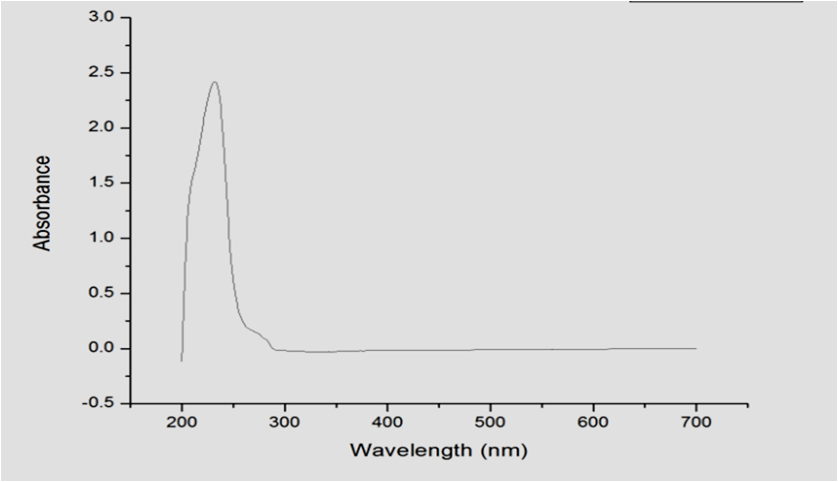
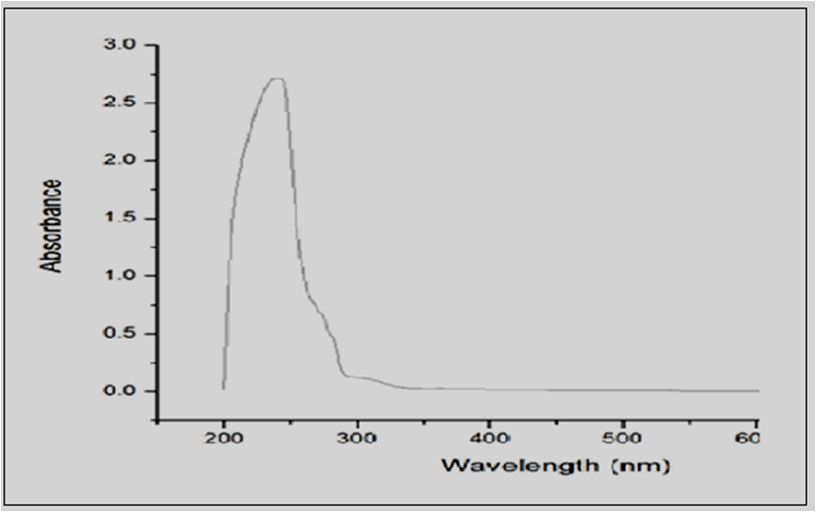
UV spectral analysis of the organic solvent extract of fungal extract was carried out, the presence of strong peak at 235-273 nm range indicative the presence of taxol 26, 27. After primary screening, cell free extract of P.singorense was extracted with dichloromethane (five times) and was subjected to UV spectral analysis. UV spectral analysis of standard taxol showed a strong peak at 235 nm (approx.) wave length (Figure 1). Therefore the presence of Taxol in the fungal extract of P.singorense could be confirmed. Dichloromethane extract of the sample also showed a strong peak at 235 nm wavelength (Figure 2).


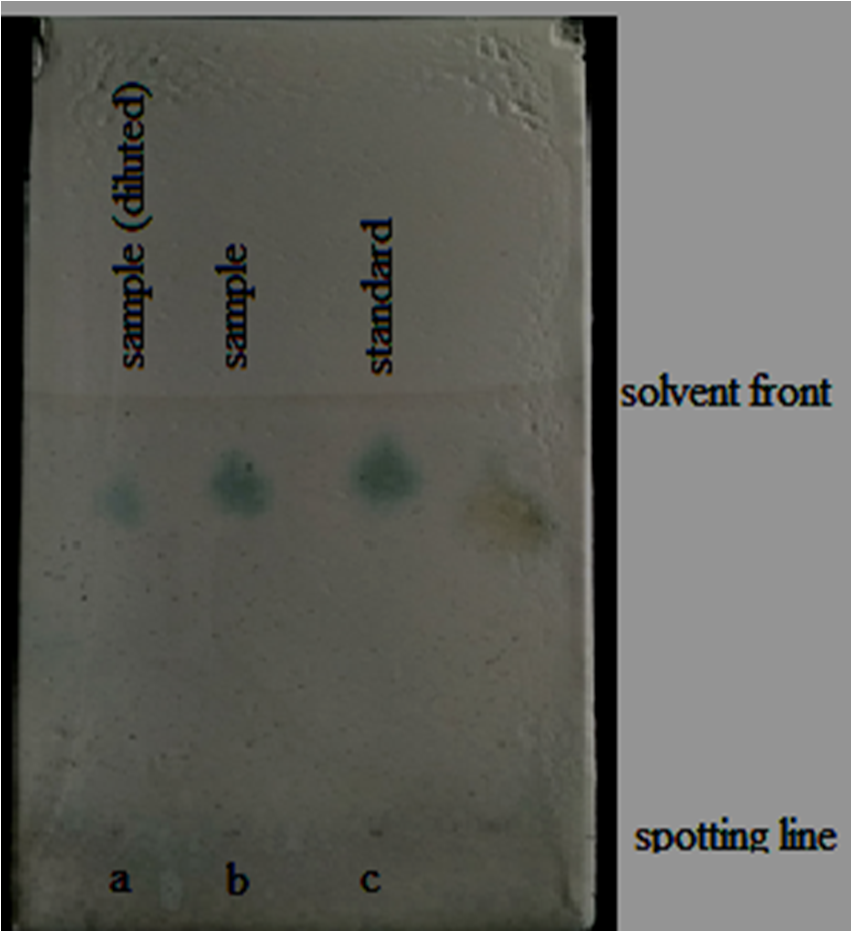
Thin layer chromatogram of cell free extract of the sample under study has been carried out and the presence of taxol was detected in the dichloromethane extract of P. singorense by spraying the TLC plate with detecting reagent consisting of 1% vanillin (w/v) in concentrated sulphuric acid and subjected to gentle heating for few minutes. Presence of taxol in the fungal extract was confirmed by the appearance of bluish spot (Figure 3). Rf value of the sample (Figure 3: lane a, b) was compared with the authentic (Figure 3: lane c) taxol. Sample has Rf value 0.69 whereas standard taxol has Rf value 0.7 which indicates the presence of taxol in the sample.

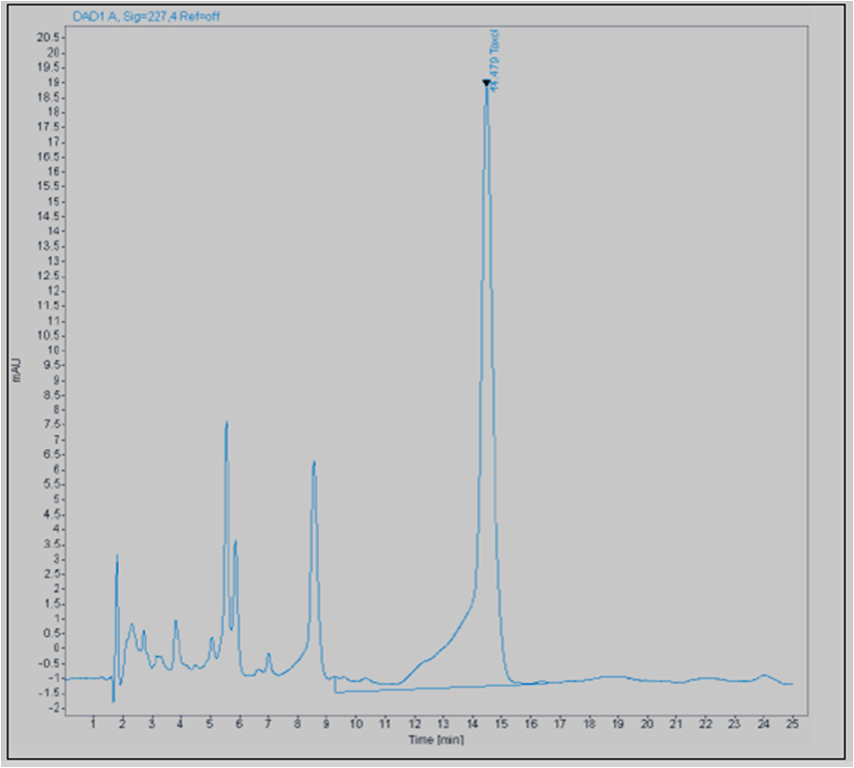
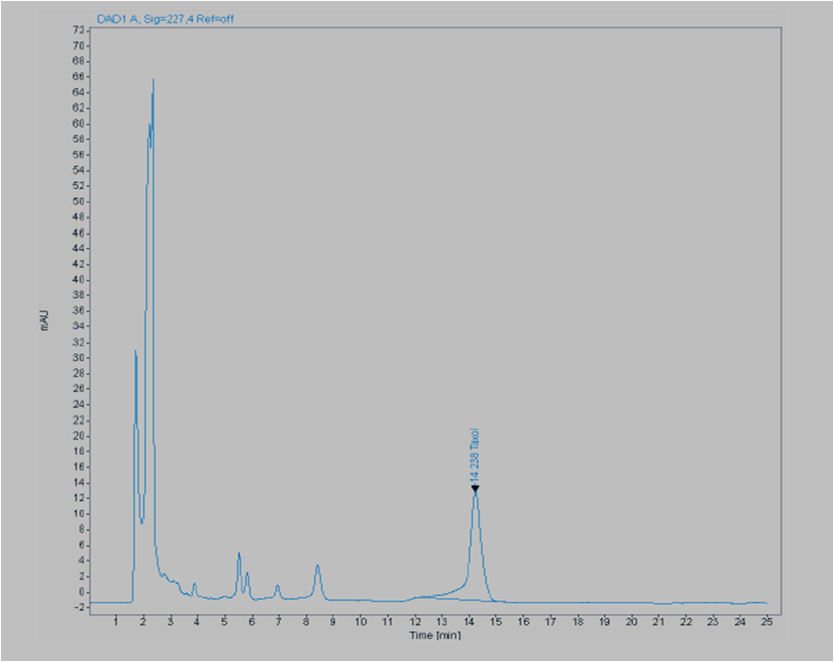
Specific solvent extract of, Penicillium singorense fungal culture contain highly valued anticancerous drug paclitaxel at a concentration of 13.0049 μ/l as evident from HPLC (Figure 5), the retention time of the taxol peak appeared at 14.238 min as compared to the retention time of standard taxol 14.479 min (Figure 4). Estimation of Taxol concentration in the standard and cell free solution of fungal extract has been elucidated as follows. Concentration of standard paclitaxel 100 ppm. Retention time of the standard paclitaxel is 14.479 min and area percentage 814.5322 cm2. Hence, 814.5322 cm2 area percentage is equivalent to 24.0432 µg of standard paclitaxel. So, 1 cm2 area percentage is equivalent to 0.0295 µg of standard paclitaxel. At 14.238 min retention time the percentage of the peak area given for the sample is 449.1696 cm2. So, 449.1696 cm2 area percentage is equivalent to 13.2505 µg of paclitaxel. Since 20 µl sample is injected. So, 20 µl sample contains 13.2505 µg taxol. So, the concentration of taxol is 662.5251 µg/ml of the solution. Therefore, taxol content in the dichloromethane extracted dried residue is 6.625 mg/g.


The fungal extract of P.singorense showed antibacterial activity and the compound responsible for antibacterial activity was isolated and partially characterized by FTIR, NMR and GCMS studies. In this study ethyl acetate (Merck, GC grade) was used as extraction solvent since it is the most efficient method for obtaining fungal bioactive secondary metabolites 20, 29. Repeated extraction of the active principle using aqueous phase and organic solvent (ethyl acetate) phase was done in an attempt to purify the compound. Finally, after extracting the compound in ethyl acetate, when the ethyl acetate was subjected to evaporation using rotary vacuum evaporator at 35.5°C, needle like colorless crystals were found to be precipitated. The air dried crystals (20 mg) were subjected to preparative TLC after dissolving in ethyl acetate for further purification. The developed plates when observed under short wave UV light, emit blue fluorescent spots. The compound after being eluted using ethyl acetate was checked for its purity by placing developed TLC plate in iodine saturated chamber and observing single spot on the plate. The Rf value was found to be 0.68. The eluted purified compound was subjected to recrystallization and very fine colorless crystals (2 mg) were obtained. Such crystals were used in subsequent studies.
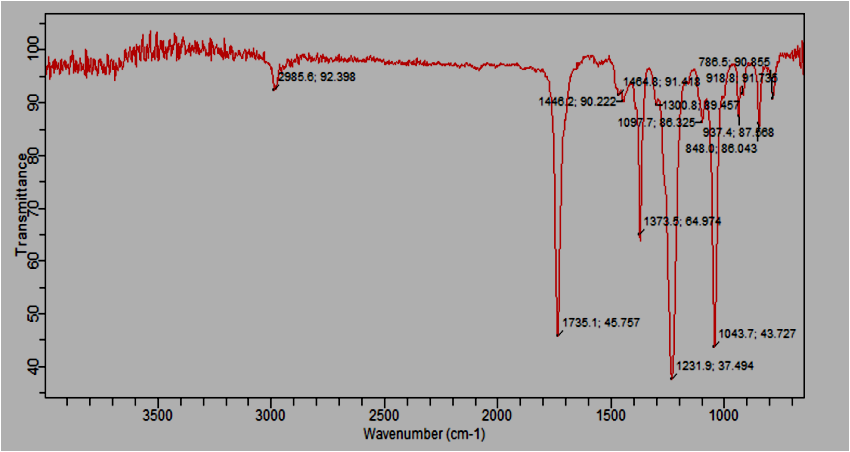
FTIR study reveals that strong peak at 1735.1 cm-1 corresponds to C=O stretching frequency of the carbonyl group (Figure 6). The carbonyl group may be aldehyde. Small peak at 2985 cm-1 represent asymmetric stretching of C-H of aliphatic molecule Peak at 1373 corresponds to NO2 symmetric stretching. The sharp peak at 1231 cm-1 represent C-OH stretching frequency. The peak at the range 735- 786 cm-1 represents the presence of aromatic ring with distribution at ortho position. Peak at 1043 cm-1 indicates the stretching frequency of C-O. Thus, it can be concluded that the molecule can have aromatic skeleton with different substituents and this finding corroborate with the obsevation of Devi and Singh, 2013.

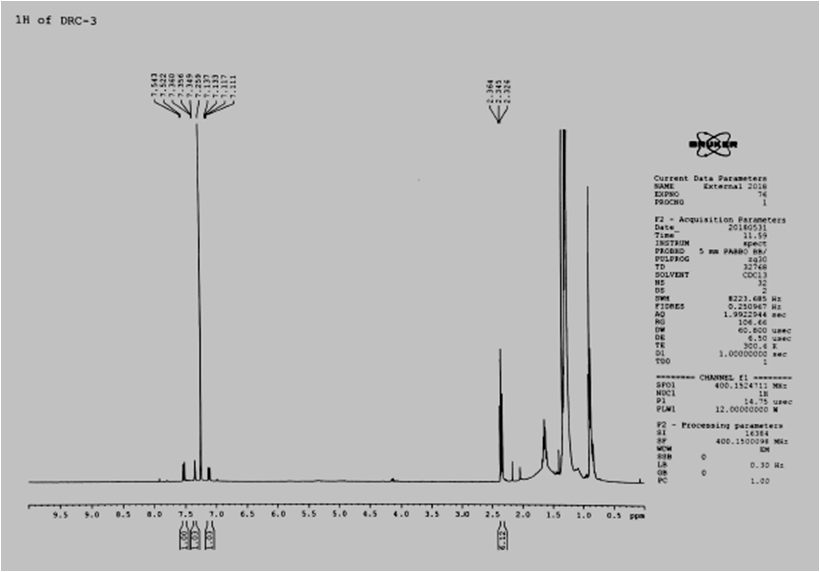
H NMR analyses of the cell free extract of P. singorense produce detectable amount of antibiotic like compound. The NMR sectra has shown a triplet signal at 2.34 ppm with same J values of 6.12 another four signals have been observed from 7.111 ppm to 7.543 ppm. At 7.111 ppm it is aquatrate (four-line signal) with J value of 1.03. At 7.259 ppm, it is a singlet signal. At 7.356 it is a triplet (three-line signal) with J value of 1.03 and a doublet (two-line signal) has been shown at 7.522 ppm with the same J value of 1.03. This study reveals that an aromatic benzene ring trisubstituents at positions 1, 3 and 4; probably any other heteroatoms (may be oxygen) may be present are at 2.34 ppm that look like a triplet but integrated to six protons because the furthest downfield protons (3 CH2) groups, the remainder (unintegrated) look like aliphatic (alkyl chain) protons (Figure 7).

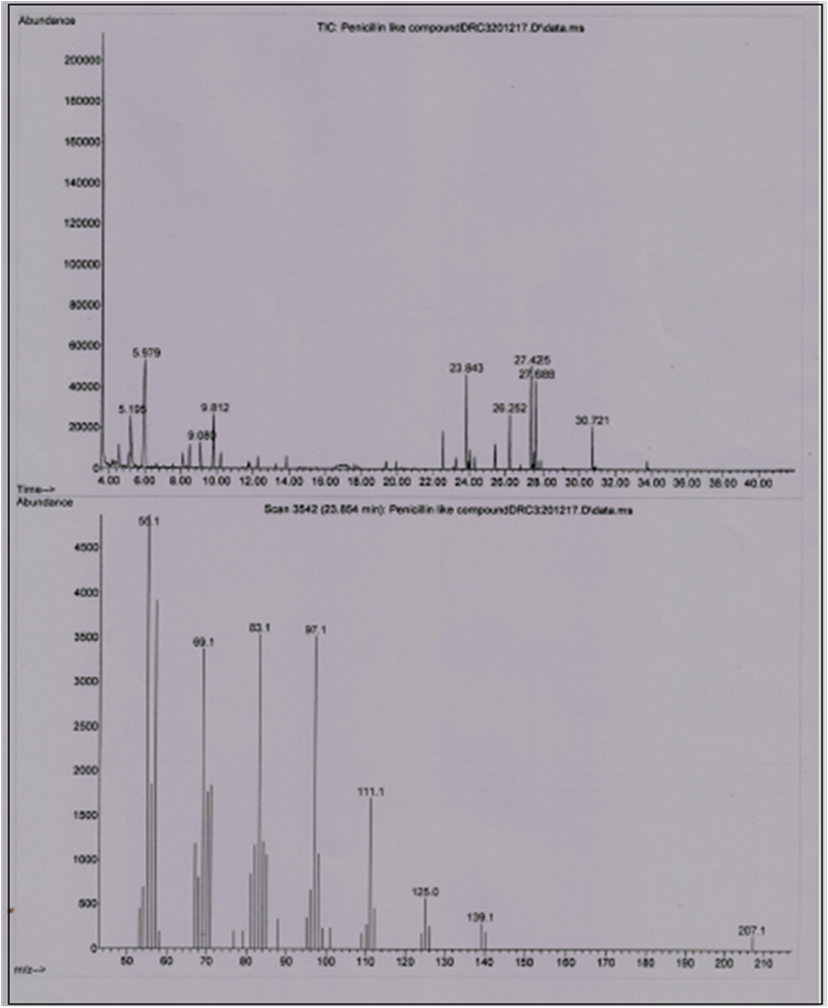
The ethyl acetate extract was characterised and identified by GC-MS analysis. The GC-MS data is deconvoluted by the use of NIST software and the measured mass spectra are matched with NIST database. GC-MS analysis reveales that fungal endophyte P. Singorense is able to produce many bioactive compounds (Table 1, Figure 8). Various type and number of compounds detected by GC-MS study. The most abundant 9 volatile metabolites identified are Cyclopentasiloxane, 1-Nonadecene, 3-Eicosene, 1-Docosene, Eicosyl methyl ether, Cyclohexadecane, 1 octadecene, E-15-Heptadecenal, 1-heneicosanol. Among the detected compounds, some were volatile metabolites. 28 reported that Eicosene and nonadecene both have antimicrobial activity. Some new compounds were also detected which may have antibacterial activity 22 and would have potent pharmaceutical activity.

The cell free extract of P. singorense isolated from C. roseus and C. procera indicated the presence of highly valued anticancerous diterpenoid compound ‘Taxol’ which opened a new avenue for the researcher and industrialist to search an alternative source of this pharmaceutical active compund, since its original source plant Kew Taxus brevifolia produce a very small amount of Taxol. The first production of Taxol by endophytic fungi Taxomyces andreana isolated from T. brevifolia has been reported 11. Endophytic fungi Phoma medicaginus and Aspergillus fumigates of Taxus plant produces Paclitaxel been detected and estimated which supports our works 17, 18. More recently the similar work has been carried out and reported the paclitaxel producing endophytic fungi Aspergillus oryzae, an endophyte of Tarenna asiatica 37. The Penicillium aurantiogriseum NRRL 62431 isolated from hazel plant has also been able to produce paclitaxel and was detected by GC-MS and proton NMR 19, 31 reported the presence of Taxol from Phoma sp isolated from Calotropis gigantea and estimated by TLC, HPLC and UV –VIS spectroscopy. Paclitaxel produced by Penicillium raistrickii which was isolated from the inner bark of a yew tree 24.
Isolation and characterization of antibiotic like compound have been carried out and their detection (NMR) indicated that the compounds may be constituted with an aromatic benzene ring trisubstituents at positions 1, 3 and 4; the remainder (unintegrated) look like aliphatic (alkyl chain) protons. The FTIR spectroscopic study revealed that the molecule can have an aromatic skeleton with different substituents. The GCMS study revealed the presence of 9 major compound (most commonly occurring of those are Methyl stearate (C19H38O2), 1-Nonadecene (C19H38) and 3-Eicosene (C20H40)), maximum of which are of aliphatic in nature.
The presence of 3- Eeicosene, an antimicrobial compound from the extract of Hypoxylon sp an endophytic fungus from the roots of Dendrobium sp has been recently reported by Shrestha et al., 2018. Methyl stearate (C19H38O2 ), 1-Nonadecene (C19H38), 9- Eicosene (C20H40) isolated and identified from Croton bonplandianum plant having, antidiarrheal, cytotoxic, antiproliferative, antifungal activity and antimicrobial , cytotoxic properties, Kuppuswamy et al., 2013. 3-Eicosene and 1-Nonadecene has also been isolated from Colletotrichum gloeosporioide an endophytic origin 33.
3-Eicosane and 1-nonadecane, similar to eicosene and nonadecene has recently been reported from the buckwheat, Fagopyrum esculentum containing antibacterial activity 24. Eicosane (C20H42) and morphinan, 7,8-didehydro-4,5-epoxy-17-methyl-3,6-bis[(trimethylsilyl)oxy]-, extracted from Streptomyces strain having antifungal activity against Rhizoctonia solani AG-3 reported by 35. Penicillium species, including P. jenseii, P.pusillum, P. purpurogenum and P. canescens, produced various bioactive compound including Eicosene and was detected by gas chromatography combined with mass spectrometry (GC-MS) 37 .
This study reveals that the cell free extract of P. singorense isolated from C. roseus and C. procera indicated the presence of highly priced anticancerous compound “Taxol’’, would be the alternative sourece of plant Kew Taxus brevifolia . The bioactive compound present in the cell free extract of this fungi detected by NMR study that the compounds may be constituted with an aromatic benzene ring trisubstituents at positions 1, 3 and 4; the remainder (unintegrated) look like aliphatic (alkyl chain) protons. The FTIR spectroscopic study revealed that the molecule can have an aromatic skeleton with different substituents. The GCMS study revealed the presence of 9 major compound (most commonly occurring of those are Methyl stearate (C19H38O2), 1-Nonadecene (C19H38) and 3-Eicosene (C20H40)), maximum of which are of aliphatic in nature. This fungal starin would be the potent source of anticancerous and antibiotic like compound having pharmaceutical uses and probably the first report of its kind in Bardhhaman districts of West Bengal, India.
The authors declare that they have no conflict of interest.
| [1] | Jalgaonwala R. E., Mohite B. V., Mahajan R. T. (2011). Natural products from plant associated endophytic fungi. J. Microbiol. Biotechnol. Res. 1. 21-32. | ||
| In article | |||
| [2] | Roy Chowdhury D, Chattopadhyay S.K, Roy S.K. (2018). Assessment of secondary metabolites with relation to their antioxidant activity of fungal endophytes isolated from medicinal plants. Int J Pharm Pharm Sci, 10(5), 59-63. | ||
| In article | View Article | ||
| [3] | Desire MH, Bernard F, Forsah MR, Assang CT, et al. (2014). Enzymes and qualitative phytochemical screening of endophytic fungi isolated from Lantana camara Linn. leaves. J. Appl. Biol. Biotechnol. 2: 1-6. | ||
| In article | |||
| [4] | Balandrin MF, Klocke JA, Wurtele ES, W.H Bollinger (1985). Natural plant chemicals: Sources of industrial and medicinal materials. Science. 228: 1154-1160. | ||
| In article | View Article PubMed | ||
| [5] | Bills, G., A. Dombrowski, F. Pelaez, J. Polishook, and Z. An. 2002. Recent and future discoveries of pharmacologically active metabolites from tropical fungi, p. 165-194. In R. Watling, J. C. Frankland, A. M. Ainsworth, S. Issac, and C. H. Robinson. (ed.), Tropical mycology: micromycetes, vol. 2. CABI Publishing, New York, N.Y. | ||
| In article | View Article | ||
| [6] | Lin X, Lu CH, Huang YJ, Zheng ZH, Su WJ, Shen YM (2007). Endophytic fungi from a pharmaceutical plant, Camptotheca acuminata: isolation, identification and bioactivity. World J. Microbiol. Biotechnol. 23: 1037-1040. | ||
| In article | View Article | ||
| [7] | De Siqueira VM, Conti R, De Araújo JM, Souza-Motta CM: Endophytic fungi from the medicinal plant Lippia sidoides Cham. and their antimicrobial activity. Symbiosis 2011, 53(2): 89-95. | ||
| In article | View Article | ||
| [8] | Kumaran R.S, Kim H.J and Hur B. K (2010) Taxol-producing [corrected] fungal endophyte, Pestalotiopsis species isolated from Taxus cuspidate.J Biosci Bioeng. 110(5): 541-6. | ||
| In article | View Article PubMed | ||
| [9] | Flores-Bustamante Z. R., Rivera-Orduña F. N., Martínez-Cárdenas A., Flores-Cotera L. B. (2010). Microbial paclitaxel: advances and perspectives. J. Antibiot. 63 460-467. | ||
| In article | View Article PubMed | ||
| [10] | Mirjalili M.H, Farzaneh M, Bonfill M, Rezadoost H and Ghassempour A (2012). Isolation and characterization of Stemphylium sedicola SBU-16 as a new endophytic taxol-producing fungus from Taxus baccata grown in Iran. FEMS Microbiol Lett 328(2012) 122-129. | ||
| In article | View Article PubMed | ||
| [11] | Stierle A, Strobel G., Stierle D (1993). Taxol and taxane production by Taxomyces andreanae, an endophytic fungus of pacific yew. Sci. 260: 214-216. | ||
| In article | View Article PubMed | ||
| [12] | Wang Y, Guo B, Miao Z, and Tang K (2007). Transformation of taxol-producing endophytic fungi by restriction enzyme-mediated integration (REMI). FEMS Microbiology Letters, 273 (2), 253-259. | ||
| In article | View Article PubMed | ||
| [13] | Zhao K, Zhao LF, Jin Y, Wei H, Ping W & Zhou D (2008) Isolation of a taxol-producing endophytic fungus and inhibiting effect of the fungus metabolites on HeLa cell. Mycosystema 27: 735-744. | ||
| In article | |||
| [14] | Li JY, Sidhu RS, Ford E, Hess WM, Strobel GA. 1998 – The induction of taxol production in the endophytic fungus Periconia sp. from Torreya grandifolia. Journal of industrial Microbiology 20, 259-264. | ||
| In article | View Article | ||
| [15] | Ajikumar, P. K., Xiao, W. H., Tyo, K. E. J., Wang, Y., Simeon, F., Leonard, E., et al. (2010). Isoprenoid pathway optimization for taxol precursor overproduction in Escherichia coli. Science 330, 70-74. | ||
| In article | View Article PubMed | ||
| [16] | Ballakuti N.M, Ghanati F, Zare-Maivan H, Alipour M, Moghaddam M and Abdolmaleki P (2022). Taxoid profile in endophytic fungi isolated from Corylus avellana, introduces potential source for the production of Taxol in semi-synthetic approaches. Sci Rep 12(1) 9390. | ||
| In article | View Article PubMed | ||
| [17] | Zaiyou J, Li M, Xiqiao H. (2019). An endophytic fungus efficiently producing paclitaxel isolated from Taxus wallichiana var. mairei Medicine (Baltimore) 96(27): e7406. | ||
| In article | View Article PubMed | ||
| [18] | Kumar, P., Singh, B., Thakur, V., Thakur, A., Thakur, N., Pandey, D., Chand, D. (2019). Hyper production of paclitaxel from Aspergillus fumigatus,an endophytic fungus isolated from Taxus sp. of the northern Himalayanregion. Biotechnology Reports. 24, 1-13. | ||
| In article | View Article PubMed | ||
| [19] | Hemamalini V, Kumar D.J. M, Rebecca A.I.N, Srimathi S, Muthumary J and Kalaichelvan P.T. (2015). Isolation and Characterization of Taxol Producing Endophytic Phoma sp. from Calotropis gigantea and its Anti-Proliferative Studies. J. of Acad. and Indus. Res. 3(12) 645-649. | ||
| In article | |||
| [20] | Premjanu N. and Jaynthy C. (2014). Antioxidant activity of endophytic fungi isolated from Lannea coromendalica. Int. J. Res. Pharm. Sci. 5, 304-308. | ||
| In article | |||
| [21] | Hussain H, Kock I, Harrasi AA, Rawahi AA, Abbas G, Green IR, Shah A, Badshah A, Saleem M, Draeger S, Schulz B, Krohn K. (2014). Antimicrobial chemical constituents from endophytic fungus Phoma sp. Asian Pac J Trop Med 7: 699-702. | ||
| In article | View Article | ||
| [22] | Mishra, V. K., Passari, A. K., Chandra, Leo, V. V., Kumar, B., Uthandi, S., et al. (2017). Determination and production of antimicrobial compounds by Aspergillus clavatonanicus strain MJ31, an endophytic fungus from Mirabilis jalapa L. using UPLC-ESI-MS/MS and TD-GC-MS analysis. PLoS One 12: e0186234. | ||
| In article | View Article PubMed | ||
| [23] | Debjani Roy Chowdhury (2019). PhD thesis, Dept. of Biochemistry, Vidyasagar University, West Bengal, India. Entitled “Studies on Fungal Endophytes of some medicinally important plants”. | ||
| In article | |||
| [24] | Roy Chowdhury D, Chattopadhyay S. K and Roy S.K (2018). Molecular phylogeny and genetic diversity studies of some potent endophytic fungi isolated from medicinal plants (Calotropis procera and Catharanthus roseus) using 18S rRNA and RAPD analysis. Afr. J. Microbiol. Res. 12(33), 796-805. | ||
| In article | View Article | ||
| [25] | Cardellina J.H. (1991). HPLC separation of taxol and cephalomannie. J. Liquid Chromat., 14: 659-665. | ||
| In article | View Article | ||
| [26] | Srinivasan K and Muthumary J (2009). Taxol production from Pestalotiopsis sp. an endophytic fungus isolated from Catharanthus roseus. J of Ecobiotechnol. 1 (1): 028-031. | ||
| In article | |||
| [27] | Gangadevi V and Muthumary J (2007). Endophytic fungal diversity from young, mature and senescent leaves of Ocimum bacilicum L. with special reference to Taxol production. Indian J. of Sci. and Technol. 1 (1): 1-12. | ||
| In article | View Article | ||
| [28] | Lee S, Hung R, Yap M, Bennett JW. (2015). Age matters: the effects of volatile organic compounds emitted by Trichoderma atroviride on plant growth. Arch Microbiol. 197: 723-735. | ||
| In article | View Article PubMed | ||
| [29] | Garcia A, Rhoden S.A, Bernardi-Wenzel J, Orlandelli RC, Azevedo J.L, Pamphile J.A. (2012). . Antimicrobial activity of crude extracts of endophytic fungi isolated from medicinal plant Sapindus saponaria L. J Appl Pharm Sci; 2(10): 35-40. | ||
| In article | View Article | ||
| [30] | Stierle A., Strobel G., and Stierle D. (1993). Taxol and taxane production by Taxomyces andreanae, an endophytic fungus of Pacific yew. Science. 260, 214-216. | ||
| In article | View Article PubMed | ||
| [31] | Yang S.Y, Kim N.H, Cho Y.S, Lee H., Kwon H.J. (2014). Convallatoxin, a dual inducer of autophagy and apoptosis, inhibits angiogenesis in vitro and in vivo PLoS One, 9 (3) e91094. | ||
| In article | View Article PubMed | ||
| [32] | Stierle AA, Stierle DB. (2000). Bioactive compounds from four endophytic Penicillium sp. isolated from the Northwest Pacific yew tree. In: Atta-Ur-Rahman, editor. Bioactive Natural Products. Vol. 24. Elsevier Science Publishers; Amsterdam. 933-978. | ||
| In article | View Article | ||
| [33] | Devi N. N and Singh M.S (2013). GC-MS analysis of metabolites from Endophytic fungus Collectotrichum gloeosporiodes isolated from Phlogacanthus thyrsiflorus. Int. J. of Pharm. Sci. Rev and Res. 23(2): 392-395. | ||
| In article | |||
| [34] | Kuppuswamy K, Jonnalagadda B, Arockiasamy S (2013). Gc-ms analysis of chloroform extract of Croton bonplandianum. Int. J. of Pharma and Bio Sciences. 4(4). | ||
| In article | |||
| [35] | Ahsan T, Chen J, Zhao X, Irfan M, Wu Y. (2017) Extraction and identification of bioactive compounds (eicosane and dibutyl phthalate) produced by Streptomyces strain KX852460 for the biological control of Rhizoctonia solani AG-3 strain KX852461 to control target spot disease in tobacco leaf. AMB Express. 7(1): 54. | ||
| In article | View Article PubMed | ||
| [36] | Suresh G, Kokila D, Suresh T. C, Subramanian K (2020). Mycosynthesis of anticancer drug taxol by Aspergillus oryzae, an endophyte of Tarenna asiatica, characterization, and its activity against a human lung cancer cell line. Biocatalysis and Agri. Biotechnol. 24(2018):101525. | ||
| In article | View Article | ||
| [37] | Ghanbari M. A. T, Mohammadkhani H. S, Babaeizad V (2014). Identification of some secondary metabolites produced by four Penicillium species. Mycologia Iranica 1(2-2), 107-113. | ||
| In article | |||
Published with license by Science and Education Publishing, Copyright © 2022 Debjani Roy Chowdhury, Swapan Kumar Chattopadhyay and SubhashKanti Roy
 This work is licensed under a Creative Commons Attribution 4.0 International License. To view a copy of this license, visit
http://creativecommons.org/licenses/by/4.0/
This work is licensed under a Creative Commons Attribution 4.0 International License. To view a copy of this license, visit
http://creativecommons.org/licenses/by/4.0/
| [1] | Jalgaonwala R. E., Mohite B. V., Mahajan R. T. (2011). Natural products from plant associated endophytic fungi. J. Microbiol. Biotechnol. Res. 1. 21-32. | ||
| In article | |||
| [2] | Roy Chowdhury D, Chattopadhyay S.K, Roy S.K. (2018). Assessment of secondary metabolites with relation to their antioxidant activity of fungal endophytes isolated from medicinal plants. Int J Pharm Pharm Sci, 10(5), 59-63. | ||
| In article | View Article | ||
| [3] | Desire MH, Bernard F, Forsah MR, Assang CT, et al. (2014). Enzymes and qualitative phytochemical screening of endophytic fungi isolated from Lantana camara Linn. leaves. J. Appl. Biol. Biotechnol. 2: 1-6. | ||
| In article | |||
| [4] | Balandrin MF, Klocke JA, Wurtele ES, W.H Bollinger (1985). Natural plant chemicals: Sources of industrial and medicinal materials. Science. 228: 1154-1160. | ||
| In article | View Article PubMed | ||
| [5] | Bills, G., A. Dombrowski, F. Pelaez, J. Polishook, and Z. An. 2002. Recent and future discoveries of pharmacologically active metabolites from tropical fungi, p. 165-194. In R. Watling, J. C. Frankland, A. M. Ainsworth, S. Issac, and C. H. Robinson. (ed.), Tropical mycology: micromycetes, vol. 2. CABI Publishing, New York, N.Y. | ||
| In article | View Article | ||
| [6] | Lin X, Lu CH, Huang YJ, Zheng ZH, Su WJ, Shen YM (2007). Endophytic fungi from a pharmaceutical plant, Camptotheca acuminata: isolation, identification and bioactivity. World J. Microbiol. Biotechnol. 23: 1037-1040. | ||
| In article | View Article | ||
| [7] | De Siqueira VM, Conti R, De Araújo JM, Souza-Motta CM: Endophytic fungi from the medicinal plant Lippia sidoides Cham. and their antimicrobial activity. Symbiosis 2011, 53(2): 89-95. | ||
| In article | View Article | ||
| [8] | Kumaran R.S, Kim H.J and Hur B. K (2010) Taxol-producing [corrected] fungal endophyte, Pestalotiopsis species isolated from Taxus cuspidate.J Biosci Bioeng. 110(5): 541-6. | ||
| In article | View Article PubMed | ||
| [9] | Flores-Bustamante Z. R., Rivera-Orduña F. N., Martínez-Cárdenas A., Flores-Cotera L. B. (2010). Microbial paclitaxel: advances and perspectives. J. Antibiot. 63 460-467. | ||
| In article | View Article PubMed | ||
| [10] | Mirjalili M.H, Farzaneh M, Bonfill M, Rezadoost H and Ghassempour A (2012). Isolation and characterization of Stemphylium sedicola SBU-16 as a new endophytic taxol-producing fungus from Taxus baccata grown in Iran. FEMS Microbiol Lett 328(2012) 122-129. | ||
| In article | View Article PubMed | ||
| [11] | Stierle A, Strobel G., Stierle D (1993). Taxol and taxane production by Taxomyces andreanae, an endophytic fungus of pacific yew. Sci. 260: 214-216. | ||
| In article | View Article PubMed | ||
| [12] | Wang Y, Guo B, Miao Z, and Tang K (2007). Transformation of taxol-producing endophytic fungi by restriction enzyme-mediated integration (REMI). FEMS Microbiology Letters, 273 (2), 253-259. | ||
| In article | View Article PubMed | ||
| [13] | Zhao K, Zhao LF, Jin Y, Wei H, Ping W & Zhou D (2008) Isolation of a taxol-producing endophytic fungus and inhibiting effect of the fungus metabolites on HeLa cell. Mycosystema 27: 735-744. | ||
| In article | |||
| [14] | Li JY, Sidhu RS, Ford E, Hess WM, Strobel GA. 1998 – The induction of taxol production in the endophytic fungus Periconia sp. from Torreya grandifolia. Journal of industrial Microbiology 20, 259-264. | ||
| In article | View Article | ||
| [15] | Ajikumar, P. K., Xiao, W. H., Tyo, K. E. J., Wang, Y., Simeon, F., Leonard, E., et al. (2010). Isoprenoid pathway optimization for taxol precursor overproduction in Escherichia coli. Science 330, 70-74. | ||
| In article | View Article PubMed | ||
| [16] | Ballakuti N.M, Ghanati F, Zare-Maivan H, Alipour M, Moghaddam M and Abdolmaleki P (2022). Taxoid profile in endophytic fungi isolated from Corylus avellana, introduces potential source for the production of Taxol in semi-synthetic approaches. Sci Rep 12(1) 9390. | ||
| In article | View Article PubMed | ||
| [17] | Zaiyou J, Li M, Xiqiao H. (2019). An endophytic fungus efficiently producing paclitaxel isolated from Taxus wallichiana var. mairei Medicine (Baltimore) 96(27): e7406. | ||
| In article | View Article PubMed | ||
| [18] | Kumar, P., Singh, B., Thakur, V., Thakur, A., Thakur, N., Pandey, D., Chand, D. (2019). Hyper production of paclitaxel from Aspergillus fumigatus,an endophytic fungus isolated from Taxus sp. of the northern Himalayanregion. Biotechnology Reports. 24, 1-13. | ||
| In article | View Article PubMed | ||
| [19] | Hemamalini V, Kumar D.J. M, Rebecca A.I.N, Srimathi S, Muthumary J and Kalaichelvan P.T. (2015). Isolation and Characterization of Taxol Producing Endophytic Phoma sp. from Calotropis gigantea and its Anti-Proliferative Studies. J. of Acad. and Indus. Res. 3(12) 645-649. | ||
| In article | |||
| [20] | Premjanu N. and Jaynthy C. (2014). Antioxidant activity of endophytic fungi isolated from Lannea coromendalica. Int. J. Res. Pharm. Sci. 5, 304-308. | ||
| In article | |||
| [21] | Hussain H, Kock I, Harrasi AA, Rawahi AA, Abbas G, Green IR, Shah A, Badshah A, Saleem M, Draeger S, Schulz B, Krohn K. (2014). Antimicrobial chemical constituents from endophytic fungus Phoma sp. Asian Pac J Trop Med 7: 699-702. | ||
| In article | View Article | ||
| [22] | Mishra, V. K., Passari, A. K., Chandra, Leo, V. V., Kumar, B., Uthandi, S., et al. (2017). Determination and production of antimicrobial compounds by Aspergillus clavatonanicus strain MJ31, an endophytic fungus from Mirabilis jalapa L. using UPLC-ESI-MS/MS and TD-GC-MS analysis. PLoS One 12: e0186234. | ||
| In article | View Article PubMed | ||
| [23] | Debjani Roy Chowdhury (2019). PhD thesis, Dept. of Biochemistry, Vidyasagar University, West Bengal, India. Entitled “Studies on Fungal Endophytes of some medicinally important plants”. | ||
| In article | |||
| [24] | Roy Chowdhury D, Chattopadhyay S. K and Roy S.K (2018). Molecular phylogeny and genetic diversity studies of some potent endophytic fungi isolated from medicinal plants (Calotropis procera and Catharanthus roseus) using 18S rRNA and RAPD analysis. Afr. J. Microbiol. Res. 12(33), 796-805. | ||
| In article | View Article | ||
| [25] | Cardellina J.H. (1991). HPLC separation of taxol and cephalomannie. J. Liquid Chromat., 14: 659-665. | ||
| In article | View Article | ||
| [26] | Srinivasan K and Muthumary J (2009). Taxol production from Pestalotiopsis sp. an endophytic fungus isolated from Catharanthus roseus. J of Ecobiotechnol. 1 (1): 028-031. | ||
| In article | |||
| [27] | Gangadevi V and Muthumary J (2007). Endophytic fungal diversity from young, mature and senescent leaves of Ocimum bacilicum L. with special reference to Taxol production. Indian J. of Sci. and Technol. 1 (1): 1-12. | ||
| In article | View Article | ||
| [28] | Lee S, Hung R, Yap M, Bennett JW. (2015). Age matters: the effects of volatile organic compounds emitted by Trichoderma atroviride on plant growth. Arch Microbiol. 197: 723-735. | ||
| In article | View Article PubMed | ||
| [29] | Garcia A, Rhoden S.A, Bernardi-Wenzel J, Orlandelli RC, Azevedo J.L, Pamphile J.A. (2012). . Antimicrobial activity of crude extracts of endophytic fungi isolated from medicinal plant Sapindus saponaria L. J Appl Pharm Sci; 2(10): 35-40. | ||
| In article | View Article | ||
| [30] | Stierle A., Strobel G., and Stierle D. (1993). Taxol and taxane production by Taxomyces andreanae, an endophytic fungus of Pacific yew. Science. 260, 214-216. | ||
| In article | View Article PubMed | ||
| [31] | Yang S.Y, Kim N.H, Cho Y.S, Lee H., Kwon H.J. (2014). Convallatoxin, a dual inducer of autophagy and apoptosis, inhibits angiogenesis in vitro and in vivo PLoS One, 9 (3) e91094. | ||
| In article | View Article PubMed | ||
| [32] | Stierle AA, Stierle DB. (2000). Bioactive compounds from four endophytic Penicillium sp. isolated from the Northwest Pacific yew tree. In: Atta-Ur-Rahman, editor. Bioactive Natural Products. Vol. 24. Elsevier Science Publishers; Amsterdam. 933-978. | ||
| In article | View Article | ||
| [33] | Devi N. N and Singh M.S (2013). GC-MS analysis of metabolites from Endophytic fungus Collectotrichum gloeosporiodes isolated from Phlogacanthus thyrsiflorus. Int. J. of Pharm. Sci. Rev and Res. 23(2): 392-395. | ||
| In article | |||
| [34] | Kuppuswamy K, Jonnalagadda B, Arockiasamy S (2013). Gc-ms analysis of chloroform extract of Croton bonplandianum. Int. J. of Pharma and Bio Sciences. 4(4). | ||
| In article | |||
| [35] | Ahsan T, Chen J, Zhao X, Irfan M, Wu Y. (2017) Extraction and identification of bioactive compounds (eicosane and dibutyl phthalate) produced by Streptomyces strain KX852460 for the biological control of Rhizoctonia solani AG-3 strain KX852461 to control target spot disease in tobacco leaf. AMB Express. 7(1): 54. | ||
| In article | View Article PubMed | ||
| [36] | Suresh G, Kokila D, Suresh T. C, Subramanian K (2020). Mycosynthesis of anticancer drug taxol by Aspergillus oryzae, an endophyte of Tarenna asiatica, characterization, and its activity against a human lung cancer cell line. Biocatalysis and Agri. Biotechnol. 24(2018):101525. | ||
| In article | View Article | ||
| [37] | Ghanbari M. A. T, Mohammadkhani H. S, Babaeizad V (2014). Identification of some secondary metabolites produced by four Penicillium species. Mycologia Iranica 1(2-2), 107-113. | ||
| In article | |||