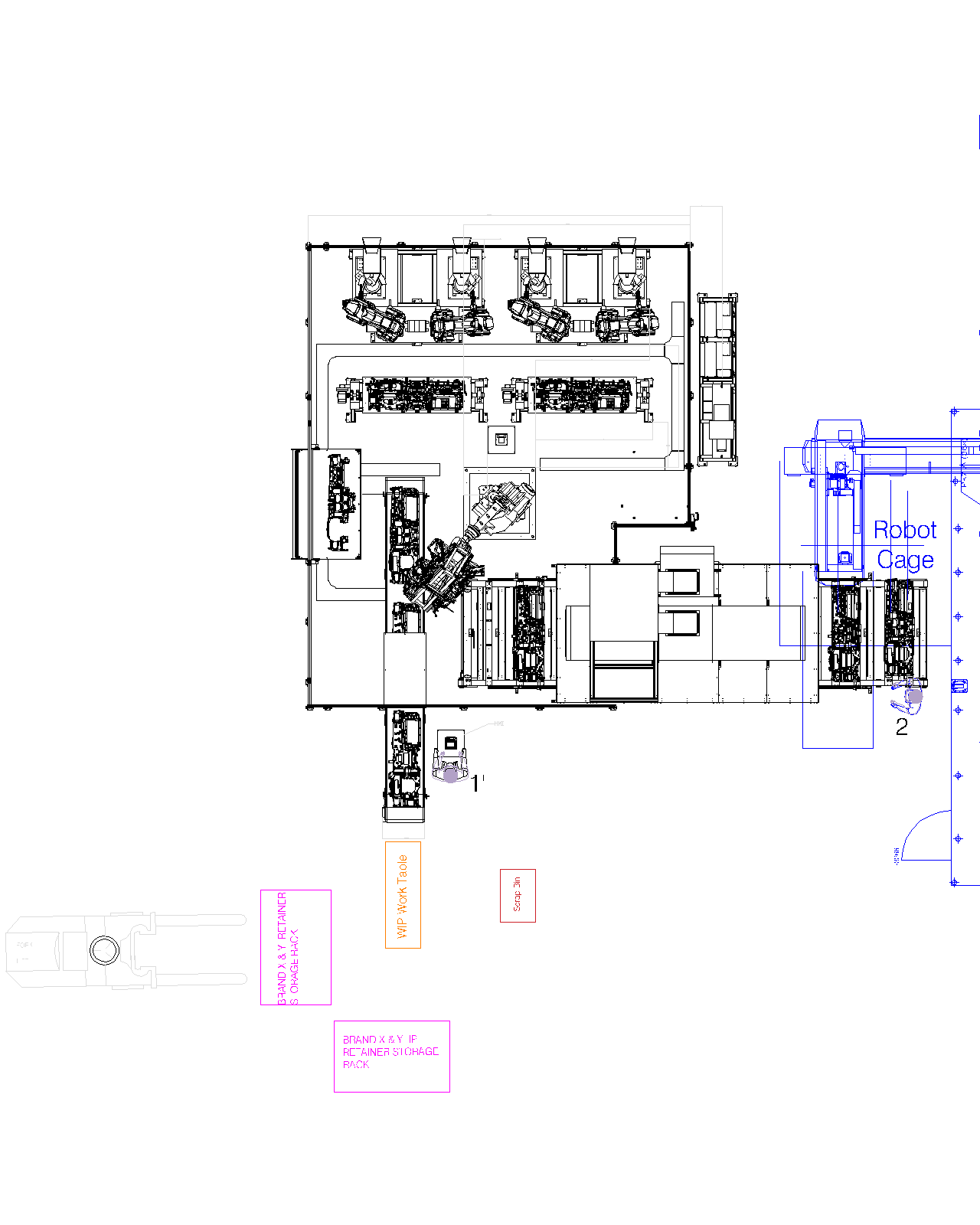
Production processes were optimized to improve quality of production, reduce labor costs, and shorten the lead time of the parts produced. Production line balancing is necessary for manufacturing resource planning, and it is important to optimize the production lines as much as possible to reduce costs and improve productivity
Continuous Improvement is a process in which product, processes and services are improved using incremental or breakthrough methods. Continuous Improvement projects are carried out by corporates world over to fulfill customer requirements, improve profits and to remain competitive. CI projects help in effective space utilization, remove bottlenecks from the processes and help in saving costs 1. CI projects undertaken in manufacturing industry aim at achieving Lean principles of manufacturing. Lean manufacturing is a methodology aimed at reducing waste and increase productivity by using less resources like material, manpower, machines and manufacturing time 2.
IAC is a global manufacturer of automotive interior products with more than 40 manufacturing facilities spanning 15 countries with 13 technical, engineering, and commercial centers. Research carried out in IAC Southfield aimed at optimizing process flow by eliminating bottle necks on doorline assembly line and improving the robot-based assembly processes for injection molded parts to fulfill customer requirements without adding additional costs and reducing lead time. Three car brands X, Y and Z are considered for the study.
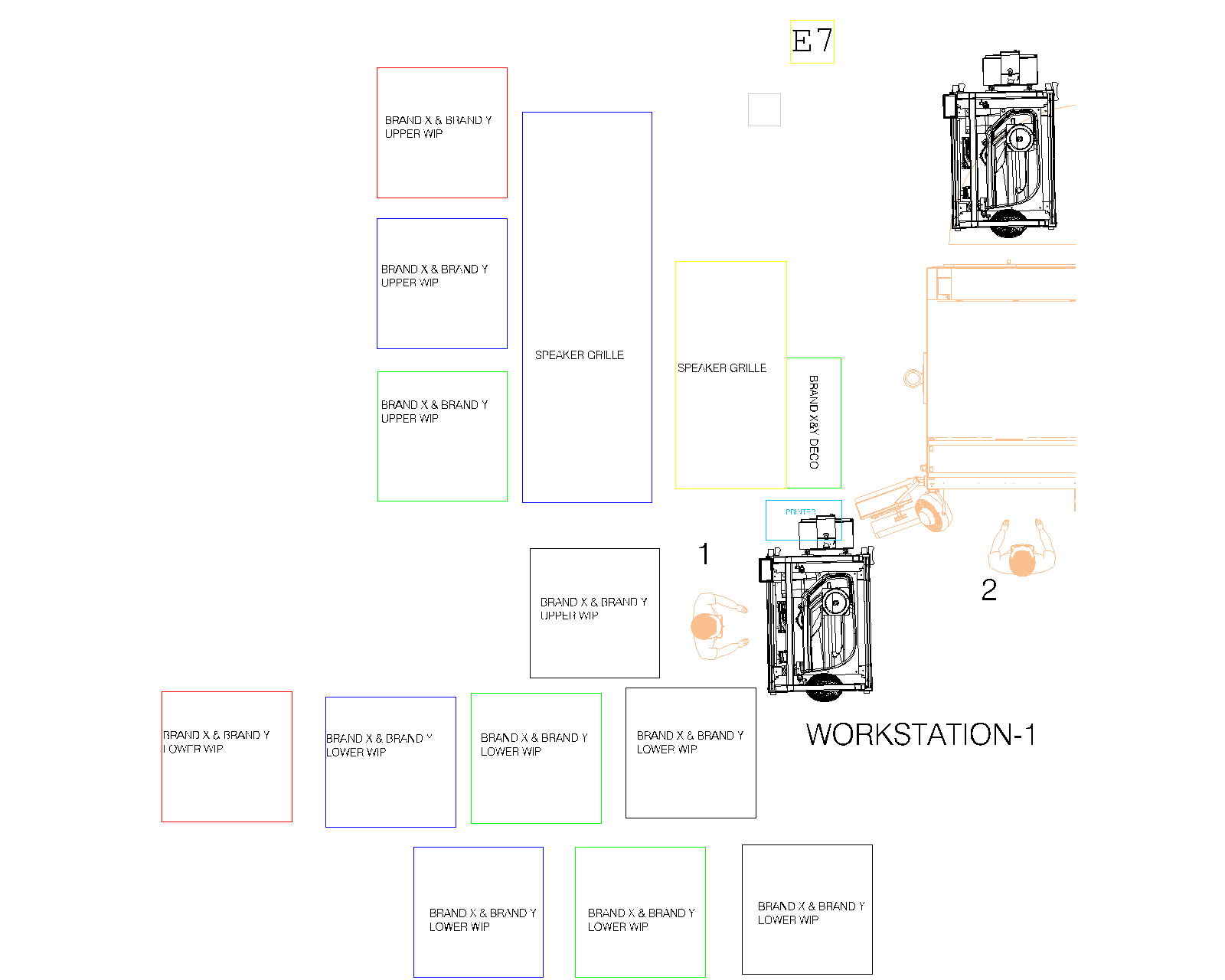
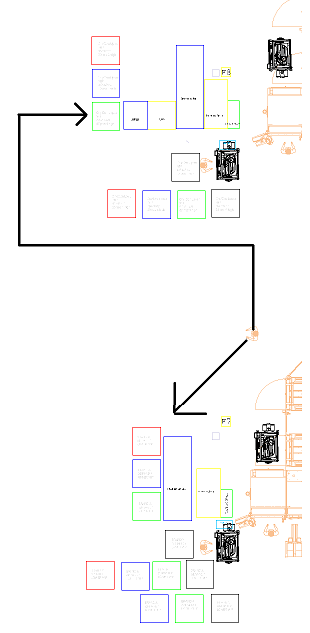
Door interior is made of plastic. It is divided into 2 major parts i.e., door lower and door upper. Door lower is produced at the plant using injection molding and door upper is imported through reliable suppliers. Doorline production is centered around assembling of various components like screws, switches, wire harness etc. in the door interior. The production line is divided into 2 sublines in which Line-1 is automatic line operated via robots used for inserting screws and welding while Line-2 is a manual line with team members assembling components on the door interior. Line-1 is fed doors through workstation (will be referred to as Workstation 1) located at the mouth of the line, operated by 2 team members who assemble the door upper into door lower, scan the barcode to record the data in system and insert the door into a jig on which the robotic assembly unit performs its operations. Workstation 1 is fed by door uppers and lowers using a conveyer belt. Slow pace of conveyer, presence of labor to add material on conveyer and higher wait time for team member at the workstation are to be eliminated to improve lead time, improve effective utilization of labor and conserve costs.
2.2. Press 110 Robot Assembly CellPress 110 is used for manufacturing IP retainer for Brand X and is connected to an assembly cell. Resin A is used for manufacturing the IP retainer. A cooling conveyer is used to ensure that molded part cools down before assembly thus allowing part to warp as per requirements. Parts are kept in the robotic cell nest and pushnuts are inserted into the part by the robot. This part is placed in Cell A to validate if all the pushnuts are inserted into the retainer.
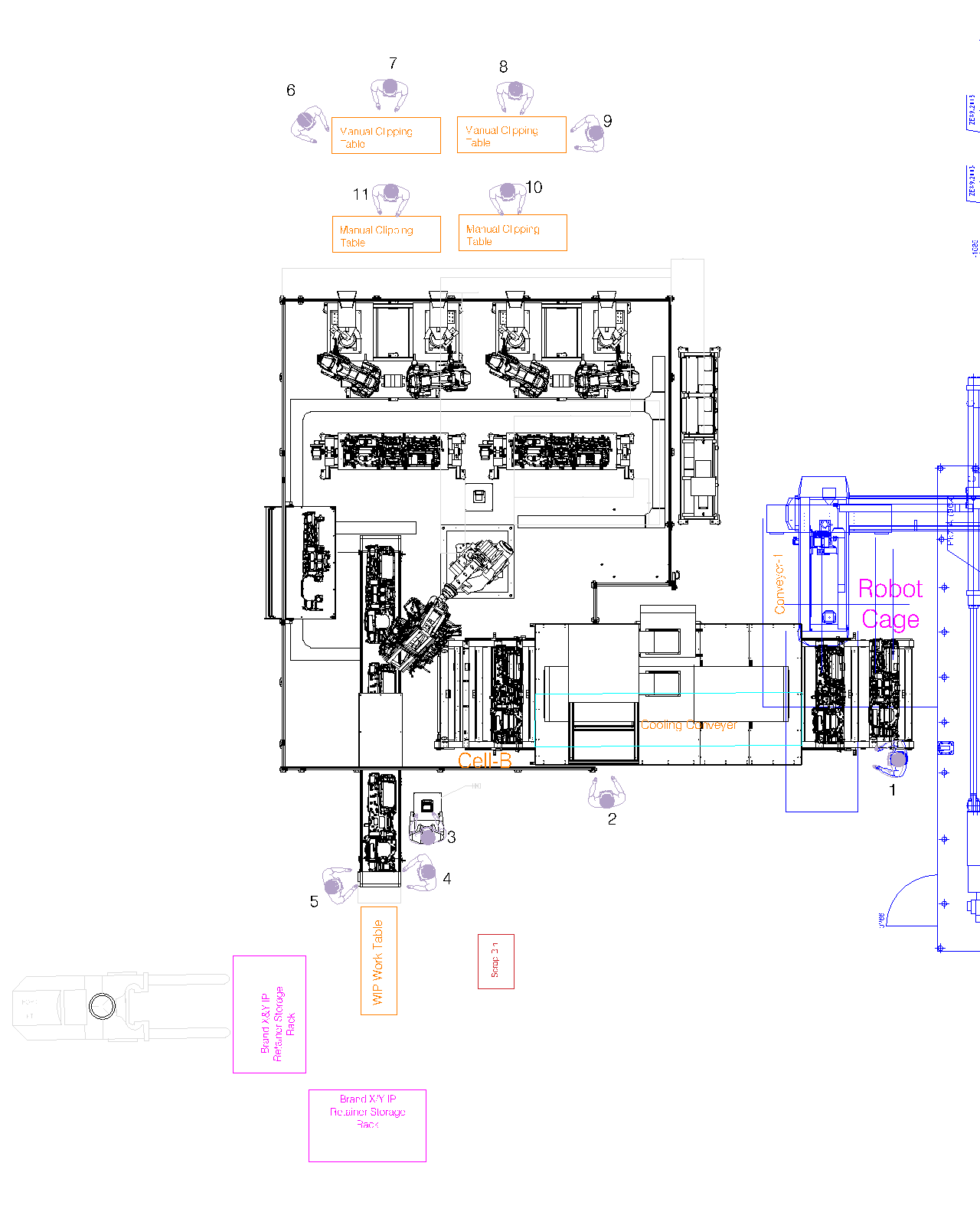
Car components of several brands are manufactured in the plant which causes frequent part changes due to customer demand. These part changes cause the robot to function with 60% efficiency leaving 40% of pushnuts to be assembled manually by the team members. Cooling conveyer’s malfunction causes hot parts to accumulate which causes quality issues and pushnuts had to be inserted manually which is an error prone process. Angle Hair, a defect arising due to injection molding of Resin A is a cause of concern. Team member 1 was used to insert clips at the bottom face of the part since robot fingers could not reach there and was responsible for loading the part from press conveyer to cooling conveyer. Team member-2,3,4 and 5 were used to insert clips into the part. Semi-finished part was transported to manual clipping workstation where additional clips were inserted in order to finish the part by 6 team members. In total, there were 11 team members per shift, making 33 team members for daily operation of the cell.

Press 111 is used to produce IP retainer for Brand Z using injection molding. There exists an assembly cell like Press 110 which is used to insert pushnuts into Brand Z. This assembly cell needs to be capable of handling parts from other brands since Brand X has higher production volume than Brand Z.
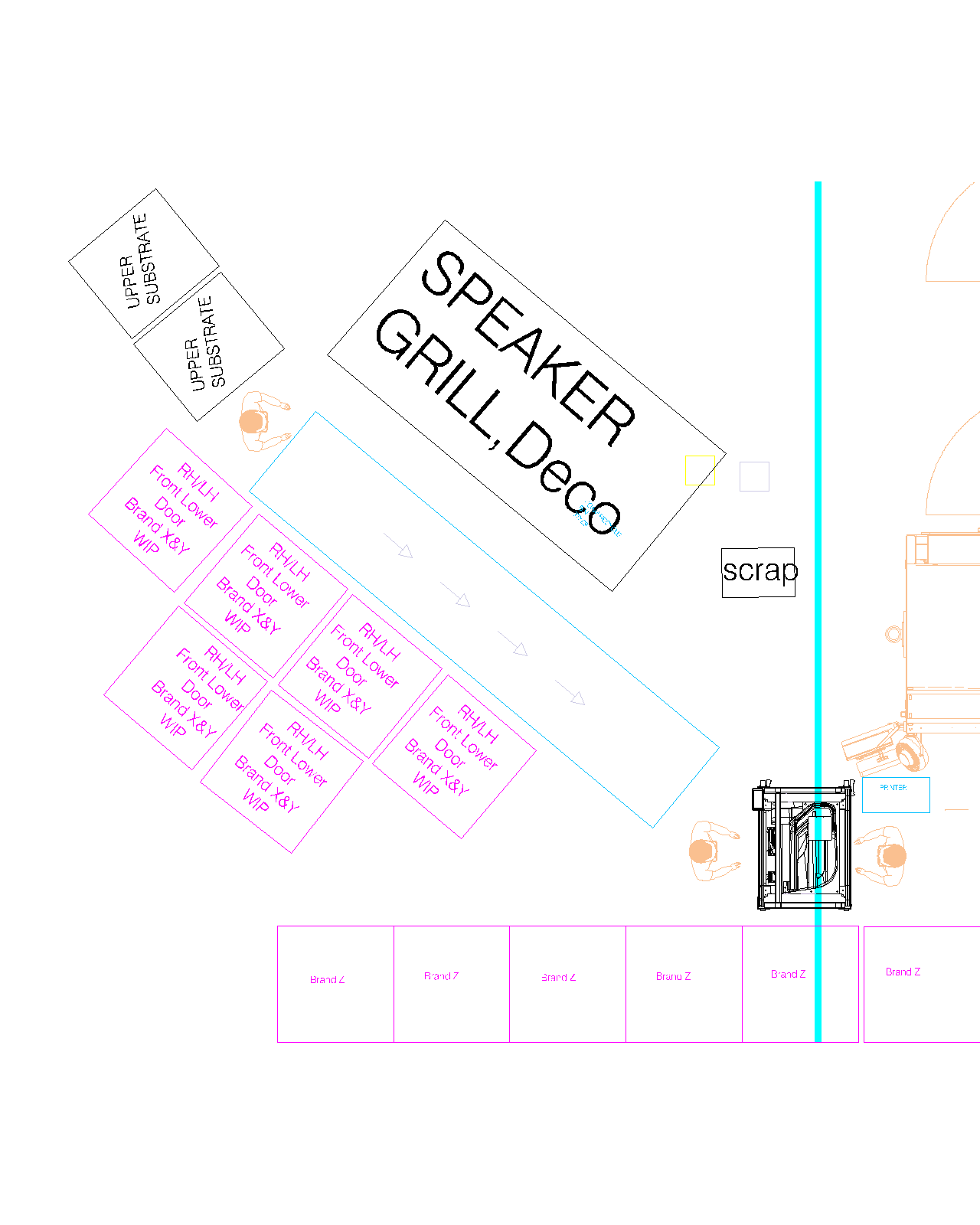
4 types of doors for 3 brands X, Y and Z are produced at the plant. Door produced are Left Hand Rear (LHR), Right Hand Rear (RHR), Left Hand Front (LHF), Right Hand Front (RHF). Rear doors are further subcategorized as Short Wheelbase (SWB) and Long Wheelbase (LWB). Station 1 comprises of 2 team members working on opposite side of the same workstation, called as prekit station. Prekit station is used for brands X and Y. They are supported by third team member who feeds the parts into the conveyer- called as conveyer team member. Brand Z lower is fed directly into the automated line. List of operations performed by all three team members is as given in the Table 1.
Time studies were carried out for all these operations, and it was concluded that 2 team members can run the entire workstation without the conveyer and ensure that the production flow remains intact. This would lead to effective labor reduction of 12 team members.
In order to accomplish this task a PDCA (Plan-Do-Check-Act) list was formed and following issues and solutions were discussed to make the work of 2 team members running the workstation easier. Table 2 shows the tasks and actions considered for the project.
These issues and solutions were discussed with the customer and negative feedback was provided with reasons on following issues mentioned in the Table 3.
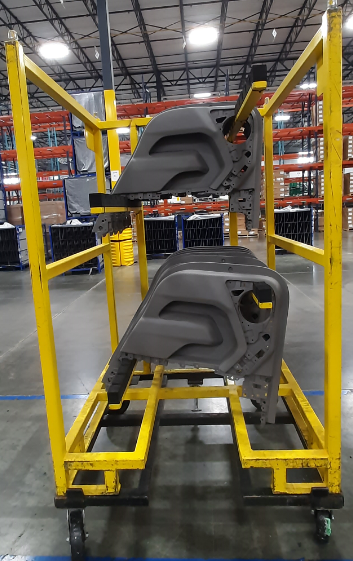
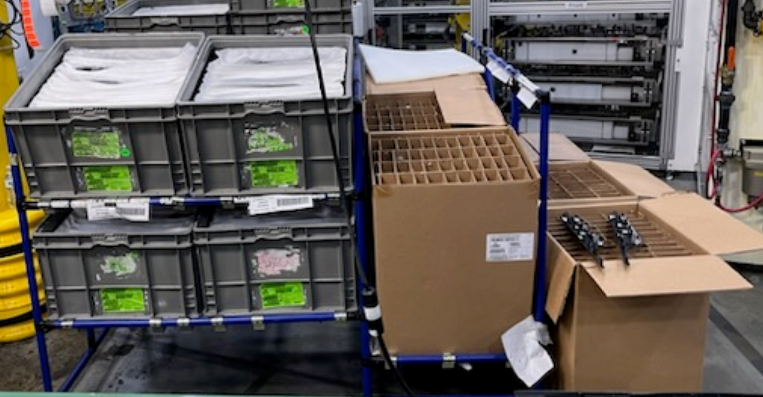
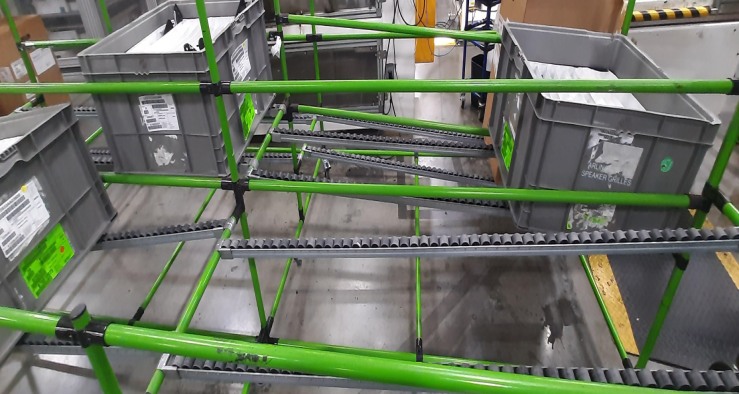
Keeping in mind above made observations, changes were carried out in the plant and the conveyer was removed. The prekit team member pulled parts directly from the racks arranged around them.
Upon performing trials, it was observed that the overall cycle time of the process exceeded 80 seconds since the Prekit and Assembly team member were responsible for loading and unloading of the parts, this was not acceptable as per customer’s requirements.
Therefore, 1 team member was introduced in between Lines 1&2 and 3&4 thus making 2 team members per shift and these team members called as Water Spiders were tasked with following work as mentioned in Table 4.


Press 110 had a robotic assembly cell attached next to it. Operation of the cell is as mentioned in the Table 5.
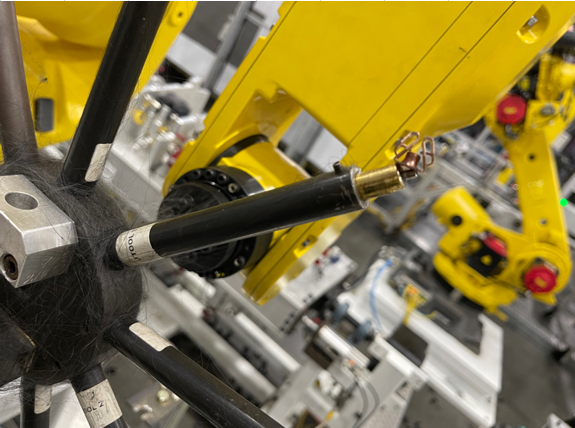
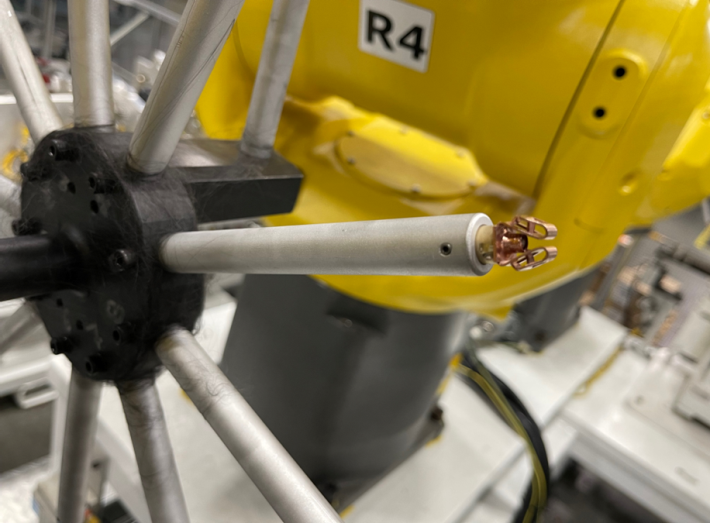
It was observed that 60% of pushnuts were not being inserted in the slots provided due to wrong design of the robot pushnut fingers. Entire bottom shaft of the finger was magnetized which resulted in the pushnuts picked up oriented in wrong direction when picked up. This was corrected by only keeping the tip magnetized.
Cooling conveyer was removed and WIP parts were stored in the rack. Transfer robot was removed, and parts were inserted manually into the assembly nest by Team member 2. PLC logic was added to the assembly gate to make it capable of detecting pushnut installation and initiate “clamp down” procedure which involved shutting down of the assembly nest incase pushnut was not installed properly or is not inserted by the robot. Clamp down state can only be deactivated when the team member manually inserts the clips into the required position.

Press 111’s robot assembly cell is like Cell B of Press 110. It will be referred to as cell C in this paper. New tool carts were designed and manufactured to cater to the interchanging operations of the nests for Brand X and Brand Z.
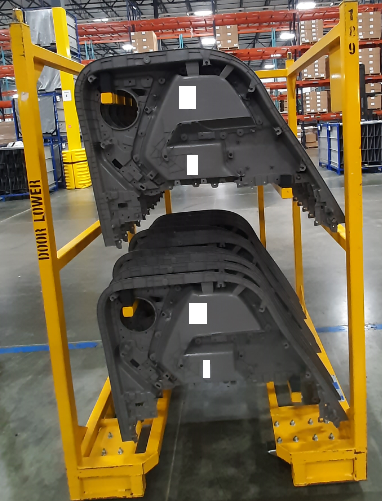
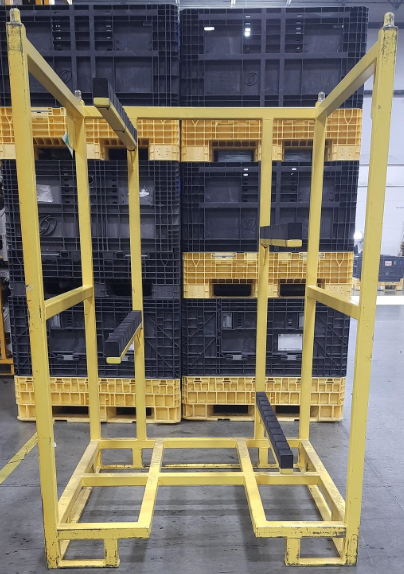
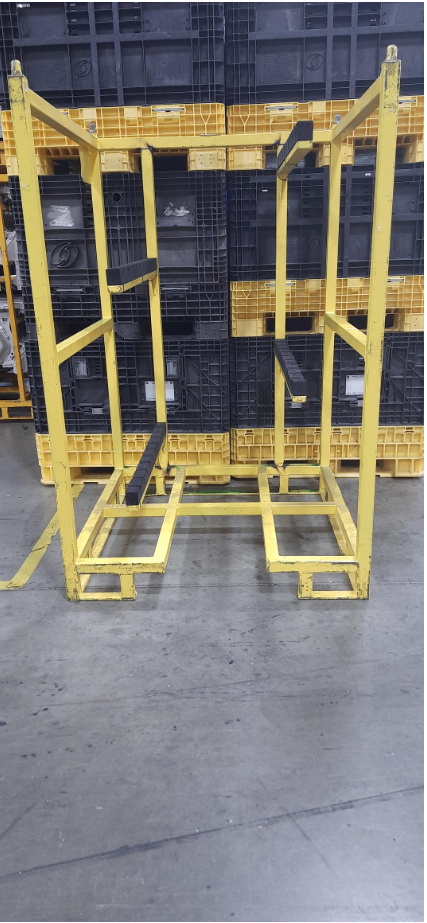
The results obtained were mixed. Instead of projected reduction of 12 labor count, actual labor count of 6 team members was obtained. Original cycle time was 77 seconds, and it was reduced to 50 seconds and cycle time was improved. However, the plant benefitted from the changes made in the speaker grill rack structure and door lower rack structure which made sure that material replacement and quality inspection become better. At the same time, a point must be considered that improvements were made to the cycle time, despite of the doorline running with 50% of original workforce at the station, the cycle time for production did not increase and thus customer requirements were not violated.

100% pushnut insertion was achieved due to modifications on the robotic finger magnetization area however due to very slight variation in the parts produced due to effect of humidity and temperature on the plastic, effective pushnut insertion rate came between 95%-98%.

Press 110 Assembly cell was designed to run with 1 person/shift however it was running with 11/shift. Due to elimination of cooling conveyer and transfer robot it became possible to run the assembly cell with just 2 members/shift. It must be noted that these 2 team members are essential for the assembly cell to function since one team member is needed for loading / unloading of the unfinished/finished part and second team member is needed to insert pushnuts on the bottom of the part.
Process became shorter since robot was capable of inserting pushnuts by itself as well as sense the location and positioning of the pushnuts by itself thus eliminating usage of manual operations by team members and subsequent usage of Cell B.
Quality issues arising due to missing pushnuts were eliminated.

Successful trials were carried out for changing the nests and it was found that robot was able to insert pushnuts with 98% accuracy. This result proves that it is possible to run the assembly cell with interchangeable cells to accommodate higher production volume Brand X in place of Brand Z when required.
The process improvements helped in achieving lean manufacturing parameters. These process improvements resulted in decreased production time, faster production, reduced labor and better operational costs. Further work needs to be done in several sectors identified in this paper like elimination of Angle hair defect from molded parts, effective utilization of barcode scanners to eliminate manual scanning, evaluate possibilities of laser etching without upsetting customer requirements by designing manufacturing processes inclusive of laser etching etc. Although all the information could not be provided in this paper owing to proprietary issues the authors hope that the methodologies suggested will be useful in tackling challenges in automobile industry.
We are grateful to Ahmed Kibria (Engineering), Alain Santa Cruz (Engineering), Sara Arif (Engineering), Rolando Cuellar (CI), Nancy Lira (HR) and Kim Krulek (Corporate Legal) for their valuable support.
| [1] | Sharfuddin Ahmed Khan, Mohamad Amin Kaviani, Brian J. Galli, Palvisha Ishtiaq “Application of Continuous Improvement Techniques to Improve Organization Performance: A Case Study”, International Journal of Lean Six Sigma, Vol. 10 No. 2, pp. 542-565, Jan .2019. | ||
| In article | View Article | ||
| [2] | P.Kosky, R.Balmer, W.Keat, G.Wise, Manufacturing Engineering, Exploring Engineering, 2021. | ||
| In article | View Article | ||
Published with license by Science and Education Publishing, Copyright © 2023 Dhanvin Utkarsh Yajnik, Jorge Montes de Oca, Mike Melendez, Cole Maas, Samir Burniku, Aldry RodriguezGarcia, Jose Canales, Ernest Zapata, Taylor Hawkins and Jesus Salazar
 This work is licensed under a Creative Commons Attribution 4.0 International License. To view a copy of this license, visit
http://creativecommons.org/licenses/by/4.0/
This work is licensed under a Creative Commons Attribution 4.0 International License. To view a copy of this license, visit
http://creativecommons.org/licenses/by/4.0/
| [1] | Sharfuddin Ahmed Khan, Mohamad Amin Kaviani, Brian J. Galli, Palvisha Ishtiaq “Application of Continuous Improvement Techniques to Improve Organization Performance: A Case Study”, International Journal of Lean Six Sigma, Vol. 10 No. 2, pp. 542-565, Jan .2019. | ||
| In article | View Article | ||
| [2] | P.Kosky, R.Balmer, W.Keat, G.Wise, Manufacturing Engineering, Exploring Engineering, 2021. | ||
| In article | View Article | ||