Fracture of the conventional acrylic denture is one of the most common complaints of the patient. This is more evident in patients with heavy masticatory loads and those with parafunctional habits. This calls for the need for better material with good mechanical properties capable of withstanding all the functional loads effectively without fracture. A metal-based denture base due to its superior mechanical properties in this respect is a good alternative to acrylic dentures. This article discusses a case report of successful oral rehabilitation of a completely edentulous maxillary and mandibular arch in a patient with the heavy occlusal stresses. The patient had a habit of bruxism and clenching due to which he had fractured two complete dentures before. The cast metal base was fabricated first and then tried in the mouth following which other clinical procedures were performed. The patient after 1 year of follow up claimed to be extremely satisfied with the outcome of the prosthodontic treatment.
Artificial dentures have been compared to mechanical machines that have to function in anatomic and biologic environment. In oral cavity within any individual, clinical decisions are to be taken where a primary choice results in compromise of a secondary choice. 1 The patients with completely edentulous mouth are generally rehabilitated with complete denture prosthesis that are traditionally made of heat polymerised acrylic resin. The chief disadvantage of resins is that their impact strength is low which renders them prone to fracture. In complete dentures, the use of metal denture bases is thought mostly as a medium to strengthen the denture base and/or in those patients who are allergic to the monomer content of the resin. 2, 3 Denture fracture is usually mechanical or accidental. Mechanical causes are related to faulty design, faulty fabrication and, poor materials choice. Furthermore, the fracture of the denture base often occurs by a fatigue mechanism in which relatively small flexural stresses, over a period of time, eventually lead to the formation of a small crack, which propagates through the denture, resulting in fracture. 4 Other factors leading to fracture include heavy masticatory forces, functional or parafunctional forces like those seen in bruxism. Similarly, when single complete denture is given opposing a natural dentition, fracture rate increases. Poor choice of material and design of single complete denture opposing natural teeth results in denture fracture which is due to flexural fatigue rather than impact fatigue. 5 The most commonly used material for denture fabrication is acrylic resin. But the mechanical properties of acrylic resin are not capable enough to withstand heavy stresses leading to fracture of the prosthesis. 6 To minimize the possibility of fracture, different methods like use of metal reinforced denture bases, 7 acrylic resin base reinforced with wire netting, carbon fibre, glass fibre reinforced PMMA, 8, 9 and visible light polymerized resin 10 have been used. Out of all these methods, metal reinforced dentures were the first to be used as an alternative to conventional acrylic denture base and are still one of the most promising alternatives. These metallic bases are thin, have superior physical properties, are stronger and have greater resistance to fatigue. Their various other advantages include biocompatibility, high thermal conductivity, 11 no dimensional change through fluids absorption and no interference with phonation. 12 They also reduce burning sensation, allergic reactions, eliminate microbial colonization and hence are more comfortable to the patient. Besides being used in cases involving heavy stresses, metal-based dentures can also be used in variety of clinical situations like single complete denture opposing natural dentition and in patients with neuromuscular disorders like epilepsy. 8 Beyond denture bases the use of base metal alloy has been customized to produce occlusal surfaces to reduce plastic teeth wear. 13
This article intends to present a case of a metal denture base that was fabricated using a simple technique in an edentulous patient with the habit of bruxism.
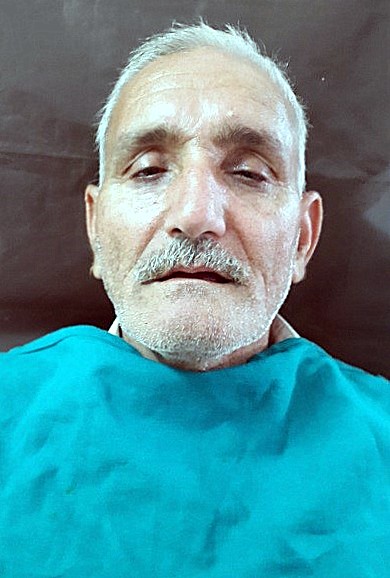
A 55-year-old male patient reported to the department of prosthodontics at a post graduate institute in north India, with the chief complaint of repeated fracture of the maxillary and mandibular denture. He had been wearing denture for 7 years and his denture was repaired several times with autopolymerising acrylic resin. Detailed history revealed that he had the habit of grinding his teeth not only during night but also during day. Past medical history was not relevant to current treatment. Dental history revealed that the patient had been edentulous for more than 5 years and had made multiple dentures since then. The present denture that was fractured revealed flattened occlusal surfaces that was suggestive of existing parafunctional habit. Denture fracture had occurred mostly in the border areas and in the midline. Patients extra oral examination revealed normal clinical features for temporomandibular joint, lymph nodes, facial features (lip and smiling line) and mandibular movements (Figure 1). Intra oral examination revealed well-formed residual alveolar ridges (RAR) with mandibular RAR slightly resorbed in the anterior region. The overlying mucosa over both the RAR was firm and resilient.
Patient was presented with multiple prosthetic treatment options that included implant supported removable (Overdenture) or fixed prosthesis, conventional complete denture with metal base and conventional complete denture with fiber reinforced denture resin. The patient however, gave a written informed consent for complete denture with metal base and balanced occlusion. Routine patient safety and infection control procedures were followed as mandated for the coronavirus pandemic. 14


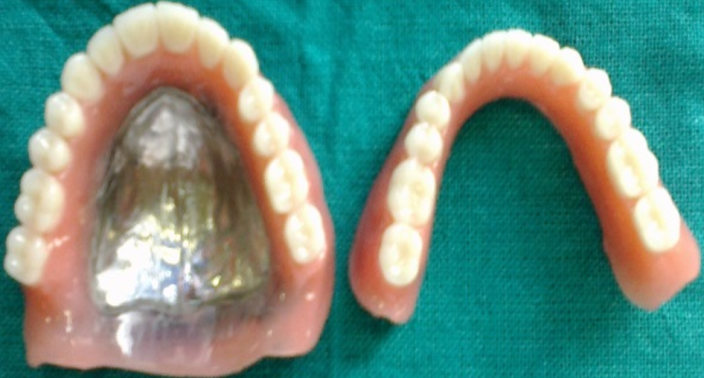
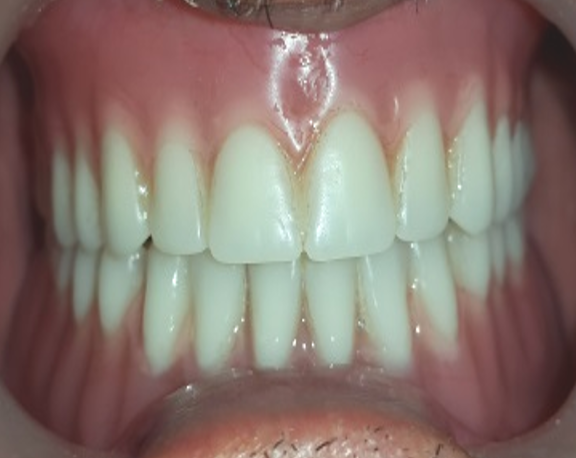
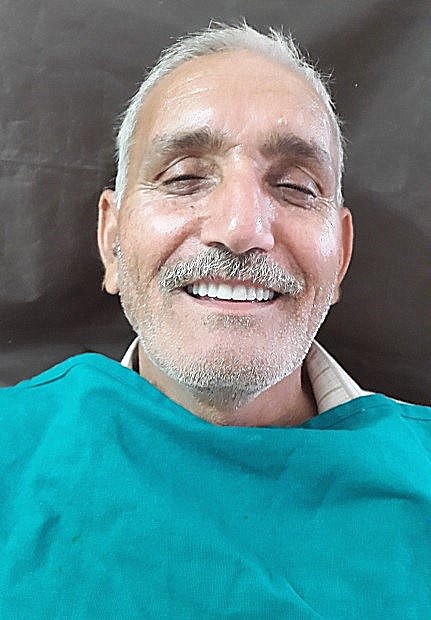
Preliminary impression for maxillary and mandibular arches was made using impression compound (Pinnacle, DPI) by muco-compressive impression technique, later poured in Type III Gypsum (Elite Model; Zhermack, Badia Polesine, Rovigo, Italy) product. The preliminary casts were obtained and custom trays were fabricated with autopolymerising (Fortex; Lucite Intl, Durham) acrylic resin. Selective pressure impression technique was used for secondary impression. For this, first border moulding was carried out conventionally using low fusing impression compound tracing sticks (Pinnacle, DPI) and then final impression was recorded with zinc-oxide eugenol impression paste (Cavex outline BV, Holland). Beading and boxing of the impression was done with beading/boxing waxes (Hyderabad Dental Products, Hyderabad, India) and it was poured in Type III Gypsum (Elite Model; Zhermack, Badia Polesine, Rovigo, Italy). Master cast was obtained and the mould of the same was made with reversible hydrocolloid (agar agar) (Bego, Bremen, Germany) duplicating material. A refractory cast was poured with ethyl silica (Bego, Germany) bonded investment material. On the refractory cast, denture base pattern wax (Bego, Germany) was adapted and then investing and casting procedures were carried out. Metal framework (Wiron 99; Bego, Bremen, Germany) was finished and polished with electrolytic polishing in an electrolytic polishing device. The metal framework so obtained was tried in patient’s mouth and was checked for stability and extensions up to the junction of soft and hard palate in the maxillary arch whereas in the mandibular arch, the framework ended just before the retro molar pad area. The temporary denture bases were fabricated on the master cast and then occlusal rims were fabricated on these denture bases. Maxillo-mandibular relations were recorded and evaluated properly for aesthetics and phonetics. Articulation was done to a semi adjustable articulator (Whip Mix series 3000; Elite Dental Services, Inc, Orlando, Fla) using face bow (Whip Mix; Inc, Orlando, Fla) and centric/eccentric inter occlusal records followed by teeth arrangement which was arranged in balanced occlusion. A denture try in was done in patient’s mouth. After trial, the regular protocol of flasking and dewaxing procedure was carried out. Before packing, the metal framework was placed on their respective maxillary and mandibular cast and the acrylization (processing) procedure was completed. The prosthesis was then finished and polished followed by storage in water at room temperature (Figure 2). On the day of denture insertion, all occlusal contacts were evaluated for uniform even contacts and a clinical remount procedure was done to correct minor processing errors (Figure 3). The patient was educated about denture maintenance and the instructions for its use. The patient was put on follow up till a period of 1 year, during which he expressed his extreme satisfaction with metal dentures (Figure 4).
A complete denture rehabilitation case has been presented in this case report. Complete denture made in conventional manner proves to be satisfactory in most of the patients, but in compromised patients, conventional methods have certain disadvantages. Polymethylmethacrylate denture bases have good mechanical, biological and aesthetic properties, their impact and fatigue strength however are not satisfactory in clinical situations that include heavy masticatory forces like those seen in bruxism and clenching. 15 Several methods to increase the resistance of denture base to mechanical stress have been studied. 2, 4, 5, 7 Acrylic resin base reinforced with several types of fibres like carbon, aramid, woven polyethylene and glass fibres have been introduced in past, 16, 17 but these all have some clinical disadvantages including the processing methods. Carbon and aramid fibres strengthen PMMA but have clinical problems like difficulty in polishing. Woven polyethylene fibres cause difficulty in processing as it requires etching, preparing and positioning layers of woven fibres which is impractical for dental office. With glass fibres, there is difficulty in achieving adequate impregnation of the fibres with PMMA. 16 Reinforcement by incorporating butadiene styrene rubber has also been used (Rubber toughening). 18 A metal reinforced denture base is usually preferred among all the reinforcement methods as it reduces the likelihood of denture fracture caused by extensive biting and impact force problems and do not cause much difficulty in processing. It is important to notice that the basic dictum of preserving what is remaining rather than mere replacement of what is lost should be maintained and thrived for in all situations. 19 Like in all cases, balancing of occlusion is one of the most indicated concepts to be used in bruxism patient. Conventionally, balancing is achieved during teeth arrangement on a semi adjustable articulator that has been programmed to the patient condylar guidance. 20
Variety of metals can be used to fabricate the prosthesis including cobalt-chromium, nickel-chromium and titanium. These metal bases offer several advantages including high rigidity, fracture resistance, excellent strength to volume ratio, good adaptation to the supporting tissues, high thermal conductivity and no dimensional stability. Metal denture bases have certain disadvantages including high cost, difficult refitting of the denture and increased time consumption in comparison to the acrylic resins. However, the advantages seem to outweigh the disadvantages. Metal denture bases help significantly in solving patient’s long-term problem of frequent denture fracture.
Use of metal denture base should be used more frequently in clinical cases that present with complain of frequent breakage of dentures. However, such fractures must be first diagnosed since the purpose of metal dental base cannot provide protection from denture fracturing repeatedly at the borders.
The authors would like to thank all the dental technicians and the supporting staff of the prosthodontic department for their support during the treatment of this case.
Conflict of interest: None
| [1] | Prasad A, Prasad K, Hegde C. Management of completely edentulous maxillary arch opposing natural dentition-A case report. NUJHS. 2012;2(3):39-42. | ||
| In article | View Article | ||
| [2] | Gaba N, Mattoo KA, Daghiri S. Base Metal Denture Bases-Clinical indications. Am J Med Case Rep 2022;10(3):59-63. | ||
| In article | View Article | ||
| [3] | Mattoo KA, Garg R, Gupta A, Jain N. Toxicology and biocompatibility of dental materials: A review. Res J Pharmac Biol Chem Sci, 2012;3(4):1091-99 | ||
| In article | |||
| [4] | Abdulla MA. The effect of different levels of a network reinforced system and curing methods on properties of different acrylic resin denture base materials. J Int Soc Prev Community Dent. 2022;12(6):621-9. | ||
| In article | View Article PubMed | ||
| [5] | Yunus N, Goswami R, Mattoo K. Single Maxillary Complete Denture against Natural Dentition–Influence of the Palatal Vault of Selection of a Metal Denture Base. Am. J. Med. Case Rep. 2022;10(10):277-82. | ||
| In article | View Article | ||
| [6] | Shimizu H, Tsue F, Obukuro M, Kido H, Takahashi Y, Ohmura H. Fracture strength of metal based complete maxillary dentures with a newly designed metal framework. Int Chin J Dent 2005; 5: 35-38. | ||
| In article | |||
| [7] | Jameson W S. Fabrication and use of a metal reinforcing frame in a fracture prone mandibular complete denture. J Prosthet Dent 2000; 83: 476-479. | ||
| In article | View Article PubMed | ||
| [8] | Katja K Narva, Vallittu PK, Helenius H, Yli-Urpo A. Clinical survey of Acrylic Resin Removable Denture Repairs with Glass fiber reinforcement. I J Prosthodont 2001; 14: 3. | ||
| In article | |||
| [9] | Mattoo KA, Sarwar S. Inconsiderate try in of Complete Denture Prosthesis–An Iatrogenic Failure. J Med Sci Clin Res. 2017;5(09):27858-861. | ||
| In article | View Article | ||
| [10] | Stipho HD. Repair of acrylic resin denture base reinforced glass fiber. J Prosthet Dent 1998; 80: 546-550. | ||
| In article | View Article PubMed | ||
| [11] | Chopra D, Gupta V, Sethi P. Maxillary Complete Denture with Metal Palate Base: A Case Report. J Dent Sci Oral Rehab 2013;44-46. | ||
| In article | |||
| [12] | Postic SD. Design of Complete Denture Reinforced with Metal Base. Serbian Dent J 2013;60(1): 15-20. | ||
| In article | View Article | ||
| [13] | Mattoo K, Mahajan P, Rahman S. A novel technique to fabricate occlusal surfaces for artificial resin teeth in base metal alloys. Int. J. Innov. Sci. Res 2014; 9(1):167-174 | ||
| In article | |||
| [14] | Mattoo KA, Jain S. Managing prosthodontic (geriatric) patients during the SARS-CoV-2 pandemic. J Int Oral Health 2020;12: S69-75. | ||
| In article | View Article | ||
| [15] | Abdulla MA. The effect of different levels of a network reinforced system and curing methods on properties of different acrylic resin denture base materials. J Int Soc Prev Community Dent. 2022;12(6):621-9. | ||
| In article | View Article PubMed | ||
| [16] | Manzoor S, Mattoo K, Singh V, Jain S. Comparative assessment of the influence of aging and presence of teeth on the oral haptic perception and its relevant clinical application in oral diagnostic/therapeutic procedures. Ann. Romanian Soc. Cell Biol. 2021:12250-9. | ||
| In article | |||
| [17] | Alla RK, Sajjan S, Alluri VR, Ginjupalli K, Upadhya N. Influence of Fiber Reinforcement on the Properties of Denture Base Resins. J Biomet Nanobiotech. 2013; 4:91-97. | ||
| In article | View Article | ||
| [18] | Jagger D, Harrison A, Jagger R, Milward P. The effect of the addition of poly (methyl methacrylate) fibres on some properties of high strength heat‐cured acrylic resin denture base material. J Oral Rehab. 2003;30(3):231-5. | ||
| In article | View Article PubMed | ||
| [19] | Mattoo KA, Garg R. Incorporating basic principles of support and balanced occlusion to improve longevity of overdenture. Dentistry NX, Dec 2011. | ||
| In article | |||
| [20] | Kumar L, Mattoo KA. Innovating functional chew in method to establish balanced occlusion in complete denture. AIMDR 2017; 3(6): DE35-DE37. | ||
| In article | View Article | ||
Published with license by Science and Education Publishing, Copyright © 2023 Sheen J. Arora, Aman Arora, Ritu Sangwan and Shailesh Jain
 This work is licensed under a Creative Commons Attribution 4.0 International License. To view a copy of this license, visit
http://creativecommons.org/licenses/by/4.0/
This work is licensed under a Creative Commons Attribution 4.0 International License. To view a copy of this license, visit
http://creativecommons.org/licenses/by/4.0/
| [1] | Prasad A, Prasad K, Hegde C. Management of completely edentulous maxillary arch opposing natural dentition-A case report. NUJHS. 2012;2(3):39-42. | ||
| In article | View Article | ||
| [2] | Gaba N, Mattoo KA, Daghiri S. Base Metal Denture Bases-Clinical indications. Am J Med Case Rep 2022;10(3):59-63. | ||
| In article | View Article | ||
| [3] | Mattoo KA, Garg R, Gupta A, Jain N. Toxicology and biocompatibility of dental materials: A review. Res J Pharmac Biol Chem Sci, 2012;3(4):1091-99 | ||
| In article | |||
| [4] | Abdulla MA. The effect of different levels of a network reinforced system and curing methods on properties of different acrylic resin denture base materials. J Int Soc Prev Community Dent. 2022;12(6):621-9. | ||
| In article | View Article PubMed | ||
| [5] | Yunus N, Goswami R, Mattoo K. Single Maxillary Complete Denture against Natural Dentition–Influence of the Palatal Vault of Selection of a Metal Denture Base. Am. J. Med. Case Rep. 2022;10(10):277-82. | ||
| In article | View Article | ||
| [6] | Shimizu H, Tsue F, Obukuro M, Kido H, Takahashi Y, Ohmura H. Fracture strength of metal based complete maxillary dentures with a newly designed metal framework. Int Chin J Dent 2005; 5: 35-38. | ||
| In article | |||
| [7] | Jameson W S. Fabrication and use of a metal reinforcing frame in a fracture prone mandibular complete denture. J Prosthet Dent 2000; 83: 476-479. | ||
| In article | View Article PubMed | ||
| [8] | Katja K Narva, Vallittu PK, Helenius H, Yli-Urpo A. Clinical survey of Acrylic Resin Removable Denture Repairs with Glass fiber reinforcement. I J Prosthodont 2001; 14: 3. | ||
| In article | |||
| [9] | Mattoo KA, Sarwar S. Inconsiderate try in of Complete Denture Prosthesis–An Iatrogenic Failure. J Med Sci Clin Res. 2017;5(09):27858-861. | ||
| In article | View Article | ||
| [10] | Stipho HD. Repair of acrylic resin denture base reinforced glass fiber. J Prosthet Dent 1998; 80: 546-550. | ||
| In article | View Article PubMed | ||
| [11] | Chopra D, Gupta V, Sethi P. Maxillary Complete Denture with Metal Palate Base: A Case Report. J Dent Sci Oral Rehab 2013;44-46. | ||
| In article | |||
| [12] | Postic SD. Design of Complete Denture Reinforced with Metal Base. Serbian Dent J 2013;60(1): 15-20. | ||
| In article | View Article | ||
| [13] | Mattoo K, Mahajan P, Rahman S. A novel technique to fabricate occlusal surfaces for artificial resin teeth in base metal alloys. Int. J. Innov. Sci. Res 2014; 9(1):167-174 | ||
| In article | |||
| [14] | Mattoo KA, Jain S. Managing prosthodontic (geriatric) patients during the SARS-CoV-2 pandemic. J Int Oral Health 2020;12: S69-75. | ||
| In article | View Article | ||
| [15] | Abdulla MA. The effect of different levels of a network reinforced system and curing methods on properties of different acrylic resin denture base materials. J Int Soc Prev Community Dent. 2022;12(6):621-9. | ||
| In article | View Article PubMed | ||
| [16] | Manzoor S, Mattoo K, Singh V, Jain S. Comparative assessment of the influence of aging and presence of teeth on the oral haptic perception and its relevant clinical application in oral diagnostic/therapeutic procedures. Ann. Romanian Soc. Cell Biol. 2021:12250-9. | ||
| In article | |||
| [17] | Alla RK, Sajjan S, Alluri VR, Ginjupalli K, Upadhya N. Influence of Fiber Reinforcement on the Properties of Denture Base Resins. J Biomet Nanobiotech. 2013; 4:91-97. | ||
| In article | View Article | ||
| [18] | Jagger D, Harrison A, Jagger R, Milward P. The effect of the addition of poly (methyl methacrylate) fibres on some properties of high strength heat‐cured acrylic resin denture base material. J Oral Rehab. 2003;30(3):231-5. | ||
| In article | View Article PubMed | ||
| [19] | Mattoo KA, Garg R. Incorporating basic principles of support and balanced occlusion to improve longevity of overdenture. Dentistry NX, Dec 2011. | ||
| In article | |||
| [20] | Kumar L, Mattoo KA. Innovating functional chew in method to establish balanced occlusion in complete denture. AIMDR 2017; 3(6): DE35-DE37. | ||
| In article | View Article | ||