Metastatic adenocarcinoma of the pancreas has a poor prognosis. When distant metastasis occurs in the liver, image-guided percutaneous interventions are crucial for both diagnosis and treatment. In this case report, we describe a 67-year-old male with pancreatic adenocarcinoma and metastatic liver lesions. The lesions were biopsied leading to hemorrhage on post-procedure day seven.
In the United States, the estimated new cases of pancreatic cancer in the year of 2022 were about 62,210, and approximately 8.2% of all cancer deaths 1. In 2020, the incidence for new cases of pancreatic cancer was around 262,000 worldwide 2. It is the 12th most common cancer in men and the 11th most common cancer in women 2. Pancreatic adenocarcinoma of the pancreas has a poor prognosis once diagnosed 3. Distant metastasis is common, and the 5-year survival is 3.1% 1. In this paper, we will present a case of pancreatic cancer that has metastasized to the liver and complicated by hemorrhage post percutaneous biopsy, followed by a literature review.
A 67-year-old African male was diagnosed with metastatic pancreatic cancer to the liver in November 2020. He received two cycles of FOLFIRINOX (fluorouracil, folinic acid, irinotecan, oxaliplatin). The second cycle was given in January 2021. The chief complain at the time was occasional abdominal pain. He had no changes in bowel or urinary habits, denying vomiting, or fever. There was no pertinent past medical or surgical history. Family history is non contributary for any malignancies including pancreatic cancer. The patient consumed alcohol occasionally and did not smoke tobacco. Physical examination was unremarkable except for right upper quadrant tenderness and hepatomegaly. At the time of admission, laboratory results revealed a hemoglobin of 13.3 g/L, an elevation in total bilirubin of 16.5, direct bilirubin of 10.5, and alkaline phosphatase of 369. The remainder of the liver function tests on the panel were normal. The international normalized ratio (INR) was 1.9. Carcinoembryonic antigen (CEA) was 3.14 mcg/L, and CA 19-9 was 2.0 units/ml.
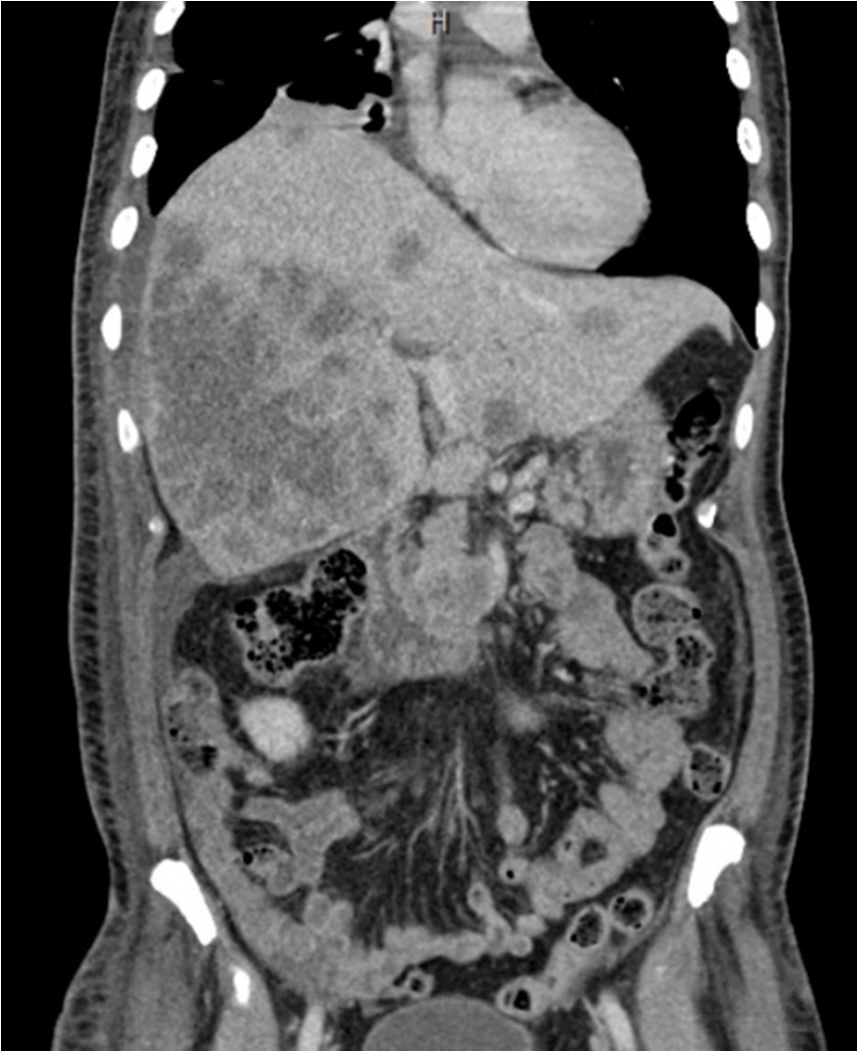
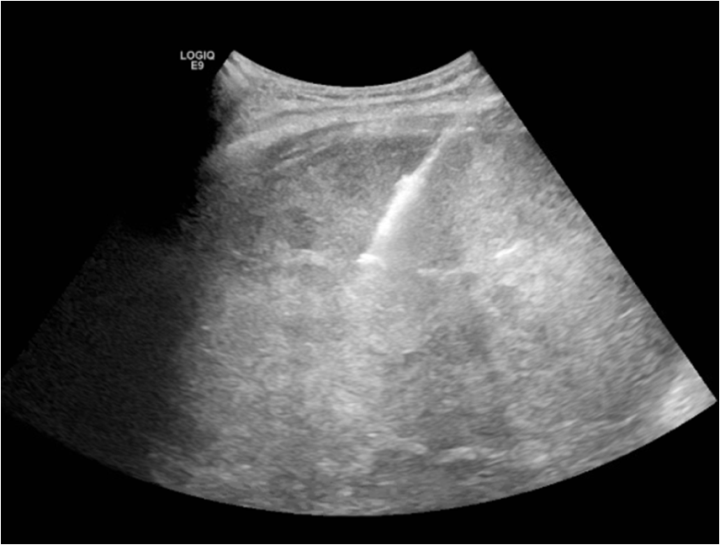
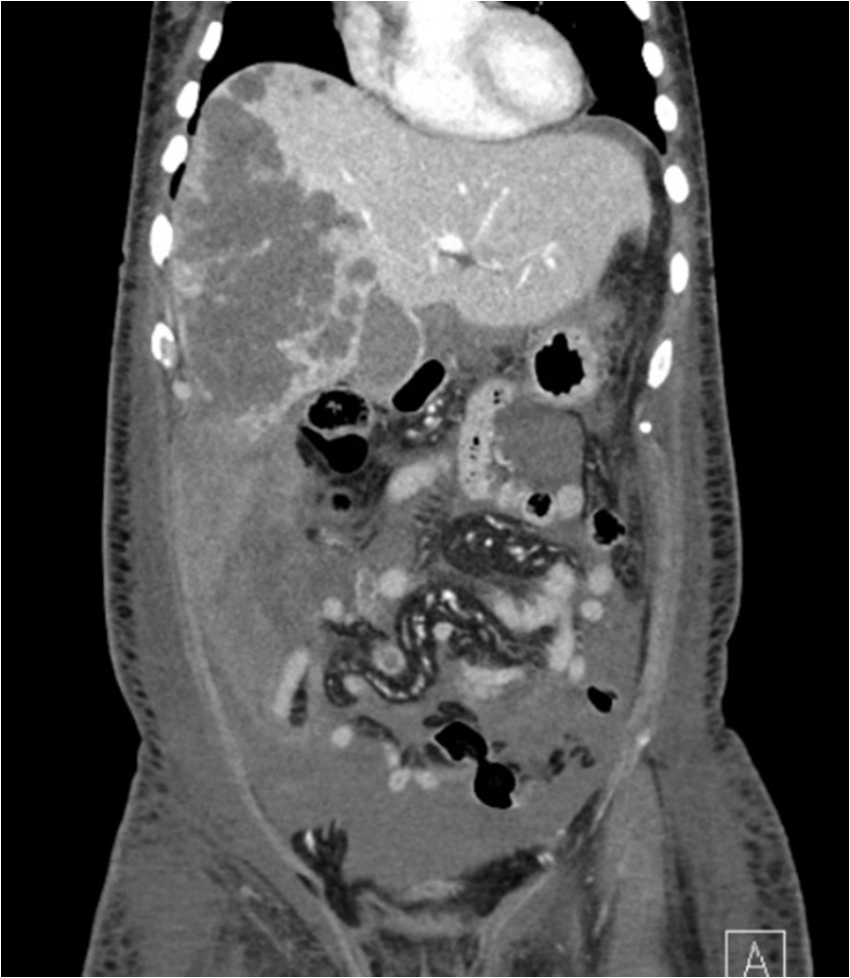
A medical report brought by the patient confirmed a pancreatic ductal adenocarcinoma with metastasis to the liver. The patient presented at our hospital for a second opinion and further management. A repeat Computed Tomography (CT) scan was done for staging, and exhibited a mass in the uncinate process and the head of pancreas measuring around 3.8 x 2.5 cm. The mass partially encased the superior mesenteric artery (SMA) and the superior mesenteric vien (SMV). There were multiple bilobar liver metastases. Moderate amout of ascitic fluid was visualized as well as bilateral pleural effusions (Figure 1). Once the patient was admitted to our facility, the plueral effusion was drained under ultrasound guidence and sent for cytology and results were negative for any malignant cells. A biopsy of the largest liver lesion was performed under ultrasound guidance. The tract was then plugged with an absorbable gelatin sponge, Gelfoam (Figure 2). The biopsy confirmed that the liver lesions were of pancreatic and/or biliary origion. Proceeding the plugged biopsy on day 7, the patient complained of sudden onset severe abdominal pain and distension. He subsequently became hypotensive and tachycardiac. A repeat CBC showed a drop in hemoglobin and a downtrend to a level of 7 g/L. The INR increased to 5 despite transfusing three units of packed red blood cells and four units of fresh frozen plasma. A CT angiography was obtained that confirmed intra-abdominal haemoperitoneum secondary to a ruptured necrotic large liver metastasis at the inferior aspect of segment 6 (Figure 3). The size of the metastattic lesion had increased. A multidiseplinary meeting was held and agreed on palliation. A Do Not Resucitate (DNR) form was signed. The patient deceased 10 days after inervention.


There are no standard screening programs for patients at high risk for pancreatic cancer such as those with a strong family history. Pancreatic cancer remains asymptomatic causing the diagnosis to be made at an advanced stage 4. Surgical resection is suitable for an average of about 10% of patients diagnosed with pancreatic tumors. Up to 60% of patients will have a poor performance status or metastatic disease, excluding them from the criteria acceptable for surgery. Palliative measures are offered to the remaining 30% of patients 5, 6.
The four major genetic mutations seen in pancreatic cancer are TP53, SMAD4, KRAS, and CDKN2A. Treatment modalities include surgical resection if the cancer has not yet metastasized, as well as chemotherapy for non-surgical candidates. Chemotherapeutic regimens include gemcitabine and paclitaxel, or FOLFIRINOX 7. Image-guided percutaneous interventions are crucial for both diagnosis and treatment of liver metastasis. This can be performed by CT or ultrasound guided methods. Complications of percutaneous intervention include hepatic injury, intraperitoneal hemorrhage, and extrahepatic organ injury 8.
Percutaneous liver biopsies are the most common performed biopsies. According to the guidelines of the British Society of Gastroenterology, the Royal College of Radiologists and the Royal College of Pathology, different aims of obtaining a liver biopsy include obtaining liver tissue for histological and non-histological assessments, to monitor disease repose to treatment of progression, determine grade of tumor, and help navigate treatment choices 9. Death has been recorded as high as 19% after a liver biopsy, however this is likely due to the underlying condition 10. Complications were controlled with several methods including surgical intervention and blood transfusions especially in patients with an INR of above 1.5 and an increase level of serum bilirubin.
Even for small liver lesions, an US-guided biopsy is considered a reliable and accurate tool. The location of the lesions might ease accessibility, especially in the anterior and inferior segments. Lesions located in the posterior and superior segments might be less accessible, therefore increasing the chances of false negatives 11. According to Durand et al., an US guided biopsy for hepatocellular carcinoma carries a 10% risk of false negatives. Therefore, a negative result must not formally rule out a suspected pathology 11.
A satisfactory tissue sample depends on many factors. Fine needle aspiration (FNA) biopsy with a thin hollow 22-gauge needle or smaller might increase the chance of an incomplete sample or a false negative. However, a core needle biopsy with 20-gauge or larger hollow cutting needle can increase the yield for a positive pathology, hence serving a more accurate diagnosis 10. In a study published by Tublin et al. in 2018, there seemed to be no difference in the safety and sample adequacy of a 16-gauuge versus an 18-guage needle for liver biopsies. Statistical difference between the two needle sizes were not significant (p=0.65). 12
In some certain cases, FNA or core needle biopsies have limitations in obtaining a good sample, as some patients are coagulopathic with liver lesions. For these circumstances, a trans jugular approach for non-focal liver lesions is indicated 9. Prior to the procedure, clear communication between the referring physician and the interventional radiologist (IR) is vital. Indications and suspicions of diagnosis should be conversed in order to be familiar with the pathology setup needed. A detailed and informed discussion with the patient regarding the complications of the procedure is indicated in all interventional radiology procedures. Complications specific to a liver biopsy include bleeding, bowel perforation, infection, unintended organ injury 13. A suggested threshold for complication when performing a liver biopsy should not exceed 5% as suggested by Gupta et al. 14. Once bleeding is suspected, it should be confirmed by CT angiography followed by blind embolization in case of tumor rupture 15. Bleeding usually take place in the first 24 hours post liver biopsy. Observation of vital signs should be continued for 4 hours post procedure and is highly dependable on local practices and expertise 16. Plugged biopsy techniques has been proven to effective and safe overall as reported by Uller et al. 17. Gelfoem is an adequate alternative for a histological diagnosis in patients of need of liver biopsies with impaired coagulation 18, 19.
A clear consensus is needed for the management of bleeding lesions from pancreatic cancer metastasis after a percutaneous biopsy. A larger needle gauge might outweigh the risk of hemorrhage due to a lower number of needle passes. Patient selection should be individualized based on underlying diagnosis, location of liver lesion, and coagulation profile.
| [1] | National Cancer Institute: Cancer stat facts: Pancreatic cancer. https://seer.cancer.gov/statfacts/html/pancreas.html. | ||
| In article | |||
| [2] | World Cancer Research Fund: Pancreatic cancer statistics. https://www.wcrf.org/dietandcancer/cancer-trends/pancreatic-cancer-statistics. | ||
| In article | |||
| [3] | Sohal DPS, Kennedy EB, Cinar P, Conroy T, Copur MS, Crane CH, Garrido-Laguna I, Lau MW, Johnson T, Krishnamurthi S, Moravek C, O'Reilly EM, Philip PA, Pant S, Shah MA, Sahai V, Uronis HE, Zaidi N, Laheru D. Metastatic Pancreatic Cancer: ASCO Guideline Update. J Clin Oncol. 2020 Aug 5:JCO2001364. | ||
| In article | View Article PubMed | ||
| [4] | Kamisawa T, Wood LD, Itoi T, Takaori K. Pancreatic cancer. Lancet. 2016 Jul 2; 388(10039): 73-85. | ||
| In article | View Article | ||
| [5] | Strobel, O., Neoptolemos, J., Jäger, D., & Büchler, M. W. (2018). Optimizing the outcomes of pancreatic cancer surgery. Nature Reviews Clinical Oncology. | ||
| In article | View Article PubMed | ||
| [6] | Gillen, S., Schuster, T., Meyer Zum Buschenfelde, C., Friess, H. & Kleeff, J. Preoperative/neoadjuvant therapy in pancreatic cancer: a systematic review and meta-analysis of response and resection percentages. PLOS Med. 7, e1000267 (2010). | ||
| In article | View Article PubMed | ||
| [7] | Kang, J., Hwang, I., Yoo, C. et al. Nab-paclitaxel plus gemcitabine versus FOLFIRINOX as the first-line chemotherapy for patients with metastatic pancreatic cancer: retrospective analysis. Invest New Drugs 36, 732-741 (2018). | ||
| In article | View Article PubMed | ||
| [8] | Asai A, Yokohama K, Ohama H, et al. Administration of Antithrombotic Treatment Was a Risk Factor for Intraperitoneal Hemorrhage in Patients Undergoing Percutaneous Interventions for Liver Diseases.. Research Square; 2021. | ||
| In article | View Article | ||
| [9] | Neuberger J, Patel J, Caldwell H, Davies S, Hebditch V, Hollywood C, Hubscher S, Karkhanis S, Lester W, Roslund N, West R, Wyatt JI, Heydtmann M. Guidelines on the use of liver biopsy in clinical practice from the British Society of Gastroenterology, the Royal College of Radiologists and the Royal College of Pathology. Gut. 2020 Aug; 69(8): 1382-1403. | ||
| In article | View Article PubMed | ||
| [10] | Gilmore IT, Burroughs A, Murray-Lyon IM, et al. Indications, methods, and outcomes of percutaneous liver biopsy in England and Wales: an audit by the British Society of Gastroenterology and the Royal College of Physicians of London. Gut 1995; 36: 437-41. | ||
| In article | View Article PubMed | ||
| [11] | F. Durand, J.M. Regimbeau, J. Belghiti, et al. Assessment of the benefits and risks of percutaneous biopsy before surgical resection of hepatocellular carcinoma. J Hepatol, 35 (2001), pp. 254-258. | ||
| In article | View Article | ||
| [12] | Tublin ME, Blair R, Martin J, Malik S, Ruppert K, Demetris A. Prospective study of the impact of liver biopsy core size on specimen adequacy and procedural complications. AJR 2018; 210: 183-188. | ||
| In article | View Article PubMed | ||
| [13] | Sheth, R. A., Baerlocher, M. O., Connolly, B. L., Dariushnia, S. R., Shyn, P. B., Vatsky, S., Gupta, S. (2020). Society of Interventional Radiology Quality Improvement Standards on Percutaneous Needle Biopsy in Adult and Pediatric Patients. Journal of Vascular and Interventional Radiology, 31(11), 1840-1848. | ||
| In article | View Article PubMed | ||
| [14] | Gupta, S., Wallace, M. J., Cardella, J. F., Kundu, S., Miller, D. L., & Rose, S. C. (2010). Quality Improvement Guidelines for Percutaneous Needle Biopsy. Journal of Vascular and Interventional Radiology, 21(7), 969-975. | ||
| In article | View Article PubMed | ||
| [15] | Desai GS, Pande PM, Narkhede RA, Wagle PK. Multimodality Management of Ruptured Large Hepatocellular Carcinoma and Its Recurrence: Rupture at Presentation Should Not Rupture Hope of Long-Term Survival. Surg J (N Y). 2020; 6(2): e112-e117. Published 2020 Jun 16. | ||
| In article | View Article PubMed | ||
| [16] | Dotan Y, Carlebach M, Zuckerman E, Maruf M, Schiff E. Delayed Bleeding after Percutaneous Liver Biopsy. Eur J Case Rep Intern Med. 2016; 3(2): 000359. Published 2016 Jan 18. | ||
| In article | View Article PubMed | ||
| [17] | Uller W, Müller-Wille R, Grothues D, Schelling J, Zausig N, Loss M, Stroszczynski C, Wohlgemuth WA. Gelfoam for closure of large percutaneous transhepatic and transsplenic puncture tracts in pediatric patients. Rofo. 2014 Jul; 186(7): 693-7. | ||
| In article | View Article PubMed | ||
| [18] | Tsang WK, Luk WH, Lo A. Ultrasound-guided plugged percutaneous biopsy of solid organs in patients with bleeding tendencies. Hong Kong Med J. 2014 Apr; 20(2): 107-12. | ||
| In article | View Article | ||
| [19] | Méndez Gutiérrez TH, Dehesa Violante M, Rodríguez Jerkov J, de la Garza S, González Loya F. Biopsia hepática percutánea con taponamiento guiada por ultrasonido en pacientes con coagulación alterada. Informe preliminar [Ultrasound-guided percutaneous plugged biopsy of the liver in patients with coagulation disorders. Preliminary report]. Rev Gastroenterol Mex. 1990 Jan-Mar; 55(1): 13-5. Spanish. PMID: 2291061. | ||
| In article | |||
Published with license by Science and Education Publishing, Copyright © 2022 Shadin Ghabra, Fatima Alharmoodi, Shahbazali Patil and Salem Alharthi
 This work is licensed under a Creative Commons Attribution 4.0 International License. To view a copy of this license, visit
http://creativecommons.org/licenses/by/4.0/
This work is licensed under a Creative Commons Attribution 4.0 International License. To view a copy of this license, visit
http://creativecommons.org/licenses/by/4.0/
| [1] | National Cancer Institute: Cancer stat facts: Pancreatic cancer. https://seer.cancer.gov/statfacts/html/pancreas.html. | ||
| In article | |||
| [2] | World Cancer Research Fund: Pancreatic cancer statistics. https://www.wcrf.org/dietandcancer/cancer-trends/pancreatic-cancer-statistics. | ||
| In article | |||
| [3] | Sohal DPS, Kennedy EB, Cinar P, Conroy T, Copur MS, Crane CH, Garrido-Laguna I, Lau MW, Johnson T, Krishnamurthi S, Moravek C, O'Reilly EM, Philip PA, Pant S, Shah MA, Sahai V, Uronis HE, Zaidi N, Laheru D. Metastatic Pancreatic Cancer: ASCO Guideline Update. J Clin Oncol. 2020 Aug 5:JCO2001364. | ||
| In article | View Article PubMed | ||
| [4] | Kamisawa T, Wood LD, Itoi T, Takaori K. Pancreatic cancer. Lancet. 2016 Jul 2; 388(10039): 73-85. | ||
| In article | View Article | ||
| [5] | Strobel, O., Neoptolemos, J., Jäger, D., & Büchler, M. W. (2018). Optimizing the outcomes of pancreatic cancer surgery. Nature Reviews Clinical Oncology. | ||
| In article | View Article PubMed | ||
| [6] | Gillen, S., Schuster, T., Meyer Zum Buschenfelde, C., Friess, H. & Kleeff, J. Preoperative/neoadjuvant therapy in pancreatic cancer: a systematic review and meta-analysis of response and resection percentages. PLOS Med. 7, e1000267 (2010). | ||
| In article | View Article PubMed | ||
| [7] | Kang, J., Hwang, I., Yoo, C. et al. Nab-paclitaxel plus gemcitabine versus FOLFIRINOX as the first-line chemotherapy for patients with metastatic pancreatic cancer: retrospective analysis. Invest New Drugs 36, 732-741 (2018). | ||
| In article | View Article PubMed | ||
| [8] | Asai A, Yokohama K, Ohama H, et al. Administration of Antithrombotic Treatment Was a Risk Factor for Intraperitoneal Hemorrhage in Patients Undergoing Percutaneous Interventions for Liver Diseases.. Research Square; 2021. | ||
| In article | View Article | ||
| [9] | Neuberger J, Patel J, Caldwell H, Davies S, Hebditch V, Hollywood C, Hubscher S, Karkhanis S, Lester W, Roslund N, West R, Wyatt JI, Heydtmann M. Guidelines on the use of liver biopsy in clinical practice from the British Society of Gastroenterology, the Royal College of Radiologists and the Royal College of Pathology. Gut. 2020 Aug; 69(8): 1382-1403. | ||
| In article | View Article PubMed | ||
| [10] | Gilmore IT, Burroughs A, Murray-Lyon IM, et al. Indications, methods, and outcomes of percutaneous liver biopsy in England and Wales: an audit by the British Society of Gastroenterology and the Royal College of Physicians of London. Gut 1995; 36: 437-41. | ||
| In article | View Article PubMed | ||
| [11] | F. Durand, J.M. Regimbeau, J. Belghiti, et al. Assessment of the benefits and risks of percutaneous biopsy before surgical resection of hepatocellular carcinoma. J Hepatol, 35 (2001), pp. 254-258. | ||
| In article | View Article | ||
| [12] | Tublin ME, Blair R, Martin J, Malik S, Ruppert K, Demetris A. Prospective study of the impact of liver biopsy core size on specimen adequacy and procedural complications. AJR 2018; 210: 183-188. | ||
| In article | View Article PubMed | ||
| [13] | Sheth, R. A., Baerlocher, M. O., Connolly, B. L., Dariushnia, S. R., Shyn, P. B., Vatsky, S., Gupta, S. (2020). Society of Interventional Radiology Quality Improvement Standards on Percutaneous Needle Biopsy in Adult and Pediatric Patients. Journal of Vascular and Interventional Radiology, 31(11), 1840-1848. | ||
| In article | View Article PubMed | ||
| [14] | Gupta, S., Wallace, M. J., Cardella, J. F., Kundu, S., Miller, D. L., & Rose, S. C. (2010). Quality Improvement Guidelines for Percutaneous Needle Biopsy. Journal of Vascular and Interventional Radiology, 21(7), 969-975. | ||
| In article | View Article PubMed | ||
| [15] | Desai GS, Pande PM, Narkhede RA, Wagle PK. Multimodality Management of Ruptured Large Hepatocellular Carcinoma and Its Recurrence: Rupture at Presentation Should Not Rupture Hope of Long-Term Survival. Surg J (N Y). 2020; 6(2): e112-e117. Published 2020 Jun 16. | ||
| In article | View Article PubMed | ||
| [16] | Dotan Y, Carlebach M, Zuckerman E, Maruf M, Schiff E. Delayed Bleeding after Percutaneous Liver Biopsy. Eur J Case Rep Intern Med. 2016; 3(2): 000359. Published 2016 Jan 18. | ||
| In article | View Article PubMed | ||
| [17] | Uller W, Müller-Wille R, Grothues D, Schelling J, Zausig N, Loss M, Stroszczynski C, Wohlgemuth WA. Gelfoam for closure of large percutaneous transhepatic and transsplenic puncture tracts in pediatric patients. Rofo. 2014 Jul; 186(7): 693-7. | ||
| In article | View Article PubMed | ||
| [18] | Tsang WK, Luk WH, Lo A. Ultrasound-guided plugged percutaneous biopsy of solid organs in patients with bleeding tendencies. Hong Kong Med J. 2014 Apr; 20(2): 107-12. | ||
| In article | View Article | ||
| [19] | Méndez Gutiérrez TH, Dehesa Violante M, Rodríguez Jerkov J, de la Garza S, González Loya F. Biopsia hepática percutánea con taponamiento guiada por ultrasonido en pacientes con coagulación alterada. Informe preliminar [Ultrasound-guided percutaneous plugged biopsy of the liver in patients with coagulation disorders. Preliminary report]. Rev Gastroenterol Mex. 1990 Jan-Mar; 55(1): 13-5. Spanish. PMID: 2291061. | ||
| In article | |||