Street food is becoming increasingly popular in developing countries, particularly around educational institutions. In Chad, this type of food service is not sufficiently regulated, which often leads to infections in children with disastrous consequences. This study aimed to evaluate the preparation processes and microbiological quality of three traditional foods (Kanda, Sarkima, and Dawanke) sold around educational institutions. The production processes were evaluated through a production-monitoring survey of producers. The total flora, the total coliforms, the fecal coliforms, the staphylococci, and Salmonella were counted using standard methods. The evaluation of production processes for Kanda, Sarkima, and Dawanke showed that, overall, the essential steps of agri-food production are being followed. Microbiological analyses showed that 60.74% of samples were satisfactory for total flora, while 39.26% were acceptable. About fecal coliforms, 78.52% of the samples were satisfactory, 6.67% of the samples were acceptable, and only 14.81% of the samples were unsatisfactory. No samples were contaminated with Salmonella, while all samples were unsatisfactory in terms of staphylococci. The evaluation of production processes shows that, overall, the essential stages of agri-food production are being followed. The low microbial loads are due to high cooking temperatures. Most of the microorganisms found in certain samples are likely linked to post-cooking handling, which remains dominated by numerous exclusively manual operations. These results highlight the need for improvement to protect consumers, who are mainly schoolchildren. Although some samples showed microbial loads well above recommended limits, satisfaction rates regarding the microbiological quality of Kanda, Sarkima, and Dawanke were notably high. However, optimizing hygiene practices during preparation remains necessary.
Schoolchildren and teenagers cover a large part of their daily energy needs with school meals and food sold around school 1. A report by the World Bank and the World Food Program (WFP) indicates that social protection programs based on school meals are essential for keeping children in school, improving their learning and health, and promoting their food security 2. It is therefore essential that food be constantly available in the school environment so that students can access it at any time. School feeding also increases girls' enrollment in school, as schools with school feeding programs have seen a 22% increase in girls’ enrollment and a 5% decrease in dropout rates 2. Indeed, as children grow rapidly, they need to have food available in their environment at all times 3.
According to some authors, poor nutrition has disastrous effects on children's health, academic performance, and learning abilities, as more and more evidence links poor academic performance to the diets of low-income individuals 4. Children's meals in school or food sold around school settings must therefore be healthy, safe, balanced, and varied to optimize health, development, and academic performance 5. Nearly 420,000 deaths per year are due to foodborne diarrheal diseases (30% of which occur in children under 5), and among these deaths, 40% were linked to street food vendors and food stalls around schools and markets in low-income countries 6. Africa ranks first in deaths related to food poisoning, with a variable distribution across regions, ranging from 16% in the West to more than 40% in East, Central, and Southern Africa 7.
In Chad, the nutritional situation remains precarious and compromises children’s cognitive development and their chances of receiving a good education 8. The lack of canteens in most schools in the city of N’Djamena has encouraged the proliferation of food sales to students inside or around schools. These foods are often the only source of ready-to-eat food for students. Some students leave home without eating anything, and the only food available to them during the school day is what is sold in the schoolyard or nearby. Food sold on most streets, around schools, and around markets is generally produced under artisanal conditions. Nevertheless, it allows schoolchildren, students, employees, merchants, and others to feed themselves at a lower cost 9.
This sector, which offers social, economic, and cultural opportunities for both sellers and consumers, remains understudied in Chad. Microbiological control of food not only makes it possible to assess the health risks to consumers, but also indicates whether or not good hygiene conditions (or good manufacturing practices) are being followed during production. It is in this context that we analyzed the quality of food sold around schools in the city of N'Djamena. This study aimed to evaluate the production process and microbiological quality of Kanda, Dawanke, and Sarkima sold and consumed around schools in the city of N’Djamena. It will provide scientific data on the hygiene aspects of these foods sold around schools in N’Djamena.
The study was conducted in the city of N’Djamena, Chad, from June 13 to September 30, 2023. Technological and microbiological parameters were analyzed at the Laboratory for Research, Diagnostics, and Scientific Expertise (Labo-REDES) in the Food Science and Nutrition Research Laboratory (LaRSAN) at the Faculty of Human Health Sciences at the University of N’Djamena. This involved an assessment of the production process and the sanitary quality of Kanda, Dawanke, and Sarkima sold in schools in the city of N’Djamena.
2.2. Assessment of the Production ProcessA cross-sectional survey on the production of everyday consumer products was conducted among producers of the three foods in order to understand the production process and the hygiene measures applied. The data collected during the survey included staff and equipment hygiene, as well as the stages involved in food preparation. The survey was conducted using a structured data collection form designed for this purpose. Production observations were also carried out at all the producers surveyed in order to obtain certain details not mentioned in the survey form. This study is part of a broader study that includes compliance with good manufacturing practices for everyday consumer products on the one hand and good hygiene practices in schools in the city of N’Djamena on the other, with the second part currently being analyzed.
2.3. Sampling and Inclusion Criteria for Schools and ProducersThe study was conducted only in randomly selected schools. The study population consisted of producers of one of the three foods to understand the production process and the hygiene measures applied. The selection was made to include all major schools while covering all parts of the city of N’Djamena (city center and outlying areas). The producers were selected at random but in a reasoned manner, ensuring that one producer of each of the three foods was included in each selected school.
The cross-sectional survey on production was conducted among 30 producers, including 10 producers from Dawanke, 10 producers from Kanda, and 10 producers from Sarkima in schools in the city of N’Djamena. The inclusion criteria for schools and producers were the effective production of Kanda, Dawanke, or Sarkima and location within the study coverage area. The respondents were, therefore, individuals who actually produce one of the three foods studied, selected at random in the city of N’Djamena during the study period. After the study objectives were explained, all participants agreed to take part following their informed consent.
2.4. Sampling and Collection of Food SamplesSampling was carried out using the random sampling method. A total of 30 samples were collected from producers in schools. A total of 10 samples of Dawanke, 10 samples of Kanda, and 10 samples of Sarkima were collected from ten schools in the city of N’Djamena. Each sample consisted of three subsamples taken from three different locations at the same vendor, then mixed to ensure that the sample was representative of each vendor.
The sample size was justified by the fact that another preliminary survey had already shown that the majority of food vendors in schools in Chad worked under similar hygiene conditions and did not require a large sample size. The samples were collected under aseptic conditions, then packaged, coded, and transported to the laboratory for microbiological analysis.
2.5. Microbiological AnalysisThe stock suspension and decimal dilutions were prepared in accordance with the guidelines set forth in the international standard 10. For each sample, an aseptic test portion of 10 g was mixed with 90 mL of physiological saline and homogenized for 10 minutes to obtain the initial suspension (10⁻¹). This initial suspension served as the basis for the series of dilutions used to analyze the microbiological parameters. To prepare the first decimal dilution, 1 mL of the previous stock solution was withdrawn and added to 9 mL of physiological saline, yielding the 10⁻² dilution. Each of the other dilutions was prepared in the same manner, by taking 1 mL of the previous dilution and mixing it with 9 mL of physiological saline. All procedures were performed under aseptic conditions. The colony count was determined by counting the visible colonies on the Petri dishes, in accordance with the international standard 11.
The total flora was determined on plate count agar (PCA) according to the international standard 11. A 0.1 mL volume of each dilution was inoculated into Petri dishes containing 20 mL of sterile PCA agar (Liofilchem Diagnostic, Italy), prepared according to the manufacturer's instructions. The dishes were inverted and incubated at 37°C in an oven for 48 to 72 hours. All visible colonies were counted and recorded.
Total coliforms were counted on Eosin-methylene blue (EMB) according to the international standard 12. The Petri dishes were turned over and incubated in an oven at 37°C for 24 to 48 hours. Thus, 0.1 mL of each dilution was inoculated onto Petri dishes containing 20 mL of Eosin Methylene Blue (EMB) agar (Levine agar, Liofilchem srl, Zona Ind.le-Roseto d. Abruzzi (TE), Italy), prepared according to the manufacturer's instructions, homogenized, and sterilized at 121°C for 15 minutes. After incubation at 37°C, all colonies characteristic of total coliforms—including visible pink colonies, dark purple or pale colonies with a metallic sheen, bluish colonies, and transparent colonies—were enumerated as total coliforms.
Fecal coliforms were determined according to method 13. The Petri dishes were turned over and incubated in an oven at 44°C for 24 to 48 hours. Thus, round, whitish colonies characteristic of thermotolerant coliforms and brilliant-green colonies characteristic of fecal coliforms were enumerated. The suspected colonies were then subjected to an indole test for confirmation.
Staphylococcus aureus was counted on sterile Chapman agar according to the international standard 14. A 0.1 mL volume of each dilution was inoculated onto Petri dishes containing 20 mL of sterile Baird-Parker agar, prepared according to the manufacturer's instructions. Two Petri dishes were inoculated for each dilution and then inverted and incubated at 37°C for 24 to 48 hours. After incubation, visible colonies appearing as yellowish, pasty clumps were counted. Confirmation of Staphylococcus aureus colonies was performed using catalase and coagulase tests.
Salmonella was counted according to the international standard 15. This method involves non-selective pre-enrichment with buffered peptone water (BPW) at 37°C for 24 hours, selective enrichment with Rappaport-Vassiliadis soy broth at 37°C for 24 hours, and isolation of colonies by the streak method on Salmonella-Shigella agar (SS). Colonies suspected of containing Salmonella were re-isolated on Mueller-Hinton (MH) agar for 24 hours at 37°C and then tested on the minimal gallery (citrate, H2S, mannitol mobility, lactose, indole) for confirmation.
The microbial count was assessed by considering the dilution factor and presented as colony-forming units (CFU) per gram of the product, following the international standard 16. An initial test indicated that the 10⁻² and 10⁻³ dilutions were suitable for calculating colony-forming units (CFU). The quantity of colony-forming units per gram was determined using Formula 1:
 | (1) |
N: colony-forming units per gram (CFU/g); Σc: sum of colonies in the selected plates; V: volume of inoculum applied to each plate in mL; n1: number of plates selected at the first dilution; n2: number of plates selected at the second dilution; d: dilution rate of the first selected dilution.
When all plates showed fewer than 15 colonies, the evaluation was based on the arithmetic mean M of the colonies counted on the plates according to the formula 2:
 | (2) |
When the plates showed no colonies, the result was considered as follows in formula 3:
 | (3) |
The microbiological results were interpreted according to the interpretation criteria described in European Regulation No. 2073/2005/EC on foodstuffs (dairy products, cereal products, meat) 17. The regulation describes a three-class interpretation plan that distinguishes between units of satisfactory quality, units of acceptable quality, and units of unsatisfactory quality.
2.6. Data Processing and AnalysisThe data collected from the questionnaire and the results of the various analyses were entered and processed using Microsoft WORD, EXCEL, and SPSS-25 software. Statistical analyses were performed using the nonparametric Wilcoxon test to compare the distribution of values relative to the theoretical median. The significance threshold was set at p < 0.05.
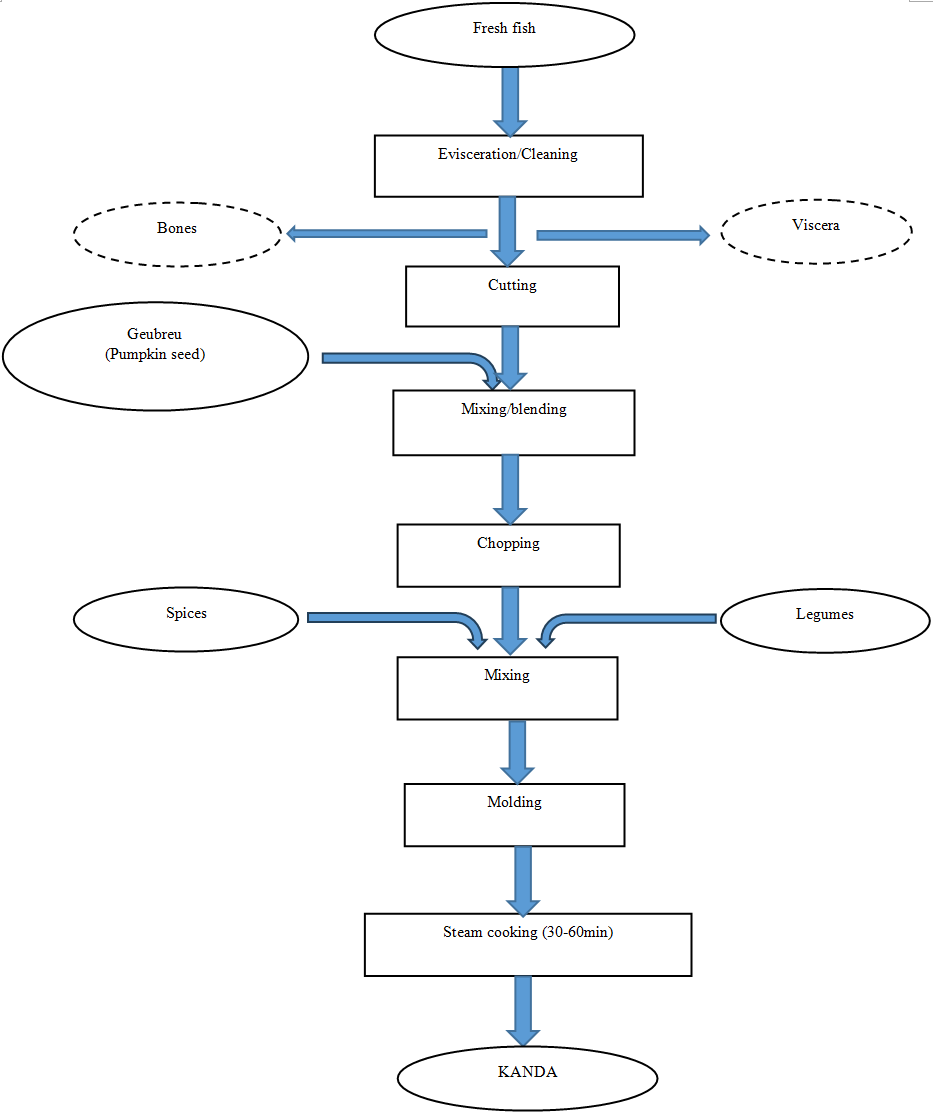
Kanda is a mixture of fish and sesame seeds cooked in the form of balls, seasoned as needed with onion, parsley, celery, bell pepper, garlic, green onion, and chili pepper.
The production process begins with the preparation of the fish, as shown in Figure 1. This involves gutting, cleaning, removing the bones, and cutting into pieces. Sesame flour obtained after sorting, washing, drying, grinding, and sifting is then added to the chopped fish and ground into a paste in a mortar. The sesame must be added gradually to obtain a compact, homogeneous paste. After grinding, cleaned and washed legumes, salt, and powdered spices are added and mixed in the mortar to obtain a homogeneous paste. This paste is then cut, shaped by hand into balls, and steamed for 30 to 60 minutes. It is eaten after being seasoned in oil with onion, tomato, garlic, and water.
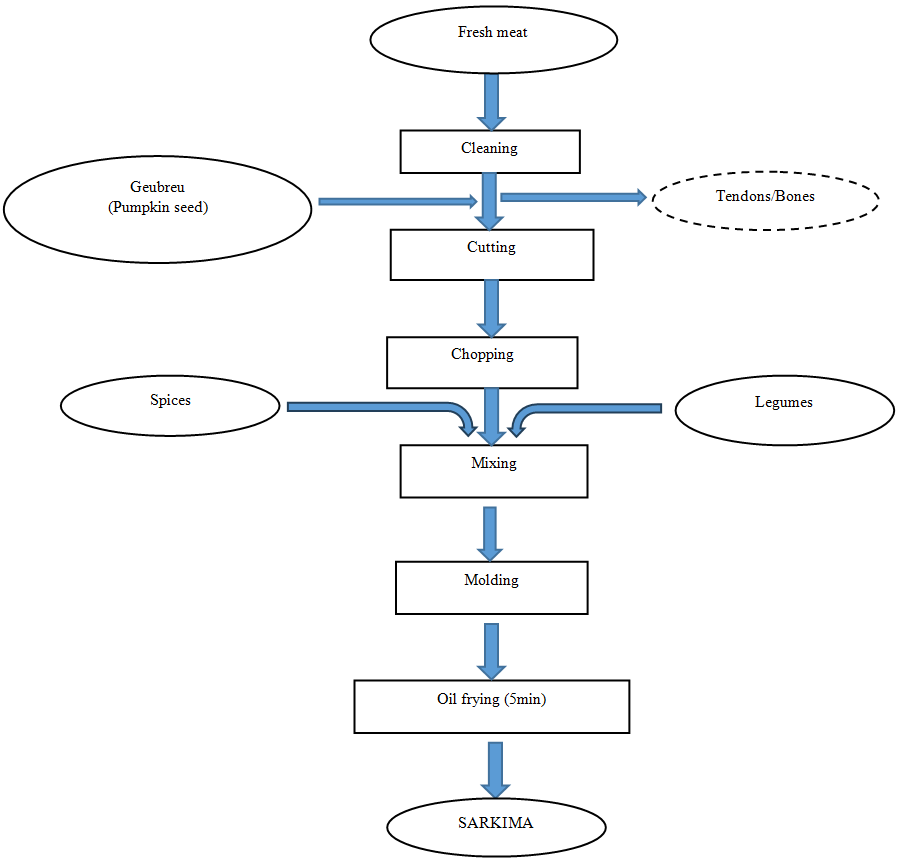
Sarkima is a mixture of minced meat and legumes, cooked and eaten in a bread sandwich. The Sarkima preparation process begins with the preparation of the meat, as shown in Figure 2. The meat is first cleaned, washed, and then cut into pieces. These pieces of meat are then mixed with finely chopped legumes (onion, bell pepper), and the mixture is minced to obtain a fine paste. The minced mixture is seasoned with spices, mixed, and molded. The molded mixture is mixed with finely chopped onions and peppers, lightly salted and peppered, then fried in oil in a large frying pan for 5 minutes. Slices of cheese are then drained onto the cooked Sarkima. Finally, the Sarkima is served with a few slices of tomato, raw onion, and raw bell pepper, then topped with cheese and mayonnaise.
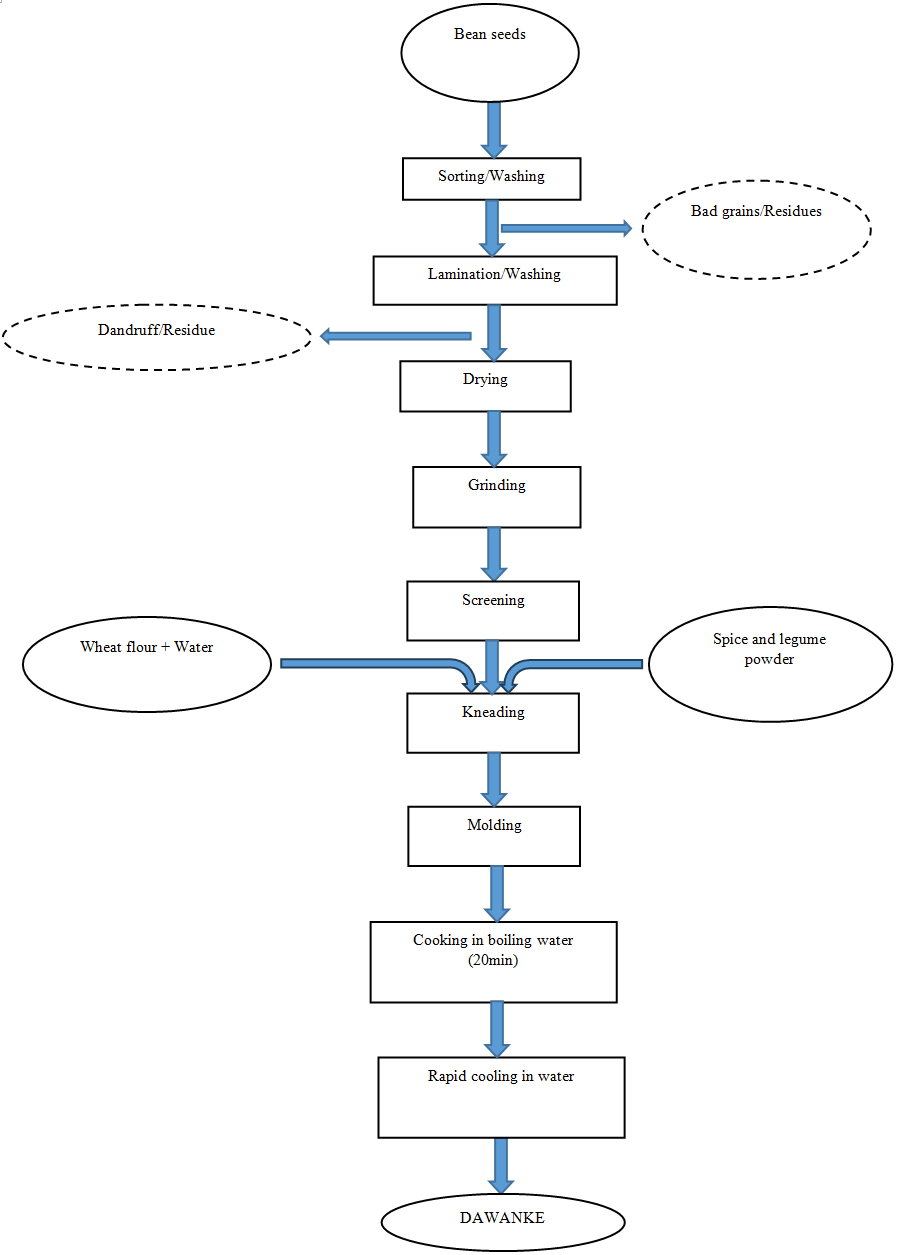
Dawanke is a mixture of wheat or bean flour, seasoned with legumes and spices, and cooked in boiling water. The preparation of Dawanke is a simpler process that requires wheat and bean flour, baobab leaf powder (Kalakouka), and salt, as shown in Figure 3. Dried pepper, peanut oil, tomatoes, eggs, cucumber, carrots, and cabbage can be used as needed for seasoning. First, the beans or wheat are cleaned, washed, dried, and then ground into flour. The beans are hulled before grinding to remove the skins. Wheat and bean flour can also be purchased directly from stores. The flour mixture is first sifted, then moistened with water and kneaded until a smooth dough is obtained. The dough is then cut into pieces, shaped into balls, and cooked in boiling water in a large pot for 20 minutes. Once cooked, the balls rise to the surface. These balls, cooked in boiling water, are immediately cooled in cold water. They are eaten after being seasoned with legumes, oil, and Yadji (dried chili peppers, crushed and mixed with a few spices).


The results of the microbiological analyses of Kanda showed that the total flora varied between 4.7 × 10⁵ and 1.8 × 10⁶ CFU/g (Table 1). Total coliform counts ranged from less than 10 to 1.4 × 10⁶ CFU/g, while fecal coliform counts ranged from less than 10 to 3.2 × 10⁴ CFU/g. Staphylococcus aureus counts ranged from 4.5 × 10⁵ to 2 × 10⁶ CFU/g. Yeast and mold loads ranged from 2.1 × 10⁴ to 6.3 × 10⁴ CFU/g. No Salmonella colonies were identified in the Kanda samples analyzed. Statistical analyses showed no significant differences between the values obtained.
The results of the microorganism count in the Sarkima samples are shown in Table 2. The total flora load varied between 9.5 x 10⁴ and 1.8 x 10⁶ CFU/g. The total coliform count ranged from less than 10 to 6.8 × 10⁵ CFU/g, while the fecal coliform count ranged from less than 10 to 3.2 × 10⁵ CFU/g. The Staphylococcus aureus counts ranged from 3.6 × 10⁵ to 8 × 10⁵ CFU/g. Yeast and mold ranged from 8.2 × 10⁴ to 3.6 × 10⁵ CFU/g. No confirmed Salmonella colonies were identified in the Sarkima samples analyzed. Regarding comparisons between the values obtained, no significant differences were observed.
The results of the microorganism count in Dawanke show that the total flora load varied between 1.2 × 10⁵ and 1.7 × 10⁶ CFU/g with no significant differences (Table 3). Total coliforms ranged from 4.6 × 10³ to 6.5 × 10⁵ CFU/g, while fecal coliforms ranged from 10² to 1.2 × 10² CFU/g. Regarding comparisons between the values obtained, significant differences were observed. Staphylococcus aureus ranged from 2.9 × 10⁵ to 1.8 × 10⁶ CFU/g. Comparisons between the values obtained also showed a significant difference. Concerning yeasts and molds, load ranged from 1.4 × 10⁴ to 8 × 10⁴ CFU/g, but no significant differences were observed. No confirmed colonies of Salmonella were identified in the Dawanke samples analyzed.
Regarding Kanda, the results of the microbiological quality assessment showed that 77.78% of the samples were satisfactory for fecal coliforms and 66.67% for total coliforms (Table 4). No samples were satisfactory regarding total flora, but all were acceptable regarding this germ. About staphylococci, no samples were satisfactory or acceptable for this germ. In terms of non-compliance rates, 33.33% of samples were non-compliant with total coliforms, 22.22% with fecal coliforms, while all samples were non-compliant with staphylococci.
For Sarkima, the results showed that 77.78% of samples were satisfactory for fecal coliforms and total coliforms and only 11.11% for total flora. As for acceptable samples, the results show that 88.89% were satisfactory for total flora and 22.22% for fecal coliforms. No samples were acceptable for total coliforms and staphylococci. In terms of non-compliance rates, the results showed 22.22% for total coliforms and 100% for staphylococci.
In the case of Dawanke, the microbiological quality assessment showed that 80% of the samples were satisfactory for fecal coliforms and only 10% for total flora. As for the acceptable sample rates, the results showed 90% for total flora and only 20% for fecal coliforms. In terms of non-compliance rates, the results showed 100% for total coliforms and staphylococci.
The results also showed that all samples (100%) were satisfactory for Salmonella in Kanda, Sarkima, and Dawanke.
3.2. DiscussionThe assessment of the production processes for Kanda, Sarkima, and Dawanke shows that, overall, the essential stages of agri-food production are being followed. The raw materials are initially pre-treated before being incorporated into the processing chain. In addition, all three products are cooked at the end of production at temperatures above 100°C for several minutes, thus ensuring microbiologically safe products. Indeed, most microorganisms are sensitive to temperatures above 100°C for a few seconds, except resistant spores 19. These diagrams, therefore, make it possible to obtain products of good sanitary quality for human consumption. The problem, therefore, remains post-cooking contamination, as the production process is still dominated by numerous exclusively manual operations. These claims are confirmed by the results of microbiological analyses. Apart from Salmonella, which was absent in all samples, most of the microbes of sanitary interest were found in the various samples, thus demonstrating insufficient hygiene among certain producers and sellers.
Total flora is the approximate number of microbes found in food products. Its quantity can degrade foodstuffs, alter their marketability, and cause digestive or allergic disorders in consumers 20. TMAF is an indicator of the microbiological quality of food. It reflects the food’s exposure to any contamination and, in general, the existence of conditions favorable to the growth of microorganisms 21. Counting this flora is useful for indicating whether cleaning and disinfection during the processing and sale of Kanda, Sarkima, and Dawanke have been carried out sufficiently. All of the samples analyzed comply with the recommended Algerian regulatory standards, which set the maximum limit at 107 CFU/g of food for cooked cereal products, cooked meat products, and foods made from cooked fish products 18. These results demonstrate the application of good manufacturing practices during the processing and marketing of Kanda, Sarkima, and Dawanke. Indeed, cooking the three products at the end of production at temperatures above 100°C for several minutes is a guarantee of their microbiological safety. The total flora may be saprophytic or pathogenic, indigenous or introduced during handling 22. This flora in TMAF does not necessarily indicate internal contamination of cereal products before manufacture, as it is a general indicator of hygiene and safety, but rather allows the safety and quality index of food to be estimated in industrial control 23.
Thermotolerant coliforms, which are capable of growing at 44°C, are specific to fecal flora 24. Overall, the results of this study show that 85.19% of products complied with the recommendations on microbiological criteria in Algerian regulations, which set the maximum limit at 102 CFU/g of food for cooked meat products and foods made from cooked fish products, and at 103 CFU/g of food for cooked cereal products 18. These results demonstrate a minimum level of compliance with good hygiene practices in the production process of Kanda, Sarkima, and Dawanke. Thermotolerant coliforms are considered to be an indicator of fecal contamination and poor hygiene conditions, in this case, staff hygiene 25. Fecal coliforms colonize the digestive tract of humans and animals, which thus becomes the ideal reservoir for their spread 26. The presence of coliforms in foodstuffs indicates contamination often caused by poor hygiene during handling at various stages of the food production chain 27. However, many fecal coliforms can come from the surrounding air, the water used, and the utensils used for preparation 28. Furthermore, as thermotolerant coliforms cannot withstand temperatures above 100°C, their significant presence could therefore be due to post-contamination, which is caused either by excessive handling during the marketing of finished products or by other vectors such as flies 27 29. In this study, observations revealed that most manufacturing sites do not have facilities for hand washing and disinfection, which could explain why 14.81% of samples had levels exceeding the maximum limit set by Algerian standards.
The results of the Staphylococcus aureus test showed that none of the samples had a load that complied with the maximum limit of 107 CFU/g of food set by Algerian regulations on cooked cereal products, cooked meat products, and foods made from cooked fish products 18. These results show that hygiene is not sufficiently respected during handling. Indeed, humans appear to be the main agents of dissemination of Staphylococcus aureus, which they carry on their hair, skin, and respiratory tract. Staphylococci are therefore human contaminants resulting from poor hygiene 30. However, as in the case of fecal coliforms, staphylococci can also come from the air, dust, clothing, and insects 31.
The search for Salmonella showed that all the foods evaluated were safe for consumption. Indeed, the search for Salmonella makes it possible to determine whether or not the product is safe to consume 32. In the present study, no Salmonella colonies were detected in the foods analyzed, and all results were in line with Algerian regulations, which recommend that no colonies be found in 25 g of each food analyzed 18. Salmonella is responsible for gastroenteritis, food poisoning, typhoid fever, and paratyphoid fever 33 34. Although the study showed that hygiene practices were generally inadequate, these results nevertheless show a minimum level that allowed for the provision of food that was more or less safe for consumption. The high cooking temperature could also explain these satisfactory results for Salmonella. High cooking temperatures leave little chance of survival for microbes such as Salmonella, which cannot withstand heat 35. Salmonella is also a germ that contaminates humans, and the hands of food handlers remain the most important vector of food contamination 36. Hands can be a source of several types of spoilage flora and pathogenic microbes if they are not properly washed with soap and potable water. However, the lack of hand-washing facilities at production and marketing sites is an obstacle to good hand-washing practices.
Although fungal flora is not directly implicated in poor food quality, its high presence could be a source of foodborne infections through the toxins it secretes, as well as rapid food spoilage 37. In the present study, yeast and mold colonies were found in all samples of the products analyzed. The presence of fungal flora could be explained by certain raw materials used (cereals, legumes, sesame, dried fish). Indeed, the vegetative forms of yeasts and molds are sensitive to cooking heat, but some spores can withstand this heat and develop in the product after cooling and during storage and preservation of portions not sold on the day of production 38. In addition, air, flies, and utensils used can also be sources of contamination 39 40. These are spoilage microbes that lead to losses in organoleptic quality.
The study’s focus on the city of N’Djamena presents an objective limitation to generalization. However, given the population’s great diversity, representing all national perspectives, the results provide a limited picture of the situation at the national level. Therefore, within the framework of promoting overall health, health authorities must strengthen hygiene control and monitoring in the production of local foods. Although Kanda, Dawanke, and Sarkima are not among the most widely consumed foods by the general population, the target consumer group, primarily students, is highly vulnerable. It is therefore essential that the government implement hygiene control measures in establishments that provide food to the public to mitigate the consequences. Although its scope is very limited due to the small sample size, this study demonstrates the need for stricter hygiene controls in N’Djamena, particularly in schools, to prevent public health risks. Street food is increasingly becoming the primary food source for a large portion of the population and requires strict monitoring by public health authorities.
The absence of research on certain key risk factors, such as E. coli O157:H7, Campylobacter, Listeria monocytogenes, and viruses such as norovirus, all of which cause food poisoning and are microbes linked to poor hygiene (food handling by contaminated individuals, use of dirty water, unsanitary surfaces and equipment), limits the scope of the study. Finally, the lack of isolation and physical characterization testing, molecular identification, and antibiotic resistance testing limits the scope of the study, which warrants further investigation to prevent public health problems in Chad.
The results of the study showed that the technologies used to manufacture traditional foods sold in N’Djamena’s city schools offer foods rich and varied in ingredients, making them good sources of nutrition for schoolchildren. The microbiological quality assessment also showed that Kanda, Sarkima and Dawanke were generally of good microbiological quality. Nevertheless, the presence of fecal contamination in certain samples is an indicator of insufficient hygiene on the part of some producers and vendors. Food sold in schools in particular and on the streets in general remains insufficiently controlled in Chad and many African countries and is a source of disease for the population, especially schoolchildren and children. Despite the limitations of this study due to the sample size and the weakness of the parameters analyzed, it nevertheless shows that food sold in schools in N’Djamena poses a significant risk to schoolchildren. It would be advisable for street food operators to be trained and made aware of good processing techniques, applying Good Manufacturing Practices and Good Hygiene Practices. It would also be important to carry out isolation and physical characterization tests, molecular identification, and antibiotic resistance tests to better understand the types of contamination.
The authors are thankful to their institutions for providing support in carrying out the study
The authors declare no conflict of interest, financial or otherwise.
| [1] | Vieux, F., Dubois, C., Duchêne, C., and Darmon, N. "Nutritional implications of French guidelines on food provision in school cafeterias and the role of protein-rich dishes," Nutrition and Dietetics Notebooks, 54(1). 22-34. 2019. | ||
| In article | |||
| [2] | Wang, D. and Fawzi, W.W. "Impacts of school feeding on educational and health outcomes of school-age children and adolescents in low-and middle-income countries: protocol for a systematic review and meta-analysis," Systematic reviews, 9(1). 55. 2020. | ||
| In article | View Article PubMed | ||
| [3] | Bogl, L.H., Mehlig, K., Ahrens, W., Gwozdz, W., De Henauw, S., Molnár, D., IDEFICS, and Family, C. "Like me, like you–relative importance of peers and siblings on children’s fast food consumption and screen time but not sports club participation depends on age," International Journal of Behavioral Nutrition and Physical Activity, 17(1). 50. 2020. | ||
| In article | View Article PubMed | ||
| [4] | Adeoya, A.A., Sasaki, H., Fuda, M., Okamoto, T., and Egawa, S. "Child nutrition in disaster: a scoping review," The Tohoku journal of experimental medicine, 256. 103-118. 2022. | ||
| In article | View Article PubMed | ||
| [5] | Wardhani, R.D.K., Reza, M.R., and Ratih, K. "Are the Early Children’s School Meals Diverse, Nutritious, Balanced, and Safe ?," Advances in Social Science, Education and Humanities Research, 487. 73-76. 2020. | ||
| In article | View Article | ||
| [6] | WHO. WHO estimates of the global burden of foodborne diseases. World Health Organization, Geneva, 2015. https:// iris.who.int/ server/api/core/bitstreams/2cd58abf-fa80-40ef-b98a-9d663f0a9c79/content. | ||
| In article | |||
| [7] | Eshete, M., Girma, S., and Mengistu, K. "Aflatoxin contamination in Eastern Africa: The silent killer behind foodborne mortality," Toxins, 12(5). 304. 2020. | ||
| In article | |||
| [8] | Cabal-Herrera, A., Kigen, B., Kapanga, E., Samia, A., Nabwera, H., and Samia, P. "L’impact de la sous-nutrition et de la suralimentation sur le développement cérébral précoce," Dans Seminars in Pediatric Neurology, 55. 101212. 2025. | ||
| In article | View Article PubMed | ||
| [9] | Walter, E.L. "Antigua, Guatemala, Street Food Vendors," Revista del CESLA. International Latin American Studies Review, 25. 209–232. 2020. | ||
| In article | View Article | ||
| [10] | ISO 6887-1. Microbiology of the food chain — Preparation of test samples, initial suspension and decimal dilutions for microbiological examination — Part 1: General rules for the preparation of the initial suspension and decimal dilutions, 2017, International Organization for Standardization. https:// www.iso.org/ obp/ui/en/#iso:std:iso:6887:-1:ed-2:v1:en. | ||
| In article | |||
| [11] | ISO 4833-1. Microbiologie de la chaîne alimentaire-Méthode horizontale pour le dénombrement des micro-organismes, 2013, International Organization for Standardization. | ||
| In article | |||
| [12] | ISO 4832. Microbiologie des aliments. Méthode horizontale pour le dénombrement des coliformes par comptage des colonies, 2006, International Organization for Standardization p. 1-6. | ||
| In article | |||
| [13] | NF V08-60. Microbiologie des aliments: Dénombrement des coliformes thermotolérants par comptage des colonies obtenues à 44°C, 2009. | ||
| In article | |||
| [14] | ISO 6888-1. Microbiologie des aliments - Méthode horizontale pour le dénombrement des staphylocoques à coagulase positive (Staphylococcus aureus et autres espèces) - Partie 1: Technique utilisant le milieu gélosé de Baird-Parker, 2021, International Organization for Standardization. | ||
| In article | |||
| [15] | ISO 6579. Microbiologie des aliments. Méthode horizontale pour la recherche des Salmonella spp, 2002, International Organization for Standardization. p. 1-34. | ||
| In article | |||
| [16] | ISO 7218. Microbiologie des aliments-Exigences générales et recommandations, 2007, International Organization for Standardization. p. 1-79. | ||
| In article | |||
| [17] | CE n° 2073/2005. "Regulation (EC) No. 2073/2005 on microbiological criteria for foodstuffs," Official Journal of the European Union, L 338. 1-26. 2005. https://eur-lex.europa.eu/eli/reg/2005/2073/oj. | ||
| In article | |||
| [18] | JORA. Official Journal of the Algerian Republic No. 39. Annex I: Microbiological criteria applicable to foodstuffs. Republic of Algeria, 2017. https://faolex.fao.org/docs/pdf/Alg172357.pdf | ||
| In article | |||
| [19] | Setlow, P. and Johnson, E.A., Spores and their significance, in Fundamentals And Frontiers, Michael, P.D., Francisco, D.-G., and Colin, H., Editors. 2019, Food Microbiology. p. 45-79. | ||
| In article | View Article | ||
| [20] | Rachedi, K., Bekhouche, S., Boughachiche, F., and Zerizer, H. "Microbiological control of food served in collective catering establishments," Algerian Journal of Nutrition and Food Sciences, 1(3). 2021. https:// fac.umc.edu.dz/ inataa/revue/ files/ ajnfs0103004.pdf. | ||
| In article | |||
| [21] | Machado-Moreira, B., Richards, K., Brennan, F., Abram, F., and Burgess, C.M. "Microbial contamination of fresh produce: what, where, and how?," Comprehensive Reviews in Food Science and Food Safety, 18(6). 1727-1750. 2019. | ||
| In article | View Article PubMed | ||
| [22] | Trond, M., Vânia, B.F., Birgitte, M., Valérie, L.A., Paula, T., Ida, M.K., and Solveig, L. "Bacterial levels and diversity in kitchen sponges and dish brushes used by consumers," Journal of Applied Microbiology, 133(3). 1378-1391. 2022. | ||
| In article | View Article PubMed | ||
| [23] | Damena, A., Mikru, A., Adane, M., and Dobo, B. "Microbial Profile and Safety of Chicken Eggs From a Poultry Farm and Small‐Scale Vendors in Hawassa, Southern Ethiopia," Journal of Food Quality, 2022(1). 7483253. 2022. | ||
| In article | View Article | ||
| [24] | Hammad, A.M., Eltahan, A., Hassan, H.A., Abbas, N.H., Hussien, H., and Shimamoto, T. "Charges de coliformes et de coliformes fécaux et caractérisation d'Escherichia coli thermotolérant dans le fromage au lait cru frais," Foods, 11(3). 332. 2022. | ||
| In article | View Article PubMed | ||
| [25] | Awomon, D.F.A.E. "Study of the vulnerability of riverbank washers on the Banco River through research and counting of fecal contamination indicators," African Journal of Social Sciences and Public Health 2(2). 72-88. 2020. https://www.revue-rasp.org/index.php/rasp/article/view/33/318. | ||
| In article | |||
| [26] | Itongwa, J.A., Banangamba, E., Azine, P.C., MATENDO, E.R., and Mwapu, I. "Assessment of the microbiological quality of fresh fish sold in the city of Bukavu, DR Congo," Africa Science, 15(6). 365-373. 2019. https:// www.afriquescience.net/ article.php? nid=818&&code=Vol.15,%20N%C2%B06%20(2019)&id=29. | ||
| In article | |||
| [27] | Luwawa, Z.M., Makaly, B., Sungula, K., and Valu, G. "Assessment of the microbiological quality of food products sold in Kinshasa markets: The case of fresh meat and fish sold at the Liberté and Rond-point Ngaba markets (Democratic Republic of Congo)," International Journal of Innovation and Applied Studies, 37(3). 549-560. 2022. https://www.proquest.com/scholarly-journals/evaluation-de-la-qualité-microbiologique-des/docview/2723858065/se-2. | ||
| In article | |||
| [28] | Bai, V.R., Kit, A.C., Kangadharan, G., Gopinath, R., Varadarajan, P., and Hao, A.J. "Experimental study on total coliform violations in the complied NH2CL, O3, and UV treated municipal water supply system," The European Physical Journal Plus, 137(6). 689. 2022. | ||
| In article | View Article PubMed | ||
| [29] | Komono, D., Gragnon, B.G., and Koffi, L.A. "Risk of potential transmission of bacterial infections by synanthropic flies in urban areas of Ivory Coast," Moroccan Journal of Agricultural and Veterinary Sciences, 10(4). 2022. https:// agrimaroc.org/ index.php/Actes_IAVH2/article/view/1227. | ||
| In article | |||
| [30] | Sabuj, A.A.M., Haque, Z.F., Barua, N., Islam, M.A., and Saha, S. "Assessment of bacteriological quality of street vended fast foods and their antimicrobial resistance," Int. J. Curr. Microbiol. App. Sci, 7(11). 3049-3059. 2018. https://www.ijcmas.com/7-11-2018/Abdullah%20Al%20Momen%20Sabuj,%20et%20al.pdf. | ||
| In article | View Article | ||
| [31] | Mitchell, A., Spencer, M., and Edmiston, C. "Role of Healthcare Apparel and Other Healthcare Textiles in the Transmission of Pathogens: A Review of the Literature," Journal of Hospital Infection, 90(4). 285-292. 2015. | ||
| In article | View Article PubMed | ||
| [32] | Velge, P., Kempf, F., Menanteau, P., Beaumont, C., Christine Leterrier, C., and Virlogeux-Payant, I. "The microbiota approach: strategies for predicting and preventing Salmonella infections in chickens," Innovations Agronomiques, 66. 31-42. 2018. | ||
| In article | |||
| [33] | Stanaway, J.D., Parisi, A., Sarkar, K., Blacker, B.F., Reiner, R.C., Hay, S.I., Nixon, M.R., Dolecek, C., James, S.L., Mokdad, A.H., and Abebe, G. "The global burden of non-typhoidal salmonella invasive disease: a systematic analysis for the Global Burden of Disease Study 2017," The Lancet Infectious Diseases, 19(12). 1312-1324. 2019. | ||
| In article | |||
| [34] | Galán, J.E. "Salmonella Typhimurium and inflammation: A pathogen-centric affair," Nature Reviews Microbiology, 19(11). 716-725. 2021. | ||
| In article | View Article PubMed | ||
| [35] | Jarvis, N.A., O'Bryan, C.A., Dawoud, T.M., Park, S.H., Kwon, Y.M., Crandall, P.G., and Ricke, S.C. "An overview of Salmonella thermal destruction during food processing and preparation," Food Control, 68. 280-290. 2016. | ||
| In article | View Article | ||
| [36] | Eng, S.-K., Pusparajah, P., Ab Mutalib, N.-S., Ser, H.-L., Chan, K.-G., and Lee, L.-H. "Salmonella: A review on pathogenesis, epidemiology and antibiotic resistance," Frontiers in Life Science, 8(3). 284-293. 2015. | ||
| In article | View Article | ||
| [37] | Pouris, J., Kolyva, F., Bratakou, S., Vogiatzi, C.A., Chaniotis, D., and Beloukas, A. "The role of fungi in food production and processing," Applied Sciences, 14(12). 5046. 2024. | ||
| In article | View Article | ||
| [38] | Dorbani, M. Relative contribution of different wavelengths of pulsed light to the inactivation of bacterial and fungal spores Doctoral dissertation]. | ||
| In article | |||
| [39] | Fröhlich-Nowoisky, J., Kampf, C.J., Weber, B., Huffman, J.A., Pöhlker, C., Andreae, M.O., Lang-Yona, N., Burrows, S.M., Gunthe, S.S., Elbert, W., Su, H., Hoor, P., Thines, E., Hoffmann, T., Després, V.R., and Pöschl, U. "Bioaerosols in the Earth system: Climate, health, and ecosystem interactions," Atmospheric Research, 182. 346-376. 2016. | ||
| In article | View Article | ||
| [40] | Manandhar, R. and Gokhale, S. "Are houseflies still important vector of gastrointestinal infections?," Journal of Bacteriology and Parasitology, 8(4). 318. 2017. | ||
| In article | View Article | ||
Published with license by Science and Education Publishing, Copyright © 2026 Abdoullahi Hissein Ousman, Bougma Sanogo, Dieni Ibonye, Abakar Mahamat Choukou, Tapsoba François, Savadogo Aly and Abdelsalam Tidjani
 This work is licensed under a Creative Commons Attribution 4.0 International License. To view a copy of this license, visit
http://creativecommons.org/licenses/by/4.0/
| [1] | Vieux, F., Dubois, C., Duchêne, C., and Darmon, N. "Nutritional implications of French guidelines on food provision in school cafeterias and the role of protein-rich dishes," Nutrition and Dietetics Notebooks, 54(1). 22-34. 2019. | ||
| In article | |||
| [2] | Wang, D. and Fawzi, W.W. "Impacts of school feeding on educational and health outcomes of school-age children and adolescents in low-and middle-income countries: protocol for a systematic review and meta-analysis," Systematic reviews, 9(1). 55. 2020. | ||
| In article | View Article PubMed | ||
| [3] | Bogl, L.H., Mehlig, K., Ahrens, W., Gwozdz, W., De Henauw, S., Molnár, D., IDEFICS, and Family, C. "Like me, like you–relative importance of peers and siblings on children’s fast food consumption and screen time but not sports club participation depends on age," International Journal of Behavioral Nutrition and Physical Activity, 17(1). 50. 2020. | ||
| In article | View Article PubMed | ||
| [4] | Adeoya, A.A., Sasaki, H., Fuda, M., Okamoto, T., and Egawa, S. "Child nutrition in disaster: a scoping review," The Tohoku journal of experimental medicine, 256. 103-118. 2022. | ||
| In article | View Article PubMed | ||
| [5] | Wardhani, R.D.K., Reza, M.R., and Ratih, K. "Are the Early Children’s School Meals Diverse, Nutritious, Balanced, and Safe ?," Advances in Social Science, Education and Humanities Research, 487. 73-76. 2020. | ||
| In article | View Article | ||
| [6] | WHO. WHO estimates of the global burden of foodborne diseases. World Health Organization, Geneva, 2015. https:// iris.who.int/ server/api/core/bitstreams/2cd58abf-fa80-40ef-b98a-9d663f0a9c79/content. | ||
| In article | |||
| [7] | Eshete, M., Girma, S., and Mengistu, K. "Aflatoxin contamination in Eastern Africa: The silent killer behind foodborne mortality," Toxins, 12(5). 304. 2020. | ||
| In article | |||
| [8] | Cabal-Herrera, A., Kigen, B., Kapanga, E., Samia, A., Nabwera, H., and Samia, P. "L’impact de la sous-nutrition et de la suralimentation sur le développement cérébral précoce," Dans Seminars in Pediatric Neurology, 55. 101212. 2025. | ||
| In article | View Article PubMed | ||
| [9] | Walter, E.L. "Antigua, Guatemala, Street Food Vendors," Revista del CESLA. International Latin American Studies Review, 25. 209–232. 2020. | ||
| In article | View Article | ||
| [10] | ISO 6887-1. Microbiology of the food chain — Preparation of test samples, initial suspension and decimal dilutions for microbiological examination — Part 1: General rules for the preparation of the initial suspension and decimal dilutions, 2017, International Organization for Standardization. https:// www.iso.org/ obp/ui/en/#iso:std:iso:6887:-1:ed-2:v1:en. | ||
| In article | |||
| [11] | ISO 4833-1. Microbiologie de la chaîne alimentaire-Méthode horizontale pour le dénombrement des micro-organismes, 2013, International Organization for Standardization. | ||
| In article | |||
| [12] | ISO 4832. Microbiologie des aliments. Méthode horizontale pour le dénombrement des coliformes par comptage des colonies, 2006, International Organization for Standardization p. 1-6. | ||
| In article | |||
| [13] | NF V08-60. Microbiologie des aliments: Dénombrement des coliformes thermotolérants par comptage des colonies obtenues à 44°C, 2009. | ||
| In article | |||
| [14] | ISO 6888-1. Microbiologie des aliments - Méthode horizontale pour le dénombrement des staphylocoques à coagulase positive (Staphylococcus aureus et autres espèces) - Partie 1: Technique utilisant le milieu gélosé de Baird-Parker, 2021, International Organization for Standardization. | ||
| In article | |||
| [15] | ISO 6579. Microbiologie des aliments. Méthode horizontale pour la recherche des Salmonella spp, 2002, International Organization for Standardization. p. 1-34. | ||
| In article | |||
| [16] | ISO 7218. Microbiologie des aliments-Exigences générales et recommandations, 2007, International Organization for Standardization. p. 1-79. | ||
| In article | |||
| [17] | CE n° 2073/2005. "Regulation (EC) No. 2073/2005 on microbiological criteria for foodstuffs," Official Journal of the European Union, L 338. 1-26. 2005. https://eur-lex.europa.eu/eli/reg/2005/2073/oj. | ||
| In article | |||
| [18] | JORA. Official Journal of the Algerian Republic No. 39. Annex I: Microbiological criteria applicable to foodstuffs. Republic of Algeria, 2017. https://faolex.fao.org/docs/pdf/Alg172357.pdf | ||
| In article | |||
| [19] | Setlow, P. and Johnson, E.A., Spores and their significance, in Fundamentals And Frontiers, Michael, P.D., Francisco, D.-G., and Colin, H., Editors. 2019, Food Microbiology. p. 45-79. | ||
| In article | View Article | ||
| [20] | Rachedi, K., Bekhouche, S., Boughachiche, F., and Zerizer, H. "Microbiological control of food served in collective catering establishments," Algerian Journal of Nutrition and Food Sciences, 1(3). 2021. https:// fac.umc.edu.dz/ inataa/revue/ files/ ajnfs0103004.pdf. | ||
| In article | |||
| [21] | Machado-Moreira, B., Richards, K., Brennan, F., Abram, F., and Burgess, C.M. "Microbial contamination of fresh produce: what, where, and how?," Comprehensive Reviews in Food Science and Food Safety, 18(6). 1727-1750. 2019. | ||
| In article | View Article PubMed | ||
| [22] | Trond, M., Vânia, B.F., Birgitte, M., Valérie, L.A., Paula, T., Ida, M.K., and Solveig, L. "Bacterial levels and diversity in kitchen sponges and dish brushes used by consumers," Journal of Applied Microbiology, 133(3). 1378-1391. 2022. | ||
| In article | View Article PubMed | ||
| [23] | Damena, A., Mikru, A., Adane, M., and Dobo, B. "Microbial Profile and Safety of Chicken Eggs From a Poultry Farm and Small‐Scale Vendors in Hawassa, Southern Ethiopia," Journal of Food Quality, 2022(1). 7483253. 2022. | ||
| In article | View Article | ||
| [24] | Hammad, A.M., Eltahan, A., Hassan, H.A., Abbas, N.H., Hussien, H., and Shimamoto, T. "Charges de coliformes et de coliformes fécaux et caractérisation d'Escherichia coli thermotolérant dans le fromage au lait cru frais," Foods, 11(3). 332. 2022. | ||
| In article | View Article PubMed | ||
| [25] | Awomon, D.F.A.E. "Study of the vulnerability of riverbank washers on the Banco River through research and counting of fecal contamination indicators," African Journal of Social Sciences and Public Health 2(2). 72-88. 2020. https://www.revue-rasp.org/index.php/rasp/article/view/33/318. | ||
| In article | |||
| [26] | Itongwa, J.A., Banangamba, E., Azine, P.C., MATENDO, E.R., and Mwapu, I. "Assessment of the microbiological quality of fresh fish sold in the city of Bukavu, DR Congo," Africa Science, 15(6). 365-373. 2019. https:// www.afriquescience.net/ article.php? nid=818&&code=Vol.15,%20N%C2%B06%20(2019)&id=29. | ||
| In article | |||
| [27] | Luwawa, Z.M., Makaly, B., Sungula, K., and Valu, G. "Assessment of the microbiological quality of food products sold in Kinshasa markets: The case of fresh meat and fish sold at the Liberté and Rond-point Ngaba markets (Democratic Republic of Congo)," International Journal of Innovation and Applied Studies, 37(3). 549-560. 2022. https://www.proquest.com/scholarly-journals/evaluation-de-la-qualité-microbiologique-des/docview/2723858065/se-2. | ||
| In article | |||
| [28] | Bai, V.R., Kit, A.C., Kangadharan, G., Gopinath, R., Varadarajan, P., and Hao, A.J. "Experimental study on total coliform violations in the complied NH2CL, O3, and UV treated municipal water supply system," The European Physical Journal Plus, 137(6). 689. 2022. | ||
| In article | View Article PubMed | ||
| [29] | Komono, D., Gragnon, B.G., and Koffi, L.A. "Risk of potential transmission of bacterial infections by synanthropic flies in urban areas of Ivory Coast," Moroccan Journal of Agricultural and Veterinary Sciences, 10(4). 2022. https:// agrimaroc.org/ index.php/Actes_IAVH2/article/view/1227. | ||
| In article | |||
| [30] | Sabuj, A.A.M., Haque, Z.F., Barua, N., Islam, M.A., and Saha, S. "Assessment of bacteriological quality of street vended fast foods and their antimicrobial resistance," Int. J. Curr. Microbiol. App. Sci, 7(11). 3049-3059. 2018. https://www.ijcmas.com/7-11-2018/Abdullah%20Al%20Momen%20Sabuj,%20et%20al.pdf. | ||
| In article | View Article | ||
| [31] | Mitchell, A., Spencer, M., and Edmiston, C. "Role of Healthcare Apparel and Other Healthcare Textiles in the Transmission of Pathogens: A Review of the Literature," Journal of Hospital Infection, 90(4). 285-292. 2015. | ||
| In article | View Article PubMed | ||
| [32] | Velge, P., Kempf, F., Menanteau, P., Beaumont, C., Christine Leterrier, C., and Virlogeux-Payant, I. "The microbiota approach: strategies for predicting and preventing Salmonella infections in chickens," Innovations Agronomiques, 66. 31-42. 2018. | ||
| In article | |||
| [33] | Stanaway, J.D., Parisi, A., Sarkar, K., Blacker, B.F., Reiner, R.C., Hay, S.I., Nixon, M.R., Dolecek, C., James, S.L., Mokdad, A.H., and Abebe, G. "The global burden of non-typhoidal salmonella invasive disease: a systematic analysis for the Global Burden of Disease Study 2017," The Lancet Infectious Diseases, 19(12). 1312-1324. 2019. | ||
| In article | |||
| [34] | Galán, J.E. "Salmonella Typhimurium and inflammation: A pathogen-centric affair," Nature Reviews Microbiology, 19(11). 716-725. 2021. | ||
| In article | View Article PubMed | ||
| [35] | Jarvis, N.A., O'Bryan, C.A., Dawoud, T.M., Park, S.H., Kwon, Y.M., Crandall, P.G., and Ricke, S.C. "An overview of Salmonella thermal destruction during food processing and preparation," Food Control, 68. 280-290. 2016. | ||
| In article | View Article | ||
| [36] | Eng, S.-K., Pusparajah, P., Ab Mutalib, N.-S., Ser, H.-L., Chan, K.-G., and Lee, L.-H. "Salmonella: A review on pathogenesis, epidemiology and antibiotic resistance," Frontiers in Life Science, 8(3). 284-293. 2015. | ||
| In article | View Article | ||
| [37] | Pouris, J., Kolyva, F., Bratakou, S., Vogiatzi, C.A., Chaniotis, D., and Beloukas, A. "The role of fungi in food production and processing," Applied Sciences, 14(12). 5046. 2024. | ||
| In article | View Article | ||
| [38] | Dorbani, M. Relative contribution of different wavelengths of pulsed light to the inactivation of bacterial and fungal spores Doctoral dissertation]. | ||
| In article | |||
| [39] | Fröhlich-Nowoisky, J., Kampf, C.J., Weber, B., Huffman, J.A., Pöhlker, C., Andreae, M.O., Lang-Yona, N., Burrows, S.M., Gunthe, S.S., Elbert, W., Su, H., Hoor, P., Thines, E., Hoffmann, T., Després, V.R., and Pöschl, U. "Bioaerosols in the Earth system: Climate, health, and ecosystem interactions," Atmospheric Research, 182. 346-376. 2016. | ||
| In article | View Article | ||
| [40] | Manandhar, R. and Gokhale, S. "Are houseflies still important vector of gastrointestinal infections?," Journal of Bacteriology and Parasitology, 8(4). 318. 2017. | ||
| In article | View Article | ||