In Burkina Faso, mango processing facilities produce large quantities of by-products, and finding ways to utilize these by-products presents major technological and environmental challenges. The objective of this study was to evaluate the physicochemical characteristics and fatty acid composition of butter extracted from mango kernels, a major by-product of mango processing, from the Lippens and Brooks varieties in Burkina Faso, with a view to their valorization in food and cosmetic applications. The lipids were extracted using the Soxhlet method with hexane and characterized using standardized techniques. The results showed that the saponification index was 192.17 mg KOH/g for the butter extracted from the Lippens variety (BML) and 203.71 mg KOH/g for the butter extracted from the Brooks variety (BMB). The iodine value was 73.04 g I₂/100 g for BML and 46.62 g I₂/100 g for BMB. The acid value was 1.40 mg KOH/g and 1.73 mg KOH/g for BML and BMB, respectively. The peroxide value was 0.49 meq O₂/kg for both butters. The refractive index was 1.45 for BML and 1.46 for BMB, and the melting point was 31.35°C and 31.60°C, respectively. The fatty acid profile of the analyzed butters showed that they are primarily composed of stearic and oleic acids. The stearic acid content was 32.32% for BML and 39.56% for BMB. The oleic acid content was 39.93% and 27.49%, respectively. Lauric and linolenic acids were identified in BML but not in BMB. BMB contains higher concentrations of myristic, myristoleic, palmitic, margaric, and arachidonic acids than BML. BML contains higher levels of unsaturated fatty acids than BMB, at 62.23% and 41.50%, respectively. These characteristics suggest the potential use of mango kernel butter in food and cosmetics.
The food industry generates large quantities of by-products from fruits and vegetables 1, 2. These by-products, especially mango by-products, are undervalued and contribute to pollution, as well as health and social issues 3. In Burkina Faso, mango by-products represent a significant but largely untapped potential 4. Mango peels account for 7.22% to 18.88%, and seeds account for 8.25% to 19.42% 5. The seed kernel accounts for 45 to 85% of the seed 6. Previous studies have shown that peels and seed kernels contain high proportions of carbohydrates 7, 8. They also contain dietary fiber, with higher levels found in the peels 9, 10. Analysis of bioactive compounds shows that peels and seed kernels have high levels of phenolic compounds with strong antioxidant capacity 11. Consequently, they are used as food ingredients in the production of functional foods 12. Mango seed kernels are particularly rich in fat compared to the peels 13. Studies have shown that mango kernel fat is mainly composed of oleic and stearic acids, whose relative proportions determine its physicochemical properties and potential industrial applications 14. Using mango butter in cheese as a substitute for milk fats reduces cholesterol concentration and increases antioxidant capacity, unsaturated fatty acid levels, and oxidative stability 15. Similarly, using mango butter in cosmetic formulations has been shown to increase the stability and anti-inflammatory capacity of creams 16.
Although Burkina Faso generates large quantities of mango by-products, information on the physicochemical properties and fatty acid composition of butter extracted from the kernels of the Lippens and Brooks mango varieties remains scarce. This knowledge gap limits the valorization of these by-products. Therefore, the objective of this study was to extract butter from the kernels of the Lippens and Brooks mango varieties and to characterize its physicochemical properties and fatty acid composition in order to assess its potential for food and cosmetic applications. The findings provide baseline scientific data on butter from the kernels of the Lippens and Brooks mango varieties, supporting the valorization of mango by-products and the development of a circular economy in Burkina Faso's mango processing sector.

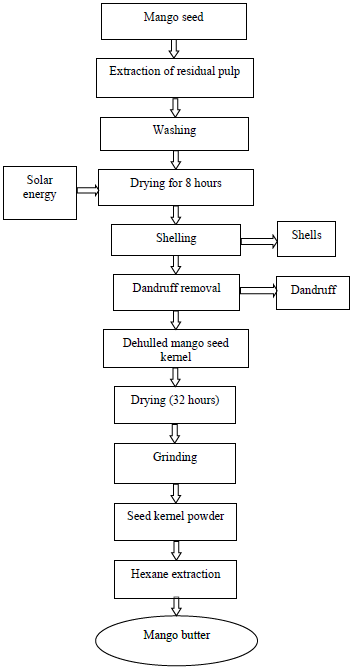
The biological material consisted of Lippens and Brooks mango seed kernels. These two varieties were selected based on the availability of their undervalued by-products in Burkina Faso and their fat content compared to other processed varieties 17. The nutritional composition of the kernels is presented in Table 1. The mango seeds were collected at the Linda mango drying facility in Bobo-Dioulasso. They were washed to remove any residual pulp and then dried in the sun for eight hours to facilitate shelling. After shelling, the mango seed kernels were dried in the sun on plastic bags for 32 hours before being crushed with a stainless-steel mortar. The resulting powder was used for butter extraction via the Soxhlet method with hexane as the solvent. Figure 1 illustrates the process followed for butter extraction.
The acid index was determined using the method described in ISO 660 17. 5 g of butter were dissolved in 50 mL of hot ethanol (55 °C). After complete dissolution, the mixture was titrated with a 0.1 N potassium hydroxide (KOH) solution containing a few drops of phenolphthalein. A blank was prepared under the same conditions. The acid value, expressed in milligrams of potassium hydroxide (KOH) per gram of butter, is calculated using the following formula:
 | (1) |
Ia: acid index;
N: normality of KOH;
Ve: volume of KOH added to the sample (mL);
Vo: volume of KOH added to the control (mL);
Me: weight of butter in g;
56.1: molar mass of KOH.
3.2. Determination of the Peroxide IndexThe peroxide value was determined using the AOCS CD 8 53 19 method. This procedure involves weighing 2 g of butter in an Erlenmeyer flask and then adding 8 mL of chloroform. Next, 12 mL of acetic acid and 1 mL of saturated potassium iodide are added. The mixture was shaken, sealed, and placed in the dark for five minutes. Then, 80 ml of distilled water is added to stop the reaction. While stirring, the mixture is titrated in the presence of starch paste; the iodine is released by sodium thiosulfate (Na₂S₂O₃, 0.01 N). The solution turns from blue to yellow. The peroxide index is expressed in milli equivalents of active oxygen (O₂) per kilogram (kg) using the following formula:
 | (2) |
Ip = Peroxide index;
V= volume of Na₂S₂O₃ added to the sample;
V₀= volume of Na₂S₂O₃ added to the blank;
Me: weight of butter in g;
N=normality of Na₂S₂O₃.
3.3. Determination of the Saponification IndexThe saponification index was determined using the method described in ISO 3657 20. The procedure consisted of weighing 1.5 g of butter in an Erlenmeyer flask, adding 10 mL of KOH (1 N), and heating the mixture with magnetic stirring for 1 hour. After cooling, three drops of phenolphthalein were added to the mixture, which was then titrated with HCl (1 N) until persistent discoloration occurred for a few seconds. According to the following formula, the saponification index is expressed in mg KOH/g of butter:
 | (3) |
Is = saponification index;
PM(KOH)= 56.1g;
Vo= volume poured by the blank;
Ve= volume poured for the sample;
Me: weight of butter in g;
N= KOH concentration (1N).
3.4. Determination of the Iodine IndexThe dosage method used was the WIJS method described in ISO 3961 21. The procedure consisted of weighing 0.2 g of butter in an Erlenmeyer flask, adding 10 ml of chloroform, and 25 ml of Wijs reagent. The mixture was stirred and covered with aluminum foil, then placed in the dark for 1 hour and 30 minutes, stirring occasionally. 15 ml of 10% potassium iodide (KI) was added and stirred. The solution was titrated with 0.1 N sodium thiosulfate (Na₂S₂O₃) until a pale-yellow color was obtained. A few drops of starch solution were then added, and the titration was continued until the blue color produced by the starch indicator disappeared. A blank was prepared and titrated under the same conditions. The iodine value is expressed in g I₂/100 g according to the following formula:
 | (4) |
Ii: iodine index;
Vo: burette volume for the blank;
Ve: burette volume for the sample;
N: normality of Na₂S₂O₃;
Me: weight of butter in g.
3.5. Determination of the Refractive IndexWe used the method described in ISO 6320 22 to determine the refractive index with a handheld refractometer at 40°C. The butter was melted in a water bath at the same temperature. Then, three drops of the melted butter were placed on the calibrated prism of the refractometer. The refractive index was read directly from the refractometer.
3.6. Determination of the Melting PointThe procedure was carried out according to the method outlined in ISO 6321 23. Mango butter was dispensed into three 1-mm-diameter capillary tubes and frozen at -18°C for 16 hours. After freezing, the tubes were placed in a beaker containing distilled water at 0°C and equipped with a thermometer. The water temperature was gradually increased. Stirring the water ensured a uniform temperature in the beaker. The melting temperature is the temperature at which, after complete melting, the oil rises by capillary action in the tubes.
3.7. Determination of fatty Acid ProfileThe fatty acid content was determined using the method described by Bationo et al. 24. This technique involves converting the fatty acids into esters, either fatty acid esters or methyl esters, and then analyzing them via a Hewlett-Packard 6890 gas chromatography-mass spectrometry (GC-MS). First, fatty acid extraction involves solubilizing the triglycerides in butter using an organic solvent. Then, methyl transesterification is performed by adding an alcohol to the released fatty acids to form fatty acid methyl esters, facilitating their separation. This derivatization process increases the volatility of the fatty acids, ensuring the stability required for GC analysis. Extraction and methylation of the fatty acids will be carried out directly on the extracted butter. The esterification steps can be summarized as follows: In a 5-mL glass tube, melt 15 mg of butter, then add 1 mL of hydrochloric acid. The mixture was vortexed for one minute and then incubated at 70°C for 45 minutes. Then, 250µL of distilled water and 2 mL of heptane were successively added. The mixture was shaken, and the resulting supernatant was collected in a vial for gas chromatography-mass spectrometry (GC-MS) analysis. The injection volume was 1µL and the chromatograph was equipped with a flame ionization detector with a DB Wax (PEG) type capillary column (internal diameter 0.25 mm; film thickness 0.25 µm). Compound identification was performed by comparing the retention indices, which were determined relative to the retention times of a series of n-alkanes (C7–C40), with the indices in the Wiley 275.1 database. The mass spectra were also compared with those of the compounds in the National Institute of Standards and Technology (NIST) database.
All analyses were performed in triplicate. The mean values, standard deviations, and analysis of variance (ANOVA) were calculated using R software, version 4.4.1.(2024) Tukey's test was applied at a 5% significance level.
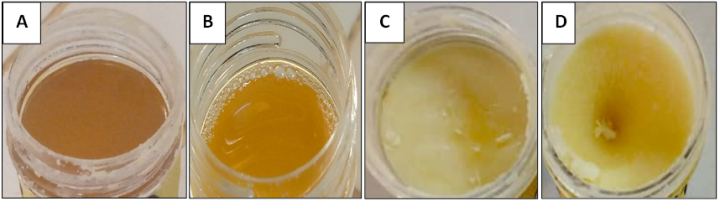
Figure 2 shows the fat extracted from mango seed kernels in liquid and solid (butter) forms. Table 2 presents the chemical analysis values of the butters extracted from two mango varieties: Lippens and Brooks. Statistical analysis revealed no significant differences between the two butters except for saponification value (p = 0.000168) and iodine value (p = 0.000074).
The acid value was 1.40 mg KOH/g and 1.73 mg KOH/g for BML and BMB, respectively. This value indicates the amount of potassium hydroxide, in milligrams, needed to neutralize the free fatty acids in 1 g of butter. It is an important parameter for assessing butter quality 25. The results obtained for the acid value are consistent with those reported by Fahimdanesh and Bahrami and Mustafa et al. 26, 27: 1.50 and 1.59 mg KOH/g, respectively. However, Kittiphoom and Sutasinee 28 reported a lower index of 0.10 mg KOH/g. In contrast, Sahar and Yadav et al. 29, 30 reported higher values of 2.13 and 4.77 mg KOH/g, respectively, than those obtained in the present study. These variations can be explained by differences in kernels processing and storage. According to the Codex Alimentarius 31, butter must have an acidity level of 4.0 mg KOH/g or less. The values obtained comply with this standard. These low acid values indicate that the various butters contain fewer free fatty acids. These values also demonstrate that the butters could be stored for a long time under proper temperature conditions, thus indicating low triglyceride hydrolysis.
Both butters had a peroxide value of 0.49 meq O₂/kg. This value is also used as an indicator of butter quality. It measures the amount of peroxides formed when unsaturated fatty acids oxidize 25. Thus, it allows for the assessment of the degree of primary oxidation in butter. The obtained peroxide value is lower than the values reported by Mustafa et al., Saddique et al., and Sahar: 1.93, 6.72, and 1.73 meq/kg, respectively 27, 29, 32. According to the Codex Alimentarius 33, the peroxide value of butter must be less than or equal to 10 meq of active O₂/kg of butter. The obtained value is below this standard, indicating that the butters are a high-quality product. The peroxide value indicates the degree of fat oxidation. Therefore, it is a measure of spoilage; the higher the value, the more oxidized the fat. Processing the almonds and storing the butter away from light resulted in a high-quality product.
The iodine value was 73.04 g I₂/100 g for BML and 46.62 g I₂/100 g for BMB. This value determines the degree of unsaturation in fats. It corresponds to the amount of iodine bound by the double bonds in the fatty acids present in the butter 25. The iodine value results show that butter extracted from Brooks mango seed kernels contains fewer unsaturated fatty acids than butter extracted from Lippens mango seed kernels. Consequently, butter from Brooks mango seed kernels will be less prone to auto-oxidation than butter from Lippens mango seed kernels 34. These results are lower than those reported by Yadav 30, who found an iodine value of 123.83 g I₂/100 g of butter. Sahar 29 reported a value close (46 g I₂/100 g) to that found in BMB. The index obtained with BML is higher than the indices reported by Fahimdanesh and Bahrami 26 and Kittiphoom and Sutasinee 28, who reported indices of 55.15 g I₂/100 g and 38.50 g I₂/100 g, respectively. This variation could be explained by varietal differences.
The saponification values were 192.17 mg KOH/g and 203.71 mg KOH/g for the butter extracted from the Lippens (BML) and Brooks (BMB) mango varieties, respectively. This value represents the amount of potassium hydroxide (in milligrams) required to saponify one gram of fat. It provides an estimate of the average length of the fatty acids. A high value indicates a significant proportion of short-chain fatty acids 35. Butter extracted from the Brooks variety contains more saponifiable lipids than butter extracted from the Lippens variety. According to the Codex Alimentarius 33 standard for crude vegetable oils, the saponification index must be between 190 and 209 mg KOH/g. The obtained values fall within this range. The value obtained with the BML sample corroborates the value reported by Sahar 29 of 192 mg KOH/g of butter. These indices are lower than those reported by Kittiphoom and Sutasinee 28 but higher than those reported by Saddique et al. 32 and Yadav et al. 30 (188.13 and 162.69 mg KOH/g butter, respectively).
The refractive index was 1.45 for BML and 1.46 for BMB. The refractive index is used to evaluate the purity of a fat and to monitor changes to its structure, such as hydrogenation or isomerization. It is defined as the ratio of the speed of light in a vacuum to its speed in the fat at a given wavelength. The refractive index depends on the wavelength, temperature, and the composition of the fat, particularly the degree and type of unsaturation of the fatty acids and associated substances 25. The obtained refractive indices are consistent with those reported by Fahimdanesh and Bahrami, Saddique et al. (2014), and Yadav et al. 26, 30, 32: 1.44, 1.45, and 1.47, respectively. However, these values are slightly lower than those reported by Sahar 29, who reported the value of 1.58.
The melting points were 31.35°C for BML and 31.60°C for BMB. This is the temperature at which a substance changes from a solid to a liquid 36. The melting points of the two butters are slightly higher than the 30°C melting point reported by Fahimdanesh and Bahrami 26 and Sahar 29. However, they are lower than the values reported by Klinkajorn and Sukhasem 37, which ranged from 36.5 to 37.5°C. These results suggest that the butter may melt during periods of high temperatures in Burkina Faso, particularly from March to June.

The fatty acid profile of butter describes the types and proportions of fatty acids it contains, which determine its stability and nutritional value 25. A high content of unsaturated fatty acids is generally recommended for a healthy diet. However, this makes fats more susceptible to auto-oxidation. The fatty acid profiles of the butters are shown in Table 3. The profiles indicate that he butters primarily consist of stearic and oleic acids. BML had a stearic acid content of 32.32%, while BMB had a content of 39.56%. Oleic acid content was 39.93% and 27.49% for BML and BMB, respectively. These findings corroborate those of Mustafa et al. and Sahar 27, 29, who demonstrated that mango butter primarily consists of stearic and oleic acids. However, the oleic acid content reported by these authors is significantly higher than the values obtained here. They obtained values of 41.76% and 44.89%, respectively. Similarly, Klinkajorn and Sukhasem 37 reported higher levels (41.1–52.4%) than the present study. In contrast, the level reported by Aliyua et al. 16 (35.71%) is lower than that found in BML. The stearic acid content in BML is lower than that reported by Mustafa et al. and Sahar 27, 29, who found contents of 35.56% and 36.57%, respectively. Kouame et al. 38 found a lower oleic acid content compared to that of BMB. However, their stearic acid content is consistent with that of BMB, at 23.10% and 38.6%, respectively. Varietal and climatic differences can influence the fatty acid profile of butters 14. BMB has a higher stearic acid content than BML. However, stearic acid has little adverse effect on health. It can be converted into oleic acid in the body, which is essential for cardiovascular health because it regulates LDL cholesterol levels 39. A High stearic acid content serves as a thickener in chocolate and margarine formulations 40. The obtained fatty acid profiles show that butter extracted from Lippens seed kernels is richer than butter extracted from Brooks seed kernels. The level of unsaturated fatty acids is indeed higher in BML than in BMB, at 62.23% and 41.50%, respectively. Previous studies have shown that a high level of unsaturated fatty acids gives butter desirable properties for human consumption. These properties include balancing LDL by reducing, maintaining or increasing HDL cholesterol, and reducing cardiovascular risk 15, 41, 42. Like shea butter, mango butter can be used in cosmetic formulations 16, 43. Oleic acid, mango butter component, has emollient, active, and protective properties 44. Stearic acid contributes to stabilization and thickening 45, 46.
The results show that BML contains lauric and linolenic acids, whereas BMB contains neither. BMB has higher concentrations of myristic, myristoleic, palmitic, margaric, and arachidonic acids than BML. Both BML and BMB contain linoleic acid. Lenucci et al. 11 identified linoleic and linolenic acids in the kernel fat of Tommy Atkins and Keitt mango. Furthermore, linoleic and linolenic acids play an important role in the prevention of cardiovascular diseases and certain types of cancer 11, 47, 48, 49. These essential polyunsaturated fatty acids are known as omega-6 and omega-3, respectively. The human body cannot synthesize them. They are also crucial for retinal and nervous system function 50. Linoleic acid is essential for maintaining healthy skin and cell membranes.
A biochemical analysis of the butters extracted from the Lippens and Brooks varieties shows that they are of good quality. They meet Codex Alimentarius standards, with low acidity and a low peroxide value. The fatty acid profile of the butters indicates that they primarily consist of oleic and stearic acids. Unlike BMB, BML has a higher percentage of unsaturated fatty acids than saturated fatty acids. Similarly, the levels of omega-6 and omega-3 fatty acids, such as linoleic and linolenic acids, were similar in BML, which had a significant amount of linoleic acid. However, only linoleic acid was detected in BMB, and it was present at a low level. These characteristics suggest that butter extracted from Lippens mangoes may be suitable for human consumption. Further studies should measure the levels of vitamins, phytosterols, tocopherols, and antioxidant capacity. Conversely, BMB would be better suited for cosmetic formulations due to its high saturated fat content.
The authors gratefully acknowledge the financial support provided by the World Bank through the Higher Education Support Program (PAES) [grant numbers P164293].
The authors have no relevant financial or non-financial interests to disclose.
BML: Butter made from Lippens mangoes
BMB: Butter made from Brooks mangoes
| [1] | Anthony B., Hermenegildo W. and Charline L. Analyse de cycle de vie de la valorisation des co-produits de transformation de la mangue à la Réunion. CIRAD Agritrop. https:// agritrop.cirad.fr/ 603980/1/2022-12%20Mangoval%20-%20Livrable%20ACV.pdf (2022). Accessed 4 February 2025. | ||
| In article | |||
| [2] | Rai, A.K., Das, H., Dash, S.R. and Behera, S. Mango seed: a potential source of nutrition from waste. Indian Farmer, 3(7). 244248, 2020. | ||
| In article | |||
| [3] | Chaib, E.A.R., Litim, M., Larbaoui, A., Belhocine, C. and Bouderoua, K. The impacts of vegetables and fruits by products on growth and health of broiler chickens. Agricultural Reviews, 44(4). 493, December 2023. | ||
| In article | |||
| [4] | Samandoulougou, R. Quantification et caractérisation des déchets de mangue au Burkina Faso. European Scientific Journal, 32. 539539, August 2024. | ||
| In article | View Article | ||
| [5] | Kante Traore, H., Ilboudo, A., Semde, Z., Lodoun, A., Sanou, M., Samadoulougou, P.M.J., Ky L., Guira, M., Lingani, H.S. and Dicko, H.M. Physico-chemical and nutritional characteristics of five varieties and one accession of mango from Burkina Faso. Food Science & Nutrition., 15(12). 12991316. 2024. | ||
| In article | View Article | ||
| [6] | Mas’ud, F., Rifai, A. and Sayuti, M. Mango seed kernel flour (Mangifera indica): nutrient composition and potential as food. Malaysian Journal of Nutrition 26(1). 101106. April 2020. | ||
| In article | View Article | ||
| [7] | Bamba, R., Toure, N., Kone, F.M.T. and Toure, A. Caractéristiques biochimiques de quelques sous-produits agricoles de Côte d’Ivoire en vue d’une valorisation en alimentation de volaille. Journal of Animal & Plant Sciences. 58(2). 1070110712. 2023. | ||
| In article | |||
| [8] | Diomande, M., Konan, K.H., Monnet, Y.T., Kanga, K.A., Fagbohoun, J.B., Gbotognon, J.O., Kouadio, E.J.P. and Kouamé, L.P. Bioactives and antimicobial potential of processing by products of four mango varieties (Mangifera indica varieties Amelie, Kent, Keitt and Brooks) from the Poro Region (Ivory Coast). International Journal of Biochemistry Research & Review, 30(5). 1928. 2021. | ||
| In article | View Article | ||
| [9] | Albaayit, S.F.A., Kalis, A., Ali, M.A., Hasddin, Shah, S.S. and Aslam, H.K.W. Mango waste (peel and kernel) enhances food dietary fiber and antioxidant properties. Journal of Global Innovations in Agricultural Sciences, 12(4). 10431049. November 2024. | ||
| In article | View Article | ||
| [10] | Mayo-Mayo, G., Navarrete-García, A., Maldonado-Astudillo, Y.I., Jiménez-Hernández, J., Santiago-Ramos, D., Arámbula-Villa, G., Álvarez-Fitz, P., Ramirez, M. and Salazar, R. Addition of roselle and mango peel powder in tortilla chips: a strategy for increasing their functionality. Journal of Food Measurement and Characterization, 14(3). 15111519. June 2020. | ||
| In article | View Article | ||
| [11] | Lenucci, M.S., Tornese, R., Mita, G. and Durante, R. Bioactive compounds and antioxidant activities in different fractions of mango fruits (Mangifera indica L., Cultivar Tommy Atkins and Keitt). Antioxidants, 11(3). Art. no 3. March 2022. | ||
| In article | View Article PubMed | ||
| [12] | Bamogo, W.M., Kabré, W.J.A., Tankoano, A., Traoré, M.A.E., Banhoro, O., Parkouda, C. and Savadogo, A. Valorization of mango by-products: fortification of mugudugu using mango peel and kernels. Food Nutrition Health 2(31). November (2025). | ||
| In article | View Article | ||
| [13] | Hussain, A., Rehman, A., Kauser, S., Ali, A., Arif, M. R., Fatima, H., Firdous, N., Najam, A., Yaqub, S., Nisar, R., Cacciotti, I. and Korma, S.A. Evaluation of peel, flesh, and kernel of mango (Mangifera indica L.) for phytochemicals and application as functional ingredients in bakery formulation. Nutrire 49(2). 45. September 2024. | ||
| In article | View Article | ||
| [14] | Kouassi, A.K., Alabi, T., Purcaro, G., Blecker, C. and Danthine, S. Assessment of the impact of annual growing conditions on the physicochemical properties of mango kernel fat. Horticulturae 10(8). 814. August 2024. | ||
| In article | View Article | ||
| [15] | Khan, I.T., Nadeem, M., Imran, M., Ajmal, M. and Ali, S. Antioxidant activity, fatty acids characterization and oxidative stability of Gouda cheese fortified with mango (Mangifera indica L.) kernel fat. Journal of Food Science and Technology 55(3). 9921002. March 2018. | ||
| In article | View Article PubMed | ||
| [16] | Aliyua, A.J., Ibrahimb, S.O., Abdulmumeena, K. and Atolania, O. Characterization, chemical composition and cream formulation from the seed butter of Mangifera indica L. Chemist 95. 7077. 2024. | ||
| In article | |||
| [17] | Bamogo, W.M., Tankoano, A., Guissou, W.D.B.A., Traoré, M.A.E., Kanté-Traoré, H., Parkouda, C., and Savadogo, A. Nutritional composition and bioactive compound of mango kernels and peels: Valorization of by-products. Food and Humanity 6. 100971. March 2026. | ||
| In article | View Article | ||
| [18] | ISO 660. Corps gras d’origines animale et végétale — Détermination de l’indice d’acide et de l’acidité. ISO. https://cdn.standards.iteh.ai/samples/75594/04e163632b9040c6a46065597bbd492c/ISO-660-2020.pdf (2020). Accessed 29 April 2024 | ||
| In article | |||
| [19] | AOCS CD 8 53. Peroxide value: acetic acid-chloroform method. https://www.scribd.com/document/399089150/334498064-AOCS-Cd-8-53-Peroxido-Con-Cl-pdf (1989). Accessed 29 April 2025 | ||
| In article | |||
| [20] | ISO 3657. Corps gras d’origines animale et végétale — Détermination de l’indice de saponification. ISO. https://cdn.standards.iteh.ai/samples/78380/82314f13cf6640d38e5a8335f558b1ec/ISO-3657-2020.pdf (2020). Accessed 29 April 2024 | ||
| In article | |||
| [21] | ISO 3961. Corps gras d’origines animale et végétale — Détermination de l’indice d’iode. ISO. https:// cdn.standards.iteh.ai/samples/71868/dd5b32d621784c1f885f094eca86d86a/ISO-3961-2018.pdf (2018). Accessed 29 April 2025. | ||
| In article | |||
| [22] | ISO 6320. Corps gras d’origines animale et végétale — Détermination de l’indice de réfraction. ISO. https://cdn.standards.iteh.ai/samples/71267/cbe8ebab59484a1a9cc325f01a6cecc5/ISO-6320-2017.pdf (2017). Accessed 29 April 2024. | ||
| In article | |||
| [23] | ISO 6321. Corps gras d’origines animale et végétale — Détermination du point de fusion en tube capillaire ouvert — Point de glissement. ISO. https:/ /cdn.standards.iteh.ai/ samples/81472/eb0b4cf3a9ba45dcb7b2c2f503011c26/ISO-6321-2021.pdf (2021). Accessed 29 April 2024. | ||
| In article | |||
| [24] | Bationo, R.K., Bazie, B., Noba, A., Dabire, C. M., Abdoulaye, Y., Toe, M., Sawadogo, I., Pale, E. and Nebie, R.H.C. Chemical fingerprints and antioxidant properties of two cyperus species in Burkina Faso. Chemistry of Natural Compounds 61(5). 873880. September 2025. | ||
| In article | View Article | ||
| [25] | Popoola, C.A. and Joshua, D. Characterization of oils from sandbox, melon and watermelon seeds. International Journal of Research and Scientific Innovation XI(V). 717734. 2024. | ||
| In article | View Article | ||
| [26] | Fahimdanesh, M. and Bahrami, M.E. Evaluation of physicochemical properties of Iranian mango seed kernel oil, in 2nd International Proceedings of Chemical, Biological and Environmental Engineering, 4449. | ||
| In article | |||
| [27] | Mustafa, M.A.-M., Sorour, M.A.-H., Mehanni, A.-H.E. and Hussien, S.M. Amino acid profile, physico-chemical properties and fatty acids composition of some fruit seed kernels after detoxification. Chemical and Biological Technologies in Agriculture 10(37).111. May 2023. | ||
| In article | View Article | ||
| [28] | Kittiphoom, S. and Sutasinee, S. Mango seed kernel oil and its physicochemical properties. International Food Research Journal. 20(3). 11451149. 2013. | ||
| In article | |||
| [29] | Sahar, A.A. Physico chemical characteristics of mango kernel oil and meal. Middle East Journal of Applied Sciences 8(1). 16. 2018. | ||
| In article | View Article | ||
| [30] | Yadav, K.K., Garg, N., Verma, A., Kumar, S. and Trivedi, M. Optimization and extraction of oil from mango seed kernel (Mangifera indica). The Indian Journal of Agricultural Sciences. 87(7). 9194. July 2017. | ||
| In article | View Article | ||
| [31] | Codex Alimentarius Commission. Standard for Edible Fats and Oils Not Covered by Individual Standards (CXS 19-1981). FAO/WHO. https://www.fao.org/fao-who-codexalimentarius/sh-proxy/en/?lnk=1&url=https%253A%252F%252Fworkspace.fao.org%252Fsites%252Fcodex%252FStandards%252FCXS%2B19-1981%252FCXS_019e.pdf&utm (2024). Accessed 1 September 2025. | ||
| In article | |||
| [32] | Saddique, M.S., Sultan, M.T., Akhtar, S., Riaz, M., Sibt-e-Abass, M., Ismail, A. and Hafeez, F. Utilization of mango kernel lipid fraction to replace normal shortenings in cereal baked products. Food Science and Technology Research. 20(1). 1321. 2014. | ||
| In article | View Article | ||
| [33] | Codex Alimentarius Commission. Standard for Named Vegetable Oils (CXS 210-1999. FAO/WHO. https://www.fao.org/fao-who-codexalimentarius/sh-proxy/ tr/? lnk=1&url=https% 253A% 252F% 252Fworkspace.fao.org%252Fsites%252Fcodex%252FStandards%252FCXS% 2B210-1999 % 252FCXS_210e. pdf&utm (2024). Accessed 2 September 2025 | ||
| In article | |||
| [34] | Eze, S.O., Orji, J.N., Okechukwu, V.U., Omokpariola, D.O., Umeh, T.C. and Oze, N.R. Effect of processing method on carotenoid profiles of oils from three varieties of Nigerian palm oil (Elaise guinensis). Journal of Biophysical Chemistry 12(3). 2331. 2021. | ||
| In article | View Article | ||
| [35] | Ivanova, M., Hanganu, A., Dumitriu, R., Tociu, M., Ivanov, G., Stavarache, C., Popescu, L., Ghendov-Mosanu, A., Sturza, R., Deleanu, C. and Chira, N.-A. Saponification value of fats and oils as determined from 1H-NMR Data: the case of dairy fats. Foods 11(10). 1466. May 2022. | ||
| In article | View Article PubMed | ||
| [36] | Devi, A. and Khatkar, B. S. Physicochemical, rheological and functional properties of fats and oils in relation to cookie quality: a review. Journal of Food Science and Technology 53(10). 36333641. October 2016. | ||
| In article | View Article PubMed | ||
| [37] | Klinkajorn, S. and Sukhasem, S. Production of mango seed butter for cosmetic use. Acta Horticulturae 1312. 599605. May 2021. | ||
| In article | View Article | ||
| [38] | Kouame, F.O., Guclu, G., Sevindik, O., Małgorzata, S., Hasim, K. and Serkan, S. Comparative elucidation of aroma, key odorants, and fatty acid profiles of Ivorian shea butter prepared by three different extraction methods. Separations 9(9). 245. September 2022. | ||
| In article | View Article | ||
| [39] | Garti, H., Agbemafle, R. and Mahunu, G.K. Physicochemical properties and fatty acid composition of shea butter from tamale, Northern Ghana. UDS International Journal of Development, 6(3). 2019. | ||
| In article | |||
| [40] | Rudra, S.G., Gundewadi, G., Kaur, C. and Singh, G. Exploring varietal differences in nutritional and antioxidant potential of mango kernel and its use for enrichment of pasta. Fruits 74(5). 227235. 2019. | ||
| In article | View Article | ||
| [41] | Shen, X., Miao, S., Zhang, Y., Guo, X., Li W., Mao, X. and Zhang, Q. Stearic acid metabolism in human health and disease. Clinical Nutrition 44. 222238. January 2025. | ||
| In article | View Article PubMed | ||
| [42] | Zou, X. and Liu, H. Cardiovascular, metabolic and endocrine, cancer, mortality, derma, and other outcomes of olive oil and oleic acid: an umbrella review. Food Science & Nutrition e71115. October 2025. | ||
| In article | View Article PubMed | ||
| [43] | Asher, A.S., Angara, A.A and Salaudeen, A.O. Investigation of the in vitro effects of shea butter on skin barrier function and hydration using analytical chemistry methodologies. Ptolemy Journal of Chemistry 5(1). 17. 2025. | ||
| In article | |||
| [44] | Hutova, K., Andonova, V., Panova, N., Ivanov, I., Nikolova, K. and Gugleva, V. Design and characterization of cosmetic creams based on natural oils from the rosaceae family. Cosmetics 12(6). 248. December 2025. | ||
| In article | View Article | ||
| [45] | Chow, P.S., Lim, R.T.Y., Cyriac, F., Shah, J.C., Badruddoza, A.Z.M., Yeoh, T., Yagnik, C.K., Tee, X.Y., Wong, A.B.H., Chia, V.D. and Wang, G. The effect of process parameters on the microstructure, stability, and sensorial properties of an emulsion cream formulation. Pharmaceutics 16(6). 773. June (2024). | ||
| In article | View Article PubMed | ||
| [46] | Tiwari, D.B.D., Miss Sakhre, A.A, Tapase, S., Swami, P., Udgiri, D. and Upadhye, Y. Turning waste into wellness: formulating antioxidant cream from potato peel extract. International Journal of Creative Research Thoughts 13(5). l712l722. 2025. | ||
| In article | |||
| [47] | Bhat, S., Sarkar, S., Zaffar, D., Dandona, P. and Kalyani, R.R. Omega-3 fatty acids in cardiovascular disease and diabetes: a review of recent evidence. Current Cardiology Reports 25(2). 5165. February 2023. | ||
| In article | View Article PubMed | ||
| [48] | Dinu, M. Sofi, F., Lotti, S., Colombini, B., Mattioli, A.V., Catapano, A.L., Casula, M., Baragetti, A., Wong, N.D., Steg, P.G. and Ambrosio, G. Effects of omega-3 fatty acids on coronary revascularization and cardiovascular events: a meta-analysis. European Journal of Preventive Cardiology 31(15). 18631875. November 2024. | ||
| In article | View Article PubMed | ||
| [49] | Dong, S., Wang, Y., Bian, J., Chen, H., Dong, J., Zhu, J., Zhang, T., Du, Q. and Zhao, R. The effect of omega-3 Polyunsaturated Fatty Acid (PUFA) prescription preparations on the prevention of clinical cardiovascular disease: a meta-analysis of RCTs. Nutrition Journal 23(1). 157. December 2024. | ||
| In article | View Article PubMed | ||
| [50] | Anses. Alimentation et nutrition humaine - Les acides gras oméga 3. https://www.anses.fr/fr/content/les-acides-gras-omega-3?utm (2025). Accessed 18 November 2025. | ||
| In article | |||
Published with license by Science and Education Publishing, Copyright © 2026 Wendkouni Marguerite Bamogo, Hyacinthe Kanté-Traoré, Henri Sidabéwindin Ouédraogo, Issouf Zida, Remy K. Bationo, Abel Tankoano, Charles Parkouda and Aly Savadogo
 This work is licensed under a Creative Commons Attribution 4.0 International License. To view a copy of this license, visit
http://creativecommons.org/licenses/by/4.0/
This work is licensed under a Creative Commons Attribution 4.0 International License. To view a copy of this license, visit
http://creativecommons.org/licenses/by/4.0/
| [1] | Anthony B., Hermenegildo W. and Charline L. Analyse de cycle de vie de la valorisation des co-produits de transformation de la mangue à la Réunion. CIRAD Agritrop. https:// agritrop.cirad.fr/ 603980/1/2022-12%20Mangoval%20-%20Livrable%20ACV.pdf (2022). Accessed 4 February 2025. | ||
| In article | |||
| [2] | Rai, A.K., Das, H., Dash, S.R. and Behera, S. Mango seed: a potential source of nutrition from waste. Indian Farmer, 3(7). 244248, 2020. | ||
| In article | |||
| [3] | Chaib, E.A.R., Litim, M., Larbaoui, A., Belhocine, C. and Bouderoua, K. The impacts of vegetables and fruits by products on growth and health of broiler chickens. Agricultural Reviews, 44(4). 493, December 2023. | ||
| In article | |||
| [4] | Samandoulougou, R. Quantification et caractérisation des déchets de mangue au Burkina Faso. European Scientific Journal, 32. 539539, August 2024. | ||
| In article | View Article | ||
| [5] | Kante Traore, H., Ilboudo, A., Semde, Z., Lodoun, A., Sanou, M., Samadoulougou, P.M.J., Ky L., Guira, M., Lingani, H.S. and Dicko, H.M. Physico-chemical and nutritional characteristics of five varieties and one accession of mango from Burkina Faso. Food Science & Nutrition., 15(12). 12991316. 2024. | ||
| In article | View Article | ||
| [6] | Mas’ud, F., Rifai, A. and Sayuti, M. Mango seed kernel flour (Mangifera indica): nutrient composition and potential as food. Malaysian Journal of Nutrition 26(1). 101106. April 2020. | ||
| In article | View Article | ||
| [7] | Bamba, R., Toure, N., Kone, F.M.T. and Toure, A. Caractéristiques biochimiques de quelques sous-produits agricoles de Côte d’Ivoire en vue d’une valorisation en alimentation de volaille. Journal of Animal & Plant Sciences. 58(2). 1070110712. 2023. | ||
| In article | |||
| [8] | Diomande, M., Konan, K.H., Monnet, Y.T., Kanga, K.A., Fagbohoun, J.B., Gbotognon, J.O., Kouadio, E.J.P. and Kouamé, L.P. Bioactives and antimicobial potential of processing by products of four mango varieties (Mangifera indica varieties Amelie, Kent, Keitt and Brooks) from the Poro Region (Ivory Coast). International Journal of Biochemistry Research & Review, 30(5). 1928. 2021. | ||
| In article | View Article | ||
| [9] | Albaayit, S.F.A., Kalis, A., Ali, M.A., Hasddin, Shah, S.S. and Aslam, H.K.W. Mango waste (peel and kernel) enhances food dietary fiber and antioxidant properties. Journal of Global Innovations in Agricultural Sciences, 12(4). 10431049. November 2024. | ||
| In article | View Article | ||
| [10] | Mayo-Mayo, G., Navarrete-García, A., Maldonado-Astudillo, Y.I., Jiménez-Hernández, J., Santiago-Ramos, D., Arámbula-Villa, G., Álvarez-Fitz, P., Ramirez, M. and Salazar, R. Addition of roselle and mango peel powder in tortilla chips: a strategy for increasing their functionality. Journal of Food Measurement and Characterization, 14(3). 15111519. June 2020. | ||
| In article | View Article | ||
| [11] | Lenucci, M.S., Tornese, R., Mita, G. and Durante, R. Bioactive compounds and antioxidant activities in different fractions of mango fruits (Mangifera indica L., Cultivar Tommy Atkins and Keitt). Antioxidants, 11(3). Art. no 3. March 2022. | ||
| In article | View Article PubMed | ||
| [12] | Bamogo, W.M., Kabré, W.J.A., Tankoano, A., Traoré, M.A.E., Banhoro, O., Parkouda, C. and Savadogo, A. Valorization of mango by-products: fortification of mugudugu using mango peel and kernels. Food Nutrition Health 2(31). November (2025). | ||
| In article | View Article | ||
| [13] | Hussain, A., Rehman, A., Kauser, S., Ali, A., Arif, M. R., Fatima, H., Firdous, N., Najam, A., Yaqub, S., Nisar, R., Cacciotti, I. and Korma, S.A. Evaluation of peel, flesh, and kernel of mango (Mangifera indica L.) for phytochemicals and application as functional ingredients in bakery formulation. Nutrire 49(2). 45. September 2024. | ||
| In article | View Article | ||
| [14] | Kouassi, A.K., Alabi, T., Purcaro, G., Blecker, C. and Danthine, S. Assessment of the impact of annual growing conditions on the physicochemical properties of mango kernel fat. Horticulturae 10(8). 814. August 2024. | ||
| In article | View Article | ||
| [15] | Khan, I.T., Nadeem, M., Imran, M., Ajmal, M. and Ali, S. Antioxidant activity, fatty acids characterization and oxidative stability of Gouda cheese fortified with mango (Mangifera indica L.) kernel fat. Journal of Food Science and Technology 55(3). 9921002. March 2018. | ||
| In article | View Article PubMed | ||
| [16] | Aliyua, A.J., Ibrahimb, S.O., Abdulmumeena, K. and Atolania, O. Characterization, chemical composition and cream formulation from the seed butter of Mangifera indica L. Chemist 95. 7077. 2024. | ||
| In article | |||
| [17] | Bamogo, W.M., Tankoano, A., Guissou, W.D.B.A., Traoré, M.A.E., Kanté-Traoré, H., Parkouda, C., and Savadogo, A. Nutritional composition and bioactive compound of mango kernels and peels: Valorization of by-products. Food and Humanity 6. 100971. March 2026. | ||
| In article | View Article | ||
| [18] | ISO 660. Corps gras d’origines animale et végétale — Détermination de l’indice d’acide et de l’acidité. ISO. https://cdn.standards.iteh.ai/samples/75594/04e163632b9040c6a46065597bbd492c/ISO-660-2020.pdf (2020). Accessed 29 April 2024 | ||
| In article | |||
| [19] | AOCS CD 8 53. Peroxide value: acetic acid-chloroform method. https://www.scribd.com/document/399089150/334498064-AOCS-Cd-8-53-Peroxido-Con-Cl-pdf (1989). Accessed 29 April 2025 | ||
| In article | |||
| [20] | ISO 3657. Corps gras d’origines animale et végétale — Détermination de l’indice de saponification. ISO. https://cdn.standards.iteh.ai/samples/78380/82314f13cf6640d38e5a8335f558b1ec/ISO-3657-2020.pdf (2020). Accessed 29 April 2024 | ||
| In article | |||
| [21] | ISO 3961. Corps gras d’origines animale et végétale — Détermination de l’indice d’iode. ISO. https:// cdn.standards.iteh.ai/samples/71868/dd5b32d621784c1f885f094eca86d86a/ISO-3961-2018.pdf (2018). Accessed 29 April 2025. | ||
| In article | |||
| [22] | ISO 6320. Corps gras d’origines animale et végétale — Détermination de l’indice de réfraction. ISO. https://cdn.standards.iteh.ai/samples/71267/cbe8ebab59484a1a9cc325f01a6cecc5/ISO-6320-2017.pdf (2017). Accessed 29 April 2024. | ||
| In article | |||
| [23] | ISO 6321. Corps gras d’origines animale et végétale — Détermination du point de fusion en tube capillaire ouvert — Point de glissement. ISO. https:/ /cdn.standards.iteh.ai/ samples/81472/eb0b4cf3a9ba45dcb7b2c2f503011c26/ISO-6321-2021.pdf (2021). Accessed 29 April 2024. | ||
| In article | |||
| [24] | Bationo, R.K., Bazie, B., Noba, A., Dabire, C. M., Abdoulaye, Y., Toe, M., Sawadogo, I., Pale, E. and Nebie, R.H.C. Chemical fingerprints and antioxidant properties of two cyperus species in Burkina Faso. Chemistry of Natural Compounds 61(5). 873880. September 2025. | ||
| In article | View Article | ||
| [25] | Popoola, C.A. and Joshua, D. Characterization of oils from sandbox, melon and watermelon seeds. International Journal of Research and Scientific Innovation XI(V). 717734. 2024. | ||
| In article | View Article | ||
| [26] | Fahimdanesh, M. and Bahrami, M.E. Evaluation of physicochemical properties of Iranian mango seed kernel oil, in 2nd International Proceedings of Chemical, Biological and Environmental Engineering, 4449. | ||
| In article | |||
| [27] | Mustafa, M.A.-M., Sorour, M.A.-H., Mehanni, A.-H.E. and Hussien, S.M. Amino acid profile, physico-chemical properties and fatty acids composition of some fruit seed kernels after detoxification. Chemical and Biological Technologies in Agriculture 10(37).111. May 2023. | ||
| In article | View Article | ||
| [28] | Kittiphoom, S. and Sutasinee, S. Mango seed kernel oil and its physicochemical properties. International Food Research Journal. 20(3). 11451149. 2013. | ||
| In article | |||
| [29] | Sahar, A.A. Physico chemical characteristics of mango kernel oil and meal. Middle East Journal of Applied Sciences 8(1). 16. 2018. | ||
| In article | View Article | ||
| [30] | Yadav, K.K., Garg, N., Verma, A., Kumar, S. and Trivedi, M. Optimization and extraction of oil from mango seed kernel (Mangifera indica). The Indian Journal of Agricultural Sciences. 87(7). 9194. July 2017. | ||
| In article | View Article | ||
| [31] | Codex Alimentarius Commission. Standard for Edible Fats and Oils Not Covered by Individual Standards (CXS 19-1981). FAO/WHO. https://www.fao.org/fao-who-codexalimentarius/sh-proxy/en/?lnk=1&url=https%253A%252F%252Fworkspace.fao.org%252Fsites%252Fcodex%252FStandards%252FCXS%2B19-1981%252FCXS_019e.pdf&utm (2024). Accessed 1 September 2025. | ||
| In article | |||
| [32] | Saddique, M.S., Sultan, M.T., Akhtar, S., Riaz, M., Sibt-e-Abass, M., Ismail, A. and Hafeez, F. Utilization of mango kernel lipid fraction to replace normal shortenings in cereal baked products. Food Science and Technology Research. 20(1). 1321. 2014. | ||
| In article | View Article | ||
| [33] | Codex Alimentarius Commission. Standard for Named Vegetable Oils (CXS 210-1999. FAO/WHO. https://www.fao.org/fao-who-codexalimentarius/sh-proxy/ tr/? lnk=1&url=https% 253A% 252F% 252Fworkspace.fao.org%252Fsites%252Fcodex%252FStandards%252FCXS% 2B210-1999 % 252FCXS_210e. pdf&utm (2024). Accessed 2 September 2025 | ||
| In article | |||
| [34] | Eze, S.O., Orji, J.N., Okechukwu, V.U., Omokpariola, D.O., Umeh, T.C. and Oze, N.R. Effect of processing method on carotenoid profiles of oils from three varieties of Nigerian palm oil (Elaise guinensis). Journal of Biophysical Chemistry 12(3). 2331. 2021. | ||
| In article | View Article | ||
| [35] | Ivanova, M., Hanganu, A., Dumitriu, R., Tociu, M., Ivanov, G., Stavarache, C., Popescu, L., Ghendov-Mosanu, A., Sturza, R., Deleanu, C. and Chira, N.-A. Saponification value of fats and oils as determined from 1H-NMR Data: the case of dairy fats. Foods 11(10). 1466. May 2022. | ||
| In article | View Article PubMed | ||
| [36] | Devi, A. and Khatkar, B. S. Physicochemical, rheological and functional properties of fats and oils in relation to cookie quality: a review. Journal of Food Science and Technology 53(10). 36333641. October 2016. | ||
| In article | View Article PubMed | ||
| [37] | Klinkajorn, S. and Sukhasem, S. Production of mango seed butter for cosmetic use. Acta Horticulturae 1312. 599605. May 2021. | ||
| In article | View Article | ||
| [38] | Kouame, F.O., Guclu, G., Sevindik, O., Małgorzata, S., Hasim, K. and Serkan, S. Comparative elucidation of aroma, key odorants, and fatty acid profiles of Ivorian shea butter prepared by three different extraction methods. Separations 9(9). 245. September 2022. | ||
| In article | View Article | ||
| [39] | Garti, H., Agbemafle, R. and Mahunu, G.K. Physicochemical properties and fatty acid composition of shea butter from tamale, Northern Ghana. UDS International Journal of Development, 6(3). 2019. | ||
| In article | |||
| [40] | Rudra, S.G., Gundewadi, G., Kaur, C. and Singh, G. Exploring varietal differences in nutritional and antioxidant potential of mango kernel and its use for enrichment of pasta. Fruits 74(5). 227235. 2019. | ||
| In article | View Article | ||
| [41] | Shen, X., Miao, S., Zhang, Y., Guo, X., Li W., Mao, X. and Zhang, Q. Stearic acid metabolism in human health and disease. Clinical Nutrition 44. 222238. January 2025. | ||
| In article | View Article PubMed | ||
| [42] | Zou, X. and Liu, H. Cardiovascular, metabolic and endocrine, cancer, mortality, derma, and other outcomes of olive oil and oleic acid: an umbrella review. Food Science & Nutrition e71115. October 2025. | ||
| In article | View Article PubMed | ||
| [43] | Asher, A.S., Angara, A.A and Salaudeen, A.O. Investigation of the in vitro effects of shea butter on skin barrier function and hydration using analytical chemistry methodologies. Ptolemy Journal of Chemistry 5(1). 17. 2025. | ||
| In article | |||
| [44] | Hutova, K., Andonova, V., Panova, N., Ivanov, I., Nikolova, K. and Gugleva, V. Design and characterization of cosmetic creams based on natural oils from the rosaceae family. Cosmetics 12(6). 248. December 2025. | ||
| In article | View Article | ||
| [45] | Chow, P.S., Lim, R.T.Y., Cyriac, F., Shah, J.C., Badruddoza, A.Z.M., Yeoh, T., Yagnik, C.K., Tee, X.Y., Wong, A.B.H., Chia, V.D. and Wang, G. The effect of process parameters on the microstructure, stability, and sensorial properties of an emulsion cream formulation. Pharmaceutics 16(6). 773. June (2024). | ||
| In article | View Article PubMed | ||
| [46] | Tiwari, D.B.D., Miss Sakhre, A.A, Tapase, S., Swami, P., Udgiri, D. and Upadhye, Y. Turning waste into wellness: formulating antioxidant cream from potato peel extract. International Journal of Creative Research Thoughts 13(5). l712l722. 2025. | ||
| In article | |||
| [47] | Bhat, S., Sarkar, S., Zaffar, D., Dandona, P. and Kalyani, R.R. Omega-3 fatty acids in cardiovascular disease and diabetes: a review of recent evidence. Current Cardiology Reports 25(2). 5165. February 2023. | ||
| In article | View Article PubMed | ||
| [48] | Dinu, M. Sofi, F., Lotti, S., Colombini, B., Mattioli, A.V., Catapano, A.L., Casula, M., Baragetti, A., Wong, N.D., Steg, P.G. and Ambrosio, G. Effects of omega-3 fatty acids on coronary revascularization and cardiovascular events: a meta-analysis. European Journal of Preventive Cardiology 31(15). 18631875. November 2024. | ||
| In article | View Article PubMed | ||
| [49] | Dong, S., Wang, Y., Bian, J., Chen, H., Dong, J., Zhu, J., Zhang, T., Du, Q. and Zhao, R. The effect of omega-3 Polyunsaturated Fatty Acid (PUFA) prescription preparations on the prevention of clinical cardiovascular disease: a meta-analysis of RCTs. Nutrition Journal 23(1). 157. December 2024. | ||
| In article | View Article PubMed | ||
| [50] | Anses. Alimentation et nutrition humaine - Les acides gras oméga 3. https://www.anses.fr/fr/content/les-acides-gras-omega-3?utm (2025). Accessed 18 November 2025. | ||
| In article | |||