Wild edible mushrooms are vegetable protein sources used for centuries with appreciable nutritional and medicinal properties. This study aimed to characterize common, popular mushrooms in the Southwest region (Burkina Faso) and determine their nutritional value. A field survey combined with interviews was carried out with 225 people for the collection of relative data. Standards methods were used for proximate compound analysis, minerals content, ascorbic acid and beta caroten determination. The results indicate that Cantharellus sp, Candolléomyces sp, Lactifllus sp.are popular mushrooms speces in this area. Harvesting is more abondant between july and september and dried and smoked are the main preservation process. Proximate composition (g/100g) showed appreciate values of moister content (7.54±0.09 to 8.48 ±0.06), acidity (5.94±0.00 o 49.05±0.33), crude proteins (23.03±0.38% to 36.77±0.3), lipids (2.25±0.04 to 2.69±0.4) carbohydrates (24.797±0.59 to 28.78±0.7), fibers (26.39±0.58 to 46.70±0.55), ash (11.22±0.47 to 25.03±0.27), and energy (213.20±2.75 to 286.83±3.50 kcal/100g). Beta-carotene content was ranged from 0 to 4.260±0.04 mg/100g (Candolléomyces sp), while ascorbic acid (Vitamin C) content varied from 0.103±0.02 mg/100g (Candolléomyces sp) to 0.256±0.00 mg/100g (Cantharellus sp). Minerals content (mg/100g) showed a content of K (1476 to 2830), Mg (46.93 to 194.03), Na (20.5 to 49.2) Ca (19.28 to 195.94), Zn (3.97 to 4.86), Fe (2.92 to 14.29). Mn (1.78 to 9.95) and Cu (1.14 to 3.89). Wild edible mushrooms have appreciated nutritional value, but only available during raining season. As they are treathened by both climate change and human activities. Initiatives to safeguard them may inculde either creating biobank or through domestication and demonstrating their detailed nutritional values and safety.
Worldwide ethnomycological knowledge reveals that wild edible mushrooms have been used by humans since ancestral times either as food, medicine, or for ceremonial purpose 1. The world's mycological flora is estimated to be over 1.5 million species, about six times more than vascular plants’ flora 2. Curently, both climate change and human activities are significantly reducing both mushrooms diversity and picking quantity 1. Mushrooms play key role in both human health, economy, and environment. Conserning environmental issues, mushrooms promote forest sustainability, biodiversity conservation, conservation of biocultural heritages, and mitigation of greenhouse gas emissions through the maintenance of forest masses. 3. On the economic side, mushrooms contribute significantly to economic development, job creation, and youth and women empowerment. The worldwide mushroom production has amounted 5 million tons 4. Mushroom cultivation has increased over the last decade in many parts of the world. It is carried out in more than 100 countries with an annual growth rate of 6-7% 5. China is the world’s leading country in the cultivation of both edible and medicinal mushrooms, with over 80% of the world production. In China, it created over 25 million job opportunities 6.
In African countries, mushrooms cultivation began early but is in progress. In economic terms, harvesting and marketing them generate substantial income for local communities, particularly women, who sell them fresh or dried on the markets 7, 8, 9, 10. In Tanzania for example, the wild mushroom collection is a socio-economic activity among the Hehe and Benna communities. It is estimated that the collectors earn approximately US $500 to 1000 for 750 - 1500 kg of mushrooms per season 11, 12. Mushrooms also contribute for human nutrition, health and hunger mitigation. Wild edible wild mushrooms are among the non-timber forest products (NTFPs) that are frequently and intensively consumed in low-income households, contributing to the diversification of their daily diet and the dietary balance, especially during the lean season 13, 14. Mushrooms are a rich source of several nutrients, including protein, fibre and micronutrients such as vitamins (C, D and B group vitamins) 15. They also contain essential minerals (potassium, phosphorus, selenium), playing a crucial role in combating nutritional deficiencies. Their content of bioactive compounds, such as antioxidants 16, 17 and antibacterial and antifungal agents 18, also enhances health benefits. In Burkina Faso, previous works identified thirty-one (31) species of nineteen (19) genera of edible mushrooms 19. However, the Southwest region has not been sufficiently investigated 20, 21 dispite the fact that it’s the main region where people mostly gather wild edible mushrooms during the rainy season. Climate change, farming and gold mining, agricultural exploitation and gold mining are the greatest threats to the diversity and disappearance of mushrooms in this region. There is then a need for endigenous edible mushrooms especes domestication and cultivation. This study aims to document traditional mushrooms utilizations, ecology and nutrition in southwest part of Burkina Faso for domestication purpose.
A survey questionnaire was elaborated using SphinxPlus.V5.TuiTe software. A total of 225 houses were surveyed in selected communes in Poni province based on their mushroom’s picking importance: Gaoua (50), Périgban (25), Kampti (25), Loropéni (25), Bousséra (50), and Gbomblora (50). The questions included a listing of available and consumed wild edible mushrooms in the area, their harvesting period. Wild edible mushrooms’ uses and preservation process were also recorded. Another questionnaire was used to describe the ecology and morphological characteristics of each mushroom species. Mushroom identification guide has been used for basic identification of the inventoried species.
2.2. pH and Acidity DeterminationFor pH measurement, 10 g of each mushrooms sample were dissolved in 50 ml of sterile demineralized water. The pH was then directly measured with a numeric pH-meter (WTW multi line P4). For acidity determination, 10 g of each sample were made into slurry using 50 ml distilled water in a flask. Then 10 mL of the slurry was titrated against 0.1 N KOH using phenolphthalein as indicator; the total titratable acidity was then calculated as a percentage.
2.3. Proximate CompositionMoisture content was determinated using oven drying method according to ISO-712 22 while pH and acidity was determinated based on ISO-750, 23 method. Proximate composition of the samples was determined using standards methods described by the Association of Official Analytical Chemists 24 Dry matter by drying mushrooms samples at 105°C overnight, ash by incineration at 550°C for 12h. Crude protein content (N×6.25) was determined by the Kjeldahl method 25, and crude fat content by Soxhlet extraction using n-hexane as solvent. Total carbohydrate content was determined by the phenol sulphuric acid method according to Tollier and Robin 26 and the values were expressed in g/100 g of mushrooms. Crude fibres content were determined according to AOAC’s standard methods. The energy value was calculated using the method described by Merrill and Watt 27.
2.4. Mineral AnalysisFor minerals, calcium (Ca), magnesium (Mg), iron (Fe), zinc (Zn), sodium (Na), potassium (K), phosphorus (P), copper (Cu) analysis, mushrooms samples were firstly wet (0.5 g) and digested. The digested mushrooms samples were then analyzed in Atomic Absorption spectrophotometer and each selected minerals were quantified according to the Association of Official Analytical Chemists Approved method 28.
|
Ascorbic acid content was determined by High Performance Liquid Chromatography (HPLC) using 29 methods. Beta-carotene content of mushrooms was determined by HPLC using the AOAC method 30. β-Carotene content was determined from mushrooms dried ethanol extract according to Kumari et al. 31. Then, 100 mg of extract was mixed with 10 mL of acetonitril for 3 min and filtered. The β-carotene content was determinated in mg/100g.
Three (03) mushrooms species were presumptively identified as commonly consumed in Poni province. They include Cantharellus sp, Candolléomyces sp, and Lactifllus sp.and are described in Table 1.
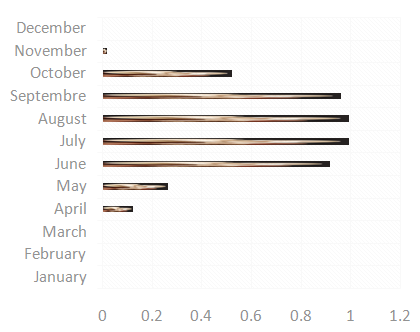
3.2. Mushrooms AvailabilityWild edible mushrooms were collected in the selected communes. Wild edible mushrooms depend on the first rainfall to appear. Their general availability period is ranged from April to November. And, the period of abundant harvest is between June and September, more exactly in July and August. In the past decades, mushrooms were abondantly harvested early in April in this area but today, the first mushrooms are harvested practically in July due to the variation in rainfall in recent years related to climate change. Cantharellu and Candolléomyces grow from the first rains around June and July while Cantharellus is more abundant with the last rains around September and October. Figure 1 show havesting month rate.

Mushroom harvesting is carried out by the entire community without distinction of gender, but it’s mainly women who are involved in mushroom picking. Harvesting is carried out in pastures, along river banks, in termite mounds, and around animal enclosures, from June to October, depending on rainfall variations. Mushrooms are harvested whole, from stem to cap. They are handly dug up, then collected in dishes, baskets, bags, etc. The majority of people interviewed consume mushrooms (72%). The harvested mushrooms are mostly intended for home consumption, but a small portion is often sold at marketplaces freshly, dried, or smoked. Mushrooms are prepared in the same way by everyone. Fresh mushrooms are firstly washed and cut. A soup is prepared with available ingredients, including oil, fresh tomato, onion, soumbala, garlic, and salt. Washed mushrooms are then added to this mixture and left on the stove until cooked. The final sauce can be served with millet, sorghum, or corn paste. Dried mushrooms must first be soaked in water for few minutes to rehydrate before adding them to the boiling soup. Mushrooms can also be fried or grilled and accompanied by salt and chili pepper. People who don’t consume edible mushrooms cite allergies, lack of appreciation for the taste, and even a lack of knowledge about mushrooms. Some poisonings even happened, as reported by the respondents. Their symptoms include chronic vomiting, stomach aches, and diarrhea. Some even died eating mushrooms. Mycotherapy is not really established among these communities. Over 97% of respondents use mushrooms only for food.
3.4. Communities’s Mushroom Preserving MethodsDrying and smoking are the main methods of mushroom preservation. Drying involves firstly washing the freshly harvested mushrooms and exposing them to the sun for a few days. Smoking involves placing mushrooms in a previously washed container and then placing them over a low-intensity fire several times. Another smoking method that was reported involves placing mushrooms over an oven, below which a fire is lit. Once mushrooms are dried or smoked, they are collected and preserved in bags, sachets, and canaries, and can remain there for more than a year. Preservation does not diminish the organoleptic qualities of mushrooms, as claimed by the respondent.
3.5. Perceived Impact of Climate Change on MushroomsThe mushroom collectors reported a drastic decline in the quantity of wild edible mushrooms. Surviewed people indicated that places where mushrooms were once found are now devoid of any mushrooms, with some species even disappearing. About 99.6% of respondants stated about a gradual disappearance of mushrooms and issued a warning. Some mushrooms speces may be missed in the next generations. About causes, surviewed people included declining rainfall, forests disappearance, mushrooms’s host plant species and termite mounds disappearance, artisanal gold mining, and the use of toxic products such as cyanide and pesticides.
3.6. Proximate CompositionThe proximate composition of the mushroom species analyzed are displayed in Table 2. As shown, moisture contents were between 7.54±0.09% (Cantharellus sp) and 8.48±0.06% (Candolléomyces sp), and the pH value ranged from 6.19±0.00 (Candolléomyces sp) to 7.1±0.00 (Cantharellus sp). The acidity wasfrom 5.94±0.00 (Cantharellus sp) to 49.05±0.33 g acid/100g DM (Lactifllus sp.). The content in lipids varied from 2.25±0.04 (Candolléomyces sp) to 2.69±0.4 g/100g (Cantharellus sp), while the contents in crude proteins were 23.03±0.38% (Cantharellus sp) to 36.77±0.3 g/100g (Lactifllus sp.), and ash content were ranged between 11.22±0.47 (Lactifllus sp.) and 25.03±0.27 g/100g (Candolléomyces sp). The carbohydrate contents varied from 24.797±0.59 (Cantharellus sp) to 28.78±0.7 g/100g (Candolléomyces sp) and the fibers contents are ranged between 26.39±0.58 (Candolléomyces sp) and 46.70±0.55 g/100g (Cantharellus sp). Their energy value varied between 213.20±2.75 (Cantharellus sp) and 286.83±3.50 (Lactifllus sp.) kcal/100g. Proximate composition is showed in Table 2.
Beta-carotene content was ranged from 0 to 4.260±0.04 mg/100g (Candolléomyces sp), while ascorbic acid (Vitamin C) content varied from 0.103±0.02 mg/100g (Candolléomyces sp) to 0.256±0.00 mg/100g (Cantharellus sp). (Table 3).
Table 4 displays the minerals composition in the analyzed mushroom samples. Potassium content varied from 1476 (Cantharellus sp) to 2830 (Candolléomyces sp), magnesium content from 46.93 (Cantharellus sp) to 194.03 (Candolléomyces sp) and sodium content was ranged between 20.5 (Lactifllus sp.) and 49.2 (Candolléomyces sp). Calcium content varied from 19.28 (Lactifllus sp.) to 195.94 (Candolléomyces sp), zinc content from 3.97 (Lactifllus sp.) to 4.86 (Candolléomyces sp), iron content from 2.92 (Lactifllus sp.) to 14.29 (Candolléomyces sp). Manganese content was ranged from 1.78 (Lactifllus sp.) to 9.95 (Candolléomyces sp) while copper content varied from 1.14 (Lactifllus sp.) to 3.89 (Candolléomyces sp).
Three commons mushrooms species of southwest region of Burkina Faso including Candolléomyces sp. Cantharellus sp and Lactifllus sp.have been used for centuries by communities. Mushrooms are not cultivated and havesting period is ranged between June and September. Mushrooms is mainly used in households and smoking and driyng are the main preservating methods. Human activity and climate change are the main threats to wild edible mushrooms’s disappearance. These mushrooms species have an appreciated nutritional value including proximate compounds, mineral content and vitamins.
Burkina Faso in general and Southwest region in particular have a high diversity of wild edible mushrooms 19, 32 identified about 31 species of edible mushrooms in Burkina Faso, divided into 14 families and 19 genera, and indicated similar harvesting period. But in the southwest region, mushrooms slightly appear earlier, in avril than in the national scale. 33 also emphasizing that the abundance of precipitation at the local scale would be an indicator of mushrooms’s diversity, supporting jully and august as abundant month of mushrooms collection. The decline in mushrooms populations was also put in evidence by Guissou et al. 9. Climate change and human activities are the main factors contributing to the decline of mushrooms, which calls for emergency project for their safeguarding. wild mushrooms have been used mainly as food. This mainly food uses of wild edible mushrooms has been also fund in Côte d’Ivoire 10. It’s a sweetable substitute to meat in many communities 34. Human activities is a risk factor for non-timber forest products food security and wild edible mushrooms in particular. Several studies put in evidence chemical contaminats of wild edible mushrooms 35, 36, 37.
In the present study, the sampled common wild edible mushrooms from southwest Burkina Faso showed interesting nutritional values. The variation in the chemical property (moisture content, pH and acidity) may be related to postharvest process and storage conditions. Previous studies also demonstrated non-significant difference in lipids content between Candolléomyces sp (2.4%) and Cantharellus sp (1.9%) 38. The content in fibers is in the same order as reported by 39. The protein contents were in the same order as found by Kouame et al. 40, Thachunglura et al. 41. Previous studies showed that proximate content of wild edible mushrooms depends on substrates, speces, harvesing period 42.
Studied mushroom species have shown important micronutrient contents. Postharvest processing may have an impact on both beta caroten and ascorbic acid content found in the present study, as the collected mushrooms are dried to prevent alteration. Previous studies 43, 44 revealed appreciable content of ascorbic acid and beta caroten content in mushrooms including the same species? but below FAO recommendation. Wani et al. 45 have already demonstrated mushrooms have high level content in minerals due to their capacity in accumulating minerals. But soil contamination could also explain the high level of minerals content. Mshandete et al. 46 also fund K, Ca and Mg as the most abundant minerals in mushrooms. The important minerals content (Fe, Zn, Ca…) in mushrooms make it a potential source for under five years childreen food formulation, as anemia is more associated to childreen malnutrition.
Wild edible mushrooms have appreciated nutritional value, but only available during raining season. As they are treathened by both climate change and human activities, mushrooms domestication and cultivation is the appropiate solution for their safeguarding.
Common wild edible mushrooms in South-west Burkina Faso included Candolléomyces sp, Lactifllus sp.and Cantharellus sp. Their abundance and availability depend on rainfall. They are appreciated meals for indigenous communities in Southwestern Burkina Faso but climate and human activities threatening they survival. As shown, they may have high nutritional value, requiring initiatives to safeguard them, either creating biobank or through domestication and demonstrating their detailed nutritional values and safety/
| [1] | Okuda, Y.J.F.i.S.F.S., Sustainability perspectives for future continuity of mushroom production: The bright and dark sides. 2022. 6: p. 1026508. | ||
| In article | View Article | ||
| [2] | Hawksworth, D.L.J.M.r., The fungal dimension of biodiversity: magnitude, significance, and conservation. 1991. 95(6): p. 641-655. | ||
| In article | View Article | ||
| [3] | Pérez‐Moreno, J., et al., Edible mycorrhizal fungi of the world: What is their role in forest sustainability, food security, biocultural conservation and climate change? 2021. 3(5): p. 471-490. | ||
| In article | View Article | ||
| [4] | FAO, Crops and livestock products 2023(last access: 6 June 2025). | ||
| In article | |||
| [5] | Niazi, A.R. and A.J.A.l. Ghafoor, Different ways to exploit mushrooms: A review. 2021. 14(1): p. 450-460. | ||
| In article | View Article | ||
| [6] | Willis, K.J., State of the world's fungi 2018. Report. 2018. | ||
| In article | |||
| [7] | Boa, E., Local communities and edible ectomycorrhizal mushrooms, in Edible ectomycorrhizal mushrooms: current knowledge and future prospects. 2013, Springer. p. 307-315. | ||
| In article | View Article | ||
| [8] | Ebika, S.T.N., et al., Les champignons sauvages comestibles et connaissances endogènes des peuples autochtones Mbènzèlè et Ngombe de la République du Congo. 2018. 126: p. 12675-12685. | ||
| In article | View Article | ||
| [9] | Guissou, K.M.L., et al., Declining wild mushroom recognition and usage in Burkina Faso. 2008. 62: p. 530-539. | ||
| In article | View Article | ||
| [10] | Soro, B., et al., Phytogeographical and sociolinguistical patterns of the diversity, distribution, and uses of wild mushrooms in Côte d’Ivoire, West Africa. 2019. 15: p. 1-12. | ||
| In article | View Article PubMed | ||
| [11] | Atri, N. and M. Mridu, Mushrooms-some ethnomycological and sociobiological aspects. 2018. | ||
| In article | |||
| [12] | Kabacia, S. and M.N.J.M.D. Muchane, Domestication of wild edible mushrooms in eastern Africa: a review of research advances and future prospects. 2023. 14(1): p. 22-50. | ||
| In article | |||
| [13] | De Kesel, A., et al., Champignons comestibles d’Afrique de l’Ouest. 2024. | ||
| In article | |||
| [14] | Ducousso, M., A.M. Bâ, and D. Thoen, Les champignons ectomycorhiziens des forêts naturelles et des plantations d'Afrique de l'Ouest: une source de champignons comestibles. 2003. | ||
| In article | View Article | ||
| [15] | Grove, J.F.J.P., Volatile compounds from the mycelium of the mushroom Agaricus bisporus. 1981. 20(8): p. 2021-2022. | ||
| In article | View Article | ||
| [16] | Ames, B.N., M.K. Shigenaga, and T.M.J.P.o.t.N.A.o.S. Hagen, Oxidants, antioxidants, and the degenerative diseases of aging. 1993. 90(17): p. 7915-7922. | ||
| In article | View Article PubMed | ||
| [17] | Vaz, A.B., et al., Antimicrobial activity of endophytic fungi associated with Orchidaceae in Brazil. 2009. 55(12): p. 1381-1391. | ||
| In article | View Article PubMed | ||
| [18] | Mossebo Tcheunteu, S.W., L. Moyou Metcheka, and R.J.J.o.C.C. Ndoundam, Distributed data hiding in a single cloud storage environment. 2021. 10(1): p. 43. | ||
| In article | View Article | ||
| [19] | Thiombiano, A. and D. Kampmann, Atlas de la biodiversité de l'Afrique de l'Ouest, Tome II: Burkina Faso. 2010: Goethe-Universität Frankfurt am main, geowissenschaften/geographie. | ||
| In article | |||
| [20] | DABIRE, K., et al., Taxonomical study of the genus Amanita from Western Burkina Faso. 2019. 10(2): p. 45-54. | ||
| In article | View Article | ||
| [21] | Guissou, M.-L., et al., Biodiversity and sustainable use of wild edible fungi in the sudanian centre of endemism: a plea for valorisation. 2014. 241. | ||
| In article | |||
| [22] | 712, I., Cereals and Cereal Products—Determination of Moisture Content—Reference Method. 2009. | ||
| In article | |||
| [23] | 750, I., Fruit and vegetable products - determination of titratable acidity. 1998, ISO 2éd. p. 4. | ||
| In article | |||
| [24] | AOAC, Officials methods of analysis. 2000, Association of Officials Analytic Chemist: Washington DC. | ||
| In article | |||
| [25] | Kjeldahl, J., A new method for the determination of nitrogen in organic matter Z. Anal. Chem, 1883. 22(1): p. 366-382 | ||
| In article | |||
| [26] | Tollier, M.T. and R. JP, Adaptation de la méthode à l'orcinol-sulfurique au dosage automatique des glucides neutres totaux: conditions d'application aux extraits d'origine végétale. 1979. | ||
| In article | |||
| [27] | Merrill, A.L. and B.K. Watt, Energy value of foods: basis and derivation. 1955: Human Nutrition Research Branch, Agricultural Research Service, US …. | ||
| In article | |||
| [28] | AOCS, Official methods and recommanded pratics. 1990, American Oil Chemists Society. p. 322-340. | ||
| In article | |||
| [29] | Van de Velde, F., et al., Optimization and validation of a UV–HPLC method for vitamin C determination in strawberries (Fragaria ananassa Duch.), using experimental designs. 2012. 5(5): p. 1097-1104. | ||
| In article | View Article | ||
| [30] | Delgado‐Vargas, F., O.J.J.o.t.S.o.F. Paredes‐López, and Agriculture, Correlation of HPLC and AOAC methods to assess the all‐trans‐lutein content in Marigold flowers. 1996. 72(3): p. 283-290. | ||
| In article | View Article | ||
| [31] | Kumari, D., et al., Antioxidant activity of three species of wild mushroom genus Cantharellus collected from North-Western Himalaya, India. 2011. 13(3). | ||
| In article | |||
| [32] | Guissou, K., et al., La mycothérapie au Burkina Faso: État des lieux et perspectives. 2014. 79: p. 6896-6908. | ||
| In article | View Article | ||
| [33] | Gévry, M.-F., Étude des facteurs environnementaux déterminant la répartition de champignons forestiers comestibles en Gaspésie, Québec. 2010, Université du Québec à Rimouski. | ||
| In article | |||
| [34] | Guissou, K.M.L., P. Sankara, and S.J.C.M. Guinko, Phlebopus sudanicus ou<< la viande des Bobos>>, un champignon comestible dans le departement de Satiri au Burkina Faso. 2005. 26(3): p. 195. | ||
| In article | |||
| [35] | Bucurica, I.A., et al., Heavy metals and associated risks of wild edible mushrooms consumption: Transfer factor, carcinogenic risk, and health risk index. 2024. 10(12): p. 844. | ||
| In article | View Article PubMed | ||
| [36] | Karami, H., et al., The concentration and probabilistic health risk of potentially toxic elements (PTEs) in edible mushrooms (wild and cultivated) samples collected from different cities of Iran. 2021. 199: p. 389-400. | ||
| In article | View Article PubMed | ||
| [37] | Mleczek, M., et al., A comparison of toxic and essential elements in edible wild and cultivated mushroom species. 2021. 247: p. 1249-1262. | ||
| In article | View Article | ||
| [38] | Miles, P.G. and S.-T. Chang, Mushrooms: cultivation, nutritional value, medicinal effect, and environmental impact. 2004: CRC press. | ||
| In article | |||
| [39] | Nile, S.H. and S.W.J.C.J.o.F.S. Park, Total, soluble, and insoluble dietary fibre contents of wild growing edible mushrooms. 2014. 32(3): p. 302-307. | ||
| In article | View Article | ||
| [40] | Kouame, K.B., et al., Caractérisation physicochimique de trois espèces de champignons sauvages comestibles couramment rencontrées dans la région du Haut-Sassandra (Côte d’Ivoire). 2018. 121: p. 12110-12120. | ||
| In article | View Article | ||
| [41] | Thachunglura, V., et al., The edible fan-shaped jelly fungus Dacryopinax spathularia. 2023: p. 201-206. | ||
| In article | |||
| [42] | Kumar, S., et al., Status of Milky mushroom in India-a review. 2017. 26(1). | ||
| In article | |||
| [43] | Alzand, K.I., M.S.M. Bofaris, and A.J.W.J.P.R. Ugis, Chemical composition and nutritional value of edible wild growing mushrooms: a review. 2019. 8(3): p. 31-46. | ||
| In article | |||
| [44] | Nakalembe, I., J.D. Kabasa, and D.J.S. Olila, Comparative nutrient composition of selected wild edible mushrooms from two agro-ecological zones, Uganda. 2015. 4: p. 1-15. | ||
| In article | View Article PubMed | ||
| [45] | Wani, B.A., R. Bodha, and A.J.J.o.M.p.r. Wani, Nutritional and medicinal importance of mushrooms. 2010. 4(24): p. 2598-2604. | ||
| In article | View Article | ||
| [46] | Mshandete, A.M., J.J.A.J.o.F. Cuff, Agriculture, Nutrition, and Development, Proximate and nutrient composition of three types of indigenous edible wild mushrooms grown in Tanzania and their utilization prospects. 2007. 7(6). | ||
| In article | |||
Published with license by Science and Education Publishing, Copyright © 2026 GUIRA Flibert, TRAORE Korotimi, DRABO Soungalo Moustapha, TANKOANO Abel, DABIRE Tobdem Gaston, SAVADOGO Aly and SAWADOGO/LINGANI Hagretou
 This work is licensed under a Creative Commons Attribution 4.0 International License. To view a copy of this license, visit
http://creativecommons.org/licenses/by/4.0/
This work is licensed under a Creative Commons Attribution 4.0 International License. To view a copy of this license, visit
http://creativecommons.org/licenses/by/4.0/
| [1] | Okuda, Y.J.F.i.S.F.S., Sustainability perspectives for future continuity of mushroom production: The bright and dark sides. 2022. 6: p. 1026508. | ||
| In article | View Article | ||
| [2] | Hawksworth, D.L.J.M.r., The fungal dimension of biodiversity: magnitude, significance, and conservation. 1991. 95(6): p. 641-655. | ||
| In article | View Article | ||
| [3] | Pérez‐Moreno, J., et al., Edible mycorrhizal fungi of the world: What is their role in forest sustainability, food security, biocultural conservation and climate change? 2021. 3(5): p. 471-490. | ||
| In article | View Article | ||
| [4] | FAO, Crops and livestock products 2023(last access: 6 June 2025). | ||
| In article | |||
| [5] | Niazi, A.R. and A.J.A.l. Ghafoor, Different ways to exploit mushrooms: A review. 2021. 14(1): p. 450-460. | ||
| In article | View Article | ||
| [6] | Willis, K.J., State of the world's fungi 2018. Report. 2018. | ||
| In article | |||
| [7] | Boa, E., Local communities and edible ectomycorrhizal mushrooms, in Edible ectomycorrhizal mushrooms: current knowledge and future prospects. 2013, Springer. p. 307-315. | ||
| In article | View Article | ||
| [8] | Ebika, S.T.N., et al., Les champignons sauvages comestibles et connaissances endogènes des peuples autochtones Mbènzèlè et Ngombe de la République du Congo. 2018. 126: p. 12675-12685. | ||
| In article | View Article | ||
| [9] | Guissou, K.M.L., et al., Declining wild mushroom recognition and usage in Burkina Faso. 2008. 62: p. 530-539. | ||
| In article | View Article | ||
| [10] | Soro, B., et al., Phytogeographical and sociolinguistical patterns of the diversity, distribution, and uses of wild mushrooms in Côte d’Ivoire, West Africa. 2019. 15: p. 1-12. | ||
| In article | View Article PubMed | ||
| [11] | Atri, N. and M. Mridu, Mushrooms-some ethnomycological and sociobiological aspects. 2018. | ||
| In article | |||
| [12] | Kabacia, S. and M.N.J.M.D. Muchane, Domestication of wild edible mushrooms in eastern Africa: a review of research advances and future prospects. 2023. 14(1): p. 22-50. | ||
| In article | |||
| [13] | De Kesel, A., et al., Champignons comestibles d’Afrique de l’Ouest. 2024. | ||
| In article | |||
| [14] | Ducousso, M., A.M. Bâ, and D. Thoen, Les champignons ectomycorhiziens des forêts naturelles et des plantations d'Afrique de l'Ouest: une source de champignons comestibles. 2003. | ||
| In article | View Article | ||
| [15] | Grove, J.F.J.P., Volatile compounds from the mycelium of the mushroom Agaricus bisporus. 1981. 20(8): p. 2021-2022. | ||
| In article | View Article | ||
| [16] | Ames, B.N., M.K. Shigenaga, and T.M.J.P.o.t.N.A.o.S. Hagen, Oxidants, antioxidants, and the degenerative diseases of aging. 1993. 90(17): p. 7915-7922. | ||
| In article | View Article PubMed | ||
| [17] | Vaz, A.B., et al., Antimicrobial activity of endophytic fungi associated with Orchidaceae in Brazil. 2009. 55(12): p. 1381-1391. | ||
| In article | View Article PubMed | ||
| [18] | Mossebo Tcheunteu, S.W., L. Moyou Metcheka, and R.J.J.o.C.C. Ndoundam, Distributed data hiding in a single cloud storage environment. 2021. 10(1): p. 43. | ||
| In article | View Article | ||
| [19] | Thiombiano, A. and D. Kampmann, Atlas de la biodiversité de l'Afrique de l'Ouest, Tome II: Burkina Faso. 2010: Goethe-Universität Frankfurt am main, geowissenschaften/geographie. | ||
| In article | |||
| [20] | DABIRE, K., et al., Taxonomical study of the genus Amanita from Western Burkina Faso. 2019. 10(2): p. 45-54. | ||
| In article | View Article | ||
| [21] | Guissou, M.-L., et al., Biodiversity and sustainable use of wild edible fungi in the sudanian centre of endemism: a plea for valorisation. 2014. 241. | ||
| In article | |||
| [22] | 712, I., Cereals and Cereal Products—Determination of Moisture Content—Reference Method. 2009. | ||
| In article | |||
| [23] | 750, I., Fruit and vegetable products - determination of titratable acidity. 1998, ISO 2éd. p. 4. | ||
| In article | |||
| [24] | AOAC, Officials methods of analysis. 2000, Association of Officials Analytic Chemist: Washington DC. | ||
| In article | |||
| [25] | Kjeldahl, J., A new method for the determination of nitrogen in organic matter Z. Anal. Chem, 1883. 22(1): p. 366-382 | ||
| In article | |||
| [26] | Tollier, M.T. and R. JP, Adaptation de la méthode à l'orcinol-sulfurique au dosage automatique des glucides neutres totaux: conditions d'application aux extraits d'origine végétale. 1979. | ||
| In article | |||
| [27] | Merrill, A.L. and B.K. Watt, Energy value of foods: basis and derivation. 1955: Human Nutrition Research Branch, Agricultural Research Service, US …. | ||
| In article | |||
| [28] | AOCS, Official methods and recommanded pratics. 1990, American Oil Chemists Society. p. 322-340. | ||
| In article | |||
| [29] | Van de Velde, F., et al., Optimization and validation of a UV–HPLC method for vitamin C determination in strawberries (Fragaria ananassa Duch.), using experimental designs. 2012. 5(5): p. 1097-1104. | ||
| In article | View Article | ||
| [30] | Delgado‐Vargas, F., O.J.J.o.t.S.o.F. Paredes‐López, and Agriculture, Correlation of HPLC and AOAC methods to assess the all‐trans‐lutein content in Marigold flowers. 1996. 72(3): p. 283-290. | ||
| In article | View Article | ||
| [31] | Kumari, D., et al., Antioxidant activity of three species of wild mushroom genus Cantharellus collected from North-Western Himalaya, India. 2011. 13(3). | ||
| In article | |||
| [32] | Guissou, K., et al., La mycothérapie au Burkina Faso: État des lieux et perspectives. 2014. 79: p. 6896-6908. | ||
| In article | View Article | ||
| [33] | Gévry, M.-F., Étude des facteurs environnementaux déterminant la répartition de champignons forestiers comestibles en Gaspésie, Québec. 2010, Université du Québec à Rimouski. | ||
| In article | |||
| [34] | Guissou, K.M.L., P. Sankara, and S.J.C.M. Guinko, Phlebopus sudanicus ou<< la viande des Bobos>>, un champignon comestible dans le departement de Satiri au Burkina Faso. 2005. 26(3): p. 195. | ||
| In article | |||
| [35] | Bucurica, I.A., et al., Heavy metals and associated risks of wild edible mushrooms consumption: Transfer factor, carcinogenic risk, and health risk index. 2024. 10(12): p. 844. | ||
| In article | View Article PubMed | ||
| [36] | Karami, H., et al., The concentration and probabilistic health risk of potentially toxic elements (PTEs) in edible mushrooms (wild and cultivated) samples collected from different cities of Iran. 2021. 199: p. 389-400. | ||
| In article | View Article PubMed | ||
| [37] | Mleczek, M., et al., A comparison of toxic and essential elements in edible wild and cultivated mushroom species. 2021. 247: p. 1249-1262. | ||
| In article | View Article | ||
| [38] | Miles, P.G. and S.-T. Chang, Mushrooms: cultivation, nutritional value, medicinal effect, and environmental impact. 2004: CRC press. | ||
| In article | |||
| [39] | Nile, S.H. and S.W.J.C.J.o.F.S. Park, Total, soluble, and insoluble dietary fibre contents of wild growing edible mushrooms. 2014. 32(3): p. 302-307. | ||
| In article | View Article | ||
| [40] | Kouame, K.B., et al., Caractérisation physicochimique de trois espèces de champignons sauvages comestibles couramment rencontrées dans la région du Haut-Sassandra (Côte d’Ivoire). 2018. 121: p. 12110-12120. | ||
| In article | View Article | ||
| [41] | Thachunglura, V., et al., The edible fan-shaped jelly fungus Dacryopinax spathularia. 2023: p. 201-206. | ||
| In article | |||
| [42] | Kumar, S., et al., Status of Milky mushroom in India-a review. 2017. 26(1). | ||
| In article | |||
| [43] | Alzand, K.I., M.S.M. Bofaris, and A.J.W.J.P.R. Ugis, Chemical composition and nutritional value of edible wild growing mushrooms: a review. 2019. 8(3): p. 31-46. | ||
| In article | |||
| [44] | Nakalembe, I., J.D. Kabasa, and D.J.S. Olila, Comparative nutrient composition of selected wild edible mushrooms from two agro-ecological zones, Uganda. 2015. 4: p. 1-15. | ||
| In article | View Article PubMed | ||
| [45] | Wani, B.A., R. Bodha, and A.J.J.o.M.p.r. Wani, Nutritional and medicinal importance of mushrooms. 2010. 4(24): p. 2598-2604. | ||
| In article | View Article | ||
| [46] | Mshandete, A.M., J.J.A.J.o.F. Cuff, Agriculture, Nutrition, and Development, Proximate and nutrient composition of three types of indigenous edible wild mushrooms grown in Tanzania and their utilization prospects. 2007. 7(6). | ||
| In article | |||