The current study aims to investigate the potential effect of mixing plant parts i.e. carrot (CP) and sweet potato (PP) powders on the bioactive and antinutritional compounds content and the antioxidant activity of functional foods (gluten-free products) that are suitable for celiac or gluten-sensitivity patient. For this purpose, three different concentrations 10, 20, and 30% of plant parts (CP or PP) were added as a substitution for rice flour (RF), corn flour (CF), and the flour mixture (50%RF+ 50%CF). Data revealed that the partial replacement of rice flour (RF), corn flour (CF), and mixture flour (RF+CF) with different percentages (10, 20, and 30%) of CP led to a significant increased (p≤0.05) in total phenolics (59.68%, 16.45% and 31.20%) , and flavonoids (139.17%, 91.25% and111.23%), and a decrease in tannins content by the ratio of -5.64, -19.09 and -14.92,%, respectively, saponins (-1.50%, -7.59% and -4.91%), phytates -22.27, -29.16 -28.48 %, respectively, and Trypsin inhibitory activity content by the ratio of -21.42, -27.96 and -26.94 %, respectively. While that, replacement of RF, CF, and mixture flour RF+CF with different percentages of 10%, 20%, and 30% of PP led to an increase in total phenolics content by the ratio of 116.00, 45.62, and 69.63%, respectively, flavonoids (258.35%, 176.64%, and 210.68%), respectively, and saponins 13.57, 4.27, and 8.36%, respectively. On the other side, substitution of the same ratios of CP and PP led to increase the antioxidant activity of the all composite flours samples. In conclusion, the results of this study have opened the new avenue to use such composite flours used successfully to produce some products, rice cake and corn flakes, functional foods (gluten-free products) with high bioactive compounds content and antioxidant activity Which is likely to lead to a reduction in oxidative stress that may be a cause or result of celiac disease or gluten sensitivity.
|
Functional foods help to maintain a healthy lifestyle and aid in reducing the risk of long-term diseases beyond basic nutritional functions; they can look like traditional foods and be eaten as part of a daily diet 1. Plant-based foods such as fruits, vegetables, cereals, herbs, nuts, and beans contain vitamins, minerals, fiber, omega-3 fatty acids, antinutrients, antioxidants, polysaccharides, and phenolic compounds that play a functional role in the human body against chronic diseases including cancer, cardiovascular disease, and gastrointestinal tract disorders 2, 3, 4, 5, 6 7 8 9, 10 11, 12, 13, 14, 15, 16. One of these chronic diseases is celiac. It is a widespread hereditary disease that causes people to respond to gluten proteins found in wheat and other cereals. It is caused by the immune system's malfunctioning gluten proteins and can lead to significant stomach pain 17. Some gliadin peptides have the ability to permeate cells via endocytosis. Peptide buildup in lysosomes raises levels of reactive oxygen species (ROS). In addition to ROS, reactive nitrogen species (RNS) are also known as oxidants because of their propensity to remove electrons from biological molecules, hence causing nitrosative stress. When oxidizing chemicals are excessive relative to antioxidant defenses, oxidative stress arises, either due to increased ROS and RNS or diminished antioxidant defense system 18, 19. Patients with celiac disease produce an excess of ROS as a result of gluten consumption, starting a cascade of processes that induce oxidative stress in the small intestine wall and throughout the body. Oxidative stress can be blamed for free radical damage to important cellular structures, which impairs their functioning. Individuals with untreated celiac disease have poorer antioxidant potential, which may be an indication for a higher demand of antioxidants required to compensate for the large amount of ROS produced in the body, hence preventing the detrimental effects of ROS 20, 21. Furthermore, only a stringent gluten-free diet can effectively treat the illness. While the gluten-free diet is successful in attaining mucosal healing, it may cause nutritional imbalances due to nutrient deficits over a lengthy period of time 22. A gluten-free food should be predominantly based on gluten-free diets with a high micronutrient content: milk and dairy products, nuts, rice, legumes, fruits, vegetables, potatoes, and maize are all appropriate components of such a food. If professionally made gluten-free items are substituted, supplemented or fortified minerals and vitamins are preferred. Vegetables are a healthier alternative to these ready-made items, with strong nutritional, biological, and antioxidant activity 23, 24. Consuming fruits, vegetables, and whole grains on a regular and consistent basis, all of which are high in polyphenols, may help to avoid chronic diseases. However, polyphenols have health benefits for Celiac disease. the remarkable potential and molecular mechanisms by which polyphenols may become useful allies against the cytotoxicity of gluten proteins, based on their ability to interact with and reduce the bioavailability of immunogenic peptides, to counteract oxidative stress and inflammation, to regulate intestinal epithelial barrier integrity and function, to affect the gut microbial ecosystem, and to modulate immune responses 21.
The consumption of plant parts is a common topic in recent times in the fight against many forms of chronic diseases due to functional and health benefits derived from phytochemicals such as phenolic compounds and antioxidants in general 16, 25, 26, 27, 28. Carrots are a malnutrition-friendly food source because they are high in natural bioactive substances such as phenolics, carotenoids, polyacetylenes, ascorbic acid fiber, and minerals. It is high in phytonutrients such as phenols, polyacetylenes, and carotenoids. Carotenoids are antioxidants that can help to counteract the effects of free radicals. They have inhibitory mutagenesis activity, which helps to reduce the incidence of several cancers 29, 30, 31 Carotenoids, anthocyanins; phenolic acids, other flavonoids, and vitamin C are among the beneficial substances found in sweet potatoes. It also has a distinct blend of phenolic chemicals, including hydroxycinnamic acids, the major phenolic antioxidant. Among these phytochemicals, flavonoids and phenolics stand out for their antioxidant and anticancer properties anti-diabetic, hepatoprotection, antitumor, antimicrobial, and anti-inflammatory biological activities due to their high superoxide-radical scavenging activity 12, 32, 33, 34, 35, 36, 37.
Considering all of the reasons mentioned above, incorporating these plant parts into food products, such as gluten-free products, will be extremely beneficial to its users. Therefore, the current study was conducted to evaluate the potential effects of combining plant parts (carrot and sweet potato powders) on the bioactive compounds content and the antioxidant activity of free-gluten products.
Carrot roots and sweet potato tubers were obtained from the local market, New Damietta City, Damietta Governorate, Egypt.
Corn flour and rice flour were obtained from El Forat for food industries, Damietta City, Damietta Governorate Egypt.
All bioactive compounds standards [gallic acid, rutin, tannic acid], α-tocopherol, butylated hydroxy toluene (PHT) were purchased from Sigma Chemical Co., St. Louis, MO. Other chemicals, organic solvents and buffers except mentioned elsewhere were obtained in analytical grade from El-Ghomhorya Company for Trading Drugs, Chemicals, and Medical Instruments, Cairo, Egypt.
Absorbance (Abs) for different determents was measured using Labo-med. Inc., spectrophotometer, CA, USA. Atomic absorbance, Schematzu apparatus, Tokyo, Japan using for elements determination.
2.2. MethodsSweet potato and carrot powders were prepared and treated according to the method described by Hutasoit et al. 38. The cleaned roots/tubers were peeled manually with a stainless-steel kitchen knife and sliced into 2 mm-thickness using semi-automated slicer (Moulinex Egypt, Al-Araby Co., Egypt). The chips were dipped in aqueous 0.5 and 1.0% citric acid, followed by steam blanching for 30 minutes. The treated chips carrots and sweet potatoes were dried using a convection oven (Velp Company, Italy) at 55°C for 12 hours. The flour (moisture content about 10%) was obtained by milling the dried slices using a high mixer blender (Moulinex Egypt, Al-Araby Co., Egypt).) into flour with a particle size of about 200 µm, and the resulting flour was sieved to obtain a fine granules. The flour was then packaged in polyethylene bags and kept in a refrigerator at -4°C for further physical and chemical analyses as well as use in products preparation.
Total phenolics were determined using the Folin-Ciocalteu reagent according to Singleton and Rossi, 39 and the results are expressed as ferulics and equivalents. Total flavonoid contents were expressed as catechin equivalents (CAE), as described by Zhishen et al., 40. Saponins were determined by the colorimetric method, as explained by Fenwick and OakeDfull, 41. Phytates were determined by the method mentioned by Mcewan, 42 and the results were a potassium hydrogen phosphate equivalent. The concentration of phytate was calculated from its phosphorus content. Tannins were determined in samples by the method of Van-Burden and Robinson, 43 and expressed as mg of catechine per g of dw. Trypsin inhibitory activity (TIA) was determined calorimetrically using an UV/visible spectrophotometer in accordance with Smith et al., 44.
The antioxidant activity of rice flour (RF), corn flour (CF), and the flour mixture (50% RF + 50% CF), carrot powder, and sweet potato powder as well as standards (α-tocopherol and BHT; Sigma Chemical Co., St. Louis, Mo) was determined according to the β -carotene bleaching method following a modification of the procedure described by Marco, 45. Various concentrations of BHT and α-tocopherol in 80% methanol were used as the control. Antioxidant activity (AA) was all calculated as percent inhibition relative to control using the following equation by Al-Saikhan et al., 46.
AA= (R control - R sample) / R control x 100
Where: R control and R sample were the bleaching rates of beta-carotene in reactant mixture without antioxidant and with plant extract, respectively.
Cake batter samples were prepared as formula given in Table 1 according to A.A.C.C., 47. The butter was melted thoroughly, sugar and salt were added then mixed vigorously. The whole egg was mixed with vanillia and whipped until it became a puffy and smooth like cream texture. Composite flour and other dry ingredients and milk were mixed individually. This mixture was mixed gently until got homogenous dough using a hand mixer (Moulinex ABM11A30, France) at low speed for 2 minutes. The batter was placed into Tin mold pans size 30 and baked in a conventional oven pre-heated to 180ºC for 30 min., air-cooled to room temperature, and packed.
Corn flakes were prepared with a little modification. The control and the other formulations are presented in Table 3. In a mixing bowl, the egg whites were mixed for 3-4 minutes to form the foam, then the dry and liquid ingredients were mixed for 3-4 minutes to form the dough, then left to rest for 10 minutes.
Sensory evaluation was participated by invited ten staff panelists from the Home Economic Department, Faculty of Specific Education, Damietta University, Damietta, Egypt. Each panelist was asked to evaluate seven samples of crackers according to color, flavor, texture, taste, and overall acceptability. The evaluation was carried out according to the method of Abd El – latif, 48.
2.4. Statistical AnalysisThe data obtained were statistically analyzed using a computer. The results were expressed as mean ± standard deviation (SD) and tested for significance using the one-way analysis of variance (ANOVA) test, according to Duncan’s multiple range test at (P≤0.05) probability. According to the method described by Armitage and Berry, 49.
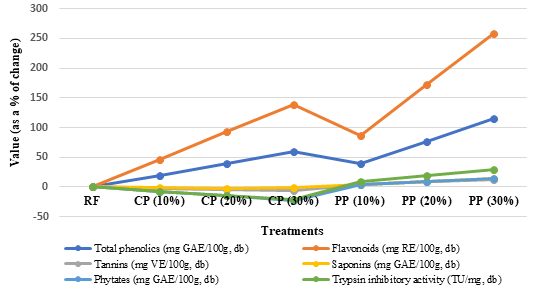
Data in Table 3 and Figure 1 showed the bioactive compounds content of control and composite rice flour (RF) samples. Partial replacement of RF with different percentages (10-30%) of carrot powder (CP) and sweet potato powders (PP) led to an increase or decrease in its bioactive compounds content. At 30% substitution of CP, the rate of decreasing was recorded -5.64, -1.50, -22.27 and -21.42% for the tannins, saponins, phytates and trypsin inhibitory activity which was met at the same time with a rate of increase in 59.68 and 139.17% for total phenolics and flavonoids, respectively. Also, at 30% substitution of PP, the rate of increasing was recorded 116.00, 258.35, 12.96, 13.57, 14.16 and 28.57% for total phenolics, flavonoids, tannins, saponins, phytates and trypsin inhibitory activity, respectively. the rate of increasing or decreasing in the bioactive compounds content of the RF as the result of CP and PP substitution were exhibited a dose-dependent manner.
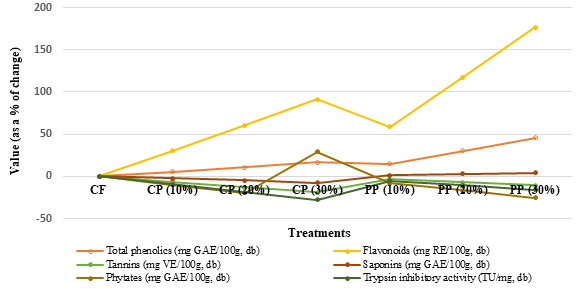
Data in Table 4 and Figure 2 showed the bioactive compounds content of control and composite corn flour (CF) samples. Partial replacement of CF with different percentages (10-30%) of carrot powder (CP) and sweet potato powders (PP) led to an increase or decrease in its bioactive compounds content. At 30% substitution of CP, the rate of decreasing was recorded -19.09, -29.16, -7.59 and -27.96% for the tannins, phytates, saponins and trypsin inhibitory activity which was met at the same time with a rate of increase in 16.45, 91.25% for total phenolics, and flavonoids, respectively. Also, at 30% substitution of PP, the rate of decreasing was recorded -10.74, -25.20 and -16.10 for tannins, phytates and trypsin inhibitory activity which was met at the same time with a rate of increase in 45.62, 176.64 and 4.27% for total phenolics, flavonoids and saponins, respectively. The rate of increasing or decreasing in the bioactive compounds content of the CF as the result of CP and PP substitution were exhibited a dose-dependent manner.


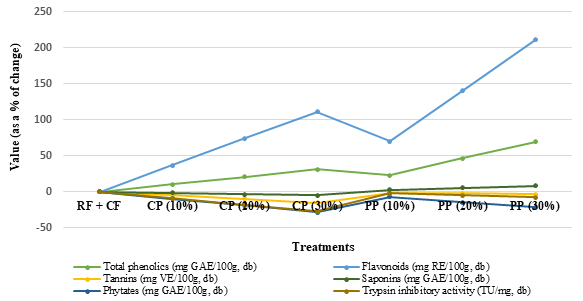
Data in Table 5 and Figure 3 showed the bioactive compounds content of control and composite mixture flour (RF+CF) samples. Partial replacement of mixture flour with different percentages (10-30%) of carrot powder (CP) and sweet potato powders (PP) led to an increase or decrease in its bioactive compounds content. At 30% substitution of CP, the rate of decreasing was recorded -14.92, -4.91, -28.48 and -26.94% for the tannins, saponins, phytates and trypsin inhibitory activity which was met at the same time with a rate of increase in 31.20 and 111.23% for total phenolics and flavonoids, respectively. Also, at 30% substitution of flour mixture, the rate of decreasing was recorded -3.40, -21.34 and -7.30% for tannins, phytates and trypsin inhibitory activity which was met at the same time with a rate of increase in 69.63, 210.68 and 8.36% for total phenolics, flavonoids and saponins, respectively.

Data of the current study is partly consistent with many similar studies conducted previously. For example, several authors found that carrot is source of natural bioactive compounds including phenolics, polyacetylenes, vitamin (A), polyphenolic, flavonoid, carotenoids, thiamine, riboflavin, niacin, ascorbic acid and tocopherols 50, 51, 52, 53, 54, 55. Also, sweet potato is source of polyphenols, vitamin A, flavonoids, anthocyanins, and carotenoids, phenolic acids, ascorbic acid, niacin, riboflavin, thiamin and caffeic acid 36, 56, 57, 58, 59. Overall, the results of this study demonstrated that adding carrot and potato powders to the flour samples led to a significant increase in the level of some important biologically active compounds such as phenolics and flavonoids. Such a property is of great importance from a nutritional and medical standpoint. Phenolics and flavonoids play important biological roles in preventing and/or treating many diseases such as diabetes, atherosclerosis, cancer, obesity and its complications, bone, anemia and aging 15, 28, 60, 61, 62, 63, 64. Also, such compounds used successfully in several food technological applications 61. Such previous effects of these compounds are due mainly to their magical biological activities including antioxidant and scavenging activities and inhibition of lipid oxidation 8 65, 66, 67 68, 69, 70. On the other side, other compounds such as tannins and saponins were raised in flour samples as the result of potato powder additions. Saponins are a subclass of terpenoids, the largest class of plant extracts. They have the potential ability to interact with cell membrane components, such as cholesterol and phospholipids, possibly making saponins useful for development of cosmetics and drugs 71. Also, they are using in subunit vaccines and vaccines directed against intracellular pathogens and used for their effects on ammonia emissions in animal feeding 72, 73. Tannins exhibited antimicrobial, anti-inflammatory, antidiabetic, cardioprotective, antitumor, antioxidant effects. It is utilized as a food preservative and packaging material in the food industry 74.
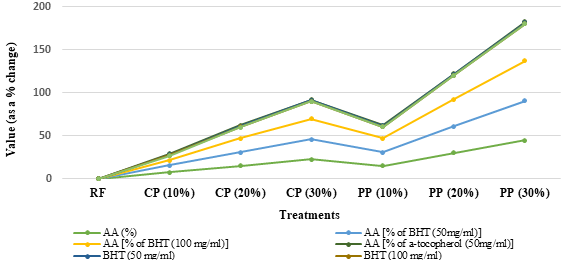
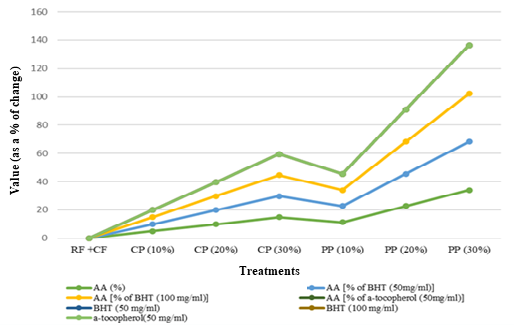
3.2. Antioxidant Activities of Grains Flour (control) and Their CompositeData in Table 6 and Figure 4 showed the antioxidant activity (AA) of control and composite rice flour (RF) samples. Such data indicated that RF flour samples recorded 29.56% of antioxidant activity which represent 32.60, 31.07 and 30.44% of AA [% of BHT (50 mg/ml)], AA [% of BHT (100 mg/ml)] and AA [% of α-tocopherol (50mg/ml)], respectively. Partial replacement of RF with different percentages (10-30%) of carrot powder (CP) and sweet potato powders (PP) led to an increase in its AA. At 30% substitution of CP and PP, the rate of increasing was recorded 22.39 and 44.84%, respectively. The rate of increasing in the AA of the RF as the result of CP and PP substitution were exhibited a dose-dependent manner.

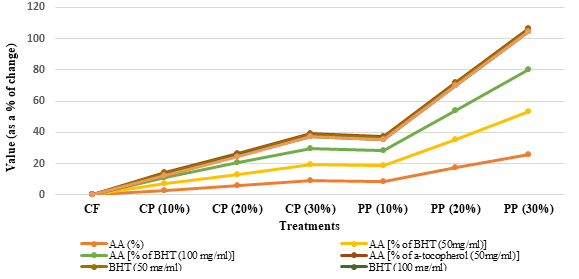
Data in Table 7 and Figure 5 showed the antioxidant activity (AA) of control and composite corn flour (CF) samples. Such data indicated that CF flour samples recorded 39.48% of antioxidant activity which represent 43.54, 41.50 and 40.65% of AA [% of BHT (50 mg/ml)], AA [% of BHT (100 mg/ml)] and AA [% of α-tocopherol (50mg/ml)], respectively. Partial replacement of CF with different percentages (10-30%) of carrot powder (CP) and sweet potato powders (PP) led to an increase in its AA. At 30% substitution of CP and PP, the rate of increasing was recorded 9.24 and 26.03%, respectively. The rate of increasing in the AA of the CF as the result of CP and PP substitution were exhibited a dose-dependent manner.
Data in Table 8 and Figure 6 showed the antioxidant activity (AA) of control and composite mixture flour (RF+CF) samples. Such data indicated that mixture flour samples recorded 34.52% of antioxidant activity which represent 38.36, 36.68 and 35.59% of AA [% of BHT (50 mg/ml)], AA [% of BHT (100 mg/ml)] and AA [% of α-tocopherol (50mg/ml)], respectively. Partial replacement of mixture flour with different percentages (10-30%) of carrot powder (CP) and sweet potato powders (PP) led to an increase in its AA. At 30% substitution of CP and PP, the rate of increasing was recorded 14.86 and 34.09%, respectively. The rate of increasing in the AA of the mixture flour as the result of CP and PP substitution exhibited a dose-dependent manner.


Such data indicated that carrot and potato powder samples showed high antioxidant activity and corn and rice flour showed low with the increasing of carrot and potato powder level addition to the flour samples, the value of antioxidant activity in the composite samples were significant (p≤0.05) increased. The increasing of antioxidant activity in composite flour samples is correlated with its reasonable content of different bioactive compounds such as phenolics, flavonoids, tannins and saponins. The variation in the antioxidant activity values in composite flours may be possible due to the presence of different quantities of such specific bioactive constituents 5. Also, the results of several studies suggest that plant parts showed free radical scavenging activity which due to their high content of different categories of bioactive constituents/antioxidants such as found in composite flour samples including phenolics, flavonoids, tannins 69, 70, 75.
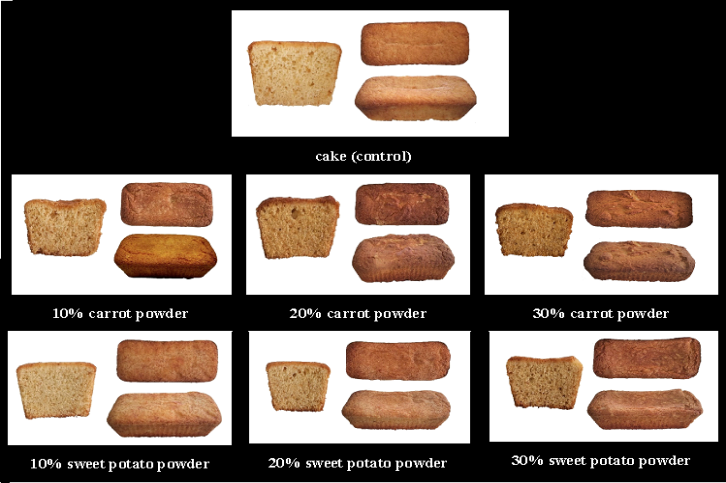
3.3. Sensory Evaluation of Grains' Flour and Its Composites with Plant Parts PowderData in Table 9 and photo 1 showed the sensory evaluation score of substitution with vegetables powder on the cake of rice flour (RF). Partial replacement of RF with different percentages (10-30%) of carrot powder (CP) and sweet potato powders (PP) led to a decrease or decrease in its sensory evaluation scores. At 30% substitution of CP, the rate of decreasing was recorded -16.89, -15.30, -20.28, -20.40, -15.76 and -17.72 % for the color, odor, texture, taste, overall acceptability, and total score, respectively. Also, at 30% substitution of PP, the rate of decreasing was recorded -7.88, -6.23, -9.76, -9.23, -9.32 and -8.49 for the color, odor, texture, taste, overall acceptability, and total score, respectively. The rate of increasing or decreasing in the bioactive compounds content of the RF as the result of CP and PP substitution were exhibited a dose-dependent manner.


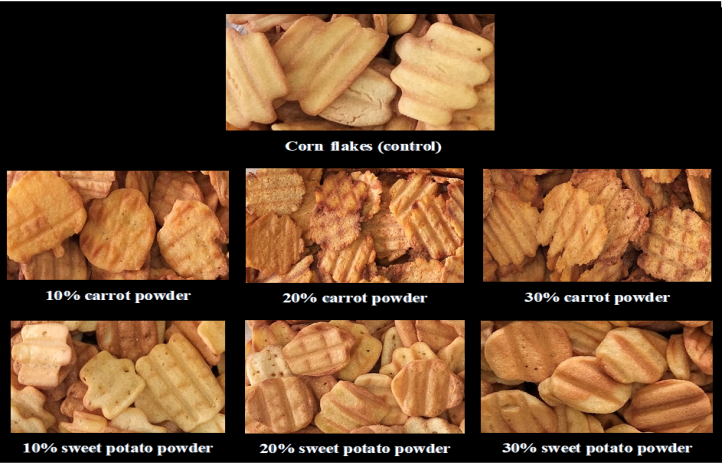
Data in Table 10 and photo 2 showed the sensory evaluation score of substitution with vegetables powder on the cornflakes of the flour mixture (RF + CF). Partial replacement of (RF + CF) with different percentages (10-30%) of carrot powder (CP) and sweet potato powders (PP) led to a decrease or decrease in its sensory evaluation scores. At 30% substitution of CP, the rate of decreasing was recorded -15.50, -14.88, -20.58, -16.64 and -17.47 % for the color, odor, texture, taste, overall acceptability, and total score, respectively. Also, at 30% substitution of PP, the rate of decreasing was recorded -11.84, -8.25, -15.55, -15, -10.60 and -12.23 % for the color, odor, texture, taste, overall acceptability, and total score, respectively. The rate of increasing or decreasing in the bioactive compounds content of the flour mixture (RF+CF) as the result of CP and PP substitution were exhibited a dose-dependent manner.
Generally, the results of the sensory evaluation demonstrated that crackers produced from corn flour and supplemented with (10, 20 and 30%) of carrot powder, and sweet potato powder were acceptable. The present data are in accordance with that obtained by Mashal, 7 and Elhassaneen et al., 76 investigated the effect of different agricultural processing by-products (potato, onion and prickly pear peels powder) at different replacing levels ranging 5-10 % on sensory properties of breads and biscuits and found that over all acceptable breads and biscuits with were obtained by incorporating up to 5%. In similar study, Arepally et al., 77 and Yang et al., 78 reported that the initial acceptance of baked products is much influenced by colour, which can also be an indicator of baking completion. The desirable colour of backed products is mainly due to the Millard browning during baking. However, in carrot and sweet potato powders blended to different products, the colour could be partially contributed by the phenolics and carotenoids in such plant products which imparts a yellowish/brownish colour to the bakery products. Similar data were reported by Brannan et al., 79 and Elhassaneen et al., 76 who observed that an increased flour and thus muffin visual lightness (with more yellowness and brownness rather than dark and yellow green) yield a higher aroma, texture and colour acceptability scores. Data of the sensory evaluation with the chemical, physical and rheological properties of the bakery products incorporated with the tested plant parts recommended the using of such product as an important functional food and could be potentially applied many therapeutic nutrition applications such as celiac patients.
The present study was carried out to investigate the potential effects of mixing plant parts i.e. carrot (CP) and sweet potato (PP) powders on the bioactive and antinutritional compounds content as well as the antioxidant activity of functional foods (gluten-free products) that are suitable for celiac or gluten-sensitivity patients. The partial replacement of rice flour (RF), corn flour (CF), and mixture flour (RF+CF) with different percentages ranged 10 to 30% of CP and PP led to a significant increased (p≤0.05) in total phenolics and flavonoids, and a decrease in tannins, saponins phytates and trypsin inhibitory activity content. Also, substitution of the same ratios of CP and PP led to an increase the antioxidant activity in both composite rice and corn flours. Also, such composite flours used successfully to produce some products, rice cake and corn flakes, functional foods (gluten-free products) with high bioactive compounds content and antioxidant activity Which is likely to lead to a reduction in oxidative stress that may be a cause or result of celiac disease or gluten sensitivity. However, future studies are necessary to test all of these composite flour samples on representative biological models of celiac disease.
The ethical issues of this study was reviewed and approved by the Scientific Research Ethics Committee (SREC, Approval # 20-SREC-04-2022), Faculty of Home Economics, Menoufia University, Shebin El-Kom, Egypt.
The authors declare that they have no conflict of interest in publishing this paper.
The authors would like to express their heartfelt gratitude and appreciation to all staff members, Department of Home Economics, Faculty of Specific Education, Damietta University, Damietta, Egypt. for their assistance in sensory evaluation of the products. Also, deep thanks are also extending to Dr. Mohamed Mahran, Faculty of Home Economics, Menoufia University for assistance in design the graphical abstract.
Yousif Elhassaneen participated in developing the study protocol, retrieving conceptual information, validating the results, statistical analysis and preparing a draft of the paper, performed a critical revision to structure the content intellectually, and gave approval for the final version to be published. Rasha Arafa participated in developing the study protocol, retrieving conceptual information, validating the results, and preparing the draft of the paper. Heba El Kholey made significant contributions to the concept and design of the work and draft paper preparation. Asmaa Gamil conducted the experimental procedures and validations, data acquisition, compilation, analysis, and interpretation and also was involved in retrieving conceptual information and draft paper preparation.
AA, antioxidant activity; Abs, absorbance; BHT, butylated hydroxytoluene ; CAE, catechin equivalents; CF, corn flour; CP, carrot powder; GAE, gallic acid equivalent; RF, rice flour; RF+CF, mixture rice plus corn flours; ROS, reactive oxygen species; PP, sweet potato powder; TIA, trypsin inhibitory activity.
| [1] | Gupta, E. & Mishra, P. 2021. Functional Food with Some Health Benefits, So Called Superfood: A Review. Current Nutrition & Food Science, 17(2), 144-166. | ||
| In article | View Article | ||
| [2] | Ghaly, H. M. 2004. Biochemical and microbiological studies on some spices distributed in Egyptian local markets M. Sc. Thesis in Nutrition and Food Science, Faculty of Home Economics, Minoufiya University, Egypt. | ||
| In article | |||
| [3] | Khoneem, A. S. 2009. Antioxidant activity of some vegetables spices and herbs distributed in Egyptian local markets. M.Sc. Thesis in Nutrition and Food Science, Faculty of Home Economics, Minoufiya University, Egypt. | ||
| In article | |||
| [4] | El-Safty, A. E. 2012. Production of some important nutritional and functional compounds from the by-products of food processing companies. Ph.D. Thesis in Nutrition and Food Science, Faculty of Home Economics, Minoufiya University, Egypt. | ||
| In article | |||
| [5] | Elhassaneen, Y. A., Ragab, S. S. & Ahmed, S. K. 2014. Utilization of by-products of food industries in the production of snacks with high nutritional value and healthy safe. 3rd International-17 th Arab Conference of Home Economics "Home Economics in the Service of Science, Industry and Society Issues" 9-11 September, 2014, Faculty of Home Economics. Minoufiya University, Egypt. Journal of Home Economics (Special issue), 24(4): 111-131. [https://mkas.journals.ekb.eg/?lang=en] [ISSN 1110-2578]. | ||
| In article | |||
| [6] | Elhassaneen, Y. & Esa, Z. 2015. Effect of adding natural extracts on quality properties of meat products subjected to refrigeration process. Journal of Home Economics, 25 (1): 1-14. | ||
| In article | |||
| [7] | Mashal, R. M. 2016. Technological and chemical studies on the fortification of pakery products with phytochemicals. Ph.D. Thesis in Nutrition and Food Science, Faculty of Home Economics, Minoufiya University, Egypt. | ||
| In article | |||
| [8] | Elhassaneen, Y., Ragab, S., Khater, O. & Fati, G. 2016. "Functional foods extracts applied in breads ameliorate liver disorders induced by CCl4 in rats". Journal of Home Economics, 26 (4), 31-49. | ||
| In article | |||
| [9] | Rdwan, H., Abd El-Khalik, D. & Elhassaneen, Y. 2018. Studies on the Antioxidant and Antibacterial Properties of Phyto By-products and Gum Arabic Extracts in Cooked Beef Meatballs. Proceeding of the 5th Scientific (3rd International) Conference of the Faculty of Specific Education, Ain Shamas University, “The Modern Global Orientations and the Development of the Specific Education” 20-22 February, 2018, El-Ain ElSohna, Egypt. | ||
| In article | |||
| [10] | Marzouk, E. M. 2019. Antioxidant activities in some Egyptian herbs: technological and nutritional studies. PhD Thesis in Nutrition and Food Science, Faculty of Specific Education, Port Saied University, Port Said, Egypt. | ||
| In article | |||
| [11] | Gomaa, E., & Elhadidy, G. 2020. Preparation of functional foods free of gluten for celiac disease patients. Journal of Sustainable Agricultural Sciences, 46(1), 13-24. | ||
| In article | |||
| [12] | Marzouk, E., Elhassaneen, Y., ElKhamisy, A. & Sayed-Ahmed, R. 2020. Antioxidant activities and total phenolics content in some Egyptian herbs. Port Saied Specific Research Journal (PSSRJ), 11 (1): 211-228. | ||
| In article | |||
| [13] | Essa, M. M., Bishir, M.,Bhat, A., Chidambaram, S. B., Al-Balushi, B., Hamdan, H. & Qoronfleh, M. W. 2021. Functional foods and their impact on health. Journal of Food Science and Technology, 1-15. | ||
| In article | View Article PubMed | ||
| [14] | Gharib, M. A., Radwan, H. A. & Elhassaneen, Y. A 2022. Nutrients and Nutraceuticals Content and In Vitro Biological Activities of Reishi Mushroom (Ganoderma lucidum) Fruiting Bodies. Alexandria Science Exchange Journal, 43, (2): 301-316. | ||
| In article | View Article | ||
| [15] | Aboraya, A. O., Elhassaneen, Y. A., & Nassar, O. M. 2022. Reishi Mushroom (Ganoderma lucidum) intervension improves lipids profile and paraoxonase/arylesterase activitiesin serum as well as enhances haemostatic effects in streptozotocin-induced diabetic rats. Alexandria Science Exchange Journal, 43, (4): 593-608. | ||
| In article | View Article | ||
| [16] | Mahran, M.Z. & Elhassaneen, Y.A. 2023. Attenuation of Benzo[a]pyrene-Induced Oxidative Stress and Cell Apoptosis in Albino Rats by Wild Milk Thistle (Silybum Marianum L.) Seeds Extrac. Egypt. J. Chem. 66 (SI: 13): 1671 - 1687. | ||
| In article | |||
| [17] | Rotela, S.; Borkar, S. & Borah, A. 2021. Health benefits of millets and their significance as functional food: A review. J. Pharma Innov, 10, 158-162. | ||
| In article | View Article | ||
| [18] | Maluf, S. W., Wilhelm Filho, D., Parisotto, E. B., Medeiros, G. D. S. D., Pereira, C. H. J., Maraslis, F. T. & Fröde, T. S. 2020. DNA damage, oxidative stress, and inflammation in children with celiac disease. Genetics and Molecular Biology, 43(2):e20180390. | ||
| In article | View Article PubMed | ||
| [19] | Keppeler, K., Pesi, A., Lange, S., Helmstädter, J., Strohm, L., Ubbens, H. & Steven, S. 2024. Vascular dysfunction and arterial hypertension in experimental celiac disease are mediated by gut-derived inflammation and oxidative stress. Redox Biology, 70, 103071. | ||
| In article | View Article PubMed | ||
| [20] | Diaz-Castro, J., Muriel-Neyra, C., Martin-Masot, R., Moreno-Fernandez, J., Maldonado, J. & Nestares, T. 2020. Oxidative stress, DNA stability and evoked inflammatory signaling in young celiac patients consuming a gluten-free diet. European journal of nutrition, 59, 1577-1584. | ||
| In article | View Article PubMed | ||
| [21] | Dias, R.; Pereira, C. B., Pérez-Gregorio, R., Mateus, N. & Freitas, V. 2021. Recent advances on dietary polyphenol's potential roles in Celiac Disease. Trends in Food Science & Technology, 107, 213-225. | ||
| In article | View Article | ||
| [22] | Grizzi, F. and Hegazi, M. A. 2024. Functional foods and celiac disease prevalent in North America and globally. In Functional Foods and Chronic Disease (pp. 105-114). Academic Press. | ||
| In article | View Article | ||
| [23] | El-Hadidy, G. S., Shaban, H. H. & Mospah, W. M. 2022. Production and evaluation of gluten-free crackers from rice, lentil, and quinoa flour for celiac disease patients. Journal of Food Research, 11(3), 1-47. | ||
| In article | View Article | ||
| [24] | Mazzola, A. M., Zammarchi, I., Valerii, M. C., Spisni, E., Saracino, I. M., Lanzarotto, F. & Ricci, C. 2024. Gluten-Free Diet and Other Celiac Disease Therapies: Current Understanding and Emerging Strategies. Nutrients, 16(7), 1006. | ||
| In article | View Article PubMed | ||
| [25] | Elmaadawy, A. A., Arafa, R. & Elhassaneen, Y. A. 2016. Oxidative Stress and antioxidant defense systems status in obese rats feeding some selected food processing by-products applied in bread. Journal of Home Economics, 26 (1): 55-91. [https:// mkas.journals.ekb.eg/?lang=en] [ISSN 1110-2578]. | ||
| In article | |||
| [26] | Elbasouny, G., Shehata, N. & Elhassaneen, Y. 2019. Feeding of some selected food industries by-products induced changes in oxidants/antioxidant status, lipids profile, glucose and immunological parameters of blood obese rats. The 6th Scientific and 4th International Conference "The Future of Specific Education and people with Special Needs in Light of the Concept of Quality ", 24-26 February 2019, Faculty of Specific Education, Ain Sokhna University, El-Ain El-Soghna, Egypt. | ||
| In article | |||
| [27] | Elhassaneen, Y. A., Hassab El-Nabi, S. E., Bayomi, A. I. & ElKabary, A. R. 2022. Potential of Watermelon (Citrullis Lanatus) Peel Extract in Attenuating Benzo[a]Pyrene Exposure-Induced Molecular Damage in Liver Cells in vitro. Journal of Biotechnology Research, 8(3): 32-45. | ||
| In article | View Article | ||
| [28] | Elhassaneen, Y. A.; Boraey, R. A. & Nasef, A. Z. 2023. Biological Activities of Ashwagandha (Withania somnifera L.) Roots and their Effect on the Neurological Complications of Obesity in Rats. American Journal of Food and Nutrition, 11(3): 71-88. | ||
| In article | |||
| [29] | Ukeyima, M. T., Dendegh, T. A. & Okeke, P. C. 2019. Effect of carrot powder addition on the quality attributes of cookies produced from wheat and soy flour blends. Asian Food Science Journal, 10(3), 1-13. | ||
| In article | View Article | ||
| [30] | Kumar, R., Samsher, B. R., Chandra, S., Chauhan, N. & Verma, R. 2021. Physico-chemical and functional properties of different flours used for preparation of cookies. The Pharma Innovation Journal, 10, 716-722. | ||
| In article | |||
| [31] | Kamel, D. G., Hammam, A. R., El-Diin, M. A. N., Awasti, N. & Abdel-Rahman, A. M. 2023. Nutritional, antioxidant, and antimicrobial assessment of carrot powder and its application as a functional ingredient in probiotic soft cheese. Journal of Dairy Science, 106(3), 1672-1686. | ||
| In article | View Article PubMed | ||
| [32] | Ghasemzadeh, A., Talei, D., Jaafar, H. Z., Juraimi, A. S., Mohamed, M. T. M., Puteh, A. & Halim, M. R. A. (2016). Plant-growth regulators alter phytochemical constituents and pharmaceutical quality in sweet potato (Ipomoea batatas L.). BMC complementary and alternative medicine, 16, 1-13. | ||
| In article | View Article PubMed | ||
| [33] | Aly, A. S., Elbassyouny, G. M. & Elhassaneen, Y. A., 2017. Studies on the antioxidant properties of vegetables processing by-products extract and their roles in the alleviation of health complications caused by diabetes in rats. Proceeding of the 1st International Conference of the Faculty of Specific Education, Kafrelsheikh University, “Specific Sciences, their Developmental Role and Challenges of Labor Market” PP 1-24, 24-27 October, 2017, Sharm ElSheikh, Egypt. | ||
| In article | |||
| [34] | Hallabo S. A., Helmy, S. A., Elhassaneen, Y. A. & Shaaban, M. 2018. Utilization of mango, onion and potato peels as sources of bioactive compounds in biscuits processing. BIOSCIENCE RESEARCH, 15(4): 3647-3657. | ||
| In article | |||
| [35] | Kim, M. Y., Lee, B. W., Lee, H. U., Lee, Y. Y., Kim, M. H., Lee, J. Y. & Kim, H. J. 2019. Phenolic compounds and antioxidant activity in sweet potato after heat treatment. Journal of the Science of Food and Agriculture, 99(15), 6833-6840. | ||
| In article | View Article PubMed | ||
| [36] | Alam, M. K. 2021. A comprehensive review of sweet potato (Ipomoea batatas [L.] Lam): Revisiting the associated health benefits. Trends in Food Science & Technology, 115, 512-529. | ||
| In article | View Article | ||
| [37] | Kumar, S., Wang, M., Fahad, S.,Qayyum, A., Chen, Y. & Zhu, G. 2022. Chromium induces toxicity at different phenotypic, physiological, biochemical, and ultrastructural levels in sweet potato (Ipomoea batatas L.) plants. International Journal of Molecular Sciences, 23 (21), 13496. | ||
| In article | View Article PubMed | ||
| [38] | Hutasoit, M. S., Julianti, E. & Lubis, Z. 2018. Effect of pretreatment on purple-fleshed sweet potato flour for cake making. In IOP Conference Series: Earth and Environmental Science, 122 (1), 012086). | ||
| In article | View Article | ||
| [39] | Singleton, V. & Rossi, J. 1965. Colorimetry of total phenolics with phosphomolybdic-phosphotungstic acid reagents. Am. J. Enol. Vitic., 16: 144-158. | ||
| In article | View Article | ||
| [40] | Zhishen, J., Mengcheng, T., & Jianming, W. 1999. The determination of flavonoid contents in mulberry and their scavenging effects on superoxide radicals. Food chemistry, 64(4), 555-559. | ||
| In article | View Article | ||
| [41] | Fenwick, D. E. and Oakenfull, D. 1981. Saponin content of soya beans and some commercial soya bean products. Journal of the Science of Food and Agriculture, 32(3), 273-278. | ||
| In article | View Article | ||
| [42] | Mcewan, R. 2008. Anti-nutritional constituent of Colocasia esculenta (Amamdumbe) a traditional crop food in Kwazulu-Natal. Ph.D Thesis, Faculty of Science University of ZuluJand. | ||
| In article | |||
| [43] | Van-Burden, T.P. & Robinson, W.C. 1981. Fonnation of complexes between protein and tannic acid. Journal of Agricultural and Food Chemistry, 1: 77-88. | ||
| In article | |||
| [44] | Smith, C., Van Megen, W., Twaalfhoven, L. & Hitchcock, C. 1980. The determination of trypsin inhibitor levels in foodstuffs. Journal of the Science of Food and Agriculture, 31(4), 341-350. | ||
| In article | View Article PubMed | ||
| [45] | Marco, G. J. 1968. A rapid method for evaluation of antioxidants. J. Am. Oil Chem. Soc., 45: 594-598. | ||
| In article | View Article | ||
| [46] | Al-Saikhan, M. S., Howard, L. R. & Miller, J. C., Jr. 1995. Antioxidant activity and total phenolics in different genotypes of potato (Solanum tuberosum, L.). J. Food Sci., 60 (2), 341-343. | ||
| In article | View Article | ||
| [47] | A.A.C.C. 2000. Approved Methods of the American Association of Cereal Chemists. Published by American Association of Cereal Chemists. Ins. St. Paul. Minnesota, U.S.A | ||
| In article | |||
| [48] | Abd El-latif, M. 1990. Improvement of some bakery products. [Dissertation]. Zagazig, Faculty of Agriculture, Food Tech Zagazig University, Egypt. | ||
| In article | |||
| [49] | Armitage, G.Y. & W.G. Berry. 1987. Statistical methods in Medical Research. Oxford Blackwell Scientific. pp. 39-63. | ||
| In article | |||
| [50] | Šeregelj, V., Vulić, J., Ćetković, G., Čanadanovć-Brunet, J., Šaponjac, V. T. & Stajčić, S. 2020. Natural bioactive compounds in carrot waste for food applications and health benefits. Studies in natural products chemistry, 67, 307-344. | ||
| In article | View Article | ||
| [51] | Blando, F.; Marchello, S.; Maiorano, G.; Durante, M.; Signore, A.; Laus, M. N. & Mita, G. 2021. Bioactive compounds and antioxidant capacity in anthocyanin-rich carrots: A comparison between the black carrot and the Apulian landrace “Polignano” carrot. Plants, 10(3), 564. | ||
| In article | View Article PubMed | ||
| [52] | Yusuf, E., Tkacz, K., Turkiewicz, I. P., Wojdyło, A. & Nowicka, P. 2021. Analysis of chemical compounds’ content in different varieties of carrots, including qualification and quantification of sugars, organic acids, minerals, and bioactive compounds by UPLC. European Food Research and Technology, 247, 3053-3062. | ||
| In article | View Article | ||
| [53] | Esposto, B. S., Pinho, S. G. B., Thomazini, M., Ramos, A. P., Tapia-Blacido, D. R. and Martelli-Tosi, M. 2022. TPP-chitosomes as potential encapsulation system to protect carotenoid-rich extract obtained from carrot by-product: A comparison with liposomes and chitosomes. Food Chemistry, 397, 133857. | ||
| In article | View Article PubMed | ||
| [54] | Anjani, G.; Ayustaningwarno, F. & Eviana, R. 2022. Critical review on the immunomodulatory activities of carrot’s β-carotene and other bioactive compounds. Journal of Functional Foods, 99, 105303. | ||
| In article | View Article | ||
| [55] | Purewal, S. S., Verma, P., Kaur, P., Sandhu, K. S., Singh, R. S., Kaur, A. & Salar, R. K. 2023. A comparative study on proximate composition, mineral profile, bioactive compounds and antioxidant properties in diverse carrot (Daucus carota L.) flour. Biocatalysis and Agricultural Biotechnology, 48, 102640. | ||
| In article | View Article | ||
| [56] | Olatunde, S. J., Ajayi, O. M., Ogunlakin, G. O. & Ajala, A. S. 2019. Nutritional and sensory properties of cake made from blends of pigeon pea, sweet potato and wheat flours. Food Research, 3(5), 456-462. | ||
| In article | View Article | ||
| [57] | Cui, R. and Zhu, F. 2019. Physicochemical properties and bioactive compounds of different varieties of sweet potato flour treated with high hydrostatic pressure. Food chemistry, 299, 125129. | ||
| In article | View Article PubMed | ||
| [58] | Azeem, M., Mu, T. H. & Zhang, M. 2020. Influence of particle size distribution of orange-fleshed sweet potato flour on dough rheology and simulated gastrointestinal digestion of sweet potato-wheat bread. LWT, 131, 109690. | ||
| In article | View Article | ||
| [59] | Gupta, A., Bobade, H., Sharma, R. & Sharma, S. 2024. Technological and Analytical Aspects of Bioactive Compounds and Nutraceuticals from Roots and Tubers Sources. In Bioactive Compounds and Nutraceuticals from Plant Sources (pp. 121-155). Apple Academic Press. | ||
| In article | View Article | ||
| [60] | Elsemelawy, S. A.; Gharib, M.A. & Elhassaneen, Y. A. 2021. Reishi Mushroom (Ganoderma lucidum) Extract Ameliorate Hyperglycemia and Liver/Kidney Functions in Streptozotocin-induced Type 2 Diabetic Rats. Bulletin of the National Nutrition Institute of the Arab Republic of Egypt. 57: 74-107. | ||
| In article | View Article | ||
| [61] | Elhassaneen, Y. A., ElBassouny, G. M., Hassan, R. H. & Meharam, E. 2023. Application of Natural Extracts in Beef Meatballs to Prevent Chemical and Bacteriological Spoilage Agents and Extend its Storage Life. American Journal of Food Science and Technology, 11(4): 118-130. | ||
| In article | View Article | ||
| [62] | Elhassaneen, Y. A., Khader, S. A. & El-aslowty, M. A. 2023. Potential Ameliorative Effects of Graviola (Annona muricata L.) Fruits on Carbon-tetrachloride Induced Hepatic Injury in Rats: Antioxidant, Apoptotic, Anti-inflammatory Markers, and Histopathological Studies. International Journal of Healthcare and Medical Sciences, 9(2): 17-31. | ||
| In article | View Article | ||
| [63] | Mahran, M. Z. & Elhassaneen, Y. A. 2023. A Study of the Physical, Chemical, Phytochemical and Nutritional Properties of Wild Silybum marianum L. Seeds Oil to Investigate Its Potential Use to Boost Edible Oil Self-Sufficiency in Egypt. Alexandria Science Exchange Journal, 44, (1): 81-91. | ||
| In article | View Article | ||
| [64] | Elhassaneen, Y. A.; Tarek A. A., Mona A. E. & Bayomi, A. 2024. Effect of Silybum marianum Seeds Extract Intervention on Biochemical Parameters, Histological Changes, and Apoptosis and Cell Cycle of Liver Tissue in Benzo[a]pyrene Injected Rats. American Journal of Food and Nutrition, 12 (1), 1-15. | ||
| In article | View Article | ||
| [65] | Elhassaneen, Y. A. & Sanad, M. I. 2009. Phenolics, selenium, vitamin C, amino acids and pungency levels and antioxidant activities of two Egyptian onion varieties. American Journal of Food Technology, 4(6), 241-254. | ||
| In article | View Article | ||
| [66] | Elhassaneen, Y., Ragab, S. & Mashal, R. 2016. Improvement of Bioactive Compounds Content and Antioxidant Properties in Crackers with the Incorporation of Prickly Pear and Potato Peels Powder. International Journal of Nutrition and Food Sciences, 5 (1): 53-61. | ||
| In article | View Article | ||
| [67] | Elhassaneen, Y. A., Doaa E. N. & Heba I. G. 2019. Stevia (Stevia rebaudiana) leaves: chemical composition, bioactive compounds, antioxidant activities, antihyperglycemic and antiatherogenic effects. Journal of Studies and Searches of Specific Education, 5(1). | ||
| In article | |||
| [68] | Elhassaneen, Y., Ragab, S. & Essa, E. 2020. Chemical and nutritional studies on extracts of food processing by-products and their effects on obesity complications in rats. Journal of Home Economics, 30(2), 1-26. | ||
| In article | |||
| [69] | Gharib, G., Bütün, İ., Muganlı, Z., Kozalak, G., Namlı, İ., Sarraf, S. S. & Koşar, A. 2022. Biomedical applications of microfluidic devices: a review. Biosensors, 12(11), 1023. | ||
| In article | View Article PubMed | ||
| [70] | Gad Alla, M. A., Fatah, A. A. & Elazab, H. A. 2023. A novel renewable energy powered zero liquid discharge scheme for RO desalination applications. Case Studies in Chemical and Environmental Engineering, 8, 100407. | ||
| In article | View Article | ||
| [71] | Lorent, J. H., Quetin-Leclercq, J. & Mingeot-Leclercq, M. P. 2014. The amphiphilic nature of saponins and their effects on artificial and biological membranes and potential consequences for red blood and cancer cells. Organic & biomolecular chemistry, 12(44), 8803-8822. | ||
| In article | View Article PubMed | ||
| [72] | Sun, H. X., Xie, Y. & Ye, Y.P. 2009. Advances in saponin-based adjuvants. Vaccine. 27 (12): 1787–1796. | ||
| In article | View Article PubMed | ||
| [73] | Rudzani, P. M. 2018. Effects of Carica papaya seed (Linn) meal on health and performance of Jersey Calves, MSc Thesis, University of South Africa, South Africa. | ||
| In article | |||
| [74] | Zhenkai, H. U., Bo, L. E. I., Yongqi, L. I., Youjie, S. H. I., Qikai, L. E. I., & Zhipeng, H. E. 2022. Comparative study on safety test and evaluation methods of lithium-ion batteries for energy storage. Energy Storage Science and Technology, 11(5), 1650. | ||
| In article | |||
| [75] | Swilm, A. G. 2022. Biochemical/Nutritional Studies of Oat (Avena sativa) and its Effects on Obesity Complications in Rats. M.Sc. Thesis in Nutrition and Food Science, Faculty of Specific Education, Benha University, Benha, Egypt. | ||
| In article | |||
| [76] | Elhassaneen, Y., Ragab, S., El-Beltagi, A. and Emad, A. 2013. Mango peel powder: A potential source of phenolics, carotenoids and dietary fiber in Biscuits preparations. 2nd International-16 th Arab Conference of Home Economics "Home Economics in the Service of Industry" 10-11 September, 2013, Faculty of Home Economics. Minoufiya University, Egypt. Journal of Home Economics (Special issue), 23(4): 1-16. [https:// mkas. journals.ekb.eg/ ?lang=en] [ISSN 1110-2578]. | ||
| In article | |||
| [77] | Arepally, D., Reddy, R. S., Goswami, T. K. & Datta, A. K. 2020. Biscuit baking: A review. Lwt, 131, 109726. | ||
| In article | View Article | ||
| [78] | Yang, B., Yin, Y., Liu, C., Zhao, Z. & Guo, M. 2021. Effect of germination time on the compositional, functional and antioxidant properties of whole wheat malt and its end-use evaluation in cookie-making. Food Chemistry, 349, 129125. | ||
| In article | View Article PubMed | ||
| [79] | Brannan, G. L., Setser, C. S., Kemp, K. E., Seib, P. A. & Roozeboom, K. 2001. Sensory characteristics of grain sorghum hybrids with potential for use in human food. Cereal chemistry, 78(6), 693-700. | ||
| In article | View Article | ||
Published with license by Science and Education Publishing, Copyright © 2024 Yousif A. Elhassaneen, Rasha M. Arafa, Heba M. El Kholey and Asmaa S. Gamil
 This work is licensed under a Creative Commons Attribution 4.0 International License. To view a copy of this license, visit
https://creativecommons.org/licenses/by/4.0/
This work is licensed under a Creative Commons Attribution 4.0 International License. To view a copy of this license, visit
https://creativecommons.org/licenses/by/4.0/
| [1] | Gupta, E. & Mishra, P. 2021. Functional Food with Some Health Benefits, So Called Superfood: A Review. Current Nutrition & Food Science, 17(2), 144-166. | ||
| In article | View Article | ||
| [2] | Ghaly, H. M. 2004. Biochemical and microbiological studies on some spices distributed in Egyptian local markets M. Sc. Thesis in Nutrition and Food Science, Faculty of Home Economics, Minoufiya University, Egypt. | ||
| In article | |||
| [3] | Khoneem, A. S. 2009. Antioxidant activity of some vegetables spices and herbs distributed in Egyptian local markets. M.Sc. Thesis in Nutrition and Food Science, Faculty of Home Economics, Minoufiya University, Egypt. | ||
| In article | |||
| [4] | El-Safty, A. E. 2012. Production of some important nutritional and functional compounds from the by-products of food processing companies. Ph.D. Thesis in Nutrition and Food Science, Faculty of Home Economics, Minoufiya University, Egypt. | ||
| In article | |||
| [5] | Elhassaneen, Y. A., Ragab, S. S. & Ahmed, S. K. 2014. Utilization of by-products of food industries in the production of snacks with high nutritional value and healthy safe. 3rd International-17 th Arab Conference of Home Economics "Home Economics in the Service of Science, Industry and Society Issues" 9-11 September, 2014, Faculty of Home Economics. Minoufiya University, Egypt. Journal of Home Economics (Special issue), 24(4): 111-131. [https://mkas.journals.ekb.eg/?lang=en] [ISSN 1110-2578]. | ||
| In article | |||
| [6] | Elhassaneen, Y. & Esa, Z. 2015. Effect of adding natural extracts on quality properties of meat products subjected to refrigeration process. Journal of Home Economics, 25 (1): 1-14. | ||
| In article | |||
| [7] | Mashal, R. M. 2016. Technological and chemical studies on the fortification of pakery products with phytochemicals. Ph.D. Thesis in Nutrition and Food Science, Faculty of Home Economics, Minoufiya University, Egypt. | ||
| In article | |||
| [8] | Elhassaneen, Y., Ragab, S., Khater, O. & Fati, G. 2016. "Functional foods extracts applied in breads ameliorate liver disorders induced by CCl4 in rats". Journal of Home Economics, 26 (4), 31-49. | ||
| In article | |||
| [9] | Rdwan, H., Abd El-Khalik, D. & Elhassaneen, Y. 2018. Studies on the Antioxidant and Antibacterial Properties of Phyto By-products and Gum Arabic Extracts in Cooked Beef Meatballs. Proceeding of the 5th Scientific (3rd International) Conference of the Faculty of Specific Education, Ain Shamas University, “The Modern Global Orientations and the Development of the Specific Education” 20-22 February, 2018, El-Ain ElSohna, Egypt. | ||
| In article | |||
| [10] | Marzouk, E. M. 2019. Antioxidant activities in some Egyptian herbs: technological and nutritional studies. PhD Thesis in Nutrition and Food Science, Faculty of Specific Education, Port Saied University, Port Said, Egypt. | ||
| In article | |||
| [11] | Gomaa, E., & Elhadidy, G. 2020. Preparation of functional foods free of gluten for celiac disease patients. Journal of Sustainable Agricultural Sciences, 46(1), 13-24. | ||
| In article | |||
| [12] | Marzouk, E., Elhassaneen, Y., ElKhamisy, A. & Sayed-Ahmed, R. 2020. Antioxidant activities and total phenolics content in some Egyptian herbs. Port Saied Specific Research Journal (PSSRJ), 11 (1): 211-228. | ||
| In article | |||
| [13] | Essa, M. M., Bishir, M.,Bhat, A., Chidambaram, S. B., Al-Balushi, B., Hamdan, H. & Qoronfleh, M. W. 2021. Functional foods and their impact on health. Journal of Food Science and Technology, 1-15. | ||
| In article | View Article PubMed | ||
| [14] | Gharib, M. A., Radwan, H. A. & Elhassaneen, Y. A 2022. Nutrients and Nutraceuticals Content and In Vitro Biological Activities of Reishi Mushroom (Ganoderma lucidum) Fruiting Bodies. Alexandria Science Exchange Journal, 43, (2): 301-316. | ||
| In article | View Article | ||
| [15] | Aboraya, A. O., Elhassaneen, Y. A., & Nassar, O. M. 2022. Reishi Mushroom (Ganoderma lucidum) intervension improves lipids profile and paraoxonase/arylesterase activitiesin serum as well as enhances haemostatic effects in streptozotocin-induced diabetic rats. Alexandria Science Exchange Journal, 43, (4): 593-608. | ||
| In article | View Article | ||
| [16] | Mahran, M.Z. & Elhassaneen, Y.A. 2023. Attenuation of Benzo[a]pyrene-Induced Oxidative Stress and Cell Apoptosis in Albino Rats by Wild Milk Thistle (Silybum Marianum L.) Seeds Extrac. Egypt. J. Chem. 66 (SI: 13): 1671 - 1687. | ||
| In article | |||
| [17] | Rotela, S.; Borkar, S. & Borah, A. 2021. Health benefits of millets and their significance as functional food: A review. J. Pharma Innov, 10, 158-162. | ||
| In article | View Article | ||
| [18] | Maluf, S. W., Wilhelm Filho, D., Parisotto, E. B., Medeiros, G. D. S. D., Pereira, C. H. J., Maraslis, F. T. & Fröde, T. S. 2020. DNA damage, oxidative stress, and inflammation in children with celiac disease. Genetics and Molecular Biology, 43(2):e20180390. | ||
| In article | View Article PubMed | ||
| [19] | Keppeler, K., Pesi, A., Lange, S., Helmstädter, J., Strohm, L., Ubbens, H. & Steven, S. 2024. Vascular dysfunction and arterial hypertension in experimental celiac disease are mediated by gut-derived inflammation and oxidative stress. Redox Biology, 70, 103071. | ||
| In article | View Article PubMed | ||
| [20] | Diaz-Castro, J., Muriel-Neyra, C., Martin-Masot, R., Moreno-Fernandez, J., Maldonado, J. & Nestares, T. 2020. Oxidative stress, DNA stability and evoked inflammatory signaling in young celiac patients consuming a gluten-free diet. European journal of nutrition, 59, 1577-1584. | ||
| In article | View Article PubMed | ||
| [21] | Dias, R.; Pereira, C. B., Pérez-Gregorio, R., Mateus, N. & Freitas, V. 2021. Recent advances on dietary polyphenol's potential roles in Celiac Disease. Trends in Food Science & Technology, 107, 213-225. | ||
| In article | View Article | ||
| [22] | Grizzi, F. and Hegazi, M. A. 2024. Functional foods and celiac disease prevalent in North America and globally. In Functional Foods and Chronic Disease (pp. 105-114). Academic Press. | ||
| In article | View Article | ||
| [23] | El-Hadidy, G. S., Shaban, H. H. & Mospah, W. M. 2022. Production and evaluation of gluten-free crackers from rice, lentil, and quinoa flour for celiac disease patients. Journal of Food Research, 11(3), 1-47. | ||
| In article | View Article | ||
| [24] | Mazzola, A. M., Zammarchi, I., Valerii, M. C., Spisni, E., Saracino, I. M., Lanzarotto, F. & Ricci, C. 2024. Gluten-Free Diet and Other Celiac Disease Therapies: Current Understanding and Emerging Strategies. Nutrients, 16(7), 1006. | ||
| In article | View Article PubMed | ||
| [25] | Elmaadawy, A. A., Arafa, R. & Elhassaneen, Y. A. 2016. Oxidative Stress and antioxidant defense systems status in obese rats feeding some selected food processing by-products applied in bread. Journal of Home Economics, 26 (1): 55-91. [https:// mkas.journals.ekb.eg/?lang=en] [ISSN 1110-2578]. | ||
| In article | |||
| [26] | Elbasouny, G., Shehata, N. & Elhassaneen, Y. 2019. Feeding of some selected food industries by-products induced changes in oxidants/antioxidant status, lipids profile, glucose and immunological parameters of blood obese rats. The 6th Scientific and 4th International Conference "The Future of Specific Education and people with Special Needs in Light of the Concept of Quality ", 24-26 February 2019, Faculty of Specific Education, Ain Sokhna University, El-Ain El-Soghna, Egypt. | ||
| In article | |||
| [27] | Elhassaneen, Y. A., Hassab El-Nabi, S. E., Bayomi, A. I. & ElKabary, A. R. 2022. Potential of Watermelon (Citrullis Lanatus) Peel Extract in Attenuating Benzo[a]Pyrene Exposure-Induced Molecular Damage in Liver Cells in vitro. Journal of Biotechnology Research, 8(3): 32-45. | ||
| In article | View Article | ||
| [28] | Elhassaneen, Y. A.; Boraey, R. A. & Nasef, A. Z. 2023. Biological Activities of Ashwagandha (Withania somnifera L.) Roots and their Effect on the Neurological Complications of Obesity in Rats. American Journal of Food and Nutrition, 11(3): 71-88. | ||
| In article | |||
| [29] | Ukeyima, M. T., Dendegh, T. A. & Okeke, P. C. 2019. Effect of carrot powder addition on the quality attributes of cookies produced from wheat and soy flour blends. Asian Food Science Journal, 10(3), 1-13. | ||
| In article | View Article | ||
| [30] | Kumar, R., Samsher, B. R., Chandra, S., Chauhan, N. & Verma, R. 2021. Physico-chemical and functional properties of different flours used for preparation of cookies. The Pharma Innovation Journal, 10, 716-722. | ||
| In article | |||
| [31] | Kamel, D. G., Hammam, A. R., El-Diin, M. A. N., Awasti, N. & Abdel-Rahman, A. M. 2023. Nutritional, antioxidant, and antimicrobial assessment of carrot powder and its application as a functional ingredient in probiotic soft cheese. Journal of Dairy Science, 106(3), 1672-1686. | ||
| In article | View Article PubMed | ||
| [32] | Ghasemzadeh, A., Talei, D., Jaafar, H. Z., Juraimi, A. S., Mohamed, M. T. M., Puteh, A. & Halim, M. R. A. (2016). Plant-growth regulators alter phytochemical constituents and pharmaceutical quality in sweet potato (Ipomoea batatas L.). BMC complementary and alternative medicine, 16, 1-13. | ||
| In article | View Article PubMed | ||
| [33] | Aly, A. S., Elbassyouny, G. M. & Elhassaneen, Y. A., 2017. Studies on the antioxidant properties of vegetables processing by-products extract and their roles in the alleviation of health complications caused by diabetes in rats. Proceeding of the 1st International Conference of the Faculty of Specific Education, Kafrelsheikh University, “Specific Sciences, their Developmental Role and Challenges of Labor Market” PP 1-24, 24-27 October, 2017, Sharm ElSheikh, Egypt. | ||
| In article | |||
| [34] | Hallabo S. A., Helmy, S. A., Elhassaneen, Y. A. & Shaaban, M. 2018. Utilization of mango, onion and potato peels as sources of bioactive compounds in biscuits processing. BIOSCIENCE RESEARCH, 15(4): 3647-3657. | ||
| In article | |||
| [35] | Kim, M. Y., Lee, B. W., Lee, H. U., Lee, Y. Y., Kim, M. H., Lee, J. Y. & Kim, H. J. 2019. Phenolic compounds and antioxidant activity in sweet potato after heat treatment. Journal of the Science of Food and Agriculture, 99(15), 6833-6840. | ||
| In article | View Article PubMed | ||
| [36] | Alam, M. K. 2021. A comprehensive review of sweet potato (Ipomoea batatas [L.] Lam): Revisiting the associated health benefits. Trends in Food Science & Technology, 115, 512-529. | ||
| In article | View Article | ||
| [37] | Kumar, S., Wang, M., Fahad, S.,Qayyum, A., Chen, Y. & Zhu, G. 2022. Chromium induces toxicity at different phenotypic, physiological, biochemical, and ultrastructural levels in sweet potato (Ipomoea batatas L.) plants. International Journal of Molecular Sciences, 23 (21), 13496. | ||
| In article | View Article PubMed | ||
| [38] | Hutasoit, M. S., Julianti, E. & Lubis, Z. 2018. Effect of pretreatment on purple-fleshed sweet potato flour for cake making. In IOP Conference Series: Earth and Environmental Science, 122 (1), 012086). | ||
| In article | View Article | ||
| [39] | Singleton, V. & Rossi, J. 1965. Colorimetry of total phenolics with phosphomolybdic-phosphotungstic acid reagents. Am. J. Enol. Vitic., 16: 144-158. | ||
| In article | View Article | ||
| [40] | Zhishen, J., Mengcheng, T., & Jianming, W. 1999. The determination of flavonoid contents in mulberry and their scavenging effects on superoxide radicals. Food chemistry, 64(4), 555-559. | ||
| In article | View Article | ||
| [41] | Fenwick, D. E. and Oakenfull, D. 1981. Saponin content of soya beans and some commercial soya bean products. Journal of the Science of Food and Agriculture, 32(3), 273-278. | ||
| In article | View Article | ||
| [42] | Mcewan, R. 2008. Anti-nutritional constituent of Colocasia esculenta (Amamdumbe) a traditional crop food in Kwazulu-Natal. Ph.D Thesis, Faculty of Science University of ZuluJand. | ||
| In article | |||
| [43] | Van-Burden, T.P. & Robinson, W.C. 1981. Fonnation of complexes between protein and tannic acid. Journal of Agricultural and Food Chemistry, 1: 77-88. | ||
| In article | |||
| [44] | Smith, C., Van Megen, W., Twaalfhoven, L. & Hitchcock, C. 1980. The determination of trypsin inhibitor levels in foodstuffs. Journal of the Science of Food and Agriculture, 31(4), 341-350. | ||
| In article | View Article PubMed | ||
| [45] | Marco, G. J. 1968. A rapid method for evaluation of antioxidants. J. Am. Oil Chem. Soc., 45: 594-598. | ||
| In article | View Article | ||
| [46] | Al-Saikhan, M. S., Howard, L. R. & Miller, J. C., Jr. 1995. Antioxidant activity and total phenolics in different genotypes of potato (Solanum tuberosum, L.). J. Food Sci., 60 (2), 341-343. | ||
| In article | View Article | ||
| [47] | A.A.C.C. 2000. Approved Methods of the American Association of Cereal Chemists. Published by American Association of Cereal Chemists. Ins. St. Paul. Minnesota, U.S.A | ||
| In article | |||
| [48] | Abd El-latif, M. 1990. Improvement of some bakery products. [Dissertation]. Zagazig, Faculty of Agriculture, Food Tech Zagazig University, Egypt. | ||
| In article | |||
| [49] | Armitage, G.Y. & W.G. Berry. 1987. Statistical methods in Medical Research. Oxford Blackwell Scientific. pp. 39-63. | ||
| In article | |||
| [50] | Šeregelj, V., Vulić, J., Ćetković, G., Čanadanovć-Brunet, J., Šaponjac, V. T. & Stajčić, S. 2020. Natural bioactive compounds in carrot waste for food applications and health benefits. Studies in natural products chemistry, 67, 307-344. | ||
| In article | View Article | ||
| [51] | Blando, F.; Marchello, S.; Maiorano, G.; Durante, M.; Signore, A.; Laus, M. N. & Mita, G. 2021. Bioactive compounds and antioxidant capacity in anthocyanin-rich carrots: A comparison between the black carrot and the Apulian landrace “Polignano” carrot. Plants, 10(3), 564. | ||
| In article | View Article PubMed | ||
| [52] | Yusuf, E., Tkacz, K., Turkiewicz, I. P., Wojdyło, A. & Nowicka, P. 2021. Analysis of chemical compounds’ content in different varieties of carrots, including qualification and quantification of sugars, organic acids, minerals, and bioactive compounds by UPLC. European Food Research and Technology, 247, 3053-3062. | ||
| In article | View Article | ||
| [53] | Esposto, B. S., Pinho, S. G. B., Thomazini, M., Ramos, A. P., Tapia-Blacido, D. R. and Martelli-Tosi, M. 2022. TPP-chitosomes as potential encapsulation system to protect carotenoid-rich extract obtained from carrot by-product: A comparison with liposomes and chitosomes. Food Chemistry, 397, 133857. | ||
| In article | View Article PubMed | ||
| [54] | Anjani, G.; Ayustaningwarno, F. & Eviana, R. 2022. Critical review on the immunomodulatory activities of carrot’s β-carotene and other bioactive compounds. Journal of Functional Foods, 99, 105303. | ||
| In article | View Article | ||
| [55] | Purewal, S. S., Verma, P., Kaur, P., Sandhu, K. S., Singh, R. S., Kaur, A. & Salar, R. K. 2023. A comparative study on proximate composition, mineral profile, bioactive compounds and antioxidant properties in diverse carrot (Daucus carota L.) flour. Biocatalysis and Agricultural Biotechnology, 48, 102640. | ||
| In article | View Article | ||
| [56] | Olatunde, S. J., Ajayi, O. M., Ogunlakin, G. O. & Ajala, A. S. 2019. Nutritional and sensory properties of cake made from blends of pigeon pea, sweet potato and wheat flours. Food Research, 3(5), 456-462. | ||
| In article | View Article | ||
| [57] | Cui, R. and Zhu, F. 2019. Physicochemical properties and bioactive compounds of different varieties of sweet potato flour treated with high hydrostatic pressure. Food chemistry, 299, 125129. | ||
| In article | View Article PubMed | ||
| [58] | Azeem, M., Mu, T. H. & Zhang, M. 2020. Influence of particle size distribution of orange-fleshed sweet potato flour on dough rheology and simulated gastrointestinal digestion of sweet potato-wheat bread. LWT, 131, 109690. | ||
| In article | View Article | ||
| [59] | Gupta, A., Bobade, H., Sharma, R. & Sharma, S. 2024. Technological and Analytical Aspects of Bioactive Compounds and Nutraceuticals from Roots and Tubers Sources. In Bioactive Compounds and Nutraceuticals from Plant Sources (pp. 121-155). Apple Academic Press. | ||
| In article | View Article | ||
| [60] | Elsemelawy, S. A.; Gharib, M.A. & Elhassaneen, Y. A. 2021. Reishi Mushroom (Ganoderma lucidum) Extract Ameliorate Hyperglycemia and Liver/Kidney Functions in Streptozotocin-induced Type 2 Diabetic Rats. Bulletin of the National Nutrition Institute of the Arab Republic of Egypt. 57: 74-107. | ||
| In article | View Article | ||
| [61] | Elhassaneen, Y. A., ElBassouny, G. M., Hassan, R. H. & Meharam, E. 2023. Application of Natural Extracts in Beef Meatballs to Prevent Chemical and Bacteriological Spoilage Agents and Extend its Storage Life. American Journal of Food Science and Technology, 11(4): 118-130. | ||
| In article | View Article | ||
| [62] | Elhassaneen, Y. A., Khader, S. A. & El-aslowty, M. A. 2023. Potential Ameliorative Effects of Graviola (Annona muricata L.) Fruits on Carbon-tetrachloride Induced Hepatic Injury in Rats: Antioxidant, Apoptotic, Anti-inflammatory Markers, and Histopathological Studies. International Journal of Healthcare and Medical Sciences, 9(2): 17-31. | ||
| In article | View Article | ||
| [63] | Mahran, M. Z. & Elhassaneen, Y. A. 2023. A Study of the Physical, Chemical, Phytochemical and Nutritional Properties of Wild Silybum marianum L. Seeds Oil to Investigate Its Potential Use to Boost Edible Oil Self-Sufficiency in Egypt. Alexandria Science Exchange Journal, 44, (1): 81-91. | ||
| In article | View Article | ||
| [64] | Elhassaneen, Y. A.; Tarek A. A., Mona A. E. & Bayomi, A. 2024. Effect of Silybum marianum Seeds Extract Intervention on Biochemical Parameters, Histological Changes, and Apoptosis and Cell Cycle of Liver Tissue in Benzo[a]pyrene Injected Rats. American Journal of Food and Nutrition, 12 (1), 1-15. | ||
| In article | View Article | ||
| [65] | Elhassaneen, Y. A. & Sanad, M. I. 2009. Phenolics, selenium, vitamin C, amino acids and pungency levels and antioxidant activities of two Egyptian onion varieties. American Journal of Food Technology, 4(6), 241-254. | ||
| In article | View Article | ||
| [66] | Elhassaneen, Y., Ragab, S. & Mashal, R. 2016. Improvement of Bioactive Compounds Content and Antioxidant Properties in Crackers with the Incorporation of Prickly Pear and Potato Peels Powder. International Journal of Nutrition and Food Sciences, 5 (1): 53-61. | ||
| In article | View Article | ||
| [67] | Elhassaneen, Y. A., Doaa E. N. & Heba I. G. 2019. Stevia (Stevia rebaudiana) leaves: chemical composition, bioactive compounds, antioxidant activities, antihyperglycemic and antiatherogenic effects. Journal of Studies and Searches of Specific Education, 5(1). | ||
| In article | |||
| [68] | Elhassaneen, Y., Ragab, S. & Essa, E. 2020. Chemical and nutritional studies on extracts of food processing by-products and their effects on obesity complications in rats. Journal of Home Economics, 30(2), 1-26. | ||
| In article | |||
| [69] | Gharib, G., Bütün, İ., Muganlı, Z., Kozalak, G., Namlı, İ., Sarraf, S. S. & Koşar, A. 2022. Biomedical applications of microfluidic devices: a review. Biosensors, 12(11), 1023. | ||
| In article | View Article PubMed | ||
| [70] | Gad Alla, M. A., Fatah, A. A. & Elazab, H. A. 2023. A novel renewable energy powered zero liquid discharge scheme for RO desalination applications. Case Studies in Chemical and Environmental Engineering, 8, 100407. | ||
| In article | View Article | ||
| [71] | Lorent, J. H., Quetin-Leclercq, J. & Mingeot-Leclercq, M. P. 2014. The amphiphilic nature of saponins and their effects on artificial and biological membranes and potential consequences for red blood and cancer cells. Organic & biomolecular chemistry, 12(44), 8803-8822. | ||
| In article | View Article PubMed | ||
| [72] | Sun, H. X., Xie, Y. & Ye, Y.P. 2009. Advances in saponin-based adjuvants. Vaccine. 27 (12): 1787–1796. | ||
| In article | View Article PubMed | ||
| [73] | Rudzani, P. M. 2018. Effects of Carica papaya seed (Linn) meal on health and performance of Jersey Calves, MSc Thesis, University of South Africa, South Africa. | ||
| In article | |||
| [74] | Zhenkai, H. U., Bo, L. E. I., Yongqi, L. I., Youjie, S. H. I., Qikai, L. E. I., & Zhipeng, H. E. 2022. Comparative study on safety test and evaluation methods of lithium-ion batteries for energy storage. Energy Storage Science and Technology, 11(5), 1650. | ||
| In article | |||
| [75] | Swilm, A. G. 2022. Biochemical/Nutritional Studies of Oat (Avena sativa) and its Effects on Obesity Complications in Rats. M.Sc. Thesis in Nutrition and Food Science, Faculty of Specific Education, Benha University, Benha, Egypt. | ||
| In article | |||
| [76] | Elhassaneen, Y., Ragab, S., El-Beltagi, A. and Emad, A. 2013. Mango peel powder: A potential source of phenolics, carotenoids and dietary fiber in Biscuits preparations. 2nd International-16 th Arab Conference of Home Economics "Home Economics in the Service of Industry" 10-11 September, 2013, Faculty of Home Economics. Minoufiya University, Egypt. Journal of Home Economics (Special issue), 23(4): 1-16. [https:// mkas. journals.ekb.eg/ ?lang=en] [ISSN 1110-2578]. | ||
| In article | |||
| [77] | Arepally, D., Reddy, R. S., Goswami, T. K. & Datta, A. K. 2020. Biscuit baking: A review. Lwt, 131, 109726. | ||
| In article | View Article | ||
| [78] | Yang, B., Yin, Y., Liu, C., Zhao, Z. & Guo, M. 2021. Effect of germination time on the compositional, functional and antioxidant properties of whole wheat malt and its end-use evaluation in cookie-making. Food Chemistry, 349, 129125. | ||
| In article | View Article PubMed | ||
| [79] | Brannan, G. L., Setser, C. S., Kemp, K. E., Seib, P. A. & Roozeboom, K. 2001. Sensory characteristics of grain sorghum hybrids with potential for use in human food. Cereal chemistry, 78(6), 693-700. | ||
| In article | View Article | ||