In this study, curcumin nanoemulsion (CR-NE) was used in the preparation of processed cheese as a functional and healthy ingredient. Curcumin nanoemulsion showed higher antibacterial activity against Staphylococcus aureus, Clostridium sporogenes, Escherichia coli, Klebsiella pneumoniae and Pseudomonas marginalis strains. Curcumin nanoemulsion was added to processed cheese formula by ratio 2.5% and 5% (T1 and T2) to reach a final concentration of 25 mg and 50 mg of nanocurcumin/kg processed cheese, respectively, and physicochemical, textural, microstructure, and organoleptic properties were tested. The results showed that the addition of CR-NE improved the physicochemical, microstructure, and textural properties of processed cheese during cold storage at 4°C for 60 days. Curcumin nanoemulsion decreased the loss of moisture during storage. The hardness of cheese containing CR-NE was slightly changed during storage compared with control samples. The T1 samples recorded the best sensory evaluation scores compared with T2 samples. No significant differences were found in acceptability between T1 samples and control samples during storage. The T1 processed cheese samples obtained represent high quality and healthy product that adds value to the dairy sector.
Processed cheese is a popular and traditional gel-like dairy product consumed in many countries; their demand by the consumers is on a steady rise 1. Their success is due to a combination of factors such as they are more economical than most natural cheeses since they usually contain inexpensive non-dairy ingredients; they are commercially available in a wide variety of flavors, consistency, and functional properties 2, 3. Processed cheese is a dairy product which differs from natural cheese in the fact that process cheese is not made directly from milk 4. The fortification of processed cheese types with bioactive components has increased in recent years, such as the incorporation of dried materials, essential oils, carrot paste, apricot pulp, tomato juice and medicinal herbs extract into cheeses which resulted in improvement of nutritional value and sensory properties and decreased the deterioration process of quality parameters in different cheese types 5, 6, 7, 8, 9. The addition of bioactive compounds in processed cheese could affect not only the taste but also the consistency 10.
Curcumin, a phenolic pigment found in the rhizome of turmeric (Curcuma Longa), and widely used as an ingredient in foods (seasoning and coloring agent) and medicines in many countries 11. Studies investigated the physicochemical characteristics and pharmacological effects of curcumin on various diseases like diabetic nephropathy, cardiovascular diseases, cancer (pancreatic cancer, colon cancer, multiple myeloma, psoriasis, oral cancers, pre-cancerous lesion), rheumatoid arthritis, inflammatory bowel disease (IBD), Alzheimer’s, periodontal disease and wound healing 12, 13, 14, 15. The wonderful nutritional and medicinal impacts of curcumin made it a good substitutional to some conventional drugs and food flavouring or colouring materials. But, the low solubility of curcumin is a challenging hindrance 16. Also, The poor solubility of curcumin in aqueous solvents leading to low absorption, fast metabolism, and quick systematic elimination 17. To enhancing the bioavailability and biological activity of curcumin, the structural modifications are recommended 18.
In the last few years, many studies investigated the increased of curcumin solubility via nano-sizing, recrystallization and loading in a biodegradable polymeric 19. The physicochemical properties of nanocurcumin (NC) are playing an important role in the alteration of normal curcumin into the nanoform 20. Particle size, surface charge, surface area, and hydrophobicity are very important physicochemical properties that make nanocurcumin more effective than native curcumin 21. Curcumin nanoparticles exhibit higher have more antioxidant activities in vivo and in vitro than its native curcumin 22, 23. The increase in antimicrobial activity of NC than curcumin due to the increase in aqueous-phase solubility and simple dispersibility 20.
There are bioactive compounds (such as poly phenols) that are difficult to incorporate into foods; these compounds are non-polar with poor solubility in water and high melting points. The use of nanoemulsions is an excellent method used to incorporate these bioactive compounds into foods 24, 25, 26, 27. The nanosystems have a greater surface area, reactivity, solubility, and availability of compounds, and they have the capability to react with the food components to decrease the physiological and enzymatic reactions, and producing novel products 28. Nanoemulsions appear as one of the systems that have shown the greater interest for utilization as ingredients in the food industry, generally because of the different methods for their preparation, as well as being considered as stable systems for the encapsulation of bioactive substances 29, 30. Nanoemulsions and nanosized ingredients act as a viable alternative in the development of new products for including components with specific functions 31, 32. Nanoemulsion was used to increase the solubility and bioavilabilty of curcumin 33, 34. The aim of this study was to investigate the effect of curcumin nanoemulsion as a functional ingredient on the texture, microstructure, and organoleptic properties of processed cheese during cold storage at 4°C for 60 days.
Curcumin powder was obtained from Sigma- Aldrich, St. Louis, MO, USA. Cheddar cheese (6 months old, 62.4% DM, 25% protein and 34% fat) and Butter 82% fat were obtained from Al Sakr for food products (Rotana), Alexandria, Egypt. Milk protein concentrate (70% protein) and cow skim milk powder (34% protein) were obtained from Fonterra Ltd, Auckland, New Zealand. Emulsifying salt (Egy Phos S20) was obtained from EGY-Dairy Company, 10th of Ramadan City, Egypt.
2.2. MethodsCR-NE was prepared according to the method of 35 with some modifications. Curcumin was entrapped in an oil phase (coconut oil) at a final concentration of 1mg/mL. The organic phase (acetone) was prepared, containing medium-chain-triglycerides and natural phospholipids (Lipoid Co. Nattermannallee, Germany) at 55°C. Subsequently, this organic solution was added to the aqueous phase, containing an anionic surfactant, poloxamer 188 (Sigma-Aldrich Co., St. Louis, MO, USA). In the final step, the organic solvent was fully removed using a rotary evaporator (STRIKE®201 rotary evaporator instruments KENTRON) under reduced pressure at 60°C. All samples were prepared in aseptic conditions and in the absence of contaminants and chemicals interference.
1- Transmission electron microscopy (TEM)
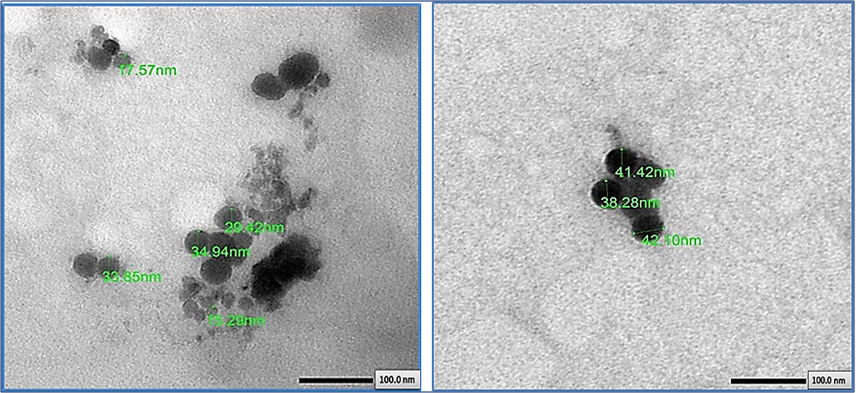
The size and shape of the prepared CR-NE were determined by TEM (JEOL-100 CX), NE was diluted with distilled water (1:4), then sonicated for 10 minutes. A drop of the suspension was placed on a 200-mesh carbon-coated copper grid at room temperature. Grids containing the samples were dried in the air, negatively stained using 2% uranyl acetate, and allowed to dry at room temperature. The grids containing samples were used for TEM examination.
2- Particle size analysis and zeta potential measurements
Hydrodynamic particle size, size distribution (polydispersity index, PDI), and zeta potential of CR-NE were measured by Zetasizer (particle size and zeta potential analyzer) based on laser light scattering technique.
3-Stability of the CR-NE
Stability of CR-NE was assessed by monitoring the change in phase separation, creaming, and discoloration after storage for 2 months at room temperature. A formulation was kept in a dry and dark place at room temperature.
1. Microorganisms and culture conditions
Five pathogenic strains were used to scan CR-NE antimicrobial potentials; two Gram-positive strains; Staphylococcus aureus NCTC10788 and Clostridium sporogenes ATCC3584, three Gram-negative strains; Escherichia coli ATCC25922, Klebsiella pneumoniae EMCC1637 and Pseudomonas marginalis EMCC1271. All strains were obtained from Microbiological Resources Center (MERCIN), Faculty of Agriculture, Ain Shams University, Cairo, Egypt. The test was held and the strains were maintained in 60% glycerol/ LB culture at -80°C by; the Department of Food Technology, Arid Lands Cultivation Research Institute, City of Scientific Research and Technological Applications, Egypt.
2. Minimum Inhibitory Concentration (MIC) determination
To examine antimicrobial activity of curcumin nanoemulsion, agar well diffusion assay was used 36, against pathogenic bacteria. The bacterial strains were grown in nutrient broth at 37°C for 24 h. Briefly, 100 µL of overnight activated culture of each pathogen strain (106 CFU/mL) were aseptically spread over Nutrient agar plates. About 100 µL of nanoemulsion (100 µg/mL) was transferred into each agar well individually. The plates were then incubated at 37°C for 18 h and the formed clear zones (if found) were measured and recorded. A set of 4 concentrations of CR-NE (100, 50, 25 and 12.5 µg curcumin/mL), were examined to determine the minimum inhibitory concentration (MIC) of each against a specific pathogenic strains 37. DEMSO was used for dilutions and a control well was applied. The zones of inhibition were calculated by measuring the diameter of the inhibition zone around the well 5 (mm), including the well diameter. The readings were taken in three different fixed directions in all duplicates and the average values were tabulated.
Processed cheese was prepared according the method of 38 with some modifications, by blending the dry ingredients with previously warmed milk fat (60°C) Table 1, into a processing kettle. The first treatment was kept as control (C). Curcumin nanoemulsion was added to treatment T1 and T2 by ratio 2.5 and 5.0% to reach final concentration 25 and 50 mg NC/kg cheese, respectively, depending on the MIC of CR-NE. Warmed distilled water (60°C) was added to assure that the moisture content of the processed cheese is controlled at approximately 60 ± 1.0% (w/w). Cooking was carried out at 86°C with continuous agitation for 4 minutes. The processed cheese was cooled to 70°C and packed. Processed cheese samples were stored at 4±1°C for 60 days.
Chemical analysis of processed cheese (protein %, fat % and dray matter % (DM %)) was carried out according the AOAC procedures 39. The pH of homogenized processed cheese was determined using pH meter (Jenway, UK).
The textural analysis of processed cheese samples was performed using a texture analyzer (Stable Micro Systems Ltd. Vienna court, Lammas TA.XT. Plus) based on the procedure stated by 40. Cone Probe with a 35 mm diameter was used in the test. The optimized test condition was 60 mm back-off distance to sample, deformation ratio 35%, speed of test 60 mm per min, and force of trigger 0.15N. The Hardness (N), adhesiveness (N/s), springiness (m), cohesiveness, gumminess, and chewiness of processed cheese were measured at 20°C.
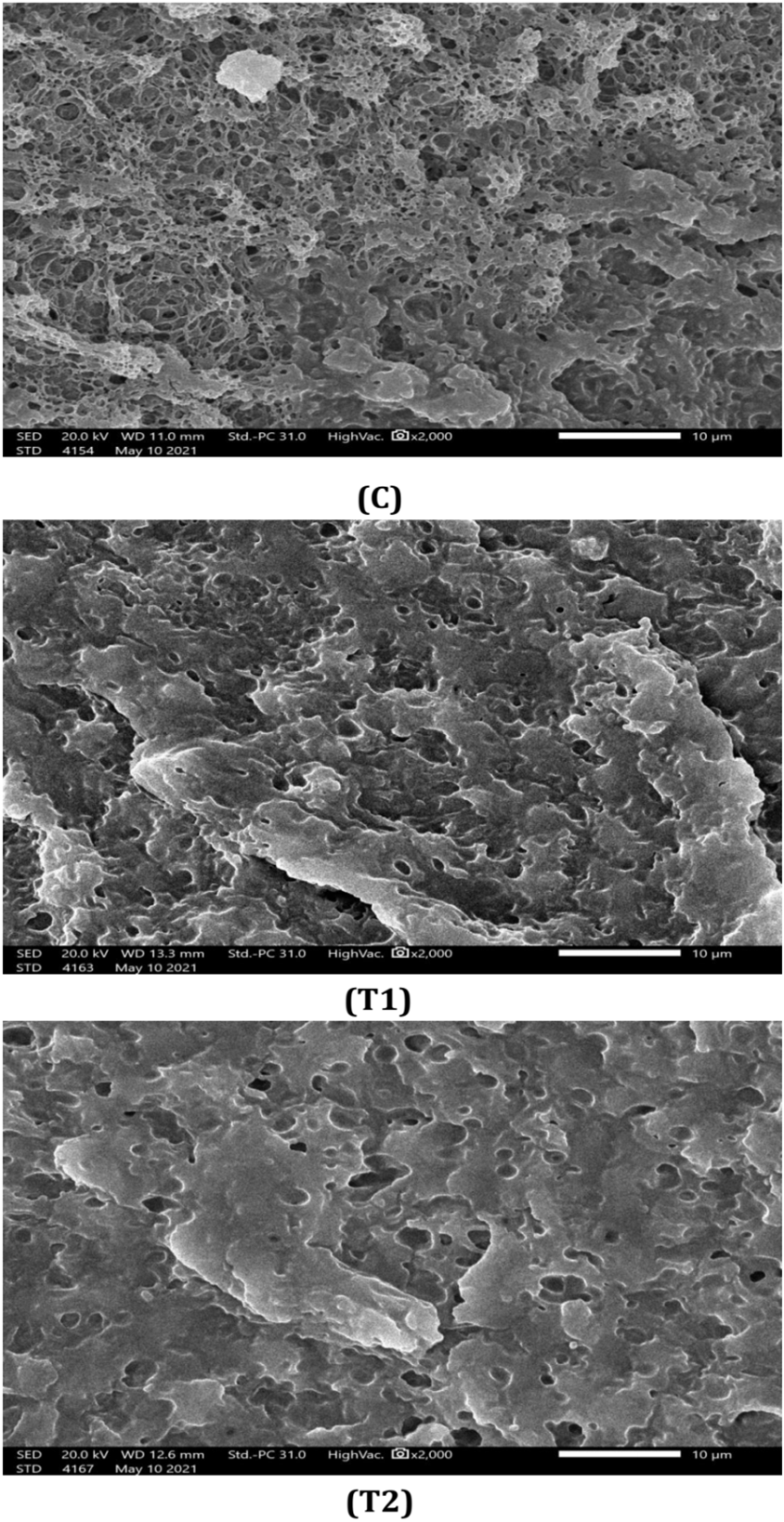
The microstructure of the processed cheese was evaluated by scanning electron microscopy according to the method of 41. Small pieces of fresh specimens of processed cheese samples were removed and fixed by immersing them immediately in 4F1G (fixative, phosphate buffer solution) pH 7.4 at 4°C for 3 hours. Specimens were then postfixed in 2% OsO4 in the same buffer at 4°C for 2 hours. Samples were washed in the buffer and dehydrate at 4°C through a graded series of ethanol. Samples of processed cheese were dried by means of a critical point method, mounted using carbon paste on an AL-stub and coated with gold up to a thickness of 400 A in a sputter-coating unit (JFC-1100E). The observation of processed cheese morphology in the coded specimens was performed in a Jeol JSM-5300 scanning electron microscope operated between 15 and 20 KeV, and an irradiation current of 10 μm.
Processed cheese samples were evaluated for organoleptic characteristics (color, taste, texture and overall acceptability), by 12 trained panelists (3males and 9 females) from Food Technology Research Institute, Agricultural Research Center, Alexandria, with ages ranging from 30 to 49 years, they have a good experience in the sensory evaluation of food and dairy products. Processed cheese samples (20 g) were presented in white small dishes coded randomly with 3-digit numbers, at a temperature of 20°C. Water was provided between evaluations of samples for mouth rinsing. Nine points system was used for evaluation based on the method of 42 with minor modification. The evaluation was identified using a 9-point hedonic scale (1 = dislike extremely, 3 = dislike moderately, 5 = neither like nor dislike, 7 = like moderately, and 9 = like extremely).
The data were analyzed by a general linear model procedure (GLM) using SAS statistical analysis software package (SAS Procedure Guide “Version 6.12 Ed.” SAS Institute Inc., Cary, 2004). The statistical analysis was performed using one-way analysis of variance (ANOVA). Means were compared by Duncan’s test at the significance level of P ≤ 0.05. Pearson’s correlation coefficient was used to calculate the correlation.
1- Transmission electron microscope (TEM)
The size and morphology of CR-NE were performed using TEM. The particles are spherical with an average size of 30 nm Figure 1. According to 21, the good properties and functionality of NC are due to its particle size, surface charge, surface area, and hydrophobicity. Also, 43 reported that curcumin nanoparticles with the size of 2-40 nm processed by a wet-milling technique, showed higher antimicrobial activity compared with native curcumin.
2. Zetasizer measurements
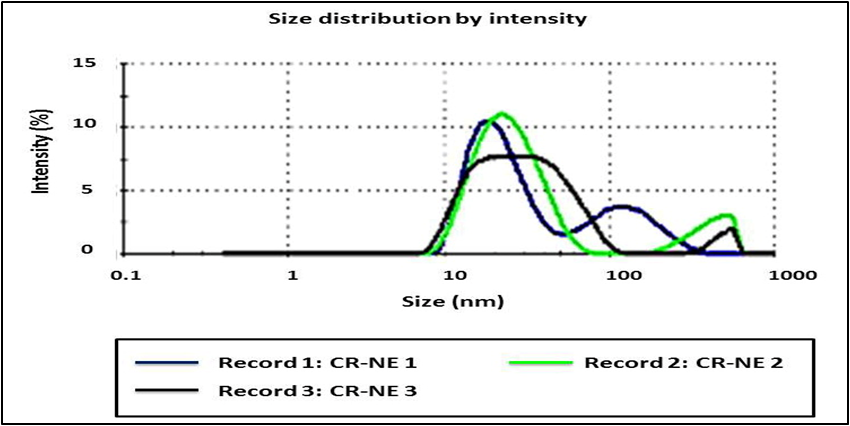
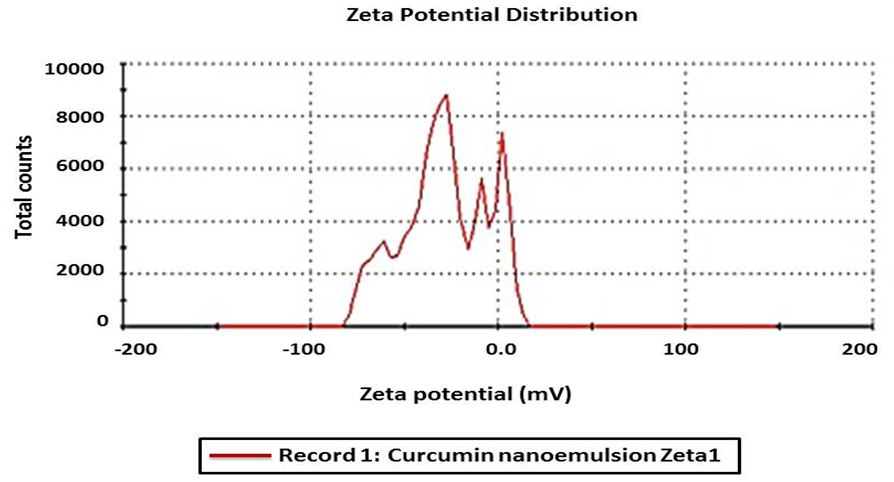
The hydrodynamic particle size, polydispersity index (PDI) and, zeta potential (ζ) of both blank CS NPs and spiramycin-loaded CS NPs were determined using Zetasizer, Figure 2 & Figure 3.
In the present study, the mean hydrodynamic particle size of CR-NE was 40 nm and with polydispersity index (PDI) of 0.33, thus indicating a narrow and favorable particle size distribution (PDI < 0.5). The respective zeta potential value of CR-NE was 37 mV. The zeta potential values were highly negative which can influence the stability in suspension by means of electrostatic repulsion between the similarly charged negative particles. Furthermore, high stability of the current CR-NE was observed over a storage period of 2 months at room temperature. This stability can be linked to the high negative zeta potential of the current CR-NE. High positive or negative zeta potentials have been shown to contribute greatly to the stability of microemulsions and NEs due to the highly charged surfaces, which resist droplet aggregation 44.


The results of the antibacterial activity of CR-NE against pathogenic bacteria strains are shown in Table 2. Curcumin nanoemulsion showed antibacterial activity against Staphylococcus aureus NCTC10788, Clostridium sporogenes ATCC3584, Escherichia coli ATCC25922, Klebsiella pneumonia ATCC12296 and Pseudomonas marginalis EMCC1271 at concentration 100 and 50 µg /mL, while at concentration 25 µg /mL the nanoemulsion exhibited antibacterial activity against all previous strains except Clostridium sporogenes not detected. The minimum inhibitory concentration (MIC) of nanoemulsion was 25 µg /mL with all strains except with Clostridium sporogenes strain was 50 µg /mL. These results are in agreement with 45, who found that NC (60 mg/mL) caused inhibition activity against E. coli ATCC25922, S. aureus ATCC6538, and E. faecalis ATCC29212. According to previous studies, curcumin nanoparticles showed antimicrobial activity than normal curcumin because of its enhanced aqueous-phase solubility and dispersibility 43, 46. In our study, the MIC was ranged between 25-50 µg/mL according to the type of bacteria strain. The antimicrobial activity of any nanoparticles depends on their physicochemical properties (size, shape, and surface properties) and the amount used 47, 48. According to 49 and 45 the nanoparticles with a size below 100 nm can disrupt the functions of the cell membrane by binding to the surface of cell membranes with a high affinity compared to larger nanoparticles.
The physicochemical characteristics of foods play a vital role in determining their quality and shelf life 50. Table 3 presents the physicochemical characteristics of the processed cheese supplemented with CR-NE during 60 days of storage at 4°C. The results showed that the addition of CR-NE (T1 and T2 samples) had no effect on moisture (%) and DM (%) compared with control samples. Meanwhile, at the end of storage (60 days at 4°C) the moisture and DM of C samples were significantly (P<0.05) decreased, while the samples of T1 and T2 were not affected. On 1st day of storage (fresh samples), no significant (P>0.05) differences were found among all treatments in fat, protein, and ash contents, while, after 60 days of cold storage, C samples showed a significant (P<0.05) increased in fat, protein and ash contents, whereas, T1 and T2 samples not changed during storage. The significant (P<0.05) increase in fat, protein and ash contents of C samples lead to the significant (P<0.05) decrease in moisture percentage. These results are in agreement with that found by 51. On the other hand, the presence of nanoemulsion decreased the loss of moisture in T1 and T2 samples. Many previous studies suggested that nanoemulsion-based delivery systems can positively impact the sensory and physicochemical properties of processed foods 52, 53. Also, pH values of all treatments not changed during storage, and no significant (P<0.05) differences were observed in pH values among processed cheese treatments in fresh samples and after 60 days of storage at 4°C. these results in agreement with El-Sayed et al. 4 who found that the pH value of UHT-processed cheese made from cheddar cheese, MPC and SMP did not changed during cold storage at 4°C for 120 days.
3.4. Microstructure of processed cheeseScanning electron micrographs (X5000, 10 µm, 20 kV) showed the sizes of fat globules in the processed cheeses containing CR-NE at different concentrations Figure 4. Differences in the protein structure between T1 and T2 were less compared with control. The cheese fat and protein clusters appear densely packed and there some free fat is present. Protein and fat clusters in the control sample appear smaller than T1 and T2 samples. Free fat globules are significantly more prominent in the control sample than observed in other treatments. The globules of fat-free in the control sample were smaller in size than that in T1 and T2 samples. In this study, we found that when adding CR-NE the firmness was decreased and the casein network structure became softer, this means that the adding of CR-NE caused changes in the structure of protein-fat network. In this study, the addition of CR-NE with emulsifying salts increased the dispersion of fat globules. Therefore, it can be suggested that the cheese processed supplemented with CR-NE has become like particle-filled gel networks where fat globules act as filler molecules in the protein network 54. According to 30, nanoemulsions are used in foods to improve the performance of the ingredients of the formulations. Also, nanoemulsions can be used as texture modulators. Depending on internal-phase proportion, oil composition, stabilizer (type and concentration), and size of the droplet, nanoemulsions can exhibit different rheological behaviors from those of viscous liquids in viscoelastic solids 55.

To test the impact of CR-NE addition on the properties of processed cheese samples, the texture profile analysis (TPA) of the cheese was exploited. The result in Table 4, illustrated that the hardness of all processed cheese samples was significantly (P<0.05) increased during cold storage (at 4 °C for 60 days), but the higher increase was observed with the control sample (C) than the samples containing CR-NE (T1 and T2). The T2 samples showed less hardness at the end of storage time (60 days). The results in Table 4 clearly show that the Adhesiveness was significantly (P < 0.05) decreased with the increase of CR-NE content in cheese formula (T1 and T2 samples). The Adhesiveness of C and T1 samples were significantly (P < 0.05) increased during cold storage, while, the Adhesiveness of T2 samples was significantly (P < 0.05) decreased by the end of storage. The cohesiveness values were significantly (P < 0.05) increased during storage with C and T1 samples, while, T2 sample not changed. On 1st day of storage, the highest cohesiveness was observed with T2, meanwhile, the control sample recorded the highest value followed by T1 samples, and T2 was the lowest. The springiness was significantly (P < 0.05) increased in samples containing CR-NE (T1 and T2), whereas, control sample was significantly (P < 0.05) decreased. The highest value of springiness was observed with C in the fresh sample, and with T1 at the end of storage. Gumminess value was significantly (P < 0.05) increased with all treatment during cold storage. The order of the samples in terms of Gumminess value was as follows: C>T1>T2.
All processed cheese treatments showed a significant (P < 0.05) increase in chewiness value during storage. The order of the samples in terms of chewiness value at the beginning and end of the storage period was as follows: C>T1>T2.The decrease in moisture content and increase of DM% especially protein content results in the increase in the hardness of cheese. This result agrees with 56 who reported that the hardness of processed cheese, in general, is an attribute that directly correlates with the moisture content, pH value, emulsifying salt, fat content, and the type and properties of natural cheese used in the blend. Also, 57 reported that the increase of hardness of stored cheese may be due to a decrease in moisture content and less water availability during storage, and consequently change of texture properties. While, 58 reported that increasing the protein content of cheese results in significant increases in hardness during storage. Similarly, 59 confirmed the positive correlations between casein content and firmness of cheddar processed cheeses. Nanoemulsions were used in the production of low-fat foods such as ice cream and mayonnaise without immolating their texture, but offering a healthier option to consumers 60.
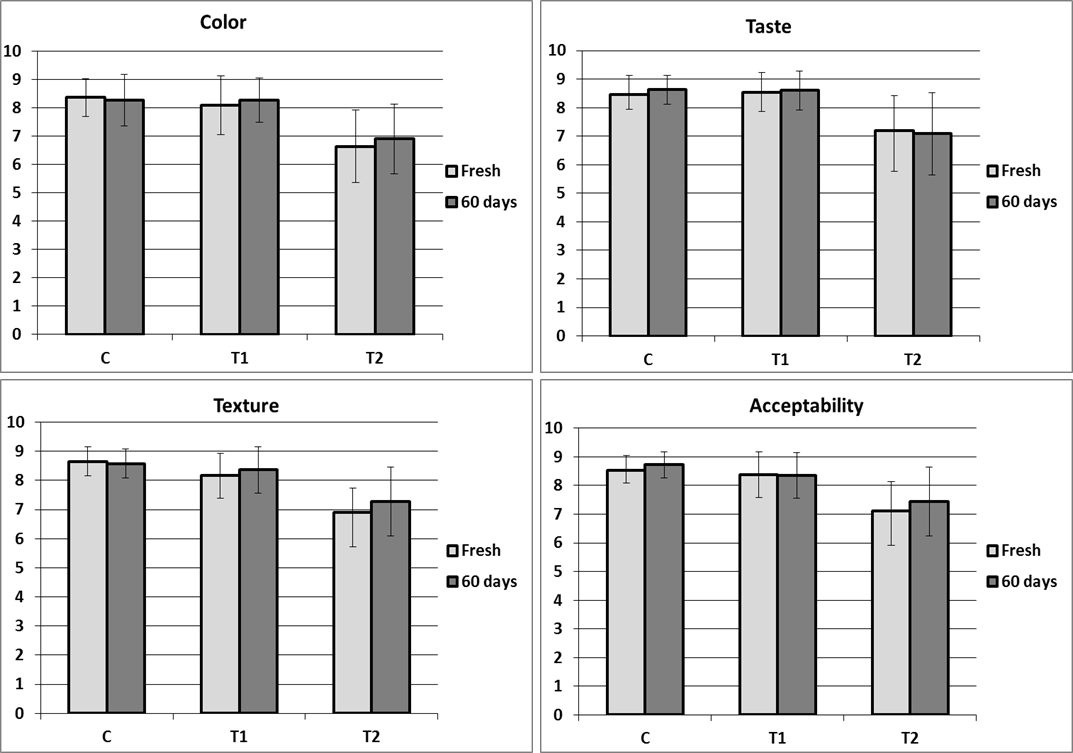
Consumers’ demands for new and foods with higher health benefits are encouraging the food and dairy industry to research novel strategies to supplement food products with bioactive compounds and turning foods into products that promote health and wellness 61, 62. Figure 5 shows the organoleptic evaluation of processed cheese made with CR-NE during 60 days of storage at 4°C. There were no significant differences (P>0.05) between the control and T1 samples in terms of color, taste, texture, and overall acceptability scores during cold storage. Meanwhile, T2 samples recorded the lowest (P<0.05) color, taste, texture, and overall acceptability scores compared to C and T1 samples during storage. On the other hand, no significant (P>0.05) changes were observed in terms of color, taste, texture, and overall acceptability of all treatments during cold storage at 4°C for 60 days. The higher concentration of CR-NE (50µg NC/g cheese) in processed cheese formula (T2) caused a decrease in sensory properties, while, the addition of CR-NE (25µg/g cheese) had no effect on the sensory properties of the T1 cheese sample compared to control sample. The T1 samples showed higher acceptability than the T2 samples at the beginning and end of storage. Nonetheless, T2 samples are also sensory acceptable but less than the T1 sample. Although the T2 sample is the highest in terms of health benefits, consumer acceptance of the product is the most important criterion for the success of this product. The results of T1 samples are agree with 63 who reported that the nanoemulsion-based delivery system should have compatibility with the food matrix and minimal effect on the organoleptic properties of the food such as its flavor, appearance, and texture. The quality and acceptability of the product are directly related to the quality of the raw material and manufacturing 59. Newly, consumers have shown a preference for minimally processed products with the most natural ingredients and additives that have a health benefit, such as prebiotics and probiotics, enzymes, antimicrobials, and antioxidants that exist naturally as extracts or essential oils obtained in general from plants 64, 65, and this is where nanotechnology allows improvement of the functionality of various ingredients, decreasing the concentration of substances, modifying their solubility, and potentiating their effectiveness or controlling their release 66. Therefore, food companies have been using nanoemulsion in the development of many food products, to improve their properties like color, flavor, odor, texture, solubility, stability, bioavailability, and efficient utility of many bioactive compounds edible/food-grade and to extend shelf life 67, 68, 69, 70.

This study aimed to investigate the effect of curcumin nanoemulsion (CR-NE) on physicochemical, textural, microstructure and organoleptic properties of processed cheese. Curcumin nanoemulsion showed higher antibacterial activity against Staphylococcus aureus, Escherichia coli, Klebsiella pneumonia and, Pseudomonas marginalis at a concentration of 25 µg NC/mL and 50 µg NC/mL with Clostridium sporogenes. Curcumin nanoemulsion improved the physicochemical, microstructure, textural and microstructure properties of processed cheese during cold storage at 4°C for 60 days. Moreover, the sensory evaluation of processed cheese containing 2.5% CR-NE not affected in compared with control, while, T2 samples containing 2.5% CR-NE were slightly changed during storage. The acceptance level and excellence properties obtained of T1 represent a very important result, and this acceptance is an indicator that the dairy factories could introduce such a product into the local market.
The authors would like to thank Dr. Esam Othman, Quality Manager, Mansour Group, Alexandria, Egypt, for his help during the preparation of the processed cheese. The authors appreciate the assistance of Dr. Rehab Mohamed Ibrahim, Special Food and Nutrition Department, Food Technology Research Institute, Alexandria, Egypt, during the conduct of the research.
| [1] | John, N. C. (2014). An introduction to the physical chemistry of food. Food Science Text Series, 159. | ||
| In article | |||
| [2] | Talbot-Walsha, G., Kannarb, D. and Selomulyaa, C. (2018). A review on technological parameters and recent advances in the fortification of processed cheese. Trends in Food Science & Technology, 81, 193-202. | ||
| In article | View Article | ||
| [3] | Kontou, V., Dimitreli, G. and Raphaelides, S.N. (2019). Elongational flow studies of processed cheese spreads made from traditional greek cheese varieties. LWT - Food Science and Technology, 107: 318-324. | ||
| In article | View Article | ||
| [4] | El-Sayed, M.I., Ibrahim, A. A. and Awad, S. (2020). The effect of storage conditions on the physicochemical, microbial and textural properties of UHT- processed cheese. Acta Scientific Nutritional Health, 4 (7): 76-85. | ||
| In article | |||
| [5] | Mohamed, A. G. and Shalaby, S. M. (2016). Texture, chemical properties and sensory evaluation of a spreadable processed cheese analogue made with apricot pulp (Prunus armeniaca L.).International Journal of Dairy Science, 11: 61-68. | ||
| In article | View Article | ||
| [6] | Mohamed, A. G., Shalaby, S. M. and Gafour, W. A. (2016). Quality characteristics and acceptability of an analogue processed spreadable cheese made with carrot paste (Daucus carota L.). International Journal of Dairy Science, 11: 91-99. | ||
| In article | View Article | ||
| [7] | Mehanna, N. S., Hassan, F. A. M., El-Messery, T. M. and Mohamed, A. G. (2017). Production of functional processed cheese by using tomato juice. International Journal of Dairy Science, 12, 155-160. | ||
| In article | View Article | ||
| [8] | Santos, R. D., Shetty, K., Cecchini, A. L. and da Silva Maglioranza, L. H. (2012). Phenolic compounds and total antioxidant activity determination in rosemary and oregano extracts and its use in cheese spread. Semina, 33: 655-666. | ||
| In article | View Article | ||
| [9] | Přikryl, J., Hájek, T., Švecová, B., Salek, R. N., Černíkov, M., Červenka, L. and Buňka, F. (2018). Antioxidant properties and textural characteristics of processed cheese spreads enriched with rutin or quercetin: The effect of processing conditions. LWT - Food Science and Technology, 87: 266-271. | ||
| In article | View Article | ||
| [10] | Kapoor, R. and Metzger, L. E. (2008). Process cheese: Scientific and technological aspect sea review. Comprehensive Reviews in Food Science and Food Safety, 7: 194-214. | ||
| In article | View Article | ||
| [11] | Tapal, A. and Tiku, P.K. (2012). Complexation of curcumin with soy protein isolate and its implications on solubility and stability of curcumin. Food Chemistry, 130: 960-965. | ||
| In article | View Article | ||
| [12] | Goel A, Jhurani S, Aggarwal BB. 2008. Multi‐ targeted therapy by curcumin: how spicy is it? Mol Nutr Food Res, 52:1010-1030. | ||
| In article | View Article PubMed | ||
| [13] | Afshariani, R., Farhadi, P., Ghaffarpasand, F. and Roozbeh, J. (2014). Effectiveness of Topical curcumin for treatment of mastitis in breastfeeding women: a randomized, doubleblind, placebo-controlled clinical trial. Oman Medical Journal. 29(5): 330-34. | ||
| In article | View Article PubMed | ||
| [14] | Rahimi, H.R., Nedaeinia, R., Shamloo, A.S., Nikdoust, S. and Oskuee, R.K. (2016). Novel delivery system for natural products: Nano-curcumin Formulations. Avicenna Journal of Phytomedicine (AJP), 6 (4): 383-398. | ||
| In article | |||
| [15] | Sheikh, E., Bhatt, M.L.B. and Tripathi, M. (2017). Role of nano-curcumin: A treatment for cancer. Journal of Medicinal Plants Studies, 5(1): 394-397. | ||
| In article | |||
| [16] | Zabihi, F., Xin, N., Jia, J., Cheng, T. and Zhao, Y. (2015). Preparation of Nano-curcumin with Enhanced Dissolution Using Ultrasonic-Assisted Supercritical Anti-solvent Technique. International Journal of Food Engineering, 11(5): 609-617. | ||
| In article | View Article | ||
| [17] | Mohanty, C., Das, M. and Sahoo S. K. (2012). Emerging role of nanocarriers to increase the solubility and bioavailability of curcumin. Expert Opinion on Drug Delivery, 9(11): 1347-1364. | ||
| In article | View Article PubMed | ||
| [18] | Mošovská, S., Petáková, P., Kaliňák M. and Mikulajová A. (2016). Antioxidant properties of curcuminoids isolated from Curcuma longaL. Acta Chimica Slovaca, 9 (2): 130-135. | ||
| In article | View Article | ||
| [19] | Liu, J., Chen, S., Song, L. and Huang, G.S. (2013). Recent progress in studying curcumin and its nano-preparations for cancer therapy. Current Pharmaceutical Design. 19 (11): 1974-1993. | ||
| In article | View Article PubMed | ||
| [20] | Karthikeyan, A., Senthil, N. and Min, T. (2020). Nanocurcumin: A Promising Candidate for Therapeutic Applications. Frontiers in Pharmacology, 11: 487. | ||
| In article | View Article PubMed | ||
| [21] | Biswas, A. K., Islam, M. R., Choudhury, Z. S., Mostafa, A. and Kadir, M. F. (2014). Nanotechnology based approaches in cancer therapeutics. Advances in Natural Sciences: Nanoscience and Nanotechnology, 5: 043001. | ||
| In article | View Article | ||
| [22] | Rajasekar, A. (2015). Facile synthesis of curcumin nanocrystals and validation of its antioxidant activity against circulatory toxicity in Wistar rats. Journal of Nanoscience and Nanotechnology, 15: 4119-4125. | ||
| In article | View Article PubMed | ||
| [23] | Moghaddasi, F., Housaindokht, M. R., Darroudi, M., Bozorgmehr, M. R. and Sadeghi, A. (2018). Synthesis of nanocurcumin using black pepper oil by O/W Nanoemulsion Technique and investigation of their biological activities LWT - Food Science and Technology, 92: 92-100. | ||
| In article | View Article | ||
| [24] | Oehlke, K., Adamiuk, M., Behsnilian, D., Graef, V., Mayer-Miebach, E., Walz, E. and Greiner, R. (2014). Potential bioavailability enhancement of bioactive compounds using food-grade engineered nanomaterials: A review of the existing evidence. Food & Function, 5 (7), 1341-1359. | ||
| In article | View Article PubMed | ||
| [25] | Aguilar, J., Barrera-Rodriguez, A., Aguilar, J. and Del-Toro-Sanchez, L.C. (2016). Applications of nanotechnology in the agriculture, food, and pharmaceuticals. Journal of Nanoscience and Nanotechnology, 16 (8), 8188-8207. | ||
| In article | View Article | ||
| [26] | Lu, W.C., Huang, D.W., Wang, C.C., Yeh, C.H., Tsai, J.C., Huang, Y.T. and Li, P.H. (2018). Preparation, characterization, and antimicrobial activity of nanoemulsions incorporating citral essential oil. Journal of Food and Drug Analysis, 26 (1): 82-89. | ||
| In article | View Article PubMed | ||
| [27] | Cenobio-Galindo, A. J., Campos-Montiel, R.G., Jiménez-Alvarado, R., Almaraz-Buendía, I., Medina-Pérez, G. and Fernández-Luqueño F. (2019). Development and Incorporation of Nanoemulsions in Food. International Journal of Food Studies, 8:105-124. | ||
| In article | View Article | ||
| [28] | Rezaei, A., Fathi, M. and Jafari, S. M. (2019). Nanoencapsulation of hydrophobic and lowsoluble food bioactive compounds within different nanocarriers. Food Hydrocolloids, 88: 146-162. | ||
| In article | View Article | ||
| [29] | Thiruvengadam, M., Rajakumar, G. and Chung, I. M. (2018). Nanotechnology: Current uses and future applications in the food industry.3 Biotech, 8:113. | ||
| In article | View Article PubMed | ||
| [30] | Zambrano-Zaragoza, M.L., Quintanar-Guerrero, D., Mendoza-Muňoz, N. and Leyva-Gómez G. (2020). Nanoemulsions and nanosized ingredients for food formulations. In: Handbook of Food Nanotechnology. Jafari S.M (Edt). Pp. 207-256. Academic Press is an imprint of Elsevier, London, UK. | ||
| In article | View Article | ||
| [31] | Assadpour, E. and Jafari, S.M. (2017). Spray drying of folic acid within nano-emulsions: Optimization by Taguchi approach. Drying Technology, 35: 1152 1160. | ||
| In article | View Article | ||
| [32] | Abbasi, F., Samadi, F., Jafari, S. M., Ramezanpour, S. and Shams-Shargh, M. (2019). Production of omega-3 fatty acid-enriched broiler chicken meat by the application of nanoencapsultsed flaxseed oil prepared via ultrasonication. Journal of Functional Foods, 57: 373-381. | ||
| In article | View Article | ||
| [33] | Artiga-Artigas, M., Lanjari-Pérez, Y. and Martín-Belloso, O. (2018). Curcumin-loaded nanoemulsions stability as affected by the nature and concentration of surfactant. Food Chemistry, 266: 466-474. | ||
| In article | View Article PubMed | ||
| [34] | Silva, H. D., Poejo, J., Pinheiro, A. C., Donsi, F., Serra, A. T., Duarte, C. M. M., Vicente, A. A. (2018). Evaluating the behavior of curcumin nanoemulsions and multilayer nanoemulsions during dynamic in vitro digestion. Journal of Functional Foods, 48: 605-613. | ||
| In article | View Article | ||
| [35] | Primo F. L., Bentley, M. V. L. B. and Tedesco A. C. (2008). Photophysical studies and in vitro skin permeation/retention of Foscan/nanoemulsion (NE) applicable to photodynamic therapy skin cancer treatment. Journal of Nanoscience and Nanotechnology, 8(1), 340-347. | ||
| In article | View Article PubMed | ||
| [36] | Hamad, G.M., Darwish, A.M.G., Abu-Serie M. M, and El Sohaimy S.A. (2017). Antimicrobial, Antioxidant and Anti-inflammatory Characteristics of Combination (Cassia fistula and Ocimum basilicum) Extract as Natural Preservative to Control & Prevent Food Contamination.” Journal of Food and Nutrition Research, 5 (10): 771-780. | ||
| In article | View Article | ||
| [37] | Kadaikunnan, S., Rejiniemon, T., Khaled, J.M. (2015). In-vitro antibacterial, antifungal, antioxidant and functional properties of Bacillus amyloliquefaciens. Annals of Clinical Microbiology and Antimicrobials, 14: 9. | ||
| In article | View Article PubMed | ||
| [38] | Muira D.D.. Tamime, A.Y. Shenana, M.E. and Dawoodc, A.H. (1999). Processed cheese analogues incorporating fat-substitutes 1. Composition, microbiological quality and flavour changes during storage at 5ºC. LWT - Food Science and Technology, 32: 41-49. | ||
| In article | View Article | ||
| [39] | AOAC. (2005). Official Methods of Analysis of AOAC International. (18th ed.) Gaithersburg. | ||
| In article | |||
| [40] | Bourne M. (1978). Texture Profile Analysis. Food Technology 32.7: 62-66. | ||
| In article | |||
| [41] | Tahmasebi, P., Javadpour, F. and Sahimi M. (2015). Three-Dimensional Stochastic Characterization of Shale SEM Images. Transport in Porous Media. 110:521. | ||
| In article | View Article | ||
| [42] | Bodyfelt, F. W. and Potte, D. (2009). Creamed cottage cheese. In: Clark, S., Costello, M., Drake, M., Bodyfelt, F. (Eds.), The Sensory Evaluation of Dairy Products, second ed. Springer Science Business Media, LLC, New York, USA,: pp. 167. | ||
| In article | View Article | ||
| [43] | Shailendiran, D., Pawar, N., Chanchal, A., Pandey, R.P., Bohidar, H.B. and Verma, A. K. (2011). Characterization and antimicrobial activity of nanocurcumin and curcumin. In: Proceedings of the International Conference on Nanoscience, Technology and Societal Implications (NSTSI ’11), pp. 1-7, IEEE, December 2011. | ||
| In article | View Article | ||
| [44] | Rachmawati, H., Budiputra, D.K and Mauludin, R. (2015). Curcumin nanoemulsion for transdermal application: formulation and evaluation. Drug Development and Industrial Pharmacy. 41(4): 560-566. | ||
| In article | View Article PubMed | ||
| [45] | Negahdari, R., Ghavimi, M.A., Barzegar, A., Memar, M.Y., Balazadeh, L., Bohlouli, S., Sharifi, S. and Dizaj, S.M. (2020). Antibacterial effect of nanocurcumin inside the implant fixture: An in vitro study. Clinical and Experimental Dental Research, 1-7. | ||
| In article | View Article PubMed | ||
| [46] | Bhawana, B., Basniwal, R.K., Buttar, H.S., Jain, V.K. and Jain, N. (2011). Curcumin nanoparticles: preparation, characterization, and antimicrobial study. Journal of Agricultural and Food Chemistry, 59 (5): 2056-2061. | ||
| In article | View Article PubMed | ||
| [47] | Salatin, S., Maleki, Dizaj, S. and Khosroushahi, Y.A. (2015). Effect of the surface modification, size, and shape on cellular uptake of nanoparticles.Cell Biology International, 39(8): 881-890. | ||
| In article | View Article PubMed | ||
| [48] | Sharifi, S., Vahed, S.Z., Ahmadian, E., Dizaj, S. M., Abedi, A., Khatibi, S. M. H. and Samiei, M. (2019). Stem cell therapy: Curcumin does the trick. Phytotherapy Research, 33(11): 2927-2937. | ||
| In article | View Article PubMed | ||
| [49] | Wang, L., Hu, C. and Shao, L. (2017). The antimicrobial activity of nanoparticles: Present situation and prospects for the future. International Journal of Nanomedicine, 12: 1227-1249. | ||
| In article | View Article PubMed | ||
| [50] | Das, A. K., Nanda, P. K., Madane, P., Biswas, S., Das, A., Zhang, W. and Lorenzo, J. M. (2020). A comprehensive review on antioxidant dietary fibre enriched meat-based functional foods. Trends in Food Science and Technology, 99: 323-336. | ||
| In article | View Article | ||
| [51] | El-Assar, M. A., Abou-Dawood, S.A., Sakr, S.S. and Younis, N. M. (2019). Low-fat Processed Cheese Spread with Added Inulin: Its Physicochemical, Rheological and Sensory Characteristics. International Journal of Dairy Science, 14(1): 12-20. | ||
| In article | View Article | ||
| [52] | Gani, A., Benjakul, S., and Nuthong, P. (2018). Effect of virgin coconut oil on properties of surimi gel.Journal of Food Science and Technology, 55(2): 496-505. | ||
| In article | View Article PubMed | ||
| [53] | Bolger, Z., Brunton, N. P. and Monahan, F. J. (2018). Impact of inclusion of flaxseed oil (pre-emulsified or encapsulated) on the physical characteristics of chicken sausages.Journal of Food Engineering, 230: 39-48. | ||
| In article | View Article | ||
| [54] | Ramel, P. R. and Marangoni, A. G. (2017). Characterization of the polymorphism of milk fat within processed cheese products. Food Structure, 12: 15-25. | ||
| In article | View Article | ||
| [55] | Dasgupta, N. and Ranjan, S. (2018). Food Nanoemulsions: Stability, Benefits and Applications. In:An Introduction to Food Grade Nanoemulsions, Dasgupta N. and Ranjan S.(Edts). (pp. 19 48). Springer. | ||
| In article | View Article | ||
| [56] | Shamsia, S. M. and El-Ghannam, M. (2017). Production and Evaluation of Processed Cheese Analogue Using Ricotta Cheese Prepared from Sweet Whey. Alexandria Journal of Food Science and Technology. 14 (1): 1-11. | ||
| In article | View Article | ||
| [57] | Awad, S.A., Aisha, M.A., El-Soda, M.A. (2006). Ripened curd cheese slurries in the manufacture of processed cheese. Alexandria Journal of Food Science and Technology, 3(2): 43-50. | ||
| In article | View Article | ||
| [58] | Guinee, T. (2016). Protein in cheese and cheese products: Structure-function relationships. (pp. 347-415). | ||
| In article | View Article | ||
| [59] | Burgos, L., Pece, N. and Maldonado, S. (2020).Textural, Rheological and Sensory Properties of Spreadable Processed Goat Cheese. International Journal of Food Studies, 9: SI62-S174. | ||
| In article | View Article | ||
| [60] | Silva, H.D., Cerqueira, M.Â. and Vicente, A.A. (2012). Nanoemulsions for food applications: development and characterization. Food and Bioprocess Technology, 5:854-867. | ||
| In article | View Article | ||
| [61] | Cerqueira, M. A., Bourbon, A. I., Pinheiro, A. C., Silva, H. D., Quintas, M. A. C., and Antonio, A. V. (2013). Edible nano-laminate coatings for food applications.Ecosustainable polymer nanomaterials for food packaging (pp. 221-252). CRC Press. | ||
| In article | View Article | ||
| [62] | Silva, H. D., Cerqueira, M. A. and Vicente, A. A. (2015). Nanoemulsion-based systems for food applications. In B. I. Kharisov (Ed.).CRC concise encyclopedia of nanotechnology. USA: CRC Press by Taylor and Francis Group. | ||
| In article | |||
| [63] | Aswathanarayan, J.B. and Vittal, R.R. (2019). Nanoemulsions and Their Potential Applications in Food Industry. Frontiers in Sustainable Food Systems. 3, 95. | ||
| In article | View Article | ||
| [64] | Li, J. M. and Nie, S. P. (2016). The functional and nutritional aspects of hydrocolloids in foods. Food Hydrocolloids, 53: 4661. | ||
| In article | View Article | ||
| [65] | Tamjidi, F., Shahedi, M., Varshosaz, J. and Nasirpour, A. (2013). Nanostructured lipid carriers (NLC): A potential delivery system for bioactive food molecules. Innovative Food Science and Emerging Technologies, 19: 29-43. | ||
| In article | View Article | ||
| [66] | Jafari, S. M. and McClements, D. J. (2017). Nanotechnology approaches for increasing nutrient bioavailability. Advances in food and nutrition research. Academic Press. | ||
| In article | View Article PubMed | ||
| [67] | Handford, C.E., Dean, M., Henchion, M., Spence, M., Elliott, C.T. and Campbell, K. (2014). Implications of nanotechnology for the agri-food industry: opportunities, benefits and risks. Trends in Food Science and Technology, 40: 226-241. | ||
| In article | View Article | ||
| [68] | Anandharamakrishnan, C. (2014). Techniques for nanoencapsulation of food ingredients. Springer, New York. | ||
| In article | View Article | ||
| [69] | Ranjan, S., Nandita, D. and Lichtfouse, E. (2016a). Nanoscience in food and agriculture 1, 1st edn. Springer International Publishing, Cham. | ||
| In article | View Article | ||
| [70] | Ranjan, S., Nandita, D. and Lichtfouse, E. (2016b). Nanoscience in food and agriculture 3, 1st edn. Springer International Publishing, Cham. | ||
| In article | View Article | ||
Published with license by Science and Education Publishing, Copyright © 2021 Mahmoud Ibrahim El-Sayed and Thanaa I. Shalaby
 This work is licensed under a Creative Commons Attribution 4.0 International License. To view a copy of this license, visit
http://creativecommons.org/licenses/by/4.0/
This work is licensed under a Creative Commons Attribution 4.0 International License. To view a copy of this license, visit
http://creativecommons.org/licenses/by/4.0/
| [1] | John, N. C. (2014). An introduction to the physical chemistry of food. Food Science Text Series, 159. | ||
| In article | |||
| [2] | Talbot-Walsha, G., Kannarb, D. and Selomulyaa, C. (2018). A review on technological parameters and recent advances in the fortification of processed cheese. Trends in Food Science & Technology, 81, 193-202. | ||
| In article | View Article | ||
| [3] | Kontou, V., Dimitreli, G. and Raphaelides, S.N. (2019). Elongational flow studies of processed cheese spreads made from traditional greek cheese varieties. LWT - Food Science and Technology, 107: 318-324. | ||
| In article | View Article | ||
| [4] | El-Sayed, M.I., Ibrahim, A. A. and Awad, S. (2020). The effect of storage conditions on the physicochemical, microbial and textural properties of UHT- processed cheese. Acta Scientific Nutritional Health, 4 (7): 76-85. | ||
| In article | |||
| [5] | Mohamed, A. G. and Shalaby, S. M. (2016). Texture, chemical properties and sensory evaluation of a spreadable processed cheese analogue made with apricot pulp (Prunus armeniaca L.).International Journal of Dairy Science, 11: 61-68. | ||
| In article | View Article | ||
| [6] | Mohamed, A. G., Shalaby, S. M. and Gafour, W. A. (2016). Quality characteristics and acceptability of an analogue processed spreadable cheese made with carrot paste (Daucus carota L.). International Journal of Dairy Science, 11: 91-99. | ||
| In article | View Article | ||
| [7] | Mehanna, N. S., Hassan, F. A. M., El-Messery, T. M. and Mohamed, A. G. (2017). Production of functional processed cheese by using tomato juice. International Journal of Dairy Science, 12, 155-160. | ||
| In article | View Article | ||
| [8] | Santos, R. D., Shetty, K., Cecchini, A. L. and da Silva Maglioranza, L. H. (2012). Phenolic compounds and total antioxidant activity determination in rosemary and oregano extracts and its use in cheese spread. Semina, 33: 655-666. | ||
| In article | View Article | ||
| [9] | Přikryl, J., Hájek, T., Švecová, B., Salek, R. N., Černíkov, M., Červenka, L. and Buňka, F. (2018). Antioxidant properties and textural characteristics of processed cheese spreads enriched with rutin or quercetin: The effect of processing conditions. LWT - Food Science and Technology, 87: 266-271. | ||
| In article | View Article | ||
| [10] | Kapoor, R. and Metzger, L. E. (2008). Process cheese: Scientific and technological aspect sea review. Comprehensive Reviews in Food Science and Food Safety, 7: 194-214. | ||
| In article | View Article | ||
| [11] | Tapal, A. and Tiku, P.K. (2012). Complexation of curcumin with soy protein isolate and its implications on solubility and stability of curcumin. Food Chemistry, 130: 960-965. | ||
| In article | View Article | ||
| [12] | Goel A, Jhurani S, Aggarwal BB. 2008. Multi‐ targeted therapy by curcumin: how spicy is it? Mol Nutr Food Res, 52:1010-1030. | ||
| In article | View Article PubMed | ||
| [13] | Afshariani, R., Farhadi, P., Ghaffarpasand, F. and Roozbeh, J. (2014). Effectiveness of Topical curcumin for treatment of mastitis in breastfeeding women: a randomized, doubleblind, placebo-controlled clinical trial. Oman Medical Journal. 29(5): 330-34. | ||
| In article | View Article PubMed | ||
| [14] | Rahimi, H.R., Nedaeinia, R., Shamloo, A.S., Nikdoust, S. and Oskuee, R.K. (2016). Novel delivery system for natural products: Nano-curcumin Formulations. Avicenna Journal of Phytomedicine (AJP), 6 (4): 383-398. | ||
| In article | |||
| [15] | Sheikh, E., Bhatt, M.L.B. and Tripathi, M. (2017). Role of nano-curcumin: A treatment for cancer. Journal of Medicinal Plants Studies, 5(1): 394-397. | ||
| In article | |||
| [16] | Zabihi, F., Xin, N., Jia, J., Cheng, T. and Zhao, Y. (2015). Preparation of Nano-curcumin with Enhanced Dissolution Using Ultrasonic-Assisted Supercritical Anti-solvent Technique. International Journal of Food Engineering, 11(5): 609-617. | ||
| In article | View Article | ||
| [17] | Mohanty, C., Das, M. and Sahoo S. K. (2012). Emerging role of nanocarriers to increase the solubility and bioavailability of curcumin. Expert Opinion on Drug Delivery, 9(11): 1347-1364. | ||
| In article | View Article PubMed | ||
| [18] | Mošovská, S., Petáková, P., Kaliňák M. and Mikulajová A. (2016). Antioxidant properties of curcuminoids isolated from Curcuma longaL. Acta Chimica Slovaca, 9 (2): 130-135. | ||
| In article | View Article | ||
| [19] | Liu, J., Chen, S., Song, L. and Huang, G.S. (2013). Recent progress in studying curcumin and its nano-preparations for cancer therapy. Current Pharmaceutical Design. 19 (11): 1974-1993. | ||
| In article | View Article PubMed | ||
| [20] | Karthikeyan, A., Senthil, N. and Min, T. (2020). Nanocurcumin: A Promising Candidate for Therapeutic Applications. Frontiers in Pharmacology, 11: 487. | ||
| In article | View Article PubMed | ||
| [21] | Biswas, A. K., Islam, M. R., Choudhury, Z. S., Mostafa, A. and Kadir, M. F. (2014). Nanotechnology based approaches in cancer therapeutics. Advances in Natural Sciences: Nanoscience and Nanotechnology, 5: 043001. | ||
| In article | View Article | ||
| [22] | Rajasekar, A. (2015). Facile synthesis of curcumin nanocrystals and validation of its antioxidant activity against circulatory toxicity in Wistar rats. Journal of Nanoscience and Nanotechnology, 15: 4119-4125. | ||
| In article | View Article PubMed | ||
| [23] | Moghaddasi, F., Housaindokht, M. R., Darroudi, M., Bozorgmehr, M. R. and Sadeghi, A. (2018). Synthesis of nanocurcumin using black pepper oil by O/W Nanoemulsion Technique and investigation of their biological activities LWT - Food Science and Technology, 92: 92-100. | ||
| In article | View Article | ||
| [24] | Oehlke, K., Adamiuk, M., Behsnilian, D., Graef, V., Mayer-Miebach, E., Walz, E. and Greiner, R. (2014). Potential bioavailability enhancement of bioactive compounds using food-grade engineered nanomaterials: A review of the existing evidence. Food & Function, 5 (7), 1341-1359. | ||
| In article | View Article PubMed | ||
| [25] | Aguilar, J., Barrera-Rodriguez, A., Aguilar, J. and Del-Toro-Sanchez, L.C. (2016). Applications of nanotechnology in the agriculture, food, and pharmaceuticals. Journal of Nanoscience and Nanotechnology, 16 (8), 8188-8207. | ||
| In article | View Article | ||
| [26] | Lu, W.C., Huang, D.W., Wang, C.C., Yeh, C.H., Tsai, J.C., Huang, Y.T. and Li, P.H. (2018). Preparation, characterization, and antimicrobial activity of nanoemulsions incorporating citral essential oil. Journal of Food and Drug Analysis, 26 (1): 82-89. | ||
| In article | View Article PubMed | ||
| [27] | Cenobio-Galindo, A. J., Campos-Montiel, R.G., Jiménez-Alvarado, R., Almaraz-Buendía, I., Medina-Pérez, G. and Fernández-Luqueño F. (2019). Development and Incorporation of Nanoemulsions in Food. International Journal of Food Studies, 8:105-124. | ||
| In article | View Article | ||
| [28] | Rezaei, A., Fathi, M. and Jafari, S. M. (2019). Nanoencapsulation of hydrophobic and lowsoluble food bioactive compounds within different nanocarriers. Food Hydrocolloids, 88: 146-162. | ||
| In article | View Article | ||
| [29] | Thiruvengadam, M., Rajakumar, G. and Chung, I. M. (2018). Nanotechnology: Current uses and future applications in the food industry.3 Biotech, 8:113. | ||
| In article | View Article PubMed | ||
| [30] | Zambrano-Zaragoza, M.L., Quintanar-Guerrero, D., Mendoza-Muňoz, N. and Leyva-Gómez G. (2020). Nanoemulsions and nanosized ingredients for food formulations. In: Handbook of Food Nanotechnology. Jafari S.M (Edt). Pp. 207-256. Academic Press is an imprint of Elsevier, London, UK. | ||
| In article | View Article | ||
| [31] | Assadpour, E. and Jafari, S.M. (2017). Spray drying of folic acid within nano-emulsions: Optimization by Taguchi approach. Drying Technology, 35: 1152 1160. | ||
| In article | View Article | ||
| [32] | Abbasi, F., Samadi, F., Jafari, S. M., Ramezanpour, S. and Shams-Shargh, M. (2019). Production of omega-3 fatty acid-enriched broiler chicken meat by the application of nanoencapsultsed flaxseed oil prepared via ultrasonication. Journal of Functional Foods, 57: 373-381. | ||
| In article | View Article | ||
| [33] | Artiga-Artigas, M., Lanjari-Pérez, Y. and Martín-Belloso, O. (2018). Curcumin-loaded nanoemulsions stability as affected by the nature and concentration of surfactant. Food Chemistry, 266: 466-474. | ||
| In article | View Article PubMed | ||
| [34] | Silva, H. D., Poejo, J., Pinheiro, A. C., Donsi, F., Serra, A. T., Duarte, C. M. M., Vicente, A. A. (2018). Evaluating the behavior of curcumin nanoemulsions and multilayer nanoemulsions during dynamic in vitro digestion. Journal of Functional Foods, 48: 605-613. | ||
| In article | View Article | ||
| [35] | Primo F. L., Bentley, M. V. L. B. and Tedesco A. C. (2008). Photophysical studies and in vitro skin permeation/retention of Foscan/nanoemulsion (NE) applicable to photodynamic therapy skin cancer treatment. Journal of Nanoscience and Nanotechnology, 8(1), 340-347. | ||
| In article | View Article PubMed | ||
| [36] | Hamad, G.M., Darwish, A.M.G., Abu-Serie M. M, and El Sohaimy S.A. (2017). Antimicrobial, Antioxidant and Anti-inflammatory Characteristics of Combination (Cassia fistula and Ocimum basilicum) Extract as Natural Preservative to Control & Prevent Food Contamination.” Journal of Food and Nutrition Research, 5 (10): 771-780. | ||
| In article | View Article | ||
| [37] | Kadaikunnan, S., Rejiniemon, T., Khaled, J.M. (2015). In-vitro antibacterial, antifungal, antioxidant and functional properties of Bacillus amyloliquefaciens. Annals of Clinical Microbiology and Antimicrobials, 14: 9. | ||
| In article | View Article PubMed | ||
| [38] | Muira D.D.. Tamime, A.Y. Shenana, M.E. and Dawoodc, A.H. (1999). Processed cheese analogues incorporating fat-substitutes 1. Composition, microbiological quality and flavour changes during storage at 5ºC. LWT - Food Science and Technology, 32: 41-49. | ||
| In article | View Article | ||
| [39] | AOAC. (2005). Official Methods of Analysis of AOAC International. (18th ed.) Gaithersburg. | ||
| In article | |||
| [40] | Bourne M. (1978). Texture Profile Analysis. Food Technology 32.7: 62-66. | ||
| In article | |||
| [41] | Tahmasebi, P., Javadpour, F. and Sahimi M. (2015). Three-Dimensional Stochastic Characterization of Shale SEM Images. Transport in Porous Media. 110:521. | ||
| In article | View Article | ||
| [42] | Bodyfelt, F. W. and Potte, D. (2009). Creamed cottage cheese. In: Clark, S., Costello, M., Drake, M., Bodyfelt, F. (Eds.), The Sensory Evaluation of Dairy Products, second ed. Springer Science Business Media, LLC, New York, USA,: pp. 167. | ||
| In article | View Article | ||
| [43] | Shailendiran, D., Pawar, N., Chanchal, A., Pandey, R.P., Bohidar, H.B. and Verma, A. K. (2011). Characterization and antimicrobial activity of nanocurcumin and curcumin. In: Proceedings of the International Conference on Nanoscience, Technology and Societal Implications (NSTSI ’11), pp. 1-7, IEEE, December 2011. | ||
| In article | View Article | ||
| [44] | Rachmawati, H., Budiputra, D.K and Mauludin, R. (2015). Curcumin nanoemulsion for transdermal application: formulation and evaluation. Drug Development and Industrial Pharmacy. 41(4): 560-566. | ||
| In article | View Article PubMed | ||
| [45] | Negahdari, R., Ghavimi, M.A., Barzegar, A., Memar, M.Y., Balazadeh, L., Bohlouli, S., Sharifi, S. and Dizaj, S.M. (2020). Antibacterial effect of nanocurcumin inside the implant fixture: An in vitro study. Clinical and Experimental Dental Research, 1-7. | ||
| In article | View Article PubMed | ||
| [46] | Bhawana, B., Basniwal, R.K., Buttar, H.S., Jain, V.K. and Jain, N. (2011). Curcumin nanoparticles: preparation, characterization, and antimicrobial study. Journal of Agricultural and Food Chemistry, 59 (5): 2056-2061. | ||
| In article | View Article PubMed | ||
| [47] | Salatin, S., Maleki, Dizaj, S. and Khosroushahi, Y.A. (2015). Effect of the surface modification, size, and shape on cellular uptake of nanoparticles.Cell Biology International, 39(8): 881-890. | ||
| In article | View Article PubMed | ||
| [48] | Sharifi, S., Vahed, S.Z., Ahmadian, E., Dizaj, S. M., Abedi, A., Khatibi, S. M. H. and Samiei, M. (2019). Stem cell therapy: Curcumin does the trick. Phytotherapy Research, 33(11): 2927-2937. | ||
| In article | View Article PubMed | ||
| [49] | Wang, L., Hu, C. and Shao, L. (2017). The antimicrobial activity of nanoparticles: Present situation and prospects for the future. International Journal of Nanomedicine, 12: 1227-1249. | ||
| In article | View Article PubMed | ||
| [50] | Das, A. K., Nanda, P. K., Madane, P., Biswas, S., Das, A., Zhang, W. and Lorenzo, J. M. (2020). A comprehensive review on antioxidant dietary fibre enriched meat-based functional foods. Trends in Food Science and Technology, 99: 323-336. | ||
| In article | View Article | ||
| [51] | El-Assar, M. A., Abou-Dawood, S.A., Sakr, S.S. and Younis, N. M. (2019). Low-fat Processed Cheese Spread with Added Inulin: Its Physicochemical, Rheological and Sensory Characteristics. International Journal of Dairy Science, 14(1): 12-20. | ||
| In article | View Article | ||
| [52] | Gani, A., Benjakul, S., and Nuthong, P. (2018). Effect of virgin coconut oil on properties of surimi gel.Journal of Food Science and Technology, 55(2): 496-505. | ||
| In article | View Article PubMed | ||
| [53] | Bolger, Z., Brunton, N. P. and Monahan, F. J. (2018). Impact of inclusion of flaxseed oil (pre-emulsified or encapsulated) on the physical characteristics of chicken sausages.Journal of Food Engineering, 230: 39-48. | ||
| In article | View Article | ||
| [54] | Ramel, P. R. and Marangoni, A. G. (2017). Characterization of the polymorphism of milk fat within processed cheese products. Food Structure, 12: 15-25. | ||
| In article | View Article | ||
| [55] | Dasgupta, N. and Ranjan, S. (2018). Food Nanoemulsions: Stability, Benefits and Applications. In:An Introduction to Food Grade Nanoemulsions, Dasgupta N. and Ranjan S.(Edts). (pp. 19 48). Springer. | ||
| In article | View Article | ||
| [56] | Shamsia, S. M. and El-Ghannam, M. (2017). Production and Evaluation of Processed Cheese Analogue Using Ricotta Cheese Prepared from Sweet Whey. Alexandria Journal of Food Science and Technology. 14 (1): 1-11. | ||
| In article | View Article | ||
| [57] | Awad, S.A., Aisha, M.A., El-Soda, M.A. (2006). Ripened curd cheese slurries in the manufacture of processed cheese. Alexandria Journal of Food Science and Technology, 3(2): 43-50. | ||
| In article | View Article | ||
| [58] | Guinee, T. (2016). Protein in cheese and cheese products: Structure-function relationships. (pp. 347-415). | ||
| In article | View Article | ||
| [59] | Burgos, L., Pece, N. and Maldonado, S. (2020).Textural, Rheological and Sensory Properties of Spreadable Processed Goat Cheese. International Journal of Food Studies, 9: SI62-S174. | ||
| In article | View Article | ||
| [60] | Silva, H.D., Cerqueira, M.Â. and Vicente, A.A. (2012). Nanoemulsions for food applications: development and characterization. Food and Bioprocess Technology, 5:854-867. | ||
| In article | View Article | ||
| [61] | Cerqueira, M. A., Bourbon, A. I., Pinheiro, A. C., Silva, H. D., Quintas, M. A. C., and Antonio, A. V. (2013). Edible nano-laminate coatings for food applications.Ecosustainable polymer nanomaterials for food packaging (pp. 221-252). CRC Press. | ||
| In article | View Article | ||
| [62] | Silva, H. D., Cerqueira, M. A. and Vicente, A. A. (2015). Nanoemulsion-based systems for food applications. In B. I. Kharisov (Ed.).CRC concise encyclopedia of nanotechnology. USA: CRC Press by Taylor and Francis Group. | ||
| In article | |||
| [63] | Aswathanarayan, J.B. and Vittal, R.R. (2019). Nanoemulsions and Their Potential Applications in Food Industry. Frontiers in Sustainable Food Systems. 3, 95. | ||
| In article | View Article | ||
| [64] | Li, J. M. and Nie, S. P. (2016). The functional and nutritional aspects of hydrocolloids in foods. Food Hydrocolloids, 53: 4661. | ||
| In article | View Article | ||
| [65] | Tamjidi, F., Shahedi, M., Varshosaz, J. and Nasirpour, A. (2013). Nanostructured lipid carriers (NLC): A potential delivery system for bioactive food molecules. Innovative Food Science and Emerging Technologies, 19: 29-43. | ||
| In article | View Article | ||
| [66] | Jafari, S. M. and McClements, D. J. (2017). Nanotechnology approaches for increasing nutrient bioavailability. Advances in food and nutrition research. Academic Press. | ||
| In article | View Article PubMed | ||
| [67] | Handford, C.E., Dean, M., Henchion, M., Spence, M., Elliott, C.T. and Campbell, K. (2014). Implications of nanotechnology for the agri-food industry: opportunities, benefits and risks. Trends in Food Science and Technology, 40: 226-241. | ||
| In article | View Article | ||
| [68] | Anandharamakrishnan, C. (2014). Techniques for nanoencapsulation of food ingredients. Springer, New York. | ||
| In article | View Article | ||
| [69] | Ranjan, S., Nandita, D. and Lichtfouse, E. (2016a). Nanoscience in food and agriculture 1, 1st edn. Springer International Publishing, Cham. | ||
| In article | View Article | ||
| [70] | Ranjan, S., Nandita, D. and Lichtfouse, E. (2016b). Nanoscience in food and agriculture 3, 1st edn. Springer International Publishing, Cham. | ||
| In article | View Article | ||