In Congo-Brazzaville, bread is part of the basic diet. The documentation and/or knowledge of artisanal bread-making practices is lacking. This study provides a first characterization of the practices in four departments: Bouenza, Cuvette, Lekoumou and Plateaux. A survey conducted among 101 bakers using a structured questionnaire and semi-structured interviews allowed the data to be collected. The data analysis carried out using the software Epi-info, Minitab (ANOVA), and XLSTAT (AFC) gives results that stipulate the preponderance of simple traditional bread at 95.05%, mostly coming from industrialized flour. The bread 'Kidiatulu or boma ngaï' is the most common.The differences between regions were mainly in the amount of ingredients and substances added, as well as the technique of kneading, fermentation and cooking. Significant differences p < 0.05 were highlighted for the amount of salt (p = 0.033), yeast (p = 0.011), kneading time (p = 0.010), and cooking duration (p = 0.039). The vast majority of production is carried out by men who have little or no formal vocational training. Although 62.38% of bakers produce every day, the processes remain poorly standardized. Marked regional differences influence the texture, preservation and sensory quality of bread. These results highlight the need for appropriate technical training and research into process standardization in order to improve the quality and sustainability of artisanal bread production.
In Africa, eating habits are mainly based on products of vegetables, especially cereals, which occupy a central position in diets 1. The processing of these cereals is a major artisanal activity, deeply rooted in the socio-economic fabric of the continent, particularly in Congo-Brazzaville, whose food policy emphasizes a small number of so-called main crops (cereals and legumes especially) 2. This expertise, passed down from generation to generation within families, has gradually been structured around microenterprises, particularly through local bakeries, which have become a key element in the food value chain.
Bread making, although common in most cultures, varies considerably across contexts in terms of both techniques and methods. However, the basic ingredients remain universal: cereal flour, water, yeast (or other leavening agent), and salt 3. Bread is generally recognized for its golden, crisp crust. However, it can have defects that alter its organoleptic qualities, including appearance, texture, volume, aroma, or flavor, posing technical challenges for bakers 4.
In sub-Saharan Africa, rising living standards and the emergence of a middle class have transformed eating habits, favoring the consumption of ready-to-eat foods such as bread 5. In Congo-Brazzaville, this product is very popular: it accompanies meals, is an original breakfast food and is often eaten as a snack.
Despite its importance, there is almost no scientific documentation on the consumption and production of wheat flour bread in Congo-Brazzaville, which remains almost non-existent. However, as in many other African countries, bread occupies a central place in the diet, in various forms 6. In this context, the main objective is to identify the regional particularities of artisanal bread making methods in order to propose avenues for improvement adapted to the local context, while contributing to the promotion of the national culinary heritage. Understanding local bread making practices is therefore essential to better understand the technological and cultural issues related to this product.
The objective of the field survey is to determine the geographical origin of the production units, the frequency of production and the different stages of the process, from flour transformation to baking, including kneading and fermentation. It also addresses bread making techniques, the ingredients used, the specific practices of bakers, the quality of the bread obtained, and the shelf life.
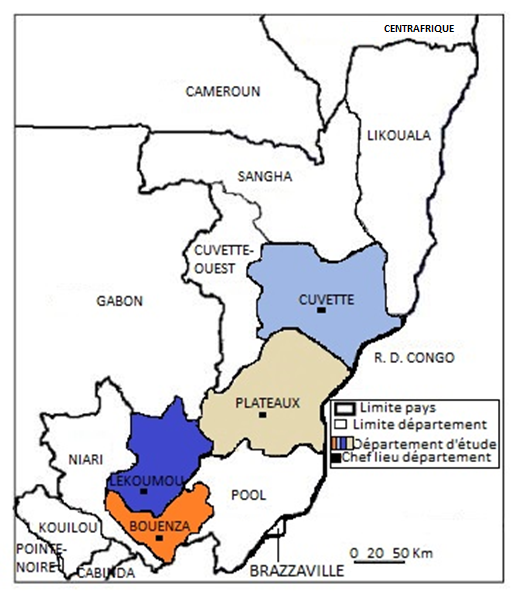
The departments colored on the map represent the study areas concerned. (Figure 1) 7

This choice is based on the high frequency of bread production in these areas, reflecting a significant representativeness of the eating habits of the Congolese populations in these regions. It should be noted that the survey did not extend to all the towns and villages in the country's departments. It focused on the areas demarcated on the map, namely: Bouenza, Lekoumou, Cuvette centrale and Plateaux. This choice is based on the high traditional bread production in these areas. The study was conducted as part of a survey aimed at identifying and characterizing the main bread-making processes.
2.2. Survey MaterialA structured census form was used to register bakeries and collect various information, including the bakers' identities, contact details, types and quantities of bread produced, types and origins of flour used, and the geographical location of the establishments. In addition, an interview guide was developed to collect qualitative data on the bakers' socioeconomic characteristics and production practices.
2.3. MethodologyThe survey was cross-sectional, based on a structured questionnaire. The latter included several sections, covering in particular the technical, cultural and socio-economic aspects of traditional bakery production.
2.4. Sample CompositionA preliminary census was conducted based on their location and contacts; this made it possible to identify 101 bakers distributed across the four departments concerned by the study. The survey combined semi-structured interviews and on-site observations, conducted mainly in commonly spoken lingua franca: Munukutuba in the southern departments and Lingala in the northern departments of Congo. The participants were artisan bakers. Data collection was based on an interview guide, using the so-called “snowball” method 8, applied to the bakers surveyed. The information collected concerned the socioeconomic characteristics of the bakeries (profile of workers, age and size of staff, level of education, years of experience in bread making), the types of bread produced, production conditions, unit operations, as well as the ingredients used in bread making in Congo.
2.5. Processing and Presentation of Survey ResultsThe data collected during the survey were coded, entered and processed using Epi -info software version 7.2.5.0 and Microsoft Excel 2016, for the determination of descriptive statistics in terms of frequency and mean. The quantitative data collected at the bakers' level were then subjected to a 5% analysis of variance (ANOVA) (level of significance) using Minitab 21 software. In each of the cities surveyed, the qualitative information collected was subjected to simple correspondence factor analysis (CFA) using XLSTAT software version 2014.5.03.
Table 1 presents the results of the descriptive analysis of the socio-economic variables of bakers in each of the four departments of the survey. (Table 1).
Analysis of the responses reveals significant variations across departments, particularly with regard to the bakers' age, professional experience and marital status. Respondents aged over 55 are mainly located in Bouenza (34.62 %) and Lekoumou (39.29 %), while the 35-45 age groups dominate in Cuvette and Plateaux, with respective proportions of 50.00 % and 53.33 %.
The male population is exclusively represented in the Lekoumou and Plateaux regions (100.00 %), and common-law unions constitute the majority of civil statuses, particularly in Plateaux (93.33 %). Farmers represent the predominant professional category, especially in Bouenza (57.69%) and Lekoumou (64.29 %). Furthermore, vocational training is often acquired in an informal setting, notably "at a relative's house" (83.33 % in Cuvette) or “at a friend's house" (60.00 % in Plateaux). The majority of respondents have between 5 and 15 years of professional experience, with a high concentration in Cuvette (33.33 %) and 15 to 25 years in the plateaus (53.33%), while a notable proportion of 39.29 % of respondents in Lekoumou have 25 to 35 years of experience. These results highlight regional disparities in demographics and employment, which are crucial for guiding the development of policies adapted to varied socio-economic contexts. (Table 2).
Analysis of the types of bread produced in the regions of Bouenza and Lekoumou, reveals interesting trends: the production of baguettes is significantly low, representing only 9.90% of respondents. Boules and Obu bread are also infrequent, reaching 11.54 % and 3.57 % respectively in Bouenza and Lekoumou . while normal bread is the most commonly produced with 79.21 %, indicating that it is a basic product in the departments that have the study.
As for the quality of bread, simple traditional bread represents 95.05 % of production, reflecting a predominance of artisanal bread, while the types of semi-modern and traditional compound bread are produced very little.
In terms of flours, 95.05 % of respondents use industrialized flours, indicating a trend towards these products despite the prevalence of traditional manufacturing methods, which could reflect changes in supplies or consumer preferences; on the contrary, industrialized compound and traditional flours are little used, showing little diversity.
The results show an adaptation to local taste, while raising cultural, economic and food diversity issues.
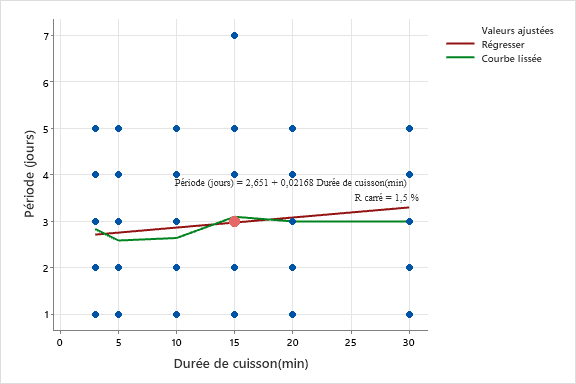
The graph in Figure 2 highlights a very weak relationship between bread baking time (in minutes) and its shelf life (in days), represented by the linear regression equation: Period = 2.651 + 0.02168 × Baking Time, with a coefficient of determination R² of only 1.5%. This means that baking time explains only 1.5% of the observed variations in shelf life, while 98.5% of these variations are due to other factors. The trend line (red) is almost flat, and the data are widely scattered, confirming the lack of a significant relationship between the two variables. In summary, baking time has only a negligible impact on bread shelf life. (Figure 2), (Table 3).
This Table 3 compares the characteristics of bread baking in the regions of Bouenza, Cuvette, Lekoumou and Plateaux, by analyzing the proportions of respondents for each aspect studied. Concerning the baking temperature, in Bouenza (61.54 %) and to the Lekoumou (100 %), the majority of bakers use a temperature close to 250 °C, while 66.67 % of bakers in Cuvette and 73.33% in the Plateaux opt for higher temperatures, with a regional average of 63.37 %. For temperature control, 86.54 % of bakers in Bouenza and 92.86 % in Lekoumou use their hands, while 66.67 % of the Plateaus are based on the color of fire.
In terms of weighing, 94.06% of bakers do not have devices to control the weight of loaves, reaching even 100% in some regions, which highlights the lack of a standardized methodology.
At the level of the state of the dough, 69.23 % of respondents in Bouenza 75.00 % in Lekoumou say it is relaxed, compared to 83.33 % in Cuvette and 86.67% in Plateaux. Almost all bakers shape their dough 99.01 % or even 100.00 % in the regions, with total adherence in some regions, while in Bouenza, 98.08 % of bakers do not cover their loaves, in contrast to 100 % in Cuvette. This analysis reveals significant variations in bread baking practices, suggesting opportunities to standardize and improve production quality in these regions. (Table 4).
The table presents data on bread making and storage habits in several regions (Bouenza, Cuvette, Lekoumou, Plateaux) as well as for all respondents, revealing that 62.38% make bread daily, while 26.73 % do it more than twice a week and only 2.97% rarely. The majority of respondents in Bouenza (32.69 %) produce between 350 and 400 loaves per bag of flour, and 40.00 % in Plateaux make between 400 and 450 loaves and 66.67 % in Cuvette make between 450 and 500 loaves, while only 15.84% on average make between 250 and 300 loaves. Regarding storage, the most common duration is 3 days (36.63 %) on average, with notable regional variations, such as 50.00 % in La Cuvette, while a minority keeps the bread for a week or more (2.97 %). Regarding the management of breads beyond their shelf life, 81.19 % of respondents choose to resell them, 14.85 % consume them and 3.96% throw them away, indicating a predominant resale practice, especially in La Cuvette where 100% of respondents reported it. This table highlights regular manufacturing activity, a tendency to resell rather than waste, and generally short storage times. (Table 5).

Analysis of the table shows that, overall, respondents consider kneading time to be the most decisive step in obtaining quality bread (62.38%), while in practice, it is mainly baking time that is most closely monitored (62.38%), reflecting the fear of errors related to the texture or coloring of the bread. This general trend is found in Bouenza, Lekoumou and Plateaux, where kneading is perceived as essential but baking remains the most closely monitored step. However, Cuvette clearly stands out for its particular attention to ingredients (salt and yeast) and shaping, which reflects more diverse local practices. Overall, the contrast between perception (importance of kneading) and practice (monitoring baking) highlights the complementarity between dough preparation and oven control in the success of artisanal bread making. These results help identify regional priorities in bread making, which can guide training and improvement programs in the sector. (Figure 3).
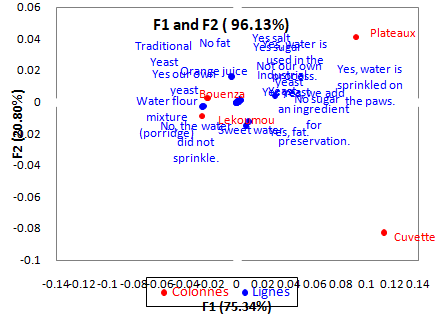
Kidiatulu or boma bread ngaï is an intermediate variety between the baguette and the one-kilo loaf, which places it outside the standard bread making formats. This justifies its name (Figure 3). Figure 4 illustrates the results of the correspondence factor analysis (CFA), showing that the first two axes explain 93.13% of the total variance, suggesting a strong structuring of baking practices according to the departments.
The departments studied share common key steps in artisanal bread making, including the use of water, salt, industrial yeast, and sprinkling water on the dough. However, local variations influence the final quality of the product, highlighting particularities linked to endogenous knowledge and technological choices specific to each region.
In the Bouenza department, traditional, artisanally produced yeast is preferred. The use of orange juice in the dough improves the texture of the crust and gives the bread a distinctive aroma. Furthermore, the low use of fat in local bakeries reflects a bread making process closer to ancestral fermentation methods. This approach could promote the development of probiotic microorganisms and the production of beneficial secondary metabolites, thus positively influencing the digestibility and nutritional quality of the bread.

In the Plateaux department, a distinctive feature is the systematic sprinkling of water on the dough pieces before baking. This technique influences the hydration of the dough, modifying the rheological properties of the gluten network and affecting the final texture of the bread. Optimal hydration also promotes better preservation in helping to keep bread moist and fresh for longer.
Lékoumou department is distinguished by the use of sugar water and a water-flour mixture (porridge), which directly influences the sensory characteristics of local breads. Applying porridge to the dough pieces promotes the formation of a softer, slightly caramelized crust. The absence of water sprinkling on the dough pieces could affect the porosity and residual moisture of the breads, which can alter their shelf life and their texture as perceived by consumers.
The Cuvette department adopts a hybrid approach between tradition and modernity, combining artisanal techniques with more industrialized processes. The use of fat improves the texture of the bread by reducing the rigidity of the protein network and limiting the phenomenon of starch retrogradation, thus prolonging the freshness of the product. The incorporation of preservatives, in addition to extending the shelf life, acts as a technological improver optimizing certain organoleptic properties of the bread, particularly when wheat flours with varied characteristics are used.
This analysis highlights the diversity of baking practices across regions and underlines the impact of technological choices and ingredients on the physicochemical and sensory characteristics of breads. A better understanding of these factors could help optimize manufacturing processes and adapt formulations to improve the nutritional and organoleptic quality of traditional breads. (Table 6).
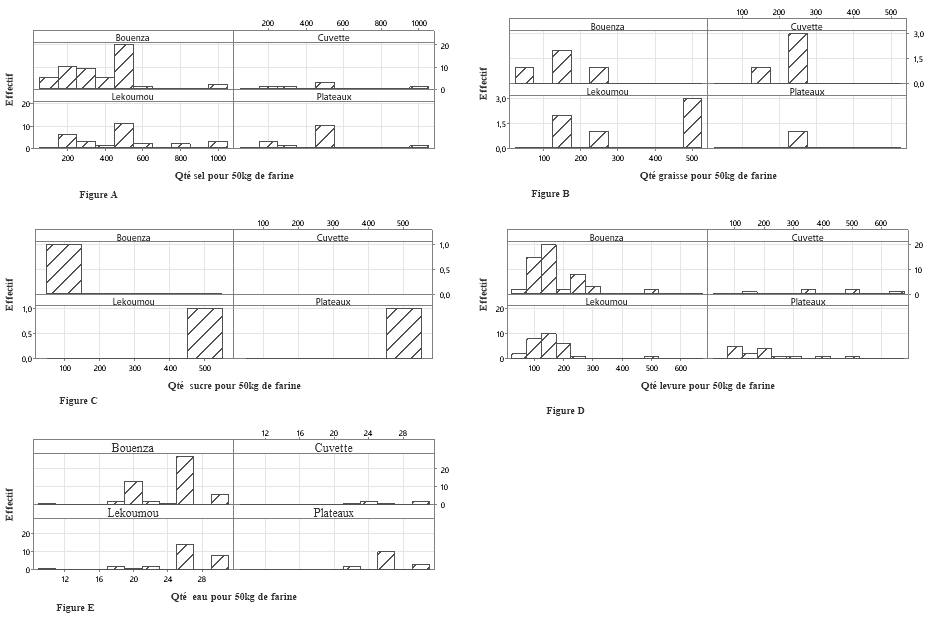
The table presents quantitative data regarding the use of ingredients for 50 kg of flour in four departments: Bouenza, Cuvette, Lekoumou and Plateaux. Statistics include the proportion, mean, standard deviation, sum of squares, median and mode for each ingredient: salt, fat, sugar, yeast and water (Figure 4).
Regarding salt, the Bouenza department shows an average of 365.70 ± 189.40 g, with a median of 376.60 g and a mode of 451.86 g. On the other hand, Cuvette has a higher average of 494 g, accompanied by a larger standard deviation. Lekoumou and Plateaux, for their part, report respective averages of 480.90 g and 457.90 g, this indicates a certain homogeneity in practices.
Regarding fat, Bouenza and Cuvette show respective averages of 140.60 g and 218.80 g . However, Lekoumou uses a significantly higher quantity, with an average of 333.30 g, while Plateaux uses 250 g on average. For sugar, Bouenza, Lekoumou and Plateaux limit themselves to 0.99 g, while Cuvette uses no quantity, with medians of 500 g for Lekoumou and the Plateaux, suggesting the presence of extreme values in these departments.
As for yeast, Bouenza uses an average of 176.40 g, Lekoumou 160.40 g and Plateaux 205.50 g. However, Cuvette has a significantly higher average of 406.30 g, which reveals significant variations in the use of this ingredient. Finally, the quantities of water are broadly similar across all regions, with Bouenza consuming 23.64 L on average, while the other departments are closer to 25 L, accompanied by a low standard deviation, indicating a certain consistency in their use.
Kruskal -Wallis tests reveal significant differences for salt and yeast between departments, with respective p-values of 0.033 and 0.011, suggesting that some departments, such as Cuvette, use these ingredients more. On the other hand, for fat, sugar and water, no significant differences were observed (p > 0.05), indicating a homogeneous distribution of these ingredients between departments. (Figure 4), (Table 7)
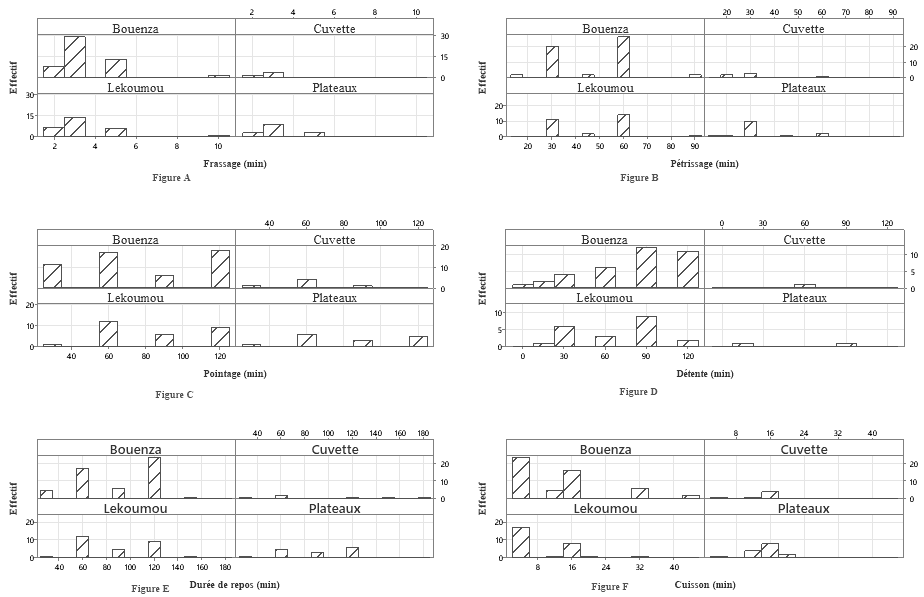
Table 7 shows notable differences in the time spent on each activity between departments. Bouenza stands out with the highest milling percentage (51.49%) and an average duration of 3.615 minutes, indicating a higher frequency of activity. In contrast, Cuvette, Lekoumou, and Plateaux display lower average times, ranging between 2.67 and 3.43 minutes. Regarding kneading, Bouenza and Lekoumou show high averages of 47.31 and 48.21 minutes, suggesting a longer process, while Cuvette and Plateaux show shorter times (31.67 and 33.33 minutes). For pointing, Lekoumou has the highest average (84.64 minutes), followed by Plateaux (84.00 minutes), while Bouenza (77.88 minutes) and Cuvette (60.00 minutes) show equally considerable times. Regarding relaxation, Bouenza has the highest average time (80.69 minutes), although data are missing for Cuvette. Lekoumou and Plateaux have lower times (67.62 and 52.5 minutes, respectively). All departments show high average resting times, with Bouenza at 88.85 minutes and Cuvette reaching a maximum of 100 minutes. Finally, for cooking, the time differences are small, with Bouenza (12.90 minutes) and Plateaux (13.67 minutes) slightly higher than Lekoumou (9.11 minutes) and Cuvette (12.50 minutes) (Figure X), but these differences are not statistically significant.
The results of the Kruskal -Wallis tests indicate that the departments do not show significant differences for the stages of kneading, pointing, relaxation and resting time, since in all these cases the P values are greater than 0.05. On the other hand, significant differences are observed for kneading and baking, with P values of 0.010 and 0.039 respectively, which shows that the departments vary in a statistically significant way for these two stages.
In conclusion, Bouenza appears to have higher average times for several steps, which could reflect specific practices or methods compared to other departments. The standard deviations also suggest that some activities are more systematic in some departments, while others may follow more processes that are flexible. (Figure 5)

The results reveal marked regional disparities in demographics, employment and training. The over-55s are mainly present in Bouenza (34.6 %) and Lekoumou (39.29 %), while 35-45 year olds dominate the Lekoumou and Cuvette, which could reflect population movements or particular job opportunities. Free unions are the majority in Plateaux (93.33 %), suggesting distinct sociocultural influences. Agriculture remains predominant in Bouenza (57.69 %) and Lekoumou (64.29 %), and vocational training is largely based on informal learning, such as with a parent (83.33 % in Cuvette) or a friend (60.00 % in Plateaux), limiting qualification.
Ultimately, the real experience depends on the region:
Professional experience varies by region, with a majority of 5 to 15 years in Cuvette (33.33 % ) and a high proportion of workers with 25 to 35 years of experience in Lekoumou ( 39.29 %), revealing an aging workforce. Compared to the results of 5, In Benin, where young, low-skilled boys dominate bread production; these results show greater age diversity and more training that is informal. These findings highlight the need to adapt public policies to local realities, particularly by strengthening skills training to improve professional integration and productivity, particularly in the agricultural and artisanal sectors.
Traditional roles in certain professions, as mentioned in the work of 9, where physical or gender-specific activities, such as baking, are more often carried out by men, can explain the male population in the departments of Lekoumou and Plateaux (100 %). However, this could also signal a certain exclusion or inaccessibility for women in these sectors, or even cultural practices specific to these areas.
The analysis of the types of bread, Bouenza and Lekoumou, shows that normal bread (79.21 %) is predominant, while the baguette remains marginal (9.90 %), reflecting its role as a staple food. This consumption is linked to the introduction of wheat bread by European colonization, according to 10. Today, with the evolution of diets, bread is diversifying, as 6 points out, with the emergence of breads made from alternative cereals (corn, millet, cassava), responding to modern concerns of health and sustainability.
The quality of breads in the regions studied shows that 95.05 % of respondents prefer simple traditional bread, which reflects a strong adherence to artisanal methods. This preference is in line with the work of 11, who emphasize that artisanal products are often perceived as of better quality due to their connection with local cultural practices. In contrast, semi-modern and traditional compound bread types are very little manufactured, raising questions about the motivations of producers and consumers. This relates to the thoughts of 12, who explored how changes in food production influence culinary traditions and consumption habits.
The use of industrialized flours by 95.05% of respondents reflects a shift towards industrialized products, despite the persistence of traditional methods. This can be attributed to economic pressures and an increased demand for convenience. According to 13, this industrialization leads to product homogenization, affecting dietary diversity and nutrition. Furthermore, the share of cereals in diets increased considerably, from 9% to 22% between 1964-66 and 1996-98 14, partly explaining the adoption of industrialized flours.
Analysis of baking temperatures highlights contrasting trends across departments. In Bouenza, 6.75 % of bakers bake bread at a temperature of around 250°C, while in Lekoumou, this practice is unanimously adopted, with a rate of 100%. On the other hand, in the Cuvette, a majority of 66.67 % of bakers prefer higher temperatures. All of these data lead to a regional average of 63.37 % for baking at 250 °C. This variability could be explained by local factors such as the type of oven used or climatic conditions, which may influence the baking process. As 5 point out, bread baking is done on average around 250 °C.
In Bouenza, 86.54 % of bakers control the temperature using their hands. This empirical method may seem effective but remains approximate. While in the Plateaux department, 66.67 % and Bouenza 92.86% of bakers rely on the color of the fire, a technique also subject to interpretation. These traditional practices contrast with a more modern approach observed elsewhere, where the majority of bakers control the temperature of the baking chamber using a thermostat integrated into the oven, even though this equipment is generally fueled by firewood or coal. Similarly, weighing dough pieces remains problematic, with 94.06 % of the bakers surveyed not using devices to control the weight of dough pieces, even reaching 100% in some regions, as also observed by 5 who report the absence of reliable devices to control the weight of breads before their delivery to retailers and consumers. On the other hand, the state of the dough before baking shows notable discrepancies: 69.2 3 % of bakers of Bouenza and 75.00% at Lekoumou describe their dough as relaxed, compared to 83.33 % in Cuvette and 86.67% at Plateaux . This difference could be linked to variations in the type of flour used, kneading techniques or the length of resting, which are all essential elements in bread making. The fermentation time, in particular, plays a determining role: a well-kneaded dough, made only from white flour and sufficiently rested, is generally associated with good quality bread.
Shaping, practiced at more than 99.01 %, an essential step, although it is not always followed by adequate covering, particularly in Bouenza (69.27 %) and Lekoumou 96.43 %, can compromise quality by causing drying and uneven development during baking. Working a dough before it has rested sufficiently can make the bread harder, because the gluten is not well relaxed. These practices show the importance of simple technical gestures, such as resting and covering, to improve the quality of the bread 15, 16.
The results of the survey on bread making frequency reveal that 62.38% of respondents make bread daily, while 26.73% do so more than twice a week. This highlights a culture of bread consumption that is rooted in the eating habits of these regions. The work of 17 indicates that the frequency of bread making is often linked to local culinary traditions, which could explain why a majority of individuals opt for regular production.
The data also show that bread production varies greatly from one region to another. In the departments of Bouenza and Plateaux, a significant proportion of respondents (32.69 % and 33.33 % respectively) report producing between 350 and 400 loaves per bag of flour. Furthermore, 40.00 % of respondents in Plateaux achieve a production of between 400 and 450 loaves. In contrast, only 15.84% of respondents, on average, achieve between 250 and 300 loaves per bag. According to 18, this variation may be correlated with differences in flour supply as well as local demand for bread, particularly during times of economic crisis, when wheat becomes particularly expensive to import, with the price of a kilogram of wheat flour reaching 500 CFA francs in Congo-Brazzaville.
Regarding the conservation of bread, the most commonly observed duration is 3 days, adopted on average by 36.63% of respondents. This trend is even more marked in the Cuvette department, where it reaches 50.00 %. This is explained by the short natural conservation period of bread. According to 19, sourdough breadmaking, carried out in a sufficiently hydrated environment, allows for better conservation of bread, prolongs the freshness and shelf life of the bread.
Surplus bread management practices demonstrate a pragmatic use of resources, aimed at limiting waste and optimizing revenue. A majority of respondents (81.19%) resell surplus bread, while 14.85% consume it and only 3.96% throw it away. This preference for resale reflects effective management of unsold bread, particularly marked in Cuvette, where 100% of respondents say they resell unconsumed bread. This approach is part of a circular economy dynamic, where stale bread is sometimes revalued as livestock feed, thus contributing to local economic balance 20.
Regarding salt use, the variability of the means (Bouenza: 365.70 g; Cuvette: 494 g), accompanied by high standard deviations, demonstrates a significant difference in cooking practices, influenced by local preferences, flour quality and the type of fermentation used. The median and mode indicate a concentration of values around 376.60 g and 451.86 g, despite some cases of high consumption. The means close to the Lekoumou and the Plateaux (480.90 g and 457.90 g respectively) suggest a homogeneity of practices with Bouenza. Authors such as 21 note that the amount of salt strongly affects the osmolarity of the dough, which slows down the action of the yeast and stabilizes the aromas, but can vary depending on the ambient temperature and bread making customs.
The use of fats in bread making has a direct impact on the texture, preservation and overall quality of bread. They soften the crumb by interfering with the gluten network, facilitate gas retention and delay staling, thus contributing to a better shelf life 22, 23. Regional disparities, as observed in Lekoumou (333.30 g) and Bouenza (140.60 g), reveal an adaptation of formulations to local preferences, favoring softness or moderation. Furthermore, the choice of fat type influences sensory and nutritional properties, a central issue in modern bread formulations 24, 25.
The results are striking: Bouenza, Lekoumou, and Plateaux limit themselves to 0.99 g, while Cuvette does not appear to use any sugar at all. The median of 500 g for Lekoumou and Plateaux could imply the existence of special cases using exceptional quantities. As 26 points out, sugar is not systematically used in all African bread recipes, especially in fermented sourdough breads.
Where bakers used on average twice as much as in other regions. Bouenza, Lekoumou and Plateaux had relatively similar averages (176.40 g, 160.40 g and 205.50 g), while Cuvette stood out clearly with an average of 406.30 g. This high quantity could reflect a more sustained fermentation process or a local preference for lighter and airier bakery products. As 27 points out, the coexistence of natural and industrial yeasts leads to very heterogeneous dosages, especially in artisanal production environments with little standardization.
The low variability of water volumes (about 25 L everywhere) with small standard deviations indicates a natural standardization in breadmaking practices. This parameter, although often empirical, is crucial for bread texture, as it directly influences gluten formation, dough consistency, and volume and crumb development 28, 29. Its consistency, despite variations in other ingredients, underlines its importance in the success of the final product.
The differences observed in the durations of the stages of the bread making process ( milling, kneading, proving, relaxation, resting, cooking ) between the departments of Bouenza, Lekoumou, Cuvette and Plateaux highlight the influence of local practices on the quality of bread. Long kneading and resting times observed in particular in Bouenza and Lekoumou promote the development of the gluten network and the maturation of the dough, although excesses can harm quality. These deviations highlight the need for better standardization and technical training, as recommended in good baking practices 30, 31.
The bread called “ Kidiatulu » or « Boma Ngaï » is the most produced in bakeries located in the towns and villages of the departments studied. Made mainly from wheat, mostly imported from Ukraine and Russia, this bread draws its raw material from a sector now transformed in Pointe-Noire, the economic capital of Congo. The study reveals significant regional disparities in demographic, professional and baking practices, influenced by sociocultural, economic and technical dynamics. This sector suffers from structural limitations. These include informal apprenticeship, an aging workforce and the low representation of women. They call for better targeted public policies. Although artisanal practices dominate, reflecting a strong cultural anchor, they coexist with a gradual transition towards more industrialized methods and ingredients, in response to economic constraints and consumer expectations. The numerous techniques and control methods reflect a diversity of empirical know-how. And makes it difficult to constantly improve quality. In light of these findings, strengthening technical training, promoting local innovation and structuring value chains according to regional specificities appear to be key levers for improving productivity, nutritional quality and the sustainability of the bakery sector.
| [1] | Dossou, J., Osseyi, GE, Ahokpe, FKK, & Odjo, SDP (2011). Evaluation of traditional processes for the production of ablo, a steamed wet bread, in Benin. International Journal of Biological and Chemical Sciences, 5 (3). | ||
| In article | View Article | ||
| [2] | Loubelo, E. (2012). Impact of non-timber forest products (NTFPs) on household economy and food security: case of the Republic of Congo (Doctoral dissertation, University of Rennes 2). | ||
| In article | |||
| [3] | Mondal, A., & Datta, A.K. (2008). Bread baking–A review. Journal of food engineering, 86(4), 465-474. | ||
| In article | View Article | ||
| [4] | Rana, R. S., Mehtani, P., Sharma, C., & Bhatnagar, P. (2020). Analysis of potassium bromate in bread samples of Jaipur City, India. Annals Food Science and Technology, Mansarovar, 21, 109-116. | ||
| In article | |||
| [5] | Bossou, TK, Dabadé, DS, Adetonah, S., Bello, OD, Atchouke, GDL, Edikou, KUS, & Dossou, J. (2022). Characterization of wheat flour bread production in Benin. Benin Agricultural Research Bulletin (BRAB) June, 32(01). | ||
| In article | |||
| [6] | Lock, E. (2023). The notion of bread in Africa and the universality of the Eucharist. RELIER, 31(2). | ||
| In article | View Article | ||
| [7] | Landa, AW, & Miyalou, DD (2019). Subsistence farming in Madingou (Republic of Congo): means of subsistence and income generation. Caribbean Studies, (43-44). | ||
| In article | |||
| [8] | Johnston, LG, & Sabin, K. (2010). Respondent-driven sampling for hard-to-reach populations. Methodological Innovations Online, 5(2), 38-48. | ||
| In article | View Article | ||
| [9] | Dossou, B. R., Nassaya, S., Karou, D. S., Soncy, K., Kagni-Dossou, M., Anani, K., & Ameyapoh, Y. (2018). Evaluation de la salubrite des plats cuisinés vendus aux abords des rues de la ville de Kara au Togo. Journal de la Recherche Scientifique de l’Université de Lomé, 20(3), 79-88. | ||
| In article | |||
| [10] | Boutrais, J. (1982). Agriculture without peasants: the large-scale cultivation of wheat in Cameroon. Economy rural, 51-54. | ||
| In article | View Article | ||
| [11] | Kaplinsky, R., & Morris, M. (2000). A handbook for value chain research (Vol. 113). brighton: University of Sussex, Institute of Development Studies. | ||
| In article | |||
| [12] | Mintz, S.W. (1985). Sweetness and Power: The Place of Sugar in Modern History. | ||
| In article | |||
| [13] | Reardon, T., & Timmer, C.P. (2012). The economics of the food system revolution. Annu,. Rev. Resour . Econ, 4(1), 225-264. | ||
| In article | View Article | ||
| [14] | Martin - Prével, Y. (2000). Congo. (p. 19) edition 1. | ||
| In article | |||
| [15] | Cauvain, S. (2015). Technology of breadmaking. Springer. | ||
| In article | View Article | ||
| [16] | Chin, N. L., & Campbell, G. M. (2005). Dough aeration and rheology: Part 2. Effects of flour type, mixing speed and total work input on aeration and rheology of bread dough. Journal of the Science of Food and Agriculture, 85(13), 2194-2202. | ||
| In article | View Article | ||
| [17] | Clavel, D., Guetat -Bernard, H., & Verger, É. (2022). Local cereals for the transition climate and food. Peasant practices and women's practices on sorghum and millet from the Senegalese Sahel to the Indian Deccan. VertigO, 22 (1), 1-22. | ||
| In article | View Article | ||
| [18] | Ndangui, CB (2015). Production and characterization of sweet potato flour (Ipomoea potatoes Lam): optimization of breadmaking technology. National School of Agronomy and Food Industries, Biomolecule Engineering Laboratory, 151p. | ||
| In article | |||
| [19] | Rémésy, C., & Leenhardt, F. (2009). Improving the nutritional value of organic breads. URL: Products/bakery-Breads/ quality -nutrition--organic-breads - complete - remesy. pdf. | ||
| In article | |||
| [20] | Bagdi, A. (2019). Le management dans l’entreprise privée algérienne: Pratiques et perception. Cas de quelques entreprises de la région de Bejaia., 5(1), 67-77. | ||
| In article | |||
| [21] | Michel, E. (2018). Dispersion, selection and role of microbial species in sourdoughs in low-input French bakeries (Doctoral dissertation, Montpellier SupAgro ). | ||
| In article | |||
| [22] | Sumnu, S.G., & Sahin, S. (2008). Food engineering aspects of baking sweet goods. CRC Press. | ||
| In article | View Article | ||
| [23] | Zhou, W., Hui, YH, De Leyn, I., Pagani, MA, Rosell, CM, Selman, JD, & Therdthai, N. Bakery Products Science and Technology. | ||
| In article | |||
| [24] | Pareyt, B., & Delcour, J. A. (2008). The role of wheat flour constituents, sugar, and fat in low moisture cereal based products: a review on sugar-snap cookies. Critical reviews in food science and nutrition, 48(9), 824-839. | ||
| In article | View Article PubMed | ||
| [25] | Gómez, M., Ronda, F., Blanco, CA, Caballero, PA, & Apesteguía, A. (2003). Effect of dietary fiber on dough rheology and bread quality. European Food research and technology, 216 (1), 51-56. | ||
| In article | View Article | ||
| [26] | Abouhnaik, N. (2023). Evolution of sugar consumption in France and impact on oral health (Doctoral dissertation, University of Lorraine). | ||
| In article | |||
| [27] | Urien, C. (2015). Diversity of yeast species in French natural sourdoughs produced from flour from organic farming: a pilot study to analyze baking practices and microbial community patterns (Doctoral dissertation, Université Paris Sud-Paris XI). | ||
| In article | |||
| [28] | Chuanlai, X. U. (2010). Book review: Principles of Cereal Science and Technology 3rd edition. | ||
| In article | View Article | ||
| [29] | Goesaert, H., Brijs, K., Veraverbeke, W. S., Courtin, C. M., Gebruers, K., & Delcour, J. A. (2005). Wheat flour constituents: how they impact bread quality, and how to impact their functionality. Trends in food science & technology, 16(1-3), 12-30. | ||
| In article | View Article | ||
| [30] | ROUSSEL, P., CHIRON, H., DELLA VALLE, G., & NDIAYE, A. (2010). Glossary of terms applied to French breads. | ||
| In article | |||
| [31] | Maicas, S. (2020). The Role of Yeasts in Fermentation Processes. Microorganisms, 8 (8), 1142. | ||
| In article | View Article PubMed | ||
Published with license by Science and Education Publishing, Copyright © 2026 TSOUMOU Kédar, ELENGA Michel and MIKOLO Bertin
 This work is licensed under a Creative Commons Attribution 4.0 International License. To view a copy of this license, visit
http://creativecommons.org/licenses/by/4.0/
This work is licensed under a Creative Commons Attribution 4.0 International License. To view a copy of this license, visit
http://creativecommons.org/licenses/by/4.0/
| [1] | Dossou, J., Osseyi, GE, Ahokpe, FKK, & Odjo, SDP (2011). Evaluation of traditional processes for the production of ablo, a steamed wet bread, in Benin. International Journal of Biological and Chemical Sciences, 5 (3). | ||
| In article | View Article | ||
| [2] | Loubelo, E. (2012). Impact of non-timber forest products (NTFPs) on household economy and food security: case of the Republic of Congo (Doctoral dissertation, University of Rennes 2). | ||
| In article | |||
| [3] | Mondal, A., & Datta, A.K. (2008). Bread baking–A review. Journal of food engineering, 86(4), 465-474. | ||
| In article | View Article | ||
| [4] | Rana, R. S., Mehtani, P., Sharma, C., & Bhatnagar, P. (2020). Analysis of potassium bromate in bread samples of Jaipur City, India. Annals Food Science and Technology, Mansarovar, 21, 109-116. | ||
| In article | |||
| [5] | Bossou, TK, Dabadé, DS, Adetonah, S., Bello, OD, Atchouke, GDL, Edikou, KUS, & Dossou, J. (2022). Characterization of wheat flour bread production in Benin. Benin Agricultural Research Bulletin (BRAB) June, 32(01). | ||
| In article | |||
| [6] | Lock, E. (2023). The notion of bread in Africa and the universality of the Eucharist. RELIER, 31(2). | ||
| In article | View Article | ||
| [7] | Landa, AW, & Miyalou, DD (2019). Subsistence farming in Madingou (Republic of Congo): means of subsistence and income generation. Caribbean Studies, (43-44). | ||
| In article | |||
| [8] | Johnston, LG, & Sabin, K. (2010). Respondent-driven sampling for hard-to-reach populations. Methodological Innovations Online, 5(2), 38-48. | ||
| In article | View Article | ||
| [9] | Dossou, B. R., Nassaya, S., Karou, D. S., Soncy, K., Kagni-Dossou, M., Anani, K., & Ameyapoh, Y. (2018). Evaluation de la salubrite des plats cuisinés vendus aux abords des rues de la ville de Kara au Togo. Journal de la Recherche Scientifique de l’Université de Lomé, 20(3), 79-88. | ||
| In article | |||
| [10] | Boutrais, J. (1982). Agriculture without peasants: the large-scale cultivation of wheat in Cameroon. Economy rural, 51-54. | ||
| In article | View Article | ||
| [11] | Kaplinsky, R., & Morris, M. (2000). A handbook for value chain research (Vol. 113). brighton: University of Sussex, Institute of Development Studies. | ||
| In article | |||
| [12] | Mintz, S.W. (1985). Sweetness and Power: The Place of Sugar in Modern History. | ||
| In article | |||
| [13] | Reardon, T., & Timmer, C.P. (2012). The economics of the food system revolution. Annu,. Rev. Resour . Econ, 4(1), 225-264. | ||
| In article | View Article | ||
| [14] | Martin - Prével, Y. (2000). Congo. (p. 19) edition 1. | ||
| In article | |||
| [15] | Cauvain, S. (2015). Technology of breadmaking. Springer. | ||
| In article | View Article | ||
| [16] | Chin, N. L., & Campbell, G. M. (2005). Dough aeration and rheology: Part 2. Effects of flour type, mixing speed and total work input on aeration and rheology of bread dough. Journal of the Science of Food and Agriculture, 85(13), 2194-2202. | ||
| In article | View Article | ||
| [17] | Clavel, D., Guetat -Bernard, H., & Verger, É. (2022). Local cereals for the transition climate and food. Peasant practices and women's practices on sorghum and millet from the Senegalese Sahel to the Indian Deccan. VertigO, 22 (1), 1-22. | ||
| In article | View Article | ||
| [18] | Ndangui, CB (2015). Production and characterization of sweet potato flour (Ipomoea potatoes Lam): optimization of breadmaking technology. National School of Agronomy and Food Industries, Biomolecule Engineering Laboratory, 151p. | ||
| In article | |||
| [19] | Rémésy, C., & Leenhardt, F. (2009). Improving the nutritional value of organic breads. URL: Products/bakery-Breads/ quality -nutrition--organic-breads - complete - remesy. pdf. | ||
| In article | |||
| [20] | Bagdi, A. (2019). Le management dans l’entreprise privée algérienne: Pratiques et perception. Cas de quelques entreprises de la région de Bejaia., 5(1), 67-77. | ||
| In article | |||
| [21] | Michel, E. (2018). Dispersion, selection and role of microbial species in sourdoughs in low-input French bakeries (Doctoral dissertation, Montpellier SupAgro ). | ||
| In article | |||
| [22] | Sumnu, S.G., & Sahin, S. (2008). Food engineering aspects of baking sweet goods. CRC Press. | ||
| In article | View Article | ||
| [23] | Zhou, W., Hui, YH, De Leyn, I., Pagani, MA, Rosell, CM, Selman, JD, & Therdthai, N. Bakery Products Science and Technology. | ||
| In article | |||
| [24] | Pareyt, B., & Delcour, J. A. (2008). The role of wheat flour constituents, sugar, and fat in low moisture cereal based products: a review on sugar-snap cookies. Critical reviews in food science and nutrition, 48(9), 824-839. | ||
| In article | View Article PubMed | ||
| [25] | Gómez, M., Ronda, F., Blanco, CA, Caballero, PA, & Apesteguía, A. (2003). Effect of dietary fiber on dough rheology and bread quality. European Food research and technology, 216 (1), 51-56. | ||
| In article | View Article | ||
| [26] | Abouhnaik, N. (2023). Evolution of sugar consumption in France and impact on oral health (Doctoral dissertation, University of Lorraine). | ||
| In article | |||
| [27] | Urien, C. (2015). Diversity of yeast species in French natural sourdoughs produced from flour from organic farming: a pilot study to analyze baking practices and microbial community patterns (Doctoral dissertation, Université Paris Sud-Paris XI). | ||
| In article | |||
| [28] | Chuanlai, X. U. (2010). Book review: Principles of Cereal Science and Technology 3rd edition. | ||
| In article | View Article | ||
| [29] | Goesaert, H., Brijs, K., Veraverbeke, W. S., Courtin, C. M., Gebruers, K., & Delcour, J. A. (2005). Wheat flour constituents: how they impact bread quality, and how to impact their functionality. Trends in food science & technology, 16(1-3), 12-30. | ||
| In article | View Article | ||
| [30] | ROUSSEL, P., CHIRON, H., DELLA VALLE, G., & NDIAYE, A. (2010). Glossary of terms applied to French breads. | ||
| In article | |||
| [31] | Maicas, S. (2020). The Role of Yeasts in Fermentation Processes. Microorganisms, 8 (8), 1142. | ||
| In article | View Article PubMed | ||