Cereals are vital to global food security. They are consumed in various forms, including fermented porridges in many crops. The aim of this study is to promote the most of a traditional porridge (cocobaka) made from fermented cereals (maize, sorghum, or millet) consumed by the populations of northern Côte d'Ivoire, in order to contribute to food security, especially among children. To this end, a survey on demographic profiles, the type of the cereals used, culinary characteristics, ingredient sourcing, preparation methods, sales strategies, and indicators of impact on consumer health was carried out in 10 neighborhoods of the town of Korhogo (Côte d'Ivoire) involving 160 people (60 preparers and/or traders and 100 consumers) using a direct interview questionnaire. The results showed that the fermented porridge production and marketing chain is essentially run by women. Furthermore, preparation technologies differ according to the materials used, fermentation time, and cooking times. Most the women traders (85%) obtain their ingredients directly from the city, and very few (15%) from the surrounding villages. These ingredients include yellow maize, sugar, and ginger (100%), not forgetting chili peppers (76.7%). In addition, consumers reported laxative (74.38%), tonic (25%), and diuretic (0.63%) effects. All these nutritional benefits would make cocobaka an important food to promote in the context of food security for children.
Cereals are used worldwide as raw materials in both human and animal nutrition. Crucial to global food security, they play a leading role in supplying people with food. In Côte d'Ivoire, cereal production plays a significant role in the national economy and is growing at a remarkable rate. Indeed, it represents approximately 7% of agricultural GDP 1, employing about 58% of the active population in this sector 2. Cereals, mainly maize, millet, sorghum and rice, are of great importance to the diets of many people 3. These cereals are consumed by populations in various forms depending on the regions and the eating habits of socio-cultural groups. Porridges made from fermented cereal dough are one of the forms consumed daily by children, especially in rural areas 4. In response to the growing demand for directly consumable products, many urban families have also started making and selling these porridges 5. Indeed, food fermentation is often used as a marketing argument to boast about the nutritional benefits of a product and offer consumers a healthy lifestyle. These products are also distinguished by their taste and texture 6. Moreover, nutritionally, cereals constitute an important source of energy (70% of calories) and essential nutrients such as carbohydrates, lipids, proteins and vitamins 7. For children, regular consumption of these cereal porridges therefore contributes to their harmonious growth 8, 9. However, despite the availability of cereals and their nutritional benefits, processing them into directly consumable products is a major food security issue. It is against this backdrop that this study aims to contribute to the promotion of traditional fermented cereal-based porridge (Cocobaka) by determining its culinary and nutritional characteristics and benefits for the health of the Ivorian population.
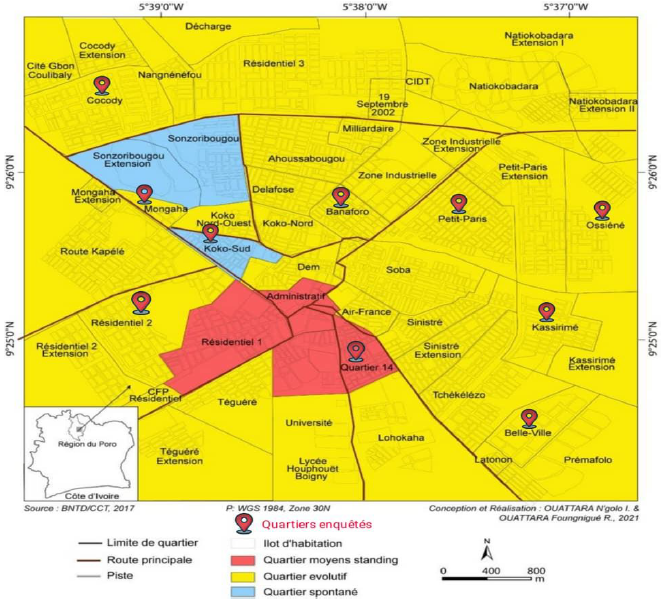
The survey was carried out in 10 neighborhoods in the city of Korhogo (Côte d’Ivoire) and involved 160 people, including 60 preparers and/or saleswomen and 100 randomly selected consumers. Korhogo is located in the north of the country, covering an area of 13,400 km 2 and is the country’s third most populous city, 635 km from Abidjan. Nicknamed the "City of Poro", its vegetation is made up of wooded savannah. The riverside population is mainly made up of the Senufo ethnic group, whose main activity is farming, including cereals (maize, sorghum and millet).

The survey took place between 6 May and 5 June 2024, in neighborhoods selected on the basis of residential criteria to ensure that the target population was representative. A total of 160 people (teenagers, adults, and the elderly), including 60 preparers and/or sellers and 100 consumers, were randomly selected for this study. These people were interviewed directly using a survey form containing a questionnaire designed for this purpose. This questionnaire covered demographic profiles, the type of cereal used, and culinary characteristics, sourcing of ingredients, preparation methods, sales strategies and health impact indicators.
Data collection took place in various locations within each neighborhood, such as courtyards, streets, and markets. Participants were divided into groups of 10 consumers and 6 vendors per neighborhood. The aim this approach was to reach a broad population of participants and to gather information in contexts that were representative of the daily environment of both vendors and consumers. Data were reported in terms of numbers and percentages. For data processing, the percentage P (%) of responses for each item of information sought on the production and consumption of the porridge was calculated using the following formula:
P (%) = (n yes /N) × 100(1)
With: n yes: number of people who answered yes to the question asked and N: total number of people questioned during the survey.
The survey results were entered and graphically represented using the multi-purpose tools Word and Excel 2016 tool. The data were then analyzed using SPSS 20.0 software. The khi-2 test (equality of distributions) was used to compare the percentages of ingredient sourcing, culinary characteristics, sales strategies, and health impact indicators. Thus, the significance of the test is determined by comparing the probability "p" associated with the Chi-2 test statistic with the theoretical threshold of α = 0.05. And then; when 1-p > 95%, we deduced that there is a significant difference. However, when 1-p < 95%, there is no significant difference between the different means.
Socio-demographic indicators showed that the majority of respondents were women (80%) with a minority of men (20%). The average age of respondents was 45 years. Women were in the majority in all age groups, with a higher proportion in the younger age groups (Table 1). In addition, people of the local "Senoufo” ethnic group represented the significant majority of the sample (64.38%), followed by the "Malinké" (29.38%) and finally the "Peul" and other ethnic groups (combined).
The population studied was composed of a majority of women traders (60) and consumers (68) and a minority of men represented only among consumers (32), none of whom were identified as traders in the sample. This can be explained by the fact that in Korhogo, women play a central role in traditional cooking as well as in the sale of food products in both urban and rural areas. In addition; rural women are actively involved in the agricultural value chain, growing, producing, processing and selling agricultural products, particularly food products such as "cocobaka". This constitutes a valuable contribution and undeniable added value 10. It must also be said that Women are increasingly taking up jobs in the personal service sector, as well as in low-skilled jobs that are sometimes insecure and often part-time. As a result, these sectors are expanding rapidly 11. Furthermore, the high proportion of Senoufo and Malinke ethnic groups among the respondents could be explained by the fact that the town of Korhogo is mainly populated by these ethnic groups. These inhabitants earn their livelihood mainly from agriculture, including the cultivation of cereals such as maize, millet and sorghum 12.
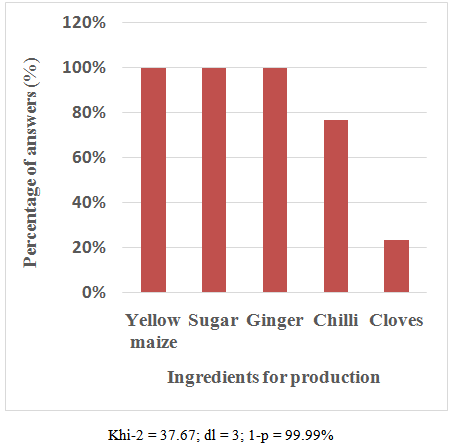
3.2. Ingredients Used in the Manufacture of “Cocobaka”All 60 shopkeepers questioned used use yellow maize as their main ingredient, a frequency of 100% (Figure 2). Ginger and sugar are used by all women surveyed (100%), unlike chili and cloves, which are used by 76.7% and 23.3% respectively. This makes ginger and sugar the most commonly used additives compared to chili and cloves.

Everyone uses yellow maize as the main ingredient to prepare “cocobaka” because of its cultural, nutritional and health benefits. There are several varieties of maize ( Zea mays ) white, blue; purple, red and yellow 13, 14. All these varieties are rich in phenolic acids and flavonoids but yellow maize is particularly rich in carotenoids 15, some of which are precursors of vitamin A and others xanthophylls 16. Yellow maize therefore plays a central role in providing the base of the recipe and contributing to its distinctive flavour. Moreover, maize is an essential resource of energy, vitamins and protein in many countries around the world, often used as an economical source of calories 17, 18. In Côte d’Ivoire, 62% of maize is grown in savannah regions, mainly in the north. It is therefore a staple food for local populations. Yellow maize also represents a promising opportunity to effectively combat severe vitamin A deficiency, especially in young preschool children 19. Sugar and ginger are used as additives by all users not only to give a sweet and spicy flavour to the porridge but also for the antioxidant properties of ginger 20, 21.
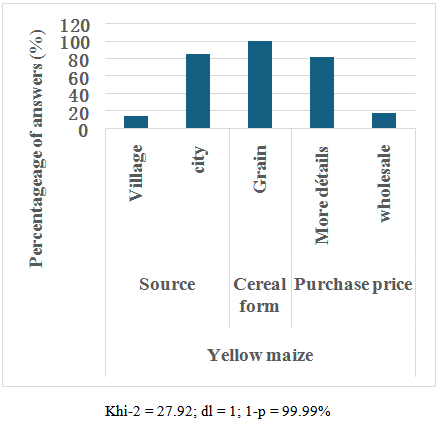
3.3. Sources of Cereal Used for “Cocobaka”All the people interviewed use yellow maize in grain form as the main ingredient for preparing “cocobaka”. The vast majority of people (85%) obtain their ingredients from the town, compared to 15% who buy them in the village. Among those surveyed, 82% buy their maize in detail and 18% in wholesale (Figure 3).

For a variety of reasons, users are more likely to buy ingredients in towns than in villages. It has to be said that urban areas often have a greater variety of ingredients available all year round, thanks to well-stocked markets in various regions and a well-developed logistics infrastructure 22. Furthermore, cities are often economic centers with developed transport infrastructure, which facilitates the supply and distribution of cereal food products. Every sixty (60) people receive maize in grains form, as buying whole grains can often be cheaper than buying processed or prepared ingredients. This would maximize the food budget. However, some people prefer to buy whole grains to have total control over their preparation and cooking, thus ensuring the freshness and quality of the ingredients. Sometimes, some users opt for bulk purchasing to ensure a constant and economical supply, while others opt to buy in retail for reasons of flexibility and short-term budget management 23.
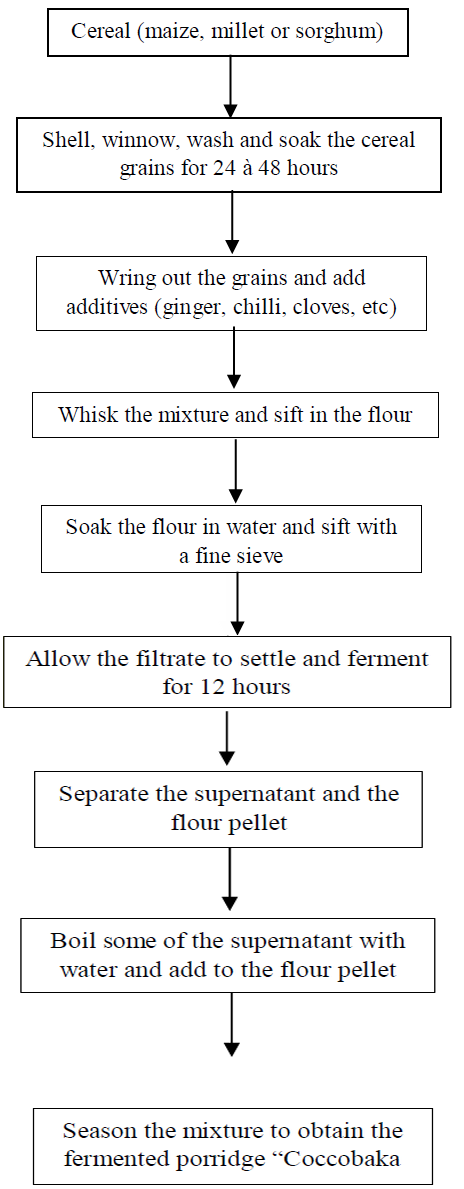
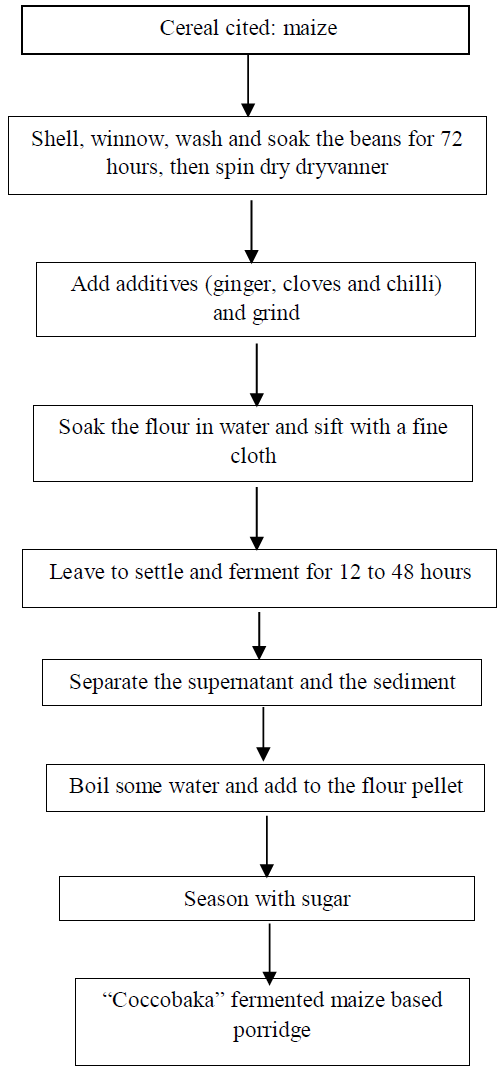
3.4. Method of Preparation and Marketing of “Cocobaka”The 60 traders (100 %) questioned about the method of preparing fermented porridge, gave a different process from that which was predefined, presented respectively by Figure 4 and Figure 5. However, the two preparation stages have largely common steps and few differences.
As far as the similarities between the two manufacturing procedures are concerned, the cereal grains undergo several transformations: hulling, washing, soaking fermentation; grinding with flavoring additives such as ginger, pepper, chili, cloves or mint, before being completely ground. The resulting grind is soaked in water and filtered through a fine cloth to remove the residual husks (dregs). The filtrate is left to stand and ferment for at least 24 to 48 hours, to obtain two phases: a pellet and a supernatant. The liquid phase is separated from the pellet and part of this liquid phase is boiled with added water. Then, the boiling solution is added to the pellet and the container is hermetically sealed for 5 minutes to allow the mixture to cook. Finally, the mixture is stirred and seasoned with flavorings and sugar to make the "cocobaka". The two preparation methods are also different in a few points. There is the time of sieving the grind which can be done before or after steeping. In addition, the fermentation time for the grains and the ground cereal which can vary from 12 to 72 hours, depending on each cook or seller. Also, the cooking method of the fermented pellet can be done with boiling water only or over a low heat for +/- 15 minutes. On the other hand, the "cocobaka" is sold in the form of porridge and in detail by all the sellers. Our results are similar to those of 7 who established different processes for producing porridge from three cereals (corn, millet and sorghum) in Burkina Faso on the basis of a survey. According to 24, production technologies differ depending on the materials used and ethnic particularities.


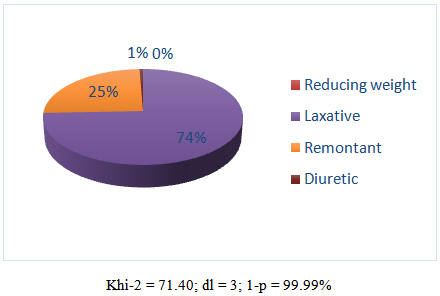
According to the data in Figure 6, the majority (74.38%) of respondents perceived porridge as having laxative properties, unlike the 25% of respondents who used it as a stimulant. However, no respondents mentioned slimming effects and very few (0.63%) perceived porridge as having diuretic effects.

The laxative effect of porridge could be due to the presence of phenolic compounds and dietary fiber, which make proteins easily good digestible 25. This helps to facilitate intestinal transit and prevent constipation 26. In general, whole grains contain a high amount of dietary fiber and have a lower energy density. Consequently, the consumption of whole cereal grains and dietary fiber has been linked to a decreased risk of obesity 27. Indeed, dietary fiber as probiotics can improve intestinal integrity and modify the composition of the gastric microbiota 28, 29. The remontant effect could be explained by the presence in yellow maize of phenolic compounds (mainly carotenoids) with antioxidant activities 25, 30. In the human body, these antioxidant phenolic compounds play a protective role against oxidative damage that is responsible for most chronic diseases related to age and diet 31 such as certain cancers or macular degeneration 32. Fermented foods are also considered excellent remedies against intestinal disorders and especially diarrhea. They stimulate the appetite and are particularly recommended for sick or weakened people and convalescents, promote lactation and are used as weaning food, considered to be factors of vitality, good health and longevity 33, 34, 35. Only 0.63% of participants thought that the porridge had diuretic effects, which is explained by the fact that porridges are generally made from cereals (maize, millet, sorghum and wheat, etc.) and liquids (water, milk), which are not considered diuretics.
This study on the production and consumption of the traditional fermented porridge "cocobaka" marketed in the city of Korhogo has highlighted several important elements. Firstly, women predominate in all age groups, suggesting that they play a key role in the preparation and sale of fermented porridge. In addition, most customers believe that “cocobaka” has laxative properties, while very few consider it a stimulant. Although yellow maize is the choice of all users with these significant benefits, it would therefore be interesting to diversify the components used for production and to use other cereals as part of future research.
All authors thank the people who have contributed directly or indirectly to the completion of this work.
FundingThe author(s) received no financial support for the research, writing, and/or publication of this article.
The authors have no conflict of interest regarding the publication of this article.
This work was carried out in collaboration among all authors. All authors read and approved the final manuscript.
| [1] | World Bank, 2022. https:// www.banquemondiale.org/ fr/country/cotedivoire. | ||
| In article | |||
| [2] | OIT, (Organisation Internationale du Travail), 2022; https://www.ilo.org/fr. | ||
| In article | |||
| [3] | Bationo F., Les aliments céréaliers fermentés africains : un autre moyen de participer à la couverture des bésoins en folates (Doctoral dissertation, Université Montpellier); 2018. | ||
| In article | |||
| [4] | Zinho, E. M., & Fabien, A. F. F. O. Etat des connaissances sur la nutrition et les pratiques alimentaires des communautés pastorales de l’Afrique de l’est et de l’ouest. Revue des études multidisciplinaires en sciences économiques et sociale, 9(2) ; 2024. | ||
| In article | |||
| [5] | Noort, M. W. J., Renzetti, S., Linderhof, V., du Rand, G. E., Marx-Pienaar, N. J. M. M., de Kock, H. L. & Taylor, J. R. N.. Towards sustainable shifts to healthy diets and food security in sub-Saharan Africa with climate-resilient crops in bread-type products: A food system analysis. Foods. 2022; 11 (2): 135; 2022. | ||
| In article | View Article PubMed | ||
| [6] | Marco, M. L., Sanders, M. E., Gänzle, M., Arrieta, M. C., Cotter, P. D., De Vuyst, L. & Hutkins, R. The International Scientific Association for Probiotics and Prebiotics (ISAPP) consensus statement on fermented foods. Nature Reviews Gastroenterology & Hepatology, 18(3), 196-208; 2021 | ||
| In article | View Article PubMed | ||
| [7] | Kagambèga B., Cissé H., Tapsoba F., Sawadoga A., Zongo C., Traoré Y. & Savadogo A. Bouillies fermentées traditionnelles à base de céréales au Burkina Faso : Diversité, technologies de production et microorganismes à potentiel probiotique associés. p 25 ; 2019. | ||
| In article | |||
| [8] | Ben K. M. (Modifications physiologiques chez des plantes de blé (Triticumdurum Desf) exposées à un stress salin (Doctoral dissertation, Université Badji Mokhtar). P .13-108 ; 2014. | ||
| In article | |||
| [9] | Garcia‐Casal, M. N., Peña‐Rosas, J. P., De‐Regil, L. M., Gwirtz, J. A. & Pasricha, S. R. Fortification of maize flour with iron for controlling anaemia and iron deficiency in populations. Cochrane database of systematic reviews, (12); 2018. | ||
| In article | View Article PubMed | ||
| [10] | Mayoulou S. J. L & Idelhadj A. Le rôle de la femme rural congolaisedans le développement local à travers le tourisme alternatif. Revista Internacional de Turismo, Empresa y Territorio. RITUREM, 6(1), 107-133; 2022. | ||
| In article | View Article | ||
| [11] | Meron M., Okba M. & Viney X. Les femmes et les métiers: vingt ans d’évolutions contrastées. Données sociales–La société française,p 225-234; 2006. | ||
| In article | |||
| [12] | Bakayoko N. L., Tiekoura K. B., Soumahoro S., Toure A., Guessennd N. K. & Camara-Koussemon M. Utilisations alimentaire et thérapeutique du fruit du tamarinier dans les villes de Korhogo et d’Abidjan, Côte d’Ivoire. Afrique SCIENCE, 24(3), 47-59. 2024. | ||
| In article | View Article | ||
| [13] | Ramos-Escudero F, Muñoz AM, Alvarado-Ortíz C, Alvarado Á. & Yáñez JA. Purple corn (Zea mays L.) phenolic compounds profile and its assessment as an agent against oxidative stress in isolated mouse organs. Journal of Medicinal Food. 15(2):206-15; 2012. | ||
| In article | View Article PubMed | ||
| [14] | Lopez-Martinez LX, Parkin KL. & Garcia HS. Phase II-inducing, polyphenols content and antioxidant capacity of corn (Zea mays L.) from phenotypes of white, blue, red and purple colors processed into masa and tortillas. Plant Foods for Human Nutrition; 66(1):41-7; 2011. | ||
| In article | View Article PubMed | ||
| [15] | Siyuan S, Tong L. & Liu R. Corn phytochemicals and their health benefits. Food Science and Human Wellness. 2018;7(3):185-95; 2018. | ||
| In article | View Article | ||
| [16] | Muzhingi T, Yeum KJ, Russell RM, Johnson EJ, Qin J. & Tang G. Determination of carotenoids in yellow maize, the effects of saponification and food preparations. International Journal for Vitamin Nutrition Research; 78(3):112-20; 2008. | ||
| In article | View Article PubMed | ||
| [17] | Yao A., La fermentation du manioc en gari dans l’Afrique de l’Ouest : production d’un starter de bactéries lactiques lyophilisées, dissertation en vue de l’obtention du grade de Docteur en sciences. Université de Liège. p. 27-46; 2009. | ||
| In article | |||
| [18] | Ukeyima M. T., Enujiugha V. N. & Sanni, T. A., Current applications of probiotic foods in Africa, African Journal of Biotechnology 9, p. 394-401; 2010. | ||
| In article | |||
| [19] | N’guessan Y. D., Koua A. G., Bedikou E. M., N'guessan A. V. & Niamke L. S., Optimisation de la qualité nutritive de la farine de maïs jaune issue d’un traitement à la potasse pour la production du tô, met traditionnel de céréale consommé à Abidjan: Optimization of the nutritive quality of potash-treated yellow maize flour for tô manufacture, a traditional local cereal dish in Abidjan (Côte d’Ivoire). Sciences Naturelles et Appliquées, p 2; 2016. | ||
| In article | |||
| [20] | Edo, GI, Igbuku, UA, Makia, RS, Isoje, EF, Gaaz, TS, Yousif, E., & Umar, H., Profil phytochimique, potentiel thérapeutique, composition nutritionnelle et applications alimentaires du gingembre : une revue complète. Discover Food, 5 (1), 1-32. 2025. | ||
| In article | View Article | ||
| [21] | Goldfein, KR, & Slavin, JL., Pourquoi ajouter du sucre aux aliments: notions de base en sciences alimentaires. Revues complètes en sciences et sécurité alimentaires, 14 (5), 644-656; 2015. | ||
| In article | |||
| [22] | Davies, J., Blekking, J., Hannah, C., Zimmer, A., Joshi, N., Anderson, P., & Evans, T., Gouvernance des marchés traditionnels et des systèmes alimentaires ruraux-urbains en Afrique subsaharienne. Habitat International, 127, 102620 ; 2022. | ||
| In article | View Article | ||
| [23] | Sarker, M., Munerah, S., Yinyi, A. T., Kasem, N., & Hoque, I., What makes consumers buy from the informal rather than formal retail market? A consumption value perspective. The Bottom Line, 37(3), 309-331, 2024. | ||
| In article | View Article | ||
| [24] | Saubade F. Potentiel nutritionnel du microbiote d'aliments fermentés à base de céréales : le cas des folâtes. Thèse de doctorat en Agroressources, Procédés, Aliments, Bioproduits. Université ; 2016. | ||
| In article | |||
| [25] | Hongbete F, Kindossi JM, Hounhouigan JD. & Nago MC., Production et qualité nutritionnelle des épis de maïs frais bouillis consommés au Bénin. International Journal of Biological and Chemical Sciences; 11(5):2378-92; 2017. | ||
| In article | View Article | ||
| [26] | Slavin, J., Fibres et prébiotiques : mécanismes et bienfaits pour la santé. Nutriments, 5 (4), 1417-1435; 2013. | ||
| In article | |||
| [27] | Weickert M.O. & Pfeiffer A. F., Impact de la consommation de fibres alimentaires sur la résistance à l'insuline et la prévention du diabète de type 2. The Journal of Nutrition, 148 (1), 7-12; 2018. | ||
| In article | |||
| [28] | Yang W., Ma Y., Liu Y., Smith W., SA S., TG., Chong., DQ. & Zhang X., Association de la consommation de grains entiers et de fibres alimentaires avec le risque de carcinome hépatocellulaire chez les adultes américains. JAMA oncologie, 5 (6), 879-886; 2019. | ||
| In article | |||
| [29] | Joye I.J., Fibres alimentaires issues de grains entiers et leurs bienfaits sur la santé métabolique. Nutriments, 12 (10), 3045; 2020. | ||
| In article | |||
| [30] | González-Muñoz A., Quesille-Villalobos AM., Fuentealba C., Shetty K., & Gálvez Ranilla L., Potential of Chilean native corn (Zea mays L.) accessions as natural sources of phenolic antioxidants and in vitro bioactivity for hyperglycemia and hypertension management. Journal Agricultural and Food Chemistry. 61(46):10995-1007; 2013. | ||
| In article | View Article PubMed | ||
| [31] | Melini F., Melini V., Luziatelli F., Ficca AG. & Ruzzi M., Composants bénéfiques pour la santé dans les aliments fermentés: une revue systématique à jour. Nutriments, 11 (5), 1189. 26; 2019. | ||
| In article | View Article PubMed | ||
| [32] | Rouf Shah T., Prasad K. & Kumar P., Maize A potential source of human nutrition and health: A review. Cogent Food & Agriculture; 2(1):1166995; 2016. | ||
| In article | View Article | ||
| [33] | Aubert C., Les aliments fermentés traditionnels une richesse méconnue, Edition Terre Vivante, Paris. 1985; 263 p. | ||
| In article | |||
| [34] | Langlois D., Manuel de cours de cuisine "Alimentation vivante" Aspects théoriques et pratiques, 2eme Édition, 1994; p16-20. | ||
| In article | |||
| [35] | Olotu Olanrewaju O., Victor O., Oyetayo .,Titilayo T. & Adebolu., Safety of small-scale food fermentations in developing countries, Internet Journal of Food Safety11. p. 29-34. 2009. | ||
| In article | |||
Published with license by Science and Education Publishing, Copyright © 2025 GBOKO Abiba Ouattara, TRAORE Youssouf Zanga, KONE Monon, Zoro Armel Fabrice, TOURE Abdoulaye and Adama Coulibaly
 This work is licensed under a Creative Commons Attribution 4.0 International License. To view a copy of this license, visit
http://creativecommons.org/licenses/by/4.0/
This work is licensed under a Creative Commons Attribution 4.0 International License. To view a copy of this license, visit
http://creativecommons.org/licenses/by/4.0/
| [1] | World Bank, 2022. https:// www.banquemondiale.org/ fr/country/cotedivoire. | ||
| In article | |||
| [2] | OIT, (Organisation Internationale du Travail), 2022; https://www.ilo.org/fr. | ||
| In article | |||
| [3] | Bationo F., Les aliments céréaliers fermentés africains : un autre moyen de participer à la couverture des bésoins en folates (Doctoral dissertation, Université Montpellier); 2018. | ||
| In article | |||
| [4] | Zinho, E. M., & Fabien, A. F. F. O. Etat des connaissances sur la nutrition et les pratiques alimentaires des communautés pastorales de l’Afrique de l’est et de l’ouest. Revue des études multidisciplinaires en sciences économiques et sociale, 9(2) ; 2024. | ||
| In article | |||
| [5] | Noort, M. W. J., Renzetti, S., Linderhof, V., du Rand, G. E., Marx-Pienaar, N. J. M. M., de Kock, H. L. & Taylor, J. R. N.. Towards sustainable shifts to healthy diets and food security in sub-Saharan Africa with climate-resilient crops in bread-type products: A food system analysis. Foods. 2022; 11 (2): 135; 2022. | ||
| In article | View Article PubMed | ||
| [6] | Marco, M. L., Sanders, M. E., Gänzle, M., Arrieta, M. C., Cotter, P. D., De Vuyst, L. & Hutkins, R. The International Scientific Association for Probiotics and Prebiotics (ISAPP) consensus statement on fermented foods. Nature Reviews Gastroenterology & Hepatology, 18(3), 196-208; 2021 | ||
| In article | View Article PubMed | ||
| [7] | Kagambèga B., Cissé H., Tapsoba F., Sawadoga A., Zongo C., Traoré Y. & Savadogo A. Bouillies fermentées traditionnelles à base de céréales au Burkina Faso : Diversité, technologies de production et microorganismes à potentiel probiotique associés. p 25 ; 2019. | ||
| In article | |||
| [8] | Ben K. M. (Modifications physiologiques chez des plantes de blé (Triticumdurum Desf) exposées à un stress salin (Doctoral dissertation, Université Badji Mokhtar). P .13-108 ; 2014. | ||
| In article | |||
| [9] | Garcia‐Casal, M. N., Peña‐Rosas, J. P., De‐Regil, L. M., Gwirtz, J. A. & Pasricha, S. R. Fortification of maize flour with iron for controlling anaemia and iron deficiency in populations. Cochrane database of systematic reviews, (12); 2018. | ||
| In article | View Article PubMed | ||
| [10] | Mayoulou S. J. L & Idelhadj A. Le rôle de la femme rural congolaisedans le développement local à travers le tourisme alternatif. Revista Internacional de Turismo, Empresa y Territorio. RITUREM, 6(1), 107-133; 2022. | ||
| In article | View Article | ||
| [11] | Meron M., Okba M. & Viney X. Les femmes et les métiers: vingt ans d’évolutions contrastées. Données sociales–La société française,p 225-234; 2006. | ||
| In article | |||
| [12] | Bakayoko N. L., Tiekoura K. B., Soumahoro S., Toure A., Guessennd N. K. & Camara-Koussemon M. Utilisations alimentaire et thérapeutique du fruit du tamarinier dans les villes de Korhogo et d’Abidjan, Côte d’Ivoire. Afrique SCIENCE, 24(3), 47-59. 2024. | ||
| In article | View Article | ||
| [13] | Ramos-Escudero F, Muñoz AM, Alvarado-Ortíz C, Alvarado Á. & Yáñez JA. Purple corn (Zea mays L.) phenolic compounds profile and its assessment as an agent against oxidative stress in isolated mouse organs. Journal of Medicinal Food. 15(2):206-15; 2012. | ||
| In article | View Article PubMed | ||
| [14] | Lopez-Martinez LX, Parkin KL. & Garcia HS. Phase II-inducing, polyphenols content and antioxidant capacity of corn (Zea mays L.) from phenotypes of white, blue, red and purple colors processed into masa and tortillas. Plant Foods for Human Nutrition; 66(1):41-7; 2011. | ||
| In article | View Article PubMed | ||
| [15] | Siyuan S, Tong L. & Liu R. Corn phytochemicals and their health benefits. Food Science and Human Wellness. 2018;7(3):185-95; 2018. | ||
| In article | View Article | ||
| [16] | Muzhingi T, Yeum KJ, Russell RM, Johnson EJ, Qin J. & Tang G. Determination of carotenoids in yellow maize, the effects of saponification and food preparations. International Journal for Vitamin Nutrition Research; 78(3):112-20; 2008. | ||
| In article | View Article PubMed | ||
| [17] | Yao A., La fermentation du manioc en gari dans l’Afrique de l’Ouest : production d’un starter de bactéries lactiques lyophilisées, dissertation en vue de l’obtention du grade de Docteur en sciences. Université de Liège. p. 27-46; 2009. | ||
| In article | |||
| [18] | Ukeyima M. T., Enujiugha V. N. & Sanni, T. A., Current applications of probiotic foods in Africa, African Journal of Biotechnology 9, p. 394-401; 2010. | ||
| In article | |||
| [19] | N’guessan Y. D., Koua A. G., Bedikou E. M., N'guessan A. V. & Niamke L. S., Optimisation de la qualité nutritive de la farine de maïs jaune issue d’un traitement à la potasse pour la production du tô, met traditionnel de céréale consommé à Abidjan: Optimization of the nutritive quality of potash-treated yellow maize flour for tô manufacture, a traditional local cereal dish in Abidjan (Côte d’Ivoire). Sciences Naturelles et Appliquées, p 2; 2016. | ||
| In article | |||
| [20] | Edo, GI, Igbuku, UA, Makia, RS, Isoje, EF, Gaaz, TS, Yousif, E., & Umar, H., Profil phytochimique, potentiel thérapeutique, composition nutritionnelle et applications alimentaires du gingembre : une revue complète. Discover Food, 5 (1), 1-32. 2025. | ||
| In article | View Article | ||
| [21] | Goldfein, KR, & Slavin, JL., Pourquoi ajouter du sucre aux aliments: notions de base en sciences alimentaires. Revues complètes en sciences et sécurité alimentaires, 14 (5), 644-656; 2015. | ||
| In article | |||
| [22] | Davies, J., Blekking, J., Hannah, C., Zimmer, A., Joshi, N., Anderson, P., & Evans, T., Gouvernance des marchés traditionnels et des systèmes alimentaires ruraux-urbains en Afrique subsaharienne. Habitat International, 127, 102620 ; 2022. | ||
| In article | View Article | ||
| [23] | Sarker, M., Munerah, S., Yinyi, A. T., Kasem, N., & Hoque, I., What makes consumers buy from the informal rather than formal retail market? A consumption value perspective. The Bottom Line, 37(3), 309-331, 2024. | ||
| In article | View Article | ||
| [24] | Saubade F. Potentiel nutritionnel du microbiote d'aliments fermentés à base de céréales : le cas des folâtes. Thèse de doctorat en Agroressources, Procédés, Aliments, Bioproduits. Université ; 2016. | ||
| In article | |||
| [25] | Hongbete F, Kindossi JM, Hounhouigan JD. & Nago MC., Production et qualité nutritionnelle des épis de maïs frais bouillis consommés au Bénin. International Journal of Biological and Chemical Sciences; 11(5):2378-92; 2017. | ||
| In article | View Article | ||
| [26] | Slavin, J., Fibres et prébiotiques : mécanismes et bienfaits pour la santé. Nutriments, 5 (4), 1417-1435; 2013. | ||
| In article | |||
| [27] | Weickert M.O. & Pfeiffer A. F., Impact de la consommation de fibres alimentaires sur la résistance à l'insuline et la prévention du diabète de type 2. The Journal of Nutrition, 148 (1), 7-12; 2018. | ||
| In article | |||
| [28] | Yang W., Ma Y., Liu Y., Smith W., SA S., TG., Chong., DQ. & Zhang X., Association de la consommation de grains entiers et de fibres alimentaires avec le risque de carcinome hépatocellulaire chez les adultes américains. JAMA oncologie, 5 (6), 879-886; 2019. | ||
| In article | |||
| [29] | Joye I.J., Fibres alimentaires issues de grains entiers et leurs bienfaits sur la santé métabolique. Nutriments, 12 (10), 3045; 2020. | ||
| In article | |||
| [30] | González-Muñoz A., Quesille-Villalobos AM., Fuentealba C., Shetty K., & Gálvez Ranilla L., Potential of Chilean native corn (Zea mays L.) accessions as natural sources of phenolic antioxidants and in vitro bioactivity for hyperglycemia and hypertension management. Journal Agricultural and Food Chemistry. 61(46):10995-1007; 2013. | ||
| In article | View Article PubMed | ||
| [31] | Melini F., Melini V., Luziatelli F., Ficca AG. & Ruzzi M., Composants bénéfiques pour la santé dans les aliments fermentés: une revue systématique à jour. Nutriments, 11 (5), 1189. 26; 2019. | ||
| In article | View Article PubMed | ||
| [32] | Rouf Shah T., Prasad K. & Kumar P., Maize A potential source of human nutrition and health: A review. Cogent Food & Agriculture; 2(1):1166995; 2016. | ||
| In article | View Article | ||
| [33] | Aubert C., Les aliments fermentés traditionnels une richesse méconnue, Edition Terre Vivante, Paris. 1985; 263 p. | ||
| In article | |||
| [34] | Langlois D., Manuel de cours de cuisine "Alimentation vivante" Aspects théoriques et pratiques, 2eme Édition, 1994; p16-20. | ||
| In article | |||
| [35] | Olotu Olanrewaju O., Victor O., Oyetayo .,Titilayo T. & Adebolu., Safety of small-scale food fermentations in developing countries, Internet Journal of Food Safety11. p. 29-34. 2009. | ||
| In article | |||