This study evaluates the performance of Multi-Effect Distillation (MED) and Multi-Stage Flash (MSF) desalination systems integrated with solar energy and conventional boilers. Simulations using numerical software modeled all systems to produce 1200 cubic meters of freshwater per day under similar conditions along the Persian Gulf coast. Results indicate that system type and energy source significantly affect costs, efficiency, and sustainability. The MED-Solar Field system emerged as an economically viable and eco-friendly option, with a production cost of $3.22 per cubic meter in the first year and reduced emissions. The MED-Conventional Boiler system had the lowest cost ($1.55/m³) but relied on fossil fuels. The MSF-Solar Field system, with a high cost of $7.93/m³, was deemed unfeasible due to substantial initial investment. The MSF-Conventional Boiler system, with a cost of $4.66/m³ and high efficiency (85%), demonstrated reasonable economic performance but posed environmental concerns. The study also analyzed the effects of environmental factors on solar system efficiency to enhance future designs. These findings offer insights for selecting optimal desalination technologies across climates, promoting renewable energy integration, cost reduction, and advancing water and energy resource management.
The study of Solar-MED (Multi-Effect Distillation) is crucial due to the increasing global water scarcity and the need for sustainable, energy-efficient desalination solutions. As freshwater resources are limited, especially in arid regions, desalination has become a vital method for ensuring water security. However, conventional desalination processes are energy-intensive and costly. Solar-MED offers a promising alternative by utilizing solar energy, a renewable and abundant resource, to power the desalination process, significantly reducing dependence on fossil fuels and lowering operational costs 1, 2, 3. The integration of solar energy into desalination systems enhances their sustainability, making Solar-MED a key solution for addressing water scarcity in regions like the Middle East and North Africa, where desalinated water provides a significant portion of potable water 7, 16, 21. The development of solar desalination technologies has been the subject of extensive research over the years. One of the earliest methods explored was the solar still, which operates by utilizing the sun's heat to evaporate water, leaving the salts behind, and then condensing the vapor to produce fresh water. While single-slope solar stills were initially studied, researchers have since advanced to double-slope solar stills to increase distillation efficiency 4, 5. Further innovations include the use of wick materials to enhance evaporation rates and the application of deep machine learning algorithms to optimize solar still designs for better performance and lower costs 6, 7, 8, 9, 10, 11, 12, 13, 14, 15, 16, 17. Additionally, vacuum-based desalination systems have been explored to improve efficiency by utilizing waste heat from steam turbines 18. This approach was first tested in 1991 by Low and Tay, who successfully demonstrated the feasibility of vacuum desalination using seawater 9, 15, 19, 37. The introduction of ejectors in desalination systems has also contributed to optimizing energy use. Ejectors are employed to maintain vacuum pressure in the system, reducing the need for high-grade energy-consuming pumps. For instance, 20 designed and tested a two-phase ejector for desalination systems, which significantly improved the vacuum performance while maintaining energy efficiency [20-29] 20 Furthermore, researchers have developed hybrid solar cells and new materials to enhance the efficiency of photovoltaic systems that power solar desalination systems. These advancements, such as the use of perovskite-based solar cells and monocrystalline silicon solar cells, have led to improvements in solar power generation, further enhancing the performance of solar desalination systems 8, 21, 22, 23, 24. Using renewable energy (RE) to power desalination processes is a sustainable solution to provide potable water in water-scarce regions 1. Solar energy is the most abundant renewable energy source and is highly suitable for powering both thermal and membrane processes. Thermal processes include multi-stage flash (MSF), multi-effect distillation (MED), thermal vapor compression (TVC), and mechanical vapor compression (MVC). Several studies have highlighted the importance and suitability of solar desalination for the Middle East and North Africa (MENA) region, one of the world's most water-scarce regions 7, 14, 25, 26, 27. The coupling of solar energy technologies, such as concentrated solar power (CSP), with thermal desalination is still in the research and development (R&D) phase, requiring extensive research in this field 28, 30, 32, 33, 34. Numerous studies have investigated the challenges and opportunities for ensuring that solar energy-powered desalination is feasible 29, 30, 31, 32, 33, 34. Among current solar desalination technologies, solar-thermal-driven multi-effect distillation (MED) may be the most suitable for large-scale implementation owing to its superior thermodynamic and heat transfer performances compared to the MSF process and its lower levelized cost of water (LCOW) 35, 36, 37, 38, 39. Building on this, it is reasonable to argue that solar-driven MED is the most suitable thermal desalination technology for large-scale seawater desalination, as also highlighted by 40. Therefore, this article aims to introduce an innovative approach to seawater desalination by integrating multi-effect distillation (MED) and flash evaporation methods within a solar-powered cogeneration system 41, 36, 45, 46. The study focuses on developing an optimal model using numerical software to evaluate the system’s performance and conducting a comprehensive sensitivity analysis to enhance energy efficiency and system design. By comparing the costs and efficiencies of the proposed solar-MED and flash evaporation systems with conventional desalination methods, this research seeks to demonstrate the viability and sustainability of solar-based technologies as a promising solution for freshwater production in the context of increasing global water scarcity 10, 11, 12, 13, 44.
In this study, a comprehensive and detailed approach is applied to analyze and compare different desalination systems. For this purpose, numerical software is used as the main tool for simulation and analysis. This software is selected due to its extensive capabilities in modeling energy and thermal systems, making it ideal for performing precise analyses of various systems, particularly in desalination and assessing their performance. Initially, four distinct systems are considered, each with its specific characteristics. These systems are: the MED-Solar Field, which utilizes the MED (Multi-Effect Distillation) technology combined with a solar field for thermal energy supply; the MED-Conventional Boiler, where the same MED technology is employed, but instead of solar energy, a conventional boiler is used for thermal energy generation; the MSF-Solar Field, which is based on the MSF (Multi-Stage Flash Distillation) process, also utilizing a solar field for energy provision; and the MSF-Conventional Boiler, which is similar to the previous system but uses a conventional boiler instead of solar energy for thermal supply. To ensure an accurate comparison of the systems, four units with a capacity of 1200 m³/day of freshwater production are used under identical environmental conditions. The environmental conditions, extracted from the Table 1 for the Persian Gulf coastline, are consistently applied to all models. These conditions include temperature, humidity, and solar radiation, which significantly affect the performance of desalination systems 17, 18, 38. In this step, each of the systems is modeled within numerical software. All input parameters, such as temperature, pressure, and fluid properties, are defined. Then, the systems are simulated independently to thoroughly assess the performance of each system. After the initial modeling, to ensure the correctness of the design and the software’s functionality, the system is switched to Engineering Mode. In this mode, the initial design is executed, and potential errors are identified and rectified. This step helps refine the system towards real operational conditions. After confirming the accuracy of the design and functionality of the systems, the analysis proceeds to the OFF Design mode for sensitivity analysis. In this mode, various input parameters, such as temperature, pressure, and fluid properties, are altered, and the impact of these changes on the system’s output parameters (such as freshwater production) is calculated. This analysis helps assess the system’s sensitivity to environmental and operational variations, providing a deeper understanding of its performance under different conditions. Subsequently, the results from the simulations for each system are collected and compared. This comparison involves evaluating freshwater production, energy consumption, operational costs, and system efficiency under varying conditions. The final results are comprehensively analyzed to select the optimal system for specific conditions 19, 20, 40, 43. Finally, after completing the simulations and analyzing the results, the study concludes by identifying the most efficient system for freshwater production under the given environmental conditions. This conclusion can serve as a reference for designing similar systems in other regions. This study method comprehensively covers all stages, from design to sensitivity analysis and system comparison, providing an in-depth assessment of the performance of different desalination systems 31, 37, 41, 42.
In this section, four systems, including MED-Solar Field, MED-Conventional Boiler, MSF-Solar Field, and MSF-Conventional Boiler, were modeled using the numerical software. These systems were analyzed with a focus on different thermal energy sources (solar field and conventional boiler) and technologies (MED and MSF) to evaluate their performance and efficiency, with the details presented in the following sections.
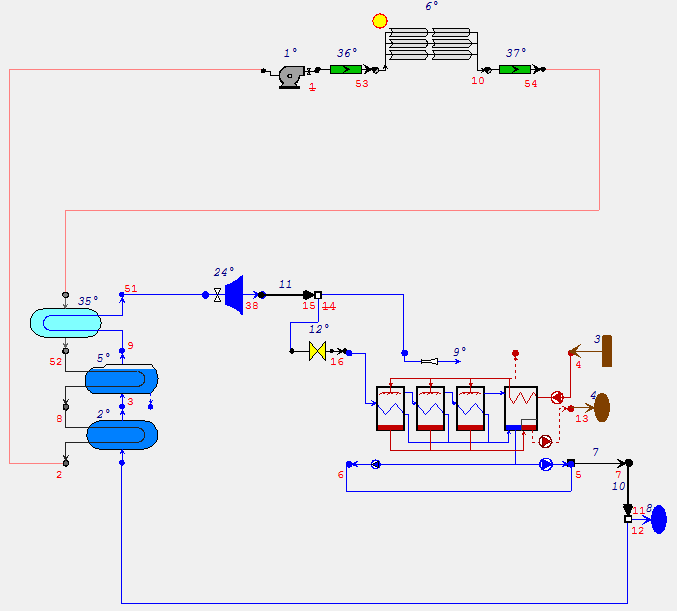
The MED-Solar Field system, schematically illustrated in Figure 1, employs inlet steam (13287 kW), seawater feed (10769 kW), and a pump (62 kW) as energy inputs, while condenser return (927 kW), cooling water discharge (13666 kW), desalinated water (3106 kW), blowdown (5768 kW), and heat loss (652 kW) constitute its energy outputs; these values are reported in Table 1 and reflect the overall energy balance throughout the various stages and components of the MED desalination unit, along with its operating costs. System specifications—including the number of units, number of effects, dimensions, and unit prices—are summarized in Table 2. In contrast, Table 3 presents both general and specific characteristics of the effects and the condenser employed in this project. The heat transfer fluid in the solar field is Therminol VP-1, which remains in liquid phase at all process stages; the corresponding thermal balance and solar irradiation data are provided in Table 4. Table 5 details the design parameters of the collectors, receivers, and other hardware in the solar field, indicating a 75% optical efficiency and a receiver tube with an outer diameter of 70 mm and an inner diameter of 67/64 mm, fabricated from TP321H. The solar field occupies an approximate area of 43000 m², as shown in Table 6, along with the associated operational costs. To supply electricity for the system’s pumps and other components, a steam turbine—whose operational parameters are given in Table 7—receives superheated steam at 10 bar and 400°C from the solar field heat exchanger and exhausts at 2.5 bar and 300°C. To determine the water production cost, the total project expenditure was calculated using numerical software, with a summary of the costs in Table 8 and a breakdown of each component’s price in Table 9. The fixed project costs amount to USD 35106927, while fixed and variable maintenance costs are USD 20/kW and USD 0.001/kW, respectively. Given a net power output of 2.458 kW and a 25-year design life, the first-year water production cost is estimated to be USD 3.22 per cubic meter.
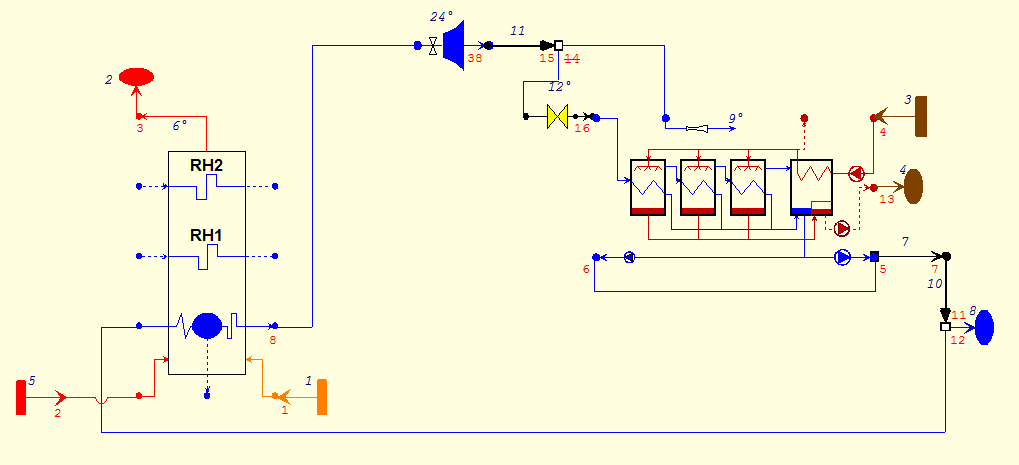
The MED-Conventional Boiler system in this project is meticulously designed to maintain all parameters of the desalination unit, including the steam turbine, MED unit, condenser, pumps, and cooling tower, in a fixed state. Instead of utilizing a solar cycle, the required steam is supplied by the boiler, as depicted in the schematic diagram shown in Figure 2. The boiler employed in this setup operates on methane fuel, and its fuel specifications are detailed in Table 10. The higher heating value of methane gas at 25°C is considered to be 50,047 kJ/kg. This boiler operates with 15% excess air and achieves an efficiency of approximately 81%. The thermal balance of the boiler is presented in Table 11, while the technical specifications and pricing information are available in Table 12. Additionally, Table 13 provides data on temperature, pressure, flow rate, and enthalpy of water/steam at various stages of the boiler. To calculate the cost of water production for this project, it is essential to determine the total cost of the design, which is performed using the numerical software. A summary of the costs is provided in Table 14, and the total cost for each component of the project in USD is available in Table 15. Based on the fixed costs outlined in the aforementioned tables, the cost per cubic meter of water is calculated as follows:
• Fixed Costs: USD 8,515,818
• Fixed Maintenance Costs: USD 20 per kW
• Variable Maintenance Costs: USD 0.01 per kW
• Fuel Cost for the First Year [https://www.naftnews.ir]: USD 0.25 per m³
The annual fuel cost is calculated using the following formula:
Annual Fuel Cost = 0.025 $/m3×0.2979 kg/s× (10.717 m3/kg) ×3600×24×365=327,565 $
Considering that the system generates 2,458 kW of electricity and has a design life of 25 years, the cost per cubic meter of produced water in the first year is determined to be USD 1.55. These calculations demonstrate that utilizing a methane-fired boiler within the MED-Conventional Boiler system enables the production of water at an optimized and cost-effective rate. All data related to the boiler's performance and associated costs are comprehensively presented in the referenced tables, facilitating a detailed analysis of the system's efficiency and economic viability.
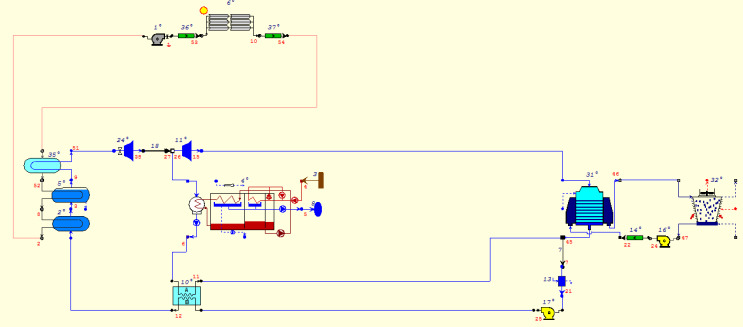
The MSF Solar Field system is illustrated in Figure 3. In designing this system, the use of steam at higher pressure and temperature, compared to the MED system, necessitates the incorporation of two turbines: one positioned upstream and the other downstream of the MSF unit. Additionally, the condensed water in the condenser has a higher temperature than the feedwater, which requires the implementation of a heat exchanger to utilize this thermal energy effectively. Moreover, the expanded steam from the second turbine cannot be released into the atmosphere due to environmental and energetic constraints; therefore, an additional condenser and cooling tower are employed. The specifications of the MSF unit used are detailed in Table 16. Given the extensive and complex nature of the MSF unit, the thermal balance results of the examined design, considering all heat transfer sources within the unit, are provided in Table 17. The specifications of the MSF unit, including capacity, number of stages, type of stages, dimensions, costs, and other pertinent details, are presented in Table 18. The heat transfer fluid utilized in the solar field is Therminol VP-1, which remains in liquid form throughout all operational stages. The thermal balance of the solar field is shown in Table 19, along with the solar irradiance entering the collector array. The hardware specifications of the solar field are outlined in Table 20, encompassing an area exceeding 151,000 square meters and a structural weight of approximately 1,300 tons, as detailed in Table 21. To determine the cost of the produced water from this project, the total cost of the design must be calculated, which is achievable using numerical software. The summarized costs are presented in Table 22. Additionally, the software is capable of providing the total cost of each component in USD, as listed in Table 23. As indicated in the system schematic, the MSF process requires the use of additional components, including a steam turbine costing $3,000,000, a water-cooled condenser costing $757,643, and a wet cooling tower costing $739,531, resulting in an additional approximately $5.4 million for these equipments. Furthermore, due to the higher energy demand in MSF units, which is inherently greater than that of MED units in medium-sized sites, the initial investment for the Solar Field in this unit is significantly higher than that of a comparable MED unit. Considering the abovementioned costs, the price per cubic meter of produced water is calculated as follows: fixed costs amount to $81,733,940, fixed maintenance costs are $20 per kW, and variable maintenance costs are $0.01 per kW. With an electricity generation capacity of 10,240 kW and a system design life of 25 years, the cost per cubic meter of produced water in the first year is $7.93 USD/m³.

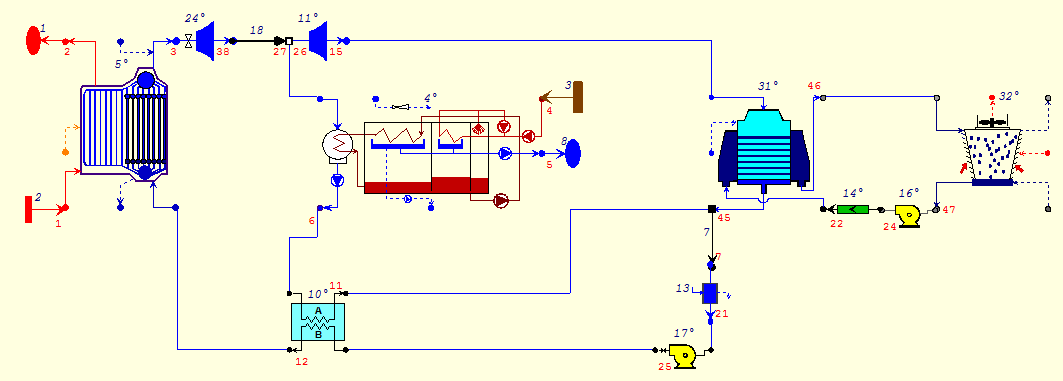
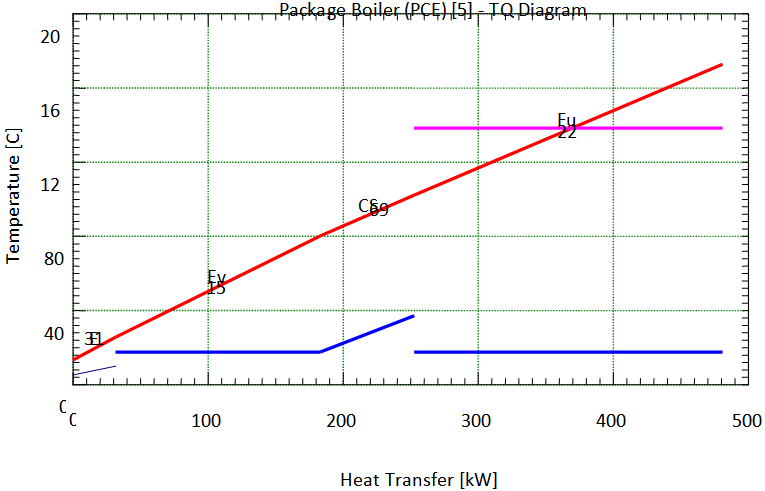
The MSF conventional boiler system, depicted in Figure 4, has been examined in this study. Given that all related tables and figures were reviewed in the previous section and only the boiler has been substituted for the solar field circuit, our focus is entirely on the tables and figures pertaining to the boiler. The boiler in use operates with 15% excess air and has an approximate efficiency of 85%. The thermal balance of this boiler is presented in Table 24, and its specifications, including cost, are detailed in Table 25. Additionally, Table 26 provides information on temperature, pressure, flow rate, and enthalpy of water/steam at various stages of the boiler. The thermal energy produced by the boiler as a function of temperature is clearly illustrated in the T-Q diagram shown in Figure 5. To determine the cost of water production from this project, it is necessary to calculate the total cost of the design, which can be performed using numerical software. A summary of the costs is presented in Table 27, and the software also calculates the total cost of each component in US dollars (USD), which are provided in Table 28. The fixed costs of the project are established at USD 18,457,800. Additionally, fixed maintenance costs amount to USD 20 per kW, and variable maintenance costs are USD 0.01 per kW. The fuel cost for the first year is set at USD 0.025 per cubic meter, calculated as follows:
Fuel cost for 1 year = 0.025 USD / m³× 1.004 kg/s×10.717 m³/kg×3600×24×365 = 1,103,979 USD
Considering that the electricity production in the system is 10,040 kW and the system's design lifespan is 25 years, the cost per cubic meter of water produced in the first year is USD 4.66.


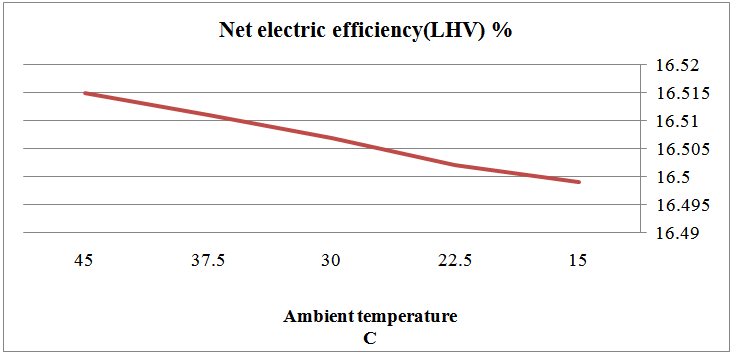
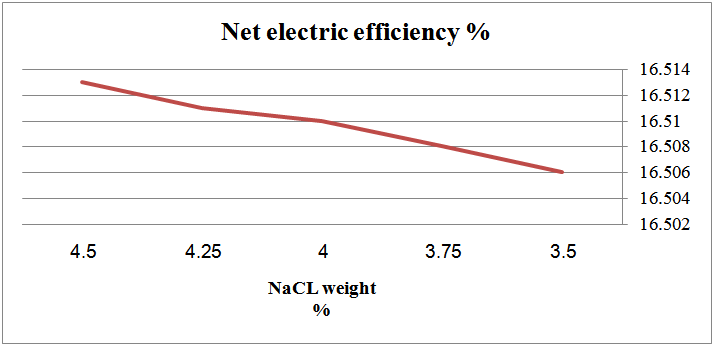
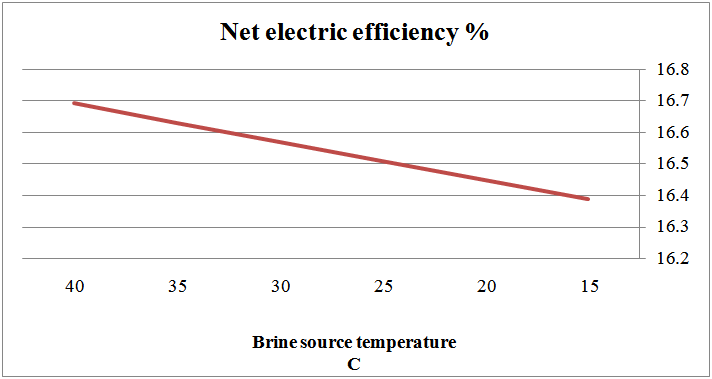
Based on the calculations performed and the results obtained in the previous section, this section focuses on the sensitivity analysis of the parameters influencing the system's efficiency. In this section, the sensitivity of output parameters to several input parameters is examined to determine the optimal operating condition of the system. The criterion for assessing the sensitivity of the system's input parameters is the overall efficiency of the system. The sensitivity results are presented for the following parameters in Tables 29 to 35 and their corresponding Figure 6 to Figure 12.
Ambient temperature plays a critical role in system performance, significantly influencing key parameters. As ambient temperature increases, net power output and net electric efficiency improve slightly, reflecting the system's ability to adapt positively to higher temperatures. This enhancement indicates stable performance under varying thermal conditions. Simultaneously, both net heat rate and gross heat rate decrease, signifying improved thermal efficiency as the system consumes less energy per unit of power generated. However, this comes with a slight increase in net fuel input, as higher energy demands are required to sustain the increased power output. In addition, the ambient wet bulb temperature rises directly with ambient temperature, highlighting its dependence on environmental conditions and its potential impact on the performance of cooling systems. Overall, higher ambient temperatures lead to improved efficiency and power generation but come at the cost of slightly increased fuel consumption. These results underscore the importance of considering ambient temperature in the optimal design and operation of systems to balance efficiency and energy use effectively.
The sensitivity analysis results of the power generation system indicate that variations in the sodium chloride (NaCl) weight percentage, ranging from 3.5% to 4.5%, have a notable yet limited impact on system performance, while other environmental conditions, including ambient pressure (1.013 bar), ambient temperature (35°C), relative humidity (60%), and wet bulb temperature (28.18°C), remain constant. The gross power output shows a marginal increase from 598.8 kW to 599.3 kW with the rise in NaCl concentration, reflecting the low sensitivity of gross power to this parameter. Similarly, the net power output increases from 457.8 kW to 458.6 kW, indicating a positive but minor influence of NaCl concentration on the system's net output. Net electric efficiency exhibits a slight improvement from 16.506% to 16.513%, underscoring the beneficial impact of NaCl percentage on system efficiency, albeit modest. Furthermore, the net heat rate decreases progressively from 102672 kJ/kWh to 102482 kJ/kWh, highlighting an enhancement in energy utilization efficiency as the NaCl concentration increases. Conversely, the net fuel input remains constant at 13056 kW across all cases, indicating no direct dependency of fuel consumption on NaCl concentration.
This study examines the effect of brine source temperature on system performance, with the temperature varying from 15°C (Case 1) to 40°C (Case 6) while keeping ambient conditions, including pressure, temperature, and relative humidity, constant. The results indicate that increasing the brine source temperature leads to a rise in gross power output from 583.3 kW to 622.8 kW and net power output from 442.6 kW to 481.6 kW, reflecting enhanced system performance at higher temperatures. Similarly, net electric efficiency improved from 16.388% to 16.693%, demonstrating better energy conversion efficiency. Furthermore, the net heat rate decreased from 106,264 kJ/kWh to 97,487 kJ/kWh, indicating reduced energy consumption per unit of power generation. Notably, the net fuel input remained nearly constant, with only minor variations from 13,064 kW to 13,042 kW. These findings underscore the positive impact of higher brine source temperatures on overall system efficiency, as evidenced by increased power output and improved net electric efficiency, accompanied by a reduction in net heat rate, all without significant changes in fuel consumption. Therefore, utilizing higher-temperature sources can be considered an effective strategy to enhance system efficiency.
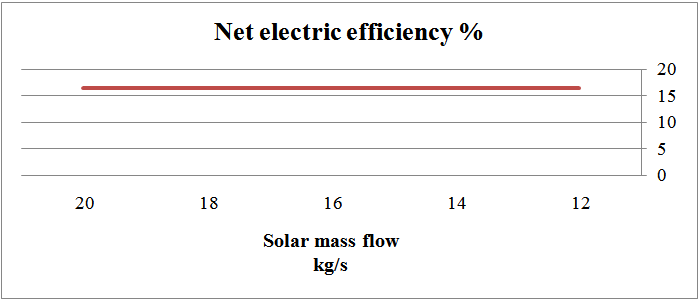
Based on the obtained data, the solar field mass flow is the only variable input parameter that changed within the range of 12 to 20 kg/s. However, this variation had no significant impact on the main output parameters. The gross and net power outputs, which remained constant at 599 kW and 458.2 kW respectively across all cases, indicate that changes in the solar field mass flow did not affect the system's power generation. Furthermore, the net electric efficiency of the system consistently remained at 16.51%, demonstrating no effect of mass flow variations on system efficiency. The net heat rate exhibited very minor variations within a narrow range of 102574 to 102576 kJ/kWh, reflecting negligible sensitivity of this parameter to changes in the solar field mass flow. Similarly, the net fuel input remained constant at 13056 kW in all scenarios, indicating that increases in solar field mass flow did not influence fuel consumption. Overall, the results indicate that the system, under the analyzed conditions, shows low sensitivity to variations in solar field mass flow. Its performance, including power generation and efficiency, remained stable across different mass flow rates. Only minor changes in the net heat rate were observed, which can be considered negligible.
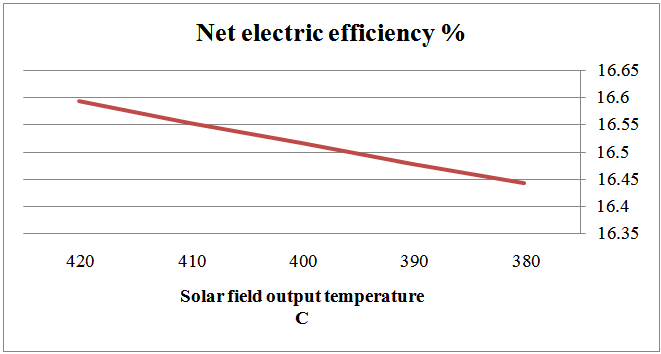
The results of this study indicate that increasing the solar field outlet temperature has a positive impact on system performance. As the outlet temperature rises from 380°C to 420°C, the gross power output increases from 594 kW to 605.1 kW, while the net power output improves from 451.3 kW to 466.3 kW, reflecting enhanced energy production and system efficiency. The net electric efficiency, based on the lower heating value (LHV), also increases from 16.442% to 16.594%, signifying improved energy conversion efficiency. Furthermore, the net heat rate decreases from 104,593 kJ/kWh to 100,174 kJ/kWh, demonstrating enhanced thermodynamic performance. In addition, the net fuel input decreases from 13,113 kW to 12,975 kW, indicating reduced fuel consumption and higher system efficiency. These findings underscore that increasing the solar field outlet temperature significantly enhances the system's overall performance in all critical aspects, highlighting the importance of optimizing outlet temperature to achieve maximum operational efficiency.
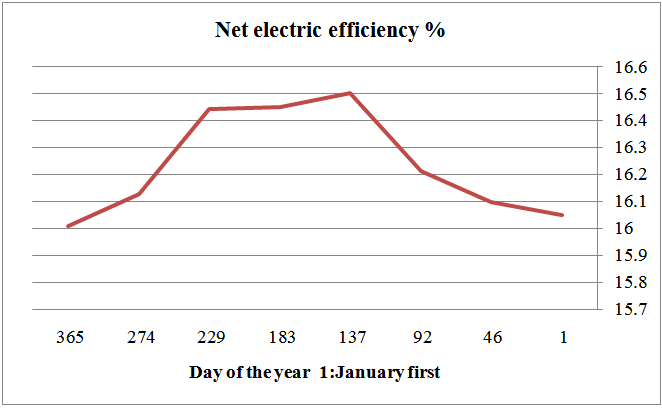
Based on the sensitivity analysis results, it is evident that the highest net power output occurs in Case 4 (456.7 kW), indicating optimal system performance under these conditions. Conversely, the lowest net power output is observed in Case 3 (395.4 kW), which may be attributed to operational limitations or specific conditions in this scenario. The net electric efficiency is highest in Cases 4 and 5, with values of 16.502% and 16.451%, respectively, reflecting the efficient utilization of fuel energy in these cases. On the other hand, the lowest efficiency is recorded in Cases 1 and 8, with values of 16.05% and 16.01%. In terms of fuel consumption, the highest input is observed in Cases 4 and 5 (13039 and 12928 kW, respectively), consistent with their higher net power output. The lowest fuel consumption occurs in Cases 1 and 8 (7216 and 7198 kW), indicating lower energy demand in these conditions. Furthermore, the lowest net heat rate is recorded in Cases 1 and 8 (65340 and 65183 kJ/kWh), signifying more efficient energy conversion in these cases. Conversely, the highest net heat rate is observed in Case 3 (111983 kJ/kWh), which correlates with the system's lower efficiency in this scenario. Environmental parameters such as pressure, temperature, and relative humidity remain constant across all cases, and the observed variations in results are primarily attributed to internal system parameters and temporal conditions (day of the year). Overall, Case 4 demonstrates the best performance in terms of power output and efficiency, albeit with higher fuel consumption. In contrast, Cases 1 and 8 exhibit more optimized fuel consumption and heat rates but generate lower net power. The selection of the optimal scenario depends on operational priorities, particularly whether the goal is to maximize efficiency or minimize fuel consumption. These findings can provide valuable insights for future decision-making to optimize system performance.
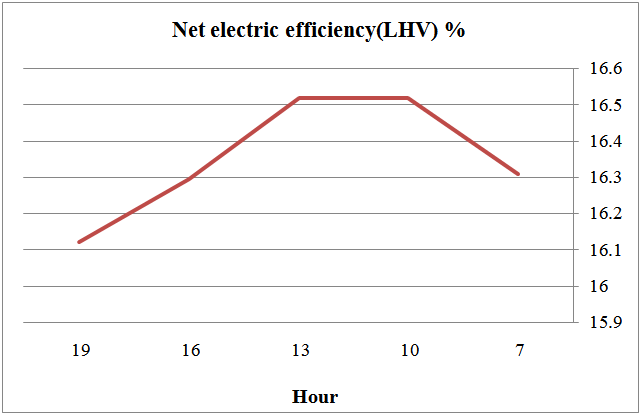
The performance analysis of the system under various operational conditions indicates that despite constant environmental parameters such as pressure, temperature, and relative humidity, significant variations in power output and system efficiency are observed across different scenarios. Among all scenarios, Case 3 demonstrates the highest net power output of 460 kW, while Case 5 records the lowest at 387.4 kW. Additionally, the net electric efficiency reaches its peak in Case 3 at 16.518%, reflecting the system's optimal performance, whereas Case 5 exhibits the lowest efficiency at 16.122%, indicating a noticeable decline in system performance. The net heat rate also achieves its most efficient value in Case 3 at 102333 kJ/kWh, highlighting the optimal energy utilization in this case, while Case 5 shows an anomalously low value of 40402 kJ/kWh, signaling significant operational issues requiring further investigation. Regarding fuel consumption, Case 3 reports the highest value at 13075 kW, whereas Case 5 has the lowest at 4348 kW. Gross power output follows a similar trend, with Case 3 reaching the highest value of 600.9 kW, and Case 5 the lowest at 518.1 kW. Overall, this sensitivity analysis underscores the substantial impact of slight changes in operational parameters on the system's overall performance and emphasizes the critical need for precise management and optimization of operating conditions.


This study evaluated the performance of MED and MSF desalination systems utilizing a combination of solar energy and conventional boilers. The findings revealed that the selection of the system type and energy source directly influences freshwater production costs, energy efficiency, and environmental sustainability. Among the systems analyzed, the MED-Solar Field system emerged as an economical and sustainable option, with a production cost of $3.22 per cubic meter in the first year, alongside a significant reduction in pollutant emissions. Similarly, the MED-Conventional Boiler system, with a production cost of $1.55 per cubic meter in the first year, was identified as a more economical alternative but remains dependent on fossil fuels. In contrast, MSF systems, due to their high energy demands and substantial initial investments, were deemed more suitable for larger-scale projects with specific applications. Although the MSF-Solar Field system demonstrated favorable technical performance, its high production cost ($7.93 per cubic meter in the first year) and greater initial capital requirements diminished its economic feasibility. The MSF-Conventional Boiler system, with a production cost of $4.66 per cubic meter in the first year and a high boiler efficiency (85%), exhibited reasonable cost performance. However, the environmental impacts of fossil fuel dependency remain a critical challenge for this system. This study also revealed that climatic conditions and environmental variables, including the day of the year, time of day, seawater inlet temperature, and ambient temperature, play a significant role in enhancing the efficiency of solar systems. Specifically, the day of the year and time of day have a substantial impact on cycle performance due to variations in the intensity and angle of solar radiation. Moreover, an increase in ambient temperature and the collector outlet temperature directly improves system efficiency. In contrast, the solar cycle flow rate and salt concentration exhibit no significant effect on system efficiency and can be considered less critical factors in the design process. Overall, the results of this research can serve as a guideline for the optimal selection and design of desalination systems under varying climatic conditions, with an emphasis on utilizing renewable energy sources and reducing operational costs. These findings also provide a valuable foundation for the development of innovative technologies in the management of water and energy resources.
The authors declare that they have no known competing financial interests or personal relationships that could have appeared to influence the work reported in this paper
| [1] | Alhaj, M., Hassan, A., Darwish, M., & Al-Ghamdi, S. G. (2017). A techno-economic review of solar-driven multi-effect distillation. Desal. Wat. Treat., 90(1), 86–98. | ||
| In article | View Article | ||
| [2] | Elsheikh, A.H., El-Said, E.M.S., Abd Elaziz, M., Fujii, M., El-Tahan, H.R., 2023. Water distillation tower: Experimental investigation, economic assessment, and performance prediction using optimized machine-learning model. J. Clean. Prod. 388, 135896. | ||
| In article | View Article | ||
| [3] | Zanjirabadi, H. R., Saberi, F., Rahimzadeh, B., Masoudi, F., & Rahgosha, M. (2024). Petrology Investigation of Apatite Minerals in the Esfordi Mine, Yazd, Iran. International Journal of Geological and Environmental Engineering, 18(4), 118-124. | ||
| In article | |||
| [4] | Mani, A., 1982. Experimental studies on single sloped solar still. Indian Institute of Technology Madras. | ||
| In article | |||
| [5] | Mani, A., 2018. Technical report on solar multi-effect desalination system. Ministry of Earth Sciences, New Delhi. | ||
| In article | |||
| [6] | Alsaiari, A.O., Moustafa, E.B., Alhumade, H., Abulkhair, H., Elsheikh, A., 2023. A coupled artificial neural network with artificial rabbits optimizer for predicting water productivity of different designs of solar stills. Adv. Eng. Softw. 175, 103315. | ||
| In article | View Article | ||
| [7] | Bouchekima, B. (2002). A solar desalination plant for domestic water needs in arid areas of south Algeria. Desalination, 153(1), 65–69. | ||
| In article | View Article | ||
| [8] | Moustafa, E.B., Hammad, A.H., Elsheikh, A.H., 2022. A new optimized artificial neural network model to predict thermal efficiency and water yield of tubular solar still. Case Stud. Therm. Eng. 30, 101750. | ||
| In article | View Article | ||
| [9] | Saberi, F., Asoude, P., & Abdollahzadeh Bina, F. (2024, July). Sedimentary Environment, Diagenesis of Sarvak Formation in the Zagros Basin, Iran. In 2nd International Congress on Science, Engineering & New Technologies Hamburg, Germany (pp. 11-13). | ||
| In article | |||
| [10] | Saberi, F., & Hosseini-Barzi, M. (2024). Effect of thermal maturation and organic matter content on oil shale fracturing. International Journal of Coal Science & Technology, 11(1), 16. | ||
| In article | View Article | ||
| [11] | Larki, E., Jaffarbabaei, B., Soleimani, B., Elyasi, A., Saberi, F., Makarian, E., ... & Radwan, A. E. (2024). A new insight to access carbonate reservoir quality using quality factor and velocity deviation log. Acta Geophysica, 72(5), 3159-3178. | ||
| In article | View Article | ||
| [12] | Barati, M. B., Kadkhodaie, A., Soleimani, B., Saberi, F., & Asoude, P. (2023). Determination of reservoir parameters of the upper part of Dalan formation using NMR log and core in south pars oil field. Journal of Petroleum Research, 33(1402-1), 73-83. | ||
| In article | |||
| [13] | Abbasi, V., Ahmadi, M., Mohtarami, E., Karimi, J., & Saberi, F. (2024). Experimental and numerical failure mechanism evaluation of anisotropic rocks using extended finite element method. Theoretical and Applied Fracture Mechanics, 131, 104411. | ||
| In article | View Article | ||
| [14] | Hashemi, R., Saberi, F., Asoude, P., & Soleimani, B. (2024). Enhancing Reservoir Zonation through Triple Porosity System: A Case Study. SPE Journal, 1-20. | ||
| In article | View Article | ||
| [15] | Elyasi, A., Makarian, E., & Saberi, F. (2023). Fracture gradient prediction: Applicable to safe drilling and underground storage operations. In Proceedings of the 7th International Conferences on Applied Research in Science and Engineering (1-14). London: Institution of Engineering and Technology of London. | ||
| In article | |||
| [16] | Al Mutawa, A. M., Ruwaili, Waleed Mohamed Al Al Murbati, N. A., Al Oraifi, A. S., Al Oraifi, A., Al Arafati, A., Nasrullah, A., ... Al Moosa, S. Z. (2014). Desalination in the GCC the History, the Present & the Future. | ||
| In article | |||
| [17] | Makarian, E., Elyasi, A., & Saberi, F. Geo-Sequestration of Acid Gas (H2S-CO2). | ||
| In article | |||
| [18] | Tay, J.H., Low, S.C., Jeyaseelan, S., 1996. Vacuum desalination for water purification using waste heat. Desalination 106, 131–135. | ||
| In article | View Article | ||
| [19] | Low, S.C., Tay, P.J.H., 1991. Vacuum desalination using waste heat from a steam turbine. Desalination 81, 321–331. | ||
| In article | View Article | ||
| [20] | Senthil Kumar, R., Kumaraswamy, S., Mani, A., 2007. Experimental investigations on a two-phase jet pump used in desalination systems. Desalination 204, 437–447. | ||
| In article | View Article | ||
| [21] | Ahmed, D.S., Mohammed, B.K., Mohammed, M.K.A., 2021. Long-term stable and hysteresis-free planar perovskite solar cells using green antisolvent strategy. J. Mater. Sci. 56, 15205–15214. | ||
| In article | View Article | ||
| [22] | Naji, A.M., Kareem, S.H., Faris, A.H., Mohammed, M.K.A., 2021. Polyaniline polymer-modified ZnO electron transport material for high-performance planar perovskite solar cells. Ceram. Int. 47, 33390–33397. | ||
| In article | View Article | ||
| [23] | Hassan Kareem, S., Harjan Elewi, M., Muhson Naji, A., Ahmed, D.S., Mohammed, K.A., M., 2022. Efficient and stable pure α-phase FAPbI3 perovskite solar cells with a dual engineering strategy: Additive and dimensional engineering approaches. Chem. Eng. J. 443, 136469. | ||
| In article | View Article | ||
| [24] | Fakhri, F., Mansourian, D., Baghishani, H., Elyasi, A., Makarian, E., & Saberi, F. (2025). Innovative numerical techniques for calculating rock strength characteristics: Leveraging integrated machine learning and geostatistical methods. Geomechanics and Engineering, 40(3), 205. | ||
| In article | |||
| [25] | Chaibi, M. T. (2000). An overview of solar desalination for domestic and agriculture water needs in remote arid areas. Desalination, 127(2), 119–133. | ||
| In article | View Article | ||
| [26] | Sagie, D., Feinerman, E., & Aharoni, E. (2001). Potential of solar desalination in Israel and in its close vicinity. Desalination, 139(1–3), 21–33. | ||
| In article | View Article | ||
| [27] | Saberi, F., Vashaghian, S., Gyimah, E., & Olusegun, T. (2023). Investigating the fractures of asmari formation as a geothermal reservoir with image log. GRC Transactions, 47(1), 3118-3125. | ||
| In article | |||
| [28] | Palenzuela, P., Alarcón-Padilla, D. C., & Zaragoza, G. (2015). Large-scale solar desalination by combination with CSP: Techno-economic analysis of different options for the Mediterranean Sea and the Arabian Gulf. Desalination, 366, 130–138. | ||
| In article | View Article | ||
| [29] | Ali, M. T., Fath, H. E. S., & Armstrong, P. R. (2011). A comprehensive techno-economical review of indirect solar desalination. Renewable and Sustainable Energy Reviews, 15(8), 4187–4199. | ||
| In article | View Article | ||
| [30] | Bandelier, P., Pelascini, F., d’Hurlaborde, J. J., Maisse, A., Boillot, B., & Laugier, J. (2016). MED seawater desalination using a low-grade solar heat source. Desalination and Water Treatment, 57(48-49), 23074-23084. | ||
| In article | View Article | ||
| [31] | Buros, O. K. (1999). The ABCs of desalting (2nd edition). Topsfield, Massachusetts, USA: International Desalination Association. | ||
| In article | |||
| [32] | Casimiro, S., Cardoso, J., Ioakimidis, C., Mendes, J. F., Mineo, C., Cipollina, A., ... Mendes, J. F. (2015). MED parallel system powered by concentrating solar power (CSP). Model and case study: Trapani, Sicily. Desalination and Water Treatment, 55:12, 3253–3266. | ||
| In article | View Article | ||
| [33] | Kalogirou, S. A. (2005). Seawater desalination using renewable energy sources. Progress in Energy and Combustion Science, 31(3), 242–281. | ||
| In article | View Article | ||
| [34] | Sharaf, M. A., Nafey, A. S., & García-Rodríguez, L. (2011). Exergy and thermo-economic analyses of a combined solar organic cycle with multi effect distillation (MED) desalination process. Desalination, 272(1), 135–147 | ||
| In article | View Article | ||
| [35] | El-Nashar, A. M. (2001). The economic feasibility of small solar MED seawater desalination plants for remote arid areas. Desalination, 134(1), 173–186. | ||
| In article | View Article | ||
| [36] | Palenzuela, P., Hassan, A. S., Zaragoza, G., & Alarcón-Padilla, D.-C. (2014). Steady state model for multi-effect distillation case study: Plataforma Solar de Almería MED pilot plant. Desalination, 337, 31–42. | ||
| In article | View Article | ||
| [37] | Saberi, F., Vashaghian, S., Asoudeh, P., & Radwan, A. E. (2024). Computational fluid dynamics study to access the effect of non-Newtonian fluid flow variables on drilling mud in annular oil well. Improved Oil and Gas Recovery, 8. | ||
| In article | View Article | ||
| [38] | Saberi, F., Hosseini-Barzi, M., Asoude, P., Bina, F. A., & Radwan, A. E. (2025). Sedimentary facies and depositional-diagenetic model of storm-influenced carbonate ramp system, Paleocene–Oligocene of Pabdeh Formation, Zagros, Iran. Carbonates and Evaporites, 40(2), 41. | ||
| In article | View Article | ||
| [39] | Vashaghian, S., Gyimah, E., Olusegun, T., & Saberi, F. (2023). Petro-physical Characterization of Lodgepole Formation as a Geothermal Reservoir. GRC Trans, 47, 3138-3152. | ||
| In article | |||
| [40] | Bataineh, K. M. (2016). Multi-effect desalination plant combined with thermal compressor driven by steam generated by solar energy. Desalination, 385, 39-52. | ||
| In article | View Article | ||
| [41] | https://www.naftnews.ir. | ||
| In article | |||
| [42] | Behrooz Heidari Dehkordi, Fatemeh Saberi, Abtin Ataei, Hossein Salehfar, and Farhad Abdollahzadeh Bina, “Optimum Model of a Solar Desalination System Based on Multi-effect Distillation (Solar-MED), Iran.” | ||
| In article | |||
| [43] | Kohlin, L., Pritchard, H., Gladen, A. C., Dehkordi, B., & Bajwa, D. (2024). Molten salt biomass torrefaction–A sensitivity analysis of process conditions. Industrial Crops and Products, 219, 118997. | ||
| In article | View Article | ||
| [44] | Kohlin, L., Pritchard, H., Gladen, A. C., Dehkordi, B., & Bajwa, D. (2024). Molten salt biomass torrefaction–A sensitivity analysis of process conditions. Industrial Crops and Products, 219, 118997. | ||
| In article | View Article | ||
| [45] | Bina, F. A., Satkin, M., & Shabnavard, A. (2020). Recent Attainments and Regulations in the Field of Geothermal Energy in Iran. In Proceedings World Geothermal Congress(p. 1). | ||
| In article | |||
| [46] | Porkhial, S., Abdollahzadeh Bina, F., Radmehr, B., & Johari Sefid, P. (2015). Interpretation of the injection and heat up tests at Sabalan geothermal field, Iran. In Proceedings world geothermal congress (pp. 19-25). | ||
| In article | |||
Published with license by Science and Education Publishing, Copyright © 2025 Behrooz Heidari Dehkordi, Fatemeh Saberi, Abtin Ataei, Hossein Salehfar and Farhad Abdollahzadeh Bina
 This work is licensed under a Creative Commons Attribution 4.0 International License. To view a copy of this license, visit
http://creativecommons.org/licenses/by/4.0/
This work is licensed under a Creative Commons Attribution 4.0 International License. To view a copy of this license, visit
http://creativecommons.org/licenses/by/4.0/
| [1] | Alhaj, M., Hassan, A., Darwish, M., & Al-Ghamdi, S. G. (2017). A techno-economic review of solar-driven multi-effect distillation. Desal. Wat. Treat., 90(1), 86–98. | ||
| In article | View Article | ||
| [2] | Elsheikh, A.H., El-Said, E.M.S., Abd Elaziz, M., Fujii, M., El-Tahan, H.R., 2023. Water distillation tower: Experimental investigation, economic assessment, and performance prediction using optimized machine-learning model. J. Clean. Prod. 388, 135896. | ||
| In article | View Article | ||
| [3] | Zanjirabadi, H. R., Saberi, F., Rahimzadeh, B., Masoudi, F., & Rahgosha, M. (2024). Petrology Investigation of Apatite Minerals in the Esfordi Mine, Yazd, Iran. International Journal of Geological and Environmental Engineering, 18(4), 118-124. | ||
| In article | |||
| [4] | Mani, A., 1982. Experimental studies on single sloped solar still. Indian Institute of Technology Madras. | ||
| In article | |||
| [5] | Mani, A., 2018. Technical report on solar multi-effect desalination system. Ministry of Earth Sciences, New Delhi. | ||
| In article | |||
| [6] | Alsaiari, A.O., Moustafa, E.B., Alhumade, H., Abulkhair, H., Elsheikh, A., 2023. A coupled artificial neural network with artificial rabbits optimizer for predicting water productivity of different designs of solar stills. Adv. Eng. Softw. 175, 103315. | ||
| In article | View Article | ||
| [7] | Bouchekima, B. (2002). A solar desalination plant for domestic water needs in arid areas of south Algeria. Desalination, 153(1), 65–69. | ||
| In article | View Article | ||
| [8] | Moustafa, E.B., Hammad, A.H., Elsheikh, A.H., 2022. A new optimized artificial neural network model to predict thermal efficiency and water yield of tubular solar still. Case Stud. Therm. Eng. 30, 101750. | ||
| In article | View Article | ||
| [9] | Saberi, F., Asoude, P., & Abdollahzadeh Bina, F. (2024, July). Sedimentary Environment, Diagenesis of Sarvak Formation in the Zagros Basin, Iran. In 2nd International Congress on Science, Engineering & New Technologies Hamburg, Germany (pp. 11-13). | ||
| In article | |||
| [10] | Saberi, F., & Hosseini-Barzi, M. (2024). Effect of thermal maturation and organic matter content on oil shale fracturing. International Journal of Coal Science & Technology, 11(1), 16. | ||
| In article | View Article | ||
| [11] | Larki, E., Jaffarbabaei, B., Soleimani, B., Elyasi, A., Saberi, F., Makarian, E., ... & Radwan, A. E. (2024). A new insight to access carbonate reservoir quality using quality factor and velocity deviation log. Acta Geophysica, 72(5), 3159-3178. | ||
| In article | View Article | ||
| [12] | Barati, M. B., Kadkhodaie, A., Soleimani, B., Saberi, F., & Asoude, P. (2023). Determination of reservoir parameters of the upper part of Dalan formation using NMR log and core in south pars oil field. Journal of Petroleum Research, 33(1402-1), 73-83. | ||
| In article | |||
| [13] | Abbasi, V., Ahmadi, M., Mohtarami, E., Karimi, J., & Saberi, F. (2024). Experimental and numerical failure mechanism evaluation of anisotropic rocks using extended finite element method. Theoretical and Applied Fracture Mechanics, 131, 104411. | ||
| In article | View Article | ||
| [14] | Hashemi, R., Saberi, F., Asoude, P., & Soleimani, B. (2024). Enhancing Reservoir Zonation through Triple Porosity System: A Case Study. SPE Journal, 1-20. | ||
| In article | View Article | ||
| [15] | Elyasi, A., Makarian, E., & Saberi, F. (2023). Fracture gradient prediction: Applicable to safe drilling and underground storage operations. In Proceedings of the 7th International Conferences on Applied Research in Science and Engineering (1-14). London: Institution of Engineering and Technology of London. | ||
| In article | |||
| [16] | Al Mutawa, A. M., Ruwaili, Waleed Mohamed Al Al Murbati, N. A., Al Oraifi, A. S., Al Oraifi, A., Al Arafati, A., Nasrullah, A., ... Al Moosa, S. Z. (2014). Desalination in the GCC the History, the Present & the Future. | ||
| In article | |||
| [17] | Makarian, E., Elyasi, A., & Saberi, F. Geo-Sequestration of Acid Gas (H2S-CO2). | ||
| In article | |||
| [18] | Tay, J.H., Low, S.C., Jeyaseelan, S., 1996. Vacuum desalination for water purification using waste heat. Desalination 106, 131–135. | ||
| In article | View Article | ||
| [19] | Low, S.C., Tay, P.J.H., 1991. Vacuum desalination using waste heat from a steam turbine. Desalination 81, 321–331. | ||
| In article | View Article | ||
| [20] | Senthil Kumar, R., Kumaraswamy, S., Mani, A., 2007. Experimental investigations on a two-phase jet pump used in desalination systems. Desalination 204, 437–447. | ||
| In article | View Article | ||
| [21] | Ahmed, D.S., Mohammed, B.K., Mohammed, M.K.A., 2021. Long-term stable and hysteresis-free planar perovskite solar cells using green antisolvent strategy. J. Mater. Sci. 56, 15205–15214. | ||
| In article | View Article | ||
| [22] | Naji, A.M., Kareem, S.H., Faris, A.H., Mohammed, M.K.A., 2021. Polyaniline polymer-modified ZnO electron transport material for high-performance planar perovskite solar cells. Ceram. Int. 47, 33390–33397. | ||
| In article | View Article | ||
| [23] | Hassan Kareem, S., Harjan Elewi, M., Muhson Naji, A., Ahmed, D.S., Mohammed, K.A., M., 2022. Efficient and stable pure α-phase FAPbI3 perovskite solar cells with a dual engineering strategy: Additive and dimensional engineering approaches. Chem. Eng. J. 443, 136469. | ||
| In article | View Article | ||
| [24] | Fakhri, F., Mansourian, D., Baghishani, H., Elyasi, A., Makarian, E., & Saberi, F. (2025). Innovative numerical techniques for calculating rock strength characteristics: Leveraging integrated machine learning and geostatistical methods. Geomechanics and Engineering, 40(3), 205. | ||
| In article | |||
| [25] | Chaibi, M. T. (2000). An overview of solar desalination for domestic and agriculture water needs in remote arid areas. Desalination, 127(2), 119–133. | ||
| In article | View Article | ||
| [26] | Sagie, D., Feinerman, E., & Aharoni, E. (2001). Potential of solar desalination in Israel and in its close vicinity. Desalination, 139(1–3), 21–33. | ||
| In article | View Article | ||
| [27] | Saberi, F., Vashaghian, S., Gyimah, E., & Olusegun, T. (2023). Investigating the fractures of asmari formation as a geothermal reservoir with image log. GRC Transactions, 47(1), 3118-3125. | ||
| In article | |||
| [28] | Palenzuela, P., Alarcón-Padilla, D. C., & Zaragoza, G. (2015). Large-scale solar desalination by combination with CSP: Techno-economic analysis of different options for the Mediterranean Sea and the Arabian Gulf. Desalination, 366, 130–138. | ||
| In article | View Article | ||
| [29] | Ali, M. T., Fath, H. E. S., & Armstrong, P. R. (2011). A comprehensive techno-economical review of indirect solar desalination. Renewable and Sustainable Energy Reviews, 15(8), 4187–4199. | ||
| In article | View Article | ||
| [30] | Bandelier, P., Pelascini, F., d’Hurlaborde, J. J., Maisse, A., Boillot, B., & Laugier, J. (2016). MED seawater desalination using a low-grade solar heat source. Desalination and Water Treatment, 57(48-49), 23074-23084. | ||
| In article | View Article | ||
| [31] | Buros, O. K. (1999). The ABCs of desalting (2nd edition). Topsfield, Massachusetts, USA: International Desalination Association. | ||
| In article | |||
| [32] | Casimiro, S., Cardoso, J., Ioakimidis, C., Mendes, J. F., Mineo, C., Cipollina, A., ... Mendes, J. F. (2015). MED parallel system powered by concentrating solar power (CSP). Model and case study: Trapani, Sicily. Desalination and Water Treatment, 55:12, 3253–3266. | ||
| In article | View Article | ||
| [33] | Kalogirou, S. A. (2005). Seawater desalination using renewable energy sources. Progress in Energy and Combustion Science, 31(3), 242–281. | ||
| In article | View Article | ||
| [34] | Sharaf, M. A., Nafey, A. S., & García-Rodríguez, L. (2011). Exergy and thermo-economic analyses of a combined solar organic cycle with multi effect distillation (MED) desalination process. Desalination, 272(1), 135–147 | ||
| In article | View Article | ||
| [35] | El-Nashar, A. M. (2001). The economic feasibility of small solar MED seawater desalination plants for remote arid areas. Desalination, 134(1), 173–186. | ||
| In article | View Article | ||
| [36] | Palenzuela, P., Hassan, A. S., Zaragoza, G., & Alarcón-Padilla, D.-C. (2014). Steady state model for multi-effect distillation case study: Plataforma Solar de Almería MED pilot plant. Desalination, 337, 31–42. | ||
| In article | View Article | ||
| [37] | Saberi, F., Vashaghian, S., Asoudeh, P., & Radwan, A. E. (2024). Computational fluid dynamics study to access the effect of non-Newtonian fluid flow variables on drilling mud in annular oil well. Improved Oil and Gas Recovery, 8. | ||
| In article | View Article | ||
| [38] | Saberi, F., Hosseini-Barzi, M., Asoude, P., Bina, F. A., & Radwan, A. E. (2025). Sedimentary facies and depositional-diagenetic model of storm-influenced carbonate ramp system, Paleocene–Oligocene of Pabdeh Formation, Zagros, Iran. Carbonates and Evaporites, 40(2), 41. | ||
| In article | View Article | ||
| [39] | Vashaghian, S., Gyimah, E., Olusegun, T., & Saberi, F. (2023). Petro-physical Characterization of Lodgepole Formation as a Geothermal Reservoir. GRC Trans, 47, 3138-3152. | ||
| In article | |||
| [40] | Bataineh, K. M. (2016). Multi-effect desalination plant combined with thermal compressor driven by steam generated by solar energy. Desalination, 385, 39-52. | ||
| In article | View Article | ||
| [41] | https://www.naftnews.ir. | ||
| In article | |||
| [42] | Behrooz Heidari Dehkordi, Fatemeh Saberi, Abtin Ataei, Hossein Salehfar, and Farhad Abdollahzadeh Bina, “Optimum Model of a Solar Desalination System Based on Multi-effect Distillation (Solar-MED), Iran.” | ||
| In article | |||
| [43] | Kohlin, L., Pritchard, H., Gladen, A. C., Dehkordi, B., & Bajwa, D. (2024). Molten salt biomass torrefaction–A sensitivity analysis of process conditions. Industrial Crops and Products, 219, 118997. | ||
| In article | View Article | ||
| [44] | Kohlin, L., Pritchard, H., Gladen, A. C., Dehkordi, B., & Bajwa, D. (2024). Molten salt biomass torrefaction–A sensitivity analysis of process conditions. Industrial Crops and Products, 219, 118997. | ||
| In article | View Article | ||
| [45] | Bina, F. A., Satkin, M., & Shabnavard, A. (2020). Recent Attainments and Regulations in the Field of Geothermal Energy in Iran. In Proceedings World Geothermal Congress(p. 1). | ||
| In article | |||
| [46] | Porkhial, S., Abdollahzadeh Bina, F., Radmehr, B., & Johari Sefid, P. (2015). Interpretation of the injection and heat up tests at Sabalan geothermal field, Iran. In Proceedings world geothermal congress (pp. 19-25). | ||
| In article | |||