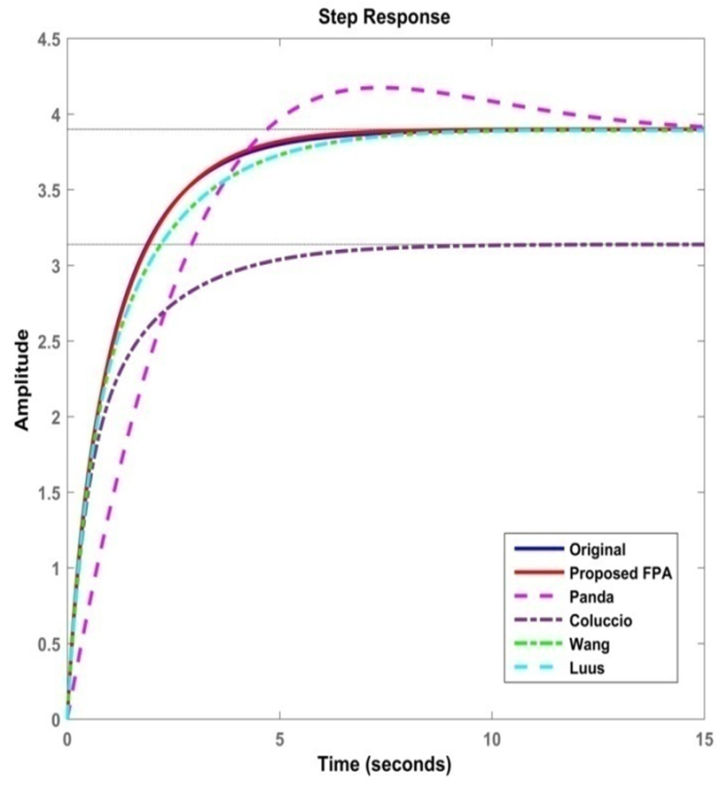
Representation of physical system using mathematical models leads the process to high-order equations, which are difficult to use for analysis and synthesis. Therefore, it is necessary and useful to find the reduced order equations that describe the same characteristics as the original high-order system. This paper proposes a nature inspired flower pollination algorithm (FPA) for order reduction of original high-order linear time invariant systems. Reduced model will definitely be stable if the original model is stable. Four numerical examples of single-input and single-output systems of different orders are considered to verifying proposed method. The results are compared with different methods available in literature based on step response and performance indices.
The design of a control system is more complex on the point of analysis, so system is reduced to the simplest model and replaced by the reduced order model. The reduced order model reflects the same characteristics as the original complex model in terms of stability, steady-state error and transient response. There are a number of methods available for model order reduction, and every method reflects some properties of the system. Recently, some have worked on MOR methods are done by different authors such as Kumar 1, describe the classical pade approximation method with different results. Sambariya 2, 3, describes an application of modified Cauer form for MOR of SISO and MIMO linear time invariant systems. Salah 4, has presented an artificial intelligent technique used to find ROM of the high-order system. Narwal 5, has presented the MOR method based on modified clustering algorithm.
Some of the conventional methods are improved Pade approximation 6, 7 by Pal, Continued fraction expansion at general point 8 by Davidson, multipoint Pade approximation 9 by Lucas, multipoint Continued fraction expansion method 10 by Hwang 1986, Cauer continued fraction expansion about two points 11 by Yung, Pade approximation 12 by Pati, Routh stability array method 13 by Sambariya, Error minimization technique 14 by Mukherjee, Factor division method 15 by Lucas, Routh approximation method 16 by Sambariya, Prony-like polynomial-based method 17 by Coluccio, L-J optimization 18 by Luus.
Furthermore a number of mixed methods for MOR are introduced by authors where one is conventional method and second is optimization technique. Clustering Technique and dominant pole method 19 by Agrawal, Clustering technique and frequency response matching 20 by Tiwari, stability equation and big-bang big-crunch optimization 21 by Desai, Eigen spectrum analysis method 22, 23 by Parmar, Mihailov stability criterion and Differential Evolution method 24 by Yadav, Mihailov stability criterion and particle swarm optimization 25 by Panda, Improved clustering algorithm 26 by Komarasamy, big-bang big-crunch 27 by Philip, Particle swarm optimization 28 by Panda, Simulated annealing and simplex method 29 by Wang. A wide range of applications are available of optimization techniques but for model order reduction method, these are applied to objective functions.
This paper, presents flower pollination algorithm (FPA) method 30, 31 for model order reduction. The numerator and denominator coefficients of ROM are evaluated using proposed FPA method. The statement of problem is considered in section 2. In Section 3, overview of flower pollination algorithm is considered. In section 4, steps for proposed methodology are considered. In section 5, SISO examples are considered for model order reduction and compared to the previous models as in literature followed by references. The comparisons are made based on step response characteristics such as settling-time (ts), rise-time (tr), peak, peak-time (tp) and performance indices such as integral square error (ISE), integral absolute error (IAE) and integral time absolute error (ITAE).
Consider a higher order transfer function 32 represented in Eq. (1).
 | (1) |
Where,  represents a high-order transfer function. The high-order transfer function is reduced to low order transfer function. The low order transfer function may be represented in Eq. (2).
 | (2) |
Where, 

 and
and  are the scalar coefficients of denominator and numerator of high-order transfer function
  and reduced-order transfer function_
 respectively.
Pollination process is finding in nature performed by the flowering plant where pollen of a flowering plant is transfer to the other flowering plant of same species. The pollen transfer process is performed by the small birds, insects etc. The optimization technique based on FPA is first introduced by Xin-She Yang 30. Where author presented the performance of FPA based on number of iterations performed on different functions.
Pollination is the process where pollens of a flower transferred over long distance for reproduction process. The pollinators play important role to transfer pollens of a flower. The pollinators such as birds, insects, bees, flies help to transfer pollens over long distance. Local and Global pollination are the two major types of FPA.
Local pollination or self-pollination or abiotic, there is no requirement of pollinators. Pollination performed by the fertilization of a flower, by air or by diffusion of water. The pollens are transfer to the flower of the same population of the same flowering plant species. Global pollination or cross-pollination performed by using pollinators. Pollinators can travel over long distance to transfer flower pollens. Flower pollens are responsible for reproduction of new flowers or seeds or fruits. Global pollination gives the fittest product than local pollination.
3.2. Flower Pollination AlgorithmThe above characteristics point out to some key points in the optimization process. The flower pollination algorithm can be idealized by the following rules 30
1). Pollens transferred by pollinators by the biotic and cross-pollination process. Pollinators contribute in the global pollination where they perform lévy flights.
2). Abiotic and self-pollination are included in local pollination.
3). Reproduction probability is proportional to the similarity of two flowers of same species. This depends on the constancy of a pollinator.
4.) The number of iterations of the global and local pollination can be control by the switch probability . The factors have a significant fraction_
 in local pollination.
These rules play the important role in mathematical modeling of FPA.
3.3. Mathematical ModelingIn FPA, there are global pollination and local pollination are the two important points in consideration as key points. Rule (1) and (3) are considers in global pollination process. Pollen carrying pollinators (i.e. insects) can travel and move to over long distance, which increases the probability to reproduce fittest, and this represented by  This characteristic represented by mathematically as in Eq. (3)
 | (3) |
Lévy flight distribution 30 is used to define the step size valid for  and shown by Eq. (4)
 | (4) |
Where,  = solution
  from pollen
  at iteration_
 ,
,  = current best solution among all the solutions,
 = step size which describe the pollination strength,
 = Standard gamma function and we used
  .
.
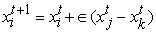
Rule (2) and (3) are considered in local pollination and this described by Eq. (5)
 | (5) |
Where,  and
and  are the different flower pollens of same population and
  defined by uniform distribution in range
  .
.  _is the neighbor flower pollen of the
  flower pollen, this neighborhood constancy is considered in this distribution.
There are possibility that flower pollination achieved in both global pollination and local pollination. In this case (Rule (4)), nearby flowers are pollinated by the local flower pollination than that are far away. This condition controlled by using switch probability  to switch between global pollination and local pollination.
The overall process can describe by the pseudo code as shown in Table 1.
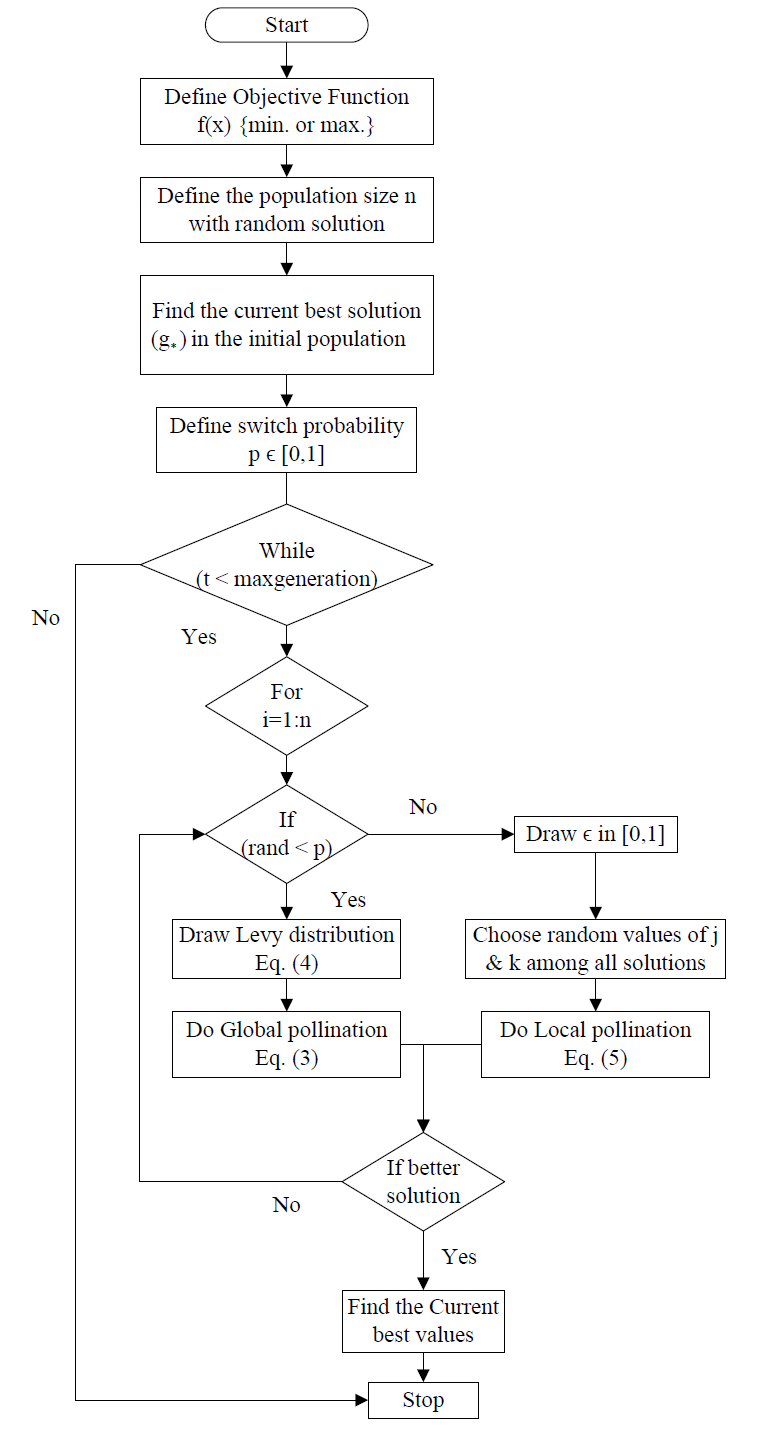
This paper describes an application of FPA method in model order reduction. The numerator and denominator coefficients of ROM are evaluated by minimizing the integral square error (ISE) between the original high-order system and reduced order system. To reduced the given high-order system, the flow chart as in Figure 1 and steps are as followed-

Step a: Evaluate the numerator and denominator coefficients using flower pollination algorithm for reduced second order system.
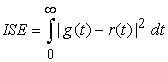
Step b: Create the following objective function which is used to minimize for SISO system followed by Eq. (6) and fitness of this function is describe by Eq. (7).
 | (6) |
 | (7) |
Step c: Check if the fitness function is minimized then gives the numerator and denominator coefficients of ROM else go to step a.
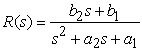
Step d: The ROM of second order will represent by following Eq. (8)
 | (8) |
Where,  and
and  are the denominator and numerator unknown coefficients of the reduced second order system respectively. Performance indices such as IAE and ITAE also take in consideration with ISE for comparison. Representation of IAE and ITAE shown in Eq.(9) and Eq.(10) respectively.
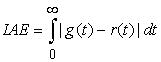 | (9) |
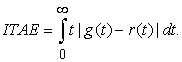 | (10) |
Example-1. Consider a third-order system 1 represented by the transfer function shown in Eq. (11)
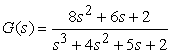 | (11) |
System in Eq. (11) has the characteristics such as poles of system are -2, -1, -1,  ,
, 
 and
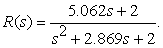
and 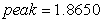 . Therefore, the reduced second-order transfer function using proposed FPA method is given by Eq. (12).
 | (12) |
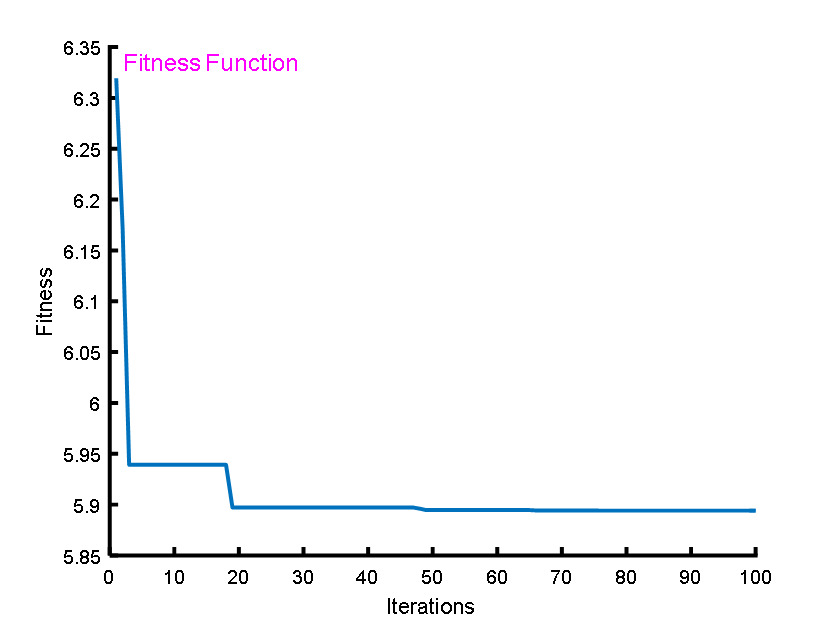
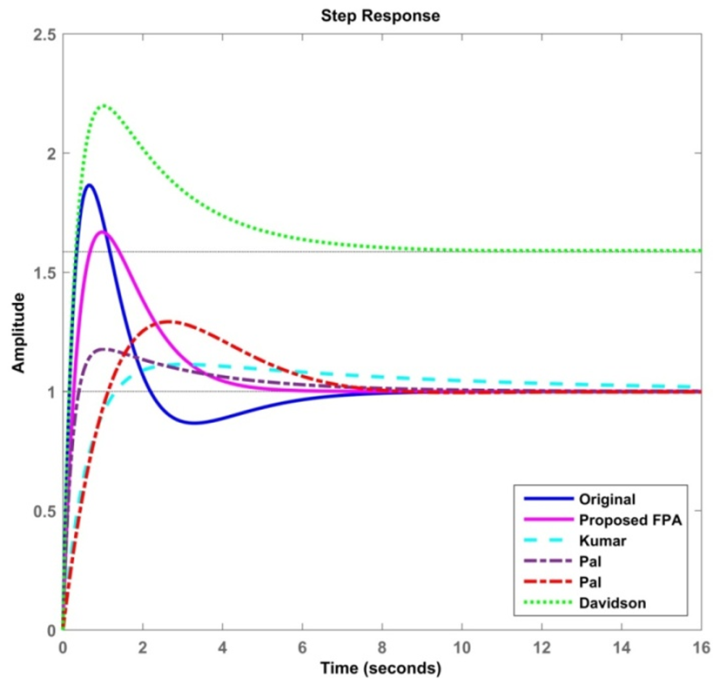
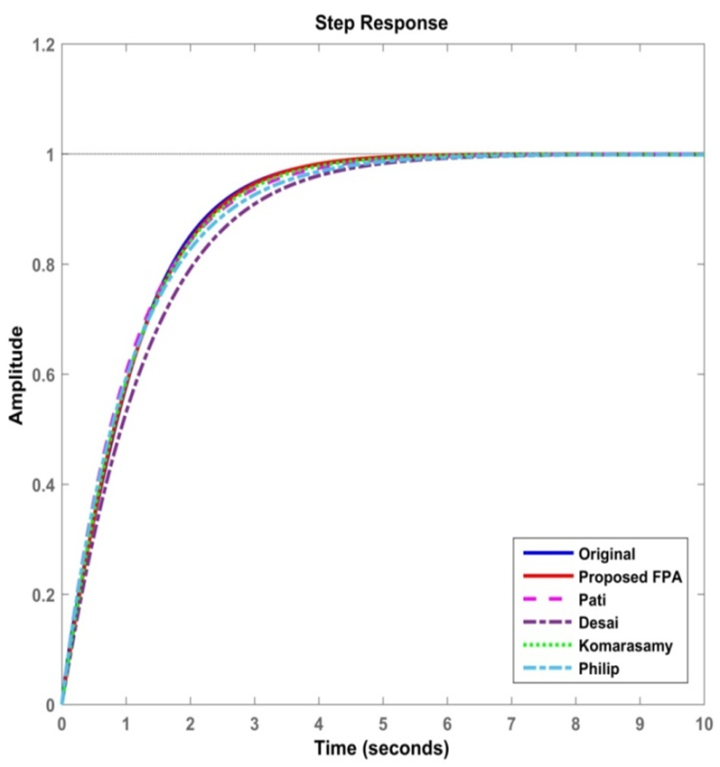
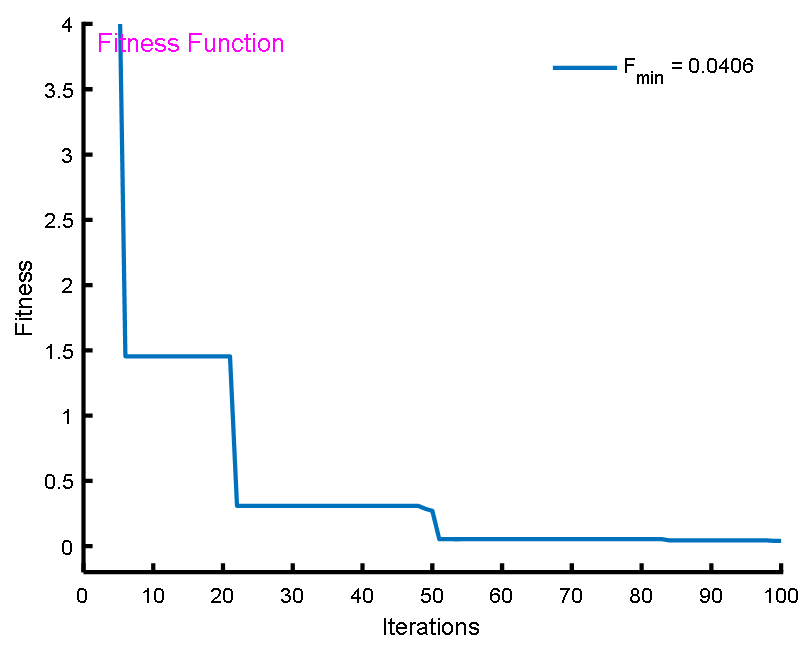
Fitness function describes the performance of search variable using FPA for ROM of Example-1 shown in Figure 2. Step response comparison of original system Eq. (11), ROM by FPA method Eq. (12) and methods in literature for Example-1 shown in Figure 3. Simultaneously, comparison of proposed ROM with different methods tabulated in Table 2 and Table 3. Table 2 shows the comparison based on step response parameters such as settling-time (ts), rise-time (tr), peak and peak-time (tp). On other hand, Table 3 shows the comparison based on performance indices such as ISE, IAE and ITAE between proposed ROM and methods in literature.


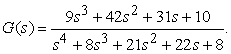
Example-2. Consider a forth order system 19 represented by transfer function shown in Eq.(13)
 | (13) |
System in Eq. (13) has the characteristics such as poles of system are -4, -2, -1, -1,  ,
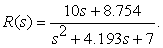
,  and peak = 2.0982. Therefore the reduced second-order transfer function using proposed method is given by Eq. (14).
 | (14) |
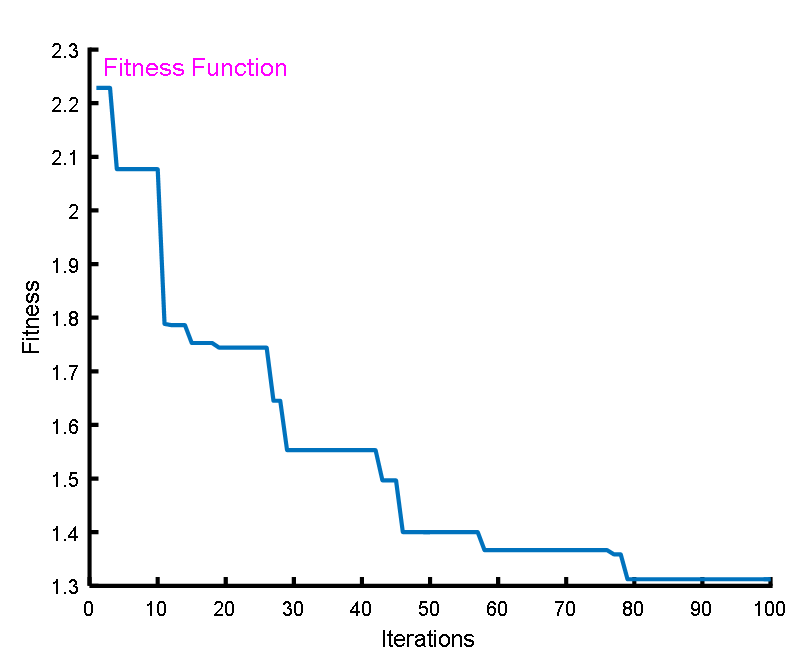
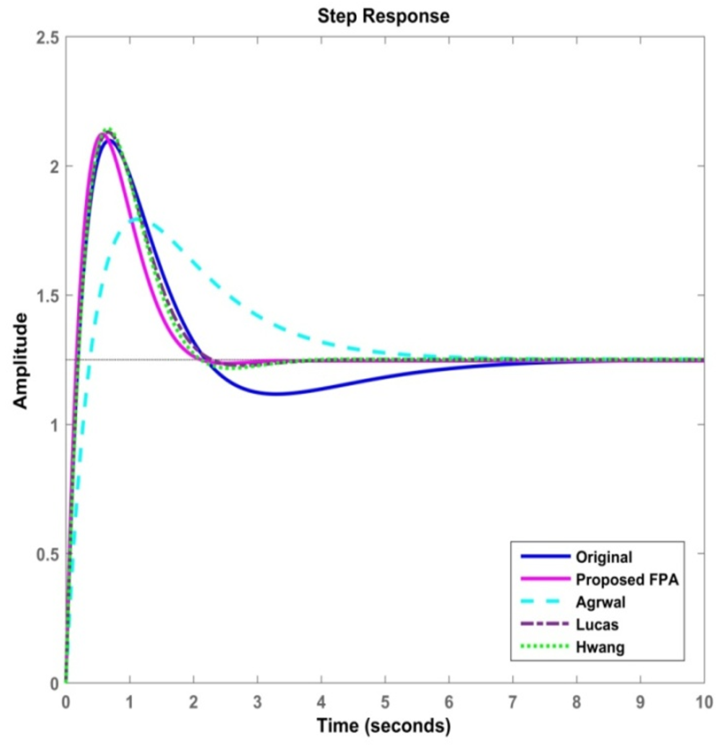
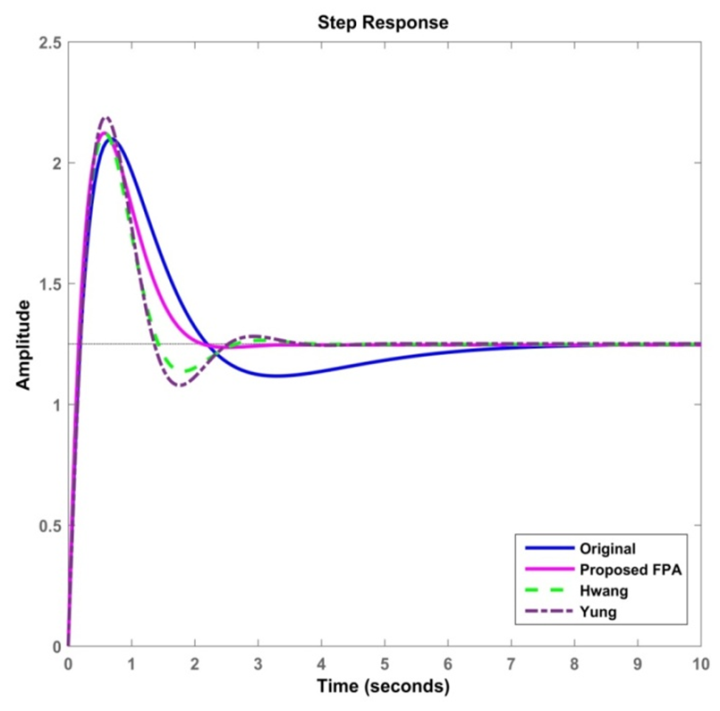
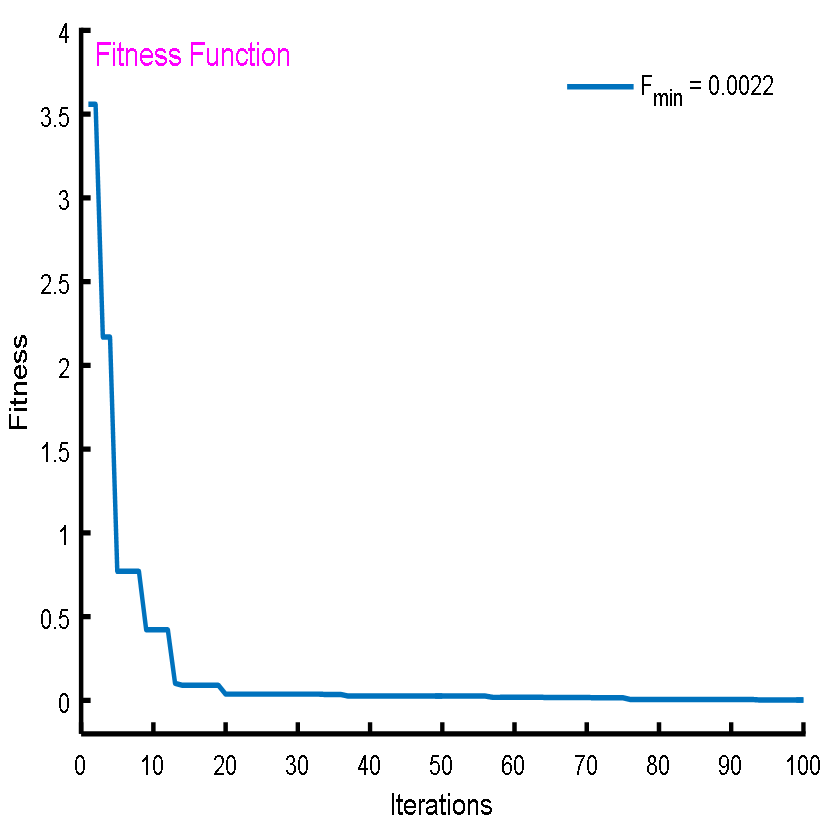
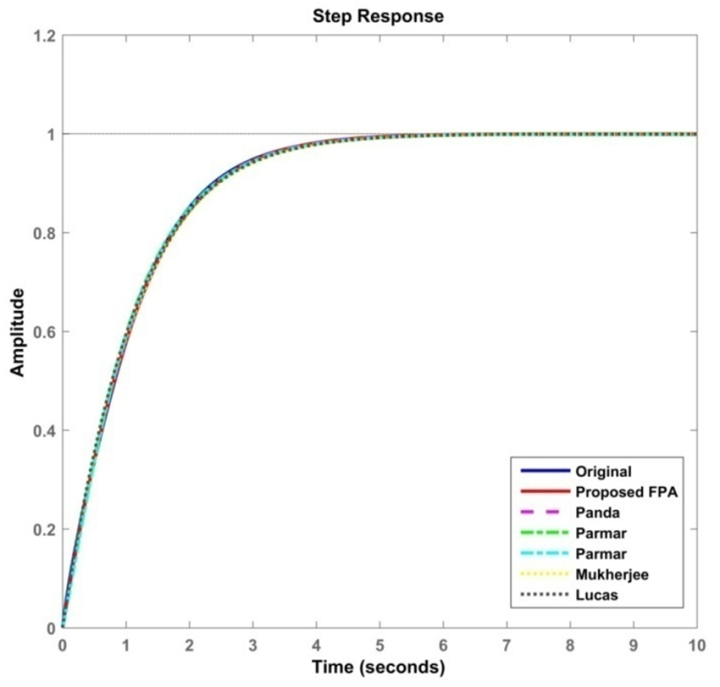
Fitness function describes the performance of search variable using FPA for ROM of Example-2 shown in Figure 4. Step response comparison of original system Eq. (13), ROM by FPA method Eq. (14) and methods in literature for Example-2 shown in Figure 5 and Figure 6. Simultaneously, comparison of proposed ROM with different methods tabulated in Table 4 and Table 5. Table 4 shows the comparison based on step response characteristics such as settling-time (ts), rise-time (tr), peak and peak-time (tp). On other hand, Table 5 shows the comparison based on performance indices such as ISE, IAE and ITAE between proposed ROM and methods in literature.


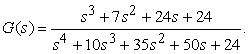
Example-3. Consider a forth-order system 5 represented by following transfer function shown in Eq. (15)
 | (15) |
System in Eq. (15) has the characteristics such as poles of system are -4, -3, -2, -1,  ,
, 
 and
and  Therefore the reduced second-order transfer function using proposed method is given by Eq. (16)
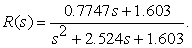 | (16) |
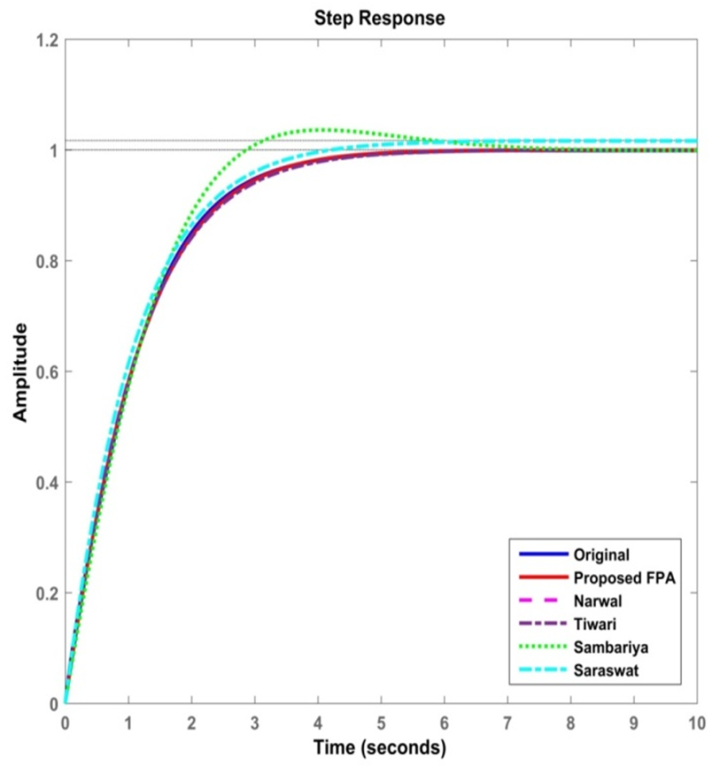
Fitness function describes the performance of search variable using FPA for ROM of Example-3 shown in Figure 7. Step response comparison of original system Eq. (15), ROM by FPA method Eq. (16) and methods in literature for Example-3 shown in Figure 8 - Figure 10. Simultaneously, comparison of proposed ROM with different methods tabulated in Table 6 and Table 7. Table 6 shows the comparison based on step response characteristics such as settling-time (ts), rise-time (tr), peak and peak-time (tp). On other hand, Table 7 shows the comparison based on performance indices such as ISE, IAE and ITAE between proposed ROM and methods in literature.


Example-4 Consider a fifth-order system 2 represented by following transfer function shown in Eq. (17).
 | (17) |
System in Eq. (17) has the characteristics such as poles of system are -4,  -1, -0.5,
 ,
,  and
and  . Therefore the reduced second-order transfer function using proposed method is given by Eq. (18).
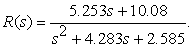 | (18) |
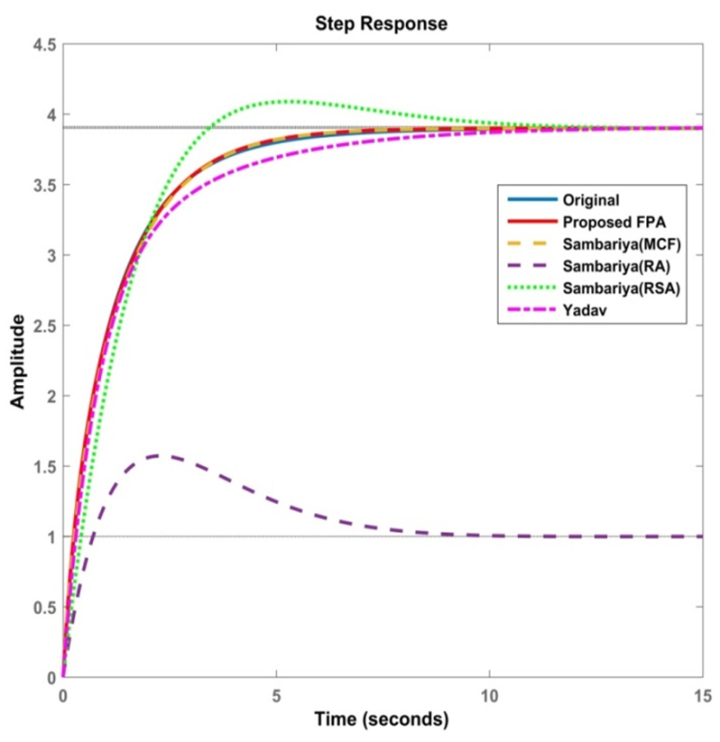
Fitness function describes the performance of search variable using FPA for ROM of Example-4 shown in Figure 11. Step response comparison of original system Eq. (17), ROM by FPA method Eq. (18) and methods in literature for Example-4 shown in Figure 12 – Figure 13. Simultaneously, comparison of proposed ROM with different methods tabulated in Table 8 and Table 9. Table 8 shows the comparison based on step response characteristics such as settling-time (ts), rise-time (tr), peak and peak-time (tp). On other hand, Table 9 shows the comparison based on performance indices such as ISE, IAE and ITAE between proposed ROM and methods in literature.


In this paper, reduced order system from high-order system is obtaining using flower pollination algorithm. Four different orders SISO systems are consider to finding their respective approximations. Proposed FPA method is used to get the reduced order approximations of the high-order system by concept of error minimization. Here ISE is used as objective function to minimize the error between high order and reduced order systems. Comparisons are made based on step responses and performance indices of original system, proposed ROM and different methods available in literature. Performance indices such as ISE, IAE and ITAE values of proposed ROM are compared with different methods in literature. It is found that the proposed ROM shows the better result, performance and almost all the characteristics are preserved.
| [1] | P. Kumar and S. K. Chaudhary, “Novel approach in classical pade approximation,” in 2017 7th International Conference on Cloud Computing, Data Science & Engineering - Confluence, 2017, pp. 667-670. | ||
| In article | View Article | ||
| [2] | D. K. Sambariya and T. Gupta, “An application of Modified Cauer form for reduction of large order LTI Systems,” in 2017 International Conference on Computer, Communications and Electronics (Comptelix), 2017, pp. 589-594. | ||
| In article | View Article | ||
| [3] | D. K. Sambariya and T. Gupta, “Reduced order model using modified cauer form for multi-input and multi-output LTI systems,” in 2017 International Conference on Information, Communication, Instrumentation and Control (ICICIC), 2017, pp. 1-6. | ||
| In article | View Article | ||
| [4] | K. Salah, “A novel model order reduction technique based on artificial intelligence,” Microelectronics Journal, vol. 65, pp. 58-71, 2017. | ||
| In article | View Article | ||
| [5] | A. Narwal and R. Prasad, “Optimization of LTI Systems Using Modified Clustering Algorithm,” IETE Technical Review, pp. 1-13, 2016. | ||
| In article | View Article | ||
| [6] | J. Pal, “Improved Pade approximants using stability equation method,” Electronics Letters, vol. 19, pp. 426-427, 1983. | ||
| In article | View Article | ||
| [7] | J. Pal, “Stable reduced-order Pade approximants using the Routh-Hurwitz array,” Electronics Letters, vol. 15, pp. 225-226, 1979. | ||
| In article | View Article | ||
| [8] | A. M. Davidson and T. N. Lucas, “Linear-system reduction by continued-fraction expansion about a general point,” Electronics Letters, vol. 10, pp. 271-273, 1974. | ||
| In article | View Article | ||
| [9] | T. N. Lucas, “New matrix method for multipoint Padé approximation of transfer functions,” International Journal of Systems Science, vol. 24, pp. 809-818, 1993/05/01 1993. | ||
| In article | View Article | ||
| [10] | C. Hwang and M.-Y. Chen, “A multipoint continued-fraction expansion for linear system reduction,” IEEE Transactions on Automatic Control, vol. 31, pp. 648-651, 1986. | ||
| In article | View Article | ||
| [11] | C.-F. Yung and C. Hwang, “Cauer continued-fraction expansion about s = 0 and s = a for biased reduced-order state-space models,” International Journal of Systems Science, vol. 17, pp. 1767-1789, 1986/12/01 1986. | ||
| In article | View Article | ||
| [12] | A. Pati, A. Kumar, and D. Chandra, “Suboptimal Control Using Model Order Reduction,” Chinese Journal of Engineering, vol. 2014, p. 5, 2014. | ||
| In article | View Article | ||
| [13] | D. K. Sambariya and A. S. Rajawat, “Model order reduction of LTI system using Routh stability array method,” in 2016 International Conference on Computing, Communication and Automation (ICCCA), 2016, pp. 896-901. | ||
| In article | View Article | ||
| [14] | S. Mukherjee and R. N. Mishra, “Order reduction of linear systems using an error minimization technique,” Journal of the Franklin Institute, vol. 323, pp. 23-32, 1987/01/01 1987. | ||
| In article | View Article | ||
| [15] | T. N. Lucas, “Factor division: a useful algorithm in model reduction,” IEE Proceedings Control Theory and Applications., vol. 130, pp. 362-364, 1983. | ||
| In article | View Article | ||
| [16] | D. K. Sambariya and O. Sharma, “Routh Approximation: An Approach of Model Order Reduction in SISO and MIMO Systems,” Indonesian Journal of Electrical Engineering and Computer Science, vol. 2, pp. 486-500, 2016. | ||
| In article | View Article | ||
| [17] | L. Coluccio, A. Eisinberg, and G. Fedele, “A Prony-like polynomial-based approach to model order reduction,” in 2007 Mediterranean Conference on Control & Automation, 2007, pp. 1-6. | ||
| In article | View Article | ||
| [18] | R. Luus, “Optimal reduction of linear systems,” Journal of the Franklin Institute, vol. 336, pp. 523-532, 1999/04/01/ 1999. | ||
| In article | View Article | ||
| [19] | S. K. Agrawal, D. Chandra, and I. A. Khan, “Order reduction of linear system using clustering, integral square minimization and dominant pole technique,” International Journal of Engineering and Technology, vol. 3, p. 64, 2011. | ||
| In article | View Article | ||
| [20] | S. K. Tiwari and G. Kaur, “Model Reduction by New Clustering Method and Frequency Response Matching,” Journal of Control, Automation and Electrical Systems, vol. 28, pp. 78-85, 2016. | ||
| In article | View Article | ||
| [21] | S. R. Desai and R. Prasad, “A new approach to order reduction using stability equation and big bang big crunch optimization,” Systems Science & Control Engineering, vol. 1, pp. 20-27, 2013/12/01 2013. | ||
| In article | View Article | ||
| [22] | G. Parmar, S. Mukherjee, and R. Prasad, “System reduction using factor division algorithm and eigen spectrum analysis,” Applied Mathematical Modelling, vol. 31, pp. 2542-2552, 2007. | ||
| In article | View Article | ||
| [23] | G. Parmar, S. Mukherjee, and R. Prasad, “Reduced order modeling of linear dynamic systems using particle swarm optimized eigen spectrum analysis,” International Journal of Computational and Mathematical Science, vol. 1, pp. 45-52, 2007. | ||
| In article | View Article | ||
| [24] | J. S. Yadav, N. P. Patidar, J. Singhai, S. Panda, and C. Ardil, “A Combined Conventional and Differential Evolution Method for Model Order Reduction,” International Journal of Electrical, Computer, Energetic, Electronic and Communication Engineering, vol. 5, pp. 1283-1291, 2011. | ||
| In article | View Article | ||
| [25] | S. Panda, S. K. Tomar, R. Prasad, and C. Ardil, “Model Reduction of Linear Systems by Conventional and Evolutionary Techniques,” International Journal of Electrical, Computer, Energetic, Electronic and Communication Engineering, vol. 3, pp. 2149-2156, 2009. | ||
| In article | View Article | ||
| [26] | R. Komarasamy, N. Albhonso, and G. Gurusamy, “Order reduction of linear systems with an improved pole clustering,” Journal of Vibration and Control, vol. 18, pp. 1876-1885, 2011. | ||
| In article | View Article | ||
| [27] | B. Philip and J. Pal, “An evolutionary computation based approach for reduced order modelling of linear systems,” in 2010 IEEE International Conference on Computational Intelligence and Computing Research, 2010, pp. 1-8. | ||
| In article | View Article PubMed | ||
| [28] | S. Panda, J. Yadav, N. Patidar, and C. Ardil, “Evolutionary techniques for model order reduction of large scale linear systems,” International Journal of Applied Science, Engineering and Technology, vol. 5, pp. 22-28, 2009. | ||
| In article | View Article | ||
| [29] | L. Wang, L.-L. Li, and F. Tang, “Optimal reduction of models using a hybrid searching strategy,” Applied Mathematics and Computation, vol. 168, pp. 1357-1369, 2005/09/15/ 2005. | ||
| In article | View Article | ||
| [30] | X.-S. Yang, “Flower Pollination Algorithm for Global Optimization,” Unconventional Computation and Natural Computation: 11th International Conference, UCNC 2012, Orléan, France, September 3-7, 2012. Proceedings, vol. 7445, pp. 240-249, 2012. | ||
| In article | View Article | ||
| [31] | K. Balasubramani and K. Marcus, “A study on flower pollination algorithm and its applications,” International Journal of Application or Innovation in Engineering and Management, vol. 3, pp. 230-35, 2014. | ||
| In article | View Article | ||
| [32] | R. Parthasarathy and S. John, “State-space models using modified Cauer continued fraction,” Proceedings of the IEEE, vol. 70, pp. 300-301, 1982. | ||
| In article | View Article | ||
| [33] | P. Saraswat and G. Parmar, “A comparative study of Differential Evolution and Simulated Annealing for order reduction of large scale systems,” in 2015 Communication, Control and Intelligent Systems (CCIS), 2015, pp. 277-281. | ||
| In article | View Article | ||
Published with license by Science and Education Publishing, Copyright © 2018 D. K. Sambariya and Tarun Gupta
 This work is licensed under a Creative Commons Attribution 4.0 International License. To view a copy of this license, visit
http://creativecommons.org/licenses/by/4.0/
This work is licensed under a Creative Commons Attribution 4.0 International License. To view a copy of this license, visit
http://creativecommons.org/licenses/by/4.0/
| [1] | P. Kumar and S. K. Chaudhary, “Novel approach in classical pade approximation,” in 2017 7th International Conference on Cloud Computing, Data Science & Engineering - Confluence, 2017, pp. 667-670. | ||
| In article | View Article | ||
| [2] | D. K. Sambariya and T. Gupta, “An application of Modified Cauer form for reduction of large order LTI Systems,” in 2017 International Conference on Computer, Communications and Electronics (Comptelix), 2017, pp. 589-594. | ||
| In article | View Article | ||
| [3] | D. K. Sambariya and T. Gupta, “Reduced order model using modified cauer form for multi-input and multi-output LTI systems,” in 2017 International Conference on Information, Communication, Instrumentation and Control (ICICIC), 2017, pp. 1-6. | ||
| In article | View Article | ||
| [4] | K. Salah, “A novel model order reduction technique based on artificial intelligence,” Microelectronics Journal, vol. 65, pp. 58-71, 2017. | ||
| In article | View Article | ||
| [5] | A. Narwal and R. Prasad, “Optimization of LTI Systems Using Modified Clustering Algorithm,” IETE Technical Review, pp. 1-13, 2016. | ||
| In article | View Article | ||
| [6] | J. Pal, “Improved Pade approximants using stability equation method,” Electronics Letters, vol. 19, pp. 426-427, 1983. | ||
| In article | View Article | ||
| [7] | J. Pal, “Stable reduced-order Pade approximants using the Routh-Hurwitz array,” Electronics Letters, vol. 15, pp. 225-226, 1979. | ||
| In article | View Article | ||
| [8] | A. M. Davidson and T. N. Lucas, “Linear-system reduction by continued-fraction expansion about a general point,” Electronics Letters, vol. 10, pp. 271-273, 1974. | ||
| In article | View Article | ||
| [9] | T. N. Lucas, “New matrix method for multipoint Padé approximation of transfer functions,” International Journal of Systems Science, vol. 24, pp. 809-818, 1993/05/01 1993. | ||
| In article | View Article | ||
| [10] | C. Hwang and M.-Y. Chen, “A multipoint continued-fraction expansion for linear system reduction,” IEEE Transactions on Automatic Control, vol. 31, pp. 648-651, 1986. | ||
| In article | View Article | ||
| [11] | C.-F. Yung and C. Hwang, “Cauer continued-fraction expansion about s = 0 and s = a for biased reduced-order state-space models,” International Journal of Systems Science, vol. 17, pp. 1767-1789, 1986/12/01 1986. | ||
| In article | View Article | ||
| [12] | A. Pati, A. Kumar, and D. Chandra, “Suboptimal Control Using Model Order Reduction,” Chinese Journal of Engineering, vol. 2014, p. 5, 2014. | ||
| In article | View Article | ||
| [13] | D. K. Sambariya and A. S. Rajawat, “Model order reduction of LTI system using Routh stability array method,” in 2016 International Conference on Computing, Communication and Automation (ICCCA), 2016, pp. 896-901. | ||
| In article | View Article | ||
| [14] | S. Mukherjee and R. N. Mishra, “Order reduction of linear systems using an error minimization technique,” Journal of the Franklin Institute, vol. 323, pp. 23-32, 1987/01/01 1987. | ||
| In article | View Article | ||
| [15] | T. N. Lucas, “Factor division: a useful algorithm in model reduction,” IEE Proceedings Control Theory and Applications., vol. 130, pp. 362-364, 1983. | ||
| In article | View Article | ||
| [16] | D. K. Sambariya and O. Sharma, “Routh Approximation: An Approach of Model Order Reduction in SISO and MIMO Systems,” Indonesian Journal of Electrical Engineering and Computer Science, vol. 2, pp. 486-500, 2016. | ||
| In article | View Article | ||
| [17] | L. Coluccio, A. Eisinberg, and G. Fedele, “A Prony-like polynomial-based approach to model order reduction,” in 2007 Mediterranean Conference on Control & Automation, 2007, pp. 1-6. | ||
| In article | View Article | ||
| [18] | R. Luus, “Optimal reduction of linear systems,” Journal of the Franklin Institute, vol. 336, pp. 523-532, 1999/04/01/ 1999. | ||
| In article | View Article | ||
| [19] | S. K. Agrawal, D. Chandra, and I. A. Khan, “Order reduction of linear system using clustering, integral square minimization and dominant pole technique,” International Journal of Engineering and Technology, vol. 3, p. 64, 2011. | ||
| In article | View Article | ||
| [20] | S. K. Tiwari and G. Kaur, “Model Reduction by New Clustering Method and Frequency Response Matching,” Journal of Control, Automation and Electrical Systems, vol. 28, pp. 78-85, 2016. | ||
| In article | View Article | ||
| [21] | S. R. Desai and R. Prasad, “A new approach to order reduction using stability equation and big bang big crunch optimization,” Systems Science & Control Engineering, vol. 1, pp. 20-27, 2013/12/01 2013. | ||
| In article | View Article | ||
| [22] | G. Parmar, S. Mukherjee, and R. Prasad, “System reduction using factor division algorithm and eigen spectrum analysis,” Applied Mathematical Modelling, vol. 31, pp. 2542-2552, 2007. | ||
| In article | View Article | ||
| [23] | G. Parmar, S. Mukherjee, and R. Prasad, “Reduced order modeling of linear dynamic systems using particle swarm optimized eigen spectrum analysis,” International Journal of Computational and Mathematical Science, vol. 1, pp. 45-52, 2007. | ||
| In article | View Article | ||
| [24] | J. S. Yadav, N. P. Patidar, J. Singhai, S. Panda, and C. Ardil, “A Combined Conventional and Differential Evolution Method for Model Order Reduction,” International Journal of Electrical, Computer, Energetic, Electronic and Communication Engineering, vol. 5, pp. 1283-1291, 2011. | ||
| In article | View Article | ||
| [25] | S. Panda, S. K. Tomar, R. Prasad, and C. Ardil, “Model Reduction of Linear Systems by Conventional and Evolutionary Techniques,” International Journal of Electrical, Computer, Energetic, Electronic and Communication Engineering, vol. 3, pp. 2149-2156, 2009. | ||
| In article | View Article | ||
| [26] | R. Komarasamy, N. Albhonso, and G. Gurusamy, “Order reduction of linear systems with an improved pole clustering,” Journal of Vibration and Control, vol. 18, pp. 1876-1885, 2011. | ||
| In article | View Article | ||
| [27] | B. Philip and J. Pal, “An evolutionary computation based approach for reduced order modelling of linear systems,” in 2010 IEEE International Conference on Computational Intelligence and Computing Research, 2010, pp. 1-8. | ||
| In article | View Article PubMed | ||
| [28] | S. Panda, J. Yadav, N. Patidar, and C. Ardil, “Evolutionary techniques for model order reduction of large scale linear systems,” International Journal of Applied Science, Engineering and Technology, vol. 5, pp. 22-28, 2009. | ||
| In article | View Article | ||
| [29] | L. Wang, L.-L. Li, and F. Tang, “Optimal reduction of models using a hybrid searching strategy,” Applied Mathematics and Computation, vol. 168, pp. 1357-1369, 2005/09/15/ 2005. | ||
| In article | View Article | ||
| [30] | X.-S. Yang, “Flower Pollination Algorithm for Global Optimization,” Unconventional Computation and Natural Computation: 11th International Conference, UCNC 2012, Orléan, France, September 3-7, 2012. Proceedings, vol. 7445, pp. 240-249, 2012. | ||
| In article | View Article | ||
| [31] | K. Balasubramani and K. Marcus, “A study on flower pollination algorithm and its applications,” International Journal of Application or Innovation in Engineering and Management, vol. 3, pp. 230-35, 2014. | ||
| In article | View Article | ||
| [32] | R. Parthasarathy and S. John, “State-space models using modified Cauer continued fraction,” Proceedings of the IEEE, vol. 70, pp. 300-301, 1982. | ||
| In article | View Article | ||
| [33] | P. Saraswat and G. Parmar, “A comparative study of Differential Evolution and Simulated Annealing for order reduction of large scale systems,” in 2015 Communication, Control and Intelligent Systems (CCIS), 2015, pp. 277-281. | ||
| In article | View Article | ||