Coronavirus disease 2019 (COVID-19) is a rapidly and globally spreading novel infectious disease caused by severe acute respiratory syndrome coronavirus 2 (SARS-CoV-2). The purpose of this review is to summarize the available data about the impact of COVID-19 pandemic on patients with epilepsy, epilepsy diagnosis and treatment and focus attention on the consensus measures about their optimization. We have presented the different aspects of associations between epilepsy and COVID-19 - medical history of epilepsy and COVID-19, seizures and/or status epilepticus and COVID-19. Neurologists and patients with epilepsy face a variety of challenges in the process of disease management - challenges related to precaution measures, worsening of seizure control, performance and interpretation of diagnostic procedures, choice of antiepileptic drugs and antiviral agents due to drug-drug interactions, adverse events, reduced supplies, as well as challenges associated with increased level of emotional stress and uncertainty and worse levels of physical fitness. They require adequate coping strategies regarding COVID-19 prevention, good seizure control maintenance, delay of diagnostic and therapeutic procedures when possible, correct EEG performance and interpretation, minimizing the risk of adverse drug-drug interactions, providing telemedicine services, purchase of the prescribed antiepileptic drugs for a longer period of time, maintaining mental health and physical fitness lifestyle, spreading of correct information through reliable sources. Conclusion: The variety of diagnostic and therapeutic challenges for patients with epilepsy and caring neurologists during COVID-19 pandemic require timely, adequate and multi-aspect coping strategies, as well as individual approach to every patient to prevent complications.
Coronavirus disease 2019 (COVID-19) is a novel infectious disease caused by severe acute respiratory syndrome coronavirus 2 (SARS-CoV-2). Its rapid global spreading requires early precautionary measures and timely considerations about people with chronic diseases (epilepsy included) to ensure adequate diagnosis and therapeutic control.
It is highly necessary to outline the various aspects of associations between epilepsy and COVID-19, as well as the diagnostic and therapeutic challenges which determine the particular features of medical and non-medical care about patients with epilepsy. That will be extremely helpful for making consensus recommendations and preparing health strategies in the short, medium and long terms for patients with epilepsy with the purpose of minimizing the negative impact of the quarantine and social isolation associated with the COVID-19 pandemic.
Purpose: The purpose of this review is to summarize the available data about the impact of COVID-19 pandemic on patients with epilepsy, epilepsy diagnosis and treatment and focus attention on the consensus measures about their optimization.
A medical history of epilepsy has not been reported to be a risk factor for developing COVID-19 or a more severe course of COVID-19 infection 1, 2, 3. Besides, the patients with good seizure control may not be at greater risk than the general population, while those with uncontrolled seizures, particularly seizures triggered by fever, may be more vulnerable to the COVID-19 infection 2. There are suggestions in some reports about an increased risk of Sudden unexpected death in epilepsy (SUDEP) in patients with COVID-19 which have not been confirmed yet 1.
2.2. Seizures as Presenting Symptom of SARS-CoV-2 InfectionA wide variety of neurological presentations including seizures as a result of the SARS-CoV-2 virus have been documented recently 4. In some of them seizures may be a consequence of fever, hypoxia, metabolic derangements, organ failure or even cerebral damage such as encephalitis or encephalopathy 1, 3, 5. The usual seizure types are motor (tonic, clonic or tonic-clonic) with or without loss of consciousness 4, 6, 7. The underlying cause is encephalitis and the suggested mechanisms of viral invasion are: 1. Via retrograde the olfactory nerve or other cranial nerves; 2. Hematogenous spread into the central nervous system via circulating lymphocytes; 3. A cytokine storm caused by the host immune response resulting in damaged blood-brain barrier and increased leukocyte migration 4, 8.
2.3. Status Epilepticus and SARS-CoV-2 InfectionStatus epilepticus (SE) is the commonest complication in patients with epilepsy, which requires timely diagnosis and adequate treatment to prevent from intensive care unit (ICU) admission, intubation, and minimize the risk for systemic or cerebral complications. The potential causes of SE during COVID-19 pandemic could be: 1. Withdrawal of antiseizure medication due to lack of supply, or other reasons; 2. Stress; 3. Fever; 4. Metabolic derangement: exsiccosis, hyperglycaemia, hyper- or hyponatremia; 5. Direct SARS-Cov-2 involvement: encephalitis, encephalopathy, cytokine storm; 6. Indirect SARS-Cov-2 involvement: stroke, sinus venous thrombosis 9. The appropriate diagnosis includes video recording of the ictal event, emergent EEG especially in cases with non-convulsive SE. The diagnostic accuracy is absolutely needed for the application of appropriate rescue medication and timely coping with seizures. In ICU the main purpose is to shorten the admission duration to prevent from higher infection risk, worse functional outcome or mortality. Therefore multi-disciplinary team based coordinated decisions are recommended 10.
There is one report in literature about a patient with well-controlled postencephalitic epilepsy, affected by COVID-19 with no important pulmonary involvement. The patient presented with focal SE of myoclonic jerks of the right part of the face and the right extremities as the initial presentation of SARS-CoV-2 and improved after treatment with lopinavir-ritonavir plus hydroxychloroquine. In spite of the absence of proven central nervous system invasion by the virus, it was hypothesized that SARS-CoV-2 could trigger seizures through a neurotropic pathogenic mechanism 11.
The containment measures established to face the pandemic and the rearrangement of the healthcare system are associated with the following challenges for patients with epilepsy: 1. Prioritization of the COVID-19 patients and limitation of the hospital access for patients with epilepsy; 2. Rescheduling or canceling appointments and examinations which severely hamper the regular outpatient consultations for optimizing antiseizure therapy, managing behavioral and psychological problems and concomitant disorders, counseling on family planning, releasing certifications for driving license or fitness for work 1.
3.2. Challenges Associated with Worse Seizure ControlThe above mentioned challenges or the course of the disease may be associated with more frequent seizures which could cause the following problems for patients with epilepsy: 1. Malnutrition which could change the state of the immune system 12; 2. Uncontrollable seizures may necessitate going to emergency rooms where patients may be exposed to COVID-19 1; 3. Uncontrollable seizures and especially SE would need sedation and ventilators which could aggravate the problem of ventilators shortage 1.
3.3. Challenges Associated with EEG Performance and Interpretation in ICU Patients with COVID-19 InfectionEEG is a safe and efficient tool for the evaluation of brain function, even in patients with COVID-19 infection. EEG technologists, however, should not be put in danger 1. There could be many environmental/electric and associated with ventilators or movements of the patient artifacts in ICU 13. In cases with mechanical ventilation various artifacts may be present: respiratory artifacts (periodic activity typically at 20 breaths per minute), artifacts that simulate lateralized intermittent polysharp-waves due to water condensation within the tubing connected to the ventilator, irregular bursts of sharp activity time-locked to a gurgling sound independent of the ventilator rate due to movement of fluids within the upper respiratory tracts and/or the tube 14, 15. In COVID-19 patients, the respiratory rate may be higher 16, it should be checked and noted in the report. The slight head movements in patients without ventilators with irregular breath intervals produce waveforms (possibly asymmetric) in the posterior derivations 14, 17. Ballistocardiographic artifacts are not so common and ECG may be helpful to identify them.
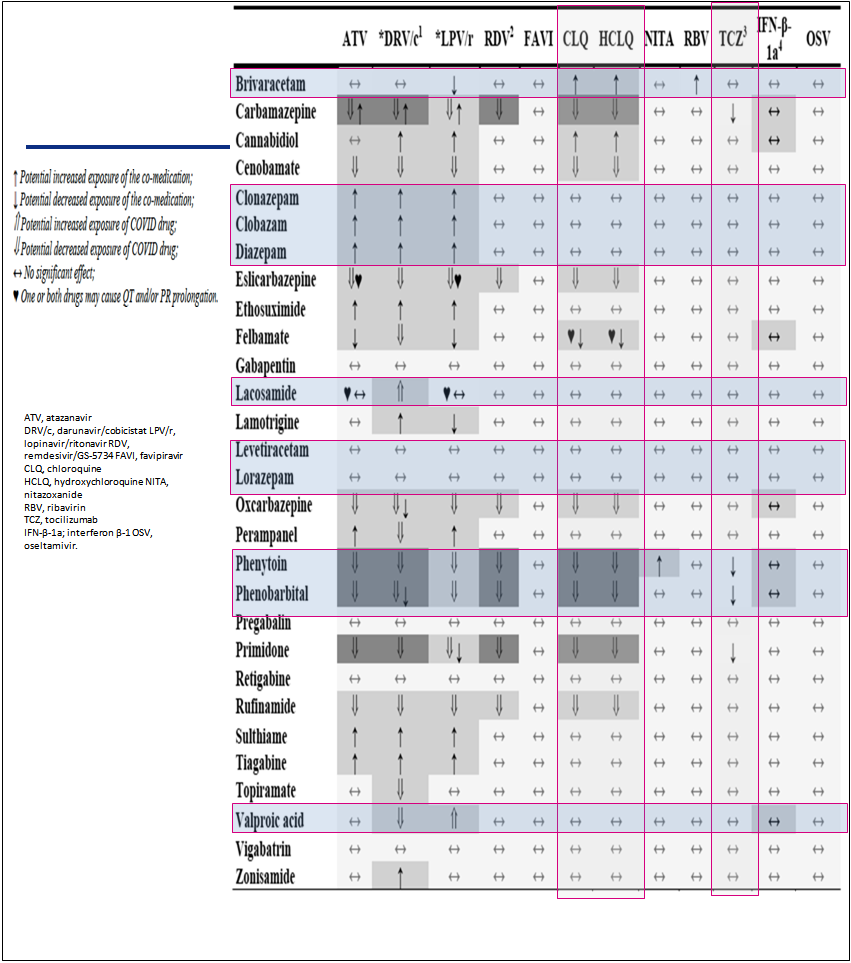
3.4. Challenges Associated with the Antiepileptic Drugs and Antiviral AgentsThe possible drug-drug interactions between the antiepileptic medications and the antiviral agents used for treatment of COVID-19 infection are shown in Figure 1.
Certain drug combinations require attention to prevent from complications. Caution is needed and ECG check before and after treatment is advisable when co-prescribing drugs that alter cardiac rhythm or conduction. Lopinavir/ritonavir, lacosamide and eslicarbazepine prolong PT interval, atazanavir, chloroquine, hydroxychloroquine, azithromycin prolong QT interval, propofol has relatively high pro-arrhythmic potential. The combination of drugs that prolong PR and/or QT interval may increase the risk or rhythm and conduction disorders 13.
Based on the knowledge about the enzymes responsible for the metabolism of individual drugs and the effect of drugs on those enzymes, the metabolic drug-drug interactions could be predicted. Phenytoin and phenobarbital as potent inducers of cytochrome CYP3A4 predictably increase the metabolism of lopinavir, atazanavir, darunavir, remdesivir and ritonavir which are CYP3A4 substrates. Ritonavir as a CYP3A4 inhibitor and UGT1A4 inducer may increase the serum levels of carbamazepine and reduce those of lamotrigine, the latter being metabolized by CYP3A4 and UGT 1A4 respectively 18, 19. These drug interactions require adequate dosage adjustment of antiepileptic drugs (AED) to ensure good seizure control. Some AED, including everolimus and steroids used for tuberous sclerosis complex and autoimmune epilepsy, may affect the immune system. Antihistamine drugs would reduce the seizure threshold 1.
Variations in the antiepileptic drugs level provoked by sequestering of the drug in the tubing of the extracorporeal membrane oxygenation machine used in patients with COVID-19 are possible 10.
Reduced supplies of AED may possibly happen.

The recommended quarantine and social isolation associated with the COVID-19 pandemic could have a negative impact on the lifestyle of healthy people and patients with chronic disorders, including epilepsy. There are reports in literature about negative psychological, emotional and mood state such as anxiety, depression, increased sensitivity to social risk, unhappiness and life dissatisfaction during the quarantine period associated the COVID-19 pandemic 2, 20, 21, 22, 23. It is well known that the presence of emotional stress could induce seizures and depression in patients with epilepsy, therefore this pandemic could worsen the epilepsy course, the mental health and result in a more sedentary behavior 20.
The recommended COVID-19 prevention strategies are applicable to patients with epilepsy 1. It is highly recommended to administer as much care as possible at home to reduce the risk to exposure 3.
It is very important to maintain good seizure control and prevent patients with epilepsy from COVID-19 infection. Even a well-controlled individual with epilepsy may benefit from having a rescue medication on hand. Patients with epilepsy and their family/caregivers should be informed about the usual duration of tonic-clonic seizures and the requirement of applying a rescue medication in case seizures last for more than 5 minutes or occur in clusters 3. The importance of regular drug intake should be emphasized 3. With regards to drug interactions and the safety profile of AED and antiviral agents, the most appropriate combinations in patients with epilepsy and COVID-19 infection prove out to be: 1. LEV, PGB or GBP with any viral agent in case of absent rhythm and conduction disorders; 2. VPA with most antiviral agents with the exception of darunavir, lopinavir, ritonavir. In patients with SE a “Covid-safe” fast track should be built and staged treatment protocol should be used. The first stage includes the intravenous application of lorazepam/diazepam, (midazolam in children) with the possibility of increased central nervous system/respiratory depression in cases with interactions with enzyme inhibiting drugs. In the second stage the application of enzyme inducing drugs (phenytoin, barbiturates), which decrease bioavailability of antiviral drugs and hydroxychloroquine and require dose adjustment, are recommended. Ketamine may be useful in the third stage, especially with the inhibition of NMDA mediated cortical depression 9.
Patients with epilepsy who live alone would need to keep regular contact with someone to inform that they are alright during their self-isolation.
4.2. Delay of Diagnostic and Therapeutic Procedures when PossibleIn patients with epilepsy the medical examination, laboratory tests, neuroimaging, EEG may need to be postponed unless there are urgent diagnostic and/or therapeutic requirements 3. The risk of surgical proceeding and the risk of its delay would need individual consideration for every patient. Elective surgical treatments and other non-urgent surgical procedures may be postponed to prevent further spread of COVID-19 among medical staff and patients and to enable hospitals prepare for the increasing number of COVID-19 patients requiring critical care 3.
4.3. Recommendations for EEG Performance and Interpretation in ICU Patients with COVID-infectionIn ICU patients with COVID-infection full montages according to the 10-20 system with ECG derivations are strongly recommended for the initial EEG. Subdermal single-use EEG needle electrodes can be used in comatose COVID-19 patients 13.
In case the patient undergoes prone position, special attention to the patient and head position along with the patterns of breathing is needed (supine versus prone) to avoid overinterpretation of artifacts 13. The prone position is associated with moderate elevation in the intracranial pressure, therefore it is contraindicated in patients with raised intracranial pressure > 30 mm Hg 24, 25. Concomitant video-recording is strongly advised to identify artifacts and some clinical correlations 15.
In non-comatose patients the hyperventilation procedure should be avoided as it may result in cerebral vasoconstriction 13.
EEG reactivity to auditory and nociceptive stimuli should be tested. In comatose patients, the absence of EEG reactivity is usually associated with poor outcome 13. The reactivity could be also helpful to differentiate metabolic/toxic/respiratory encephalopathies from nonconvulsive status epilepticus 26, 27.
For the correct EEG interpretation, the electroencephalography technologist should be aware of the various EEG patterns seen in the ICU in hypercapnic/hypoxic or anoxic encephalopathies and in encephalitis 13. Non-specific EEG findings and abnormalities should not be considered as being specific for COVID-related encephalopathy 13.
4.4. Minimizing the Risk of Adverse Drug-drug InteractionsAdverse consequences can be minimized by dose adjustments, with the aid of monitoring tools such as ECG for cardiac disorders, plasma drug level monitoring, and clinical observation 18. Concomitant medications taken by the individual should be always considered, as well as AED and antiviral agents, to minimize the risk of adverse drug interactions 18. The changing of AED of patients with well-controlled seizures is not recommendable, as seizure exacerbations or SE may increase the risk of COVID-19 infection 1. Therefore the medication choice is absolutely individual in every patient.
4.5. Telemedicine ServicesVideoconferencing can be extremely useful for the interactive exchange of information between patients and physicians, addressing urgent questions about therapy, adverse events and therefore for the seizure control, hospitalizations, medication compliance 28, 29, 30, 31, 32. Obviously it depends on technological knowledge of patients and their caregivers, the availability of a personal computer, high-speed connection, web camera/microphone quality, stable and widespread internet connection which may be a limitation.
The usage of electronic seizure diaries as an alternative to paper-based diaries may be also useful for recording seizures, adverse events, identifying trigger factors, reminding patients to take AED and about appointments 28.
The wide availability of smartphones incorporating a camera makes it possible to provide a video recording of ictal events which could be easily sent to the caring neurologist. It can improve the diagnostic accuracy and be helpful for distinguishing seizures from non-epileptic paroxysmal disorders 28.
Purchase of the prescribed AED for a longer period of time, at least 3 months could be also appropriate in case there are problems with the drug supply 3.
4.6. Strategies for Maintaining Mental Health and Physical FitnessThe advice on lifestyle issues should be reinforced. They include emotional support, meditative techniques, religiosity/spirituality, the need for regular sleep, nutritious diet, light and home based physical exercises, avoidance of alcohol 2, 3, 20, 33, 34, 35.
Spreading of correct information through reliable sources - medical associations and societies needs to be established to aid patients with epilepsy and reduce erroneous reactions, anxiety and panic 1.
The global spreading of COVID-19 infection sets a variety of diagnostic and therapeutic challenges for patients with epilepsy and caring neurologists. They require timely, adequate and multi-aspect coping strategies, as well as individual approach to every patient to prevent from complications.
| [1] | Kuroda, N., “Epilepsy and COVID-19: Associations and important considerations”, Epilepsy & Behav, 108 [107122]. 2020. | ||
| In article | View Article PubMed | ||
| [2] | Epilepsy Society, “Epilepsy and the coronavirus (COVID-19)”, FAQs, (Available from):https://www.epilepsysociety.org.uk/epilepsy-and- coronavirus-covid-19-faqs#.XouB1YhKhPZ. | ||
| In article | |||
| [3] | French, J., Brodie, M., Caraballo, R., Devinsky, O., Ding, D., Jehi, L., Jette, N., Kanner, A., Modi, A., Newton, C., Patel, A., Pennell, P., Perucca, E., Sander, J., Scheffer, I., Singh, G., Williams, E., Wilmshurst, J., Cross, H., “Keeping people with epilepsy safe during the COVID-19 pandemic“, Neurology, 94: 1-6. 2020. | ||
| In article | View Article PubMed | ||
| [4] | Moriguchi, T., Harr, N., Goto, J., Harada, D., Suqawara, H., Takamino, J., Ueno, M., Sakata, H., Kondo, K., Myose, N., Nakao, A., Takeda, M., Haro, H., Suzuki-Inoue, K., Kubokawa, K., Oqihara, S., Sasaki, T., Kinouchi, H., Kojin, H., Ito, M., Onishi, H., Shimizu, T., Sasaki, Y., Enomoto, N., Ishihara, H., Furuya, S., Yamamoto, T., Shimada, S., „A first case of meningitis/encephalitis associated with SARS-Coronavirus-2“, IJID 94: 55-58.2020. | ||
| In article | View Article PubMed | ||
| [5] | Asadi-Pooya, A., “Seizures associated with coronavirus infections”, Seizure 79: 49-52. 2020. | ||
| In article | View Article PubMed | ||
| [6] | Sohal, S., Mansur, M., “COVID-19 presenting with seizures”, IDCases 20: e00782. 2020. | ||
| In article | View Article PubMed | ||
| [7] | Fasano, A., Cavallieri, F., Canali, E., Valzania, F., “First motor seizure as presenting symptom of SARS-CoV-2 infection”, Neurol Sci, 41, 1651-1653. 2020. | ||
| In article | View Article PubMed | ||
| [8] | Ye, M., Ren, Y., Lv, T., “Encephalitis as a clinical manifestation of COVID-19”, Brain Behav Immun S0889-1593. 2020. E-pub. | ||
| In article | View Article PubMed | ||
| [9] | Trinka, E., “Antiseizure Medications and Challenges in the Covid19 Pandemic - Focus on Drug Interactions“, Epi Care. 2020. E-pub. | ||
| In article | |||
| [10] | Kinney, M.O., Brigo, F., Kaplan, P.W., “Optinizing Status epilepticus care during the COVID-19 pandemic“, Epilepsy & Behav, 109 [107124]. 2020. | ||
| In article | View Article PubMed | ||
| [11] | Vollono, C., Rollo, E., Romozzi, M., Frisullo, G., Servidei, S., Borghetti, A., Calabresi, P., “Focal status epilepticus as unique clinical feature of COVID-19: A case report”, Seizure, 78, 109-112. 2020. | ||
| In article | View Article PubMed | ||
| [12] | Crepin, S., Goder, B., Chassin, B., Preux, P.M., Desport, J.C., “Malnutrition and epilepsy: a two-way relationship|”. Clin Nutr, 28, 219-225. 2009. | ||
| In article | View Article PubMed | ||
| [13] | Gelisse, P., Rossetti, A., Genton, P., Crespel, A., Kaplan, P., “How to carry out and interpret EEG recordings in COVID-19 patients in ICU?” Clin Neurophysiol, 131(8), 2023-2031. 2020. | ||
| In article | View Article PubMed | ||
| [14] | Tatum, W.O., Adult Electroencephalography Artifact, In Tatum WO, editor, Atlas of Artifacts in Clinical Neurophysiology, New York Demos Medical, 111-182. 2018. | ||
| In article | |||
| [15] | Yoo, J.Y., Gaspard, N., Hirsch, L.J., Alkawadri, R., “Respiratory artifact on EEG independent of the respirator”, J Clin Neurophysiol, 31, e16-e17. 2014. | ||
| In article | View Article PubMed | ||
| [16] | World Health Organization (b), „COVID-19” v4, Operational Support & Logistics Disease Commodity Packages. | ||
| In article | |||
| [17] | Rampal, N., Maciel, C.B., Hirsch, L.J., “Electroencephalography and Artifact in the Intensive Care Unit“, In: Tatum W.O., editor. Atlas of Artifacts in Clinical Neurophysiology. Demos Medical, New York, 60-93, 2018. | ||
| In article | |||
| [18] | Landmark, C., Perucca, E., “Antiseizure mediations and challenges in the COVID-19 pandemic. Focus on drug interactions”, European webinar, April 27, 2020. E-pub. | ||
| In article | |||
| [19] | Garcia, A.B., Ibarra, A.L., Etessam, J.P., Salio, A.M., Martinez, D.A.P., Diaz, R.S., Heras, M.T., „Protease Inhibitor-Induced Carbamazepine Toxicity“, Clin Neuropharmacol, 23(4), 216-218. 2000. | ||
| In article | View Article PubMed | ||
| [20] | Vancini, R.L., de Lira, C.A.B., Andrade, M.S., Arida, R., “CoVID-19 vs. epilepsy: it is time to move, act and encourage physical activity”, Epilepsy & Behav, [107154]. 2020. | ||
| In article | View Article PubMed | ||
| [21] | World Health Organization (WHO), “Coronavirus disease (COVID-2019) situation reports“, Available from: https://www.who.int/emergencies/diseases/novel-coronavirus- 2019/situation-reports. | ||
| In article | |||
| [22] | World Health Organization (WHO), “Mental health and psychosocial considerations during the COVID-19 outbreak“, Available from: https://www.who.int/docs/default-source/coronaviruse/mental-health-considerations.pdf. | ||
| In article | |||
| [23] | Li, S., Wang, Y., Xue, J., Zhao, N., Zhu, T., “The impact of COVID-19 epidemic declaration on psychological consequences: a study on active Weibo users“, Int J Environ Res Public Health, 17E2032. 2020. | ||
| In article | View Article PubMed | ||
| [24] | Roth, C., Ferbert, A., Deinsberger, W., Kleffmann, J., Kästner, S., Godau, J., „Does prone positioning increase intracranial pressure? A retrospective analysis of patients with acute brain injury and acute respiratory failure“, Neurocrit Care, 21: 186-191. 2014. | ||
| In article | View Article PubMed | ||
| [25] | Malhotra,A., Kacmarek, R.M., „Prone ventilation for adult patients with acute respiratory distress syndrome“, In: Parsons PE, section editor and Finlay G, deputy editor: UpToDate®. Wolters Kluwers, Apr 21, 2020. | ||
| In article | |||
| [26] | Gélisse, P., Crespel, A., Genton, P., E.E.G. vol. 3. John Libbey Eurotext; Montrouge, 2019. Neurology and Critical Care. (Atlas of Electroencephalography). | ||
| In article | |||
| [27] | Kaplan, P.W., Gélisse, P., Sutter, R., “An Electroencephalographic Voyage in search of Triphasic Waves (TWs) - the Sirens and Corsairs on the Encephalopathy/EEG horizon: a survey of TWs.“ J Clin Neurophysiol, 2020 [in press]. | ||
| In article | |||
| [28] | Brigo, F., Bonavita, S., Leocani, L., Tedeschi, G., Lavorgna, L., Digital Technologies, Web and Social Media Study Group of the Italian Society of Neurology, “Telemedicine and the challenge of epilepsy management at the time of COVID-19 pandemic“, Epilepsy & Behav, 110 [107164]. 2020. | ||
| In article | View Article PubMed | ||
| [29] | Kissani, N., Lengané, Y.T.M., Patterson, V., Mesraoua, B., Dawn, E., Ozkara, C., “Telemedicine in epilepsy: how can we improve care, teaching, and awareness?“ Epilepsy & Behav, 03 [106854]. 2020. | ||
| In article | View Article PubMed | ||
| [30] | Bahrani, K., Singh, M.B., Bhatia, R., Prasad, K., Vibha, D., Shukla, G., “Telephonic review for outpatients with epilepsy-a prospective randomized, parallel group study“, Seizure, 53, 55-61. 2017. | ||
| In article | View Article PubMed | ||
| [31] | Reider-Demer, M., Raja, P., Martin, N., Schwinger, M., Babayan, D., “Prospective and retrospective study of videoconference telemedicine follow-up after elective neurosurgery: results of a pilot program“. Neurosurg Rev, 41, 497-501. 2018. | ||
| In article | View Article PubMed | ||
| [32] | Kissani, N., Brodie, M., Lengané, Y.T.M., Eliashiv, D., Ozkara, C., Patterson, V., “IBE Commission on e-Solutions, game plan“, Epilepsy & Behav, 84, 179-181, 2018. | ||
| In article | View Article PubMed | ||
| [33] | Vancini, R.L., de Lira, C.A., Arida, R.M., “Alternative medicine as a coping strategy for people with epilepsy: can exercise of religion and spirituality be part of this context?“, Epilepsy & Behav, 31, 194-195. 2014. | ||
| In article | View Article PubMed | ||
| [34] | Cairney, J., Kwan, M., Veldhuizen, S., Faulkner, G.E.J., “Who uses exercise as a coping strategy for stress? Results from a national survey of Canadians“, J Phys Act Health, 11, 908-916. 2014. | ||
| In article | View Article PubMed | ||
| [35] | Livneh, H., Wilson, L.M., Duchesneau, A., Antonak, R.F., “Psychosocial adaptation to epilepsy: the role of coping strategies“. Epilepsy & Behav, 2, 533-544. 2001. | ||
| In article | View Article PubMed | ||
Published with license by Science and Education Publishing, Copyright © 2020 Ekaterina Viteva
 This work is licensed under a Creative Commons Attribution 4.0 International License. To view a copy of this license, visit
http://creativecommons.org/licenses/by/4.0/
This work is licensed under a Creative Commons Attribution 4.0 International License. To view a copy of this license, visit
http://creativecommons.org/licenses/by/4.0/
| [1] | Kuroda, N., “Epilepsy and COVID-19: Associations and important considerations”, Epilepsy & Behav, 108 [107122]. 2020. | ||
| In article | View Article PubMed | ||
| [2] | Epilepsy Society, “Epilepsy and the coronavirus (COVID-19)”, FAQs, (Available from):https://www.epilepsysociety.org.uk/epilepsy-and- coronavirus-covid-19-faqs#.XouB1YhKhPZ. | ||
| In article | |||
| [3] | French, J., Brodie, M., Caraballo, R., Devinsky, O., Ding, D., Jehi, L., Jette, N., Kanner, A., Modi, A., Newton, C., Patel, A., Pennell, P., Perucca, E., Sander, J., Scheffer, I., Singh, G., Williams, E., Wilmshurst, J., Cross, H., “Keeping people with epilepsy safe during the COVID-19 pandemic“, Neurology, 94: 1-6. 2020. | ||
| In article | View Article PubMed | ||
| [4] | Moriguchi, T., Harr, N., Goto, J., Harada, D., Suqawara, H., Takamino, J., Ueno, M., Sakata, H., Kondo, K., Myose, N., Nakao, A., Takeda, M., Haro, H., Suzuki-Inoue, K., Kubokawa, K., Oqihara, S., Sasaki, T., Kinouchi, H., Kojin, H., Ito, M., Onishi, H., Shimizu, T., Sasaki, Y., Enomoto, N., Ishihara, H., Furuya, S., Yamamoto, T., Shimada, S., „A first case of meningitis/encephalitis associated with SARS-Coronavirus-2“, IJID 94: 55-58.2020. | ||
| In article | View Article PubMed | ||
| [5] | Asadi-Pooya, A., “Seizures associated with coronavirus infections”, Seizure 79: 49-52. 2020. | ||
| In article | View Article PubMed | ||
| [6] | Sohal, S., Mansur, M., “COVID-19 presenting with seizures”, IDCases 20: e00782. 2020. | ||
| In article | View Article PubMed | ||
| [7] | Fasano, A., Cavallieri, F., Canali, E., Valzania, F., “First motor seizure as presenting symptom of SARS-CoV-2 infection”, Neurol Sci, 41, 1651-1653. 2020. | ||
| In article | View Article PubMed | ||
| [8] | Ye, M., Ren, Y., Lv, T., “Encephalitis as a clinical manifestation of COVID-19”, Brain Behav Immun S0889-1593. 2020. E-pub. | ||
| In article | View Article PubMed | ||
| [9] | Trinka, E., “Antiseizure Medications and Challenges in the Covid19 Pandemic - Focus on Drug Interactions“, Epi Care. 2020. E-pub. | ||
| In article | |||
| [10] | Kinney, M.O., Brigo, F., Kaplan, P.W., “Optinizing Status epilepticus care during the COVID-19 pandemic“, Epilepsy & Behav, 109 [107124]. 2020. | ||
| In article | View Article PubMed | ||
| [11] | Vollono, C., Rollo, E., Romozzi, M., Frisullo, G., Servidei, S., Borghetti, A., Calabresi, P., “Focal status epilepticus as unique clinical feature of COVID-19: A case report”, Seizure, 78, 109-112. 2020. | ||
| In article | View Article PubMed | ||
| [12] | Crepin, S., Goder, B., Chassin, B., Preux, P.M., Desport, J.C., “Malnutrition and epilepsy: a two-way relationship|”. Clin Nutr, 28, 219-225. 2009. | ||
| In article | View Article PubMed | ||
| [13] | Gelisse, P., Rossetti, A., Genton, P., Crespel, A., Kaplan, P., “How to carry out and interpret EEG recordings in COVID-19 patients in ICU?” Clin Neurophysiol, 131(8), 2023-2031. 2020. | ||
| In article | View Article PubMed | ||
| [14] | Tatum, W.O., Adult Electroencephalography Artifact, In Tatum WO, editor, Atlas of Artifacts in Clinical Neurophysiology, New York Demos Medical, 111-182. 2018. | ||
| In article | |||
| [15] | Yoo, J.Y., Gaspard, N., Hirsch, L.J., Alkawadri, R., “Respiratory artifact on EEG independent of the respirator”, J Clin Neurophysiol, 31, e16-e17. 2014. | ||
| In article | View Article PubMed | ||
| [16] | World Health Organization (b), „COVID-19” v4, Operational Support & Logistics Disease Commodity Packages. | ||
| In article | |||
| [17] | Rampal, N., Maciel, C.B., Hirsch, L.J., “Electroencephalography and Artifact in the Intensive Care Unit“, In: Tatum W.O., editor. Atlas of Artifacts in Clinical Neurophysiology. Demos Medical, New York, 60-93, 2018. | ||
| In article | |||
| [18] | Landmark, C., Perucca, E., “Antiseizure mediations and challenges in the COVID-19 pandemic. Focus on drug interactions”, European webinar, April 27, 2020. E-pub. | ||
| In article | |||
| [19] | Garcia, A.B., Ibarra, A.L., Etessam, J.P., Salio, A.M., Martinez, D.A.P., Diaz, R.S., Heras, M.T., „Protease Inhibitor-Induced Carbamazepine Toxicity“, Clin Neuropharmacol, 23(4), 216-218. 2000. | ||
| In article | View Article PubMed | ||
| [20] | Vancini, R.L., de Lira, C.A.B., Andrade, M.S., Arida, R., “CoVID-19 vs. epilepsy: it is time to move, act and encourage physical activity”, Epilepsy & Behav, [107154]. 2020. | ||
| In article | View Article PubMed | ||
| [21] | World Health Organization (WHO), “Coronavirus disease (COVID-2019) situation reports“, Available from: https://www.who.int/emergencies/diseases/novel-coronavirus- 2019/situation-reports. | ||
| In article | |||
| [22] | World Health Organization (WHO), “Mental health and psychosocial considerations during the COVID-19 outbreak“, Available from: https://www.who.int/docs/default-source/coronaviruse/mental-health-considerations.pdf. | ||
| In article | |||
| [23] | Li, S., Wang, Y., Xue, J., Zhao, N., Zhu, T., “The impact of COVID-19 epidemic declaration on psychological consequences: a study on active Weibo users“, Int J Environ Res Public Health, 17E2032. 2020. | ||
| In article | View Article PubMed | ||
| [24] | Roth, C., Ferbert, A., Deinsberger, W., Kleffmann, J., Kästner, S., Godau, J., „Does prone positioning increase intracranial pressure? A retrospective analysis of patients with acute brain injury and acute respiratory failure“, Neurocrit Care, 21: 186-191. 2014. | ||
| In article | View Article PubMed | ||
| [25] | Malhotra,A., Kacmarek, R.M., „Prone ventilation for adult patients with acute respiratory distress syndrome“, In: Parsons PE, section editor and Finlay G, deputy editor: UpToDate®. Wolters Kluwers, Apr 21, 2020. | ||
| In article | |||
| [26] | Gélisse, P., Crespel, A., Genton, P., E.E.G. vol. 3. John Libbey Eurotext; Montrouge, 2019. Neurology and Critical Care. (Atlas of Electroencephalography). | ||
| In article | |||
| [27] | Kaplan, P.W., Gélisse, P., Sutter, R., “An Electroencephalographic Voyage in search of Triphasic Waves (TWs) - the Sirens and Corsairs on the Encephalopathy/EEG horizon: a survey of TWs.“ J Clin Neurophysiol, 2020 [in press]. | ||
| In article | |||
| [28] | Brigo, F., Bonavita, S., Leocani, L., Tedeschi, G., Lavorgna, L., Digital Technologies, Web and Social Media Study Group of the Italian Society of Neurology, “Telemedicine and the challenge of epilepsy management at the time of COVID-19 pandemic“, Epilepsy & Behav, 110 [107164]. 2020. | ||
| In article | View Article PubMed | ||
| [29] | Kissani, N., Lengané, Y.T.M., Patterson, V., Mesraoua, B., Dawn, E., Ozkara, C., “Telemedicine in epilepsy: how can we improve care, teaching, and awareness?“ Epilepsy & Behav, 03 [106854]. 2020. | ||
| In article | View Article PubMed | ||
| [30] | Bahrani, K., Singh, M.B., Bhatia, R., Prasad, K., Vibha, D., Shukla, G., “Telephonic review for outpatients with epilepsy-a prospective randomized, parallel group study“, Seizure, 53, 55-61. 2017. | ||
| In article | View Article PubMed | ||
| [31] | Reider-Demer, M., Raja, P., Martin, N., Schwinger, M., Babayan, D., “Prospective and retrospective study of videoconference telemedicine follow-up after elective neurosurgery: results of a pilot program“. Neurosurg Rev, 41, 497-501. 2018. | ||
| In article | View Article PubMed | ||
| [32] | Kissani, N., Brodie, M., Lengané, Y.T.M., Eliashiv, D., Ozkara, C., Patterson, V., “IBE Commission on e-Solutions, game plan“, Epilepsy & Behav, 84, 179-181, 2018. | ||
| In article | View Article PubMed | ||
| [33] | Vancini, R.L., de Lira, C.A., Arida, R.M., “Alternative medicine as a coping strategy for people with epilepsy: can exercise of religion and spirituality be part of this context?“, Epilepsy & Behav, 31, 194-195. 2014. | ||
| In article | View Article PubMed | ||
| [34] | Cairney, J., Kwan, M., Veldhuizen, S., Faulkner, G.E.J., “Who uses exercise as a coping strategy for stress? Results from a national survey of Canadians“, J Phys Act Health, 11, 908-916. 2014. | ||
| In article | View Article PubMed | ||
| [35] | Livneh, H., Wilson, L.M., Duchesneau, A., Antonak, R.F., “Psychosocial adaptation to epilepsy: the role of coping strategies“. Epilepsy & Behav, 2, 533-544. 2001. | ||
| In article | View Article PubMed | ||