This experimental study focused on exploring the potential utilization of rubbercrete for construction purposes by improving its workability and mechanical properties using agriculturally based supplementary cementing materials- rice husk ash, snail shell powder, pulverized cow bone and cow bone ash. Fine aggregate (sand) was partially replaced by waste crumb rubber at 0%, 5%, 10%, 15% and 20%. These agriculturally based supplementary cementing materials were included in the concrete mix as admixtures at 0%, 1% and 2% of Portland cement. Tests such as slump test; 28th, 90th and 120th day compressive strength; as well as the 7th and 28th day flexural strength tests were conducted on fresh and hardened concrete to investigate the workability and structural performance of the modified concrete. Mix proportion of 1: 0.9: 2.8 and water-cement ratio of 0.35 for a characteristic strength of 40N/mm2 was adopted for this study. The test results obtained revealed that the addition of snail shell powder, pulverized cow bone and cow bone ash improved the unsatisfactory compressive strength of rubbercrete significantly at 28days and at 2% inclusion.
Modifications of construction materials are known to have an important bearing on the built environment. To this effect, several attempts have been made in the construction material industry to put waste materials (e.g., worn-out tires), into useful and cost-effective items. Success in this regard will contribute to reducing the dumping problems of waste materials by utilizing these waste materials as raw materials for other products.
One of the important types of these waste materials is waste tires which have been classified as part of municipal solid waste (MSW), resulting from the increase of vehicle ownership and traffic volume within the Nigerian territories, eventually increasing the consumption of tires.
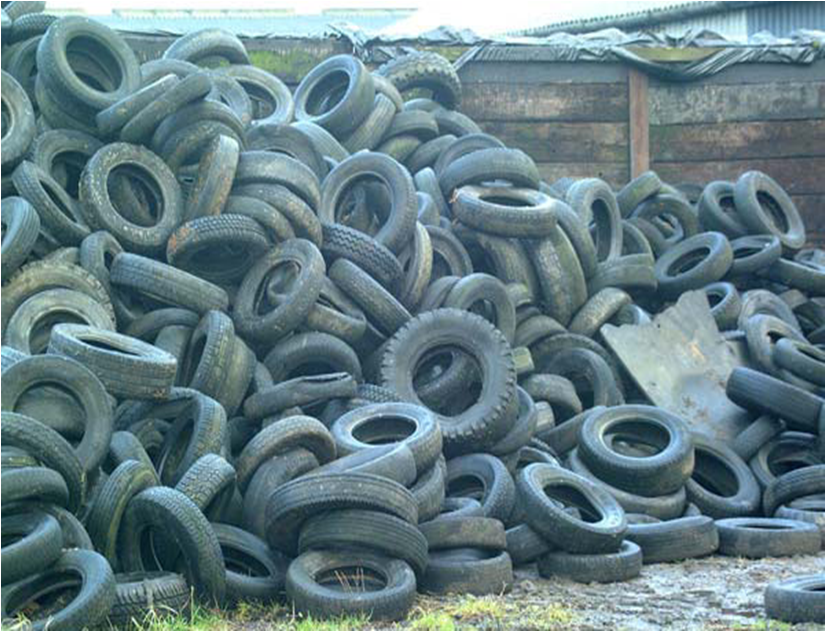
Current practices show that residents and vehicle users dispose tires randomly in different places such as valleys, road sides, open areas and dumpsites. Waste tires are also disposed of by the means of open fire and without consideration of risk on human health and environment.
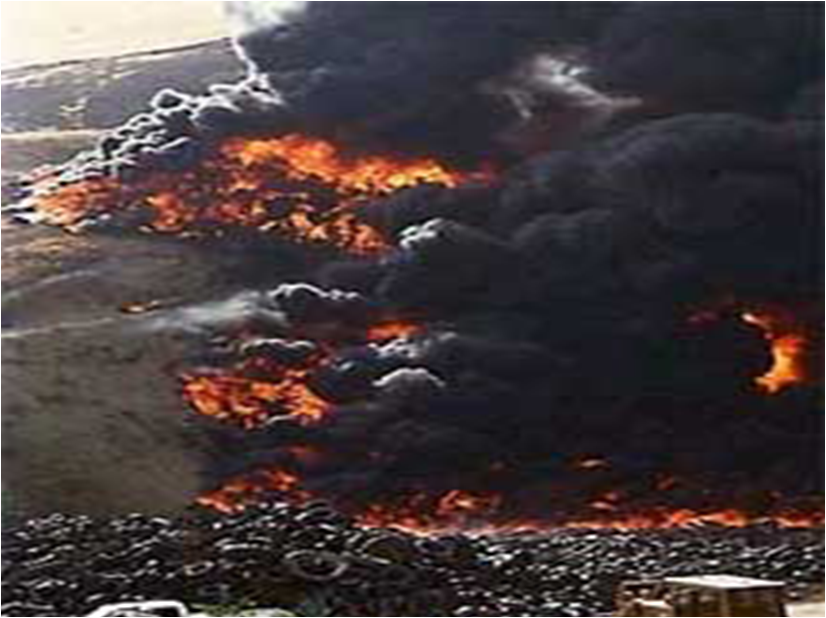
Batayneh, 1 stated that the accumulations of stockpiles of the rubber tires are very dangerous to the society as they pose a great environmental concern, hazard due to fire and provision of breeding grounds for various insects like mosquitoes which may carry very diseases from this source. Ganjian and Maghsoudi 2 stated that the tire pile fires have remained a greater environmental problem as the fires caught by tires are very hazardous and that the fires can burn for months, sending up an acrid black plume that is visible from various miles away. It is a matter of great concern that the acrid plums contain various amounts of toxic chemical and the air pollutants in it is causing a serious threat to the environment and its inhabitants.
Figure 1 and Figure 2 show some of the forms of dumping and wrong practices for disposing waste tires.
In order to reduce unnecessary landfills and preserve the environment, expired tires can feasibly be used as an alternative raw material in the construction industry 3. For example, in the pavement industry, the use of crumb rubber has been initiated with asphalt mixes.


Currently 75-80% of scrap tires are buried in landfills. Only 25% or fewer are utilized as a fuel substitute or as raw material for the manufacture of a number of miscellaneous rubber goods 4.
Studies show that Europe and the United State use 9% to 14% of recycled tires for civil engineering works 5. In addition, the Department of Environment in Australia emphasized the prospects for growth in using recycled crumb rubber, particularly in road construction applications 6.
Burying scrap tires in landfills is not only wasteful, but also costly. Although combining recycled rubber and concrete aggregates for making conventional concrete was an innovative idea, it was found that the resulting rubberised concrete had lower strength 7, 8, 9, and this was not preferable especially for structural applications.
Severe reduction of the concrete strength was reported as the main drawback of adding rubber into concrete 8, 9.
Sgobba 7 explored the ameliorative effects of rubber particles on some properties of concrete. The result presented shows that the incorporation of rubber aggregates in concrete, obtained from waste tyres, is a suitable solution to decrease the weight in some engineering manufactures. Some drawbacks were also reported by her such as the large decrease in compressive strengths, and the increase of water request and air content, the test result demonstrated that rubberised concrete mix possesses interesting properties that can be useful in structural and non-structural applications. The test result also shows that the performance of concrete is significantly affected by the type and content of the rubber particles as well as by cement type and admixture properties.
El-Gammal 10 studied the application of recycled waste tyre rubber by replacing fine and coarse aggregate in concrete at different percentages to study the change in compressive strength & density of concrete. Two different forms of waste rubber tier (i.e chipped & crumb) were used in the study. The result for the concrete casted using chipped rubber as a full replacement to coarse aggregate shows a significant reduction in compressive strength (about 90% reduction) compared to controlled specimen. However significant ductility was observed before failure. The result obtained for the concrete casted using crumb rubber as a full replacement to sand shows significant reduction in compressive strength compared to controlled specimen but shows significant increase in compressive strength compared to the concrete casted using chipped rubber as a full replacement to coarse aggregate.
This negative impact has led to using a variety of treatment methods to counteract the negative impact of adding rubber to concrete.
Basher 11 used nano-silica to improve the strength of rubbercrete without additional cement. Five rubbercrete dry mixtures with different nano-silica additives (0%, 1%, 2%, 3%, 4% and 5%) were prepared, cast under pressure and tested at age of 28 days. The mixtures contained 10% of crumb rubber replacement to fine aggregate by volume and amount of water equal to 8% of the total batch weight. The nano-silica reacted with Ca(OH)2 to produce C-S-H which was responsible for strength and through physical effect, the nano silica filled up nano voids and also pores in the concrete which led to modification of the microstructure of the rubbercrete and subsequently increasing the compressive strength.
Musa 12 studied the effect of polycarboxylate superplasticizer on the properties of roller compacted rubbercrete. This was done by partial replacement of fine aggregate by crumb rubber (0%, 10% and 20%) and adding the polycarboxylate superplasticizer at 0%, 1% and 2% by weight of cement. The result obtained gave an increase in compressive strength at both 1% and 2% of the superplasticizer, however, decrease in flexural strength was obtained at 2% addition of the superplasticizer.
According to Sawamato and Takehino 13, the addition of pozzolans as admixtures can improve the strength of rubbercrete. Therefore, the effect of a few agricultural pozzolan as admixture on strength of rubbercrete is investigated in this study.
Rice Husk were obtained from a rice farm at Ota (6.6927oN, 3.2365oE), Ogun state, Nigeria and then converted to ash at Federal Institute of Industrial Research, Oshodi (FIIRO), Lagos state, Nigeria. The ash used passed through B.S. sieve of 75 microns.
The Snail Shell Powder was obtained from its deposits at a local market in Oje (7.389oN, 3.909oE), Ibadan, Oyo State, Nigeria. The collected shells were washed, cleaned, dried and crushed before it was blended into fine powder using commercial milling machine.
PCB was obtained from grounding cow bones. The cow bones, after careful removal of adhering flesh and tissues, were cleaned, sun-dried, and then grounded. They were grounded to fine powder at FIIRO, Lagos state, Nigeria and passed through B.S. sieve of 75 microns. The cow bones used for this work were obtained from a local abattoir in Oko-oba (6.47oN, 3.933oE), Agege, Lagos State.
CBA was obtained from burning cow bones.
The fine aggregate was washed to remove any impurities and dried. The coarse aggregate for this study is the 20mm maximum nominal size granite aggregate.
2.2. MethodologyThe laboratory tests conducted are presented in Table 1.
In this research, 624 cubes and 312 beams were cast. Concrete was prepared by replacing sand with crumb rubber (CR) at 5, 10, 15 and 20% denoted as xCR,where x is percentage CR and then using RHA, SSP, CBA and PCB as admixture at 1 and 2% denoted as yB where y is the percentage admixture and B is the admixture. The cast concrete samples were cured in fresh water. A Grade 40 concrete using mix ratio of 1:0.9:2.8 by weight were adopted with water/cement ratio of 0.35. The mix proportions are present in the online supporting information.
The specific gravities of the materials used for this study are summarized in Table 2.
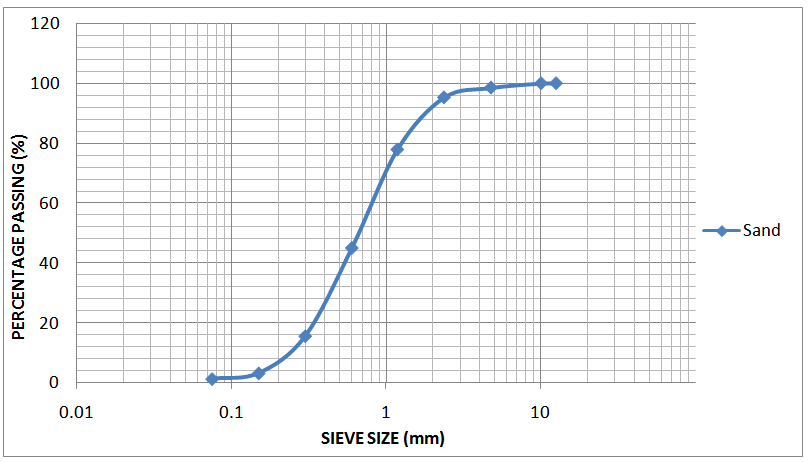
The results of the sieve analysis carried out on the sand used are presented in Figure 3.

The Coefficient of Uniformity Cu, the Coefficient of Curvature Cc and Fineness Modulus of the sand used are 3.20, 1.01 and 2.65 respectively which indicate that the sand is Uniformly Graded and medium-grained 14.
3.3. Chemical AnalysisThe chemical composition of OPC, RHA, SSP, CBA and PCB were determined using. X-Ray Fluorescence Spectrometry (XRF Fused Bead Test) 15. The results of the chemical analysis are presented in Table 3.
The slump test results obtained are expressed in Table 4.
It was observed that the fresh concrete was increasingly difficult to work with increase in crumb rubber which means that crumb rubber reduces the workability of concrete. The addition of RHA improved the workability slightly but then decreased with increasing quantity of crumb rubber. This same trend was observed with the addition of SSP, the result obtained with RHA was however better than that of SSP. The addition of CBA and PCB improved the workability of rubbercrete significantly, with PCB giving the best result but, in all cases, increase in crumb rubber reduced the workability.
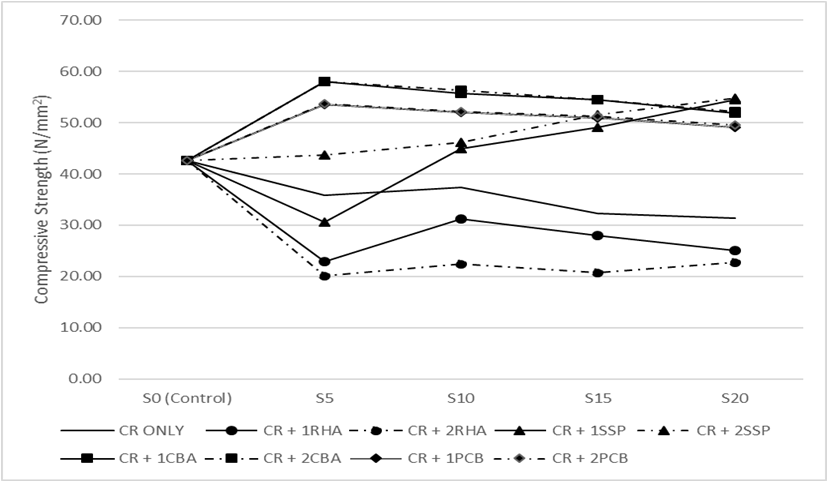
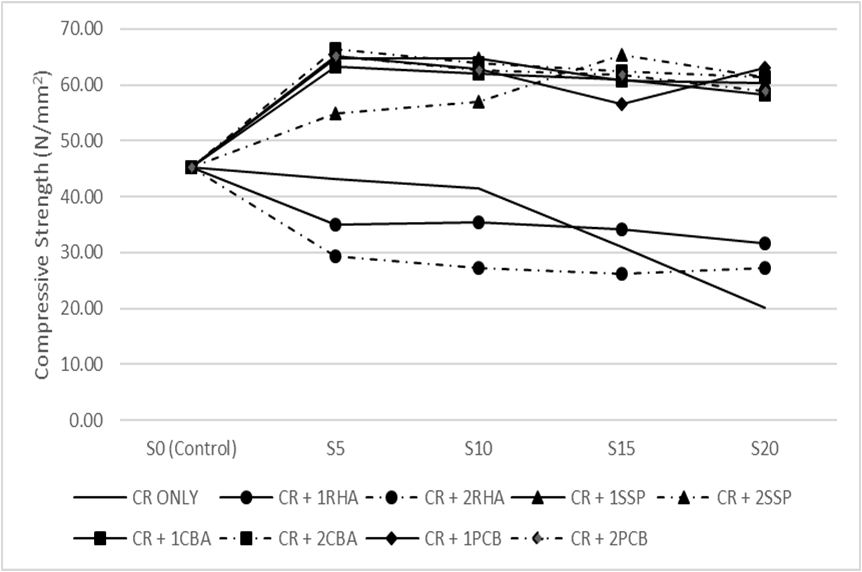
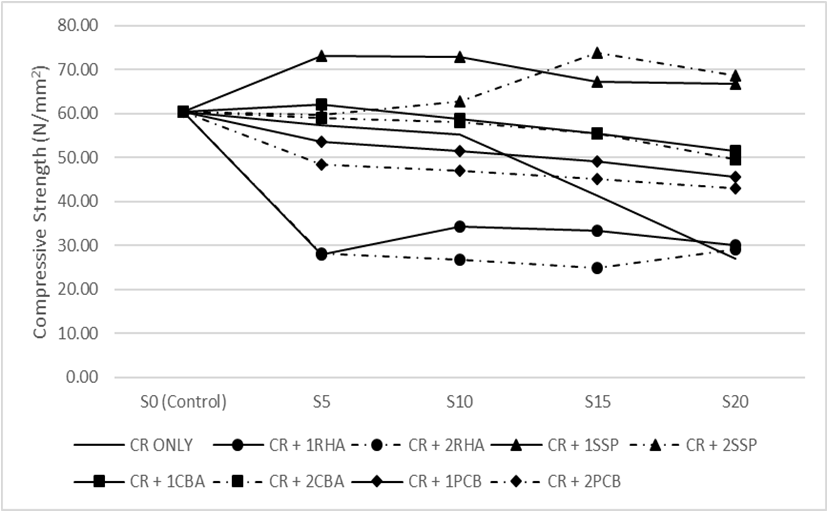
3.5. Compressive StrengthFigure 4, Figure 5 and Figure 6 show the compressive strength at 28, 90 and 120 days for the concrete samples. It is observed that the inclusion of RHA in the rubbercrete resulted in further decrease in strength all through the curing regime. With SSP, increase in compressive strength was observed with optimum result obtained with the addition of SSP at 2%. CBA and PCB showed similar trend as SSP but with CBA giving the most significant result.


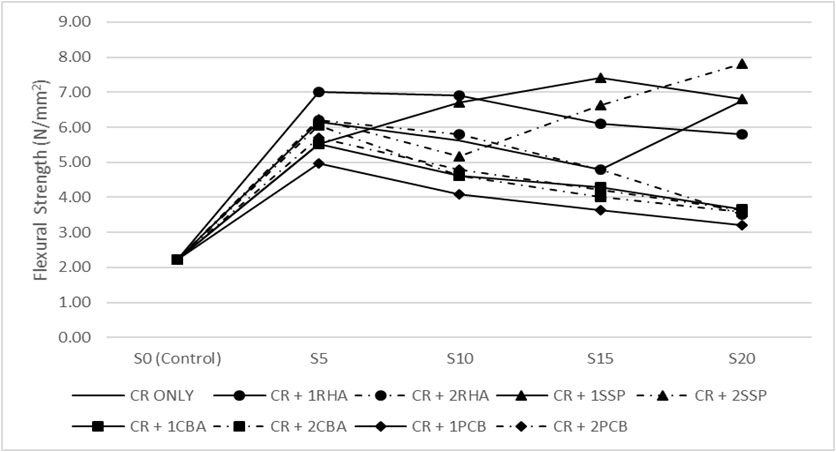
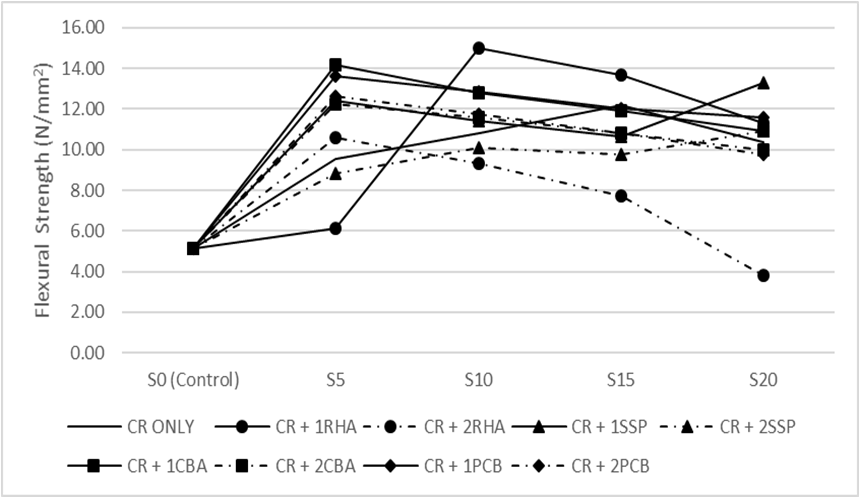
The flexural strength obtained for the rubbercrete samples are presented in Figure 7 and Figure 8. The results showed a general improvement in flexural strength of rubbercrete for all SCMs. However, at the 7th day, samples with CBA and PCB performed below the unmodified rubbercrete samples, while samples with RHA performed best in terms of flexural strength. At the 28th day, CBA performed better than other SCMs with RHA performing least and with results decreasing with increase in crumb rubber content.

This study was initiated to investigate the effect of agriculturally based SCMs on rubbercrete, and from the results obtained, it can be concluded that crumb rubber reduces the workability of concrete; however, the presence of the SCMs used improved workability with PCB giving the best result. It was observed that compressive strength of rubbercrete is lower than the designed characteristic strength at 28days but the addition of CBA, PCB and SSP improved the compressive strength with most satisfactory result obtained at 2% addition. RHA proved to be unsuitable for improving strength of rubbercrete in this study, as compressive strength of the rubbercrete reduced further. This may be due to the source and condition of the rice husks.
Also, the flexural strength of concrete increased with crumb rubber partially replacing sand and more significant increase was obtained with the addition of the SCMs with the exception of RHA at 2% addition.
This research therefore shows that the drawback experienced with the use of crumb rubber in concrete, which is reduced compressive strength, can be corrected by the use of these agriculturally based SCMs- CBA,PCB and SSP as an additive to the concrete mix at 2% of the mix proportions.
| [1] | Batayneh, M. Marie, I. and Asi, I. “Promoting the use of crumb rubber concrete in developing countries”, J Waste Manag 28 2171-2176, 2008. | ||
| In article | View Article PubMed | ||
| [2] | Ganjian, E. Khorami, M. and Maghsoudi, A. “Scrap-tyre-rubber replacement for aggregate and filler in concrete”. Constr Build Mat. 23, 1828-1836. 2009. | ||
| In article | View Article | ||
| [3] | Pelisser, F., Zavarise, N., Longo, T.A. and Bernardin, A.M.. “Concrete made with recycled tire rubber: effect of alkaline activation and silica fume addition”. Journal of Cleaner Production. Vol. 19, no. 6-7, pp. 757-763, 2011. | ||
| In article | View Article | ||
| [4] | Nitesh B.P, Shivani S.D., Sandhya R.M., Pratiksha S.K. and Payghan V.R.. “Study of mechnical properties of paver concrete by partially incorporation of rubber waste”. International Journal of Recent Advances in Multidisciplinary Topics. Vol. 2, Issue 7, 2021. | ||
| In article | |||
| [5] | Houghton, N., Preski, K., Rockliffe, N. and Tsolakis, D. “Economics of Tyre Recycling”. ARRB Publishers, Australia, 2004. | ||
| In article | |||
| [6] | Atech Group “A national approach to waste tyres” The Australian Commonwealth Department of Environment, pp. 1-180, 2001. | ||
| In article | |||
| [7] | Sgobba, S., Marano, G.C., Borsa, M. and Molfetta, M. “Use of Rubber Particles from Recycled Tires as Concrete Aggregate for Engineering Applications”. In 2nd International Conference on Sustainable Construction Materials and Technologies. 2010. | ||
| In article | |||
| [8] | Bewick, B.T., Drive, B., Air, T., Base, F., Salim, H.A. and Saucier, A. “Crumb rubber-concrete panels under blast loads”. Air Force Research Laboratory, Materials and Manufacturing Directorate, pp. 1-14, 2010. | ||
| In article | |||
| [9] | Ling, T.C., Nor, H.M., Hainin, M.R. and Chik, A.A. “Laboratory performance of crumb rubber concrete block pavement”. International Journal of Pavement Engineering. Vol. 10, no. 5, pp. 361-374, 2009. | ||
| In article | View Article | ||
| [10] | El-Gammal, A., Abdel-Gawad, A. K. El-Sherbini, Y. and Shalaby A. “Compressive Strength of Concrete Utilizing Waste Tyre Rubber” Journal of Emerging Trends in Engineering and Applied Sciences (JETEAS), 2010. | ||
| In article | |||
| [11] | Basher, S.M., Muhd, F.N. and Nasir, S. “Development of High Strength Nano-Silica Modified Rubberecrete”. Resilient Infrastructure, London, 2016. | ||
| In article | |||
| [12] | Musa, A., Basher, S.M. and Nasir. S. “Effect of polycarboxylate superplasticizer dosage on the mechanical performance of roller compacted rubbercrete for pavement applications” Journal of Engineering and Applied Sciences. 12(20): 5253-5260, 2017. | ||
| In article | |||
| [13] | Sawamoto and Takehino. “Usage of Admixtures to Increase the Workability of Recycled Aggregate Concrete”. J. Material and Structures. Volume 33, pp 574-580, 2000. | ||
| In article | View Article | ||
| [14] | Braja, M.D. Principles of geotechnical engineering. Cengage Learning Publishing, Stamford, 7th Edition, 2010. | ||
| In article | |||
| [15] | Omatola, K.M and Onojah, A.D. “Elemental analysis of rice husk ash using x-ray fluorescence technique.” International Journal of Physical Sciences. Vol. 4(4), 189-193, 2009. | ||
| In article | |||
Published with license by Science and Education Publishing, Copyright © 2021 Ikechukwu Ezegbunem, Adewale Olutaiwo, Bola Mudasiru, Moshood Seriki and Adebayo Olayemi
 This work is licensed under a Creative Commons Attribution 4.0 International License. To view a copy of this license, visit
http://creativecommons.org/licenses/by/4.0/
This work is licensed under a Creative Commons Attribution 4.0 International License. To view a copy of this license, visit
http://creativecommons.org/licenses/by/4.0/
| [1] | Batayneh, M. Marie, I. and Asi, I. “Promoting the use of crumb rubber concrete in developing countries”, J Waste Manag 28 2171-2176, 2008. | ||
| In article | View Article PubMed | ||
| [2] | Ganjian, E. Khorami, M. and Maghsoudi, A. “Scrap-tyre-rubber replacement for aggregate and filler in concrete”. Constr Build Mat. 23, 1828-1836. 2009. | ||
| In article | View Article | ||
| [3] | Pelisser, F., Zavarise, N., Longo, T.A. and Bernardin, A.M.. “Concrete made with recycled tire rubber: effect of alkaline activation and silica fume addition”. Journal of Cleaner Production. Vol. 19, no. 6-7, pp. 757-763, 2011. | ||
| In article | View Article | ||
| [4] | Nitesh B.P, Shivani S.D., Sandhya R.M., Pratiksha S.K. and Payghan V.R.. “Study of mechnical properties of paver concrete by partially incorporation of rubber waste”. International Journal of Recent Advances in Multidisciplinary Topics. Vol. 2, Issue 7, 2021. | ||
| In article | |||
| [5] | Houghton, N., Preski, K., Rockliffe, N. and Tsolakis, D. “Economics of Tyre Recycling”. ARRB Publishers, Australia, 2004. | ||
| In article | |||
| [6] | Atech Group “A national approach to waste tyres” The Australian Commonwealth Department of Environment, pp. 1-180, 2001. | ||
| In article | |||
| [7] | Sgobba, S., Marano, G.C., Borsa, M. and Molfetta, M. “Use of Rubber Particles from Recycled Tires as Concrete Aggregate for Engineering Applications”. In 2nd International Conference on Sustainable Construction Materials and Technologies. 2010. | ||
| In article | |||
| [8] | Bewick, B.T., Drive, B., Air, T., Base, F., Salim, H.A. and Saucier, A. “Crumb rubber-concrete panels under blast loads”. Air Force Research Laboratory, Materials and Manufacturing Directorate, pp. 1-14, 2010. | ||
| In article | |||
| [9] | Ling, T.C., Nor, H.M., Hainin, M.R. and Chik, A.A. “Laboratory performance of crumb rubber concrete block pavement”. International Journal of Pavement Engineering. Vol. 10, no. 5, pp. 361-374, 2009. | ||
| In article | View Article | ||
| [10] | El-Gammal, A., Abdel-Gawad, A. K. El-Sherbini, Y. and Shalaby A. “Compressive Strength of Concrete Utilizing Waste Tyre Rubber” Journal of Emerging Trends in Engineering and Applied Sciences (JETEAS), 2010. | ||
| In article | |||
| [11] | Basher, S.M., Muhd, F.N. and Nasir, S. “Development of High Strength Nano-Silica Modified Rubberecrete”. Resilient Infrastructure, London, 2016. | ||
| In article | |||
| [12] | Musa, A., Basher, S.M. and Nasir. S. “Effect of polycarboxylate superplasticizer dosage on the mechanical performance of roller compacted rubbercrete for pavement applications” Journal of Engineering and Applied Sciences. 12(20): 5253-5260, 2017. | ||
| In article | |||
| [13] | Sawamoto and Takehino. “Usage of Admixtures to Increase the Workability of Recycled Aggregate Concrete”. J. Material and Structures. Volume 33, pp 574-580, 2000. | ||
| In article | View Article | ||
| [14] | Braja, M.D. Principles of geotechnical engineering. Cengage Learning Publishing, Stamford, 7th Edition, 2010. | ||
| In article | |||
| [15] | Omatola, K.M and Onojah, A.D. “Elemental analysis of rice husk ash using x-ray fluorescence technique.” International Journal of Physical Sciences. Vol. 4(4), 189-193, 2009. | ||
| In article | |||