A significant issue for both researchers and stakeholders within the photovoltaic industry is the use of solar tracker systems to gain the most efficient degree of solar irradiance, by following the movement of the sun. This paper introduces a complete view of the main parts of solar photovoltaic technology, focusing primarily on structural and geotechnical aspects. Firstly, it examines the role of geotechnical engineering, from the selection of an appropriate site to the properties of its soil layers and the establishment of secure foundations. Secondly, it introduces the most important factors related to the structural analysis of solar trackers (i.e. stability and reliability) to maintain the safety and performance of solar photovoltaic systems. The study considers the importance of geotechnical analysis to obtain optimal gains from solar irradiance. Moreover, it discusses the need for appropriate structural analysis to maintain optimal solar irradiance, as well as ensuring the safety of solar tracker systems in relation to their aerodynamic loads. It is found that proper geotechnical investigations to establish the presence of adequate soils with a high bearing capacity and low degree of settlement are vital for the selection of optimal sites for solar tracker systems.
One of the most important global issues currently facing the production of electricity concerns the use of free and clean energy, in order to significantly decrease the current dependence on fossil fuels, i.e. gas and oil. Moreover, the use of renewable energy is vital for addressing the negative impact of global warming and the related environmental issues 1, 2, 3, 4. The recent increase in the price of oil and natural gas is now encouraging the use of renewable energy. This has led to solar photovoltaic energy being one of the promising energies recently implemented in Kuwait and other countries rich in solar irradiance due to their lengthy hours of sunshine and high levels of solar irradiance 5, 6, 7, 8, 9, 10, 11, 12, 13.
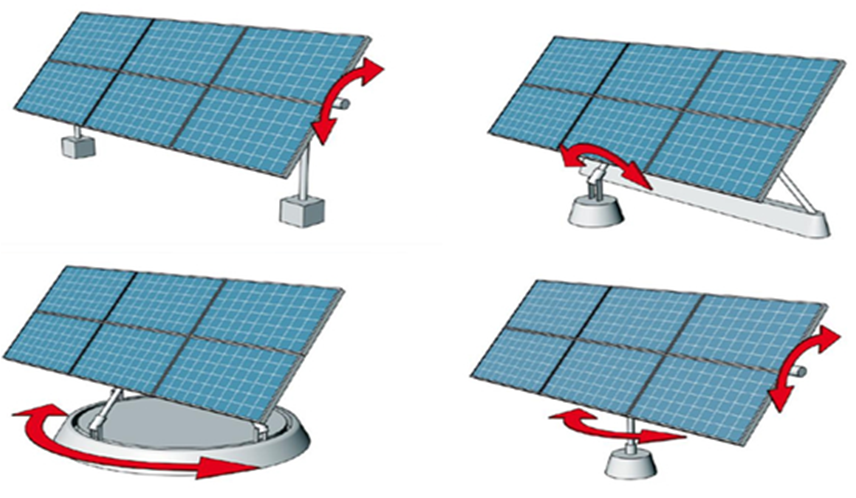
Solar energy is a multidisciplinary science 14, involving a number of engineering fields, including civil and electrical engineering. This study focuses on structural and geotechnical engineering, as these are the primary aspects ensuring the stability and reliability of both solar trackers and their foundations. There have been a number of encouraging results concerning use of solar trackers systems that follow the irradiance of the sun during daytime using single and dual-axis solar trackers (Figure 1). This includes a 30% and 40% increase in the amount of energy produced through the use of single and dual-axis solar trackers rather than fixed solar systems 15, 16. Research into the most effective solar tracking systems has also led to excellent outcomes 5, 8, 10, 12.

Studies have established that it is possible to obtain an increase in produced energy of 24% and 28%, respectively, though the use of single and dual-axis tracking systems, in place of fixed tracking systems.
Efficiency is one of the most significant issues facing solar photovoltaic technology, due to most of received irradiance being incompletely utilised, as much is lost as a result of the lack of efficiency of solar modules and converters. As stated above, this current research focuses on structural and geotechnical aspects. The orientation and angle of inclination of the solar tracker plays a vital role in obtaining the highest amounts of solar irradiance, inferring that stability and reliability is important for following the sun during the day. This is one of the main objectives of proper and optimal structural engineering design.
Many previous researchers have studied the implementation of solar trackers by means of design and analysis procedures 6, 17, 18, 19, 20, 21, identifying that the main variables impacting their stability consist of firstly, their weight and secondly, the impact of wind speed 6, 22, 23.

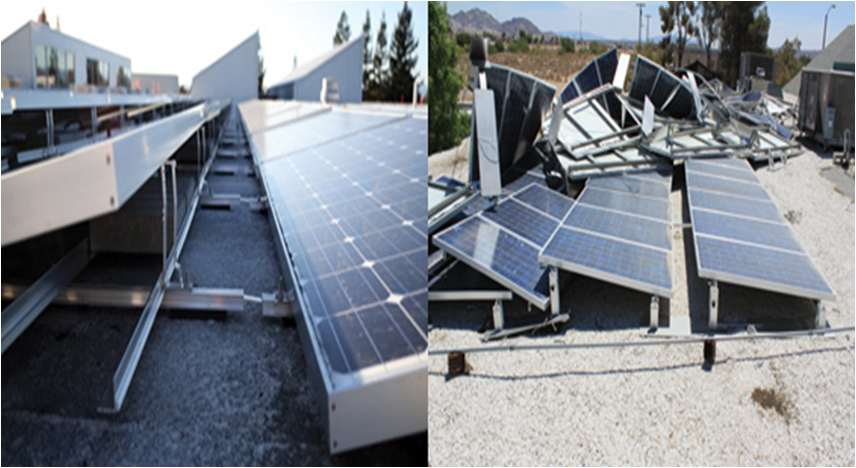
This indicates that ignoring the significance of high speed wind can lead to serious economic and/or performance consequences for an entire system, including partial or major damage (Figure 2) to the solar trackers and their accessories (i.e. solar modules), which represent around 60% of total project cost. Moreover, as the wind load changes in both magnitude and direction, it is vital to consider the influence of fatigue, as this can cause failure to the superstructure. A fatigue assessment of solar trackers conducted by 6 found that an important step in avoiding fatigue failure is to vary the impact of aerodynamic and cyclic forces over time. Moreover, it is also important to recognise the thermal stresses induced in solar trackers, particularly in countries with high summer temperatures that are capable of compromising the tracker’s structure.
The second main focus of this paper concerns the geotechnical aspects related to the use of both fixed and tracking systems, i.e. single and dual-axis tracking systems. The stability and reliability of the foundations of solar trackers directly impact the superstructure (i.e. the tracker itself), and consequently the orientation and tilt angle required to obtain the highest degree of solar irradiance, by maintaining the optimal tilt angle of solar modules facing the sun. A number of special codes are employed to design solar trackers foundations, which in this paper will focus on a case study from Kuwait.
Theoretically, there is little difference between the design of the foundations for solar trackers and any other construction. The basic principle is practically identical, as it takes into consideration the loads transmitted from the superstructure to the ground, as well as the soil bearing capacity beneath the proposed foundations. When it comes to solar trackers, the proposed foundations should be able to withstand both the weight and aerodynamic load 6.
The most common foundations for solar trackers are driven and helical piles and isolated shallow foundations. These are implemented in accordance with technical and economic criteria that tend to prioritise cost and time. The most commonly used pipes for typical solar systems are made of steel, as these can be partially embedded in the soil and can be easily used and distributed within the site 24. In addition, foundations to support the trackers on the ground generally consist of steel piles, concrete piles, precast concrete piles, cast-in -pace piles, driven piles, and helical piles 25. It should be noted that helical piles are considered the most appropriate choice for lightweight structures and solar panel trackers 26.
An important stage of any geotechnical application is the collection of all available data and information for the proposed site, as this represents the solid benchmark employed by geotechnical engineers, including determining the scope of works and necessary tasks for any proposed site. This therefore includes an accurate description of the basic soil properties, including its layers, i.e. thickness, classification reports and strength parameters. This acts to ease the preliminary geotechnical site investigations. Moreover, it is crucial to obtain clear field soil test samples, as some software programs (i.e. numerical modelling software) require specific, rather than assumed, input data, including the modulus of elasticity and Poisson’s ratio. However, in some circumstances, the use of assumptions can be beneficial, due to saving time and effort, although it is more effective to employ accurate data to reduce any minor errors arising from improper assumptions. In addition, it is vital to utilise lab and field tests to check the properties of the soil at the site, as well as analyse and verify geotechnical data with local and international codes and specifications.
This current research therefore presents intensive descriptions and reviews of the main structural and geotechnical aspects related to solar photovoltaic technology, supplemented by the relevant works conducted in Kuwait.
This study offers a complete and proper reference for structural and geotechnical engineers and stakeholders involved (or with an interest) in solar energy technology, and particularly mounted solar trackers, which are widely implemented in large areas, such as desert or parks.
A main aspect of this study is to present a complete view of geotechnical investigations, from site selection to the implementation of the most appropriate foundations.
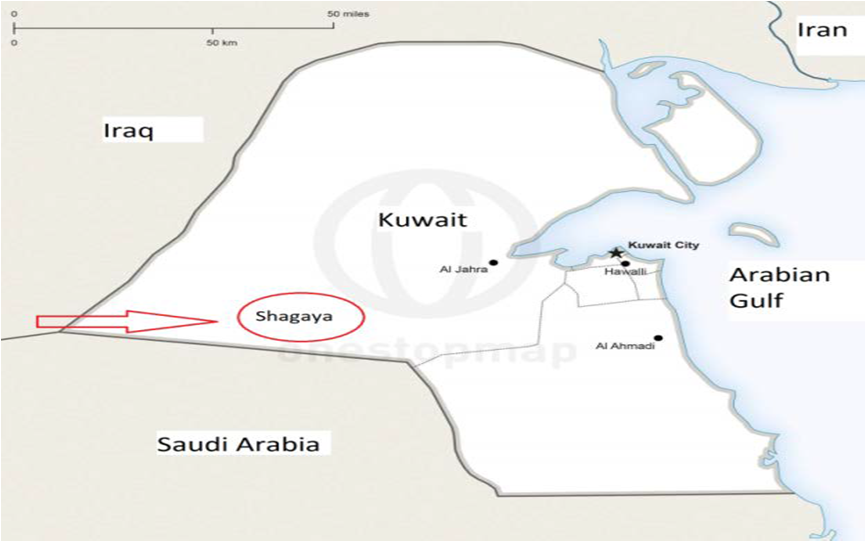
The selection of a site for any proposed solar photovoltaic system is an important step requiring a feasibility study. This paper examines a case study conducted by 27, in order to give clear and practical explanations for the main geotechnical issues. The site is located in the Shagaya area, in the southwest part of the state of Kuwait (Figure 3), which consists primarily of desert terrain, with a surface of sandy soils 27.

It is generally accepted that field tests commence with the excavation of test pits for surface and near surface samples, or the use of boreholes to obtain soil samples from deep beneath the surface. The latter also form the most commonly used method of obtaining detailed information concerning the thickness of soil layers, as well as their main physical and mechanical properties. See Table 1 for the most commonly used field tests and their procedure and references.
Following the collection of samples from the field, laboratory tests are then conducted to establish the basic soil properties. The most commonly used field tests and their procedure and references are listed in Table 2.
For the study under discussion, the geotechnical data were collected from boreholes at the Shagaya site, with various soil samples from differing depths below the earth’s surface. This was followed by laboratory and field tests. The laboratory tests focused on basic soil properties, such as specific gravity and unit weight. The main field tests are the Standard Penetration Test (SPT) and the Plate Load Test (PLT), which were conducted at different locations. Moreover, direct shear tests were used to establish the strength parameters of the soil samples.
The foundations form an important part of a building’s structural elements. In geotechnical applications, it is vital to find the bearing capacity of the soil layers at the proposed site, i.e. the applicability of the soil to support the anticipated load of the proposed structure. This allows the geotechnical engineer to compare the bearing capacity with the expected loads transmitted from the proposed structure, and so determine the type of foundation required, i.e. shallow or deep. In addition, this forms an essential step in locating the embedment depth of the footing.
Meyerhof introduced several common equations now widely used to calculate the permissible bearing capacity for a 25mm settlement 28. The allowable bearing capacity was therefore calculated as follows:
 | (1) |
 | (2) |
 | (3) |
N represents the SPT value, Kd represents depth factor, B and D represent the footing width and depth of foundation.
It is important to recall that the basic principle of foundation design is to protect foundations from shear failure and excessive settlement. Therefore, their design should take into consideration the expected loads of a superstructure, as well as other safety factors related to bearing capacity failure and any expected settlement. This indicates that the design should consider soil properties and the loads the proposed foundation is expected to support.
The type of soil layers (as represented by soil classification tests) gives important information establishing the type of foundation to be implemented, as well as specify the appropriate methods for the analysis and design stage. For instance, when designing for clayey soil, it is vital to consider the issue of primary consolidation settlement.
Geotechnical engineers are aware of the need to select the most appropriate type of foundations for proposed solar trackers. This establishes that the type of soil layer (i.e. sand or clay) should be accurately estimated, along with the expected loads of the superstructure (i.e. the solar tracker) and the aerodynamic pressure (i.e. wind load). In addition, it is vital to consider the safety parameters related to the geotechnical design procedure, including the approved code and specifications for the country in question.
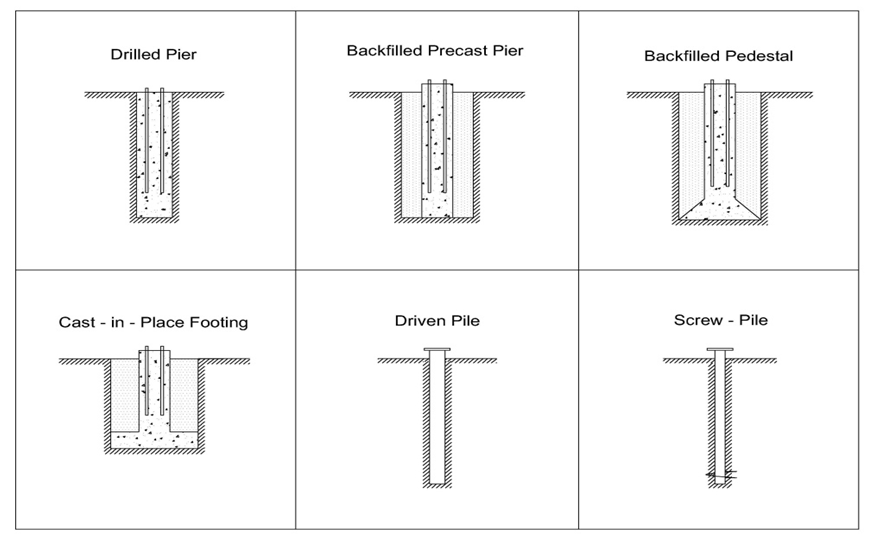
In general, the most commonly implemented foundations for solar trackers consist of direct drilled, precast and cast-in-place concrete piers, along with precast concrete piers, and driven and helical piles 25. The final selection depends on the properties of the soil layers and the conditions of the selected site. For instance, helical piles footings are commonly employed for sandy soils, while driven pile footings are used for clayey and dense sandy soils 41.
In addition, earth-screws footings can prove the best choice for some circumstances, i.e. landfills sites or tough soils for which penetrating footing is difficult, or may impact on the surrounding facilities 41. However, the most widely used footings are steel piles, particularly when it comes to large scale solar photovoltaic projects in free areas such as deserts. Figure 4 presents the most common types of foundations employed throughout the world.

The second part of this research explores the main structural engineering aspects of solar technology that need to be taken into account to ensure the successful execution of any proposed project. The super structure (i.e. the solar tracker) should be correctly designed to support the solar photovoltaic modules and should be stable and reliable, capable of withstanding aerodynamics loads. As stated above, the main variables in need of consideration from a structural engineering view concern aerodynamic loads and the self-weight of the solar trackers. This paper examines research by 6 to present a practical case study for the important issues regarding structural engineering aspects related to the implementation of solar tracker systems. The study was conducted by means of Finite Elements Method (FEM), using COMSOL Multiphysics software.

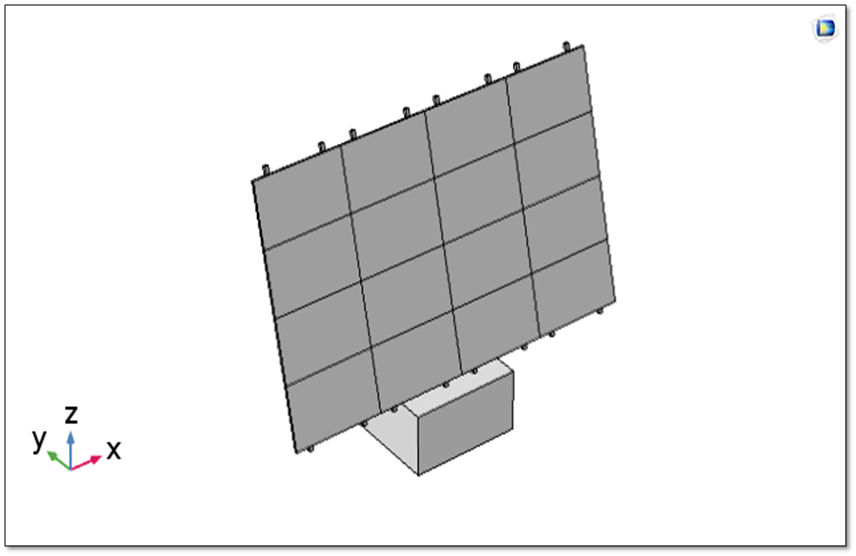
The solar tracker model (Figure 5) of 4 x 4 modules has an area of 27.4 m², and is used in a three-dimensional (3D) finite element model, simulated in COMSOL Multiphysics 5.3 software. The model has been verified and validated through a study conducted by 42.
In order to prevent horizontal and vertical movements, a fixed constraint was applied to the bottom of the model and horizontal constraint roller constraints to the remainder.
This study’s main parameters consisted of self-weight and wind load. The parameters used in the wind load calculation is listed in Table 3. In this study, the wind load was determined using the American Society of Civil Engineers method 43, 6 with the following equation:
 | (4) |
Where
qz: velocity pressure of wind
Kz: velocity pressure exposure coefficient
Kzt: topographic factor
Kd: wind directionality factor
V: basic wind speed
I: importance factor

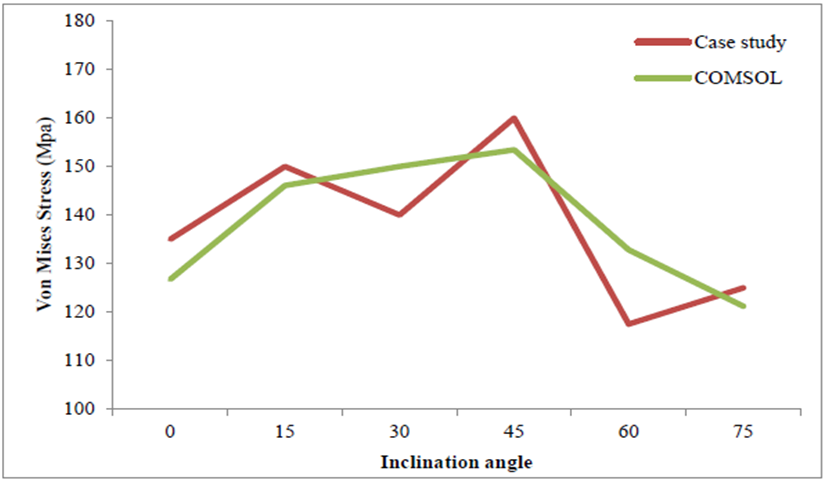
The obtained results for the numerical model was compared with a case study conducted by 8 for the validation purposes. in this study, six different inclination angles 0°, 15°, 30°, 45°, 60°, 75°, were considered. Figure 6 shows the results obtained by the COMSOL Multiphysics software, and the validated case study. The computed results in the current study were found to be in good agreement with the case study. It is found that standard deviation ranged between 5 % to 14.4 % and that is an acceptable range by means of numerical modelling applications.
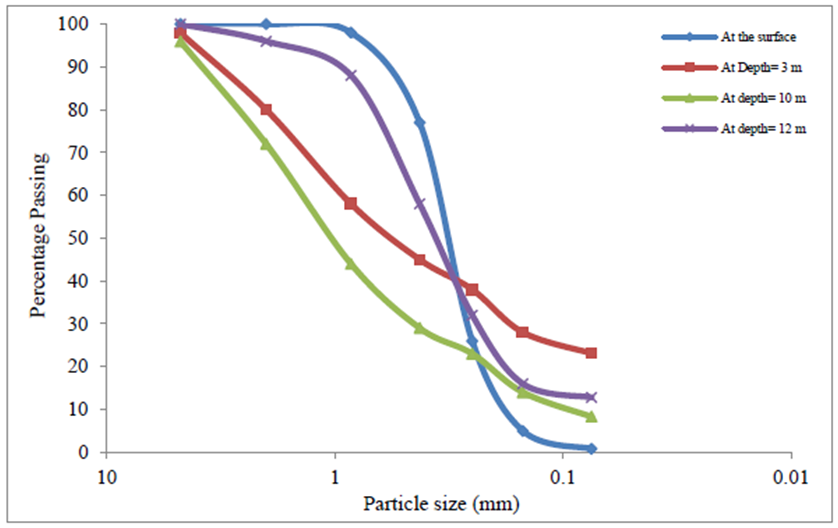
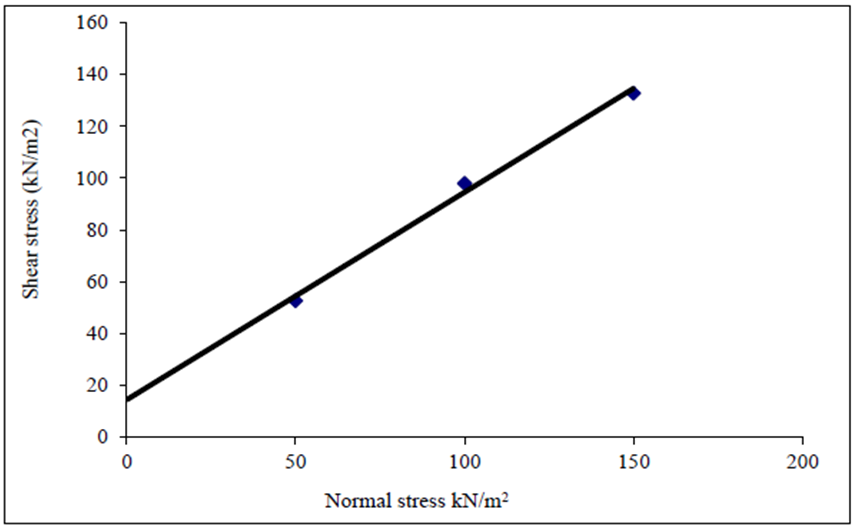
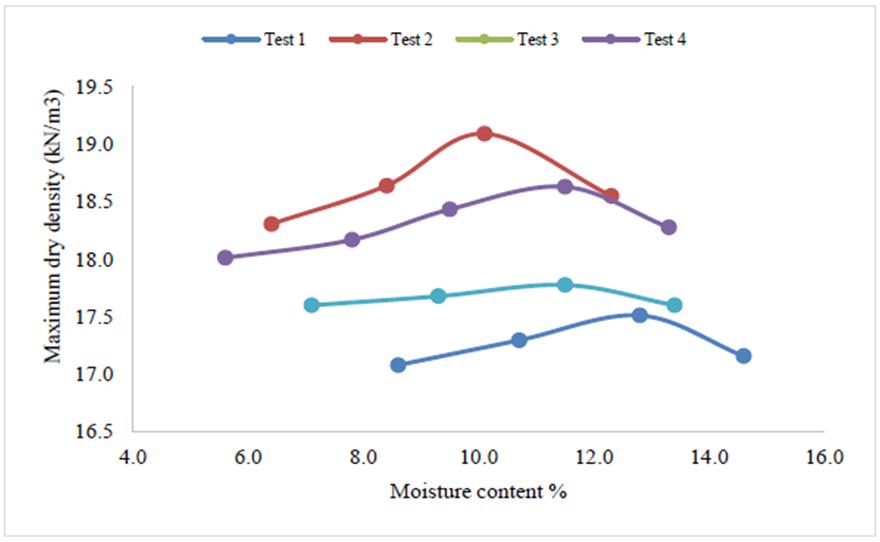
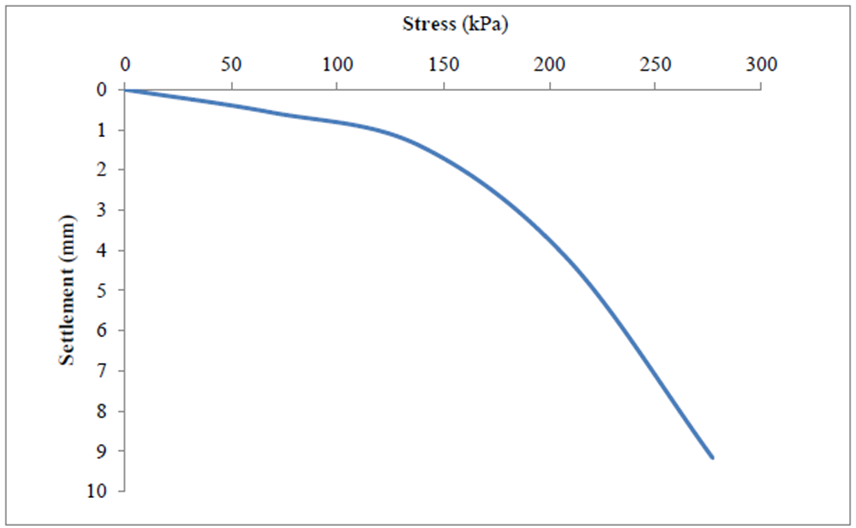
Table 4 lists the basic properties of the soil layers. It can be noticed that both the unit weight and the cohesion of the soil layers increase with the increase of soil layers and that would be attributed to cementation bond between the soil particles. The borehole investigation report shows that the surface and subsurface of the selected site are characterized by granular soils and mainly sandy soil. The soil classification tests, conducted with accordance to unified soil classification system, present poorly graded clayey sand (SC), silty sand (SM), and poorly graded sand with silt (SP-SM). Figure 7 shows the grain size distribution curve for collected samples at different depths. It is found that the standard penetration value (N) varies between 12 and 39, increasing with depth. This is explained to the cementation of soil layers beneath the surface. Figure 8 shows the direct shear test graph conducted on different samples. It is found that the cohesion was 15 kN/m2 and the internal angle of friction was 35°. Moreover, Figure 9 shows the modified compaction tests. It found that the maximum average dry unit weight was 18.54 kN/m3 (ranges between 17.51 and 19.57 kN/m3). The average optimum moisture content was 11.2% (ranges between 9.9 to 12.5%). The permeability of the soil layers was tested using the falling head permeability test. The average coefficient of the permeability of the tested soil samples was 2.85 x10⁻⁶ m/sec (varied between 1.75 x10⁻⁶ m/sec to 9.49x10⁻⁶ m/sec). Figure 10 shows the stress against settlement graph for the Plate load test. From the graph, the average failure load for the plate was175 KPa with settlement of 1.2 mm. Table 5 summarise the allowable bearing capacity values for the proposed foundations with assumption of using square footing having a width of B. It should be highlighted here that the use of pile foundation is another important option which did not used in this study. As the selected site is characterised by dense and cemented sand. In other words, there was no need to go deeply under the earth surface. However, it should be recalled here that the solar trackers are generally subject to axial and uplift forces resulting from their self-weight and wind loads. Therefore, the selection of pile types is dependent on several factors such as the soil layers properties in addition to other technical and economic issues. From the profile of soil layers which extending for over 12 m below the ground surface, it revealed medium to dense soil layers. Thus, bored piles could be more effective than driven pile foundations. The above listed information collected from lab and field tests would be very beneficial, particularly when they are used as input data for finite element methods. Recently, the use of technology such as software based in finite element methods.


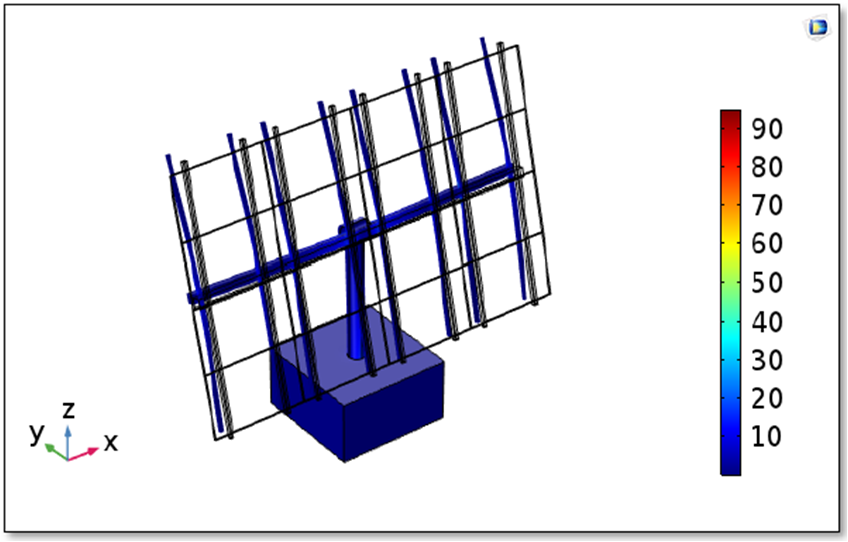
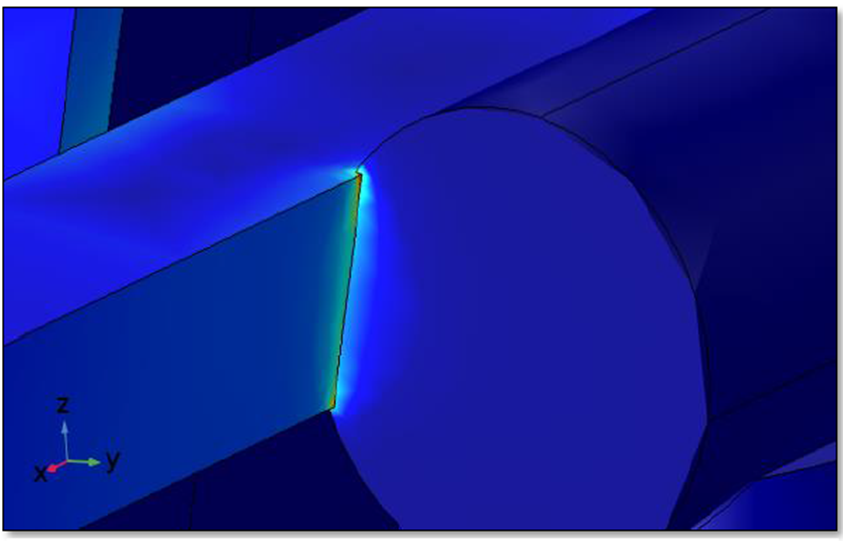
The structural analysis was based the numerical model mentioned above, the method applied in this analysis focused on calculating the following criteria: maximum von Mises stress, displacements, strains, and factor of safety. These criteria would provide the most important information and data required to present and investigate the behaviour of solar tracker under static loads (self-weight of the solar structure and wind load). Table 6 shows the obtained results of the proposed numerical model. Moreover, Figure 11. introduces the von Mises stresses over the solar tracker. It can be seen that the maximum stress was 92.51 MPa which represent the induced stresses by a wind load that blowing from a southerly direction, with correspondence inclination angle of 75° for the solar tracker. Moreover, the calculated safety factor was 2.16. Thus, this value indicates that the solar tracker is safe and stable under the applied loads. In addition, it was obvious that the maximum stresses and strains occurred at the joint connections and particularly, between the main beam that supporting the solar panels and post. Theoretically, this was true due to that fact that the joints are the weakest and critical areas.

From Table 6, it is apparent that the maximum equivalent strain obtained was equal to 1.36x10⁻³. This clearly explains the behaviour of the solar tracker under the static loading moreover, it shows that all solar tracker is within the elastic region, and it is slightly affected by the applied loads applied, by means of the deformation and elongation of the solar tracker’s elements.
The fatigue assessment for the solar tracker found that its usage fatigue failure of 0.046 was obtained at the critical area, where the maximum stresses and strains were computed for the proposed solar tracker model.
Figure 12 presents the usage fatigue failure location. A value of 0.046 was recorded at the critical region where the maximum stresses and strains occurred. This indicates that the proposed solar tracker resists more than 21,700 cycles, representing the number of cycles the solar tracker can withstand before failure due to aerodynamic loads.

The results confirm that the design of the solar tracker is safe in terms of static load analysis and fatigue criterion. Furthermore, the joints of solar trackers (primarily those at the main connection between the main beam supporting the solar modules and the post) form the critical regions, as these were observed to be subject to the highest strain and stress values. This indicates the need for additional focus on this area during design and analysis stage, as well as for appropriate selection of materials, i.e. high quality materials with high allowable stresses.
In addition, it is vital to take into consideration the implications of aerodynamic loads represented by high wind speeds, as extreme speeds can have serious consequences for the tracker’s structure. This highlights that the performance of the proposed project could be partially or completely impacted. In severe cases, damage to solar trackers may occur, as well as damage to all other elements, including solar modules. Therefore, it is generally accepted in solar technology that it is necessary to apply a defensive position, particularly for large scale projects, to protect solar trackers from severe wind speed. This can be done using a defensive position in which the inclination angle is set to 0°. This decreases the surface area of the solar structure directly exposed to the wind, and thus the induced stresses.
This study has undertaken intensive geotechnical investigations both in the laboratory and in relation to field tests of a selected site at Shagaya, in Kuwait. In addition, it has considered structural analysis of the proposed solar tracker by means of finite element methods, using COMSOL Multiphysics 5.3 software. The study examined the most important aspects of geotechnical and structural engineering involved in solar technology, concluding that the most important step in saving effort and expenditure is the selection of an appropriate site. Moreover, it has established that laboratory and field tests are important parameters capable of assisting the designer stakeholders in solar technology to take the most appropriate decisions. This is important, as the selection of correct foundations to support the solar trackers is crucial for ensuring the stability and reliability of the proposed solar project, as well as saving time and expenditure at the solar project installation stage.
From a structural engineering point of view, the optimal design of solar trackers is an important step for maintaining the reliability and stability of a solar structure. Thus, the most significant factors to be considered in the design of solar trackers are self-weight and aerodynamic loads. This indicates the need to focus additional attention onto the weakest regions of solar trackers, which showed the maximum strains and stresses, as well as the impact of fatigue. In addition, the implication of severe wind speed should not be ignored, and a defensive position of solar trackers should be applied, in order to avoid serious consequences from wind pressure.
This study therefore concludes that the use of numerical modelling is beneficial for undertaking preliminary checks into the stability of both proposed solar trackers and their foundations.
| [1] | J.. Painuly, “Barriers to renewable energy penetration; a framework for analysis,” Renew. Energy, vol. 24, no. 1, pp. 73-89, Sep. 2001. | ||
| In article | View Article | ||
| [2] | E. Beck, Fredric;Martinot, “Renewable enrgy polices and barriers.pdf,” Encycl. Energy, vol. 5, 2004. | ||
| In article | View Article | ||
| [3] | P. Komor, Renewable Energy Policy. New York: Diebold Institute for Public Policy Studies, 2004. | ||
| In article | |||
| [4] | T. N. Nchofoung, H. Kaffo, and C. Wendji, “Green taxation and renewable energy technologies adoption: A global evidence,” Renew. Energy Focus, vol. 44, pp. 334-343, 2023. | ||
| In article | View Article | ||
| [5] | A. Al-Rashidi, “A Technical, Economic and Environmental Evaluation Study of Utilising Fixed, Single and Dual-Axis Solar Photovoltaic Systems in Boubyan and Failaka Islands in Kuwait,” Am. J. Eng. Appl. Sci., vol. 12, no. 4, pp. 495-502, 2019. | ||
| In article | View Article | ||
| [6] | A. AL-Rashidi, “STRUCTURAL STABILITY AND FATIGUE ASSESSMENTS OF DUAL-AXIS SOLAR TRACKERS USING FINITE ELEMENTS ANALYSIS Abdulla,” Int. J. GEOMATE, vol. 19, no. 73, pp. 8-13, 2020. | ||
| In article | View Article | ||
| [7] | A. Al-rashidi, “The Role of Geotechnical Engineering in Photovoltaic Solar Photovoltaic Energy in Arid Climate Regions,” Front. Res. Archit. Eng., vol. 05, no. 01, pp. 1-9, 2022. | ||
| In article | |||
| [8] | A. Al-Rashidi, “Investigating the Feasibility of Solar Photovoltaic Systems in Kuwait,” Loughborough University, 2017. | ||
| In article | |||
| [9] | F. Q. Al-Enezi, J. K. Sykulski, and N. a. Ahmed, “Visibility and potential of solar energy on horizontal surface at Kuwait area,” Energy Procedia, vol. 12, pp. 862-872, 2011. | ||
| In article | View Article | ||
| [10] | A. Al-Rashidi, “Feasibility Study of Utilising 1 MW Grid-Connected Solar Photovoltaic System in Boubyan and Failaka Islands,” Iape ’19, 2019. | ||
| In article | |||
| [11] | A. Al Otaibi and S. Al Jandal, “Solar photovoltaic power in the state of Kuwait,” 2011 37th IEEE Photovolt. Spec. Conf., pp. 003091-003096, 2011. | ||
| In article | View Article | ||
| [12] | A. Al-Rashidi, A., El-Hamalawi, “A Performance Study of Fixed, Single-Axis and Dual-Axis Photovoltaic Systems in Kuwait,” Int. J. Electr. Comput. Energ. Electron. Commun. Eng., vol. 10, no. 9, pp. 1096-1100, 2016. | ||
| In article | |||
| [13] | A. Hajiah, T. Khatib, K. Sopian, and M. Sebzali, “Performance of Grid-Connected Photovoltaic System in Two Sites in Kuwait,” Int. J. Photoenergy, vol. 2012, pp. 1-7, 2012. | ||
| In article | View Article | ||
| [14] | P. Gevorkian, large scale solar power systems. Cambridge University Press; Reprint edition (6 Mar. 2014), 2014. | ||
| In article | |||
| [15] | Á. ́ a Bayod-Rújula, A. M. Lorente-Lafuente, and F. Cirez-Oto, “Environmental assessment of grid connected photovoltaic plants with 2-axis tracking versus fixed modules systems,” Energy, vol. 36, no. 5, pp. 3148-3158, 2011. | ||
| In article | View Article | ||
| [16] | S. A. S. Eldin, M. S. Abd-Elhady, and H. A. Kandil, “Feasibility of solar tracking systems for PV panels in hot and cold regions,” Renew. Energy, vol. 85, pp. 228-233, 2016. | ||
| In article | View Article | ||
| [17] | G. GadhaviAkash and D. D. Kundaliya, “Design and analysis of solar panel support structure - A review paper,” Int. J. Adv. Res. Eng. Sci. Technol., vol. 2, no. 5, pp. 1-6, 2015. | ||
| In article | |||
| [18] | C. M. Jubayer and H. Hangan, “Numerical simulation of wind effects on a stand-alone ground mounted photovoltaic (PV) system,” J. Wind Eng. Ind. Aerodyn., vol. 134, pp. 56-64, Nov. 2014. | ||
| In article | View Article | ||
| [19] | T. Stathopoulos, I. Zisis, and E. Xypnitou, “Local and overall wind pressure and force coefficients for solar panels,” J. Wind Eng. Ind. Aerodyn., vol. 125, pp. 195-206, 2014. | ||
| In article | View Article | ||
| [20] | G. Baetu, C.-E. TELEMAN, E. AXINTE, and V.-E. ROŞCA, “Numerical Simulation of Wind Action on a Solar Panels Array for Different Wind Directions,” Bul. Institutului Politeh. din lasi. Sect. Constr. Arhit., vol. 59, no. 4, pp. 9-20, 2013. | ||
| In article | |||
| [21] | A. Mathew, B. Biju, N. Mathews, and V. Pathapadu, “Design and Stability Analysis of Solar Panel Supporting Structure Subjected to Wind Force,” Int. J. Eng. Res. Technol., vol. 2, no. 12, pp. 559-565, 2013. | ||
| In article | |||
| [22] | M. T. Lates, “Mechanical Behavior Analysis with the Finite Elements Method of Solar Collector’s Tracking Systems,” WSEAS Trans. Appl. Theor. Mech., vol. 3, no. 7, pp. 244-253, 2008. | ||
| In article | |||
| [23] | R. Vellcu and M. Lates, “Wind Load Cases in the Design of the Platform of an Azimuthal TRACKER,” Ann. ORADEA Univ. Fascicle Manag. Technol. Eng., vol. XXIII (XII, no. 1, pp. 1-4, 2014. | ||
| In article | View Article | ||
| [24] | T. Kibriya, “A Review of Geotechnical Problems Facing Solar Based Renewable Energy Facilities in Frost Affected Regions of North America,” vol. 13, no. 10, pp. 7309-7316, 2018. | ||
| In article | |||
| [25] | A. J. Lutenegger, “Foundation Alternatives for Ground Mount Solar Panel Installations,” in Geotechnical and Structural Engineering Congress 2016 - Proceedings of the Joint Geotechnical and Structural Engineering Congress 2016, 2016, pp. 1873-1885. | ||
| In article | View Article | ||
| [26] | B. E. George, S. Banerjee, and S. R. Gandhi, “Numerical analysis of helical piles in cohesionless soil,” Int. J. Geotech. Eng., vol. 6362, no. December, pp. 1-15, 2017. | ||
| In article | |||
| [27] | A. AL-Rashidi, “Geotechnical Investigation of Arid Climate Soils for Implementing Solar Trackers,” Int. J. GEOMATE, vol. 23, no. 96, pp. 32-39, 2022. | ||
| In article | View Article | ||
| [28] | Joseph E. Bowles, FOUNDATION ANALYSIS AND DESIGN, Fifth Edit. The McGraw-Hill Companies, Inc., 1997. | ||
| In article | |||
| [29] | D. ASTM, “Standard Test Method for Standard Penetration Test (SPT) and Split-Barrel Sampling of Soils,” 2018. | ||
| In article | |||
| [30] | G. ASTM, “Standard Test Method for Field Measurement of Soil Resistivity Using the Wenner Four-Electrode Method,” 2012. | ||
| In article | |||
| [31] | D. ASTM, “Standard Test Method for Bearing Capacity of Soil for Static Load and Spread Footings,” 1994. | ||
| In article | |||
| [32] | D. ASTM, “Standard Test Method for Electronic Friction Cone and Piezocone Penetration Testing of Soils,” 2012. | ||
| In article | |||
| [33] | D. ASTM, “Standard Test Method for Particle-Size Analysis of Soils,” West Conshohocken, PA., 2007. [Online]. Available: www.astm.org. | ||
| In article | |||
| [34] | D. ASTM, “Standard Test Methods for Laboratory Determination of Water (Moisture) Content of Soil and Rock by Mass,” West Conshohocken, PA, 2019, 2019. [Online]. Available: www.astm.org. | ||
| In article | |||
| [35] | ASTM D6683-19, “ASTM D6683-19 Standard Test Method for Measuring Bulk Density Values of Powders and Other Bulk Solids as Function of Compressive Stress,” 2019. | ||
| In article | |||
| [36] | ASTM D4318-17e1, “Standard Test Methods for Liquid Limit, Plastic Limit, and Plasticity Index of Soils,” 2017. | ||
| In article | |||
| [37] | D. ASTM, “Standard Test Method for Direct Shear Test of Soils Under Consolidated Drained Conditions,” 2011. | ||
| In article | |||
| [38] | D. ASTM, “Standard Test Method for Consolidated Drained Triaxial Compression Test for Soils,” 2020. | ||
| In article | |||
| [39] | D. ASTM, “Standard Test Methods for Measurement of Hydraulic Conductivity of Saturated Porous Materials Using a Flexible Wall Permeameter,” 2003. | ||
| In article | |||
| [40] | BSI Standards Publication, “Methods of test for soils for civil engineering purposes,” Milton Keynes, UK, 1990. | ||
| In article | |||
| [41] | A. Worden, “Foundation Selection For Ground Mounted PV Solar Systems,” 2014. http://www.solarpowerworldonline.com/2014/07/white-paper-foundation-selection-ground-mounted-pv-solar-systems/ (accessed Feb. 12, 2014). | ||
| In article | |||
| [42] | J. Peng, L. Lu, and H. Yang, “Review on life cycle assessment of energy payback and greenhouse gas emission of solar photovoltaic systems,” Renew. Sustain. Energy Rev., vol. 19, pp. 255-274, 2013. | ||
| In article | View Article | ||
| [43] | American Society of Civil Engineers (ASCE), By Authority Of, vol. 552. 2013. | ||
| In article | |||
Published with license by Science and Education Publishing, Copyright © 2023 Mohammad T. Alkhamis, Abdulla AL-Rashidi and Mohammad A. Alsarraf
 This work is licensed under a Creative Commons Attribution 4.0 International License. To view a copy of this license, visit
http://creativecommons.org/licenses/by/4.0/
This work is licensed under a Creative Commons Attribution 4.0 International License. To view a copy of this license, visit
http://creativecommons.org/licenses/by/4.0/
| [1] | J.. Painuly, “Barriers to renewable energy penetration; a framework for analysis,” Renew. Energy, vol. 24, no. 1, pp. 73-89, Sep. 2001. | ||
| In article | View Article | ||
| [2] | E. Beck, Fredric;Martinot, “Renewable enrgy polices and barriers.pdf,” Encycl. Energy, vol. 5, 2004. | ||
| In article | View Article | ||
| [3] | P. Komor, Renewable Energy Policy. New York: Diebold Institute for Public Policy Studies, 2004. | ||
| In article | |||
| [4] | T. N. Nchofoung, H. Kaffo, and C. Wendji, “Green taxation and renewable energy technologies adoption: A global evidence,” Renew. Energy Focus, vol. 44, pp. 334-343, 2023. | ||
| In article | View Article | ||
| [5] | A. Al-Rashidi, “A Technical, Economic and Environmental Evaluation Study of Utilising Fixed, Single and Dual-Axis Solar Photovoltaic Systems in Boubyan and Failaka Islands in Kuwait,” Am. J. Eng. Appl. Sci., vol. 12, no. 4, pp. 495-502, 2019. | ||
| In article | View Article | ||
| [6] | A. AL-Rashidi, “STRUCTURAL STABILITY AND FATIGUE ASSESSMENTS OF DUAL-AXIS SOLAR TRACKERS USING FINITE ELEMENTS ANALYSIS Abdulla,” Int. J. GEOMATE, vol. 19, no. 73, pp. 8-13, 2020. | ||
| In article | View Article | ||
| [7] | A. Al-rashidi, “The Role of Geotechnical Engineering in Photovoltaic Solar Photovoltaic Energy in Arid Climate Regions,” Front. Res. Archit. Eng., vol. 05, no. 01, pp. 1-9, 2022. | ||
| In article | |||
| [8] | A. Al-Rashidi, “Investigating the Feasibility of Solar Photovoltaic Systems in Kuwait,” Loughborough University, 2017. | ||
| In article | |||
| [9] | F. Q. Al-Enezi, J. K. Sykulski, and N. a. Ahmed, “Visibility and potential of solar energy on horizontal surface at Kuwait area,” Energy Procedia, vol. 12, pp. 862-872, 2011. | ||
| In article | View Article | ||
| [10] | A. Al-Rashidi, “Feasibility Study of Utilising 1 MW Grid-Connected Solar Photovoltaic System in Boubyan and Failaka Islands,” Iape ’19, 2019. | ||
| In article | |||
| [11] | A. Al Otaibi and S. Al Jandal, “Solar photovoltaic power in the state of Kuwait,” 2011 37th IEEE Photovolt. Spec. Conf., pp. 003091-003096, 2011. | ||
| In article | View Article | ||
| [12] | A. Al-Rashidi, A., El-Hamalawi, “A Performance Study of Fixed, Single-Axis and Dual-Axis Photovoltaic Systems in Kuwait,” Int. J. Electr. Comput. Energ. Electron. Commun. Eng., vol. 10, no. 9, pp. 1096-1100, 2016. | ||
| In article | |||
| [13] | A. Hajiah, T. Khatib, K. Sopian, and M. Sebzali, “Performance of Grid-Connected Photovoltaic System in Two Sites in Kuwait,” Int. J. Photoenergy, vol. 2012, pp. 1-7, 2012. | ||
| In article | View Article | ||
| [14] | P. Gevorkian, large scale solar power systems. Cambridge University Press; Reprint edition (6 Mar. 2014), 2014. | ||
| In article | |||
| [15] | Á. ́ a Bayod-Rújula, A. M. Lorente-Lafuente, and F. Cirez-Oto, “Environmental assessment of grid connected photovoltaic plants with 2-axis tracking versus fixed modules systems,” Energy, vol. 36, no. 5, pp. 3148-3158, 2011. | ||
| In article | View Article | ||
| [16] | S. A. S. Eldin, M. S. Abd-Elhady, and H. A. Kandil, “Feasibility of solar tracking systems for PV panels in hot and cold regions,” Renew. Energy, vol. 85, pp. 228-233, 2016. | ||
| In article | View Article | ||
| [17] | G. GadhaviAkash and D. D. Kundaliya, “Design and analysis of solar panel support structure - A review paper,” Int. J. Adv. Res. Eng. Sci. Technol., vol. 2, no. 5, pp. 1-6, 2015. | ||
| In article | |||
| [18] | C. M. Jubayer and H. Hangan, “Numerical simulation of wind effects on a stand-alone ground mounted photovoltaic (PV) system,” J. Wind Eng. Ind. Aerodyn., vol. 134, pp. 56-64, Nov. 2014. | ||
| In article | View Article | ||
| [19] | T. Stathopoulos, I. Zisis, and E. Xypnitou, “Local and overall wind pressure and force coefficients for solar panels,” J. Wind Eng. Ind. Aerodyn., vol. 125, pp. 195-206, 2014. | ||
| In article | View Article | ||
| [20] | G. Baetu, C.-E. TELEMAN, E. AXINTE, and V.-E. ROŞCA, “Numerical Simulation of Wind Action on a Solar Panels Array for Different Wind Directions,” Bul. Institutului Politeh. din lasi. Sect. Constr. Arhit., vol. 59, no. 4, pp. 9-20, 2013. | ||
| In article | |||
| [21] | A. Mathew, B. Biju, N. Mathews, and V. Pathapadu, “Design and Stability Analysis of Solar Panel Supporting Structure Subjected to Wind Force,” Int. J. Eng. Res. Technol., vol. 2, no. 12, pp. 559-565, 2013. | ||
| In article | |||
| [22] | M. T. Lates, “Mechanical Behavior Analysis with the Finite Elements Method of Solar Collector’s Tracking Systems,” WSEAS Trans. Appl. Theor. Mech., vol. 3, no. 7, pp. 244-253, 2008. | ||
| In article | |||
| [23] | R. Vellcu and M. Lates, “Wind Load Cases in the Design of the Platform of an Azimuthal TRACKER,” Ann. ORADEA Univ. Fascicle Manag. Technol. Eng., vol. XXIII (XII, no. 1, pp. 1-4, 2014. | ||
| In article | View Article | ||
| [24] | T. Kibriya, “A Review of Geotechnical Problems Facing Solar Based Renewable Energy Facilities in Frost Affected Regions of North America,” vol. 13, no. 10, pp. 7309-7316, 2018. | ||
| In article | |||
| [25] | A. J. Lutenegger, “Foundation Alternatives for Ground Mount Solar Panel Installations,” in Geotechnical and Structural Engineering Congress 2016 - Proceedings of the Joint Geotechnical and Structural Engineering Congress 2016, 2016, pp. 1873-1885. | ||
| In article | View Article | ||
| [26] | B. E. George, S. Banerjee, and S. R. Gandhi, “Numerical analysis of helical piles in cohesionless soil,” Int. J. Geotech. Eng., vol. 6362, no. December, pp. 1-15, 2017. | ||
| In article | |||
| [27] | A. AL-Rashidi, “Geotechnical Investigation of Arid Climate Soils for Implementing Solar Trackers,” Int. J. GEOMATE, vol. 23, no. 96, pp. 32-39, 2022. | ||
| In article | View Article | ||
| [28] | Joseph E. Bowles, FOUNDATION ANALYSIS AND DESIGN, Fifth Edit. The McGraw-Hill Companies, Inc., 1997. | ||
| In article | |||
| [29] | D. ASTM, “Standard Test Method for Standard Penetration Test (SPT) and Split-Barrel Sampling of Soils,” 2018. | ||
| In article | |||
| [30] | G. ASTM, “Standard Test Method for Field Measurement of Soil Resistivity Using the Wenner Four-Electrode Method,” 2012. | ||
| In article | |||
| [31] | D. ASTM, “Standard Test Method for Bearing Capacity of Soil for Static Load and Spread Footings,” 1994. | ||
| In article | |||
| [32] | D. ASTM, “Standard Test Method for Electronic Friction Cone and Piezocone Penetration Testing of Soils,” 2012. | ||
| In article | |||
| [33] | D. ASTM, “Standard Test Method for Particle-Size Analysis of Soils,” West Conshohocken, PA., 2007. [Online]. Available: www.astm.org. | ||
| In article | |||
| [34] | D. ASTM, “Standard Test Methods for Laboratory Determination of Water (Moisture) Content of Soil and Rock by Mass,” West Conshohocken, PA, 2019, 2019. [Online]. Available: www.astm.org. | ||
| In article | |||
| [35] | ASTM D6683-19, “ASTM D6683-19 Standard Test Method for Measuring Bulk Density Values of Powders and Other Bulk Solids as Function of Compressive Stress,” 2019. | ||
| In article | |||
| [36] | ASTM D4318-17e1, “Standard Test Methods for Liquid Limit, Plastic Limit, and Plasticity Index of Soils,” 2017. | ||
| In article | |||
| [37] | D. ASTM, “Standard Test Method for Direct Shear Test of Soils Under Consolidated Drained Conditions,” 2011. | ||
| In article | |||
| [38] | D. ASTM, “Standard Test Method for Consolidated Drained Triaxial Compression Test for Soils,” 2020. | ||
| In article | |||
| [39] | D. ASTM, “Standard Test Methods for Measurement of Hydraulic Conductivity of Saturated Porous Materials Using a Flexible Wall Permeameter,” 2003. | ||
| In article | |||
| [40] | BSI Standards Publication, “Methods of test for soils for civil engineering purposes,” Milton Keynes, UK, 1990. | ||
| In article | |||
| [41] | A. Worden, “Foundation Selection For Ground Mounted PV Solar Systems,” 2014. http://www.solarpowerworldonline.com/2014/07/white-paper-foundation-selection-ground-mounted-pv-solar-systems/ (accessed Feb. 12, 2014). | ||
| In article | |||
| [42] | J. Peng, L. Lu, and H. Yang, “Review on life cycle assessment of energy payback and greenhouse gas emission of solar photovoltaic systems,” Renew. Sustain. Energy Rev., vol. 19, pp. 255-274, 2013. | ||
| In article | View Article | ||
| [43] | American Society of Civil Engineers (ASCE), By Authority Of, vol. 552. 2013. | ||
| In article | |||