Momordica charantia (M. charantia) is a plant widely used in traditional medicine to treat a number of pathologies, particularly diabetes mellitus. The pharmacological properties of this plant have been demonstrated through the wide variety of its phytochemical components. However, it is very important to know which part of the plant contains the most phytochemical components and biological activity. The aim of this study is to demonstrate the effect on type 1 diabetes in rats and the anti-glycaemic activity of M. charantia ripe fruit extract. Phytochemical screening of ripe fruit was carried out using staining and precipitation reactions. Diabetes was induced in rats by injection of five doses of streptozotocin (40 mg/kg) body weight. Efficacy in animals was tested by treating them with the extracts for 28 consecutive days at 10mg/L. The spectrophotometer and a haematology device were used to assay biochemical and haematological parameters respectively. Histological sections were taken following fixation of pancreas with 10% formalin and staining with hematoxylin-eosin (HE). Five secondary metabolites (alkaloids, reducing compounds, saponosides, triterpenes and steroids) were found in the ripe fruit extract. A weak corrective effect on glycemia, and pancreatic necrosis was demonstrated. A corrective activity on HDL hypocholesterolemia and hypercreatininemia associated with diabetes was also observed. Ripe fruit extract of Momordica charantia displayed a moderate antidiabetic activity.
Diabetes was a metabolic disease with typical manifestations of hyperglycemia, such as polydipsia, polyphagia, polyuria, impaired vision and body weight 1. Diabetes mellitus (DM) was one of the oldest known medical conditions, affecting around 200 million people worldwide 2. It was estimated that by 2025, more than 300 million people will have confirmed diabetes, and a further 50 million will be undiagnosed 3, 4. Between 2000 and 2019, diabetes mortality rates by age increased by 3% 5. It was a chronic disease that can progressively damage the heart, blood vessels, ocular surface, nerves and musculoskeletal system, and became the leading cause of kidney failure and blindness 6. In recent decades, an unprecedented increase in the incidence of diabetes mellitus was observed worldwide 7. Diabetes was generally divided into four categories: type 1 diabetes (T1DM) (autoimmune β-cell destruction usually accompanied by absolute insulin deficiency), type 2 diabetes (T2DM) (progressive decrease in β-cell insulin secretion), gestational diabetes and specific types of diabetes (American Diabetes Association, 2018). However, the etiology of type 1 diabetes mellitus needed to be fully elucidated. Numerous studies was conducted to identify causative factors for the disease 8. Some genes playing a significant role was identified and mapped. On the basis of this knowledge, type 1 diabetes mellitus was now considered to be an autoimmune disease involving genetic, immunological and environmental factors 9.
Insulin injections and the administration of oral hypoglycemic agents were still used to control and lower blood sugar levels, and a healthy lifestyle was also strongly recommended 6. However, due to poor adherence to treatment, the limited access of large populations to expensive conventional anti-diabetic drugs, as well as the inevitable side effects coupled with the resistance of Western medicine, patients always tried to find effective natural herbs such as Indian Ayurvedic medicine, traditional African medicine, Japanese medicine or traditional Chinese medicine 10, 11.
This was the case in Africa, and particularly in Benin, where populations prefer to resort to plant treatments, due to their natural characteristics, ease of access and very affordable cost. Today, M. charantia was the subject of several studies because of its medicinal properties 12. The plant was described as having a versatile capacity. Its various compounds could act separately or together to exert their medicinal effects. In the case of diabetes, only extracts of charantine, insulin-like peptide and alkaloid possessed hypoglycemic properties similar to those of the plant itself or its crude extracts.
M. charantia, also known as bitter gourd or karela, originated in eastern India and was now widely cultivated and consumed in tropical, subtropical and temperate regions 13, and showed multiple biological characteristics such as antioxidant, hypoglycemic, anti-tumor, antibacterial 14, skin care, deworming, neuroprotective, anti-inflammatory, antiviral, immunomodulatory, wound healing, antimutagenic, antiulcer, and anti-obesity activities 16.
This work aimed to demonstrate the anti-hyperglycemic activity and corrective effect on streptozotocin-induced damage to the pancreas and its anti-glycation activity of the extracted from the ripe fruit of M. Charantia.
The ripe fruit of M. charantia was collected at Sèmè-Kpodji in the Ouémé department in southeastern Benin, in November 2021. The plant was identified at the Herbier National du Bénin at the Université d'Abomey-Calavi, (M. charantia L. Cucurbitaceae).
2.2. Preparation of Extracts and Phytochemical AnalysisSamples (ripe fruit) were laid out in a cold drying chamber (22°C) for around 14 days. Total chemical principles were obtained using the maceration method 17. Phytochemical screening was carried out using staining and precipitation reactions 17.
2.3. Induction of Type I DiabetesDiabetes was induced in rats by intraperitoneal administration of five low doses (40 mg/kg body weight) of streptozotocin (Sigma Chemicals, ref. S1301G) after overnight fasting 17.
2.4. Efficacy TestM. charantia ripe fruit extracts were administered orally to diabetic rats at 10 mg/kg body weight for 28 consecutive days from diabetes induction (day 12). Biochemical and hematological data were determined using blood samples taken from Wistar rats in dry, fluoridated EDTA tubes from the retroorbital sinus throughout the experimental period. Blood glucose, creatinine, cholesterol and triglycerides were determined as biochemical parameters to verify efficacy. Hematological parameters were measured by means of a complete blood count, performed on a KX21 automaton.
2.5. Tissue Preparation and Histopathological AnalysisHistological sections were taken after the rats had been sacrificed. Target organ was pancreas. After harvesting, the organs were fixed in 10% buffered formalin. 5µm cuts were made from the organs, stained with hematoxylin and eosin (H&E) according to a standard protocol 18. Pictures were taken at 400X magnification.
2.6. Statistical AnalysisBiological data were expressed as mean values. Graphs were plotted using Graphpad software. In each group, the different means were compared to that of D0 using ANOVA one way, Dunnett's Multiple Comparison Test. The significance level was set at 5%.
2.7. Ethics StatementThe study was approved by the National Research Ethics Committee of Benin. The plant was identified by the Principal Botanist of the National Herbarium of the University of Abomey-Calavi. The Wistar rats used in our study were handled in accordance with institutional animal safety guidelines (Animal facility, National School of Applied Biosciences and Biotechnologies, National University of Sciences, Technologies, Engineering and Mathematics, Benin).
Screening of ripe fruit revealed that the species studied is very rich in secondary metabolites (5 groups). Ripe fruit was composed of alkaloids, reducing compounds, saponosides, triterpenes and Steroids. The most frequent chemical groups in the species studied were triterpenes and steroids (Table 1).
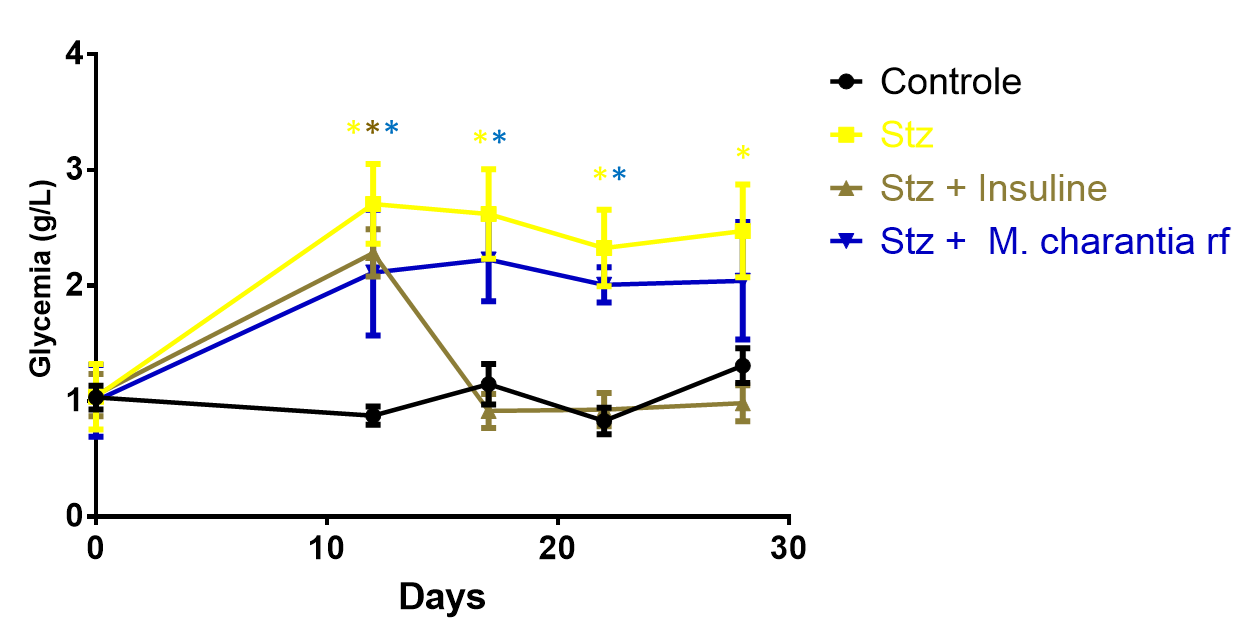
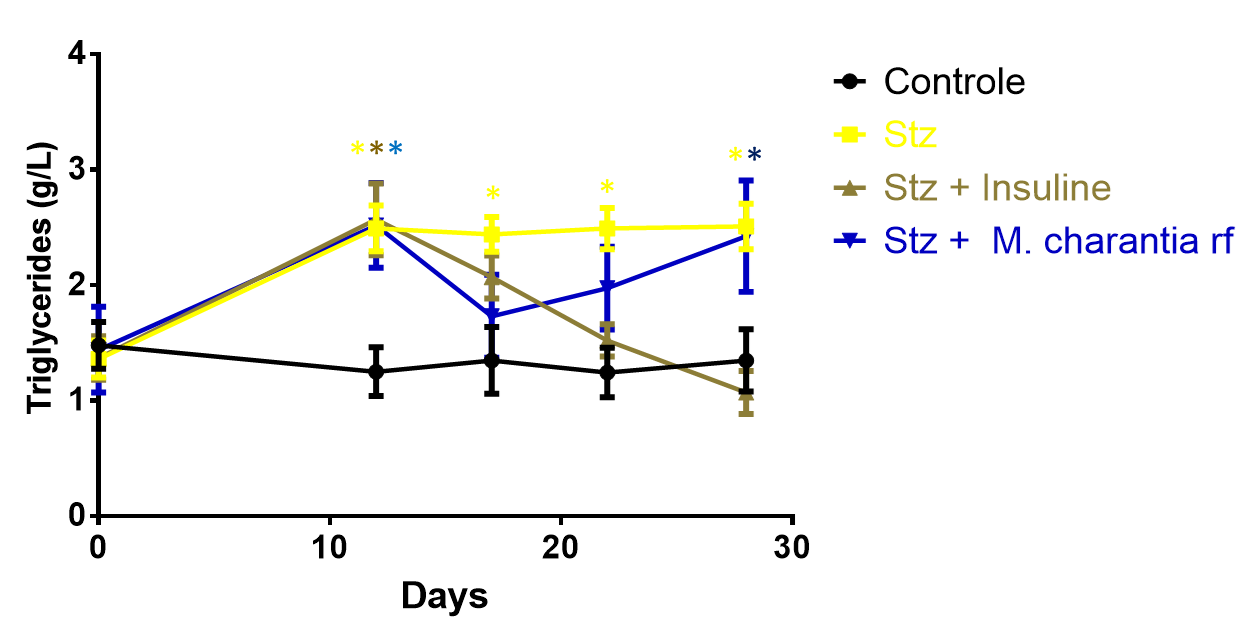
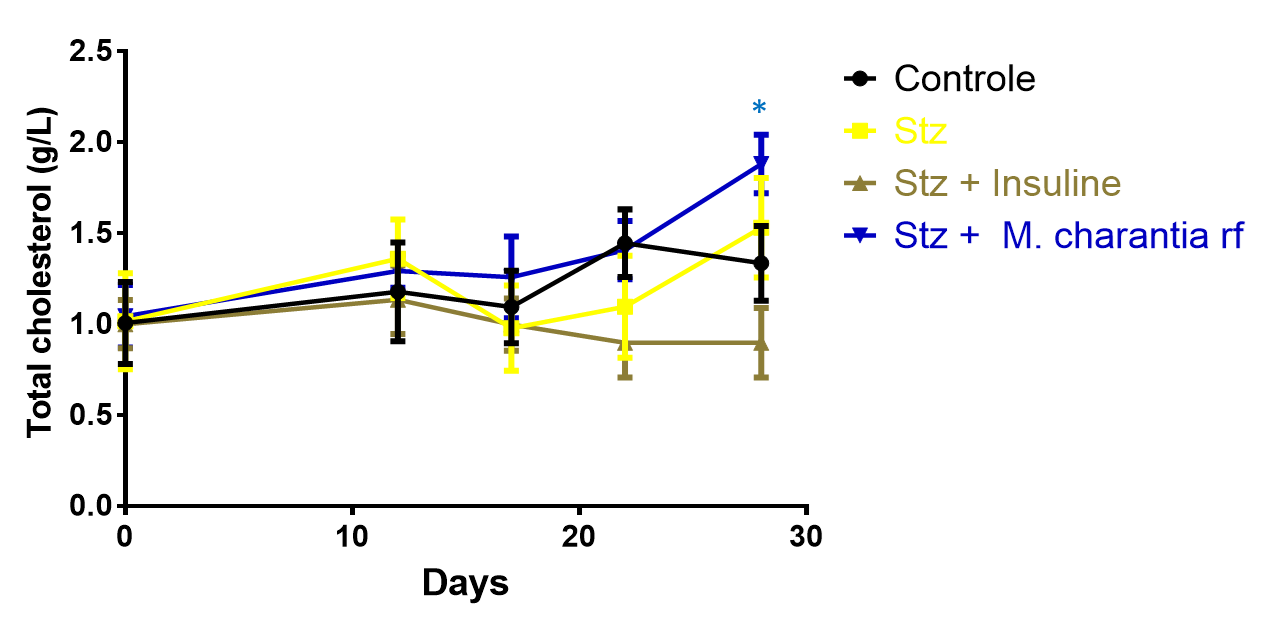
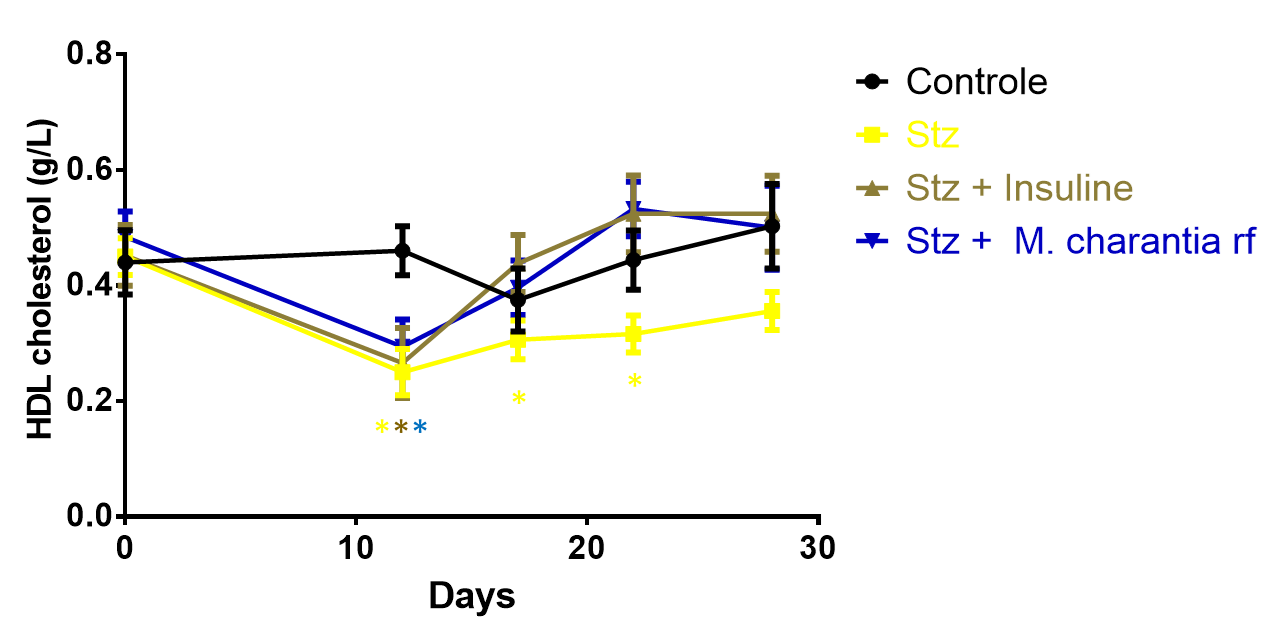
3.2. Effect of M. charantia ripe Fruit Extracts on Biochemical ParametersTreatment of rats with streptozotocin caused a marked change in biochemical parameters (blood glucose, triglycerides, total cholesterol, HDL-cholesterol and creatinine) at D12 compared with values at D0.


Blood Glucose and Lipids
The glycaemia varied from 0.88 ± 0.10 to 1.05 ± 0.11 g/L in the various groups of rats at D0. It increased significantly with a peak at D12 following the treatment of rats with streptozotocin, thus creating diabetes. Then, glycaemia dropped significantly and returned to normal from D17 in the insulin-treated group and at D28 in the group treated with M. charantia ripe fruit extract. Hyperglycaemia remained at D28 in the untreated diabetic group. In the control group not treated with streptozotocin, glycaemia was normal throughout the experimental period (Figure 1).
The triglyceridemia varied from 1.36 ± 0.14 to 1.48 ± 0.18 g/L in the various groups of rats on D0. It increased significantly with a peak at D12 following treatment of the rats with streptozotocin. It then fell significantly and returned to its normal values from D17 in the insulin-treated groups. Hypertriglyceridemia persisted at D28 in the group treated with ripe fruits of M. charantia and in the untreated diabetic group. In the control group, triglyceridemia was normal throughout the experimental period (Figure 2).


The total cholesterolemia varied from 1.01 ± 0.20 to 1.04 ± 0.15 g/L in the various groups of rats on D0. It significantly increased at D28 in the group treated with the extract of ripe fruits of M. charantia. Total cholesterolemia did not vary significantly in the other groups. (Figure 3).
The HDL cholesterolemia varied from 0.44 ± 0.03 to 0.48 ± 0.04 g/L in the various groups of rats on D0. It fell significantly with a peak at D12 following treatment of the rats with streptozotocin, thus creating HDL hypocholesterolemia. It then increases gradually and returned to its normal values from D17 in the group treated with insulin and in the group treated with the extract of ripe fruits of M. charantia. In the untreated diabetic group, HDL cholesterol returned to normal values on D28. In the untreated control group, HDL cholesterolemia did not vary significantly during the experiment (Figure 4).
Kidney Function
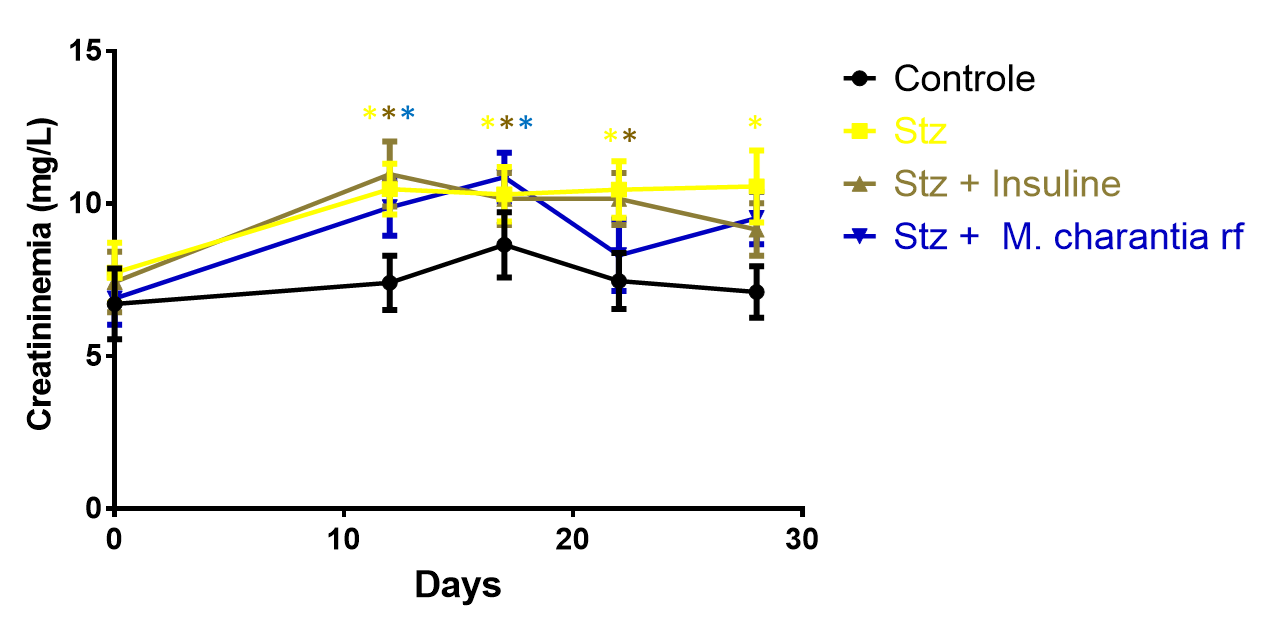
Serum creatinine varied from 6.7 ± 1.0 to 7.7 ± 0.9 mg/L in the various groups of rats on D0.
It increased significantly with a peak at D12 following treatment of the rats with streptozotocin, indicating renal suffering. Then, it gradually decreased to return to its initial values at D22 in the group treated with the extract of ripe fruits of M. charancia and at D28 in the group treated with insulin. The hypercreatinineemia persisted at D28 in the untreated diabetic group. In the control group, serum creatinine was normal throughout the experimental period (Figure 5).
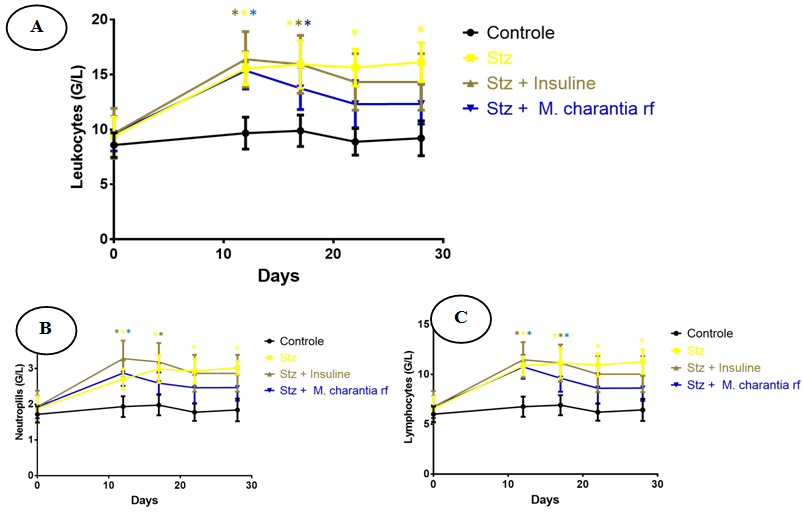
3.3. Inflammatory ParametersThe number of blood leukocytes varied from 8.6 ± 1.0 to 9.6 ± 2.0 G/L in the various groups of rats on D0. It increased significantly with a peak at D12 following treatment of the rats with streptozotocin, indicating inflammation. It then decreased gradually and returned to its initial values on D22 in the groups treated with the extract of ripe fruits of M. charantia or with insulin. In the group of untreated diabetic rats, the hyperleukocytosis persisted at D28. In the non-diabetic control group, the number of blood leukocytes did not vary significantly during the experiment (Figure 6A).
The number of neutrophils varied from 1.7 ± 0.2 to 1.9 ± 0.46 G/L in the various groups of rats at D0. It increased significantly with a peak at D12 following treatment of the rats with streptozotocin, indicating acute inflammation. It then decreases gradually and returned to its initial values at D17 in the group treated with the extract of ripe fruits of M. charantia and at D22 in the group treated with insulin. In the group of untreated diabetic rats, hyperneutrophilia persisted at D28. In the non-diabetic control group, the number of neutrophils did not vary significantly during the experiment (Figure 6B).
The number of blood lymphocytes varied from 6.0 ± 6.7 to 6.7 ± 1.6 G/L in the various groups of rats on D0. It increased significantly with a peak at D12 following the treatment of rats with streptozotocin, indicating chronic inflammation. It then decreased gradually and returned to its initial values on D22 in the groups treated with the extract of ripe fruits of M. charantia or with insulin. In the group of untreated diabetic rats, the hyperlymphocytosis persisted on D28. In the non-diabetic control group, the number of blood lymphocytes did not vary significantly during the experiment (Figure 6C).


The hemoglobin level varied from 13.6 ± 1.0 to 15.1 ± 1.3 g/dl in the various groups of rats on D0. It did not vary significantly in the various diabetic or non-diabetic groups during the experiment, indicating an absence of disturbances in erythrocyte parameters (Figure 7).
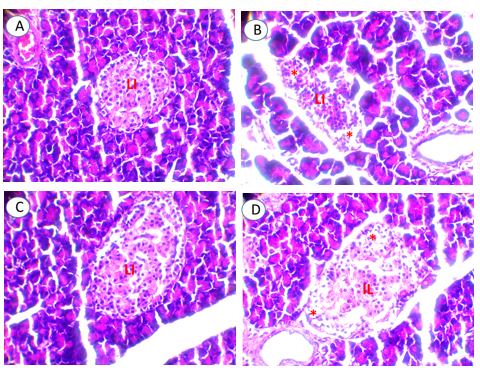
3.5. Histology of the PancreasIn controls (Figure 8A), endocrine islets of Langerhans (LI) are typical and were well surrounded by exocrine pancreatic serous acini. In rats treated with streptozotocin (Figure 8B), the islets of Langerhans were altered by cellular necroses (asterices). In rats treated with streptozotocin, then insulin (Figure 8C), the architecture of the islets of Langerhans were restored. In rats treated with streptozotocin, then M. charantia ripe fruits extract (Figure 8D), the architecture of the islets of Langerhans was partly restored with the persistence of some areas of necrosis (asterices).
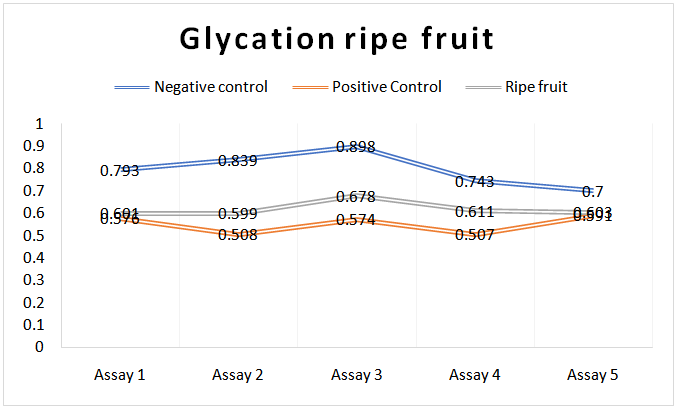
3.6. GlycationThe five tests carried out showed that ripe fruit extract inhibited the glycation reaction in the same way as aminoguanidine (positive control) compared with the negative control.
The use of medicinal plants still suffered from a lack of appropriate scientific research that could support their inclusion in therapy. The mechanism of action of extracts from these plants was little studied, particularly that of M. charantia, whose anti-diabetic properties was demonstrated 19, 20. Our study investigated the hypoglycemic effect of M. Charantia ripe fruit extract on type I diabetes and its anti-glycation activity in rats. The ripe fruit was very rich in secondary metabolites (5 groups), with the presence of alkaloids, reducing compounds, saponosides, triterpenes and Steroids. This composition is more or less similar to that described by Gurav et al. where phytochemical study revealed the presence of alkaloids, tannins, flavonoids, saponosides, glycosides, terpenoids, carbohydrates and sterols 21, 22.
Blood glucose levels fell significantly and returned to normal from D17 in the insulin-treated group and from D28 in the group treated with M. charantia ripe fruit extract. Several studies shown that insulin played a major biochemical role in stimulating glucose uptake by various body cells for energy production 23, 24. Studies have already shown that M. charantia and its various extracts exert hypoglycemic effects 25, 26 while stimulating glucose uptake by peripheral cells 25, 26. The anti-hyperglycemic and hypoglycemic effects of ethanolic extracts of M. charantia (200 mg/kg) were observed in normal and STZ-induced diabetic rats. 27. Our results showed that ripe fruit has a delayed hypoglycemic effect, contrary to the aqueous extract of green fruit whose hypoglycemic activity was rapid 17.
Total cholesterol levels were significantly increased at D28 in the group treated with M. charantia ripe fruit extract. This result contrasted with that of M. charantia leaves or green fruit extract 17, 28. Moreover, Chaturvedi et al. demonstrated that administration of methanoic extracts of bitter melon to diabetic rats led to a significant decrease in lipids including triglyceride levels (Chaturvedi et al., 2004). This can be explained by the absence of flavonoids and the low levels of alkaloids involved in hypoglycemia 30. However, HDL cholesterol levels returned to normal from D17 onwards in the insulin-treated group and in the M. charantia ripe fruit extract-treated group.
Blood leukocyte counts then fell progressively, returning to baseline at D22 in the M. charantia ripe fruit extract and insulin-treated groups. Neutrophil counts decreased progressively and returned to baseline at D17 in the M. charantia ripe fruit extract group and at D22 in the insulin-treated group. Blood lymphocyte counts then progressively decreased, returning to baseline at D22 in the ripe M. charantia fruit extract and insulin-treated groups. In the group of untreated diabetic rats, hyperlymphocytosis persisted at D28. These results showed that the ripe fruit extract has anti-inflammatory activity both acutely and chronically. The effect is, however, less than that of ripe fruits and leaves with chronic inflammation 17, 28.
Hemoglobin levels did not vary significantly between diabetic and non-diabetic groups over the course of the experiment, indicating no disruption of erythrocyte parameters.
In rats treated with streptozotocin and M. charantia ripe fruit extract (Figure 8D), islet architecture was partially restored, with some areas of necrosis remaining (asterisks). Oral administration of M. charantia can induce insulin secretion by the beta cells of the endocrine pancreas 31. This observation was confirmed by Ahmed et al, who studied the effect of daily oral administration of M. charantia fruit juice and cell distribution in the pancreas of streptozotocin (STZ)-induced diabetic rats 31, 32
These studies were carried out on streptozotocin (STZ)-induced diabetic rats using immunohistochemical methods.
The last test carried out showed that ripe fruit extract inhibited the glycation reaction moderately in the same way as aminoguanidine (positive control) compared with the negative control. This observation contrasted with that reported by the same authors, who showed that leaf extracts inhibited the glycation reaction in the same way as aminoguanidine 28. Similarly, Oso et al. showed that the aqueous extract resulted in greater inhibition of glucose-induced BSA glycation at 200 μg/ml 33.
This study shows the anti-diabetic and anti-glycation effect of M. charantia ripe fruit extract in rats. M. charantia ripe fruit extract was rich in secondary metabolites. The most common chemical groups in the species studied were alkaloids, reducing compounds, saponosides, triterpenes and Steroids. The corrective effect on pancreatic necrosis was demonstrated by variations in lipid and renal parameters, and by comparative anti-inflammatory activity in leukocytes. Rats treated with streptozotocin, insulin and M. charantia ripe fruit extract regained more or less normal islet architecture. The antiglycative activity of ripe fruit extract was also observed. A comparative study of the three different extracts will be necessary.
We would like to thank the Laboratoire de Biologie Expérimentale et Clinique de l'ENSBBA de l'UNSTIM; the Laboratoire National de Pharmacognosie (LNP) de l'IREMPT de Porto-Novo, Benin. Our thanks also go to the Laboratoire de Biologie Expérimentale et Clinique (LaBEC), Ecole Nationale Supérieure des Biosciences et Biotechnologie Appliquées de Dassa-Zoumé (ENSBBA), Université Nationale des Sciences, Technologies, Ingénierie et Mathématiques d'Abomey (UNSTIM), which provided the setting for our histological manipulations.
The authors declared no conflicts of interest.
| [1] | American Diabetes Association, 2451 Crystal Drive, Suite 900, Arlington, VA 22202. 2010. | ||
| In article | |||
| [2] | Amos, A, McCarthy, D, and Zimmet, P, “The rising global burden of diabetes and its complications; estimates and projections to the year 2010.,” Diabet. Med, pp. 14, S1–S85, 1997. | ||
| In article | View Article | ||
| [3] | Zimmet, P, “Globalization, coca-colonization and the chronic dis_ease epidemic: can the Doomsday scenario be averted?,” J. Intern. Med., pp. 247, 301-310., 2000. | ||
| In article | View Article PubMed | ||
| [4] | Zimmet, P, Shaw, J, and Alberti, K. G, “Preventing Type 2 diabetes and the dysmetabolic syndrome in the real world: a realistic view.,” Dia_bet. Med., pp. 20, 693–70., 2003. | ||
| In article | View Article PubMed | ||
| [5] | WHO, “Global Report on Diabetes. World Health Organization, Geneva,.” pp. 1-88., 2016. | ||
| In article | |||
| [6] | Liu, Z, Gong, J, Huang, W, Lu, F, and Dong, H, “The Effect of Momordica charantia in the Treatment of Diabetes Mellitus: A Review,” Evidence-based Complement. Altern. Med., 2021. | ||
| In article | View Article PubMed | ||
| [7] | Van Der Vliet H. J, Von Blomberg, B. M. E, Nishi, N, Reijm, M, Voskuyl, A. E, Van Bodegraven, A. A, Pinedo, H. M, “Circulating Vα24+ Vβ11+ NKT cell numbers are decreased in a wide variety of diseases that are characterized by autoreactive tissue damage.,” Clin. Immunol., pp. 100(2), 144-148., 2001. | ||
| In article | View Article PubMed | ||
| [8] | Gale E. A, “The rise of childhood type 1 diabetes in the 20th century.” 2002. | ||
| In article | View Article PubMed | ||
| [9] | Acharjee, A. B, Ghosh, S, , Al-Dhubiab, B, , & Nair, B. E, “Understanding type 1 diabetes: etiology and models. ,” Can. J. diabetes, pp. 37(4), 269-276., 2013. | ||
| In article | View Article PubMed | ||
| [10] | Furman, B. L, Candasamy, M, Bhattamisra S. K, and Veettil S. K, “Reduction of blood glucose by plant extracts and their use in the treatment of diabetes mellitus; discrepancies in effectiveness between animal and human studies.,” J. Ethnop, 2020. | ||
| In article | View Article PubMed | ||
| [11] | Świątoniowska, N, Sarzyńska K, Szymańska-Chabowska A, and Jankowska-Polańska B, “The role of education in type 2 diabetes treatment. ,” Diabetes Res. Clin. Pract., no. 2016, pp. 151, 237-246., 2019. | ||
| In article | View Article PubMed | ||
| [12] | Singh, J, Cumming, E, Manoharan, G, Kalasz, H, and Adeghate, E, “Medicinal Chemistry of the Anti-Diabetic Effects of Momordica Charantia: Active Constituents and Modes of Actions,” Open Med. Chem. J., vol. 5, no. Suppl 2, pp. 70–77, 2011. | ||
| In article | View Article PubMed | ||
| [13] | Palamthodi, S. S, Lele S, “Nutraceutical applications of gourd family vegetables: Benincasa hispida, Lagenaria siceraria and Momordica charantia.,” Biomed. Prev. Nutr., pp. 4(1), 15-21., 2014. | ||
| In article | View Article | ||
| [14] | Hsiao P. C, Von Blomberg, B. M. E, Nishi, N, Reijm, M, Voskuyl, A. E, Van Bodegraven, A. A, Pinedo, H. M, “Antiproliferative and hypoglycemic cucurbitane-type glycosides from the fruits of Momordica charantia.,” J. Agric. Food Chem., vol. 1, pp. 61(12), 2979-2986., 2013. | ||
| In article | View Article PubMed | ||
| [15] | Park, S. H, Yi, Y. S, Kim, M. Y, and Cho, J. Y, “Antioxidative and antimelanogenesis effect of Momordica charantia methanol extract.,” Evidence-Based Complement. Altern. Med., 2019. | ||
| In article | View Article PubMed | ||
| [16] | Jia, J, Shen, S, Zhang, M, Xie, F, “Recent advances in Momordica charantia: functional components and biological activities. ,” Int. J. Mol. Sci., pp. 18(12), 2555., 2017. | ||
| In article | View Article PubMed | ||
| [17] | Assou, C, Anago, E, Senou, M, Agniwo, P, Ezéchiel, L, Jacques, H. W, Tchogou, P, Houngbeme, A, Akpovi D. C, Gbenou J, “Anti-hyperglycemic effect of Momordica charantia green fruit extract,” Int. J. Pharm. Sci. Invent., vol. 11, no. 5, pp. 6–16, 2022. | ||
| In article | |||
| [18] | Senou, M, Khalifa, C, Thimmesch, M, Jouret, F, Devuyst, O, Audinot, V, Lipnik, J. N, et al., “A coherent organization of differentiation proteins is required to maintain an appropriate thyroid function in the pendred thyroid,” J. Clin. Endocrinol. Metab., vol. 95, no. 8, pp. 4021–4030, 2010. | ||
| In article | View Article PubMed | ||
| [19] | Aljohi, N, Matou-Nasri, A, Ahmed, S, “Antiglycation and antioxidant properties of Momordica charantia.,” PLoS One, pp. 11(8), e0159985, 2016. | ||
| In article | View Article PubMed | ||
| [20] | Ahmed, H. R. I, Lakhani, M.S, Gillett, M, John, A, “Hypotriglyceridemic and hypocholesterolemic effects of anti- diabetic Momordica charantia ( karela ) fruit extract in streptozotocin-induced diabetic rats,” Diabetes Res. Clin. Pract., pp. 155–161, 2000. | ||
| In article | View Article PubMed | ||
| [21] | Gurav, A, Mondal, D. B, and Vijayakumar, H, “In vitro qualitative and quantitative phytochemical analysis of ethanolic and 50% ethanolic extracts of Tinospora cordifolia, Momordica charantia, Cucurbita maxima and Raphanus sativus,” 2014, pp. 4–6. | ||
| In article | |||
| [22] | Fachinan, R, Fagninou, A, Nekoua, M. P, Amoussa, A. M, Adjagba, M, Lagnika, L, Lalèyè, A et al.,“Evidence of immunosuppressive and Th2 immune polarizing effects of antidiabetic Momordica charantia fruit juice,” Biomed Res. Int., vol. 2017, 2017. | ||
| In article | View Article PubMed | ||
| [23] | A. L. . Sattiel and C. R. Khan, “In insulin signalling and regulation of glucose and lipid metabolism.,” Nature, pp. 414, 799–806, 2001. | ||
| In article | View Article PubMed | ||
| [24] | Kumar, P. J, and Clark, M, “Diabetes mellitus and other disorders of metabolism.,” Extb. Clin. Med. Saunders, pp. 1069–1121, 2005. | ||
| In article | |||
| [25] | Platel, K, and Srinivasan, K, “Effect of dietary intake of freeze-dried bitter gourd (Momordica charantia) in streptozotocin induced dia_betic rats.,” Nahrung, pp. 39, 262–268, 1997. | ||
| In article | View Article PubMed | ||
| [26] | Sharma A. K, et al., “The beneficial effects of Momordica charantia fruit juice on streptozotocin –induced diabetes and hyper_tension in rats.,” Int. J. Diabetes, pp. 4, 29, 1996. | ||
| In article | |||
| [27] | Shibib B. A, Khan, L. A and Rahman, R, “Hypoglycaemic activity enzymes glucose-6-phosphatase and fructose-1,6-bisphosphatase and elevation of both liver and red-cell shunt enzyme glucose-6- phosphate dehydrogenase.,” Biochem. J., pp. 292, 267–270, 1993. | ||
| In article | View Article PubMed | ||
| [28] | C. Assou Anago, E, Agbogba, F, Agniwo, P, Abissi, Y, Gbénou, J, Sènou, M, “Efficacy of M . charantia Leaves in the Correction of Induced Diabetes .,” Am. J. Med. Sci. Med., vol. 11, no. 3, pp. 74–79, 2023. | ||
| In article | |||
| [29] | Chaturvedi, P, George, S, Milinganyo, M, and Tripathi, Y. B, “Effect of Momordica charantia on lipid profile and oral glucose tolerance in diabetic rats. Phytotherapy Research: An International Journal Devoted to Pharmacological and Toxicological Evaluation of Natural Product Derivatives.” pp. 18(11), 954-956., 2004. | ||
| In article | View Article PubMed | ||
| [30] | Taylor, L, “Bitter Melon (Momordica charantia). , 2002,” Herb. Secrets Rainforest. 2nd Ed. Sage Press. Austin Texas, USA, pp. 1–100, 2002. | ||
| In article | |||
| [31] | Ahmed, I, Cummings, E, Sharma, A. K, Adeghate, E, and Singh, J, “Beneficial effects and mechanism of action of Momordica charantia fruit juice in the treatment of streptozotocin-induced diabetes mellitus in rats.,” Mol. Cell Biochem., pp. 261, 63-70., 2004. | ||
| In article | View Article PubMed | ||
| [32] | Ahmed, I, Adeghate, E, Sharma, A. K, Pallot, D. J, and Singh, J, “Effects of Momordica charantia fruit juice on islet morphology in the pancreas of the streptozotocin-diabetic rat.,” Diabetes Res. Clin. Pr., pp. 40, 145–151, 1998. | ||
| In article | View Article PubMed | ||
| [33] | Oso, B, Agboola, O, andOlaoye, I, “Glycation Inhibition of Bovine Serum Albumin by Extracts of Momordica charantia L. using Spectroscopic and Computational Methods,” Avicenna J. Med. Biotechnol., vol. 15, no. 3, pp. 180–187, 2023. | ||
| In article | View Article PubMed | ||
Published with license by Science and Education Publishing, Copyright © 2023 Tchogou Atchadé Pascal, Assou Cendra, Agbogba Félicienne, Agniwo Privat, Medoatinsa Espérance, Abissi Yollande, Lokonon Jacques Ezéchiel, Hlouedje Wilfried, Houngbeme Alban, Gbenou Joachim, Anago Eugénie and Senou Maximin
 This work is licensed under a Creative Commons Attribution 4.0 International License. To view a copy of this license, visit
http://creativecommons.org/licenses/by/4.0/
This work is licensed under a Creative Commons Attribution 4.0 International License. To view a copy of this license, visit
http://creativecommons.org/licenses/by/4.0/
| [1] | American Diabetes Association, 2451 Crystal Drive, Suite 900, Arlington, VA 22202. 2010. | ||
| In article | |||
| [2] | Amos, A, McCarthy, D, and Zimmet, P, “The rising global burden of diabetes and its complications; estimates and projections to the year 2010.,” Diabet. Med, pp. 14, S1–S85, 1997. | ||
| In article | View Article | ||
| [3] | Zimmet, P, “Globalization, coca-colonization and the chronic dis_ease epidemic: can the Doomsday scenario be averted?,” J. Intern. Med., pp. 247, 301-310., 2000. | ||
| In article | View Article PubMed | ||
| [4] | Zimmet, P, Shaw, J, and Alberti, K. G, “Preventing Type 2 diabetes and the dysmetabolic syndrome in the real world: a realistic view.,” Dia_bet. Med., pp. 20, 693–70., 2003. | ||
| In article | View Article PubMed | ||
| [5] | WHO, “Global Report on Diabetes. World Health Organization, Geneva,.” pp. 1-88., 2016. | ||
| In article | |||
| [6] | Liu, Z, Gong, J, Huang, W, Lu, F, and Dong, H, “The Effect of Momordica charantia in the Treatment of Diabetes Mellitus: A Review,” Evidence-based Complement. Altern. Med., 2021. | ||
| In article | View Article PubMed | ||
| [7] | Van Der Vliet H. J, Von Blomberg, B. M. E, Nishi, N, Reijm, M, Voskuyl, A. E, Van Bodegraven, A. A, Pinedo, H. M, “Circulating Vα24+ Vβ11+ NKT cell numbers are decreased in a wide variety of diseases that are characterized by autoreactive tissue damage.,” Clin. Immunol., pp. 100(2), 144-148., 2001. | ||
| In article | View Article PubMed | ||
| [8] | Gale E. A, “The rise of childhood type 1 diabetes in the 20th century.” 2002. | ||
| In article | View Article PubMed | ||
| [9] | Acharjee, A. B, Ghosh, S, , Al-Dhubiab, B, , & Nair, B. E, “Understanding type 1 diabetes: etiology and models. ,” Can. J. diabetes, pp. 37(4), 269-276., 2013. | ||
| In article | View Article PubMed | ||
| [10] | Furman, B. L, Candasamy, M, Bhattamisra S. K, and Veettil S. K, “Reduction of blood glucose by plant extracts and their use in the treatment of diabetes mellitus; discrepancies in effectiveness between animal and human studies.,” J. Ethnop, 2020. | ||
| In article | View Article PubMed | ||
| [11] | Świątoniowska, N, Sarzyńska K, Szymańska-Chabowska A, and Jankowska-Polańska B, “The role of education in type 2 diabetes treatment. ,” Diabetes Res. Clin. Pract., no. 2016, pp. 151, 237-246., 2019. | ||
| In article | View Article PubMed | ||
| [12] | Singh, J, Cumming, E, Manoharan, G, Kalasz, H, and Adeghate, E, “Medicinal Chemistry of the Anti-Diabetic Effects of Momordica Charantia: Active Constituents and Modes of Actions,” Open Med. Chem. J., vol. 5, no. Suppl 2, pp. 70–77, 2011. | ||
| In article | View Article PubMed | ||
| [13] | Palamthodi, S. S, Lele S, “Nutraceutical applications of gourd family vegetables: Benincasa hispida, Lagenaria siceraria and Momordica charantia.,” Biomed. Prev. Nutr., pp. 4(1), 15-21., 2014. | ||
| In article | View Article | ||
| [14] | Hsiao P. C, Von Blomberg, B. M. E, Nishi, N, Reijm, M, Voskuyl, A. E, Van Bodegraven, A. A, Pinedo, H. M, “Antiproliferative and hypoglycemic cucurbitane-type glycosides from the fruits of Momordica charantia.,” J. Agric. Food Chem., vol. 1, pp. 61(12), 2979-2986., 2013. | ||
| In article | View Article PubMed | ||
| [15] | Park, S. H, Yi, Y. S, Kim, M. Y, and Cho, J. Y, “Antioxidative and antimelanogenesis effect of Momordica charantia methanol extract.,” Evidence-Based Complement. Altern. Med., 2019. | ||
| In article | View Article PubMed | ||
| [16] | Jia, J, Shen, S, Zhang, M, Xie, F, “Recent advances in Momordica charantia: functional components and biological activities. ,” Int. J. Mol. Sci., pp. 18(12), 2555., 2017. | ||
| In article | View Article PubMed | ||
| [17] | Assou, C, Anago, E, Senou, M, Agniwo, P, Ezéchiel, L, Jacques, H. W, Tchogou, P, Houngbeme, A, Akpovi D. C, Gbenou J, “Anti-hyperglycemic effect of Momordica charantia green fruit extract,” Int. J. Pharm. Sci. Invent., vol. 11, no. 5, pp. 6–16, 2022. | ||
| In article | |||
| [18] | Senou, M, Khalifa, C, Thimmesch, M, Jouret, F, Devuyst, O, Audinot, V, Lipnik, J. N, et al., “A coherent organization of differentiation proteins is required to maintain an appropriate thyroid function in the pendred thyroid,” J. Clin. Endocrinol. Metab., vol. 95, no. 8, pp. 4021–4030, 2010. | ||
| In article | View Article PubMed | ||
| [19] | Aljohi, N, Matou-Nasri, A, Ahmed, S, “Antiglycation and antioxidant properties of Momordica charantia.,” PLoS One, pp. 11(8), e0159985, 2016. | ||
| In article | View Article PubMed | ||
| [20] | Ahmed, H. R. I, Lakhani, M.S, Gillett, M, John, A, “Hypotriglyceridemic and hypocholesterolemic effects of anti- diabetic Momordica charantia ( karela ) fruit extract in streptozotocin-induced diabetic rats,” Diabetes Res. Clin. Pract., pp. 155–161, 2000. | ||
| In article | View Article PubMed | ||
| [21] | Gurav, A, Mondal, D. B, and Vijayakumar, H, “In vitro qualitative and quantitative phytochemical analysis of ethanolic and 50% ethanolic extracts of Tinospora cordifolia, Momordica charantia, Cucurbita maxima and Raphanus sativus,” 2014, pp. 4–6. | ||
| In article | |||
| [22] | Fachinan, R, Fagninou, A, Nekoua, M. P, Amoussa, A. M, Adjagba, M, Lagnika, L, Lalèyè, A et al.,“Evidence of immunosuppressive and Th2 immune polarizing effects of antidiabetic Momordica charantia fruit juice,” Biomed Res. Int., vol. 2017, 2017. | ||
| In article | View Article PubMed | ||
| [23] | A. L. . Sattiel and C. R. Khan, “In insulin signalling and regulation of glucose and lipid metabolism.,” Nature, pp. 414, 799–806, 2001. | ||
| In article | View Article PubMed | ||
| [24] | Kumar, P. J, and Clark, M, “Diabetes mellitus and other disorders of metabolism.,” Extb. Clin. Med. Saunders, pp. 1069–1121, 2005. | ||
| In article | |||
| [25] | Platel, K, and Srinivasan, K, “Effect of dietary intake of freeze-dried bitter gourd (Momordica charantia) in streptozotocin induced dia_betic rats.,” Nahrung, pp. 39, 262–268, 1997. | ||
| In article | View Article PubMed | ||
| [26] | Sharma A. K, et al., “The beneficial effects of Momordica charantia fruit juice on streptozotocin –induced diabetes and hyper_tension in rats.,” Int. J. Diabetes, pp. 4, 29, 1996. | ||
| In article | |||
| [27] | Shibib B. A, Khan, L. A and Rahman, R, “Hypoglycaemic activity enzymes glucose-6-phosphatase and fructose-1,6-bisphosphatase and elevation of both liver and red-cell shunt enzyme glucose-6- phosphate dehydrogenase.,” Biochem. J., pp. 292, 267–270, 1993. | ||
| In article | View Article PubMed | ||
| [28] | C. Assou Anago, E, Agbogba, F, Agniwo, P, Abissi, Y, Gbénou, J, Sènou, M, “Efficacy of M . charantia Leaves in the Correction of Induced Diabetes .,” Am. J. Med. Sci. Med., vol. 11, no. 3, pp. 74–79, 2023. | ||
| In article | |||
| [29] | Chaturvedi, P, George, S, Milinganyo, M, and Tripathi, Y. B, “Effect of Momordica charantia on lipid profile and oral glucose tolerance in diabetic rats. Phytotherapy Research: An International Journal Devoted to Pharmacological and Toxicological Evaluation of Natural Product Derivatives.” pp. 18(11), 954-956., 2004. | ||
| In article | View Article PubMed | ||
| [30] | Taylor, L, “Bitter Melon (Momordica charantia). , 2002,” Herb. Secrets Rainforest. 2nd Ed. Sage Press. Austin Texas, USA, pp. 1–100, 2002. | ||
| In article | |||
| [31] | Ahmed, I, Cummings, E, Sharma, A. K, Adeghate, E, and Singh, J, “Beneficial effects and mechanism of action of Momordica charantia fruit juice in the treatment of streptozotocin-induced diabetes mellitus in rats.,” Mol. Cell Biochem., pp. 261, 63-70., 2004. | ||
| In article | View Article PubMed | ||
| [32] | Ahmed, I, Adeghate, E, Sharma, A. K, Pallot, D. J, and Singh, J, “Effects of Momordica charantia fruit juice on islet morphology in the pancreas of the streptozotocin-diabetic rat.,” Diabetes Res. Clin. Pr., pp. 40, 145–151, 1998. | ||
| In article | View Article PubMed | ||
| [33] | Oso, B, Agboola, O, andOlaoye, I, “Glycation Inhibition of Bovine Serum Albumin by Extracts of Momordica charantia L. using Spectroscopic and Computational Methods,” Avicenna J. Med. Biotechnol., vol. 15, no. 3, pp. 180–187, 2023. | ||
| In article | View Article PubMed | ||