Aims: This literature review examines the effectiveness of the family interventions (FIs) targeted at people diagnosed with schizophrenia and/or family caregivers on improving knowledge level of schizophrenia and health related outcomes. Methods: A total of 18 studies were reviewed from December 1999 to May 2015. The methods described by Centre for Reviews and Dissemination were used to guide this review. Results: The FIs showed consistently improvement in the knowledge level of schizophrenia among participants for various follow-up intervals. In addition, FIs were found to be superior to treatment as usual in influencing health related outcomes. Conclusions: Implications of the findings for mental health care practice to include primary caregivers with patient in treatment process.
Schizophrenia is one of the most serious mental illnesses. It can be chronic, recurrent, disabling and debilitating among people treated in psychiatric clinics in both developing and developed countries 1. Schizophrenia creates enormous disruption in the physical, social and psychological life of an individual. The effects and consequences of schizophrenia treatment affect not only physical health but also the psychological and social dimensions of individual health 2.
Traditionally, mental illness is explained within a biomedical model 3; however, recently, a bio-psychosocial model has been adopted in treating and explaining chronic mental illness (i.e. schizophrenia) as a result of interplay among biological, psychological and social factors to determine the course of schizophrenia. Therefore, effective family interventions (FIs) address and enable participants to face various problems associated with schizophrenia. Psychoeducation term can be used interchangeably with education and they are closely related concepts. The content of family interventions (FIs) varied between the reviewed studies. However, the cornerstone components of the FI are the general orientation about schizophrenia, antipsychotic medication and the management techniques for the potential side effects, problem solving skills and communication skills as well as crisis management. FIs address and enable participants to face various problems associated with schizophrenia.
The defining aspect of schizophrenia is associated with significant alterations in thought processes, behaviour and affects. It is characterised by interruptions in the form and content of thinking processes (i.e. difficulty in abstract thinking), emotional status (i.e. blunt affect), perception (e.g. hallucinations, delusions and loss of associations) and language (i.e. neologisms). Usually, recurrent relapse in schizophrenia is associated with exacerbation of psychotic symptoms and deterioration in function 4.
Schizophrenia is listed as the eighth on the disability-adjusted life years (DALY) worldwide in people aged 15-44 years, and it is expensive to manage 5. For instance, it was estimated that the economic cost of treating schizophrenia worldwide was US$ 19.31 billion in 2005-2008 6. While studies have reported that the main cause of schizophrenia is unknown, the most widely accepted model is the stress vulnerability model (SVM), which proposes that the interaction between biological vulnerability and socio-environmental stressors, including social stressors, have a significant role in the presentation and cause of schizophrenia 7. SVM suggests that schizophrenia is caused by an imbalance in biological or psychological systems in the body. Imbalance in biological systems is considered the main precipitating cause for schizophrenia; this includes genetics, head injury and viral infection.
The impact of schizophrenia is commonly mitigated by taking medication, abstaining from alcohol consumption and psychosocial interventions, which may modify unfavourable familial factors and reduce the environmental stress. The imbalance in the psychological system is caused by events that challenge people and compel them to adapt themselves in order to function as ‘normal’. However, people who find it difficult to adapt to stressful events (e.g. bereavement, loss of job) often experience worsening symptoms 8.
The SVM model proposes that psychotic episodes result from the interaction between the individual vulnerability of the person and the level of environmental stress to which the person is exposed. Based on this model, PEIs improve the knowledge of PDwS and their family caregivers. As a result, they may feel they have more control and understand illness symptoms better, thus exhibiting improved social functioning that result in adapting and changing family caregivers’ behaviour. Therefore, the contents of clinical intervention programmes have included coping strategies for PDwS and their family caregivers in order to help cope with the illness and reduce family stress 9. FI for family caregivers may refer to any intervention that enhances the knowledge of PDwS and their family caregivers about schizophrenia, treatment, medication effects and side effects. A FI for family caregivers may also provide better adjustment to the illness through teaching essential coping techniques, communication and facilitating problem-solving skills. Recent trends in treating schizophrenia have focused on improving functioning and quality of life (QoL) and symptom control and relapse prevention, which have led to a proliferation of studies that develop and integrate various forms of psychosocial interventions in the treatment of schizophrenia. There are different types of family interventions for improving PDwS awareness of schizophrenia and reducing the burden of care associated with caring processes, including behavioural family management and FIs. A recent study comparing different forms of family intervention concluded that FIs were more useful in reducing the burden of care among females caregivers of a relative diagnosed with schizophrenia 10. Similarly, the National Institute for Health and Care Excellence (NICE) in the UK recommended the integration of social and educational interventions with pharmacological treatment of PDwS 11. As a result of the extensive evidence-based literature on schizophrenia, the schizophrenia Patient Outcomes Research Team (PORT) project recommended family FIs for at least nine-month, for all family caregivers in contact with a relative diagnosed with mental illness, including information about mental illness, crisis intervention and problem-solving skills training 12.
To date, there has been no known systematic review of existing evidence of the efficacy or effectiveness of FI targeted at the primary caregivers. Therefore, the purpose of this systematic review was to examine outcomes of FIs intervention in primary caregivers. It examines and updates the synthesized evidence regarding the effect of FIs on a range family caregivers’ outcome. It also aimed to determine the quality of studies in this field of research and to identify gaps in the literature. Outcomes assessed included knowledge level, relapse, re-hospitalization, medication adherence, psychiatric symptoms, and psychosocial functioning. The theoretical basis of the current study stemmed from the stress vulnerability model of schizophrenia, which proposes interactions between biological and environmental factors. It is worth noting that focusing only on the biological aspects of illness, could positively influence limited biological aspects schizophrenia without clear improvement in psychological outcomes of patients 13. However, tailoring FIs which encompass biological, psychological and social dimensions of illness are expected to demonstrate positive changes in both biological and psychological outcomes of the patients 14. This review aims to compared the effectiveness of the family interventions (FIs) targeted at primary caregivers of people diagnosed with schizophrenia or targeted at family caregivers and ill relative together, on improving knowledge level of schizophrenia and health related outcomes (i.e. relapse rate, psychiatric symptoms, burden of care and quality of life).
1.1. DesignThe method developed by Cochrane Review Dissemination (2009) guided the review. This approach allows for the collection, analysis and integration of separate research findings from quantitative research methods into a meaningful whole the guiding framework is based on five steps: defining the problem, searching for literature, extracting and analyzing data, presenting findings and recommendations.
1.2. Systematic Search StrategyThe literature review addressed studies that implemented FIs for people diagnosed with schizophrenia using various formats of delivery. For the purposes of this review, the population was defined as adult patient. The search was restricted to studies published in English or Arabic during the period of 1999 to 2015. Applying the Population, Interventions, Comparators, Outcomes, and Designs (PICOS) format 15, the search employed the following key and associated terms:
Population- people diagnosed with schizophrenia
Interventions and Comparators-FI for PDwS any format of delivering the intervention in any setting (inpatient, outpatient or community centre or home visits), or intervention delivered by any qualified professional. In addition, Comparators were defined as treatment as usual (TAU), standard care, or waiting list. Studies that used FI directed at primary caregivers as a comparator with other forms of psychosocial interventions were also included.
Outcomes of interest-knowledge level of schizophrenia, coping style and managing illness, medication compliance, psychiatric symptoms, relapse and rehospitalisation.
Designs-studies that conducted an intervention in any of the following designs were included:
Ÿ Randomised controlled studies: random assignment participant either to the intervention group or to the control group with follow-up (any format of RCT).
Ÿ Quasi-experimental studies: comparing treatments without randomisation-this type of design usually includes non-randomised controlled studies.
Ÿ Mixed Method studies: including two different methods of data collection (i.e. questionnaires or interviews, focus group).
Ÿ Systematic reviews and meta-analysis: which locates, appraises, and summaries evidence from available studies pertinent to a specific question by using an explicit, logical and scientific methodology. It has been cited through this chapter to re-enforce drawn conclusions.
Included papers were required to show a quantitative evaluation of FI effects on study participants’ outcomes and included one of the outcomes of interest (knowledge level of schizophrenia, psychiatric symptoms, relapse rate, and quality of life (QoL). These outcomes were selected based on the understanding of the nature of a FI aimed at improving participants’ awareness of schizophrenia to assist in psychiatric symptom monitoring and relapse prevention as well as enhancing their QoL.
1.3. Data Sources and Screening ProcedureA comprehensive literature search was conducted to determine the relevant studies using the following electronic databases: MEDLINE, PubMed, CINAHL, PsycINFO, Web of Knowledge, Cochrane Library, Science Direct, Web of Science and Applied Social Sciences Index and Abstract (ASSIA), and Google Scholar from 1999 to December 2015. Searches were limited to adults diagnosed with schizophrenia according to Diagnostic and Statistical Manual for Mental Disorder (DSM), International Classification of Mental Disorder (ICD) or Chinese Classification of Mental Disorder. The current study includes papers written either in English or in Arabic during the period of 1999 to 2015. The reason for choosing this time interval was to obtain up-to-date knowledge of this area of research to inform practice. In addition, there were only a limited number of studies published before 1999 and a limited number of studies included family caregiver prior 1999, which rendered them a substantive number too insufficient to influence the design of the current study.
The general keywords used in the search were psychoeducation, education intervention, family intervention, schizophrenia, psychosis, carers and randomised controlled trial. The characteristics for inclusion and exclusion of studies in the comprehensive literature review are summarised in Table 1. The studies’ titles and abstracts were initially screened against inclusion criteria to determine potentially relevant studies. In the case of ambiguity of content, the full texts of the articles were consulted to identify content relevancy for the current study. All duplicated studies from different databases or those directed at FI for PDwS with several mental illnesses or PDwS or Primary caregivers solely were excluded. Reference lists of all included studies were compiled and examined to identify further relevant works that investigated the effect of FI on the target population of this study.
Research student independently reviewed all studies to determine if they met the inclusion and exclusion criteria for this review, then to administer checklist to rate the quality of included studies in the review. Moreover, since no consensus on a gold standard to assess the quality of RCT studies or non-randomised controlled trial. Several quality assessment tools have been identified in the literature to assess the quality of randomised controlled trial and non-randomised controlled trial. In this review, The risk of bias and others forthcoming in the all identified and included studies were critically appraised by checklist based on the type of study design , for this systematic purpose, consort checklist was administered to assess a quality of randomised controlled studies 16 and a recommended checklist to evaluate nonrandomized intervention studies 17. In the case of studies where included more than one type of study design, separate list was used for each design, as appropriate, to assess the quality of each strand separately. Consort statement is a nominal scale consists of 21 items focused on title & abstract, introduction, methods, results, discussion and other information. A point was assigned to study if there was a positive and clear description every single item; thus, consort score for the methodological quality is ranges from 0 (i.e. very poor) to 21 (i.e. rigorous). In essence of non-RCTs checklist, it has 12 items focused on the introduction, methodology, analysis and discussion. A point was awarded when researcher stated point clearly. Score is ranged from 0 (poor quality) to 12 (rigorous).
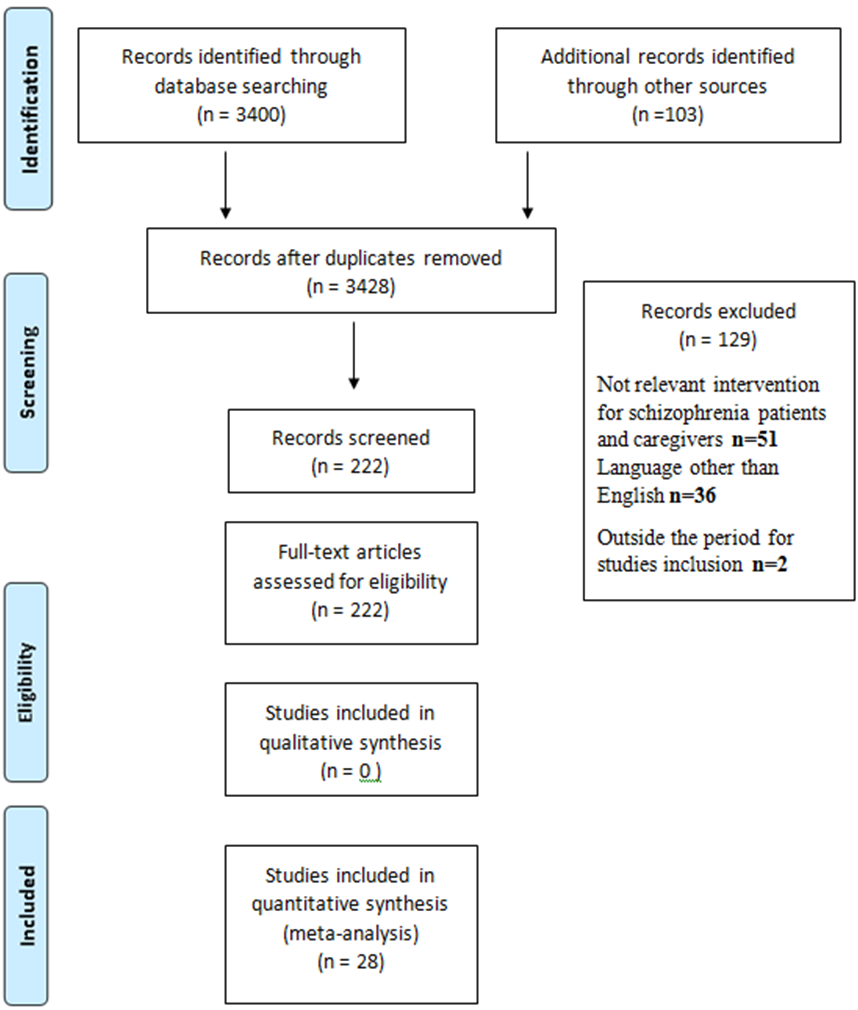
The initial screening of the abstracts yielded 3503 studies concerning schizophrenic disorders, of which 3281 studies were excluded because they did not match inclusion criteria. The full text of (n=222) articles was reviewed comprehensively to identify gaps in the literature, after comprehensive reviewing (n=222) articles excluded (n=204) articles for many reasons; (n=51) studies are not relevant interventions for schizophrenic patients and carers (being focused on behaviour training such as cognitive behaviour therapy, behaviour modification therapy and mutual support, or psychoeducational intervention for mental illnesses other than schizophrenia); (n=57) articles were duplicated among different databases; 36 studies published in a language other than English were excluded, and (n=12) articles were excluded due to being published outside the time period specified for inclusion (i.e. before 1999) and (n=18) studies recruited schizophrenic patients’ or their caregivers only (and not together), thus were excluded.
(n=18) studies were included in the literature review, having met the inclusion criteria to learn more about psychoeducational programme contents, delivery methods and sessions duration. The study selection process is outlined in Figure 1.
2.2. Characteristics of the StudiesOf these 25 reviewed articles, 17 were randomized controlled trial of an intervention for people diagnosed with schizophrenia or family relative or both of them, and the remaining 8 included studies evaluated intervention using non-randomized controlled trial design. All of the studies included psycho-education intervention, alongside the treatment as usual in the psychiatric clinic, which was considered as independent variable in the analysis.

As a result, a total 18 studies were used different design to direct psycho-educational intervention for either people diagnosed with schizophrenia or primary caregivers or directed for both of them. All of these studies were included in the systematic review of the current study. Of these, seven studies were directed intervention for people diagnosed with schizophrenia, three studies were carried out in the USA 18, 19, 20, and three in European countries 21, 22, 23, and one study conducted in China 24. Seven studies were investigated people diagnosed with schizophrenia directed psycho-education intervention; eight studies were investigated family directed psycho-education intervention and 12 studies were investigated people diagnosed with schizophrenia and family relatives directed psycho-education intervention. Data were synthesized regarding to studies target participants (people diagnosed with schizophrenia, primary caregivers, or both), the intervention effect on outcomes measure, intervention characteristic, methodological quality of the studies and qualitative exploration studies alone or embedded within trials
2.3. Intervention Directed for People Diagnosed with SchizophreniaThe number of participants in the seven studies was investigated ranged 39-1711. In the psycho-educational intervention group, the number of participants was ranged 19-518. Similarly, in the control group, the number of participants was varied 19-1193. Males comprised 60% of the samples. (In the intervention group, male comprised 58.6%. in the control group, males comprised 61.5%). The mean age of the participants in the intervention group was ranged 25.3-40.3 years. Similarly, in the control group, the mean age of the participants was ranged 26-45.7 years. Only six studies explicitly stated dropout by the end of the study. Attrition rates in these studies between groups were comparable; attrition rates varied from in the intervention group 0-34%, whereas it was in the control group, attrition rate was ranged 0-34%. illness duration was almost similar between group participants, in the intervention group illness duration was ranges from 4months-14.6 years whilst in the control group was varied 3 months-15.4years. Recruited from an inpatient setting (n=6), outpatient setting (n=1). In the trials, a total of 761 participants were assigned to psychoeducation group, and 1405 participants were assigned to the control group. All studies investigated people diagnosed with schizophrenia according to Diagnostic and Statistical Manual for Mental Disorder, International Classification of Mental Disorder or Chinese Classification of Mental Disorder. Six studies were included schizophrenia or schizoaffective, one study additionally was included schizophreniform. Five of the included studies were approached participants through psychiatrist, and one study was approached through experience clinical psychology.
Seven studies were directed psycho-educational intervention for people diagnosed with schizophrenia in the outpatient setting and one study was conducted intervention in the mental health hospital 25. Six of these studies were used randomized controlled trial design to examine the effect of the intervention on study participants, whilst one study 22 was conducted intervention with non-randomization controlled trial design, pre and posttest, Intervention studies did not comment principally on people diagnosed with schizophrenia characteristic to be included in the psycho-educational intervention or on setting of participant recruitment. In the reviewed studies, most of these participants were lived with schizophrenia for a long time (Chronic duration). In general, the majority of these studies were delivered intervention, less interactive, in a didactic format. However, one study did not comment on the method of delivering the intervention.
2.4. Intervention Effect on Outcomes MeasureA total of seven studies, six RCTs and one Quasi-experimental designing, evaluated the effectiveness psycho-education intervention for people diagnosed with schizophrenia. The primary outcomes in these studies were heterogeneous. The outcomes data were categorised into three groups, which provided a basis for the comparison between outcomes in related to the intervention effect. The outcomes measures were used in the reviewed studies varied, but most of them were patient related outcomes measure, especially, knowledge level, mental condition, medication compliance, quality of life and relapse rate. Although the primary focus of outcome studies has been directed on relapse rate, the main source of burden and negatively impact on life, there is also considerable evidence on that psycho-educational intervention has a positive effect on insight about schizophrenia, mental condition. In the reviewed studies have identified that the effect of psycho-education intervention on people diagnosed with schizophrenia is ranged in intensity, which has been determined through intervention effect on people diagnosed with schizophrenia outcomes measure. However, the majority of included studies that directed intervention for people diagnosed with schizophrenia alone assessed knowledge or psychiatric symptoms besides to relapse rate. In addition, trials have added many of secondary outcomes to determine the broad effect of complex health intervention, psycho-education intervention, namely relapse rate, rehospitalisation, quality of life and compliance rate with medication. Of these studies were measured primary and secondary outcomes through various valid and reliable tools over different follow up periods of time in the reviewed studies. The majority of the utilised outcomes measured in studies were used self-reported questionnaires. However, a few of them was measured mental condition through semi-structured interview by PANSS or BPRS scale.
2.5. Effect of Psychoeducation on People Diagnosed with Schizophrenia Knowledge LevelIn the included systematic review studies, direct intervention for people diagnosed with schizophrenia, three of the reviewed studies evaluated psycho-education intervention effect on knowledge level of schizophrenia. Examining the literature shows that measuring the knowledge level is one of the primary outcomes measured in education intervention studies; these studies used several scales to measure the changes in knowledge level after education intervention implementation. Three studies measured knowledge level of schizophrenia; one was used KASQ 25 and one study was measured knowledge level by knowledge questionnaire from Munich information project 23. Recent study was used insight and treatment attitudes questionnaire ITAQ 24. Of these, one study has shown significant improvement in knowledge level in favour of the intervention group just at three months follow up, without any difference at end of an intervention. This trial was conducted in the mental hospital with relatively small sample size in the intervention group (n=19) 25. Although a broader perspective has been adopted by 24 who argues that positive influence of the psycho-education intervention on knowledge level immediately has appeared at end of the intervention and has retained significantly improved over follow up to six months. Similarly, 23 found that positive effect of intervention on the knowledge level retained for 12 months and it was not significantly different between participants whether received or not a booster session.
2.6. Psychological OutcomeAlmost every study included in the review that has been conducted psycho-education intervention for people diagnosed with schizophrenia includes an outcome measure relating to mental condition participants’ psychiatric symptoms. Three studies reported mean data for psychiatric symptoms using the positive and negative symptoms syndrome scale (PANSS) 19, 22, 23. On the other hand, three of the included studies were reported mean data for psychiatric symptoms and utilized brief psychiatric rating scale (BPRS) to assess mental condition and one study was reported mean data for psychiatric symptoms modified scale for the assessment of negative symptoms (MSANS) 18. Time of measuring intervention effect on mental condition, schizophrenia symptoms, was diverse ranged from immediately post-intervention 23, 25 up to 18 months follow up 26. The findings of these studies demonstrated improvements in the mental condition at following eighteen months in the favour intervention group compared with these in the control group. This view is supported by recent study for Chien (2013) who shows that brief psycho-education intervention led be psychiatric nurse significantly improved over six months follow up, compared with allocated to standard care. In the same vein, Sibitz (2007) in his study asserted that allocated participants booster and non-booster psycho-education sessions were markedly improved their mental conditions over 12 months follow up, with no significant difference in schizophrenia symptoms between booster and non-booster groups score. This view is ascertained supported by Linden (2008) who investigated psycho-education intervention effect on large sample size; the results have indicated a significant reduction in PANSS scores at six months follow up in the favour of intervention group.
Out of six reviewed studies, two studies that directed psycho-education intervention for people diagnosed with schizophrenia was measured relapse rate and rehospitalisation. A study by 19 directed psycho-education intervention for people diagnosed with schizophrenia and family members without reporting any outcomes related to the family, they found that the psycho-education intervention significantly reduced relapse rate in the intervention group measured immediately post-intervention and at different follow up points associated with increasing in the antipsychotic medication dosage. Unlike, Herz, Chien (2013) argues that about psycho-educational program effect on people diagnosed with schizophrenia has a statistically significant reduction in the relapse rate just at six month follow up after completion the intervention compared with their counterparts in the standard outpatient group care. Disputes in intervention effect on relapse rate immediately after intervention. It might be attributed for nature of psycho-education intervention in Herz study was purely directed on relapse prevention strategies and techniques. However, in the Chien study was covered different aspect about schizophrenia including relapse prevention. In view of all that has been mentioned so far, one may suppose that it seems that understanding the effect of the psycho-education intervention that directed for people diagnosed with schizophrenia alone is questionable. Furthermore, variation in the standard care in the psychiatric clinic might explain difference in the relapse, for instance, in the former study location treatment as usual comprised of individual supportive therapy plus medication management. However, I the latter study location standard care just focused on medication management. Table 2 summarises the data on the outcomes of these trials into four categories: insight of schizophrenia, mental condition and psychological outcomes and others.
A study by 20, 25 were evaluated the intervention effect on stigma perception among people diagnosed with schizophrenia; the intervention group was shown significant lower score on a scale after intervention and three months follow up.
Previous two studies have reported the effect of psycho-education intervention on quality of life 22, 23. They were employed different outcome measures, one of them were utilized quality of life index, and another was used Lancashire quality of life profile. There is a consensus among researchers that the findings of both studies showed that a comparison with these received treatment as usual, intervention group participants statistically significantly improved their quality of life over the following period.
A study by 25 evaluated the intervention effect on depression level measured by beck depression inventory (BDI), the result appeared a considerable improvement in depression level among participants who received psycho-education intervention compared with these received treatment as usual. Sibitz et al. 23 reported that people diagnosed with schizophrenia received psycho-education intervention in their study showed a significantly greater improvement in changing their attitudes toward medications. In 2011, Aho-Mustonen and co-workers demonstrated that Psycho-education intervention with routine care in psychiatric clinic, and indicated that there was a significant improvement in medication compliance in the intervention group immediately after intervention and at three months follow up, when compared with standard care. In addition, Herz et al. (2000) investigated in their study the impact of brief psycho-education intervention directed for people diagnosed with schizophrenia and their family members with routine on medication compliance, the results have revealed a significant improvement in the medication compliance over following up time. A few studies were assessed intervention effect on global function status for people diagnosed with schizophrenia 19, 22, the result showed the mean score in the intervention group fared significantly better than their counterparts with respect global functioning 18 months after intervention.
2.7. Intervention CharacteristicEducation interventions were taken many forms, was delivered either individually or through groups. Details description included studies in the study are shown in Table 3. In a general sense, nevertheless psycho-education intervention in the reviewed studies in terms of intensity, duration, content and method of delivering intervention was varied. However, it has a few common topics, including knowledge of illness and treatment, medication, managing and coping with relative behaviours. Moreover, in terms of session numbers, in the reviewed studies were the number of intervention sessions delivered for people diagnosed with schizophrenia ranged from 3 sessions 18 to 10 sessions 20. In the four studies, psycho-education intervention was emphasised on illness related topic such as concept of illness, symptoms, medications and reduce side effect and stress management. In contrast, As noted by Herz et al (2000), who was focused on the impact of the psycho-education intervention for relapse prevention.
In respect to the mode of intervention delivering, in two studies psychoeducation conducted in an individual format, in three was applied in the group format. However, in two studies formats of delivering an intervention was not stated. All reviewed study was delivered intervention in the didactic format face to face. In contrast, two studies besides to that were added a short time for interactive discussion with study participants 20, 23. In addition, the time interval between sessions was similar, all included studies delivered intervention on weekly basis. However, a recent study by Chien et al (2013) conducted an intervention biweekly. In 2008 Linden et al in their study about effect psycho-educational intervention on people diagnosed with schizophrenia did not state any further information about content, method of delivering intervention and interval between sessions.
As regards session duration, the session length was varied from 60 minute 24, 25 to 90 minute 22. Remaining studies did not specify duration sessions. In the reviewed studies, psycho-education intervention was delivered by mental health professional, some intervention was delivered by psychiatrist 19, 22, 23 and was conducted by psychiatric nurse 18, 24, 25 and was led by social worker 20. In addition, the time of follow up outcome measures was diverse from immediate post-intervention 25 to 18 month post-intervention 19.
Six of seven studies included in the review was randomized controlled trial. These studies were critically appraisal by Consolidated Standard of Reporting Trial 16, and the Transparent Reporting of Non-randomised Design (TREND) 17 was acknowledged to evaluate the quality of other studies design. Of these four studies were used randomised controlled trial, which were evaluated as poor quality, especially in the methodology section including randomization, allocation concealment and blinding, incomplete outcome data and participant flow in the study. The sample size in these studies was varied from 39 25 to 103 23. As opposed to a study by 19, 24 which evaluated as good quality. However, researchers did not report methodological section adequately. Applying TREND checklist for reviewed non-randomised study revealed study had poor quality.
In these studies, neither researcher nor participants were blinded to the group assignment due to the study nature. Given that nature of the intervention was required an active interaction between researchers and studies participant. None of these studies was reported whether information about outcome measure assessment at baseline and follow up points. The quality of studies that directed psycho-education intervention to the people diagnosed with schizophrenia is presented in Table 4.
None of these studies has adequately reported methods section including randomization, blinding, missing data. Attrition rate in these studies was considered quite high. Other Studies were included all randomized participants to the intervention or to the control group of the study in the final analysis ‘intention to treat analysis’ to maintain the advantage of randomization. However, it did not mention explicitly how dealt with missing data at follow-up points 19, 20, 24, 25. On the other hand, one study 23 was used per protocol analysis, remove dropped participants from the final analysis whether group they assigned to, for participants who deviated from study protocol. In contrast to the study 18, 22 did not report any information about method of dealing with missing data. One major drawback of these limitations, especially in the methodology section, might be overestimated intervention effect compared with standard treatment.
As yet, little is known about the method of intervention works and why works in this manner for the people diagnosed with schizophrenia who received psycho-education intervention group. In the majority of reviewed studies, researchers were used one type of data collection method. namely, a set of questionnaires. So far, this method has only been applied to determine the effect of psycho-education intervention directed for people diagnosed with schizophrenia. However, much uncertainty still exists about the relation between intervention and method of working on outcomes measure, there is a general lack of research that combined quantitative and qualitative methods. The issue of mixed method research has recently received considerable critical attention to evaluate heath intervention. According to Punch (1998) stressed on integration one research method to other in the same study to enrich other method of research or to compensate the weakness. Combining qualitative and quantitative method has aimed to explore participants experience or attitudes about intervention, and to understand the nature of experience and how these experience effect on individual 27. Furthermore, other argues that combining qualitative study in quantitative design provides an insight about why intervention works in this manner 28, or to develop quantitative measure 29.
2.10. Intervention Directed for Family Caregivers of People Diagnosed with Schizophrenia AloneA number of literature reviews which evaluated the effectiveness of psycho-education intervention directed for family carer of people diagnosed with schizophrenia. Of these 9 reviewed studies were included in this section, consisting of four studies using a randomized controlled trial design 30, 31, 32, 33, and on the study was used quasi-experimental design (pre-post with equivalent comparison group) 34, and remaining studies were used quasi-experimental (pre-post without comparison group) 35, 36, 37, 38. In the majority of the included studies intervention was conducted in the outpatient clinic, and mental ill relative was not allowed to participate in the education sessions. In addition, two studies directed intervention for carers when mental ill relatives were hospitalized in a mental hospital. As noted, that more than half of these papers have been conducted in the Asia and advanced developing countries. However, only two studies were introduced in a sample of the European population.
A number of subjects were recruited in the nine studies was ranged 31-110. Recruited number of subjects in the psycho-educational intervention group was fluctuated 18-54. Similarly, in the control group, the number of subjects was varied 23-55. Females’ carers comprised 61.2% of the samples in six studies; however, two studies did not report any information about gender proportion in the sample 34, 36, (In the intervention group, female comprised 61.6%. Whilst in the control group, females comprised 60.5%). The average age of the carers in the intervention group was ranged 46.3-66 years. Similarly, in the control group, the mean age of the carers was ranged 26-45.7 years. Of these, no study reported the loss of the subjects during follow-up or how handled missing data explicitly. Seven studies were recruited carer for people diagnosed with schizophrenia according to Diagnostic and Statistical Manual for Mental Disorder, International Classification of Mental Disorder. Seven studies were included schizophrenia or schizoaffective, one study additionally was included schizophreniform. In contrast with two studies did not specify criteria for mental ill relative 32, 35. Four of the included studies were assessed indirect intervention effect on people diagnosed with schizophrenia when it directed to family carers. In the reviewed studies, most of these recruited participants were cared of people diagnosed with schizophrenia for a long time (mean years of illness duration was 12-15 years). In general, the majority of these studies were delivered intervention, less interactive, in a didactic format whether individually or multi-groups. Likewise, of all carers recruited in these studies, more than 65% of them were related to mental ill relative as parents and least proportion was father parents or siblings.
In the past two decades, a number of researchers have sought to determine the effect of psycho-education intervention that directed to family caregivers of people diagnosed with schizophrenia on burden of care, knowledge level of schizophrenia, and others psychological outcomes. In this aspect, eight studies have been identified that directed intervention to caregivers alone. Two studies 31, 34 were conducted in the western countries; two conducted in Turkey 32, 37, one study in Malaysia, Thailand, China and two in japan 30, 33, 35, 36, 38. Less than half of these studies were randomized controlled trail and others were used quasi-experimental design to determine the intervention effect on studies participant. In the reviewed studies characteristic and relationship of family carers to people diagnosed with schizophrenia were varied. However, the majority of these studies were commented to recruit carers who more involved in caring and more contacting with mentally ill relative. In the reviewed studies, most of these participants were parents and female caregivers lived and provided care for relative schizophrenia. In general, the majority of these studies were delivered intervention, less interactive, in more didactic format for individuals or groups. However, one study did not comment on the method of delivering the intervention.
2.11. Intervention Effect on Outcomes MeasureAll the studies reviewed that directed psycho-education intervention to the caregivers so far, however, have identified several primary and secondary outcomes. In common with several studies, family carer knowledge level of schizophrenia was a primary outcome in some studies and others was coincided on family burden of care as primary outcomes. In these studies, secondary outcomes were quality of life, social support, self-efficacy, depression scale, emotional expression and rehospitalisation rate for mental ill relative. In the reviewed studies have identified that the effect of psycho-education intervention on the caregivers of people diagnosed with schizophrenia is ranged in intensity and duration. Of these studies were measured primary and secondary outcomes through various valid and reliable tools over different follow up periods of time. Researchers were heavily based on self-reported outcome. However, a few of them was measured the burden of care through semi-structured interview by FBIS or ZFB scale.
Examining the literature shows that measuring the knowledge level is one of the primary outcomes measured in education intervention studies; these studies used several scales to measure the changes in knowledge level after education intervention implementation. four studies measured knowledge level of schizophrenia; one was used knowledge about schizophrenia interview (KASI) 36 and study was measured knowledge level by knowledge questionnaire and coping with illness 34. Two studies did not report the name of knowledge was employed to measure change in knowledge level of caregivers 33, 35. However, one of these studies used non-validated instrument to measure knowledge level 35. Of these, all of them had shown a positive influence psycho-educational intervention on knowledge level immediately at end of the intervention and retained significantly improved over follow up to 6 months. On the other hand, in 2010, Paranthaman et al demonstrated that knowledge level was improved significantly at three-month post-intervention, but and further improvement was detected at six months compared with three months score. This improvement was significant compared with a baseline score. Sota, Nuntika and Cassidy argue that their data support Paranthaman (2010) view that a gain in knowledge level which were noticed immediately after intervention compared with a baseline score.
Five of the included studies in the reviewed were evaluated the effectiveness of psycho-education intervention directed for family caregivers on burden of care. These studies were employed various scales to assess family burden of care such as family burden interview schedule (FBIS) 30, 33, Zarit Burden of Care (ZBC) 32, 37. In 2006, Yamaguchi scored burden of care by family burden and distress scale. However, the former scale was commonly used in previous literature due to validated in schizophrenic research and translated for many languages. Cheng et al (2005) conducted 10 weekly sessions of psycho-education intervention for family carer and reported a significant reduction in the burden of care at end of the intervention. Yamaguchi (2006) found that direct effect brief family psychoeducation during relative hospitalization was effective in reducing burden score. Five years later, Paranthaman et al (2010) carried out trial to measure the psycho-education effect on the burden of care. Although, the same validated instrument was used to assess the burden of care, nonetheless the result was less conformed. They reported one section of the scale has been reduced significantly; assistance in daily living, compared with a control group at three and at six month follow-up, on the other hand; other section did not reveal any improvement co pared with these in the standard care group. This result contrasts with that of Paranthaman (2010) who showed a positive change in burden score in the intervention group when compared to the control group. There are a number of possible reasons for this in the latter study. One main explanation for the inconsistency in these findings might be attributed to overlook the fact that primary caregivers are more involved in the caring process for metal ill relative, resulting in the risk for mental and physical impaired. Paranthaman in his study was recruited one of family member whether it was most or least involved in the caring process. In addition, more than half of his sample was males carers and previous literature reported male caregivers are less tended to gain knowledge from psycho-education and less burden compared with female carers, as in the Cheng study two third of his sample was female carers. Turning next to another important explanation for this variation in the results, it should be noted that the psycho-education program content in Paranthaman study fails to fully include three components of attitudes, cognitive, affective and behavioural, it was focused on the cognitive aspect. Perhaps, short time to conduct an intervention, over two weeks, and condense session two hours weekly, less likely to Cheng delivered education intervention weekly for 10 week which allowed for participants to assimilate information and practice in their daily life situation.
In the same way, Data from 32 had ratified Cheng finding on the effectiveness of psychoeducation in reducing burden of care when it directed for primary caregivers and afforded an adequate time to absorb session information. It is noteworthy that Ozkan study was used an innovative techniques through telepsychiatry in study, follow up call for carers for six months after intervention completed; the result has shown effective telephone based system in reducing burden score after six month follow up compared with scores at baseline and at end of the intervention.
2.12. Psychological OutcomesOne randomized controlled trial was evaluated the effects of the intervention focused on depression level 32. The depression level was reduced statistically significant at end of treatment in the intervention group compared with the control group over follow up period. Additionally, one study was investigated the effect of psycho-education intervention on social support and reported an improvement in the carers social supported was observed after completion psycho-education program in favour of the intervention group compared carers allocated to standard care group 30.
In the reviewed studies of this section, three measures were reported to assess emotional expression for family carers. As noted in a recent study by Ozkan et al (2013) study the level of expressed emotion (LEE) and in Sota et al (2008) was Camberwell family interview (CFI). Another tool was identified in Yamaguchi (2006) five-minute speech sample. End point data are provided by two studies involving 172 subjects and followed up to six months after intervention. According to the results, there was a consistent benefits psycho-education intervention directed for carers in reducing level of emotional expression compared with carers in the counterparts. On the other hand, the purpose of study in the Yamaguchi (2006) was to investigate the effectiveness family psycho-education intervention effective to reduce burden of care and anxiety level whether emotional status family carers, the results have shown that whether emotional status caregivers, high versus low, intervention was effective in both status to reduce burden of care and anxiety level.
2.13. Intervention Effect on Other OutcomesA few of family outcomes measure were reported in family intervention studies. From these were family coping with mental ill relative in 31 study who compared the effects between psycho-education group, led by psychiatrist or psychiatric nurse, and standard care in a psychiatric clinic on family coping. Results indicated that carers who attended psycho-education intervention were only reported more coping with their caregiving skills by the end of the intervention.
Moreover, two studies were recruited 136 family carers to compare the effect of psycho-education intervention on caregivers’ attitudes toward relative diagnosed with schizophrenia with family carers only received routine care in a psychiatric clinic. The findings of psycho-education intervention conferred an advantage impact on this aspect in both studies at the end of the program immediately 31, 35.
As regards, a number of studies have directed intervention for carers, but has investigated indirect effect on people diagnosed with schizophrenia and lives with carers under the same ceiling 33, 34. Analysis of the data in Cassidy (2001) research demonstrated psychoeducation direct for carers had a positive influence in reducing relapse rate for ill relative with schizophrenia two years after intervention in comparing with the control group. However, the conclusion from the latter study showed relapse rate in the intervention group was reduced over follow up time than the control group, but it was not statistically significant. Drawing on variation in results of researches, the authors of the second study set out the different ways in delivering the intervention just over two weeks, and the intervention content was concerned on a cognitive dimension of education.
2.14. Assessing Methodological Quality of the TrialsSince the well conducted RCTs is considered the best evidence on practicality intervention in usual settings. Four of nine studies, were included in the review, were randomized controlled trial. Consolidated Standard of Reporting Trial was administered to assess the quality of these studies 16, and the Transparent Reporting of Non-randomised Design (TREND) 17 was recognized to evaluate the quality of other studies design. All randomized controlled trial was rated as poor quality, especially in the methodology section including randomization, allocation concealment and blinding, incomplete outcome data and participant flow in the study. The findings of non-RCTs quality appeared four studies were evaluated as poor quality and one study was rated as moderate quality. In addition, the sample sizes in reviewed studies were ranged from 45 31 to 110 36.
In these studies, neither researcher nor participants were blinded to the group assignment due to the study nature. Given that nature of the intervention was required an active interaction between researchers and studies participant. The quality of studies that directed psycho-education intervention to the carers of people diagnosed with schizophrenia is presented. The main limitation of included studies, however, is small sample sizes to be adequately powered to detect an intervention effect. Moreover, the majority of the included studies were lacked blind assessors for participants’ outcome over different time of measuring outcomes. Further criticism may be directed towards the methodology is lacked specified primary outcome prior analysis and poorly defined comparator treatment in usual condition. Another problem with these methodologies is that it fails to report attrition rate and whether the approach of treating missing data was used in the analysis stage as well as it fails to report the number of participants included in the final analysis and how dealt with missing data. Perhaps the most serious of these limitations, especially in the methodology section might be overestimated intervention effect compared with standard treatment. In others context, this assumption is based on researchers biased to produce a positive effect in favour of the intervention.
2.15. Qualitative Exploration Studies alone or Embedded within TrialsAlthough extensive research has been carried out on family intervention, no single study exists which adequately evaluated intervention post intervention. As yet, little is known about the method of intervention works and why works in this manner for carers of people diagnosed with schizophrenia who received psycho-education intervention group. In the majority of reviewed studies, researchers were heavily used self-reported questionnaires to determine and compare intervention effect between groups.
2.16. Intervention Directed for People Diagnosed with Schizophrenia and Family CaregiversSeveral studies measured the effectiveness of psychoeducational program on positive and negative schizophrenia symptoms by deploying several instruments. Basically, positive and negative syndrome scale (PANSS) is the commonest tool used to measure disease symptoms. In contrast, in a randomised controlled study of managing negative symptoms by Dyck (2000) administered modified scale for the assessment of negative symptoms (MSANS) to measure schizophrenia symptoms. A recent study by measured schizophrenia symptoms by scale for assessment positive symptoms (SAPS). In addition, five studies used Brief Psychiatric Rating Scale (BPRS) to measure the effectiveness of psychoeducational program on disease symptoms, and another study administered positive assessment scale (PAS) and section one from WHO disability scale to assess negative schizophrenia symptoms. A number of previous studies found that family interventions are robust to anti-psychotic medication to alleviate severity of disease psychopathology; it seems that the effectiveness of education interventions takes long time to be tangible on patients’ schizophrenia symptoms. The studies that measured the effectiveness of family intervention on schizophrenia symptoms nine months after completing the trial found improved schizophrenia symptoms among both inpatients and outpatients. However, some studies that assessed outcome less than 9 months subsequent to educational intervention reported no improvement in schizophrenia symptoms. However, the mechanism of improving psychiatric symptoms was not discussed in detail in the literature. Previous research findings about the effectiveness of psychoeducation intervention on schizophrenia symptoms have been inconsistent and contradictory 18, 39, 40, 41. Moreover, this difference between studies on their effect on schizophrenia symptoms could be explained by variability in sample characteristics, such as chronic patients with at least disease duration 3 years, male patients, unmarried, older female parents caregivers; or by difference in methodologies parameters, such as no difference in participants characterise in both arms of study or by variation in follow up period to detect long term influences education intervention on patients symptoms or by difference in intervention duration and methods of delivering family or by various sessions duration. Moreover, these inconsistencies could be explained by studies’ qualities. 11 studies measured the impact of psychoeducation on schizophrenic symptoms. However, as mentioned previously, the majority of these studies (n=8) were rated as a poor quality (<13 “items from consort should be explicitly stated in the study report”). Three studies were rated as of a moderate quality (14-17 “items should be included from consort statement in the report”). One reason for these inconsistencies is that studies did not explain randomization process and the method of executing randomization. Additionally, another serious limitation of these studies is that the numbers of patients and controls were relatively small. The findings of these studies have a number of important weaknesses in terms of randomization and sample size. Therefore, there is a manifest need for a high quality RCT study to examine the appropriate effect of education intervention on schizophrenia symptoms.
Another outcome frequently measured by previous studies is a relapse rate. Studies depended on various definitions for relapse rate among patients. Barrowclough (1999) defined relapse operationally as an exacerbation of schizophrenia symptoms for more than two weeks and that requires change in patient management medication dose or observation. Li (2005) defined relapse an increasing in positive schizophrenia symptoms for more than five on BPRS and interruption in medication adherence for more than one week. The studies’ findings supported that family intervention served only to delay relapse rather than to prevent it in the long-term due to enhancing patients’ and caregivers’ knowledge about disease, changing emotional expression and improved medication adherence. Several studies assumed that relapse in schizophrenia is usually preceded by prodromal symptoms and behaviors. Hence, psychoeducation program content focuses on prodromal symptoms and early warning signs of relapse, which implicitly encourages caregivers to frequently monitor prodromal symptoms. Numerous studies explained that relapse rate is strongly associated with medication adherence, and psychoeducation program plays a role in changing negative expectation of schizophrenic patients about medication and enhancing adherence, thus it reduces relapse rate. However, the effectiveness of education intervention on relapse rate is inconsistent, based on a review of previous literature. This variation between studies referred to education content, sample characteristic and size, follow-up period and studies’ quality. One study found a positive effect psychoeducation on relapse rate has a moderate quality design and other two studies have a poor-quality design. The main weaknesses of these studies were the paucity of methods of randomization and small sample size. Therefore, further high quality RCT studies are strongly recommended to investigate the effectiveness of psychoeducation intervention on relapse rate.
Several studies evaluated the effectiveness of education intervention on family burden by using various scales such as family burden interview schedule (FBIS), social behaviour assessment schedule (SBAS) and family problem questionnaires (FPQ). However, the former scale was commonly used in previous literature due to validated in schizophrenic research and translated for many languages. Studies have shown that psychoeducation intervention reduced the burden of care among carers for short period after delivering education program. Previous studies reported that improving caregivers’ knowledge about mental illness empowers carers, so that they become more confident in managing client behavior and dealing with patients bizarre or unexpected behaviors. It appears ascribable to sampling characteristics, setting conduction intervention. It has conclusively been shown that patients and caregivers need time to understand information that gained from intervention and implicate to manage disease symptoms. However, the majority of these studies (n=4) about the effectiveness of psychoeducation on caregivers’ burden have only been carried out with a little consideration randomization process and small sample size (“poor quality design”). Two of them have a moderate report quality. Therefore, a better RCT quality study would examine a large, randomly selected sample of schizophrenic patients’ caregivers to determine the impact of psychoeducation on caregivers’ burden.
A number of studies found that families respond in different ways to ill relatives’ behaviour, varying from adaptive to maladaptive behaviour. Adaptive behaviour is adjusting to patients’ behaviour in a suitable manner or taking more responsibility for an ill relative in order to cope with high levels of emotional expression among caregivers. However, maladaptive behaviour is ignoring patients’ behaviour or blaming patients on each situation. Both types of response produce long-term high levels of burden, depression, anxiety and frustration in patients and their carers’ relationships 42. This view is supported by 14, who reported that family members do not understand ill relatives’ behaviour, such as hostility, apathy and social withdrawal. Quality of life among caregivers reported was very poor due to interruption in family routine life and highly level of care burden 43, 44. Those relatives were more likely to experience psychological distress and express greater criticism of heir ill relative behaviour. Therefore, psychoeducation not only provides carer with essential knowledge to understand patients’ behaviours, but also is focused on psychological and social support in order to cope with highly emotional expressions. From the reviewed literature, just two poor and moderate design studies examined the effectiveness of psychoeducational intervention on quality of life among caregivers 40, 42. However, there is inconsistency in findings. This variation could be raised back to caregivers’ abilities to absorb information from psychoeducation intervention, and to act and think in positive and flexible way to cope with the patients’ illness; additionally, it could be related to variation in psychoeducation contents, comprehensive psychoeducational contents that covered all aspects (cognitive, behaviour and affective) that caregivers need to change attitudes toward ill relative. Moreover, this discrepancy may be due to the poor quality of studies. Therefore, considerably better designed RCT studies are needed to determine the influence psychoeducation intervention on caregivers’ quality of life.
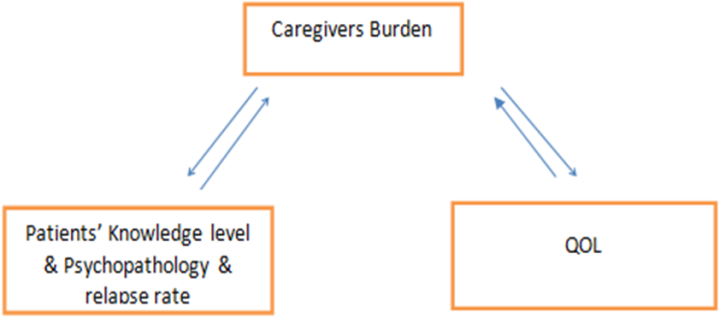
It is clearly apparent that caregivers functioning as operationalized by caregiver burden of care impacted on caregivers’ physical and psychological health and quality of life, as measured by quality of life (QOL) instrument. Detrimental effects on caregivers impinge upon patients’ outcomes, due to the reciprocal relationship between the former and the latter, as shown in Figure 2. However, there is substantial evidence caregivers’ burden of care and quality of life could by improved by family interventions. A few studies investigated the effectiveness psychoeducational program on all these variable together along with level of psychopathology and relapse rate of schizophrenic patients 45.

The interventions described in the identified RCTs 13, 18, 33, 39, 40, 42, 46, 47, 48, 49, 50, 51, 52, 53, 54 were educational in nature and aimed to improve patients and carers’ knowledge of schizophrenia and change patients an caregivers behaviour about schizophrenia by improving their knowledge about expected abnormal behaviour, disease symptoms and how can they deal with these abnormalities 46. Whilst the content of the educational component of the studies varied between studies, there were some common components covered among most studies 18, 40, 42, 46, 47, 48, 50, 51, 53, 54 including;
Ÿ General information about schizophrenia,
Ÿ Symptoms,
Ÿ Medication managements,
Ÿ Problems-solving strategies,
Ÿ Communication skills for patients and caregivers.
One study separated relatives/carers sessions from patient sessions in order to give them an opportunity to express their feelings without the presence of their ill relative 48. However, no difference was found in caregivers’ or patients’ outcomes regarding this separation among studies that allowed patients to join caregivers on the same session. The psychoeducational interventions were delivered by psychiatrists 50. mental health nurses 33, 48, 49 and social workers 47. However, nurses who attend relevant training courses are able to deliver psychoeducation 55.
The average duration of sessions fluctuated among studies between 60 to 120 minutes 39, 40, 47, 48, 51, 52. Some studies conducted family interventions of more than 120 minutes 56. However, effective education intervention depends on total time for intervention rather than session numbers 57. On the other hand, no specific frequency was mentioned regarding delivering educational material by booklet and online. Sessions duration is not the only factor in determining how the intervention impacts on participants; the way researchers classify sessions to be included in interactions between them and participants, and how they allow the latter to express their experiences and feelings regarding their ill relative is very important.
Moreover, family interventions also varied in the frequency of administering intervention in the intervention arms of studies. Some studies administered interventions every fortnight; others ran interventions on a weekly basis. It seems that the longer time interval between sessions has advantages and disadvantages. The main advantages are that caregivers and schizophrenic patients have an opportunity to read and assimilate psychoeducation content and reflect on their behaviour 58. However, negative aspects on longest interval were increased burden on participants, resulting in high drop-out rate 48.
Methods of delivering psychoeducation intervention in many studies for schizophrenic patients and caregivers were varied, including lectures 13, 18, 33, 39, 40, 42, 46, 47, 48, 49, 50, 51, 52, face to face method supported with booklet 33, 51 and online education 53, 54. However, the majority of studies adopted a didactic method of education, specifically face to face presentation between researcher and participants. Booklet and online methods of education deliver education with minimal contact between researchers and psychiatric patients and their caregivers 53, 54, 59. The delivery format of the educational intervention did not significantly impact on knowledge level and positive symptoms of schizophrenia 53 and perceived stress and social support 54. Several studies delivered education by conventional methods; they faced many problems in recruiting patients and their families to attend and engage in sessions 60, 61.
In contrast, methods of educational intervention which do not require sustained face-to-face interactions such as booklets and online provision provide a valuable solution for problems such as the stigma often experienced by caregivers and patients, loss of anonymity, training staff and lack of resources 54. This finding was also supported in a recent meta-analysis by Donker et al. (2009) which examined five RCTs that delivered educational intervention by online website, email and leaflet; the meta-analysis reported that delivery of educational interventions by passive education booklet was easy to access for large numbers of mental health patients and their carers at a relatively low cost. In recent years, there has been an increasing interest in showing effectiveness psychoeducation intervention on patients and carers outcomes by using these forms of delivery methods, particularly in relatively resource-poor countries.
This study aimed to assess the effect of FI on a variety of outcome variables in primary caregivers. The results suggested constantly positive effects of FI on patients' symptoms immediately and on follow-up measurement after the FI. These positive effects of FI were reported by most of the studies. It is noteworthy to mention that most studies were RCT which enhance more trust in the credibility of the conclusions derived from them.
The papers reviewed in this study have focused on Asian, European, and American populations, which support the international and trans-cultural acceptability and effectiveness of the FI. Each study had its own FI which was tailored in the time schedule and delivery method based on the unique need of each specific population. The worldwide acceptability and effectiveness of the intervention provide more support to usefulness of the intervention for patients with schizophrenia. Nevertheless, family members are integral part of the life of PDwS and they usually have burden of caring with patients. Therefore, family members were included in the intervention programs because having schizophrenia by one family member may have negative consequences on all family members. Including family members in FI may provide support for individuals who live with PDwS for long time, which extends the post-intervention effects period.
The findings of this study suggest that participation in FI for primary caregivers of patients with schizophrenia results in better clinical outcomes and more acceptance of the illness. In addition, the FI provided by health care providers is considered a source of emotional support and reduce many risk factors for client. In fact, multiple complex psychological, biological, and social factors may contribute to the course of schizophrenia, thus, to achieve the best outcomes for patients with schizophrenia, there is more acceptability of a combined approach of treatment and including psychotherapies, rather than depending on pharmacological treatment alone. This multiple psychotherapeutic approach may provide more understanding of the disease and provide an effective way of management of schizophrenia and enhance the coping with schizophrenia.
The results indicated that two studies had no positive outcomes. The first study is conducted by 62 who conducted online intervention, however, different challenges were reported by the researchers including the accessibility to the intervention, privacy issues, some emergent special challenges regarding the time of implementing the intervention, and managing some situations adequately during the intervention. In addition, the researchers raised a concern of the efficacy regarding the intervention. The second study was conducted by 63 who investigated patients with a challenge of the first episode of psychosis in their life. The researchers concluded that it is difficult to provide the educational intervention shortly after the first psychotic episode. Furthermore, the researchers suggested that failure to take up the intervention threatens the conclusions and the power of the intervention was reduced.
Most of the FI included information about the schizophrenia, problem-solving skills, communication skills, and social skills training. These aspects are crucial for patients with schizophrenia and their family members. Additional aspects and components of the intervention could by tailored according to the actual aim of the study and the needs of patients under study. Different gaps were identified in the literature and recommendations for future research are suggested accordingly. Only three studies had samples of inpatients with schizophrenia, while most studies focused on outpatients. Future research may want to examine the effectiveness of FI on additional samples of inpatients diagnosed with schizophrenia. This might accumulate more evidences to support the effectiveness of the intervention on this population. In addition, few studies examined the role of sociodemographic variables, and clinical variables such as severity of the illness and number of years after diagnosis on the degree to which patients might get benefit from such interventions. In practice, there is a worldwide need to consider family interventions as essential part of a comprehensive treatment approach for PDwS and their families. It is suggested to make FI more accessible in psychiatric and mental health care settings and provide FI as a routine intervention for patients with schizophrenia. Although the exact mechanism by which FI helps PDwS and their family members is not fully understood, the accumulated evidence suggested that they are effective, cost-efficient, and helpful for PDwS and their family members. Improving knowledge regarding schizophrenia might affects the attitudes and behaviors of patients and their family members, which result in positive outcomes and reduction in disease symptoms 64.
It is crucial to engage family members with the PDwS in the FIs because they can acquire knowledge about how to handle particular situations (e.g. the family role in the re-emergence of psychotic symptoms of schizophrenia). It is also important to foster family caregivers’ understanding of their relative’s illness and to improve communication skills accordingly. Moreover, stigma perception among PDwS and PCs negatively influences their lives. Thus, creating more positive images about schizophrenia such as sharing success stories should be undertaken, including public awareness campaigns.
| [1] | Hasan, A. (2019). Interventions to reduce stigma towards people with schizophrenia spectrum related disorder: Randomised controlled trial. Asian journal of psychiatry, 47, 101877-101877. | ||
| In article | View Article PubMed | ||
| [2] | Fiorillo, A., Bassi, M., de Girolamo, G., Catapano, F., & Romeo, F. (2011). The impact of a psychoeducational intervention on family members’ views about schizophrenia: results from the OASIS Italian multi-centre study. International Journal of Social Psychiatry, 57(6), 596-603. | ||
| In article | View Article PubMed | ||
| [3] | Engel, G. L. (1989). The need for a new medical model: a challenge for biomedicine. Journal of Interprofessional Care, 4(1), 37-53. | ||
| In article | View Article | ||
| [4] | Herz, M. I., Lamberti, J. S., Mintz, J., Scott, R., O'Dell, S. P., McCartan, L., & Nix, G. (2000). A program for relapse prevention in schizophrenia - A controlled study. Archives of General Psychiatry, 57(3), 277-283. | ||
| In article | View Article PubMed | ||
| [5] | Mangalore, R., & Knapp, M. (2007). Cost of schizophrenia in England. Journal of Mental Health Policy and Economics, 10(1), 23. | ||
| In article | |||
| [6] | Griffey, R. T., Shin, N., Jones, S., Aginam, N., Gross, M., Kinsella, Y., . . . Kaphingst, K. A. (2015). The impact of teach-back on comprehension of discharge instructions and satisfaction among emergency patients with limited health literacy: a randomized, controlled study. Journal of communication in healthcare, 8(1), 10-21. | ||
| In article | View Article PubMed | ||
| [7] | Ingram, R. E., & Luxton, D. D. (2005). Vulnerability-stress models. Development of psychopathology: A vulnerability-stress perspective, 32-46. | ||
| In article | View Article | ||
| [8] | Myin-Germeys, I., & van Os, J. (2007). Stress-reactivity in psychosis: evidence for an affective pathway to psychosis. Clinical psychology review, 27(4), 409-424. | ||
| In article | View Article PubMed | ||
| [9] | Häfner, H. (2003). Gender differences in schizophrenia. Psychoneuroendocrinology, 28, 17-54. | ||
| In article | View Article | ||
| [10] | Koolaee, A. K., & Etemadi, A. (2010). THhe outcome of family interventions for the mothers of schizophrenia patients in Iran. International journal of social psychiatry, 56(6), 634-646. | ||
| In article | View Article PubMed | ||
| [11] | NICE. (2014). Psychosis and schizophrenia in adults: treatment and management. Retrieved from http://www.nice.org.uk/guidance/cg178. | ||
| In article | |||
| [12] | Lehman, A. F., & Steinwachs, D. M. (1998). Translating research into practice: the Schizophrenia Patient Outcomes Research Team (PORT) treatment recommendations. Schizophrenia Bulletin, 24(1), 1-10. | ||
| In article | View Article PubMed | ||
| [13] | Merinder, L. B., Viuff, A. G., Laugesen, H. D., Clemmensen, K., Misfelt, S., & Espensen, B. (1999). Patient and relative education in community psychiatry: a randomized controlled trial regarding its effectiveness. Social Psychiatry and Psychiatric Epidemiology, 34(6), 287-294. | ||
| In article | View Article PubMed | ||
| [14] | Bradley, G. M., Couchman, G. M., Perlesz, A., Nguyen, A. T., Singh, B., & Riess, C. (2006b). Multiple-family group treatment for English- and Vietnamese-speaking families living with schizophrenia. Psychiatric Services, 57(4), 521-530. | ||
| In article | View Article PubMed | ||
| [15] | CRD. (2009). systematic review: CRD`s guidance for undertaking reviews in health care. Centre for Reviews and Dissemination (CRD). | ||
| In article | |||
| [16] | Schulz, K. F., Altman, D. G., & Moher, D. (2010). CONSORT statement: updated guidelines for reporting parallel group randomised trials. BMC medicine, 8(1), 18. | ||
| In article | View Article PubMed | ||
| [17] | Deeks, J. J., Dinnes, J., D’amico, R., Sowden, A., Sakarovitch, C., Song, F., . . . Altman, D. (2003). Evaluating non-randomised intervention studies. Health technology assessment, 7(27), 1-179. | ||
| In article | View Article PubMed | ||
| [18] | Dyck, D. G., Short, R. A., Hendryx, M. S., Norell, D., Myers, M., Patterson, T., . . . McFarlane, W. R. (2000). Management of negative symptoms among patients with schizophrenia attending multiple-family groups. Psychiatric Services, 51(4), 513-519. | ||
| In article | View Article PubMed | ||
| [19] | Herz, Lamberti, J. S., Mintz, J., Scott, R., O'Dell, S. P., McCartan, L., & Nix, G. (2000a). A program for relapse prevention in schizophrenia - A controlled study. Archives of general psychiatry, 57(3), 277-283. | ||
| In article | View Article PubMed | ||
| [20] | Shin, S. K., & Lukens, E. P. (2002). Effects of psychoeducation for Korean Americans with chronic mental illness. Psychiatric Services, 53(9), 1125-1131. | ||
| In article | View Article PubMed | ||
| [21] | Aho-Mustonen, K., Miettinen, R., Koivisto, H., Timonen, T., & Raty, H. (2008). Group psychoeducation for forensic and dangerous non-forensic long-term patients with schizophrenia. A pilot study. European Journal of Psychiatry, 22(2), 84-92. | ||
| In article | View Article | ||
| [22] | Linden, M., Pyrkosch, L., & Hundemer, H. P. (2008). Frequency and effects of psychosocial interventions additional to olanzapine treatment in routine care of schizophrenic patients. Social psychiatry and psychiatric epidemiology, 43(5), 373-379. | ||
| In article | View Article PubMed | ||
| [23] | Sibitz, I., Amering, M., Gossler, R., Unger, A., & Katschnig, H. (2007). One-year outcome of low-intensity booster sessions versus care as usual in psychosis patients after a short-term psychoeducational intervention. European psychiatry, 22(4), 203-210. | ||
| In article | View Article PubMed | ||
| [24] | Chien, & Leung, S. F. (2013). A controlled trial of a needs-based, nurse-led psychoeducation programme for Chinese patients with first-onset mental disorders: 6 month follow up. International journal of nursing practice, 19(S1), 3-13. | ||
| In article | View Article PubMed | ||
| [25] | Aho-Mustonen, K., Tiihonen, J., Repo-Tiihonen, E., Ryynanen, O. P., Miettinen, R., & Raty, H. (2011). Group psychoeducation for long-term offender patients with schizophrenia: An exploratory randomised controlled trial. Criminal Behaviour and Mental Health, 21(3), 163-176. | ||
| In article | View Article PubMed | ||
| [26] | Herz, Lamberti, J. S., Mintz, J., Scott, R., O'Dell, S. P., McCartan, L., & Nix, G. (2000b). A program for relapse prevention in schizophrenia: a controlled study. Archives of general psychiatry, 57(3), 277. | ||
| In article | View Article PubMed | ||
| [27] | Clark, A. M. (1998). The qualitative-quantitative debate: moving from positivism and confrontation to post-positivism and reconciliation. Journal of advanced nursing, 27(6), 1242-1249. | ||
| In article | View Article PubMed | ||
| [28] | Barbour, R. S. (1999). The case for combining qualitative and quantitative approaches in health services research. Journal of Health Services Research & Policy, 4(1), 39-43. | ||
| In article | View Article PubMed | ||
| [29] | Miles, M. B., & Huberman, A. M. (1994). Qualitative data analysis: An expanded sourcebook: SAGE publications, Inc. | ||
| In article | |||
| [30] | Cheng, L. Y., & Chan, S. (2005). Psychoeducation program for Chinese family carers of members with schizophrenia. Western Journal of Nursing Research, 27(5), 583-599. | ||
| In article | View Article PubMed | ||
| [31] | Gutierrez-Maldonado, J., Caqueo-Urizar, A., & Ferrer-Garcia, M. (2009). Effects of a psychoeducational intervention program on the attitudes and health perceptions of relatives of patients with schizophrenia. Social psychiatry and psychiatric epidemiology, 44(5), 343-348. | ||
| In article | View Article PubMed | ||
| [32] | Ozkan, B., Erdem, E., Ozsoy, S. D., & Zararsiz, G. (2013). Effect of psychoeducation and telepsychiatric follow up given to the caregiver of the schizophrenic patient on family burden, depression and expression of emotion. Pakistan journal of medical sciences, 29(5), 1122. | ||
| In article | View Article PubMed | ||
| [33] | Paranthaman, V., Satnam, K., Lim, J.-L., Amar-Singh, H. S. S., Sararaks, S., Nafiza, M.-N., . . . Asmah, Z.-A. (2010). Effective implementation of a structured psychoeducation programme among caregivers of patients with schizophrenia in the community. Asian Journal of Psychiatry, 3(4), 206-212. | ||
| In article | View Article PubMed | ||
| [34] | Cassidy, E., Hill, S., & O’callaghan, E. (2001). Efficacy of a psychoeducational intervention in improving relatives’ knowledge about schizophrenia and reducing rehospitalisation. European Psychiatry, 16(8), 446-450. | ||
| In article | View Article | ||
| [35] | Nuntika, & Lueboonthavatchai, P. (2007). Effects of psycho-educational program on knowledge and attitude upon schizophrenia of schizophrenic patients’ caregivers. J Med Assoc Thai, 90(6), 1199-1204. | ||
| In article | |||
| [36] | Sota, S., Shimodera, S., Kii, M., Okamura, K., Suto, K., Suwaki, M., . . . Inoue, S. (2008). Effect of a family psychoeducational program on relatives of schizophrenia patients. Psychiatry and Clinical Neurosciences, 62(4), 379-385. | ||
| In article | View Article PubMed | ||
| [37] | Tanrıverdi, D., & Ekinci, M. (2012). The effect psychoeducation intervention has on the caregiving burden of caregivers for schizophrenic patients in Turkey. International journal of nursing practice, 18(3), 281-288. | ||
| In article | View Article PubMed | ||
| [38] | Yamaguchi, H., Takahashi, A., Takano, A., & Kojima, T. (2006). Direct effects of short-term psychoeducational intervention for relatives of patients with schizophrenia in Japan. Psychiatry and Clinical Neurosciences, 60(5), 590-597. | ||
| In article | View Article PubMed | ||
| [39] | Barrowclough, C., Tarrier, N., Lewis, S., Sellwood, W., Mainwaring, J., Quinn, J., & Hamlin, C. (1999). Randomised controlled effectiveness trial of a needs-based psychosocial intervention service for carers of people with schizophrenia. The British Journal of Psychiatry, 174(6), 505-511. | ||
| In article | View Article PubMed | ||
| [40] | Bradley, G. M., Couchman, G. M., Perlesz, A., Nguyen, A. T., Singh, B., & Riess, C. (2006a). Multiple-family group treatment for English- and Vietnamese-speaking families living with schizophrenia. Psychiatric Services, 57(4), 521-530. | ||
| In article | View Article PubMed | ||
| [41] | Chien, W. T., Chan, S. W. C., & Thompson, D. R. (2006). Effects of a mutual support group for families of Chinese people with schizophrenia: 18-month follow-up. The British Journal of Psychiatry, 189(1), 41-49. | ||
| In article | View Article PubMed | ||
| [42] | Giron, M., Fernandez-Yanez, A., Mana-Alvarenga, S., Molina-Habas, A., Nolasco, A., & Gomez-Beneyto, M. (2010). Efficacy and effectiveness of individual family intervention on social and clinical functioning and family burden in severe schizophrenia: a 2-year randomized controlled study. Psychological medicine, 40(1), 73-84. | ||
| In article | View Article PubMed | ||
| [43] | Glozman, J. M. (2004). Quality of life of caregivers. Neuropsychology review, 14(4), 183-196. | ||
| In article | View Article PubMed | ||
| [44] | Li, J., Lambert, C. E., & Lambert, V. A. (2007). Predictors of family caregivers' burden and quality of life when providing care for a family member with schizophrenia in the People's Republic of China. Nursing & Health Sciences, 9(3), 192-198. | ||
| In article | View Article PubMed | ||
| [45] | Devaramane, V., Pai, N. B., & Vella, S. L. (2011). The effect of a brief family intervention on primary carer's functioning and their schizophrenic relatives levels of psychopathology in India. Asian Journal of Psychiatry, 4(3), 183-187. | ||
| In article | View Article PubMed | ||
| [46] | Chan, S. W. C., Yip, B., Tso, S., Cheng, B. S., & Tam, W. (2009). Evaluation of a psychoeducation program for Chinese clients with schizophrenia and their family caregivers. Patient Education and Counseling, 75(1), 67-76. | ||
| In article | View Article PubMed | ||
| [47] | Chien, W. T., & Lee, I. (2010). The schizophrenia care management program for family caregivers of Chinese patients with schizophrenia. Psychiatric Services, 61(3), 317-320. | ||
| In article | View Article PubMed | ||
| [48] | Kulhara, P., Chakrabarti, S., Avasthi, A., Sharma, A., & Sharma, S. (2009). Psychoeducational intervention for caregivers of Indian patients with schizophrenia: a randomised-controlled trial. Acta Psychiatrica Scandinavica, 119(6), 472-483. | ||
| In article | View Article PubMed | ||
| [49] | Li, Z., & Arthur, D. (2005). Family education for people with schizophrenia in Beijing, China - Randomised controlled trial. British Journal of Psychiatry, 187, 339-345. | ||
| In article | View Article PubMed | ||
| [50] | Magliano, L., Fiorillo, A., Malangone, C., De Rosa, C., Maj, M., & Family Intervention Working, G. (2006). Patient functioning and family burden in a controlled, real-world trial of family psychoeducation for schizophrenia. Psychiatric Services, 57(12), 1784-1791. | ||
| In article | View Article PubMed | ||
| [51] | Nasr, T., & Kausar, R. (2009). Psychoeducation and the family burden in schizophrenia: a randomized controlled trial. Annals of general psychiatry, 8(17), 1-6. | ||
| In article | View Article PubMed | ||
| [52] | Ran, Xiang, M. Z., Chan, C. L. W., Leff, J., Simpson, P., Huang, M. S., . . . Li, S. G. (2003). Effectiveness of psychoeducational intervention for rural Chinese families experiencing schizophrenia. Social Psychiatry and Psychiatric Epidemiology, 38(2), 69-75. | ||
| In article | View Article PubMed | ||
| [53] | Rotondi, A., Anderson, C., Haas, G., Eack, S., Spring, M., Ganguli, R., . . . Rosenstock, J. (2010). Web-based psychoeducational intervention for persons with schizophrenia and their supporters: one-year outcomes. Psychiatric Services, 61(11), 1099-1105. | ||
| In article | View Article PubMed | ||
| [54] | Rotondi, A. J., Haas, G. L., Anderson, C. M., Newhill, C. E., Spring, M. B., Ganguli, R., . . . Rosenstock, J. B. (2005). A clinical trial to test the feasibility of a telehealth psychoeducational intervention for persons with schizophrenia and their families: Intervention and 3-month findings. Rehabilitation Psychology, 50(4), 325-336. | ||
| In article | View Article PubMed | ||
| [55] | Macleod, S. H., Elliott, L., & Brown, R. (2011). What support can community mental health nurses deliver to carers of people diagnosed with schizophrenia? Findings from a review of the literature. International journal of nursing studies, 48(1), 100-120. | ||
| In article | View Article PubMed | ||
| [56] | Aakhus, E., Engedal, K., Aspelund, T., & Selbæk, G. (2009). Single session educational programme for caregivers of psychogeriatric in‐patients–results from a randomised controlled pilot study. International journal of geriatric psychiatry, 24(3), 269-274. | ||
| In article | View Article PubMed | ||
| [57] | Cuijpers, P. (1999). The effects of family interventions on relatives' burden: A meta-analysis. Journal of mental health, 8(3), 275-285. | ||
| In article | View Article | ||
| [58] | Ran, M. S., Xiang, M. Z., Chan, C. L. W., Leff, J., Simpson, P., Huang, M. S., . . . Li, S. G. (2003). Effectiveness of psychoeducational intervention for rural Chinese families experiencing schizophrenia - A randomised controlled trial. Social psychiatry and psychiatric epidemiology, 38(2), 69-75. | ||
| In article | View Article PubMed | ||
| [59] | Alvidrez, J., Snowden, L. R., Rao, S. M., & Boccellari, A. (2009). Psychoeducation to Address Stigma in Black Adults Referred for Mental Health Treatment: A Randomized Pilot Study. Community Mental Health Journal, 45(2), 127-136. | ||
| In article | View Article PubMed | ||
| [60] | Burns, T. (1997). Psychosocial interventions. Current Opinion in Psychiatry, 10(1), 36-39. | ||
| In article | View Article | ||
| [61] | Smith, T. E., Hull, J. W., Anthony, D. T., Goodman, M., Hedayat-Harris, A., Felger, T., . . . Romanelli, S. (1997). Post-hospitalization treatment adherence of schizophrenic patients: gender differences in skill acquisition. Psychiatry Research, 69(2-3), 123-129. | ||
| In article | View Article | ||
| [62] | Glynn, S. M., Randolph, E. T., Garrick, T., & Lui, A. (2010). A proof of concept trial of an online psychoeducational program for relatives of both veterans and civilians living with schizophrenia. Psychiatric rehabilitation journal, 33(4), 278. | ||
| In article | View Article PubMed | ||
| [63] | Leavey, G., Gulamhussein, S., Papadopoulos, C., Johnson-Sabine, E., Blizard, B., & King, M. (2004). A randomized controlled trial of a brief intervention for families of patients with a first episode of psychosis. Psychological medicine, 34(03), 423-431. | ||
| In article | View Article PubMed | ||
| [64] | Nasr, T., & Kausar, R. (2009). Psychoeducation and the family burden in schizophrenia: a randomized controlled trial. Annals of General Psychiatry, 8(1), 17. | ||
| In article | View Article PubMed | ||
Published with license by Science and Education Publishing, Copyright © 2020 Nofaa Alasmee and Abd Alhadi Hasan
 This work is licensed under a Creative Commons Attribution 4.0 International License. To view a copy of this license, visit
http://creativecommons.org/licenses/by/4.0/
This work is licensed under a Creative Commons Attribution 4.0 International License. To view a copy of this license, visit
http://creativecommons.org/licenses/by/4.0/
| [1] | Hasan, A. (2019). Interventions to reduce stigma towards people with schizophrenia spectrum related disorder: Randomised controlled trial. Asian journal of psychiatry, 47, 101877-101877. | ||
| In article | View Article PubMed | ||
| [2] | Fiorillo, A., Bassi, M., de Girolamo, G., Catapano, F., & Romeo, F. (2011). The impact of a psychoeducational intervention on family members’ views about schizophrenia: results from the OASIS Italian multi-centre study. International Journal of Social Psychiatry, 57(6), 596-603. | ||
| In article | View Article PubMed | ||
| [3] | Engel, G. L. (1989). The need for a new medical model: a challenge for biomedicine. Journal of Interprofessional Care, 4(1), 37-53. | ||
| In article | View Article | ||
| [4] | Herz, M. I., Lamberti, J. S., Mintz, J., Scott, R., O'Dell, S. P., McCartan, L., & Nix, G. (2000). A program for relapse prevention in schizophrenia - A controlled study. Archives of General Psychiatry, 57(3), 277-283. | ||
| In article | View Article PubMed | ||
| [5] | Mangalore, R., & Knapp, M. (2007). Cost of schizophrenia in England. Journal of Mental Health Policy and Economics, 10(1), 23. | ||
| In article | |||
| [6] | Griffey, R. T., Shin, N., Jones, S., Aginam, N., Gross, M., Kinsella, Y., . . . Kaphingst, K. A. (2015). The impact of teach-back on comprehension of discharge instructions and satisfaction among emergency patients with limited health literacy: a randomized, controlled study. Journal of communication in healthcare, 8(1), 10-21. | ||
| In article | View Article PubMed | ||
| [7] | Ingram, R. E., & Luxton, D. D. (2005). Vulnerability-stress models. Development of psychopathology: A vulnerability-stress perspective, 32-46. | ||
| In article | View Article | ||
| [8] | Myin-Germeys, I., & van Os, J. (2007). Stress-reactivity in psychosis: evidence for an affective pathway to psychosis. Clinical psychology review, 27(4), 409-424. | ||
| In article | View Article PubMed | ||
| [9] | Häfner, H. (2003). Gender differences in schizophrenia. Psychoneuroendocrinology, 28, 17-54. | ||
| In article | View Article | ||
| [10] | Koolaee, A. K., & Etemadi, A. (2010). THhe outcome of family interventions for the mothers of schizophrenia patients in Iran. International journal of social psychiatry, 56(6), 634-646. | ||
| In article | View Article PubMed | ||
| [11] | NICE. (2014). Psychosis and schizophrenia in adults: treatment and management. Retrieved from http://www.nice.org.uk/guidance/cg178. | ||
| In article | |||
| [12] | Lehman, A. F., & Steinwachs, D. M. (1998). Translating research into practice: the Schizophrenia Patient Outcomes Research Team (PORT) treatment recommendations. Schizophrenia Bulletin, 24(1), 1-10. | ||
| In article | View Article PubMed | ||
| [13] | Merinder, L. B., Viuff, A. G., Laugesen, H. D., Clemmensen, K., Misfelt, S., & Espensen, B. (1999). Patient and relative education in community psychiatry: a randomized controlled trial regarding its effectiveness. Social Psychiatry and Psychiatric Epidemiology, 34(6), 287-294. | ||
| In article | View Article PubMed | ||
| [14] | Bradley, G. M., Couchman, G. M., Perlesz, A., Nguyen, A. T., Singh, B., & Riess, C. (2006b). Multiple-family group treatment for English- and Vietnamese-speaking families living with schizophrenia. Psychiatric Services, 57(4), 521-530. | ||
| In article | View Article PubMed | ||
| [15] | CRD. (2009). systematic review: CRD`s guidance for undertaking reviews in health care. Centre for Reviews and Dissemination (CRD). | ||
| In article | |||
| [16] | Schulz, K. F., Altman, D. G., & Moher, D. (2010). CONSORT statement: updated guidelines for reporting parallel group randomised trials. BMC medicine, 8(1), 18. | ||
| In article | View Article PubMed | ||
| [17] | Deeks, J. J., Dinnes, J., D’amico, R., Sowden, A., Sakarovitch, C., Song, F., . . . Altman, D. (2003). Evaluating non-randomised intervention studies. Health technology assessment, 7(27), 1-179. | ||
| In article | View Article PubMed | ||
| [18] | Dyck, D. G., Short, R. A., Hendryx, M. S., Norell, D., Myers, M., Patterson, T., . . . McFarlane, W. R. (2000). Management of negative symptoms among patients with schizophrenia attending multiple-family groups. Psychiatric Services, 51(4), 513-519. | ||
| In article | View Article PubMed | ||
| [19] | Herz, Lamberti, J. S., Mintz, J., Scott, R., O'Dell, S. P., McCartan, L., & Nix, G. (2000a). A program for relapse prevention in schizophrenia - A controlled study. Archives of general psychiatry, 57(3), 277-283. | ||
| In article | View Article PubMed | ||
| [20] | Shin, S. K., & Lukens, E. P. (2002). Effects of psychoeducation for Korean Americans with chronic mental illness. Psychiatric Services, 53(9), 1125-1131. | ||
| In article | View Article PubMed | ||
| [21] | Aho-Mustonen, K., Miettinen, R., Koivisto, H., Timonen, T., & Raty, H. (2008). Group psychoeducation for forensic and dangerous non-forensic long-term patients with schizophrenia. A pilot study. European Journal of Psychiatry, 22(2), 84-92. | ||
| In article | View Article | ||
| [22] | Linden, M., Pyrkosch, L., & Hundemer, H. P. (2008). Frequency and effects of psychosocial interventions additional to olanzapine treatment in routine care of schizophrenic patients. Social psychiatry and psychiatric epidemiology, 43(5), 373-379. | ||
| In article | View Article PubMed | ||
| [23] | Sibitz, I., Amering, M., Gossler, R., Unger, A., & Katschnig, H. (2007). One-year outcome of low-intensity booster sessions versus care as usual in psychosis patients after a short-term psychoeducational intervention. European psychiatry, 22(4), 203-210. | ||
| In article | View Article PubMed | ||
| [24] | Chien, & Leung, S. F. (2013). A controlled trial of a needs-based, nurse-led psychoeducation programme for Chinese patients with first-onset mental disorders: 6 month follow up. International journal of nursing practice, 19(S1), 3-13. | ||
| In article | View Article PubMed | ||
| [25] | Aho-Mustonen, K., Tiihonen, J., Repo-Tiihonen, E., Ryynanen, O. P., Miettinen, R., & Raty, H. (2011). Group psychoeducation for long-term offender patients with schizophrenia: An exploratory randomised controlled trial. Criminal Behaviour and Mental Health, 21(3), 163-176. | ||
| In article | View Article PubMed | ||
| [26] | Herz, Lamberti, J. S., Mintz, J., Scott, R., O'Dell, S. P., McCartan, L., & Nix, G. (2000b). A program for relapse prevention in schizophrenia: a controlled study. Archives of general psychiatry, 57(3), 277. | ||
| In article | View Article PubMed | ||
| [27] | Clark, A. M. (1998). The qualitative-quantitative debate: moving from positivism and confrontation to post-positivism and reconciliation. Journal of advanced nursing, 27(6), 1242-1249. | ||
| In article | View Article PubMed | ||
| [28] | Barbour, R. S. (1999). The case for combining qualitative and quantitative approaches in health services research. Journal of Health Services Research & Policy, 4(1), 39-43. | ||
| In article | View Article PubMed | ||
| [29] | Miles, M. B., & Huberman, A. M. (1994). Qualitative data analysis: An expanded sourcebook: SAGE publications, Inc. | ||
| In article | |||
| [30] | Cheng, L. Y., & Chan, S. (2005). Psychoeducation program for Chinese family carers of members with schizophrenia. Western Journal of Nursing Research, 27(5), 583-599. | ||
| In article | View Article PubMed | ||
| [31] | Gutierrez-Maldonado, J., Caqueo-Urizar, A., & Ferrer-Garcia, M. (2009). Effects of a psychoeducational intervention program on the attitudes and health perceptions of relatives of patients with schizophrenia. Social psychiatry and psychiatric epidemiology, 44(5), 343-348. | ||
| In article | View Article PubMed | ||
| [32] | Ozkan, B., Erdem, E., Ozsoy, S. D., & Zararsiz, G. (2013). Effect of psychoeducation and telepsychiatric follow up given to the caregiver of the schizophrenic patient on family burden, depression and expression of emotion. Pakistan journal of medical sciences, 29(5), 1122. | ||
| In article | View Article PubMed | ||
| [33] | Paranthaman, V., Satnam, K., Lim, J.-L., Amar-Singh, H. S. S., Sararaks, S., Nafiza, M.-N., . . . Asmah, Z.-A. (2010). Effective implementation of a structured psychoeducation programme among caregivers of patients with schizophrenia in the community. Asian Journal of Psychiatry, 3(4), 206-212. | ||
| In article | View Article PubMed | ||
| [34] | Cassidy, E., Hill, S., & O’callaghan, E. (2001). Efficacy of a psychoeducational intervention in improving relatives’ knowledge about schizophrenia and reducing rehospitalisation. European Psychiatry, 16(8), 446-450. | ||
| In article | View Article | ||
| [35] | Nuntika, & Lueboonthavatchai, P. (2007). Effects of psycho-educational program on knowledge and attitude upon schizophrenia of schizophrenic patients’ caregivers. J Med Assoc Thai, 90(6), 1199-1204. | ||
| In article | |||
| [36] | Sota, S., Shimodera, S., Kii, M., Okamura, K., Suto, K., Suwaki, M., . . . Inoue, S. (2008). Effect of a family psychoeducational program on relatives of schizophrenia patients. Psychiatry and Clinical Neurosciences, 62(4), 379-385. | ||
| In article | View Article PubMed | ||
| [37] | Tanrıverdi, D., & Ekinci, M. (2012). The effect psychoeducation intervention has on the caregiving burden of caregivers for schizophrenic patients in Turkey. International journal of nursing practice, 18(3), 281-288. | ||
| In article | View Article PubMed | ||
| [38] | Yamaguchi, H., Takahashi, A., Takano, A., & Kojima, T. (2006). Direct effects of short-term psychoeducational intervention for relatives of patients with schizophrenia in Japan. Psychiatry and Clinical Neurosciences, 60(5), 590-597. | ||
| In article | View Article PubMed | ||
| [39] | Barrowclough, C., Tarrier, N., Lewis, S., Sellwood, W., Mainwaring, J., Quinn, J., & Hamlin, C. (1999). Randomised controlled effectiveness trial of a needs-based psychosocial intervention service for carers of people with schizophrenia. The British Journal of Psychiatry, 174(6), 505-511. | ||
| In article | View Article PubMed | ||
| [40] | Bradley, G. M., Couchman, G. M., Perlesz, A., Nguyen, A. T., Singh, B., & Riess, C. (2006a). Multiple-family group treatment for English- and Vietnamese-speaking families living with schizophrenia. Psychiatric Services, 57(4), 521-530. | ||
| In article | View Article PubMed | ||
| [41] | Chien, W. T., Chan, S. W. C., & Thompson, D. R. (2006). Effects of a mutual support group for families of Chinese people with schizophrenia: 18-month follow-up. The British Journal of Psychiatry, 189(1), 41-49. | ||
| In article | View Article PubMed | ||
| [42] | Giron, M., Fernandez-Yanez, A., Mana-Alvarenga, S., Molina-Habas, A., Nolasco, A., & Gomez-Beneyto, M. (2010). Efficacy and effectiveness of individual family intervention on social and clinical functioning and family burden in severe schizophrenia: a 2-year randomized controlled study. Psychological medicine, 40(1), 73-84. | ||
| In article | View Article PubMed | ||
| [43] | Glozman, J. M. (2004). Quality of life of caregivers. Neuropsychology review, 14(4), 183-196. | ||
| In article | View Article PubMed | ||
| [44] | Li, J., Lambert, C. E., & Lambert, V. A. (2007). Predictors of family caregivers' burden and quality of life when providing care for a family member with schizophrenia in the People's Republic of China. Nursing & Health Sciences, 9(3), 192-198. | ||
| In article | View Article PubMed | ||
| [45] | Devaramane, V., Pai, N. B., & Vella, S. L. (2011). The effect of a brief family intervention on primary carer's functioning and their schizophrenic relatives levels of psychopathology in India. Asian Journal of Psychiatry, 4(3), 183-187. | ||
| In article | View Article PubMed | ||
| [46] | Chan, S. W. C., Yip, B., Tso, S., Cheng, B. S., & Tam, W. (2009). Evaluation of a psychoeducation program for Chinese clients with schizophrenia and their family caregivers. Patient Education and Counseling, 75(1), 67-76. | ||
| In article | View Article PubMed | ||
| [47] | Chien, W. T., & Lee, I. (2010). The schizophrenia care management program for family caregivers of Chinese patients with schizophrenia. Psychiatric Services, 61(3), 317-320. | ||
| In article | View Article PubMed | ||
| [48] | Kulhara, P., Chakrabarti, S., Avasthi, A., Sharma, A., & Sharma, S. (2009). Psychoeducational intervention for caregivers of Indian patients with schizophrenia: a randomised-controlled trial. Acta Psychiatrica Scandinavica, 119(6), 472-483. | ||
| In article | View Article PubMed | ||
| [49] | Li, Z., & Arthur, D. (2005). Family education for people with schizophrenia in Beijing, China - Randomised controlled trial. British Journal of Psychiatry, 187, 339-345. | ||
| In article | View Article PubMed | ||
| [50] | Magliano, L., Fiorillo, A., Malangone, C., De Rosa, C., Maj, M., & Family Intervention Working, G. (2006). Patient functioning and family burden in a controlled, real-world trial of family psychoeducation for schizophrenia. Psychiatric Services, 57(12), 1784-1791. | ||
| In article | View Article PubMed | ||
| [51] | Nasr, T., & Kausar, R. (2009). Psychoeducation and the family burden in schizophrenia: a randomized controlled trial. Annals of general psychiatry, 8(17), 1-6. | ||
| In article | View Article PubMed | ||
| [52] | Ran, Xiang, M. Z., Chan, C. L. W., Leff, J., Simpson, P., Huang, M. S., . . . Li, S. G. (2003). Effectiveness of psychoeducational intervention for rural Chinese families experiencing schizophrenia. Social Psychiatry and Psychiatric Epidemiology, 38(2), 69-75. | ||
| In article | View Article PubMed | ||
| [53] | Rotondi, A., Anderson, C., Haas, G., Eack, S., Spring, M., Ganguli, R., . . . Rosenstock, J. (2010). Web-based psychoeducational intervention for persons with schizophrenia and their supporters: one-year outcomes. Psychiatric Services, 61(11), 1099-1105. | ||
| In article | View Article PubMed | ||
| [54] | Rotondi, A. J., Haas, G. L., Anderson, C. M., Newhill, C. E., Spring, M. B., Ganguli, R., . . . Rosenstock, J. B. (2005). A clinical trial to test the feasibility of a telehealth psychoeducational intervention for persons with schizophrenia and their families: Intervention and 3-month findings. Rehabilitation Psychology, 50(4), 325-336. | ||
| In article | View Article PubMed | ||
| [55] | Macleod, S. H., Elliott, L., & Brown, R. (2011). What support can community mental health nurses deliver to carers of people diagnosed with schizophrenia? Findings from a review of the literature. International journal of nursing studies, 48(1), 100-120. | ||
| In article | View Article PubMed | ||
| [56] | Aakhus, E., Engedal, K., Aspelund, T., & Selbæk, G. (2009). Single session educational programme for caregivers of psychogeriatric in‐patients–results from a randomised controlled pilot study. International journal of geriatric psychiatry, 24(3), 269-274. | ||
| In article | View Article PubMed | ||
| [57] | Cuijpers, P. (1999). The effects of family interventions on relatives' burden: A meta-analysis. Journal of mental health, 8(3), 275-285. | ||
| In article | View Article | ||
| [58] | Ran, M. S., Xiang, M. Z., Chan, C. L. W., Leff, J., Simpson, P., Huang, M. S., . . . Li, S. G. (2003). Effectiveness of psychoeducational intervention for rural Chinese families experiencing schizophrenia - A randomised controlled trial. Social psychiatry and psychiatric epidemiology, 38(2), 69-75. | ||
| In article | View Article PubMed | ||
| [59] | Alvidrez, J., Snowden, L. R., Rao, S. M., & Boccellari, A. (2009). Psychoeducation to Address Stigma in Black Adults Referred for Mental Health Treatment: A Randomized Pilot Study. Community Mental Health Journal, 45(2), 127-136. | ||
| In article | View Article PubMed | ||
| [60] | Burns, T. (1997). Psychosocial interventions. Current Opinion in Psychiatry, 10(1), 36-39. | ||
| In article | View Article | ||
| [61] | Smith, T. E., Hull, J. W., Anthony, D. T., Goodman, M., Hedayat-Harris, A., Felger, T., . . . Romanelli, S. (1997). Post-hospitalization treatment adherence of schizophrenic patients: gender differences in skill acquisition. Psychiatry Research, 69(2-3), 123-129. | ||
| In article | View Article | ||
| [62] | Glynn, S. M., Randolph, E. T., Garrick, T., & Lui, A. (2010). A proof of concept trial of an online psychoeducational program for relatives of both veterans and civilians living with schizophrenia. Psychiatric rehabilitation journal, 33(4), 278. | ||
| In article | View Article PubMed | ||
| [63] | Leavey, G., Gulamhussein, S., Papadopoulos, C., Johnson-Sabine, E., Blizard, B., & King, M. (2004). A randomized controlled trial of a brief intervention for families of patients with a first episode of psychosis. Psychological medicine, 34(03), 423-431. | ||
| In article | View Article PubMed | ||
| [64] | Nasr, T., & Kausar, R. (2009). Psychoeducation and the family burden in schizophrenia: a randomized controlled trial. Annals of General Psychiatry, 8(1), 17. | ||
| In article | View Article PubMed | ||