Siliguri is one of the fastest growing cities in the state of West Bengal, India and faces the challenge of effective and sustainable solid waste management system. The existing centralised municipal solid waste management is managed by Siliguri Municipal Corporation. The present study was undertaken on the Domestic Solid Waste Management System within the area of Siliguri Municipal Corporation (SMC), as the major contributor of solid waste is domestic source. The study provides an overview of collection, transportation and disposal of solid waste from the domestic source and also analyses the Sunya Project and Bio mining project of dumping ground and composting unit regarding Zero Waste Management initiatives of Siliguri Municipal Corporation. The undertaken study further analyzes solid waste management practices in the selected households across the wards of Siliguri Municipal Corporation. The main objective of the study is to create awareness among the residents regarding sustainable zero solid waste management practices based on simple principles of 3R (Reduce, Reuse and Recycle). A survey was conducted on the basis of interview and questionnaire regarding how the residents manage solid wastes in their homes. People related to scrap business were also interviewed as they have been playing a very crucial role in solid waste management, even though till now scrap business is recognized only as an informal sector. The study, also involves some experimental work to incorporate residents in zero solid waste management initiatives, in which they were encouraged to religiously practice the principles of 3R i.e., Reduce, Reuse and Recycle of solid waste in their homes. Selected residents were encouraged to properly segregate and to Reduce waste by composting of kitchen waste and using it on rooftop or kitchen garden; to contact local scrap dealers to buy dry recyclable solid waste for Recycling and to Reuse common household items. The preliminary result of this simple study revealed approximately 65% reduction of domestic wastes simply by following simple 3 R principles. Based on this promising finding, it can therefore, be concluded that these strategies along with the existing Centralised Solid Waste Management System can go a long way in helping us to move towards a zero-waste society.
Solid waste management is one of the major world-wide environmental issues. In India, a huge amount of solid waste is generated due to rapidly increasing population, unplanned urbanization and changing life style. According to Union Ministry for Environment, Forests and Climate Change, at present 62 million tons of solid waste is generated annually in the country and only about 75-80 per cent of the municipal waste gets collected and only 22-28 per cent of this waste is processed and treated. Several studies reported that the municipal solid waste that are generated from the developing countries are mainly from households (55–80%), followed by market or commercial areas (10-30%) 10.
Approximately 60% of domestic solid waste is biodegradable Kitchen waste or green waste. According to the Solid Waste Management, 2016 rules, bio-degradable waste should be processed, treated and disposed of through composting or bio-methanation within the premises and the residual waste should be given to the waste collectors as directed by the local authority. This rule has also mandated bio-remediation of dumping sites within five year and has promoted the use of compost and waste to energy. The Solid waste management, 2016 rules, therefore, is an initial effort to begin systematic zero waste management system in India. Zero Waste International Alliance defined “Zero waste” as the conservation of all resources by means of responsible production, consumption, reuse, and recovery of products, packaging, and materials without burning and with no discharges to land, water, or air that threaten the environment or human health”.
Just like in any other metropolitan city, Solid Waste Management is one of the major concerns of Siliguri Municipality. Solid wastes which include commercial and residential wastes generated in different wards of Siliguri municipal corporation in either solid or semi-solid form has been increasing from 335 tons/ day in 2017 to 360 tons/day in 2021 1 with an increasing population from 5,13,264 in 2011 to 659,339 in 2021. Among the total solid waste sources, domestic source is estimated to be about 54% 2 (excluding bio medical waste generation from isolated houses during the Covid 19 pandemic). It is not just population growth but other factors like unplanned urbanization, increased per capita income, huge day-time floating population due to high trade and business activity which are leading to enormous municipal solid waste generation. Most of these wastes are simply dumped in the open dumping ground untreated and remain unprocessed as well. The ever-increasing quantity of this waste dumped unscientifically is seriously deteriorating the quality of environment besides causing a lot of health concerns to the people living around the dumping ground. Therefore, a permanent, effective, easy to follow and sustainable policies are needed to mitigate the problem of waste management in Siliguri.
An integrated Solid Waste Management (SWM) system was started with an initiative of Sunya Project regarding Zero Waste by SMC under Climate Resilient City Action Plan (CRCAP) of the CapaCITIES Project 2018, supported by Swiss Agency for Development and Cooperation (SDC). The integrated SWM system is compliant with the Solid Waste Management rules,2016 which adheres to the policy of Reduce, Reuse and Recycle. The CRCAP for SWM in Siliguri undertook the following solutions 3:
Solution 1: Windrow composting (capacity 110 tons/day), Automated composting Centre (capacity 6 tons/day), incineration and scientific land filling. (Green House Gas emission reduction - 81,846.53-ton Co2).
Solution 2: Energy generation from Refuse derived fuel (RDF) (Green House Gas emission reduction 4895 tonCo2,), (Energy saving 5.95 million kWh)
Solution 3: Pilot scale waste segregation was started from ward no.2 and 17 and will expand to cover 100 % waste segregation in all the other wards.
Solution 4: Mandates and incentives for in-situ composting facilities in large residential complexes, educational institutes, hotels and hospitals.
In May 2021, a Bio mining project was also initiated in the dumping ground of Siliguri Municipal Corporation. The project aims to convert legacy waste with calorific values into Refuse Derived Fuel (RDF) and biodegradable part of the waste into compost.
The study undertaken provides a comprehensive view of the existing centralised domestic solid waste management system and its weaknesses, preliminary zero waste management initiatives of the local authority and analyses how the effective and sustainable means of zero waste management practices based on simple principles of 3R remarkably reduces solid waste at homes.
Following are the objectives of the present study:
i. To study the present centralised domestic solid waste management system in the area of Siliguri Municipal Corporation.
ii. To represent the management of domestic solid waste from the isolated houses or areas of Siliguri Municipal Corporation during Covid 19 pandemic.
iii. To observe the environmental effects due to unscientific dumping of municipal solid waste.
iv. To analyse the Sunya Project and Biomining project regarding preliminary initiatives of zero waste management practices, adopted by Siliguri Municipal Corporation.
v. To conduct a survey to analyse people’s opinions about present centralised domestic waste management system and to know how much they are aware about zero waste and the principles of 3R (Reduce, Reuse and Recycle).
vi. To perform some experimental analysis on practices of zero waste based on 3R principles (Reduce, Reuse and Recycle) including the analysis of home-made compost.
vii. And lastly, to present a comprehensive review of the centralised domestic solid waste management system and recommend some effective and sustainable practices of zero waste management based on 3R principles.
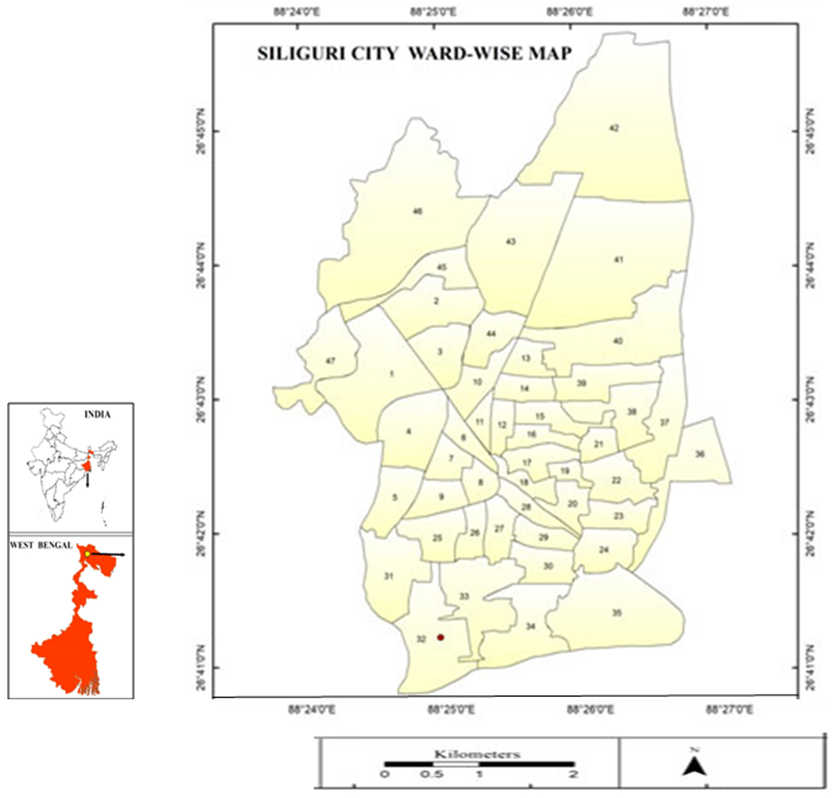
Siliguri is located in both districts of Darjeeling and Jalpaiguri in the state of West Bengal, India. It is the subdivision of Darjeeling district and about 40% area of it falls under Jalpaiguri district with 47 wards within the area of 41.90 square kilometers. It is situated at the latitude of 26°42’ North and longitude of 88°25’ East.
The methodologies adopted in the present study involved both the experimental approach and the field survey. The field Survey was conducted in 500 houses of 47 wards and 100 households among them were involved in experimental analysis based on 3R principles for the period of six months. For the field survey, nine households were randomly selected from each ward among the 40 number of wards and twenty-three households were selected from each ward numbers of 41,42,43 and 46 and sixteen households were selected from each ward numbers of 1,43 and 35. For experimental analysis 100 households from different wards were involved. Two households from each ward among 45 number of wards and five households from each ward number of 41 and 42 participated in the experimental analysis (Table 1).

Both the Primary data and Secondary data were collected during the survey.
• Primary data included interviews and questionnaires. Questions were based on their awareness regarding segregation of wastes, practices of 3R (Reduce Reuse & Recycle), composting of kitchen waste, awareness on plastic use and also on their views regarding existing Solid waste Management of Siliguri Municipal Corporation.
• Secondary data were collected from the Conservancy department of Siliguri Municipal Corporation and from various research papers and internet sites.
The experimental analysis was carried out to make compost at home and to observe how the following three systematic and simple zero waste management practices remarkably reduced solid waste in the participating 100 households.
• By selling of recyclable solid waste materials to scrap buyers.
• By using of uncooked kitchen waste (vegetables and fruit scraps) as compost in the terrace or kitchen garden
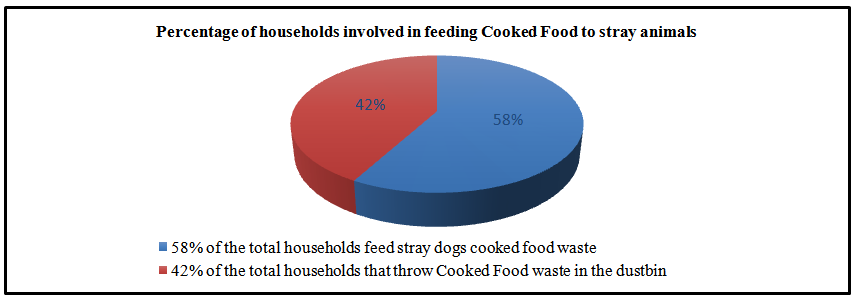
• By using cooked kitchen waste to feed stray animals
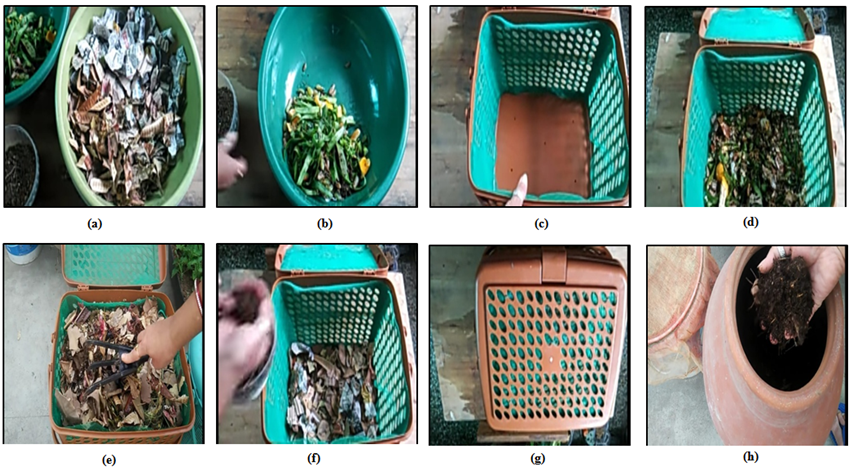
To make compost at home, following process was followed step by step (Figure 2 & Figure 3):


pH and Moisture of the compost was measured by the pH and moisture tester kit at home. Rest Parameters were analyzed by the following methods in a Tea board approved Soil Testing Laboratory, Darjeeling Tea Research & Management Association, Shivmandir, West Bengal.
i) Estimation of Carbon%: Carbon % was measured by Chromic Acid Method (reference Jackson’s soil chemical analysis).
ii) Estimation of Nitrogen %: Nitrogen % was measured by 2% Boric Acid Method by Micro Kjeldahl Apparatus.
iii) Estimation of available or exchangeable Potassium %: It was measured by Ammonium Acetate Method.
iv) Estimation of available Sulphur %: It was done by Potassium Dihydrogen Phosphate method.
v) Estimation of available Phosphorus %: It was done by Molybdenum Blue method
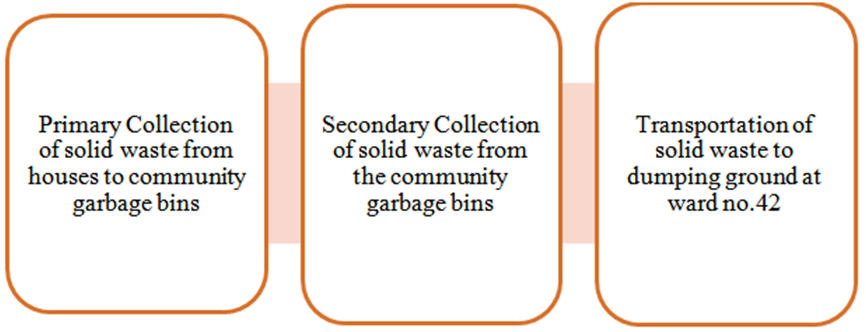
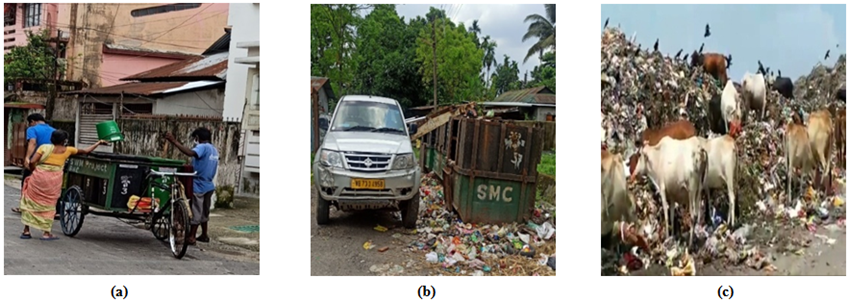
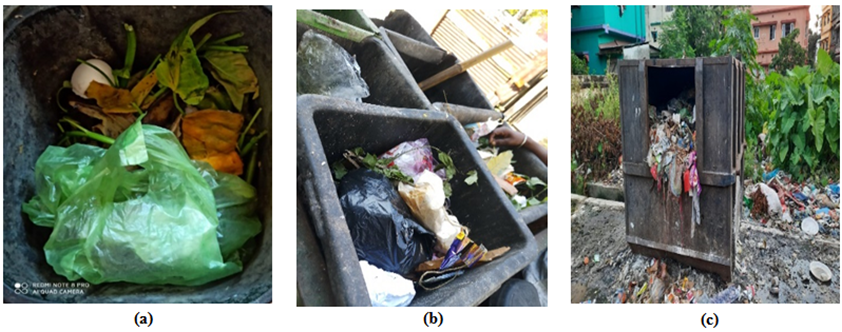
In Siliguri, Domestic Solid Waste management system in the area of SMC is managed through a following centralised mechanism (Figure 4 & Figure 5).
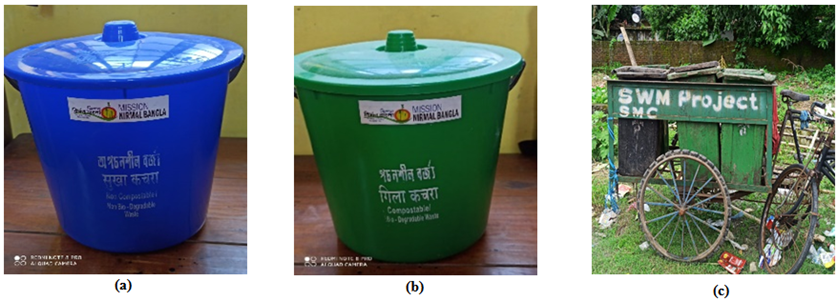
In the survey, it was observed that approximately 85% households were provided with two types of bins for waste segregation at their homes; Green bins for the collection of kitchen waste and blue bins for dry waste. Solid waste collection vehicles are also designed to carry waste separately. (Figure 6)
In spite of all the initiatives being taken by Siliguri Municipal Corporation regarding solid waste management, the key element and the first and foremost objective, segregation of solid waste was being completely neglected by the people due to their lack of awareness. Most of the residents used single container or plastic bag to collect both the kitchen waste and dry wastes. Residents and waste collectors are not strictly instructed for the waste segregation.


Solid Waste Management in different wards of Siliguri Municipal Corporation was carried out as usual during the time of pandemic. However, isolated wards for Covid-19 patients were instructed to keep separate color-coded bins/bags/containers for proper segregation of waste as per Bio Medical Waste Management (BMWM) Rules, 2016, as amended and as per Central Pollution Control Board (CPCB) guidelines 4.
In Siliguri, biomedical waste is managed entirely by one and only private CBWTF (Common Bio Medical Waste Treatment Facility), Greengen Bio Pvt. Ltd., since 2008. Covid waste from hospitals, nursing homes, laboratory and quarantine centers are directly collected by the company. In Siliguri, isolated wards and residences were sanitized by the Siliguri Municipal Corporation and yellow polythene bags were provided to the residents for the collection of covid waste. However, the Covid Waste handing guidelines, 2020, were not fully followed by the people as well as by the authority. As per the telephonic conversation with official personnel of Greengen Bio Pvt. Ltd., they were not instructed to collect Covid waste from the isolated wards. The collection and disposal of covid waste from these isolated residences were done in the same manner as other solid wastes. In the case of infectious diseases like Covid-19, such a serious negligence will make the disease even more rampant and may lead to the loss of many precious lives.
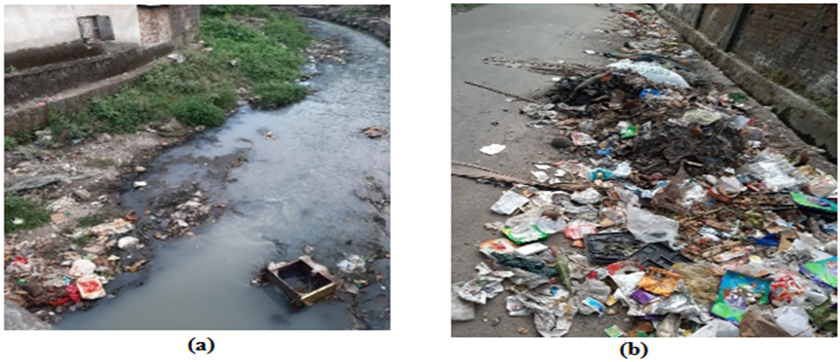
About 83% of the total solid waste and 88% of the domestic solid waste were transported to the open dumping ground near Don Bosco School in ward no.42 of SMC area on a regular basis 1. The open dumping ground of SMC is being operated since 1949 with an area of 21.04 acre and approximately 2.13 million tons of waste has been reportedly dumped in the ground since inception. Approximate 350 metric tons per day (MTPD) of solid waste has been dumped in the ground and the height of the ground is 10 meters. However, no data were available regarding ground water pollution 5. People of the vicinity wards (ward no. 41 and 42) of dumping ground have been suffering a lot due to continuous foul smell. Decomposition of waste, flooding and often fire breaks out in dumping ground badly affecting the surrounding areas. Air is also being polluted continuously. Waste water could be seen accumulating along the road side. The unhealthy environment created various health impacts on the residents of the area. The SMC had devised many plans to solve the problem, but did not succeed. Newly operated biomining project since May 2021, however, is a ray of hope for the people of the area. It was also observed that due to inadequate solid waste transportation system and lack of awareness, people throw their waste on the road side and river banks. Such unconscious activities are one of the major causes of water pollution.

Recycling is the most important factors in solid waste management practices. Both the informal sectors and the households in India, play a vital role in recovering consumer wastes 9. The informal sector comprises of waste pickers (WPs), itinerant waste buyers, dealers and recycling units. WPs constitute the largest population in the informal sector 8. Most of the households in Siliguri recycled glass and plastic bottles, newspapers, milk packets etc. and some of the households were engaged in composting their kitchen wastes. Like other cities in India, recycling of solid waste in Siliguri also dependent on the informal sectors, especially for waste collection and segregation of solid waste. Recyclable waste such as packaging materials and milk packets are usually collected by rag pickers to earn a living 6. The working conditions of rag pickers were unhygienic and they were exposed to air borne bacteria, toxic materials present in the solid wastes. Rag pickers and itinerant waste buyers sold their collected waste materials to small scrap dealers. Since the recycling rate is very low not only in Siliguri but across the country, it was so difficult to estimate the solid waste recycling rate in Siliguri. As of now SMC does not have any such system to process the collected dry waste, except for the recent compost unit for processing of the green waste.
The biggest issue in recycling is the handling of plastic carry bags. However, there are very few private organizations involved in plastic recycling process in Siliguri. Table 2 contains registered plastic recycling companies in Siliguri 7.
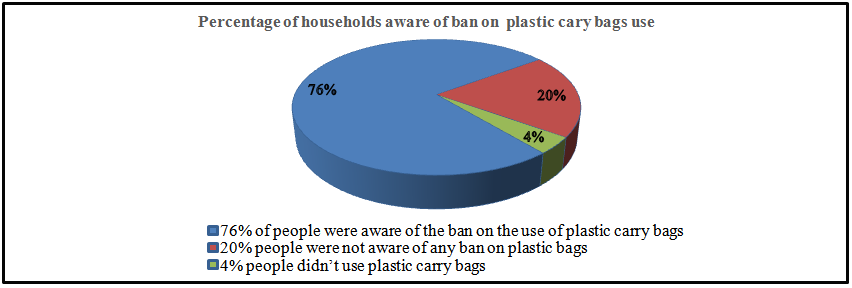
From time to time, the Department of Environment, Government of West Bengal and the West Bengal Pollution Control Board (WBPCB), too, has passed a number of regulations to restrict the use of plastic carry bags within the state of West Bengal 11. Plastic carry bags are totally banned in the ecologically sensitive areas and 40 heritage/tourist sites of West Bengal are declared as 'Plastic Carry Bag Free Zones’ 11. Although the local authority also imposed a ban on the use of plastic carry bags in the year of 2017, the use of it could not be stopped in Siliguri due to lack of strict rules and lack of public awareness.


Above Pie charts were prepared to measure the awareness of people. Pie Charts were used to measure public awareness of ban on use of plastic (Figure 9) and awareness on recycling of kitchen waste (Figure 10) and percentage of people feeding stray animals (Figure 11).
The Zero-Waste Management System of Siliguri Municipal Corporation was entrusted with the goal of achieving zero waste and the system is compliant with the Solid Waste Management rules,2016 which adheres to the policy of 3R (Reduce, Reuse and Recycle). The Sunya Project, Biomining of dumping ground and making compost from biodegradable solid waste were the preliminary initiatives of the corporation regarding zero waste management practices.
The Project Sunya regarding Zero Waste was initiated in the year of 2020 by SMC under Climate Resilient City Action Plan (CRCAP) of the CapaCITIES Project 2018, supported by Swiss Agency for Development and Cooperation (SDC). Pilot scale waste segregation was started from ward no.2 and 17, however, it was not implemented in all wards due to Covid 19 pandemic situation. 3 tons of segregated green waste, collected from ward no. 2 and 17 were processed in the Automated composting Centre (capacity 6 tons/day). 400 kg of compost were produced from the automated composting process.
68 tons -70 tons of non-segregated solid waste were processed through Windrow composting (capacity 110 tons/day).3 tons to 5 tons of compost were produced from this method.
The concept of waste to energy will also be initiated through the production of Refuse Derived Fuel (RDF) from the non-biodegradable solid waste. Mandatory arrangements will be made by the corporation to collect and sell RDF.
In May 2021, a Bio mining project was initiated in the dumping ground at ward no.42 of Siliguri Municipal Corporation. According to the concerned official source of SMC, approximately 1 lac tons of solid waste has been cleared since inception of the project. The project also aims to convert garbage with calorific values into Refuse Derived Fuel (RDF) and biodegradable part of the waste into compost.
5.2. Result of the Experimental AnalysisIt was found that experimental approach of zero waste management practices based on 3R considerably reduced domestic solid waste (except E waste and hazardous waste) by 65% in 100 houses within a period of six months. As the term “zero waste” doesn’t mean getting to zero waste—literally. Zero waste is much more complex than that it appears to be. It’s a concept that goes far beyond just recycling or even individual business actions, rather, it’s a web of actions, taken by all, that has the power to impact everything from climate change, to the health of our ecosystem and how we manufacture and consume products.
The average quantity of solid waste production in 100 houses was estimated to be 15500 kgs, which was reduced by 10110 kgs (Table 3) by using of 4340 kgs of uncooked kitchen waste as compost, using 2300 kgs of cooked kitchen waste to feed stray dogs and birds and by selling 3470 kgs of dry solid wastes to scrap buyers.
Average quantity of Total Solid Waste Reduction in 100 houses =Average quantity of Cooked Kitchen Waste + Average quantity of Uncooked Kitchen Waste + Average quantity of Recyclable Dry Solid Waste = 2300+4340+3470 = 10110 kgs.
Reduction Percentage (%) of Solid Waste in 100 houses = Average quantity of Total Solid waste Reduction/ Average quantity of Total Solid Waste Production * 100=10110/15500*100 = 65.23%.
The home-made compost was analyzed in a Tea board approved Soil Testing Laboratory, Darjeeling Tea Research & Management Association, Shivmandir, West Bengal except pH of the Compost. pH of the compost was tested by pH and moisture tester kit at home.
The pH of the compost was 7.80 which was almost neutral as recommended in the FCO (Fertilizer Control Order) standard, Government of India. FCO recommended value of pH is 6.5-7.5.
The Moisture % of the compost was 27 %, which was slightly different from FCO recommended value of 15% to 25%.
Carbon % of the compost was 16.51%, which was much like the FCO recommended value of 16% (minimum).
Percentage of available Nitrogen was 2.66%, which exceeded the FCO recommended value of 0.5%.
Available Phosphorus (0.88%) and available Potassium (1.49%) of the homemade compost slightly varied from the recommended value of FCO.
The amount of nitrogen found in home-made compost was higher because nitrogen-rich vegetables and fruit peels were added more to the compost than carbon-rich paper and dried leaves, as the purpose of making compost at home was to use vegetable and fruit scraps so that scraps were not thrown in the dustbin.
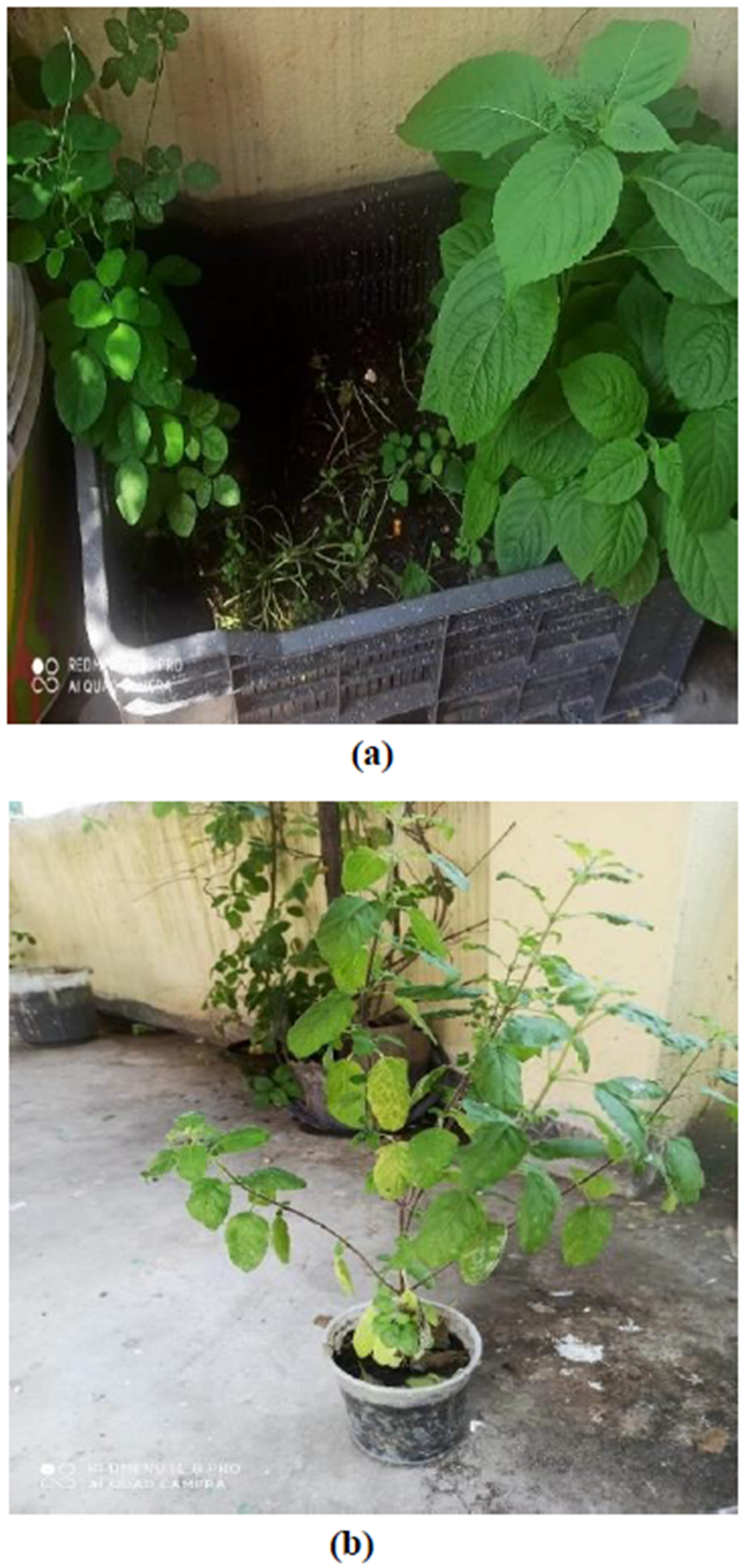
Ram Tulsi plant (Ocimum gratissimum Linn.) was found to grow very well by using this home-made compost, which contains more nitrogen than the normal amount of nitrogen.
A water application rate above field capacity together with nitrogen doses higher than normally recommended value has been reported to improve plant growth of Ocimum gratissimum Linn 12.
If the appropriate amount of nitrogenous and carbonaceous components were mixed during composting, this compost could be used at home to grow almost all kind of flowers and vegetables.

Solid waste management is one of the major concerns of Siliguri Municipal authority and will continue to remain so for at least a few more years till a stable, eco-friendly and sustainably effective means of solid waste management can be devised and implemented successfully. In addition to typical methods of centralized solid waste management system, Siliguri Municipal Corporation should also significantly undertake the management of hazardous solid waste originating from domestic source. Recently launched zero waste management practices with Sunya project and a composting unit under CapaCITIES and Biomining projects are although helping in the solid waste management but still a lot remains to be done specially for zero waste management. Thus, the participation of waste producers through decentralized solid waste management system should be initiated as soon as possible. The study revealed that 65.23%reduction of domestic waste was possible through the simple practices of 3R (reduce, reuse, recycle). However, all efforts will be in vain without the implementation of strict policies by the government regarding solid waste management. To move towards a zero-waste society, we need to focus on a smart recycling program, awareness drives and strict rules and regulations for solid waste management. Transitioning to a Zero Waste System is certainly not an overnight process. it’s a web of actions, to be undertaken by all which will have the power to impact everything from climate change, to the health of our ecosystem and how we manufacture and consume product.
| [1] | Roy, S. and Mandal, G, “Municipal Solid Waste: A Major Footprint in Urban Environment of Siliguri,” Research Review International Journal of multidisciplinary,4 (5), 406-416, May 2019. | ||
| In article | |||
| [2] | Chowdhury, D, “An Overview of Solid Waste Management in Siliguri Municipality,” West Bengal, International Journal of Research and Analytical Reviews,5 (3),882-888, July-Sept 2018. | ||
| In article | |||
| [3] | Climate Resilient City Action Plan – Siliguri., CapaCITIES, Swiss Agency for Development and Cooperation SDC, 2018. | ||
| In article | |||
| [4] | Guidelines for Handling, Treatment, and Disposal of Waste Generated during Treatment/Diagnosis/Quarantine of COVID-19 Patients., Central Pollution Control Board, March 2020. | ||
| In article | |||
| [5] | Latest Data on Dumpsites (As per reports submitted by States/Union Territories)., Central Pollution Control Board, August 2019. | ||
| In article | |||
| [6] | Wadhera, S. and Mishra, A, “Managing Waste at the household level: Field evidence from Delhi,” International Growth Centre, London School of Economics and Political Science, United Kingdom, October 2017. | ||
| In article | |||
| [7] | Registered plastic recyclers in West Bengal, 2016. https://www.wbpcb.gov.in/writereaddata/files/REGISTERED%20PLASTIC%20WASTE%20RECYCLERS-AUGUST%202018_1.pdf. | ||
| In article | |||
| [8] | Annepu, R.K., “Sustainable Solid Waste Management in India”, Columbia University, New York, 2012. | ||
| In article | |||
| [9] | Nandy, B., Sharma, G., Garg, S., Kumari, S., George, T., Sunanda, Y. and Sinha, B, “Recovery of consumer waste in India – A mass flow analysis for paper, plastic and glass and the contribution of households and the informal sector”, Resources, Conservation and Recycling, 101, 167-181, May 2015. | ||
| In article | View Article | ||
| [10] | Hussein, I., Abdel-Shafy., Mona, S. M. Mansour, “Solid waste issue: Sources, composition, disposal, recycling, and valorization,” Egyptian Journal of Petroleum, 27, 1275-1290, July 2018. | ||
| In article | View Article | ||
| [11] | Restriction on use of Plastic carry bags in West Bengal, http. ://web.wbpcb.gov.in/html/press release/plastic.shtml. | ||
| In article | |||
| [12] | Vilanova, C. M., Coelho, K. P., Luz, T. R. S. A., Silveira, D. P. B., Coutinho, D. F. and Moura, E. G. de, “Effect of different water application rates and nitrogen fertilisation on growth and essential oil of clove basil (Ocimum gratissimum L.),” Industrial Crops and Products, 125, 186-197, December 2018. | ||
| In article | View Article | ||
| [13] | Mandal, P., Chaturvedi, M.K., Bassin, J.K., Vaidya, A.N. and Gupta, R.K, “Qualitative assessment of municipal solid waste compost by indexing method,” International Journal of recycling of Organic Waste in Agriculture, 3, 133-139, October 2014. | ||
| In article | View Article | ||
Published with license by Science and Education Publishing, Copyright © 2021 A. Baul Das and C. Gurung
 This work is licensed under a Creative Commons Attribution 4.0 International License. To view a copy of this license, visit
http://creativecommons.org/licenses/by/4.0/
This work is licensed under a Creative Commons Attribution 4.0 International License. To view a copy of this license, visit
http://creativecommons.org/licenses/by/4.0/
| [1] | Roy, S. and Mandal, G, “Municipal Solid Waste: A Major Footprint in Urban Environment of Siliguri,” Research Review International Journal of multidisciplinary,4 (5), 406-416, May 2019. | ||
| In article | |||
| [2] | Chowdhury, D, “An Overview of Solid Waste Management in Siliguri Municipality,” West Bengal, International Journal of Research and Analytical Reviews,5 (3),882-888, July-Sept 2018. | ||
| In article | |||
| [3] | Climate Resilient City Action Plan – Siliguri., CapaCITIES, Swiss Agency for Development and Cooperation SDC, 2018. | ||
| In article | |||
| [4] | Guidelines for Handling, Treatment, and Disposal of Waste Generated during Treatment/Diagnosis/Quarantine of COVID-19 Patients., Central Pollution Control Board, March 2020. | ||
| In article | |||
| [5] | Latest Data on Dumpsites (As per reports submitted by States/Union Territories)., Central Pollution Control Board, August 2019. | ||
| In article | |||
| [6] | Wadhera, S. and Mishra, A, “Managing Waste at the household level: Field evidence from Delhi,” International Growth Centre, London School of Economics and Political Science, United Kingdom, October 2017. | ||
| In article | |||
| [7] | Registered plastic recyclers in West Bengal, 2016. https://www.wbpcb.gov.in/writereaddata/files/REGISTERED%20PLASTIC%20WASTE%20RECYCLERS-AUGUST%202018_1.pdf. | ||
| In article | |||
| [8] | Annepu, R.K., “Sustainable Solid Waste Management in India”, Columbia University, New York, 2012. | ||
| In article | |||
| [9] | Nandy, B., Sharma, G., Garg, S., Kumari, S., George, T., Sunanda, Y. and Sinha, B, “Recovery of consumer waste in India – A mass flow analysis for paper, plastic and glass and the contribution of households and the informal sector”, Resources, Conservation and Recycling, 101, 167-181, May 2015. | ||
| In article | View Article | ||
| [10] | Hussein, I., Abdel-Shafy., Mona, S. M. Mansour, “Solid waste issue: Sources, composition, disposal, recycling, and valorization,” Egyptian Journal of Petroleum, 27, 1275-1290, July 2018. | ||
| In article | View Article | ||
| [11] | Restriction on use of Plastic carry bags in West Bengal, http. ://web.wbpcb.gov.in/html/press release/plastic.shtml. | ||
| In article | |||
| [12] | Vilanova, C. M., Coelho, K. P., Luz, T. R. S. A., Silveira, D. P. B., Coutinho, D. F. and Moura, E. G. de, “Effect of different water application rates and nitrogen fertilisation on growth and essential oil of clove basil (Ocimum gratissimum L.),” Industrial Crops and Products, 125, 186-197, December 2018. | ||
| In article | View Article | ||
| [13] | Mandal, P., Chaturvedi, M.K., Bassin, J.K., Vaidya, A.N. and Gupta, R.K, “Qualitative assessment of municipal solid waste compost by indexing method,” International Journal of recycling of Organic Waste in Agriculture, 3, 133-139, October 2014. | ||
| In article | View Article | ||