Polyethylene terephthalate (PET) is among the major plastics produced, and thus the PET nanoparticles are distributed worldwide in marine systems. In this work, the effects of PET nanoparticles (NanoPET) in the shrimp feed were determined in juveniles of shrimp Litopenaeus vannamei. No significant changes in the concentrations of triglycerides and cholesterol in hemolymph were detected. A slight but not significantly higher nitrites content in the shrimp hepatopancreas was detected when the NanoPET concentration in the feed was increased, while a significant higher ROS generation was detected at high NanoPET concentration. This increase in ROS generation matched with the increase of gene expression of antioxidative proteins catalase, superoxide dismutase, and glutathione peroxidase, while glutathione transferase was not affected. Thus, these increased levels of antioxidant enzymes in shrimps exposed to NanoPET seem to be a protection response by the generation of free radicals induced by the presence of nanoplastic.
Since 1950 plastic has become a material globally used with numerous applications in all technology fields. The cumulative global plastic production until 2015 had reached 7.82 billion tons 1, and consequently, enormous waste production has been accumulated in the biosphere. In marine ecosystems, plastics represent 75% of the marine garbage, from which 80% is generated from terrestrial activities 2. According to the World Economic Forum, the estimation for 2020 of plastic waste floating in the sea worldwide was more than 250,000 tons. As a consequence of this enormous waste production, plastics are one of the most critical pollutants of modern times due to global concern in terms of aquatic and terrestrial environmental impact and thus also of public health 3. Among plastics, polyethylene terephthalate (PET) production was estimated in 2020 to be approximately 73.39 million metric tons 4.
Besides its recalcitrance to the microbial degradation, the plastics are mainly degraded in the environment by UV light, mechanical forces to form tiny plastic particles such as microplastics (MPs < 5 mm) and nanoplastics (NPs < 100 nm) that are worldwide distributed in marine systems 5, 6, 7, as well in terrestrial environments, and even in polar regions 8. In addition, environmental degradation is not the only source of MPs and NPs, some industrial and domestic activities produce and disperse micro and nanosized plastics 9, 10, 11, 12.
The special properties of nanoparticles make them unique and dangerous pollutants 13. Thus, the environmental impact and health risks associated with micro and nanoplastics have become a global concern because of the constant organism exposure (Table 1) and their unavoidable transfer through the food chain 14, 15. Importantly, the health risk of human exposure has been evidenced by microplastics isolated from human placenta 16 and feces 17. Inhalation and ingestion are the main uptake routes in the different organisms, including humans 18, 19. The concern of MPs and NPs oral ingestion is evident due to their presence in foodstuffs such as table salt 20, 21, beverages 22, 23, and meat for human consumption 24, 25, 26. Furthermore, it is well known that MPs are absorbed, biodistributed 27, and bioaccumulated in different organisms such as mussels 28, zebrafish 29, and others 19. In addition, there is evidence that polystyrene 30, polyurethane/polyacrylate 11, and PET nanoparticles can be cell internalized 10, 31.
Due to the importance of shrimp aquacultures and the risk of trophic transfer of NPs is evident. Here, the effect of PET nanoparticles ingestion by shrimp was analyzed and discussed.

The PET nanoparticles (NanoPET) were produced according to Rodríguez-Hernández et al. 10. Briefly, PET bottom bottles were ground, and the powder was sieved through a 200 µm sieve. Then, 1 g of PET powder was diluted into 90% tetrahydrofuran (THF) at 50°C and shaken for 2 hours. The solution was then kept without agitation for 24 hours. Afterward, water was added to obtain a 20% THF solution and rest for 24 h at room temperature. After MPs sedimentation, the supernatant was recovered containing the NanoPET.
2.2. NanoPET CharacterizationPET nanoparticles were resuspended in a 0.5% sodium dodecyl sulfate (SDS) solution, and the hydrodynamic diameter distribution and zeta potential were analyzed by Dynamic Light Scattering (DLS) on a Zetasizer NanoZS (Malvern, UK). The morphology and size of PET-NPs were determined by High-Resolution Transmission Electron Microscopy (HRTEM) on a JEM-2100F (STEM) microscope from JEOL at 200 keV. Additionally, micro-Raman measurements were carried out with a Lambda Solutions P2 equipped with a 5 mW CW Nd-YAG laser coupled to optical microscope Olympus BX-41. An objective lens of 100X and the laser beam source of excitation (= 531 nm) with a spot size of 5 µm were used to analyze NanoPET. The Raman spectra were captured over 20 acquisitions of 1 s each one, in the range 160 - 3200 cm-1.
2.3. Shrimp Diet Preparation Containing NanoPETShrimp diets were formulated according to their requirements 32 containing four different concentrations of NanoPET (0, 0.25, 0.5. and 1% w/w of NanoPET) (Table 2). Feed (300 g) for each NanoPET content were produced, enough to feed all organisms for each dietary treatment in triplicate for over 30 days. First, all ingredients were carefully blended using a food processor. Then, the final mixture was extruded through a syringe to form 1.5-2 mm threads, which were dried for 40 min and cut to obtain 4-5 mm long pellets. The pellets were dried at 60°C for 24 hours and stored under darkness.
Experiments were carried out with juveniles of Litopenaeus vannamei shrimps randomly distributed into 12 experimental units of 20 L, in triplicate groups. The system was equipped with a recirculation system (RAS) composed of two 1,000-L circular tanks, pump, biofilter and protein skimmer. Water temperature (27.9 ± 0.9°C), salinity (35.8 ±0.8 ppt) and dissolved oxygen (5.60 ± 0.65 mg L-1) were monitored daily (YSI-55, YSI Inc., Yellow Springs, OH, USA) and total ammonia (0.06 ±0.01 mg L-1), nitrite (0.20 ±0.01 mg L-1) and alkalinity (104.7 ±4.2 mg L−1) were measured every three days (API test kits, Mars Fishcare Inc., Chalfont, PA, USA) (mean ±SE). Shrimps were fed with the respective experimental diets (triplicate treatments) three times a day (08:00, 12:00 and 17:00 h) for 33 days (at 6% from total biomass per day).
2.5. SamplingAfter 33 days experimental trial, shrimps were sampled and euthanized by hypothermia according to the ethic committee protocols at UABC. All organisms were individually weighed, and the hemolymph extracted from one of each experimental unit (three per treatment) with a syringe containing anticoagulant (Alsever modified), while half of hepatopancreas were dissected, weighed, and sampled for further chemical analysis. The other half of individuals were used to sample the hepatopancreas for gene expression analysis and thus placed in a RNAlater® solution and stored at -80°C until molecular analysis.
2.6. Hemolymph AnalysisFrom the hemolymph extracted, total protein was analyzed using the Biuret reagent (Sigma-Aldrich) and measured at 540 nm. The standard curve was obtained using bovine serum albumin (BSA) and protein reported as protein equivalent to BSA. Glucose was quantitatively determined with a kit (Valtek diagnostics, , Santiago de Chile) in which glucose is oxidized to gluconic acid and hydrogen peroxide by glucose oxidase. Then, the hydrogen peroxide reacts with p-hydroxybenzoic acid and 4-amino-antipyrine in the presence of peroxidase. The colored product is spectrophotometrically measured at 505 nm. Triglycerides were estimated after hydrolysis with a specific lipase producing fatty acids and glycerol. The enzyme glycerol kinase phosphorylates the glycerol, and the glycerol-1-phosphate is oxidized by the glycerolphosphate oxidase generating hydrogen peroxide, which is then determined with 4-amino-antipyrine and 3,5-dichloro-2-hydroxy-benzensulfonic acid in the presence of peroxidase and measured at 520 nm (Valtek diagnostics, Santiago de Chile). Finally, cholesterol was determined by an enzymatic method in, which the cholesterol esterase hydrolyzes the cholesterol, and the free cholesterol is then oxidized by the cholesterol oxidase producing hydrogen peroxide which is quantified by the chromogenic system containing p-hydroxybenzoic acid and 4-aminoantipyrine in the presence of peroxidase and measured at 505 nm (Valtek diagnostics, Santiago de Chile).
2.7. Analysis of the HepatopancreasThe hepatopancreas from shrimps was individually analyzed for protein, nitrites, and reactive oxygen species (ROS). Each hepatopancreas was homogenized in a Dounce glass homogenizer for tissues. The protein was determined by bicinchoninic acid kit (BCA) (Thermo Scientific) and using bovine serum albumin as protein standard. Total nitrites were determined with a modified Griess reagent containing naphthylethylenediamine and sulfanilamide 33. The Griess reagent (100 L) was added to 100 L of tissue homogenate mixed and kept for 15 min. The mixture was then read in a spectrophotometer (Lambda 25, Perkin Elmer) at 540 nm.
The ROS were measured according to Rastori et al. 34. In brief, 2’,7’-dichlorodihydro-fluorescein diacetate (DCFH-DA) was purchased from Molecular Probes, Inc. (Eugene, OR, USA). For the experiments, a stock solution of 2 mM (w/v) DCFH-DA in ethanol was prepared and kept at -20°C in the dark for further use. To estimate the ROS content in the hepatopancreas, 100 L of 5 μM DCFH-DA solubilized in ethanol were added to 100 mL of homogenate, and the mixture was incubated on a shaker at room temperature in the dark for 1 h. The DCFH-DA is a nonpolar dye that is converted into the polar derivative DCFH by cellular esterases. Thus, DCFH is nonfluorescent but switched to highly fluorescent DCF when oxidized by tissue ROS. After one-hour incubation, samples were measured in a spectrofluorometer (Cary Eclipse, Agilent) with an excitation wavelength of 485 nm and emission of 535 nm.
2.8. Gene Expression of Antioxidative ProteinsHepatopancreas samples were preserved in RNAlater (Ambion GmbH, Germany) and individually processed for total RNA extraction using the PureLink® RNAlink Minikit (Ambion GmbH, Germany) Genomic DNA (gDNA) was removed via on-column using PureLink® DNase (Invitrogen) following the manufacturer instructions. A micropistill was used to homogenize the tissue before the extraction. The quantity and quality of RNA were measured using gel electrophoresis and spectrophotometer (Nanodrop® LITE, Thermo Fisher Scientific INC., Wilmington, USA). Only RNA samples with A260 nm-A280 nm ratios between 1.90 and 2.10 were used for expression quantification.
Total RNA (500 ng) was reverse-transcribed in a 20 μL reaction using the High-Capacity cDNA Reverse Transcription kit (Applied Biosystems; Carlsbad CA, USA) in a Verity 96 well thermal cycler (Applied Biosystems). The reverse transcription program consisted of 10 min at 25°C, 120 min at 37°C, 5 min at 85°C, and finally kept at 4°C. qRT-PCR reactions were performed with one ng of cDNA, sense, and antisense primers (200 nM each, indicated in Table 3) and SYBR® Select Master Mix (Applied Biosystems). Reactions were conducted in 10 μL, in MicroAmp® Fast Optical 96-well reaction plates (Applied Biosystems) covered with MicroAmp® Optical Adhesive Film (Applied Biosystems).
Relative gene quantification was calculated by the ΔΔCT method 35 using an automated threshold and walking baseline for determining the CT values. PCR conditions were as follows: an initial denaturation and polymerase activation step during 10 min at 95°C; 40 cycles of denaturing for 15 s at 95°C, annealing and extension for 45 s at 60°C; and a final melting curve from 60°C to 95°C for 20 min to check for primer-dimer artifacts. Optimization of qRT-PCR conditions was made on primer annealing temperature (60°C), primer concentration (200 nM), and template concentration (five 1:10 dilution series from 10 ng to 100 fg of input RNA). β-actin (actb) was used as the internal reference gene (GenBank acc. no AF300705). GenBank accession numbers for the studied genes are: AB108065 for superoxide dismutase (sod), XM_027351980 for glutathione-S-transferase (gst), AY973252.2 for glutathione peroxidase (gpx) and AY518322 for catalase (cat) according to Table 3.
2.9. Statistical AnalysisSignificant differences in all determinations were analyzed by one-way ANOVA test, followed by post-hoc Tukey rank test. Statistical significance was set at P < 0.05. Statistical analysis was performed using the software STATISTICA 8.0™ (StatSoft, Inc. USA).
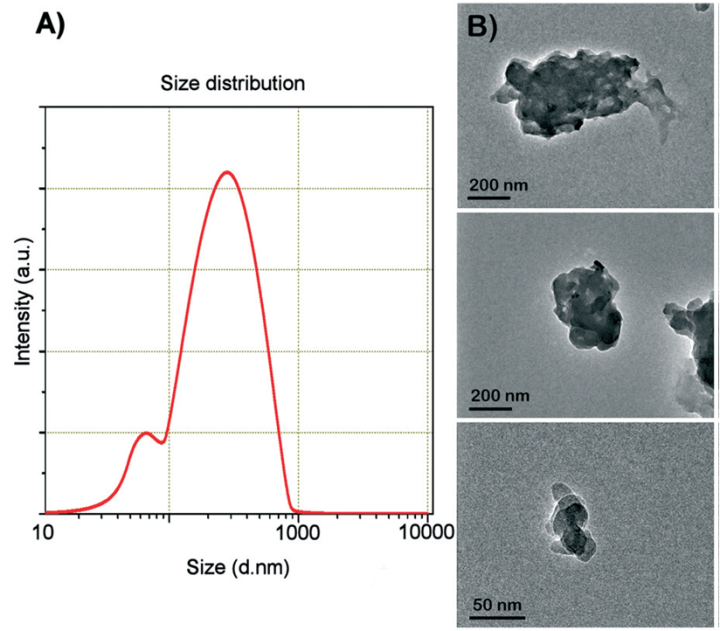
The produced nanoparticles of polyethylene terephthalate (NanoPET) were characterized by both transmission electron microscopy (TEM) and dynamic light dispersion (DLS). Figure 1 shows the size distribution and the TEM images. The NanoPET showed hydrodynamic diameters from 50 to 350 nm with an average value of 169 nm and a Zeta potential of -45.8 mV. Nondestructive characterization of NanoPET was performed by Raman spectroscopy, and spectra NanoPET showed the characteristic bands from PET in the range 1100-3100 cm-1. The Raman frequency shifts of different bands were, 1290 cm-1 which is characteristic with C-C ring stretching, C=O stretching, and C-O bending; 1614 cm-1 which is characteristic to C-C ring stretching and C-H bending; 1732 cm-1 for C-C stretching and 3082 cm-1 which is associated with C-H aromatic stretching 36. When labeled for fluorescence with Nile Red, the NanoPET showed a maximal excitation at 558 nm and emission at 637 nm.

The shrimp individuals were measured and weighed before and after the experiments. The results are shown in Table 4. Interestingly, treatments with NanoPET showed an increase in both weight and length up to the treatment with 1 mg/g of NanoPET, in which a reduction of weight increment was noted, and a drastic reduction of the size of 15.8% after 33 days treatment.
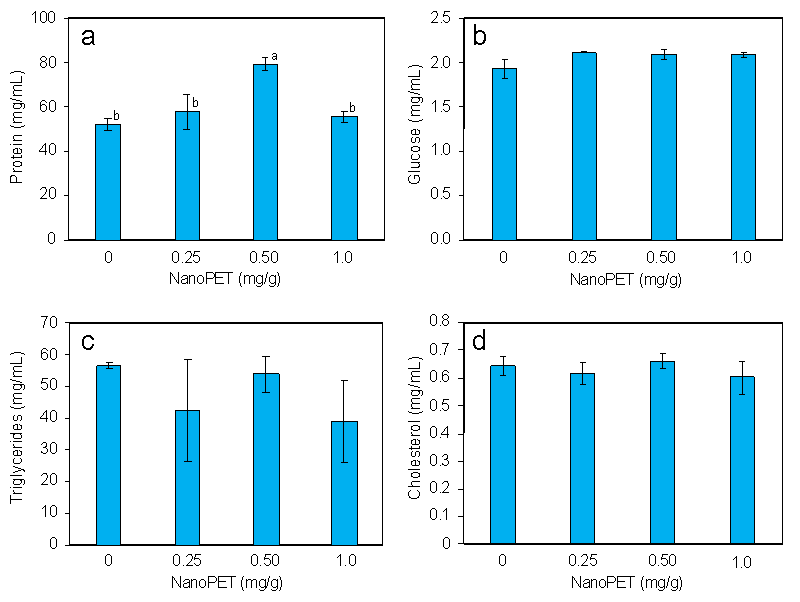
The effect of the presence of NanoPET in the shrimp feed on the protein, glucose, triglycerides, and cholesterol contents in hemolymph was determined (Fig. 2a-d). The protein content slightly increased as the concentration of NanoPET increased and was only significantly higher at 0.5 mg/mL. At 1 mg/mL, the protein decreased at the control levels (Figure 2a). No changes were detected in the glucose content, even if the statistical analysis showed that the glucose content was significantly higher in the NanoPET treatments when compared with the control (Figure 2b). Also, no significant changes in the concentrations of triglycerides (Figure 2c) and cholesterol (Figure 2d) were detected.
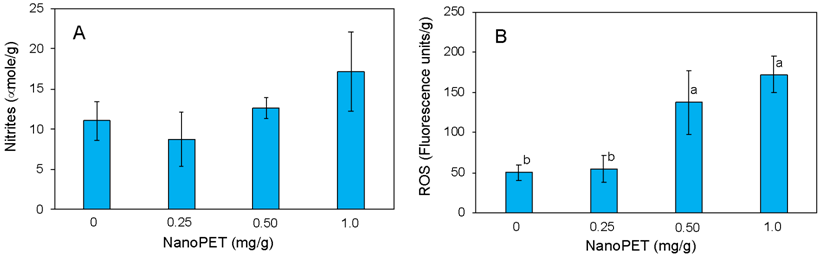
The hepatopancreas from shrimps treated with different levels of NanoPET were analyzed for protein, nitrites, and reactive oxygen species (ROS). A slight but not significantly higher nitrites content was detected when the NanoPET concentration in the feed was increased (Figure 3A). On the contrary, ROS generation was significantly increased at high NanoPET concentration (Figure 3B).


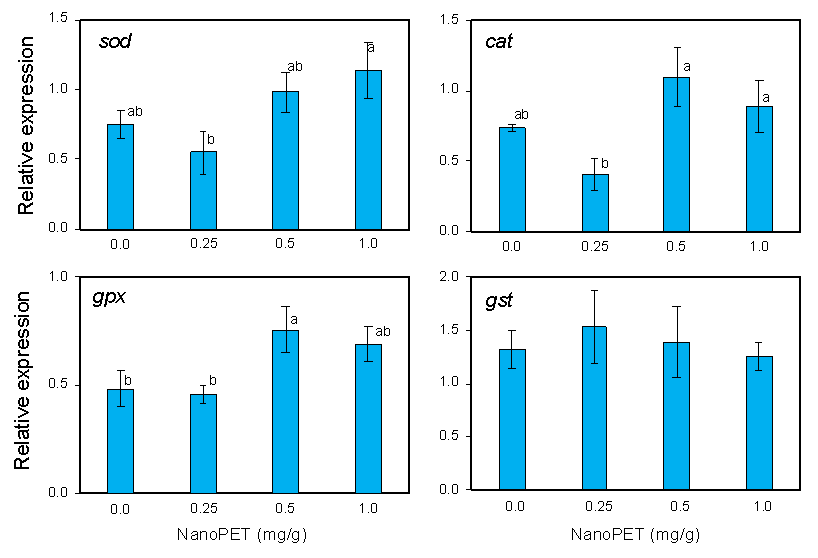
The expression of oxidative stress-relevant genes according to different amounts of NanoPET is presented in Figure 4. In general, the increase in NanoPET resulted in significantly higher expression (p < 0.05) in superoxide dismutase (sod), catalase (cat) and glutathione peroxidase (gpx) levels at the highest concentration of NanoPET in diet (0.5 and 1.0 mg/g). However, the expression level of glutathione-S-transferase (gst) showed a non-significant trend to decrease as the NanoPET was included in the diet, where the highest average expression level was found in the 0.25 mg/g group, without significant differences among treatments (p= 0.89).
The formation of plastic nanoparticles (nanoplastics) from plastic wastes has been unequivocally evidenced 19. However, little is known about the effects of these materials on living organisms at the subcellular or molecular levels. This information is even scarce for aquatic organisms. Most studies have been carried out with commercially available polystyrene nanoparticles, and until this work, studies with PET are missing. Fortunately, a method for producing large amounts of NanoPET allowing toxicity studies has been previously reported 11. In addition, most of the studies have been performed suspending the plastic nanoparticles in the water, and only a few studies were performed with added nanoplastics to the diet. Since shrimp species are a vast food resource for human consumption, it is crucial to evaluate the potential effects of plastic pollution on the physiology of shrimp species. Nanoparticles from plastic are rapidly accumulated in the gastrointestinal tract to cross the gut’s epithelial barrier in crustacean organisms 37.
The specific growth rate increased first and then decreased with increasing NanoPET concentration (Table 4). This hormetic effect has also been detected in river prawn (Macrobrachium nipponense) exposed to polystyrene nanoparticles 38 and justified by the authors as an effort of the organism to maintain the homeostasis. Hormesis is defined as a dose-response phenomenon characterized by low-dose stimulation and high-dose inhibition and has been recognized as representing an overcompensation for mild environmental stress. On the opposite, no significant changes in the length, wet weight, dry weight, and water content were detected compared with the unexposed (control) of white-leg shrimp Litopenaeus vannamei via dietary exposure 39. Also, no changes in growth in the presence of nanoplastics have been found in bivalves 40 and fish 41.
Scarce previous information on the effect of nanopalstics on crustacean hemolymph is available in the literature. We have found no significant differences in glucose, triglycerides, and cholesterol after NanoPET ingestion (Figure 2). Accordingly, no significant changes in glucose, triglycerides, and cholesterol were found in fish plasma after exposure to nanoplastics 42. Coates and Söderhall 43 reported an increase in the glucose content as the organism response to the exposure to microplastic, of different sizes, of crustaceans and bivalves, while no changes in the cholesterol and triglycerides contents were detected.
Stress biomarkers (nitrites and ROS) were determined in shrimp hepatopancreas (Figure 3). Nitrite (NO2-) is a widely accepted surrogate marker for nitric oxide, which is a signaling molecule involved in numerous biological pathways, including multiple diseases and injury processes involving ischemia, infection, and inflammation 44. On the other hand, the DCFH-DA method used in this work has been successfully used in different tissues 45, 46. A slight increase in nitrite content and a significant increase in ROS concentration were found at high NanoPET concentrations. Animal experiments have shown paradoxical results, including beneficial and deleterious effects exerted by nitric oxide (*NO) in experimental models of fibrosis 47. In aquatic organisms, such as shrimps, the function and immune status of nitric oxide synthase (NOS) and its catalyzing product nitric oxide have been scarcely studied. However, nitric oxide is a critically important component of the innate immune system, which has anti-viral, anti-bacterial, and anti-parasite properties by damaging the DNA, enzyme, and membrane of the pathogen, directly or indirectly through the action on the DNA bases and strands, in membrane’s proteins and lipids 48, 49. In shrimp hemocytes, the nitric oxide synthase and its metabolites nitrites seem to be involved in the non-specific defense of shrimps to virus infection 50.
On the other hand, consistently with our results (Figure 3), the intracellular ROS production was significantly increased in D. magna exposed to a non-functionalized polystyrene nanoparticles suspension, while remarkable reductions were observed for the functionalized nanoparticles treatments 51. In addition, ROS generation induced by nanoplastics has been reported in other aquatic organisms 52.
Due to the ROS production increase, significant changes in the expression of the antioxidant enzyme battery were detected (Figure 4). Consistently, in juvenile shrimp Macrobrachium nipponense, as the nanoplastic concentration increased, the expressions of sod, cat, gpx, and gst genes first increased and then decreased 52, as well in the well-studied Daphnia pulex 53. This increase in sod, cat, gpx, and gst genes was also found in 21-days old D. pulex exposed for 96 hours to polystyrene nanoparticles. Also, the activities of GST and SOD in the hepatopancreas of L. vannamei dietary-exposed to polystyrene nanoparticles were slightly higher than in the shrimp control group 39. Similarly, in the giant river prawn, Macrobrachium rosenbergii, enzymatic antioxidants (SOD, CAT, GST, and GPx) showed elevated dose-dependently function in prawns fed with polystyrene and polyethylene particles incorporated through feed 54. Thus, the increased levels of antioxidant enzymes observed in shrimps exposed to NanoPET seems to be a protection response by the generation of free radicals induced by the presence of NanoPET.

Aquatic organisms are at risk due to the presence of nanoplastics in the water. This risk is also true for the cultured organism used for human food. The results from our study showed that both hemolymph, hepatopancreas tissue, and gene expression are affected by the presence of NanoPET in the shrimp feed. Furthermore, the increase of ROS generation and the consequential increase of antioxidant proteins to compensate the oxidative stress suggest that NanoPET affects the health of juvenile shrimps. Nevertheless, additional research efforts should be made to determine the long-term exposure and the trophic transfer of nanoplastics in natural and industrial aquatic environments.
IP: Investigation, Data curation. JAMS: Investigation, Data curation, Formal analysis. ARH: Conceptualization, Supervision. ORZ: Investigation. MTV: Conceptualization. RVD: Conceptualization, Writing – review & editing, Funding acquisition, Supervision.
The authors declare that they have no known competing financial interests or personal relationships that could have appeared to influence the work reported in this paper.
Thanks are due for the financial support to National Council of Science and Technology of Mexico (CONACyT). This work is part of the SINANOTOX activities.
| [1] | Geyer, R., Jambeck J.R., Law, K.L. “Production, use, and fate of all plastics ever made”. Sci. Adv. 2017; 3: e1700782. 2017. | ||
| In article | View Article PubMed | ||
| [2] | Henderson, L., Green, C. “Making sense of microplastics? Public understandings of plastic pollution”. Mar. Pollut. Bull. 152, 110908. 2020. | ||
| In article | View Article PubMed | ||
| [3] | VishnuRadhan, R., Eldho, T.I., Divya David, T. “Can plastics affect near surface layer ocean processes and climate?” Mar. Pollut. Bull. 140, 274-280. 2019. | ||
| In article | View Article PubMed | ||
| [4] | Statista, 2021. https://www.statista.com/statistics/650191/global-polyethylene-terephthalate-production-outlook/. | ||
| In article | |||
| [5] | Yin, L., Jiang, C., Wen, X., Du, C., Zhong, W., Feng, Z., Long, Y., Ma, Y. “Microplastic pollution in surface water of urban lakes in Changsha, China”. Int. J. Environ. Res. Public Health, 16, 1650. 2019. | ||
| In article | View Article PubMed | ||
| [6] | Koelmans, A.A., Mohamed Nor, N.H., Hermsen, E., Kooi, M., Mintenig, S. M., De France, J. “Microplastics in freshwaters and drinking water: Critical review and assessment of data quality”. Water Res. 155, 410-422. 2019. | ||
| In article | View Article PubMed | ||
| [7] | Lu, S., Qiu, R., Hu, J., Li, X., Chen, Y., Zhang, X., Cao, C., Shi, H., Xie, B., Wu, W.-M., He, D. “Prevalence of microplastics in animal-based traditional medicinal materials: Widespread pollution in terrestrial environments”. Sci. Total Environ. 709, 136214. 2020. | ||
| In article | View Article PubMed | ||
| [8] | Obbard, R.W. “Microplastics in polar regions: the role of long range transport”. Curr. Op. Environ. Sci. Health 1, 24-29. 2018. | ||
| In article | View Article | ||
| [9] | Lechner, A., Ramler, D. “The discharge of certain amounts of industrial microplastic from a production plant into the River Danube is permitted by the Austrian legislation”. Environ. Pollut. 200, 159-160. 2015. | ||
| In article | View Article PubMed | ||
| [10] | Rodriguez-Hernandez, A.G., Alejandro Muñoz-Tabares, J., Cristóbal Aguilar-Guzmán, J., Vazquez-Duhalt R. “A novel and simple method for polyethylene terephtalate (PET) nanoparticle production”. Environ. Sci. Nano, 6, 2031-2036, 2019. | ||
| In article | View Article | ||
| [11] | Rodríguez-Hernández, A.G., Chiodoni, A., Bocchini, S., Vazquez-Duhalt, R. “3D printer waste, a new source of nanoplastic pollutants”. Environ. Pollut. 267, 115609. 2020. | ||
| In article | View Article PubMed | ||
| [12] | Deng, H., Wei, R., Luo, W., Hu, L., Li, B., Di, Y., Shi, H. “Microplastic pollution in water and sediment in a textile industrial area”. Environ. Pollut. 258, 113658. 2020. | ||
| In article | View Article PubMed | ||
| [13] | Wigginton, N.S., Haus, K.L., Hochella, M.F. “Aquatic environmental nanoparticles”. J. Environ. Monitoring, 9, 1306–1316. 2007. | ||
| In article | View Article PubMed | ||
| [14] | Chae, Y., Kim, D., Kim, S.W., An Y-J. “Trophic transfer and individual impact of nano-sized polystyrene in a four-species freshwater food chain. Sci. Rep. 8, 284. 2018. | ||
| In article | View Article PubMed | ||
| [15] | Chae Y., An Y-J. “Nanoplastic ingestion induces behavioral disorders in terrestrial snails: trophic transfer effects via vascular plants”. Environ. Sci. Nano, 7, 975-983. 2020. | ||
| In article | View Article | ||
| [16] | Ragusa, A., Svelato, A., Santacroce, C., Catalano, P., Notarstefano, V., Carnevali, O., Papa, F., Ciro M., Rongioletti, A., Baiocco, F., Draghi, S., D'Amore, E., Rinaldo, D., Matta, M., Giorgini, Plasticenta E. “First evidence of microplastics in human placenta”. Environ. Int. 146, 106274. 2021. | ||
| In article | View Article PubMed | ||
| [17] | Zhang, J., Wang, L., Trasande, L., Kannan, K. “Occurrence of polyethylene terephthalate and polycarbonate microplastics in infant and adult feces”. Environ. Sci. Technol. Lett. 8, 989-994. 2021. | ||
| In article | View Article | ||
| [18] | Rubio, L., Marcos, R., Hernández, A. “Potential adverse health effects of ingested micro- and nanoplastics on humans. Lessons learned from in vivo and in vitro mammalian models”. J. Toxicol. Environ. Health - Part B: Crit. Rev. 23, 51-68. 2020. | ||
| In article | View Article PubMed | ||
| [19] | Castelvetro, V., Corti, A., Bionchi, S., Giacomelli, G., Manariti, A., Vinciguerra, V. “Microplastics in fish meal: Contamination level analyzed by polymer type, including polyester (PET), polyolefins, and polystyrene”. Environ. Pollut. 273, 115792. 2021. | ||
| In article | View Article PubMed | ||
| [20] | Lee, H., Kunz, A., Shim, W.J., Walther, B.A. “Microplastic contamination of table salts from Taiwan, including a global review”. Sci. Rep. 9, 10145. 2019. | ||
| In article | View Article PubMed | ||
| [21] | Wong, S.L., Nyakuma, B.B., Wong, K.Y., Lee, C.T., Lee, T.H., Lee, C.H. “Microplastics and nanoplastics in global food webs: A bibliometric analysis (2009-2019)”. Mar. Pollut. Bull. 158, 111432. 2020. | ||
| In article | View Article PubMed | ||
| [22] | Hernandez, L.M., Xu, E.G., Larsson, H.C.E., Tahara, R., Maisuria, V.B., Tufenkji, N. “Plastic teabags release billions of microparticles and nanoparticles into tea”. Environ. Sci. Technol. 53, 12300-12310. 2019. | ||
| In article | View Article PubMed | ||
| [23] | Diaz-Basantes, M.F., Conesa, J.A., Fullana, A. “Microplastics in honey, beer, milk and refreshments in Ecuador as emerging contaminants”. Sustainability (Switzerland), 12, 5514. 2020. | ||
| In article | View Article | ||
| [24] | Van Cauwenberghe, L., Janssen, C.R. “Microplastics in bivalves cultured for human consumption”. Environ. Pollut. 193, 65-70. 2014. | ||
| In article | View Article PubMed | ||
| [25] | Barboza, L.G.A., Dick Vethaak, A., Lavorante, B.R.B.O., Lundebye, A.K., Guilhermino, L. “Marine microplastic debris: An emerging issue for food security, food safety and human health”. Mar. Pollut. Bull. 133, 336-348. 2018. | ||
| In article | View Article PubMed | ||
| [26] | De-la-Torre, G.E. “Microplastics: an emerging threat to food security and human health”. J. Food Sci. Technol. 57, 1601-1608. 2020. | ||
| In article | View Article PubMed | ||
| [27] | Deng, Y., Zhang, Y., Lemos, B., Ren, H. “Tissue accumulation of microplastics in mice and biomarker responses suggest widespread health risks of exposure”. Sci. Rep. 7, 46687. 2017. | ||
| In article | View Article PubMed | ||
| [28] | Li, J., Yang, D., Li, L., Jabeen, K., Shi, H. “Microplastics in commercial bivalves from China”. Environ. Pollut. 207, 190-195. 2015. | ||
| In article | View Article PubMed | ||
| [29] | Boyle, D., Catarino, A.I., Clark, N.J., Henry, T.B. “Polyvinyl choride (PVC) plastic fragments release Pb additives that are bioavailable in zebrafish”. Environ. Pollut. 263, 114422. 2020. | ||
| In article | View Article PubMed | ||
| [30] | Jeong, C.B., Won, E.J., Kang, H.M., Lee, M.C., Hwang, D.S., Hwang, U.K., Zhou, B., Souissi, S., Lee, S.J., Lee, J.S. “Microplastic size-dependent toxicity, oxidative stress induction, and p-JNK and p-P38 activation in the monogonont rotifer (Brachionus koreanus)”. Environ. Sci. Technol. 50, 8849-8857. 2016. | ||
| In article | View Article PubMed | ||
| [31] | Magrì, D., Sánchez-Moreno, P., Caputo, G., Gatto, F., Veronesi, M., Bardi, G., Catelani, T., Guarnieri, D., Athanassiou, A., Pompa, P.P., Fragouli, D. “Laser ablation as a versatile tool to mimic polyethylene terephthalate nanoplastic pollutants: characterization and toxicology assessment”. ACS Nano 12, 7690-7700. 2018. | ||
| In article | View Article PubMed | ||
| [32] | Araújo, B.C., Flores-Galvez, K., Honji, R.M., Barbosa, V.M., Viana, M.T., Tinajero, A., Mata-Sotres, J.A. “Arachidonic acid effects on the overall performance, fatty acid profile, hepatopancreas morphology and lipid-relevant genes in Litopenaeus vannamei juveniles”. Aquaculture, 523, 735207. 2020. | ||
| In article | View Article | ||
| [33] | Hensley, K., Shenyun, M., Quentin, N. P. Nitrite determination by colorimetric and fluorometric Griess diazotization assays. In Methods in Pharmacology and Toxicology: Methods in Biological Oxidative Stress (K. Hensley and R. A. Floyd Eds.) 2003. Humana Press Inc., Totowa, NJ pp. 185-193. | ||
| In article | |||
| [34] | Rastogi, R.P., Singh, S.P., Häder, D.-P., Sinha, R.P. “Detection of reactive oxygen species (ROS) by the oxidant-sensing probe 2’,7’-dichlorodihydrofluorescein diacetate in the cyanobacterium Anabaena variabilis PCC 7937”. Biochem. Biophys. Res. Commun. 397, 603-607. 2010. | ||
| In article | View Article PubMed | ||
| [35] | Livak, K.J., Schmittgen, T.D. “Analysis of relative gene expression data using real-time quantitative PCR and the 2-ΔΔCT method”. Methods 25, 402-408. 2001. | ||
| In article | View Article PubMed | ||
| [36] | Prata, J.C., da Costa, J.P., Silva Fernandes, A.J., Mendes da Costa, F., Duarte, A.C., Rocha-Santos, T. “Selection of microplastics by Nile Red staining increases environmental sample throughput by micro-Raman spectroscopy”. Sci. Total Environ. 783, 146979, 2021. | ||
| In article | View Article PubMed | ||
| [37] | Rosenkranz, P., Chaudhry, Q., Stone, V., Fernandes T.F. “A comparison of nanoparticle and fine particle uptake by Daphnia magna”. Environ. Toxicol. Chem. 28, 2142-2149. 2009. | ||
| In article | View Article PubMed | ||
| [38] | Li, Y., Liua, Z., Yang, Y., Jiang, Q., Wu, D., Huang, Y., Jiao, Y., Chen, Q., Huang, Y., Zhao Y. “Effects of nanoplastics on energy metabolism in the oriental river prawn (Macrobrachium nipponense)”. Environ. Pollut. 268, 115890. 2021. | ||
| In article | View Article PubMed | ||
| [39] | Chae, Y., Kim, D., Choi, M-J., Cho, Y., An, Y.-J. “Impact of nano-sized plastic on the nutritional value and gut microbiota of whiteleg shrimp Litopenaeus vannamei via dietary exposure“. Environ. Int. 130, 104848. 2019. | ||
| In article | View Article PubMed | ||
| [40] | Cole, M., Lindeque, P., Fileman, E., Halsband, C., Goodhead, R., Moger, J., Galloway, T.S. “Microplastic ingestion by zooplankton”. Environ. Sci. Technol. 47, 6646–6655. 2013. | ||
| In article | View Article PubMed | ||
| [41] | Lai, W., Xu, D., Li, J., Wang, Z., Ding, Y., Wang, X., Li, X., Xu, N., Maia, K., Aia Q. “Dietary polystyrene nanoplastics exposure alters liver lipid metabolism and muscle nutritional quality in carnivorous marine fish large yellow croaker (Larimichthys crocea)”. J. Hazardous Mat. 419, 126454. 2021. | ||
| In article | View Article PubMed | ||
| [42] | Brandts, I., Teles, M., Tvarijonaviciute, A., Pereira, M.L., Martins, M.A., Tort, L., Oliveira M. “Effects of polymethylmethacrylate nanoplastics on Dicentrarchus labrax”. Genomics 110, 435-441. 2018. | ||
| In article | View Article PubMed | ||
| [43] | Coates, C.J., Söderhäll, K. “The stress–immunity axis in shellfish”. J. Invert. Pathol. 186, 107492. 2020. | ||
| In article | View Article PubMed | ||
| [44] | Silver, J. “Nitrite and nitric oxide as potential diagnostic markers in acute vascular diseases”. Neurol. Neurophysiol. S1. 2011. | ||
| In article | |||
| [45] | Hu, L., Chen, W., Tian, F., Yuan, C., Wang, H., Yue, H. “Neuroprotective role of fucoxanthin against cerebral ischemic/reperfusion injury through activation of Nrf2/HO-1 signaling”. Biomed. Pharmacother. 106, 1484-1489. 2018. | ||
| In article | View Article PubMed | ||
| [46] | Wortzman, M., Nelson, D.B. “A comprehensive topical antioxidant inhibits oxidative stress induced by blue light exposure and cigarette smoke in human skin tissue”. J. Cosmetic Dermatol. 20, 1160-1165. 2021. | ||
| In article | View Article PubMed | ||
| [47] | Ergün, Y., Kurutaş, E.B., Özdil, B., Güneşaçar, R., Ergün Y. “Evaluation of nitrite/nitrate levels in relation to oxidative stress parameters in liver cirrhosis”. Clin. Res. Hepatol. Gastroenterol. 35, 303-308. 2011. | ||
| In article | View Article PubMed | ||
| [48] | Kröncke, K-D., Fehsel, K., Kolb-Bachofen, V. “Nitric oxide: cytotoxicity versus cytoprotection - how, why, when, and where?” Nitric Oxide, 1, 107-120. 1997. | ||
| In article | View Article PubMed | ||
| [49] | Chakravortty, D., Hensel, M. “Inducible nitric oxide synthase and control of intracellular bacterial pathogens”. Microbes Infect. 5, 621-627. 2003. | ||
| In article | View Article | ||
| [50] | Jiang, G., Yu, R., Zhou, M. “Studies on nitric oxide synthase activity in haemocytes of shrimps Fenneropenaeus chinensis and Marsupenaeus japonicus after white spot syndrome virus infection”. Nitric Oxide 14, 219-227. 2006. | ||
| In article | View Article PubMed | ||
| [51] | Lin, W., Jiang, R., Hu, S., Xiao, X., Wu, J., Wei, S., Xiong, Y., Ouyang G. “Investigating the toxicities of different functionalized polystyrene nanoplastics on Daphnia magna”. Ecotoxicol. Environ. Safety 180, 509-516. 2019. | ||
| In article | View Article PubMed | ||
| [52] | Li, Y., Liu, Z., Li, M., Jiang, Q., Wu, D., Huang, Y., Jiao, Y., Zhang, M., Zhao Y. “Effects of nanoplastics on antioxidant and immune enzyme activities and related gene expression in juvenile Macrobrachium nipponense”. J. Hazardous Mat. 398, 122990. 2020. | ||
| In article | View Article PubMed | ||
| [53] | Liu, Z., Yu, P., Cai, M., Wu, D., Zhang, M., Huang, Y., Zhao Y. “Polystyrene nanoplastic exposure induces immobilization, reproduction, and stress defense in the freshwater cladoceran Daphnia pulex”. Chemosphere 215, 74-81. 2019. | ||
| In article | View Article PubMed | ||
| [54] | Jaikumar, I.M., Periyakali, S.B., Rajendran, U., Joen-Rong, S., J Thanasekaran, J., Tsorng-Harn, F. “Effects of microplastics, polystyrene, and polyethylene on antioxidants, metabolic enzymes, HSP-70, and myostatin expressions in the giant river prawn Macrobrachium rosenbergii: Impact on survival and growth”. Arch. Environ. Contam. Toxicol. 80, 645-658. 2021. | ||
| In article | View Article PubMed | ||
| [55] | Chen, C.S., Anaya, J.M., Zhang, S., Spurgin, J., Chuang, C.Y., Xu, C., Miao, A.J., Chen, E.Y.T., Schwehr, K.A., Jiang, Y., Quigg, A., Santschi, P.H., Chin, W.C. “Effects of engineered nanoparticles on the assembly of exopolymeric substances from phytoplankton”. PLoS One 6, e21865. 2011. | ||
| In article | View Article PubMed | ||
| [56] | Davarpanah, E., Guilhermino, L. “Single and combined effects of microplastics and copper on the population growth of the marine microalgae Tetraselmis chuii”. Estuar. Coast. Shelf Sci. 167, 269-275. 2015. | ||
| In article | View Article | ||
| [57] | Bergami, E., Bocci, E., Vannuccini, M.L., Monopoli, M., Salvati, A., Dawson, K.A., Corsi, I. “Nano-sized polystyrene affects feeding, behavior and physiology of brine shrimp Artemia franciscana larvae”. Ecotoxicol. Environ. Saf. 123, 18-25. 2016. | ||
| In article | View Article PubMed | ||
| [58] | Lee, K.W., Shim, W.J., Kwon, O.Y., Kang, J.H. “Size-dependent effects of micro polystyrene particles in the marine copepod Tigriopus japonicus”. Environ. Sci. Technol. 47, 11278-11283. 2013. | ||
| In article | View Article PubMed | ||
| [59] | Jeon, S., Clavadetscher, J., Lee, D-K., Chankeshwara, S.V., Bradley, M. Cho, W-S. “Surface charge-dependent cellular uptake of polystyrene nanoparticles”. Nanomaterials 8, 1028. 2018. | ||
| In article | View Article PubMed | ||
| [60] | Casado, M.P., Macken, A., Byrne, H.J. “Ecotoxicological assessment of silica and polystyrene nanoparticles assessed by a multitrophic test battery”. Environ. Int. 51, 97-105. 2013. | ||
| In article | View Article PubMed | ||
| [61] | Booth, A.M., Hansen, B.H., Frenzel, M., Johnsen, H., Altin, D. “Uptake and toxicity of methylmethacrylate-based nanoplastic particles in aquatic organisms”. Environ. Toxicol, Chem. 35, 1641-1649. 2016. | ||
| In article | View Article PubMed | ||
| [62] | Cole, M., Lindeque, P., Fileman, E., Halsband, C., Galloway, T.S. “The impact of polystyrene microplastics on feeding, function and fecundity in the marine copepod Calanus helgolandicus”. Environ. Sci. Technol. 49, 1130-1137. 2015. | ||
| In article | View Article PubMed | ||
| [63] | Chua, E.M., Shimeta, J., Nugegoda, J., Morrison, P.D., Clarke, B.O. “Assimilation of polybrominated diphenyl ethers from microplastics by the marine amphipod, Allorchestes compressa”. Environ. Sci. Technol. 48, 8127-8134. 2014. | ||
| In article | View Article PubMed | ||
| [64] | Batel, A., Linti, F., Scherer, M., Erdinger, L., Braunbeck, T. “The transfer of benzo[a]pyrene from microplastics to Artemia nauplii and further to zebrafish via a trophic food web experiment–CYP1A induction and visual tracking of persistent organic pollutants“. Environ. Toxicol. Chem. Environ. Toxicol. Chem. 35, 1656-1666. 2016. | ||
| In article | View Article PubMed | ||
| [65] | Sjollema, S.B., Redondo-Hasselerharm, P., Leslie, H.A., Kraak, M.H., Vethaak, A.D. “Do plastic particles affect microalgal photosynthesis and growth?“ Aquat. Toxicol. 170, 259-261. 2016. | ||
| In article | View Article PubMed | ||
| [66] | Ferreira, P., Fonte, E., Soares, M.E., Carvalho, F., Guilhermino, L. “Effects of multistressors on juveniles of the marine fish Pomatoschistus microps: gold nanoparticles, microplastics and temperature”. Aquat. Toxicol. 170, 89-103. 2016. | ||
| In article | View Article PubMed | ||
| [67] | Cole, M., Galloway, T.S. “Ingestion of nanoplastics andmicroplastics by Pacific oyster larvae”. Environ. Sci. Technol. 49, 14625-14632. 2015. | ||
| In article | View Article PubMed | ||
| [68] | Canesi, L., Ciacci, C., Bergami, E., Monopoli, M.P., Dawson, K.A., Papa, S., Canonico, B., Corsi, I. “Evidence for immunomodulation and apoptotic processes induced by cationic polystyrene nanoparticles in the hemocytes of themarine bivalve Mytilus”. Mar. Environ. Res. 111, 34-40. 2015. | ||
| In article | View Article PubMed | ||
| [69] | Canesi, L., Ciacci, C., Fabbri, R., Balbi, T., Salis, A., Damonte, G., Cortese, K., Caratto, V., Monopoli, M.P., Dawson, K., Bergami, E., Corsi, I. “Interactions of cationic polystyrene nanoparticles with marine bivalve hemocytes in a physiological environment: role of soluble hemolymph proteins”. Environ. Res. 150, 73-81. 2016. | ||
| In article | View Article PubMed | ||
| [70] | Watts, A.J., Urbina, M.A., Goodhead, R., Moger, J., Lewis, C., Galloway, T.S. “Effect of microplastic on the gills of the shore crab Carcinus maenas”. Environ. Sci. Technol. 50, 5364-5369. 2016. | ||
| In article | View Article PubMed | ||
| [71] | Wegner, A., Besseling, E., Foekema, E.M., Kamermans, P., Koelmans, A.A. “Effects of nanopolystyrene on the feeding behavior of the blue mussel (Mytilus edulis L.)”. Environ. Toxicol. Chem. 31, 2490-2497. 2012. | ||
| In article | View Article PubMed | ||
| [72] | Della Torre, C., Bergami, E., Salvati, A., Faleri, C., Cirino, P., Dawson, K.A., Corsi, I. “Accumulation and embryotoxicity of polystyrene nanoparticles at early stage of development of sea urchin embryos Paracentrotus lividus”. Environ. Sci. Technol. 48, 12302-12311. 2014. | ||
| In article | View Article PubMed | ||
| [73] | Green, D.S., Boots, B., Sigwart, J., Jiang, S., Rocha, C. “Effects of conventional and biodegradable microplastics on a marine ecosystem engineer (Arenicola marina) and sediment nutrient cycling“. Environ. Pollut. 208, 426-434. 2016. | ||
| In article | View Article PubMed | ||
| [74] | Green, D.S. “Effects of microplastics on European flat oysters, Ostrea edulis and their associated benthic communities”. Environ. Pollut. 216, 95-103. 2016. | ||
| In article | View Article PubMed | ||
| [75] | Paul-Pont, I., Lacroix, C., Fernández, C.G., Hégaret, H., Lambert, C., Le Goïc, N., Frère, L., Cassone, A.L., Sussarellu, R., Fabioux, C., Guyomarch, J., Albentosa, M., Huvet, A., Soudant, P. “Exposure of marine mussels Mytilus spp. to polystyrene microplastics: toxicity and influence on fluoranthene bioaccumulation“. Environ. Pollut. 216, 724-737. 2016. | ||
| In article | View Article PubMed | ||
| [76] | Hall, N.M., Berry, K.L.E., Rintoul, L., Hoogenboom, M.O. “Microplastic ingestion by scleractinian corals”. Mar. Biol. 162, 725-732. 2015. | ||
| In article | View Article | ||
| [77] | Setälä, O., Norkko, J., Lehtiniemi, M. “Feeding type affects microplastic ingestion in a coastal invertebrate community”. Mar. Pollut. Bull. 102, 95-101. 2016. | ||
| In article | View Article PubMed | ||
| [78] | Au, S.Y., Bruce, T.F., Bridges, W.C., Klaine, S.J. “Responses of Hyalella azteca to acute and chronic microplastic exposures”. Environ. Toxicol. Chem. 34, 2564-2572. 2015. | ||
| In article | View Article PubMed | ||
| [79] | Karami, A., Romano, N., Galloway, T., Hamzah, H. “Virgin microplastics cause toxicity andmodulate the impacts of phenanthrene on biomarker responses in African catfish (Clarias gariepinus)”. Environ. Res. 151, 58-70. 2016. | ||
| In article | View Article PubMed | ||
Published with license by Science and Education Publishing, Copyright © 2022 Ivonne Pintor, José A. Mata-Sotres, Ana Rodríguez-Hernández, Oscar del Rio Zaragoza, María Teresa Viana and Rafael Vazquez-Duhalt
 This work is licensed under a Creative Commons Attribution 4.0 International License. To view a copy of this license, visit
http://creativecommons.org/licenses/by/4.0/
This work is licensed under a Creative Commons Attribution 4.0 International License. To view a copy of this license, visit
http://creativecommons.org/licenses/by/4.0/
| [1] | Geyer, R., Jambeck J.R., Law, K.L. “Production, use, and fate of all plastics ever made”. Sci. Adv. 2017; 3: e1700782. 2017. | ||
| In article | View Article PubMed | ||
| [2] | Henderson, L., Green, C. “Making sense of microplastics? Public understandings of plastic pollution”. Mar. Pollut. Bull. 152, 110908. 2020. | ||
| In article | View Article PubMed | ||
| [3] | VishnuRadhan, R., Eldho, T.I., Divya David, T. “Can plastics affect near surface layer ocean processes and climate?” Mar. Pollut. Bull. 140, 274-280. 2019. | ||
| In article | View Article PubMed | ||
| [4] | Statista, 2021. https://www.statista.com/statistics/650191/global-polyethylene-terephthalate-production-outlook/. | ||
| In article | |||
| [5] | Yin, L., Jiang, C., Wen, X., Du, C., Zhong, W., Feng, Z., Long, Y., Ma, Y. “Microplastic pollution in surface water of urban lakes in Changsha, China”. Int. J. Environ. Res. Public Health, 16, 1650. 2019. | ||
| In article | View Article PubMed | ||
| [6] | Koelmans, A.A., Mohamed Nor, N.H., Hermsen, E., Kooi, M., Mintenig, S. M., De France, J. “Microplastics in freshwaters and drinking water: Critical review and assessment of data quality”. Water Res. 155, 410-422. 2019. | ||
| In article | View Article PubMed | ||
| [7] | Lu, S., Qiu, R., Hu, J., Li, X., Chen, Y., Zhang, X., Cao, C., Shi, H., Xie, B., Wu, W.-M., He, D. “Prevalence of microplastics in animal-based traditional medicinal materials: Widespread pollution in terrestrial environments”. Sci. Total Environ. 709, 136214. 2020. | ||
| In article | View Article PubMed | ||
| [8] | Obbard, R.W. “Microplastics in polar regions: the role of long range transport”. Curr. Op. Environ. Sci. Health 1, 24-29. 2018. | ||
| In article | View Article | ||
| [9] | Lechner, A., Ramler, D. “The discharge of certain amounts of industrial microplastic from a production plant into the River Danube is permitted by the Austrian legislation”. Environ. Pollut. 200, 159-160. 2015. | ||
| In article | View Article PubMed | ||
| [10] | Rodriguez-Hernandez, A.G., Alejandro Muñoz-Tabares, J., Cristóbal Aguilar-Guzmán, J., Vazquez-Duhalt R. “A novel and simple method for polyethylene terephtalate (PET) nanoparticle production”. Environ. Sci. Nano, 6, 2031-2036, 2019. | ||
| In article | View Article | ||
| [11] | Rodríguez-Hernández, A.G., Chiodoni, A., Bocchini, S., Vazquez-Duhalt, R. “3D printer waste, a new source of nanoplastic pollutants”. Environ. Pollut. 267, 115609. 2020. | ||
| In article | View Article PubMed | ||
| [12] | Deng, H., Wei, R., Luo, W., Hu, L., Li, B., Di, Y., Shi, H. “Microplastic pollution in water and sediment in a textile industrial area”. Environ. Pollut. 258, 113658. 2020. | ||
| In article | View Article PubMed | ||
| [13] | Wigginton, N.S., Haus, K.L., Hochella, M.F. “Aquatic environmental nanoparticles”. J. Environ. Monitoring, 9, 1306–1316. 2007. | ||
| In article | View Article PubMed | ||
| [14] | Chae, Y., Kim, D., Kim, S.W., An Y-J. “Trophic transfer and individual impact of nano-sized polystyrene in a four-species freshwater food chain. Sci. Rep. 8, 284. 2018. | ||
| In article | View Article PubMed | ||
| [15] | Chae Y., An Y-J. “Nanoplastic ingestion induces behavioral disorders in terrestrial snails: trophic transfer effects via vascular plants”. Environ. Sci. Nano, 7, 975-983. 2020. | ||
| In article | View Article | ||
| [16] | Ragusa, A., Svelato, A., Santacroce, C., Catalano, P., Notarstefano, V., Carnevali, O., Papa, F., Ciro M., Rongioletti, A., Baiocco, F., Draghi, S., D'Amore, E., Rinaldo, D., Matta, M., Giorgini, Plasticenta E. “First evidence of microplastics in human placenta”. Environ. Int. 146, 106274. 2021. | ||
| In article | View Article PubMed | ||
| [17] | Zhang, J., Wang, L., Trasande, L., Kannan, K. “Occurrence of polyethylene terephthalate and polycarbonate microplastics in infant and adult feces”. Environ. Sci. Technol. Lett. 8, 989-994. 2021. | ||
| In article | View Article | ||
| [18] | Rubio, L., Marcos, R., Hernández, A. “Potential adverse health effects of ingested micro- and nanoplastics on humans. Lessons learned from in vivo and in vitro mammalian models”. J. Toxicol. Environ. Health - Part B: Crit. Rev. 23, 51-68. 2020. | ||
| In article | View Article PubMed | ||
| [19] | Castelvetro, V., Corti, A., Bionchi, S., Giacomelli, G., Manariti, A., Vinciguerra, V. “Microplastics in fish meal: Contamination level analyzed by polymer type, including polyester (PET), polyolefins, and polystyrene”. Environ. Pollut. 273, 115792. 2021. | ||
| In article | View Article PubMed | ||
| [20] | Lee, H., Kunz, A., Shim, W.J., Walther, B.A. “Microplastic contamination of table salts from Taiwan, including a global review”. Sci. Rep. 9, 10145. 2019. | ||
| In article | View Article PubMed | ||
| [21] | Wong, S.L., Nyakuma, B.B., Wong, K.Y., Lee, C.T., Lee, T.H., Lee, C.H. “Microplastics and nanoplastics in global food webs: A bibliometric analysis (2009-2019)”. Mar. Pollut. Bull. 158, 111432. 2020. | ||
| In article | View Article PubMed | ||
| [22] | Hernandez, L.M., Xu, E.G., Larsson, H.C.E., Tahara, R., Maisuria, V.B., Tufenkji, N. “Plastic teabags release billions of microparticles and nanoparticles into tea”. Environ. Sci. Technol. 53, 12300-12310. 2019. | ||
| In article | View Article PubMed | ||
| [23] | Diaz-Basantes, M.F., Conesa, J.A., Fullana, A. “Microplastics in honey, beer, milk and refreshments in Ecuador as emerging contaminants”. Sustainability (Switzerland), 12, 5514. 2020. | ||
| In article | View Article | ||
| [24] | Van Cauwenberghe, L., Janssen, C.R. “Microplastics in bivalves cultured for human consumption”. Environ. Pollut. 193, 65-70. 2014. | ||
| In article | View Article PubMed | ||
| [25] | Barboza, L.G.A., Dick Vethaak, A., Lavorante, B.R.B.O., Lundebye, A.K., Guilhermino, L. “Marine microplastic debris: An emerging issue for food security, food safety and human health”. Mar. Pollut. Bull. 133, 336-348. 2018. | ||
| In article | View Article PubMed | ||
| [26] | De-la-Torre, G.E. “Microplastics: an emerging threat to food security and human health”. J. Food Sci. Technol. 57, 1601-1608. 2020. | ||
| In article | View Article PubMed | ||
| [27] | Deng, Y., Zhang, Y., Lemos, B., Ren, H. “Tissue accumulation of microplastics in mice and biomarker responses suggest widespread health risks of exposure”. Sci. Rep. 7, 46687. 2017. | ||
| In article | View Article PubMed | ||
| [28] | Li, J., Yang, D., Li, L., Jabeen, K., Shi, H. “Microplastics in commercial bivalves from China”. Environ. Pollut. 207, 190-195. 2015. | ||
| In article | View Article PubMed | ||
| [29] | Boyle, D., Catarino, A.I., Clark, N.J., Henry, T.B. “Polyvinyl choride (PVC) plastic fragments release Pb additives that are bioavailable in zebrafish”. Environ. Pollut. 263, 114422. 2020. | ||
| In article | View Article PubMed | ||
| [30] | Jeong, C.B., Won, E.J., Kang, H.M., Lee, M.C., Hwang, D.S., Hwang, U.K., Zhou, B., Souissi, S., Lee, S.J., Lee, J.S. “Microplastic size-dependent toxicity, oxidative stress induction, and p-JNK and p-P38 activation in the monogonont rotifer (Brachionus koreanus)”. Environ. Sci. Technol. 50, 8849-8857. 2016. | ||
| In article | View Article PubMed | ||
| [31] | Magrì, D., Sánchez-Moreno, P., Caputo, G., Gatto, F., Veronesi, M., Bardi, G., Catelani, T., Guarnieri, D., Athanassiou, A., Pompa, P.P., Fragouli, D. “Laser ablation as a versatile tool to mimic polyethylene terephthalate nanoplastic pollutants: characterization and toxicology assessment”. ACS Nano 12, 7690-7700. 2018. | ||
| In article | View Article PubMed | ||
| [32] | Araújo, B.C., Flores-Galvez, K., Honji, R.M., Barbosa, V.M., Viana, M.T., Tinajero, A., Mata-Sotres, J.A. “Arachidonic acid effects on the overall performance, fatty acid profile, hepatopancreas morphology and lipid-relevant genes in Litopenaeus vannamei juveniles”. Aquaculture, 523, 735207. 2020. | ||
| In article | View Article | ||
| [33] | Hensley, K., Shenyun, M., Quentin, N. P. Nitrite determination by colorimetric and fluorometric Griess diazotization assays. In Methods in Pharmacology and Toxicology: Methods in Biological Oxidative Stress (K. Hensley and R. A. Floyd Eds.) 2003. Humana Press Inc., Totowa, NJ pp. 185-193. | ||
| In article | |||
| [34] | Rastogi, R.P., Singh, S.P., Häder, D.-P., Sinha, R.P. “Detection of reactive oxygen species (ROS) by the oxidant-sensing probe 2’,7’-dichlorodihydrofluorescein diacetate in the cyanobacterium Anabaena variabilis PCC 7937”. Biochem. Biophys. Res. Commun. 397, 603-607. 2010. | ||
| In article | View Article PubMed | ||
| [35] | Livak, K.J., Schmittgen, T.D. “Analysis of relative gene expression data using real-time quantitative PCR and the 2-ΔΔCT method”. Methods 25, 402-408. 2001. | ||
| In article | View Article PubMed | ||
| [36] | Prata, J.C., da Costa, J.P., Silva Fernandes, A.J., Mendes da Costa, F., Duarte, A.C., Rocha-Santos, T. “Selection of microplastics by Nile Red staining increases environmental sample throughput by micro-Raman spectroscopy”. Sci. Total Environ. 783, 146979, 2021. | ||
| In article | View Article PubMed | ||
| [37] | Rosenkranz, P., Chaudhry, Q., Stone, V., Fernandes T.F. “A comparison of nanoparticle and fine particle uptake by Daphnia magna”. Environ. Toxicol. Chem. 28, 2142-2149. 2009. | ||
| In article | View Article PubMed | ||
| [38] | Li, Y., Liua, Z., Yang, Y., Jiang, Q., Wu, D., Huang, Y., Jiao, Y., Chen, Q., Huang, Y., Zhao Y. “Effects of nanoplastics on energy metabolism in the oriental river prawn (Macrobrachium nipponense)”. Environ. Pollut. 268, 115890. 2021. | ||
| In article | View Article PubMed | ||
| [39] | Chae, Y., Kim, D., Choi, M-J., Cho, Y., An, Y.-J. “Impact of nano-sized plastic on the nutritional value and gut microbiota of whiteleg shrimp Litopenaeus vannamei via dietary exposure“. Environ. Int. 130, 104848. 2019. | ||
| In article | View Article PubMed | ||
| [40] | Cole, M., Lindeque, P., Fileman, E., Halsband, C., Goodhead, R., Moger, J., Galloway, T.S. “Microplastic ingestion by zooplankton”. Environ. Sci. Technol. 47, 6646–6655. 2013. | ||
| In article | View Article PubMed | ||
| [41] | Lai, W., Xu, D., Li, J., Wang, Z., Ding, Y., Wang, X., Li, X., Xu, N., Maia, K., Aia Q. “Dietary polystyrene nanoplastics exposure alters liver lipid metabolism and muscle nutritional quality in carnivorous marine fish large yellow croaker (Larimichthys crocea)”. J. Hazardous Mat. 419, 126454. 2021. | ||
| In article | View Article PubMed | ||
| [42] | Brandts, I., Teles, M., Tvarijonaviciute, A., Pereira, M.L., Martins, M.A., Tort, L., Oliveira M. “Effects of polymethylmethacrylate nanoplastics on Dicentrarchus labrax”. Genomics 110, 435-441. 2018. | ||
| In article | View Article PubMed | ||
| [43] | Coates, C.J., Söderhäll, K. “The stress–immunity axis in shellfish”. J. Invert. Pathol. 186, 107492. 2020. | ||
| In article | View Article PubMed | ||
| [44] | Silver, J. “Nitrite and nitric oxide as potential diagnostic markers in acute vascular diseases”. Neurol. Neurophysiol. S1. 2011. | ||
| In article | |||
| [45] | Hu, L., Chen, W., Tian, F., Yuan, C., Wang, H., Yue, H. “Neuroprotective role of fucoxanthin against cerebral ischemic/reperfusion injury through activation of Nrf2/HO-1 signaling”. Biomed. Pharmacother. 106, 1484-1489. 2018. | ||
| In article | View Article PubMed | ||
| [46] | Wortzman, M., Nelson, D.B. “A comprehensive topical antioxidant inhibits oxidative stress induced by blue light exposure and cigarette smoke in human skin tissue”. J. Cosmetic Dermatol. 20, 1160-1165. 2021. | ||
| In article | View Article PubMed | ||
| [47] | Ergün, Y., Kurutaş, E.B., Özdil, B., Güneşaçar, R., Ergün Y. “Evaluation of nitrite/nitrate levels in relation to oxidative stress parameters in liver cirrhosis”. Clin. Res. Hepatol. Gastroenterol. 35, 303-308. 2011. | ||
| In article | View Article PubMed | ||
| [48] | Kröncke, K-D., Fehsel, K., Kolb-Bachofen, V. “Nitric oxide: cytotoxicity versus cytoprotection - how, why, when, and where?” Nitric Oxide, 1, 107-120. 1997. | ||
| In article | View Article PubMed | ||
| [49] | Chakravortty, D., Hensel, M. “Inducible nitric oxide synthase and control of intracellular bacterial pathogens”. Microbes Infect. 5, 621-627. 2003. | ||
| In article | View Article | ||
| [50] | Jiang, G., Yu, R., Zhou, M. “Studies on nitric oxide synthase activity in haemocytes of shrimps Fenneropenaeus chinensis and Marsupenaeus japonicus after white spot syndrome virus infection”. Nitric Oxide 14, 219-227. 2006. | ||
| In article | View Article PubMed | ||
| [51] | Lin, W., Jiang, R., Hu, S., Xiao, X., Wu, J., Wei, S., Xiong, Y., Ouyang G. “Investigating the toxicities of different functionalized polystyrene nanoplastics on Daphnia magna”. Ecotoxicol. Environ. Safety 180, 509-516. 2019. | ||
| In article | View Article PubMed | ||
| [52] | Li, Y., Liu, Z., Li, M., Jiang, Q., Wu, D., Huang, Y., Jiao, Y., Zhang, M., Zhao Y. “Effects of nanoplastics on antioxidant and immune enzyme activities and related gene expression in juvenile Macrobrachium nipponense”. J. Hazardous Mat. 398, 122990. 2020. | ||
| In article | View Article PubMed | ||
| [53] | Liu, Z., Yu, P., Cai, M., Wu, D., Zhang, M., Huang, Y., Zhao Y. “Polystyrene nanoplastic exposure induces immobilization, reproduction, and stress defense in the freshwater cladoceran Daphnia pulex”. Chemosphere 215, 74-81. 2019. | ||
| In article | View Article PubMed | ||
| [54] | Jaikumar, I.M., Periyakali, S.B., Rajendran, U., Joen-Rong, S., J Thanasekaran, J., Tsorng-Harn, F. “Effects of microplastics, polystyrene, and polyethylene on antioxidants, metabolic enzymes, HSP-70, and myostatin expressions in the giant river prawn Macrobrachium rosenbergii: Impact on survival and growth”. Arch. Environ. Contam. Toxicol. 80, 645-658. 2021. | ||
| In article | View Article PubMed | ||
| [55] | Chen, C.S., Anaya, J.M., Zhang, S., Spurgin, J., Chuang, C.Y., Xu, C., Miao, A.J., Chen, E.Y.T., Schwehr, K.A., Jiang, Y., Quigg, A., Santschi, P.H., Chin, W.C. “Effects of engineered nanoparticles on the assembly of exopolymeric substances from phytoplankton”. PLoS One 6, e21865. 2011. | ||
| In article | View Article PubMed | ||
| [56] | Davarpanah, E., Guilhermino, L. “Single and combined effects of microplastics and copper on the population growth of the marine microalgae Tetraselmis chuii”. Estuar. Coast. Shelf Sci. 167, 269-275. 2015. | ||
| In article | View Article | ||
| [57] | Bergami, E., Bocci, E., Vannuccini, M.L., Monopoli, M., Salvati, A., Dawson, K.A., Corsi, I. “Nano-sized polystyrene affects feeding, behavior and physiology of brine shrimp Artemia franciscana larvae”. Ecotoxicol. Environ. Saf. 123, 18-25. 2016. | ||
| In article | View Article PubMed | ||
| [58] | Lee, K.W., Shim, W.J., Kwon, O.Y., Kang, J.H. “Size-dependent effects of micro polystyrene particles in the marine copepod Tigriopus japonicus”. Environ. Sci. Technol. 47, 11278-11283. 2013. | ||
| In article | View Article PubMed | ||
| [59] | Jeon, S., Clavadetscher, J., Lee, D-K., Chankeshwara, S.V., Bradley, M. Cho, W-S. “Surface charge-dependent cellular uptake of polystyrene nanoparticles”. Nanomaterials 8, 1028. 2018. | ||
| In article | View Article PubMed | ||
| [60] | Casado, M.P., Macken, A., Byrne, H.J. “Ecotoxicological assessment of silica and polystyrene nanoparticles assessed by a multitrophic test battery”. Environ. Int. 51, 97-105. 2013. | ||
| In article | View Article PubMed | ||
| [61] | Booth, A.M., Hansen, B.H., Frenzel, M., Johnsen, H., Altin, D. “Uptake and toxicity of methylmethacrylate-based nanoplastic particles in aquatic organisms”. Environ. Toxicol, Chem. 35, 1641-1649. 2016. | ||
| In article | View Article PubMed | ||
| [62] | Cole, M., Lindeque, P., Fileman, E., Halsband, C., Galloway, T.S. “The impact of polystyrene microplastics on feeding, function and fecundity in the marine copepod Calanus helgolandicus”. Environ. Sci. Technol. 49, 1130-1137. 2015. | ||
| In article | View Article PubMed | ||
| [63] | Chua, E.M., Shimeta, J., Nugegoda, J., Morrison, P.D., Clarke, B.O. “Assimilation of polybrominated diphenyl ethers from microplastics by the marine amphipod, Allorchestes compressa”. Environ. Sci. Technol. 48, 8127-8134. 2014. | ||
| In article | View Article PubMed | ||
| [64] | Batel, A., Linti, F., Scherer, M., Erdinger, L., Braunbeck, T. “The transfer of benzo[a]pyrene from microplastics to Artemia nauplii and further to zebrafish via a trophic food web experiment–CYP1A induction and visual tracking of persistent organic pollutants“. Environ. Toxicol. Chem. Environ. Toxicol. Chem. 35, 1656-1666. 2016. | ||
| In article | View Article PubMed | ||
| [65] | Sjollema, S.B., Redondo-Hasselerharm, P., Leslie, H.A., Kraak, M.H., Vethaak, A.D. “Do plastic particles affect microalgal photosynthesis and growth?“ Aquat. Toxicol. 170, 259-261. 2016. | ||
| In article | View Article PubMed | ||
| [66] | Ferreira, P., Fonte, E., Soares, M.E., Carvalho, F., Guilhermino, L. “Effects of multistressors on juveniles of the marine fish Pomatoschistus microps: gold nanoparticles, microplastics and temperature”. Aquat. Toxicol. 170, 89-103. 2016. | ||
| In article | View Article PubMed | ||
| [67] | Cole, M., Galloway, T.S. “Ingestion of nanoplastics andmicroplastics by Pacific oyster larvae”. Environ. Sci. Technol. 49, 14625-14632. 2015. | ||
| In article | View Article PubMed | ||
| [68] | Canesi, L., Ciacci, C., Bergami, E., Monopoli, M.P., Dawson, K.A., Papa, S., Canonico, B., Corsi, I. “Evidence for immunomodulation and apoptotic processes induced by cationic polystyrene nanoparticles in the hemocytes of themarine bivalve Mytilus”. Mar. Environ. Res. 111, 34-40. 2015. | ||
| In article | View Article PubMed | ||
| [69] | Canesi, L., Ciacci, C., Fabbri, R., Balbi, T., Salis, A., Damonte, G., Cortese, K., Caratto, V., Monopoli, M.P., Dawson, K., Bergami, E., Corsi, I. “Interactions of cationic polystyrene nanoparticles with marine bivalve hemocytes in a physiological environment: role of soluble hemolymph proteins”. Environ. Res. 150, 73-81. 2016. | ||
| In article | View Article PubMed | ||
| [70] | Watts, A.J., Urbina, M.A., Goodhead, R., Moger, J., Lewis, C., Galloway, T.S. “Effect of microplastic on the gills of the shore crab Carcinus maenas”. Environ. Sci. Technol. 50, 5364-5369. 2016. | ||
| In article | View Article PubMed | ||
| [71] | Wegner, A., Besseling, E., Foekema, E.M., Kamermans, P., Koelmans, A.A. “Effects of nanopolystyrene on the feeding behavior of the blue mussel (Mytilus edulis L.)”. Environ. Toxicol. Chem. 31, 2490-2497. 2012. | ||
| In article | View Article PubMed | ||
| [72] | Della Torre, C., Bergami, E., Salvati, A., Faleri, C., Cirino, P., Dawson, K.A., Corsi, I. “Accumulation and embryotoxicity of polystyrene nanoparticles at early stage of development of sea urchin embryos Paracentrotus lividus”. Environ. Sci. Technol. 48, 12302-12311. 2014. | ||
| In article | View Article PubMed | ||
| [73] | Green, D.S., Boots, B., Sigwart, J., Jiang, S., Rocha, C. “Effects of conventional and biodegradable microplastics on a marine ecosystem engineer (Arenicola marina) and sediment nutrient cycling“. Environ. Pollut. 208, 426-434. 2016. | ||
| In article | View Article PubMed | ||
| [74] | Green, D.S. “Effects of microplastics on European flat oysters, Ostrea edulis and their associated benthic communities”. Environ. Pollut. 216, 95-103. 2016. | ||
| In article | View Article PubMed | ||
| [75] | Paul-Pont, I., Lacroix, C., Fernández, C.G., Hégaret, H., Lambert, C., Le Goïc, N., Frère, L., Cassone, A.L., Sussarellu, R., Fabioux, C., Guyomarch, J., Albentosa, M., Huvet, A., Soudant, P. “Exposure of marine mussels Mytilus spp. to polystyrene microplastics: toxicity and influence on fluoranthene bioaccumulation“. Environ. Pollut. 216, 724-737. 2016. | ||
| In article | View Article PubMed | ||
| [76] | Hall, N.M., Berry, K.L.E., Rintoul, L., Hoogenboom, M.O. “Microplastic ingestion by scleractinian corals”. Mar. Biol. 162, 725-732. 2015. | ||
| In article | View Article | ||
| [77] | Setälä, O., Norkko, J., Lehtiniemi, M. “Feeding type affects microplastic ingestion in a coastal invertebrate community”. Mar. Pollut. Bull. 102, 95-101. 2016. | ||
| In article | View Article PubMed | ||
| [78] | Au, S.Y., Bruce, T.F., Bridges, W.C., Klaine, S.J. “Responses of Hyalella azteca to acute and chronic microplastic exposures”. Environ. Toxicol. Chem. 34, 2564-2572. 2015. | ||
| In article | View Article PubMed | ||
| [79] | Karami, A., Romano, N., Galloway, T., Hamzah, H. “Virgin microplastics cause toxicity andmodulate the impacts of phenanthrene on biomarker responses in African catfish (Clarias gariepinus)”. Environ. Res. 151, 58-70. 2016. | ||
| In article | View Article PubMed | ||