Economic valuation of natural resources is very important to strengthen national economy and sustainable development. Identification and quantitative estimation of goods and services of available ecosystems i.e. provisioning, regulating, supporting and cultural services are very difficult. Therefore, we have used global ecosystem services values and service values used in Tibetan Plateau corresponding to the land use land cover standard of Nepal. The national ICIMOD 2010, ESRI 2020, FRTC 2000, 2019 LULC and CRU climatic data sets for temperature and precipitation were used. The ESV on different land categories at national, provincial scale and in different ecological zones of Nepal was computed using Simple Benefit Transfer approach (Costanza et al., 1997) with equivalent value coefficient of each ecosystem services and functions. The ESV of Nepal was found 17.34 × 10⁹ USD yr-1 in 2010 and 16.67× 10⁹ USD yr-1 in 2020. In ecological regions, Terai and Madhesh Province was observed lower ESV i.e. 2.62 × 10⁹ USD yr-1 and 1.28×10⁹ USD yr-1 respectively during 2019 in compared to other regions and provinces. During the same period, in Himal, ESV was also found lowest i.e. 1.13×10⁹ USD yr-1. The ESV has increased in all provinces except in Karnali, Madhesh province and among all physiographic regions ESV has decreased in High Mountains and Himal in between 2000 and 2019. The climate study showed that temperature has increased by 0.02 oCyr-1 and precipitation has decreased by -3.95 mmyr-1 during 1990-2020 in Nepal. These changes of temperature, precipitation and land use dynamics have influenced on ecosystem changes and consequent ecosystem service values in national, provincial and ecological scales. As ESV is important lifeline for the people and their livelihood. Further, this study provides crucial information about ecosystem services to humans in cash values and its response to climate change in national scales in Nepal.
Ecosystem services refers to all the benefits people get which are derived from the ecosystems such as provisioning services, regulating services, supporting services and cultural services including the non-material benefits 1. Ecosystem services comprising of ecosystem goods and services provided directly or indirectly for wellness of human being through ecosystem functions 2. The Ecological system services are the basic components for sustainable development and it is regarded as the vital elements of life support system 3. The economic value of ecosystem services has been taken as an integrated system comprising the direct values, indirect values, option and non-use values 1. The values of ecosystem services keep on increasing in the days to come due to its scarcity and multidimensional stress 1. The concept of green accounting has emerged by economic valuation of the ecosystem services 4. It has adopted value transfer ecosystem valuation methods with slight modification from Costanza 5. Land use dynamics have significant impact on Ecosystem Service Values 6. The relation of ecosystem service values (ESV) and climatic factors was also crucial. Climate change had reduced 33% ecosystem service value in some parts of China 7. The changing climatic trend has negative impact on provisioning of ecosystem services 8. In central high Himalaya, ecosystem services values between 1990 and 2010 was decreased by 2.05x10⁸ USD yr-1 9. Climate change, invasive species, land use land cover change are major drivers which leads to degradation of ecosystem services 1. The conservation of ecosystems for the continuous supply of vital ecosystem services and functions are required for human well-being 10.
Forest ecosystem service has major contribution for sustaining livelihoods and support national economy in Nepal 11. The potential of forest ecosystem services has increased but forest products availability has decreased 8. Ecosystem services have vital contribution to Nepal’s National Economy as more than 80% of Nepalese people entirely depend upon natural habitats for their livelihoods. Biomass contributes for nearly 90% of energy consumption and environmental degradation has been at alarming rate 4. Forest ecosystem services are one of the major contributors of national economy but it has been impaired by anthropogenic and environmental pressures 11. Despite the plenty available of Ecosystem goods and service in rural communities in Nepal, the communities are vulnerable to climate change adverse aspect because of poor adaptive capacity 12. The economic valuation of natural resources plays vital role and contributes for sustainability of environment and supports national economy 13. For enhancing to provision and regulate the natural resources, the geographical distribution of LULC and ESV assessment can be effective instrument 14. The estimation of ESV in the monetary units has significance to reflect the relative magnitude of ecosystem services 15. The land use pattern and its conservation leads to marked influence in the ecosystem services 10, 16 and human welfare connected to achieve Sustainable Development Goals 17.
The study on economic valuation of natural resources and nexus with livelihood improvement and SDGs were limited, site specific and based on particular types of ecosystem in Nepal. The value of ecosystem services in Koshi River basin was found decreased due to deforestation and reclamation in Nepal 9. At national and provincial scale, ESV of Nepal was derived from 2000 to 2017 13. The rural mountain communities in developing nations are vulnerable to climate change while the local communities have been adapting to adverse impacts of climate change by provisions of ecosystem services 12. Natural and anthropogenic factors commonly can have impact on land cover and land use along with acceleration by climate change 18. The adaptive approach in Nepal seems to be effective mechanism to deal with the climate change impacts on forest ecosystem services 11. In this context, ecosystem services values were estimated using land use land cover data of Nepal entirely with associating provincial and ecological scales. How ecosystem service values and land uses were responding to climate change? Especially with temperature and precipitation were also analyzed.
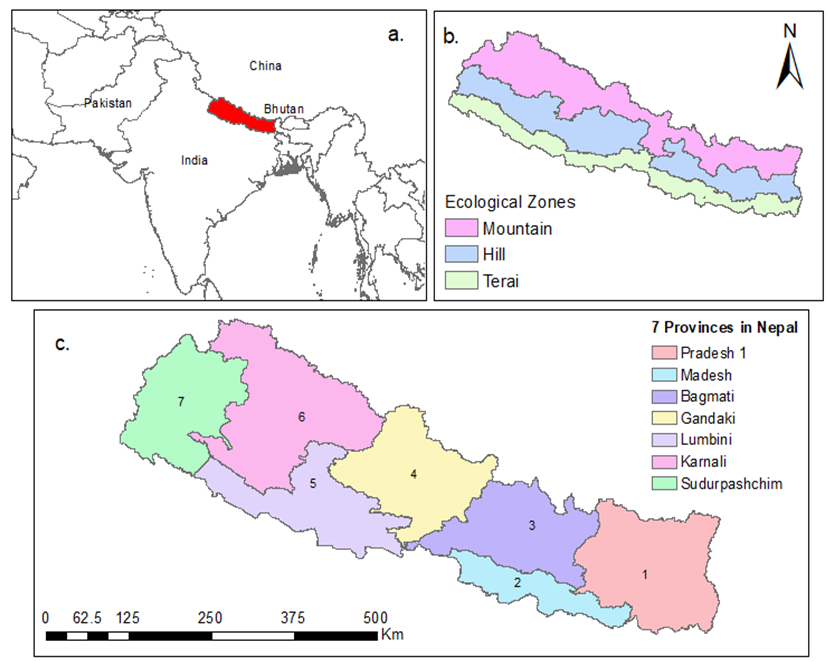
Nepal is located between 26°22' N to 30°27' N latitude and 80°04' E to 88°12' E longitude in the central part of the Hindu Kush Himalayan region bordered with India in the South, East and West and China in the North 19. The total area of the country is 1, 47,181 km2 with 885 Km average length from East to West and 193 Km average width from North to South. The country is ecologically divided into three regions, running east to west viz. Mountains, Hills and Terai 19. Nepal comprises of 7 provinces, 77 districts and 753 local bodies 20. Nepal consists of main land use types as; forest (39.1%), agriculture (29.83%), shrub land (3.40%), grassland (7.90%) and others are built-up area, water body, snow and glacier 16, 21. According to the Survey Department of Nepal, the country has plain areas in the South, hills and valleys in the middle and lofty Himalayas in the North. Nepal can be divided into five major physiographic landscapes extending from east to west viz. High Himal, High Mountains, Middle Mountains, Siwaliks and Terai 22.

The study covers entire Nepal including the seven provinces and three ecological regions. The climate of Nepal has been significantly affected by three major factors i.e. altitudinal variations, monsoon and westerly disturbances 23. Meanwhile, the average temperature of Nepal can be as high as 30°C in the South and as low as -10°C in the North 24. In the context of Nepal, the most sensitive sectors to the climate change refer to agriculture, forestry, water resources and energy, health, urban and infrastructure, tourism, industry and overall livelihoods and economic aspects of the people 25.
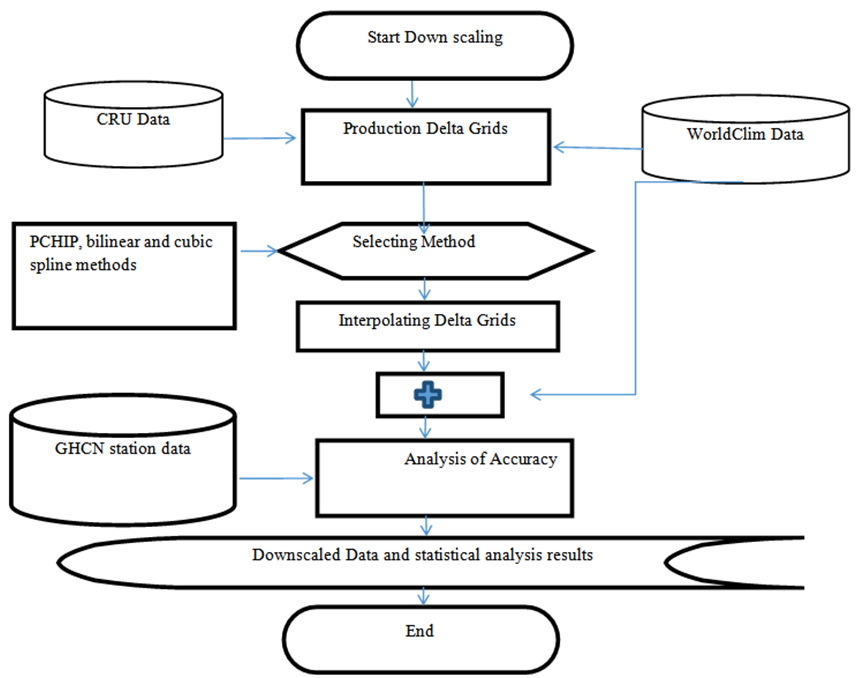
2.2. Data SetsForest Research and Training Centre (FRTC) of Nepal has developed National Land Cover Monitoring (NLCMS) of Nepal with consistent remote sensing time series datasets of two decades from 2000-2019 based on the Landsat 30 m resolution with each image pixel measuring 0.09 ha 18. FRTC, 2022 has identified eleven land cover classes for Nepal viz; water body, Glacier, Snow, Forest, Riverbed, Built-up, Cropland, Bare soil, Bare rock, Grassland and Other Wooded Land (OWL). The land use land cover data based on Landsat image of 30m spatial resolution for 2010 was taken from ICIMOD 26. At the same time, a global map of land use/land cover (LULC) was derived from ESA sentinel-2 imagery at 10 m resolution. The ESRI Inc. was published on July 2021 which was freely downloaded. The monthly temperature and precipitation data during 1990-2020 was collected from various meteorological stations of Nepal obtained from Department of Hydrology and Meteorology (DHM), Nepal. The GIS layer files of ecological zones (Terai, Hills and Mountain) and provincial zones were collected from Department of Survey, Government of Nepal. The CRU TS series of monthly precipitation and maximum/minimum temperature data sets for 1990-2020 (CRU TS4.0 version) were also downloaded from https://crudata.uea.ac.uk/cru/data/hrg 27. The CRU data (0.5°) was downscaled into the spatial resolution of 1 km by using Piecewise Cubic Hermite Interpolating Polynomial (PCHIP) method 28.
2.3. MethodsThe ESV on land categories at national and provincial scales has been analyzed based on global ecosystem service values 2 and ESV used in Tibetan Plateau 29. ESV coefficient of Tibetan Plateau in Nepal has been used because the biomes types are almost similar and located under the same Himalayan regions. There are 118 ecosystems in all physiographic zones of Nepal 22.
The ESV in each corresponding land covers types for national and provincial level in Nepal was computed using Simple Benefit Transfer approach 2 using equivalent value coefficient of each ecosystem services and functions (Equation 1).
 | (1) |
where, ESV is the ecosystem service values, Ak = area (ha) of each corresponding land cover category “k” and VCk = Ecosystem service value coefficient (USD/ha/year). This approach has been widely practiced to estimate global ecosystem service values 10, Tibetan Plateau 29, Koshi River basin 9 and Gandaki River basin 30 in Nepal. The annual trends of temperature and precipitation of Nepal was calculated using Sen’s slope 31 method in XLSTAT statistical software. The slope of a trend is estimated by Sen’s slope i.e. non-parametric index which is based on the assumption of a linear trend (Equation 2).
 | (2) |
For spatial mapping to show temperature and precipitation distribution patterns of Nepal, The CRU data (0.5 degree) was downscaled into the spatial resolution of 1 km by using Piecewise Cubic Hermite Interpolating Polynomial (PCHIP) method 28.
Total ecosystem service value of Nepal was found 17.34×10⁹ USD in 2000 and 16.67×10⁹ USD in 2020. It has no trends of continuous changes. In 2020, ecosystem service value of forest and barren land has increased in compared to 2000, 2010 and 2019. In contrast, ESV of glacier, croplands and grassland has decreased in same periods. The detail ESV in different time periods and land use types are given in the Table 1. Based on NDVI, ESV of Nepal was found 18.78× 10⁹ USD during 2000 13. The increased forest and abandon (barren lands) obviously increased ESV in 2020 compared to before. In Nepal, forest cover has been increased. In 1960, forest occupied 43.5% of the total land while it was reduced to 29% in 1990. After the initiation of community forest programs 32, forest cover increased to 39.1% in 2010 16, 40.36% in 2015 33 and 44.47% in 2018 34. The grassland, glacier and crop land had decreased 35 consequently ESV was also decreased (Table 2).

Ecosystem service values were also derived in different physiographic zones and provincial scales of Nepal (Table 3). Middle mountain has more ESV i.e. 6.91×10⁹ USD in 2019 followed by high mountain of ESV 4.34×10⁹ USD while the lowest ESV was found in Himal and followed by the Terai. ESV of Terai and hills (Middle mountain) was slightly increased but it has decreased in Himal and High Mountain in between 2000 and 2019. As mountain encompasses rich and diverse ecosystem, there was the highest ESV in 2019 i.e. 6.91×10⁹ USD in compared to other physiographic regions. The considerable temperature rise was 1.5°C at the rate of 0.06°C yr-1 from 1972 to 1994 36, 0.04°C yr-1 from 1975 to 2007 37 and 0.03°C yr-1 from 1982 to 2015 38. The increased temperature has severely affected on mountain environment specially glacier/snow melting and conversion into barren lands. Therefore, ESV of High mountain and Himal was decreased in 2019 in compared to 2000 (Table 3). In Provincial scale; Madhesh Province has lowest ESV and in decreasing trends. Bagmati Province has also higher ESV due to dense forest and water resources in surroundings of the valley. In compared to previous study, Karnali and Sudur Paschim Province also has higher ESV i.e. 2.62×10⁹ and 2.79×10⁹ respectively.
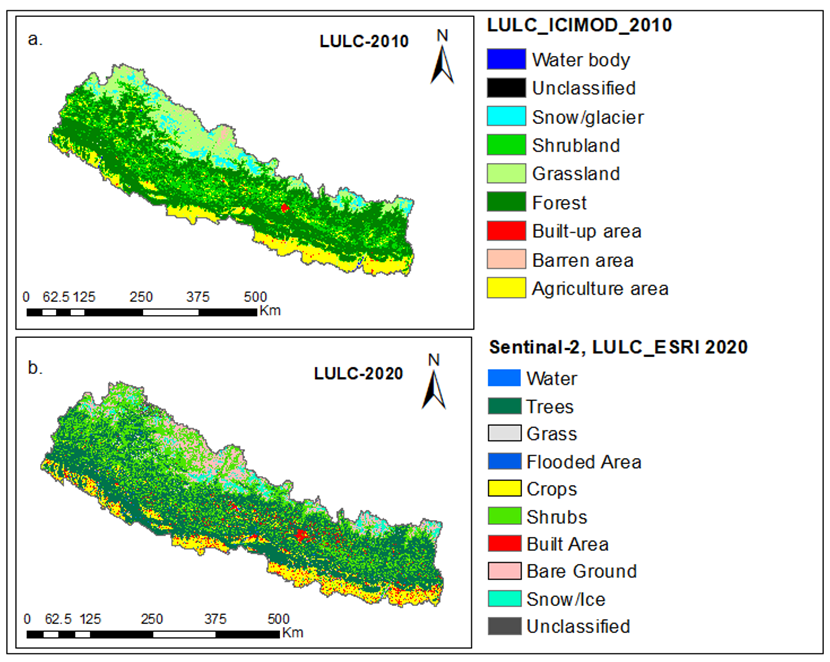
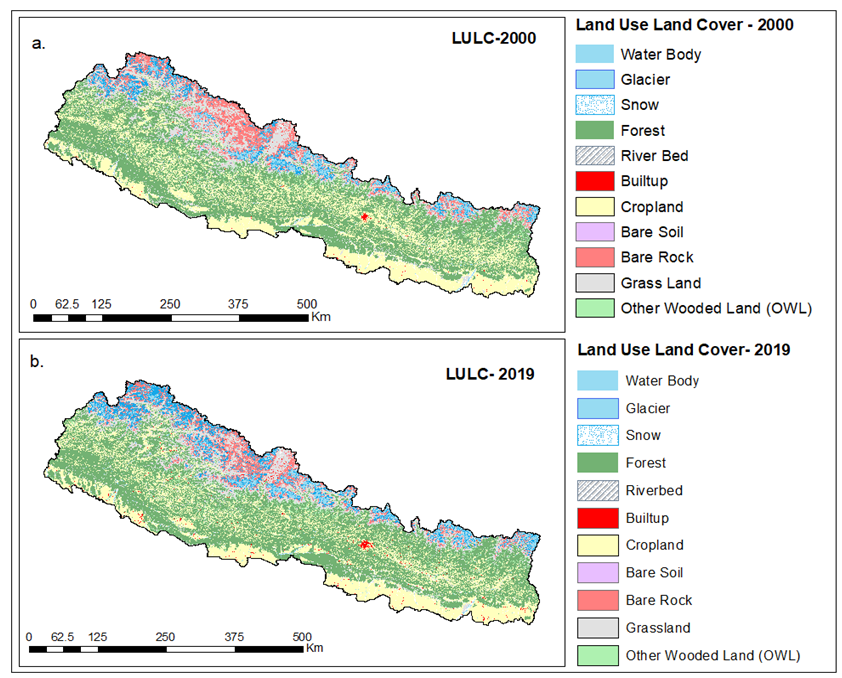
3.2. Land Use Land Cover Dynamics and Ecosystem Service ValuesLand use change is natural phenomena and continuously changing in Nepal. The observation on LULC dynamics was mainly focused on Landsat Satellite Images. The ICIMOD, Sentinal-2 ESRI satellite data and FRTC, 2022 of Nepal government data (Figure 3 & Figure 4) are mostly significant and available. Over the history of Nepal, the most changeable land was observed as built-up area, forest cover and agricultural land. The buildup area has increased by 5351.99 km2 in 2020 in compared to 254.87 km2 in 2000. In contrast, forest area has increased by 67307.19 km2 in 2020 in compared to 59155.18 km2 in 2000. The forest area has continuously increased in observed time periods of 2000, 2010, 2019 and 2020 (Figure 3 and Figure 4). Similarly, the crop land has decreased which is 14625.87 km2 in 2020 and 38915 km2 in 2010. The glacier and snow, water body especially wetland seems decreased but barren land seems increased during these study periods.
Specifically, the built-up areas have been reported rapidly in increasing order with conversion of agricultural land, especially in the peripheral area of large cities in Nepal 39, 40. The historical trend of the forest cover in Nepal was found at the fluctuated trend, it was reported 43.5% in 1960 and dropped down to 38.1% in 1978 and 29% in 1994 35. It has increased and recovered 39.1% in 2010 16, 40.36% in 2015 33 and 44.47% in 2018 34. The spatial and temporal coverage of land use types in 2010 26, 2020 41 and 2000-2019 18, is given in the Figure 3 and Figure 4.


These changed ecosystems type influences on ecosystem services for humankind. For example, increased built-up areas decreased all provisioning, regulating, supporting and cultural services. In contrary, increased forest areas supports more ecosystem services that regulate environment, provide more provisioning supports, maintain cultural harmony and support all living beings and human community. The conversion of agricultural land into settlements, decreased croplands also minimize the ecosystem service values to the community. The conversion of glacier/snow land into barren lands is also rapidly increased in mountainous regions in Nepal 18. Out of the total forest area, 37.80% lies in middle Mountain, 32.25% in High Mountain and High Himal, 23.04% in Siwalik and 6.9% in the Terai 33. Therefore, Middle mountain, Siwaliks and High Mountains contribute higher ecosystem services values in Nepal (Table 3).
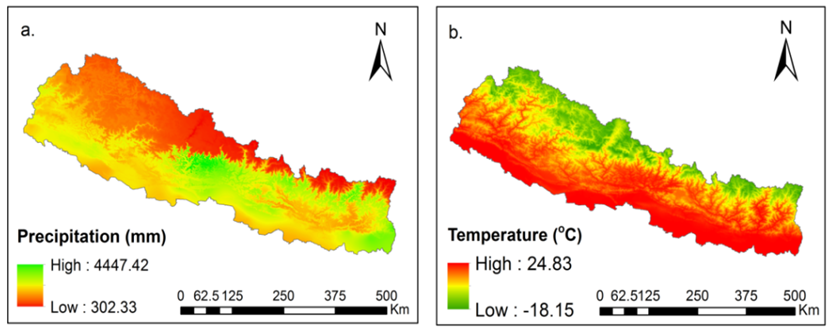
3.3. Nexus between Climate Change and ESVSen's slope showed that average annual temperature was found to be increased at the rate of (0.02°C yr-1) and precipitation decreased by -3.95 mm yr-1 during 1990-2020 in Nepal. In ecological scales, the temperature has significantly increased in Nepal with 0.08°Cyr-1 increased in Mountain and 0.02°C yr-1 increased in hills. The precipitation has decreased by 3.95 mmyr-1 in Nepal with higher negative trends in hills i.e. 6.527 mmyr-1. In contrary, CRU data showed the annual average temperature has increased at the rate of 0.03°C yr-1 and annual average precipitation has decreased with the rate of -5.12 mm yr-1. The distribution variation of temperature and precipitation is found based on the altitude and physiographic characters of Nepal (Figure 5). The lowest average annual precipitation was found in the Trans Himalayan regions located in mid and far western regions where the annual rainfall was approximately 302.33 mm (Figure 5). The central and eastern Nepal has more rainfall compared to other places of Nepal in which the maximum sum of annual rainfall was 4447.42 mm. Similarly, the temperature was higher in the south and decreased towards the north. The maximum negative temperature had reached by -18.15°C in the high mountains.
These distribution patterns of temperature and precipitation set the land use types with different specialty. Lowest temperature zones favors the land coldest and tundra with more ice and glaciers which is considered as the sources of freshwater. Similarly, lowest precipitated zone favors drought and alpine meadow. The average rainfall and temperature trends favor the good forest and agricultural lands in hills and Terai regions in Nepal. The variations of land cover types alter the ecosystem services values for human kinds. During 1977-1994, the annual maximum temperature had increased at the rate of 0.06°C in most of the middle mountain and Himalayan regions and 0.03°C in Siwalik and Terai 36. Similarly, the average temperature was also reported increased at the rate of 0.04°C during 1975-2007 37. In addition, National Climate Change Impact survey 2016 42, survey data of climate perception (n = 5060) conducted by CBS, Nepal Government was found increased temperature by 0.03°C yr-1 with an increase in maximum temperature by 0.02°C yr-1 and minimum temperature by 0.04°C yr-1 over the period from 1979 to 2016 43. During 1982-2015, the average temperature has increased by 0.03°C yr-1 38 and it has increased by 0.02°C yr-1 during 1990-2020 44. Conversely, the annual precipitation trend has significantly decreased during 1990-2020 44. These changing climatic parameters have direct impacts on forest, agricultural activities, wetlands and biodiversity, grassland, mountain and glaciers and livelihoods 8, 13. In response to climate, the mountain glacier has been decreasing, forest has been increasing, wetland has been drying up and ecosystem are shifting 25 which ultimately vary land use types and ecosystem service values for human kind.
3.4. Uncertainty and Limitation of the StudyNepal does not have ecosystem service value coefficient. Therefore, the ecosystem service values coefficient of Tibetan Plateau 29 was used in this study. The ESV coefficient in Tibetan Plateau was provided based on nine categories of ecosystem service function with response to global ecosystem service values obtained from 17 ecosystems and 16 biomes 2. The biomes types and topography are almost similar, and both Nepal and the Tibetan Plateau are located within the same Himalayan region. The inflation in the current market prices of goods and services of ecosystem over time might vary our values. In this study, different product of land use types was used and for climate data coarse resolute CRU data was downscaled from 50km to 1km spatial resolution to control the interpolation error from station data sets. However, the obtained results was compared with previous literatures 9, 13, 30 governmental reports and validated.

In this study, we have investigated ecosystem service values based on different land use products using simple benefit transfer approach in national, ecological and provincial scales. The climate trend was also analyzed using Sen's slope on station data and CRU gridded data sets. The nexus between both of these parameters were analyzed and paved the way for future research. In Nepal, ESV was found 17.34 × 10⁹ USD yr-1 in 2010 and 16.67× 10⁹ USD yr-1 in 2020. There was found no trends during 2010 to 2020. In Terai and Madhesh Province was observed lower ESV i.e. 2.62 × 10⁹ USD yr-1 and 1.28×10⁹ USD yr-1 respectively during 2019 in compared to other ecological regions and provinces. During same period, in Himal, ESV was also found lowest i.e. 1.13×10⁹ USD yr-1. In between 2000 and 2019, ESV has increased in all provinces except in Karnali, Madhesh province and in High mountains and Himal as physiographic regions. The forest area has increased by 67307.19 km2 in 2020 in compared to 59155.18 km2 in 2000 while crop lands have decreased by 14625.87 km2 in 2020 in compared to 38915 km2 in 2010 with increased built-up and decreased wetlands, snow/glaciers varied ESV in Nepal. The climate study showed that temperature has increased by 0.02°Cyr-1 and precipitation has decreased by -3.95 mmyr-1 during 1990-2020 in Nepal. These Land use dynamics and climate change influences ecosystem service values in Nepal. This study is very potential for economic valuation of natural resources. In future, estimation of ESV using values coefficient based on current market prices of Nepal and correlating with climate would be more effective.
The authors acknowledge the support of Department of Hydrology & Meteorology, Nepal and ICIMOD & Forest Research & Training Centre, Nepal for providing required data.
The authors declare no competing interests.
| [1] | Assessment, M. E. (2005). Ecosystems and human well-being: wetlands and water: World Resources Institute. | ||
| In article | |||
| [2] | Costanza, R., De Arge, R., DeGroot, R., Farber, S., Grasso, M., Hannon, B., Limburg, K., Naeem, S., Oneill, R. V., Paruelo, J., Raskin, R. G., Sutton,P. & Vanden Belt, M. (1997). The value of the world's ecosystem services and natural capital. Nature 387: 253-260. | ||
| In article | View Article | ||
| [3] | Chen, Z., & Zhang, X. (2000). Value of ecosystem services in China. Chinese Science Bulletin, 45(10): 870-876. | ||
| In article | View Article | ||
| [4] | DNPWC, B. (2012). Conserving biodiversity and delivering ecosystem services at Important Bird Areas in Nepal. Birdlife International, Cambridge. | ||
| In article | |||
| [5] | Gaodi, X., Lin, Z., Chunxia, L., Yu, X., & Wenhua, L. (2010). Applying value transfer method for eco-service valuation in China. Journal of resources and ecology, 1(1): 51-59. | ||
| In article | |||
| [6] | Hu, X., Wu, C., Hong, W., Qiu, R., & Qi, X. (2013). Impact of land-use change on ecosystem service values and their effects under different intervention scenarios in Fuzhou City, China. Geosciences Journal, 17(4): 497-504. | ||
| In article | View Article | ||
| [7] | Wang, H., Zhou, S., Li, X., Liu, H., Chi, D., & Xu, K. (2016). The influence of climate change and human activities on ecosystem service value. Ecological Engineering, 87: 224-239. | ||
| In article | View Article | ||
| [8] | Bhatta, L. D., Van Oort, B. E. H., Stork, N. E. & Baral, H. (2015). Ecosystem services and livelihoods in a changing climate: Understanding local adaptations in the Upper Koshi, Nepal. International Journal of Biodiversity Science, Ecosystem Services & Management, 11(2): 145-155. | ||
| In article | View Article | ||
| [9] | Zhilong, Z., Xue, W., Yili, Z., & Jungang, G. (2017). Assessment of changes in the value of ecosystem services in the Koshi River Basin, central high Himalayas based on land cover changes and the CA-Markov model. Journal of resources and ecology, 8 (1): 67-76. | ||
| In article | View Article | ||
| [10] | Sannigrahi, S., Bhatt, S., Rahmat, S., Paul, S. K., & Sen, S. (2018). Estimating global ecosystem service values and its response to land surface dynamics during 1995-2015. Journal of environmental management, 223: 115-131. | ||
| In article | View Article PubMed | ||
| [11] | Lamsal, P., Kumar, L., Atreya, K., & Pant, K. (2018). Forest ecosystem services in Nepal: a retrospective synthesis, research gaps and implications in the context of climate change. International Forestry Review, 20(4): 506-537. | ||
| In article | View Article | ||
| [12] | Adhikari, S., Baral, H., & Nitschke, C. (2018). Adaptation to climate change in Panchase Mountain ecological regions of Nepal. Environments, 5(3): 42. | ||
| In article | View Article | ||
| [13] | Baniya, B., Tang, Q., Pokhrel, Y., & Xu, X. (2019). Vegetation dynamics and ecosystem service values changes at national and provincial scales in Nepal from 2000 to 2017. Environmental Development, 32: 100464. | ||
| In article | View Article | ||
| [14] | Shrestha, B., Zhang, L., Sharma, S., Shrestha, S., & Khadka, N. (2022). Effects on ecosystem services value due to land use and land cover change (1990–2020) in the transboundary Karnali River Basin, Central Himalayas. SN Applied Sciences, 4 (5): 1-12. | ||
| In article | View Article | ||
| [15] | Costanza, R., De Groot, R., Sutton, P., Van der Ploeg, S., Anderson, S. J., Kubiszewski, I. & Turner, R. K. (2014). Changes in the global value of ecosystem services. Global environmental change, 26: 152-158. | ||
| In article | View Article | ||
| [16] | Uddin, K., Shrestha, H. L., Murthy, M. S. R., Bajracharya, B., Shrestha, B. & Gilani, H. (2015). Development of 2010 national land cover database for the Nepal. Journal of Environmental Management 148: 82-90. | ||
| In article | View Article PubMed | ||
| [17] | Kubiszewski, I., Costanza, R., Anderson, S., & Sutton, P. (2020). The future value of ecosystem services: Global scenarios and national implications Environmental Assessments: Edward Elgar Publishing. | ||
| In article | View Article | ||
| [18] | FRTC (2022). National Land Monitoring System in Nepal, Forest Research and Training Center, Government of Nepal, Babarmahal, Kathmandu. | ||
| In article | |||
| [19] | CBS (2021). Nepal Statistical Year book. Central Bureau of Statistics, Kathmandu, Nepal.Centre, Kathmandu. | ||
| In article | |||
| [20] | MoFALD (2017). Local Government Operative Act. (2017). Ministry of Federal Affairs and Local Development (MoFALD). Nepal Government, Kathmandu. | ||
| In article | |||
| [21] | LRMP (1986). Land Resources Mapping Project, Survey Department. HMGN and Kenting Earth Sciences, Kathmandu, Nepal. | ||
| In article | |||
| [22] | BPP (Biodiversity Profiles Project) (1995). Biodiversity profile of the Terai/Siwalik Physiographic zones. Biodiversity profile project publication 12. Department of National Parks and Wildlife Consecration, Kathmandu. | ||
| In article | |||
| [23] | GoN/MoFSC (2014). Nepal Biodiversity Strategy and Action Plan 2014-2020. Government of Nepal, Ministry of Forests and Soil Conservation, Kathmandu, Nepal. | ||
| In article | |||
| [24] | DHM (2015). Study of climate and climatic variation over Nepal, Department of Hydrology and Meteorology (DHM), Kathmandu, Nepal. | ||
| In article | |||
| [25] | NAPA (2010). National Adaptation Program in Action (NAPA) to Climate Change, Ministry of Environment (MoE), Government of Nepal (GoN), Kathmandu, Nepal. | ||
| In article | |||
| [26] | ICIMOD (2010). Landsat based Land use land cover change in Nepal. | ||
| In article | |||
| [27] | Harris, I., Jones, P. D., Osborn, T. J. & Lister, D. H. (2014.) Updated high-resolution grids of monthly climatic observations - the CRU TS 3.10 Dataset International Journal of Climatology: 623-642. | ||
| In article | View Article | ||
| [28] | Mosier, T. M., Hillb, D. &, Sharp, K. V. (2014). 30-Arcsecond monthly climate surfaces with global landcoverage. International Journal of Climatology 34: 2175-2188. | ||
| In article | View Article | ||
| [29] | Xie, G., Lu C., Leng, Y., Zheng, D. & Li, S. (2003). Ecological assets valuation of the Tibetan Plateau. JOURNAL OF NATURAL RESOURCES 18: 189-196. | ||
| In article | |||
| [30] | Rai, R., Zhang, Y. L., Paudel, B., Acharya, B. K. & Basnet, L. (2018). Land Use & Land Cover Dynamics and Assessing the Ecosystem Service Values in the Trans-Boundary Gandaki River Basin, Central Himalayas. Sustainability 10. | ||
| In article | View Article | ||
| [31] | Sen, P. K. (1968). Estimates of the regression coefficient based on Kendall’s tau. Journal of the American Statistical Association 63 (324). | ||
| In article | View Article | ||
| [32] | Acharya, K. (2002). Twenty-four years of community forestry in Nepal. Int. For. Rev. 4 (2): 149-156. | ||
| In article | View Article | ||
| [33] | DFRS (2015). State of Nepal's Forests, Forest Resource Assessment (FRA) Nepal. Department of Forest Research and Survey (DFRS), Kathmandu, Nepal. | ||
| In article | |||
| [34] | MoFE (2019). National Level Forests and Land Cover Analysis of Nepal Using Google Earth Images. Ministry of Forests and Environment, Forest Research and Training. | ||
| In article | |||
| [35] | Paudel, B., Zhang, Y., Wu, X., Li, S. & Khanal, N. (2016). Review of studies on land use and land cover changes in Nepal. J. Mt. Sci. 13 (4): 643-660. | ||
| In article | View Article | ||
| [36] | Shrestha, A. B., Wake, C. P., Mayewski, P. A. & Dibb, J. E. (1999). Maximum temperature trends in the Himalaya and its vicinity: An analysis based on temperature records from Nepal for the period 1971-94. Journal of Climate 12: 2775-2786. | ||
| In article | View Article | ||
| [37] | Sharma, K. P. (2009). Maximum temperature trends in Nepal. An analysis based on temperature records from Nepal for the period 1975-2007. Department of Hydrology and Meteorology (DHM), Babarmahal, Kathmandu. | ||
| In article | |||
| [38] | Baniya, B., Tang, Q., Huang, Z., Sun, S. & Techato, K. A. (2018). Spatial and temporal variation of NDVI in response to climate change and the implication for carbondynamics in Nepal. Forest@ 9: 329. | ||
| In article | View Article | ||
| [39] | Rimal, B. (2013). Urbanization and the Decline of Agricultural Land in Pokhara Sub-metropolitan City, Nepal. Journal of Agricultural Science 5: 54-65. | ||
| In article | View Article | ||
| [40] | Thapa, R. B. & Murayama, Y. (2012). Scenario based urban growth allocation in Kathmandu Valley, Nepal. Landscape and Urban Planning 105: 140-148. | ||
| In article | View Article | ||
| [41] | ESRI (2020). Sentinel-2 10m land use land cover time series data of the world. Produced by Impact Observatory, Microsoft, and Esri. | ||
| In article | |||
| [42] | CBS, 2017. National Climate Change Impact Survey 2016. A Statistical Report. Central Bureau of Statistics, Kathmandu, Nepal. | ||
| In article | |||
| [43] | Shrestha, U. B., Shrestha, A. M., Aryal, S., Shrestha, S., Gautam, M. S. & Ojha, H. (2019). Climate change in Nepal: a comprehensive analysis of instrumental data and people's perceptions. Climate change. | ||
| In article | View Article | ||
| [44] | Karki, JR; Kumar, P. & Baniya, B. (2022). Climate Change and Mountain Environment in Context of Sustainable Development Goals in Nepal. Applied Ecology and Environmental Sciences, 10(9): 588-594. | ||
| In article | |||
Published with license by Science and Education Publishing, Copyright © 2022 Jaya Ram Karki, Prabhat Kumar and Binod Baniya
 This work is licensed under a Creative Commons Attribution 4.0 International License. To view a copy of this license, visit
http://creativecommons.org/licenses/by/4.0/
This work is licensed under a Creative Commons Attribution 4.0 International License. To view a copy of this license, visit
http://creativecommons.org/licenses/by/4.0/
| [1] | Assessment, M. E. (2005). Ecosystems and human well-being: wetlands and water: World Resources Institute. | ||
| In article | |||
| [2] | Costanza, R., De Arge, R., DeGroot, R., Farber, S., Grasso, M., Hannon, B., Limburg, K., Naeem, S., Oneill, R. V., Paruelo, J., Raskin, R. G., Sutton,P. & Vanden Belt, M. (1997). The value of the world's ecosystem services and natural capital. Nature 387: 253-260. | ||
| In article | View Article | ||
| [3] | Chen, Z., & Zhang, X. (2000). Value of ecosystem services in China. Chinese Science Bulletin, 45(10): 870-876. | ||
| In article | View Article | ||
| [4] | DNPWC, B. (2012). Conserving biodiversity and delivering ecosystem services at Important Bird Areas in Nepal. Birdlife International, Cambridge. | ||
| In article | |||
| [5] | Gaodi, X., Lin, Z., Chunxia, L., Yu, X., & Wenhua, L. (2010). Applying value transfer method for eco-service valuation in China. Journal of resources and ecology, 1(1): 51-59. | ||
| In article | |||
| [6] | Hu, X., Wu, C., Hong, W., Qiu, R., & Qi, X. (2013). Impact of land-use change on ecosystem service values and their effects under different intervention scenarios in Fuzhou City, China. Geosciences Journal, 17(4): 497-504. | ||
| In article | View Article | ||
| [7] | Wang, H., Zhou, S., Li, X., Liu, H., Chi, D., & Xu, K. (2016). The influence of climate change and human activities on ecosystem service value. Ecological Engineering, 87: 224-239. | ||
| In article | View Article | ||
| [8] | Bhatta, L. D., Van Oort, B. E. H., Stork, N. E. & Baral, H. (2015). Ecosystem services and livelihoods in a changing climate: Understanding local adaptations in the Upper Koshi, Nepal. International Journal of Biodiversity Science, Ecosystem Services & Management, 11(2): 145-155. | ||
| In article | View Article | ||
| [9] | Zhilong, Z., Xue, W., Yili, Z., & Jungang, G. (2017). Assessment of changes in the value of ecosystem services in the Koshi River Basin, central high Himalayas based on land cover changes and the CA-Markov model. Journal of resources and ecology, 8 (1): 67-76. | ||
| In article | View Article | ||
| [10] | Sannigrahi, S., Bhatt, S., Rahmat, S., Paul, S. K., & Sen, S. (2018). Estimating global ecosystem service values and its response to land surface dynamics during 1995-2015. Journal of environmental management, 223: 115-131. | ||
| In article | View Article PubMed | ||
| [11] | Lamsal, P., Kumar, L., Atreya, K., & Pant, K. (2018). Forest ecosystem services in Nepal: a retrospective synthesis, research gaps and implications in the context of climate change. International Forestry Review, 20(4): 506-537. | ||
| In article | View Article | ||
| [12] | Adhikari, S., Baral, H., & Nitschke, C. (2018). Adaptation to climate change in Panchase Mountain ecological regions of Nepal. Environments, 5(3): 42. | ||
| In article | View Article | ||
| [13] | Baniya, B., Tang, Q., Pokhrel, Y., & Xu, X. (2019). Vegetation dynamics and ecosystem service values changes at national and provincial scales in Nepal from 2000 to 2017. Environmental Development, 32: 100464. | ||
| In article | View Article | ||
| [14] | Shrestha, B., Zhang, L., Sharma, S., Shrestha, S., & Khadka, N. (2022). Effects on ecosystem services value due to land use and land cover change (1990–2020) in the transboundary Karnali River Basin, Central Himalayas. SN Applied Sciences, 4 (5): 1-12. | ||
| In article | View Article | ||
| [15] | Costanza, R., De Groot, R., Sutton, P., Van der Ploeg, S., Anderson, S. J., Kubiszewski, I. & Turner, R. K. (2014). Changes in the global value of ecosystem services. Global environmental change, 26: 152-158. | ||
| In article | View Article | ||
| [16] | Uddin, K., Shrestha, H. L., Murthy, M. S. R., Bajracharya, B., Shrestha, B. & Gilani, H. (2015). Development of 2010 national land cover database for the Nepal. Journal of Environmental Management 148: 82-90. | ||
| In article | View Article PubMed | ||
| [17] | Kubiszewski, I., Costanza, R., Anderson, S., & Sutton, P. (2020). The future value of ecosystem services: Global scenarios and national implications Environmental Assessments: Edward Elgar Publishing. | ||
| In article | View Article | ||
| [18] | FRTC (2022). National Land Monitoring System in Nepal, Forest Research and Training Center, Government of Nepal, Babarmahal, Kathmandu. | ||
| In article | |||
| [19] | CBS (2021). Nepal Statistical Year book. Central Bureau of Statistics, Kathmandu, Nepal.Centre, Kathmandu. | ||
| In article | |||
| [20] | MoFALD (2017). Local Government Operative Act. (2017). Ministry of Federal Affairs and Local Development (MoFALD). Nepal Government, Kathmandu. | ||
| In article | |||
| [21] | LRMP (1986). Land Resources Mapping Project, Survey Department. HMGN and Kenting Earth Sciences, Kathmandu, Nepal. | ||
| In article | |||
| [22] | BPP (Biodiversity Profiles Project) (1995). Biodiversity profile of the Terai/Siwalik Physiographic zones. Biodiversity profile project publication 12. Department of National Parks and Wildlife Consecration, Kathmandu. | ||
| In article | |||
| [23] | GoN/MoFSC (2014). Nepal Biodiversity Strategy and Action Plan 2014-2020. Government of Nepal, Ministry of Forests and Soil Conservation, Kathmandu, Nepal. | ||
| In article | |||
| [24] | DHM (2015). Study of climate and climatic variation over Nepal, Department of Hydrology and Meteorology (DHM), Kathmandu, Nepal. | ||
| In article | |||
| [25] | NAPA (2010). National Adaptation Program in Action (NAPA) to Climate Change, Ministry of Environment (MoE), Government of Nepal (GoN), Kathmandu, Nepal. | ||
| In article | |||
| [26] | ICIMOD (2010). Landsat based Land use land cover change in Nepal. | ||
| In article | |||
| [27] | Harris, I., Jones, P. D., Osborn, T. J. & Lister, D. H. (2014.) Updated high-resolution grids of monthly climatic observations - the CRU TS 3.10 Dataset International Journal of Climatology: 623-642. | ||
| In article | View Article | ||
| [28] | Mosier, T. M., Hillb, D. &, Sharp, K. V. (2014). 30-Arcsecond monthly climate surfaces with global landcoverage. International Journal of Climatology 34: 2175-2188. | ||
| In article | View Article | ||
| [29] | Xie, G., Lu C., Leng, Y., Zheng, D. & Li, S. (2003). Ecological assets valuation of the Tibetan Plateau. JOURNAL OF NATURAL RESOURCES 18: 189-196. | ||
| In article | |||
| [30] | Rai, R., Zhang, Y. L., Paudel, B., Acharya, B. K. & Basnet, L. (2018). Land Use & Land Cover Dynamics and Assessing the Ecosystem Service Values in the Trans-Boundary Gandaki River Basin, Central Himalayas. Sustainability 10. | ||
| In article | View Article | ||
| [31] | Sen, P. K. (1968). Estimates of the regression coefficient based on Kendall’s tau. Journal of the American Statistical Association 63 (324). | ||
| In article | View Article | ||
| [32] | Acharya, K. (2002). Twenty-four years of community forestry in Nepal. Int. For. Rev. 4 (2): 149-156. | ||
| In article | View Article | ||
| [33] | DFRS (2015). State of Nepal's Forests, Forest Resource Assessment (FRA) Nepal. Department of Forest Research and Survey (DFRS), Kathmandu, Nepal. | ||
| In article | |||
| [34] | MoFE (2019). National Level Forests and Land Cover Analysis of Nepal Using Google Earth Images. Ministry of Forests and Environment, Forest Research and Training. | ||
| In article | |||
| [35] | Paudel, B., Zhang, Y., Wu, X., Li, S. & Khanal, N. (2016). Review of studies on land use and land cover changes in Nepal. J. Mt. Sci. 13 (4): 643-660. | ||
| In article | View Article | ||
| [36] | Shrestha, A. B., Wake, C. P., Mayewski, P. A. & Dibb, J. E. (1999). Maximum temperature trends in the Himalaya and its vicinity: An analysis based on temperature records from Nepal for the period 1971-94. Journal of Climate 12: 2775-2786. | ||
| In article | View Article | ||
| [37] | Sharma, K. P. (2009). Maximum temperature trends in Nepal. An analysis based on temperature records from Nepal for the period 1975-2007. Department of Hydrology and Meteorology (DHM), Babarmahal, Kathmandu. | ||
| In article | |||
| [38] | Baniya, B., Tang, Q., Huang, Z., Sun, S. & Techato, K. A. (2018). Spatial and temporal variation of NDVI in response to climate change and the implication for carbondynamics in Nepal. Forest@ 9: 329. | ||
| In article | View Article | ||
| [39] | Rimal, B. (2013). Urbanization and the Decline of Agricultural Land in Pokhara Sub-metropolitan City, Nepal. Journal of Agricultural Science 5: 54-65. | ||
| In article | View Article | ||
| [40] | Thapa, R. B. & Murayama, Y. (2012). Scenario based urban growth allocation in Kathmandu Valley, Nepal. Landscape and Urban Planning 105: 140-148. | ||
| In article | View Article | ||
| [41] | ESRI (2020). Sentinel-2 10m land use land cover time series data of the world. Produced by Impact Observatory, Microsoft, and Esri. | ||
| In article | |||
| [42] | CBS, 2017. National Climate Change Impact Survey 2016. A Statistical Report. Central Bureau of Statistics, Kathmandu, Nepal. | ||
| In article | |||
| [43] | Shrestha, U. B., Shrestha, A. M., Aryal, S., Shrestha, S., Gautam, M. S. & Ojha, H. (2019). Climate change in Nepal: a comprehensive analysis of instrumental data and people's perceptions. Climate change. | ||
| In article | View Article | ||
| [44] | Karki, JR; Kumar, P. & Baniya, B. (2022). Climate Change and Mountain Environment in Context of Sustainable Development Goals in Nepal. Applied Ecology and Environmental Sciences, 10(9): 588-594. | ||
| In article | |||