Biomolecules produced by marine actinomycetes have peculiar chemical structures that could be utilized to produce novel drugs to combat pathogens with antimicrobial resistance. The objective of the present investigation was to identify antagonistic properties of marine actinomycetes' toward multidrug resistant bacterial pathogens affecting the urinary system. Here, 58 actinomycetes isolates were obtained from the twelve marine sediment samples collected from the coast of Poovar and Shangumugham, Kerala, India. Out of 58 marine actinomycetes isolates, 10 isolates were selected for the study of antagonistic activity against the uropathogens E.coli and Klebsiella pneumoniae collected from a tertiary hospital in Kerala. One actinomycete isolate showed significant antagonistic property against both E.coli and Klebsiella pneumoniae. This isolate was mass cultivated by solid state fermentation and the ethyl acetate extract of its secondary metabolite was partially purified by TLC.
Actinomycetes retain a prominent place due to their diversity and demonstrated capacity to create novel bioactive compounds. They are practically limitless sources of new metabolites with several therapeutic potential. More than 22,000 microbial secondary metabolites are known, with actinomycetes producing 70% of them, fungi 20%, Bacillus species 7%, and other bacteria 1-2% 1. Urinary Tract Infections (UTIs) are the most frequently reported infections and drive antibiotic use around the world 2, 3. Urinary tract infection (UTI) is one of the most common bacterial infections among men and women, affecting 150 to 250 million people each year worldwide 4. The emerging antibiotic resistance problems may be due to the overdose or misuse of antibiotic agents like cephalosporins and fluoro-quinolones 5, 6. In this context, the discovery of novel antibiotics and new therapeutic agents for controlling the multidrug resistant pathogen is essential. The study of Mohapatra et al. 7 highlights the increasing incidence of AMR among uropathogens at the community settings of India. Therefore, there is an urgent need for new antibiotics to fight evolving bacterial infections such as MDR UTI. Despite the use of large synthetic combinatorial libraries of molecules to develop novel drugs, natural products and microbial metabolites, in particular, are a predominant source of bioactive scaffolds that represent the foundation for the development of life-saving antibiotics 8. However, until now, only less than 1% of the actinomycetes have been identified, investigated and documented 9. The explored and underexplored environments including marine ecosystems are promising sources of rare actinomycetes that are believed to be rich sources of interestingly new compounds that can combat with the multidrug-resistant human pathogens 10. The high prevalence of UTI makes it as a key player in the extensive use of antibiotics which eventually leads to the development of antibiotic resistant strains.
Twenty samples of sea sediment were taken from the Poovar and Shangumugham coast in the Thiruvananthapuram district of Kerala state, India, at depths ranging from three to five feet. The samples were carried to the laboratory in a sterile container 11.
2.2. Isolation of Actinomycetes from Marine Sediment SamplesThe samples were serial diluted in sterile sea water and spread on to starch casein agar plates. The plates were incubated at 28°C for one to three weeks. After incubation, actinomycetes colonies were morphologically analyzed and selected.
2.3. Purification and Preservation of Marine ActinomycetesBy repeated sub-culture techniques the selected actinomycete isolates were purified and the purified isolates were streaked on starch casein agar slants and preserved at 4°C 12.
2.4. Isolation, Selection, Purification and Preservation of Bacterial UropathogensThe multidrug resistant bacterial isolates were collected from tertiary care hospitals and characterized by biochemical and molecular biological methods. The purified bacterial isolates streaked on to Nutrient agar slants and stored at 4°C.
2.5. Antibiogram StudyKirby-Bauer disc diffusion method was used for antibiogram study of E.coli and Klebsiella pneumoniae. The isolate was effectively swabbed on Muller Hinton Agar plates and antibiotic disc was placed accordingly. Then the plates are incubated at 37°C for 24 hours.
Antibacterial Activity of Actinomycetes:
a. Primary Screening by Agar overlay method.
Actinomycete broth culture was single streaked on the Muller Hinton Agar plates and incubated at 28°C for three days and soft agar medium contained E.coli and Klebsiella pneumoniae cultures were poured over the actinomycete growth on Muller Hinton Agar plates then the plates were incubated at 370C for 24 hours 13.
b. Secondary Screening by Well Diffusion Method and Disc Diffusion Method
12 hours over-night bacterial culture was effectively swabbed on the Muller Hinton Agar plates, made wells on it and 50µ l cell free culture filtrate and cell lysate extract were loaded in separate wells. The plates were incubated at 37°C for 24 hours 13. In the same time, 12 hours young bacterial pathogen cultures were swabbed on another Muller Hinton Agar plates and the 100μl cell free culture filtrate and intra cellular extract loaded discs were placed aseptically on pre-inoculated agar plate surface using sterile forceps. The plates were kept incubator at 37.0°C for 24 hours. After incubation the plates were observed and the zone of growth inhibition around the wells and discs were measured 14.
2.6. Microscopic, Macroscopic, Biochemical Tests, Physiological and molecular Characterization of Marine Actinomycete IsolateThe isolate was microscopically analysed by Gram’s staining, Motility Test, and Capsule staining. Morphological characters were observed macroscopically. The biochemical tests includes Indole Production Test, Methyl Red Test, Vogus- Proskaur Test, Catalase Test, Oxidase Test, Citrate Utilization Test, Nitrate Reduction Test, Triple Sugar Iron Test, Urease Test and Carbohydrate Fermentation Test were performed.
2.7. Microscopic Examination - Gram StainingThin smears of the bacterial isolates were made on glass slides and heat fixed. The smears were flooded with crystal violet for two minutes. Excess stain was washed with distilled water. The smears were flooded with Gram’s iodine for two minutes. The smears were flooded with few drops of 95% ethanol. Excess ethanol was washed with distilled water. The smears were flooded with secondary stain safranine for 30 seconds. Excess stain was washed with distilled water. The slides were blot dried and microscopically examined.
2.8. Motility TestDepression slides and the cover glasses were cleaned, one drop from each broth cultures of the isolates were placed at the center of the cover glass. A thin film of vaseline was applied around the edges of the cavity slide and inverted carefully by lowering it towards the cover slip, until it made contact with vaseline by spread around the corners. The slide was turned upright and the drop of culture remains suspended from the cover glass, which was then observed under the oil immersion objective of the microscope.
2.9. Biochemical CharacterizationThe isolates were aseptically inoculated in tryptone broth, incubated for 48 hours at 28°C. One ml Kovac’s reagent was added and the result was observed and recorded.
Simmons citrate slants were prepared and the isolates from its saline suspension were inoculated. The slants were incubated for 96 hours at 28°C. After incubation the results were observed and recorded.
TSI agar slants were prepared and the isolates were inoculated by stabbing down at the center of the agar. Then the tubes were incubated at 280C for 48 hours and the result was observed and recorded.
One or two drops of 10% hydrogen peroxide were applied over the bacterial isolates in broth or plate agar and the result was observed and recorded.
One loopful of isolate was applied over oxidase disc kept on a clean glass slide. Observed the changes and recorded.
The urea agar slants were prepared. The bacterial isolates were streaked aseptically and incubated at 280C for 48 hours. After incubation, the result was observed and recorded.
Mannitol motility agar slants with stab were prepared. The slants were inoculated with the isolates to be characterized by stabbing through the center to greater than half the depth. The inoculated stabs were incubated for 24 to 48 hours at 35 ± 2°C.
2.10. Molecular Characterization of MDR UTI PathogensSelected UTI pathogens were subjected to 16 S rDNA gene amplification and sequencing using universal 16S primers. An aliquot of 20 μL of each bacterial pre-culture was transferred to a 2-mL microtube with 1 mL of LB Broth and incubated at 28°C for 48 h at 125 rpm. The cultures were centrifuged at 11,500 x g for 5 minutes, supernatant (SN) was discarded and 400 μL of extraction buffer were added, containing 1% CTAB, 0.2% β-mercaptoethanol, 2% PVP and the other components at the recommended concentrations 15; in this buffer, Proteinase K and PVPP were not included, but 2% SDS was added. The samples were vortexed for 5 seconds and incubated at 65°C for 30 minutes, with manual inversion of tubes every 10 minutes. At room temperature, 200 μL of 3 M KOAc were added, followed by hand shaking for 30 seconds and centrifugation at 10,000 x g (this same speed was used downstream) for 5 minutes. The SNs were transferred to 2-mL microtubes with 500 μL of chloroform: isoamyl alcohol (24:1; v/v), vortexed for 5 seconds, centrifuged for 10 minutes and again removed to new 2-mL microtubes.
For DNA precipitation, 125 μL of 10 M NH 4 OAc and 375 μL of isopropanol were added; samples were gently shaken, allowed to sit at − 20°C for 1 h, and centrifuged for 15 minutes, with the SNs discarded. The pellets were washed twice by 200 μL of 70% ethanol and 5 minutes centrifugation, air-dried at room temperature for 50 minutes, resuspended in 40 μL of TE-RNase (10 μg ml − 1) and incubated at 37°C for 40 minutes. Proper DNA quality for downstream procedures was checked by 1% (w/v) agarose gel electrophoresis in TBE buffer. Extracted DNA was quantified either by visual comparison with standards run in electrophoreses, or by NanoDrop ND-1000 droplet spectrophotometer (Thermo Scientific™).
2.11. Ethyl Acetate Extraction of Bioactive Compound of Marine ActinomycetesProduction of bioactive compound was done by submerged fermentation. 16 Actinomycetes isolates were taken in 50 ml of ISP1 broth in a 250-ml-capacity conical flask under sterile conditions and incubated at 30°C for 7 days at 150 rpm rotation. 17 After fermentation, the medium was centrifuged at 10,000 rpm for 10 min to remove cells and debris and harvested for fermented broth. Resultant fermented broths were added to equal volume of ethyl acetate. Then the samples were shaken vigorously in a rotatory shaker. The solvent phase was collected and evaporated in a desiccator. The completely dried residues were re-dissolved in dimethyl sulfoxide (DMSO) and lyophilized, to be used for further studies. 18, 19.
Thin layer chromatography and Antibacterial activity study by well diffusion method
The ethyl acetate extract of actinomycete isolate with antibacterial activity was further purified by thin layer chromatography. The elute of actinomycete isolate was spotted on the TLC sheet on the origin spot. The development tank was saturated with chloroform and methanol as mobile phase in the ratio of 9:1. The final solvent front was marked and TLC sheet was dried. The spots were observed by exposing to Iodine vapour as well as UV light. The fractions showing the same Rf were combined together by scrapping of TLC sheet. The antimicrobial activity of the ethyl acetate extract was checked by well diffusion method on Muller Hinton agar plates. 100 μl elute was loaded in separate wells and the plates were kept at room temperature for one hour. The plates were incubated at 37°C for 24 hours 20.
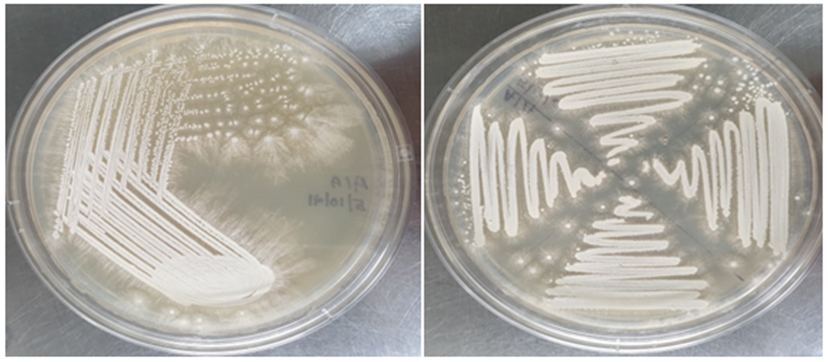
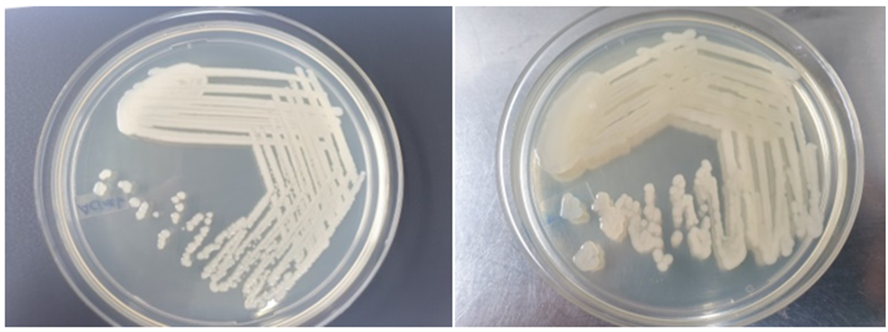
Based on the colony morphology and preponderance of the 58 actinomycete isolates, 10 isolates were chosen for further research. Most of the colonies were small to medium-sized, but just a few were very large. Colonies with a round, curved, filamentous, and spindle shape were seen. The colonies were initially white in colour, changing to off white, creamy, grey, or cement colour as they reached full growth. In addition to curved and undulating edges, the majority of the isolates had an entire margin. The chosen colonies were all opaque. Many colonies were similar in terms of elevation, however other rose colonies did have elevations. According to sporophore morphology and the arrangement of the spore chain, Sujatha et al. 21 identified 88 isolates of actinomycetes, of which 64 were assigned to the genus Streptomyces, 8 isolates to the genus Micromonospora, 5 to the genus Nocardia, 7 to the genus Streptoverticilium, and 4 to the genus Saccharopolyspora.
3.2. Isolation, Selection and Antibiogram Properties of MDR Bacterial IsolatesThe selection of E.coli and Klebsiella pneumoniae were purely based on their distinct morphological characters and biochemical characters.


The Antibiogram analysis of the UTI pathogens were performed against 10 antibiotics selected from different functional classes, (Table 2). Most of the strains were highly resistant to a wide variety of antibiotic classes.
Ten actinomycete isolates were initially tested using the agar overlay method to look for antibacterial activity against MDR bacterial isolates. Out of ten marine actinomycete isolates, eight (80%) were antagonistic and one (20%) was not to the MDR uropathogens. Seven of the ten actinomycete isolates hostile to MDR uropathogens had substantial activity, whereas the other isolates responded mildly to moderately. By using the agar spot method, Narendrakumar et al. 22 tested 117 actinomycetes for their antagonistic properties, and 15 of the isolates demonstrated considerable antibacterial activity.
3.5. Secondary ScreeningThe cell free culture filtrate of five chosen actinomycete isolates was used in well and disc diffusion procedures against E. coli and Klebsiella pneumoniae. Out of the five actinomycete isolates tested, one isolate produced a zone of growth inhibition against Klebsiella pneumoniae and E. coli that was significantly active, hence it was chosen for future research.
The marine actinomycete that was antagonistically significant had Gram-positive, rod-shaped, capsulated, and non-motile cells. The results of the biochemical tests for methyl red, nitrate, TSI, citrate, urease, and oxidase were positive. In contrast, it tested negative for indole, voges-proskauer, catalase, and it produced gas during the test for carbohydrate fermentation. This isolate hydrolyzed casein, gelatin, bile esculin, starch, and lipid. It had beta haemolytic properties. The isolate was recognised as Nocardiopsis sp. after comparison of these features to those in Bergy's manual of Determinative Bacteriology, second edition. Rofiq and Bambang 23 isolated 29 actinomycete isolates and tested them using the disc diffusion method for antibacterial activity. Eight of them shown antibacterial action against bacteria with both Gram positive and negative. All of the isolates shared the same morphology as the Streptomyces genus.
Antagonistic activity of Ethyl acetate extract of secondary metabolites of actinomycete isolate. Ethyl acetate extract of the actinomycete isolate analysed for detection of antagonistic activity against both E.coli and Klebsiella pneumonia. In well diffusion method zone of growth inhibition of E.coli was 30 mm and disc diffusion showed 28mm . Klebsiella pneumoniae showed inhibition zone of 32mm for well and 26 mm for disc diffusion method (Table 3). These findings showed that bioactive molecules with antagonistic properties are present in the elute.15 actinobacteria were isolated and tested for antibacterial efficacy against four multidrug resistant bacteria by Arasu et al. in 24. In the cross streak approach, only two isolates were successful. The bioactive molecule from the prospective isolate was extracted using different polarity solvents, such as ethyl acetate and chloroform, and the extracts were then tested using the well diffusion method for antibacterial activity against drug-resistant organisms.
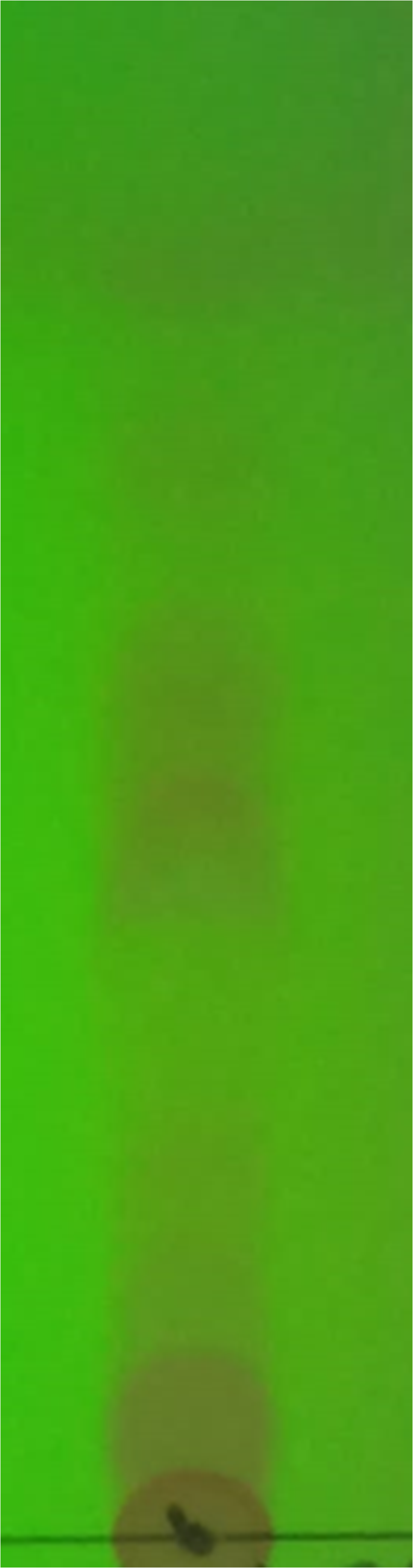
The actinomycete isolate's secondary metabolite's ethyl acetate extract underwent thin layer chromatography, which identified many spots with low resolution.

Antagonistic activity of TLC purified bioactive compounds of actinomycete isolate was confirmed by Auto bioassay method. Formation of growth inhibitory zone around the spots on the chromatogram revealed the presence of antibiotic bioactive compounds in the ethyl acetate extract obtained from the actinomycete and hence it was further confirmed by well diffusion method.
The result of antibacterial activity of the scrap of spots on the TLC plates of the ethyl acetate extract of actinomycete isolate against both E.coli and Klebsiella pneumoniae, revealed the antagonistic property of the bioactive compounds. The zone of inhibition against E.coli was 20mm and against Klebsiella pneumoniae was 18mm.
Many researchers reported the wide range of antimicrobial activity of marine actinomycetes. For instance, Ramesh and Mathivanan in 25 isolated Actinomycetes from soil and sediments collected from Bay of Bengal. Among them, 208 isolates, i.e. 53% showed antimicrobial activity against human pathogens. On the West coast of India, Chakraborty et al., 26 isolated 10 actinomycetes strains from Cochin and were found antagonistic to two pathogenic bacteria. In another study Rajivgandhi et al. 27 isolated 20 actinomycetes strains from the coastal regions of Tamil Nadu. Among the isolates, five strains showed antibacterial activity against multi drug resistant uropathogens. Later in another study, In total, 131 actinomycetes were isolated by Wahaab and Subramaniam 28 from the Rameswaram coastal region of Tamil Nadu, India. Out of 131 actinomycetes, the majority (55%) were isolated between three and six metres from the coastline. A potent Streptomyces bacillaris strain RAM25C4 was uncovered among them, and it is active against multidrug-resistant bacteria such Staphylococcus aureus, Acinetobacter baumannii, and Pseudomonas aeruginosa as well as methicillin-resistant Staphylococcus aureus. These observations clearly indicate the potential of marine actinomycetes isolated from West and East coast of Indian subcontinent are a source of novel antibiotics.
There have been several studies on terrestrial actinomycetes, but only a few on marine actinomycetes. Therefore, it is worthwhile to explore the diverse marine actinomycetes prevalent in Kerala's coastal regions in the present investigation. For further evaluation, all the isolates that displayed noticeably broad-spectrum activity against pathogenic bacteria were chosen. These findings illustrate the significance of marine actinomycetes as a prospective source of novel antimicrobial metabolites that require further research to address the issue of the clinical setting's ever-increasing antibiotic resistance, with an emphasis on uropathogens.
| [1] | Qi, S, Gui, M, Li, H, Yu, C, Li, H, Zeng, Z & Sun, P 2020, ‘Secondary metabolites from marine micromonospora: Chemistry & bioactivities’, Chemistry & Biodiversity, vol.17, no.4, p.e2000024. | ||
| In article | View Article PubMed | ||
| [2] | Allen, UD, MacDonald, N, Fuite, L, Chan, F & Stephens, D 1999, ‘Risk factors for resistance to ―first-line antimicrobials among urinary tract isolates of E. coli in children’, Canadian Medical Association Journal, vol. 160, no. 10, pp. 1436-1440. | ||
| In article | |||
| [3] | Anthony, JS 2002, ‘Infections of the urinary tract’, Campbell's Urology, eighth ed. pp. 515-602. | ||
| In article | |||
| [4] | Flores-Mireles, AL, Walker, JN, Caparon, M, Hultgren, SJ 2015, ‘Urinary tract infections: epidemiology, mechanisms of infection & treatment options’, Nature reviews microbiology, vol.13, no. 5, pp.269-284. | ||
| In article | View Article PubMed | ||
| [5] | Wise, R., Hart, T., Carrs, O., (1998). Antimicrobial resistance is a major threat to public health. BMJ 317: 609-610. | ||
| In article | View Article PubMed | ||
| [6] | Buke, C., Hosgor-Limoncu, M., Ermertcan, S., Ciceklioglu, M., (2005). Irrational use of antibiotics among university students. J Infect. 51: 135-9. | ||
| In article | View Article PubMed | ||
| [7] | Mohapatra, S, Panigrahy, R, Tak, V, Shwetha, JV, Sneha, KC, Chaudhuri, S, Pundir, S, Kocher, D, Gautam, H, Sood, S & Das, BK 2022, ‘Prevalence & resistance pattern of uropathogens from community settings of different regions: an experience from India’, Access Microbiology, vol.4, no.2, pp.000321. | ||
| In article | View Article PubMed | ||
| [8] | Challinor, VL & Bode HB 2015, ‘Bioactive natural products from novel microbial sources’, Annals of the New York Academy of Sciences, vol. 1354, no. 1, pp. 82-97. | ||
| In article | View Article PubMed | ||
| [9] | Berdy, B, Spoering, AL, Ling, LL & Epstein, SS 2017, ‘In situ cultivation of previously uncultivable microorganisms using the ichip’ , Nature protocols, vol. 12, no. 10, pp . 2232-42. | ||
| In article | View Article PubMed | ||
| [10] | Dhakal, D, Pokhrel, AR, Shrestha, B & Sohng, JK 2017, ‘Marine rare actinobacteria: isolation, characterization, & strategies for harnessing bioactive compounds’, Frontiers in Microbiology, vol. 8, no.1106. | ||
| In article | View Article PubMed | ||
| [11] | Sirisha B. Haritha R. Jagan Mohan Y.S.Y.V. Sivakumar K.L. and Raman T. (2013), Bioactive Compounds from Marine Actinomycetes Isolated From the Sediment of Bay of Bangal, International journal of pharmaceutical, chemical and biological sciences. 3(2): 257-264. | ||
| In article | |||
| [12] | Deepa S, Panneerseivam A., Dhanasekaran D., Thajuddin N., Vijayakumar R. (2012), Diversity and antimicrobial potential of actinobacteria from salt pan environment, Global advanced research journal of microbiology. Vol. 1(18), pp.140-148. | ||
| In article | |||
| [13] | Kumar N. Singh R.K. Mishra S.K. Singh A.K. and Pachouri U.C. (2010) Isolation and screening of soil Actinomycetes as source of antibiotic active against bacteria, International Journal of Microbiology Research. Vol. 2(2), pp. 12-16. | ||
| In article | View Article | ||
| [14] | Bauer A., Kirby W., Sherris J., Turk M. (1966), Antibiotic susceptibility testing by standard single disk method,Am. J. Clin. Pathol., 45: 493-496. | ||
| In article | View Article PubMed | ||
| [15] | Amann, RI, Ludwig, W, Schleifer, KH, Amann, RI & Ludwig W 1995, ‘Phylogenetic identification & in situ detection of individual microbial cells without cultivation. Microbiology & molecular biology reviews’, Microbiology &Molecular Biology Reviews, vol. 59, no.1, pp. 143-169. | ||
| In article | View Article PubMed | ||
| [16] | Egorov NS. Antibiotics a Scientific Approach. Moscow: Mir Publishers; 1985. Antibiotic properties of microorganism cultivated in the Laboratory; pp. 170-7. | ||
| In article | |||
| [17] | Romankova AG, Zurabova ER, Fursenko MV, Sukharevich VI, Pronina MI. Selection of strains of some antibiotic producing Actinomycetes during repeated passages in submerged cultures. Antibiotiki. 1971; 16: 579-83. | ||
| In article | |||
| [18] | Lakshmipatipathy D, Krishnan K. Antibacterial and antifungal activity of Streptomyces sp. VITDDK3 isolated from ennore coast, Tamil Nadu, India. J Pharm Res Health Care. 2010; 2: 186-96. (New name of journal is asian journal of pharmaceutical research and health care)]. | ||
| In article | |||
| [19] | Raja A, Prabakaran P. Preliminary screening of antimycobacterial effect of psychrophillic actinomycetes isolated from Manali ice point Himachal Predesh. J Microbiol Antimicrob. 2011; 3: 41-6. | ||
| In article | View Article | ||
| [20] | Dhanasekran, D, Thajuddin, N & Pannerselvam 2008, ‘An antifungal compound: 4- phenyl-1-napthyl-phenyl acetamide from Streptomyces sp. DPTB16’, Facta Universitatis, Series: Medicine & Biology, vol. 15, no. 1, pp. 7-12. | ||
| In article | |||
| [21] | Sujatha, P., BapiRaju, K.V.V.S.N. and Ramana, T. (2005). Studies on a new marine Streptomycete BT-408 producing polyketide antibiotic SBR-22 effective against methicillin resistant Staphylococcus aureus. Microbiol. Res., 160:119-126. | ||
| In article | View Article PubMed | ||
| [22] | Narendrakumar, Ravi Kand Singh., Mishra.S.K.Singh. and Pachouuri, U.C. (2010). Isolation and screening of soil actinomycetes as a source of antibiotic active agent against bacteria. Int.J. of Microbial, research, 2(2): 12-16. | ||
| In article | View Article | ||
| [23] | Rofiq, S. and Bambang, M. (2010). Marine Actinomycetes screening of Banten West Coast and their antibiotics purification; Biodiversitas; 11(4): 176-181. | ||
| In article | View Article | ||
| [24] | Arasu, M.V., Duraipandiyan, V., Agastian, P., Ignacimuthu, S., (2008). Antimicrobial activity of Streptomyces spp. ERI-26 recovered from Western Ghats of Tamil Nadu. J. Med. Mycol. 18, 147-153. | ||
| In article | View Article | ||
| [25] | Ramesh, S & Mathivanan, N 2009, ‘Screening of marine actinomycetes isolated from theBay of Bengal, India for antimicrobial activity & industrial enzymes’, World Journal of Microbiology Biotechnology, vol. 25, no.12, pp.2103-2111. | ||
| In article | View Article | ||
| [26] | Chakraborty, RD, Chakraborty, K & Thilakan, B 2015, ‘Isolation & characterization of antagonistic Streptomyces spp. from marine sediments along the southwest coastof India’, Indian Journal of Geo-Marine Sciences, vol. 44, no. 1, pp. 1-8. | ||
| In article | |||
| [27] | Rajivgandhi, G, Ramachandran, G, Maruthup&y, M, Saravanakumar, S, Manoharan, N & Viji, R 2018, ‘Antibacterial effect of endophytic actinomycetes from marine algae against multi drug resistant gram negative bacteria’, Oceanography & Marine Biology, Vol.1, no.4, pp.1-8. | ||
| In article | View Article | ||
| [28] | Wahaab, F & Subramaniam, K 2018, ‘Bioprospecting marine actinomycetes for multidrug-resistant pathogen control from Rameswaram coastal area’, Tamil Nadu, India, Archives of microbiology, vol. 200, no. 1, pp.57-71. | ||
| In article | View Article PubMed | ||
Published with license by Science and Education Publishing, Copyright © 2022 Deepa Mathew P and Dr. V. Robin Perinba Smith
 This work is licensed under a Creative Commons Attribution 4.0 International License. To view a copy of this license, visit
http://creativecommons.org/licenses/by/4.0/
This work is licensed under a Creative Commons Attribution 4.0 International License. To view a copy of this license, visit
http://creativecommons.org/licenses/by/4.0/
| [1] | Qi, S, Gui, M, Li, H, Yu, C, Li, H, Zeng, Z & Sun, P 2020, ‘Secondary metabolites from marine micromonospora: Chemistry & bioactivities’, Chemistry & Biodiversity, vol.17, no.4, p.e2000024. | ||
| In article | View Article PubMed | ||
| [2] | Allen, UD, MacDonald, N, Fuite, L, Chan, F & Stephens, D 1999, ‘Risk factors for resistance to ―first-line antimicrobials among urinary tract isolates of E. coli in children’, Canadian Medical Association Journal, vol. 160, no. 10, pp. 1436-1440. | ||
| In article | |||
| [3] | Anthony, JS 2002, ‘Infections of the urinary tract’, Campbell's Urology, eighth ed. pp. 515-602. | ||
| In article | |||
| [4] | Flores-Mireles, AL, Walker, JN, Caparon, M, Hultgren, SJ 2015, ‘Urinary tract infections: epidemiology, mechanisms of infection & treatment options’, Nature reviews microbiology, vol.13, no. 5, pp.269-284. | ||
| In article | View Article PubMed | ||
| [5] | Wise, R., Hart, T., Carrs, O., (1998). Antimicrobial resistance is a major threat to public health. BMJ 317: 609-610. | ||
| In article | View Article PubMed | ||
| [6] | Buke, C., Hosgor-Limoncu, M., Ermertcan, S., Ciceklioglu, M., (2005). Irrational use of antibiotics among university students. J Infect. 51: 135-9. | ||
| In article | View Article PubMed | ||
| [7] | Mohapatra, S, Panigrahy, R, Tak, V, Shwetha, JV, Sneha, KC, Chaudhuri, S, Pundir, S, Kocher, D, Gautam, H, Sood, S & Das, BK 2022, ‘Prevalence & resistance pattern of uropathogens from community settings of different regions: an experience from India’, Access Microbiology, vol.4, no.2, pp.000321. | ||
| In article | View Article PubMed | ||
| [8] | Challinor, VL & Bode HB 2015, ‘Bioactive natural products from novel microbial sources’, Annals of the New York Academy of Sciences, vol. 1354, no. 1, pp. 82-97. | ||
| In article | View Article PubMed | ||
| [9] | Berdy, B, Spoering, AL, Ling, LL & Epstein, SS 2017, ‘In situ cultivation of previously uncultivable microorganisms using the ichip’ , Nature protocols, vol. 12, no. 10, pp . 2232-42. | ||
| In article | View Article PubMed | ||
| [10] | Dhakal, D, Pokhrel, AR, Shrestha, B & Sohng, JK 2017, ‘Marine rare actinobacteria: isolation, characterization, & strategies for harnessing bioactive compounds’, Frontiers in Microbiology, vol. 8, no.1106. | ||
| In article | View Article PubMed | ||
| [11] | Sirisha B. Haritha R. Jagan Mohan Y.S.Y.V. Sivakumar K.L. and Raman T. (2013), Bioactive Compounds from Marine Actinomycetes Isolated From the Sediment of Bay of Bangal, International journal of pharmaceutical, chemical and biological sciences. 3(2): 257-264. | ||
| In article | |||
| [12] | Deepa S, Panneerseivam A., Dhanasekaran D., Thajuddin N., Vijayakumar R. (2012), Diversity and antimicrobial potential of actinobacteria from salt pan environment, Global advanced research journal of microbiology. Vol. 1(18), pp.140-148. | ||
| In article | |||
| [13] | Kumar N. Singh R.K. Mishra S.K. Singh A.K. and Pachouri U.C. (2010) Isolation and screening of soil Actinomycetes as source of antibiotic active against bacteria, International Journal of Microbiology Research. Vol. 2(2), pp. 12-16. | ||
| In article | View Article | ||
| [14] | Bauer A., Kirby W., Sherris J., Turk M. (1966), Antibiotic susceptibility testing by standard single disk method,Am. J. Clin. Pathol., 45: 493-496. | ||
| In article | View Article PubMed | ||
| [15] | Amann, RI, Ludwig, W, Schleifer, KH, Amann, RI & Ludwig W 1995, ‘Phylogenetic identification & in situ detection of individual microbial cells without cultivation. Microbiology & molecular biology reviews’, Microbiology &Molecular Biology Reviews, vol. 59, no.1, pp. 143-169. | ||
| In article | View Article PubMed | ||
| [16] | Egorov NS. Antibiotics a Scientific Approach. Moscow: Mir Publishers; 1985. Antibiotic properties of microorganism cultivated in the Laboratory; pp. 170-7. | ||
| In article | |||
| [17] | Romankova AG, Zurabova ER, Fursenko MV, Sukharevich VI, Pronina MI. Selection of strains of some antibiotic producing Actinomycetes during repeated passages in submerged cultures. Antibiotiki. 1971; 16: 579-83. | ||
| In article | |||
| [18] | Lakshmipatipathy D, Krishnan K. Antibacterial and antifungal activity of Streptomyces sp. VITDDK3 isolated from ennore coast, Tamil Nadu, India. J Pharm Res Health Care. 2010; 2: 186-96. (New name of journal is asian journal of pharmaceutical research and health care)]. | ||
| In article | |||
| [19] | Raja A, Prabakaran P. Preliminary screening of antimycobacterial effect of psychrophillic actinomycetes isolated from Manali ice point Himachal Predesh. J Microbiol Antimicrob. 2011; 3: 41-6. | ||
| In article | View Article | ||
| [20] | Dhanasekran, D, Thajuddin, N & Pannerselvam 2008, ‘An antifungal compound: 4- phenyl-1-napthyl-phenyl acetamide from Streptomyces sp. DPTB16’, Facta Universitatis, Series: Medicine & Biology, vol. 15, no. 1, pp. 7-12. | ||
| In article | |||
| [21] | Sujatha, P., BapiRaju, K.V.V.S.N. and Ramana, T. (2005). Studies on a new marine Streptomycete BT-408 producing polyketide antibiotic SBR-22 effective against methicillin resistant Staphylococcus aureus. Microbiol. Res., 160:119-126. | ||
| In article | View Article PubMed | ||
| [22] | Narendrakumar, Ravi Kand Singh., Mishra.S.K.Singh. and Pachouuri, U.C. (2010). Isolation and screening of soil actinomycetes as a source of antibiotic active agent against bacteria. Int.J. of Microbial, research, 2(2): 12-16. | ||
| In article | View Article | ||
| [23] | Rofiq, S. and Bambang, M. (2010). Marine Actinomycetes screening of Banten West Coast and their antibiotics purification; Biodiversitas; 11(4): 176-181. | ||
| In article | View Article | ||
| [24] | Arasu, M.V., Duraipandiyan, V., Agastian, P., Ignacimuthu, S., (2008). Antimicrobial activity of Streptomyces spp. ERI-26 recovered from Western Ghats of Tamil Nadu. J. Med. Mycol. 18, 147-153. | ||
| In article | View Article | ||
| [25] | Ramesh, S & Mathivanan, N 2009, ‘Screening of marine actinomycetes isolated from theBay of Bengal, India for antimicrobial activity & industrial enzymes’, World Journal of Microbiology Biotechnology, vol. 25, no.12, pp.2103-2111. | ||
| In article | View Article | ||
| [26] | Chakraborty, RD, Chakraborty, K & Thilakan, B 2015, ‘Isolation & characterization of antagonistic Streptomyces spp. from marine sediments along the southwest coastof India’, Indian Journal of Geo-Marine Sciences, vol. 44, no. 1, pp. 1-8. | ||
| In article | |||
| [27] | Rajivgandhi, G, Ramachandran, G, Maruthup&y, M, Saravanakumar, S, Manoharan, N & Viji, R 2018, ‘Antibacterial effect of endophytic actinomycetes from marine algae against multi drug resistant gram negative bacteria’, Oceanography & Marine Biology, Vol.1, no.4, pp.1-8. | ||
| In article | View Article | ||
| [28] | Wahaab, F & Subramaniam, K 2018, ‘Bioprospecting marine actinomycetes for multidrug-resistant pathogen control from Rameswaram coastal area’, Tamil Nadu, India, Archives of microbiology, vol. 200, no. 1, pp.57-71. | ||
| In article | View Article PubMed | ||