Aeromonads are known to cause disease in cultured fish. Aeromonas sobria is a major fish pathogen and also possesses the zoonotic potential to cause a variety of diseases in humans. The current study reported Aeromonas sobria SB16 from the integument, gut, and kidney of seven rainbow trout among eleven diseased fish, depicting the presence of A. sobria in about 64% of the examined fish. The association of Aeromonas sobria was found to be higher in integument (65.38%), followed by gut (27.88%), and kidney (6.73%). Biochemical tests performed on the isolate showed positive reactions to citrate, ornithine, nitrate, TDA, and lysine. Morphological and 16S rRNA gene sequencing identified the isolated strain as Aeromonas sobria. The study is the first report of Aeromonas sobria in Rainbow trout from Kashmir valley, India. The occurrence of this known pathogenic microorganism from various organs of O. mykiss is interesting and needs further research to investigate its epidemiology, pathogenicity, and possible interactions with the host.
Rainbow trout (Oncorhynchus mykiss, Walbaum 1792) is known for its high economic value because of its rapid growth rate, high nutritious value, and easy breeding strategies. Rainbow trout is the main cultivated trout species across the globe, and as such has an important commercial value 1. The species is widely cultured across the cold-water system of Northern India 2 to meet the growing demand for fish. Trout cultivation has gained increasing attention with the establishment of 59 trout-rearing units across the Union territory of Jammu and Kashmir. Contemporary with this growth, cultured fish remain susceptible to microbial diseases caused by viruses, bacteria, and fungi. Bacterial pathogenesis becomes more severe and significantly affects the produce in farmed conditions especially in fish under stress due to overstocking, decrease in water quality, low nutrition, and poor management. Bacterial diseases, caused mainly by Aeromonas, are a major setback to the fish industry causing heavy mortalities 3.
Aeromonas sobria, a Gram-negative rod-shaped bacterium is an opportunistic pathogen known to affect humans and animals including fish 4. Since its discovery in a wild gizzard shad (Dorosoma spendianum) in the United States in 1987, A. sobria has been recognized as a serious fish pathogen 5. This bacterium is widely present in aquatic environments and is known to cause ulcers and haemorrhagic lesions in fish 6. Aeromonas sobria and other aeromonads (A. hydrophilla, A caviae, A. allosachorophila, A. salmonicida, and A. veroni) have been identified as important fish pathogens. These bacteria are also known to possess zoonotic potential causing a variety of diseases in humans most notably gastroenteritis 7. As per the literature survey, Aeromonas sobria has been reported in silver carp (Hypophthalmichthys molitrix) and rohu (Labeo rohita) 8, 9 from Jammu but no reports of the bacterial species have been established from Kashmir region. Thus, in the present study, Aeromonas sobria was isolated for the first time from different organs of Oncorhynchus mykiss from a trout hatchery unit, in Kashmir.
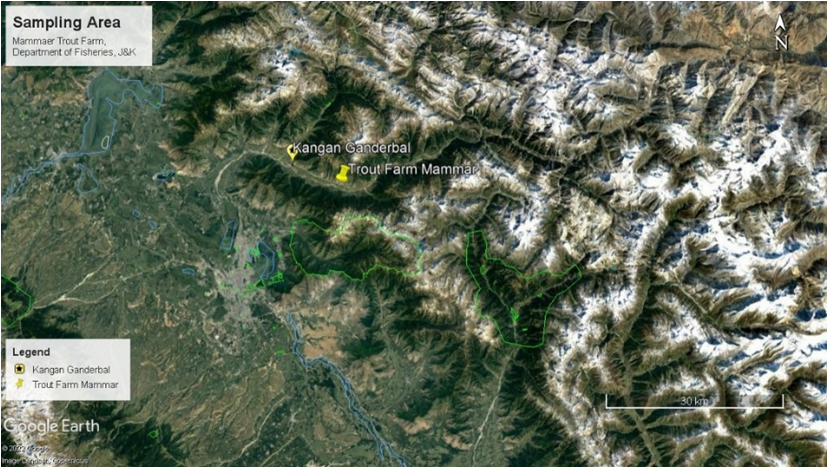
Rainbow trout (n=11) with signs of infections (eye haemorrhage, ulcerative syndrome, tail, fin rot, and skin lesions) were procured 10, 11 from Mammar, an important trout rearing unit of Kashmir Valley vide Permission no. DOF/Tech/2017/538-45 (Figure 1). Post-collection, the fish were transported to the Microbiology Research laboratory, University of Kashmir in sterilized cooling boxes for further analysis.

Initially, swabs were taken from the integument and skin lesions. The fishes were further dissected aseptically to take swabs from the organ of interest; integument, gut, and kidney 12. The swabs were inoculated on Tryptic soy Agar (TSA) and incubated at 37°C for 24 hours. Pure colonies were then obtained by streak plate method 13. The morphological identification of the bacteria was done by observing the colony morphology of the isolates and Gram staining.
2.3. Biochemical CharacterizationThe HiMedia, HiAssorted™ Biochemical Test Kit (KB002) was used for the isolates' biochemical identification. The kit contains 12 biochemical identification tests of Gram-negative, rod-shaped bacteria mentioned in Table 1. The samples were prepared following the manufacturer’s protocol.
For extraction of the DNA, colonies were freshly grown in Nutrient broth and were further prepared according to the manufacturer’s instructions (Sigma Aldrich DNA Extraction Kit). Amplification was carried out using the conventional PCR method. The universal primers (27F, 5'-AGAGTTTGATCCTGGCTCAG-3' and 1429R; 5'-GGTTACCTTGTTACGACTT-3') were used for amplification of the 16S rRNA gene 14. 50 µl reaction mixture was prepared using a DNA template (4µl), dNTPs 1 µl (Merk), Forward Primer (1 µl), Reverse primer (1 µl), Buffer (10X) 5 µl, Taq DNA polymerase 0.2 µl (Thermo scientific product #EP0402) and MiliQ 37.8 µl. The PCR conditions used are summarized below (Table 2).
The PCR products were run in 1.5% agarose in electrophoresis for confirmation of the gene. The samples with the required concentration of DNA in nanodrop were sent to Agri-genome Labs, Kerela for sequencing. The sequences of the 16S rRNA gene obtained were compared to the already existing sequences in the NCBI gene bank for identification using BLASTn. The phylogenetic tree was constructed in MEGA X using the maximum likelihood method with 1000 bootstrap replication. For phylogenetic analysis, the A. sobria SB26 sequence was clustered with other sequences of A. sobria, A. hydrophilla, and A. salmonicida available in the NCBI database, and Pseudomonas veroni was used as an outgroup.
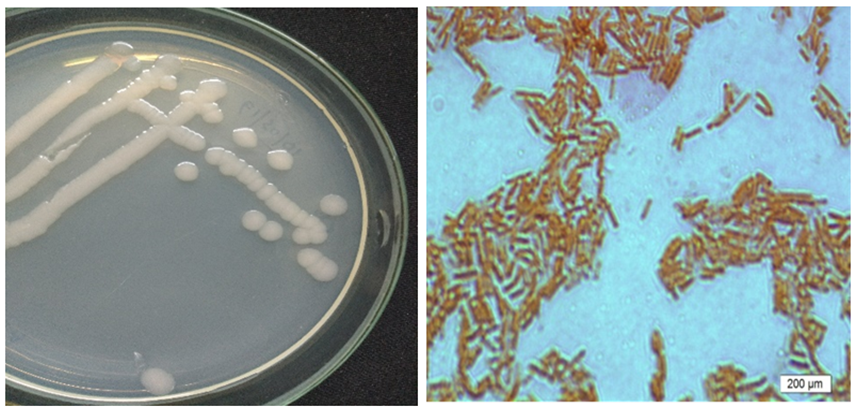
Macro-morphological attributes of the colonies grown on TSA plates were medium-sized, creamy in colour, circular in shape, with convex elevation, smooth texture, and opaque (Figure 2a). A total of 104 identical colonies were recovered from the integument, gut, and kidney of seven diseased Rainbow trout, among the 11 fish sampled, depicting the presence of the isolates in about 64% of the diseased fish. The highest percentage of colonies were isolated from the integument (65.38%) followed by gut (27.88%), and kidney (6.73%). The strains were Gram-negative, and rod-shaped when observed under the microscope (Figure 2b). The strains were mesophilic and able to grow at 37°C in a bacteriological incubator. Out of the 12 biochemical tests, A. sobria SB16 showed a positive reaction for citrate, ornithine, nitrate, TDA, and lysine (Table 3). Biochemical characters confirmed the isolates belonged to the genus Aeromonas.

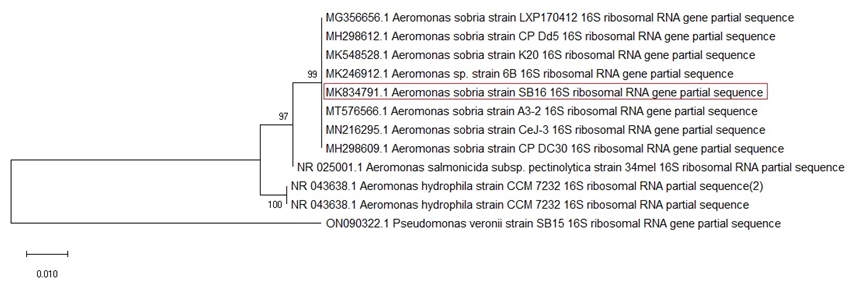
For species-level identification of the bacteria, representative strain, SB16 was randomly selected for molecular characterization using the 16S rRNA gene as a taxonomic tool (Figure 3 a,b). The obtained sequence was compared with the database available in NCBI, wherein the sequence showed 100% similarity with Aeromonas sobria. The sequence of SB16 was further submitted to the NCBI gene bank (NCBI accession no.: MK834791). The evolutionary relationship between A. sobria and other Aeromonas species were inferred from the phylogenetic tree constructed in Mega X (Figure 4). According to the phylogenetic tree constructed on 16S rRNA gene sequences, A. sobria SB16 clustered with the clad of known A. sobria strains, which strongly confirms the identification of the isolate as A. sobria.


Aeromonas is a genus of Gram-negative bacteria, of which many species are opportunistic pathogens, known to cause diseases in both terrestrial and aquatic animals, including fish and humans 15. The species of Aeromonas usually associated with the fish include Aeromonas salmonicida, A. sobria, A. veronii, A. bestiarum, A. hydrophilla, A. allosaccharophila and A. bivalvium 16. The Aeromonads are considered primary pathogens in cultured fish 17, hence need not be overlooked, as they are recognized as direct or opportunistic pathogens by different researchers all over the world. Among the genus, A. hydrophilla 18 and other species like A. salmonicida, A. sobria, A. veronii, and A. bestiarum are the major pathogens of fish as per the reports of Yao et al. 19; Austin and Austin 20 and Zhu et al. 21.
Herein, the current investigation, A. sobria was isolated from the integument, gut, and kidney of the diseased Rainbow trout suggesting the strain’s nature to infect multiple organs. Among the analyzed organs in the current research, the highest percentage of A. sobria colonies were isolated from integument (65.38%), followed by the gut (27.88%), and, kidney (6.73%). These results indicate that A. sobria mostly affects the skin of the Rainbow trout such findings are in accordance with the study of Duman et al. 22 on Rainbow trout, who also isolated a greater number of A. sobria from integument lesions than kidney, however, the gut of the fish was not examined in their study. In another study, a high percentage of A. sobria were isolated from the integument than from the gut of Rainbow trout 23. In the present research findings, Aeromonas sobria were able to grow at 37°C, and hence the species can be designated as mesophilic. This is thus in accordance with the work of Matyar et al. 24 who grouped Aeromonas spp. into psychrophiles (non-motile) and mesophiles (motile), the motile group includes Aeromonas hydrophila, A. sobria, and A. caviae.
Morphologically, the Aeromonas sobria colonies on TSA were medium-sized, creamy in colour, round in shape with convex elevation, and moist in appearance, the results are in line with the results obtained by the researchers like Dar et al. 9, Smyrli & Katharios, 25. Also, the results from the biochemical tests performed in the present study of the isolate were consistent with the biochemical features of Aeromonas sobria, found by the study conducted by Dar et al. 8 with positive reactions to citrate, ornithine, nitrate, TDA, and lysine. These positive reactions are worthwhile for the identification of bacteria based on the phenotype, however, this becomes implausible when only classic phenotypic features are applied 26 and, therefore, have been validated using molecular techniques also.
The application of molecular techniques in the taxonomy of bacteria has revolutionized research. The use of the 16S rRNA gene in the characterization of bacteria has emerged as a powerful tool for identifying the isolates at the species or subspecies level as reported by Busse et al. 27. The alignment of the sequence of Strain SB16 in BLASTn showed the isolated to share 100% identity with other Aeromonas sobria strains. Further, the 16S rRNA gene sequence of Aeromonas sobria SB16 was aligned with the 16S rRNA gene sequence of other A. sobria, A. hydrophilla, A. salmonicida, and Pseudomonas veroni (outgroup) available in the NCBI database. The phylogenetic assessment of A. sobria clustered with its own clad diverging from the rest of the species of Aeromonas which confirms the accurate phylogenetic position of the Aeromonas sobria, a similar analysis has been made in the study of Martino et al. 28.
Aeromonas sobria SB16 hence was found to show multi-organ association that needs to be investigated further so as to enhance the management practices.
Aeromonas sobria, are mesophilic bacteria whose pathogenicity is less understood than other species of the genus. The present study reports Aeromonas sobria SB16 in examined fish, Oncorhynchus mykiss from a trout-rearing farm in Kashmir, India. The study also highlights the association of A. sobria with various organs (integument, gut, and kidney) of the diseased fish. Since A. sobria, is a pathogenic bacteria having zoonotic potential, therefore its presence needs to be checked in fish farms. This study provides a reference strain and deserves further investigation on various aspects like pathogenicity, disease control, and epidemiology.
All applicable international, national, and/or institutional guidelines were followed for sampling, maintenance, handling, and dissection of the fish during experiments following the guidelines of CPCSEA, India, 2018, with Permission no. DOF/Tech/2017/538-45 from the Department of Fisheries, Govt. Jammu and Kashmir, India.
The authors are thankful to the Department of Fisheries J & K for their cooperation. The authors are also thankful to MANF (Maulana Azad National Fellowship for Minority) for providing financial assistance.
| [1] | D’Agaro, E., Gibertoni, P., & Esposito, S. (2022). Recent Trends and Economic Aspects in the Rainbow Trout (Oncorhynchus mykiss) Sector. Applied Sciences, 12(17), 8773. | ||
| In article | View Article | ||
| [2] | Singh, A. K., Pandey, N. N., & Ali, S. (2017). Current status and strategies of rainbow trout Oncorhynchus mykiss farming in India. International Journal of Aquaculture, 7. | ||
| In article | View Article | ||
| [3] | Anjur, N., Sabran, S. F., Daud, H. M., & Othman, N. Z. (2021). An update on the ornamental fish industry in Malaysia: Aeromonas hydrophila-associated disease and its treatment control. Veterinary world, 14(5), 1143-1152. | ||
| In article | View Article PubMed | ||
| [4] | Janda, J. M., & Abbott, S. L. (2010). The genus Aeromonas: taxonomy, pathogenicity, and infection. Clinical microbiology reviews, 23(1), 35-73. | ||
| In article | View Article PubMed | ||
| [5] | Toranzo, A. E., Baya, A. M., Romalde, J. L., & Hetrick, F. M. (1989). Association of Aeromonas sobria with mortalities of adult gizzard shad, Dorosoma cepedianum Lesueur. Journal of Fish Diseases, 12(5), 439-448. | ||
| In article | View Article | ||
| [6] | Austin B, Austin DA. (2016) Aeromonadaceae representative (Aeromonas salmonicida). In Bacterial fish pathogens. Springer, Cham. pp 215-321. | ||
| In article | View Article | ||
| [7] | Plumb, J. A., & Hanson, L. A. (2010). Health maintenance and principal microbial diseases of cultured fishes. John Wiley & Sons. | ||
| In article | View Article | ||
| [8] | Dar, G. H., Dar, S. A., Kamili, A. N., Chishti, M. Z., & Ahmad, F. (2016). Detection and characterization of potentially pathogenic Aeromonas sobria isolated from fish Hypophthalmichthys molitrix (Cypriniformes: Cyprinidae). Microbial pathogenesis, 91, 136-140. | ||
| In article | View Article PubMed | ||
| [9] | Dar, G. H., Kamili, A. N., Chishti, M. Z., Dar, S. A., Tantry, T. A., & Ahmad, F. (2016). Characterization of Aeromonas sobria isolated from fish Rohu (Labeo rohita) collected from polluted pond. J Bacteriol Parasitol, 7(3), 1-5. | ||
| In article | View Article | ||
| [10] | Noga, E. J. (2010). Fish disease: diagnosis and treatment. John Wiley & Sons. | ||
| In article | View Article | ||
| [11] | Onyango, R. A. (2018). Echoes of Pan Africanism in Black Panther. Journal of Pan African Studies, 11(9), 39-44. | ||
| In article | |||
| [12] | Buller, N.B. (2004). Bacteria from fish and other aquatic animals: a practical identification manual. Cabi. | ||
| In article | View Article | ||
| [13] | Holt, J. G., Krieg, N. R., Sneath, P. H., Staley, J. T., & Williams, S. T. (1994). Bergey's Manual of determinate bacteriology. | ||
| In article | |||
| [14] | Haq, I.U., Rehman, S., Bhat, B.A., Ahmad, K., Rahmani. A.R. (2021). Isolation and molecular characterization of bacteria from Ibisbill (Ibidorhyncha struthersii) in River Sindh of Kashmir Himalaya. Acta Ecologica Sinica 41(6), 537-544. | ||
| In article | View Article | ||
| [15] | Van der Marel, M., Schroers, V., Neuhaus, H., & Steinhagen, D. (2008). Chemotaxis towards, adhesion to, and growth in carp gut mucus of two Aeromonas hydrophila strains with different pathogenicity for common carp, Cyprinus carpio L. Journal of fish diseases, 31(5), 321-330. | ||
| In article | View Article PubMed | ||
| [16] | Castro-Escarpulli, G., Figueras, M. J., Aguilera-Arreola, G., Soler, L., Fernández-Rendón, E., Aparicio, G. O., ... & Chacon, M. R. (2003). Characterisation of Aeromonas spp. isolated from frozen fish intended for human consumption in Mexico. International journal of food microbiology, 84(1), 41-49. | ||
| In article | View Article PubMed | ||
| [17] | Hossain, S., & Heo, G. J. (2021). Ornamental fish: a potential source of pathogenic and multidrug‐resistant motile Aeromonas spp. Letters in Applied Microbiology, 72(1), 2-12. | ||
| In article | View Article PubMed | ||
| [18] | Marinho-Neto FA, Claudiano GS, Yunis-Aguinaga J, Cueva-Quiroz VA, Kobashigawa KK, Cruz NRN, Moraes FR and Moraes JRE (2019) Morphological, microbiological and ultrastructural aspects of sepsis by Aeromonas hydrophila in Piaractus mesopotamicus.PLoS One 14:e0222626. | ||
| In article | View Article PubMed | ||
| [19] | Yao, D., Bing, X., Zhu, M., Bi, K., Chen, L., & Zhang, X. (2010). Molecular identification and drug resistance of pathogenic Aeromonas sobria isolated from Misgurnus anguillicaudatus. Oceanologia et Limnologia Sinica/Hai Yang Yu Hu Chao, 41(5), 756-762. | ||
| In article | |||
| [20] | Austin, B., & Austin, D. A. (2012). Vibrionaceae representatives. In Bacterial fish pathogens (pp. 357-411). Springer, Dordrecht. | ||
| In article | View Article | ||
| [21] | Zhu, L., Wang, X., Hou, L., Jiang, X., Li, C., Zhang, J., ... & Kong, X. (2021). The related immunity responses of red swamp crayfish (Procambarus clarkii) following infection with Aeromonas veronii. Aquaculture Reports, 21, 100849. | ||
| In article | View Article | ||
| [22] | Duman, M, Satıcıoglu, IB, Janda, JM, Altun, S. The determination of the infectious status and prevalence of motile Aeromonas species isolated from disease cases in rainbow trout (Oncorhynchus mykiss) and aquarium fish. J Fish Dis. 2018; 41: 1843-1857. | ||
| In article | View Article PubMed | ||
| [23] | Nam, I. Y., & Joh, K. S. (2007). Rapid detection of virulence factors of Aeromonas isolated from a trout farm by hexaplex-PCR. Journal of Microbiology, 45(4), 297-304. | ||
| In article | |||
| [24] | Matyar, F., Kaya, A., & Dinçer, S. (2007). Distribution and antibacterial drug resistance ofAeromonas spp. from fresh and brackish waters in Southern Turkey. Annals of Microbiology, 57(3), 443-447. | ||
| In article | View Article | ||
| [25] | Smyrli, M., & Katharios, P. (2020). 12. Aeromonas spp. Options Méditerranéennes: Série B. Etudes et Recherches, (75), 107-116. | ||
| In article | |||
| [26] | Zhang, X. J., Qin, G. M., Bing, X. W., Yan, B. L., and Bi, K. R. (2011). Phenotypic and molecular characterization of Photobacterium damselae, a pathogen of the cultured tongue sole Cynoglossus semilaevis in China. New Zeal. J. Mar. Fresh. 45, 1-13. | ||
| In article | View Article | ||
| [27] | Busse, H. J., Denner, E. B. M., and Lubitz, W. (1996). Classification and identification of bacteria: current approaches to an old problem. Overview of methods used in bacterial systematics. J. Biotechnol. 47, 3-38. | ||
| In article | View Article PubMed | ||
| [28] | Martino, M. E., Fasolato, L., Montemurro, F., Rosteghin, M., Manfrin, A., Patarnello, T., et al. (2011). Determination of microbial diversity of Aeromonas strains on the basis of multilocus sequence typing, phenotype, and presence of putative virulence genes. Appl. Environ. Microbiol. 77, 4986-5000. | ||
| In article | View Article PubMed | ||
Published with license by Science and Education Publishing, Copyright © 2022 Sabeehah Rehman, Ruqeya Nazir and Farooz Ahmad Bhat
 This work is licensed under a Creative Commons Attribution 4.0 International License. To view a copy of this license, visit
http://creativecommons.org/licenses/by/4.0/
This work is licensed under a Creative Commons Attribution 4.0 International License. To view a copy of this license, visit
http://creativecommons.org/licenses/by/4.0/
| [1] | D’Agaro, E., Gibertoni, P., & Esposito, S. (2022). Recent Trends and Economic Aspects in the Rainbow Trout (Oncorhynchus mykiss) Sector. Applied Sciences, 12(17), 8773. | ||
| In article | View Article | ||
| [2] | Singh, A. K., Pandey, N. N., & Ali, S. (2017). Current status and strategies of rainbow trout Oncorhynchus mykiss farming in India. International Journal of Aquaculture, 7. | ||
| In article | View Article | ||
| [3] | Anjur, N., Sabran, S. F., Daud, H. M., & Othman, N. Z. (2021). An update on the ornamental fish industry in Malaysia: Aeromonas hydrophila-associated disease and its treatment control. Veterinary world, 14(5), 1143-1152. | ||
| In article | View Article PubMed | ||
| [4] | Janda, J. M., & Abbott, S. L. (2010). The genus Aeromonas: taxonomy, pathogenicity, and infection. Clinical microbiology reviews, 23(1), 35-73. | ||
| In article | View Article PubMed | ||
| [5] | Toranzo, A. E., Baya, A. M., Romalde, J. L., & Hetrick, F. M. (1989). Association of Aeromonas sobria with mortalities of adult gizzard shad, Dorosoma cepedianum Lesueur. Journal of Fish Diseases, 12(5), 439-448. | ||
| In article | View Article | ||
| [6] | Austin B, Austin DA. (2016) Aeromonadaceae representative (Aeromonas salmonicida). In Bacterial fish pathogens. Springer, Cham. pp 215-321. | ||
| In article | View Article | ||
| [7] | Plumb, J. A., & Hanson, L. A. (2010). Health maintenance and principal microbial diseases of cultured fishes. John Wiley & Sons. | ||
| In article | View Article | ||
| [8] | Dar, G. H., Dar, S. A., Kamili, A. N., Chishti, M. Z., & Ahmad, F. (2016). Detection and characterization of potentially pathogenic Aeromonas sobria isolated from fish Hypophthalmichthys molitrix (Cypriniformes: Cyprinidae). Microbial pathogenesis, 91, 136-140. | ||
| In article | View Article PubMed | ||
| [9] | Dar, G. H., Kamili, A. N., Chishti, M. Z., Dar, S. A., Tantry, T. A., & Ahmad, F. (2016). Characterization of Aeromonas sobria isolated from fish Rohu (Labeo rohita) collected from polluted pond. J Bacteriol Parasitol, 7(3), 1-5. | ||
| In article | View Article | ||
| [10] | Noga, E. J. (2010). Fish disease: diagnosis and treatment. John Wiley & Sons. | ||
| In article | View Article | ||
| [11] | Onyango, R. A. (2018). Echoes of Pan Africanism in Black Panther. Journal of Pan African Studies, 11(9), 39-44. | ||
| In article | |||
| [12] | Buller, N.B. (2004). Bacteria from fish and other aquatic animals: a practical identification manual. Cabi. | ||
| In article | View Article | ||
| [13] | Holt, J. G., Krieg, N. R., Sneath, P. H., Staley, J. T., & Williams, S. T. (1994). Bergey's Manual of determinate bacteriology. | ||
| In article | |||
| [14] | Haq, I.U., Rehman, S., Bhat, B.A., Ahmad, K., Rahmani. A.R. (2021). Isolation and molecular characterization of bacteria from Ibisbill (Ibidorhyncha struthersii) in River Sindh of Kashmir Himalaya. Acta Ecologica Sinica 41(6), 537-544. | ||
| In article | View Article | ||
| [15] | Van der Marel, M., Schroers, V., Neuhaus, H., & Steinhagen, D. (2008). Chemotaxis towards, adhesion to, and growth in carp gut mucus of two Aeromonas hydrophila strains with different pathogenicity for common carp, Cyprinus carpio L. Journal of fish diseases, 31(5), 321-330. | ||
| In article | View Article PubMed | ||
| [16] | Castro-Escarpulli, G., Figueras, M. J., Aguilera-Arreola, G., Soler, L., Fernández-Rendón, E., Aparicio, G. O., ... & Chacon, M. R. (2003). Characterisation of Aeromonas spp. isolated from frozen fish intended for human consumption in Mexico. International journal of food microbiology, 84(1), 41-49. | ||
| In article | View Article PubMed | ||
| [17] | Hossain, S., & Heo, G. J. (2021). Ornamental fish: a potential source of pathogenic and multidrug‐resistant motile Aeromonas spp. Letters in Applied Microbiology, 72(1), 2-12. | ||
| In article | View Article PubMed | ||
| [18] | Marinho-Neto FA, Claudiano GS, Yunis-Aguinaga J, Cueva-Quiroz VA, Kobashigawa KK, Cruz NRN, Moraes FR and Moraes JRE (2019) Morphological, microbiological and ultrastructural aspects of sepsis by Aeromonas hydrophila in Piaractus mesopotamicus.PLoS One 14:e0222626. | ||
| In article | View Article PubMed | ||
| [19] | Yao, D., Bing, X., Zhu, M., Bi, K., Chen, L., & Zhang, X. (2010). Molecular identification and drug resistance of pathogenic Aeromonas sobria isolated from Misgurnus anguillicaudatus. Oceanologia et Limnologia Sinica/Hai Yang Yu Hu Chao, 41(5), 756-762. | ||
| In article | |||
| [20] | Austin, B., & Austin, D. A. (2012). Vibrionaceae representatives. In Bacterial fish pathogens (pp. 357-411). Springer, Dordrecht. | ||
| In article | View Article | ||
| [21] | Zhu, L., Wang, X., Hou, L., Jiang, X., Li, C., Zhang, J., ... & Kong, X. (2021). The related immunity responses of red swamp crayfish (Procambarus clarkii) following infection with Aeromonas veronii. Aquaculture Reports, 21, 100849. | ||
| In article | View Article | ||
| [22] | Duman, M, Satıcıoglu, IB, Janda, JM, Altun, S. The determination of the infectious status and prevalence of motile Aeromonas species isolated from disease cases in rainbow trout (Oncorhynchus mykiss) and aquarium fish. J Fish Dis. 2018; 41: 1843-1857. | ||
| In article | View Article PubMed | ||
| [23] | Nam, I. Y., & Joh, K. S. (2007). Rapid detection of virulence factors of Aeromonas isolated from a trout farm by hexaplex-PCR. Journal of Microbiology, 45(4), 297-304. | ||
| In article | |||
| [24] | Matyar, F., Kaya, A., & Dinçer, S. (2007). Distribution and antibacterial drug resistance ofAeromonas spp. from fresh and brackish waters in Southern Turkey. Annals of Microbiology, 57(3), 443-447. | ||
| In article | View Article | ||
| [25] | Smyrli, M., & Katharios, P. (2020). 12. Aeromonas spp. Options Méditerranéennes: Série B. Etudes et Recherches, (75), 107-116. | ||
| In article | |||
| [26] | Zhang, X. J., Qin, G. M., Bing, X. W., Yan, B. L., and Bi, K. R. (2011). Phenotypic and molecular characterization of Photobacterium damselae, a pathogen of the cultured tongue sole Cynoglossus semilaevis in China. New Zeal. J. Mar. Fresh. 45, 1-13. | ||
| In article | View Article | ||
| [27] | Busse, H. J., Denner, E. B. M., and Lubitz, W. (1996). Classification and identification of bacteria: current approaches to an old problem. Overview of methods used in bacterial systematics. J. Biotechnol. 47, 3-38. | ||
| In article | View Article PubMed | ||
| [28] | Martino, M. E., Fasolato, L., Montemurro, F., Rosteghin, M., Manfrin, A., Patarnello, T., et al. (2011). Determination of microbial diversity of Aeromonas strains on the basis of multilocus sequence typing, phenotype, and presence of putative virulence genes. Appl. Environ. Microbiol. 77, 4986-5000. | ||
| In article | View Article PubMed | ||