In past few years world is facing serious issue of increased pollution due to heavy toxic metals. In order to minimize such issues an appropriate novel compound was developed for determination of zinc from the various sources of samples. The present work demonstrates the development of new ligand 2,-4-dimethyl-3H-1, 5 benzodiazepine (DBA) and its application in the zinc estimation using spectrophotometric extraction technique. In the Laboratory, synthesis of novel reagent and its characterization has been also performed using mass spectrophotometer and IR, NMR. The reaction between Zinc metal and novel reagent (DBA) produces colored compound, this red colored compound then subjected to extraction process by monitoring constant pH 8.5 with n-butanol as a best solvent. The optimum values of several experimental parameters like highest absorption, extinction coefficient and sandell’s sensitivity of the red colored compound reported to be 540 nm, 5063 L mol-1cm-2 and 0.01304 μg cm-2, respectively. In a limit of selective concentration range the Beers law is also validated. The developed analytical reagent is found to be best, simple and efficient over the earlier reported reagents. Application of the novel analytical reagent for removal of zinc ions, operating at optimal conditions revealed best results in the real use.
In past years the tremendous growth in industrial development, its effluents and rapidly growth of population contributes to the environmental pollutions and these contributions causes contamination of heavy metal ions, resulted to severe health problems to the human beings 1, 2, 4, 5.
The extraction is one of the simplest as well as inexpensive methods used for separation of heavier metal ions from industrial waste water as compared to conventional methods viz. electrolysis, ion exchange, precipitation, coagulation, adsorption as well as membrane separation etc 6, 7, 8, 9. The liquid- liquid extraction was accomplished by use of analytical reagent for elimination of heavier metal ions from industrial waste 10, 11, 12. The extraction technique seems to be efficient and effective than that of conventional methods of separation 13, 14, 15, 17.
The local public in most of the developing countries like India has frequently came across the unwanted effects of pollutants. 18, 19, 20, 21, 22. Different methods like adsorption and ion exchange have been reported for elimination heavy metals from effluent water 23, 24, 25, 26. Vast literature survey indicates that the earlier investigators have reported different analytical reagents for removal of metal contaminations from industrial liquid wastes. The removal of heavy metal ions like Zn, Cu, Ni, Pb, Cr, Co, Mo, Pt, Fe by using spectrophotometric extraction with suitable analytical reagents 27, 28, 29.
Among all these reported method for removal of heavy metal ions, the liquid-liquid extraction is proved to be superior because it is a selective, consuming less time, cheaper, highly efficient., The several analytical regents have been also reported in the literature for the removal of metal ions using liquid-liquid extraction 30, 31, 32.
From the above literature review, it is revealed that no work has reported, till date on the extractive estimation of Zn ions using DBA as novel ligand. Hence, present work addresses the development of a new analytical reagent namely 2, 4 dimethyl -3H-1, 5 benzodiazepine, and its application for determinations of small traces of Zinc ions with the help of spectrophotometric method
In the experimental investigations, the absorbance and pH was recorded using calibrated visible UV spectrophotometer and calibrated digital pH meter. The specifications of highly sophisticated instruments are presented in Table 1 and optimum parameters maintained in the laboratory work are also depicted in Table 2
A quantity of 1 mole of o-phenylenediamine and 1 moles of Acetyl acetone in the Ethanol (solvent) are thoroughly mixed to prepare DBA reagent, as presented in reaction scheme. The mixture obtained is then heated on water bath at constant temperature of 100°C in a round bottom glass flask, maintain under total reflux for 2 hrs duration. The solution obtained after mentioned route is then placed in ice bath to develop crystals, which is then recrystallized with ethanol as a solvent. Later the novel reagent is synthesized; it is characterized by NMR and IR spectrum. The synthesized reagent can be used for spectrophotometric determination of Zinc metal traces. Moreover, a stock solution of DBA reagent in a methanol with concentration of 0.05% was prepared for remaining experimental work. The reaction scheme is depicted as below.
2.3. Reaction Scheme |
An accurate measured amount of 4.40 mg of Zinc sulphate was carefully dissolved in limited volume of purified water, and then diluted to 100 ml solution; this will produce 100 ppm stock solution. Additional, 1 to 10 ppm solutions were made ready by dilution from the stock solution.
2.5. Experimental TechniqueThe mixture consisting 1 ml (1 ppm) to 10 ml (10 ppm) having 1 ml increment of zinc sulphate solution with 0.05% analytical ligand in a methanol was prepared. The pH of prepared mixture constantly monitored to 8.5, using the adequate quantity of buffer solution. The prepared solution with the addition of 10 ml of n-butanol (solvent), is then subjected to gravity separation in a glass funnel. Using gravity effect the solvent rich phase (organic) and water rich phase (aqueous) are separate out. The solvent rich phase (organic) is then put under spectrophotometric analysis to record the absorbance.
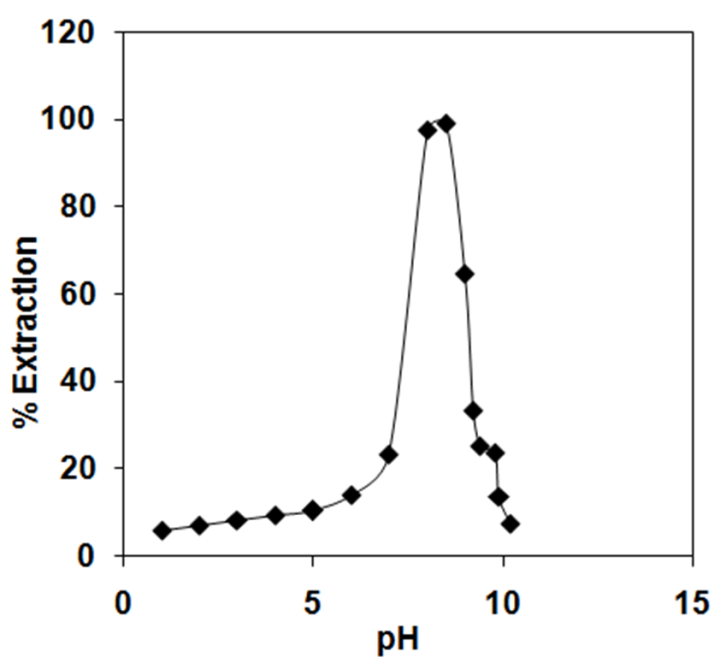
In the experimental analysis, various Buffer solutions with pH ranging from 1 to 11 were prepared in the present extraction, by persistently monitoring molar ratio between organic phase and aqueous phase as 1:1. Fig. 1 indicates an influence of pH on % extraction of zinc traces. This figure also indicates that the absorbance increases with increase in pH and attain the maximum absorbance at pH 8.5 .Thereafter, the absorbance reduces with increase in pH. Hence, the buffer of pH 8.5 was preferred in the laboratory work.

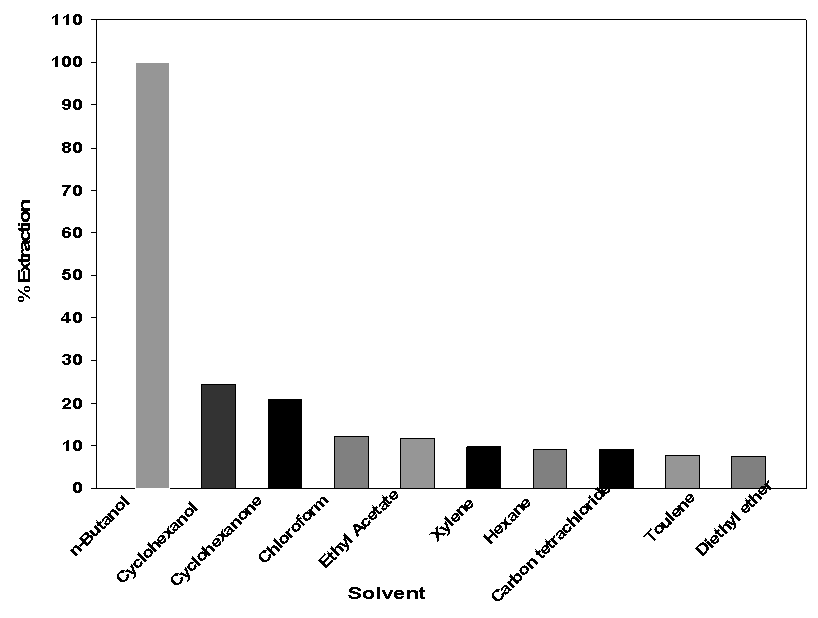
In this section, different organic solvents were tested to select competent solvent in the extraction of Zinc traces and results obtained with several solvents are summarized in Figure 2. In comparison with all tested solvents, the n-butanol was proved to be best solvent for extractive determination of Zinc ions.

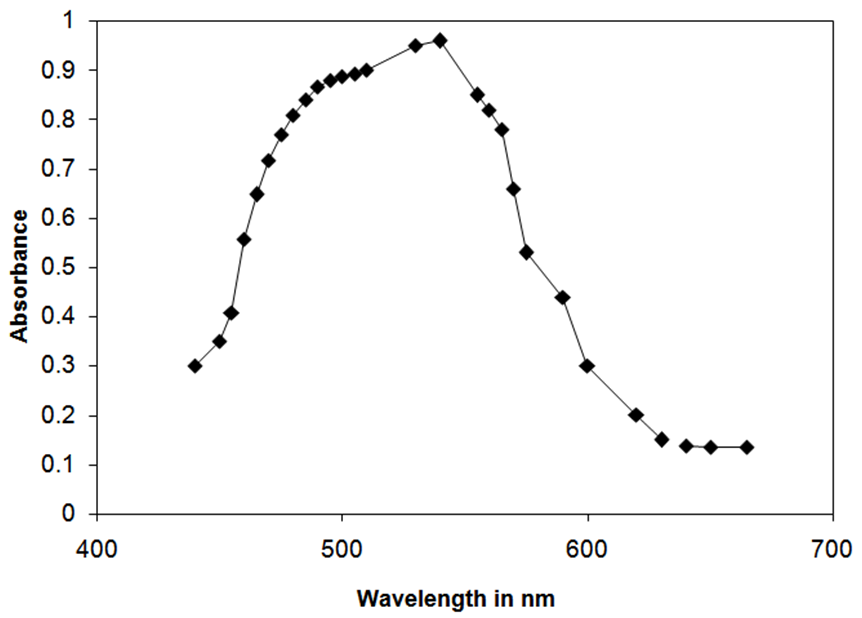
Figure 3 shows the effect of wavelength on the absorbance, it is also seen that increase in wavelength, rises absorbance and highest absorbance was noticed at corresponding wavelength of 540 nm. However, the increase in wavelength beyond the magnitude of 540 nm, the absorbance declines drastically. The wavelength corresponds to maximum absorbance was opted for laboratory work.

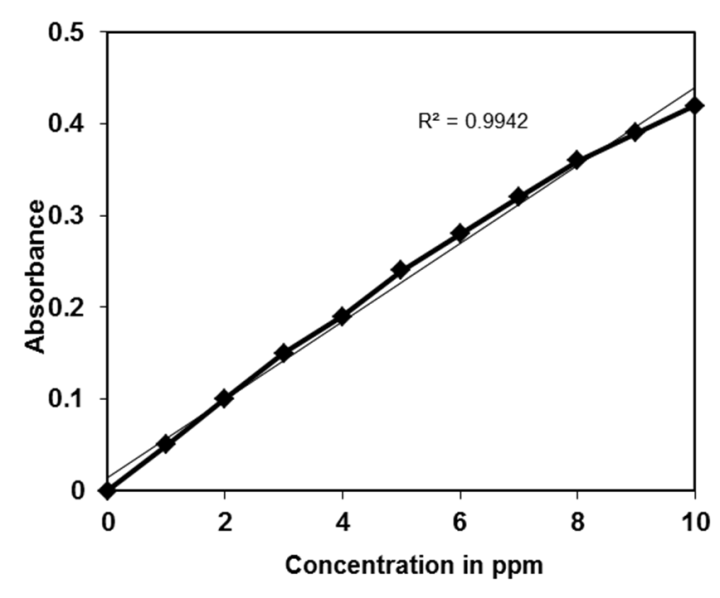
As discussed in the experimental procedure, using spectrophotometer the absorbance of known concentration of Zinc ions were documented. The samples of various Zinc ion concentration (concentration varies from 1-10 ppm) were prepared, mixed with novel reagent, and then employed to extraction operation using n-butanol as preferred solvent. Moreover, the absorbance of corresponding samples was noted, and a calibration curve was developed, as indicated in (Figure 4).

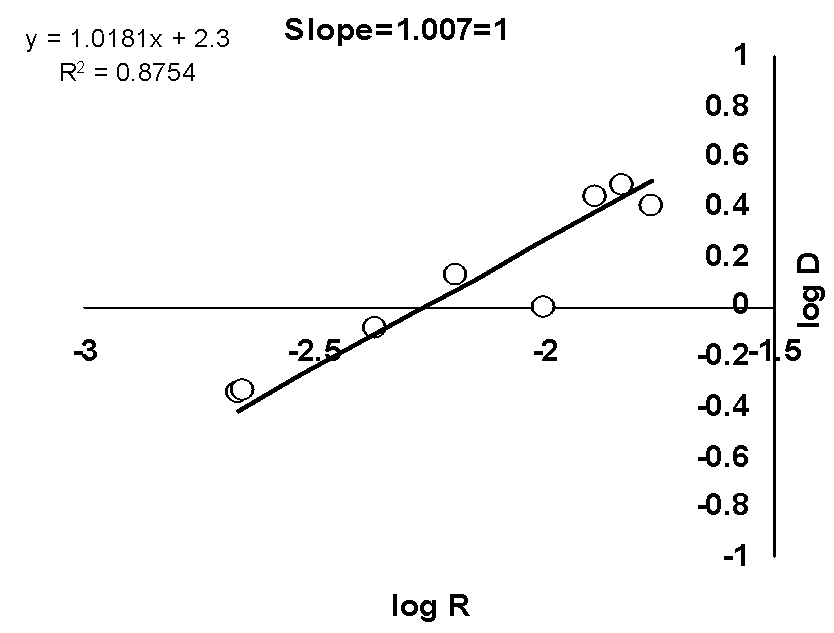
Figure 5 presents the application of various methods used to decide the optimum molar ratio between Zinc ions and DBA reagents. One of the prominent recommended methods, namely Job’s continuous variation was broadly employed for the right selection of composition ratio of the extracted species. Furthermore, results achieved from the method of Job’s continuous variation were compared with another two methods like Slop ratio and Mole ratio method for validation purpose. It is also confirmed from validation that, optimum molar ratio of 1:1 to be maintained between Zinc ions and analytical reagent (DBA) in the laboratory investigations.

To validate a present method, the consequence of many diverse ions was examined experimentally by carrying out determination Zinc ions with a known amount of diverse ion solutions using the recommended analytical procedure. The tolerance criterion for a given ion was considered as deviation of the absorbance value higher than ±2% from the expected value of Zinc ions.
The tolerated amount of different metal ions, in an acceptable limit as presented in (Table 3). The interference effects of these ions are suppressed with several agents for actual zinc ions determination, as indicated in Table 4.
Table 5 shows the comparison between different analytical reagents and devised DBA novel reagent for determination of Zinc ions. The results of DBA reagent seems to be superior over the earlier used reagents.
The present research work addresses the systematic estimation of Zn metal ions using extractive spectrometric technique. This devised method finds wide applications in the several industries, processing food units, environmental and alloy samples. The developed extractive spectrophotometric method is found to be superior over the previous methods.
The present work refers to, synthesis of DBA a novel analytical ligand and its characterization was also reported. The extraction proficiency of the developed novel reagent was verified at many experimental parameters such as solvent, time, pH, etc. The research finding acquired from the laboratory batch extraction displays that n-butanol can be recognized as best solvent than other solvents since its ability to remove the minute traces of Zinc metals. The developed novel reagent can significantly extract zinc metal from solvents in the 25 min time span. It was also noted that pH at 8.5 was favorable conditions for significant recovery of the zinc extraction. Application of the novel ligand in the determination of Zinc traces from given samples at optimum parameters has an impressive result as indicated in Table 6, which depicts the use of the novel analytical reagent in the industrial as well commercial applications.
This experimental work was carried out by Dr. Sonali S. Patil in the department of Chemistry, JSM College Alibag, Raigad, Maharashtra, India. Author pay sincere thanks to the college authorities; for proving all kind of help.
The author hereby declares that there is no any kind of financial support achieved to complete this research work.
It is to state that no conflict of interest involved in this research work.
| [1] | Babel, S.; Kurniawan. T.A Cr (VI) removal from synthetic wastewater using coconut shell charcoal and commercial activated carbon modified with oxidizing agent’s and/or chitosan, Chemosphere, 2004, 54(7), 951-967. | ||
| In article | View Article PubMed | ||
| [2] | Kenntne;r N., Krone; O., Altenkamp; R., Tataruch; F Environmental contaminants in liver and kidney of free- ranging Northern Goshawks (Accipiter gentilis) from three regions of Germany, Archives of Environmental Contamination and Toxicology, 2003, 45(1), 128-135. | ||
| In article | View Article PubMed | ||
| [3] | Nordberg; M., Nordberg; G.F Toxicology and biological monitoring of metals. In General and Applied Toxicology, John Wiley & Sons, Ltd., 2009. | ||
| In article | View Article | ||
| [4] | Pacheco-Fernández; I., Pino; V. Green solvents in analytical chemistry, Current Opinion in Green and Sustainable Chemistry, 2019, 18, 42-50. | ||
| In article | View Article | ||
| [5] | Blais, J.F.; Dufresne, S.; Mercier G State of the art of technologies for metal removal from industrial effluents, Journal of Water Science, 1999, 12(4), 687-711. | ||
| In article | View Article | ||
| [6] | Germani; R., Mancini; V., Savelli; G., Spreti; N. Mercury extraction by ionic liquids: temperature and alkyl chain length effect, Tetrahedron Letters, 2007, 48, 1767-1769. | ||
| In article | View Article | ||
| [7] | Ghandi; K. A Review of Ionic Liquids, Their Limits and Applications, May. 2018. | ||
| In article | |||
| [8] | Gunatilake; S.K. Methods of removing heavy metals from industrial wastewater, Multidisciplinary Engineering Scinece Studies (JMESS), 2015, 1(1), 12-18. | ||
| In article | |||
| [9] | Gardas; R.L., Coutinho; A.P. A group contribution method for viscosity estimation of ionic liquids, 2008, 266, 195-201. | ||
| In article | View Article | ||
| [10] | He J; Yang J.; Sarwar; M.T., Duan; C., Zhao; Y. Comparative investigation on copper leaching efficiency from waste mobile phones using various types of ionic liquids, Journal of Cleaner Production, 2020,256, 120368. | ||
| In article | View Article | ||
| [11] | Sosaari; P., Srivastava; V., Sillanpää; M. Ionic liquid-based water treatment technologies for organic pollutants: Current status and future prospects of ionic liquid mediated technologies, Science of the Total Environment, 2019, 690, 604-619. | ||
| In article | View Article PubMed | ||
| [12] | Larsson; K., Binnemans; K Selective extraction of metals using ionic liquids for nickel metal hydride battery recycling, Green Chemisty, 2014, 16(10), 4595-4603. | ||
| In article | View Article | ||
| [13] | Caparica, R.; Júlio, A.; Baby, A.R; Araújo, M.E.M.; Fernandes, A.S. Costa, J.G.; Santos, de Almeida T. Choline-amino acid ionic liquids as green functional excipients to enhance drug solubility, Pharmaceutics, 2018,10(4), 288-298. | ||
| In article | View Article PubMed | ||
| [14] | Faur-Brasquet; C., Kadirvelu; K., Le; Cloirec, P.Removal of metal ions from aqueous solutions by adsorption: competition with organic matter, Carbon,2002, 40, 2387-2392. | ||
| In article | View Article | ||
| [15] | Papaiconomou; N., Svecova; L., Bonnaud C., Cathelin; L., Billard; I., Chainet; E Possibilities and limitations in separating Pt(IV) from Pd(II) combining imidazolium and phosphonium ionic liquids, Dalton Transactions, 2015,44(46), 20131-20138. | ||
| In article | View Article PubMed | ||
| [16] | Li; C., Trost; B.M Green chemistry for chemical synthesis, 2008, 105(36), 13197-13202. | ||
| In article | View Article PubMed | ||
| [17] | Marsousi; S., Karimi-sabet; J., Moosavian; M.A., Amini; Y Liquid-liquid extraction of calcium using ionic liquids in spiral micro fluidics, Chemical Engineering Journal, 2019, 356, 492-505. | ||
| In article | View Article | ||
| [18] | Rzelewska; M., Baczyńska; M., Wiśniewski; M., Regel-Rosocka; M Phosphonium ionic liquids as extractants for recovery of ruthenium(III) from acidic aqueous solutions, Chemical Papers, 2017, 71(6), 1065-1072 | ||
| In article | View Article PubMed | ||
| [19] | Sheldon; R.A Catalytic reactions in ionic liquids, Chemical Communications, 2001, 23, 2399–2407. | ||
| In article | View Article PubMed | ||
| [20] | Phuong; T., Pham; T., Cho; C., Yun; Y Environmental fate and toxicity of ionic liquids: A review. Water Research, 2010, 44(2), 352-372. | ||
| In article | View Article PubMed | ||
| [21] | Patil; S.S., Lokhande;R.S Development of an Extractive Spectrophotometric Method for Determination of Cr (VI) using 2, 4-dimethyl -3H- 1, 5 benzodiazepine, International Journal of Applied Chemistry,2013, 9(2):133-140. | ||
| In article | |||
| [22] | Himadri, B. S., Tripathy, S., Equeenuddin, Sk. Md. and Sahoo, P. K. 2014. Utilization of ochre as an adsorbent to remove Pb(II) and Cu(II) from contaminated aqueous media. Environ. Earth Sci., 72: 243-250. | ||
| In article | View Article | ||
| [23] | Oliva, A., Molinari, A, Zuniga, F. and Ponce, P. 2002. Studies on the liquid-liquid extraction of nickel(II), zinc(II), cadmium(II), mercury(II) and lead(II) with 1-phenyl-3hydroxy-4-dodecyldithiocarboxylate-5-pyrazolone. Microchim. Acta., 140: 201-203. | ||
| In article | View Article | ||
| [24] | Okamoto, Y., Nomura, Y., Nakamura, H., Iwamaru, K., Fujiwara, T. and Kumamaru, T. 2000. High pre concentration of ultra-trace metal ions by liquid-liquid extraction using water/oil/water emulsions as liquid surfactant membranes. Microchem. J., 65: 341-346. | ||
| In article | View Article | ||
| [25] | Quijada-Maldonado; E., Sánchez; F., Pérez; B., Tapia; R., Romero; J Task-specific ionic liquids as extractants for the solvent extraction of molybdenum(VI) from aqueous solution using different commercial ionic liquids as diluents, Industrial & Engineering Chemistry Research, 2018, 57(5), 1621-1629. | ||
| In article | View Article | ||
| [26] | Ríos; A.P.D.L., Hernández-Fernández; F.J., Presa; H., Gómez; D., Víllora; G. Tailoring supported ionic liquid membranes for the selective separation of transesterification reaction compounds, 2009, 328, 81-85. | ||
| In article | View Article | ||
| [27] | Fu; F., Wang, Q. Removal of heavy metal ions from wastewaters: A review, Journal of Environmental Management, 2011, 92(3), 407-418. | ||
| In article | View Article PubMed | ||
| [28] | Jethaveb, G. and Fegadeb, U. 2018. Design and synthesis of Zn0.3Fe0.45O3 nanoparticle for efficient removal of Congo red dye and its kinetic and isotherm investigation. International Journal of Industrial Chemistry, 9: 85-97. | ||
| In article | View Article | ||
| [29] | Kondalkar, M., Fegadec, U., Attarde, S. and Ingle, S. 2018. Experimental investigation on phosphate adsorption, mechanism and desorption properties of Mn-Zn-Ti oxide trimetal alloy nanocomposite. Journal of Dispersion Science and Technology, 39: 1-9. | ||
| In article | View Article | ||
| [30] | Sarode, D., Ingle, S. and Attarde, S. 2012. Formula establishment of colorless Pb(II) complex with N-Benzoyl-N-Phenyl hydroxylamine (BPA) using atomic absorption spectroscopy. Indo. J. Chem., 12: 12-19. | ||
| In article | View Article | ||
| [31] | Sarode, D.B., Attarde, S.B., Ingle, S.T., Srivastava, V. and Sillanpää M.E. 2015. Separation and removal of Cu2+, Fe2+& Fe3+ from environmental waste samples by N-benzoyl-n-phenylhydroxylamine. Environmental Technology, 36: 521-528. | ||
| In article | View Article PubMed | ||
| [32] | Costa, M. C., Assunção, A., Ana M. Rosa da Costa, Nogueira, C. and Paiva, Ana P. 2013. Liquid-liquid extraction of platinum from chloride media by N, N′-Dimethyl, N, N′-Di cyclohexyltetradecylmalonamide. Solvent Extraction and Ion Exchange, 31: 12-23. | ||
| In article | View Article | ||
Published with license by Science and Education Publishing, Copyright © 2022 Sonali S. Patil
 This work is licensed under a Creative Commons Attribution 4.0 International License. To view a copy of this license, visit
http://creativecommons.org/licenses/by/4.0/
This work is licensed under a Creative Commons Attribution 4.0 International License. To view a copy of this license, visit
http://creativecommons.org/licenses/by/4.0/
| [1] | Babel, S.; Kurniawan. T.A Cr (VI) removal from synthetic wastewater using coconut shell charcoal and commercial activated carbon modified with oxidizing agent’s and/or chitosan, Chemosphere, 2004, 54(7), 951-967. | ||
| In article | View Article PubMed | ||
| [2] | Kenntne;r N., Krone; O., Altenkamp; R., Tataruch; F Environmental contaminants in liver and kidney of free- ranging Northern Goshawks (Accipiter gentilis) from three regions of Germany, Archives of Environmental Contamination and Toxicology, 2003, 45(1), 128-135. | ||
| In article | View Article PubMed | ||
| [3] | Nordberg; M., Nordberg; G.F Toxicology and biological monitoring of metals. In General and Applied Toxicology, John Wiley & Sons, Ltd., 2009. | ||
| In article | View Article | ||
| [4] | Pacheco-Fernández; I., Pino; V. Green solvents in analytical chemistry, Current Opinion in Green and Sustainable Chemistry, 2019, 18, 42-50. | ||
| In article | View Article | ||
| [5] | Blais, J.F.; Dufresne, S.; Mercier G State of the art of technologies for metal removal from industrial effluents, Journal of Water Science, 1999, 12(4), 687-711. | ||
| In article | View Article | ||
| [6] | Germani; R., Mancini; V., Savelli; G., Spreti; N. Mercury extraction by ionic liquids: temperature and alkyl chain length effect, Tetrahedron Letters, 2007, 48, 1767-1769. | ||
| In article | View Article | ||
| [7] | Ghandi; K. A Review of Ionic Liquids, Their Limits and Applications, May. 2018. | ||
| In article | |||
| [8] | Gunatilake; S.K. Methods of removing heavy metals from industrial wastewater, Multidisciplinary Engineering Scinece Studies (JMESS), 2015, 1(1), 12-18. | ||
| In article | |||
| [9] | Gardas; R.L., Coutinho; A.P. A group contribution method for viscosity estimation of ionic liquids, 2008, 266, 195-201. | ||
| In article | View Article | ||
| [10] | He J; Yang J.; Sarwar; M.T., Duan; C., Zhao; Y. Comparative investigation on copper leaching efficiency from waste mobile phones using various types of ionic liquids, Journal of Cleaner Production, 2020,256, 120368. | ||
| In article | View Article | ||
| [11] | Sosaari; P., Srivastava; V., Sillanpää; M. Ionic liquid-based water treatment technologies for organic pollutants: Current status and future prospects of ionic liquid mediated technologies, Science of the Total Environment, 2019, 690, 604-619. | ||
| In article | View Article PubMed | ||
| [12] | Larsson; K., Binnemans; K Selective extraction of metals using ionic liquids for nickel metal hydride battery recycling, Green Chemisty, 2014, 16(10), 4595-4603. | ||
| In article | View Article | ||
| [13] | Caparica, R.; Júlio, A.; Baby, A.R; Araújo, M.E.M.; Fernandes, A.S. Costa, J.G.; Santos, de Almeida T. Choline-amino acid ionic liquids as green functional excipients to enhance drug solubility, Pharmaceutics, 2018,10(4), 288-298. | ||
| In article | View Article PubMed | ||
| [14] | Faur-Brasquet; C., Kadirvelu; K., Le; Cloirec, P.Removal of metal ions from aqueous solutions by adsorption: competition with organic matter, Carbon,2002, 40, 2387-2392. | ||
| In article | View Article | ||
| [15] | Papaiconomou; N., Svecova; L., Bonnaud C., Cathelin; L., Billard; I., Chainet; E Possibilities and limitations in separating Pt(IV) from Pd(II) combining imidazolium and phosphonium ionic liquids, Dalton Transactions, 2015,44(46), 20131-20138. | ||
| In article | View Article PubMed | ||
| [16] | Li; C., Trost; B.M Green chemistry for chemical synthesis, 2008, 105(36), 13197-13202. | ||
| In article | View Article PubMed | ||
| [17] | Marsousi; S., Karimi-sabet; J., Moosavian; M.A., Amini; Y Liquid-liquid extraction of calcium using ionic liquids in spiral micro fluidics, Chemical Engineering Journal, 2019, 356, 492-505. | ||
| In article | View Article | ||
| [18] | Rzelewska; M., Baczyńska; M., Wiśniewski; M., Regel-Rosocka; M Phosphonium ionic liquids as extractants for recovery of ruthenium(III) from acidic aqueous solutions, Chemical Papers, 2017, 71(6), 1065-1072 | ||
| In article | View Article PubMed | ||
| [19] | Sheldon; R.A Catalytic reactions in ionic liquids, Chemical Communications, 2001, 23, 2399–2407. | ||
| In article | View Article PubMed | ||
| [20] | Phuong; T., Pham; T., Cho; C., Yun; Y Environmental fate and toxicity of ionic liquids: A review. Water Research, 2010, 44(2), 352-372. | ||
| In article | View Article PubMed | ||
| [21] | Patil; S.S., Lokhande;R.S Development of an Extractive Spectrophotometric Method for Determination of Cr (VI) using 2, 4-dimethyl -3H- 1, 5 benzodiazepine, International Journal of Applied Chemistry,2013, 9(2):133-140. | ||
| In article | |||
| [22] | Himadri, B. S., Tripathy, S., Equeenuddin, Sk. Md. and Sahoo, P. K. 2014. Utilization of ochre as an adsorbent to remove Pb(II) and Cu(II) from contaminated aqueous media. Environ. Earth Sci., 72: 243-250. | ||
| In article | View Article | ||
| [23] | Oliva, A., Molinari, A, Zuniga, F. and Ponce, P. 2002. Studies on the liquid-liquid extraction of nickel(II), zinc(II), cadmium(II), mercury(II) and lead(II) with 1-phenyl-3hydroxy-4-dodecyldithiocarboxylate-5-pyrazolone. Microchim. Acta., 140: 201-203. | ||
| In article | View Article | ||
| [24] | Okamoto, Y., Nomura, Y., Nakamura, H., Iwamaru, K., Fujiwara, T. and Kumamaru, T. 2000. High pre concentration of ultra-trace metal ions by liquid-liquid extraction using water/oil/water emulsions as liquid surfactant membranes. Microchem. J., 65: 341-346. | ||
| In article | View Article | ||
| [25] | Quijada-Maldonado; E., Sánchez; F., Pérez; B., Tapia; R., Romero; J Task-specific ionic liquids as extractants for the solvent extraction of molybdenum(VI) from aqueous solution using different commercial ionic liquids as diluents, Industrial & Engineering Chemistry Research, 2018, 57(5), 1621-1629. | ||
| In article | View Article | ||
| [26] | Ríos; A.P.D.L., Hernández-Fernández; F.J., Presa; H., Gómez; D., Víllora; G. Tailoring supported ionic liquid membranes for the selective separation of transesterification reaction compounds, 2009, 328, 81-85. | ||
| In article | View Article | ||
| [27] | Fu; F., Wang, Q. Removal of heavy metal ions from wastewaters: A review, Journal of Environmental Management, 2011, 92(3), 407-418. | ||
| In article | View Article PubMed | ||
| [28] | Jethaveb, G. and Fegadeb, U. 2018. Design and synthesis of Zn0.3Fe0.45O3 nanoparticle for efficient removal of Congo red dye and its kinetic and isotherm investigation. International Journal of Industrial Chemistry, 9: 85-97. | ||
| In article | View Article | ||
| [29] | Kondalkar, M., Fegadec, U., Attarde, S. and Ingle, S. 2018. Experimental investigation on phosphate adsorption, mechanism and desorption properties of Mn-Zn-Ti oxide trimetal alloy nanocomposite. Journal of Dispersion Science and Technology, 39: 1-9. | ||
| In article | View Article | ||
| [30] | Sarode, D., Ingle, S. and Attarde, S. 2012. Formula establishment of colorless Pb(II) complex with N-Benzoyl-N-Phenyl hydroxylamine (BPA) using atomic absorption spectroscopy. Indo. J. Chem., 12: 12-19. | ||
| In article | View Article | ||
| [31] | Sarode, D.B., Attarde, S.B., Ingle, S.T., Srivastava, V. and Sillanpää M.E. 2015. Separation and removal of Cu2+, Fe2+& Fe3+ from environmental waste samples by N-benzoyl-n-phenylhydroxylamine. Environmental Technology, 36: 521-528. | ||
| In article | View Article PubMed | ||
| [32] | Costa, M. C., Assunção, A., Ana M. Rosa da Costa, Nogueira, C. and Paiva, Ana P. 2013. Liquid-liquid extraction of platinum from chloride media by N, N′-Dimethyl, N, N′-Di cyclohexyltetradecylmalonamide. Solvent Extraction and Ion Exchange, 31: 12-23. | ||
| In article | View Article | ||