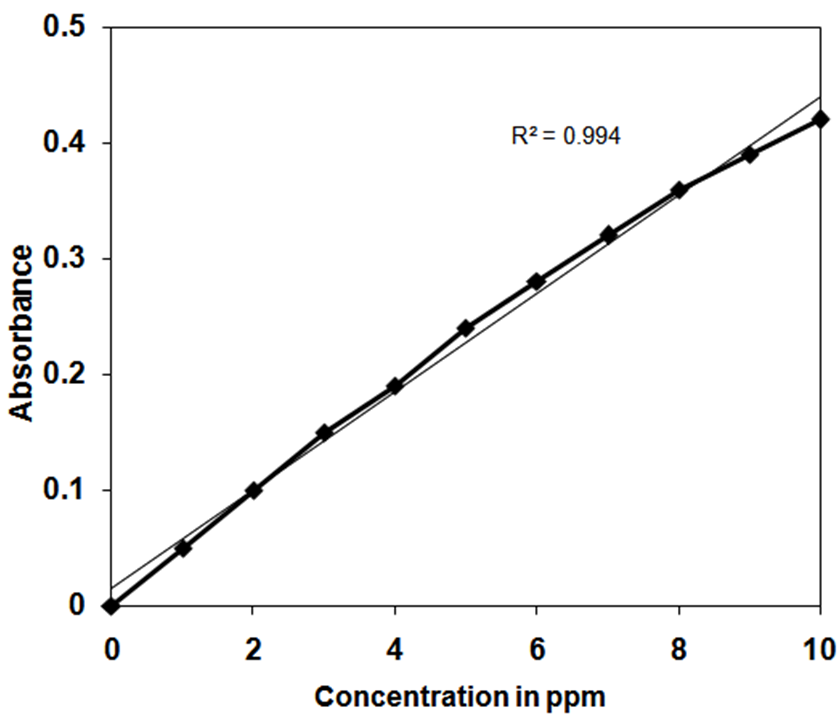
The present work addresses, a development of novel analytical reagent 2, 4-dimethyl -3H-1, 5 benzodiazepine (DBA) for determination of rhodium (III) from a mixture of alloy, using extractive spectrophotometric technique. In this research, a novel analytical reagent has been explored and with NMR, IR and mass spectrometer techniques, its characterization was also reported. A reaction between Rhodium (III) and analytical reagent (DBA), resulted in to red-coloured compound, this red colored compound offers outstanding results at constant pH 8.9, when subjected to an extraction using n-butanol as selective solvent. The Beers law is fully satisfied in concentration range of 1 mg L-1 to 10 mg L-1 of rhodium (III) ions. The values of maximum absorption, average molar absorption co-efficient to the coloured compound were observed to be 510 nm, 4863L mol-1cm-2, however sandell’s sensitivity was recorded as 0.01205 μg cm-2. The determination of rhodium (III) metal traces from alloy mixture using DBA analytical reagent is revealed to be cheaper, effective and best than that of earlier spectrophotometric extraction methods.
A rhodium an important element commonly exists in minerals, it is one of the valuable platinum group elements, found in the group metals, consisting metals group such as Ruthenium, Platinum, Palladium, Rhodium, Osmium, and Iridium. These metals have growing demand, due to their exceptional physical and chemical properties and emerging applications outside the jewellery and decorative industries. At present it finds tremendous application in the field of catalysis, and modern electronic apparatus. Apart from this, it has tremendous demand in catalyst application in petroleum refinery operations, modern electrical appliances.
Various methodology of extraction used for this purpose however most of these are possesses some limitations such as consuming more time, costly in operation. However, amongst the all separation techniques the solvent extraction is one of the most preferred method for determination of rhodium metal ions at micro and macro levels from given samples due to fact that this method is fast, accurate and cheap. 1. Some of earlier reported research work are: experimental work using different analytical reagents for extraction of platinum group elements like, tributyl phosphate 2, Alamine 336 3, BMMT 4, HMAINH 5, bis-(2-ethylhexyl) phosphoric acid 6 were carried out. As compared to above, Schiff bases (Nitrogen and Sulphur contain) exhibited favorable results in the area of determination and separation of group of platinum metals 7. Further, several reagents have been tested for extractive determination of rhodium (III) specifically, dioctyl sulphides 8, Kelex 100 9, N,N-Dialkyl-N′-benzoylthioureas 10, trialkylphosphinesulphide 11.
An extraction of rhodium (III) in existence of tin using analytical reagent as N, N’dimethyl N, N’ diphenyltetradecylmalonamide (DMDPHTDMA) was reported 12. By using N-n-octylaniline as analytical reagent an extraction of rhodium (III) from sodium malonate was performed 13. Further, the extraction of rhodium (III) ions was reported using cyanex 923 and cyanex 471X as analytical reagents, in the existence of stannous chloride from bromide media 14. The experimental investigation using reagents namely, water soluble porypyrin 5, 10, 15, 20 – tetrakis(4-N-methylpyridyl) and Porphine(TMPYM) for determination of rhodium (III) was reported 15.
The present experimental exploration depicts, the development of an accurate and reliable method using fresh analytical reagent 2, 4-dimethyl -3H- 1, 5 benzodiazepine (DBA) for determination of rhodium (III) metal traces with extractive spectrophotometric process. The developed method is found to be best over the other reported extractive techniques, for the determination of rhodium (III) traces.
In the experimental investigation, the absorbance measurement was done using calibrated UV visible spectrophotometer (Shimadzu 2450 UV-Visible, 10 mm quartz cell),and pH was monitored with the help of Elico LI-120 type calibrated digital pH meter. The experimental parameters maintained in this investigation are presented in Table 1.
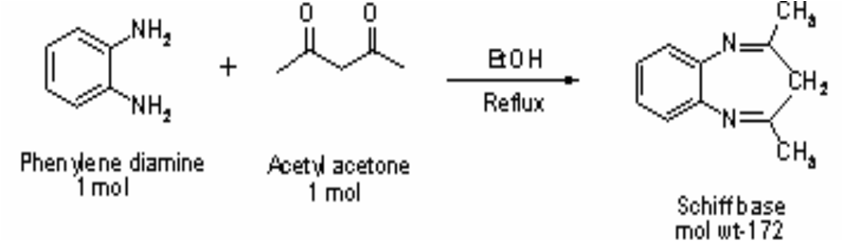
1 mole of o-phenylenediamine and 1 moles of Acetyl acetone in the Ethanol (solvent) are thoroughly mixed to prepare DBA reagent, as presented in (Figure 1). The mixture obtained is then heated on in water bath at constant temperature of 100oC in a round bottom glass flask, maintain under total reflux for 2 hrs duration. The solution obtained after elaborated route is then placed in ice bath to develop crystals, which is then recrystallized with ethanol as a solvent. Later the novel reagent (M.P. 274°C) is synthesized; it is characterized by NMR and IR spectrum. The developed reagent can be used for spectrophotometric determination of rhodium (III) metal traces. Moreover, a stock solution of DBA reagent in a methanol with concentration of 0.05% was prepared for further experimental work.

A stock solution having volume of 100 ml (100 ppm concentration) of rhodium(III) metal ions was obtained by dissolving 0.255 mg of rhodium chloride (RhCl3(H2O)3) (Merck- AR Grade) in a distilled water. More dilute solutions were obtained as and when required by dilution of appropriate quantity of aliquots from the stock solution with distilled water.
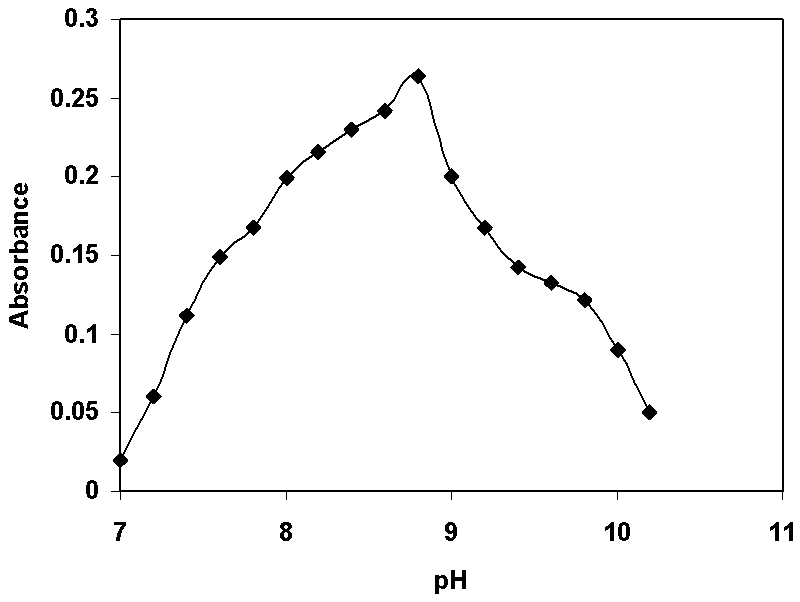
2.4. pH Selection for ExtractionIn this study, different Buffer solutions with pH ranging from 1 to 11 were employed for rhodium (III) extraction, by maintaining molar ratio between organic phase and aqueous phase was constant as 1:1. Figure 2 shows the influence of pH on the extraction process of rhodium (III) metal. This figure also depicts that absorbance increases with the rise in pH and attain the maximum absorbance at pH 8.9. Thereafter, the absorbance reduces with increase in pH. Hence, the buffer of pH 8.9 was recommended in further investigations.

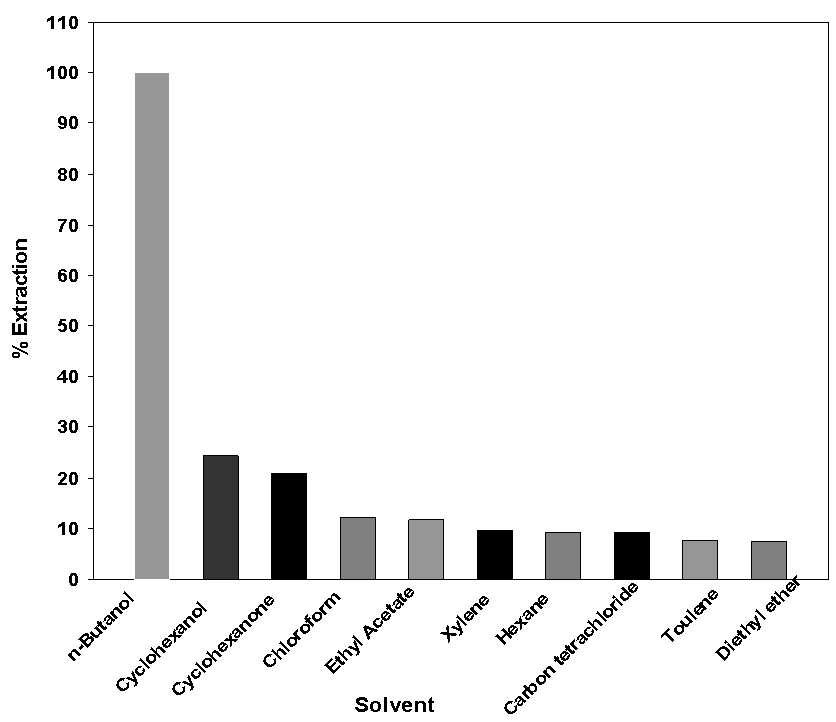
In this section, various organic solvents were tested to verify the suitability of solvent in the extraction of rhodium(III) metal ions and results obtained are summarized in Figure 3. In comparison with all tested solvents, the n-butanol was proved to be best solvent for extractive determination of rhodium (III).

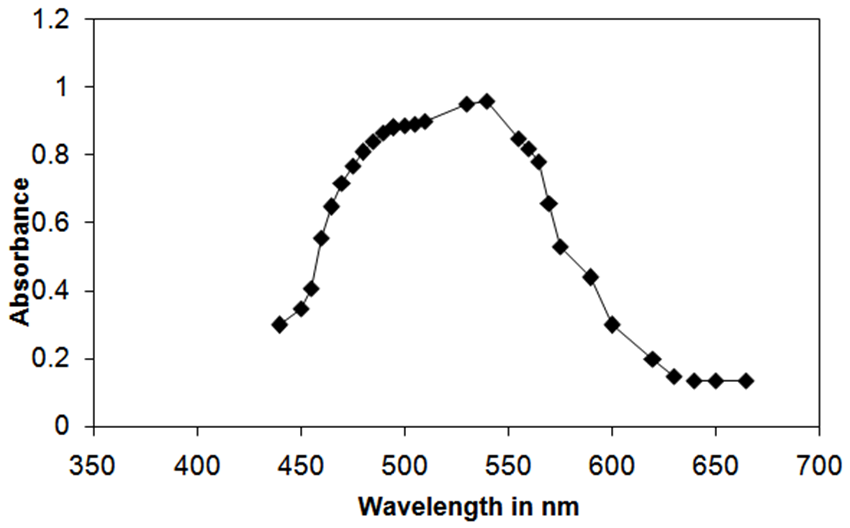
Figure 4 shows the effect of wavelength on the absorbance, it is also seen from this figure that increase in wavelength, increases absorbance and maximum absorbance was noticed at wavelength of 510 nm. Further, increase in wavelength beyond the 510nm, the values of absorbance falling down drastically. This maximum absorption value of wavelength was used for further investigations.
In a beaker thoroughly mix 1 ml rhodium chloride stock solution, and 0.05% DBA reagent in a methanol. Then by adding buffer solution, pH was adjusted to 8.9. This solution, further mix with 10 ml of n-butanol and subjected to separating glass funnel. This glass funnel separate out the organic and aqueous phase. The organic phase is then subjected to a spectrophotometer at wavelength of 510 nm, for determination of rhodium (III) concentration.
3.1. Formation of Calibration CurveIn continuation to the experimental procedure, with the help of spectrophotometer the absorbance of known concentration of rhodium (III) ions were recorded. The different samples of rhodium (III) concentration (concentration varies from 1-10 ppm) were prepared, mixed with DBA reagent, and then exposed to extraction using n-butanol as solvent. Moreover, the absorbance of corresponding samples was measured, and developed a calibration curve as indicated in (Figure 5).

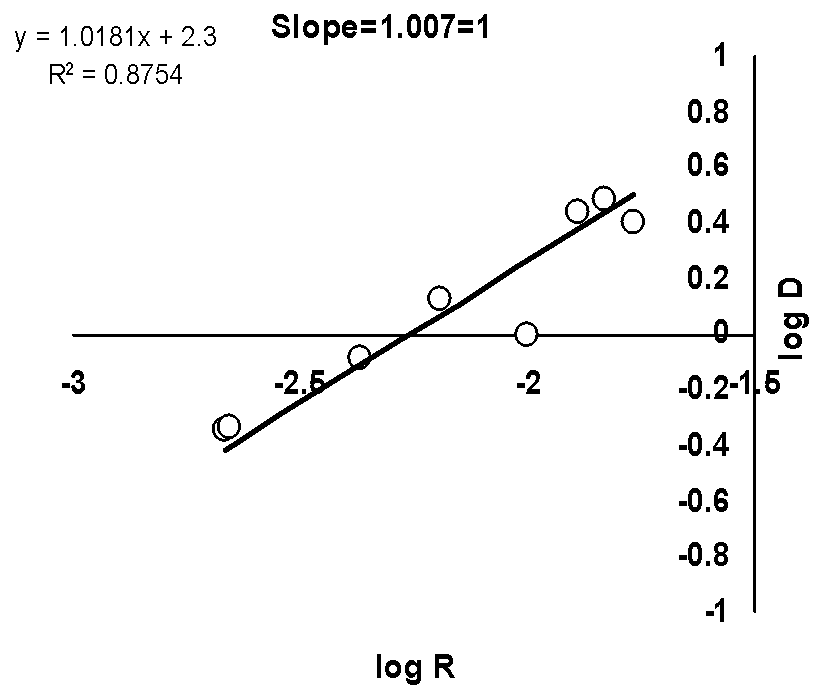
Figure 6 presents the application of various methods available to decide the optimum molar ratio between rhodium (III) ions and DBA reagents. One of the prominent recommended methods, namely Job’s continuous variation method was widely employed for the confirmation of composition ratio of the extracted species. Furthermore, results obtained from Job’s continuous variation method were compared with mole ratio method and slope ratio method for validation purpose. From above validation, 1:1 as recommended optimum molar ratio to be maintained between rhodium (III) and analytical reagent (DBA) in further experimental investigations.

To validate a present method, the consequence of many diverse ions were examined experimentally by carrying out determination of 100 µg /mL rhodium (III) determination with a known amount of diverse ion solutions using the recommended analytical procedure. The tolerance criteria for a given ion were considered as deviation of the absorbance value higher than ±2% from the expected value of rhodium (III) ions.
The tolerated amount of different metal ions, in the determination of rhodium (III) ions in an acceptable limit as presented in (Table 2). The interference effects of these ions are suppressed with several agents for actual rhodium (III) determination, as indicated in Table 3.
Table 4 shows the comparison between various analytical reagents used by the earlier researchers and DBA reagent for determination of rhodium (III).The results of DBA reagents are found in good agreement as compared to some earlier reported reagents.
The determination of rhodium (III) ions has been effectively made using present research work. This developed method finds wide applications in the several industries such as glass, pharmaceutical, chemical and petroleum processing. Moreover, it can be prominently employed for determinations of rhodium ions in the synthetic and alloy samples. The developed extractive spectrophotometric method is found to be best over the earlier methods (Table 5).
The present experimental investigations describes that a newly synthesized, 2, 4-dimethyl -3H- 1, 5 benzodiazepine (DBA) analytical reagent found to be effective, and best for accurate prediction of rhodium (III).
Merits of the developed method are as follows:-
i. Analytical reagent is easy to synthesize.
ii. The extraction operation is simplest, single stage and rapid.
iii. The method requires very low reagent concentration for quantitative determination of rhodium (III).
iv. The developed method has high selectivity and almost in case of all anions and most of the cations do not interfere. The area and suitability of applications can be enhanced using suitable masking agent.
v. Accuracy and precision besides the, simplicity, sensitivity, rapidity are the main merits of the present method and also effectively employed for the estimation of rhodium (III) metal ions in a manmade mixture.
The present experimental analysis has been conducted by Dr. Sonali S. Patil in the Laboratory of Chemistry of the JSM College Alibag. Author pays sincere thanks to the competent authorities of the college for providing all facilities during the research.
Author is hereby state that no such kind of conflict involved in the publication of present research work.
| [1] | N.H. Furman “Standard of Chemical Analysis”, D. Van Norstrand Company, inc., princenton, New Jersey, 1963, 902. | ||
| In article | |||
| [2] | Wilson R.B., W.D. Jacobs, Anal. Chem., 1961 33, 1650-1652. | ||
| In article | View Article | ||
| [3] | G. Yan and J. Alstad, J. Radioanal. Nucl. Chem., 1995, 196, 287. | ||
| In article | View Article | ||
| [4] | E. Goralska, M.T. Coll, A. Fortuny, C.S. Kedari, and A.M. Sastre, Solv. Extr. Ion Exch., 2007, 25, 65-77. | ||
| In article | View Article | ||
| [5] | G. B. Pethe, S. G. Bhadange1, M. D. Joshi and A. S. Aswar, Advances in Applied Science Research, 2010, 1 (2): 58-64. | ||
| In article | |||
| [6] | B. Mathew, V. Mini and A. Vinnifred, Advances in Applied Science Research, 2010, 1 (3) 7-14. | ||
| In article | |||
| [7] | Vest, M. Schuster, K. H. Konig, Fresenius Zeitschrift fur Analytische Chemie, 1989, 335, 759. | ||
| In article | View Article | ||
| [8] | K.H. König, M. Schuster, B. Steinbrech , G. Schneeweis, R. Schlodder, Fresenius'. | ||
| In article | |||
| [9] | Zeitschrift für Analytische Chemie, 1985, 321, 457-460. | ||
| In article | View Article | ||
| [10] | E. Benguerel, G. Cote, Demopoulos and D. Bauer, J. Chem. Technol. Biotechnol, 1995, 62, 380. | ||
| In article | View Article | ||
| [11] | S.J. Al-Bazi, H. Freiser, Solv. Extr. Ion Exch., 1987, 5, 265. | ||
| In article | View Article | ||
| [12] | Malik, P., Ana paula, P.A., 2008. Solvent. Ext. Ion. Exch. 26 (1), 25-40. | ||
| In article | View Article | ||
| [13] | Anuse, M.A., Kolekar, S.S., 2002. Talanta 58 (4), 761-771. | ||
| In article | View Article PubMed | ||
| [14] | Duche, S.N., Chavan, D.V., Dhadke, P.M., 2002. J. Chin. Chem. Soc. 49, 165-172. | ||
| In article | View Article | ||
| [15] | Kunio, K., Shukuro, I., Takao, Y., 2006. Can. J. Anal. Sci. Spectros.51 (4), 200-206. | ||
| In article | |||
Published with license by Science and Education Publishing, Copyright © 2022 Sonali S. Patil
 This work is licensed under a Creative Commons Attribution 4.0 International License. To view a copy of this license, visit
http://creativecommons.org/licenses/by/4.0/
This work is licensed under a Creative Commons Attribution 4.0 International License. To view a copy of this license, visit
http://creativecommons.org/licenses/by/4.0/
| [1] | N.H. Furman “Standard of Chemical Analysis”, D. Van Norstrand Company, inc., princenton, New Jersey, 1963, 902. | ||
| In article | |||
| [2] | Wilson R.B., W.D. Jacobs, Anal. Chem., 1961 33, 1650-1652. | ||
| In article | View Article | ||
| [3] | G. Yan and J. Alstad, J. Radioanal. Nucl. Chem., 1995, 196, 287. | ||
| In article | View Article | ||
| [4] | E. Goralska, M.T. Coll, A. Fortuny, C.S. Kedari, and A.M. Sastre, Solv. Extr. Ion Exch., 2007, 25, 65-77. | ||
| In article | View Article | ||
| [5] | G. B. Pethe, S. G. Bhadange1, M. D. Joshi and A. S. Aswar, Advances in Applied Science Research, 2010, 1 (2): 58-64. | ||
| In article | |||
| [6] | B. Mathew, V. Mini and A. Vinnifred, Advances in Applied Science Research, 2010, 1 (3) 7-14. | ||
| In article | |||
| [7] | Vest, M. Schuster, K. H. Konig, Fresenius Zeitschrift fur Analytische Chemie, 1989, 335, 759. | ||
| In article | View Article | ||
| [8] | K.H. König, M. Schuster, B. Steinbrech , G. Schneeweis, R. Schlodder, Fresenius'. | ||
| In article | |||
| [9] | Zeitschrift für Analytische Chemie, 1985, 321, 457-460. | ||
| In article | View Article | ||
| [10] | E. Benguerel, G. Cote, Demopoulos and D. Bauer, J. Chem. Technol. Biotechnol, 1995, 62, 380. | ||
| In article | View Article | ||
| [11] | S.J. Al-Bazi, H. Freiser, Solv. Extr. Ion Exch., 1987, 5, 265. | ||
| In article | View Article | ||
| [12] | Malik, P., Ana paula, P.A., 2008. Solvent. Ext. Ion. Exch. 26 (1), 25-40. | ||
| In article | View Article | ||
| [13] | Anuse, M.A., Kolekar, S.S., 2002. Talanta 58 (4), 761-771. | ||
| In article | View Article PubMed | ||
| [14] | Duche, S.N., Chavan, D.V., Dhadke, P.M., 2002. J. Chin. Chem. Soc. 49, 165-172. | ||
| In article | View Article | ||
| [15] | Kunio, K., Shukuro, I., Takao, Y., 2006. Can. J. Anal. Sci. Spectros.51 (4), 200-206. | ||
| In article | |||