 OPEN ACCESS
  PEER-REVIEWED
Why Should Be Removed Chronic Infected Abdominal Synthetic Meshes? A Review

1Department of Surgery, Emergency Military Hospital “Constantin Papilian” Cluj-Napoca
2Department of Surgery, Emergency Military Hospital “Alexandru Augustin” Sibiu
Abstract
Incisional hernia is the most common late complication of laparotomy. Prosthetic treatment resulted in a remarkable improvement in surgical outcomes by reducing drastically the rate of reccurence and increasing quality of life. Insertion of synthetic prostheses is encumbered by a relatively high rate of complications of which the most common is infection. Chronic infection requires removal of mesh as radical therapeutic measure. Based on the literature review, the article presents, the main mechanisms of chronic infection and the main reasons for removal of prosthesis. Specially are analyzed mechanisms in gaining the antibiotic resistance of bacteria in biofilm. Following the analysis it can be concluded that once infected prosthesis can not be saved by conservative means.
Keywords: incisional hernia, biofilm, chronic mesh infection, antibiotic resistance
Global Journal of Surgery, 2015 3 (2),
pp 17-23.
DOI: 10.12691/js-3-2-1
Received April 17, 2015; Revised May 02, 2015; Accepted May 15, 2015
Copyright © 2015 Science and Education Publishing. All Rights Reserved.Cite this article:
- OPREA, V., and D. MOGA. "Why Should Be Removed Chronic Infected Abdominal Synthetic Meshes? A Review." Global Journal of Surgery 3.2 (2015): 17-23.
- OPREA, V. , & MOGA, D. (2015). Why Should Be Removed Chronic Infected Abdominal Synthetic Meshes? A Review. Global Journal of Surgery, 3(2), 17-23.
- OPREA, V., and D. MOGA. "Why Should Be Removed Chronic Infected Abdominal Synthetic Meshes? A Review." Global Journal of Surgery 3, no. 2 (2015): 17-23.
| Import into BibTeX | Import into EndNote | Import into RefMan | Import into RefWorks |
1. Introduction
Despite the development of minimally invasive surgery a large number of diseases (especially traumatic and visceral neoplasia) can be solved only by large incisions. The most common complication with an incidence ranging between 11 and 20% is incisional hernia (IH) and also it is the most common cause of reoperation due to direct complications, discomfort or low quality of life [1-6][1].
Incisional hernia treatment changed radically with the introduction of prosthetic materials. Although there is still controversy about the type of prosthesis, its positioning and methods of implantation (open or laparoscopic) prosthetic reconstruction of the abdominal wall proved to be superior in randomized trials compared with other repairs [7, 8, 9, 10].
Far from being harmless, the burden of such materials is bacterial contamination and consecutive infection, visceral adhesions and intestinal fistulas. The most common complication and the most feared at the same time by the devastating consequences it produces (increasing the number of hospitalization days, increased direct and indirect costs for diagnosis and treatment, multiplying physical and mental suffering of the patient, recurrence or even death) is infection [11, 12, 13].
2. Incidence
If postinguinal herniorrhaphy infections are usually circumscribed to the groin, IH infections constitute a major surgical complication that poses a serious challenge to both the surgeon and the patient and may end in the patient’s death but the real incidence of infection including the mesh is quite rare and difficult to establish in clinical series.
Dates are sparing and inaccurate because the incidence is changing depending on the personal interpretation of the surgeon, by hospital and even with the patient population. For the moment there is no valid and accepted classification of mesh infection, clinical facts are subjectively interpreted and the surgeons tend to underestimate infections rates. In a 36 years literature study (1966-2002), Sanchez-Montes et al, found 386 studies reporting incisional hernias series [14]. Of these studies, 43.8% were prospective and 34.4% retrospective. However, in 22% of these publications, those variables were not specified. If it was to talk about mesh infection only 32 articles (8,29%) report this. The authors of articles on ventral herniorrhaphy did not define or classify the infections encountered. Most of the studies (81%) were reported between 1990 and 2000.
In another review of the literature from 2003 to 2008, on series larger than 100 cases, Lammers et al found a wound infection rate ranging from 0,3% to 21,5% [13]. This large variation make data impossible to adjust to a clinical conclusion. In the same study the rate of mesh infection is mentioned only in 4 of the 8 studies with a rate of 0,3 to 2%; mesh removal is noted in only 1 study.
Mesh infection can follow either open or laparoscopic IH repair. The reported incidence after open repair ranges from 6%–10% [15, 16, 17], whereas that after laparoscopic repairs is lower, from 0–3.6% (18). A mesh infection rate as low as 0.78% (45/6,266) after laparoscopic IH repair was published in a systematic review by Carlson et al. Twenty-eight of the 45 patients (56%) with mesh infection required re-operation, and such infections were the third leading cause of re-operation [20].
Initial evolution of the prosthetic infections is acute onset being 9-12 days after surgery and apparently is the most well known and studied. It is caused by free floating bacteria (planktonic form) that growth like individual organism that can be easily isolated and identified in culture. The answer to the antibiotic and host defense mechanisms is extremely favorable [14].
Untreated acute infections and / or incomplete / incorrect treated with antibiotics, percutaneous drainage or dressing become chronic infection with a specific pattern generated by phenotypic change of bacteria lifestyle to sessile growth which is the predominant form of life on surfaces [22]. Sometimes chronic infection reactivation occurs without a history of outbreaks of infectious or unknown septic outstanding from previous interventions. Clinically, chronic infection occurs late after discharge (months even years) and is slowly corrugated evolving, In variable proportions wound dehiscence is present but there is no tissue necrosis because sessile bacterial phenotype do not secrete increased amounts of proteases and lysine. Antibiotic therapy is ineffective due to the presence of biofilm on the surface of the wound [23]. Jezupovs and Cobb, on open IH repairs with polypropylene mesh, reported presentations of infection at an average of 11.3 months (range 2.5–18 months) and 10.9 months, respectively (15,24). This has been substantiated by a recent VA study of 55 mesh removals, revealing a median time to explantation of 224 days. Klosterhalfen and Klinge, on a large series of 623 explanted meshes reported that in case of infection, the meshes have been explanted after 241/214 month (class 1) or 211/219 month (class 2) [25].
3. Risk Factors for Mesh Infection
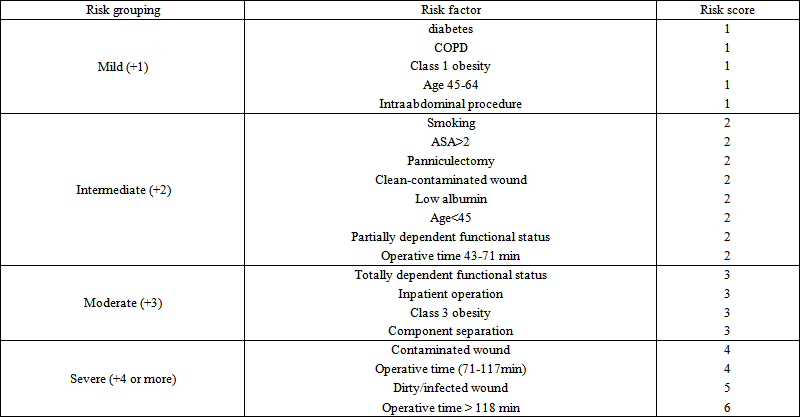
Despite major advances in the management of patients undergoing surgery–including aseptic technique, prophylactic antibiotics, and advances in surgical approaches such as laparoscopic surgery–surgical wound infection remains among the most common complications of surgery. A growing body of literature supports the concept that patient factors are a major determinant of wound outcome following surgery. Comorbidities such as diabetes and cardiac disease clearly contribute, but environmental stressors as well as the individual’s response to stress are equally important. Recently, Fischer et al, report a validated risk model of surgical site occurrence (SSO) in open repair of IH [26]. Breakdown of risk factors for wound complications is represented in Table 1. Applying the SSO score the total risk ranges from 0 to 28 and the associated rate of wound morbidity varied from < 1 to 44,4%. From the study, patient related factors, aside from morbid obesity were uniformly low or intermediate predictors while operative factors predominated as moderate and severe.


 PowerPoint Slide
 Larger image(png format)
 View current table in a new window
Using new techniques and new materials it is quite impossible to define detailed risk factors for wound and mesh infection that are related to each procedure and each material. In an analysis of mesh infection lighter meshes carry a lower risk of infection than heavier meshes (from 119 extruded meshes for infection only 21 were light meshes) [25]. Meshes overall surface is a risk factor for infection, meshes larger than 200cm2 are 3 times more exposed to infection than smaller ones [27]. A greater total surface area of mesh, such as in multi-filament-based products, carries a theoretically higher risk of bacterial adherence than does monofilament-based mesh, as suggested by studies comparing multi-filament with monofilament sutures [27].
Need for removal of PP mesh is infrequent after infection. This could be attributed to the fact that a PP mesh becomes incorporated into the anterior abdominal wall with neovascularization within two weeks of implantation, allowing leukocytes and macrophages to gain access to the local microenvironment [28].
4. Bacterial biofilm
The pathogenesis of biomaterial-associated infections is a complex process involving interactions between variable factors: bacterial virulence, surface physicochemical properties of prosthetic and alterations in host defense mechanisms. The result of this interaction is the formation of bacterial biofilm, a developmental switching on abiotic surface genetically conditioned as close to the surface bacteria meets environmental conditions different from those in the liquid phase leading to altered gene expression [29, 30, 31]. Structurally 15% of the biofilm is cells and 85% the matrix [32, 33, 34, 35, 36]. The cells form microcolonies which is the structural unit of the biofilm that develops within physiological interactions. From the clinical point of view this structural feature has great impact on the evolution of chronic infection as individual microcolonies tend to break and / or detach presenting a serious risk of remote embolization or colonization with increased resistance sessile cells [34].
Mucopolysaccharides matrix (gel, slime) is secreted by microorganisms after attaching the substrate. Glicocalix is made up of water and a compound consisting predominantly of anionic polysaccharides, nucleic acids, proteins and lipids [37]. Each constituent has specific functions in maintaining the integrity of bacterial physiology and anatomy. Its structure depends on the location, nature of constituent organisms, nutrient concentration and physico-chemical factors. The structure formed by a bacterial species can have various shapes and sizes depending on the processes regulated by bacteria and processes regulated by natural forces [38]. Once formed, the structure of the biofilm is highly visco-elastic allowing bacteria to survive mechanical stress. The biofilm is a special ecological structure in which there is a high biological and chemical heterogeneity. This is related to the nutrients, oxygen and metabolic products concentration gradients as well as microorganisms with different rates of metabolic activity and growth. Cells localized in the surface layers have access to nutrients and oxygen while bacteria in depth face a hostile environment in which the concentration of metabolites is higher than that of nutrients [39]. In the deeper layers bacterias are in a dormant state with an extremely low growth rate and metabolism [40].
Protein synthesis occurs in the corresponding layer of aerobic biofilm a relatively narrow area measuring approximately 30-60 μ. Heterogeneous protein synthesis activity is the result of oxygen limitation in the biofilm, the penetration of which is similar to the activity of the protein as demonstrated by staining with fluorescein green [39].
At this moment there are no clinical and biological data to identify the relative risk of biofilm formation on the mesh surface. It is to believe that biofilm is a consequence of a long contact of meshes with low infected bacterias in the presence of some patient risk factors.
5. Pathogens
Generally, in the biofilm bacterial population is single species. Recent studies have shown, however, both in vivo and in vitro that there is a mixture of bacteria and / or fungi [32, 41]. Bacteria that shows biofilm growth strategy present molecular mechanisms for the recruitment of other bacteria of the same species or other species probably in order to increase their survival [41]. Moreover in Pseudomonas aeruginosa and Staphylococcus aureus monospecies biofilms selection of sub-population variants with increased virulence and resistance is promoted by genetic plasticity mechanisms (mutability and recombination). Sometimes, microorganisms do not have all the genes necessary so that the effect of recombination occurs with the formation of groups of pathogenic functional gene equivalent
The most common bacterial strains are the Staphylococcus aureus and epidermidis, group B Streptococcus and Gram-negative bacteria (Enterobacteriacee) [42, 44]. Rarely fungi (Candida spp) or mycobacteria can colonize prosthetic wound. A particular form that raises special problems of treatment is meticilinoresistent staph infection (MRSA). Generally they are low virulence germs but rapidly adhere to prosthetic surface, producing colonies and biofilms difficult to eradicate without removing the prosthesis. Both St. aureus and epidermidis are cutaneous commensals having a large and fast gateway for prosthetic contamination. St aureus produce adhesive components (Polysaccharide Intercellular Adhesin - PIA; Biofilm Associated Protein - BAP and others) that allow bacteria to rapidly bind prosthetic conditioned surface [44]. Undisputed leader in the production of prosthetic infections is St. epidermidis. Due to the ability to form stable biofilms its eradication is difficult. It has high adhesion because of the synthesis of Associated Accumulation Proteins (AAP) localized on the bacterial wall and of a giant Extracellular Matrix Binding- Protein (EMBP) [45].
Pseudomonas aeruginosa preferentially increase as biofilm. Manifests high gene expression characterized by increasing gene activity up to 300 times [29]. Biofilm contains alginates whose production is controlled by gene algC but also by environmental factors (limiting nitrogen intake, increased osmolarity, high blood pressure oxygen).
An important role in E. coli biofilm formation it is the developing of cell surface appendages: flagella, pili and other adherent outer membrane [35]. One third of the bacterial genome is involved in biofilm maturation and more than half of these genes are specific. 15% of the genes identified as overexpressed or repressed in biofilms exponential growth phase are involved in carbohydrate metabolism and energy processes. There are genes expressed by 2 to 8 times compared with planktonic forms [35].
6. Substrate
The concept of using synthetic meshes began with the introduction into clinical practice of polypropylene in 1958 [45]. Since then reconstruction of abdominal wall defects using synthetic mesh became standard especially for incisional hernia and was imposed due to the drastic reduction in the recurrence rate. The number of synthetic meshes has grown exponentially by time and includes a variety of shapes, sizes and structural types. From the multitude of materials used the concept of ideal mesh has not found yet because each has advantages and disadvantages. All these varieties continue to use one of three basic materials, alone or in combination: polypropylene (PP), polyester (PE) or poly-tetrafluoro-ethylene (PTFE).
The most commonly used prostheses are those of PP with significant changes in recent years, most with small pores. PP is a stable, non-degradable with acceptable biocompatibility polymer. PE shows excellent biocompatibility but histologically marked physical instability, resulting in degradation and fracture years after implantation. PTFE shows a good biocompatibility but tissue integration is difficult because ultramicroporous structure [47].
Whatever the nature of the polymer, the method of manufacturing (braided or woven), or surface porosity prosthetic meshes are inevitably subjected to the risk of infection. But everything according to these parameters, the behavior before the infection is different and this has practical importance in the management of this complication. Bacterial adhesion is directly proportional to the surface of the prosthesis, hydrophobicity, pores size. Add to address those physical configuration (flat or rough) and electric charge [12, 48, 49]. Adherence is low on surfaces with negative electric charge (poly-tetrafluoro-ethylene) and those with high positive charge. Porous materials have a high affinity for bacteria as opposed to dense plaques of poly-tetrafluoro-ethylene. Adhesion increases to woven materials, (polypropylene, polyester) due to increased contact surface. Despite flat PTFE plates it can be colonized if the surface presents grooves or striations with similar size with bacteria. These conditions increase the contact area and exploiting the full binding potential [50]. This mechanism of infection is more common in composite meshes (PTFE + PP) where due to contraction of the two different layers they tend to be susceptible to misalignment forming a dead space susceptible to infection [12].
Prosthesic pore size is an objective factor for protection against infection. When the pores or interstices between the filaments are less than 10 μ in each of the three dimensions, bacteria with a diameter of 1μ are easily enclosed at this level. Neutrophils and macrophages that have 10-15 μ in size can not penetrate the mesh network and therefore bacterial growth is favored [51]. Hydrophobic surfaces (PP, PE) prevent colonization because germs, mosttly hydrophobic tend to have poor adherence in these circumstances [52]. Prolonged exposure to bacteria increases adherence. Stranded meshes (PP, PE) are more frequently exposed to biofilm formation due to larger surface compared to monofilament ones because of the interfibrilar niches that can be adaptive zone of bacterial diameter and increase the degree of germs adhesion.
7. Body Reaction to Prosthetic Infection
Pathogenesis of biomaterial-associated infections is a complex process involving variable factors: bacterial virulence, physico-chemical properties of the material and alterations in host defense mechanisms [53]. Although bacterial inoculum is reduced these infections have high infective power, have long evolution and persist until the removal of the prosthesis. When do not distal embolization, they are limited to tissues immediately in contact with prosthesis [54]. The implant itself induces a decrease in the reactivity of the organism evidenced by the lack of local and systemic response. One of the factors that lead to mesh infection is an acquired poly-morphonuclear phagocytic defect. It involves decreased phagocytosis by cell wall modifications to withstand low endosomal pH and enzymatic degradation of endosomes. Polymorphonuclear (PMN) in this case have low granules content, low duration of life and oxidative metabolism is deficient, as suggested by its intracellular persistence of bacteria in macrophages [42]. Due to persistent intra-cellular germs, tissue macrophages can be survival niches for germs (especially for St. epidermidis) around the implant which probably explain the late clinic onset of chronic infection.
8. Antibiotic Resistance
The mechanisms by which this resistance of 100 to 1000 times greater is installed in sessile forms are incompletely known [55]. Theoretically, gaining antibiotics and disinfectant resistance is controlled by two main mechanisms:. biofilm structure and genetic and metabolic status of biofilm associated bacteria. These mechanisms work synergistically and with maximum probability are mediated by the quorum sensing path which may represent the third mechanism of action. Type of antibiotic used may itself be a mechanism of installing resistance.
1. Biofilm structure: the polysaccharidic extracellular matrix by its multilayered structure, is a molecular filter and a barrier that prevents and delay infusion of biocides to target cells. Ito et al have shown that Ampicillin do not inhibit bacterial growth in E. coli biofilm when the thickness is approximately 42.59 ± 10,48μ so that it recovers after 72 hours of incubation [55]. Reducing the thickness and the biofilm bio-volume to 1.48 ± 1.08 μ by blowing air cause complete inhibition of its formation by Kanamycin and Ofloxacin which proves that a biofilm can be easily penetrated when is thinner [55].
Limitation of penetration can be achieved by possible interactions between biocides and matrix organic components (proteins, nucleic acids, carbohydrates) so at their structural level occur changes that make impossible their mechanism of antibacterial action. Polysaccharides of Staphylococcus epidermidis mature glicocalix interfere with the action of glycopeptide increasing 5 times the minimum inhibitory concentration (MIC) of Vancomycin and Teicoplanin [32]. The gel is physically coupled with glicopepetides and inactivate them. In mature biofilm of Pseudomonas aeruginosa, Coquet et al showed 15 times increases the MIC of Tobramycin and 20 times for Imipemen compared with planktonic strains [56].
Resistance to biocides is different and depending on the different stages of evolution and biofilm formation [55]. Bacteria in the state of attachment (at 2 hours) and the colony-forming stage (24 hours after exposure) do not form mature biofilms after 24 hours of treatment with Ampicillin. Maturation phase cells formed biofilm in the first 72 hours of discontinuing antibiotic. The finding has double meaning: clinical and therapeutic. Early antibiotic administration during surgery can prevent contamination and biofilm formation on prosthetic material if it acts to suppress bacteria in optimal range of 2-24 hours. Once formed and matured biofilm antibiotic treatment becomes inefficient due to selection of resistant strains, even in a favorable initial response.
Other mechanisms in which biofilm structure acts as a mechanical barrier refers to inadequate exposure to antimicrobial agents at all loci relevant to infection [57] or matrix sequestration of bacteriostatics that acts in synergy with profoundly altered host defense mechanisms in the presence of prosthetic material . Alkaline substances penetrate biofilm weaker due to their ability to react with matrix constituents. Biofilms rich in glucose lead to increased antibiotic sensitivity [55].
Glicocalix extracellular enzymes are able to alter a structurally similar antibiotic metabolite and so on they can intervene on biocides with known structures. 2'N acetyltransferase, which may inactivate bacterial peptidoglycans is able to inactivate Gentamicin it has a structure similar to the original action of the enzyme substrate. Penicillins and ß-lactams derivatives covalently binds a specific set of bacterial proteins - Penicillin-Binding-Proteins (PBP) that are involved in cell wall synthesis and formation. ß-lactamases which have the structure similar to the PBP, specifically binds the antibiotic preventing the destruction of the cell wall. Hydrogen peroxide is inactivated by mature Pseudomonas aeruginosa biofilm catalase.
2. Metabolic and genetic cellular status: genomic changes are the basis of any evolutionary process; likelihood of these events represent the first step in the development of resistance control. Due to the preservation of genome and avoiding lethal gene mutations bacteria tend to have low mutational rates. Modulation frequency of mutations is done by gene amplification or by regulated increasing of mutational rates [58]. In stress conditions imposed by the biofilm lifestyle (basic morphological condition of chronic infection) or repeated exposure to sublethal doses of antibiotic, bacteria occur frequently hypermutation. . The phenomenon begins immediately when the cell reaches the surface: genes that encode flagelar proteins are repressed and are activated the genes encoding the synthesis of matrix structures and adhesive proteins. Overall the cells occurs repression of genes that control the biosynthesis of cofactors, central intermediary metabolism, energy metabolism and that of nucleotids. This way explains the decrease in metabolic activity and growth during biofilm formation [55]. The response to decreasing nutrients and growing stress factors of the Gram-negative bacteria is characterized by the synthesis of sigma factors. Sigma factors are controled by rpoS gene that regulates the transcription of genes whose byproducts diminishes the effects of stress [59]. E coli biofilms positive for rpoS have an increased number of germs and in particular an increased number of viable germs. rpoS system represses 33 genes that control energy metabolism and flagella system. The level of expression of these genes decreases with increasing rpoS level expression [60].
In parallel with genetic suppression of metabolic pathways are selectively overexpressed others, controlling carbon compounds catabolism, regulation of protective protein or transport proteins, the synthesis of heat shock proteins (HSP), energy metabolism with anaerobic respiration and multidrug resistance [55].
There are also upregulated genes involved in oxidative stress response (catalase and superoxidedismutase) thus providing protection against internal and external oxidizing agents [61]. This explains its high resistance to hydrogen peroxide.
Another genetically controlled resistance mechanism is the multidrug resistance efflux pumps. The pump has a tripartite composition: a membrane protein whose activity is linked to the membrane proton motive force, an external membrane protein and a periplasmatic protein [58]. Efflux pump main function is to allow the bacteria to release toxic molecules and survive in their presence. In addition controls virulence and maintain cell homeostasis. Resistance is obtained by mutations leading to constitutive expression of these transporters change.
In multispecies biofilms interactions between species can lead to the appearance of specific phenotypes. The combination leads to a more viscous secreted matrix that is associated with synergistic enzymatic mechanisms acting against biological agents (a phenomenon described as a complementary enzyme)
3. Quorum sensing system: it is a form of communication by which bacteria monitor their population density cell (62). This is achieved by producing, releasing, detection and response to low concentrations of autosecreting signal molecules that are called autoinducers. Controlled quorum sensing behaviors only occur when there is a critical mass of bacteria and extracellular concentration of autoinducers is correlated with population density cell [62]. Quorum sensing system allows filling substrate niches, intercellular communication and regulation of virulence and colonization factors [63]. It also coordinates the entire activity of biofilm resistance and what is important to synchronize the alteration of gene expression for the entire population cell [36].
Quorum sensing systems are different for Gram positive in comparison with the Gram negative germs.
For Gram negative auto-induction signal molecules are lactones more precisely acetilhomoserinlactone (AHL) [36]. It consists of a homoserinlactonic ring attached to a acyl chain. Secretion is controlled by an enzyme Lux.
9. Treatment Options
there is no evidence in the literature that chronic infected abdominal meshes benefits of adequate and optimal therapeutic measures. The most effective surgical treatment is prevention. First of all it is important to identify and stratify all patient-related risks and compensate them in order to have good outcomes. Antibioprophilaxy seems to reduce the rate of infected abdominal wall after IH repair but there are not enough clinical randomized trials in order to support the assumption. Adequate prevention of a biomaterial-centered infection is therefore aimed at the first contact of a microorganism with a biomaterial. Bacterial adhesions on the biomaterial depend on the material surface. Mesh coated with different precious metals, such as titanium, silver, or gold, can successfully reduce bacterial attachment
If the abdomen became infected after IH repair, strategy of monotherapy with intravenous antibiotics in cases of mesh-related infections has a poor outcome and consequently has no indication because of poor bacterial susceptibility to antimicrobial agents [21]. The next step is to open the wound as soon as possible and to aggressive debride the wound in order to avoid prosthetic infection. After necrosectomy, wound debridment and irrigation the best therapeutic option is to manage the wound with negative wound pressure therapy. The dressing foam will be changed every 2-5 days depending on the quantity and aspect of the liquids discharged. The results of the therapy is a progressive debridment and a soft granulation tissue which can lead to wound closure over the mesh [63].
Because ultrasound reduces biofilm formation, several studies on the effect of ultrasound on bacterial cell growth and on the treatment of biomaterial-centered infections have been performed. A positive effect of ultrasound in addition to treatment with antibiotics has been shown. Theoretically, a phenomenon called the bioacoustic effect enhances the transportation and penetration of antibiotics within the biofilms. The contribution of low-frequency and high-intensity ultrasound in the presence of an antibiotic agent removes and kills microorganisms [64].
A recent study show that Diclofenac and Ibuprofen limit the biofilm formation by the strains of S. aureus and E. coli on the surface of monofilament polypropylene mesh [65]. The mechanism of NSAIDs impact on biofilm formation has not been fully explained. It is considered that it shall be connected with inhibition of bacterial adhesion Decrease of adhesion and biofilm formation may be the result of the inhibiting impact of NSAIDs on production of agents which play essential roles in the processes and the modification of the surface properties of the bacterial cell (reduction of extracellular polysaccharide, teichoic acids and proteins by S. epidermidis, change their hydrophobicity and inhibit the production of fimbriae by E. coli). Another possible explanation for inhibition of bacteria biofilm formation by NSAIDs is their impact on the process by quorum sensing system of P. aeruginosa by means of inhibition of quorum sensing las system.
10. Conclusions
Multiple mechanisms by which bacteria from the prosthetic surfaces develop antibiotic therapy resistance make this treatment ineffective from the beginning. More with no means of chemical and / or physical breaking of the biofilm, the topical treatment of prosthetic infection can ‘t lead to good results. Currently the only way seems to solve the problem is to remove the whole infected material. The procedure is accompanied by a full suite of technical difficulties, risks and postoperative complications. The safest measure but therapy is prevention. Which unfortunately can not be absolute and overrated!
Disclosures
No conflict of interests declared for both authors.
Contribution
Both authors equally contributed to the manuscript editing and correction.
References
| [1] | Read RC, Yoder G - Recent trends in the management of incisional herniation. Arch Surg.1989; 124:485-489. | ||
 In article In article | CrossRef PubMed | ||
| [2] | Santora TA, Roslyn JJ – Incisional Hernia. Surg Clin North Am. 1993; 73:557-571. | ||
| In article | PubMed | ||
| [3] | Mudge M, Hughes LE – Incisional Hernia: a 10-Year Prospective Study of Incidence and Attitudes. Br J Surg. 1985; 72: 70-71. | ||
| In article | CrossRef PubMed | ||
| [4] | Cenghiz Y, Israelsson LA – Incisional Hernias in Midline Incisions: An Eight-Year follow-up. Hernia 1998; 2:175-177. | ||
| In article | CrossRef | ||
| [5] | Casar K, Munro A – Surgical Treatment of Incisional Hernia. Br J Surg 2002; 89:534-545. | ||
| In article | CrossRef PubMed | ||
| [6] | Pauli EM, Rosem MJ – Open Ventral Hernia Repair with Component Separation. Surg Clin North Am. 2013;93:1111-1133. | ||
| In article | CrossRef PubMed | ||
| [7] | Luijendijsk RW, Hop WCJ, van den Tol MP, deLange DCD, Braaksma MMj, et al - A Comparison of Suture Repair with Mesh Repair for Incisional Hernia. New Engl J Med. 2000; 343:392-398. | ||
| In article | CrossRef PubMed | ||
| [8] | Korenkov M, Sauerland S, Arndt M, Bograd L, Neugebauer EAM, Troidl H – Randomized clinical trial of suture repair, polypropylene mesh and autodermal hernioplasty for incisional hernia. Br J Surg 2002; 89:50-56. | ||
| In article | CrossRef PubMed | ||
| [9] | Henniford BT, Park A, Ramshaw BJ, Voeller G – Laparoscopic Ventral and Incisional Hernia Repair in 407 Patients. J Am Coll Surg 2000; 190(6):645-650. | ||
| In article | CrossRef | ||
| [10] | Vasile D, Palade R, Tomescu M, Voiculescu D – Surgical Repair of Large Median Incisional Hernias by a Retrorectus Mesh Plasty. [Cura chirurgicala a eventratiilor mari, mediane supra si/sau subombilicale prin plastie cu plasa sintetica introdusa in teaca muschilor drepti abdominali (retromuscular)] – Chirurgia (Buc) 2000;95:375-380 [Article in Romanian]. | ||
| In article | |||
| [11] | Australian Wound Management Ass Inc oct 2011 – Bacterial Impact on Woun Healing:From Contamination to Infection. www.awma.com.an. 27.01.2014. | ||
| In article | |||
| [12] | Katsikagianni M, Missirlis YF – Concise Revue of Mechanisms of Bacterial Adhesion to Biomaterials and on Techniques Used in Estimating Bacteria-Material Interactions. Eur Cell Mat.2004; 8:37-57. | ||
| In article | |||
| [13] | Lammers BJ, Baer A, Sauer T, et al – Mesh Infection Following Hernia Repair: A Frequent Problem. In Volker Schumpelick, Robert J. Fitzgibbons (Eds.) Hernia Repair Sequelae Springer-Verlag Berlin Heidelberg 2010; pp:79-86. | ||
| In article | CrossRef | ||
| [14] | Sanchez-Montes I, Santez-Montes JC, Deysine M – Incidence and Epidemiology of Infection After External Abdominal Wall Herniorraphy. In Deysine M (editor) Hernia infections. Pathophysiology. Diagnosis. Treatment. Prevention – Marcel Decker New-York 2004 pp: 17-57. | ||
| In article | |||
| [15] | Cobb WS, Carbonell AM, Kalbaugh CL, et al. – Infection risk of open placement of intraperitoneal composite mesh. Am Surg 2009;75:762-768. | ||
| In article | PubMed | ||
| [16] | Vix J, Meyer C, Rohr S, et al. – The treatment of incisional and abdominal hernia with a prosthesis in potentially infected tissues: A series of 47 cases. Hernia 1997;1:157-161. | ||
| In article | CrossRef | ||
| [17] | Petersen S, Henke G, Freitag M, et al. – Deep prosthesis infection in incisional hernia repair: Predictive factors and clinical outcome. Eur J Surg 2001;167:453-457. | ||
| In article | CrossRef PubMed | ||
| [18] | Eriksen JR, Gogenur T, Rosenberg J. – Choice of mesh for laparoscopic ventral hernia repair. Hernia 2007;11:481-492. | ||
| In article | CrossRef PubMed | ||
| [19] | 19. Dehn T – Incisional Hernia Repair – Laparoscopic or Open Surgery? Ann R Coll Surg Engl 2009;91 (8):631-636. | ||
| In article | CrossRef PubMed | ||
| [20] | Carlson MA, Frantzides CT, Shostrom VK, et al. – Minimally invasive ventral herniorrhaphy: An analysis of 6,266 published cases. Hernia 2008;12:9-22. | ||
| In article | CrossRef PubMed | ||
| [21] | Churyla A, Lederman AB – Chronic Mesh Infection. In Jacob BJ, Ramshaw B (eds) SAGES Manual Of Hernia Repair Springer Science and Bussines Media, New-York 2013 pg:398-411. | ||
| In article | |||
| [22] | Lynch AS, Robertson GT – Bacterial and Fungal Biofilm Infections. Annu Rev Med. 2008:59:415-428. | ||
| In article | CrossRef PubMed | ||
| [23] | Wolcot Rd, Gontcharova V, Sun Y, et al – Bacterial Diversity in Surgical Site Infections:Not just Aerobic Cocci Anny More. J Wound Care 2009;18(8): 317-323. | ||
| In article | CrossRef PubMed | ||
| [24] | Jezupovs A, Mihelsons M. – The analysis of infection after polypropylene mesh repairs of abdominal wall hernia. World J Surg 2006;30:2270-2278. | ||
| In article | CrossRef PubMed | ||
| [25] | Klosterhalfen B, Klinge U - Retrieval study at 623 human mesh explants made of polypropylene – impact of mesh class and indication for mesh removal on tissue reaction. J Biomed Mater Res Part B 2013: 00B: 1-7. | ||
| In article | |||
| [26] | Fischer JP, Wink JD, Tuggle CT, Nelson JA, Kovach SJ – Wound risk assessment in ventral hernia repair; generation and internal validation of a risk stratification system using the ACS-NSQIP. Hernia 2015;19:103-111. | ||
| In article | CrossRef PubMed | ||
| [27] | Sanchez V M,. Abi-Haidar Y E, and Itani K M.F. - M esh Infection in Ventral Incisional Hernia Repair: Incidence, Contributing Factors, and Treatment. Surg Infections 2011;12:205-211. | ||
| In article | CrossRef PubMed | ||
| [28] | Morriss-Stiff GJ, Hughes LE. – The outcomes of nonabsorbable mesh placed within the abdominal cavity: Literature review and clinical experience. J Am Coll Surg 1998;186:352-367. | ||
| In article | CrossRef | ||
| [29] | Sauer K, Camper AK, Ehrlich GD, Costerton JW, Davies DG – Pseudomonas Aeruginosa Displays Multiple Phenotypes during Development as a Biofilm. J Bacteriol 2002;184(4):1140-54. | ||
| In article | CrossRef PubMed | ||
| [30] | Welin J, Wilkins JC, Beighton D, Svensäter G – Protein Expression by Streptococcus mutans during Initial Stage of Biofiml Formation. Appl Environ Microbiol 2004:70(6):3736-3741. | ||
| In article | CrossRef PubMed | ||
| [31] | O’Toole G, Kaplan HB, Kolter R – Biofilm Formations as Microbial Development. Ann Rev Microbiol 200;54:49-74. | ||
| In article | |||
| [32] | Dunne WM – Bacterial Adhesion: Seen any Good Biofilms Lately. Clin Microbiol Rev 2002;15(2):155-166. | ||
| In article | CrossRef PubMed | ||
| [33] | Costerton JW, Stewart PhS, Greenberg EP – Bacterial Biofilms: A Common Cause of Persistent Infections. Science 1999;284:1318-1323. | ||
| In article | CrossRef PubMed | ||
| [34] | Donlan RM, Costerton JW – Biofilms: Survival Mechanisms of Clinically Relevant Microorganisms. Clin Microbiol Rev 2002;15(2):167-193. | ||
| In article | CrossRef PubMed | ||
| [35] | Reisner A, Haagensen JA, Schembri MA, Zechneer EL, Molin S – Development and maturation of Escherichia coli K-12 biofilms. Mol Microbiol 2003;48(4):933-946. | ||
| In article | CrossRef PubMed | ||
| [36] | Vickery K, Jacombs AS, Bradshow DA, DEva AK – A review of bacterial biofilms and their role in device associated infections. Healthcare Infection 2013;18:61-66. | ||
| In article | CrossRef | ||
| [37] | Peterson BW, van der Mei HC, Sjollema J, Busscher HJ, Sharma PK – A distinguishable role of eDNA in the viscoelastic relaxation of biofilms. mBio 2013;4(5):e00497-13. | ||
| In article | CrossRef PubMed | ||
| [38] | Stanley NR, Lazazzera BA – Environmental signals and regulatory pathways that induce biofilm formation. Mol Microbiol 2004;52(4):917-924. | ||
| In article | CrossRef PubMed | ||
| [39] | Werner E, Roe F, Bugnicourt A, Franklin MJ, Heydorn A, et al – Stratified Growth in Pseudomonas aeruginosa Biofilms. Appl Environ Microbiol 2004;70(10):6188-6196. | ||
| In article | CrossRef PubMed | ||
| [40] | Sjollema J, Rustema-Abbing M, van der Mei HC, Busscher HJ – Generalised Relationship Between Numbers of Bacteria and Their Viability in Biofilms. Appl Environ Microbiol 2011; 77(14): 5027-5029. | ||
| In article | CrossRef PubMed | ||
| [41] | Wolcott R, Costerton JW, Raoult D, Cutler SJ – The polymicrobial nature of biofilm infection. Clin Microbiol Infect 2013;19:107-112. | ||
| In article | CrossRef PubMed | ||
| [42] | Bryers JD – Medical Biofilms. Biotechnol Bioeng 2008:100:1-18. | ||
| In article | CrossRef PubMed | ||
| [43] | Falagas ME, Makris GC – Mesh Related Infections after Hernia Repair In Volker Schumpelick, Robert J. Fitzgibbons (Eds.) Hernia Repair Sequelae Springer-Verlag Berlin Heidelberg 2010; pg 98-104. | ||
| In article | CrossRef | ||
| [44] | Resch A, Rosentein R, Nerz C, Gȍtz F – Differential Gene Expression Profiling of Staphylococcus aureus Cultivated under Biofilm and Planktonic Conditions Appl Environ Microbiol 2005;71(5): 2663-2676. | ||
| In article | |||
| [45] | Christner M, Franke GC, Schommer NN, Wendt U, Wegert K, et al – The Giant Extracellular Matrix-Binding Protein of Staphyloccocus epidermidis Mediates Biofilm Accumulation and Attachement Molecular Microbiology (2010) 75(1), 187-207. | ||
| In article | |||
| [46] | Basoglu M, Yildirgan MI, Yilmaz I, et al – Late Complications of Incisional Hernia Following Prosthetic Mesh Repair. Acta Chir Belg 2004;104:425-428. | ||
| In article | PubMed | ||
| [47] | Klosterhalfen B, Junge K, Klinge U – The Light Weight and Large Pores Mesh Concept for Hernia Repair. Expert Rev Med Devices 2005;2(1):1-14. | ||
| In article | CrossRef PubMed | ||
| [48] | Offner FA – Pathophysiology and pathology of the Foreign-Body Reaction to Mesh Implants. In Schumpelick V, Nyhus LM (eds). Meshes:Benefits and Risks. Springer Verlag Berlin Heidelberg New-York 2004; pg; 161-170. | ||
| In article | |||
| [49] | Gungor B, Esen S, Gȍk A et al – Comparison of the Adherence of E.coli and S. aureus to ten different Prosthetic Mesh Grafts;in Vitro Experimental Study Indian J Surg 2010;72: 226-231. | ||
| In article | |||
| [50] | Bellon JM, Contreras LA, Bujan J – Ultrastructural Alterations of Polytetrafluoroethylene Prostheses Implanted in abdominal Wall Provoked by Infection:Clinical and Experimental Study. World J Surg 2000;24:528-532. | ||
| In article | CrossRef PubMed | ||
| [51] | Amid PK – Classification of biomaterials and their related complications in abdominal wall hernia surgery. Hernia 1997;1(1):15-21. | ||
| In article | CrossRef | ||
| [52] | Réslinski A, Mikucka A, Szmytkowski J, Gospodarek E, Dabrowieski S – In vivo Biofilm on the Surface of Surgical Mesh Implant. Polish J Microbiol 2009;58(4);367-369 | ||
| In article | PubMed | ||
| [53] | Boelens JJ, Dankert J, Murk JL, Weening JJ, van der Pol T,et al – Biomaterial-Associated Persistence of Staphylococcus epidermidis in Pericatheter Macrophages. J Infect Disease 2000;181:1337-1349. | ||
| In article | CrossRef PubMed | ||
| [54] | Zimmerli W, Lew DP, Valdvogel FA – Pathogenesis of Foreign Body Infection J Clin Investig 1984;73:1191-1200. | ||
| In article | CrossRef PubMed | ||
| [55] | Ito A, Taniuchi A, May T, Kawata K, Okabe S – Increased Antibiotic Resistance of Escherichia coli in Mature Biofilms Appl Environmicrobiol 2009;75(12):4093-4100. | ||
| In article | |||
| [56] | Coquet, L., G.-A. Junter, and T. Jouenne. - Resistance of artificial biofilms of Pseudomonas aeruginosa to Imipenem and Tobramycin. J. Antimicrob.Chemother. 1998; 42:755-760. | ||
| In article | CrossRef PubMed | ||
| [57] | Lynch AS, Robertson GT – Bacterial and Fungal Biofilm Infections Ann Rev Med 2008;59: 415-428. | ||
| In article | |||
| [58] | Martinez JL, Fajardo A, Garmendia L, Hernandez A, Linares JF, et al – A Global View of Antibiotic Resistance. FEMS Microbiol Rev 2009;33:44-65. | ||
| In article | CrossRef PubMed | ||
| [59] | Donlan RM, Costerton JW – Biofilms: Survival Mechanisms of Clinically Relevant Microorganisms. Clin Microbiol Rev 2002;15(2):167-193. | ||
| In article | CrossRef PubMed | ||
| [60] | Murakami . K, Ono T, Viducic D, Kayama S, Mori M, et al - Role for rpoS gene of Pseudomonas aeruginosa in antibiotic tolerance. FEMS Microbiology Letters 2005;242:161-167. | ||
| In article | CrossRef PubMed | ||
| [61] | Hassett DJ, Ma JF, Elkins JG, McDermott TR, OchsnerUA, West SEH, Huang CT, Fredericks J, Burnett S,Stewart PS, et al. - Quorum sensing in Pseudomonas aeruginosa controls expression of catalase and superoxidedismutase genes and mediates biofilm susceptibility to hydrogen peroxide. Mol Microbiol. 1999 34:1082-1093. | ||
| In article | CrossRef PubMed | ||
| [62] | Hastings JW, Greenberg EP - Quorum Sensing: the Explanation of a Curious Phenomenon Reveals a Common Characteristic of Bacteria. J Bacteriol 1999; 181(9):2667-2668. | ||
| In article | PubMed | ||
| [63] | Schippers E – Mesh Infection – Therapeutic Options in Volker Schumpelick, Robert J. Fitzgibbons (Eds.) Hernia Repair Sequelae Springer-Verlag Berlin Heidelberg 2010; pg 120-124. | ||
| In article | |||
| [64] | Johnson LL, Peterson RV, Pitt WG (1998) – Treatment of bacterial biofilms on polymeric biomaterials using antibiotics and ultrasound. J Biomater Sci Polym Ed 9:1177-1185. | ||
| In article | CrossRef PubMed | ||
| [65] | Réslinski A, Dabrowieski S, Glowacka K – The impact of diclofenac and ibuprofen on biofilm formation on the surface of polypropylene mesh. Hernia 2015; 19:179-185. | ||
| In article | CrossRef PubMed | ||

 CiteULike
 Mendeley
 StumbleUpon
 Delicious
 Facebook
 Twitter
 LinkedIn
 Print
Print