Physical activity reduces chronic disease risk, yet less attention has been given to how social and environmental conditions shape physical activity among rural Appalachian women. Existing physical activity research and measurement tools are often based on urban or suburban environments, which may not fully capture barriers in rural communities. This qualitative descriptive study explored social and environmental factors influencing physical activity behaviors among 19 rural women aged 25–34 years living in McDowell County, West Virginia. Participants were recruited through convenience sampling using community contacts and local organizations. Semi-structured interviews, guided by the Social Ecological Model, examined individual, social, and environmental influences on physical activity participation. Interviews were audio-recorded, transcribed verbatim, and analyzed using thematic content analysis. Barriers and facilitators were organized across socioecological domains. Individual-level barriers included health concerns, perceptions of physical activity, and competing work and family responsibilities. Interpersonal influences included family, spouses, and social support networks. Community-level barriers included limited availability, accessibility, and affordability of physical activity resources; geographic isolation; unsafe walking environments; and broader community safety concerns. Personal motivation, family encouragement, and supportive relationships were identified as facilitators. Findings suggest that physical activity behaviors among rural Appalachian women are shaped by intertwined individual, interpersonal, and community-level factors. Interventions that incorporate social support, improve access to safe environments, and address structural challenges within rural communities may help reduce physical inactivity and promote healthier lifestyles among rural women.
Chronic diseases such as cardiovascular disease, type 2 diabetes, obesity, and certain cancers remain leading causes of morbidity and mortality in the United States (US) 1, 2. Although chronic disease prevention and management are influenced by multiple behavioral and lifestyle factors, physical inactivity remains a major modifiable risk factor 3. Despite well-established benefits, many adults in the United States do not meet recommended physical activity guidelines, which call for at least 150 minutes of moderate-intensity aerobic activity each week, along with muscle-strengthening activities on two or more days per week 4. National data indicate that adults living in nonmetropolitan counties have the lowest prevalence of meeting aerobic (38.2%), muscle-strengthening (21.1%), and combined aerobic and muscle-strengthening guidelines (16.1%), compared with adults living in large central metropolitan areas, where corresponding rates are substantially higher at 50.0%, 35.2%, and 27.8%, respectively 5.
Importantly, chronic disease risk is increasingly emerging earlier in adulthood; recent estimates indicate that nearly 60% of adults aged 18–34 years report having at least one chronic health condition 6, 7. Among adults in this age group, the most reported conditions include obesity, depression, and high cholesterol 7. The increasing prevalence of chronic conditions among young adults is particularly concerning given the important role that modifiable health behaviors, such as physical activity, play in prevention and management.
Physical inactivity remains a significant public health concern and is especially prevalent in rural communities, where residents often experience higher rates of chronic disease and fewer opportunities for health-promoting behaviors 8. Women consistently report lower levels of physical activity than men, placing rural women at the intersection of both geographic and gender-related disparities 4. For rural women, participation in physical activity is shaped by a complex mix of personal, social, environmental, and structural factors that differ in meaningful ways from those faced by women in urban settings 9, 10.
Rural communities in the United States are home to approximately 60 million individuals, representing nearly one in five Americans, underscoring the public health significance of rural health disparities 11. Residents of rural areas often experience higher rates of chronic disease, reduced access to healthcare services, and fewer opportunities for engaging in health-promoting behaviors compared with those living in urban settings 12, 13. These disparities are particularly evident in the Appalachian region, where geographic isolation, economic hardship, and limited infrastructure create additional barriers to physical activity 13.
Existing literature has paid limited attention to underserved rural communities and the contextual factors influencing physical activity participation among women. Although previous studies have documented disparities in physical activity among rural populations, much of the research has relied on quantitative approaches that provide limited insight into lived experiences and contextual influences. Qualitative research offers an opportunity to better understand how individual, social, environmental, and structural factors shape physical activity participation. This study contributes to addressing these gaps by examining the experiences of underserved women in West Virginia who face economic, cultural, and geographic barriers to physical activity, with the goal of informing more effective, context-specific health promotion strategies.
Therefore, the purpose of this qualitative study was to explore the factors associated with physical activity behaviors among rural women in West Virginia using a social ecological framework.
Because physical activity behavior is shaped by more than individual choice alone, the social ecological model provides a useful framework for understanding the multiple influences on participation. This model suggests that behavior is influenced by interacting factors at the individual, interpersonal, and community levels.
This study utilized the socioecological model (SEM) as a conceptual and organizing framework to examine barriers to physical activity among rural women. The SEM is grounded in the premise that individual behaviors both influence and are influenced by multiple levels of factors and are shaped by the broader social and environmental context 14, 15. This multilevel perspective recognizes that health behaviors are not solely determined by individual choice but are embedded within dynamic interactions across personal, interpersonal, community, and societal domains 16.
The SEM emphasizes the interdependence of factors operating within and across levels, including individual beliefs and motivations, social relationships, cultural norms, access to resources, and structural conditions 17. This framework supports a comprehensive understanding of how these interconnected influences shape physical activity behaviors, particularly among populations experiencing economic, geographic, and social disadvantage 18.
Guided by the SEM, this study explored the lived experiences and perceptions of rural women in West Virginia regarding physical activity, with particular attention to how multilevel barriers and facilitators interact to influence engagement in health-promoting behaviors. This approach allows for a more nuanced examination of the complex and context-specific factors contributing to disparities in physical activity among underserved rural populations 19, 20.
A qualitative research approach was used in this study. The study was approved by the Human Research Review Committee at the XXX.
This study was conducted in McDowell County, West Virginia, a rural Appalachian region located in the southeastern United States. The country represents a medically underserved area characterized by high rates of poverty, limited access to health care resources, and a significant burden of chronic disease 13, 22, 23. The county has experienced a substantial economic decline over the past several decades, transitioning from a thriving coal-mining region to one of the poorest counties in the United States. Recent data demonstrate that McDowell County continues to face persistent socioeconomic disparities, including a population of approximately 17,943 residents, a poverty rate of 34.2%, and a median household income of $31,559, reflecting ongoing economic hardship relative to national benchmarks 21. The built and natural environments of this region shape opportunities for physical activity in important ways 24, 25.
A total of 19 young rural women were recruited via convenience sampling from McDowell County, West Virginia. Participants were recruited from community locations, community events, and word of mouth. Women were included in the study if they were between the ages of 25 and 34 years, resided in McDowell County, and were able to speak and understand English.
3.2. Data Collection ProceduresInitial contact and entry into the community were facilitated through a faculty member at West Virginia University, who supported the development of relationships with local stakeholders. With guidance from community leaders, the primary author recruited participants using community-based outreach strategies, including attending local events, visiting churches, and distributing flyers at businesses frequented by women in the target age group within McDowell County.
The primary author contacted individuals who expressed interest by telephone and screened them for eligibility. On the day of the appointment, the primary author met with each participant, explained the purpose of the study, reviewed participant rights, and obtained informed consent before data collection. Participants received a $20 gift card for their participation.
Participants completed a demographic questionnaire that included age, marital status, education, and physical activity frequency. The primary author conducted semi-structured interviews to explore participants’ experiences and perceptions related to physical activity 26, 27, 28, 29. Interviews were conducted between January and March 2020 at locations convenient to participants, including community settings and participants’ homes. Interviews lasted approximately 45–60 minutes and were audio-recorded with participant consent.
All interviews were transcribed verbatim by trained transcriptionists. Member checking was conducted to allow participants to review and clarify their responses, supporting the credibility of the data 30, 31, 32.
3.3. Data AnalysisData were analyzed using Braun and Clarke’s six-phase approach to thematic analysis 33. First, transcripts were read multiple times to become familiar with the data. Initial codes were then generated to capture meaningful features of participants’ responses. Codes were reviewed and organized into potential themes related to individual, interpersonal, and community-level influences on physical activity. Themes were then reviewed against the coded data and full transcripts, refined for clarity, and named to reflect the central meaning of each pattern. The final themes were used to organize and report the study findings.
To enhance the scientific rigor and trustworthiness of the findings, several strategies were employed consistent with the criteria of credibility, dependability, confirmability, and transferability. Credibility was supported through prolonged engagement with the data, joint review of transcripts and coding, peer debriefing, and reflexive notetaking throughout the analytic process. Dependability and confirmability were strengthened through the development and maintenance of an audit trail documenting coding decisions, theme development, and analytic reflections. Transferability was supported through detailed descriptions of the study setting, participant characteristics, and contextual factors to allow readers to determine the applicability of findings to other rural populations.
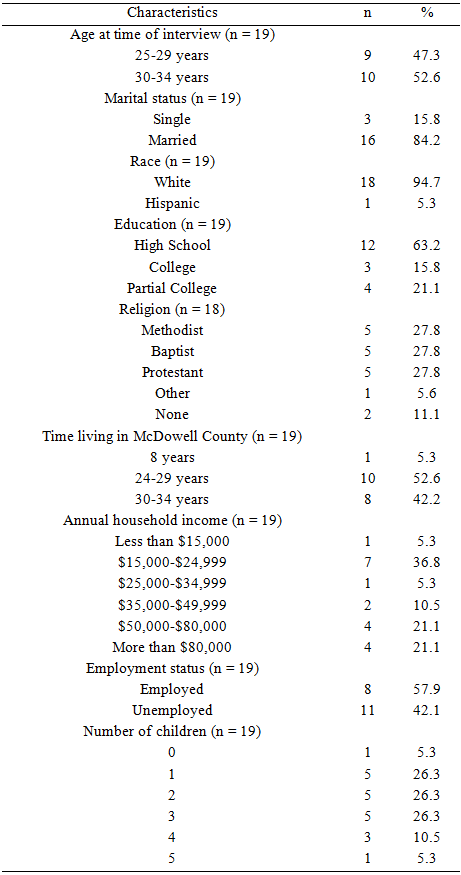
The women were between the ages of 25-34 years, with 52.6% aged 30-34 and 47.3 aged 25-29. Most women were married (84.2%) and identified as White (94.7%). Most women had a high school education (63.2%), with smaller proportions reporting some college (21.1%) or a college degree (15.8%). Women reported a range of annual household incomes, with the largest group earning between $15,000 and $24,999 (36.8%). Over half of the women were unemployed (57.9%), and most reported having one or more children living at home. Table 2 presents the socio-demographic characteristics of the participants
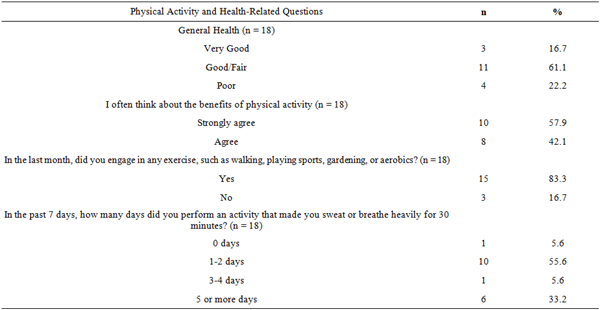
Most women rated their health as good or fair (61.1%), while 22.2% reported poor health and 16.7% reported very good health. Most participants reported thinking about the benefits of physical activity, with 57.9% strongly agreeing and 42.1% agreeing. Most participants (83.3%) reported engaging in some form of physical activity in the past month. However, when asked about activity in the past 7 days, over half (55.6%) reported engaging in activity for 1–2 days, while 33.2% reported engaging in activity for 5 or more days. Table 3 presents women’s physical activity and health-related characteristics.
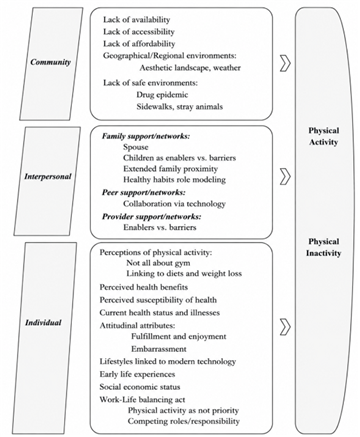
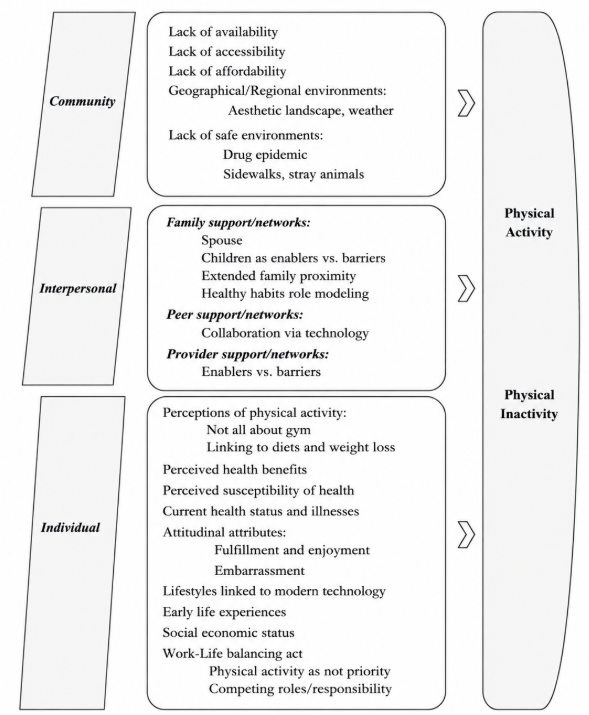
Multiple factors influencing physical activity behaviors emerged from the data and were organized into three domains within the socioecological framework: individual, interpersonal, and community (see Figure 1).
Individual Level of Influence
Not all about the gym
Women described physical activity broadly as movement; however, many initially associated it with structured exercise, such as going to the gym or running. Although participants engaged in substantial daily activity through household and occupational tasks, these activities were not always recognized as meaningful physical activity. As one participant explained, “I think it means, like, getting up and getting out, trying to move around… working on your body, your core, your abs, muscles.” At the same time, women described engaging in physical activity through everyday responsibilities, including housework, caregiving, and employment. These activities were often viewed as routine obligations rather than intentional health behaviors. For example, one participant shared, “We both manage the house, including the yard work… we’re having to do all the things that normally… men would do,” highlighting the physically demanding nature of daily life in a rural setting.
Despite this level of movement, women frequently framed physical activity in terms of structured exercise and physiological outcomes. As one participant noted, “Physical activity is anywhere that gets your heart rate up… you’re sweating.” These findings suggest that while rural women are active in their daily lives, physical activity is often perceived through an exercise-centered lens rather than as an integrated part of everyday life.
Perceived susceptibility to health
Many women reflected on witnessing family members suffer or die from conditions such as obesity, diabetes, and heart disease. One participant shared, “Physical activity is essential… my father… he became obese. And that also helped lead to his death.” These experiences reinforced the importance of staying active and increased perceived personal risk.
Current health status and illness
Women frequently reported existing health conditions as barriers to physical activity. Chronic illnesses such as asthma, COPD, joint pain, and poor circulation limited their ability to sustain activity. Smoking was also identified as a contributing factor. As one participant explained, “Sometimes… even going up and down the stairs… I can tell a big difference.”
Despite these barriers, some participants identified alternative ways to remain active. One woman described how a personally meaningful activity increased her movement, “I just started couponing… I’m walking around the store so much… that’s something I wouldn’t have done before.” This highlights how enjoyment and personal interest can facilitate activity, even in the presence of health limitations.
Attitudinal attributes
Enjoyment and fulfillment
Positive attitudes, including enjoyment, a sense of accomplishment, and increased energy, were key facilitators of physical activity. As one participant shared, “After I’m done, I always feel 10 times better… it makes me feel like I’ve actually achieved something.” These emotional and physical benefits supported continued engagement.
Embarrassment and body image
In contrast, negative self-perceptions and fear of judgment acted as barriers. Some women reported discomfort exercising in front of others, particularly in gym settings. As one participant explained, “I can handle walking… but not actually being in a room and exercising in front of other people.” These experiences contributed to avoidance of structured physical activity.
Lifestyle linked to modern technology
Women described technology as both a barrier and facilitator to physical activity. Some expressed concern that screen time contributed to sedentary behavior, while others described using apps and challenges to stay active. As one participant noted, “I have a 30-day challenge… and I’ve gotten my kids to where they’ll actually do it with me.” These findings suggest that technology can both hinder and support physical activity, depending on how it is used.
Early Life Experiences
Women reflected on childhood experiences where movement was integrated into daily life through activities such as gardening and outdoor work. One participant recalled, “We always had a huge garden… we all shared.” In contrast, participants described a shift toward more sedentary lifestyles in adulthood, suggesting a loss of naturally occurring opportunities for movement.
Social Status
Socioeconomic factors were described as significant barriers to physical activity. Many women emphasized that basic needs, such as food and housing, took priority over health behaviors. As one participant explained, “Physical activity takes a back seat… they’re worried about feeding their family… keeping the electricity on.” These findings suggest that physical activity is often perceived as a lower priority in the context of financial strain.
Work-life Balance
Balancing work, family, and household responsibilities was a major barrier to physical activity. Women described competing demands that often-left little time or energy for exercise. As one participant explained, “I have an hour… do I go work out, do I do the house… or do something fun… it’s kind of a juggling job.” For women with children, caregiving responsibilities further limited opportunities. Participants also described long workdays and commuting demands that contributed to fatigue and reduced motivation. Together, these findings suggest that physical activity is constrained by the cumulative burden of competing roles and responsibilities.
Interpersonal Level of Influence
Women consistently described social relationships as important influences on their physical activity. Family members, friends, coworkers, and healthcare providers shaped activity behaviors by offering encouragement, companionship, accountability, and, at times, creating barriers. Support from immediate and extended family was especially influential.
Family
Spouses and children as enablers or barriersFor many married women, husbands were an important source of encouragement, often supporting activity through participation rather than direct pressure. As one participant explained, “If you want to go walk, then we’ll walk.” This type of companionship made activity more enjoyable and sustainable.
Children were described as both enablers and barriers. Some women were motivated to be active to keep up with their children or avoid “sitting on the sidelines,” while others described caregiving demands and lack of childcare as limiting their ability to engage in planned exercise. These findings suggest that children can both promote and constrain physical activity depending on context.
Extended family and role modeling
Extended family members, particularly parents and siblings, also influenced physical activity. Women frequently described living close to family and engaging in activities together, such as walking or going to the gym. Proximity appeared to support routine activity by providing built-in companionship. Women also emphasized the importance of modeling healthy behaviors for their children. Physical activity was framed not only as a personal health behavior, but to set an example and remain present for their families.
Peers/co-workers
Support from friends, coworkers, and social networks also influenced physical activity. Many women preferred not to be active alone and described companionship as motivating and accountability-building. Friends and coworkers often encouraged one another to remain active, particularly when motivation was low.
Providers
Healthcare providers were identified as both facilitators and barriers to physical activity. Some women described supportive providers who encouraged activity and offered practical strategies. As one participant shared, “My primary care physician… she’s really supportive… she’s always kind of pushing me a little further.” These interactions reinforced motivation and accountability.
In contrast, other women described provider interactions as discouraging, particularly when communication was perceived as judgmental. One participant explained, “They told me I needed to work out more… but I felt like they were judging me… so I just quit going back.” These experiences reduced both engagement in physical activity and willingness to seek care.
Together, these findings suggest that social relationships, particularly within families and healthcare settings, play a critical role in shaping physical activity behaviors, with support acting as a facilitator and negative interactions serving as barriers.
Community Level of Influence
At the community level, rural women described significantly more barriers than facilitators to engaging in physical activity. These barriers were primarily related to limited resources, environmental constraints, and safety concerns within rural settings.
Lack of availability, accessibility, and affordability
Women consistently reported limited access to physical activity resources within their communities, including gyms, recreational facilities, and family-friendly environments. As one participant explained, “There’s nothing around here… they just started up this little gym, and it’s still small… you’re standing there most of the time because there’s not much there.”
Even when resources were available, accessibility remained a challenge. Participants described traveling long distances on difficult terrain to reach facilities they perceived as safe or adequate. One woman noted, “It’s about a 30-minute drive… by the time you get over, you’re wore out from the ride.” Limited hours of operation and lack of transportation further restricted access, particularly for women balancing work and family responsibilities.
Affordability was also a concern in a community with high levels of poverty. Participants described gym memberships and indoor facilities as financially out of reach, particularly during colder months when outdoor activity was less feasible. Together, these findings suggest that structural barriers related to availability, access, and cost significantly limit opportunities for physical activity, even when motivation is present.
Geographical and environmental constraints
The rural Appalachian environment further shaped opportunities for physical activity. Participants described mountainous terrain, long travel distances, and limited infrastructure as barriers to routine engagement. These environmental conditions often made accessing safe and convenient locations for physical activity more difficult, particularly for women with competing responsibilities.
Lack of safe environments
Safety concerns were among the most prominent barriers discussed. Women frequently described feeling unsafe engaging in outdoor physical activity due to crime, substance use within the community, lack of sidewalks, and stray animals. Concerns related to the local drug epidemic were particularly salient, with participants expressing fear of encountering individuals under the influence, especially when alone. As one participant shared, “You don’t wanna be out… by yourself… because of what goes on in here.”
Parks and public spaces were also perceived as unsafe due to drug-related activity and the presence of paraphernalia, further limiting their use. In addition, the lack of safe walking infrastructure created significant barriers. Women described the absence of sidewalks, dangerous road conditions, and reckless driving as deterrents, “If you was to go walking on the side of the road, you’d risk getting hit.” Stray animals were also identified as a concern, particularly for women walking alone or with children, “You don’t know if it’s gonna bite you or not.”
These safety concerns contributed to a broader perception of vulnerability and significantly reduced opportunities for outdoor physical activity.
Community facilitators
Although barriers dominated, a few facilitators were identified. Some women described the natural environment, particularly mountainous landscapes, as motivating for physical activity.
This study explored the interplay of individual, interpersonal, and community-level determinants of physical activity among young rural women aged 25–34 years using the socioecological model (SEM). The findings provide insight into how physical activity behaviors are shaped by a dynamic interplay of factors embedded in women’s everyday lives, rather than driven by individual choice alone.
At the individual level, most participants perceived themselves as generally healthy despite not meeting recommended physical activity guidelines. This disconnect has been observed in prior studies of rural Appalachian women, where individuals report good health despite low activity levels and higher rates of obesity 34. Women in the present study initially conceptualized physical activity as structured exercise (e.g., going to the gym), but with further reflection, expanded this definition to include movement-based activities such as walking and household chores. Consistent with previous research, much of women’s physical activity occurred through domestic responsibilities and caregiving roles 35, 36, 37. These patterns reflect broader sociocultural gender norms that shape physical activity behaviors in rural environments 38, 39. While these findings support existing literature, this study adds a unique perspective by showing how young rural Appalachian women distinguish between being physically active in daily life and participating in intentional exercise. Participants described household labor, caregiving, and walking as movement-based activities, yet these activities were not always recognized as “physical activity” in the traditional sense. This distinction is important because physical activity frameworks and measurement tools often emphasize structured exercise, which may not fully capture how women in rural Appalachian communities experience and define movement in their everyday lives.
Perceived health benefits such as weight loss, improved physical and mental health, and increased energy, were strong motivators for physical activity, aligning with findings from other studies of rural women 40, 41. Additionally, family health history influenced perceived susceptibility to chronic conditions, prompting some women to engage in activity as a preventative strategy. However, several individual-level barriers emerged, including competing roles and responsibilities, financial constraints, embarrassment, and existing health conditions. Time scarcity and fatigue, often associated with balancing employment and caregiving demands, significantly limited opportunities for intentional physical activity, consistent with prior literature 42, 43, 44. Furthermore, some women reported feeling self-conscious or judged in structured exercise environments, which has been shown to discourage participation, particularly among overweight individuals 45.
At the interpersonal level, social relationships played a central role in shaping physical activity behaviors. Support from spouses, children, extended family, friends, and coworkers was frequently described as a key facilitator. Women emphasized that engaging in physical activity with others enhanced motivation, accountability, and enjoyment, while also increasing perceptions of safety. These findings are consistent with research demonstrating the importance of social support and evolving relational influences across adulthood 46, 47, 48. Children emerged as both facilitators and barriers; while many women were motivated to be active with their children and serve as role models, caregiving responsibilities often limited opportunities for structured activity. This dual role has been well documented in previous research on parenthood and physical activity 49, 50, 51. Healthcare providers were also identified as influential, with supportive communication encouraging engagement in physical activity, whereas perceived judgment or stigmatizing interactions served as barriers 52.
At the community level, participants described predominantly structural and environmental barriers to physical activity. A lack of available, accessible, and affordable resources such as gyms, recreational facilities, and safe spaces was a significant limitation. These findings are consistent with previous studies highlighting environmental constraints in rural populations 53, 54, 55. Safety concerns were particularly prominent and included the absence of sidewalks, unsafe road conditions, stray animals, and the impact of the local drug epidemic. Similar barriers have been reported in other rural contexts 56, 57. In addition, geographic features such as mountainous terrain and seasonal weather patterns further restricted opportunities for physical activity. These findings reinforce the importance of environmental and structural determinants in shaping health behaviors beyond individual control 58.
Overall, the findings suggest that physical activity among young rural women is influenced less by individual motivation alone and more by the cumulative impact of social, structural, and environmental constraints. This study highlights the need for multilevel interventions that extend beyond individual behavior change to address interpersonal support systems and broader community-level barriers that influence engagement in physical activity. Research suggests that interventions targeting rural women are most effective when they address multiple levels of influence simultaneously. Community-based and group-oriented approaches, such as walking groups, peer support programs, and instructor-led physical activity sessions, may help improve motivation, accountability, and social support while also addressing safety concerns and geographic isolation 59, 60, 61. Interventions that incorporate text messaging, technology-assisted support, or community partnerships may be particularly beneficial for young rural women by increasing accessibility and reducing barriers related to transportation and limited recreational infrastructure 62. In addition, environmental and community-level strategies, including improvements to sidewalks, walking trails, and safe recreational spaces, may help address structural barriers identified by participants in this study 62. These findings support the importance of multilevel, contextually tailored interventions that recognize the social, environmental, and cultural realities shaping physical activity behaviors among rural Appalachian women.
This study has several limitations. Most participants were White, so other perspectives may not be fully represented. Consistent with the nature of qualitative research, the sample was small and drawn from a single rural county in West Virginia; therefore, findings are not intended to be generalized to all rural women. In addition, this study focused only on women aged 25–34 years, so the findings may not reflect the experiences of women outside this age group. Despite these limitations, the study provides meaningful insight into how young rural women experience and make sense of physical activity in their everyday lives.
| [1] | Xu J, Murphy SL, Kochanek KD, Arias E. Mortality in the United States, 2024. NCHS Data Brief. 2026 Jan; (521): 1-8. | ||
| In article | View Article | ||
| [2] | Hacker K, Thomas CW, Zhao G, Claxton JS, Eke P, Town M. Social determinants of health and health-related social needs among adults with chronic diseases in the United States, Behavioral Risk Factor Surveillance System, 2022. Preventing Chronic Disease. 2024; 21: 240362. | ||
| In article | View Article PubMed | ||
| [3] | Centers for Disease Control and Prevention. National Center for Chronic Disease Prevention and Health Promotion (NCCDPHP): About us [Internet]. Atlanta (GA): CDC; 2025 Jul 25 [cited 2026 May 11]. Available from: https://www.cdc.gov/nccdphp/about/ | ||
| In article | |||
| [4] | Bhattacharyya M, Miller LE, Miller AL, Bhattacharyya R, Herbert WG. Disparities in adherence to physical activity guidelines among US adults: A population-based study. Medicine. 2024;103(36):e39539. | ||
| In article | View Article PubMed | ||
| [5] | Abildso CG, Daily SM, Umstattd Meyer MR, Perry CK, Eyler A. Prevalence of meeting aerobic, muscle-strengthening, and combined physical activity guidelines during leisure time among adults, by rural-urban classification and region - United States, 2020. MMWR Morb Mortal Wkly Rep. 2023; 72(4): 86-89. | ||
| In article | View Article PubMed | ||
| [6] | Centers for Disease Control and Prevention. About chronic diseases [Internet]. Atlanta (GA): CDC; 2024 Oct 4 [cited 2026 May 11]. Available from: https://www.cdc.gov/chronic-disease/ about/index.html. | ||
| In article | |||
| [7] | Watson KB, Wiltz JL, Nhim K, Kaufmann RB, Thomas CW, Greenlund KJ. Trends in multiple chronic conditions among US adults, by life stage, Behavioral Risk Factor Surveillance System, 2013-2023. Preventing Chronic Disease. 2025; 22: 240539. | ||
| In article | View Article PubMed | ||
| [8] | Kegler MC, et al. Inequities in physical activity environments and leisure-time physical activity in rural communities. Preventing Chronic Disease. 2022; 19: 210417. | ||
| In article | View Article PubMed | ||
| [9] | Ominyi J, Clifton A, Nwedu A. Understanding physical activity participation among underserved women: a mixed-methods cross-sectional study using an ecological framework. BMC Public Health. 2025; 25(1): 2178. | ||
| In article | View Article PubMed | ||
| [10] | Turner T, Haggerty T, Dekeseredy P, Hare J, Sedney CL. Using an implementation research framework to identify facilitators and barriers to physical activity and weight loss in Appalachia. Southern Medical Journal. 2022; 115(3): 214-219. | ||
| In article | View Article PubMed | ||
| [11] | U.S. Census Bureau. One in five Americans live in rural areas [Internet]. Washington (DC): U.S. Census Bureau; 2017 [cited 2026 Mar 12]. Available from: https:// www.census.gov/ library/stories/2017/08/rural-america.html. | ||
| In article | |||
| [12] | Centers for Disease Control and Prevention. About rural health [Internet]. Atlanta (GA): CDC; 2024 May 16 [cited 2026 Mar 12]. Available from: https://www.cdc.gov/rural-health/php/about/. | ||
| In article | |||
| [13] | Appalachian Regional Commission. Creating a culture of health in Appalachia [Internet]. Washington (DC): Appalachian Regional Commission; 2017 [cited 2026 Mar 12]. Available from: https://www.arc.gov/wp-content/ uploads/ 2020/ 06/ Health_ Disparities_ in_Appalachia_August_2017.pdf. | ||
| In article | |||
| [14] | McLeroy KR, Bibeau D, Steckler A, Glanz K. An ecological perspective on health promotion programs. Health Education Quarterly. 1988; 15(4): 351-377. | ||
| In article | View Article PubMed | ||
| [15] | Sallis JF, Owen N, Fisher EB. Ecological models of health behavior. In: Glanz K, Rimer BK, Viswanath K, editors. Health behavior: Theory, research, and practice. 5th ed. San Francisco (CA): Jossey-Bass; 2015. p. 43-64. | ||
| In article | |||
| [16] | National Cancer Institute. Theory at a glance: A guide for health promotion practice. 2nd ed. Bethesda (MD): U.S. Department of Health and Human Services, National Institutes of Health; 2005. | ||
| In article | |||
| [17] | Sallis JF, Owen N, Fisher EB. Ecological models of health behavior. In: Glanz K, Rimer BK, Viswanath K, editors. Health behavior and health education: Theory, research, and practice. 4th ed. San Francisco (CA): Jossey-Bass; 2008. p. 465-486. | ||
| In article | |||
| [18] | Bauman AE, Reis RS, Sallis JF, Wells JC, Loos RJF, Martin BW, et al. Correlates of physical activity: Why are some people physically active and others not? The Lancet. 2012; 380(9838): 258-271. | ||
| In article | View Article PubMed | ||
| [19] | Befort CA, Nazir N, Perri MG. Prevalence of obesity among adults from rural and urban areas of the United States: Findings from NHANES (2005-2008). The Journal of Rural Health. 2012; 28(4): 392-397. | ||
| In article | View Article PubMed | ||
| [20] | Wilcox S, Castro C, King AC, Housemann R, Brownson RC. Determinants of leisure time physical activity in rural compared with urban older and ethnically diverse women in the United States. Journal of Epidemiology & Community Health. 2000; 54(9): 667-672. | ||
| In article | View Article PubMed | ||
| [21] | Data USA. McDowell County, WV [Internet]. Cambridge (MA): Data USA; 2024 [cited 2026 Mar 17]. Available from: https://datausa.io/profile/geo/mcdowell-county-wv. | ||
| In article | |||
| [22] | University of Wisconsin Population Health Institute. 2017 County Health Rankings: West Virginia [Internet]. Madison (WI): University of Wisconsin Population Health Institute; 2017 [cited 2026 Mar 17]. Available from: County Health Rankings & Roadmaps. | ||
| In article | |||
| [23] | U.S. Census Bureau. QuickFacts: McDowell County, West Virginia [Internet]. Washington (DC): U.S. Census Bureau; 2017 [cited 2026 Mar 17]. Available from: U.S. Census Bureau. | ||
| In article | |||
| [24] | Robinson JC, Carson TL, Johnson ER, Hardy CM, Shikany JM, Green E, et al. Assessing environmental support for better health: active living opportunity audits in rural communities in the southern United States. Preventive Medicine. 2014; 66: 28-33. | ||
| In article | View Article PubMed | ||
| [25] | Hong I, Wilson B, Gross T, Conley J, Powers T. Challenging terrains: socio-spatial analysis of primary health care access disparities in West Virginia. Applied Spatial Analysis and Policy. 2023; 16(1): 141-161. | ||
| In article | View Article PubMed | ||
| [26] | Jamshed S. Qualitative research method-interviewing and observation. Journal of Basic and Clinical Pharmacy. 2014; 5(4): 87. | ||
| In article | View Article PubMed | ||
| [27] | Creswell JW, Clark VL. Designing and conducting mixed methods research. Thousand Oaks (CA): Sage; 2017. | ||
| In article | |||
| [28] | Patton MQ. Qualitative research and evaluation methods. 3rd ed. Thousand Oaks (CA): Sage; 2002. | ||
| In article | |||
| [29] | Pitney WA, Parker J. Qualitative research in physical activity and the health professions. Champaign (IL): Human Kinetics; 2009. | ||
| In article | |||
| [30] | Lincoln YS, Guba EG. Naturalistic inquiry. Newbury Park (CA): Sage; 1985. | ||
| In article | View Article | ||
| [31] | Birt L, Scott S, Cavers D, Campbell C, Walter F. Member checking: a tool to enhance trustworthiness or merely a nod to validation? Qualitative Health Research. 2016;26(13):1802-1811. | ||
| In article | View Article PubMed | ||
| [32] | IBM Corp. IBM SPSS Statistics for Windows, Version 24.0. Armonk (NY): IBM Corp.; 2016. | ||
| In article | |||
| [33] | Braun V, Clarke V. Using thematic analysis in psychology. Qualitative Research in Psychology. 2006; 3(2): 77-101. | ||
| In article | View Article | ||
| [34] | Ely AC, Befort CA, Banitt A, Gibson CA, Sullivan DK. A qualitative assessment of weight control among rural Kansas women. Journal of Nutrition Education and Behavior. 2011; 3(6): 486-492. | ||
| In article | |||
| [35] | Anglin MK. “I’m a woman, I do my chores”: Gendered labor and physical activity in rural Appalachia. Medical Anthropology Quarterly. 2010; 24(1): 24-45. | ||
| In article | |||
| [36] | Buer LM, Linton SJ, Fearon P. Rural women’s experiences with physical activity: A qualitative study. Health Care for Women International. 2016; 37(6): 650-665. | ||
| In article | |||
| [37] | McGannon KR, Schinke RJ, Busanich R. Negotiating motherhood and physical activity: A qualitative exploration of women’s lived experiences. Psychology of Sport and Exercise. 2014; 15(4): 444-451. | ||
| In article | |||
| [38] | Ball K, Jeffery RW, Abbott G, McNaughton SA, Crawford D. Is healthy behavior contagious: Associations of social norms with physical activity and healthy eating. International Journal of Behavioral Nutrition and Physical Activity. 2010; 7: 86. | ||
| In article | View Article PubMed | ||
| [39] | Plonczynski DJ, Wilbur J, Larson JL, Thiede K. Lifestyle physical activity of older rural women. Research in Nursing & Health. 2008; 31(5): 501-513. | ||
| In article | View Article PubMed | ||
| [40] | Gilbert AS, Schmidt L, Beck A, Kepper M, Mazzucca S, Eyler AA. Rural women’s perceptions of physical activity: A qualitative study. Women & Health. 2019; 59(5): 537-552. | ||
| In article | |||
| [41] | Zimmermann E, Ekholm O, Grønbaek M, Curtis T. Predictors of physical activity among rural women: A cross-sectional study. BMC Public Health. 2016; 6: 1-10. | ||
| In article | |||
| [42] | Kegler MC, Swan DW, Alcantara I, Feldman L, Glanz K. The influence of rural home and neighborhood environments on healthy eating and physical activity. Prevention Science. 2012; 13(3): 271-282. | ||
| In article | |||
| [43] | Seguin R, Connor L, Nelson M, LaCroix A, Eldridge G. Understanding barriers to healthy living in rural communities. Journal of Nutrition and Metabolism. 2014; 2014: 146502. | ||
| In article | View Article PubMed | ||
| [44] | Chrisman M, Nothwehr F, Janz K, Zimmerman MA. Understanding physical activity in rural women. Journal of Rural Health. 2015; 31(1): 60-70. | ||
| In article | |||
| [45] | Baruth M, Sharpe PA, Parra-Medina D, Wilcox S. Perceived barriers to exercise among overweight women. Journal of Physical Activity and Health. 2014; 11(6): 1006-1012. | ||
| In article | |||
| [46] | Bell S, Lee C. Emerging adulthood and physical activity. Journal of Adolescent Health. 2005; 36(4): 289-296. | ||
| In article | |||
| [47] | Darlow SD, Xu X. The influence of relationships on physical activity. American Journal of Health Promotion. 2011; 25(4):e10-e18. | ||
| In article | View Article PubMed | ||
| [48] | Nazaruk S, et al. Social determinants of physical activity. Health Promotion International. 2017; 32(1): 1-10. | ||
| In article | |||
| [49] | Brown WJ, Trost SG, et al. Physical activity and parenthood transitions. American Journal of Preventive Medicine. 2009; 36(5): 411-417. | ||
| In article | |||
| [50] | Hull EE, Rofey DL, Robertson RJ, et al. Influence of marriage and parenthood on activity. Journal of Physical Activity and Health. 2010; 7(5): 577-583. | ||
| In article | View Article PubMed | ||
| [51] | Olsen NJ, et al. Parenthood and physical activity: A review. Preventive Medicine. 2017; 100: 145-152. | ||
| In article | View Article PubMed | ||
| [52] | Stotland SC, Tsoh JY, Gerbert B. Counseling patients about physical activity. Preventive Medicine. 2010; 51(6): 452-458. | ||
| In article | |||
| [53] | Wilcox S, Castro C, King AC, et al. Rural-urban differences in physical activity. Journal of Epidemiology & Community Health. 2005; 59(10): 881-886. | ||
| In article | |||
| [54] | Fan JX, Wen M, Kowaleski-Jones L. Access to physical activity resources. Health & Place. 2014; 28: 47-55. | ||
| In article | |||
| [55] | Gilbert AS, et al. Environmental influences on activity. Women & Health. 2019; 59(5): 537-552. | ||
| In article | |||
| [56] | Rye JA, et al. Environmental barriers in rural settings. Journal of Rural Health. 2009; 25(3): 235-241. | ||
| In article | |||
| [57] | Taliaferro LA, Hammond R. Barriers to activity in rural populations. American Journal of Health Behavior. 2016; 40(3): 348-358. | ||
| In article | |||
| [58] | Pelletier CA, et al. Built environment and physical activity. Health & Place. 2020; 61: 102238. | ||
| In article | |||
| [59] | Cleland V, Ball K. What might work? Exploring the perceived feasibility of strategies to promote physical activity among women living in socioeconomically disadvantaged neighbourhoods. Health Education Research. 2013; 28(2): 205-219. | ||
| In article | View Article PubMed | ||
| [60] | Beck AM, Serrano N, Duncan D, Eyler AA, Gilbert A, Naghiloo F, et al. Cluster randomized multilevel intervention for promoting physical activity in rural communities. Frontiers in Public Health. 2025; 13: 1577056. | ||
| In article | View Article PubMed | ||
| [61] | Middelweerd A, et al. Do intrapersonal factors mediate the association of social support with physical activity in young women living in socioeconomically disadvantaged neighbourhoods? A longitudinal mediation analysis. PLoS One. 2017; 12(3): e0173231. | ||
| In article | View Article PubMed | ||
| [62] | Peng B, et al. Barriers and facilitators to physical activity for young adult women: A systematic review and thematic synthesis of qualitative literature. International Journal of Behavioral Nutrition and Physical Activity. 2023; 20(1): 23. | ||
| In article | View Article PubMed | ||
Published with license by Science and Education Publishing, Copyright © 2026 Karen Lynn Webb and Jongwon Lee
 This work is licensed under a Creative Commons Attribution 4.0 International License. To view a copy of this license, visit
http://creativecommons.org/licenses/by/4.0/
This work is licensed under a Creative Commons Attribution 4.0 International License. To view a copy of this license, visit
http://creativecommons.org/licenses/by/4.0/
| [1] | Xu J, Murphy SL, Kochanek KD, Arias E. Mortality in the United States, 2024. NCHS Data Brief. 2026 Jan; (521): 1-8. | ||
| In article | View Article | ||
| [2] | Hacker K, Thomas CW, Zhao G, Claxton JS, Eke P, Town M. Social determinants of health and health-related social needs among adults with chronic diseases in the United States, Behavioral Risk Factor Surveillance System, 2022. Preventing Chronic Disease. 2024; 21: 240362. | ||
| In article | View Article PubMed | ||
| [3] | Centers for Disease Control and Prevention. National Center for Chronic Disease Prevention and Health Promotion (NCCDPHP): About us [Internet]. Atlanta (GA): CDC; 2025 Jul 25 [cited 2026 May 11]. Available from: https://www.cdc.gov/nccdphp/about/ | ||
| In article | |||
| [4] | Bhattacharyya M, Miller LE, Miller AL, Bhattacharyya R, Herbert WG. Disparities in adherence to physical activity guidelines among US adults: A population-based study. Medicine. 2024;103(36):e39539. | ||
| In article | View Article PubMed | ||
| [5] | Abildso CG, Daily SM, Umstattd Meyer MR, Perry CK, Eyler A. Prevalence of meeting aerobic, muscle-strengthening, and combined physical activity guidelines during leisure time among adults, by rural-urban classification and region - United States, 2020. MMWR Morb Mortal Wkly Rep. 2023; 72(4): 86-89. | ||
| In article | View Article PubMed | ||
| [6] | Centers for Disease Control and Prevention. About chronic diseases [Internet]. Atlanta (GA): CDC; 2024 Oct 4 [cited 2026 May 11]. Available from: https://www.cdc.gov/chronic-disease/ about/index.html. | ||
| In article | |||
| [7] | Watson KB, Wiltz JL, Nhim K, Kaufmann RB, Thomas CW, Greenlund KJ. Trends in multiple chronic conditions among US adults, by life stage, Behavioral Risk Factor Surveillance System, 2013-2023. Preventing Chronic Disease. 2025; 22: 240539. | ||
| In article | View Article PubMed | ||
| [8] | Kegler MC, et al. Inequities in physical activity environments and leisure-time physical activity in rural communities. Preventing Chronic Disease. 2022; 19: 210417. | ||
| In article | View Article PubMed | ||
| [9] | Ominyi J, Clifton A, Nwedu A. Understanding physical activity participation among underserved women: a mixed-methods cross-sectional study using an ecological framework. BMC Public Health. 2025; 25(1): 2178. | ||
| In article | View Article PubMed | ||
| [10] | Turner T, Haggerty T, Dekeseredy P, Hare J, Sedney CL. Using an implementation research framework to identify facilitators and barriers to physical activity and weight loss in Appalachia. Southern Medical Journal. 2022; 115(3): 214-219. | ||
| In article | View Article PubMed | ||
| [11] | U.S. Census Bureau. One in five Americans live in rural areas [Internet]. Washington (DC): U.S. Census Bureau; 2017 [cited 2026 Mar 12]. Available from: https:// www.census.gov/ library/stories/2017/08/rural-america.html. | ||
| In article | |||
| [12] | Centers for Disease Control and Prevention. About rural health [Internet]. Atlanta (GA): CDC; 2024 May 16 [cited 2026 Mar 12]. Available from: https://www.cdc.gov/rural-health/php/about/. | ||
| In article | |||
| [13] | Appalachian Regional Commission. Creating a culture of health in Appalachia [Internet]. Washington (DC): Appalachian Regional Commission; 2017 [cited 2026 Mar 12]. Available from: https://www.arc.gov/wp-content/ uploads/ 2020/ 06/ Health_ Disparities_ in_Appalachia_August_2017.pdf. | ||
| In article | |||
| [14] | McLeroy KR, Bibeau D, Steckler A, Glanz K. An ecological perspective on health promotion programs. Health Education Quarterly. 1988; 15(4): 351-377. | ||
| In article | View Article PubMed | ||
| [15] | Sallis JF, Owen N, Fisher EB. Ecological models of health behavior. In: Glanz K, Rimer BK, Viswanath K, editors. Health behavior: Theory, research, and practice. 5th ed. San Francisco (CA): Jossey-Bass; 2015. p. 43-64. | ||
| In article | |||
| [16] | National Cancer Institute. Theory at a glance: A guide for health promotion practice. 2nd ed. Bethesda (MD): U.S. Department of Health and Human Services, National Institutes of Health; 2005. | ||
| In article | |||
| [17] | Sallis JF, Owen N, Fisher EB. Ecological models of health behavior. In: Glanz K, Rimer BK, Viswanath K, editors. Health behavior and health education: Theory, research, and practice. 4th ed. San Francisco (CA): Jossey-Bass; 2008. p. 465-486. | ||
| In article | |||
| [18] | Bauman AE, Reis RS, Sallis JF, Wells JC, Loos RJF, Martin BW, et al. Correlates of physical activity: Why are some people physically active and others not? The Lancet. 2012; 380(9838): 258-271. | ||
| In article | View Article PubMed | ||
| [19] | Befort CA, Nazir N, Perri MG. Prevalence of obesity among adults from rural and urban areas of the United States: Findings from NHANES (2005-2008). The Journal of Rural Health. 2012; 28(4): 392-397. | ||
| In article | View Article PubMed | ||
| [20] | Wilcox S, Castro C, King AC, Housemann R, Brownson RC. Determinants of leisure time physical activity in rural compared with urban older and ethnically diverse women in the United States. Journal of Epidemiology & Community Health. 2000; 54(9): 667-672. | ||
| In article | View Article PubMed | ||
| [21] | Data USA. McDowell County, WV [Internet]. Cambridge (MA): Data USA; 2024 [cited 2026 Mar 17]. Available from: https://datausa.io/profile/geo/mcdowell-county-wv. | ||
| In article | |||
| [22] | University of Wisconsin Population Health Institute. 2017 County Health Rankings: West Virginia [Internet]. Madison (WI): University of Wisconsin Population Health Institute; 2017 [cited 2026 Mar 17]. Available from: County Health Rankings & Roadmaps. | ||
| In article | |||
| [23] | U.S. Census Bureau. QuickFacts: McDowell County, West Virginia [Internet]. Washington (DC): U.S. Census Bureau; 2017 [cited 2026 Mar 17]. Available from: U.S. Census Bureau. | ||
| In article | |||
| [24] | Robinson JC, Carson TL, Johnson ER, Hardy CM, Shikany JM, Green E, et al. Assessing environmental support for better health: active living opportunity audits in rural communities in the southern United States. Preventive Medicine. 2014; 66: 28-33. | ||
| In article | View Article PubMed | ||
| [25] | Hong I, Wilson B, Gross T, Conley J, Powers T. Challenging terrains: socio-spatial analysis of primary health care access disparities in West Virginia. Applied Spatial Analysis and Policy. 2023; 16(1): 141-161. | ||
| In article | View Article PubMed | ||
| [26] | Jamshed S. Qualitative research method-interviewing and observation. Journal of Basic and Clinical Pharmacy. 2014; 5(4): 87. | ||
| In article | View Article PubMed | ||
| [27] | Creswell JW, Clark VL. Designing and conducting mixed methods research. Thousand Oaks (CA): Sage; 2017. | ||
| In article | |||
| [28] | Patton MQ. Qualitative research and evaluation methods. 3rd ed. Thousand Oaks (CA): Sage; 2002. | ||
| In article | |||
| [29] | Pitney WA, Parker J. Qualitative research in physical activity and the health professions. Champaign (IL): Human Kinetics; 2009. | ||
| In article | |||
| [30] | Lincoln YS, Guba EG. Naturalistic inquiry. Newbury Park (CA): Sage; 1985. | ||
| In article | View Article | ||
| [31] | Birt L, Scott S, Cavers D, Campbell C, Walter F. Member checking: a tool to enhance trustworthiness or merely a nod to validation? Qualitative Health Research. 2016;26(13):1802-1811. | ||
| In article | View Article PubMed | ||
| [32] | IBM Corp. IBM SPSS Statistics for Windows, Version 24.0. Armonk (NY): IBM Corp.; 2016. | ||
| In article | |||
| [33] | Braun V, Clarke V. Using thematic analysis in psychology. Qualitative Research in Psychology. 2006; 3(2): 77-101. | ||
| In article | View Article | ||
| [34] | Ely AC, Befort CA, Banitt A, Gibson CA, Sullivan DK. A qualitative assessment of weight control among rural Kansas women. Journal of Nutrition Education and Behavior. 2011; 3(6): 486-492. | ||
| In article | |||
| [35] | Anglin MK. “I’m a woman, I do my chores”: Gendered labor and physical activity in rural Appalachia. Medical Anthropology Quarterly. 2010; 24(1): 24-45. | ||
| In article | |||
| [36] | Buer LM, Linton SJ, Fearon P. Rural women’s experiences with physical activity: A qualitative study. Health Care for Women International. 2016; 37(6): 650-665. | ||
| In article | |||
| [37] | McGannon KR, Schinke RJ, Busanich R. Negotiating motherhood and physical activity: A qualitative exploration of women’s lived experiences. Psychology of Sport and Exercise. 2014; 15(4): 444-451. | ||
| In article | |||
| [38] | Ball K, Jeffery RW, Abbott G, McNaughton SA, Crawford D. Is healthy behavior contagious: Associations of social norms with physical activity and healthy eating. International Journal of Behavioral Nutrition and Physical Activity. 2010; 7: 86. | ||
| In article | View Article PubMed | ||
| [39] | Plonczynski DJ, Wilbur J, Larson JL, Thiede K. Lifestyle physical activity of older rural women. Research in Nursing & Health. 2008; 31(5): 501-513. | ||
| In article | View Article PubMed | ||
| [40] | Gilbert AS, Schmidt L, Beck A, Kepper M, Mazzucca S, Eyler AA. Rural women’s perceptions of physical activity: A qualitative study. Women & Health. 2019; 59(5): 537-552. | ||
| In article | |||
| [41] | Zimmermann E, Ekholm O, Grønbaek M, Curtis T. Predictors of physical activity among rural women: A cross-sectional study. BMC Public Health. 2016; 6: 1-10. | ||
| In article | |||
| [42] | Kegler MC, Swan DW, Alcantara I, Feldman L, Glanz K. The influence of rural home and neighborhood environments on healthy eating and physical activity. Prevention Science. 2012; 13(3): 271-282. | ||
| In article | |||
| [43] | Seguin R, Connor L, Nelson M, LaCroix A, Eldridge G. Understanding barriers to healthy living in rural communities. Journal of Nutrition and Metabolism. 2014; 2014: 146502. | ||
| In article | View Article PubMed | ||
| [44] | Chrisman M, Nothwehr F, Janz K, Zimmerman MA. Understanding physical activity in rural women. Journal of Rural Health. 2015; 31(1): 60-70. | ||
| In article | |||
| [45] | Baruth M, Sharpe PA, Parra-Medina D, Wilcox S. Perceived barriers to exercise among overweight women. Journal of Physical Activity and Health. 2014; 11(6): 1006-1012. | ||
| In article | |||
| [46] | Bell S, Lee C. Emerging adulthood and physical activity. Journal of Adolescent Health. 2005; 36(4): 289-296. | ||
| In article | |||
| [47] | Darlow SD, Xu X. The influence of relationships on physical activity. American Journal of Health Promotion. 2011; 25(4):e10-e18. | ||
| In article | View Article PubMed | ||
| [48] | Nazaruk S, et al. Social determinants of physical activity. Health Promotion International. 2017; 32(1): 1-10. | ||
| In article | |||
| [49] | Brown WJ, Trost SG, et al. Physical activity and parenthood transitions. American Journal of Preventive Medicine. 2009; 36(5): 411-417. | ||
| In article | |||
| [50] | Hull EE, Rofey DL, Robertson RJ, et al. Influence of marriage and parenthood on activity. Journal of Physical Activity and Health. 2010; 7(5): 577-583. | ||
| In article | View Article PubMed | ||
| [51] | Olsen NJ, et al. Parenthood and physical activity: A review. Preventive Medicine. 2017; 100: 145-152. | ||
| In article | View Article PubMed | ||
| [52] | Stotland SC, Tsoh JY, Gerbert B. Counseling patients about physical activity. Preventive Medicine. 2010; 51(6): 452-458. | ||
| In article | |||
| [53] | Wilcox S, Castro C, King AC, et al. Rural-urban differences in physical activity. Journal of Epidemiology & Community Health. 2005; 59(10): 881-886. | ||
| In article | |||
| [54] | Fan JX, Wen M, Kowaleski-Jones L. Access to physical activity resources. Health & Place. 2014; 28: 47-55. | ||
| In article | |||
| [55] | Gilbert AS, et al. Environmental influences on activity. Women & Health. 2019; 59(5): 537-552. | ||
| In article | |||
| [56] | Rye JA, et al. Environmental barriers in rural settings. Journal of Rural Health. 2009; 25(3): 235-241. | ||
| In article | |||
| [57] | Taliaferro LA, Hammond R. Barriers to activity in rural populations. American Journal of Health Behavior. 2016; 40(3): 348-358. | ||
| In article | |||
| [58] | Pelletier CA, et al. Built environment and physical activity. Health & Place. 2020; 61: 102238. | ||
| In article | |||
| [59] | Cleland V, Ball K. What might work? Exploring the perceived feasibility of strategies to promote physical activity among women living in socioeconomically disadvantaged neighbourhoods. Health Education Research. 2013; 28(2): 205-219. | ||
| In article | View Article PubMed | ||
| [60] | Beck AM, Serrano N, Duncan D, Eyler AA, Gilbert A, Naghiloo F, et al. Cluster randomized multilevel intervention for promoting physical activity in rural communities. Frontiers in Public Health. 2025; 13: 1577056. | ||
| In article | View Article PubMed | ||
| [61] | Middelweerd A, et al. Do intrapersonal factors mediate the association of social support with physical activity in young women living in socioeconomically disadvantaged neighbourhoods? A longitudinal mediation analysis. PLoS One. 2017; 12(3): e0173231. | ||
| In article | View Article PubMed | ||
| [62] | Peng B, et al. Barriers and facilitators to physical activity for young adult women: A systematic review and thematic synthesis of qualitative literature. International Journal of Behavioral Nutrition and Physical Activity. 2023; 20(1): 23. | ||
| In article | View Article PubMed | ||