This study assesses the effectiveness of the UNESCO-developed ICT Competency Framework for Teachers in equipping university lecturers with relevant ICT skills for the Digital Age and Education 2030. A mixed research design used both a survey and a Media Focus Group Discussion to gather data from 206 randomly selected teachers and lecturers across public universities in Cameroon. University administrators, including deputy vice chancellors, managers of University Multimedia Centers, faculty deans, and department chairs, were also interviewed. Data analysis involves using bar charts and content analysis. The findings showed that about 80% of lecturers are still in the knowledge acquisition stage, over 75% have not yet reached the knowledge deepening stage, and more than 80% have not yet achieved knowledge creation. This indicates that approximately 78% of lecturers are lagging in ICT-Education skills, and the level of implementation of the ICT-CFT remains around 30%. Recommendations were provided to stakeholders to better align with the UNESCO ICT Framework for Teachers in public universities across Cameroon.
Although not new, it remains important to remember that the 2030 Agenda for Sustainable Development emphasizes the significance of Information and Communication Technology (ICT) as a powerful tool for closing the digital gap and fostering the development of inclusive knowledge societies 1, 2. Therefore, ICT is vital for achieving the four main pillars of inclusive knowledge societies, which are:
i. Freedom of expression and freedom of information.
i i. Universal access to information and knowledge.
i i i. Quality education for everyone.
iv. Respect for linguistic and cultural diversity 3.
Added to this is the crucial role technology plays in achieving SDG 4, with key pillars such as access, equity, quality, inclusion, and lifelong learning. It should also be noted that five of the Sustainable Development Goals (SDGs)—enhancing gender equality (Goal 5), infrastructure (Goal 9), reducing inequalities among and across countries (Goal 10), promoting peace, justice, and strong institutions (Goal 16), and ensuring partnerships for the goals (Goal 17)—are all identified as ICT-related targets 4, 5. Therefore, achieving SDG 4 is unlikely without the effective and efficient use of ICT in the classroom. This emphasizes that the successful integration of ICT in education is unquestionably transformative and empowering for school managers, teachers, learners, and the education system as a whole 5, 6, 7.
From this perspective, teachers are key actors in this transformative agenda or process. It is in this context that the World Education Forum held in Incheon, Republic of Korea, in 2015, resolved that the importance of educational technologies as a core discipline in teacher education and training is immeasurable, and therefore requires revitalization, UNESCO 4. According to Béché 5, 8, 9, teachers need to be able to harness ICT to guide learners in developing 21st-century skills such as critical thinking and problem solving, collaboration and communication, digital literacy, and skills for the rapidly growing digital economy. Additionally, UNESCO pointed out that “ICT must be harnessed to strengthen education systems, knowledge dissemination, information access, quality and effective learning, and more effective provisions,” 4.
As a follow-up, 10, 11 posits that there is increasing pressure from employers, the business community, the education sector, and society at large for graduates, upon leaving school, to possess relevant skills demanded by today’s job market. Skills described by UNESCO 12 as those for life and work. Similarly, a 2015 Commonwealth of Learning (COL) report on Technology-Enabled Learning for the Mediterranean and Africa highlighted that the education sector faces critical times in matching skills with job demands 13. This report argues that today’s work environment has become digitally challenging; therefore, teachers, as key stakeholders supporting learners in developing these essential skills, must be ICT-pedagogically prepared to the fullest extent 13. In the same vein, Bates 10 asserts that the products of today’s classrooms must be experts in:
- Knowledge management is the ability to locate, assess, and properly use knowledge.
- Information Technology (IT) knowledge and skills
- Interpersonal communication skills, including the appropriate use of social media.
- Independent and lifelong learning.
- Intellectual skills such as knowledge building, reasoning, critical analysis, problem solving, and creativity.
- Collaborative learning and teamwork.
- Multi-tasking and flexibility.
These skills must be integrated into every subject area, currently appearing as a lag but not impossible to achieve. However, the questions that often come to mind are;
- Are teachers or university lecturers ready to successfully perform this task?
- What have been the stakes of initial and ongoing training or professional development in preparing these lecturers for this new challenge?
- What is the state of the technology support system for these lecturers?
As we explore this issue more deeply, it is important to note that we are starting from scratch. Therefore, it would be dishonest to ignore the fact that both local and international governments have made little progress in addressing this problem. It follows that there have been ongoing efforts to seek innovative solutions and to update teachers with digital pedagogic skills needed to meet current demands. Globally, efforts by UNESCO are significant, as seen through the Incheon Declaration 2, Qingdao Declaration 4, Qingdao Statement 1, and the UNESCO ICT Competency Framework for Teachers (UNESCO, 2018). This study specifically focuses on assessing the implementation of the ICT Framework for Teachers within the Cameroon Higher Education sector.
Locally, the Cameroon Ministry of Higher Education, through the E-National Higher Education Network Project, has established a digital transformation agenda, one aim of which is to develop essential skills for digital transformation 14. The main goal of this paper is to examine how well this aspect of the digital transformation agenda in higher education aligns, in terms of policy content and implementation, with the UNESCO ICT Competency Framework for Teachers, to help prepare them for teaching in the digital age. This is outlined below.
In response to the recent fourth industrial revolution, characterized by major technological changes in education, UNESCO created the ICT Framework for Teachers (ICT-CFT). This tool guides pre-service and in-service teacher training to develop digital pedagogy skills for today’s classrooms. Notably, this is the third version of the framework, following the first in 2008, the second in 2011, and the third in 2018 (UNESCO, 2018). Each version includes updates reflecting the evolution of educational technologies and learning needs. Focusing on this third version is central to this paper. It is important to note that this version incorporates inclusive principles such as non-discrimination, open and equitable access to information, and gender equality in technology-supported education. Additionally, it recognizes recent advances in technology and learning, including Artificial Intelligence (AI), mobile technologies, the Internet of Things (IoT), and open Educational Resources, to promote the development of inclusive knowledge societies (UNESCO, 2018).
2.1. Core Features of the Third Version of ICT CFT- It reflects the trends behind integrating new technologies in education. It therefore indicates the skills teachers need to handle modern pedagogy.
- It considers the skill demands of Agenda 2030 for sustainable development and is designed to align with the key SDG principle of “leaving no one behind”.
- According to UNESCO (2018), this version is designed to support teachers’ training policies and curricula with the aim of strengthening the use of new technologies throughout the education system.
- It emphasizes that teachers, besides possessing digital pedagogy skills, should be capable of using these new educational technologies to help learners develop 21st-century skills such as critical thinking and problem solving, communication and collaboration, creativity and innovation, digital literacy, digital entrepreneurship, and business-enabling skills.
- It is packed with relevant knowledge about technologies and learning, and highlights the importance of contextualization and adaptation in teacher professional development.
- It also focuses on training both pre-service and in-service teachers, as well as providing ongoing formal and informal pedagogical and technical support to enhance ICT teaching skills.
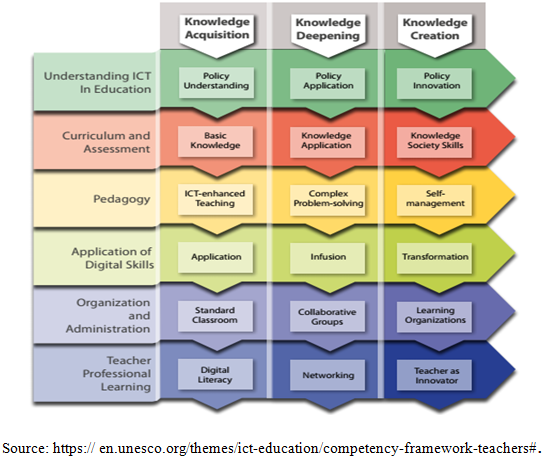
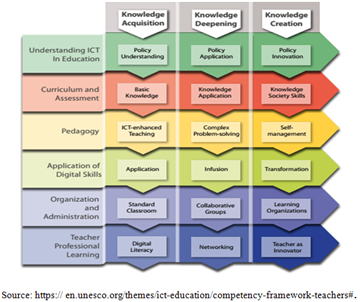
2.2. The ICT CFT StructureThe ICT CFT consists of three levels of professional skills development in ICT use in education, six major education focuses, and eighteen competences organized around these aspects of teachers’ professional practice. This is shown in the figure below.
Observing the above figure that summarizes the third version of ICT CFT, it suffices to note the following.
i. Knowledge Acquisition
The goal of the Knowledge Acquisition level is to help teachers become effective and productive members of the school community and, in turn, support students in becoming engaged and productive members of society. There are six teacher ICT competencies in this level. Teachers who have mastered the competencies in the Knowledge Acquisition level can:
1. Articulate how their classroom practices correspond to and support institutional and/or national policy.
2. Analyze curriculum standards and determine how ICT can be effectively used pedagogically to support the achievement of those standards.
3. Make appropriate ICT choices to support specific teaching and learning methodologies.
4. Identify the function of hardware components and common productivity software applications, and be able to use them.
5. Organize the physical environment to ensure technology supports different learning methodologies in an inclusive manner; and
6. Use ICT to enhance their professional growth.
ii. Knowledge Deepening
The goal of the Knowledge Deepening level is to help teachers use ICT effectively to improve their performance in all areas of their profession within their specific context. Through teaching and learning, they will assist students in applying knowledge to solve complex, high-priority problems encountered in real-world situations. There are six ICT competencies for teachers at this level. Teachers who have mastered these competencies can:
1. Design, modify, and implement classroom practices that support institutional and/or national policies, international commitments (e.g., UN Conventions), and social priorities;
2. Integrate ICT across subject content, teaching and assessment processes, and grade levels, and create a conducive ICT-enhanced learning environment where students, supported by ICT, demonstrate mastery of curriculum standards.
3. Design ICT-supported, project-based learning activities and use ICT to help students create, implement, and monitor project plans, as well as solve complex problems. Combine various digital tools and resources to build an integrated digital learning environment that supports students’ higher-order thinking and problem-solving skills. Use digital tools flexibly to promote collaborative learning, manage students and other learning partners, and oversee the learning process.
6. Utilize technology to engage with professional networks to enhance their own professional growth.
iii. Knowledge creation.
The goal of the Knowledge Creation level is to empower teachers to build Knowledge Societies for students, school colleagues, and the community. These teachers demonstrate good practices and inspire others. There are six teacher ICT competencies at this level. Teachers who have mastered the competencies in the Knowledge Creation level can:
1. Critiques of institutional and national education policies alike suggest revisions, design improvements, and speculate on the impact of these changes.
2. Identify the most effective ways to integrate student-centered and collaborative learning to guarantee mastery of multidisciplinary curriculum standards.
3. While setting learning parameters, promote student self-management in student-centered and collaborative learning.
4. Design knowledge communities and use digital tools to support pervasive learning.
5. play a leadership role in developing a technology strategy for their school to transform it into a learning organization; and
6. Continuously develop, experiment, coach, innovate, and share best practices to identify how technology can best serve the school.
2.4. Aspects of ICT-CFTIt is worth noting that each level shares six aspects, as briefly explained below:
i. Understanding ICT in Education Policy
Teachers should understand these policies and reforms and be able to align them with classroom practices. They are also expected to provide constructive feedback to help improve policy gaps.
ii. Curriculum and assessment.
This aspect examines how ICT can be used to support curriculum and assessment activities (using ICT in lesson planning, teaching, and assessment tasks).
iii. Pedagogy
This aspect encourages teachers to develop ICT skills to enhance effective teaching methods. Here, student-centered approaches, problem-based, and project-based pedagogy are strongly supported.
iv. Application of digital skills.
It is important to recognize that basic digital skills like word processing, Excel, presentation tools, e-mail clients, and social networking apps are essential for helping teachers in their daily tasks. However, more advanced digital skills may be necessary for deeper understanding and creating new content.
v. Organization and administration
This aspect examines skills for managing the school’s digital assets and e-governance. It also includes building virtual learning environments, creating spaces that promote collaborative learning, tracking learners at home, flipped classrooms, and pervasive education.
vi. Teacher professional learning
This aspect suggests that teachers should develop digital skills that enable lifelong learning throughout their careers. It also emphasizes that teachers will later demonstrate high-tech innovations; therefore, they must keep learning.
This brief overview of the UNESCO ICT-CFT has been adopted by countries in South America and the Mediterranean, leading to noticeable progress in the digital transformation of education (UNESCO, 2018). Seen as a practical guide for best practices, and given Cameroon’s strong commitment to UNESCO principles, the key question is: to what extent has Cameroon’s education sector adopted or used this guide to develop urgently needed ICT skills among its teachers? This question will be answered by analyzing the results, as existing initiatives and actions will be examined based on the three skill levels, the six aspects, and the 18 ICT core skills teachers are expected to have for today’s classroom.
2.5. Method and MaterialThis study employed a mixed research design that included an exploratory case study and survey frameworks. A SurveyMonkey questionnaire was shared via social media networks to target university lecturers. Additionally, an engaging Media Focused Group Discussion (MFGD) on the 18 ICT core skills, the six aspects, and three levels as outlined by UNESCO (2018) provided an in-depth exploration of the subject matter. A total of 206 respondents took part in the questionnaire and MFGD (conducted through WhatsApp media). The collected data were presented and analyzed using bar charts and content analysis, as shown below.
2.6. Results and DiscussionsInformation and/or data collected through the questionnaire and Media Focus Group Discussion are presented and analyzed using graphs and content analysis techniques. Each of the six ICT-CFT elements and the associated three core skills will be examined under the three skill levels, which are knowledge acquisition, knowledge deepening, and knowledge creation, as shown below:
i. Understanding ICT in Education Policy
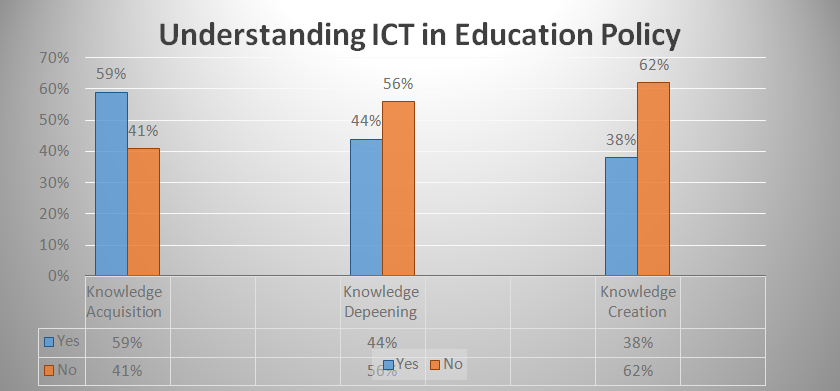
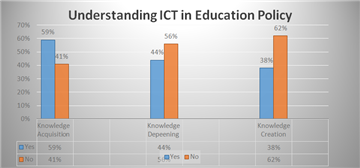
At the knowledge acquisition level, results from this topic showed that 61% of teachers recognized the need to connect ICT education policies with classroom practices. However, 41% of these teachers failed to demonstrate how their classroom practices relate to and support the national ICT in education policy. For example, there was a noticeable gap between their classroom practices and their support for policy implementation. Additionally, these teachers struggled to clearly identify the principles of using ICT in education in a safe and accessible way. These findings indicate that teachers have a basic understanding of the ICT in Education policy. However, this understanding is not enough given the challenges of the fourth industrial revolution 5. Therefore, they need to acquire more knowledge about their role in implementing ICT in Education policy and the principles of safe and accessible usage.
At the knowledge-deepening level, teachers need to have proper policy application skills. This means they should be able to design, modify, and implement ICT-related principles in classroom teaching. However, results from the survey and MFGD showed that 44% of teachers could identify obstacles that hinder full ICT implementation in the classroom. Sadly, 56% of these teachers mostly lacked the ability to address such problems. It’s important to note that the implementation process requires individuals to have the skills to overcome barriers, which is why these teachers need more knowledge and a deeper understanding of how ICT is applied in Education policies in their classroom practices.
At the knowledge creation level, the discussion focused on teachers' ability to critique institutional ICT in Education Policy. Results from the survey and discussions showed that only 38% of these teachers could formulate relevant criticisms of existing ICT in education policies in Cameroon. These teachers also suggested improvements to ICT in education policy designs based on Cameroon-specific realities. For example, infrastructural issues, equipment, and learning resources (OER) were identified as top priorities. Issues such as internet access and energy were also highlighted. Additionally, they stressed the need for regular and meaningful training for teachers at all levels. Conversely, 62% of teachers could not critique the current ICT in Education Policy, mainly because they lack in-depth knowledge of it and do not implement it in their classrooms.
ii. Curriculum and Assessment
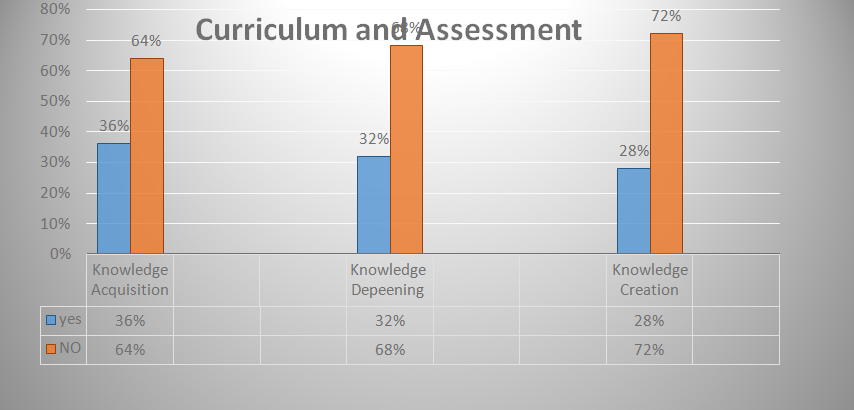
Making the case for curriculum and assessment at the knowledge acquisition level, the bar chart above shows that 36% of instructors see the need for skills to incorporate relevant ICT resources and productivity tools into any subject to support teaching, learning, and assessment. It follows that teachers could only analyze curriculum standards, identify and search for OER, and use common and specialized search engines to find course information. However, a 64% majority of teachers failed to see how ICT could be used pedagogically to achieve curriculum goals. For instance, matching specific curriculum standards to software packages, applications, digital tools, and resources, and demonstrating how these technologies support the attainment of curriculum standards, was a missing skill for these teachers. Additionally, most of these teachers had little or no knowledge of how ICT can be used for student evaluation or assessment, such as portfolios, peer assessment, formative assessment, and peer reflections (UNESCO, 2018). Simply put, these teachers lacked the skills for e-assessment.
At the level of deepening knowledge, curriculum and assessment primarily focus on teachers' ability to apply knowledge and skills. These skills require teachers to integrate ICT into subject content, teaching, assessment processes, and across grade levels. They also need to create a supportive environment for ICT-enhanced curriculum practices to achieve curriculum goals and standards. Responses from participants revealed that a concerning percentage of teachers (32%) can select and use appropriate digital tools for lesson preparation, delivery, and assessments. In fact, most teachers could not demonstrate how to use ICT tools such as suitable OER to find relevant, quality subject materials, a word processor for designing online rubrics, spreadsheets for analysis and record-keeping, and assessment software like Kahoot, Typeform, Capterra, Pointerpro. So, how can curriculum standards be met when teachers lack these skills?
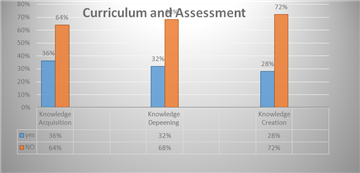
At the knowledge creation level, teachers need to ensure students acquire the knowledge expected in knowledge societies. However, results showed that 72% of teachers have a significant skills gap in designing the curriculum to support problem-solving, critical thinking, collaboration, information management, and creativity. The same gap exists in preparing learners to select appropriate digital tools for media and information literacy, web or graphic displays, and presenting their findings. Learners are also expected to develop skills in reflecting, planning, communicating, collaborating, and building knowledge through various ICT tools such as mini tutorials, videos, scripts, and articles. Additionally, teachers must equip learners with ICT-related assessment tools and strategies, enabling them to evaluate results or findings from project-based activities. This indicates that the implementation of the ICT-CFT framework for teachers is lagging in Cameroon.
iii. Pedagogy or ICT-enhanced Teaching
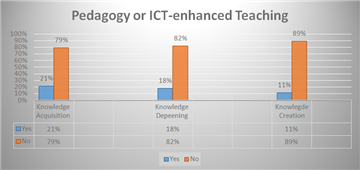
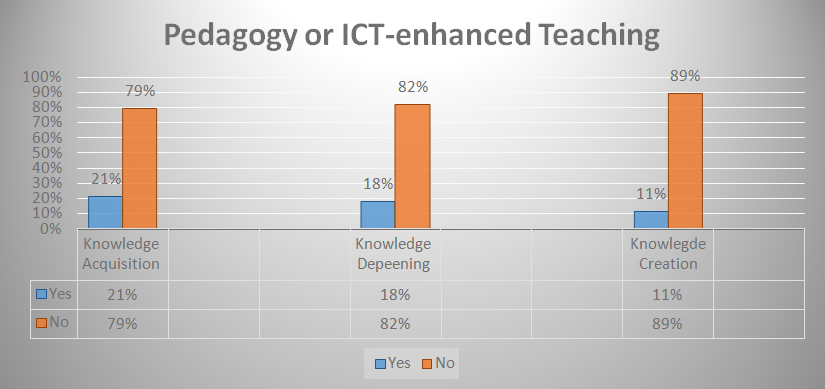
Furthermore, regarding knowledge acquisition, opinions on pedagogy or ICT-enhanced teaching indicated that teachers had limited understanding of how to make appropriate choices for ICT-supported teaching and learning methods. According to UNESCO (2018), teachers need to develop sufficient ICT-enhanced teaching skills to: a) select suitable ICT tools for teaching to help students learn subject content, b) design lesson plans that incorporate ICT-supported activities to improve learners’ understanding, c) use presentation software and digital resources to support instruction. In this context, responses from these teachers showed a significant gap in the areas mentioned above. In fact, 79% of teachers struggled to clearly explain how ICT can support classroom teaching, especially how to implement differentiated instruction. Additionally, a gap was observed in knowledge related to lesson plans that support both synchronous and asynchronous models, as well as drill-and-practice methods. Regarding presentation software, very few teachers (21%) could use Microsoft PowerPoint for lesson presentations, mostly to display text material. The use of inclusive and digitally accessible media such as audio, video, virtual/augmented reality to make content more engaging was notably lacking. These findings suggest that teachers’ knowledge of ICT-enhanced teaching and learning methods is limited. This is supported by several studies on educational technology, such as 5, 11, 15, 16. These studies convincingly demonstrate that the gap in ICT-enhanced pedagogical skills among teachers at different education levels in Cameroon is quite wide.
At the deepening knowledge level, the expected skill is for teachers to use ICT-enhanced teaching methods to address complex problems in the classroom. In this context, UNESCO states that these teachers should "design, ICT-supported project-based activities and use ICT to help students create, implement, and monitor project plans, and solve complex problems" (UNESCO, 2018, p. 36). Discussions with these teachers revealed that only about 18% of them could describe how different specific technologies are suitable for supporting project-based learning tasks such as identifying real-world problems, using appropriate digital resources for research to understand problem characteristics, and achieving in-depth understanding. Moreover, only a few could identify technologies like mobile learning tools and social networking platforms that support collaborative design, enabling learners to work in teams to find solutions to real-world issues. Well-designed project-based lesson plans and relevant activities, both individually and in groups, are essential skills for teachers today.
At the knowledge creation level, many teachers, accounting for 89%, are falling behind in their ability to train learners to design blended and online learning materials that support problem solving, collaboration, research, and artistic creation. This includes developing virtual learning environments that foster collaborative research, infographics, and video projects. Skills for managing large projects are also aimed at this stage. This means that learners will gain organizational skills, learn to create project plans with activity timelines, milestones, and responsibilities for each team member, and be encouraged to develop their own learning (UNESCO, 2018, p.44).
iv. Application of digital skills
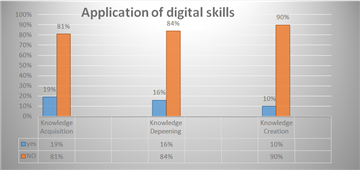
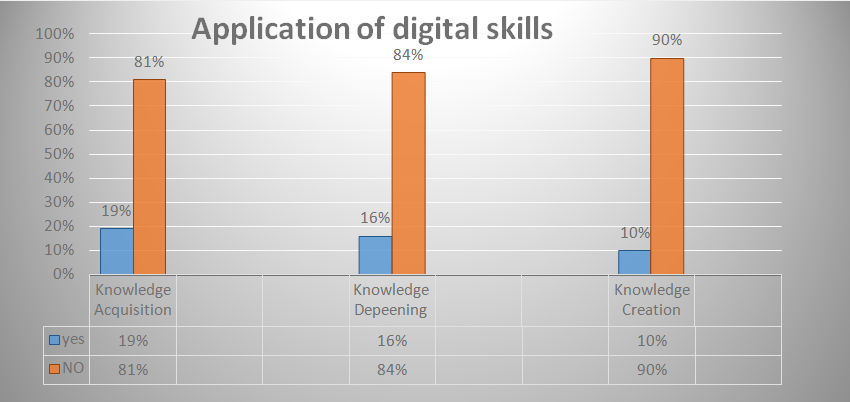
Regarding the use of digital skills, teachers at the knowledge acquisition level are expected to utilize computers, mobile learning devices, accessible software, and networks for teaching, learning, and management within a framework of “safe use” (UNESCO, 2018, p. 29). In this context, teachers' responses reveal an 81% significant skills gap in the following areas: a) creating simple presentations—very few university lecturers (19%) create presentations on a topic or lesson; b) creating simple graphics—an equal percentage of instructors admit they produce graphics used as teaching aids; c) understanding the basic principles of cybersecurity, media, and information literacy—here, the same 19% of teachers demonstrate knowledge of good social media practices and information literacy but lack understanding of cybersecurity cues. (d) Using search engines to find curriculum resources—many teachers show solid knowledge of identifying common and specific search engines and researching curriculum materials with appropriate keywords; e) creating and using email accounts in daily activities—results indicate that many teachers can send, receive, attach, and download emails on computers and mobile devices; f) identifying and using drill-and-practice software to support learning—opinions reveal a wide gap in understanding and using tutorials and software such as flashcards, branching drills, and extensive feedback activities; g) identifying and evaluating educational software and web resources and matching them to curriculum standards and students’ needs—few instructors demonstrate this skill; some can mention digital learning resources, but the skills to use them based on criteria, learning styles, and appropriateness for a mixed-ability classroom are lacking; h) using record-keeping software to store student records—many teachers do not possess this skill, considering it the responsibility of the school administrator, thus seeing no need for it; i) using communication, collaboration, and mobile technologies—respondents indicate that teachers primarily communicate with learners via WhatsApp in higher learning institutions, but this is not common in secondary or primary schools due to rules restricting mobile device use on campus; j) using social networks to communicate with the wider learning community—many teachers have created a class WhatsApp group that includes the broader community, facilitating communication with parents, teachers, and administrators; k) troubleshooting ICT problems—few teachers even understand what troubleshooting involves, and there is a significant gap in diagnosing common ICT issues like power problems, connectivity issues, login failures, and minor maintenance tasks such as installing antivirus software, reorganizing or partitioning memory, formatting, and cleaning dust. According to Béché 7, 17, Akumbu, Teneng, and Ngu 5, the effective use of ICT by teachers requires a solid understanding of and skills in hardware, software, mobile learning devices, and connectivity. This highlights the need for increased knowledge and practical skills in digital tools among these instructors.
At the knowledge deepening stage, teachers are expected to have the skills to blend appropriate digital tools to create a digital learning environment that supports learners' higher-order thinking and complex problem-solving. Discussions with these teachers revealed that many are skilled at using social networking tools to interact with students, both in and out of school, to share learning resources, facilitate group work, and address students’ learning concerns. However, this proficiency is not consistent across other skill areas, as 84% of teachers lack the ability to operate specific software designed for subject areas. For example, Excel, Statistical Package for the Social Sciences (SPSS), and Stata are all used for visualizations, data analysis, and simulations. Very few teachers can also identify and evaluate the relevance of digital teaching and learning resources, assessing their usefulness and potential for distraction in the teaching-learning process. Similarly, only a small number of teachers demonstrate the ability to use interconnected devices such as interactive whiteboards to share resources with students and receive feedback through built-in features, as well as mobile phones and tablets. School management software for record-keeping tasks such as marking, attendance, and report writing is also underutilized. Additionally, it was observed that teachers significantly lag in skills to identify and utilize digital tools that support learners with disabilities and sociolinguistic minority groups. These assistive technologies include, but are not limited to, text-to-speech systems (e.g., Kurzweil 3000), speech-to-text tools (e.g., Dragon NaturallySpeaking), word prediction capabilities (e.g., WordQ), and graphic organizers (e.g., Inspiration).
At the knowledge creation level, we discuss transformation skills. Here, teachers need to be capable of designing knowledge communities and using digital tools to support pervasive learning. This requires teachers to consider using LMS or social network platforms for online education. However, we found that very few teachers could use LMS like Moodle, Google Meet, or Google Classroom. Based on focus group discussions, most teachers relied solely on social networks (WhatsApp) to share notes, assign tasks, and communicate with students. Only a small percentage of computer science teachers (10%) demonstrated the use of digital technologies such as interactive whiteboards, live video feeds, and presentation software to foster online collaboration among students. The majority (90%) lagged behind in this area. Additionally, the same 10% of computer science teachers showed the ability to track students’ contributions within the learning community and to encourage student-developers to create or develop their own software to solve real-world problems. These skills were entirely absent among most teachers outside the computer sciences field. This indicates that teachers need intensive ICT-pedagogy training to meet current classroom demands. An increase in the application of UNESCO’s framework could help address this issue.
v. Organization and Administration
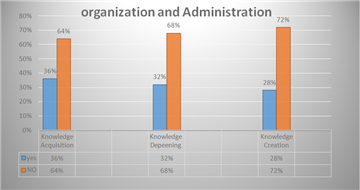
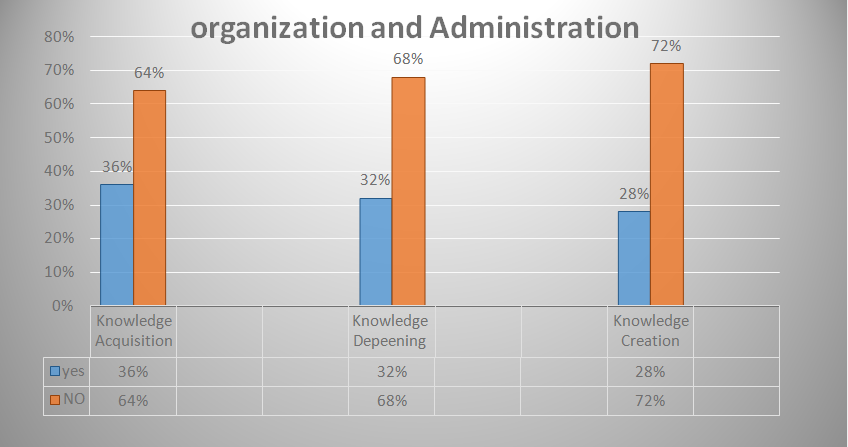
Regarding organization and administration at the knowledge acquisition level, respondents were asked whether they have the skills to organize the physical environment to support technological needs for differentiated instruction. We found that 36% of the responses from relevant teachers came from computer science teachers working with students in a computer lab. It also follows that most of these teachers often give students the opportunity to use technology outside of school for individual and group assignments. However, many of these teachers (64%) did not understand what the question was asking. This shows they lack the skills to coordinate students in accessing devices and engaging each one in meaningful learning through and with learning technologies. Additionally, a skills gap was seen in coordinating students to work together in mixed-ability groups, especially where not everyone has access to or owns a computer. The lack of maintenance skills to update and keep the devices and labs in good condition makes the situation worse. These results confirm that teachers in Cameroon lag significantly behind in ICT teaching skills, which leads to a weak implementation of the ICT-CFT by UNESCO (2018).
At the deeper knowledge level, teachers are expected to identify appropriate digital technologies that support collaborative learning among students with mixed abilities, diverse ages, and sociolinguistic backgrounds, especially for marginalized students. Setting up the digital environment to include extended school stakeholders beyond the classroom is also essential at this stage. Results from the respondents showed that 32% of teachers share resources and information with learners via social networks like WhatsApp. Many teachers also use communication channels such as WhatsApp, Facebook groups, and email to connect with the broader school community. Additionally, the same 32% of teachers can demonstrate the ability to use LMS (Learning Management Systems) to provide learners with a platform for interaction. However, no teachers showed how to configure assistive technologies on mobile learning devices to support learners with disabilities and sociolinguistic minorities. The same percentage of teachers could develop an ICT integration strategy for their subjects and departments. This strategy addresses how to bridge the skills gap in using ICT for teaching and learning, meet curriculum standards, and perform administrative functions.
At the knowledge creation level, teachers are expected to lead by developing a technology strategy that transforms their school into a learning organization. Unlike previous findings, we discovered that approximately 72% of these teachers could not demonstrate the ability to identify and organize digital technologies and environments for teaching and learning. The same proportion of teachers also struggled to show how to use digital tools in school management and administration. Additionally, these teachers could not showcase their ability to lead the implementation of the ICT-school integration plan. However, 28% of the teachers showed the ability to facilitate inclusive communication using social network technologies. The assessment of knowledge creation continues to reveal a skills gap among these teachers, resulting in a slow implementation of this framework.
vi. Teacher Professional Learning
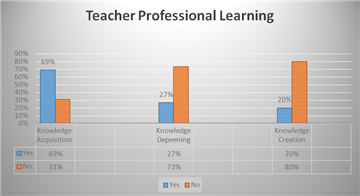
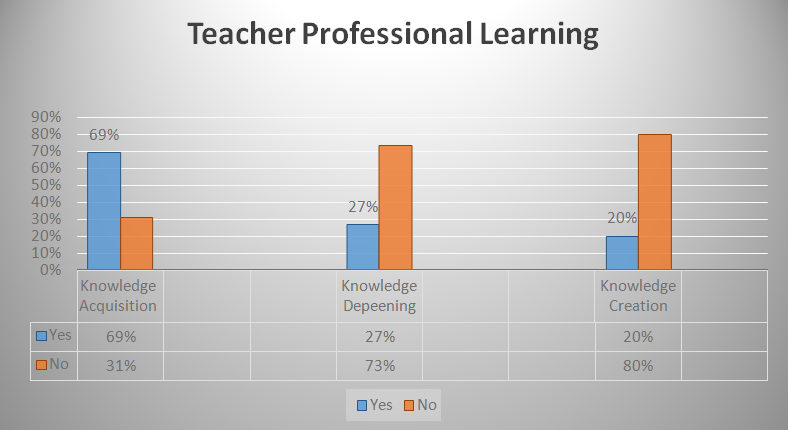
Respondents’ discussions on Teacher Professional Learning at the knowledge acquisition level focused on teachers’ efforts to develop digital literacy and use ICT to enhance their professional growth. Conversations with respondents revealed that most teachers (69%) have not acquired the necessary ICT skills to improve their productivity. This indicates that these teachers are unable to effectively use digital tools for preparing and delivering lessons, record-keeping, and administrative tasks. Additionally, a skills gap was identified in the use of ICT for specialized subject areas, particularly in working with emerging technologies and adopting new blended and online learning strategies. Furthermore, another skills gap was observed in managing internet conduct and safety issues. According to UNESCO (2018), this skill requires teachers to:
Discuss and develop effective strategies to handle cyberbullying. Ensure proper behaviors and actions when engaging with others online. Identify the source and effects of viruses, scams, spam, cookies, and pop-up ads. Protect the confidentiality of personal information and know how to respond to inappropriate content. These skills will be essential in both computer and mobile learning environments. UNESCO (2018, p.33)
In addition to the points above, discussions also revealed that teachers, who are supposed to be models of digital citizenship, have yet to fully understand and practice this role. In fact, demonstrating exemplary behavior online, such as protecting oneself and students, following the law, maintaining good health, digital well-being, and understanding rights and responsibilities, is crucial. Another skill these teachers need is the ability to analyze and evaluate digital resources. This indicates that teachers lack the skills to effectively maximize the use of OER and align digital teaching and learning resources with curriculum standards. According to UNESCO (2018), this should be done considering ‘purpose’, ‘authority’, ‘coverage, currency’, ‘objectivity’, and ‘accuracy’. It follows that ICT professional development for teachers is essential for advancing the digital transformation agenda in Cameroon 5. Unfortunately, Cameroon is falling behind in implementing this universally accepted skills framework established by UNESCO since 2018.
At the knowledge deepening stage, teachers are expected to use digital tools to connect with networks and experts that support professional development. In this regard, we found that only 27% of teachers are willing to invest in such efforts. This shows that the push for ICT-pedagogic skills has yet to become a compelling issue for teachers across Cameroon. We also noticed that very few teachers participate in professional development networks, and few attend online webinars, podcasts, blogs, or Massive Open Online Courses (MOOCs) that provide teacher-training programs. This indicates that the implementation of the UNESCO ICT-CFT in Cameroon is still insufficient.
At the knowledge creation level, teachers are expected to be innovators. That is, they should innovate and share best practices for using digital technologies in ongoing professional development. This involves promoting continuous learning among colleagues by organizing reflection and exchange groups using LMS or social network platforms. These forums give teachers the opportunity to present innovative teaching methods, learn from each other, and share tested and validated teaching resources such as lesson plans, worksheets, lab notes, and tests, all as OER or with open licenses. Respondents' opinions on this revealed that only 20% of teachers responded positively. However, 80% said that all their ongoing learning sessions have been face-to-face, and discussions on ICT-related teaching methods have rarely taken place. This indicates that teachers are committed to continuous training, but this training often doesn't focus on ICT-CFT. Therefore, there is a need for these institutions to take more serious steps in implementing this framework.
Based on the above results, this study recommends the following:
- That UNESCO (2018) ICT-CFT should be effectively contextualized as the referenced manual to equip university teachers with relevant ICT skills for today’s Cameroonian classrooms.
- The Digital Transformation Agenda for Higher Education in Cameroon should align with the UNESCO (2018) ICT-CFT to fulfill its goal of developing ICT skills for university teaching and administrative staff to improve distance learning.
- The training of these lecturers should be relevant and effective, adapting to the evolving pace of educational technologies and classroom practices.
- Sufficient resources, up-to-date infrastructure and equipment, experienced and skilled E-learning staff, and adequate finances should be available for this training.
- Software resources like LMS, OER, internet connections/Megabytes, and related software should be accessible and affordable to support teachers’ training and ongoing professional development.
The possession of relevant ICT-enhanced educational skills by instructors is crucial for driving the digital transformation of education, especially as technology continuously shapes teaching and learning activities. This push to acquire these skills was largely driven by the expectations of the COVID-19 pandemic, which positioned technology as the solution for continuous learning during crises (Dwahan, 2020; Akumbu) 5. UNESCO has played a key role as a research and resource agency in promoting technological research, innovation, and teachers’ ICT education and skill development for classroom adaptation. It has consistently monitored and adjusted teachers’ education and skill levels across all grade levels to ensure they stay current and can adapt to emerging technological trends in the classroom. Based on this, ICT-CFT is now in its third version. Consequently, Cameroon, as a member state, is expected to adapt this framework into a training manual for teachers since 2018. However, as this paper shows, teachers’ ICT skills remain weak, indicating a low implementation rate of this framework. To support Cameroon’s higher education sector in advancing through the Digital Transformation agenda and to achieve Education 2030 or SDG 4, this study recommends increased commitment on training and upskilling teachers and lecturers using this manual.
- UNESCO: United Nations Educational, Scientific, and Cultural Organization.
- ICT: Information and Communication Technology
- ICT – CFT: Information and Communication – Competency Framework for Teachers.
- SGDs: Sustainable Development Goals.
- COL: Commonwealth of Learning
- IT: Information Technology.
- IoT: Internet of Things
- AI: Artificial Intelligence.
- E – National Higher Education: Electronic or Digitalized Higher Education.
- MFGD: Media Focused Group Discussion
- UN: United Nations
- OER: Open Education Resources
- SPSS: Statistical Package for Social Sciences
- STATA: Statistical Software Package
- LMS: Learning Management System
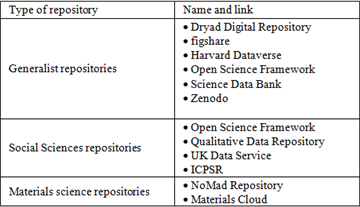
The datasets created and/or analyzed during this study are available in the following repositories:
|
| [1] | UNESCO (2017). Qingdao Statement: strategies for leveraging ICT to achieve Education 2030. UNESCO Digital Library. https://unesdoc.unesco.org/ark:/48223/pf0000253061?posInSet=3&queryId=b4ebf038-ef38-4c8c-b722-a67c2e2552e9. Accessed on February 20, 2023. | ||
| In article | |||
| [2] | United Nations Educational, Scientific, and Cultural Organization (UNESCO). (2015). Education 2030: Incheon Declaration and Framework for Action for the Implementation of Sustainable Development Goal 4: Ensure Inclusive and Equitable Quality Education and Promote Lifelong Learning. UNESCO Digital Library. | ||
| In article | |||
| [3] | UNESCO (2021). Reimagining our futures together: a new social contract for education. UNESCO Digital Library. https:// unesdoc.unesco.org/ark:/48223/pf0000379707. Retrieved on March 20, 2023. | ||
| In article | |||
| [4] | UNESCO (2015). Qingdao Declaration: Seize Digital Opportunities, Lead Education Transformation. UNESCO Digital library. Retrieved on March 20, 2023. https:// unesdoc.unesco.org/ ark:/ 48223/ pf0000233352? posInSet=1& queryId= b4ebf038-ef38-4c8c-b722-a67c2e2552e9. | ||
| In article | |||
| [5] | Akumbu, Pius W., Patience Teneng, and Sylvanus Ngu. "Technological development and distance learning during disease outbreak in Cameroon: The COVID 19 experience." (2020): 97-107. | ||
| In article | |||
| [6] | Fonkoua, P. (2009). Les TIC pour les enseignants d’aujourd’hui et de demain. In T. Karsenti (dir.). Intégration pédagogique des TIC en Afrique : Stratégies d’action et pistes de réflexion (p.151- 181). Ottawa: CRDI. https:// en.unesco.org/ covid19/ educationresponse/ solutions. Retrieved on August 22, 2020. | ||
| In article | |||
| [7] | Béché, E. (2019) Conceptualizing the Implementation of Distance Learning System at the Higher Teacher’s Training College of Maroua (Cameroon. | ||
| In article | |||
| [8] | Béché, E. (2020). Cameroonian responses to COVID-19 in the education sector: Exposing an inadequate education system. International Review of Education, 66(5), 755-775. | ||
| In article | View Article PubMed | ||
| [9] | Dhawan, S. (2020). Online learning: A panacea in the time of the COVID-19 Crisis. Journal of Educational Technology Systems, 49(1): 5–22. | ||
| In article | View Article PubMed | ||
| [10] | Bates, T. (2018). The 2017 national survey of online learning in Canadian post-secondary education: methodology and results. International Journal of Educational Technology in Higher Education, 15(1), 1-17. | ||
| In article | View Article | ||
| [11] | Njebakal, S. E., & Teneng, P. P. (2017). Technological Inputs in Higher Education and Graduate Destinations in Cameroon. The Case of the University of Yaoundé I. International Journal of New Technology and Research, 3(3). | ||
| In article | |||
| [12] | UNESCO (2021). 2021, UNESCO held a conference on “OER policies: A Global perspective on what works”. https:// www.unesco.org/ en/ communication-information/ open-solutions/ open-educational-resources. Accessed on 25/04/2022. | ||
| In article | |||
| [13] | Commonwealth of Learning (2015). Report on Technology-Enabled learning for the Mediterranean and Africa withheld that times are critical for the education industry with regards to matching skills and work demands. Accessed on March 20, 2023, on https:// www.col.org/ cross-cutting-initiatives/ technology-enabled-learning/. | ||
| In article | |||
| [14] | Ministry of Higher Education (2017): E-National Higher Education Network Project. Accessed on December 20, 2020. www.minesup.gov.cm. | ||
| In article | |||
| [15] | Karsenti, T. (2009). Intégration pédagogique des TIC : Stratégies d’action et pistes de réflexion. Ottawa : CRDI. | ||
| In article | |||
| [16] | Béché, E. & Fonkoua, P. (2016). Introduction: Utility, usability and acceptability of open and distance learning in Cameroonian university context. In P. Fonkoua et E. Béché (dir.). Les formations ouvertes et à distance au Cameroun : Entre discours et réalités d’innovation (p. 11-32). Paris : L’Harmattan. | ||
| In article | View Article | ||
| [17] | Béché, E. (2013b). TIC et innovations dans les pratiques enseignantes au Cameroun. Frantice.net, 6, 5-21. | ||
| In article | |||
Published with license by Science and Education Publishing, Copyright © 2026 Sylvanus Wara Ngu
 This work is licensed under a Creative Commons Attribution 4.0 International License. To view a copy of this license, visit
http://creativecommons.org/licenses/by/4.0/
This work is licensed under a Creative Commons Attribution 4.0 International License. To view a copy of this license, visit
http://creativecommons.org/licenses/by/4.0/
| [1] | UNESCO (2017). Qingdao Statement: strategies for leveraging ICT to achieve Education 2030. UNESCO Digital Library. https://unesdoc.unesco.org/ark:/48223/pf0000253061?posInSet=3&queryId=b4ebf038-ef38-4c8c-b722-a67c2e2552e9. Accessed on February 20, 2023. | ||
| In article | |||
| [2] | United Nations Educational, Scientific, and Cultural Organization (UNESCO). (2015). Education 2030: Incheon Declaration and Framework for Action for the Implementation of Sustainable Development Goal 4: Ensure Inclusive and Equitable Quality Education and Promote Lifelong Learning. UNESCO Digital Library. | ||
| In article | |||
| [3] | UNESCO (2021). Reimagining our futures together: a new social contract for education. UNESCO Digital Library. https:// unesdoc.unesco.org/ark:/48223/pf0000379707. Retrieved on March 20, 2023. | ||
| In article | |||
| [4] | UNESCO (2015). Qingdao Declaration: Seize Digital Opportunities, Lead Education Transformation. UNESCO Digital library. Retrieved on March 20, 2023. https:// unesdoc.unesco.org/ ark:/ 48223/ pf0000233352? posInSet=1& queryId= b4ebf038-ef38-4c8c-b722-a67c2e2552e9. | ||
| In article | |||
| [5] | Akumbu, Pius W., Patience Teneng, and Sylvanus Ngu. "Technological development and distance learning during disease outbreak in Cameroon: The COVID 19 experience." (2020): 97-107. | ||
| In article | |||
| [6] | Fonkoua, P. (2009). Les TIC pour les enseignants d’aujourd’hui et de demain. In T. Karsenti (dir.). Intégration pédagogique des TIC en Afrique : Stratégies d’action et pistes de réflexion (p.151- 181). Ottawa: CRDI. https:// en.unesco.org/ covid19/ educationresponse/ solutions. Retrieved on August 22, 2020. | ||
| In article | |||
| [7] | Béché, E. (2019) Conceptualizing the Implementation of Distance Learning System at the Higher Teacher’s Training College of Maroua (Cameroon. | ||
| In article | |||
| [8] | Béché, E. (2020). Cameroonian responses to COVID-19 in the education sector: Exposing an inadequate education system. International Review of Education, 66(5), 755-775. | ||
| In article | View Article PubMed | ||
| [9] | Dhawan, S. (2020). Online learning: A panacea in the time of the COVID-19 Crisis. Journal of Educational Technology Systems, 49(1): 5–22. | ||
| In article | View Article PubMed | ||
| [10] | Bates, T. (2018). The 2017 national survey of online learning in Canadian post-secondary education: methodology and results. International Journal of Educational Technology in Higher Education, 15(1), 1-17. | ||
| In article | View Article | ||
| [11] | Njebakal, S. E., & Teneng, P. P. (2017). Technological Inputs in Higher Education and Graduate Destinations in Cameroon. The Case of the University of Yaoundé I. International Journal of New Technology and Research, 3(3). | ||
| In article | |||
| [12] | UNESCO (2021). 2021, UNESCO held a conference on “OER policies: A Global perspective on what works”. https:// www.unesco.org/ en/ communication-information/ open-solutions/ open-educational-resources. Accessed on 25/04/2022. | ||
| In article | |||
| [13] | Commonwealth of Learning (2015). Report on Technology-Enabled learning for the Mediterranean and Africa withheld that times are critical for the education industry with regards to matching skills and work demands. Accessed on March 20, 2023, on https:// www.col.org/ cross-cutting-initiatives/ technology-enabled-learning/. | ||
| In article | |||
| [14] | Ministry of Higher Education (2017): E-National Higher Education Network Project. Accessed on December 20, 2020. www.minesup.gov.cm. | ||
| In article | |||
| [15] | Karsenti, T. (2009). Intégration pédagogique des TIC : Stratégies d’action et pistes de réflexion. Ottawa : CRDI. | ||
| In article | |||
| [16] | Béché, E. & Fonkoua, P. (2016). Introduction: Utility, usability and acceptability of open and distance learning in Cameroonian university context. In P. Fonkoua et E. Béché (dir.). Les formations ouvertes et à distance au Cameroun : Entre discours et réalités d’innovation (p. 11-32). Paris : L’Harmattan. | ||
| In article | View Article | ||
| [17] | Béché, E. (2013b). TIC et innovations dans les pratiques enseignantes au Cameroun. Frantice.net, 6, 5-21. | ||
| In article | |||