This systematic literature review explores the integration of socio-emotional learning (SEL) skills in mathematics education and their impact on students’ academic engagement, resilience, and overall learning outcomes. SEL encompasses core competencies such as self-awareness, self-regulation, motivation, empathy, and responsible decision-making—skills that are increasingly recognized as essential in supporting students’ ability to navigate mathematical challenges. Despite the cognitive emphasis of mathematics instruction, recent studies show that affective factors significantly influence students’ problem-solving behavior, classroom participation, and persistence in the face of difficulty. This review examined fifteen peer-reviewed articles published between 2018 and 2025 using a thematic analysis approach. Articles were selected based on criteria including relevance to SEL in mathematics, methodological rigor, and contribution to current educational discourse. The findings highlight a consistent positive relationship between SEL competencies and students’ mathematical performance, particularly in the areas of emotional regulation, collaboration, and motivation. However, the review also reveals a gap in the systematic integration of SEL in math classrooms. Key challenges include limited teacher training, curriculum constraints, and the absence of affective goals in assessment frameworks. The review concludes by recommending structured, intentional incorporation of SEL into mathematics instruction to cultivate emotionally intelligent and academically resilient learners prepared for the demands of 21st-century education.
In recent years, socio-emotional learning (SEL) has emerged as a vital dimension of academic success, especially in mathematics, a subject frequently associated with anxiety, disengagement, and low performance. SEL refers to the development of competencies such as self-awareness, emotional regulation, motivation, empathy, and responsible decision-making. These emotional and interpersonal skills help students persist through complex mathematical tasks, regulate frustration, engage with peers, and reflect on their learning. Research consistently shows that learners with strong SEL abilities exhibit higher levels of motivation, confidence, and academic resilience 1, 2. As a result, educational systems around the world are increasingly advocating for SEL as a foundational component of quality education, including within STEM disciplines like mathematics.
Despite its growing recognition, SEL remains poorly integrated in mathematics instruction, which traditionally emphasizes procedural fluency and correct answers over emotional regulation and collaborative thinking. This overemphasis on step-by-step routines limits students’ capacity for deeper reasoning and makes them vulnerable to anxiety when faced with unfamiliar or non-routine tasks 3. In many classrooms, emotional development is still treated as an isolated goal—separate from academic performance—rather than an essential part of the learning process. It is highlighted that emotions such as anxiety or curiosity influence students' ability to stay cognitively flexible and sustain engagement in higher-order thinking. Without the ability to manage emotions, students may abandon problem-solving tasks prematurely, even when they possess the required knowledge.
In the Philippine context, the need for SEL in mathematics is even more urgent. Filipino students have consistently ranked among the lowest in global assessments like the Programme for International Student Assessment (PISA), particularly in mathematics-related indicators 4, 5. This ongoing underperformance is often attributed not only to academic gaps but also to socio-emotional challenges such as math anxiety, low self-efficacy, and fear of failure. It was found that Filipino learners who demonstrated stronger self-regulation and motivation were more likely to perform well in mathematical reasoning tasks 6. While some SEL initiatives were introduced during the COVID-19 pandemic to address student well-being, these interventions were rarely linked to subject-specific learning like mathematics and have yet to be sustained as part of systemic reform.
Moreover, teachers often feel unprepared to implement SEL within the mathematics classroom. Many educators lack training in recognizing emotional barriers to learning or in designing lessons that support both cognitive and affective development. Professional development is essential to help teachers foster a learning environment that balances academic rigor with emotional safety 1. Structural challenges—such as large class sizes, packed curricula, and test-oriented assessment—further hinder the implementation of SEL-aligned instruction in mathematics 7. As a result, the emotional dimension of learning continues to be marginalized, and the potential of SEL to improve math outcomes remains largely untapped.
Given these issues, there is a pressing need to examine how SEL is being integrated into mathematics education, what approaches are effective, and what barriers persist. This systematic literature review aims to consolidate current research related to SEL in mathematics classrooms, identify emerging themes, and analyze both the opportunities and challenges in fostering emotional competencies alongside cognitive growth. By synthesizing existing studies, this review hopes to inform teachers, policymakers, and researchers about the essential role of SEL in mathematics instruction and to support the development of more emotionally responsive and academically supportive learning environments.
This study employed a qualitative research design, specifically a systematic literature review (SLR), to explore the integration, influence, and implementation of socio-emotional learning (SEL) in mathematics education. A total of fifteen (15) peer-reviewed journal articles published between 2018 and 2025 were reviewed, each addressing key aspects of SEL such as emotional regulation, student motivation, self-awareness, collaboration, and academic resilience in the context of mathematics instruction. The SLR approach was selected to identify, synthesize, and interpret recurring themes from existing literature and provide a comprehensive understanding of how SEL shapes mathematics learning outcomes and classroom experiences.
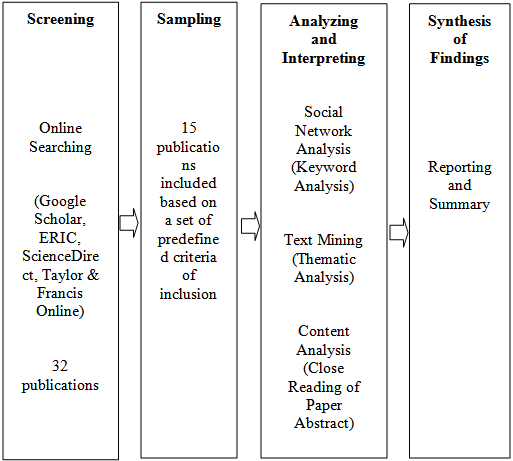
The literature search began with the identification of thirty-two (32) potentially relevant publications using online databases such as Google Scholar, ERIC, ScienceDirect, and Taylor & Francis Online. The search used keyword combinations including “socio-emotional learning in mathematics,” “SEL in math education,” “emotional regulation in math,” “student motivation and resilience,” and “affective factors in math classrooms.” After removing duplicates and applying three inclusion criteria—(1) studies published between 2018 and 2025; (2) written in English and peer-reviewed; and (3) explicitly addressing socio-emotional learning in the context of mathematics education—a total of fifteen (15) high-quality studies were retained for full-text analysis.
To ensure the reliability and richness of findings, a thematic analysis approach was applied. Each selected study was examined for its objectives, methodologies, participants, significant findings, and conclusions. Recurring themes and concepts were coded and categorized based on how SEL competencies were discussed in relation to mathematics teaching and learning. Key constructs such as emotional regulation, persistence, student-teacher relationships, and reflective thinking were compared across studies. A matrix (see Table 1) was created to systematize the analysis and to highlight patterns, gaps, and emerging insights. This analytical process allowed for a structured synthesis of evidence that informs both practice and future inquiry.
The step-by-step process followed in this review is illustrated in Figure 1. It includes the stages of identification, screening, eligibility, and final inclusion of studies. The results from this structured review offer a grounded view of how SEL is being integrated into mathematics education, what competencies are commonly developed, and what challenges persist, particularly in contexts such as the Philippines where emotional and academic struggles in mathematics often intersect.
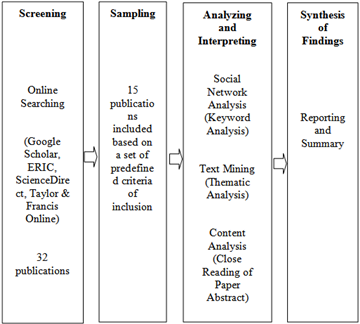
The results from this methodical and structured review provide a holistic picture of how SEL is embedded in mathematics education, the benefits it offers, and the barriers that continue to challenge its implementation—particularly in developing country contexts such as the Philippines. Identification of relevant data was the first step. It was followed by examination of each study’s content and context. The results were presented through a matrix following Godinez literature review approach. Objectives of the study at hand were addressed through this approach. It is from these results where conclusions and recommendations were also drawn from which were then reported and summarized.
1. What socio-emotional learning competencies are commonly developed in mathematics education?
The reviewed literature reveals that several core socio-emotional competencies are frequently developed in mathematics classrooms, though often implicitly. These include emotional regulation, motivation, self-awareness, social interaction, and responsible decision-making. It was found that students with higher levels of emotional regulation and self-motivation performed significantly better in mathematical reasoning tasks, emphasizing the role of affective skills in managing cognitive complexity 6. As reported, students with robust SEL profiles were more likely to persist during difficult tasks, maintain engagement, and communicate effectively during collaborative activities 2. These findings aligned to epistemic emotions—such as curiosity, frustration, and satisfaction—which significantly influence how students self-regulate and persist in math problem-solving 8.
In theoretical frameworks, the importance of emotions like anxiety and curiosity in modulating cognitive flexibility is a key skill in mathematics. Their work asserts that students are more cognitively open and adaptive when emotionally supported 7. Similarly, it was found that school-based SEL programs contributed to improvements not only in behavior and well-being, but also in academic outcomes, including math 1, 9. Promotion of the 5E instructional model—which includes phases like "Engage" and "Explore"—shows how structured inquiry can also foster emotional competencies 10. It was demonstrated that Fermi problems support students' estimation abilities while fostering perseverance, tolerance for ambiguity, and metacognitive reflection—components of SEL 3. These studies confirm that the development of emotional resilience, collaboration, and self-efficacy enhances students' capacity to engage with mathematical content meaningfully and confidently.
2. What are the challenges encountered in integrating socio-emotional learning in mathematics classrooms?
Despite its acknowledged value, integrating SEL into mathematics classrooms faces numerous systemic and pedagogical challenges. A prominent issue is the continued dominance of procedural teaching, where speed and accuracy are prioritized over reasoning and emotional development 3. This focus often leaves little space for developing persistence, self-reflection, or emotional expression.
Another recurring challenge is that SEL is frequently treated as a separate domain, disconnected from subject instruction. As noted, even when SEL programs are present in schools, they are rarely linked to core academic subjects such as math 2. This disconnection restricts the application of emotional competencies in subject-specific learning contexts. Teacher preparedness also emerges as a major barrier. It is highlighted that many teachers lack training to recognize affective barriers to learning or to cultivate an emotionally safe environment in their classrooms 1, 11. Teachers may feel confident in their mathematical knowledge but unsure about how to support students dealing with math anxiety, low confidence, or social-emotional difficulties. Structural constraints also hinder integration. These include large class sizes, packed curricula, and exam-driven instruction, which reduce opportunities for collaborative learning, reflective inquiry, or emotional scaffolding. The Philippines' consistent low performance in PISA reflects not only cognitive gaps but also unaddressed emotional barriers to learning 4, 5. Many Filipino students report low self-efficacy and math-related stress, which negatively affects performance.
Finally, current assessment practices rarely capture SEL competencies such as perseverance, teamwork, and emotional regulation. Without appropriate assessment models, these essential attributes are often undervalued in teaching and learning processes. As a result, students may internalize the message that affective traits are secondary to speed and accuracy, thereby discouraging deeper engagement. Overcoming these barriers will require system-wide changes, including teacher professional development in SEL integration, curriculum revisions that include affective objectives, supportive classroom environments, and assessment reforms that recognize emotional growth alongside academic achievement.
This systematic literature review synthesized fifteen (15) peer-reviewed articles published between 2018 and 2025 that examined the integration and impact of socio-emotional learning (SEL) competencies in mathematics education. The study aimed to answer two key research questions: (1) What socio-emotional learning competencies are commonly developed in mathematics education? and (2) What are the challenges encountered in integrating socio-emotional learning in mathematics classrooms?
Findings from the review revealed that SEL competencies such as emotional regulation, self-awareness, motivation, resilience, collaboration, and responsible decision-making are consistently linked to improved engagement and achievement in mathematics. Students with well-developed SEL skills tend to demonstrate greater persistence, confidence, and willingness to collaborate, particularly in dealing with non-routine or difficult mathematical tasks. Instructional frameworks like the 5E model and pedagogical tools such as Fermi problems serve as effective strategies to foster both affective and cognitive development in mathematics classrooms. Reflective practices, inquiry-based learning, and emotionally supportive environments were also shown to strengthen the socio-emotional foundations of mathematical reasoning.
However, the integration of SEL in mathematics education remains limited due to several challenges. These include the persistent dominance of procedural teaching methods, a lack of teacher preparedness in affective instruction, rigid and overloaded curricula, and a general absence of SEL-focused assessment tools. Teachers often struggle to address emotional barriers to learning, and SEL is frequently treated as a standalone program rather than being embedded within subject-specific pedagogy. Moreover, systemic issues such as large class sizes, exam-driven instruction, and policy misalignment further hinder the development of emotionally nurturing math classrooms, especially in countries like the Philippines where affective challenges contribute significantly to students' underperformance in mathematics.
The findings of this review highlight the urgent need for an integrated approach that combines both cognitive and affective objectives in mathematics education. SEL should not be viewed as supplementary, but rather as foundational to creating learning environments that are academically rigorous, emotionally supportive, and responsive to the holistic needs of learners. Teachers must be equipped with the knowledge, skills, and resources to embed SEL meaningfully into their instructional practices. Likewise, curriculum planners, school leaders, and policymakers should work collaboratively to ensure that emotional development is valued alongside academic performance.
By intentionally incorporating SEL into mathematics instruction, educators can help students become more emotionally resilient, socially competent, and better prepared to navigate the complexities of problem-solving in both academic and real-world contexts.
Future research on socio-emotional learning (SEL) in mathematics may explore several promising directions. One potential area is the design and evaluation of SEL-integrated lesson frameworks, such as those combining the 5E instructional model with collaborative problem-solving tasks. Experimental classroom research could assess the effectiveness of such frameworks in developing both cognitive and affective competencies among learners in diverse educational settings.
Another avenue would be longitudinal studies examining how sustained SEL integration in mathematics affects students’ long-term academic resilience, problem-solving persistence, and emotional regulation. These studies could provide valuable insights into the enduring impact of SEL-infused math instruction beyond short-term academic gains.
Additionally, qualitative case studies involving teachers and learners can provide rich descriptions of the classroom dynamics, strategies, and obstacles involved in SEL implementation. These studies may reveal how teachers scaffold emotional support during mathematical learning and how students respond affectively to different instructional designs.
Finally, researchers may investigate the development of assessment tools specifically geared toward measuring socio-emotional competencies within mathematics contexts. These instruments could support teachers in evaluating growth in areas such as emotional regulation, collaboration, and motivation—competencies that are often overlooked in traditional assessments. Through these future efforts, educators and researchers can continue to build a more holistic, emotionally responsive foundation for mathematics education.
The researcher would like to express his heartfelt gratitude to the Department of Science and Technology – Science Education Institute (DOST-SEI) for their generous scholarship support, and the people who, in one way or another, have contributed to the realization of this study.
| [1] | Durlak, J. A., Mahoney, J. L., & Boyle, A. E. (2022). What we know, and what we need to find out about universal, school-based social and emotional learning programs for children and adolescents: A review of meta-analyses and directions for future research. Psychological Bulletin, 148(11-12), 765-782. | ||
| In article | View Article | ||
| [2] | Martinez, M. E., & Gomez, V. (2024). The importance of social-emotional learning in schools. Acta Pedagogia Asiana, 3(2), 101-112. | ||
| In article | View Article | ||
| [3] | Kamble, V. (2015). Fermi problems or the art of estimation. Vigyan Prasar. http://vigyanprasar.gov.in | ||
| In article | |||
| [4] | OECD. (2019). PISA 2018 results (Volume I): What students know and can do. OECD Publishing. | ||
| In article | View Article | ||
| [5] | OECD. (2021). Lobbying in the 21st century: Transparency, integrity and access. OECD Publishing. | ||
| In article | View Article | ||
| [6] | Cuenca, C. S., Cacao, E., & Pasia, A. E. (2022). Social-emotional learning competencies and mathematical reasoning skills of Grade 12 students. International Journal of Educational Management and Development Studies, 4(2), 88-114. | ||
| In article | View Article | ||
| [7] | Boekaerts, M., & Pekrun, R. (2015). Emotions, emotion regulation, and self-regulation of learning. In B. J. Zimmerman & D. H. Schunk (Eds.), Handbook of self-regulation of learning and performance (2nd ed., pp. 75–90). Routledge. | ||
| In article | |||
| [8] | Muis, K. R., Chevrier, M., & Singh, C. A. (2018). The role of epistemic emotions in personal epistemology and self-regulated learning. Educational Psychologist, 53(4), 165-184. | ||
| In article | View Article | ||
| [9] | Mahoney, J. L., Weissberg, R. P., Durlak, J. A., & Greenberg, M. T. (2022). The long-term impact of social and emotional learning programs. Educational Psychologist, 57(1), 1-14. | ||
| In article | |||
| [10] | Bybee, R. W. (2014). The BSCS 5E instructional model: Personal reflections and contemporary implications. Science and Children, 51(8), 10-13. | ||
| In article | View Article | ||
| [11] | Gebre, H., Demissie, B., & Yimer, S. (2025). The impact of teacher socio-emotional competence on student engagement: A meta-analysis. Frontiers in Psychology, 16, Article 1526371. | ||
| In article | View Article PubMed | ||
| [12] | Moon, J. A. (1999). Reflection in learning and professional development: Theory and practice. Kogan Page. | ||
| In article | |||
| [13] | Pekrun, R., & Linnenbrink-Garcia, L. (2014). Introduction to emotion in education. In R. Pekrun & L. Linnenbrink-Garcia (Eds.), International handbook of emotions in education (pp. 1-10). Routledge. | ||
| In article | View Article | ||
| [14] | Sahruddin, R., Ruslan, K., & Intang, A. B. (2021). Socio-emotional-based mathematics learning model. In A. Nasution, R. Daud, & I. H. Panjaitan (Eds.), Proceedings of the International Conference on Engineering, Science and Mathematics (ICOESM 2021) (pp. 148-152). Atlantis Press. | ||
| In article | |||
| [15] | Setyawan, M. I., & Simbolon, N. E. (2018). Pengaruh kecerdasan emosional terhadap hasil belajar matematika siswa SMK Kansai Pekanbaru. Jurnal Penelitian dan Pembelajaran Matematika, 11(2), 135-145. | ||
| In article | View Article | ||
| [16] | Sklad, M., Diekstra, R., Ritter, M., Ben, J., & Gravesteijn, C. (2012). Effectiveness of school-based universal social, emotional, and behavioral programs: Do they enhance students’ development in the area of skill, behavior, and adjustment? Psychology in the Schools, 49(9), 892-909. | ||
| In article | View Article | ||
Published with license by Science and Education Publishing, Copyright © 2025 Michael P. Anino and Marife V. Ubalde
 This work is licensed under a Creative Commons Attribution 4.0 International License. To view a copy of this license, visit
http://creativecommons.org/licenses/by/4.0/
This work is licensed under a Creative Commons Attribution 4.0 International License. To view a copy of this license, visit
http://creativecommons.org/licenses/by/4.0/
| [1] | Durlak, J. A., Mahoney, J. L., & Boyle, A. E. (2022). What we know, and what we need to find out about universal, school-based social and emotional learning programs for children and adolescents: A review of meta-analyses and directions for future research. Psychological Bulletin, 148(11-12), 765-782. | ||
| In article | View Article | ||
| [2] | Martinez, M. E., & Gomez, V. (2024). The importance of social-emotional learning in schools. Acta Pedagogia Asiana, 3(2), 101-112. | ||
| In article | View Article | ||
| [3] | Kamble, V. (2015). Fermi problems or the art of estimation. Vigyan Prasar. http://vigyanprasar.gov.in | ||
| In article | |||
| [4] | OECD. (2019). PISA 2018 results (Volume I): What students know and can do. OECD Publishing. | ||
| In article | View Article | ||
| [5] | OECD. (2021). Lobbying in the 21st century: Transparency, integrity and access. OECD Publishing. | ||
| In article | View Article | ||
| [6] | Cuenca, C. S., Cacao, E., & Pasia, A. E. (2022). Social-emotional learning competencies and mathematical reasoning skills of Grade 12 students. International Journal of Educational Management and Development Studies, 4(2), 88-114. | ||
| In article | View Article | ||
| [7] | Boekaerts, M., & Pekrun, R. (2015). Emotions, emotion regulation, and self-regulation of learning. In B. J. Zimmerman & D. H. Schunk (Eds.), Handbook of self-regulation of learning and performance (2nd ed., pp. 75–90). Routledge. | ||
| In article | |||
| [8] | Muis, K. R., Chevrier, M., & Singh, C. A. (2018). The role of epistemic emotions in personal epistemology and self-regulated learning. Educational Psychologist, 53(4), 165-184. | ||
| In article | View Article | ||
| [9] | Mahoney, J. L., Weissberg, R. P., Durlak, J. A., & Greenberg, M. T. (2022). The long-term impact of social and emotional learning programs. Educational Psychologist, 57(1), 1-14. | ||
| In article | |||
| [10] | Bybee, R. W. (2014). The BSCS 5E instructional model: Personal reflections and contemporary implications. Science and Children, 51(8), 10-13. | ||
| In article | View Article | ||
| [11] | Gebre, H., Demissie, B., & Yimer, S. (2025). The impact of teacher socio-emotional competence on student engagement: A meta-analysis. Frontiers in Psychology, 16, Article 1526371. | ||
| In article | View Article PubMed | ||
| [12] | Moon, J. A. (1999). Reflection in learning and professional development: Theory and practice. Kogan Page. | ||
| In article | |||
| [13] | Pekrun, R., & Linnenbrink-Garcia, L. (2014). Introduction to emotion in education. In R. Pekrun & L. Linnenbrink-Garcia (Eds.), International handbook of emotions in education (pp. 1-10). Routledge. | ||
| In article | View Article | ||
| [14] | Sahruddin, R., Ruslan, K., & Intang, A. B. (2021). Socio-emotional-based mathematics learning model. In A. Nasution, R. Daud, & I. H. Panjaitan (Eds.), Proceedings of the International Conference on Engineering, Science and Mathematics (ICOESM 2021) (pp. 148-152). Atlantis Press. | ||
| In article | |||
| [15] | Setyawan, M. I., & Simbolon, N. E. (2018). Pengaruh kecerdasan emosional terhadap hasil belajar matematika siswa SMK Kansai Pekanbaru. Jurnal Penelitian dan Pembelajaran Matematika, 11(2), 135-145. | ||
| In article | View Article | ||
| [16] | Sklad, M., Diekstra, R., Ritter, M., Ben, J., & Gravesteijn, C. (2012). Effectiveness of school-based universal social, emotional, and behavioral programs: Do they enhance students’ development in the area of skill, behavior, and adjustment? Psychology in the Schools, 49(9), 892-909. | ||
| In article | View Article | ||