Research was conducted on the biological potential and phenolic composition of Tradescantia zebrina Bosse. Through aqueous and hydroalcoholic extracts of leaves of the species, the total phenolic content (TPC), total flavonoid content (TFC) and total tannin content (TTC) were determined; the antioxidant activity by DPPH•, ABTS•+ and FRAP methods, as well as the biological activities, antibacterial by agar diffusion and minimum inhibitory concentration (MIC), and anti-inflammatory under the 12-O-tetradecanoylphorbol-13-acetate (TPA) method in Institute of Cancer Research (ICR) mice. The hydroalcoholic extract presented the highest TPC (73.07 ± 0.78 mg EAG/g), TFC (24.34 ± 0.68 mg EC/g) and TTC (26.96 ± 0.18 mg EAG/g), and a relevant antioxidant activity with the FRAP assay (353.92 ± 3.20 mM ET/g). In addition, this extract was the only one that presented an inhibition zone of 8.5 ± 1.4 and 8 ± 0.0 mm, against Bacillus cereus and Staphylococcus aureus, respectively. As well as a higher percentage of inhibition of inflammation (47.99%), an approximate value to the reference drug used. The evidence indicates that this plant possessing pharmaceutical potential that can be further explored as a natural source of new drugs.
Herbal medicine and medicinal plants are playing an integral role in the modern healthcare system. Their acceptance and utilization are increasing every day because of their better compatibility, less side effect and economical health management 1. Based on the World Health Organization (WHO), herbs or herbal products are used by many populations for basic health care needs due to the side effects of modern drugs, failure of modern therapies against chronic diseases and microbial resistance 2. Traditionally, our ancestors have provided us with medicinal knowledge, which includes herbs, herbal materials (plant parts), preparations, and processed and finished herbal products 1, 3, 4. Therefore, there is a great need to discover bioactive compounds that can be used for a variety of medicinal purposes, such as antibacterial, antioxidant and anti-inflammatory treatments 5, 6.
Several studies have proven the biological potential of many medicinal plants, highlighting the need to analyze their active components 7, 8. Different investigations have reported that their bioactive potential is attributed to the presence of phenols, flavonoids, lignins, terpenoids, carotenoids, among others 9, 10, 11. However, phenolic compounds are probably the most explored natural compounds due to their potential health benefits, as demonstrated in several studies 12. Phenolic compounds are associated with antioxidant, anti-inflammatory, anticancer, antiallergic, antihypertensive, cardioprotective, and antimicrobial activities 13, 14, 15, 16, 17, 18.
These bioactive compounds thus represent an alternative to develop new antimicrobial agents that are effective against microorganisms and less harmful to the host, due to the negative effects of synthetic drugs and the constant development of bacterial resistance 19. Furthermore, as natural antioxidants they play an important role in protecting the cell against reactive oxygen species and free radicals 20. Since, excess free radicals in cells cause oxidative stress, leading to premature aging, development of diabetes, as well as cardiovascular, neurological diseases and cancer 21, 22.
The species Tradescantia zebrina Bosse is a very familiar and commonly cultivated plant in tropical and temperate regions. It is native to Mexico and Central America but is also widely escaped and naturalized in many tropical and subtropical areas in both hemispheres 23. It is characterized by green leaves on top with broad, whitish longitudinal stripes, purple or purple undersides with stripes, and purple flowers 24. It is a medicinal plant whose use is diverse, according to the different traditional systems of medicine. In the south of Mexico, it is mainly consumed as fresh water, lemon and honey or sugar are added, it can be prepared by cooking its leaves or by maceration, and the people who consume it attribute medicinal properties to it, especially for treating kidney diseases 25. In eastern Cuba, T. zebrina extract is used as a treatment for conjunctivitis 26. In Jamaica, it is used for the treatment of tuberculosis, arterial hypertension, and cough. In addition, the leaves are applied for the management of swelling and hemorrhoids 27. In Guyana, the leaves are used as a tea for blood cleansing and treatment of influenza 28. It is even reported to be used as a poultice, to treat burns and combat skin irritation 29.
On the other hand, scientific reports on the plant have demonstrated significant pharmacological activities. The antioxidant activity of T. zebrina has been analyzed, showing good potential as a free radical eliminator 30. Moreover, there are reports of methanolic extracts exhibited antibacterial activity against Gram-positive and Gram-negative bacteria 31. In addition, it exhibited a high total content of phenols, flavonoids, and tannins. There are even reports about the treatment of bone fractures, as well as to reduce inflammations caused by blows 32, 33.
However, reports that evaluate aqueous and hydroalcoholic extracts of leaves of this plant are still scarce. Therefore, the objective of this work was that, through aqueous and hydroalcoholic extracts of T. zebrina, phenols, flavonoids and tannins, as well as antioxidant activity were quantitatively determined by DPPH•, ABTS•+ and FRAP assays. In addition, an evaluation of the biological properties of the species was also carried out, through antimicrobial and anti-inflammatory activities.
Absolute ethyl alcohol, deionized water and double distilled water were acquired from Wöhler® (Mex., Mexico); absolute methanol and Folin-Ciocalteu reagent were obtained from Hycel® (Mex., Mexico); sodium carbonate (Na2CO3), sodium nitrite (NaNO2), sodium hydroxide (NaOH), hydrochloric acid (HCl) and sodium acetate were obtained from J. T. Baker® (Mex., Mexico); aluminum chloride (AlCl3) and acetic acid were purchased from Reasol® (Mex., Mexico); Gallic acid, catechin, polyvinylpolypyrrolidone (PVPP), 2,2-Diphenyl-1-picrylhydrazyl (DPPH•), 2,2'-azino-bis(3-ethylbenzothiazoline-6-sulfonic acid) (ABTS•+), trolox, potassium persulfate, 2,4,6-tripyridyl-S-triazine (TPTZ), Tween 80, 3-(4,5-dimethylthiazol-2-yl)-2,5 diphenyltetrazolium bromide (MTT) were purchased from Sigma-Aldrich®, iron chloride (FeCl3) was acquired from Meyer® (Mex., Mexico) and brain-heart infusion broth was obtained from BD Dixon™ (Mex., Mexico).
2.2. Bacterial PathogensThe bacteria used were Salmonella typhimurium ATCC 14028, Escherichia coli ATCC 25922, Bacillus cereus ATCC 11778, Bacillus subtilis ATCC 6639 and Staphylococcus aureus ATCC 25923, donated by the Department of Food and Biotechnology, Faculty of Chemistry, National Autonomous University of Mexico.
2.3. Plant SampleT. zebrina Bosse plants were collected in November 2019 at the farmers' market "Jesús Taracena Martínez" in Villahermosa, Tabasco, Mexico (17°59'50 "N 92°54'50 "W). The leaves were washed and dehydrated in a room equipped with an Environmental Dehumidifier (LG® LHD45EL) at room temperature for 72 h. The leaves were then shredded using a dehumidifier (LG® LHD45EL). They were then crushed using an electric grinder (Krups® F2034251) and sieved through a 60-mesh sieve. The powder obtained was deposited in coated jars and protected from light and humidity until the extraction process.
2.4. Extracts PreparationThe preparation of the extracts was carried out by the following method. 9 g of dry powder was placed in 300 mL of each extraction solvent: deionized water (aqueous extract) and ethanol: deionized water (hydroalcoholic extract, 70:30 v/v). The aqueous extract was prepared in a water bath with periodic shaking, for 10 min at 90°C. It was filtered twice: using Whatman No. 1 filter paper, then using Millipore® equipment with a nitrocellulose membrane with a pore diameter of 0.45 µm. It was lyophilized and stored until use. The hydroalcoholic extract was obtained by macerating it in an orbital shaker (AOSHENG® OS-200-100) at 150 rpm for 48 h. It was filtered following the procedure described above. Using a rotary evaporator at 50 °C (BUCHI Rotavapor™ R-210) the ethanol was removed, then in a vacuum oven at 55 °C (Felisa® FE-295VD) the remaining water was removed. The dried extract was ground and stored at 4°C in coated vials, protecting them from light and humidity until use.
2.5. Phenolic Compound DeterminationThe spectrophotometric method described by 34 with modifications was used. 0.125 mL of extract was mixed with 0.625 mL of Folin-Ciocalteu reagent diluted with deionized water (1:10) and 0.5 mL of 7.5% Na2CO3 solution. After 45 min of incubation, absorbance was measured at 760 nm with a spectrophotometer (RAYLEIGH® UV-1800), at room temperature and protected from light. The TPC was calculated with a calibration curve using gallic acid as standard and the results were reported as mg gallic acid equivalents per gram of dry extract (mg GAE/g dry extract). Measurements were performed in triplicate.
It was determined using the method of 35, based on the formation of a flavonoid-aluminum complex. An aliquot of 0.5 mL of the extract solution was mixed with 2 mL of distilled water and 0.15 mL of a NaNO2 (5%) solution, stirred and allowed to stand for 6 min. Then, 0.15 mL of AlCl3 (10%) was added, again stirred, and allowed to stand for a further 6 min. Finally, 2 mL of NaOH (4%) was added to the mixture and it was completed with distilled water to obtain a final volume of 5 mL. The absorbance of the reaction was measured at 510 nm. A catechin calibration curve was used to determine the flavonoid content, which was expressed in mg catechin equivalents per g of dry extract (mg CE/g dry extract).
The total tannin content was determined based on the method described by 36 with modifications. It is obtained from the difference between TPC and non-tannin phenols by precipitating tannin phenols with polyvinylpolypyrrolidone (PVPP). TPC and non-tannin phenols were obtained by the Folin-Ciocalteu method described above. To the previously diluted sample (0.2 mL) 100 mg of PVPP and 1 mL of distilled water were added, vortexed and incubated at 4°C for 15 min. Again, vortexed and centrifuged (3000 rpm, 4°C, 10 min). The supernatant, consisting of simple phenolics other than tannins, was collected and the phenolic content was determined. Total tannins were expressed as mg gallic acid equivalents per gram of dry extract (mg GAE/g dry extract).
2.6. Determination of Antioxidant ActivitiesThe antioxidant activity of the extracts was examined by DPPH (2,2-diphenyl-1-picrylhydrazyl) free radical scavenging capacity following the method proposed by 37 with modifications. 2 mL of DPPH solution (125 μM in 100 mL of 80% methanol) was added to 200 µL of the extract and allowed to react in the dark for 60 min at room temperature. The absorbance of the solution was measured at 520 nm.
IC50 values (concentration of extract required to inhibit 50% radical, µg/mL) were calculated by linear regression analysis. A calibration curve with trolox as reference standard was used. Percent radical uptake was calculated using the formula: % inhibition = (Abs control - Abs sample) / (Abs control) × 100. Where, Abs control is the absorbance of the reagent mixture without adding sample or standard; and Abs sample is the absorbance of the mixture added with sample or standard reagent.
Free radical scavenging activity was determined following the ABTS•+ [2, 2-azino-bis (3-ethylbenzothiazoline-6-sulfonic acid)] radical cation decolorization assay of 38 with modifications. The ABTS-+ radical solution was prepared with 2.45 mM potassium persulfate and 7 mM ABTS•+ (1: 1) and allowed to react for 12 - 16 hours at room temperature protected from light. The absorbance of the ABTS•+ solution was adjusted with methanol to obtain an absorbance of 0.800 ± 0.05 at 734 nm. The radical scavenging activity was determined by mixing 10 μL of the extract with 990 μL of the adjusted solution and allowing to react for 90 min. The mixed absorbance was read at 734 nm. The results were reported as IC50 (μg/mL), which was calculated following the same procedure as in the DPPH• assay.
This method was used as an indicator of antioxidant activity based on the reducing power of a sample from 39 with modifications. FRAP reagent was prepared by mixing acetate buffer (300 mM, pH 3.6), 10 mM TPTZ in 40 mM HCl and 20 mM FeCl3 in the ratio of 10:1:1 at room temperature. Next, 1200 μL of fresh FRAP reagent was mixed with 40 μL of extract and 120 μL of double distilled water. The absorbance of the mixture was measured at 593 nm after 30 min of reaction. A standard curve was prepared using Trolox as a reference standard, and the results were expressed as mM Trolox equivalent per g dry extract (mM ET/g dry extract). All solutions used in the assay were prepared on the same day of analysis.
2.7. Determination of Antibacterial ActivityAntibacterial activity was evaluated by the technique by 40 of disk diffusion against S. typhimurium, E. coli, B. cereus, B. subtilis and S. aureus. The microorganisms were activated in brain heart infusion broth (BHI) from aliquots in glycerol stored at -20 °C. Petri dishes (0.1 mL at a concentration of 108 CFU/mL) were inoculated 41. Four 6 mm diameter Whatman no. 1 paper disks were placed on the inoculated plates. Two discs were impregnated with 5 and 10 mg of extract, one disc with 20 µg of antibiotic (amikacin) as a positive control 41, and the last one with the corresponding solvent of each extract as a negative control. After standing at 4 °C for 30 min, they were incubated at 37 °C for 24 h. The zone of inhibition was measured in mm. All tests were performed in duplicate.
The minimum inhibitory concentration was determined using the microplate dilution technique. For this purpose, the bacterial strains (S. typhimurium, E. coli, B. cereus, B. subtilis and S. aureus) were activated in Mueller Hinton (MH) broth. Sterile 96-well microplates of 500 µL capacity were used. Each extract was applied at a serial dilution rate (1:1) of 240 to 1.875 mg/mL. The aqueous extract was diluted with sterile double-distilled water. The 70% ethanolic extract was diluted with sterile Tween 80 (10%) solution. To each well was added 100 µL of MH broth inoculated with the respective bacterial strain and 100 µL of diluted extract or control (positive or negative). Amikacin was used as a positive control 42 at a dilution rate of 1.5 to 0.0117 mg/mL. The negative control was sterile double distilled water with Tween 80 (10%). Each microplate was shaken for 5 min at 150 rpm on a vortex shaker (IKATM) and incubated for 24 h at 37°C.
To evaluate bacterial growth, a 3-(4,5-dimethylthiazol-2-yl)-2,5-diphenyltetrazole) (MTT) bromine solution was prepared by dissolving 25 mg in 5 ml of PBS solution. As an indicator of viability, which changed the color of the solution from yellow to violet after 1 h 41, by adding 10 µL to each well of the plate. The concentration of the well that did not change color was considered the MIC. Finally, 10 µL were taken from the well with MIC, inoculated into a Petri dish containing MH agar and incubated for 24 h. The results were reported as bacteriostatic activity if there was bacterial growth; if there was no bacterial presence they were reported as bactericidal activity 43.
2.8. Determination of Anti-inflammatory ActivityIt was performed according to the method described by 44, with modifications. ICR (Institute of Cancer Research) mice of both sexes, weighing between 29 and 30 g, were used. Experiments were performed in strict accordance with the official requirements of the Mexican Standard for the Care of Experimental Animals (NOM-062-ZOO-1999), as well as the international ethical guidelines for the care and use of experimental animals. Mice were maintained at a temperature of 24 ± 3 °C, 70 ± 5% humidity with 12 h light/dark cycle and food/water ad libitum. The control group received acetone as vehicle and dexamethasone was used as an anti-inflammatory positive control.
Inflammation in mice was induced using 12-O-tetradecanoylphorbol-13-acetate (TPA), according to the method described by 45. Mice (seven individuals) were grouped and TPA (2.5 µg) dissolved in acetone (20 mL) was topically applied to the inner and outer surface of the right ear to cause edema. Doses of 1.6 mg/ear of each treatment were applied to each individual's ear. 1 mg/ear of the reference anti-inflammatory drug was administered. All treatments were dissolved in acetone and applied topically to both ears after TPA administration. Four hours after administration of the inflammatory agent, the animals were sacrificed by cervical dislocation. Circular sections of 6 mm diameter were taken from the treated (t) and untreated (nt) ears and immediately weighed to determine the extent of inflammation. The percentage inhibition was obtained by the following expression: inhibition (%) = [Δw control ̶ Δw treatment] x 100, where Δw = wt ̶ wnt is the weight of the treated ear section; wnt is the weight of the untreated ear section.
2.9. Statistical AnalysisAnalysis were carried out using a completely randomized experimental design. Each test was performed in triplicate, and the results were expressed as mean ± standard deviation. Statistical variations were determined using a one-way analysis of variance (ANOVA) and means were compared using Tukey (p < 0.05) multiple range test. Pearson's coefficients (p <0.05) were calculated between the antioxidant activity values and the total phenolic content values of the extracts. Statistical analysis was performed using the Statgraphics CENTURION XVI software.
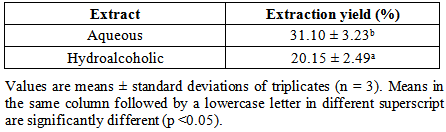
Extraction is the first step in the analysis of medicinal plants to obtain the desired chemical constituents from plant materials. The extraction efficiency will depend on the solvent with varying polarity, pH, temperature, extraction time, and sample composition 46, 47. Table 1 shows the yield percentages of T. zebrina extracts, where the aqueous extract obtained 31.10% yield, while the hydroalcoholic extract at 70% presented 20.15%. According to the statistical analysis, there are significant differences. The values exceed those reported by 48 in a methanolic extract of the same species, indicating a 6.18% extraction yield. This shows that the extraction yield depends on the polarity of the solvent 41, likewise, the yields are variable and depend on their composition, place of development, part of the plant under study (root, leaf, stem, fruit), as well as the type and conditions of extraction 49.
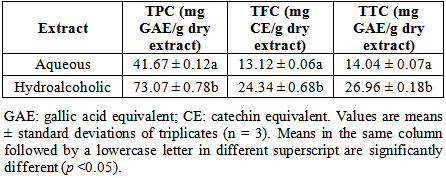
As shown in Table 2, the TPC (expressed in mg gallic acid equivalents per gram of dry extract), was higher for the hydroalcoholic extract compared to the aqueous extract, with values of 73.07 ± 0.78 and 41.67 ± 0.12 mg EAG/ g dry extract, respectively. Statistical analysis showed significant differences (p < 0.05) between both extracts. Moreover, the values obtained agree with previous research, indicating the presence of phenolic compounds in extracts of T. zebrina leaves. Cheah et al. 48 reported 33.5 mg GAE/g in methanolic extracts. Sanchez-Chino et al. 25 obtained 146.35 and 88.38 mg EAG/g of sample in 80% aqueous and ethanolic extracts, respectively. Olivo-Vidal et al. 50 indicated a concentration of 70.2 and 47.2 mg EAG/g in 80% ethanolic and aqueous extracts, respectively. While Silva et al. 51 reported a concentration of 67.68 ± 0.12 mg EAG/g in methanolic extracts. According to aforementioned, the highest concentration tends to occur in ethanolic extracts, this may be due to the possible formation of complexes of some phenolic compounds, which can be higher in molecular weight than phenols present in aqueous extracts 46. It has also been reported that the duration of extraction plays an important role, because after 48 h all the cell walls are destroyed, so that all the plant material is present in very small particles 52. In addition, phenolic compounds have a wide spectrum of biological effects, being related to antioxidant, antimicrobial, anti-inflammatory, and antihypertensive activities, among others. Phenols can be classified according to different systems, but they all have an aromatic ring with at least one hydroxyl substituent. The number and position of hydroxyl groups in the chemical structure determine the potential of phenolic compounds as antioxidant molecules 53.
Table 2 shows the TFC (expressed in mg catechin equivalents per gram of dry extract). The hydroalcoholic extract obtained the highest concentration before the aqueous extract (24.34 ± 0.68 and 13.12 ± 0.06 mg EC/G dry extract, respectively). The analysis showed significant differences (p < 0.05) between both extracts. Previous research has verified the presence of flavonoids in T. zebrina species in different extracts. Authors such as 48, reported 9.4 ± 1.06 mg EC/ g of extract in methanolic extracts. While 31 also obtained outstanding results about the quantification of flavonoids, however, the units in which they reported them are different from those used in this study, so a comparison is not possible. Olivo-Vidal et al. 50 have reported the presence of flavonoids in 80% ethanolic and aqueous extracts, with concentrations of 16.8 and 21.1 mg EC/g, respectively. However, genetic diversity and biological, environmental, and seasonal variations can significantly affect the flavonoid content of plants 54. These compounds constitute the main group of phenolic compounds 53 and possess a wide spectrum of biological activities including antioxidant and free radical scavenging properties 55, as they could form complexes with metal ions and act as antioxidants and bind to proteins such as structural proteins and enzymes 56. This antioxidant activity depends on the presence, number, and position of hydroxyl groups in the chemical structure of these compounds 57.
As well as flavonoids and total phenols, TTC was higher in the hydroalcoholic extract, with a concentration of 14.04 ± 0.07 mg EAG/g dry extract, while the aqueous extract presented 26.96 ± 0.18 mg EAG/g dry extract (Table 2). Statistical analysis showed significant differences (p < 0.05) between the two extracts. Few investigations have carried out the quantification of tannins in extracts of the genus Tradescantia. For example, 31 obtained a significant value (57.6 mg EAT/100 g in terms of fresh weight) but reported in units different from those presented in this study. On the other hand, authors such as 32 and 58 have identified tannins in species of the same genus, although qualitatively together with other phytochemical compounds. The importance of these compounds lies in the fact that they possess antimicrobial activity, through the inactivation of adhesins, cell envelope, enzymes, and different transport proteins 59. Until this moment, these results are considered the first ones obtained in aqueous and hydroalcoholic extracts of the species T. zebrina indicating a new line of research for a better extraction of these compounds, and thus develop novel pharmaceuticals.
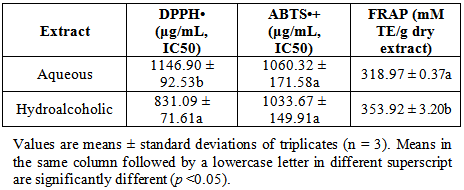
3.3. Antioxidant ActivitiesThe DPPH• radical scavenging activity is shown in Table 3. The hydroalcoholic extract (IC50 831.09 ± 71.61 µg/mL) showed more effective radical scavenging activity compared to in the aqueous extract (IC50 1146.90 ± 92.53 µg/mL). The results show significant differences between the antioxidant activity of both extracts (p < 0.05). The IC50 indicates half of the maximum inhibitory concentration 60 of a compound is inversely related to its antioxidant capacity, as it expresses the amount of antioxidant needed to decrease the concentration of the radical by 50%, which is obtained by interpolation of a linear regression to decrease the concentration of the radical by 50%, which is obtained by interpolation of a linear regression analysis 61. That is, a lower IC50 indicates a higher antioxidant activity of a compound.
Research by 31, 48 and 51 proved the antioxidant activity of methanolic extracts of T. zebrina leaves, demonstrating the ability of the species to inhibit DPPH• radicals. However, these results have been reported in percentages and not in IC50 µg/mL units. It is important to recognize that comparison of antioxidant values between different authors is not straightforward, given the wide variety of antioxidant assays available, the potential incompatibility between the same plant species grown at different conditions, and minor modifications to the assays that however, made them less comparable 62. Furthermore, the difference in efficacy in capturing the DPPH• radical between extracts is due to the existence of phenolic and polyphenolic compounds with different polarities and chemical characteristics, depending on the characteristics of the solvent used 63.
Table 3 shows the results of the ABTS•+ assay. Both the hydroalcoholic and aqueous extracts obtained similar concentrations, with an IC50 of 1033.7 ± 149.91 and 1060.32 ± 171.58 µg/mL, respectively. Furthermore, they did not present significant differences (p > 0.05). Highlighting that the results obtained may be very high values due to the extraction method used, as it is carried out by conventional methods, which implies some inconveniences before the non-conventional methods used in other investigations.
The FRAP assay results (Table 3) show significant differences between the antioxidant activity of the extracts (p < 0.05). The hydroalcoholic extract showed a higher antioxidant capacity (353.92 ± 3.20 mM TE/ g dry extract) followed by the aqueous extract (318.97 ± 0.37 mM TE/ g dry extract). Generally, reducing properties are associated with compounds contained in a sample capable of donating hydrogen atoms to break free radical chains 55. According to an investigation by 31, methanolic extracts of T. zebrina achieved the highest ferric reducing power against the antioxidant capacity of five species of the Commelinaceae family. Therefore, our results indicate that aqueous and hydroalcoholic extracts of T. zebrina possess the ferric ion reducing capacity, so these results could indicate a new line of research.
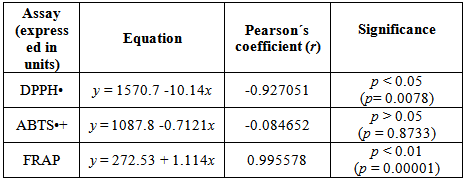
3.4. Correlation between Antioxidant Activity and Total Phenolic ContentMany investigations have correlated the activity of phenolic compounds with the antioxidant properties of plants 64. In this work, Pearson's correlation coefficient was significant between TPC and antioxidant activity assays (Table 4). However, the coefficients were low between TPC and ABTS assays (r = -0.0844), and high for DPPH and FRAP assays (r = -0.9270 and r = 0.9955).
Negative values of the correlation coefficient indicate that the lower the IC50 values, the higher the antioxidant activity 41. Moreover, the antioxidant activity of the extracts does not depend only on the vegetal material, but also on the interaction of the phenolic compounds present in the sample, as well as on their structure and concentration 65, 66. Thus, it is proved that the species has low antioxidant activity, having very high IC50 values.
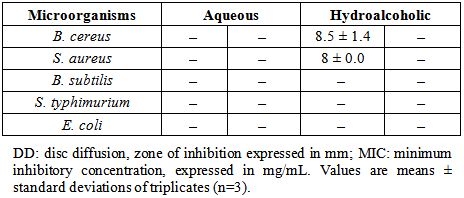
3.5. Antibacterial ActivityThe antibacterial activity of the aqueous and hydroalcoholic extracts of T. zebrina was evaluated by the disc diffusion method (DD) and the minimum inhibitory concentration (MIC) versus Gram-positive (B. cereus, S. aureus and B. subtilis) and Gram-negative (S. typhimurium and E. coli) bacteria. However, only the hydroalcoholic extracts achieved a zone of inhibition against B. cereus and S. aureus bacteria, with 8.5 ± 1.4 and 8 ± 0.0 mm in diameter, respectively (Table 5). However, the bacteria did not show susceptibility to the extracts by the MIC method. These results agree with those reported by 67, who analyzed the antibacterial capacity of ethanolic extracts against several Gram-positive and Gram-negative bacteria, obtaining only the inhibition of S. aureus with a halo of 14.2 mm in diameter. Thus, a null susceptibility of Gram-negative bacteria can be attributed to the higher natural permeability of the bacterial cell wall 68. In addition, the results obtained may be due to seasonal interference, seeding process and sample collection 51. It should be mentioned that the plant was obtained from a local market, so the time and storage conditions of the collected specimens until pretreatment are unknown.
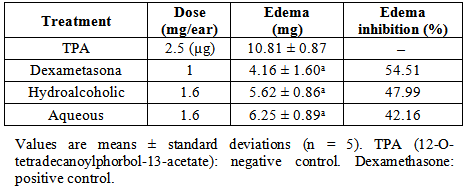
The results indicate that the species has anti-inflammatory activity. The application of the aqueous and hydroalcoholic extracts of T. zebrina was performed at a dose of 1.6 mg/ear, achieving 47.99 % and 42.16 % inhibition of edema, respectively. These values are approximately the percentage obtained by the reference agent dexamethasone (Table 6). According to the statistical analyses, there are no significant differences (p > 0.05). It is important to emphasize that these results are the first performed in the species with the TPA model. The TPA model of ear inflammation is useful for screening potential topical anti-inflammatory compounds or botanical extracts that act at a variety of levels 69. Because it promotes mast cell infiltration with the release of mediators that increase vascular permeability and promote neutrophil influx 70. Although the anti-inflammatory potential of T. zebrina has been previously analyzed, 25 evaluated ethanolic and aqueous extracts of T. zebrina, through erythrocyte membrane stability and protection from thermal denaturation of albumin, obtaining positive and significant values, thus proving the anti-inflammatory activity that this species possesses. Baghalpour et al. 71, prepared ethyl acetate, n-hexane and chloroform fractions from an ethanolic extract to evaluate the anti-inflammatory potential by formalin and carrageenan tests, indicating positive results to this test. Likewise, it has been proved that other species of the Commelinaceae family have this potential. Ethanolic extracts at 80% of T. fluminensis have been evaluated by 72 through the egg albumin-induced edema model, demonstrating a dose-dependent inhibition of inflammation and proving its anti-inflammatory capacity.
Our results indicate that T. zebrina possesses anti-inflammatory activity. According to 72 the extracts could have elicited the anti-inflammatory activity by inhibiting the release or action of serotonin or histamine, because these are inflammatory mediators that are released in response to the inflammatory inducer. Also, the anti-inflammatory effects can be attributed to phytochemicals present in the leaves of the plant, previous studies have shown that, compounds such as tannins and flavonoids, possess anti-inflammatory activities 73, 74, 75. But for a greater understanding of the mechanisms by which the bioactive components of T. zebrina act, further studies are suggested.
The present investigation revealed that the aqueous and hydroalcoholic extracts of T. zebrina Bosse leaves possess phytochemicals such as phenols, flavonoids, and tannins with important biological and pharmacological activities, although the hydroalcoholic extracts had the highest values. Although, in this case, the extracts showed antibacterial activity against two of the five strains used, it is proved that the species can inhibit bacteria such as B. cereus and S. aureus. However, relevant results were obtained against the anti-inflammatory activity with the TPA method of ear inflammation, with values close to the reference drug used. Therefore, in-depth research is required for the extraction of bioactive compounds that represent a development of new drugs to treat inflammation.
The authors declare that there are no conflicts of interest.
The authors thank Dr. Nelly del Carmen Jiménez Pérez for the taxonomic identification of the plant in the Herbarium of the Universidad Juárez Autónoma de Tabasco (UJAT).
Acknowledgments to CONACyT for the financial support granted to Sebastian Alberto Ramos-Arcos (postgraduate scholarship number 745219), and to the program of Doctorado en Ciencias en Ecología y Manejo de Sistemas Tropicales number 002283 of Universidad Juárez Autónoma de Tabasco.
We also thank Dr. José Rodolfo Velázquez Martínez for providing the laboratory facilities for the experiments.
| [1] | Bhattacharjee, T., Sen, S., Chakraborty, R., Maurya, P.K., Chattopadhyay, A. Herbal Medicine in India: Indigenous Knowledge, Practice, Innovation and its Value, Springer: Singapore, 2020, 101–115. | ||
| In article | View Article | ||
| [2] | Sen, S., Chakraborty, R. Revival, “Modernization and Integration of Indian Traditional Herbal Medicine in Clinical Practice: Importance, Challenges and Future”, Journal of Traditional and Complementary Medicine, 2017, 7, 234–244. | ||
| In article | View Article PubMed | ||
| [3] | Pan, S.Y., Litscher, G., Gao, S.H., Zhou, S.F., Yu, Z.L., Chen, H.Q., Zhang, S.F., Tang, M.K., Sun, J.N., Ko, K.M., “Historical Perspective of Traditional Indigenous Medical Practices: The Current Renaissance and Conservation of Herbal Resources”, Evidence-Based Complementary and Alternative Medicine. 2014, 20. | ||
| In article | View Article PubMed | ||
| [4] | Sen, S., Chakraborty, R., De, B., Ganesh, T., Raghavendra, H.G., Debnath, S., “Analgesic and anti-inflammatory herbs: a potential source of modern medicine”, International Journal of Pharmaceutical Sciences and Research, 2010, 1(11), 32–34. | ||
| In article | |||
| [5] | Mgbeahuruike, E.E., Yrjönen, T., Vuorela, H., Holm, Y., “Bioactive Compounds from Medicinal Plants: Focus on Piper Species”, South African Journal of Botany, 2017, 112, 54–69. | ||
| In article | View Article | ||
| [6] | Rodríguez-Yoldi, M.J., “Anti-Inflammatory and Antioxidant Properties of Plant Extracts”, Antioxidants, 2021, 10, 921. | ||
| In article | View Article PubMed | ||
| [7] | Reid, A.-M., Oosthuizen, C.B., Fibrich, B.D., Twilley, D., Lambrechts, I.A., de Canha, M.N., Rademan, S., Lall, N., “Chapter 1 - Traditional Medicine: The Ancient Roots of Modern Practice”, Medicinal Plants for Holistic Health and Well-Being; Lall, N., Ed.; Academic Press, 2018; pp. 1–11. | ||
| In article | View Article | ||
| [8] | Wyk, B.E. van, Wink, M, “Medicinal Plants of the World”, CABI, 2018. | ||
| In article | View Article | ||
| [9] | Agbor, G.A., Moumbegna, P., Oluwasola, E.O., Nwosu, L.U., Njoku, R.C., Kanu, S., Emekabasi, E.I., Akin, F., Obasi, A.P., Abudei, F.A., “Antioxidant Capacity of Some Plants Foods and Beverages Consumed in the Eastern Region of Nigeria”, African Journal of Traditional, Complementary and Alternative Medicines, 2011, 8, 362‐369. | ||
| In article | View Article PubMed | ||
| [10] | Vayalil, P.K., “Antioxidant and Antimutagenic Properties of Aqueous Extract of Date Fruit (Phoenix Dactylifera L. Arecaceae)”, J. Agric. Food Chem. 2002, 50, 610–617. | ||
| In article | View Article PubMed | ||
| [11] | Vinson, J.A., Zubik, L., Bose, P., Samman, N., Proch, J., “Dried Fruits: Excellent in Vitro and in Vivo Antioxidants”, Journal of the American College of Nutrition, 2005, 24, 44–50. | ||
| In article | View Article PubMed | ||
| [12] | Del Rio, D.; Costa, L.G.; Lean, M.E.J.; Crozier, A., “Polyphenols and Health: What Compounds Are Involved?” Nutrition, Metabolism and Cardiovascular Diseases, 2010, 20, 1–6. | ||
| In article | View Article PubMed | ||
| [13] | Dai, J., Mumper, R.J., “Plant Phenolics: Extraction, Analysis and Their Antioxidant and Anticancer Properties”, Molecules, 2010, 15, 7313–7352. | ||
| In article | View Article PubMed | ||
| [14] | Liu, L., Zubik, L., Collins, F.W., Marko, M., Meydani, M., “The Antiatherogenic Potential of Oat Phenolic Compounds”, Atherosclerosis, 2004, 175, 39–49. | ||
| In article | View Article PubMed | ||
| [15] | Penna, C., Marino, S., Vivot, E., Cruañes, M.C., de D. Muñoz, J., Cruañes, J., Ferraro, G., Gutkind, G., Martino, V., “Antimicrobial Activity of Argentine Plants Used in the Treatment of Infectious Diseases. Isolation of Active Compounds from Sebastiania Brasiliensis”, Journal of Ethnopharmacology, 2001, 77, 37–40. | ||
| In article | View Article PubMed | ||
| [16] | Puupponen-Pimiä, R., Nohynek, L., Meier, C., Kähkönen, M., Heinonen, M., Hopia, A., Oksman-Caldentey, K.M., “Antimicrobial Properties of Phenolic Compounds from Berries”, Journal of Applied Microbiology, 2001, 90, 494–507. | ||
| In article | View Article PubMed | ||
| [17] | Rauha, J.P., Remes, S., Heinonen, M., Hopia, A., Kähkönen, M., Kujala, T., Pihlaja, K., Vuorela, H., Vuorela, P., “Antimicrobial Effects of Finnish Plant Extracts Containing Flavonoids and Other Phenolic Compounds”, International Journal of Food Microbiology, 2000, 56, 3–12. | ||
| In article | View Article PubMed | ||
| [18] | Wang, J., Mazza, G., “Effects of Anthocyanins and Other Phenolic Compounds on the Production of Tumor Necrosis Factor α in LPS/IFN-γ-Activated RAW 264.7 Macrophages”, J. Agric. Food Chem. 2002, 50. | ||
| In article | View Article PubMed | ||
| [19] | Stanković, N., Mihajilov-Krstev, T., Zlatković, B., Stankov-Jovanović, V., Mitić, V., Jović, J., Čomić, L., Kocić, B., Bernstein, N., “Antibacterial and Antioxidant Activity of Traditional Medicinal Plants from the Balkan Peninsula”, NJAS - Wageningen Journal of Life Sciences, 2016, 78, 21–28. | ||
| In article | View Article | ||
| [20] | Zehiroglu, C., Ozturk Sarikaya, S.B., “The Importance of Antioxidants and Place in Today’s Scientific and Technological Studies”, J Food Sci Technol, 2019, 56, 4757–4774. | ||
| In article | View Article PubMed | ||
| [21] | Lobo, V., Patil, A., Phatak, A., Chandra, N., “Free Radicals, Antioxidants and Functional Foods: Impact on Human Health”, Pharmacogn Rev, 2010, 4, 118–126. | ||
| In article | View Article PubMed | ||
| [22] | Yang, S., Lian, G., “ROS and Diseases: Role in Metabolism and Energy Supply”, Mol Cell Biochem, 2020, 467, 1–12. | ||
| In article | View Article PubMed | ||
| [23] | Faden, R.B., “The Author and Typification of Tradescantia Zebrina (Commelinaceae)”, Kew Bull, 2008, 63, 679–680. | ||
| In article | View Article | ||
| [24] | Bosse, J.F.W., Vollständiges handbuch der blumengärtnerei: oder, Genaue beschreibung fast aller in Deutschland bekannt gewordenen zierpflanzen, mit einschluss derjenigen sträucher und vorzüglichern zierbäume, welche zu lust-anlagen dienen; Im verlage der Hahn’schen hofbuchhandlung, 1849. | ||
| In article | |||
| [25] | Sánchez-Chino, X.M., Ruíz-Ruíz, J.C., Salazar-Vega, M., Mendez-Flores, O., Olivo-Vidal, Z.E., “Compuestos Fenolicos y Actividad Antiinflamatoria in Vitro, de Extractos de Tradescantia Zebrina”, Investigaciones Científicas Y Agrotecnológicas Para La Seguridad Alimentaria; INIFAP, 2019; p. 451. | ||
| In article | |||
| [26] | Cano, J.H., Volpato, G., “Herbal Mixtures in the Traditional Medicine of Eastern Cuba”, Journal of Ethnopharmacology, 2004, 90, 293–316. | ||
| In article | View Article PubMed | ||
| [27] | Dash, G.K., Swe, M., Mathews, A., “Tradescantia Zebrina: A Promising Medicinal Plant”, Indo American Journal of Pharmaceutical Sciences, 2017, 04, 3498–3502. | ||
| In article | |||
| [28] | Amaral, F.M.M., Ribeiro, M.N.S., Barbosa-Filho, J.M., Reis, A.S., Nascimento, F.R.F., Macedo, R.O., “Plants and Chemical Constituents with Giardicidal Activity”, Rev. bras. Farmacogn, 2006, 16, 696–720. | ||
| In article | View Article | ||
| [29] | Palacios R., A.M., Ramírez M., S.E., Aceleración de La Cicatrización Post-Extracción Dentaria Mediante El Uso de Zebringel, En Pacientes Adultos Atendidos En El Área de Cirugía de La Facultad de Odontología de La Universidad de El Salvador, Durante El Período Del Mes de Octubre a noviembre de 1998., Universidad de El Salvador: El Salvador, 1999. | ||
| In article | |||
| [30] | Ramos, A., Visozo, A., Piloto, J., Garcı́a, A., Rodrı́guez, C.A., Rivero, R., “Screening of Antimutagenicity via Antioxidant Activity in Cuban Medicinal Plants”, Journal of Ethnopharmacology, 2003, 87, 241–246. | ||
| In article | View Article PubMed | ||
| [31] | Tan, J.B.L., Yap, W.J., Tan, S.Y., Lim, Y.Y., Lee, S.M., “Antioxidant Content, Antioxidant Activity, and Antibacterial Activity of Five Plants from the Commelinaceae Family”, Antioxidants, 2014, 3, 758–769. | ||
| In article | View Article PubMed | ||
| [32] | Alaba, C.S.M., Chichioco-Hernandez, C.L., “15–Lipoxygenase Inhibition of Commelina Benghalensis, Tradescantia Fluminensis, Tradescantia Zebrina”, Asian Pacific Journal of Tropical Biomedicine, 2014, 4, 184–188. | ||
| In article | View Article PubMed | ||
| [33] | Ramírez Cárdenas, A., Isaza Mejía, G., Pérez Cárdenas, J.E., “Especies Vegetales Investigadas por sus Propiedades Antimicrobianas, Inmunomoduladoras e Hipoglicemiantes en el Departamento de Caldas (Colombia, Sudamérica)”, Biosalud 2013, 12, 59–82. | ||
| In article | |||
| [34] | Singleton, V.L., Orthofer, R., Lamuela-Raventós, R.M., Analysis of Total Phenols and Other Oxidation Substrates and Antioxidants by Means of Folin-Ciocalteu Reagent. In Methods in Enzymology; Oxidants and Antioxidants Part A, Academic Press, 1999; Vol. 299, pp. 152–178. | ||
| In article | View Article | ||
| [35] | Barros, L., Heleno, S.A., Carvalho, A.M., Ferreira, I.C.F.R., “Lamiaceae Often Used in Portuguese Folk Medicine as a Source of Powerful Antioxidants: Vitamins and Phenolics”. LWt - Food Science and Technology, 2010, 544–550. | ||
| In article | View Article | ||
| [36] | Makkar, H.P.S., Quantification of Tannins in Tree and Shrub Foliage: A Laboratory Manual, Springer Science & Business Media, 2003. | ||
| In article | View Article | ||
| [37] | Brand-Williams, W.; Cuvelier, M.E.; Berset, C., “Use of a Free Radical Method to Evaluate Antioxidant Activity”, LWT - Food Science and Technology, 1995, 28, 25–30. | ||
| In article | View Article | ||
| [38] | Re, R., Pellegrini, N., Proteggente, A., Pannala, A., Yang, M., Rice-Evans, C., “Antioxidant Activity Applying an Improved ABTS Radical Cation Decolorization Assay”, Free Radic Biol Med, 1999, 26, 1231–1237. | ||
| In article | View Article PubMed | ||
| [39] | Benzie, I.F., Strain, J.J., Ferric Reducing/Antioxidant Power Assay: Direct Measure of Total Antioxidant Activity of Biological Fluids and Modified Version for Simultaneous Measurement of Total Antioxidant Power and Ascorbic Acid Concentration. Methods Enzymol 1999, 299, 15–27. | ||
| In article | View Article PubMed | ||
| [40] | Abes, Z., El Abed, N., Amri, M., Kharat, M., Sami, B.H.A., “Antioxidant and Antibacterial Activities of the Parasitic Plants Orobanche Foetida and Orobanche Crenata Collected on Faba Bean in Tunisia”, Journal of Animal and Plant Sciences, 2014, 24, 310–314. | ||
| In article | |||
| [41] | Sánchez Zárate, A., Gallegos, M.A., Carrera-Lanestosa, A., Lopez Martinez, S., Chay-Canul, A., Rivera, J., Velázquez-Martínez, J., “Antioxidant and Antibacterial Activity of Aqueous, Ethanolic and Acetonic Extracts of Pimenta Dioica L. Leaves”, International Food Research Journal, 2020, 27, 825–834. | ||
| In article | |||
| [42] | Manandhar, S., Luitel, S., Dahal, R.K., “In Vitro Antimicrobial Activity of Some Medicinal Plants against Human Pathogenic Bacteria”, Journal of Tropical Medicine, 2019. | ||
| In article | View Article PubMed | ||
| [43] | Balouiri, M., Sadiki, M., Ibnsouda, S.K., “Methods for in Vitro Evaluating Antimicrobial Activity: A Review”, J Pharm Anal, 2016, 6, 71–79. | ||
| In article | View Article PubMed | ||
| [44] | Sanchez, P.M., Villarreal, M.L., Herrera-Ruiz, M., Zamilpa, A., Jiménez-Ferrer, E., Trejo-Tapia, G., “In Vivo Anti-Inflammatory and Anti-Ulcerogenic Activities of Extracts from Wild Growing and in Vitro Plants of Castilleja Tenuiflora Benth. (Orobanchaceae)”, Journal of Ethnopharmacology, 2013, 150, 1032–1037. | ||
| In article | View Article PubMed | ||
| [45] | Payá, M., Ferrándiz, M.L., Sanz, M.J., Bustos, G., Blasco, R., Rios, J.L., Alcaraz, M.J., “Study of the Antioedema Activity of Some Seaweed and Sponge Extracts from the Mediterranean Coast in Mice”, Phytotherapy Research, 1993, 7, 159–162. | ||
| In article | View Article | ||
| [46] | Do, Q.D., Angkawijaya, A.E., Tran-Nguyen, P.L., Huynh, L.H., Soetaredjo, F.E., Ismadji, S., Ju, Y.H., “Effect of Extraction Solvent on Total Phenol Content, Total Flavonoid Content, and Antioxidant Activity of Limnophila Aromatica”, J Food Drug Anal, 2014, 22, 296–302. | ||
| In article | View Article PubMed | ||
| [47] | Gullón, B., Gullón, P., Lú-Chau, T.A., Moreira, M.T., Lema, J.M., Eibes, G., “Optimization of Solvent Extraction of Antioxidants from Eucalyptus Globulus Leaves by Response Surface Methodology: Characterization and Assessment of Their Bioactive Properties”, Industrial Crops and Products, 2017, 108, 649–659. | ||
| In article | View Article | ||
| [48] | Cheah, S.Y., Magdalene, C.Y., Eldwin Lim, C.Z., Wong, M.H., Amir, S., Daniel, S., Liow, Y.C., Ketnipha, S., Karenjit, K., Gabriel, G.A., “In Vitro Antioxidant and Acetylcholinesterase Inhibitory Activities of Tradescantia Zebrina”, Research Journal of Pharmaceutical, Biological and Chemical Sciences, 2017, 8, 82–87. | ||
| In article | |||
| [49] | Robles-García, M.A., Aguilar, A.J., Gutiérrez-Lomelí, M., Rodríguez-Félix, F., Del-Río, J.A.M., Guerrero-Medina, P.J., Madrigal-Pulido, J.A., Del-Toro-Sánchez, C.L., “Identificación Cualitativa de Metabolitos Secundarios y Determinación de la Citotoxicidad de Extractos de Tempisque (Sideroxylum Capiri Pittier)/ Qualitative Identification of Secondary Metabolites and Cytotoxicity Determination of Tempisque Extracts” Sid. Biotecnia, 2016, 18, 3–8. | ||
| In article | View Article | ||
| [50] | Olivo-Vidal, Z., Ruiz Ruiz, J., Mayday, V.S., Irecta-Nájera, C., Ochoa-Díaz-López, H., Sánchez, X., “Pharmacological Potential of Tradescantia Zebrina Leaf”, Journal of Bioengineering and Biomedicine Research, 2020, 4, 31–37. | ||
| In article | |||
| [51] | Silva, V.C. da, Magalhães, B.E.A. de, Magalhães, T.B. dos S., Guimarães, E.T., Guedes, A. da S., Mota, M.D., Santos, W.N.L. dos, Cerqueira, B.A.V., Júnior, A. de F.S., “Determination of Phenolic Bioactive Compounds and Evaluation of the Antioxidant and Hemolytic Activities in the Methanolic Extracts of Tradescantia Zebrina”, Revista Colombiana de Ciencias Químico-Farmacéuticas, 2022, 51. | ||
| In article | View Article | ||
| [52] | Kaurinovic, B., Popovic, M., Vlaisavljevic, S., Trivic, S., “Antioxidant Capacity of Ocimum Basilicum L. and Origanum Vulgare L. Extracts”, Molecules, 2011, 16, 7401–7414. | ||
| In article | View Article PubMed | ||
| [53] | Cosme, P., Rodríguez, A.B., Espino, J., Garrido, M., “Plant Phenolics: Bioavailability as a Key Determinant of Their Potential Health-Promoting Applications”, Antioxidants, 2020, 9, 1263. | ||
| In article | View Article PubMed | ||
| [54] | Kumar, V., Roy, B.K., “Population Authentication of the Traditional Medicinal Plant Cassia Tora L. Based on ISSR Markers and FTIR Analysis”, Sci Rep, 2018, 8, 10714. | ||
| In article | View Article PubMed | ||
| [55] | Hammad, H.M., Albu, C., Matar, S.A., Litescu, S.C., Jaber, H.I.A., Abualraghib, A.S., Afifi, F.U., “Biological Activities of the Hydro-Alchoholic and Aqueous Extracts of Achillea Biebersteinii Afan. (Asteraceae) Grown in Jordan”, AJPP, 2013, 7, 1686–1694. | ||
| In article | View Article | ||
| [56] | Aruna, A., Nandhini, R., Karthikeyan, V., Bose, P., Vijayalakshmi, K., “Comparative Anti-Diabetic Effect of Methanolic Extract of Insulin Plant (Costus Pictus) Leaves and Its Silver Nanoparticle”, Indo am J Pharm Res, 2014, 4, 3217–3230. | ||
| In article | View Article | ||
| [57] | Giada, M. de L.R., “Food Phenolic Compounds: Main Classes, Sources and Their Antioxidant Power. In Oxidative Stress and Chronic Degenerative Diseases - A Role for Antioxidants”, IntechOpen, 2013. | ||
| In article | |||
| [58] | Boonprasert, K., Plengsuriyakarn, T., Tayana, N., Kiettinun, S., Na-Bangchang, K., “Phytochemistry and Toxicity of Crude Water Soluble Extract of Tradescantia Fluminensis in Wistar Rats, Proceedings for Annual Meeting of The Japanese Pharmacological Society WCP2018 (The 18th World Congress of Basic and Clinical Pharmacology)” pp. 1-9. Japanese Pharmacological Society. | ||
| In article | View Article | ||
| [59] | Sen, T., Samanta, S.K., Medicinal Plants, Human Health and Biodiversity: A Broad Review. In Biotechnological Applications of Biodiversity; Mukherjee, J., Ed.; Advances in Biochemical Engineering/Biotechnology; Springer: Berlin, Heidelberg, 2015; pp. 59-110. | ||
| In article | View Article PubMed | ||
| [60] | Yung-Chi, C., Prusoff, W.H., “Relationship between the Inhibition Constant (KI) and the Concentration of Inhibitor Which Causes 50 per Cent Inhibition (I50) of an Enzymatic Reaction”, Biochemical Pharmacology, 1973, 22, 3099–3108. | ||
| In article | View Article PubMed | ||
| [61] | Liu, S.C., Lin, J.T., Wang, C.K., Chen, H.Y., Yang, D.J., “Antioxidant Properties of Various Solvent Extracts from Lychee (Litchi Chinenesis Sonn.) Flower”, Food Chem 2009, 114, 577–581. | ||
| In article | View Article | ||
| [62] | Tan, J.B.L., Lim, Y.Y., “Critical Analysis of Current Methods for Assessing the in Vitro Antioxidant and Antibacterial Activity of Plant Extracts”, Food Chemistry, 2015, 172, 814–822. | ||
| In article | View Article PubMed | ||
| [63] | Ben Yakoub, A.R., Abdehedi, O., Jridi, M., Elfalleh, W., Nasri, M., Ferchichi, A., “Flavonoids, Phenols, Antioxidant, and Antimicrobial Activities in Various Extracts from Tossa Jute Leave (Corchorus Olitorus L.)”, Industrial Crops and Products, 2018, 118, 206–213. | ||
| In article | View Article | ||
| [64] | Thaipong, K., Boonprakob, U., Crosby, K., Cisneros-Zevallos, L., Hawkins Byrne, D., “Comparison of ABTS, DPPH, FRAP, and ORAC Assays for Estimating Antioxidant Activity from Guava Fruit Extracts”, Journal of Food Composition and Analysis, 2006, 19, 669–675. | ||
| In article | View Article | ||
| [65] | Craft, B.D., Kerrihard, A.L., Amarowicz, R., Pegg, R.B., “Phenol-Based Antioxidants and the In Vitro Methods Used for Their Assessment”, Comprehensive Reviews in Food Science and Food Safety, 2012, 11, 148–173. | ||
| In article | View Article | ||
| [66] | Hayouni, E.A., Abedrabba, M., Bouix, M., Hamdi, M., “The Effects of Solvents and Extraction Method on the Phenolic Contents and Biological Activities in Vitro of Tunisian Quercus Coccifera L. and Juniperus Phoenicea L. Fruit Extracts”, Food Chemistry, 2007, 105, 1126–1134. | ||
| In article | View Article | ||
| [67] | Rocha, B.S. da., Nobre, J. da C.N., Freitas, A.D.G. de., “Avaliação do Potencial Antimicrobiano dos Extratos da Tradescantia Zebrina Heynh”, Revista Foco, 2023, 16, e1140–e1140. | ||
| In article | View Article | ||
| [68] | Russell, A.D., “Bacterial Resistance to Disinfectants: Present Knowledge and Future Problems”, Journal of Hospital Infection, 1999, 43, S57–S68. | ||
| In article | View Article PubMed | ||
| [69] | Bralley, E.E., Greenspan, P., Hargrove, J.L., Wicker, L., Hartle, D.K., “Topical Anti-Inflammatory Activity of Polygonum Cuspidatum Extract in the TPA Model of Mouse Ear Inflammation”, Journal of Inflammation, 2008, 5, 1. | ||
| In article | View Article PubMed | ||
| [70] | Rao, T.S., Currie, J.L., Shaffer, A.F., Isakson, P.C., “Comparative Evaluation of Arachidonic Acid (AA)- and Tetradecanoylphorbol Acetate (TPA)-Induced Dermal Inflammation”, Inflammation, 1993, 17, 723–741. | ||
| In article | View Article PubMed | ||
| [71] | Baghalpour, N., Ayatollahi, S.A., Naderi, N., Hosseinabadi, T., Taheri, Y., Mahroo-Bakhtiyari, J., Shinwari, Z., Khalil, A., Sharifi-Rad, J., “Antinociceptive and Anti-Inflammatory Studies on Tradescantia Zebrina”, Pakistan Journal of Botany, 2021, 53. | ||
| In article | View Article | ||
| [72] | Waweru, W.R., Osuwat, L.O., Mureithi, C.W., “Analgesic and Anti-Inflammatory Activity of Tradescantia Fluminensis Leaves Extract”, The Journal of Phytopharmacology, 2017, 6(1): 34-37. | ||
| In article | View Article | ||
| [73] | Ramesh, M., Nageshwar Rao, Y., Appa Rao, A.V.N., Prabhakar, M.C., Seshagiri Rao, C., Muralidhar, N., Madahava Reddy, B., “Antinociceptive and Anti-Inflammatory Activity of a Flavonoid Isolated from Caralluma Attenuata”, Journal of Ethnopharmacology, 1998, 62, 63–66. | ||
| In article | View Article PubMed | ||
| [74] | Liang, Y.C., Huang, Y.T., Tsai, S.H., Lin-Shiau, S.Y., Chen, C.F., Lin, J.K., “Suppression of Inducible Cyclooxygenase and Inducible Nitric Oxide Synthase by Apigenin and Related Flavonoids in Mouse Macrophages”, Carcinogenesis, 1999, 20, 1945–1952. | ||
| In article | View Article PubMed | ||
| [75] | Raj, N.K., Sripal, R.M., Chaluvadi, M.R., Krishna, D.R., “Bioflavonoids Classification, Pharmacological, Biochemical Effects and Therapeutic Potential”, Indian Journal of Pharmacology, 2001, 33, 2. | ||
| In article | |||
Published with license by Science and Education Publishing, Copyright © 2023 Sebastian Alberto Ramos-Arcos, Sugey López-Martínez, José R. Velázquez-Martínez, Yenny A. Gómez-Aguirre, Emmanuel Cabañas-García, Carlos M. Morales-Bautista and Minerva A. Hernandez-Gallegos
 This work is licensed under a Creative Commons Attribution 4.0 International License. To view a copy of this license, visit
http://creativecommons.org/licenses/by/4.0/
This work is licensed under a Creative Commons Attribution 4.0 International License. To view a copy of this license, visit
http://creativecommons.org/licenses/by/4.0/
| [1] | Bhattacharjee, T., Sen, S., Chakraborty, R., Maurya, P.K., Chattopadhyay, A. Herbal Medicine in India: Indigenous Knowledge, Practice, Innovation and its Value, Springer: Singapore, 2020, 101–115. | ||
| In article | View Article | ||
| [2] | Sen, S., Chakraborty, R. Revival, “Modernization and Integration of Indian Traditional Herbal Medicine in Clinical Practice: Importance, Challenges and Future”, Journal of Traditional and Complementary Medicine, 2017, 7, 234–244. | ||
| In article | View Article PubMed | ||
| [3] | Pan, S.Y., Litscher, G., Gao, S.H., Zhou, S.F., Yu, Z.L., Chen, H.Q., Zhang, S.F., Tang, M.K., Sun, J.N., Ko, K.M., “Historical Perspective of Traditional Indigenous Medical Practices: The Current Renaissance and Conservation of Herbal Resources”, Evidence-Based Complementary and Alternative Medicine. 2014, 20. | ||
| In article | View Article PubMed | ||
| [4] | Sen, S., Chakraborty, R., De, B., Ganesh, T., Raghavendra, H.G., Debnath, S., “Analgesic and anti-inflammatory herbs: a potential source of modern medicine”, International Journal of Pharmaceutical Sciences and Research, 2010, 1(11), 32–34. | ||
| In article | |||
| [5] | Mgbeahuruike, E.E., Yrjönen, T., Vuorela, H., Holm, Y., “Bioactive Compounds from Medicinal Plants: Focus on Piper Species”, South African Journal of Botany, 2017, 112, 54–69. | ||
| In article | View Article | ||
| [6] | Rodríguez-Yoldi, M.J., “Anti-Inflammatory and Antioxidant Properties of Plant Extracts”, Antioxidants, 2021, 10, 921. | ||
| In article | View Article PubMed | ||
| [7] | Reid, A.-M., Oosthuizen, C.B., Fibrich, B.D., Twilley, D., Lambrechts, I.A., de Canha, M.N., Rademan, S., Lall, N., “Chapter 1 - Traditional Medicine: The Ancient Roots of Modern Practice”, Medicinal Plants for Holistic Health and Well-Being; Lall, N., Ed.; Academic Press, 2018; pp. 1–11. | ||
| In article | View Article | ||
| [8] | Wyk, B.E. van, Wink, M, “Medicinal Plants of the World”, CABI, 2018. | ||
| In article | View Article | ||
| [9] | Agbor, G.A., Moumbegna, P., Oluwasola, E.O., Nwosu, L.U., Njoku, R.C., Kanu, S., Emekabasi, E.I., Akin, F., Obasi, A.P., Abudei, F.A., “Antioxidant Capacity of Some Plants Foods and Beverages Consumed in the Eastern Region of Nigeria”, African Journal of Traditional, Complementary and Alternative Medicines, 2011, 8, 362‐369. | ||
| In article | View Article PubMed | ||
| [10] | Vayalil, P.K., “Antioxidant and Antimutagenic Properties of Aqueous Extract of Date Fruit (Phoenix Dactylifera L. Arecaceae)”, J. Agric. Food Chem. 2002, 50, 610–617. | ||
| In article | View Article PubMed | ||
| [11] | Vinson, J.A., Zubik, L., Bose, P., Samman, N., Proch, J., “Dried Fruits: Excellent in Vitro and in Vivo Antioxidants”, Journal of the American College of Nutrition, 2005, 24, 44–50. | ||
| In article | View Article PubMed | ||
| [12] | Del Rio, D.; Costa, L.G.; Lean, M.E.J.; Crozier, A., “Polyphenols and Health: What Compounds Are Involved?” Nutrition, Metabolism and Cardiovascular Diseases, 2010, 20, 1–6. | ||
| In article | View Article PubMed | ||
| [13] | Dai, J., Mumper, R.J., “Plant Phenolics: Extraction, Analysis and Their Antioxidant and Anticancer Properties”, Molecules, 2010, 15, 7313–7352. | ||
| In article | View Article PubMed | ||
| [14] | Liu, L., Zubik, L., Collins, F.W., Marko, M., Meydani, M., “The Antiatherogenic Potential of Oat Phenolic Compounds”, Atherosclerosis, 2004, 175, 39–49. | ||
| In article | View Article PubMed | ||
| [15] | Penna, C., Marino, S., Vivot, E., Cruañes, M.C., de D. Muñoz, J., Cruañes, J., Ferraro, G., Gutkind, G., Martino, V., “Antimicrobial Activity of Argentine Plants Used in the Treatment of Infectious Diseases. Isolation of Active Compounds from Sebastiania Brasiliensis”, Journal of Ethnopharmacology, 2001, 77, 37–40. | ||
| In article | View Article PubMed | ||
| [16] | Puupponen-Pimiä, R., Nohynek, L., Meier, C., Kähkönen, M., Heinonen, M., Hopia, A., Oksman-Caldentey, K.M., “Antimicrobial Properties of Phenolic Compounds from Berries”, Journal of Applied Microbiology, 2001, 90, 494–507. | ||
| In article | View Article PubMed | ||
| [17] | Rauha, J.P., Remes, S., Heinonen, M., Hopia, A., Kähkönen, M., Kujala, T., Pihlaja, K., Vuorela, H., Vuorela, P., “Antimicrobial Effects of Finnish Plant Extracts Containing Flavonoids and Other Phenolic Compounds”, International Journal of Food Microbiology, 2000, 56, 3–12. | ||
| In article | View Article PubMed | ||
| [18] | Wang, J., Mazza, G., “Effects of Anthocyanins and Other Phenolic Compounds on the Production of Tumor Necrosis Factor α in LPS/IFN-γ-Activated RAW 264.7 Macrophages”, J. Agric. Food Chem. 2002, 50. | ||
| In article | View Article PubMed | ||
| [19] | Stanković, N., Mihajilov-Krstev, T., Zlatković, B., Stankov-Jovanović, V., Mitić, V., Jović, J., Čomić, L., Kocić, B., Bernstein, N., “Antibacterial and Antioxidant Activity of Traditional Medicinal Plants from the Balkan Peninsula”, NJAS - Wageningen Journal of Life Sciences, 2016, 78, 21–28. | ||
| In article | View Article | ||
| [20] | Zehiroglu, C., Ozturk Sarikaya, S.B., “The Importance of Antioxidants and Place in Today’s Scientific and Technological Studies”, J Food Sci Technol, 2019, 56, 4757–4774. | ||
| In article | View Article PubMed | ||
| [21] | Lobo, V., Patil, A., Phatak, A., Chandra, N., “Free Radicals, Antioxidants and Functional Foods: Impact on Human Health”, Pharmacogn Rev, 2010, 4, 118–126. | ||
| In article | View Article PubMed | ||
| [22] | Yang, S., Lian, G., “ROS and Diseases: Role in Metabolism and Energy Supply”, Mol Cell Biochem, 2020, 467, 1–12. | ||
| In article | View Article PubMed | ||
| [23] | Faden, R.B., “The Author and Typification of Tradescantia Zebrina (Commelinaceae)”, Kew Bull, 2008, 63, 679–680. | ||
| In article | View Article | ||
| [24] | Bosse, J.F.W., Vollständiges handbuch der blumengärtnerei: oder, Genaue beschreibung fast aller in Deutschland bekannt gewordenen zierpflanzen, mit einschluss derjenigen sträucher und vorzüglichern zierbäume, welche zu lust-anlagen dienen; Im verlage der Hahn’schen hofbuchhandlung, 1849. | ||
| In article | |||
| [25] | Sánchez-Chino, X.M., Ruíz-Ruíz, J.C., Salazar-Vega, M., Mendez-Flores, O., Olivo-Vidal, Z.E., “Compuestos Fenolicos y Actividad Antiinflamatoria in Vitro, de Extractos de Tradescantia Zebrina”, Investigaciones Científicas Y Agrotecnológicas Para La Seguridad Alimentaria; INIFAP, 2019; p. 451. | ||
| In article | |||
| [26] | Cano, J.H., Volpato, G., “Herbal Mixtures in the Traditional Medicine of Eastern Cuba”, Journal of Ethnopharmacology, 2004, 90, 293–316. | ||
| In article | View Article PubMed | ||
| [27] | Dash, G.K., Swe, M., Mathews, A., “Tradescantia Zebrina: A Promising Medicinal Plant”, Indo American Journal of Pharmaceutical Sciences, 2017, 04, 3498–3502. | ||
| In article | |||
| [28] | Amaral, F.M.M., Ribeiro, M.N.S., Barbosa-Filho, J.M., Reis, A.S., Nascimento, F.R.F., Macedo, R.O., “Plants and Chemical Constituents with Giardicidal Activity”, Rev. bras. Farmacogn, 2006, 16, 696–720. | ||
| In article | View Article | ||
| [29] | Palacios R., A.M., Ramírez M., S.E., Aceleración de La Cicatrización Post-Extracción Dentaria Mediante El Uso de Zebringel, En Pacientes Adultos Atendidos En El Área de Cirugía de La Facultad de Odontología de La Universidad de El Salvador, Durante El Período Del Mes de Octubre a noviembre de 1998., Universidad de El Salvador: El Salvador, 1999. | ||
| In article | |||
| [30] | Ramos, A., Visozo, A., Piloto, J., Garcı́a, A., Rodrı́guez, C.A., Rivero, R., “Screening of Antimutagenicity via Antioxidant Activity in Cuban Medicinal Plants”, Journal of Ethnopharmacology, 2003, 87, 241–246. | ||
| In article | View Article PubMed | ||
| [31] | Tan, J.B.L., Yap, W.J., Tan, S.Y., Lim, Y.Y., Lee, S.M., “Antioxidant Content, Antioxidant Activity, and Antibacterial Activity of Five Plants from the Commelinaceae Family”, Antioxidants, 2014, 3, 758–769. | ||
| In article | View Article PubMed | ||
| [32] | Alaba, C.S.M., Chichioco-Hernandez, C.L., “15–Lipoxygenase Inhibition of Commelina Benghalensis, Tradescantia Fluminensis, Tradescantia Zebrina”, Asian Pacific Journal of Tropical Biomedicine, 2014, 4, 184–188. | ||
| In article | View Article PubMed | ||
| [33] | Ramírez Cárdenas, A., Isaza Mejía, G., Pérez Cárdenas, J.E., “Especies Vegetales Investigadas por sus Propiedades Antimicrobianas, Inmunomoduladoras e Hipoglicemiantes en el Departamento de Caldas (Colombia, Sudamérica)”, Biosalud 2013, 12, 59–82. | ||
| In article | |||
| [34] | Singleton, V.L., Orthofer, R., Lamuela-Raventós, R.M., Analysis of Total Phenols and Other Oxidation Substrates and Antioxidants by Means of Folin-Ciocalteu Reagent. In Methods in Enzymology; Oxidants and Antioxidants Part A, Academic Press, 1999; Vol. 299, pp. 152–178. | ||
| In article | View Article | ||
| [35] | Barros, L., Heleno, S.A., Carvalho, A.M., Ferreira, I.C.F.R., “Lamiaceae Often Used in Portuguese Folk Medicine as a Source of Powerful Antioxidants: Vitamins and Phenolics”. LWt - Food Science and Technology, 2010, 544–550. | ||
| In article | View Article | ||
| [36] | Makkar, H.P.S., Quantification of Tannins in Tree and Shrub Foliage: A Laboratory Manual, Springer Science & Business Media, 2003. | ||
| In article | View Article | ||
| [37] | Brand-Williams, W.; Cuvelier, M.E.; Berset, C., “Use of a Free Radical Method to Evaluate Antioxidant Activity”, LWT - Food Science and Technology, 1995, 28, 25–30. | ||
| In article | View Article | ||
| [38] | Re, R., Pellegrini, N., Proteggente, A., Pannala, A., Yang, M., Rice-Evans, C., “Antioxidant Activity Applying an Improved ABTS Radical Cation Decolorization Assay”, Free Radic Biol Med, 1999, 26, 1231–1237. | ||
| In article | View Article PubMed | ||
| [39] | Benzie, I.F., Strain, J.J., Ferric Reducing/Antioxidant Power Assay: Direct Measure of Total Antioxidant Activity of Biological Fluids and Modified Version for Simultaneous Measurement of Total Antioxidant Power and Ascorbic Acid Concentration. Methods Enzymol 1999, 299, 15–27. | ||
| In article | View Article PubMed | ||
| [40] | Abes, Z., El Abed, N., Amri, M., Kharat, M., Sami, B.H.A., “Antioxidant and Antibacterial Activities of the Parasitic Plants Orobanche Foetida and Orobanche Crenata Collected on Faba Bean in Tunisia”, Journal of Animal and Plant Sciences, 2014, 24, 310–314. | ||
| In article | |||
| [41] | Sánchez Zárate, A., Gallegos, M.A., Carrera-Lanestosa, A., Lopez Martinez, S., Chay-Canul, A., Rivera, J., Velázquez-Martínez, J., “Antioxidant and Antibacterial Activity of Aqueous, Ethanolic and Acetonic Extracts of Pimenta Dioica L. Leaves”, International Food Research Journal, 2020, 27, 825–834. | ||
| In article | |||
| [42] | Manandhar, S., Luitel, S., Dahal, R.K., “In Vitro Antimicrobial Activity of Some Medicinal Plants against Human Pathogenic Bacteria”, Journal of Tropical Medicine, 2019. | ||
| In article | View Article PubMed | ||
| [43] | Balouiri, M., Sadiki, M., Ibnsouda, S.K., “Methods for in Vitro Evaluating Antimicrobial Activity: A Review”, J Pharm Anal, 2016, 6, 71–79. | ||
| In article | View Article PubMed | ||
| [44] | Sanchez, P.M., Villarreal, M.L., Herrera-Ruiz, M., Zamilpa, A., Jiménez-Ferrer, E., Trejo-Tapia, G., “In Vivo Anti-Inflammatory and Anti-Ulcerogenic Activities of Extracts from Wild Growing and in Vitro Plants of Castilleja Tenuiflora Benth. (Orobanchaceae)”, Journal of Ethnopharmacology, 2013, 150, 1032–1037. | ||
| In article | View Article PubMed | ||
| [45] | Payá, M., Ferrándiz, M.L., Sanz, M.J., Bustos, G., Blasco, R., Rios, J.L., Alcaraz, M.J., “Study of the Antioedema Activity of Some Seaweed and Sponge Extracts from the Mediterranean Coast in Mice”, Phytotherapy Research, 1993, 7, 159–162. | ||
| In article | View Article | ||
| [46] | Do, Q.D., Angkawijaya, A.E., Tran-Nguyen, P.L., Huynh, L.H., Soetaredjo, F.E., Ismadji, S., Ju, Y.H., “Effect of Extraction Solvent on Total Phenol Content, Total Flavonoid Content, and Antioxidant Activity of Limnophila Aromatica”, J Food Drug Anal, 2014, 22, 296–302. | ||
| In article | View Article PubMed | ||
| [47] | Gullón, B., Gullón, P., Lú-Chau, T.A., Moreira, M.T., Lema, J.M., Eibes, G., “Optimization of Solvent Extraction of Antioxidants from Eucalyptus Globulus Leaves by Response Surface Methodology: Characterization and Assessment of Their Bioactive Properties”, Industrial Crops and Products, 2017, 108, 649–659. | ||
| In article | View Article | ||
| [48] | Cheah, S.Y., Magdalene, C.Y., Eldwin Lim, C.Z., Wong, M.H., Amir, S., Daniel, S., Liow, Y.C., Ketnipha, S., Karenjit, K., Gabriel, G.A., “In Vitro Antioxidant and Acetylcholinesterase Inhibitory Activities of Tradescantia Zebrina”, Research Journal of Pharmaceutical, Biological and Chemical Sciences, 2017, 8, 82–87. | ||
| In article | |||
| [49] | Robles-García, M.A., Aguilar, A.J., Gutiérrez-Lomelí, M., Rodríguez-Félix, F., Del-Río, J.A.M., Guerrero-Medina, P.J., Madrigal-Pulido, J.A., Del-Toro-Sánchez, C.L., “Identificación Cualitativa de Metabolitos Secundarios y Determinación de la Citotoxicidad de Extractos de Tempisque (Sideroxylum Capiri Pittier)/ Qualitative Identification of Secondary Metabolites and Cytotoxicity Determination of Tempisque Extracts” Sid. Biotecnia, 2016, 18, 3–8. | ||
| In article | View Article | ||
| [50] | Olivo-Vidal, Z., Ruiz Ruiz, J., Mayday, V.S., Irecta-Nájera, C., Ochoa-Díaz-López, H., Sánchez, X., “Pharmacological Potential of Tradescantia Zebrina Leaf”, Journal of Bioengineering and Biomedicine Research, 2020, 4, 31–37. | ||
| In article | |||
| [51] | Silva, V.C. da, Magalhães, B.E.A. de, Magalhães, T.B. dos S., Guimarães, E.T., Guedes, A. da S., Mota, M.D., Santos, W.N.L. dos, Cerqueira, B.A.V., Júnior, A. de F.S., “Determination of Phenolic Bioactive Compounds and Evaluation of the Antioxidant and Hemolytic Activities in the Methanolic Extracts of Tradescantia Zebrina”, Revista Colombiana de Ciencias Químico-Farmacéuticas, 2022, 51. | ||
| In article | View Article | ||
| [52] | Kaurinovic, B., Popovic, M., Vlaisavljevic, S., Trivic, S., “Antioxidant Capacity of Ocimum Basilicum L. and Origanum Vulgare L. Extracts”, Molecules, 2011, 16, 7401–7414. | ||
| In article | View Article PubMed | ||
| [53] | Cosme, P., Rodríguez, A.B., Espino, J., Garrido, M., “Plant Phenolics: Bioavailability as a Key Determinant of Their Potential Health-Promoting Applications”, Antioxidants, 2020, 9, 1263. | ||
| In article | View Article PubMed | ||
| [54] | Kumar, V., Roy, B.K., “Population Authentication of the Traditional Medicinal Plant Cassia Tora L. Based on ISSR Markers and FTIR Analysis”, Sci Rep, 2018, 8, 10714. | ||
| In article | View Article PubMed | ||
| [55] | Hammad, H.M., Albu, C., Matar, S.A., Litescu, S.C., Jaber, H.I.A., Abualraghib, A.S., Afifi, F.U., “Biological Activities of the Hydro-Alchoholic and Aqueous Extracts of Achillea Biebersteinii Afan. (Asteraceae) Grown in Jordan”, AJPP, 2013, 7, 1686–1694. | ||
| In article | View Article | ||
| [56] | Aruna, A., Nandhini, R., Karthikeyan, V., Bose, P., Vijayalakshmi, K., “Comparative Anti-Diabetic Effect of Methanolic Extract of Insulin Plant (Costus Pictus) Leaves and Its Silver Nanoparticle”, Indo am J Pharm Res, 2014, 4, 3217–3230. | ||
| In article | View Article | ||
| [57] | Giada, M. de L.R., “Food Phenolic Compounds: Main Classes, Sources and Their Antioxidant Power. In Oxidative Stress and Chronic Degenerative Diseases - A Role for Antioxidants”, IntechOpen, 2013. | ||
| In article | |||
| [58] | Boonprasert, K., Plengsuriyakarn, T., Tayana, N., Kiettinun, S., Na-Bangchang, K., “Phytochemistry and Toxicity of Crude Water Soluble Extract of Tradescantia Fluminensis in Wistar Rats, Proceedings for Annual Meeting of The Japanese Pharmacological Society WCP2018 (The 18th World Congress of Basic and Clinical Pharmacology)” pp. 1-9. Japanese Pharmacological Society. | ||
| In article | View Article | ||
| [59] | Sen, T., Samanta, S.K., Medicinal Plants, Human Health and Biodiversity: A Broad Review. In Biotechnological Applications of Biodiversity; Mukherjee, J., Ed.; Advances in Biochemical Engineering/Biotechnology; Springer: Berlin, Heidelberg, 2015; pp. 59-110. | ||
| In article | View Article PubMed | ||
| [60] | Yung-Chi, C., Prusoff, W.H., “Relationship between the Inhibition Constant (KI) and the Concentration of Inhibitor Which Causes 50 per Cent Inhibition (I50) of an Enzymatic Reaction”, Biochemical Pharmacology, 1973, 22, 3099–3108. | ||
| In article | View Article PubMed | ||
| [61] | Liu, S.C., Lin, J.T., Wang, C.K., Chen, H.Y., Yang, D.J., “Antioxidant Properties of Various Solvent Extracts from Lychee (Litchi Chinenesis Sonn.) Flower”, Food Chem 2009, 114, 577–581. | ||
| In article | View Article | ||
| [62] | Tan, J.B.L., Lim, Y.Y., “Critical Analysis of Current Methods for Assessing the in Vitro Antioxidant and Antibacterial Activity of Plant Extracts”, Food Chemistry, 2015, 172, 814–822. | ||
| In article | View Article PubMed | ||
| [63] | Ben Yakoub, A.R., Abdehedi, O., Jridi, M., Elfalleh, W., Nasri, M., Ferchichi, A., “Flavonoids, Phenols, Antioxidant, and Antimicrobial Activities in Various Extracts from Tossa Jute Leave (Corchorus Olitorus L.)”, Industrial Crops and Products, 2018, 118, 206–213. | ||
| In article | View Article | ||
| [64] | Thaipong, K., Boonprakob, U., Crosby, K., Cisneros-Zevallos, L., Hawkins Byrne, D., “Comparison of ABTS, DPPH, FRAP, and ORAC Assays for Estimating Antioxidant Activity from Guava Fruit Extracts”, Journal of Food Composition and Analysis, 2006, 19, 669–675. | ||
| In article | View Article | ||
| [65] | Craft, B.D., Kerrihard, A.L., Amarowicz, R., Pegg, R.B., “Phenol-Based Antioxidants and the In Vitro Methods Used for Their Assessment”, Comprehensive Reviews in Food Science and Food Safety, 2012, 11, 148–173. | ||
| In article | View Article | ||
| [66] | Hayouni, E.A., Abedrabba, M., Bouix, M., Hamdi, M., “The Effects of Solvents and Extraction Method on the Phenolic Contents and Biological Activities in Vitro of Tunisian Quercus Coccifera L. and Juniperus Phoenicea L. Fruit Extracts”, Food Chemistry, 2007, 105, 1126–1134. | ||
| In article | View Article | ||
| [67] | Rocha, B.S. da., Nobre, J. da C.N., Freitas, A.D.G. de., “Avaliação do Potencial Antimicrobiano dos Extratos da Tradescantia Zebrina Heynh”, Revista Foco, 2023, 16, e1140–e1140. | ||
| In article | View Article | ||
| [68] | Russell, A.D., “Bacterial Resistance to Disinfectants: Present Knowledge and Future Problems”, Journal of Hospital Infection, 1999, 43, S57–S68. | ||
| In article | View Article PubMed | ||
| [69] | Bralley, E.E., Greenspan, P., Hargrove, J.L., Wicker, L., Hartle, D.K., “Topical Anti-Inflammatory Activity of Polygonum Cuspidatum Extract in the TPA Model of Mouse Ear Inflammation”, Journal of Inflammation, 2008, 5, 1. | ||
| In article | View Article PubMed | ||
| [70] | Rao, T.S., Currie, J.L., Shaffer, A.F., Isakson, P.C., “Comparative Evaluation of Arachidonic Acid (AA)- and Tetradecanoylphorbol Acetate (TPA)-Induced Dermal Inflammation”, Inflammation, 1993, 17, 723–741. | ||
| In article | View Article PubMed | ||
| [71] | Baghalpour, N., Ayatollahi, S.A., Naderi, N., Hosseinabadi, T., Taheri, Y., Mahroo-Bakhtiyari, J., Shinwari, Z., Khalil, A., Sharifi-Rad, J., “Antinociceptive and Anti-Inflammatory Studies on Tradescantia Zebrina”, Pakistan Journal of Botany, 2021, 53. | ||
| In article | View Article | ||
| [72] | Waweru, W.R., Osuwat, L.O., Mureithi, C.W., “Analgesic and Anti-Inflammatory Activity of Tradescantia Fluminensis Leaves Extract”, The Journal of Phytopharmacology, 2017, 6(1): 34-37. | ||
| In article | View Article | ||
| [73] | Ramesh, M., Nageshwar Rao, Y., Appa Rao, A.V.N., Prabhakar, M.C., Seshagiri Rao, C., Muralidhar, N., Madahava Reddy, B., “Antinociceptive and Anti-Inflammatory Activity of a Flavonoid Isolated from Caralluma Attenuata”, Journal of Ethnopharmacology, 1998, 62, 63–66. | ||
| In article | View Article PubMed | ||
| [74] | Liang, Y.C., Huang, Y.T., Tsai, S.H., Lin-Shiau, S.Y., Chen, C.F., Lin, J.K., “Suppression of Inducible Cyclooxygenase and Inducible Nitric Oxide Synthase by Apigenin and Related Flavonoids in Mouse Macrophages”, Carcinogenesis, 1999, 20, 1945–1952. | ||
| In article | View Article PubMed | ||
| [75] | Raj, N.K., Sripal, R.M., Chaluvadi, M.R., Krishna, D.R., “Bioflavonoids Classification, Pharmacological, Biochemical Effects and Therapeutic Potential”, Indian Journal of Pharmacology, 2001, 33, 2. | ||
| In article | |||