Background: The internet is a major source for nutrition information and nutrition blogs are a popular format for information dissemination. However, the quality of these websites and diets discussed is unclear. Objective: To investigate relationships of evidence-based writing practice with nutrition blog type and author education, identify diets discussed, and examine relationships of social media following, according to blog type and author education. Methods: A purposive-snowball sampling approach was utilized to locate nutrition blogs. Inclusion criteria for blogs (n = 500) were: active website, focused on nutrition/food, written in English, and free access. Outcome measures were evidence-based writing (inclusion of references to support posts), blog type, author education, diet types discussed, and number of social media followers. Descriptive statistics, chi-square, and negative binomial regression were utilized. Results: Author education included: 219 Registered Dietitian Nutritionists (RDNs), 175 none listed, 71 bachelor’s degrees, and 35 graduate degrees. The majority of independent blogs (~57%) and those from government/food commodity organizations (~71%) practiced evidence-based writing, while ~60% of blogs from food/nutrition companies did not (P<0.05). The majority of bloggers with RDN (77%) and graduate degrees (72%) exhibited evidence-based writing; while 65% of those with bachelor’s degrees and 82% of those with no education listed did not (P<0.001). Twenty-nine types of diet were identified; plant-based was the most frequently discussed (76 blogs), followed by ketogenic (62) and detox (61). RDN authors had 2 times more followers on Instagram and Facebook and 5 times more on Twitter, as compared to authors with no education listed (P<0.001). Conclusions: Bloggers with RDNs and graduate degrees were more likely to practice evidence-based writing. Websites with RDN authors had the highest social media following. The most popular diets discussed were plant-based, ketogenic, and detox. Future studies should assess credibility of the information published.
To The internet has become a primary resource for knowledge, so it is not surprising that it is also a major source for nutrition information and dietary trends 1. Among U.S. adults, 80% of internet users have searched online for information related to health 2. According to a 2020 study by Teng et al., internet inquiries about weight loss greatly increased from 2004 to 2018 3. Specifically, relative search volumes for ‘lose weight + weight loss’ increased from 564 to 959 in the United States, and from 275 to 978 in the United Kingdom 3. One type of online source commonly utilized for the dissemination of nutrition information is a blog. A blog is a website that publishes posts regularly on specific topics, usually presented in reverse chronological order 4. These websites continue to grow in popularity. In an online survey of 1,030 bloggers, ~47% reported writing more since the COVID-19 pandemic 5. The research interest of the present study is on nutrition blogs, specifically investigation of author qualification, practice of evidence-based writing, type of diets discussed, and their audience reach.
Previous examinations of nutrition-related blogs have raised concern regarding the trustworthiness of these sites. An analysis of 45 food blogs reported promotion of attitudes and behaviors linked to dietary restraint 6. This mental construct is associated with unhealthy outcomes, such as body dissatisfaction and eating disorders 7. In 2014, Boepple examined a sample of 21 blogs and found that five of the bloggers had an eating disorder, and five reported that they were practicing some form of dietary restraint 8. Thus, quality indicators of nutrition blogs, such as author credibility should be investigated.
Almost anyone, regardless of qualification, can disseminate nutrition information on the internet through blogs. Studies have compared content from nutrition blogs authored by individuals with varying educational backgrounds. For example, Dumas et al. analyzed the nutritive value of vegetarian recipes from 12 food blogs written by registered dietitian nutritionists (RDNs) versus 12 blogs authored by non-RDNs 9. Recipes by the RDNs contained significantly more protein and vitamin D, and were lower in sodium, vitamin C, energy, and non-heme iron 9. Similarly, in a 2020 investigation, ten nutrition blogs written by RDNs and ten by non-RDNs were compared for the nutrition advice offered 10. The RDNs focused primarily on promoting healthy lifestyles, while the non-RDNs concentrated on attesting to their credibility, endorsing alternative medicine, and challenging conventional medicine; but their nutrition advice was inconsistent and potentially confusing to readers 10. Although these studies have compared content from blogs with differing author qualifications, a more extensive analysis of the type and depth of nutrition blogger education as a measure of quality is needed.
Evidence-based writing is another quality indicator of nutrition blogs that deserves more consideration. This type of writing requires the use of external sources to support the ideas, giving credibility to the work 11, 12. Few investigations have included the assessment of use of reference as part of their quality evaluation of online nutrition information. In 2013, Hirasawa et al. evaluated nutrition information regarding healthy diets from a sample of 48 websites and reported that only five included references as evidence in their posts 13. In 2020, a pilot study created a credibility checklist for weight-management blogs that included use of references as a quality indicator 14. Only two of the seven blogs examined scored above 50%, according to the checklist 14. More investigations are needed to evaluate the practice of evidence-based writing in nutrition blogs using larger samples.
In addition to analyzing quality indicators of nutrition blogs, it is novel to examine the types of diets that are discussed. This is important because numerous fad diets exist with little evidence of efficacy and associated health outcomes 15. Additionally, fad diets can be very popular, but some studies have reported adverse health effects of long-term compliance to such dietary patterns. Recently, Aslam et al. surveyed 100 college students from four different universities about fad diets 16. Adherence to the following diets were reported: liquid diet (four students), veganism (7), Atkins (12), ketogenic (20), and other fad diets (32) 16. Greater risks of chronic kidney disease and metabolic acidosis have been associated with low-carbohydrate, high-protein diets such as the Atkins diet 15, 17, 18. Moreover, continued adherence to the ketogenic diet has been linked to hypercalcemia and hyperlipidemia 15, 19. It is therefore crucial to document the types of diets that are discussed in nutrition blogs.
Finally, this research will measure the audience reach of nutrition blogs in order to determine differences between blogs with varying levels of author education. It is common for blogs to be linked to social media sites 14, such as Facebook, Instagram, and Twitter, for promotion of their website. The popularity of these social networking platforms enables blogs to reach much higher audiences than just on their own. For example, Facebook alone had 2.95 billion active monthly users in 2022 20. Therefore, this study aims to investigate the relationship of evidence-based writing practice with blog type and author education, identify the diets discussed in nutrition-related blogs, and examine the relationships of social media following according to blog type and author education.
This study was one of the primary aims of a parent research project titled “Analysis of Nutrition and Food Blogs.” Data collection for the parent study was conducted during January 2020 – May 2021 21. This research was approved by the Institutional Review Board of the University of Texas at Austin.
Due to the nature of the internet, random sampling of blogs is not possible. Therefore, a purposive-snowball sampling approach was utilized to locate blogs, which is appropriate in such instances 22, 23, 24. This method uses a referral chain, which identifies several blogs initially, then subsequently leads to more blogs that are linked 25. The popular search engines of Google, Yahoo, and Bing were explored. Since it is common for blogs to have linked social media accounts, the search was conducted also on popular platforms, including Facebook, Instagram, and Twitter. Relevant search terms included “food blog,” “food blogs,” “nutrition blog,” and “nutrition blogs.” Inclusion criteria were: focused on nutrition and food as the main topic, did not require a paid subscription, status as an active website (within 6 months prior to data collection), and written in English. The final sample consisted of 500 nutrition blogs.
2.2. MeasurementsA content analysis approach was utilized to investigate nutrition-related blogs for author education, practice of evidence-based writing, the types of diets discussed, and social media following. This is an appropriate research methodology for the analysis of qualitative data and has been increasingly used for examination of virtual information 26, 27. Content analysis has been applied in previous investigations of online information across different areas of public health, such as examination of breastfeeding promotion on Twitter 28 and websites that distribute information about tobacco constituents 29. In addition, prior studies that have analyzed nutrition-related blogs also have used this method 10, 14, 24. From each blog in the current sample, the 100 most recent information-based posts were selected to avoid selection bias. If a blog had less than 100 posts, then all were included in the analysis. Screenshots of blog posts were taken and stored as separate PDF files for analysis. These were created so that potential updates and changes to posts by bloggers did not interfere with data collection, given the temporary nature of the internet 24. Data were coded for education of authors, types of diets, and practice of evidence-based writing. A panel of four nutrition experts, comprising of researchers and RDNs, were consulted to discuss coding. Necessary corrections and modifications were made until the panel was in agreement.
Blogs usually contain a page titled “about” or “about me” in which information is presented to provide a background about the website and its author. This section is different than blog posts, which contains the content of the website and is usually displayed in reverse-chronological order. “About” pages were used to identify the background of the blog authors, including education and sometimes, occupation. The “about” section also identified the types of blogs. Emerging blog types were recorded and discussed with the panel of nutrition experts. The sample of 500 nutrition blogs was categorized into three types: independent (n = 397), government/food commodity organizations (n = 55), and food/nutrition companies (n = 48).
Each sampled information-based post was coded as either “yes” or “no” in response to “use of references as support”. Blogs were then categorized as practicing evidence-based writing, if ≥70% of their posts were coded as “yes” to inclusion of references. A reference was considered as reliable if it was linked to a publication in a peer-reviewed journal, government website, or health organization, e.g., the American Heart Association and the World Health Organization. References from popular media and other blogs were not regarded as scientifically valid and were coded as “no.” This method was adapted from investigations of nutrition-related blogs by Hirasawa et al. 13 and Sabbagh et al. 14, in which similar criteria were utilized to code posts as “yes” or “no” according to inclusion of references. The panel of four nutrition experts met to discuss and verify this approach.
Prior to data collection, the panel of nutrition experts were consulted to develop a list of prominent diet categories. Next, each post collected from every blog was assessed and coded for its main topic of focus in nutrition. Topics about specific diet types were coded according to the developed list and their frequencies were recorded based on the number of posts. Emerging diet categories were added to the list. To ensure proper categorization, the final list of diet types and frequencies were approved by the panel. Necessary adjustments were made until agreement was reached.
Blogs are linked frequently to social networking sites as a means of attracting readers. Therefore, social media following was used to measure audience reach. All linked social media platforms were itemized in order to record the number of followers for each at the time of data collection. Facebook, Instagram, and Twitter were the most prevalent sites among the current sample of blogs and, therefore, were included in the analysis.
2.3. Statistical AnalysisThe Statistical Package for Social Sciences for Macintosh (SPSS, version 28, Armonk, NY: IBM Corp, 2021) was used to perform statistical analysis. Author education was classified into four categories: RDN, authors with a RDN credential (including those with bachelor’s and master’s degrees); bachelor’s degree, those with a bachelor’s degree but not RDN; graduate degree, those with master’s degrees and beyond but not RDN; and no education listed. Descriptive statistics were performed for author education and diet topics. Blog frequencies for diets were calculated, according to blog type and author education. Chi-square tests of independence were used to assess the significance of the relationship between practice of evidence-based writing and blog type, as well as author education, which are categorical variables. Negative binomial regression models were used to examine the relation of blog type and author education to the number of social media followers (Facebook, Instagram, and Twitter); incidence rate ratios were calculated. Social media following, which are count variables, were set as the outcome and tested for overdispersion 30. Negative binomial regression was utilized, as it is an appropriate model for count data with overdispersion 31.
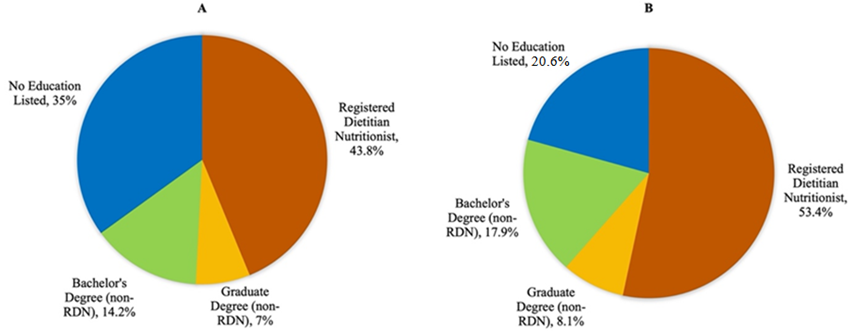
The education of blog authors from all website types is displayed in Figure 1A. The majority of the authors were RDNs (219), of which 70% had a master’s degree. The next largest category were blogs with no author education listed (175). Subsequently, 71 authors had a bachelor’s degree (excluding RDNs), of which 32% were in nutrition-related science and 68% in other fields. The remaining 35 bloggers had a graduate degree (excluding RDNs). Specifically: 66% had a master’s degree in nutrition-related science, 11% master’s in other fields, 14% doctorate in nutrition-related science, and 9% doctorate in other fields. The majority of blogs from government/food commodity organizations (89%) and food/nutrition companies (92%) did not list any author information, including their education. Presumably, this is because the commodity or product promoted was the main focus of these websites, as compared to independent blogs, which (in this sample) were usually focused around the blogger. Figure 1B displays author education from independent blogs only (n = 397). The hierarchy of education categories remain similar, with the majority being RDNs.

The practice of evidence-based writing was significantly associated with blog type, as shown in Table 1. The majority of independent blogs and those from government/food commodity organizations (~57% and 71%, respectively) were categorized as evidence-based, while the majority of blogs from food/nutrition companies (~60%) were not considered evidence-based, P<0.05.
The relationships between practice of evidence-based writing and author education also were significant. The majority of blogs with authors who were RDNs or had graduate degrees (~77% and 71%, respectively) were categorized as evidence-based. In contrast, ~65% of authors with a bachelor’s degree and 62% of those with no education listed did not practice evidence-based writing, P<0.001. The same analysis was performed with only independent blogs, which yielded similar results: ~77% of authors with RDN and 72% with graduate degrees practiced evidence-based writing, while ~65% of those with bachelor’s degrees and 82% with no education listed did not, P<0.001.
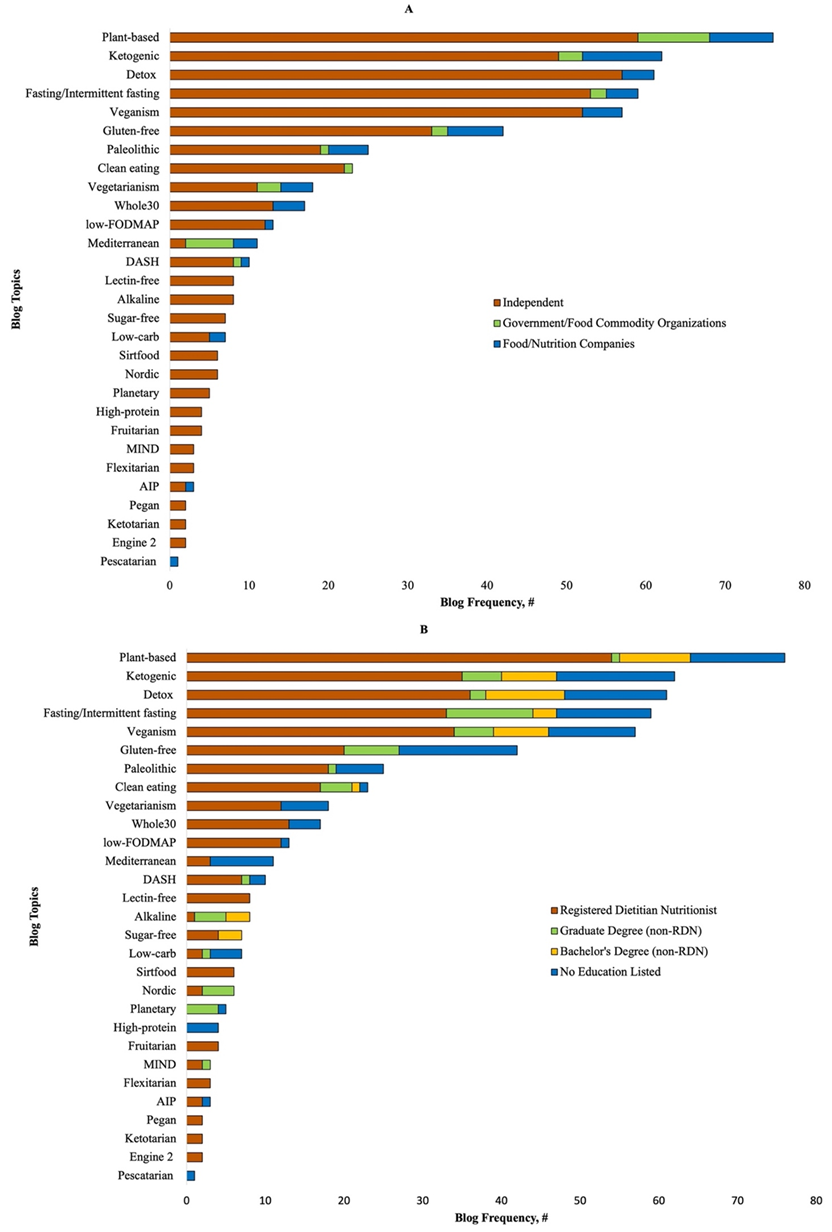
A total of 29 types of diets were identified in the sampled blogs and are illustrated in Figure 2. The most frequently published diet topics were plant-based (76 blogs), ketogenic (62), and detox (61). Figure 2A displays the 29 diets according to the associated blogs’ type and Figure 2B is prepared according to the author education of the blogs. Of the blogs with articles about plant-based diet, the majority were independent blogs (78%). Others were 12% government/food commodity organizations (12%), and food/nutrition companies (10%). As for author education, 71% were from blogs written by authors with RDN, 16% had no education listed, 12% had bachelor’s degree, and 1% a graduate degree. Blogs with articles about ketogenic diet were 79% independent, 16% from food/nutrition companies, and 5% from government/food commodity organizations. Author education was 57% with RDN, 24% had no education listed, 11% had bachelor’s degree, and 8% had graduate degree. Finally, websites with publications on detox were 93% independent, and only 7% from food/nutrition companies. Author education was 59% with RDNs, 21% had no education listed, 17% had bachelor’s degrees, and 3% had graduate degrees.

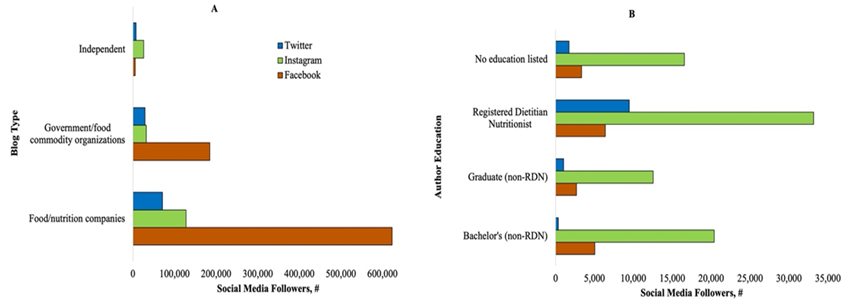
The averages for number of followers from Facebook, Instagram, and Twitter according to blog type are listed in Table 2. Figure 3 displays social media followers according to blog type and author education. Compared to independent blogs, those from government/food commodity organizations had ~35 times more followers on Facebook and ~4 times more followers on Twitter, P<0.001 (Table 3). Food/nutrition company blogs had ~118 times more Facebook followers, 5 times more Instagram followers, and ~10 times more twitter followers, as compared to independent blogs, P<0.001. As for author education among independent blogs compared to those with none listed, those with RDN authors had ~2 times more followers on Facebook and Instagram, and ~5 times more followers on Twitter, P<0.001. The number of Twitter followers for authors with bachelor’s degrees was lower by 80%, as compared to those with no education listed, P<0.001.

These results suggest that nutrition bloggers with RDN licensures or graduate degrees are more likely to practice evidence-based writing in their blogs than those with bachelor’s degrees or no education listed on their websites. No previous study has been identified that documented the education levels of authors from a large sample of nutrition-related blogs. In 2020, Sabbagh et al. analyzed nine weight management blogs and reported the following occupations for the bloggers: two not listed, two self-identified personal trainers, two chefs, one nutritional therapist, one registered associate nutritionist (with Association for Nutrition 32), and one medical doctor; of these only the latter two were considered to be qualified to provide nutrition advice 14. Similar to the current investigation, the practice of evidence-based writing was one of the evaluated credibility criteria that only two of the nine blogs practiced. The only registered associate nutritionist from the sample had the highest overall credibility score 14. Although the differences in sample size (9 versus 500) make it difficult to compare the two studies, over ~77% of the RDN authors in the current study utilized evidence-based writing. This finding emphasizes the importance of nutrition professionals for the dissemination of trustworthy nutrition information online.
The type of blog also was significantly related to practice of evidence-based writing. Blogs from government/food commodity organizations exhibited the highest level of evidence-based writing, followed by independent blogs. It should be noted that he majority food/nutrition company blogs did not utilize evidence-based writing. These findings are consistent with a 2008 study that assessed nutrition information published in 50 health and nutrition sites compared to Canada’s Food Guide 33. The highest quality of nutrition advice was offered by a non-commercial government-based site; other types were commercial sites 33. In 2013, Hirasawa et al. evaluated the quality of 48 websites concerning a “healthy diet,” which were divided into three type categories: institutional (n = 9, included government), nonpharmaceutical commercial (n = 32), and websites from nonprofit organizations/patient support groups (n = 7) 13. Only five of the 48 websites exhibited evidence-based writing; but contrary to the current study, no significant relationships with website type were observed. The present research documented that government-based nutrition blogs had the highest amount of evidence-based writing. This finding is not surprising, as it would be expected that governments would provide accurate information and promote public health.
Assessment of the social media following of the websites suggests that nutrition blogs from food/nutrition companies and government/food commodity organizations have higher audience reach on social media platforms, as compared to independent blogs. Blogs from companies and government/food commodity organizations were centered mainly around a product or commodity; therefore, their larger social media following may be driven by the consumer-brand relationship 34, 35. In this sample, independent blogs were managed predominantly by an individual.
For independent blogs, those authored by RDNs were the only education category to have significantly more followers across all three social media platforms. This implies that nutrition credentials of bloggers, specifically RDN credentials, may be important for public interest. This finding is supported by a survey of 2,000 people from the British Dietetic Association which reported that 82% would trust a dietitian for dietary advice 36. Yet, numerous nutrition blogs with unqualified authors still exist on the internet and reach large audiences. Moreover, the title of ‘nutritionist’ is not always protected by law (or can be attained relatively easy) in the United States and other countries 14. Thus, almost anyone can use this title in an attempt to increase the credibility of their blog and gain more followers. The public may not always be cognizant of who can be trusted for nutrition advice. According to the same survey, nearly 60% said they would trust advice about nutrition and diet from personal trainers and fitness instructors. Furthermore, in the 18-24 year-old group, 41% indicated that they would trust advice from a ‘healthy eating blogger 36.’
One possible solution to reduce the distribution of misinformation on the internet is for reputable government organizations or nutrition associations (such as the Academy of Nutrition and Dietetics) to develop a certification process for blogs. A team of experts could evaluate blogs against a set of criteria for credibility. Bloggers would be able to apply for the certification and receive an official seal if their websites meet the standards. A periodic expiration of the certification would ensure that the blogs maintain credibility. This seal could then be displayed in the homepages of the blogs to demonstrate that it is a credible source of nutrition information.
The 29 types of diets that were identified in the current research varied in their scientific credibility and health outcomes. Plant-based, ketogenic, detox, fasting/intermittent fasting, and veganism were the top five most frequently discussed diets. The most popular was the plant-based diet. Numerous studies have found that when appropriately planned, this diet (also with #5 veganism and #9 vegetarianism) have benefits for prevention or treatment of diseases, such as cardiovascular disease, type 2 diabetes, Alzheimer disease, and certain cancers 37, 38, 39, 40. The second most cited diet type was the ketogenic diet, which restricts carbohydrate intake and allows for moderate amount of protein and high fat consumption. This plan advocates switching the fat metabolism to energy, in place of glucose 41. Although the ketogenic diet has been found to be effective for the treatment of epilepsy 42, the diet is often promoted for weight loss as well, as is has been linked to favorable health outcomes, (improved lipid profiles, and treatment of cancer) 41, 43, 44. However, adherence to the ketogenic diet has been associated with hypercalcemia and hyperlipidemia 15. Detox was the third most frequently published diet; this plan claims to cleanse the body of toxins and promote weight loss, utilizing strategies such as juice fasts or use of laxatives 45. Research is limited on its health consequences and effectiveness. Intermittent fasting was the fourth most popular diet type. Health benefits have been reported, such as weight loss, lower risk of cardiovascular disease, and DNA repair 46, 47; however, randomized controlled clinical trials are needed for better clarity.
The current results about diet types are consistent with the few previous blog studies. An analysis of nine nutrition websites included Paleolithic, sugar-free, real food, dairy-free, vegan, raw, calorie-count, and gluten-free diets 48. Similarly, the study by Sabbagh et al. of nine nutrition blogs reported that the following were discussed: plant-based, sugar-free, grain-free, vegan, whole foods, gluten-free, dairy-free, and Paleolithic diets 14. Frequency of publication was not provided in either study. The current investigation includes this parameter to ascertain the popularity of diets discussed.
The present findings about the publication frequency of the diets parallel those by Kaminski et al., who ranked diet types based on global popularity according to Google Trends data from 2004 to 2019 49. Veganism, vegetarianism, gluten-free, low-carbohydrate, and ketogenic diets had the highest interest among Google users globally. These diets were among the top ten most popular in the present study (#2 ketogenic, #5 veganism, #6 gluten-free, #9 vegetarianism), except for the low-carbohydrate diet (#17). Kaminski et al. reported a sharp decrease in interest over time for negative-calorie food, macrobiotic, and cabbage soup diets 49. These were not mentioned in our study, confirming a diminution in public interest in these topics.
Several limitations exist in this research. Although utilization of a purposive-snowball sampling approach was justified given the dynamic nature of the internet 22, 23, 24, the sample may not be representative of all blogs that could be encountered online. In addition, the search terms utilized were broad for the purpose of gathering a sample, but Individuals seeking information online may instead enter specific nutrition questions or topics of interest in search engines. To remedy this limitation, data collection continued until a large sample size (n = 500) was obtained relative to previous nutrition blog studies. The practice of evidence-based writing was based on use of references as support for blog posts. However, the nutrition information and advice from the posts were not evaluated individually for scientific accuracy. Future research should examine nutrition blogs for the accuracy of the information published using larger sample sizes.
This research concludes that government-affiliated nutrition blogs and those by authors with RDNs and graduate degrees were more likely to practice evidence-based writing. Also, blogs authored by RDNs had the highest audience reach according to social media following. Although a variety of diet types were identified in this study, more investigations should utilize even larger samples of nutrition blogs to assess the credibility of the information published. Future efforts should focus on policy interventions to aid in prevention of harmful or misleading nutrition information being published online. The development of a certification process that would require blogs to meet a set of credibility criteria in order to receive an official seal is suggested.
| [1] | Jia X, Pang Y, Liu LS. Online health information seeking behavior: a systematic review. Healthcare. 2021; 9(12): 1740. | ||
| In article | View Article PubMed | ||
| [2] | Fox S. The social life of health information, 2011. Pew Research Center’s Internet & American Life Project. May 12, 2011. Accessed December 15, 2022. https://www.pewresearch.org/internet/wp-content/uploads/sites/9/media/Files/Reports/2011/PIP_Social_Life_of_Health_Info.pdf. | ||
| In article | |||
| [3] | Teng Y, Huang SW, Li Z, et al. Seasonal variation and trends in the Internet searches for losing weight: an infodemiological study. Obes Res Clin Pract. 2020; 14(3): 225-233. | ||
| In article | View Article PubMed | ||
| [4] | Kaplan AM, Haenlein M. Users of the world, unite! The challenges and opportunities of Social Media. Bus Horizons. 2010; 53(1): 59-68. | ||
| In article | View Article | ||
| [5] | Djuraskovic O. The State of The Blogging Industry in 2020. First Site Guide. April 22, 2022. Accessed January 3, 2023. https://firstsiteguide.com/blogging-industry-survey/. | ||
| In article | |||
| [6] | Lynch M. Healthy habits or damaging diets: An exploratory study of a food blogging community. Ecol Food Nutr. 2010; 49(4): 316-335. | ||
| In article | View Article PubMed | ||
| [7] | Hawks SR, Madanat HN, Christley HS. Psychosocial associations of dietary restraint: Implications for healthy weight promotion. Ecol Food Nutr. 2008; 47(5): 450-483. | ||
| In article | View Article | ||
| [8] | Boepple L, Thompson JK. A content analysis of healthy living blogs: Evidence of content thematically consistent with dysfunctional eating attitudes and behaviors. Int J Eat Disorder. 2014; 47(4): 362-367. | ||
| In article | View Article PubMed | ||
| [9] | Dumas AA, Lemieux S, Lapointe A, Dugrenier M, Desroches S. A comparative content analysis of vegetarian food blogs written by registered dietitians and non-registered dietitians. Can J Diet Pract Res. 2017; 78(2): 86-91. | ||
| In article | View Article PubMed | ||
| [10] | Chan T, Drake T, Vollmer RL. A qualitative research study comparing nutrition advice communicated by registered Dietitian and non-Registered Dietitian bloggers. J Commun Healthc. 2020; 13(1): 55-63. | ||
| In article | View Article | ||
| [11] | Academic Writing Style. USC Libraries. Accessed December 20, 2022. https://libguides.usc.edu/writingguide/academicwriting. | ||
| In article | |||
| [12] | Evidence-Based Practice. MJC Library & Learning Center. Accessed December 20, 2022. https://libguides.mjc.edu/c.php?g=255637&p=7950172. | ||
| In article | |||
| [13] | Hirasawa R, Yachi Y, Yoshizawa S, et al. Quality and accuracy of Internet information concerning a healthy diet. Int J Food Sci Nutr. 2013; 64(8): 1007-1013. | ||
| In article | View Article PubMed | ||
| [14] | Sabbagh C, Boyland E, Hankey C, Parrett A. Analysing credibility of UK social media influencers’ weight-management blogs: a pilot study. Int J Environ Res Public Health. 2020; 17(23): 9022. | ||
| In article | View Article PubMed | ||
| [15] | Tahreem A, Rakha A, Rabail R, et al. Fad diets: facts and fiction. Front Nutr. 2022; 9. | ||
| In article | View Article PubMed | ||
| [16] | Aslam M, Tariq A, Naveed J, et al. Emergence of FAD Diets and Obesity-Related Perceptions and Practices Among University Students: Fad Diets and Obesity-related Perceptions and Practices. PBMJ. 2022; 5(2): 33-37. | ||
| In article | View Article | ||
| [17] | Farhadnejad H, Asghari G, Emamat H, Mirmiran P, Azizi F. Low-carbohydrate high-protein diet is associated with increased risk of incident chronic kidney diseases among Tehranian adults. J Ren Nutr. 2019; 29(4): 343-349. | ||
| In article | View Article PubMed | ||
| [18] | Chen TY, Smith W, Rosenstock JL, Lessnau KD. A life-threatening complication of Atkins diet. Lancet. 2006; 367(9514): 958. | ||
| In article | View Article PubMed | ||
| [19] | Salas Noain J, Minupuri A, Kulkarni A, Zheng S. Significant impact of the ketogenic diet on low-density lipoprotein cholesterol levels. Cureus. 2020; 12(7): e9418. | ||
| In article | View Article | ||
| [20] | Dixon S. Number of monthly active Facebook users worldwide as of 3rd quarter 2022 Statista. October 27, 2022. Accessed January 24, 2023. https://www.statista.com/statistics/264810/number-of-monthly-active-facebook-users-worldwide/. | ||
| In article | |||
| [21] | Khazaee E, Freeland-Graves JH. Trending topics in food blogs and social media reach. J Food Agric Environ. 2023; 21(1): 17-21. | ||
| In article | |||
| [22] | Ritchie J, Lewis J, Nicholls CM, Ormston R. Qualitative research practice: A guide for social science students and researchers. 2nd ed. Sage; 2013. | ||
| In article | |||
| [23] | Doub AE, Small M, Birch L. An exploratory analysis of child feeding beliefs and behaviors included in food blogs written by mothers of preschool-aged children. J Nutr Educ Behav. 2016; 48(2): 93-103.e1. | ||
| In article | View Article PubMed | ||
| [24] | Mete R, Curlewis J, Shield A, Murray K, Bacon R, Kellett J. Reframing healthy food choices: a content analysis of Australian healthy eating blogs. BMC public health. 2019; 19(1): 1711. | ||
| In article | View Article PubMed | ||
| [25] | Herring SC, Scheidt LA, Wright E, Bonus S. Weblogs as a bridging genre. Inform Technol Peopl. 2005; 18(2): 142-171. | ||
| In article | View Article | ||
| [26] | Hamad EO, Savundranayagam MY, Holmes JD, Kinsella EA, Johnson AM. Toward a mixed-methods research approach to content analysis in the digital age: the combined content-analysis model and its applications to health care Twitter feeds. J Med Internet RES. 2016; 18(3): e60. | ||
| In article | View Article PubMed | ||
| [27] | Neuendorf KA. The content analysis guidebook. 2nd ed. Sage; 2016. | ||
| In article | View Article PubMed | ||
| [28] | Moukarzel S, Rehm M, Daly AJ. Breastfeeding promotion on Twitter: A social network and content analysis approach. Matern Child Nutr. 2020; 16(4): e13053. | ||
| In article | View Article | ||
| [29] | Margolis KA, Bernat JK, Keely O’Brien E, Delahanty JC. Online information about harmful tobacco constituents: a content analysis. Nicotine Tob Res. 2017; 19(10): 1209-1215. | ||
| In article | View Article PubMed | ||
| [30] | Vives J, Losilla J-M, Rodrigo M-F, Portell M. Overdispersion tests in count-data analysis. Psychol Rep. 2008; 103(1): 145-160. | ||
| In article | View Article PubMed | ||
| [31] | Coxe S, West SG, Aiken LS. The analysis of count data: A gentle introduction to Poisson regression and its alternatives. J Pres Assess. 2009; 91(2): 121-136. | ||
| In article | View Article PubMed | ||
| [32] | Association for Nutrition The UK Voluntary Register for Nutritionists (UKVRN). Association for Nutrition. Accessed January 2, 2023. https://www.associationfornutrition.org/. | ||
| In article | |||
| [33] | Ostry A, Young M, Hughes M. The quality of nutritional information available on popular websites: a content analysis. Health Educ Res. 2008; 23(4): 648-655. | ||
| In article | View Article PubMed | ||
| [34] | Sook Kwon E, Kim E, Sung Y, Yun Yoo C. Brand followers: Consumer motivation and attitude towards brand communications on Twitter. Int J Advert. 2014; 33(4): 657-680. | ||
| In article | View Article | ||
| [35] | Pereira HG, de Fátima Salgueiro M, Mateus I. Say yes to Facebook and get your customers involved! Relationships in a world of social networks. Bus Horiz. 2014; 57(6): 695-702. | ||
| In article | View Article | ||
| [36] | Survey finds that almost 60% of people trust nutrition advice from underqualified professionals. BDA The Association of UK Dietitians. Accessed January 2, 2023. https://www.bda.uk.com/resource/survey-finds-that-almost-60-of-people-trust-nutrition-advice-from-underqualified-professionals.html. | ||
| In article | |||
| [37] | Grant JD. Time for change: Benefits of a plant-based diet. Can Fam Physician. 2017; 63(10): 744-746. | ||
| In article | |||
| [38] | Fehér A, Gazdecki M, Véha M, Szakály M, Szakály Z. A Comprehensive Review of the Benefits of and the Barriers to the Switch to a Plant-Based Diet. Sustainability. 2020; 12(10): 4136. | ||
| In article | View Article | ||
| [39] | Satija A, Hu FB. Plant-based diets and cardiovascular health. Trends Cariovas Med. 2018; 28(7): 437-441. | ||
| In article | View Article PubMed | ||
| [40] | McMacken M, Shah S. A plant-based diet for the prevention and treatment of type 2 diabetes. J Geriatr Cardiol. 2017; 14(5): 342-354. | ||
| In article | |||
| [41] | Dowis K, Banga S. The potential health benefits of the ketogenic diet: A narrative review. Nutrients. 2021; 13(5): 1654. | ||
| In article | View Article PubMed | ||
| [42] | D’Andrea Meira I, Romão TT, Pires do Prado HJ, Krüger LT, Pires MEP, da Conceição PO. Ketogenic diet and epilepsy: what we know so far. Front Neurosci. 2019; 13: 5. | ||
| In article | View Article PubMed | ||
| [43] | Modi N, Priefer R. Effectiveness of mainstream diets. Obes Med. 2020; 18: 100239. | ||
| In article | View Article | ||
| [44] | Ludwig DS. The ketogenic diet: evidence for optimism but high-quality research needed. J Nutr. 2020; 150(6): 1354-1359. | ||
| In article | View Article PubMed | ||
| [45] | Klein A, Kiat H. Detox diets for toxin elimination and weight management: a critical review of the evidence. J Hum Nutr Diet. 2015; 28(6): 675-686. | ||
| In article | View Article PubMed | ||
| [46] | Horne BD, Muhlestein JB, Anderson JL. Health effects of intermittent fasting: hormesis or harm? A systematic review. Am J Clin Nutr. 2015; 102(2): 464-470. | ||
| In article | View Article PubMed | ||
| [47] | Mattson MP, Longo VD, Harvie M. Impact of intermittent fasting on health and disease processes. Ageing Res Rev. 2017; 39: 46-58. | ||
| In article | View Article PubMed | ||
| [48] | Ramachandran D, Kite J, Vassallo AJ, et al. Food trends and popular nutrition advice online–Implications for public health. Online J Public Health Inform. 2018; 10(2): e213. | ||
| In article | View Article PubMed | ||
| [49] | Kamiński M, Skonieczna-Żydecka K, Nowak JK, Stachowska E. Global and local diet popularity rankings, their secular trends, and seasonal variation in Google Trends data. Nutrition. 2020; 79-80: 110759. | ||
| In article | View Article PubMed | ||
Published with license by Science and Education Publishing, Copyright © 2023 Erfan Khazaee and Jeanne H. Freeland-Graves
 This work is licensed under a Creative Commons Attribution 4.0 International License. To view a copy of this license, visit
http://creativecommons.org/licenses/by/4.0/
This work is licensed under a Creative Commons Attribution 4.0 International License. To view a copy of this license, visit
http://creativecommons.org/licenses/by/4.0/
| [1] | Jia X, Pang Y, Liu LS. Online health information seeking behavior: a systematic review. Healthcare. 2021; 9(12): 1740. | ||
| In article | View Article PubMed | ||
| [2] | Fox S. The social life of health information, 2011. Pew Research Center’s Internet & American Life Project. May 12, 2011. Accessed December 15, 2022. https://www.pewresearch.org/internet/wp-content/uploads/sites/9/media/Files/Reports/2011/PIP_Social_Life_of_Health_Info.pdf. | ||
| In article | |||
| [3] | Teng Y, Huang SW, Li Z, et al. Seasonal variation and trends in the Internet searches for losing weight: an infodemiological study. Obes Res Clin Pract. 2020; 14(3): 225-233. | ||
| In article | View Article PubMed | ||
| [4] | Kaplan AM, Haenlein M. Users of the world, unite! The challenges and opportunities of Social Media. Bus Horizons. 2010; 53(1): 59-68. | ||
| In article | View Article | ||
| [5] | Djuraskovic O. The State of The Blogging Industry in 2020. First Site Guide. April 22, 2022. Accessed January 3, 2023. https://firstsiteguide.com/blogging-industry-survey/. | ||
| In article | |||
| [6] | Lynch M. Healthy habits or damaging diets: An exploratory study of a food blogging community. Ecol Food Nutr. 2010; 49(4): 316-335. | ||
| In article | View Article PubMed | ||
| [7] | Hawks SR, Madanat HN, Christley HS. Psychosocial associations of dietary restraint: Implications for healthy weight promotion. Ecol Food Nutr. 2008; 47(5): 450-483. | ||
| In article | View Article | ||
| [8] | Boepple L, Thompson JK. A content analysis of healthy living blogs: Evidence of content thematically consistent with dysfunctional eating attitudes and behaviors. Int J Eat Disorder. 2014; 47(4): 362-367. | ||
| In article | View Article PubMed | ||
| [9] | Dumas AA, Lemieux S, Lapointe A, Dugrenier M, Desroches S. A comparative content analysis of vegetarian food blogs written by registered dietitians and non-registered dietitians. Can J Diet Pract Res. 2017; 78(2): 86-91. | ||
| In article | View Article PubMed | ||
| [10] | Chan T, Drake T, Vollmer RL. A qualitative research study comparing nutrition advice communicated by registered Dietitian and non-Registered Dietitian bloggers. J Commun Healthc. 2020; 13(1): 55-63. | ||
| In article | View Article | ||
| [11] | Academic Writing Style. USC Libraries. Accessed December 20, 2022. https://libguides.usc.edu/writingguide/academicwriting. | ||
| In article | |||
| [12] | Evidence-Based Practice. MJC Library & Learning Center. Accessed December 20, 2022. https://libguides.mjc.edu/c.php?g=255637&p=7950172. | ||
| In article | |||
| [13] | Hirasawa R, Yachi Y, Yoshizawa S, et al. Quality and accuracy of Internet information concerning a healthy diet. Int J Food Sci Nutr. 2013; 64(8): 1007-1013. | ||
| In article | View Article PubMed | ||
| [14] | Sabbagh C, Boyland E, Hankey C, Parrett A. Analysing credibility of UK social media influencers’ weight-management blogs: a pilot study. Int J Environ Res Public Health. 2020; 17(23): 9022. | ||
| In article | View Article PubMed | ||
| [15] | Tahreem A, Rakha A, Rabail R, et al. Fad diets: facts and fiction. Front Nutr. 2022; 9. | ||
| In article | View Article PubMed | ||
| [16] | Aslam M, Tariq A, Naveed J, et al. Emergence of FAD Diets and Obesity-Related Perceptions and Practices Among University Students: Fad Diets and Obesity-related Perceptions and Practices. PBMJ. 2022; 5(2): 33-37. | ||
| In article | View Article | ||
| [17] | Farhadnejad H, Asghari G, Emamat H, Mirmiran P, Azizi F. Low-carbohydrate high-protein diet is associated with increased risk of incident chronic kidney diseases among Tehranian adults. J Ren Nutr. 2019; 29(4): 343-349. | ||
| In article | View Article PubMed | ||
| [18] | Chen TY, Smith W, Rosenstock JL, Lessnau KD. A life-threatening complication of Atkins diet. Lancet. 2006; 367(9514): 958. | ||
| In article | View Article PubMed | ||
| [19] | Salas Noain J, Minupuri A, Kulkarni A, Zheng S. Significant impact of the ketogenic diet on low-density lipoprotein cholesterol levels. Cureus. 2020; 12(7): e9418. | ||
| In article | View Article | ||
| [20] | Dixon S. Number of monthly active Facebook users worldwide as of 3rd quarter 2022 Statista. October 27, 2022. Accessed January 24, 2023. https://www.statista.com/statistics/264810/number-of-monthly-active-facebook-users-worldwide/. | ||
| In article | |||
| [21] | Khazaee E, Freeland-Graves JH. Trending topics in food blogs and social media reach. J Food Agric Environ. 2023; 21(1): 17-21. | ||
| In article | |||
| [22] | Ritchie J, Lewis J, Nicholls CM, Ormston R. Qualitative research practice: A guide for social science students and researchers. 2nd ed. Sage; 2013. | ||
| In article | |||
| [23] | Doub AE, Small M, Birch L. An exploratory analysis of child feeding beliefs and behaviors included in food blogs written by mothers of preschool-aged children. J Nutr Educ Behav. 2016; 48(2): 93-103.e1. | ||
| In article | View Article PubMed | ||
| [24] | Mete R, Curlewis J, Shield A, Murray K, Bacon R, Kellett J. Reframing healthy food choices: a content analysis of Australian healthy eating blogs. BMC public health. 2019; 19(1): 1711. | ||
| In article | View Article PubMed | ||
| [25] | Herring SC, Scheidt LA, Wright E, Bonus S. Weblogs as a bridging genre. Inform Technol Peopl. 2005; 18(2): 142-171. | ||
| In article | View Article | ||
| [26] | Hamad EO, Savundranayagam MY, Holmes JD, Kinsella EA, Johnson AM. Toward a mixed-methods research approach to content analysis in the digital age: the combined content-analysis model and its applications to health care Twitter feeds. J Med Internet RES. 2016; 18(3): e60. | ||
| In article | View Article PubMed | ||
| [27] | Neuendorf KA. The content analysis guidebook. 2nd ed. Sage; 2016. | ||
| In article | View Article PubMed | ||
| [28] | Moukarzel S, Rehm M, Daly AJ. Breastfeeding promotion on Twitter: A social network and content analysis approach. Matern Child Nutr. 2020; 16(4): e13053. | ||
| In article | View Article | ||
| [29] | Margolis KA, Bernat JK, Keely O’Brien E, Delahanty JC. Online information about harmful tobacco constituents: a content analysis. Nicotine Tob Res. 2017; 19(10): 1209-1215. | ||
| In article | View Article PubMed | ||
| [30] | Vives J, Losilla J-M, Rodrigo M-F, Portell M. Overdispersion tests in count-data analysis. Psychol Rep. 2008; 103(1): 145-160. | ||
| In article | View Article PubMed | ||
| [31] | Coxe S, West SG, Aiken LS. The analysis of count data: A gentle introduction to Poisson regression and its alternatives. J Pres Assess. 2009; 91(2): 121-136. | ||
| In article | View Article PubMed | ||
| [32] | Association for Nutrition The UK Voluntary Register for Nutritionists (UKVRN). Association for Nutrition. Accessed January 2, 2023. https://www.associationfornutrition.org/. | ||
| In article | |||
| [33] | Ostry A, Young M, Hughes M. The quality of nutritional information available on popular websites: a content analysis. Health Educ Res. 2008; 23(4): 648-655. | ||
| In article | View Article PubMed | ||
| [34] | Sook Kwon E, Kim E, Sung Y, Yun Yoo C. Brand followers: Consumer motivation and attitude towards brand communications on Twitter. Int J Advert. 2014; 33(4): 657-680. | ||
| In article | View Article | ||
| [35] | Pereira HG, de Fátima Salgueiro M, Mateus I. Say yes to Facebook and get your customers involved! Relationships in a world of social networks. Bus Horiz. 2014; 57(6): 695-702. | ||
| In article | View Article | ||
| [36] | Survey finds that almost 60% of people trust nutrition advice from underqualified professionals. BDA The Association of UK Dietitians. Accessed January 2, 2023. https://www.bda.uk.com/resource/survey-finds-that-almost-60-of-people-trust-nutrition-advice-from-underqualified-professionals.html. | ||
| In article | |||
| [37] | Grant JD. Time for change: Benefits of a plant-based diet. Can Fam Physician. 2017; 63(10): 744-746. | ||
| In article | |||
| [38] | Fehér A, Gazdecki M, Véha M, Szakály M, Szakály Z. A Comprehensive Review of the Benefits of and the Barriers to the Switch to a Plant-Based Diet. Sustainability. 2020; 12(10): 4136. | ||
| In article | View Article | ||
| [39] | Satija A, Hu FB. Plant-based diets and cardiovascular health. Trends Cariovas Med. 2018; 28(7): 437-441. | ||
| In article | View Article PubMed | ||
| [40] | McMacken M, Shah S. A plant-based diet for the prevention and treatment of type 2 diabetes. J Geriatr Cardiol. 2017; 14(5): 342-354. | ||
| In article | |||
| [41] | Dowis K, Banga S. The potential health benefits of the ketogenic diet: A narrative review. Nutrients. 2021; 13(5): 1654. | ||
| In article | View Article PubMed | ||
| [42] | D’Andrea Meira I, Romão TT, Pires do Prado HJ, Krüger LT, Pires MEP, da Conceição PO. Ketogenic diet and epilepsy: what we know so far. Front Neurosci. 2019; 13: 5. | ||
| In article | View Article PubMed | ||
| [43] | Modi N, Priefer R. Effectiveness of mainstream diets. Obes Med. 2020; 18: 100239. | ||
| In article | View Article | ||
| [44] | Ludwig DS. The ketogenic diet: evidence for optimism but high-quality research needed. J Nutr. 2020; 150(6): 1354-1359. | ||
| In article | View Article PubMed | ||
| [45] | Klein A, Kiat H. Detox diets for toxin elimination and weight management: a critical review of the evidence. J Hum Nutr Diet. 2015; 28(6): 675-686. | ||
| In article | View Article PubMed | ||
| [46] | Horne BD, Muhlestein JB, Anderson JL. Health effects of intermittent fasting: hormesis or harm? A systematic review. Am J Clin Nutr. 2015; 102(2): 464-470. | ||
| In article | View Article PubMed | ||
| [47] | Mattson MP, Longo VD, Harvie M. Impact of intermittent fasting on health and disease processes. Ageing Res Rev. 2017; 39: 46-58. | ||
| In article | View Article PubMed | ||
| [48] | Ramachandran D, Kite J, Vassallo AJ, et al. Food trends and popular nutrition advice online–Implications for public health. Online J Public Health Inform. 2018; 10(2): e213. | ||
| In article | View Article PubMed | ||
| [49] | Kamiński M, Skonieczna-Żydecka K, Nowak JK, Stachowska E. Global and local diet popularity rankings, their secular trends, and seasonal variation in Google Trends data. Nutrition. 2020; 79-80: 110759. | ||
| In article | View Article PubMed | ||