Objective: To study the mechanism of alcohol absorption, potential anti-alcohol effects, and liver protection by novel edible hydrogels. Methods: An in vitro experiment was conducted to explore the alcohol-absorbing effects of the hydrogel and alcohol concentration variation. Correspondingly, an in vivo experiment was performed to compare the reduction in blood alcohol concentration between rats via oral gavage with 56% alcohol solution only (Control group) and those with both 56% alcohol solution and hydrogels (Gel group). The burning time of Chinese liquor (56%) samples was measured following 20 min of absorption by 20 g hydrogel. Additionally, a real-world study was performed to determine the anti-alcohol effects on volunteers. Results: Following 30 min absorption with the hydrogel, the alcohol solution volume decreased from 30 mL to 25 mL and the concentration decreased from 50% to 40.98%, indicating the hydrogel’s preferential absorption of alcohol against water in the alcohol solution. The blood alcohol concentration of rats in the Gel group was only 47.3% of that in the Control group, unraveling those hydrogels, as a supplementary approach, can significantly reduce the blood alcohol concentration without affecting alcohol metabolism. Moreover, following absorption, the burning duration was reduced to one-fifth of the original burning time. Additionally, significantly more positive responses about the hydrogel’s anti-alcohol effects were obtained in the real-world study. Conclusion: This novel edible hydrogel could reduce alcohol transportation to the blood by absorbing the ethanol molecule in the digestive tract, thereby achieving antialcohol and hepatoprotective effects. 
The alcohol culture in the world has a long history, just as human civilization. As the pace of modern life quickens, factors such as high work pressure and business entertainment have resulted in a year-on-year increase in the number of people drinking alcohol and the amount of alcohol consumed per capita in China, while the incidence of alcoholic liver disease has also increased 1. Alcoholic liver disease, or alcoholic liver injury, is a common liver disease among individuals with prolonged heavy alcohol consumption and has become the second leading cause of liver injury in China after hepatitis virus 2, as well as a common disease in developed countries such as Europe and the United States 3. It has emerged as a serious threat to human health and a major public health concern for the entire society 4.
Moderate alcohol consumption has always been thought to be beneficial in terms of speeding up metabolism, soothing the mood, dispersing cold, and relieving pain 5. On the other hand, excessive alcohol consumption in a short period can seriously harm the functions of multiple organs of the body, particularly the liver and the nervous system 6. Excessive alcohol consumption can cause pathological damage to the liver, which is essential for alcohol metabolism and detoxification, resulting in alcoholic liver disease 3. Some studies have even concluded that any amount of alcohol is harmful and should be avoided 7. Although the risks of moderate alcohol consumption are still being debated 8, it is an undeniable fact that excessive alcohol consumption is harmful to health, thus the WHO has classified alcohol as a Class 1 carcinogen.
A plethora of anti-hangover and liver protection products, such as anti-alcohol drugs, herbal preparations, and health supplements, have appeared on the market to deal with and address the health issues caused by excessive alcohol consumption 9, 10. These products work primarily by enhancing the activity of enzymes in the body to accelerate alcohol metabolism and thus reduce the concentration of alcohol in the blood 11, as well as by scavenging free radicals 12, or by a combination of mechanisms to protect the liver 13. The mechanism of action of some products is still unknown. Although these medications have certain anti-alcohol effects, they only function once the alcohol has entered the bloodstream and passed through the liver, inevitably inflicting metabolic burdens on the liver and kidneys and thus causing varying degrees of damage 14. As a result, preventing alcohol from entering the bloodstream is the only effective way to detoxify alcohol and safeguard the liver. Based on the above, we developed a new edible dietary fiber hydrogel with significant alcohol adsorption and swelling properties (swelling ratio 1.2-1.6), capable of rapidly absorbing alcohol, wrapping it, and transporting it out of the body. This study used both in vitro and in vivo experiments to demonstrate the high efficiency of this edible hydrogel at adsorbing ethanol molecules from alcoholic products. It not only exhibited remarkable absorption results in mice by significantly reducing blood alcohol concentrations but also performed well in human volunteers, which suggests its potential to fundamentally attain anti-alcohol and hepatoprotective effects.
Hydrogels are provided by Shanghai Milliontimes Science & Technology Co., Ltd, China, including round bush psyllium husk powder premix (Plantago Psyllium), konjac flour (Amorphophallus Muelleri), carrageenan, xanthan gum, pectin, gluten, modified corn starch, white kidney bean flour (Phaseolus vulgaris), and chia seeds (Salvia officinalis).
LC-VP high-performance liquid chromatography, RS232-C spectrophotometer.
Alcohol anhydrous: analytical purity.
Ethanol assay kit: Sigma MAK076-1KT.
Alcoholic products: Erguotou liquor (56%V EtOH, 0.15 ml/10 g).
2.2. Experimental AnimalsMale Wistar rats (Leagene Biotech, Shanghai, China).
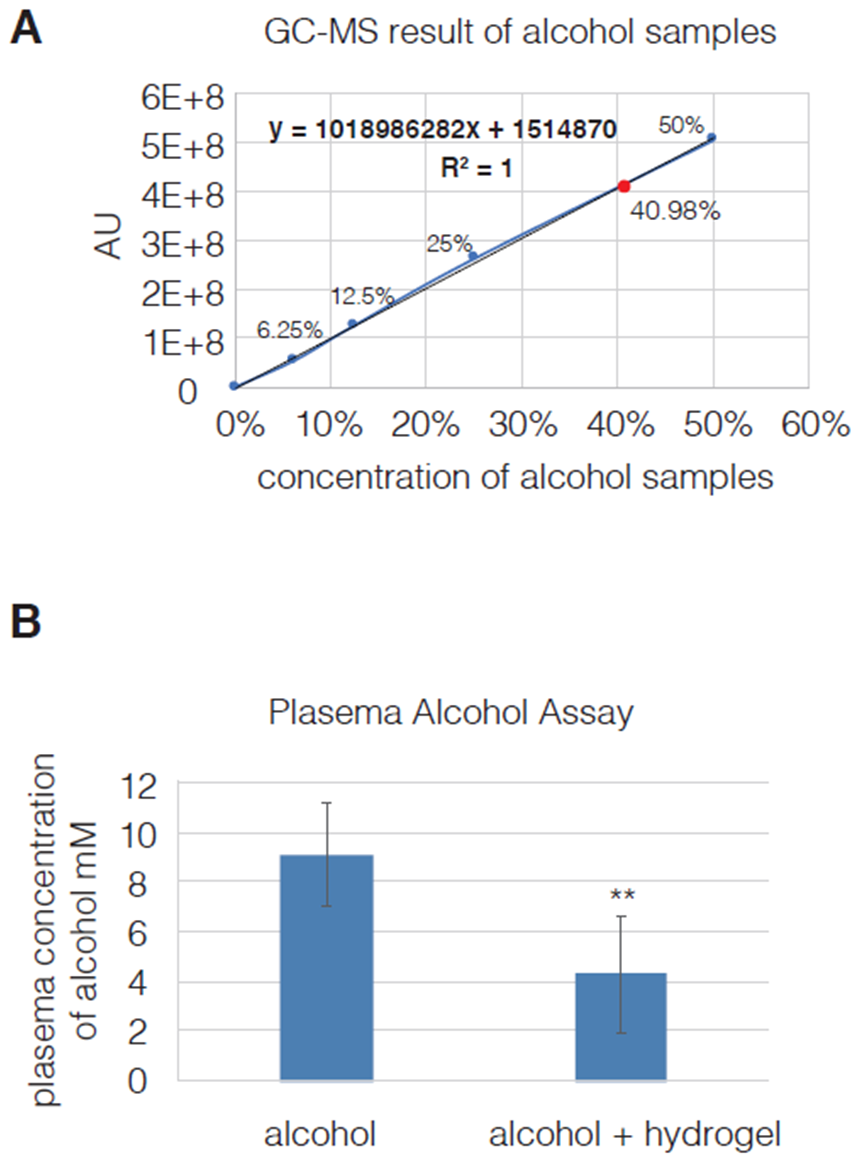
2.3. Experimental MethodsAlcohol solutions with different concentrations of 0, 6.25%, 12.5%, 25%, and 50% were prepared and analyzed using Gaschromatography-mass spectrometry (GC-MS). The horizontal and vertical coordinates for the standard curves were the concentration of alcohol solution and the absorption peak area, respectively (Figure 1A).
10 g of the abovementioned hydrogel was mixed thoroughly in 30 mL of 50% alcohol solution, sealed, and left to stand for 30 minutes. The supernatant was collected, the volume was measured and tested by GC-MS, and the alcohol content of the collected solution was calculated using the standard curve.
Twelve male Wistar rats were randomly divided into two groups: the Control group received alcohol gavage, while the Gel group received alcohol gavage with hydrogel (8 times dilution of 50% alcohol, 8g/kg). Blood samples were collected 1.5 hours after the gavage from the orbital plexus and the plasma alcohol concentration was determined using the ethanol dehydrogenase method (Figure 1B) at 570nm.

30 mL of commercially available 56% liquor was equally added to six centrifuge tubes, and three tubes were randomly selected as the Gel group, while the other three tubes were the Control group. Three portions of hydrogels (20 g) were crushed to simulate the chewing state and added to the three centrifuge tubes of the Gel group. The six tubes were all placed in a dark room for 30 minutes. 3 mL of liquid from each centrifuge tube was poured into a Petri dish, ignited, and the burning time was recorded, respectively (Table 1).
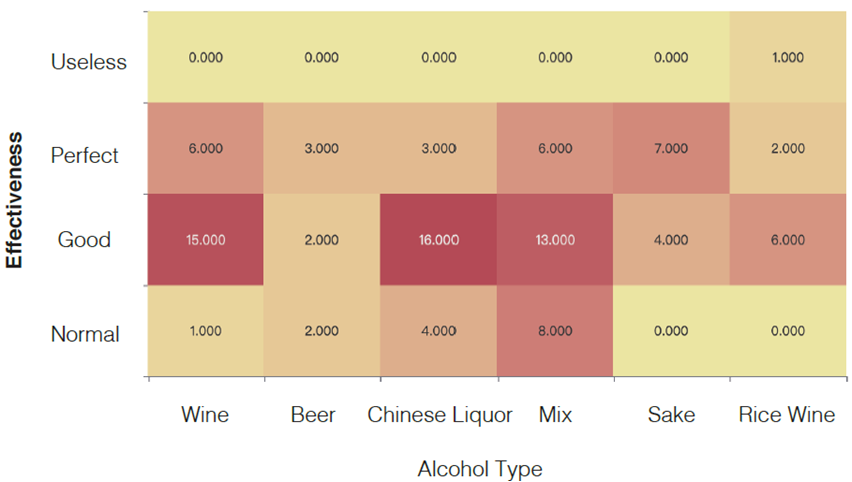
A total of 44 volunteers (99 person-time) were recruited to test the real effect of the hydrogel. The volunteers consumed 20-60 g of hydrogel immediately after drinking an amount of alcohol based on their usual drinking habits. As compared to their previous states, the volunteers evaluated the anti-alcohol effect after consuming the hydrogel and determined it as "useless", "normal", "good" or "perfect" with the results recorded (Table 2).
The raw data from the experiment were statistically processed using R and analyzed using the Welch t test, chi-square test, and t-test. The difference between the two groups was considered statistically significant at P < 0.05.
2.5. Ethic StatementAll the animal experiments and investigation of human volunteers were approved by Ethics Committee of Shanghai University (ECSHU[2022-183]).
Figure 1 depicts the results of the hydrogel alcohol adsorption test in vitro, showing that after the hydrogel adsorption, the volume of the alcohol solution was reduced from 30 mL to 25 mL and the concentration was reduced from 50% to 40.98%. It was calculated that 10 g hydrogel could adsorb 5 mL of liquid, of which 4.755 mL was alcohol and 0.245 mL was water. The hydrogel (10 g) had a swelling rate of approximately 1.2-1.6 in water, namely it can absorb 2-6 mL of water, indicating that the hydrogel's adsorption capacity is unaffected in an alcohol solution and that the gel preferentially adsorbs alcohol over water.
3.2. In Vivo Blood Alcohol Concentration TestThe results of the blood alcohol concentration test in vivo are shown in Figure 1B. After gavage, the alcohol concentration in rats peaked at 1-1.5 h and then started to decline gradually, according to the analysis of the alcohol concentrations. The metabolic curve also corresponded to physiological performance during intoxication. 1-1.5 hours after gavage, the peak metabolic absorption period was attained. The blood alcohol concentration in rats via oral gavage with 56% alcohol and consuming hydrogel was only 47.3% of that in rats via oral gavage with 56% alcohol alone, indicating that using hydrogel as an adjunct could significantly reduce blood alcohol concentration. The results showed that the hydrogel reduced the amount of alcohol entering the rats' metabolic pathway through adsorption without affecting alcohol metabolism, lowering the concentration of alcohol in the rats' blood.
3.3. Commercial Liquor Absorption TestTable 1 displays the results of the adsorption tests on commercial liquor. Given that commercially available commercial liquor contains impurities such as miscellaneous alcohols, the alcohol content was determined using direct ignition rather than the ethanol dehydrogenase method. Following 30 minutes of steeping, the burning time of the three portions of liquor in the gel group was 6, 6, and 5 seconds, respectively, compared to 29, 30, and 26 seconds of the Control group (Video 1). The Gel group was burning for a significantly shorter time than the Control group (p<0.01), illustrating that the hydrogel was capable of absorbing alcohol from commercial liquor.
Video 1. The burning video of 50% alcohol with/without hydrogels
3.4. Evaluation of the Actual Anti-alcohol Effect Among VolunteersFigure 2 and Table 2 displayed the results of the actual anti-alcohol effect on the volunteers. We divided the amount of alcohol consumed into three categories based on volunteer feedback: <200 mL, 200-400 mL, and ≥400 mL. Throughout the analysis, we considered "Useless" and "Normal" to be ineffective, while "Good " and "Perfect" were effective.
Without accounting for alcohol consumption, the effective (83 person-time) results were significantly higher than the ineffective (16 person-time) results (P<0.01). If alcohol consumption < 400 mL were considered as low alcohol intake and alcohol consumption ≥ 400 mL were considered high alcohol intake. Effective results were more significant in terms of low alcohol intake (65 effective vs. 7 ineffective, P<0.01), while there was no significant difference between the two categories (18 effective vs. 9 ineffective) for high alcohol intake (p=0.21).

The results revealed that the hydrogel had remarkable anti-alcohol effect when an appropriate amount of alcohol is consumed, while this effect was reduced when excessive alcohol was consumed. The possible reason is that the alcohol volume has exceeded hydrogel’s capacity for absorption. According to the results of the 3.1 analysis, 60 g of the hydrogel can absorb up to 28.5 mL of pure alcohol, which is equivalent to 60 mL of 50% liquor. When the amount of alcohol entering the body far outnumbers the hydrogel's adsorption capacity, a large amount of unabsorbed alcohol can still trigger a strong intoxication, preventing the volunteers from experiencing a significant anti-alcohol effect.
Our research investigates the mechanism of action and potential value of a new edible hydrogel material as an anti-alcohol and liver protection product. The anti-alcohol effects of the hydrogel were corroborated by in vitro, in vivo experiments, and a real-world study. These findings proved that hydrogel has anti-alcohol effects and can significantly reduce the amount of alcohol that enters the bloodstream through adsorption.
After alcohol enters the body through the mouth, very little of it is absorbed there, about 10-20% in the stomach, and the remaining 75-80% in the small intestine, where it enters the blood circulation through biological membranes and is rapidly transported to various tissues and organs throughout the body for metabolic use 14. 90% of this is metabolized in the liver, with the remaining 5-8% metabolized in the kidneys, muscles, and other tissues and organs, and only 2-5% excreted from the body in its original form via respiration and sweat 14. Alcohol in the blood is transformed to acetaldehyde by enzymes such as ethanol dehydrogenase (ADH), which is subsequently converted to acetic acid by acetaldehyde dehydrogenase (ALDH). Acetic acid enters the tricarboxylic acid (TCA) cycle in the form of acetyl-CoA and is oxidized to water and carbon dioxide 15, 16.
When excess alcohol enters the body and exceeds the liver's oxidative metabolism capacity, it is metabolized in the liver, producing excess free radicals and disrupting the free radical balance in the body, causing oxidative stress, lipid oxidation in the liver, and hepatocyte damage 17, 18. The damage to hepatocytes caused by long-term excessive alcohol consumption is the primary cause of alcoholic fatty liver disease, which can progress to alcoholic hepatitis, liver cirrhosis, or even liver cancer if not treated in time. Alcohol, on the other hand, can cross the blood-brain barrier and inhibit the function of the brain, subcortical centers, cerebellum, vasomotor centers of the medulla oblongata, and respiratory centers 3. Consequently, chronic alcohol consumption damages nervous systems irreversibly, impairing the body's ability to think and act.
Commercially available anti-alcohol and liver protection products either speed up alcohol metabolism in the liver or promote the liver's ability to scavenge free radicals. However, they do not reduce the metabolic burden of alcohol on the body, let alone the damage caused by alcohol to the nervous system. The hydrogel investigated in this paper can absorb approximately 3.8 g of pure alcohol per 10 g. Dietary fiber, the main component that cannot be digested in the stomach, continues to adsorb and coat alcohol in the stomach and intestines and was directly excreted from the body via the small and large intestines. As a result, the hydrogel can significantly reduce the amount of alcohol entering the bloodstream for a given amount of alcohol consumed. This reduces the burden on the liver for alcohol metabolism and alcohol that crosses the blood-brain barrier, thereby alleviating the damage to the nervous system caused by alcohol consumption.
To conclude, this edible hydrogel has the potential to be used as a key component in anti-alcohol and liver protection products due to its alcohol adsorption property discovered in this study and the stability it displays in the in vivo environment. The hydrogel demonstrated significant alcohol adsorption and detoxification effects in both adsorption tests of commercial liquor and human volunteers. Currently, there is no product available on the market that can reduce blood alcohol concentrations through physical adsorption. This material is likely to fill the gap, resulting in a true sense of detoxification and liver protection, advancing the idea of healthy drinking into a whole new field.
The authors declared that there was no conflict of interests.
This work was partly supported by the grant from National Natural Science Foundation of China (82170395 to Jiali Deng).
| [1] | Gan, Y. et al. Association between alcohol consumption and the risk of stroke in middle-aged and older adults in China. Drug Alcohol Depend 229, 109134, (2021). | ||
| In article | View Article PubMed | ||
| [2] | Xiao, J. et al. Global liver disease burdens and research trends: Analysis from a Chinese perspective. J Hepatol 71, 212-221, (2019). | ||
| In article | View Article PubMed | ||
| [3] | Louvet, A. & Mathurin, P. Alcoholic liver disease: mechanisms of injury and targeted treatment. Nat Rev Gastroenterol Hepatol 12, 231-242, (2015). | ||
| In article | View Article PubMed | ||
| [4] | Maddur, H. & Shah, V. H. Alcohol and Liver Function in Women. Alcohol Res 40, 10, (2020). | ||
| In article | View Article PubMed | ||
| [5] | Scott, J. R. et al. Moderate Alcohol Consumption Is Associated with Reduced Pain and Fibromyalgia Symptoms in Chronic Pain Patients. Pain Med 19, 2515-2527, (2018). | ||
| In article | View Article PubMed | ||
| [6] | Planas-Ballve, A., Grau-Lopez, L., Morillas, R. M. & Planas, R. Neurological manifestations of excessive alcohol consumption. Gastroenterol Hepatol 40, 709-717, (2017). | ||
| In article | View Article | ||
| [7] | Burton, R. & Sheron, N. No level of alcohol consumption improves health. Lancet 392, 987-988, (2018). | ||
| In article | View Article PubMed | ||
| [8] | Wood, A. M. et al. Risk thresholds for alcohol consumption: combined analysis of individual-participant data for 599 912 current drinkers in 83 prospective studies. Lancet 391, 1513-1523, (2018). | ||
| In article | |||
| [9] | Madrigal-Santillan, E. et al. Review of natural products with hepatoprotective effects. World J Gastroenterol 20, 14787-14804, (2014). | ||
| In article | View Article PubMed | ||
| [10] | Wang, F. et al. Natural Products for the Prevention and Treatment of Hangover and Alcohol Use Disorder. Molecules 21, 64, (2016). | ||
| In article | View Article PubMed | ||
| [11] | Srinivasan, S., Dubey, K. K. & Singhal, R. S. Influence of food commodities on hangover based on alcohol dehydrogenase and aldehyde dehydrogenase activities. Curr Res Food Sci 1, 8-16, (2019). | ||
| In article | View Article PubMed | ||
| [12] | Li, S. et al. The Role of Oxidative Stress and Antioxidants in Liver Diseases. Int J Mol Sci 16, 26087-26124, (2015). | ||
| In article | View Article PubMed | ||
| [13] | Zhao, L. et al. Protective Mechanism of Edible Food Plants against Alcoholic Liver Disease with Special Mention to Polyphenolic Compounds. Nutrients 13, (2021). | ||
| In article | View Article PubMed | ||
| [14] | Cederbaum, A. I. Alcohol metabolism. Clin Liver Dis 16, 667-685, (2012). | ||
| In article | View Article PubMed | ||
| [15] | Altamirano, J. & Bataller, R. Alcoholic liver disease: pathogenesis and new targets for therapy. Nat Rev Gastroenterol Hepatol. 8, 491-501, (2011). | ||
| In article | View Article PubMed | ||
| [16] | Gao, B. & Bataller, R. Alcoholic liver disease: pathogenesis and new therapeutic targets. Gastroenterology. 141, 1572-1585, (2011). | ||
| In article | View Article PubMed | ||
| [17] | Pohl, K., Moodley, P. & Dhanda, A. D. Alcohol's Impact on the Gut and Liver. Nutrients 13, (2021). | ||
| In article | View Article PubMed | ||
| [18] | Scafato, E. et al. The undertreatment of alcohol-related liver diseases among people with alcohol use disorder. Eur Rev Med Pharmacol Sci 24, 974-982, (2020). | ||
| In article | |||
Published with license by Science and Education Publishing, Copyright © 2023 Ruomeng Yang, Kaiming Cheng, Xiaopeng Jiang, Jiali Deng, Junfeng Shi and Tao Li
 This work is licensed under a Creative Commons Attribution 4.0 International License. To view a copy of this license, visit
http://creativecommons.org/licenses/by/4.0/
This work is licensed under a Creative Commons Attribution 4.0 International License. To view a copy of this license, visit
http://creativecommons.org/licenses/by/4.0/
| [1] | Gan, Y. et al. Association between alcohol consumption and the risk of stroke in middle-aged and older adults in China. Drug Alcohol Depend 229, 109134, (2021). | ||
| In article | View Article PubMed | ||
| [2] | Xiao, J. et al. Global liver disease burdens and research trends: Analysis from a Chinese perspective. J Hepatol 71, 212-221, (2019). | ||
| In article | View Article PubMed | ||
| [3] | Louvet, A. & Mathurin, P. Alcoholic liver disease: mechanisms of injury and targeted treatment. Nat Rev Gastroenterol Hepatol 12, 231-242, (2015). | ||
| In article | View Article PubMed | ||
| [4] | Maddur, H. & Shah, V. H. Alcohol and Liver Function in Women. Alcohol Res 40, 10, (2020). | ||
| In article | View Article PubMed | ||
| [5] | Scott, J. R. et al. Moderate Alcohol Consumption Is Associated with Reduced Pain and Fibromyalgia Symptoms in Chronic Pain Patients. Pain Med 19, 2515-2527, (2018). | ||
| In article | View Article PubMed | ||
| [6] | Planas-Ballve, A., Grau-Lopez, L., Morillas, R. M. & Planas, R. Neurological manifestations of excessive alcohol consumption. Gastroenterol Hepatol 40, 709-717, (2017). | ||
| In article | View Article | ||
| [7] | Burton, R. & Sheron, N. No level of alcohol consumption improves health. Lancet 392, 987-988, (2018). | ||
| In article | View Article PubMed | ||
| [8] | Wood, A. M. et al. Risk thresholds for alcohol consumption: combined analysis of individual-participant data for 599 912 current drinkers in 83 prospective studies. Lancet 391, 1513-1523, (2018). | ||
| In article | |||
| [9] | Madrigal-Santillan, E. et al. Review of natural products with hepatoprotective effects. World J Gastroenterol 20, 14787-14804, (2014). | ||
| In article | View Article PubMed | ||
| [10] | Wang, F. et al. Natural Products for the Prevention and Treatment of Hangover and Alcohol Use Disorder. Molecules 21, 64, (2016). | ||
| In article | View Article PubMed | ||
| [11] | Srinivasan, S., Dubey, K. K. & Singhal, R. S. Influence of food commodities on hangover based on alcohol dehydrogenase and aldehyde dehydrogenase activities. Curr Res Food Sci 1, 8-16, (2019). | ||
| In article | View Article PubMed | ||
| [12] | Li, S. et al. The Role of Oxidative Stress and Antioxidants in Liver Diseases. Int J Mol Sci 16, 26087-26124, (2015). | ||
| In article | View Article PubMed | ||
| [13] | Zhao, L. et al. Protective Mechanism of Edible Food Plants against Alcoholic Liver Disease with Special Mention to Polyphenolic Compounds. Nutrients 13, (2021). | ||
| In article | View Article PubMed | ||
| [14] | Cederbaum, A. I. Alcohol metabolism. Clin Liver Dis 16, 667-685, (2012). | ||
| In article | View Article PubMed | ||
| [15] | Altamirano, J. & Bataller, R. Alcoholic liver disease: pathogenesis and new targets for therapy. Nat Rev Gastroenterol Hepatol. 8, 491-501, (2011). | ||
| In article | View Article PubMed | ||
| [16] | Gao, B. & Bataller, R. Alcoholic liver disease: pathogenesis and new therapeutic targets. Gastroenterology. 141, 1572-1585, (2011). | ||
| In article | View Article PubMed | ||
| [17] | Pohl, K., Moodley, P. & Dhanda, A. D. Alcohol's Impact on the Gut and Liver. Nutrients 13, (2021). | ||
| In article | View Article PubMed | ||
| [18] | Scafato, E. et al. The undertreatment of alcohol-related liver diseases among people with alcohol use disorder. Eur Rev Med Pharmacol Sci 24, 974-982, (2020). | ||
| In article | |||