In order to prepare a zinc nutritional fortifier which was easily absorbed by human body and improved the utilization rate of sika deer blood. In this research, response surface methodology (RSM) was used to optimize the preparation conditions of zinc chelate sika deer blood polypeptide (SDBP). The peak chelated rate was 82.1% and zinc content was 21.3mg/mL. Used deer blood and zinc sulfate as raw materials and zinc chelated rate as an indicator, the effect of pH, reaction time, peptide zinc mass ratio and reaction temperature on zinc chelating rate were investigated by single factor text. The optimal condition for the chelation reaction was that mass ratio of peptide: zinc 2:1, pH 6 and 60°C for 60 min. The structure of zinc chelated by SDBP was characterized by UV, FTIR, SEM, molecular weight and particle size analysis elt. FTIR proved that SDBPCZ had sufficient metal binding sites. The bioavailability of zinc ion in sika deer blood peptide chelated zinc(SDBPCZ) was determined by simulating gastrointestinal digestion and absorption in vitro. Experimental synthesis showed that SDBPCZ exhibited better zinc solubility and had higher dialyzable than ZnSO4. These results might provide insights into the methods for developing functional foods such as zinc-fortified.
Zinc (Zn) was one of the essential trace elements of the human body and was founded in the skin, muscles and bones in the form of divalent cations. It could promoted growth and tissued regeneration, protected skin health, enhanced human immunity, Zn deficiency could recruited a decrease in the body's resistance and susceptibility to infection 1. Zn deficiency appeared to be commoned in developing countries particularly in infants, pre-schoolers, pregnant and lactating women, and older adults 2. In children, zinc deficiency could delay growth and development, while in adults it could impaired gonadal function, leaded to neurological and immune dysfunction 3, 4. Most zinc supplement products on the market were inorganic salt additives, such as zinc sulfate. These products were unstableed which could caused irritation of the gastrointestinal tract, maked them unsuitable for long-term intake 5. Compared with inorganic zinc salts, amino acids or peptide binding could protected zinc from forming complexed with other dietary inhibitors, which would increased the digestion stability of zinc in the gastrointestinal tracted and finally improved its bioavailability 6. Previoued studies described that bioavailability of zinc was higher for zinc-peptide complexed than its inorganic counterparted 7. In recent years, zinc chelating peptide has been prepared from different protein sources, such as dairy, rapeseed. However, these chelating agents were not consistently utilized considered their high cost. Consequently, a novel type of zinc nutritional fortifier with no adversed effect was urgently needed.
Sika deer (Cervus nippon) was produced in Northeast China and had rich deer blood resource. Deer blood had the effected of anti-aging, anti fatigue and enhancing immunity. Recently, numerous studies have reported the successful extraction of metal-chelating bioactive peptides from food sources such as fish bone 8, Antarctic krill 9. Hence, it can be used as a fantastic source of metal ion chelating peptides.
In order to develop a potential zinc nutritional fortifier, first, sika deer blood peptide(SDBP) were prepared by sika deer blood. Second, we optimized the preparation conditions of zinc-chelating peptides and determined their surface structure which used advanced instrumental analysis technology, included infrared spectrum, ultraviolet spectrum, particle size, amino acid composition. Moreover, we evaluated the effect of zinc-chelating peptide on anti-oxidation used 2,2-diphenyl-1-picrylhydrazyl (DPPH) and azino-bisdiammonium salt (ABTS+) radical scavenging activity assay. Finally, the stability of zinc was evaluated by simulating gastrointestinal digestion. These research results might provide a more comprehensive theoretical basis for development in the food industry.
Deer blood was purchased from Changchun Changlong Deer Industry Co, Ltd,and all other reagents were analytical grade.
2.2. Preparation of SDBPCZ1% ascorbic acid was added to Fresh sika deer blood. After centrifugation, placed in a vacuum freeze dryer to dry and obtained deer blood powder. The deer blood powder was dispersed in deionized water and boiled for 20 min then adjusted pH to 8 at 45°C. 2.0% alkaline protease and trypsin were appended to the solution and the enzyme was killed at elevated temperature for 15min after 3h (In Figure S1). Subsequently cooling to room temperature, at 4500 rpm for 10 min and then it was frozen-dried to obtain deer blood peptide powder. The powder was stored in -24°C for further use 10.
Lyophilized peptides was dissolved in deionized water and then ZnSO4 was added. The mixture was incubated for 60 min at 50°C and pH 6 in a water bath. Following the chelation reaction, the absolute ethanol was added into the reactant to separate the chelate. Then the mixture was centrifuged at 5000 r/min for 10 min, and the precipitation was collected, lyophilized and marked as peptide-zinc chelate.
2.3. Optimization of SDBPCZ Chelating Conditions(1) PH The deer blood peptide and ZnSO4 were mixed evenly according to the mass concentration ratio of 2:1 (g/mL), the pH was 4, 5, 6, 7 and 8, the chelation temperature was 60°C, and the chelation reaction was 60 min. The effect of pH on the chelation rate was investigated.
(2) Reaction time The deer blood peptide and ZnSO4 were mixed evenly according to the mass concentration ratio of 2:1 (g/mL), the chelation pH was 6, the chelation temperature was 60°C, and the chelation reaction was 40, 50, 60, 70 and 80 min. The effect of reaction time on the chelation rate was investigated.
(3) Peptide zinc mass ratio The chelation pH was 6, the chelation temperature was 60°C, and the chelation reaction was 60 min, peptide zinc mass ratio was 0.5:1, 1:1, 1.5:1, 2:1, 2.5:1, The effect of peptide zinc mass ratio on chelation rate was investigated.
(4) Temperature The deer blood peptide and ZnSO4 were mixed evenly according to the mass concentration ratio of 2:1 (g/mL), the chelation PH 6, the chelation temperature was 40, 50, 60, 70, 80°C, and the chelation reaction was 60 min. The effect of chelation temperature on the chelation rate was investigated.
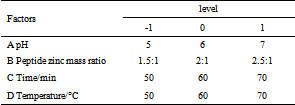
Based on the results of single factor tests, a four-factor and three-level response surface test was designed used the Box-Behnken method. The experimental design factors and levels were showed in Table 1.
Ethylenediamine tetraacetic acid (EDTA) complexation titration was adopted according to Dang 11 method.
2.4. Characterization of SDBPCZThe molecular weight distribution of deer blood peptide and their zinc chelate were by size exclusion chromatography according to Fu 12 method. Samples were isolated on a BioBasic SEC 120 (300×7.8mm, 5μm) column with 30% acetonitrile at a flow rate of 0.5 mL/min. The absorbances at 214 nm were measured. Cytochrome C (12500 Da), aprotinin (6500 DA), glutathione (307 DA), human serum albumin (66000 Da) were used as standards. Take retention time as abscissa (T) and logarithm of relative molecular weight as ordinate (lgMW), the linear equation was obtained by calculation 13 lg MW=-0.4705T+6.742.
At room temperature, deer blood peptide and their zinc chelate were added to the nanoparticle size potentiometer sample cell to determine particle size.
The spectra were recorded by UV spectra used a UV-Vis spectrophotometer with the wavelength range of 200-600 nm. Before the measurement of samples, blank calibration of the UV-visible spectrophotometer was done with deionized water.
SDBP and SDBPCZ was mixed with dry KBr. A transparent piece of the mixture was loaded on the FTIR spectrograph. The FTIR spectra were recorded used an infrared spectrophotometer in the range of 4000-400cm-1.
The microstructure of SDBP and SDBPCZ was analyzed by a scanning electron microscope. The powder samples were sprayed and sputter-coated with gold. The specimens were observed under an accelerating voltage.
The molecular weight distribution of deer blood peptide and their zinc chelate were by size exclusion chromatography according to Fu 12 method. Samples were isolated on a BioBasic SEC 120 (300×7.8mm, 5μm) column with 30% acetonitrile at a flow rate of 0.5 mL/min. The absorbances at 214 nm were measured. Cytochrome C (12500 Da), aprotinin (6500 DA), glutathione (307 DA), human serum albumin (66000 Da) were used as standards. Take retention time as abscissa (T) and logarithm of relative molecular weight as ordinate (lgMW), the linear equation was obtained by calculation 13 lg MW=-0.4705T+6.742.
At room temperature, deer blood peptide and their zinc chelate were added to the nanoparticle size potentiometer sample cell to determine particle size.
A certain amount of SDBP and SDBPCZ were hydrolyzed by HCl (6 mol/L) for 24 h. The hydrolyzed sample was filtered, deacidified and dissolved for amino acid analysis. The amino acid composition was analyzed by automatic amino acid analyzer.
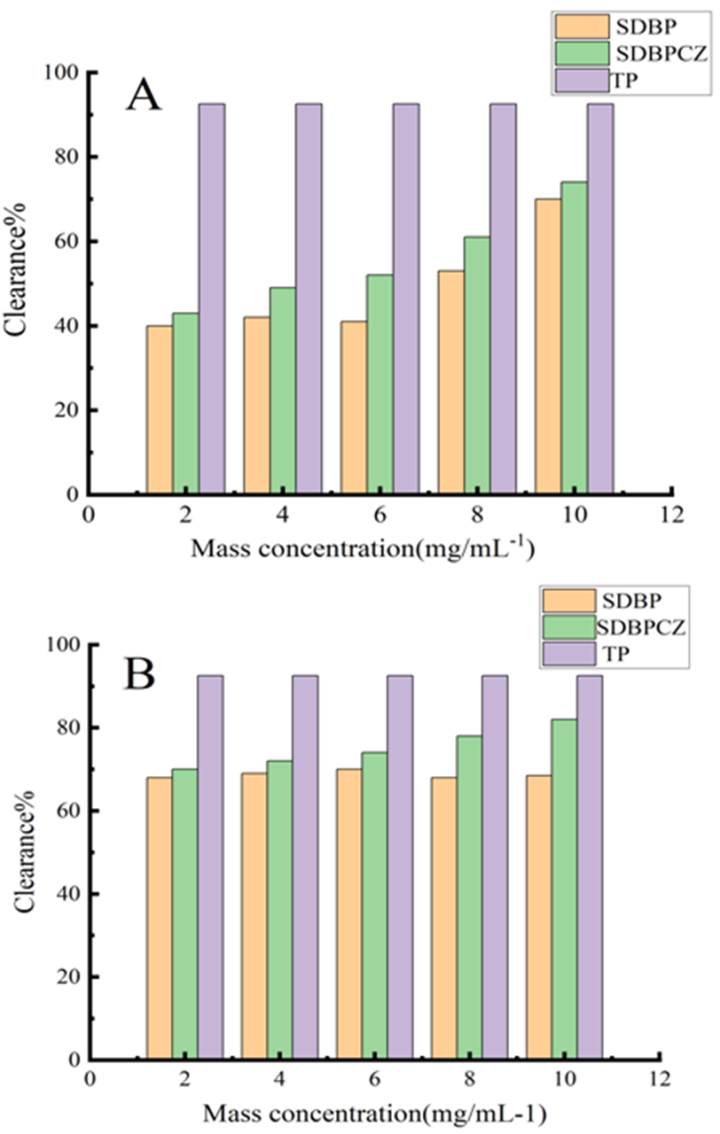
The antioxidant activity of SDBPCZ was evaluated by measuring the clearance of ABTS+ and DPPH 14, 15, 16 free radicals.
In vitro mimic gastrointestinal digestion methods refer to the methods of Li 17 and Wang 18, and were modified. In vitro simulated digestion was divided into two stages: gastric digestion and duodenal digestion. Simulated preparation of gastric juice: 0.2g NaCl and 0.32g pepsin were put into a volumetric flask to dissolve them to 100 ml and adjusted the pH to 2. Simulated preparation of intestinal fluid: 0.68 g KH2PO4, 1 g trypsin and 6 g bile salt were boost into 70 mL double distilled water, frame the pH to 7.6 and dilute to 100 ml.
In vitro simulation of gastrointestinal digestion: adopt 5 mg/mL peptide zinc chelate and ZnSO4 solution, regulate pH to 2.0 with 1 mol/L hydrochloric acid then gain 5 mL of simulated gastric juice to the dissolved solution. After mixing, shake the water bath for 2h at 37°C. Restructure pH 7.2 enhance 5 mL of simulated intestinal fluid. Transfer the mixture into a dialysis bag (7000 Da) sum shake the water bath for 2 h at 37°C. Centrifuge the gastric and intestinal digestive juices in equal parts (8000 r/min, 15 min), determine the zinc content in the supernatant and solution by EDTA complexation titration, and calculate the solubility rate.
 |
V1: The volume of EDTA solution required to titrate zinc ions in the supernatant.
V2: The volume of EDTA solution required for zinc ions in solution.
After digestion through the intestinal fluid, the solution outside the dialysis bag was taken, and the zinc ion content was determined by EDTA complex titration to indicate that the dialysis rate was calculated by simulating the zinc ion content of the intestine.
 |
V1: The volume of EDTA solution required for titration of zinc ions outside the dialysis bag.
V2: The volume of EDTA solution required for zinc ions in solution.
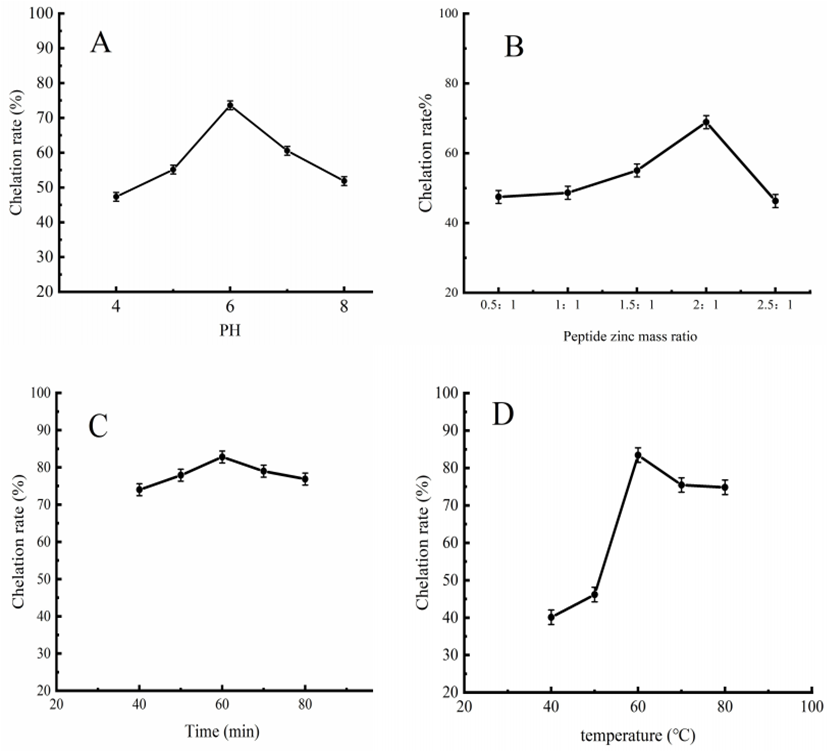
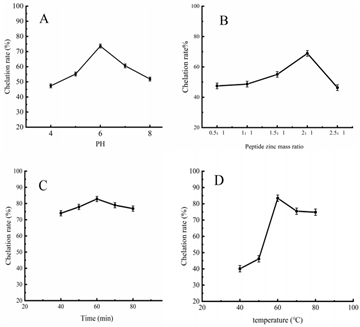
The effects of pH, mass ratio of peptide:zinc, chelating temperature, chelating time on SDBPCZ were listed in Figure 1. As can be seen from Fig.1A, the chelation rate increased when pH was increased from 4 to 6, and achieved the maximum value at pH6. This was cause with the chelating pH increased to 6, the coordination of Zn2+ with NH3+ and COOH- was enhanced, which was conducived to chelate. However with pH value continuing to rise (pH>6), zinc ions formed Zn(OH)2, resulting in a decrease in chelation rate 19. According to Fig.1B, the chelation rate increased rapidly from 47.45% to 68.90% when the mass ratio of peptide: zinc increased from 0.5:1 to 2:1. Interestingly, when the mass ratio of peptide: zinc was 2.5:1, the chelation rate decreases rapidly 20. It implied that the mass ratio of peptide: zinc had significant effect on the zinc chelation rate. Due to the too small mass ratio of peptide: zinc, the chelation reaction was not sufficient, and the chelation rate was low. The too high mass ratio of peptide: zinc leaded to a decrease in the utilization of peptides, resulting in waste of peptides and uneconomic. The same was true of Wen 21 findings. In Figure 1C, the chelation rate increased from 73.99% to 82.8% when the chelation time was extended from 40 to 60 min. Figure 1D given that the chelation rate increased gradually as the temperature raised, and the highest binding capacity was obtained when the reaction temperature was 60°C.
Therefore, the conditions that pH 6, mass ratio of peptide: zinc of 2:1, chelating temperature 60°C and chelating time 60 min were selected for the following RSM experiments.
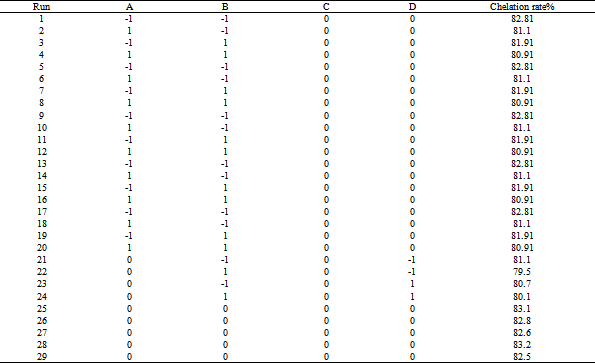
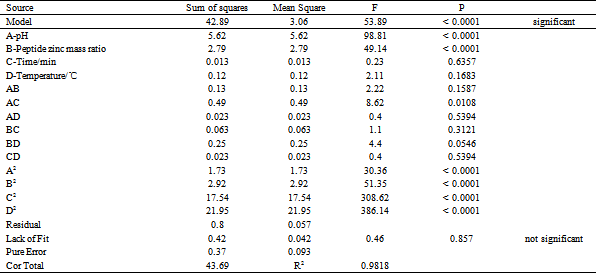
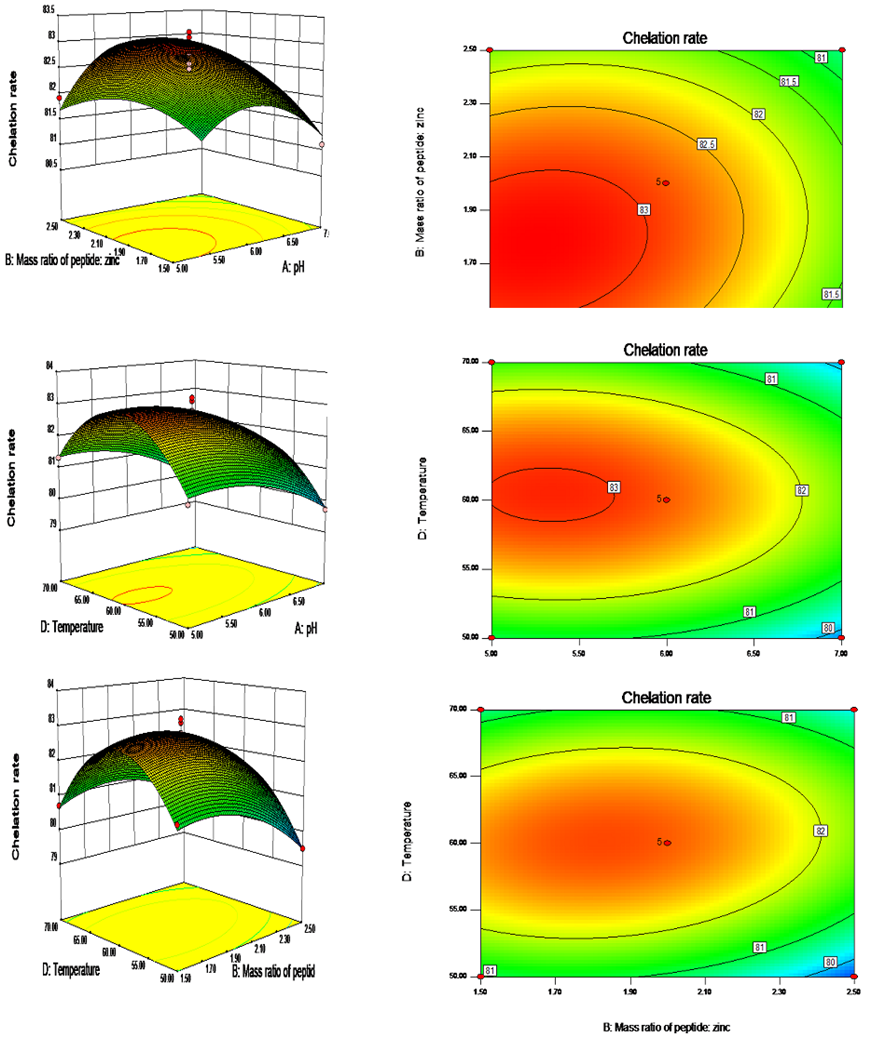
According to the single factor text, the range and centre point values for the four independent variables were presented in Table 1. A four-factor three-level Box-Behnken design (BBD) with 29 runs was carried out and the results of BBD were showed in Table 2. Among the model terms, pH (A) and mass ratio of peptide: zinc (B) had highly significant effects on chelation rate (P<0.0001). The three-dimensional response surface plots were listed in Figure 2.

ANOVA was required to test the adequacy and significance of the model. As given in Table 3, A very low P-value (P < 0.0001) and the calculated F-value implied that the model fitted the experimental data very well. The determination coefficient (R2=0.9818) was satisfactory, exhibiting a low experimental error and indicating that the models was well adapted to the response 22.
The following formula showed the chelation rate of the peptide (Y) as a function of mass ratio of pH (A), peptide: zinc (B), chelating time (C), chelating temperature (D), by applying multiple regression analyses to experimental data.
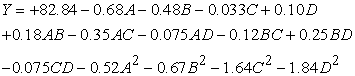 |
The optimum values of the test variables from the model were recommended as: pH 5.09, mass ratio of peptide:zinc, 1.73:1, chelation time, 60.93 min, chelation temperature, 60.85°C and the highest chelation rate was predicted to be 83.2%.
The validity of the proposed model was verified by a verification test. Considering the actual operation in the experiment, the predicted values were adjusted: pH 6, mass ratio of peptide: zinc 2:1, chelating temperature, 60°C and chelating time, 60 min. Under these conditions, the actual chelation rate was 82.7% and zinc content was 21.3mg/mL,which was lower than the predicted value by the regression equation, indicated that the model fitted well with the actual situation 23. This result provided theoretical support for the subsequent product addition.
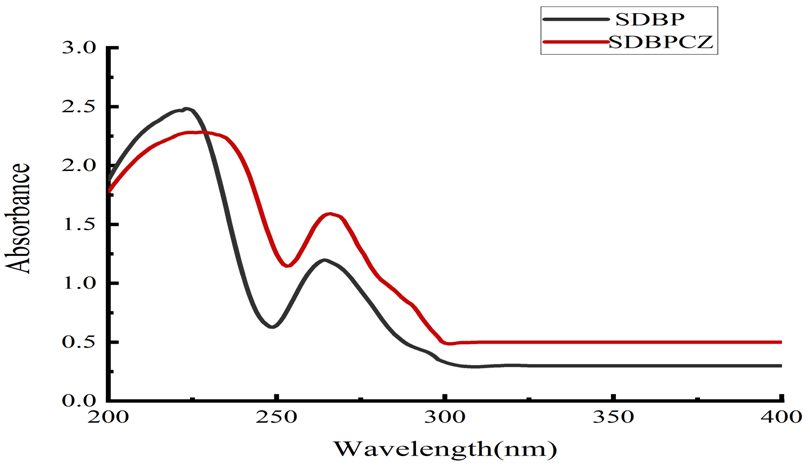
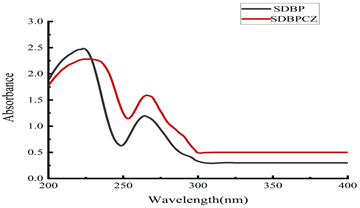
As showed in Figure 3, after chelation, the wavelength and absorption intensity of the maximum absorption peak varied. The reason for this phenomenon was that SDBP chelated with zinc ion to form a new substance. Due to the complexation of protein peptides with zinc, The maximum peak of protein peptides redshifts in wavelengths from 200nm to 400nm, with a peak absorption of peptides of 204nm and a peak absorption of chelated zinc of 230nm. Since Zn2+ had a network interaction with the carbonyl group (C=O), which affected the electron transition of the carbonyl group (C=O) n→δ*. which was consistent with the experimental results of Zhang 24. The results of ultraviolet spectroscopy preliminarily indicated that zinc ions interacted with peptide and had a chelating rection.
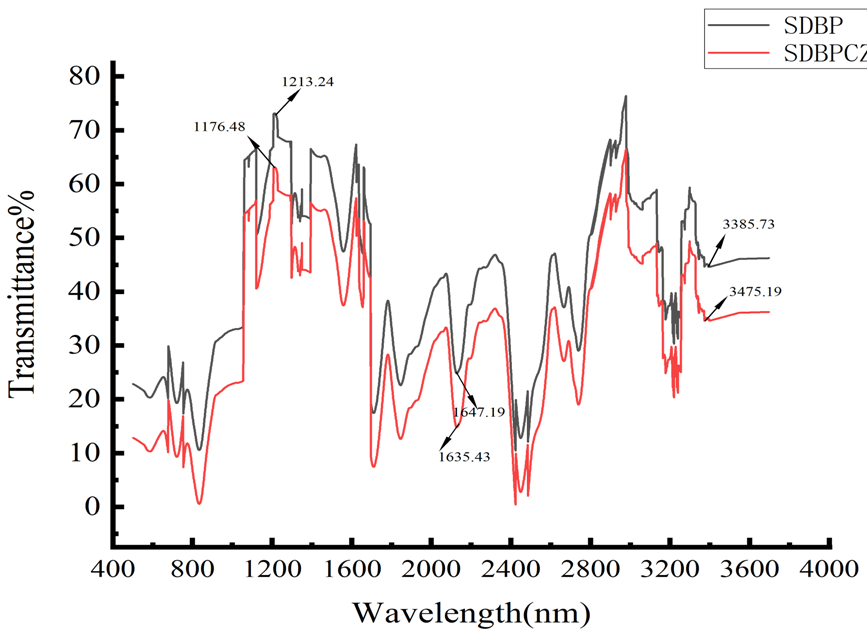
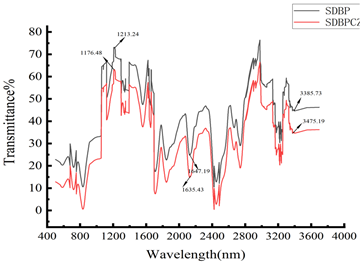
In Figure 4, the infrared spectra before and after chelation had changed significantly, indicating the occurrence of chelation reactions and the generation of new substances, so that the vibration frequency of amino acids changes, causing changes in absorption peaks. In the characteristic region of the SDBP infrared spectrogram, the absorption peak of -NH2 was 3228.75cm-1, which was caused by the telescopic vibration of N-H. In the fingerprint region, infrared absorption spectroscopy reacted to subtle changes in the analytical structure. In the fingerprint region, the absorption peak of C=O was 1647.19cm-1 and the absorption peak of -COO- was 1213.24cm-1. In the characteristic region of the SDBPCZ infrared spectrogram, the absorption peak of -NH2 moved to 3275.19cm-1. In the fingerprint area, the absorption peak of C=O moved to 1635.43 cm-1 and the absorption peak of -COO- moved to 1325.46 cm-1. The results of the C=O tensile vibration indicated that the carboxyl group binded to zinc ions, and the change in the absorption peaks of carboxyl groups and amide infrared characteristics in the protein reflected the interaction between organic ligands and metal ions in the protein 25. Comparing the infrared spectra of SDBPCZ and SDBP, it given that the infrared spectrum of SDBPCZ and the infrared spectrum of SDBP had undergone significant changes, and the amino and carboxyl groups in the polypeptide were involved in the chelation reaction of zinc, this conclusion was consistent with the experiments of Chen 26.
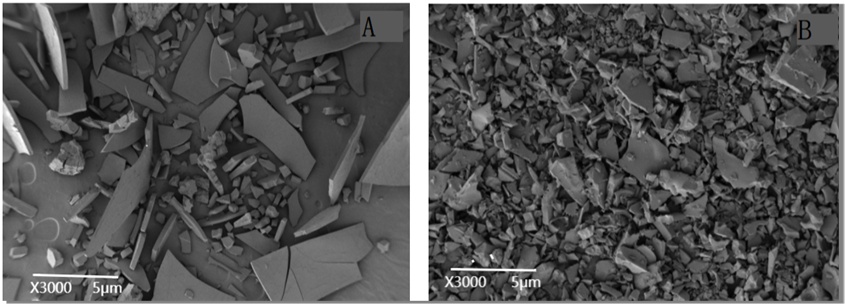
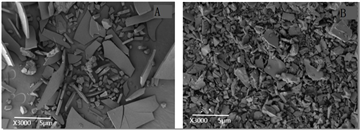
The microscopic surface structure of peptide powder and peptide zinc chelate powder was observed by scanning electron microscopy, and it was magnified by 3000 times under electron microscopy. As can be seen from Fig.5A, the surface of the polypeptide was smooth, the structure was tight and uniform, smooth plate-like or block-like, and there was a certain crack at the same time, which should be a small molecular weight of the collagen polypeptide (less than 5 ku), the SDBP tissue state was more uniform and delicate, and the crack should be the crack left by the collagen polypeptide after rapid vacuum freeze-drying. As can be seen from Fig.5B, the surface of the SDBPCZ was a sheet structure, and most of them were polymerized, and no cracks appear, it should be that the SDBP has chelated with zinc, and a certain chelated zinc crystal has been adsorbed, which was consistent with the conclusion of Fluorescence Wu 27 and so on. Scanning electron microscopy once again demonstrates the formation of chelates from the microscopic surface structure of matter.
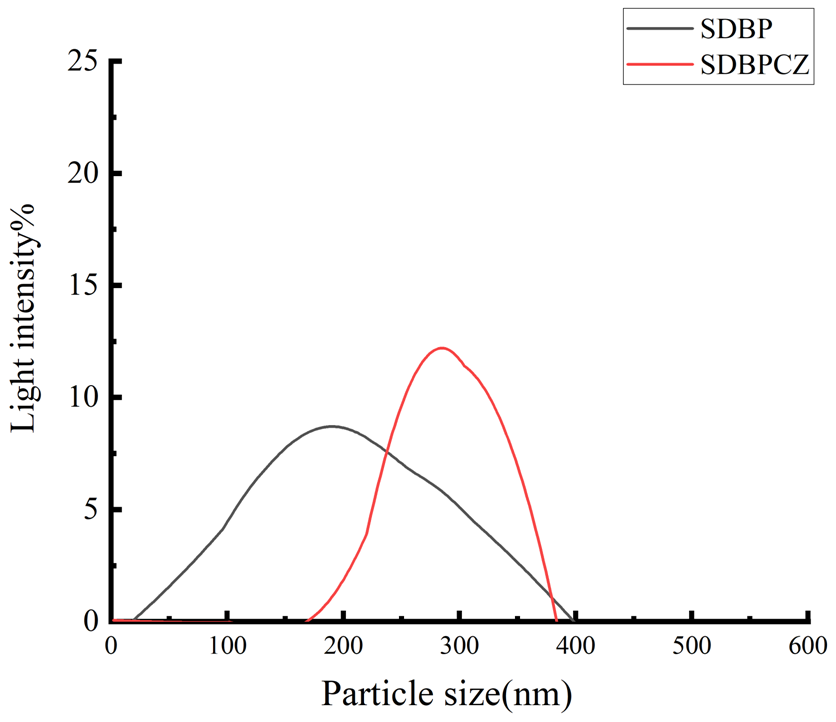
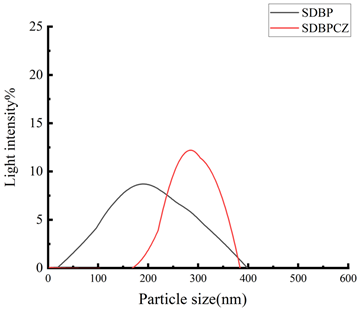
As given in Figure 6, the particle size of the chelate increases compared to the mean particle size of the deer blood peptide183.49 nm, and the average particle size was 295.27nm. The increase in the particle size of the chelate, which due to the complexation of the hydroxyl group of SDBP with Zn2+, which opened the polypeptide chain and expands the space volume of the polypeptide, thus increased the particle size of the chelate.
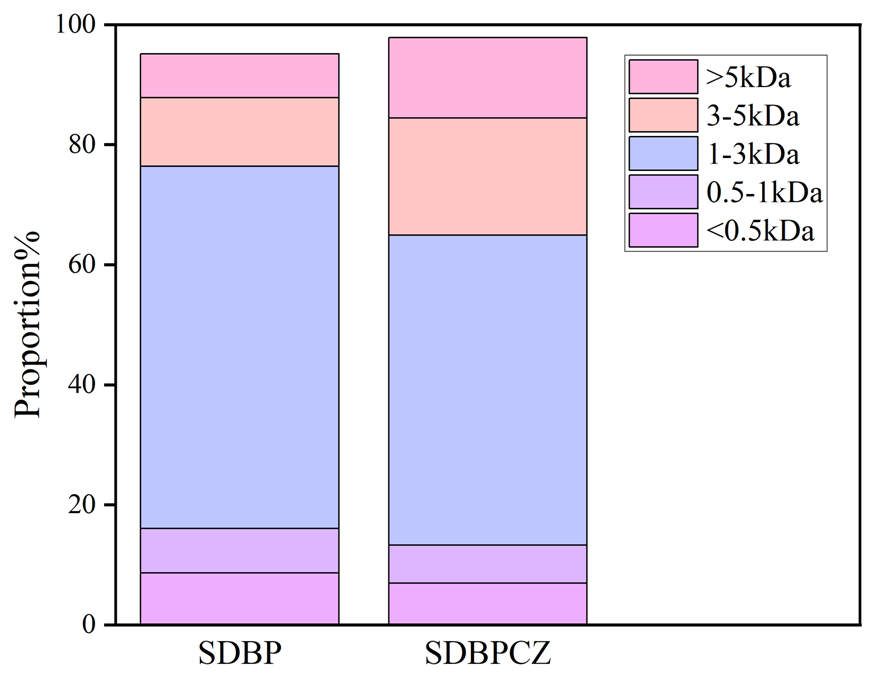
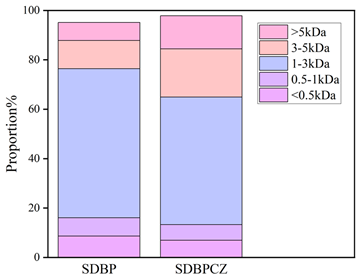
Size exclusion chromatography was used to determine the molecular weight distribution of SDBP and SDBPCZ. It was obvious from Figure 7 that the molecular weight distribution of SDBP ranged from 0.5 to 3 kDa, accounting for more than 78% of all the peptide fractions. After chelating zinc, the molecular mass of SDBPCZ distributed 1-3kDa decreased from 60.35% to 51.62%. On the contrary, the molecular masses distributed 3-5kDa, >5kDa all raise. The major reason might be the new forming chelate bonds between zinc ions and peptides, which could crosslink peptides to form large molecular mass 28.
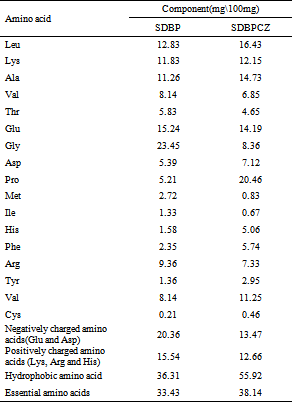
The amino acid composition and relative content of SDBP and SDBPCZ chelate were showed in Table 4. SDBP was rich in Leucine (12.83%), Alanine (11.26%), Arginine (9.36%), Glycine (23.45%), Threonine (5.83%), Glutamic acid (15.24%), Lysine (11.83%) and Valine (8.14%). After chelating with Zn2+, the contents of Proline (20.46%), Leucine (16.43%), Aspartic acid (7.12%) and Alanine (14.73%) in SDBPCZ were higher than those in SDBP. These four amino acids usually regarded as the main sites of zinc binding which might be related to the chelating ability of SDBP 29. In addition, the proportion of hydrophobic amino acids in SDBPCZ (55.92%) was higher than that in SDBP (36.31%). Report listede that peptide had different binding sites for minerals, including the terminal -NH2 and -COOH groups, the peptide bond, and the active side chains of amino acids 30. The essential amino acids in SDBP and SDBPCZ accounted for 33.43% and 38.14% respectively. It was confirmed that SDBPCZ had high nutritional value and could be used as an zinc fortified supplement.
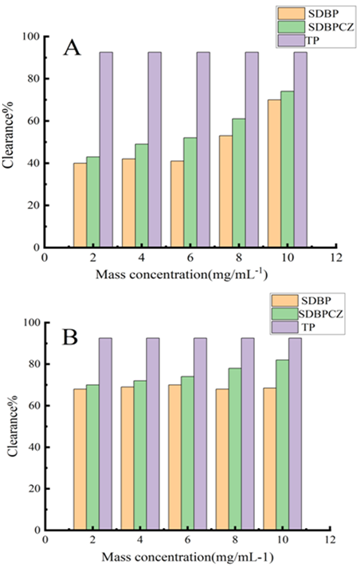
Take tea polyphenols (TP) as positive control to study the antioxidant capacity of tea polyphenols, SDBP and SDBPCZ. According to Fig.8A, Fig.8B, SDBP, SDBPCZ and TP had a certain scavenging ability to ABTS and DPPH free radicals. And as the concentration increases, the scavenging ability of both free radicals also increased. Listed from the figure that the antioxidant activity capabilities of several different samples were: TP> SDBPCZ>SDBP, illustrate that the chelate combines two raw materials well together to exert clearing activity. This was similar to the results of Chen 31 test, who used Vitc as a control to compared the scavenging effect before and after chelation. This experiment used tea polyphenols as a control, and the antioxidant effect of tea polyphenols was stronger than that of Vitc, which was also proved by Zhao 32. The results above suggest that SDBP and SDBPCZ had a certain scavenging effect on ABTS and DPPH radicals, and the scavenging ability of SDBPCZ was higher than SDBP.
In vitro simulated gastrointestinal digestion model was used to simulate the process of human gastrointestinal digestion. The method was simple and rapid reflected the body's digestion and absorption of samples. Therefore it was widely used in the study and evaluation of active peptides. This model mainly reflected the condition of the sample in the gastric digestion stage and the duodenal digestion stage by examining the resistance of the sample to pepsin and insulin.
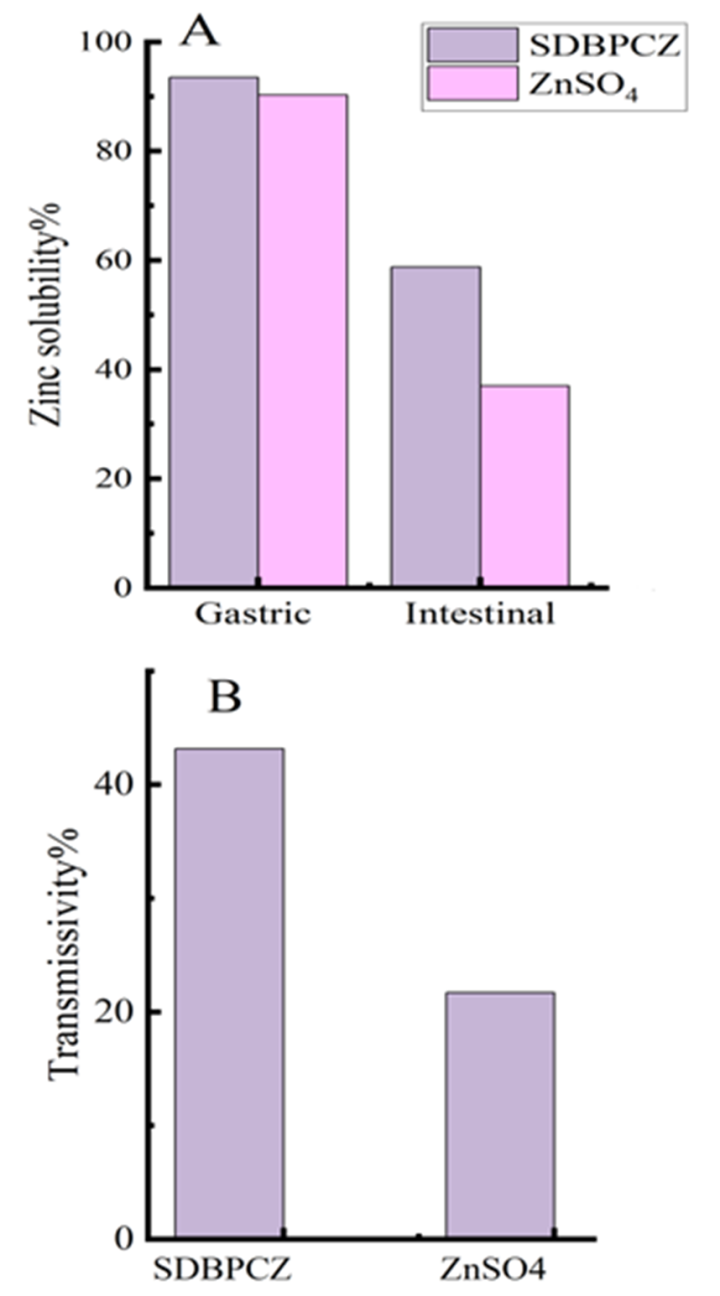
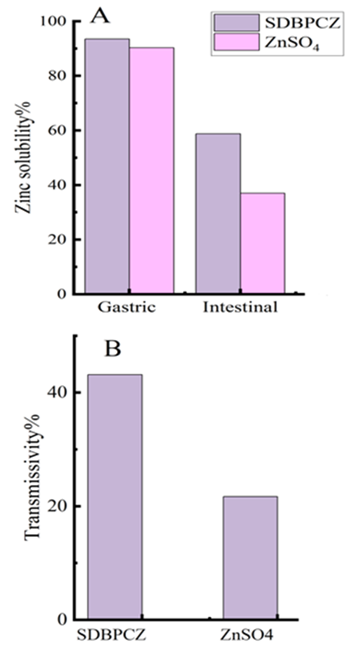
The results were showed in Fig.9A, the solubility rates of SDBPCZ and zinc sulfate were both at a high level of 93.46% and 90.24% in the gastric digestion stage. When transferred to the intestinal digestion stage, the zinc solubility of the two were 58.73% and 36.96%. Experimental results listed that in the pH range of the gastrointestinal tract, higher chelated zinc content was very important to improve the bioavailability of zinc ions in the physiological environment of the human gastrointestinal tract, which was consistent with research by Yonekura 33. In the gastric environment with pH 2.0, chelated zinc was beneficial to the transport of zinc to the intestinal environment, In alkaline intestinal environment with pH 7.6, chelated zinc prevent zinc from precipitating, so that it was effectively absorbed by intestinal epithelial cells 34, 35. Although inorganic zinc salts also had good solubility in the stomach, their solubility decreases significantly after entering the intestine. This was because the intestine was a more alkaline, and inorganic zinc ions formed zinc hydroxide precipitation, while peptide zinc chelates could still exist in the stomach and intestines more stably because of their relatively stable coordination bonds 34. Moreover, the solubility was better than inorganic zinc salt.
Figure 9B given the zinc transmittance of SDBPCZ and zinc sulfate during simulated intestinal digestion. Among them, the zinc permeability of SDBPCZ was significantly higher than zinc sulfate. This result was that zinc ions combine with small peptides and directly pass through the dialysis bag in molecular form, while more inorganic zinc ions will generate a precipitate, resulting in impermeability 36. As described above, the zinc solubility and permeability of SDBPCZ in the simulated intestine were higher than those of inorganic zinc salts, which was an excellent new zinc supplement.
In this study, a new zinc nutritional fortifier was prepared from deer blood and zinc sulfate. The response surface methodology (RSM) optimized the preparation process and the chelating rate reached 83.2% and zinc content was 21.3mg/mL, which provided an ideal process model for the preparation of deer blood polypeptide chelated zinc. The FTIR analysis demonstrated that both amino and carboxyl groups participated in the chelation with zinc. The scanning electron microscope results showed that the deer blood peptide and the chelate had completely different apparent morphology. Furthermore, SDBPCZ possessed stronger antioxidant activity and high stability towards gastrointestinal digestion. This study provided a theoretical basis for the development of zinc ion nutritional fortifier with sika deer blood, and improved the utilization of sika deer blood and the absorption of zinc.
The following supporting information can be downloaded at: Figure S1
The authors are grateful to the College of Chemistry and Life Sciences, Changchun University of Technology advice regarding and technological assistance with the experiments. This study was supported by grant from the Education Department of Jilin Provincial (Project number JJKH20220670KJ and JJKH20200905KJ).
The authors declare that they have no competing interests.
Data will be made available on request.
| [1] | MAARES M, HAASE H. A guide to human zinc absorption: general overview and recent advances of in vitro intestinal models[J]. Nutrients,2020,12(3):762. | ||
| In article | View Article PubMed | ||
| [2] | MARET W, SANDSTEAD H H. Zinc requirements and the risks and benefits of zinc supplementation[J]. Journal of trace elements in medicine and biology. 2006, 20(1):3-18. | ||
| In article | View Article PubMed | ||
| [3] | Wang C, Li B & Ao J.(2012). Separation and identification of zinc-chelating peptides from sesame protein hydrolysate using IMAC-Zn2+and LC-MS/MS. Food Chemistry, 134(2), 1231-1238. | ||
| In article | View Article PubMed | ||
| [4] | Wu H, Liu Z, Zhao Y & Zeng M.(2012). Enzymatic preparation and characterization of iron-chelating peptides from anchovy (Engraulisjaponicus) muscle protein. Food Research International, 48(2), 435-441. | ||
| In article | View Article | ||
| [5] | Akbar B, Niloufar N, Abolfazl M, Lofollah S, Ali K. Q & Soheyla V. (2013). Evaluation and comparison of zinc absorption level from 2-alkyle 3-hydroxy pyranon-zinc complexes and zinc sulfate in rat in vivo. Advanced Biomedical Research, 2(1), 77. | ||
| In article | View Article PubMed | ||
| [6] | Guo L, Harnedy PA, Li B, Hou H, Zhang Z, Zhao X, etal. Food protein-derived chelating peptides: biofunctional ingredients for dietary mineral bioavailability enhancement. Trends Food Sci Technology. (2014) 37: 92-105. | ||
| In article | View Article | ||
| [7] | Udechukwu MC, Collins SA, Udenigwe CC. Prospects of enhancing dietary zinc bioavailability with food-derived zinc-chelating peptides. Food Funct. (2016) 7: 4137-44. | ||
| In article | View Article PubMed | ||
| [8] | Luo J, Yao X, Soladoye O, Zhang Y, & Fu Y(2022). Phosphorylation modification of collagen peptides from fish bone enhances their calcium-chelating and antioxidant activity. Lwt, 155. | ||
| In article | View Article | ||
| [9] | Sun N, Wang T, Wang D, Cui P, Hu S, Jiang P, & Lin S (2020). Antarctic Krill Derived Nonapeptide as an Effective Iron-Binding Ligand for Facilitating Iron Absorption via the Small Intestine. Journal of Agricultural and Food Chemistry, 68(40), 11290-11300. | ||
| In article | View Article PubMed | ||
| [10] | Wenmin Wua, Lichao Heb, Yanhui Lianga, Lili Yuea, Weiming Penga, Guofeng Jina, Meihu Ma. Preparation process optimization of pig bone collagen peptide-calcium chelate using response surface methodology and its structural characterization and stability analysis. Food Chemistry. 284(2019) 80-89. | ||
| In article | View Article PubMed | ||
| [11] | Dang Hyok Yoon, Burtr, I.Lee.Detection Of Barium Ion Leaching From Barium Titanate Powder In Water By EDTA Titration[J]. Analytical Chemistry: An Indian Journal, 2005. | ||
| In article | |||
| [12] | Fu Y, Young J. F, & Therkildsen, M. (2017). Bioactive peptides in beef: Endogenous generation through postmortem aging. Meat Science, 123, 134-142. | ||
| In article | View Article PubMed | ||
| [13] | Kahle J, Hermann Wätzig. Interlaced Size Exclusion Chromatography for faster Protein Analysis[J]. European Journal of Pharmaceutics & Biopharmaceutics Official Journal of Arbeitsgemeinschaft Fur Pharmazeutische Verfahrenstechnik E V, 2018, 126:101. | ||
| In article | View Article PubMed | ||
| [14] | PAN F, SU T J, LIU Y. Extraction, purification and antioxidation of a polysaccharide from Fritillaria unibracteata var. wabuensis[J]. Environmental Science & Pollution Research, 2018, 112: 1073-1083. | ||
| In article | View Article PubMed | ||
| [15] | Sanchez-Moreno C, Larrauri JA, Saura-Calixto F. A procedure to measure the antiradical efficiency of polyphenols[J]. Sci Food Agric, 1998, 76: 270-276. | ||
| In article | View Article | ||
| [16] | Li X, Ouyang X, Cai R, Chen,D. 3',8''-Dimerization Enhances the Antioxidant Capacity of Flavonoids. Evidence from Acacetin and Isoginkgetin.2019, Molecules. 24, 2039. | ||
| In article | View Article PubMed | ||
| [17] | LI J P, GONG C, WANG Z Y, etal. Oyster-derived zinc-binding peptide modified by plastein reaction via zinc chelation promotes the intestinal absorption of zinc[J]. Marine drugs, 2019, 17(6): 341. | ||
| In article | View Article PubMed | ||
| [18] | WANG C, LI B, WANG B, etal. Degradation and antioxidant activities of peptides and zinc-peptide complexes during in vitro gastrointestinal digestion[J]. Food chemistry, 2015, 173: 733-740. | ||
| In article | View Article PubMed | ||
| [19] | Yao M, Lu W, Chen T, Wang W, Fu Y, Yang B, etal. (2014). Effect of metals ions on thermostable alkaline phytase from Bacillus subtilis YCJS isolated from soybean rhizosphere soil. Annals of Microbiology, 64(3), 1123-1131. | ||
| In article | View Article | ||
| [20] | Jung W. K, Lee B. J, & Kim, S. K. (2006). Fish-bone peptide increases calcium solubility and bioavailability in ovariectomised rats. British Journal of Nutrtion, 95(1), 124-128. | ||
| In article | View Article PubMed | ||
| [21] | Wen Huang, Yaqi Lan Wanwen Liao, Li Lin, Guo Liu, Hanmei Xu, Jianpeng Xue, Baoyan Guo, Yong Cao, Jianyin Miao. Preparation, characterization and biological activities of egg white peptides-calcium chelate. Food Science and Technology, 149(2021) 112035. | ||
| In article | View Article | ||
| [22] | Cui P, Sun N, Jiang P, Wang D, & Lin S. (2017). Optimised condition for preparing sea cucumber ovum hydrolysate-calcium complex and its structural analysis. International Journal of Food Science and Technology. 52(8), 1914-1922. | ||
| In article | View Article | ||
| [23] | Noureddini H, Kanabur M. Liquid-Phase catalytic oxidation of unsat urated fatty acids [J]. J.Am. Oil.Chem.Soc.1999, 76(3): 3052-3059. | ||
| In article | View Article | ||
| [24] | U T, ZHANG S, SHENG Y N, etal. Isolation and characterization of zinc-binding peptides from mung bean protein hydrolasates[J]. European Food Research and Technology, 2020(246): 113-124. | ||
| In article | View Article | ||
| [25] | WANG X, GAO A, CHEN Y, etal. Preparation of cucumber seed peptide-calcium chelate by liquid state fermentation and its characterization[J]. Food Chemistry, 2017, 229: 487-494. | ||
| In article | View Article PubMed | ||
| [26] | DA CHEN, LIU Z Y, HUANG W Q, etal. Purification and characterisation of a zinc-binding peptide from oyster protein hydrolysate[J]. Journal of functional foods, 2013, 5(2): 689-697. | ||
| In article | View Article | ||
| [27] | WU WM, HE LC, LIANG YH, etal. Preparation process optimization of pig bone collagen peptide-calcium chelate using response surface methodology and its structural characterization and stability analysis[J]. Food Chem, 2019, 284: 80-89. | ||
| In article | View Article PubMed | ||
| [28] | Zhang H, Zhao L, Shen Q, et al. Preparation of cattle bone collagen peptides-calcium chelate and its structural characterization and stability[J]. LWT- Food Science and Technology, 2021, 144(12): 111264. | ||
| In article | View Article | ||
| [29] | Wang N L, Xu Y M , Yi L, etal. Study on Amino Acid Composition and Antioxidant Activities of Deer Blood Oligopeptides[J]. The Food Industry, 2015. | ||
| In article | |||
| [30] | Tian Q, Fan Y, Hao L, Wang J, Xia C, Wang J, & Hou H. (2021). A comprehensive review of calcium and ferrous ions chelating peptides: Preparation, structure and transport pathways. Critical Reviews in Food Science and Nutrition. | ||
| In article | View Article | ||
| [31] | Chen M, & Li B. (2012). The effect of molecular weights on the survivability of casein-derived antioxidant peptides after the simulated gastrointestinal digestion. Innovative Food Science and Emerging Technologies, 16, 341–348. | ||
| In article | View Article | ||
| [32] | Zhao BL, Liu SL, Chen YS, Xin WJ. Scavenging effect of catechin on free radi- cals studied by molecular orbital calculation[J]. Zhongguo Yao Li Xue Bao. 1992,13:9-13. | ||
| In article | |||
| [33] | YONEKURA L, SUZUKI H. Some polysaccharides improve zinc bioavailability in rats fed a phytic acid-containing diet[J]. Nutrition Research, 2003, 23(3): 343-355. | ||
| In article | View Article | ||
| [34] | CHENG C, HUANG D C, ZHAO L Y, etal. Preparation and in vitro absorption studies of a novel polysaccharide-iron (III) complex from Flammulina velutipes[J]. International Jouanal of Biological Macromolecules,2019(132):801-810. | ||
| In article | View Article PubMed | ||
| [35] | WANG L L, WANG L L, SU C Y, etal.Characterization and degestion features of a novel polysaccharide-Fe (III) complex as an iron supplement[J]. Carbohydate Polymers, 2020, 249(41): 116812. | ||
| In article | View Article PubMed | ||
| [36] | CHEN D, LIU Z Y, HUANG W Q, etal. Purification and characterisation of a zinc-binding peptide from oyster protein hydrolysate[J]. Journal of Functional Food, 2013, 5(2): 689-697. | ||
| In article | View Article | ||
Published with license by Science and Education Publishing, Copyright © 2023 Tian Tian, Yao Sun, Wen-xuan Zhu, Xiao-chen Gao and Li-wen Tang
 This work is licensed under a Creative Commons Attribution 4.0 International License. To view a copy of this license, visit
http://creativecommons.org/licenses/by/4.0/
This work is licensed under a Creative Commons Attribution 4.0 International License. To view a copy of this license, visit
http://creativecommons.org/licenses/by/4.0/
| [1] | MAARES M, HAASE H. A guide to human zinc absorption: general overview and recent advances of in vitro intestinal models[J]. Nutrients,2020,12(3):762. | ||
| In article | View Article PubMed | ||
| [2] | MARET W, SANDSTEAD H H. Zinc requirements and the risks and benefits of zinc supplementation[J]. Journal of trace elements in medicine and biology. 2006, 20(1):3-18. | ||
| In article | View Article PubMed | ||
| [3] | Wang C, Li B & Ao J.(2012). Separation and identification of zinc-chelating peptides from sesame protein hydrolysate using IMAC-Zn2+and LC-MS/MS. Food Chemistry, 134(2), 1231-1238. | ||
| In article | View Article PubMed | ||
| [4] | Wu H, Liu Z, Zhao Y & Zeng M.(2012). Enzymatic preparation and characterization of iron-chelating peptides from anchovy (Engraulisjaponicus) muscle protein. Food Research International, 48(2), 435-441. | ||
| In article | View Article | ||
| [5] | Akbar B, Niloufar N, Abolfazl M, Lofollah S, Ali K. Q & Soheyla V. (2013). Evaluation and comparison of zinc absorption level from 2-alkyle 3-hydroxy pyranon-zinc complexes and zinc sulfate in rat in vivo. Advanced Biomedical Research, 2(1), 77. | ||
| In article | View Article PubMed | ||
| [6] | Guo L, Harnedy PA, Li B, Hou H, Zhang Z, Zhao X, etal. Food protein-derived chelating peptides: biofunctional ingredients for dietary mineral bioavailability enhancement. Trends Food Sci Technology. (2014) 37: 92-105. | ||
| In article | View Article | ||
| [7] | Udechukwu MC, Collins SA, Udenigwe CC. Prospects of enhancing dietary zinc bioavailability with food-derived zinc-chelating peptides. Food Funct. (2016) 7: 4137-44. | ||
| In article | View Article PubMed | ||
| [8] | Luo J, Yao X, Soladoye O, Zhang Y, & Fu Y(2022). Phosphorylation modification of collagen peptides from fish bone enhances their calcium-chelating and antioxidant activity. Lwt, 155. | ||
| In article | View Article | ||
| [9] | Sun N, Wang T, Wang D, Cui P, Hu S, Jiang P, & Lin S (2020). Antarctic Krill Derived Nonapeptide as an Effective Iron-Binding Ligand for Facilitating Iron Absorption via the Small Intestine. Journal of Agricultural and Food Chemistry, 68(40), 11290-11300. | ||
| In article | View Article PubMed | ||
| [10] | Wenmin Wua, Lichao Heb, Yanhui Lianga, Lili Yuea, Weiming Penga, Guofeng Jina, Meihu Ma. Preparation process optimization of pig bone collagen peptide-calcium chelate using response surface methodology and its structural characterization and stability analysis. Food Chemistry. 284(2019) 80-89. | ||
| In article | View Article PubMed | ||
| [11] | Dang Hyok Yoon, Burtr, I.Lee.Detection Of Barium Ion Leaching From Barium Titanate Powder In Water By EDTA Titration[J]. Analytical Chemistry: An Indian Journal, 2005. | ||
| In article | |||
| [12] | Fu Y, Young J. F, & Therkildsen, M. (2017). Bioactive peptides in beef: Endogenous generation through postmortem aging. Meat Science, 123, 134-142. | ||
| In article | View Article PubMed | ||
| [13] | Kahle J, Hermann Wätzig. Interlaced Size Exclusion Chromatography for faster Protein Analysis[J]. European Journal of Pharmaceutics & Biopharmaceutics Official Journal of Arbeitsgemeinschaft Fur Pharmazeutische Verfahrenstechnik E V, 2018, 126:101. | ||
| In article | View Article PubMed | ||
| [14] | PAN F, SU T J, LIU Y. Extraction, purification and antioxidation of a polysaccharide from Fritillaria unibracteata var. wabuensis[J]. Environmental Science & Pollution Research, 2018, 112: 1073-1083. | ||
| In article | View Article PubMed | ||
| [15] | Sanchez-Moreno C, Larrauri JA, Saura-Calixto F. A procedure to measure the antiradical efficiency of polyphenols[J]. Sci Food Agric, 1998, 76: 270-276. | ||
| In article | View Article | ||
| [16] | Li X, Ouyang X, Cai R, Chen,D. 3',8''-Dimerization Enhances the Antioxidant Capacity of Flavonoids. Evidence from Acacetin and Isoginkgetin.2019, Molecules. 24, 2039. | ||
| In article | View Article PubMed | ||
| [17] | LI J P, GONG C, WANG Z Y, etal. Oyster-derived zinc-binding peptide modified by plastein reaction via zinc chelation promotes the intestinal absorption of zinc[J]. Marine drugs, 2019, 17(6): 341. | ||
| In article | View Article PubMed | ||
| [18] | WANG C, LI B, WANG B, etal. Degradation and antioxidant activities of peptides and zinc-peptide complexes during in vitro gastrointestinal digestion[J]. Food chemistry, 2015, 173: 733-740. | ||
| In article | View Article PubMed | ||
| [19] | Yao M, Lu W, Chen T, Wang W, Fu Y, Yang B, etal. (2014). Effect of metals ions on thermostable alkaline phytase from Bacillus subtilis YCJS isolated from soybean rhizosphere soil. Annals of Microbiology, 64(3), 1123-1131. | ||
| In article | View Article | ||
| [20] | Jung W. K, Lee B. J, & Kim, S. K. (2006). Fish-bone peptide increases calcium solubility and bioavailability in ovariectomised rats. British Journal of Nutrtion, 95(1), 124-128. | ||
| In article | View Article PubMed | ||
| [21] | Wen Huang, Yaqi Lan Wanwen Liao, Li Lin, Guo Liu, Hanmei Xu, Jianpeng Xue, Baoyan Guo, Yong Cao, Jianyin Miao. Preparation, characterization and biological activities of egg white peptides-calcium chelate. Food Science and Technology, 149(2021) 112035. | ||
| In article | View Article | ||
| [22] | Cui P, Sun N, Jiang P, Wang D, & Lin S. (2017). Optimised condition for preparing sea cucumber ovum hydrolysate-calcium complex and its structural analysis. International Journal of Food Science and Technology. 52(8), 1914-1922. | ||
| In article | View Article | ||
| [23] | Noureddini H, Kanabur M. Liquid-Phase catalytic oxidation of unsat urated fatty acids [J]. J.Am. Oil.Chem.Soc.1999, 76(3): 3052-3059. | ||
| In article | View Article | ||
| [24] | U T, ZHANG S, SHENG Y N, etal. Isolation and characterization of zinc-binding peptides from mung bean protein hydrolasates[J]. European Food Research and Technology, 2020(246): 113-124. | ||
| In article | View Article | ||
| [25] | WANG X, GAO A, CHEN Y, etal. Preparation of cucumber seed peptide-calcium chelate by liquid state fermentation and its characterization[J]. Food Chemistry, 2017, 229: 487-494. | ||
| In article | View Article PubMed | ||
| [26] | DA CHEN, LIU Z Y, HUANG W Q, etal. Purification and characterisation of a zinc-binding peptide from oyster protein hydrolysate[J]. Journal of functional foods, 2013, 5(2): 689-697. | ||
| In article | View Article | ||
| [27] | WU WM, HE LC, LIANG YH, etal. Preparation process optimization of pig bone collagen peptide-calcium chelate using response surface methodology and its structural characterization and stability analysis[J]. Food Chem, 2019, 284: 80-89. | ||
| In article | View Article PubMed | ||
| [28] | Zhang H, Zhao L, Shen Q, et al. Preparation of cattle bone collagen peptides-calcium chelate and its structural characterization and stability[J]. LWT- Food Science and Technology, 2021, 144(12): 111264. | ||
| In article | View Article | ||
| [29] | Wang N L, Xu Y M , Yi L, etal. Study on Amino Acid Composition and Antioxidant Activities of Deer Blood Oligopeptides[J]. The Food Industry, 2015. | ||
| In article | |||
| [30] | Tian Q, Fan Y, Hao L, Wang J, Xia C, Wang J, & Hou H. (2021). A comprehensive review of calcium and ferrous ions chelating peptides: Preparation, structure and transport pathways. Critical Reviews in Food Science and Nutrition. | ||
| In article | View Article | ||
| [31] | Chen M, & Li B. (2012). The effect of molecular weights on the survivability of casein-derived antioxidant peptides after the simulated gastrointestinal digestion. Innovative Food Science and Emerging Technologies, 16, 341–348. | ||
| In article | View Article | ||
| [32] | Zhao BL, Liu SL, Chen YS, Xin WJ. Scavenging effect of catechin on free radi- cals studied by molecular orbital calculation[J]. Zhongguo Yao Li Xue Bao. 1992,13:9-13. | ||
| In article | |||
| [33] | YONEKURA L, SUZUKI H. Some polysaccharides improve zinc bioavailability in rats fed a phytic acid-containing diet[J]. Nutrition Research, 2003, 23(3): 343-355. | ||
| In article | View Article | ||
| [34] | CHENG C, HUANG D C, ZHAO L Y, etal. Preparation and in vitro absorption studies of a novel polysaccharide-iron (III) complex from Flammulina velutipes[J]. International Jouanal of Biological Macromolecules,2019(132):801-810. | ||
| In article | View Article PubMed | ||
| [35] | WANG L L, WANG L L, SU C Y, etal.Characterization and degestion features of a novel polysaccharide-Fe (III) complex as an iron supplement[J]. Carbohydate Polymers, 2020, 249(41): 116812. | ||
| In article | View Article PubMed | ||
| [36] | CHEN D, LIU Z Y, HUANG W Q, etal. Purification and characterisation of a zinc-binding peptide from oyster protein hydrolysate[J]. Journal of Functional Food, 2013, 5(2): 689-697. | ||
| In article | View Article | ||