Gamma-aminobutyric acid (GABA) is the main inhibitory neurotransmitter of the central nervous system and has various physiological functions. Recently, researchers have become interested in GABA-rich functional food design. Our laboratory obtained a strain named Lactobacillus brevisZ-215 with a high GABA production, which was used in previous studies. In this paper, we attempted to develop a GABA-rich drunk crab product using L. brevisZ-215 and crab by-products fermentation broth. The results revealed that the drunk crab products with the addition of bacterial and fermentation broths have high GABA content, close to 3 mg/mL. Furthermore, we improved the nutrition and flavor of the functional drunk crab. Additionally, we analyzed the shelf-life of drunken crabs by measuring the GABA content, pH, total volatile basic nitrogen, thiobarbituric acid, biogenic amine content, and colony count. The results of the measurements showed that the shelf-life was significantly longer compared to the uninoculated drunken crab and that the biogenic amine content was significantly suppressed.
Gamma-aminobutyric acid (GABA) is a small molecular weight non-protein amino acid widely found in nature, and it is usually derived from L-glutamate catalyzed by glutamic acid decarboxylase (GAD) in the body. Also, GABA is widely found in animals, plants, and microorganisms 1. Furthermore, GABA is found to have many excellent functionalities, such as regulating blood pressure, improving liver and kidney functions, anti-cancer effects, preventing obesity, regulating hormone secretion, promoting reproduction, and controlling asthma. Additionally, GABA has the following effects on the body: improving lipid metabolism, treating depression, improving insomnia, analgesia, eliminating odor, and detoxification 2. For GABA preparation, microbial fermentation is the most widely used method, which is now being applied to food products. Sanchart et al. 3 screened lactic acid bacteria CS3 and CS5 from Thai-fermented shrimp products, with both strains producing more than 8 mg/mL of GABA, and the two strains inhibited foodborne pathogens and spoilage bacteria and no virulence genes were detected, indicating that these two strains are safe with high GABA production and other beneficial properties. Cho et al. 4 used the screened GABA-producing Lactobacillus sakeiB2-16a to ferment mung bean extracts to obtain fermented products with 4% GABA, lactic acid, and naturally hydrolyzed mung bean peptides, and the fermented products obtained are found to have good anti-inflammatory effects in vitro using animal models. Nowadays, GABA is widely used as a food additive, and animal feed additive, as well as in cosmetics and pharmaceuticals, and many GABA-enriched functional products have been developed 5. Almost all studies on GABA functional foods are on the use of GABA in various fermented soybean products and beverages, such as yogurt; however, only a few reports are available on the use of high GABA-producing strains in aquatic products 6. In Southern China, drunk crab is a popular delicacy because of its fresh and tender meat, rich aroma of wine, sweetness, and nutrition. However, the special nature of the storage and transportation of aquatic products can lead to the dismemberment and death of crabs during the salvage process, which can increase harmful ingredients that can only be discarded, resulting in a significant decrease in yield and profit. In this study, we attempted to inoculate both the obtained L. brevisZ-215 and the fermentation broth obtained using crab by-products into a drunken crab to obtain a GABA-rich functional drunk crab product. The nutritional value and physicochemical indexes of the drunk crab products, as well as the shelf-life of the food, were measured to determine whether they are of realistic production significance 7.
L. brevisZ-215 is a lactic acid bacterium with the ability of high GABA production. Strain screening and fermentation optimization of the bacterium have been submitted in a separate article. The fermentation broth was obtained using crab by-products, and the preparation process and conditions of this fermentation broth have been submitted in a separate paper, as above.
2.2. Preparation of GABA-enriched Functional Drunken CrabThe drunk crab was made in China hundreds of years ago and was extremely popular in the south of China. Healthy river crabs purchased from the market are first placed in sterile water to spit out the sand, then brushed and steamed for 10 min in a pot. Fifty grams of the crab samples were weighed and then packed in a sealed jar in a sterile environment with a 1:1 ratio with marinade (4% salt, 5% sugar, 14% alcohol, and 2% spices) and sealed. The crap samples were grouped as follows: group 1 was drunk crab as a blank control, group 2 with 10% lactic acid bacteria broth, group 3 with 10% fermentation broth, and group 4 with 10% bacterial broth and 10% fermentation broth. The fermentation condition was set at 25°C for 3 days, then transferred to storage at 4°C. Additionally, we determined the change in the quality of drunken crab products in each group.
2.3. Determination of GABA Content in Functional Drunken Crabs Using HPLCThe detection of GABA using high-performance liquid chromatography (HPLC) was modified according to the method of Tuberosoet et al. 8. The appropriate amount of crab homogenates was weighed and diluted 10 times, and 1 mL of NaHCO3 solution (0.5 mol/L) and 0.2 mL of 1% acetonitrile solution of 2–4 dinitrofluorobenzene (FDNB) were added sequentially. Subsequently, the solution was placed in a water bath and shaken well. The phosphate-buffered saline (PBS) solution was used to fix the volume, which was filtered by centrifugation as a sample solution. The samples were analyzed on an HPLC (Agilent 1100, USA) equipped with a C18 column. Gradient elution was performed with 35% of solvent A (50% acetonitrile, 50% ultrapure water) and 65% of solvent B (PBS solution containing 3% tetrahydrofuran, pH 6.8) at a flow rate of 1 mL/min. The absorbance was measured at 254 nm using an ultraviolet (UV) spectrophotometer.
2.4. Determination of pH, TVB-N, TBA, and Microstructure of Functional Drunk CrabsFirst, five grams of crab meat was weighed accurately after churning. Then, 45 mL of ultrapure water was added and shaken well, then left for 30 min and afterward filtered, and the filtrate was taken to determine the pH value using a pH meter. The determination of the concentration of total volatile basic nitrogen (TVB-N) was achieved according to the automatic Kjeldahl apparatus method of China’s national food safety regulation. The detailed steps were presented by Chen and Feng 9. With some modifications according to the method of Nian et al. 10, the shell of the drunk crab was peeled off and stirred, 5 g of the sample was weighed and placed in a shaker and 7.5% of trichloroacetic acid solution was added and shaken for 30 min. Afterward, 5 mL of the supernatant was filtered and 5 mL of 0.02 mol/L thiobarbituric acid (TBA) solution was added, shaken well, and then cooled in a boiling water bath, centrifuged for 10 min, and 5 mL of trichloromethane was added. The supernatant was separated after the mixture, and the colorimetric measurements were performed at the wavelengths of 532 and 600 nm, respectively.
 | (1) |
With some modifications according to the method of Kamalakanth et al. 11, the same part of the crab meat was chosen roughly 1×1×1 cm3 in size. Then, PBS solution was added to slowly rinse the sample. Afterward, 2.5% glutaraldehyde solution was added for fixed immersion for more than 4 h to rinse clean for gradient dehydration at 30%, 40%, 50%, 60%, 70%, 80%, 90%, and anhydrous ethanol was added for dehydration and drying. After the sample was successfully prepared, it was sprayed with gold and then scanned and photographed by electron microscope.
2.5. Determination of Amino Acid Composition, Fatty Acid Composition, and Volatile Substances of Functional Drunk CrabThe crab meat was accurately weighed in a hydrolysis tube and hydrolyzed by adding hydrochloric acid (HCl) solution, and the volume was fixed after hydrolysis. An appropriate amount of the sample was taken and blown with nitrogen. After adding HCl and acetonitrile, the sample was filtered and reserved. A C18 reversed-phase column (250 mm×4.6 mm×5 μm) was used with a column temperature of 40°C, injection volume of 10 μL, and UV detection wavelength of 254 nm. The mobile phase A was made up of 97% 0.1 mol/L anhydrous sodium acetate plus 3% of acetonitrile solution, adjusting the pH to 6.5. The mobile phase B was made up of 80% acetonitrile and 20% water 12. To evaluate the quality of amino acids in the samples, the amino acid compositions of the samples from the four treatment groups were compared. Also, the nutritional value was assessed according to the FAO/WHO optimal ratio model 13.
The appropriate amount of crab meat was weighed, and gallic acid, ethanol, and HCl were added, hydrolyzed, and cooled to room temperature. Ethanol was again added to the cooled sample and mixed, and the hydrolysis solution was transferred to a partition funnel. Then, the sample was rinsed three times with a mixture of ether and petroleum ether, dried, and set aside. After drying, the sample was added to sodium hydroxide methanol solution, and after a water bath, boron trifluoride methanol solution was added, followed by n-hexane for extraction 12. The sample was filtered and then determined on the HPLC (Agilent 1100, USA). The chromatographic column HP-88 (100m × 0.25 mm × 0.20 μm) with a flame ionization detector, detector temperature of 250°C, inlet temperature of 250°C, and carrier gas flow rate of 0.5 mL/min were used. A temperature of 130°C was maintained for 5 min and then ramped up to 240°C at a rate of 4°C/min and maintained for 30 min. Split sample feed was maintained at a ratio of 10:1.
 | (2) |
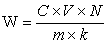
W: the content of each fatty acid in the specimen (mg/kg).
C: concentration of fatty acid methyl ester in the specimen determination solution (mg/L).
V: volume of fixed volume (mL).
K: conversion factor of each fatty acid methyl ester into fatty acid.
N: dilution multiple.
M: weighing mass of the specimen (g).
With some modifications according to the method of Anjith K 14, the sample was weighed and saturated NaCl solution and 5 mol/L of the internal standard 2-4-6 trimethyl pyridine (TMP) were added in 20-mL headspace vials and mixed well. The headspace vials were then equilibrated at room temperature for 10 min, and then a solid-phase microextraction (SPME) syringe was inserted into the silicone rubber of the headspace vials. The CAR/PDMS extraction head was extended at 40°C. The sample was sorbed in a water bath at 40°C for 45 min. After adsorption, the sample was placed into the gas chromatography-mass spectrometry (GC-MS) inlet and resolved at 250°C for 5 min. After 5 min of thermal desorption, GC-MS was performed (Agilent 6890N-5975B USA). The chromatographic conditions were as follows: a flexible capillary column (60 m×0.32 mm×0.25 μm) was used and the inlet temperature was maintained at 250 °C for 3 min. The sample was injected in the unsplit mode with a carrier gas of Helium at a flow rate of 0.8 mL/min; the vaporization chamber temperature was 240 °C.
2.6. Determination of the Shelf-life of Functional Drunk CrabsAfter fermentation, the four treatment groups were stored at 4°C. Since commercially available drunken crab products usually have a shelf-life of 30 days, the GABA content, pH, TVB-N, TBA, biogenic amines, and total bacterial count in control and experimental groups were measured to determine whether the shelf-life of functional drunken crabs could be extended.
With some modifications according to the method of Onal A, Tuberoso et al. 15, an appropriate amount of sample was taken and perchloric acid was added, shaken well, and put into a centrifuge (GL-ZZM Saite Xiang Yi Centrifugal Instruments Co., Ltd.), and this experiment was repeated once to take its supernatant.
The NaCl solution, NaHCO3 solution, and danyldichloride-derivative solution were added to the sample in the ratio of 1:3:20. After 45 min of reaction, 25% concentrated ammonia and a certain amount of acetonitrile was added, and the mixture was placed in a bottle. The determination was conducted via HPLC (Agilent 1100, USA) using a C18 column (150 mm × 4.6 mm × 5 um); the column temperature was adjusted to 30°C. The total proportion of the mixture comprises mobile phase A, which is water, accounted for 40% of the total proportion, and mobile phase B, which is acetonitrile, accounted for 60% of the total proportion. Each injection was 20 uL and lasted for 12 min, and the UV detection wavelength was 254 nm.
The number of fermented organisms was calculated using the plate counting method. The fermentation broth was diluted in a gradient, and the plate was coated by selecting a suitable gradient and incubated for some time. The results were expressed as the logarithm of the number of viable bacteria (mL−1) 16.
2.7. Statistical AnalysisChemical and microbiological assays, performed in duplicate, were elaborated according to the following methods: t-test procedure or nonparametric one-way ANOVA, followed by SPSS test (Statistica 7.0 software package, Stat Software Inc, Tulsa, OK, USA). Differences were reported at a significance level of P ≤ 0.05.
The fermentation temperature was determined to be 25°C. After 3 days of fermentation, the GABA content, pH, TBA, and TVB-N of the experimental and blank control groups were measured to determine the best treatment group.
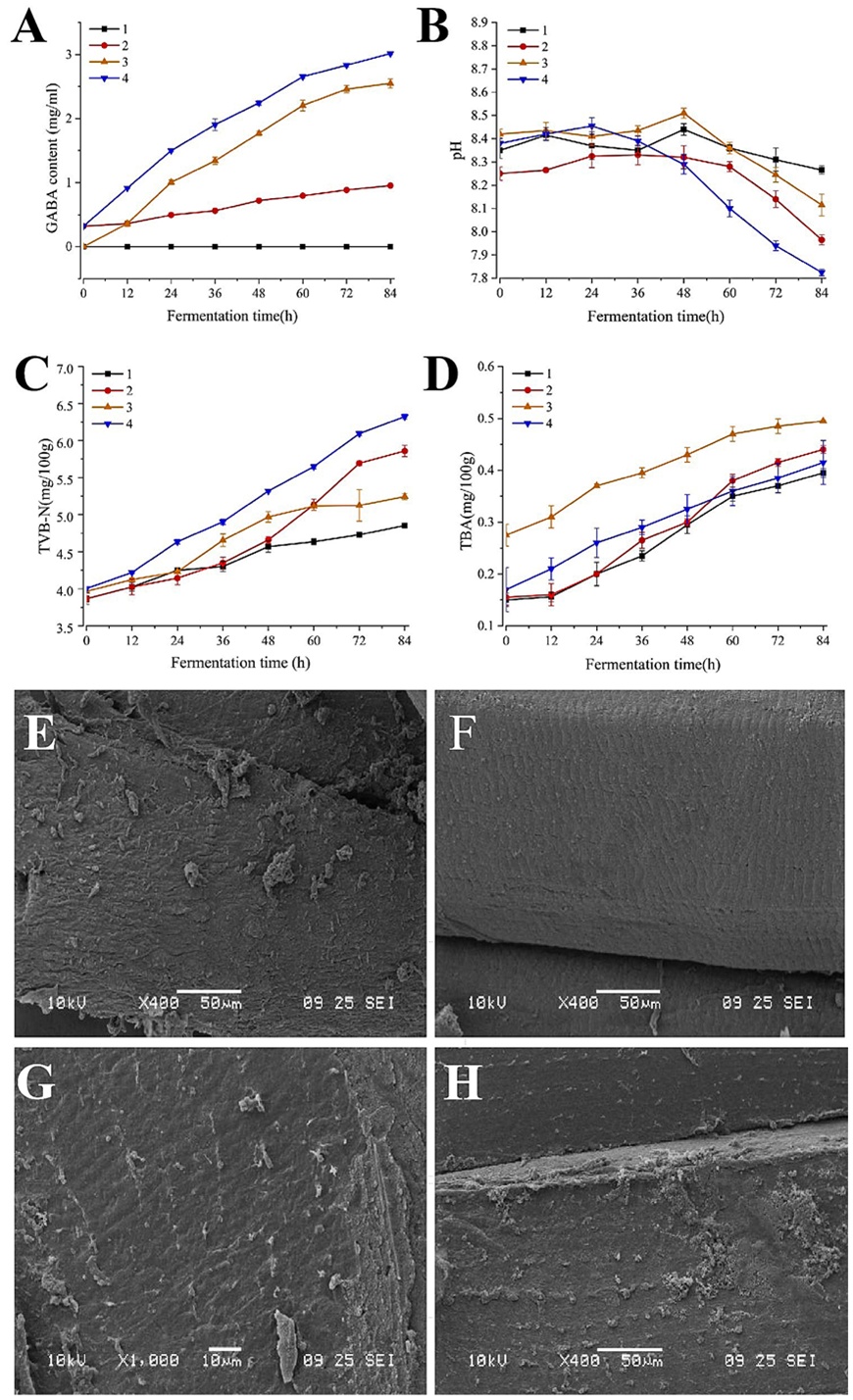
From Figure 1A, there was no GABA production after fermentation as the blank group did not contain L. brevisZ-215. Group 2 still contained a small amount of L. brevisZ-215 because the fermentation broth contained GABA and the fermentation broth was added after centrifugation under aseptic conditions. Group 3 had a dramatic increase in GABA production between 12 and 24 hours, reaching 2.55 mg/mL after 8 hours of fermentation. After 24 h, group 3 showed a steady and slow increase in GABA production as L. brevisZ-215 grew and multiplied in the right environment, but the initial number of live bacteria was too low. Group 4 showed consistently higher production of GABA than the product with only bacterial broth as the product in group 4 contained both fermentation and bacterial broth components. From there, it can be seen that the addition of bacterial and fermentation solutions can cause a higher yield of drunk crab products.

In Figure 1B, the initial pH of the product was adjusted to 5.5 to facilitate better fermentation of the product to produce GABA, and it was difficult to identify the factors affecting the overall change in the pH during the fermentation process due to osmosis. To determine the quality of the product, pH can only be used as an auxiliary factor, and it is impossible to judge the freshness of the product separately, but it needs to be integrated with other indicators 17. Group 1 showed less change in pH during the fermentation process, tending to a gentler decreasing trend. Group 2 increased the pH after 12 h due to the growth and fermentation of the strain, but the pH of the product dropped sharply again in the later stage of fermentation due to the production of lactic acid. Group 3 maintained the initial pH until 24 h and increased after 24 h due to the growth of a few strains of bacteria present in the fermentation broth, decomposing amino acids, proteins, and other components, and then decreased due to the production of lactic acid. Group 4 showed a sharp increase in pH for 36 h mainly due to the growth and fermentation of the strains taking the major part, and then a sharp decrease due to the rise in lactic acid production, which took the main part.
In Figure 1C, it can be seen that due to the addition of L. brevisZ-215 during the fermentation process, which produces GABA in the fermentation, the TVB-N values increased and were higher in groups 2, 3, and 4, than in the blank group. The TVB-N values were positively proportional to the production of GABA 18.
The TBA value provides insight into lipid oxidation 19. Figure 1D shows that the TBA content of group 1 has been on a slow rise and at a higher level. The TBA content of group 2 slowly rose at the beginning then rose faster and became higher than the other treatment groups. The TBA content of group 3 has been at a higher level for a long period because the fermentation solution is the ultimate product obtained by fermenting the crab by-products by Lactobacillus short, so the lipids and other substances in the crab were decomposed. The TBA content of group 4 had a higher level in the early stage but increased slowly in the later stage. Furthermore, it can be seen that group 4 is the treatment group with the slowest lipid oxidation, except for the difference in lipid content between male and female crabs.
3.2. Microstructural Changes in the Four Treatment Groups during FermentationThe four different treatment groups 1, 2, 3, and 4 were observed at 400x and 1000x and photographed, as shown in Figure 1E, 1F, 1G, and 1H. By observation, it can be seen that the crab meat of all four treatment groups at different magnifications was firm, with tightly constructed fibers of the muscle and clear contours with only a few gaps. The meat surfaces of treatment groups 2 and 4 were smoother than those of the other two groups, and the meat surface of treatment group 1 had a coarser microstructure.
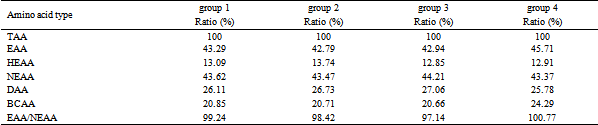
3.3. Changes in Nutrient Composition after FermentationThe four groups were subjected to the determination of amino acids and then categorized according to the composition and content of amino acids, as shown in Table 1 and Table 2. Some common amino acids were detected in the samples (tryptophan was not analyzed due to acid treatment), including seven essential amino acids (EAA). Two semi-essential amino acids were detected, namely, histidine and arginine. There were eight non-essential amino acids (NEAA).
From Table 2, it can be seen that the EAA content of the treatment groups increased, with treatment group 4 reaching a total of 45.71% EAA, ensuring that the product contains the EAA required for humans. The fresh-taste amino acids included aspartic acid, glutamic acid, glycine, and alanine, and their content in each of the four treatment groups reached more than 25%, and the difference was small, so it could be seen that the drunk crab products were tasty 20. Branched-chain amino acids (BCAA) contribute to protein synthesis and are useful in protecting the liver, lowering cholesterol, and inhibiting the value-added of cancer cells, as seen in Table 1. The BCAA content in each of the four treatment groups was more than 20%, with the content in treatment group 4 reaching 24.29% and the highest among the four groups.
According to the standards proposed by FAO/WHO, proteins with EAA/total amino acids (TAA) of about 40% and EAA/NEAA of about 60% or more are considered high-quality proteins 21. The EAA/TAA in the four treatment groups in this experiment was 43.29%, 42.79%, 42.94%, and 43.70%, respectively, and the EAA/NEAA was 99.24%, 98.42%, 97.14%, and 100.77%, respectively, as shown in Table 4, all of which met the FAO/WHO standard amino acid composition balance and were of high-quality protein. The EAA Index (EAAI) is one of the most commonly used indicators to evaluate the nutritional value of proteins 22. The EAAI values for high-quality protein sources are greater than 95; good protein sources have EAAI values between 86 and 95; usable protein sources have EAAI values between 75 and 86; and unsuitable protein sources have EAAI values below 75 23. The data in Table 4 show that among the four treatment groups, the EAAI value of treatment group 1 was lower and can be classified as a usable protein source, while the EAAI values of treatment groups 2 and 4 were 95.24 and 108.94, respectively, both of which are high-quality protein sources.
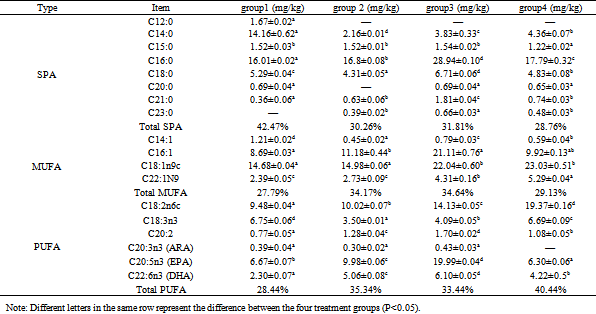
The fatty acids contained in the four treatment groups after measurement are shown in Table 3. In group 1, 17 fatty acids were detected, with the most saturated fatty acid content (SFA) at 42.47%. In group 2, 17 fatty acids were detected, with a higher content of polyunsaturated fatty acids (PUFA) of 35.34%. In group 3, 18 fatty acids were detected, with a higher content of monounsaturated fatty acids (MUFA) of 34.64%. In group 4, 17 fatty acids were detected, with the highest PUFA content of 40.44%.
According to the FAO/WHO, the recommended SFA:MUFA:PUFA ratio is 1:1:1 24. This ratio between groups 2 and 3 is close to the recommended standard, but PUFA is more beneficial to human health given that humans consume a large amount of SFA in the course of their diet. Table 3 shows that the PUFA content of group 4 was as high as 40.44%, indicating that the PUFA content increased after the addition of the bacterial and fermentation broths, making the product more health-oriented.
PUFAs are classified into n-3, n-6, n-7, n-9, etc. according to the position of the carbon atom attached to the first double bond at the methyl end. The biological values of the n-3 and n-6 PUFAs are higher, and according to research, they have a series of effects, such as lowering blood lipids, lowering blood sugar, lowering cholesterol, and anti-cancer 25. Table 2 shows that except for group 1, the n-6 and n-3 series ∑ PUFA were relatively high in the other three treatment groups, so it can be seen that both the direct addition of L. brevisZ-215 and the addition of fermentation broth made the product more nutritious.
Docosahexaenoic acid (DHA) and eicosapentaenoic acid (EPA), which are classified as PUFA, has one of the most competitive nutrients in the market nowadays, and they are essential fatty acids for the normal growth and development of the human body, as well as the most important parts of the brain and retina 26, 27. All the other three treatment groups showed an increase in DHA and EPA content relative to group 1 after fermentation, with group 3 having the highest content, speculated to be due to the large amount of DHA and EPA produced after using the fermentation broth, which was then preserved in the drunk crab products, whereas the DHA and EPA in group 4 were probably absorbed and utilized by L. brevisZ-215.
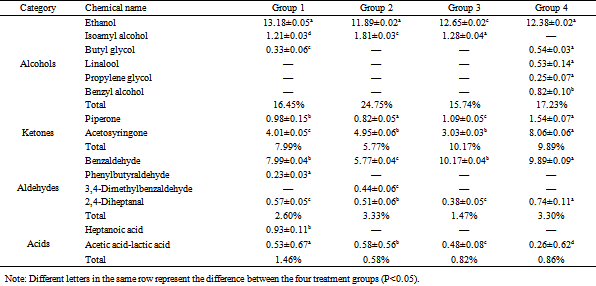
The volatiles of the four groups was collected using headspace-SPME (HS-SPME) and analyzed by GC-MS, and some of the data obtained are listed in Table 5. The various compounds were explained in detail based on the data in Table 5.
Alcohols are on the one hand a source of yellow wine added to the surface of drunken crab products and on the other hand related to carbohydrate fermentation metabolism 28. The higher the proportion of alcohol, the better the fruitiness and freshness of the food. Group 4 alcohols have more variety groups and therefore, richer taste.
Ketones are mainly associated with lipid oxidation; therefore, they contribute to the production of milk flavor. According to Table 5, ketones are mainly piperonones and acetosyringone, and the source is aromatic spices, such as aniseed 29. In group 3, the high content of cyclobutanones, which originated from lipid oxidation, echoes the highest fatty acid content in the group in the previous section of the fatty acid analysis, indicating that its Z-215 is fermented to produce GABA while also inducing fat oxidation.
Aldehydes are associated with lipid oxidation and are mainly produced due to the oxidation of unsaturated fatty acids, such as oleic and linoleic acids, and the degradation of amino acids 28. Aldehydes have a lower threshold compared to ketones; therefore, they contribute more to the product, resulting in fruity and creamy aromas. In groups 2 and 4, the aldehyde content with the addition of the strain is relatively high, and the taste of the crab meat from these two groups will be more mellow because of the higher aldehyde content, which is due to the addition of the bacteria and fermentation using unsaturated fatty acids to degrade amino acids, etc.
The acid compounds were mainly produced from the fermentation of lactic acid bacteria and the degradation of BCAAs 28. Among the four treatment groups, the acid compound content in group 1 was the highest mainly due to its high heptanoic acid content of 0.93%, which has a putrid odor, and it was evident that group 1 produced an unpleasant odor 30. Also, note that acetic acid and lactic acid have a slightly acidic odor.
After fermentation, the four treatment groups were stored at 4°C. Given that the shelf-life of commercially available drunk crab products is usually 30 days, the physicochemical indexes of the four treatment groups were measured to determine whether the shelf-life of the product with L. brevisZ-215 was changed while optimizing the nutrition of the product.
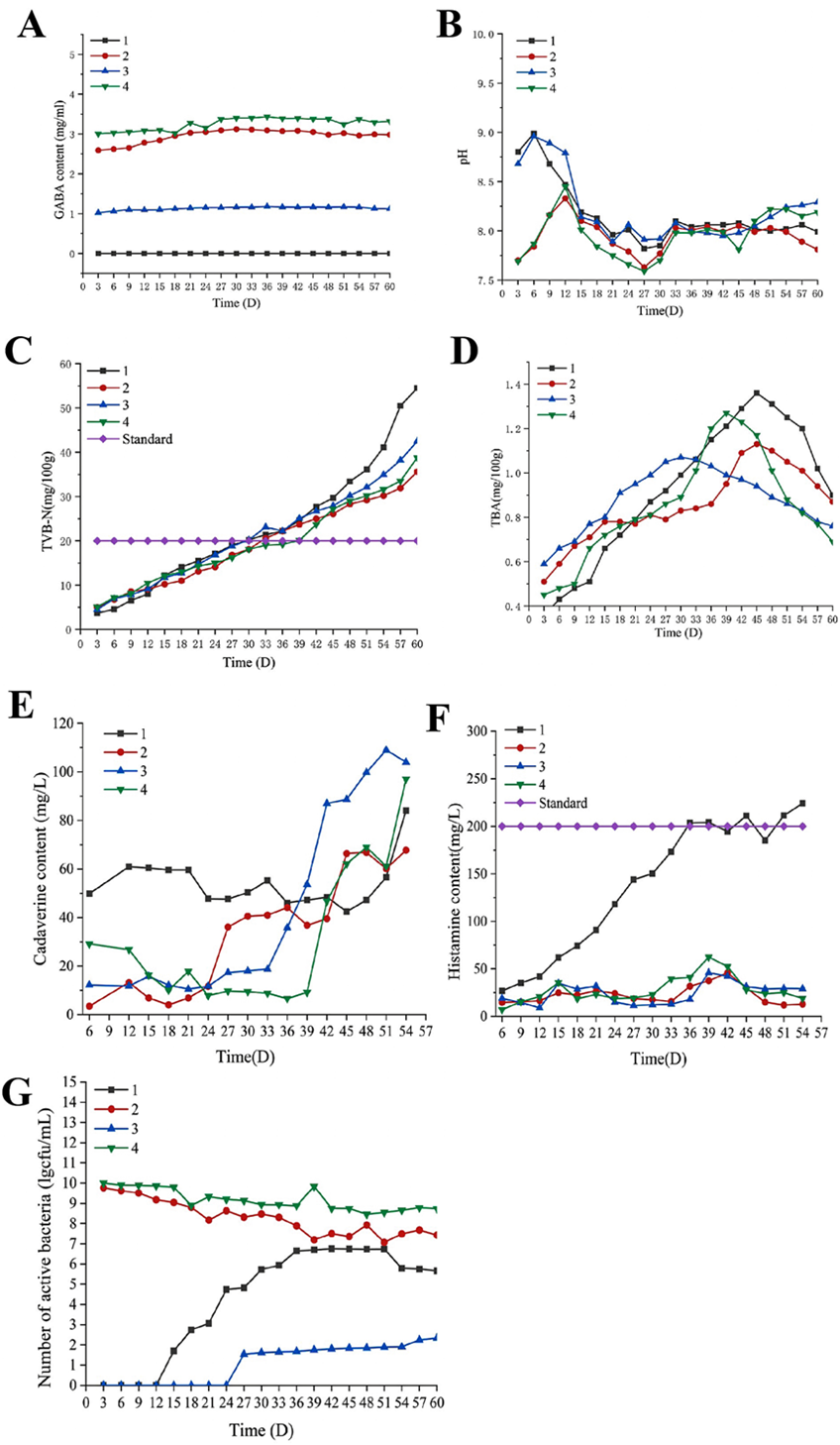
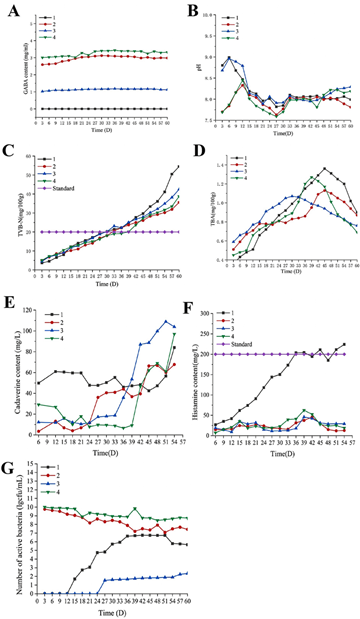
The changes in the production of GABA in the four different treatment groups of the product in 60 days are shown in Figure 2A. It can be seen that the increase in the production of GABA was mainly due to the changes during the fermentation period, which was unchanged in 60 days, indicating that L. brevisZ-215 was unable to continue the production of GABA using the product at 4°C.
The changes in the pH of the four groups during storage are shown in Figure 2B. The initial pH of the product is 5.5, and osmosis will make the pH of the crab the same as that of the marinade, so the pH content is used only as a reference for the product properties and cannot determine whether the product has deteriorated or not. It can be seen from the graph that the pH of the product has been in a decreasing trend and only stabilized around day 21, remaining around 8.0. It was determined that the increase in pH due to protein decomposition of the product on day 21 is consistent with the osmotic effect.
The TVB-N values of the four treatment groups are shown in Figure 2C. The national standard sets 20.00 mg/100 g as the maximum limit value of TVB-N. From the figure, it can be seen that treatment groups 1 and 3 had reached the national maximum limit on day 27, indicating that the product had deteriorated. Furthermore, it can be seen that these two treatment groups without the addition of L.brevisZ-215 had relatively faster spoilage, and it is conjectured that L. brevisZ-215 has some delaying effect on the degradation of the product.
The changes in TBA during storage in the four treatment groups are shown in Figure 2D. It can be seen that treatment group 3 started to decline after rising to the maximum on day 27; treatment group 4 started to decline after rising to the maximum on day 39; the other two treatment groups started to decline after rising to the maximum on day 48. Due to the oxidation of unsaturated fatty acids, the TBA content of the four treatment groups gradually increased, with a slower rise in the first period in treatment group 1 than in the other three groups due to the absence of microorganisms in the first period in treatment group 1, but a sharp increase in TVB in the later period in treatment group 1. The presence of L. brevisZ-215 in the other three groups at the later stage ensured that the pH of the product and substances produced by L. brevisZ-215 had a delayed effect on the degradation of the product. Also, the end products of oxidation aldehydes reacted with malondialdehyde over time in the other three groups, thereby decreasing the TBA content.
Biogenic amines, which are widely found in food, are a general term for biologically active nitrogenous organic compounds, which structurally are substances in which 1-3 hydrogen atoms in the ammonia molecule are replaced by alkyl or aromatic groups. The main synthesis pathway of biogenic amines is the production of amines and carbon dioxide from amino acids catalyzed by decarboxylase in living organisms. Biogenic amines have important physiological effects on plants, animals, and microbial cells, and in appropriate amounts, they contribute to human health by playing an important role in regulating the synthesis of nucleic acids and proteins and in ensuring the stability of biofilms. However, excessive biogenic amines can cause damage to the human body. Among the common biogenic amines, histamine is the most harmful to human health, so there is a national limit requirement for histamine (20 mg/100 g). Here histamine, putrescine, cadaverine, and tryptamine were measured in the four treatment groups, of which putrescine and tryptamine were not detected. The changes in cadaverine are shown in Figure 2E, and those in histamine are shown in Figure 2F. In Figure 2E, the cadaveric amine content of group 4 increased significantly around day 40; that of groups 2 and 3 started to increase around day 30; that of group 1 remained at a high level, conjecturing that the decarboxylase activity in group 1 crabs without any addition during the fermentation and storage process was stronger and the growth of the miscellaneous bacteria at a later stage increased the amine content, causing spoilage. Histamine is the most damaging to human health and leads to moderate toxicity reactions when 40 mg of it is ingested and severe toxic reactions, such as vomiting, dizziness or even fainting, and other allergic and neurological reactions, when 100 mg of it is ingested 31. In Figure 2F, the histamine content of group 1 exceeded the national limit on day 33 and the product was already rotten. The histamine content of the other three groups was low, and the highest did not exceed 60 mg/L. The observation chart shows that the histamine content of the other three treatment groups in the middle of storage (27D) has a corresponding increase and then decreases at the peak. Histamine is formed by the decarboxylation of histidine. The content in the first period has been less due to the low content of histamine and may be Lactobacillus brevis has a certain function of inhibiting the formation of histamine, to the late amino acid Decomposition of amino acids led to the decarboxylation of histamine increased, with the passage of storage time histamine and decreased, while the blank did not add histamine but histamine to maintain a certain balance, the first concluded that the addition of Lactobacillus brevis has a certain degradability of histamine.
The microbial changes in the four treatment groups during storage are shown in Figure 2G. It can be seen that on day 12, group 1 started to show a rapid increase in trash bacteria, indicating that the product was already contaminated. Besides, on day 36, the microorganisms in group 1 reached their maximum and it was clear that the bottles were distended and the product had broken down. In group 3, no viable bacteria were detected in the product during the pre-storage period, but spoilage bacteria started to be produced from day 27 onwards, and the amount produced increased slowly with time. The number of viable bacteria in groups 2 and 4 did not change much and tended to decrease, and no spoilage bacteria were produced, indicating that L. brevisZ-215 could effectively inhibit the growth of spoilage bacteria.
Confirmed through experiments, the GABA content of the added bacterial fluid obtained by fermentation was 2.46 mg/mL, and the yield of GABA even exceeded 3 mg/mL after adding both bacterial and fermentation solutions, indicating that higher GABA products could be obtained by adding both bacterial and fermentation solutions. It was determined that the GABA content was higher in the treatment group that contained both bacterial and fermentation broths. The nutrient composition and physicochemical indexes showed that the nutrient composition of treatment group 4 was optimal compared with the other three groups, and the physicochemical properties were less changed, which did not affect the taste and consumption of its product. The shelf-life comparison showed that the addition of bacteria and fermentation broths did not affect the shelf-life of drunk crab products, and they still had food value on day 30.
This study was supported by the Youth Program of Jiangsu Natural Science Foundation (BK20190700) and Jiangsu Province Agricultural Science and Technology Independent Innovation Foundation (CX (16)1057).
The authors declare that they have no conflict of interest.
The datasets used and/or analyzed during the current study are available from the corresponding author on reasonable request.
Jiangsu Natural Science Foundation (BK20190700) and Jiangsu Province Agricultural Science and Technology Independent Innovation Foundation (CX (16)1057).
| [1] | Villegas, J.M., et al., Optimization of batch culture conditions for GABA production by Lactobacillus brevis CRL 1942, isolated from quinoa sourdough. Lwt-Food Science and Technology, 2016. 67: p. 22-26. | ||
| In article | View Article | ||
| [2] | Diana, M., J. Quilez, and M. Rafecas, Gamma-aminobutyric acid as a bioactive compound in foods: a review. Journal of Functional Foods, 2014. 10: p. 407-420. | ||
| In article | View Article | ||
| [3] | Sanchart, C., et al., Technological and safety properties of newly isolated GABA-producing Lactobacillus futsaii strains. Journal of Applied Microbiology, 2016. 121(3): p. 734-745. | ||
| In article | View Article PubMed | ||
| [4] | Cho, J.H., et al., Glutamate decarboxylase 67 contributes to compensatory insulin secretion in aged pancreatic islets. Islets, 2019. 11(2): p. 33-43. | ||
| In article | View Article PubMed | ||
| [5] | Bhanwar, S., et al., Use of Lactococcus lactis to enrich sourdough bread with gamma-aminobutyric acid. International Journal of Food Sciences and Nutrition, 2013. 64(1): p. 77-81. | ||
| In article | View Article PubMed | ||
| [6] | Kim, K.T., S.J. Yang, and H.D. Paik, Probiotic properties of novel probiotic Levilactobacillus brevis KU15147 isolated from radish kimchi and its antioxidant and immune-enhancing activities. Food Science and Biotechnology, 2021. 30(2): p. 257-265. | ||
| In article | View Article PubMed | ||
| [7] | Venturi, M., et al., Use of Selected Lactobacilli to Increase gamma-Aminobutyric Acid (GABA) Content in Sourdough Bread Enriched with Amaranth Flour. Foods, 2019. 8(6). | ||
| In article | View Article PubMed | ||
| [8] | Tuberoso, C.I.G., et al., Determination of dansylated amino acids and biogenic amines in Cannonau and Vermentino wines by HPLC-FLD. Food Chemistry, 2015. 175: p. 29-35. | ||
| In article | View Article PubMed | ||
| [9] | Chen, Z. and A. Feng, Differences in physicochemical quality, texture, and fractal dimensions of tilapia fillets in different specifications and partitions. Journal of Food Processing and Preservation, 2021. 45(12). | ||
| In article | View Article | ||
| [10] | Nian, L.Y., et al., Effect of vacuum impregnation of red sea bream (Pagrosomus major) with herring AFP combined with CS@Fe3O4 nanoparticles during freeze-thaw cycles. Food Chemistry, 2019. 291: p. 139-148. | ||
| In article | View Article PubMed | ||
| [11] | Kamalakanth, C.K., et al., Effect of high pressure on K-value, microbial and sensory characteristics of yellowfin tuna (Thunnus albacares) chunks in EVOH films during chill storage. Innovative Food Science & Emerging Technologies, 2011. 12(4): p. 451-455. | ||
| In article | View Article | ||
| [12] | Wang, Z., et al., Determination of fatty acids in marinated meat by gas chromatography-quadrupole mass spectrometry. Science & Technology of Food Industry, 2013. 34(18): p. 68-71. | ||
| In article | |||
| [13] | Brand, T.S., et al., The effect of dietary energy and protein level on feather, skin and nodule growth of the ostrich (Struthio camelus). Journal of the South African Veterinary Association, 2020. 91. | ||
| In article | View Article | ||
| [14] | Edirisinghe, R.K.B., A.J. Graffham, and S.J. Taylor, Characterisation of the volatiles of yellowfin tuna (Thunnus albacares) during storage by solid phase microextraction and GC–MS and their relationship to fish quality parameters. International Journal of Food Science & Technology, 2007. 42(10): p. 1139-1147. | ||
| In article | View Article | ||
| [15] | Onal, A., S.E. Tekkeli, and C. Onal, A review of the liquid chromatographic methods for the determination of biogenic amines in foods. Food Chem, 2013. 138(1): p. 509-15. | ||
| In article | View Article PubMed | ||
| [16] | Jongenburger, I., et al., Factors influencing the accuracy of the plating method used to enumerate low numbers of viable micro-organisms in food. International Journal of Food Microbiology, 2010. 143(1-2): p. 32-40. | ||
| In article | View Article PubMed | ||
| [17] | Jerez-Timaure, N., et al., Early postmortem pH and glycogen content, and their association with meat quality traits in grass-fed steers. Journal of Animal Science, 2018. 96: p. 283-283. | ||
| In article | View Article PubMed | ||
| [18] | Zanu, H.K., et al., Volatile basic nitrogen measurement in digesta using a Berthelot reaction in automated Skalar instrumentation. Animal Nutrition, 2020. 6(2): p. 225-230. | ||
| In article | View Article PubMed | ||
| [19] | Papastergiadis, A., et al., Malondialdehyde Measurement in Oxidized Foods: Evaluation of the Spectrophotometric Thiobarbituric Acid Reactive Substances (TBARS) Test in Various Foods. Journal of Agricultural and Food Chemistry, 2012. 60(38): p. 9589-9594. | ||
| In article | View Article PubMed | ||
| [20] | Song, J., et al., The flavor of gonad and meat of female Portunus Trituberculatus cultured in indoor and outdoor. Journal of Food Biochemistry, 2019. 43(10). | ||
| In article | View Article | ||
| [21] | Flis, M., et al., Nutritional composition and heavy metal content in breast and thigh muscles of wild and intensively reared common pheasants (Phasianus colchicus). Journal of Veterinary Research, 2020. 64(2): p. 305-312. | ||
| In article | View Article PubMed | ||
| [22] | Valenzuela, R. and A. Valenzuela, ESSENTIALITY, PHYSIOLOGICAL AND NUTRITIONAL ASPECTS OF POLYUNSATURATED FATTY ACIDS AND THEIR DERIVATIVES: CURRENT TRENDS. Annals of Nutrition and Metabolism, 2017. 71: p. 187-188. | ||
| In article | |||
| [23] | Oser, B.L., Method for integrating essential amino acid content in the nutritional evaluation of protein. Journal of the American Dietetic Association, 1951. 27(5): p. 396-402. | ||
| In article | View Article | ||
| [24] | Zang, J.J., et al., Is adherence to the Chinese Dietary Guidelines associated with better self-reported health? The Chinese Dietary Guidelines Adherence Score. Asia Pacific Journal of Clinical Nutrition, 2018. 27(4): p. 914-924. | ||
| In article | |||
| [25] | Taha, A., et al., Omega-3 and Omega-6 polyunsaturated fatty acids stimulate vascular differentiation of mouse embryonic stem cells. Journal of Cellular Physiology, 2020. 235(10): p. 7094-7106. | ||
| In article | View Article PubMed | ||
| [26] | Bercea, C.I., et al., Omega-3 polyunsaturated fatty acids and hypertension: a review of vasodilatory mechanisms of docosahexaenoic acid and eicosapentaenoic acid. British Journal of Pharmacology, 2021. 178(4): p. 860-877. | ||
| In article | View Article PubMed | ||
| [27] | Walchuk, C., Y.D. Wang, and M. Suh, The impact of EPA and DHA on ceramide lipotoxicity in the metabolic syndrome. British Journal of Nutrition, 2021. 125(8): p. 863-875. | ||
| In article | View Article PubMed | ||
| [28] | Gianelli, M.P., A. Olivares, and M. Flores, Key aroma components of a dry-cured sausage with high fat content (sobrassada). Food Sci Technol Int, 2011. 17(1): p. 63-71. | ||
| In article | View Article PubMed | ||
| [29] | Corral, S., A. Salvador, and M. Flores, Salt reduction in slow fermented sausages affects the generation of aroma active compounds. Meat Sci, 2013. 93(3): p. 776-85. | ||
| In article | View Article PubMed | ||
| [30] | Candogan, K. and J.C. Acton, Proteolytic activity of bacterial starter cultures for meat fermentation. Journal of Muscle Foods, 2004. 15(1): p. 23-34. | ||
| In article | View Article | ||
| [31] | Kaewthong, P. and S. Wattanachant, Optimizing the electrical conductivity of marinade solution for water-holding capacity of broiler breast meat. Poult Sci, 2018. 97(2): p. 701-708. | ||
| In article | View Article PubMed | ||
Published with license by Science and Education Publishing, Copyright © 2022 Wei Li, Wenqing Li, Yulian Wan, Longfeng Wang and Tao Zhou
 This work is licensed under a Creative Commons Attribution 4.0 International License. To view a copy of this license, visit
http://creativecommons.org/licenses/by/4.0/
This work is licensed under a Creative Commons Attribution 4.0 International License. To view a copy of this license, visit
http://creativecommons.org/licenses/by/4.0/
| [1] | Villegas, J.M., et al., Optimization of batch culture conditions for GABA production by Lactobacillus brevis CRL 1942, isolated from quinoa sourdough. Lwt-Food Science and Technology, 2016. 67: p. 22-26. | ||
| In article | View Article | ||
| [2] | Diana, M., J. Quilez, and M. Rafecas, Gamma-aminobutyric acid as a bioactive compound in foods: a review. Journal of Functional Foods, 2014. 10: p. 407-420. | ||
| In article | View Article | ||
| [3] | Sanchart, C., et al., Technological and safety properties of newly isolated GABA-producing Lactobacillus futsaii strains. Journal of Applied Microbiology, 2016. 121(3): p. 734-745. | ||
| In article | View Article PubMed | ||
| [4] | Cho, J.H., et al., Glutamate decarboxylase 67 contributes to compensatory insulin secretion in aged pancreatic islets. Islets, 2019. 11(2): p. 33-43. | ||
| In article | View Article PubMed | ||
| [5] | Bhanwar, S., et al., Use of Lactococcus lactis to enrich sourdough bread with gamma-aminobutyric acid. International Journal of Food Sciences and Nutrition, 2013. 64(1): p. 77-81. | ||
| In article | View Article PubMed | ||
| [6] | Kim, K.T., S.J. Yang, and H.D. Paik, Probiotic properties of novel probiotic Levilactobacillus brevis KU15147 isolated from radish kimchi and its antioxidant and immune-enhancing activities. Food Science and Biotechnology, 2021. 30(2): p. 257-265. | ||
| In article | View Article PubMed | ||
| [7] | Venturi, M., et al., Use of Selected Lactobacilli to Increase gamma-Aminobutyric Acid (GABA) Content in Sourdough Bread Enriched with Amaranth Flour. Foods, 2019. 8(6). | ||
| In article | View Article PubMed | ||
| [8] | Tuberoso, C.I.G., et al., Determination of dansylated amino acids and biogenic amines in Cannonau and Vermentino wines by HPLC-FLD. Food Chemistry, 2015. 175: p. 29-35. | ||
| In article | View Article PubMed | ||
| [9] | Chen, Z. and A. Feng, Differences in physicochemical quality, texture, and fractal dimensions of tilapia fillets in different specifications and partitions. Journal of Food Processing and Preservation, 2021. 45(12). | ||
| In article | View Article | ||
| [10] | Nian, L.Y., et al., Effect of vacuum impregnation of red sea bream (Pagrosomus major) with herring AFP combined with CS@Fe3O4 nanoparticles during freeze-thaw cycles. Food Chemistry, 2019. 291: p. 139-148. | ||
| In article | View Article PubMed | ||
| [11] | Kamalakanth, C.K., et al., Effect of high pressure on K-value, microbial and sensory characteristics of yellowfin tuna (Thunnus albacares) chunks in EVOH films during chill storage. Innovative Food Science & Emerging Technologies, 2011. 12(4): p. 451-455. | ||
| In article | View Article | ||
| [12] | Wang, Z., et al., Determination of fatty acids in marinated meat by gas chromatography-quadrupole mass spectrometry. Science & Technology of Food Industry, 2013. 34(18): p. 68-71. | ||
| In article | |||
| [13] | Brand, T.S., et al., The effect of dietary energy and protein level on feather, skin and nodule growth of the ostrich (Struthio camelus). Journal of the South African Veterinary Association, 2020. 91. | ||
| In article | View Article | ||
| [14] | Edirisinghe, R.K.B., A.J. Graffham, and S.J. Taylor, Characterisation of the volatiles of yellowfin tuna (Thunnus albacares) during storage by solid phase microextraction and GC–MS and their relationship to fish quality parameters. International Journal of Food Science & Technology, 2007. 42(10): p. 1139-1147. | ||
| In article | View Article | ||
| [15] | Onal, A., S.E. Tekkeli, and C. Onal, A review of the liquid chromatographic methods for the determination of biogenic amines in foods. Food Chem, 2013. 138(1): p. 509-15. | ||
| In article | View Article PubMed | ||
| [16] | Jongenburger, I., et al., Factors influencing the accuracy of the plating method used to enumerate low numbers of viable micro-organisms in food. International Journal of Food Microbiology, 2010. 143(1-2): p. 32-40. | ||
| In article | View Article PubMed | ||
| [17] | Jerez-Timaure, N., et al., Early postmortem pH and glycogen content, and their association with meat quality traits in grass-fed steers. Journal of Animal Science, 2018. 96: p. 283-283. | ||
| In article | View Article PubMed | ||
| [18] | Zanu, H.K., et al., Volatile basic nitrogen measurement in digesta using a Berthelot reaction in automated Skalar instrumentation. Animal Nutrition, 2020. 6(2): p. 225-230. | ||
| In article | View Article PubMed | ||
| [19] | Papastergiadis, A., et al., Malondialdehyde Measurement in Oxidized Foods: Evaluation of the Spectrophotometric Thiobarbituric Acid Reactive Substances (TBARS) Test in Various Foods. Journal of Agricultural and Food Chemistry, 2012. 60(38): p. 9589-9594. | ||
| In article | View Article PubMed | ||
| [20] | Song, J., et al., The flavor of gonad and meat of female Portunus Trituberculatus cultured in indoor and outdoor. Journal of Food Biochemistry, 2019. 43(10). | ||
| In article | View Article | ||
| [21] | Flis, M., et al., Nutritional composition and heavy metal content in breast and thigh muscles of wild and intensively reared common pheasants (Phasianus colchicus). Journal of Veterinary Research, 2020. 64(2): p. 305-312. | ||
| In article | View Article PubMed | ||
| [22] | Valenzuela, R. and A. Valenzuela, ESSENTIALITY, PHYSIOLOGICAL AND NUTRITIONAL ASPECTS OF POLYUNSATURATED FATTY ACIDS AND THEIR DERIVATIVES: CURRENT TRENDS. Annals of Nutrition and Metabolism, 2017. 71: p. 187-188. | ||
| In article | |||
| [23] | Oser, B.L., Method for integrating essential amino acid content in the nutritional evaluation of protein. Journal of the American Dietetic Association, 1951. 27(5): p. 396-402. | ||
| In article | View Article | ||
| [24] | Zang, J.J., et al., Is adherence to the Chinese Dietary Guidelines associated with better self-reported health? The Chinese Dietary Guidelines Adherence Score. Asia Pacific Journal of Clinical Nutrition, 2018. 27(4): p. 914-924. | ||
| In article | |||
| [25] | Taha, A., et al., Omega-3 and Omega-6 polyunsaturated fatty acids stimulate vascular differentiation of mouse embryonic stem cells. Journal of Cellular Physiology, 2020. 235(10): p. 7094-7106. | ||
| In article | View Article PubMed | ||
| [26] | Bercea, C.I., et al., Omega-3 polyunsaturated fatty acids and hypertension: a review of vasodilatory mechanisms of docosahexaenoic acid and eicosapentaenoic acid. British Journal of Pharmacology, 2021. 178(4): p. 860-877. | ||
| In article | View Article PubMed | ||
| [27] | Walchuk, C., Y.D. Wang, and M. Suh, The impact of EPA and DHA on ceramide lipotoxicity in the metabolic syndrome. British Journal of Nutrition, 2021. 125(8): p. 863-875. | ||
| In article | View Article PubMed | ||
| [28] | Gianelli, M.P., A. Olivares, and M. Flores, Key aroma components of a dry-cured sausage with high fat content (sobrassada). Food Sci Technol Int, 2011. 17(1): p. 63-71. | ||
| In article | View Article PubMed | ||
| [29] | Corral, S., A. Salvador, and M. Flores, Salt reduction in slow fermented sausages affects the generation of aroma active compounds. Meat Sci, 2013. 93(3): p. 776-85. | ||
| In article | View Article PubMed | ||
| [30] | Candogan, K. and J.C. Acton, Proteolytic activity of bacterial starter cultures for meat fermentation. Journal of Muscle Foods, 2004. 15(1): p. 23-34. | ||
| In article | View Article | ||
| [31] | Kaewthong, P. and S. Wattanachant, Optimizing the electrical conductivity of marinade solution for water-holding capacity of broiler breast meat. Poult Sci, 2018. 97(2): p. 701-708. | ||
| In article | View Article PubMed | ||