Daqu is the starter for baijiu saccharification and fermentation. The unique aroma of Moutai liquor is inseparable from the daqu used. Understanding of the flavor characteristics of Moutai-flavor Daqu and the flavor differences between various fermented-daqu is incomplete. The aroma characteristics of Moutai-flavor Daqu were investigated using sensory analysis and aroma extract dilution analysis. Differences between the aroma components of three different fermented-daqu were compared and analyzed using headspace solid-phase micro-extraction coupled with gas chromatography–mass spectrometry. Eighty–two odor active regions having a flavor dilution (FD) factor ≥5 were detected, of which 78 compounds (16 aromatics, 12 acids, 9 pyrazines, 8 pyrroles, 6 phenols, 4 furans, 4 pyridines, 4 ketones, 3 pyrones, 3 aldehydes, 3 pyrazoles, 2 sulfides, 2 lactones, 1 alcohol and 1 quinazoline) were specifically identified. The compounds 2-methoxyphenol, 4-ethylguaiacol, 2-methoxy-4-vinyl phenol and 2,3-dihydro-3,5-dihydroxy-6-methyl-4H-pyran-4-one, of which the greatest FD factor was 3125, were identified as possible key contributors to the yellow rice cake-like, candy, smoky and caramel aroma of Moutai-flavor Daqu. The Maillard reaction products 2,3-dihydro-3,5-dihydroxy-6-methyl-4H-pyran-4-one and 2-methyl-3,5-dihydroxy-4H-pyran-4-one were identified in the daqu. Seventy-one aroma compounds were detected in fermented-daqu. The flavor contribution of each was calculated by statistical analysis, and the top 20 compounds were selected for further principal component analysis and content distribution analysis. The results show that there were significant differences between the three different fermented-daqu, which explains the differences in their sensory characteristics.
Traditional Chinese baijiu is one of the major distilled spirits in the world and is a product of the global liquor industry. The production of baijiu, in a variety of styles, combines solid-state microbial fermentation initiated by a starter of daqu to brew baijiu with steam bucket distillation. This style of baijiu brewing uses sorghum as a raw material and daqu as the saccharification fermentation starter 1, 2, 3. Daqu is critical to the quality of Chinese baijiu 4; the unrefined enzyme preparations and various microorganisms in daqu are necessary for macromolecular hydrolysis and metabolism. Additionally, daqu contributes many aroma compounds and precursors 5, 6, as well as beneficial metabolites to the brewed liquor. Soy sauce-aroma baijiu, which uses daqu at a high-temperature as the fermentation starter, is a world-renowned distilled spirit comparable to single malt Scotch whisky and aged French cognac or armagnac. Moutai liquor is the foremost representative of soy sauce-aroma baijiu.
Daqu is particularly important for Moutai liquor, compared to other Chinese baijiu, because of its large consumption 7, 8, 9. Daqu is added up to eight times in the production of Moutai liquor and its production consumes about half the total grain that is the raw material for baijiu. Daqu is the principal source of the full-bodied long-lasting soy sauce aroma that is characteristic of the Moutai liquor, and is therefore extremely important in maintaining the Moutai style. Daqu, with its unique aromatic and taste characteristics, influences the yield and quality of Moutai. However, the production of daqu depends on natural fermentation in traditional conditions and the enrichment of a variety of microorganisms to produce a range of enzymes and microbial metabolites that are dominated by glucoamylase 10, 11. The environmental instability of factors such as oxygen concentration, temperature, and humidity in different parts of the daqu-room results in the random formation of three different types of daqu, each possessing different characteristic flavors 12. Generally, A-grade fermented daqu is produced by a moderate increase in temperature in the early stage and full drying in the late stage. A-grade fermented daqu has a rich Qu aroma and a prominent soy sauce aroma. B-grade fermented daqu is produced by an extreme increase in temperature and excessive drying. B-grade fermented daqu has noticeable fragrance but a slightly burnt aroma. C-grade fermented daqu is produced by a low fermentation temperature and inadequate drying. C-grade fermented daqu has a faint aroma and a slightly raw wheat fragrance. The aroma of fermented-daqu is not harmonious, so these three different grades of fermented-daqu each require to be stored for 6 months to mature. After storage, the three different grades of fermented-daqu are mixed in different proportions to be used as mature daqu in Moutai production. The different grades of fermented-daqu influence Moutai liquor in different ways, but their combination is crucial to the unique aroma and flavor characteristics of Moutai liquor 13. In general, a high proportion of A-grade daqu will guarantee the quality of the product, but appropriate proportions of B-grade and C-grade daqu will enrich its aroma by modifying the microbial structure and enzyme production of the ferment.
Although the different grades of daqu, with different aroma and taste characteristics, influence the yield and quality of the baijiu produced, research into daqu has mainly been concerned with the microbes and other organisms it contains 14, and there has been little research into the aroma characteristics of daqu and its different grades. It is therefore of great practical value as well as academic significance to investigate the characteristic flavor components and identify the differences in chemical composition between different fermented-daqu. The goals of this study were: (1) to characterize the odor-active compounds of mature Moutai-flavor Daqu using sensory evaluation and aroma extract dilution analysis (AEDA); (2) to compare the differences in the aroma-producing constituents of the three grades of fermented-daqu using HS-SPME-GC-MS; (3) to establish a daqu grade identification model based on the differences between aromatic compounds. A better understanding of the effect of the different grades of daqu on Moutai liquor will enable producers to improve the characteristic aromas of soy sauce aroma-type baijiu.
The following compounds were obtained from Sigma China Co. (Shanghai, China): 2,5-dimethylpyrazine (≥98%), 2,6-dimethylpyrazine (≥98%), dimethyl disulfide (≥99%), 2,3-dimethylpyrazine (≥99%), dimethyl trisulfide (≥98%), 2,3,5-trimethylpyrazine (≥99%), acetic acid (≥99.8%), 2,3-dimethyl-5-ethylpyrazine (≥96%), furfural (≥99%), 2,3,5,6-tetramethylpyrazine (≥98%), benzaldehyde (≥99%), 2-methylpropanoic acid (≥99%), benzeneacetaldehyde (≥95%), butanoic acid (≥99%), 3-methylbutanoic acid (≥99%), acetophenone (≥98%), benzyl alcohol (≥99%), 2-furanmethanol (≥98%), vanillin (≥99%), 1-(1H-pyrrol-2-yl)ethanone (≥99%), 2-phenylethanol (≥99%), propanoic acid (≥99%), 1H-Pyrrole-2-carboxaldehyde (≥98%), hexanoic acid (≥98%), 2-methoxy-4-vinylphenol (≥98%), 1-methyl-1H-pyrrole-2-carboxaldehyde (≥98%) and 2-benzeneacetic acid (≥99%). The following compounds were obtained from Chem Service China Co. (Shanghai, China): 1-Hexanol (≥99.5%) and pentanoic acid (≥98.6%). The following compounds were obtained from Tedia China Co. (Shanghai, China): methanol (HPLC grade) and dichloromethane (HPLC grade). The following compounds were obtained from China National Pharmaceutical Group Corp. (Shanghai, China): N-pentane (HPLC grade), anhydrous diethyl ether (AR grade), sodium sulfate (AR grade), sodium chloride (AR grade) and calcium chloride (AR grade). Lichrolut-EN solid phase extraction cartridges were provided by Merck (Darmstadt, Germany). Pure water was obtained from a Milli-Q purification system (Millipore, Bedford, MA).
2.2. Sample Collection and ReservationSamples of mature Moutai-flavor Daqu and other different types of fermented-daqu were randomly selected from different ferment workshops of Kweichow Moutai Co., Ltd. (Moutai, Renhuai, China). All samples were ground into powder to pass through a 3 mm pore size screen and were stored at −80 °C until required.
2.3. Descriptive Sensory Analysis of Mature Moutai-flavor DaquDescriptive sensory analysis of mature Moutai-flavor Daqu was conducted by a highly trained panel of perfumers consisting of five males and five females aged 25 to 35 years. All of them were experienced in Chinese baijiu production and its sensory evaluation. The sensory analysis was carried out using methods described in published reports in a sensory analysis room at 20 °C 15, 16. Initial training sessions were conducted. Panelists were first asked to give freely chosen descriptors to describe mature Moutai-flavor Daqu. The panelists were then presented with a descriptor list obtained from the descriptors provided in step 1, and the most appropriate descriptors for each aroma were identified by consensus. Ultimately, ten aroma descriptors (Qu, soy sauce, acid, elegant floral, burnt, nutty, candy, smoky, Douchi, yellow rice cake-like) were selected to evaluate the Moutai-flavor Daqu. The intensity of each aroma was calculated based on the score for each descriptor.
2.4. SPE to Separate Aroma CompoundsLichrolut-EN SPE and ultrasound-assisted solid–liquid extraction (USLE) were used to extract aroma compounds from mature Moutai-flavor Daqu. The specific procedure was as follows. A quantity of 100 g of mature Moutai-flavor Daqu, 200 mL of boiled deionized water, and 2 g CaCl2 were placed in a wide-mouthed reagent bottle and then mixed well. After standing overnight at 4°C, the mixture was ultrasonicated for 10 min and centrifuged for 10 min at 6000 rpm and the daqu supernatant was collected for use. An SPE cartridge packed with 2 g of Lichrolut-EN resins was used to separate the aromatic compounds in the daqu. The SPE cartridge was conditioned before use with 50 mL of pentane, 50 mL of dichloromethane, 100 mL of methanol and 50 mL of saturated salt solution at a flow rate of 1 mL/min, followed by vacuum drying. The daqu supernatant was eluted with different polar eluents at a flow rate of 1 mL/min to collect fractions F1–F6. The eluents for F1–F6 were respectively 100 mL pentane, 100 mL pentane–ether mixture at 90:10 ratio, 100 mL pentane–ether mixture at 80:20 ratio, 100 mL ether, 80 mL methylene chloride, and 200 mL methanol. The eluates were then soaked onto filter paper strips and sniffed to identify and record their aroma characteristics. The eluates were subsequently dried with anhydrous sodium sulfate and concentrated to 0.2 mL under N2 prior to GC-O-MS analysis.
2.5. Aroma Extract Dilution AnalysisAroma extracts of the six fractions were stepwise diluted with the various polar eluents. Each fraction sample was diluted five times and a 5 µL volume was injected into the GC injector in splitless mode. After each injection, the aroma was sniffed and the characteristics and retention time of each aroma compound were recorded by the perfumer until no odor was detectable. The maximum dilution of sniffed aroma compounds was taken to be the FD value, which indicated the aroma contribution of the compound to the daqu.
GC-O-MS analysis was performed on an Agilent 7890A gas chromatograph equipped with an Agilent 5975C mass-selective detector and a sniffing port (ODP 2, Gerstel, Germany). The extracted fractions (F1–F6) were separated using a DB-FFAP column (30 m×0.25 mm i.d., 0.25 μm film thickness; Agilent, Torrance, CA) and DB-5 column (30 m×0.25 mm i.d., 0.25 μm film thickness; Agilent, Torrance, CA). This procedure was a modification of a reported method 17. Helium was used as the carrier gas at a constant flow rate of 1 mL/min. The GC injector temperature was 250°C. The oven temperature was initially maintained at 40°C for 2 min, then increased to 230°C at 6°C/min and maintained for 15 min. Data acquisition was in the full scan mode (EI, ionization energy 70 eV, ion source temperature 230°C and scanning range 35-350 amu.) The retention index (RI) was calculated according to the retention time of each aroma compound. Further odor identification was conducted by comparison with the odor descriptors, RI and mass spectra of pure reference compounds.
2.6. HS-SPME-GC-MS Analysis of Fermented-DaquHS-SPME-GC-MS was used to extract and analyze the aroma compounds of fermented-daqu. The specific procedure was as follows. Quantities of 10 g of fermented-daqu and 20 mL of boiled, deionized water were placed in a wide-mouthed reagent bottle and then mixed well. The mixture was shaken at 450 rpm for 15 min and ultrasonicated for 10 min. The mixture was then centrifuged for 10 min at 6000 rpm to collect the supernatant for use. A pipette was used to withdraw 4 mL of the supernatant into a 20 mL sample bottle to which sodium chloride was added to saturation and 2 μL of 200 mg/L citronellol (internal standard) was added. The solid phase micro-extraction head was conditioned in the gas chromatographic inlet at 270°C until no peaks were observed. The headspace bottle containing 4 mL of the supernatant sample was equilibrated in an automatic SPME device (MPS ii, Gerstel, Germany) at 50°C for 5 min. The conditioned extraction head was then introduced into the headspace bottle and extracted for 40 min. After being desorbed at 250 °C for 8 min, the sample was analyzed using the GC-MS method described above. The extracted ion chromatogram was incorporated to obtain the absolute peak area, and the relative content of each compound was calculated using the standard method 18, 19.
2.7. Differences between Aroma Components of Fermented-DaquMean decrease Gini (MDG), principal component analysis, and content distributions were used to analyze the differences in aroma components of the three grades of fermented-daqu (A-grade, B-grade and C-grade). MDG was obtained using random forests (RF) 20, 21, 22, 23.
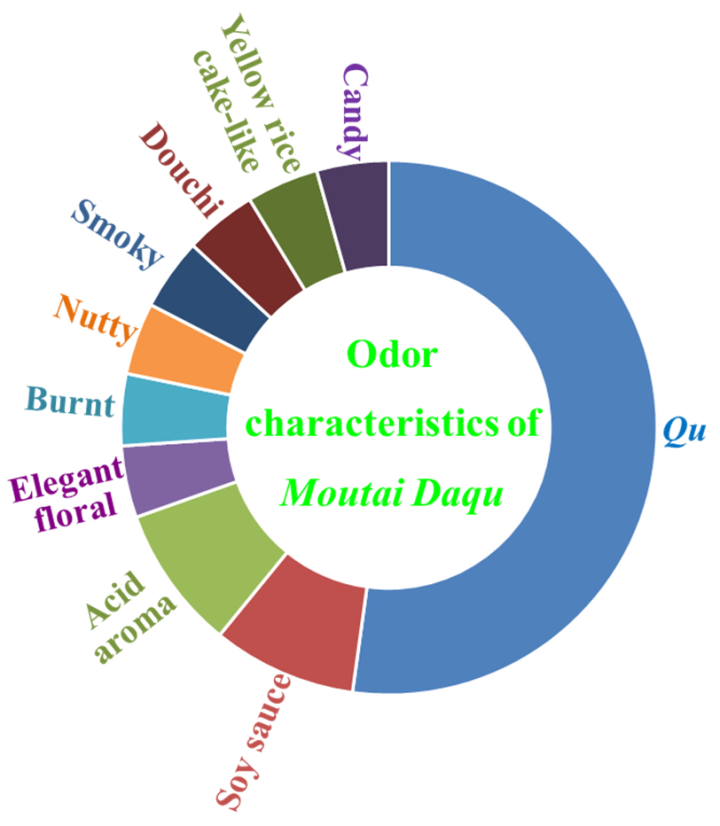
Ten descriptors (Qu, soy sauce, acid, elegant floral, burnt, nutty, candy, smoky, Douchi, yellow rice cake-like aroma) were selected to describe the aroma characteristics of mature Moutai-flavor Daqu based on usage frequency and aroma intensity. Aroma intensity was determined from the average value of each descriptor given by the panel; the results are shown in Figure 1. The aroma characteristics of mature Moutai-flavor Daqu were primarily described as an obvious Qu aroma, outstanding soy sauce aroma, a little acid aroma, elegant floral, burnt, nutty, candy, smoky, Douchi aroma, yellow rice cake-like aroma.

The daqu matrix was complex, so different polar solvents were used to enrich the aroma compounds. Six principal fractions of mature Moutai-flavor Daqu were isolated, F1-F6, with polarities from weak to strong. The aroma characteristics of each fraction, derived from sensory evaluation by the perfumer panel using filter paper strips, are shown in Table 1. F1 had typical daqu aroma characteristics (Qu aroma); F2 had an outstanding acid aroma and a slight Qu aroma; F3 was mainly candy, vanilla-like and with a smoky aroma; F4 had an aroma characteristic of caramel; F5 smelled burnt; and F6 was mostly candy. As we can see, the aroma characteristics of 6 fractions were consistent with their sensory description characteristics.
GC-O-MS was used to characterize the aroma compounds of the 6 fractions obtained, and a total of 128 aroma regions were detected for F1–F6; 82 aroma compounds with FD factor ≥5 were found by further analysis, as shown in Table 2. Among them, 78 aroma compounds (16 aromatics, 12 acids, 9 pyrazines, 8 pyrroles, 6 phenols, 4 furans, 4 pyridines, 4 ketones, 3 pyrones, 3 aldehydes, 3 pyrazoles, 2 sulfides, 2 lactones, 1 alcohol and 1 quinazoline) were further identified by comparison of RIs, mass spectra, odor descriptions of authentic products, and a library matching search.
Table 2 shows that 18 aroma regions with FD ≥625 were obtained by AEDA analysis. Among them, benzaldehyde, benzeneacetaldehyde, 3-methyl-butanoic acid, acetophenone, α-methylbenzeneethanol, 2-methoxyphenol, 2-phenylethanol, 2-methoxy-5-methylphenol, 1H-Pyrrole-2-carboxaldehyde, 4-ethylguaiacol, 2,3-dihydro-3,5-dihydro-6-methyl-4H-pyran-4-one, 2-methoxy-4-vinylphenol, 2-methyl-3,5-dihydroxy-4H-pyran-4-one and trans-isoeugenol were identified as the key aroma compounds of mature Moutai-flavor Daqu. These identifications were all consistent with the sensory evaluation results and were the main characteristic aroma sources of floral, nutty, candy, acid and caramel-like aroma in mature Moutai-flavor Daqu (Figure 1). In addition, compounds with the highest FD factor of 3125 (2-methoxyphenol (yellow rice cake-like), 4-ethylguaiacol (smoky), 2-methoxy-4-vinyl phenol (smoky) and 2,3-dihydro-3,5-dihydroxy-6-methyl-4H-pyran-4-one (caramel-like)) may contribute to the yellow rice cake-like, candy, smoky and caramel-like aroma in mature Moutai-flavor Daqu. It has been found that these volatile phenol compounds were commonly formed by lignin degradation at high temperature during the toasting of the storage barrels 24, 25, 26. Interestingly, they were all identified in mature Moutai-flavor Daqu. The compounds 2,3-dihydro-3,5-dihydroxy-6-methyl-4H-pyran-4-one and 2-methyl-3,5-dihydroxy-4H-pyran-4-one are Maillard reaction products that have been widely investigated in food system models 27 and were first identified in daqu. RI and mass spectrometry also produced information for empty cup incense and soy sauce aroma components (respectively unknown 1, Table 2 entry 76 and unknown 4, Table 2 entry 80); this discovery may be an important basis for further analysis of the characteristic aroma compounds of soy sauce aroma baijiu and the chemical compounds in empty cup incense.
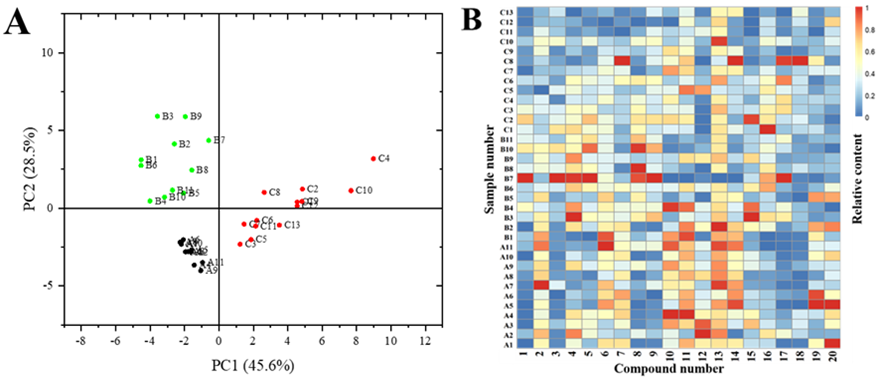
3.3. Aroma Components Analysis of Fermented-Daqu via HS-SPME-GC-MSHS-SPME-GC-MS was used to analyze the differences between aroma components in the various grades of fermented-daqu. A total of 71 compounds were detected in fermented-daqu; the top 20 compounds, with greater MDG values (Table 3), were selected for further principal component analysis 28, 29 and content distribution analysis. Figure 2A shows a PCA biplot of the three different types of fermented-daqu. The PCA biplot explains 74.10% of the total variability of the dataset, the horizontal axis (F1) explains 45.64% of total variability, and the vertical axis (F2) explains the remaining 28.46%. This analysis shows that there were significant differences in the composition of the three different grades of fermented-daqu, and that these indicators can be used to distinguish different grades of daqu. Figure 2B shows that A-grade daqu had a greater content of butyrolactone and less acetophenone, 3-hydroxy-2-methyl-4H-pyran-4-one, 3-phenyl-furan, dimethyl trisulfide and 1,2-dimethoxybenzene than other grades. The pleasant creamy and candy aroma presented by butyrolactone was the main contributor to the Qu aroma in A-grade daqu. B-grade daqu contained greater quantities of (2R,3R)-butanediol, benzene acetaldehyde, 3-hydroxy-2-methyl-4H-pyran-4-one, 2,3-butanedione, 1-(1H-pyrrol-2-yl)-ethanone, meso-2,3-butanediol, dimethyl trisulfide and 2-pyrrolidinone, and less 2-ethenyl-6-methyl-pyrazine, 2-methoxy-4-vinylphenol, 2-ethyl-6-methyl-pyrazine, 2,5-dimethyl-pyrazine and 3-methyl-1-butanol than other grades. The rich variety and high content of aroma compounds in B-grade daqu endowed it with a unique aroma and also ensure the aroma of the fermented product. There were relatively high proportions of acetophenone, 3-phenyl-furan, 2-ethenyl-6-methyl-pyrazine, 2-methoxy-4-vinylphenol, 2-ethyl-6-methyl-pyrazine, linoleic acid ethyl ester, D-limonene, 2,5-dimethyl-pyrazine, 1,2-dimethoxy-benzene, 3-methyl-1-butanol and low levels of (2R,3R)-butanediol, benzene acetaldehyde, 1-(1H-pyrrol-2-yl)-ethanone, meso-2,3-butanediol, 2,3-butanedione, 2-pyrrolidinone, 3-methyl-butanamide, butyrolactone in C-grade daqu. The rich pyrazine compounds in C-grade daqu were an important source of the baking aroma in the spirit. The different proportions of aroma compounds in fermented-daqu grades were the most important reason for their special sensory characteristics. These aroma compounds and aroma precursors were crucial to the sensory characteristics of the final product.

The aroma characteristics of mature Moutai-flavor Daqu were investigated using sensory evaluation and AEDA. Eighty-two odor-active regions were detected with a flavor dilution (FD) factor ≥5, of which 78 compounds were further identified. The compounds with highest FD factors, up to 3125 (2-methoxyphenol, 4-ethylguaiacol, 2-methoxy-4-vinyl phenol and 2,3-dihydro-3,5-dihydroxy-6-methyl-4H-pyran-4-one), were identified as potential critical contributors to the yellow rice cake-like, candy, smoky and caramel-like aroma in mature Moutai-flavor Daqu. Another 14 compounds, with FD factors ≥625 were further identified as sources of the main characteristic aromas of Moutai-flavor Daqu. The Maillard reaction products 2,3-dihydro-3,5-dihydroxy-6-methyl-4H-pyran-4-one and 2-methyl-3,5-dihydroxy-4H-pyran-4-one were identified in daqu. A total of 71 aroma compounds were detected in three different grades of fermented-daqu, and the top 20 important compounds with greater MDG values were selected for principal component analysis and content distribution analysis. The PCA biplot explained 74.10% of the total variability of the dataset, which shows that the aroma compound content of fermented-daqu varies greatly between grades. This difference explains their special aroma characteristics. This study identified the compounds that give mature Moutai-flavor Daqu its characteristic aromas and provides a significantly meaningful classification for analysis of Moutai-flavor Daqu. This work also provides an important reference for research into aroma compounds of soy sauce aroma-type baijiu. Further work has already been initiated to promote the application of this aroma identification model.
| [1] | Xiao, C.; Lu, Z-M.; Zhang, X-J.; Wang, S-T.; Ao, L.; Shen, C-H.; Shi, J-S.; Xu, Z-H. (2017). Bio-heat is a key environmental driver shaping the microbial community of medium-temperature Daqu. Applied and Environmental Microbiology, 83: e01550-17. | ||
| In article | View Article PubMed | ||
| [2] | Li, R-Y.; Zheng, X-W.; Zhang, X.; Yan, Z.; Wang, X-Y.; Han, B-Z. (2018). Characterization of bacteria and yeasts isolated from traditional fermentation starter (fen-Daqu) through a 1h nmr-based metabolomics approach. Food Microbiology, 76, 11-20. | ||
| In article | View Article PubMed | ||
| [3] | Liu, J.; Chen, J.; Fan, Y.; Huang, X.; Han, B. (2018). Biochemical characterization and dominance of different hydrolases in different types of Daqu-a Chinese industrial fermentation starter. Journal of the Science and Food Agriculture, 98, 113-121. | ||
| In article | View Article PubMed | ||
| [4] | Gou, M., Wang, H. Z., Yuan, H. W., Zhang, W. X., Tang, Y. Q., and Kida, K. (2015). Characterization of the microbial community in three types of fermentation starters used for Chinese liquor production. J. Inst. Brew. 121, 620-627. | ||
| In article | View Article | ||
| [5] | Xu, Y., Sun, B., Fan, G., Teng, C., Xiong, K., Zhu, Y., & Li, X. (2017). The brewing process and microbial diversity of strong flavour Chinese spirits: A review. Journal of the Institute of Brewing, 123(1), 5-12. | ||
| In article | View Article | ||
| [6] | Zheng, X. W., & Han, B. Z. (2016). Baijiu, Chinese liquor: History, classification and manufacture. Journal of Ethnic Foods, 3(1), 19-25. | ||
| In article | View Article | ||
| [7] | Chen, Z.; Wu, Q.; Wang, L.; Chen, S.; Xu, Y. (2020). Identification and quantification of surfactin, a non-volatile lipopeptide in Moutai liquor. International Journal of Food Properties, 23, 189-198. | ||
| In article | View Article | ||
| [8] | Zhao, T.; Ni, D.; Hu, G.; Wang, L.; Xu, Y. (2019). 6-(2-formyl-5-methyl-1H-pyrrol-1-yl) hexanoic acid as a novel retronasal burnt aroma compound in soy sauce aroma-type Baijiu. Journal of Agricultural and Food Chemistry, 67, 7916-7925. | ||
| In article | View Article PubMed | ||
| [9] | Zhang, C.; Ao, Z.; Chui, W.; Shen, C.; Tao, W.; Zhang, S. (2011). Characterization of volatile compounds from Daqu-a traditional Chinese liquor fermentation starter. International journal of food and Science & technology, 46, 1591-1599. | ||
| In article | View Article | ||
| [10] | Wang, L.; Wang, Y-Y.; Wang, D-Q.; Xu, J.; Yang, F.; Liu, G.; Zhang, D-Y.; Feng, Q.; Xiao, L.; Xue, W-B.; Guo, J.; Li, Y-Z.; Jin, T. (2015). Dynamic changes in the bacterial community in Moutai liquor fermentation process characterized by deep sequencing. Journal of the Institute of Brewing, 121, 603-608. | ||
| In article | View Article | ||
| [11] | Wang, M-Y.; Yang, J-G.; Zhao, Q-S.; Zhang, K-Z.; Su, C. (2018) Research Progress on Flavor Compounds and Microorganisms of Maotai Flavor Baijiu, Journal of Food Science, 84, 1, 6-18. | ||
| In article | View Article PubMed | ||
| [12] | Yang, L., Fan, W. L., & Xu, Y. (2020). Metaproteomics insights into traditional fermented foods and beverages. Comprehensive Reviews in Food Science and Food Safety, 19(5), 2506-2529. | ||
| In article | View Article PubMed | ||
| [13] | Liu, H. L., & Sun, B. G. (2018). Effect of fermentation processing on the flavor of Baijiu. Journal of Agricultural and Food Chemistry, 66(22), 5425-5432. | ||
| In article | View Article PubMed | ||
| [14] | Gan, S. H., Yang, F., Sahu, S. K., Luo, R. Y., Liao, S. L., Wang, H. Y., et al. (2019). Deciphering the composition and functional profile of the microbial communities in Chinese Moutai liquor starters. Frontiers in Microbiology, 10, 1540. | ||
| In article | View Article PubMed | ||
| [15] | Wang, D.; Jin, B.; Xu, Y.; Zhao, G-A. (2013). Flavor sensory characteristics and the construction of flavor wheel for Chinese rice wine [J]. Food Science, 34, 90-95. | ||
| In article | |||
| [16] | Campo, E.; Ferreira, V.; Escudero, A.; Marques, J. C.; Cacho, J. (2006). Quantitative gas chromatography-olfactometry and chemical quantitative study of the aroma of four Madeira wines. Analytica Chimica Acta, 563, 180-187. | ||
| In article | View Article | ||
| [17] | Du, X.; Qian, M. (2008). Quantification of 2,5-dimethyl-4-hydroxy-3(2H)-furanone using solid-phase extraction and directmicrovial insert thermal desorption gas chromatography-mass spectrometry. Journal of Chromatography A, 1208, 197-201. | ||
| In article | View Article PubMed | ||
| [18] | He, M.; Horng, S-J.; Fan, P.; Run, R-S.; Chen, R-J.; Lai, J-L.; Khan, M. K.; Sentosa, K. O. (2010). Performance evaluation of score level fusion in multimodal biometric systems. Pattern Recognition, 43, 1789-1800. | ||
| In article | View Article | ||
| [19] | Zhang, T.; You, X. (2015). Improvement of the training and normalization method of artificial neural network in the prediction of indoor environment. Procedia Engineering, 121, 1245-1251. | ||
| In article | View Article | ||
| [20] | Calle, M. L.; Urrea, V. (2010). Stability of random forest importance measures. Briefings in Bioinformatics, 12, 86-89. | ||
| In article | View Article PubMed | ||
| [21] | Tian, X.; Xin, M.; Luo, J.; Liu, M.; Jiang, Z. (2016). Identification of genes involved in breast cancer metastasis by integrating protein-protein interaction information with expression data. Journal of computational biology, 23, 172-182. | ||
| In article | View Article PubMed | ||
| [22] | McCann, R. S.; Messina, J. P.; MacFarlane, D. W.; Bayoh, M. N.; Vulule, J. M.; Gimnig, J. E.; Walker, E. D. (2014). Modeling larval malaria vector habitat locations using landscape features and cumulative precipitation measures. International Journal of Health Geographics, 13, 17. | ||
| In article | View Article PubMed | ||
| [23] | Gromski, P. S.; Xu, Y.; Correa, E.; Ellis, D. I.; Turner, M. L.; Goodacre, R. (2014). A comparative investigation of modern feature selection and classification approaches for the analysis of mass spectrometry data. Analytica Chimica Acta, 829, 1-8. | ||
| In article | View Article PubMed | ||
| [24] | Del Alamo Sanza, M.; Escudero, JAF.; De Castro Torío, R. (2004). Changes in phenolic compounds and color parameters of red wine aged with oak chips and in oak barrels. Food Science and Technology International, 10, 233-241. | ||
| In article | View Article | ||
| [25] | Fernández de Simón, B.; Hernández, T.; Cadahía, E.; Dueńas, M.; Estrella, I. (2003). Phenolic compounds in a Spanish red wine aged in barrels made of Spanish, French and American oak wood. European Food Research and Technology, 216, 150-156. | ||
| In article | View Article | ||
| [26] | García-Estevez, I.; Escribano-Bailón, M. T.; Rivas-Gonzalo, J. C.; Alcalde-Eon, C. (2017) Effect of the type of oak barrels employed during ageing on the ellagitannin profile of wines. Australian Journal of Grape and Wine Research, 23, 334-341. | ||
| In article | View Article | ||
| [27] | Kim, M.-O.; Baltes, W. (1996). On the Role of 2,3-Dihydro-3,5-dihydroxy-6-methyl- 4(H)-pyran-4-one in the Maillard Reaction. Journal of Agricultural and Food Chemistry, 44, 282-289. | ||
| In article | View Article | ||
| [28] | Hess, A. S.; Hess, J. R. (2018). Principal component analysis. Transfusion, 58, 1580-1582. | ||
| In article | View Article PubMed | ||
| [29] | Gallant, D.; Gallo, L. C.; Parker, M. L. (2018). X-ray spectral variability of blazars using principal component analysis. Monthly Notices of the Royal Astronomical Society, 480, 1999-2010. | ||
| In article | View Article | ||
Published with license by Science and Education Publishing, Copyright © 2022 Yongsu Li, Derang Ni, Lizhang Yang, Sheng Wang, Fan Yang and Li Wang
 This work is licensed under a Creative Commons Attribution 4.0 International License. To view a copy of this license, visit
http://creativecommons.org/licenses/by/4.0/
This work is licensed under a Creative Commons Attribution 4.0 International License. To view a copy of this license, visit
http://creativecommons.org/licenses/by/4.0/
| [1] | Xiao, C.; Lu, Z-M.; Zhang, X-J.; Wang, S-T.; Ao, L.; Shen, C-H.; Shi, J-S.; Xu, Z-H. (2017). Bio-heat is a key environmental driver shaping the microbial community of medium-temperature Daqu. Applied and Environmental Microbiology, 83: e01550-17. | ||
| In article | View Article PubMed | ||
| [2] | Li, R-Y.; Zheng, X-W.; Zhang, X.; Yan, Z.; Wang, X-Y.; Han, B-Z. (2018). Characterization of bacteria and yeasts isolated from traditional fermentation starter (fen-Daqu) through a 1h nmr-based metabolomics approach. Food Microbiology, 76, 11-20. | ||
| In article | View Article PubMed | ||
| [3] | Liu, J.; Chen, J.; Fan, Y.; Huang, X.; Han, B. (2018). Biochemical characterization and dominance of different hydrolases in different types of Daqu-a Chinese industrial fermentation starter. Journal of the Science and Food Agriculture, 98, 113-121. | ||
| In article | View Article PubMed | ||
| [4] | Gou, M., Wang, H. Z., Yuan, H. W., Zhang, W. X., Tang, Y. Q., and Kida, K. (2015). Characterization of the microbial community in three types of fermentation starters used for Chinese liquor production. J. Inst. Brew. 121, 620-627. | ||
| In article | View Article | ||
| [5] | Xu, Y., Sun, B., Fan, G., Teng, C., Xiong, K., Zhu, Y., & Li, X. (2017). The brewing process and microbial diversity of strong flavour Chinese spirits: A review. Journal of the Institute of Brewing, 123(1), 5-12. | ||
| In article | View Article | ||
| [6] | Zheng, X. W., & Han, B. Z. (2016). Baijiu, Chinese liquor: History, classification and manufacture. Journal of Ethnic Foods, 3(1), 19-25. | ||
| In article | View Article | ||
| [7] | Chen, Z.; Wu, Q.; Wang, L.; Chen, S.; Xu, Y. (2020). Identification and quantification of surfactin, a non-volatile lipopeptide in Moutai liquor. International Journal of Food Properties, 23, 189-198. | ||
| In article | View Article | ||
| [8] | Zhao, T.; Ni, D.; Hu, G.; Wang, L.; Xu, Y. (2019). 6-(2-formyl-5-methyl-1H-pyrrol-1-yl) hexanoic acid as a novel retronasal burnt aroma compound in soy sauce aroma-type Baijiu. Journal of Agricultural and Food Chemistry, 67, 7916-7925. | ||
| In article | View Article PubMed | ||
| [9] | Zhang, C.; Ao, Z.; Chui, W.; Shen, C.; Tao, W.; Zhang, S. (2011). Characterization of volatile compounds from Daqu-a traditional Chinese liquor fermentation starter. International journal of food and Science & technology, 46, 1591-1599. | ||
| In article | View Article | ||
| [10] | Wang, L.; Wang, Y-Y.; Wang, D-Q.; Xu, J.; Yang, F.; Liu, G.; Zhang, D-Y.; Feng, Q.; Xiao, L.; Xue, W-B.; Guo, J.; Li, Y-Z.; Jin, T. (2015). Dynamic changes in the bacterial community in Moutai liquor fermentation process characterized by deep sequencing. Journal of the Institute of Brewing, 121, 603-608. | ||
| In article | View Article | ||
| [11] | Wang, M-Y.; Yang, J-G.; Zhao, Q-S.; Zhang, K-Z.; Su, C. (2018) Research Progress on Flavor Compounds and Microorganisms of Maotai Flavor Baijiu, Journal of Food Science, 84, 1, 6-18. | ||
| In article | View Article PubMed | ||
| [12] | Yang, L., Fan, W. L., & Xu, Y. (2020). Metaproteomics insights into traditional fermented foods and beverages. Comprehensive Reviews in Food Science and Food Safety, 19(5), 2506-2529. | ||
| In article | View Article PubMed | ||
| [13] | Liu, H. L., & Sun, B. G. (2018). Effect of fermentation processing on the flavor of Baijiu. Journal of Agricultural and Food Chemistry, 66(22), 5425-5432. | ||
| In article | View Article PubMed | ||
| [14] | Gan, S. H., Yang, F., Sahu, S. K., Luo, R. Y., Liao, S. L., Wang, H. Y., et al. (2019). Deciphering the composition and functional profile of the microbial communities in Chinese Moutai liquor starters. Frontiers in Microbiology, 10, 1540. | ||
| In article | View Article PubMed | ||
| [15] | Wang, D.; Jin, B.; Xu, Y.; Zhao, G-A. (2013). Flavor sensory characteristics and the construction of flavor wheel for Chinese rice wine [J]. Food Science, 34, 90-95. | ||
| In article | |||
| [16] | Campo, E.; Ferreira, V.; Escudero, A.; Marques, J. C.; Cacho, J. (2006). Quantitative gas chromatography-olfactometry and chemical quantitative study of the aroma of four Madeira wines. Analytica Chimica Acta, 563, 180-187. | ||
| In article | View Article | ||
| [17] | Du, X.; Qian, M. (2008). Quantification of 2,5-dimethyl-4-hydroxy-3(2H)-furanone using solid-phase extraction and directmicrovial insert thermal desorption gas chromatography-mass spectrometry. Journal of Chromatography A, 1208, 197-201. | ||
| In article | View Article PubMed | ||
| [18] | He, M.; Horng, S-J.; Fan, P.; Run, R-S.; Chen, R-J.; Lai, J-L.; Khan, M. K.; Sentosa, K. O. (2010). Performance evaluation of score level fusion in multimodal biometric systems. Pattern Recognition, 43, 1789-1800. | ||
| In article | View Article | ||
| [19] | Zhang, T.; You, X. (2015). Improvement of the training and normalization method of artificial neural network in the prediction of indoor environment. Procedia Engineering, 121, 1245-1251. | ||
| In article | View Article | ||
| [20] | Calle, M. L.; Urrea, V. (2010). Stability of random forest importance measures. Briefings in Bioinformatics, 12, 86-89. | ||
| In article | View Article PubMed | ||
| [21] | Tian, X.; Xin, M.; Luo, J.; Liu, M.; Jiang, Z. (2016). Identification of genes involved in breast cancer metastasis by integrating protein-protein interaction information with expression data. Journal of computational biology, 23, 172-182. | ||
| In article | View Article PubMed | ||
| [22] | McCann, R. S.; Messina, J. P.; MacFarlane, D. W.; Bayoh, M. N.; Vulule, J. M.; Gimnig, J. E.; Walker, E. D. (2014). Modeling larval malaria vector habitat locations using landscape features and cumulative precipitation measures. International Journal of Health Geographics, 13, 17. | ||
| In article | View Article PubMed | ||
| [23] | Gromski, P. S.; Xu, Y.; Correa, E.; Ellis, D. I.; Turner, M. L.; Goodacre, R. (2014). A comparative investigation of modern feature selection and classification approaches for the analysis of mass spectrometry data. Analytica Chimica Acta, 829, 1-8. | ||
| In article | View Article PubMed | ||
| [24] | Del Alamo Sanza, M.; Escudero, JAF.; De Castro Torío, R. (2004). Changes in phenolic compounds and color parameters of red wine aged with oak chips and in oak barrels. Food Science and Technology International, 10, 233-241. | ||
| In article | View Article | ||
| [25] | Fernández de Simón, B.; Hernández, T.; Cadahía, E.; Dueńas, M.; Estrella, I. (2003). Phenolic compounds in a Spanish red wine aged in barrels made of Spanish, French and American oak wood. European Food Research and Technology, 216, 150-156. | ||
| In article | View Article | ||
| [26] | García-Estevez, I.; Escribano-Bailón, M. T.; Rivas-Gonzalo, J. C.; Alcalde-Eon, C. (2017) Effect of the type of oak barrels employed during ageing on the ellagitannin profile of wines. Australian Journal of Grape and Wine Research, 23, 334-341. | ||
| In article | View Article | ||
| [27] | Kim, M.-O.; Baltes, W. (1996). On the Role of 2,3-Dihydro-3,5-dihydroxy-6-methyl- 4(H)-pyran-4-one in the Maillard Reaction. Journal of Agricultural and Food Chemistry, 44, 282-289. | ||
| In article | View Article | ||
| [28] | Hess, A. S.; Hess, J. R. (2018). Principal component analysis. Transfusion, 58, 1580-1582. | ||
| In article | View Article PubMed | ||
| [29] | Gallant, D.; Gallo, L. C.; Parker, M. L. (2018). X-ray spectral variability of blazars using principal component analysis. Monthly Notices of the Royal Astronomical Society, 480, 1999-2010. | ||
| In article | View Article | ||