Rice is a customary food product that is often processed for various uses via milling procedures. This study uses dry milled white rice to find correlations between grinding time, temperature changes during the grinding process, and the enthalpy of combustion of ground white rice. White rice grains were ground in a blender or by hand and were combusted in a bomb calorimeter at various constant size ranges. It was discovered that as grinding time was increased, the temperature change of the white rice in the blender was also increased, while the enthalpy of combustion of the white rice particles was decreased. It can be inferred that the enthalpy of white rice was partially lost due to the production of heat from the collision of white rice during the grinding process. Hence, it is plausible that excess rice milling could lead to unforeseen issues such as food crises when performed on a large scale.
White rice is a staple food in regular diets of numerous cuisines and cultures around the world 1, 2. White rice grains are mostly comprised of nutrients such as carbohydrates, celluloses, lipids, minerals, proteins, as well as vitamins 3, 4, 5. Rice is also an integral source of income for most people in Asia and Africa 5, 6. Nowadays, white rice is frequently processed and customized for different types of products and purposes via milling or grinding 7. There are two major factors, rice genotype and rice grinding method, that determine the resultant properties of ground white rice 8. Different types of white rice possess distinct properties due to their different amylose-to-amylopectin ratios 9, 10.
Grinding rice is an essential procedure in rice-based food processing practices 11, 12. However, properties of white rice could be inevitably modified in such processes, resulting in the reduction of internal energy in the white rice grains 3, 13. There are three widely used grinding methods: the dry, semi-wet, and wet milling methods 14. The wet milling method is believed to yield high-quality flour because it creates much less damage to starch, has a high flour swelling tendency, and keeps the carbohydrate percentage relatively high 15, 16, 17. However, it is inevitable that the wet-milling methods would generate a large volume of wastewater; it is thereby less cost-effective as compared to the other two methods 18, 19, 20. The dry-milling method, on the other hand, is the most popular in the milling industry due to its relatively low cost and demand for manpower 14, 21. However, dry milling is usually also accompanied by a higher percentage of damaged starch and excessive production of heat 22, 23.
It is known that milling and grinding white rice could disrupt the orderly structure of starch granules, causing changes in the amounts of carbohydrates, lipids, and proteins in the rice 24, 25. Scientists have discovered that ground rice have different granular structures with disrupted crystalline lattices 26. Furthermore, the functional properties of white rice, such as its swelling property, water solubility, rheological property, and pasting property would also be modified when the rice grain is milled 25, 27.
In 2017, Singh reported that the process of melting metal nanoparticles resulted in different entropy and enthalpy changes than that of bulk metal materials 28. It was suggested that the enormous surface area to volume ratio of nanomaterials allowed the energy associated with the atoms of these nanomaterials to be different from that of the conventional bulk materials. These researchers further discovered that the melting enthalpies decreased with the particle sizes of the metals 29, 30. This phenomenon resulted from the high surface area to volume ratio of metal nanoparticles and the dissociation of metallic bonding when they were transformed into smaller particles 31. Atoms on a freely exposed surface are observed to have different physicochemical properties than those in the bulk of a material 32, 33. This observation successfully demonstrates various size-dependent thermodynamic properties of nanomaterials, which also correspond to the enthalpy alterations as particle sizes vary. Hence, these size-dependent properties could also be applied to the milling of rice grains.
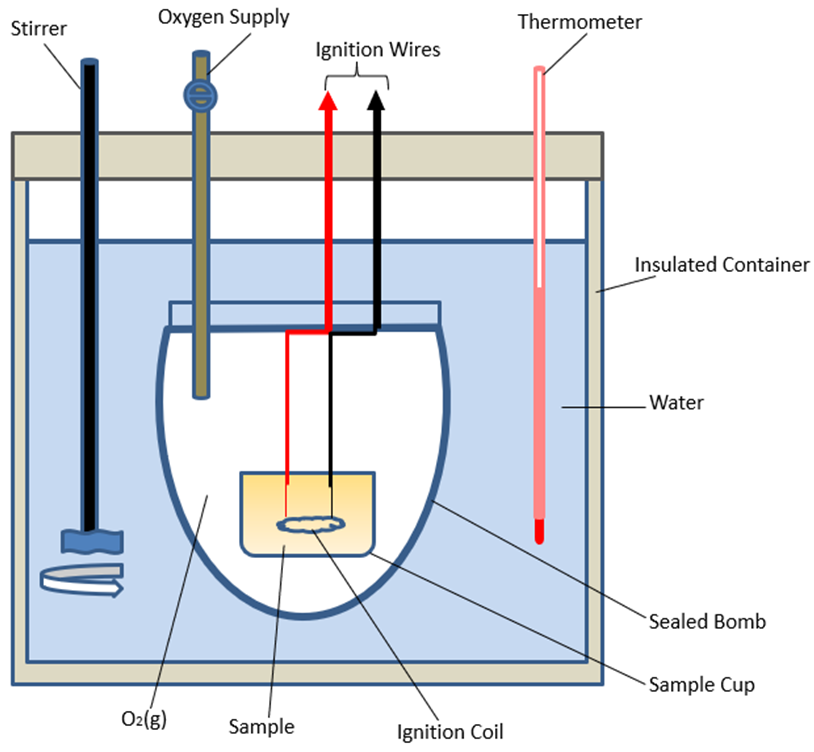
A bomb calorimeter is used in this experiment to measure the heat capacity of various samples of rice 34. The bomb calorimeter is a laboratory apparatus serves to calculate the value of combustion heat of a specific sample (Figure 1) 35, 36. A specific sample of rice is ignited in the steel bomb and the temperature change of the surrounding water in the bomb calorimeter is measured. The instrument can then calculate and display the enthalpy of rice subsequent to combustion.
The objective of the present study is to investigate the enthalpy alterations of ground white rice with respect to different grinding times and particle sizes via dry milling methods. The white rice grains were ground by an electric blender and with a mortar and pestle. The ground white rice samples collected were then combusted in a bomb calorimeter to calculate the energy released via combustion for white rice in terms of joules per gram (J/g). Various forms of ground white rice were used in the experiments to explore the correlations between the grinding time, temperature, and the subsequent enthalpy alterations of white rice in the grinding process.
2.1. Materials Used
2.2. Experimental Methods
In the present study, the dry milling method was chosen; white rice grains were ground with a mortar and pestle and in an electric blender. The Kaohsiung No. 147 Japonica rice was also selected. Two different experiments were conducted to investigate the enthalpy alterations of combustion that occurred following the grinding of rice.
In the first experiment, the enthalpy alterations of the combustion of rice grains with different particle sizes were compared. The rice grains were ground by a mortar and pestle and separated by size with different sieves. Several combustion trials of rice with different particle sizes were performed in a bomb calorimeter. The enthalpy changes were then recorded and a correlation between particle size and enthalpy of combustion of rice was determined.
In the second experiment, the enthalpy alterations of combustion of rice grains with different grinding time were compared. Rice was ground in an electric blender with different durations and was sieved through two different sieves. This step ensured that the particle size remained constant. The rice particles were then combusted in a bomb calorimeter. The enthalpy changes were then logged and a correlation between grinding time and enthalpy of combustion of different rice grains was determined.
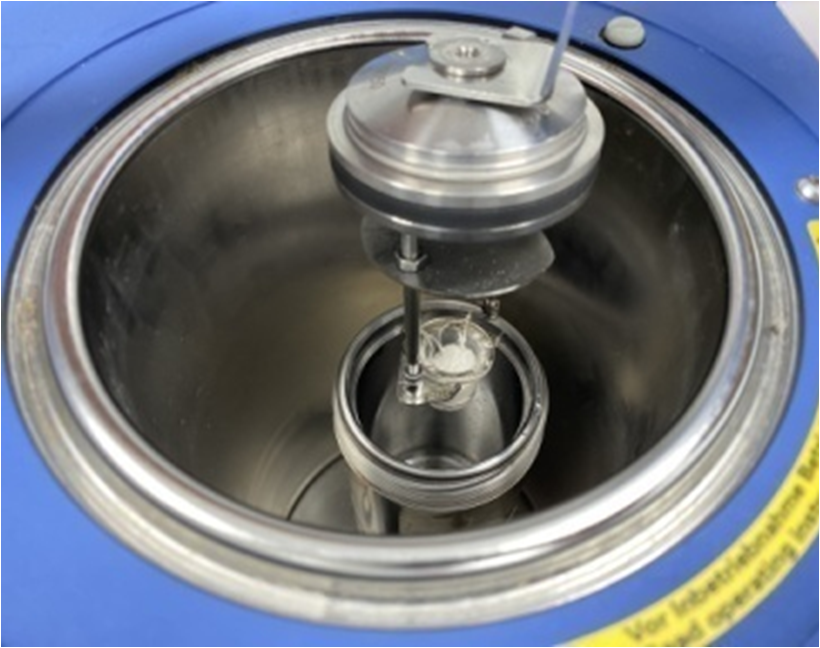
A bomb calorimeter (Figure 2) was used to calculate the energy released from white rice via combustion in terms of J/g. Prior to using the bomb calorimeter, it was calibrated with benzoic acid (C7H6O2). In this device, the energy released by the combustion of the samples is absorbed by water around the steel bomb vessel, and the temperature change in ℃ of the water was detected and converted to the energy change in J/g. The experimental results in the present study would then be compared with each other, and the correlations between grinding time and the enthalpy of combustion would be derived.

First, the sample was ground with a mortar and pestle to a specific size. Next, the sample was filtered with 3 sieves with the sizes of 0.250 mm, 0.500 mm, and 1.000 mm, respectively. The sample with the desired particle size was removed from the sieve and put into a weighing boat. Approximately 1 gram of the ground sample for each particle size was weighed and the exact mass was recorded. Three 50 J cotton wicks were tied to the ignition wire of the inner vessel of the bomb calorimeter. The glass container of the bomb calorimeter was placed in the inner vessel and the cotton wicks were placed inside the glass container. Afterwards, the sample was poured on top of the cotton wicks into the glass container and the inner vessel was transferred back into the metal container. The metal container was pressurized with O2 to 30 atmospheres (atm). The ignition cap of the bomb calorimeter was then firmly attached to the container. The bomb calorimeter was opened, and the metal container was placed inside the bomb calorimeter. A sufficient quantity of water was added into the bomb calorimeter with a 1000 mL Erlenmeyer flask until the water level mark on the bomb calorimeter was reached. The bomb calorimeter was switched on and the lid was closed. After entering the weight of the sample, the combustion process begun.
When the combustion process was finished, the energy change of the system was logged. The bomb calorimeter was then depressurized, and the inner vessel and glass container of the bomb calorimeter were cleaned. The entire process described above was performed once for each of the samples of four different sample sizes, <0.250 mm, 0.250-0.500 mm, 0.500-1.000 mm, and >1.000 mm, respectively.
In the second experiment, white rice was slowly ground with a mortar and pestle. The sample of white rice prepared in this manner was referred to as the T0 sample (sample with the grinding time of 0 seconds), because the blender would not be used for grinding white rice in this process. Such a procedure was employed to lower or even avoid the release of heat from white rice during grinding.
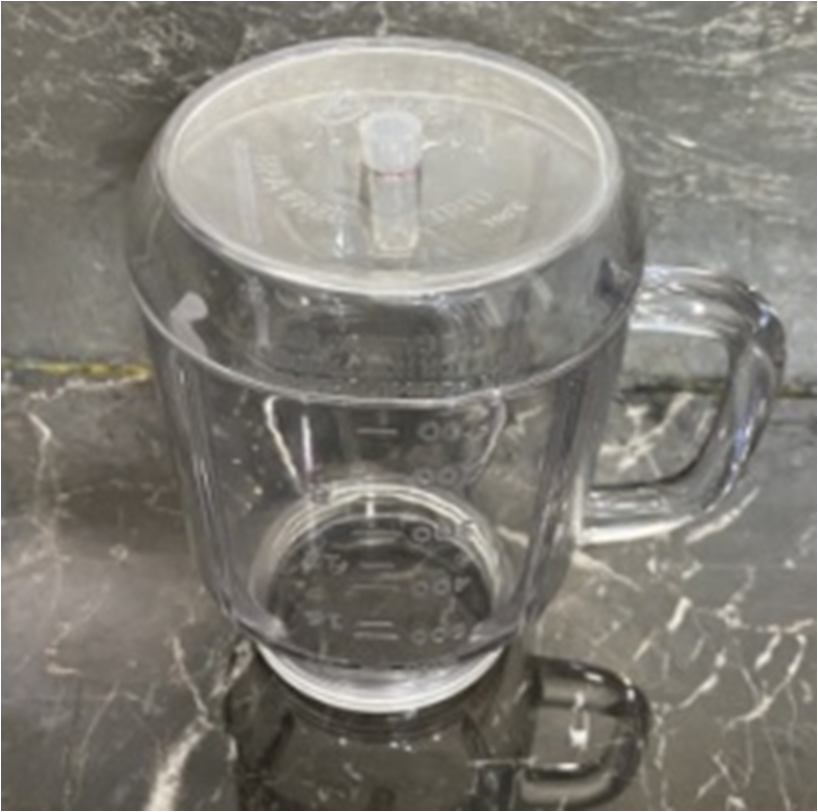
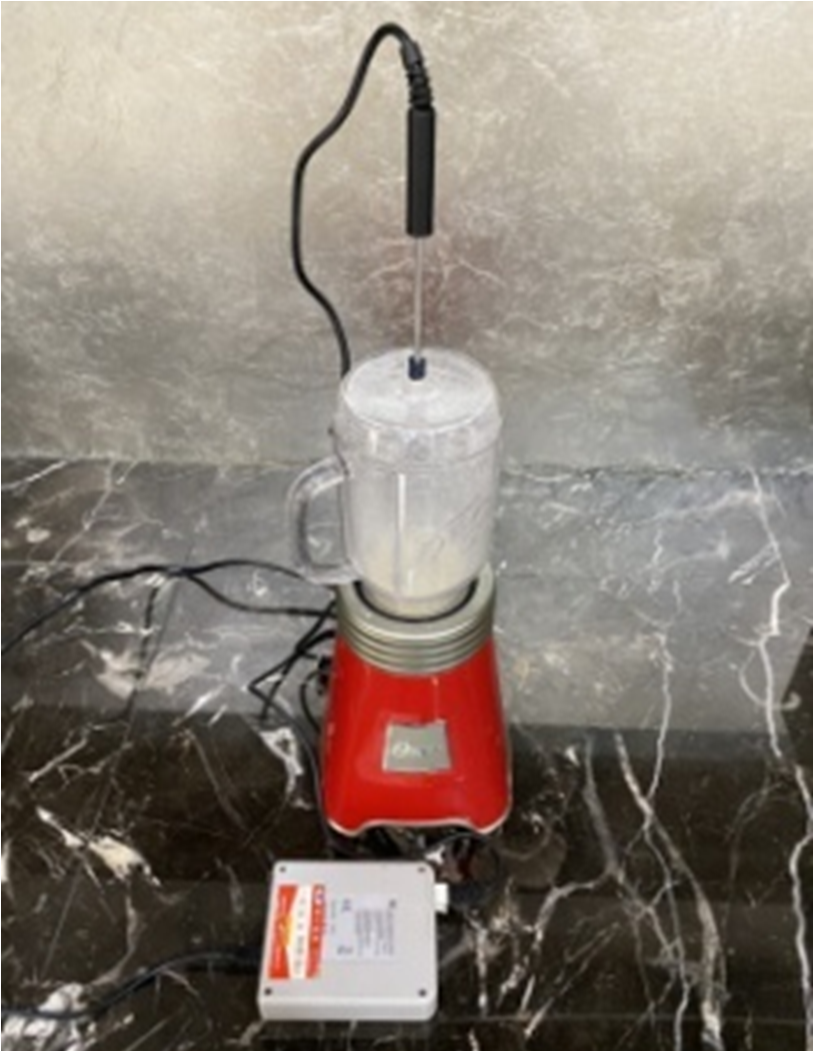
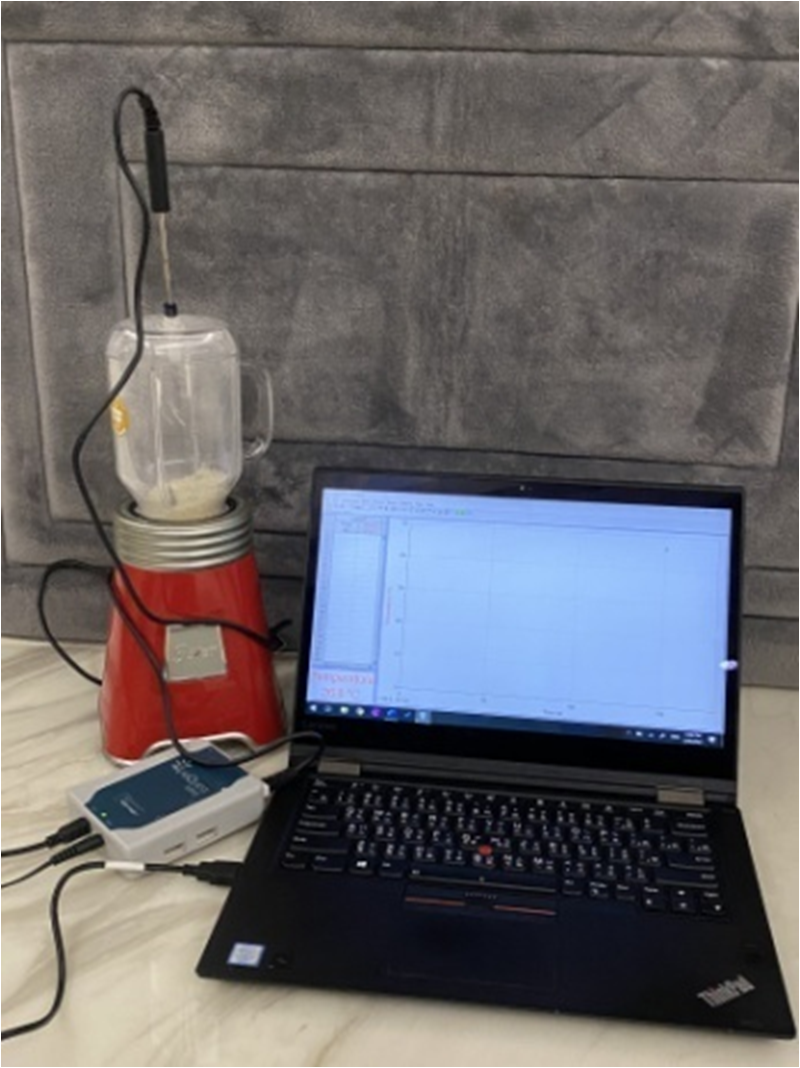
The electric blender apparatus was then set up for grinding. An electric drill was used to drill a hole in the bottle of the electric blender and a rubber stopper was positioned inside the hole (Figure 3). A rubber band was then attached around the LoggerPro temperature probe, and the probe was tightly stuck into the rubber stopper (Figure 4). The LoggerPro temperature probe was connected to the LabQuest Mini, and the LoggerPro software was used for temperature detection. The blender bottle was seated on the electric blender and the blender was operated for 240 seconds without anything inside to measure any temperature fluctuations.


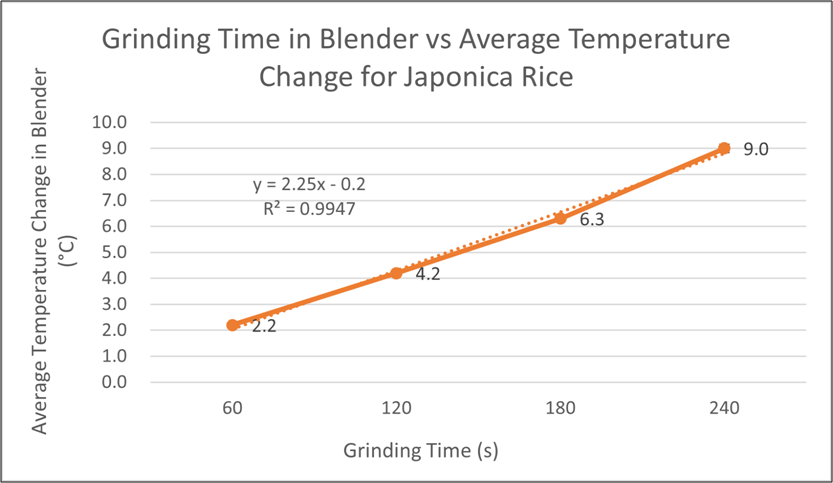
Approximately 50 grams of white rice was massed on an electronic scale and the rice was transferred into the blender bottle. The bottle was re-attached to the electric blender followed by the same method for the LoggerPro temperature probe, the rubber stopper, and the rubber band to the blender bottle. The initial temperature in the blender shown on the LoggerPro software was recorded and the blender was allowed to grind the rice for the desirable period. After the blender grinding was finished, the final temperature was logged, and the temperature change was calculated by subtracting the initial temperature from the final temperature (Figure 5). Next, the rice sample was placed in a container and the entire blending apparatus was disassembled. The LoggerPro temperature probe was allowed to cool down to room temperature before reassembling the blending apparatus. The aforementioned procedures were repeated for the grinding periods of 60, 120, 180, and 240 seconds, respectively, with three trials per grinding time.

Once all five samples of white rice ground at different times in the electric blender were amassed, they were passed through sieves of 0.250 mm and 0.0450 mm. Rice particles larger than 0.0450 mm and smaller than 0.250 mm were collected for all samples ground at different times. These procedures were performed repeatedly for three trials and for the five samples with different grinding times. The data acquired were compared with each other.
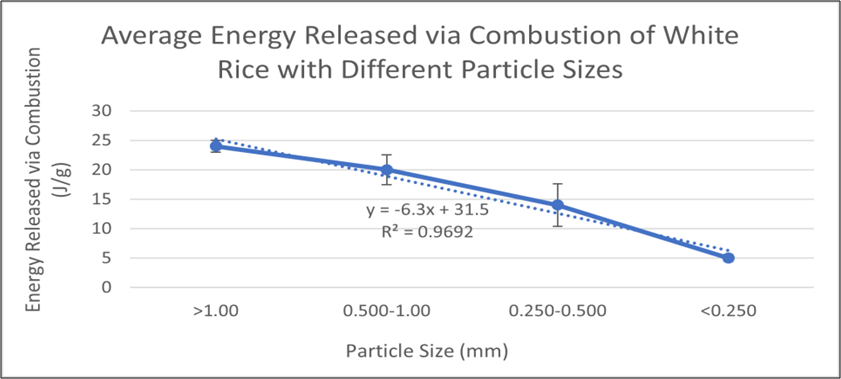
In the first experiment, the size of the particles of rice was set as the independent variable. As shown in the data from experiment one, there was a trend suggesting that white rice particles of smaller sizes produced less enthalpy via combustion than those of larger sizes (Figure 6).

It is important to note that while the electric blender was idle for 240 seconds, there was no significant temperature change. The temperature changes were negligible when the blender was allowed to spin on its own for 240 seconds.

In experiment one, the particle size of the ground rice was assigned as the independent variable, while in experiment two, the independent variable was the grinding time of the rice. The grinding time of white rice and ground rice samples in an electric blender was tailored to 60, 120, 180, and 240 seconds respectively. The sample of white rice was also slowly ground with a mortar and pestle to reduce heat production as much as possible. This step modelled the conditions of grinding rice for 0 seconds in the electric blender. Instead of changing the particle size of rice grains and taking the same approach as experiment one, the particle size range remained constant between 0.0450 mm and 0.250 mm.
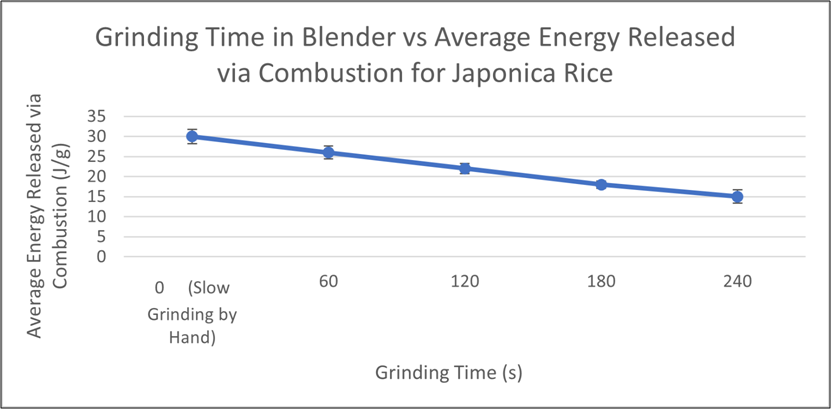
As aforementioned, the temperature change of the blender was negligible when it was set to spin for 240 seconds without anything inside. Therefore, it could be inferred that no heat was released from the electric blender. As illustrated by the data collected, grinding time was found to be positively correlated with the temperature change. When the grinding time in the blender for the rice samples was increased, the temperature changes also increased. Furthermore, the energy released by the grains in the bomb calorimeter decreased when grinding time was increased, as demonstrated by the data presented above. Therefore, it could be inferred that energy released by the white rice decreased as grinding time was increased. This further supported the hypothesis that more internal energy dissipated as grinding time was increased.
Entropy alteration could also play a role in the observed effect of the present study. Grinding rice samples would result in the transformation of the structures of the rice grain, rendering the system of the sample more complex, with the entropy increasing in return 37, 38. Such an increase in entropy could potentially alter the amount of energy transmitted within the grains, which could be the likely reason for the decrease in enthalpy of combustion as particle size was lowered in experiment one.
The results of experiment two revealed that the enthalpy of combustion of ground rice decreased as grinding time was increased. Furthermore, this experiment also demonstrated that heat was being constantly released throughout the entire grinding process. Although this heat loss might not be proportional, it could have resulted from the alteration of the biochemical structures in the rice. As previously discussed, starches in the rice could be changed or destructed throughout the grinding process of the rice. Consequently, during the grinding process, the internal energy of rice could be lost.
Moreover, during the blending process, the electric blender's blades would grind the white rice samples and allow the white rice grains to collide with each other. A 2008 study revealed that the increase in temperature change during the grinding process was correlated with the collision between large particles of rice 39. According to the first law of thermodynamics, internal energy may be transferred as heat of work but could not be created or destroyed. As a result, heat energy would be discharged as the white rice grains continued to collide with each other and the energy contents contained in the white rice was released into the blender system. Such heat would then be transferred into the blender system, which could explain the temperature increase inside the blender as grinding time was increased. Since some of the energy contents were released as heat into the blender during the grinding process, the white rice particles would in turn release less energy when they were combusted inside the bomb calorimeter.
Other studies indicated that the energy discharged from rice came from two main types of starch: amylose and amylopectin 40. Since amylose stores more energy than amylopectin, the different amylose to amylopectin ratios of different types of rice might have different energy contents. Thus, the temperature alterations during grinding, the amount of heat liberated by the rice, as well as the energy released via combustion of different rice types would all be different. As previously presented, the amylose and amylopectin contents of a starch sample could be tested through the iodine test and UV spectrophotometry 41, 42. In future studies, starch samples should be examined and tested with an Iodine-KI solution via UV spectrophotometry to identify the potential fluctuations of amylose and amylopectin contents in the samples.
Currently, approximately 124 million people are facing food insecurity, and over 10 million people are almost on the brink of famine. With the effects of COVID-19 and other global issues, these numbers will only increase 43. Rice products are usually modified through different processes, such as grinding, to improve the taste and likeability of the food products. However, based on the findings in these experiments, it is conceivable that the energy stored in rice could be dissipated during the grinding process. Should the energy of rice fall, more rice would be consumed, which could lead to the shortage of food and corresponding food crises. Therefore, further studies on the effectiveness and the energy contents of such rice products are warranted. More in-depth experiments in the future could be conducted with the available rice products that are in both bulk and particle forms to assess their energy contents. The findings from such experiments or studies could inspire more vigorous research on rice-based food production processes.
The authors thank Taipei American School for providing research funding, lab equipment, and other relevant materials. The authors also thank Sean Tsao of Taipei American School for resources.
| [1] | Mir, S. A.; Shah, M. A.; Bosco, S. J. D.; Sunooj, K. V.; Farooq, S., “A review on nutritional properties, shelf life, health aspects, and consumption of brown rice in comparison with white rice,” Cereal Chemistry, 97 (5). 895-903. 2020, | ||
| In article | View Article | ||
| [2] | Carcea, M., “Value of Wholegrain Rice in a Healthy Human Nutrition,” Agriculture, 11 (8). 720. 2021. | ||
| In article | View Article | ||
| [3] | Hansen, T. H.; Lombi, E.; Fitzgerald, M.; Laursen, K. H.; Frydenvang, J.; Husted, S.; Boualaphanh, C.; Resurreccion, A.; Howard, D. L.; de Jonge, M. D.; Paterson, D.; Schjoerring, J. K., “Losses of essential mineral nutrients by polishing of rice differ among genotypes due to contrasting grain hardness and mineral distribution,” Journal of Cereal Science, 56 (2). 307-315. 2012. | ||
| In article | View Article | ||
| [4] | Lafiandra, D.; Riccardi, G.; Shewry, P. R., “Improving cereal grain carbohydrates for diet and health,” Journal of Cereal Science, 59 (3). 312-326. 2014. | ||
| In article | View Article PubMed | ||
| [5] | Pretty, J.; Bharucha, Z. P., “Integrated pest management for sustainable intensification of agriculture in Asia and Africa,” Insects, 6 (1). 152-182. 2015. | ||
| In article | View Article PubMed | ||
| [6] | Sha, W.; Chen, F.; Mishra, A. K., “Adoption of direct seeded rice, land use and enterprise income: Evidence from Chinese rice producers,” Land Use Policy, 83 564-570. 2019. | ||
| In article | View Article | ||
| [7] | Kraithong, S.; Lee, S.; Rawdkuen, S., “Physicochemical and functional properties of Thai organic rice flour,” Journal of Cereal Science, 79 259-266. 2018. | ||
| In article | View Article | ||
| [8] | Singh Karam, D.; Nagabovanalli, P.; Sundara Rajoo, K.; Fauziah Ishak, C.; Abdu, A.; Rosli, Z.; Melissa Muharam, F.; Zulperi, D., “An overview on the preparation of rice husk biochar, factors affecting its properties, and its agriculture application,” Journal of the Saudi Society of Agricultural Sciences, 2021. | ||
| In article | View Article | ||
| [9] | Toutounji, M. R.; Farahnaky, A.; Santhakumar, A. B.; Oli, P.; Butardo, V. M.; Blanchard, C. L., “Intrinsic and extrinsic factors affecting rice starch digestibility,” Trends in Food Science & Technology, 88 10-22. 2019. | ||
| In article | View Article | ||
| [10] | Wang, C.-X.; Zhu, C.-C.; Lu, C.-Y.; Yang, Y.; Li, Q.-F.; Liu, Q.-Q.; Zhang, C.-Q., “Grain Quality and Starch Physicochemical Properties of Chalky Rice Mutant,” Agronomy, 11 (8). 1575. 2021. | ||
| In article | View Article | ||
| [11] | Pedron, T.; Segura, F. R.; Paniz, F. P.; de Moura Souza, F.; dos Santos, M. C.; de Magalhães Júnior, A. M.; Batista, B. L., “Mitigation of arsenic in rice grains by polishing and washing: Evidencing the benefit and the cost,” Journal of Cereal Science, 87 52-58. 2019. | ||
| In article | View Article | ||
| [12] | Doblado-Maldonado, A. F.; Pike, O. A.; Sweley, J. C.; Rose, D. J., “Key issues and challenges in whole wheat flour milling and storage,” Journal of Cereal Science, 56 (2). 119-126. 2012. | ||
| In article | View Article | ||
| [13] | Bhavadharini, B.; Mohan, V.; Dehghan, M.; Rangarajan, S.; Swaminathan, S.; Rosengren, A.; Wielgosz, A.; Avezum, A.; Lopez-Jaramillo, P.; Lanas, F.; Dans, A. L.; Yeates, K.; Poirier, P.; Chifamba, J.; Alhabib, K. F.; Mohammadifard, N.; Zatońska, K.; Khatib, R.; Vural Keskinler, M.; Wei, L.; Wang, C.; Liu, X.; Iqbal, R.; Yusuf, R.; Wentzel-Viljoen, E.; Yusufali, A.; Diaz, R.; Keat, N. K.; Lakshmi, P. V. M.; Ismail, N.; Gupta, R.; Palileo-Villanueva, L. M.; Sheridan, P.; Mente, A.; Yusuf, S., “White Rice Intake and Incident Diabetes: A Study of 132,373 Participants in 21 Countries,” Diabetes Care, 43 (11). 2643-2650. 2020. | ||
| In article | View Article PubMed | ||
| [14] | Cho, S.-H.; Lee, B.-H.; Eun, J.-B., “Physicochemical properties of dry- and semi-wet-milled rice flours after fermentation by Lactobacillus amylovorus,” Journal of Cereal Science, 85 15-19. 2019. | ||
| In article | View Article | ||
| [15] | Uriarte-Aceves, P. M.; Sopade, P. A., “Hydration kinetics of commercial white maize (Zea mays L.) hybrids, and associations with grain intrinsic and wet-milling properties,” Journal of Cereal Science, 101 103279. 2021. | ||
| In article | View Article | ||
| [16] | Myers, D. J.; Fox, S. R., “Wet milled products, yields and composition of high-moisture corn treated with two long-chain polyphosphates,” Journal of Cereal Science, 22 (2). 195-201. 1995. | ||
| In article | View Article | ||
| [17] | Rosa-Sibakov, N.; Sibakov, J.; Lahtinen, P.; Poutanen, K., “Wet grinding and microfluidization of wheat bran preparations: Improvement of dispersion stability by structural disintegration,” Journal of Cereal Science, 64 1-10. 2015. | ||
| In article | View Article | ||
| [18] | Ballester-Sánchez, J.; Gil, J. V.; Fernández-Espinar, M. T.; Haros, C. M., “Quinoa wet-milling: Effect of steeping conditions on starch recovery and quality,” Food Hydrocolloids, 89 837-843. 2019. | ||
| In article | View Article | ||
| [19] | Wu, T.; Wang, L.; Li, Y.; Qian, H.; Liu, L.; Tong, L.; Zhou, X.; Wang, L.; Zhou, S., “Effect of milling methods on the properties of rice flour and gluten-free rice bread,” LWT, 108 137-144. 2019. | ||
| In article | View Article | ||
| [20] | Ding, C.; Khir, R.; Pan, Z.; Zhang, J.; Tu, K.; El-Mashad, H., “Effect of Infrared and Conventional Drying Methods on Physicochemical Characteristics of Stored White Rice,” Cereal Chemistry, 92 (5). 441-448. 2015. | ||
| In article | View Article | ||
| [21] | González, L. C.; Loubes, M. A.; Tolaba, M. P., “Incidence of milling energy on dry-milling attributes of rice starch modified by planetary ball milling,” Food Hydrocolloids, 82 155-163. 2018. | ||
| In article | View Article | ||
| [22] | Wang, Q.; Li, L.; Zheng, X., “A review of milling damaged starch: Generation, measurement, functionality and its effect on starch-based food systems,” Food Chemistry, 315 126267. 2020. | ||
| In article | View Article PubMed | ||
| [23] | Kwak, J.; Yoon, M.-R.; Lee, J.-S.; Lee, J.-H.; Ko, S.; Tai, T. H.; Won, Y.-J., “Morphological and starch characteristics of the Japonica rice mutant variety Seolgaeng for dry-milled flour,” Food Science and Biotechnology, 26 (1). 43-48. 2017. | ||
| In article | View Article PubMed | ||
| [24] | Müller, A.; Coradi, P. C.; Nunes, M. T.; Grohs, M.; Bressiani, J.; Teodoro, P. E.; Anschau, K. F.; Flores, E. M. M., “Effects of cultivars and fertilization levels on the quality of rice milling: A diagnosis using near-infrared spectroscopy, X-ray diffraction, and scanning electron microscopy,” Food Research International, 147 110524. 2021. | ||
| In article | View Article PubMed | ||
| [25] | Xu, Z.; Xu, Y.; Chen, X.; Zhang, L.; Li, H.; Sui, Z.; Corke, H., “Polishing conditions in rice milling differentially affect the physicochemical properties of waxy, low- and high-amylose rice starch,” Journal of Cereal Science, 99 103183. 2021. | ||
| In article | View Article | ||
| [26] | Yan, X.; Liu, C.; Huang, A.; Chen, R.; Chen, J.; Luo, S., “The nutritional components and physicochemical properties of brown rice flour ground by a novel low temperature impact mill,” Journal of Cereal Science, 92 102927. 2020. | ||
| In article | View Article | ||
| [27] | Lin, Z.; Huang, J.; Qin, W.; Geng, D.; Wang, L.; Zhou, X.; Liu, L.; Zhou, S.; Tong, L.-T., “Effects of moisture changes on physicochemical properties of rice flour during semidry grinding,” Journal of Cereal Science, 100 103254. 2021. | ||
| In article | View Article | ||
| [28] | Singh, M.; Lara, S. o.; Tlali, S., “Effects of size and shape on the specific heat, melting entropy and enthalpy of nanomaterials,” Journal of Taibah University for Science, 11 (6). 922-929. 2017. | ||
| In article | View Article | ||
| [29] | Cui, Z.; Ji, B.; Fu, Q.; Duan, H.; Xue, Y.; Li, Z., “Research on size dependent integral melting thermodynamic properties of Cu nanoparticles,” The Journal of Chemical Thermodynamics, 149 106148. 2020. | ||
| In article | View Article | ||
| [30] | Koch, C., “The synthesis and structure of nanocrystalline materials produced by mechanical attrition: A review,” Nanostructured materials, 2 (2). 109-129. 1993. | ||
| In article | View Article | ||
| [31] | Zijlstra, B.; Broos, R. J. P.; Chen, W.; Oosterbeek, H.; Filot, I. A. W.; Hensen, E. J. M., “Coverage Effects in CO Dissociation on Metallic Cobalt Nanoparticles,” ACS Catalysis, 9 (8). 7365-7372. 2019. | ||
| In article | View Article | ||
| [32] | Dyck, O.; Zhang, L.; Yoon, M.; Swett, J. L.; Hensley, D.; Zhang, C.; Rack, P. D.; Fowlkes, J. D.; Lupini, A. R.; Jesse, S., “Doping transition-metal atoms in graphene for atomic-scale tailoring of electronic, magnetic, and quantum topological properties,” Carbon, 173 205-214. 2021. | ||
| In article | View Article | ||
| [33] | Jiang, T.; Zhang, R.; Yin, Q.; Zhou, W.; Dong, Z.; Chernova, N. A.; Wang, Q.; Omenya, F.; Whittingham, M. S., “Morphology, composition and electrochemistry of a nano-porous silicon versus bulk silicon anode for lithium-ion batteries,” Journal of Materials Science, 52 (7). 3670-3677. 2017. | ||
| In article | View Article | ||
| [34] | Kruszelnicka, W., Study of Physical Properties of Rice and Corn Used for Energy Purposes. In Renewable Energy Sources: Engineering, Technology, Innovation, Springer: 2020; pp 149-162. | ||
| In article | View Article | ||
| [35] | Knurr, B. J.; Hauri, J. F., “An Alternative to Recycling: Measurement of Combustion Enthalpies of Plastics via Bomb Calorimetry,” Journal of Chemical Education, 97 (5). 1465-1469. 2020. | ||
| In article | View Article | ||
| [36] | Basolo, A.; Parrington, S.; Ando, T.; Hollstein, T.; Piaggi, P.; Krakoff, J., “Procedures for Measuring Excreted and Ingested Calories to Assess Nutrient Absorption Using Bomb Calorimetry,” Obesity, 28 (12). 2315-2322. 2020. | ||
| In article | View Article PubMed | ||
| [37] | Oh, H. S.; Kim, S. J.; Odbadrakh, K.; Ryu, W. H.; Yoon, K. N.; Mu, S.; Körmann, F.; Ikeda, Y.; Tasan, C. C.; Raabe, D.; Egami, T.; Park, E. S., “Engineering atomic-level complexity in high-entropy and complex concentrated alloys,” Nature Communications, 10 (1). 2090. 2019. | ||
| In article | View Article PubMed | ||
| [38] | Chhogyel, N.; Kumar, L.; Bajgai, Y.; Sadeeka Jayasinghe, L., “Prediction of Bhutan's ecological distribution of rice (Oryza sativa L.) under the impact of climate change through maximum entropy modelling,” The Journal of Agricultural Science, 158 (1-2). 25-37. 2020. | ||
| In article | View Article | ||
| [39] | Hareesh, T.; Krishna, P.; Mathew, T. K., “First law of thermodynamics and emergence of cosmic space in a non-flat universe,” Journal of Cosmology and Astroparticle Physics, 2019 (12). 024. 2019. | ||
| In article | View Article | ||
| [40] | Li, C.; Hu, Y.; Huang, T.; Gong, B.; Yu, W.-W., “A combined action of amylose and amylopectin fine molecular structures in determining the starch pasting and retrogradation property,” International Journal of Biological Macromolecules, 164 2717-2725. 2020. | ||
| In article | View Article PubMed | ||
| [41] | Kou, T.; Gao, Q., “A study on the thermal stability of amylose-amylopectin and amylopectin-amylopectin in cross-linked starches through iodine binding capacity,” Food Hydrocolloids, 88 86-91. 2019. | ||
| In article | View Article | ||
| [42] | Wang, Z.; Chen, B.; Zhang, X.; Li, Y.; Fang, W.; Yu, X.; Dang, L., “Fractionation of kudzu amylose and amylopectin and their microstructure and physicochemical properties,” Starch-Stärke, 69 (3-4). 1500305. 2017. | ||
| In article | View Article | ||
| [43] | Laborde, D.; Martin, W.; Vos, R., “Poverty and food insecurity could grow dramatically as COVID-19 spreads,” International Food Policy Research Institute (IFPRI), Washington, DC, 2020. | ||
| In article | View Article | ||
Published with license by Science and Education Publishing, Copyright © 2022 William B. Wang, Alex Dezieck and Bai-Jing Peng
 This work is licensed under a Creative Commons Attribution 4.0 International License. To view a copy of this license, visit
http://creativecommons.org/licenses/by/4.0/
This work is licensed under a Creative Commons Attribution 4.0 International License. To view a copy of this license, visit
http://creativecommons.org/licenses/by/4.0/
| [1] | Mir, S. A.; Shah, M. A.; Bosco, S. J. D.; Sunooj, K. V.; Farooq, S., “A review on nutritional properties, shelf life, health aspects, and consumption of brown rice in comparison with white rice,” Cereal Chemistry, 97 (5). 895-903. 2020, | ||
| In article | View Article | ||
| [2] | Carcea, M., “Value of Wholegrain Rice in a Healthy Human Nutrition,” Agriculture, 11 (8). 720. 2021. | ||
| In article | View Article | ||
| [3] | Hansen, T. H.; Lombi, E.; Fitzgerald, M.; Laursen, K. H.; Frydenvang, J.; Husted, S.; Boualaphanh, C.; Resurreccion, A.; Howard, D. L.; de Jonge, M. D.; Paterson, D.; Schjoerring, J. K., “Losses of essential mineral nutrients by polishing of rice differ among genotypes due to contrasting grain hardness and mineral distribution,” Journal of Cereal Science, 56 (2). 307-315. 2012. | ||
| In article | View Article | ||
| [4] | Lafiandra, D.; Riccardi, G.; Shewry, P. R., “Improving cereal grain carbohydrates for diet and health,” Journal of Cereal Science, 59 (3). 312-326. 2014. | ||
| In article | View Article PubMed | ||
| [5] | Pretty, J.; Bharucha, Z. P., “Integrated pest management for sustainable intensification of agriculture in Asia and Africa,” Insects, 6 (1). 152-182. 2015. | ||
| In article | View Article PubMed | ||
| [6] | Sha, W.; Chen, F.; Mishra, A. K., “Adoption of direct seeded rice, land use and enterprise income: Evidence from Chinese rice producers,” Land Use Policy, 83 564-570. 2019. | ||
| In article | View Article | ||
| [7] | Kraithong, S.; Lee, S.; Rawdkuen, S., “Physicochemical and functional properties of Thai organic rice flour,” Journal of Cereal Science, 79 259-266. 2018. | ||
| In article | View Article | ||
| [8] | Singh Karam, D.; Nagabovanalli, P.; Sundara Rajoo, K.; Fauziah Ishak, C.; Abdu, A.; Rosli, Z.; Melissa Muharam, F.; Zulperi, D., “An overview on the preparation of rice husk biochar, factors affecting its properties, and its agriculture application,” Journal of the Saudi Society of Agricultural Sciences, 2021. | ||
| In article | View Article | ||
| [9] | Toutounji, M. R.; Farahnaky, A.; Santhakumar, A. B.; Oli, P.; Butardo, V. M.; Blanchard, C. L., “Intrinsic and extrinsic factors affecting rice starch digestibility,” Trends in Food Science & Technology, 88 10-22. 2019. | ||
| In article | View Article | ||
| [10] | Wang, C.-X.; Zhu, C.-C.; Lu, C.-Y.; Yang, Y.; Li, Q.-F.; Liu, Q.-Q.; Zhang, C.-Q., “Grain Quality and Starch Physicochemical Properties of Chalky Rice Mutant,” Agronomy, 11 (8). 1575. 2021. | ||
| In article | View Article | ||
| [11] | Pedron, T.; Segura, F. R.; Paniz, F. P.; de Moura Souza, F.; dos Santos, M. C.; de Magalhães Júnior, A. M.; Batista, B. L., “Mitigation of arsenic in rice grains by polishing and washing: Evidencing the benefit and the cost,” Journal of Cereal Science, 87 52-58. 2019. | ||
| In article | View Article | ||
| [12] | Doblado-Maldonado, A. F.; Pike, O. A.; Sweley, J. C.; Rose, D. J., “Key issues and challenges in whole wheat flour milling and storage,” Journal of Cereal Science, 56 (2). 119-126. 2012. | ||
| In article | View Article | ||
| [13] | Bhavadharini, B.; Mohan, V.; Dehghan, M.; Rangarajan, S.; Swaminathan, S.; Rosengren, A.; Wielgosz, A.; Avezum, A.; Lopez-Jaramillo, P.; Lanas, F.; Dans, A. L.; Yeates, K.; Poirier, P.; Chifamba, J.; Alhabib, K. F.; Mohammadifard, N.; Zatońska, K.; Khatib, R.; Vural Keskinler, M.; Wei, L.; Wang, C.; Liu, X.; Iqbal, R.; Yusuf, R.; Wentzel-Viljoen, E.; Yusufali, A.; Diaz, R.; Keat, N. K.; Lakshmi, P. V. M.; Ismail, N.; Gupta, R.; Palileo-Villanueva, L. M.; Sheridan, P.; Mente, A.; Yusuf, S., “White Rice Intake and Incident Diabetes: A Study of 132,373 Participants in 21 Countries,” Diabetes Care, 43 (11). 2643-2650. 2020. | ||
| In article | View Article PubMed | ||
| [14] | Cho, S.-H.; Lee, B.-H.; Eun, J.-B., “Physicochemical properties of dry- and semi-wet-milled rice flours after fermentation by Lactobacillus amylovorus,” Journal of Cereal Science, 85 15-19. 2019. | ||
| In article | View Article | ||
| [15] | Uriarte-Aceves, P. M.; Sopade, P. A., “Hydration kinetics of commercial white maize (Zea mays L.) hybrids, and associations with grain intrinsic and wet-milling properties,” Journal of Cereal Science, 101 103279. 2021. | ||
| In article | View Article | ||
| [16] | Myers, D. J.; Fox, S. R., “Wet milled products, yields and composition of high-moisture corn treated with two long-chain polyphosphates,” Journal of Cereal Science, 22 (2). 195-201. 1995. | ||
| In article | View Article | ||
| [17] | Rosa-Sibakov, N.; Sibakov, J.; Lahtinen, P.; Poutanen, K., “Wet grinding and microfluidization of wheat bran preparations: Improvement of dispersion stability by structural disintegration,” Journal of Cereal Science, 64 1-10. 2015. | ||
| In article | View Article | ||
| [18] | Ballester-Sánchez, J.; Gil, J. V.; Fernández-Espinar, M. T.; Haros, C. M., “Quinoa wet-milling: Effect of steeping conditions on starch recovery and quality,” Food Hydrocolloids, 89 837-843. 2019. | ||
| In article | View Article | ||
| [19] | Wu, T.; Wang, L.; Li, Y.; Qian, H.; Liu, L.; Tong, L.; Zhou, X.; Wang, L.; Zhou, S., “Effect of milling methods on the properties of rice flour and gluten-free rice bread,” LWT, 108 137-144. 2019. | ||
| In article | View Article | ||
| [20] | Ding, C.; Khir, R.; Pan, Z.; Zhang, J.; Tu, K.; El-Mashad, H., “Effect of Infrared and Conventional Drying Methods on Physicochemical Characteristics of Stored White Rice,” Cereal Chemistry, 92 (5). 441-448. 2015. | ||
| In article | View Article | ||
| [21] | González, L. C.; Loubes, M. A.; Tolaba, M. P., “Incidence of milling energy on dry-milling attributes of rice starch modified by planetary ball milling,” Food Hydrocolloids, 82 155-163. 2018. | ||
| In article | View Article | ||
| [22] | Wang, Q.; Li, L.; Zheng, X., “A review of milling damaged starch: Generation, measurement, functionality and its effect on starch-based food systems,” Food Chemistry, 315 126267. 2020. | ||
| In article | View Article PubMed | ||
| [23] | Kwak, J.; Yoon, M.-R.; Lee, J.-S.; Lee, J.-H.; Ko, S.; Tai, T. H.; Won, Y.-J., “Morphological and starch characteristics of the Japonica rice mutant variety Seolgaeng for dry-milled flour,” Food Science and Biotechnology, 26 (1). 43-48. 2017. | ||
| In article | View Article PubMed | ||
| [24] | Müller, A.; Coradi, P. C.; Nunes, M. T.; Grohs, M.; Bressiani, J.; Teodoro, P. E.; Anschau, K. F.; Flores, E. M. M., “Effects of cultivars and fertilization levels on the quality of rice milling: A diagnosis using near-infrared spectroscopy, X-ray diffraction, and scanning electron microscopy,” Food Research International, 147 110524. 2021. | ||
| In article | View Article PubMed | ||
| [25] | Xu, Z.; Xu, Y.; Chen, X.; Zhang, L.; Li, H.; Sui, Z.; Corke, H., “Polishing conditions in rice milling differentially affect the physicochemical properties of waxy, low- and high-amylose rice starch,” Journal of Cereal Science, 99 103183. 2021. | ||
| In article | View Article | ||
| [26] | Yan, X.; Liu, C.; Huang, A.; Chen, R.; Chen, J.; Luo, S., “The nutritional components and physicochemical properties of brown rice flour ground by a novel low temperature impact mill,” Journal of Cereal Science, 92 102927. 2020. | ||
| In article | View Article | ||
| [27] | Lin, Z.; Huang, J.; Qin, W.; Geng, D.; Wang, L.; Zhou, X.; Liu, L.; Zhou, S.; Tong, L.-T., “Effects of moisture changes on physicochemical properties of rice flour during semidry grinding,” Journal of Cereal Science, 100 103254. 2021. | ||
| In article | View Article | ||
| [28] | Singh, M.; Lara, S. o.; Tlali, S., “Effects of size and shape on the specific heat, melting entropy and enthalpy of nanomaterials,” Journal of Taibah University for Science, 11 (6). 922-929. 2017. | ||
| In article | View Article | ||
| [29] | Cui, Z.; Ji, B.; Fu, Q.; Duan, H.; Xue, Y.; Li, Z., “Research on size dependent integral melting thermodynamic properties of Cu nanoparticles,” The Journal of Chemical Thermodynamics, 149 106148. 2020. | ||
| In article | View Article | ||
| [30] | Koch, C., “The synthesis and structure of nanocrystalline materials produced by mechanical attrition: A review,” Nanostructured materials, 2 (2). 109-129. 1993. | ||
| In article | View Article | ||
| [31] | Zijlstra, B.; Broos, R. J. P.; Chen, W.; Oosterbeek, H.; Filot, I. A. W.; Hensen, E. J. M., “Coverage Effects in CO Dissociation on Metallic Cobalt Nanoparticles,” ACS Catalysis, 9 (8). 7365-7372. 2019. | ||
| In article | View Article | ||
| [32] | Dyck, O.; Zhang, L.; Yoon, M.; Swett, J. L.; Hensley, D.; Zhang, C.; Rack, P. D.; Fowlkes, J. D.; Lupini, A. R.; Jesse, S., “Doping transition-metal atoms in graphene for atomic-scale tailoring of electronic, magnetic, and quantum topological properties,” Carbon, 173 205-214. 2021. | ||
| In article | View Article | ||
| [33] | Jiang, T.; Zhang, R.; Yin, Q.; Zhou, W.; Dong, Z.; Chernova, N. A.; Wang, Q.; Omenya, F.; Whittingham, M. S., “Morphology, composition and electrochemistry of a nano-porous silicon versus bulk silicon anode for lithium-ion batteries,” Journal of Materials Science, 52 (7). 3670-3677. 2017. | ||
| In article | View Article | ||
| [34] | Kruszelnicka, W., Study of Physical Properties of Rice and Corn Used for Energy Purposes. In Renewable Energy Sources: Engineering, Technology, Innovation, Springer: 2020; pp 149-162. | ||
| In article | View Article | ||
| [35] | Knurr, B. J.; Hauri, J. F., “An Alternative to Recycling: Measurement of Combustion Enthalpies of Plastics via Bomb Calorimetry,” Journal of Chemical Education, 97 (5). 1465-1469. 2020. | ||
| In article | View Article | ||
| [36] | Basolo, A.; Parrington, S.; Ando, T.; Hollstein, T.; Piaggi, P.; Krakoff, J., “Procedures for Measuring Excreted and Ingested Calories to Assess Nutrient Absorption Using Bomb Calorimetry,” Obesity, 28 (12). 2315-2322. 2020. | ||
| In article | View Article PubMed | ||
| [37] | Oh, H. S.; Kim, S. J.; Odbadrakh, K.; Ryu, W. H.; Yoon, K. N.; Mu, S.; Körmann, F.; Ikeda, Y.; Tasan, C. C.; Raabe, D.; Egami, T.; Park, E. S., “Engineering atomic-level complexity in high-entropy and complex concentrated alloys,” Nature Communications, 10 (1). 2090. 2019. | ||
| In article | View Article PubMed | ||
| [38] | Chhogyel, N.; Kumar, L.; Bajgai, Y.; Sadeeka Jayasinghe, L., “Prediction of Bhutan's ecological distribution of rice (Oryza sativa L.) under the impact of climate change through maximum entropy modelling,” The Journal of Agricultural Science, 158 (1-2). 25-37. 2020. | ||
| In article | View Article | ||
| [39] | Hareesh, T.; Krishna, P.; Mathew, T. K., “First law of thermodynamics and emergence of cosmic space in a non-flat universe,” Journal of Cosmology and Astroparticle Physics, 2019 (12). 024. 2019. | ||
| In article | View Article | ||
| [40] | Li, C.; Hu, Y.; Huang, T.; Gong, B.; Yu, W.-W., “A combined action of amylose and amylopectin fine molecular structures in determining the starch pasting and retrogradation property,” International Journal of Biological Macromolecules, 164 2717-2725. 2020. | ||
| In article | View Article PubMed | ||
| [41] | Kou, T.; Gao, Q., “A study on the thermal stability of amylose-amylopectin and amylopectin-amylopectin in cross-linked starches through iodine binding capacity,” Food Hydrocolloids, 88 86-91. 2019. | ||
| In article | View Article | ||
| [42] | Wang, Z.; Chen, B.; Zhang, X.; Li, Y.; Fang, W.; Yu, X.; Dang, L., “Fractionation of kudzu amylose and amylopectin and their microstructure and physicochemical properties,” Starch-Stärke, 69 (3-4). 1500305. 2017. | ||
| In article | View Article | ||
| [43] | Laborde, D.; Martin, W.; Vos, R., “Poverty and food insecurity could grow dramatically as COVID-19 spreads,” International Food Policy Research Institute (IFPRI), Washington, DC, 2020. | ||
| In article | View Article | ||