Owing to the increasing industrial revolution in recent times, the pollution of aquatic and soil environments by heavy metals has been on the increase. The heavy metals generated from industrial activities can endanger humans as well as other living organisms. These heavy metals are hazardous and persist in the environment posing a great threat to public health. In order to address this serious environmental problem, gamut of remedial strategies are currently being applied with each having its merits and demerits. Interestingly, the physicochemical remediation strategies can be considered as one of the best and viable techniques in rehabilitating heavy metal contaminated sites, especially water and soil. The main advantages of the physicochemical remediation strategies stem from its high removal efficiency, speedy recovery of contaminants, ease of implementation and operational convenience. Hence, the scope of this review encompasses a brief account of heavy metal pollution, its sources, toxic effects and a critical review of the current physicochemical remedial approaches utilised in the removal of heavy metals, which ultimately restores polluted environmental media back to their original status. This study is significant, because it sensitises the general public on the dangers of heavy metal pollution and at the same time provides invaluable information to environmental scientists, public health workers and engineers who work to restore degraded ecosystems as well as sustainable ways to protect human and ecosystem health.
The growing human population with its concomitant anthropogenic activities has resulted in significant metal accumulation in soil and water ecosystems. In recent decades, heavy metal contamination has become a severe danger to ecosystems and human health 1, 2. Industrialization, technological progress, rising human population and resource exploitation, as well as agricultural and household waste run-off, continue to pollute the environment with a wide spectrum of heavy metals. Metals and metalloids with a specific density of more than 5 g cm3 or greater than water fall into this category 3. Zinc (Zn), nickel (Ni), lead (Pb), silver (Ag), cobalt (Co), chromium (Cr), arsenic (As), iron (Fe), cadmium (Cd) and the elements in platinum group are examples of heavy metals. Some heavy metals, such as chromium, zinc, nickel and copper are paramount for organism survival (a shortage or excess can cause sickness), while others, like cadmium and lead, are deadly even in minute amounts 4, 5. Owing to their food chain contamination potentials, non-degradability, tendency to accumulate in organism, persistent nature and toxicity, heavy metals are one of the most harmful forms of contaminants. Heavy metals having unfavourable health effects in human metabolism (arsenic, mercury, cadmium, lead) represent substantial concerns due to their persistence in the environment and demonstrated potential for large health ramifications 6. These heavy metals come from a variety of sources, including metalliferous mining and smelting, agricultural chemical use, metal discharge and waste disposal 3, 7. Weathering produces these metals, which are found naturally in the rocks. The presence and levels of heavy metals are determined by the nature of rock as well as the weathering conditions that began the process. Pb, Cr, Hg, Zn, Ni, Cd, Co, Zn, Sn and Mn are predominant in sedimentary rocks 8. Only a few of these operations which metal mining and smelting, fossil fuel combustion, pesticide use in agriculture, battery as well as other metal product manufacturing in industries, sewage sludge, and municipal trash disposal release heavy metals to the environment 9.
Therefore, the goal of this review is to present a comprehensive account of environmental heavy metal pollution, evaluate the physicochemical remedial techniques for restoring damaged ecosystems, and assess the pros and cons of each technique that may influence the successful rehabilitation of contaminated media. The issues raised in the work are very important, topical and closely related to engineering and environmental protection and will probably serve as useful information for environmental scientists and engineers whose work involves the rehabilitation of contaminated sites. However, the biological and other remedial strategies are outside the scope of this review paper.
According to Hou et al., 10 “the soil is a non-renewable and precious resource, generated at a rate of a few centimetres per thousand years”. To buttress this point, Cassidy et al., 11 and Jansson and Hofmockel 12 stated soil benefits the ecosystems and human society by providing habitat for the majority of the world's species and producing agricultural output. However, anthropogenic activities have resulted in widespread soil contamination and degradation 13, 14. According to studies, the EU has 2.8 million polluting sites, while 19% of arable lands in China have toxic substances at levels that exceed environmental quality standards 15, 16. Lopez et al., 17 believe that “heavy metals can affect soil microbial community biomass, diversity, composition, structure, and function, as well as nitrogen, phosphorus, and potassium solubility, which affects plant uptake and growth.” According to research on biosolids with engineered nanomaterials used for agricultural production in several regions, the symbiosis between nitrogen-fixing bacteria (i.e., the key supplier of nitrogen in agro-ecosystem rejuvenation) and legumes is destroyed in the presence of ZnO/TiO2 mixtures and their transformation products 18. Furthermore, Chen et al., 19 reported that “heavy metals could trigger a decrease in bacterial species population and a relative increase in soil actinomycetes, as well as losses in both the biomass and diversity of bacterial communities in contaminated soils”. Also, Karaca et al., 20 submitted that “various metals influence enzyme activity in different ways according to the chemical affinities of the enzymes in the soil system.” Another study discovered that when Pb levels are high, Sporosarcina pasteurii can't generate enough exopolysaccharides, and the number of live cells drops, lowering “Pb” precipitation capability through carbonate precipitation induced by microbes 21, 22. In addition, heavy metal contamination is building up in the soil as a result of ongoing Pb/Zn smelting 23, posing a long-term hazard to human health and ecological security, as well as threatening the sites' long-term sustainability 24, 25. “The high levels of heavy metals in the environment cause a number of health risks for living and non-living organisms,” according to a paper by Shimod et al., 26. Contaminated soil contaminants can induce major neurological problems and life-threatening cancers when they reach the human body through contaminated crops, contaminated soil dust inhalation, or unintentional ingestion of contaminated soil 10, 27.
Heavy metal pollution alters the composition, size and microbial population activities, as well as negatively impacting a number of plant quality and yield indices 28. Abdu et al., 29 are of the view that “Zinc (Zn), iron (Fe), copper (Cu), molybdenum (Mo), and manganese (Mn) are all required in plant and animal nutrition in small levels”. Excessive levels of these components, on the other hand, can be harmful to organisms. Heavy metal buildup in plants is determined by plant species, whereas plant absorption or metal transfer factors from soil to plant determine the efficacy of various plants in absorbing metals 30. Stunted foliage, dark green leaves, brown short roots and wilting of older leaves are all toxic indicators. Too much lead in the soil can diminish soil production, while too little lead can inhibit essential plant activities like water absorption, mitosis and photosynthesis, resulting in stunted foliage, fading older leaves, dark green leaves and brown short roots 31. Heavy metals are phytotoxic by nature, which means that even at low levels, they have a significant negative impact on plant growth 32, 33. This shows that when heavy metal concentrations are high, plant development is severely hampered. Heavy metal concentrations in the soil have a substantial impact on agriculture, slowing crop growth, inducing oxidative stress as well as affecting metabolic processes 34, 35, 36. “Chlorophylls (Chl) and carotenoids are significant photosynthetic pigments that play a key role in converting solar energy to chemical energy during photosynthesis,” according to the study by Rai et al., 37. They went on to say that “heavy metals, in particular, have an impact on photosynthetic pigment biosynthesis.” Chlorosis and plant growth retardation occur in metal-polluted environments, indicating an impairment of production pathways for photosynthetic pigment, which affects photosynthetic performance, plastid development and total metabolism. Plant structure has long been known to be affected by heavy metals, and elevated metal concentrations in plants, according to Bini et al., 38, have a considerable impact on plant morphology. Plants exposed to extreme concentrations of metal have structural alterations such as mitochondrial structural changes, reduced leaf thickness and palisade loss 38. Heavy metals have an impact on plant structure and have been linked to toxicological effects 33. Depending on the metal's deadly potential, heavy metal toxicity has diverse impacts on cellular structure and function 39.
Heavy metal ingestion by humans through the food chain has been documented in a number of nations, and the subject is garnering public and governmental attention, particularly in developing countries. They are dangerous because they cannot be destroyed or degraded in any way, and bio-accumulate in the bodies of living organisms. When compared to its concentration in the environment, bio-accumulation is described as an increase in a chemical's dose in a living organism over time. When plants absorb heavy metals from contaminated soil, they build up in plant tissue 40. Heavy metals enter the human system through ingestion as humans are only exposed to them through the in-take of contaminated plants. They become harmful when they are not absorbed and accumulate in the soft tissues 41. According to a report, Sankhla et al., 42 “heavy metals enter human systems mostly through air, food, and water”. Humans are adversely affected by chronic exposure to hazardous metals, and the effects do not become apparent for several years 30. Heavy metals can harm humans in trace amounts after acute or chronic exposure, wreaking havoc on major organs in adults such the brain, kidney, central nervous system, heart, reproductive, and digestive systems, as well as in children's neurological system, blood circulation, kidney and the brain 43, 44. In people and animals, non-essential heavy metals can induce chronic or acute poisoning, resulting in symptoms such as motor neuron dysfunction, nausea, irregular bowel movements, brain and heart damage, vomiting, hypertension, visual and hearing impairment, and more 45, 46, 47. Nerve cell and DNA structure disruption, as well as a delay in mitochondrial metabolic tasks including ATP synthesis and oxidative photophosphorylation, can all be caused by cellular and internal toxicity 48, 49, 50. Heavy metals and toxic metalloids' bioavailability in suspended particulate matter of air was recently revealed, potentially providing a hidden threat to human health through inhalation of atmospheric air 51. Arsenic was also discovered in the air and urine of people who lived near copper smelters 52. As a result, these major challenges, when combined with repeated exposures to the food product or environmental pollution with hazardous heavy metals, could lead to global death. Concentrations of heavy metals above a specific level may pose major health risks. Heavy metal toxicity can injure or diminish brain and central nervous system functions, as well as the lungs, liver, kidneys, blood components, and other vital organs 53. Long-term exposure to dangerous heavy metals has been related to cancer, Alzheimer's disease, muscular dystrophy, and multiple sclerosis. Heavy metals enter people through three primary routes: oral consumption, inhalation, and skin contact 54, 55.
Water is essential for the survival of all living things on the planet. Water is both a source of life and a necessity for many people around the world, but many do not have access to new and safe drinking water. While the world's population has quadrupled, anthropogenic water consumption has increased sevenfold in the previous century 56. The number of people who have access to improved drinking water sources has climbed from 2.6 billion in 1990 to 663 million in 2015, according to a World Health Organization (WHO) report titled “Progress on Sanitation and Drinking Water-2015 Update and MDG Assessment.” The rapid pace of industrialisation, population explosion, and spontaneous urbanisation, on the other hand, has resulted in significant water contamination. Hazardous metals, pesticides, medicines, dyes, surfactants, and other dangerous substances have contaminated water supplies and are harmful to humans and animals on an ecological level 57, 58, 59. Heavy metals are generally associated to particulate debris in aquatic systems, which settles and becomes absorbed into sediments over time. High amounts of micropollutants, especially metals, can affect diatom community structure, according to Morin et al., 60 and Jong et al. 61. By breaking down rocks and releasing heavy metals into surface waters and groundwater and the formed acid rain can contribute to heavy metal poisoning of water systems 62. Heavy metals accumulate in numerous organs of marine species over time due to their toxicity, resulting in metal-related illnesses in the long term, putting the aquatic biota and other organisms at risk. Heavy metals can be passed up the food chain after being acquired by an aquatic organism. Although some heavy metals, such as enzyme cofactors, micronutrients, osmotic pressure regulators, and molecule normalisation, are important in living organisms' physiological, biochemical, and metabolic processes, the vast majority of them have no known biological function and are toxic when present in high concentrations 63. Bioavailability of heavy metals, as well as the amount consumed, determine this 64. Heavy metals' risks to living beings are exacerbated by their widespread. When the medium becomes acidic and nutrient-deficient, as well as when the soil structure is weak, as it is in mining sites, toxicity rises 65.
The World Health Organization (WHO) and the Environmental Protection Agency (EPA) have both said that heavy metal contamination is a severe concern to human health, and as a response, they have proposed a number of methods for restricting heavy metals' spread in the environment 66. The widespread consequences and challenges associated with heavy metal-related disorders have prompted further study and trials in the field of heavy metal contamination remediation. More so, the long term consequences of heavy metals have prompted academics and researchers to work on remediation technologies, although the majority of the work, according to research, is channeled on contaminated soil and water.
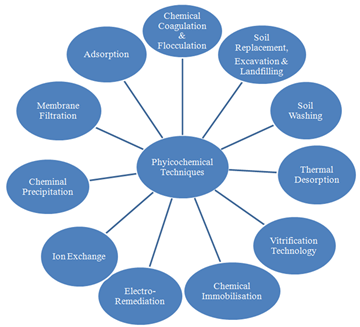
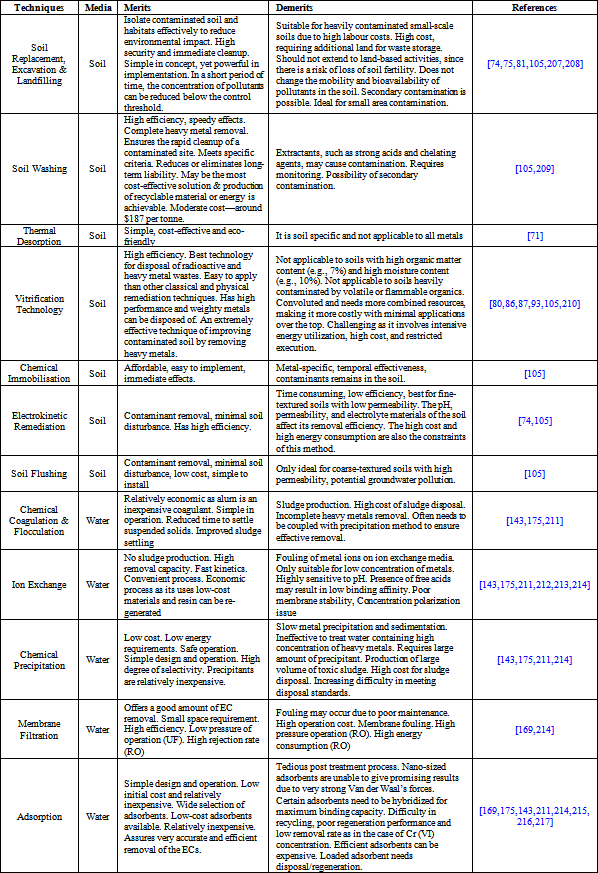
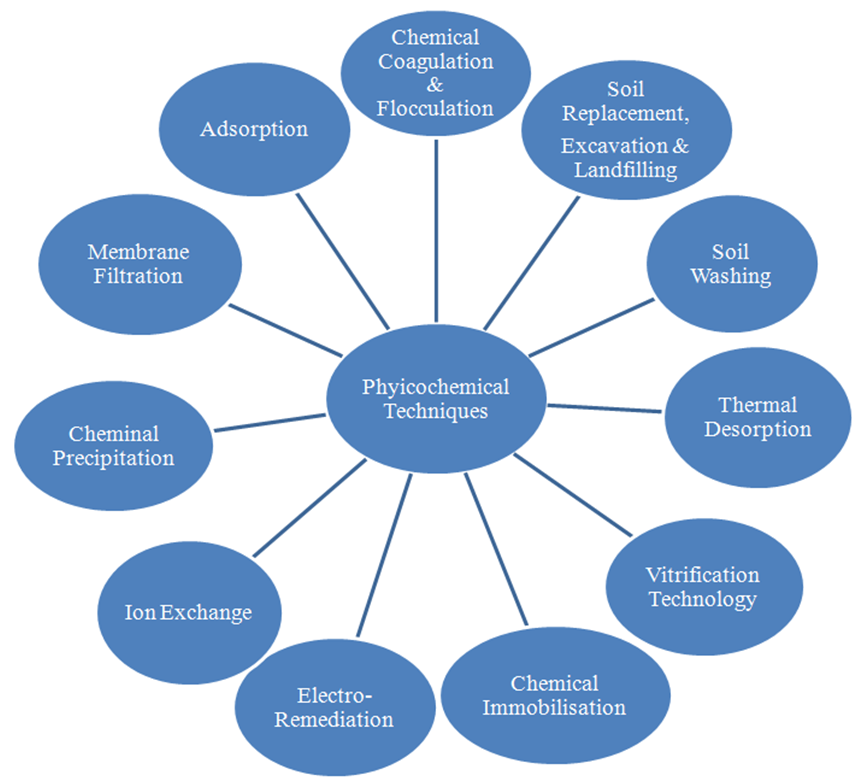
In practical terms, remediation is the process of returning soil, water, or air to their pre-contamination state. This is accomplished by degrading and transforming pollutants into less dangerous, if not completely harmless forms. According to Mu'azu et al., 67, “certain sustainable strategies for the treatment of heavy metal contaminated soils and water are available in research articles,” with each possessing its benefits and drawbacks. However, the initial concentration of metal ions, physical and chemical features of the contaminated sites determine how each procedure is applied 68. In addition, Gomes et al., 69 are of the opinion that “the several remediation strategies available depends on the media (e.g. air, water, or soil) and the type of pollutant (e.g. heavy metals, PCBs).” The techniques accomplish one of two functions: a) removing pollutants, or b) transforming metals into harmless forms 70, 71. As a result, it is critical to employ a strategy (or a combination of approaches) that is appropriate and sustainable for the contaminated site. It is worth noting also that several variables such as efficiency, time, cost, reliability as well as the degree of toxicity and the need for the employed method's post-remediation treatment, must all be taken into account when choosing the appropriate approaches. Either in-situ or ex-situ, the biological and physicochemical approaches could be used 72, 73. For the most effective clean-up of some heavy metal-contaminated sites, a combination of treatments may be required. As a result, physicochemical, and biological technologies can be utilised in tandem to reduce pollution to a level that is safe and acceptable. However, this review presents only the account of the physicochemical approaches. In order to understand all that the physicochemical strategy entails, its different unit processes have been shown in Figure 1, and comprehensively described as follows, with the some pros and cons presented in Table 1.
The well-known physicochemical approaches include; soil replacement/Excavation and landfilling, thermal desorption, vitrification technology, soil washing, chemical immobilisation, chemical precipitation, electrokinetic remediation, ion-exchange, chemical coagulation and flocculation, membrane filtration, adsorption 53, 74, 75. The physicochemical approach of restoring a degraded ecosystem is cheap and effective. However, the procedure is time-consuming, costly, only ideal for small contaminated sites, and environmentally unfriendly because harmful compounds are released into adjacent ecological systems during the remediation process 72, 76, 77.
4.1. Soil Replacement, Excavation and LandfillingSoil replacement, otherwise known as soil change entails replacing polluted soil with clean and uncontaminated soil in order to reduce pollutant concentrations, improve soil absorption capacity, and achieve soil rehabilitation 78, 79. It could be a total or partial replacement of the soil. The original polluted soil is replaced with new, fertile soil, which decreases the harmful effects of pollutant on the environment while also improving soil durability 74, 80. Although expensive and only suited for highly polluted small areas, the soil replacement approach efficiently isolates polluted soil and habitats, minimising their effects on the ecosystem 81. Similar to soil replacement is the excavation and landfilling. During the excavation process, polluted soil is removed and moved to landfills. Landfill liners, such as clay, are widely used to prevent contaminants from migrating. Landfills take up a lot of space and are potentially hazardous to people. Excavation and disposal are more costly. There are concerns regarding safety, odour emission, and the danger of groundwater contamination from runoff 82.
4.2. Thermal DesorptionThis process, also known as thermal remediation or incineration, involves heating contaminated soil matrix in a chamber at a high temperature, typically between the range of 90-320 and 320-560°C for low and high desorption, respectively, where organic pollutants and some metals can be vaporised 76. Using a thermal incinerator, the excavated soil is subjected to high temperatures. The high temperature breaks down the pollutants, and the liberated volatiles are subsequently combusted or recovered with solvents in the afterburner. Fixed bed tubular reactor, electrically-heated furnace, heating systems with rotating kiln, quartz tube and other apparatus have been used in the laboratory experiments 83, 84, 85. This method is “simple, less expensive, easy to reuse remediated soil, and eco-friendly,” according to Narendrula-Kotha et al., 71. However, its major drawbacks are the high cost of equipment and the extended desorption time. Furthermore, this procedure is not equally effective for all soil types, and it is not applicable to all metals 76.
4.3. Vitrification TechniqueThis is a heavy metal polluted soil treatment process in which the soil is exposed to high temperatures and pressure for a length of time, then cooled to create a vitreous substance. After treatment, the molten solidified product is discarded. The process of vitrification necessitates an increase in paste intensity between 1400 and 2000 degrees Celsius, resulting in the natural breakdown or solubilisation of hazardous substances. The pyrolysis products are derived from the fumed gas produced by the treatment framework, which is manufactured by this technique 86. According to Wuana and Okieimen 1 “high temperature treatment reduces the mobility of metals, resulting in the production of vitreous materials, usually a solid oxide”. It is important to note that the vitrification technology is high-performing, can dispose of heavy metals, and can be used on contaminated water and soil. Regardless, this approach is complicated and requires more combined resources, increasing the cost with minimal under applications 87.
4.4. Soil WashingThis process more often referred to as chemical leaching is a process of removing pollutants from contaminated soil by leaching it with clean water and often reagents, surfactants, or other liquids 88, 89. In the washing process, surfactants, chelating agents, acids, bases, water and other solvents can be used 90, 91, 92. Heavy metals are leached out of the soil using chemicals and reagents such as Ethylenediamine tetraacetic acid (EDTA), which immobilises hazardous metals in a less accessible form. The contaminated soil is dug up and treated with the proper extractants during this process 93. The leachate is subsequently collected and treated or disposed of downstream of the site using a collection system. Furthermore, it is a low-cost, easy technique that may be applied to field remediation 94. The desorbability/release of the contaminant from the soil, as well as the leaching rate of pollutants through soil, are all influenced by the hydraulic conductivity, texture, porosity, and mineralogy of the soil 82. Furthermore, the choice of extractant is influenced by the soil and the heavy metal to be removed, and it is crucial for the soil washing process. Because of its ability to totally remove contaminants and its efficiency, soil washing is a popular method of heavy metal cleanup 93. Inorganic and organic acids, as well as chelating chemicals are often used as washing solutions in the rehabilitation of heavy metal polluted soil. Acids, both organic and inorganic, have been found to remove much more heavy metals from polluted soils 95, 96. However, they are inefficient in locations contaminated with both Arsenic due to variations in their characteristics. The chemical speciation's redox potential has an impact on the remediation process 97. Soil washing has not been successful in removing As., which is tightly linked to Fe oxides in the majority of cases. Although, the majority of research have compared the impact of experimental parameters (such as pH, soil/liquid (S/L) ratio, and other factors) on heavy metal removal effectiveness using various washing agents, only a few have looked at the influence of soil parameters on soil washing 98, 99, 100, 101. Additional study is needed to develop an effective soil washing method, as the detrimental impacts of the washing treatment process on soil properties must be reduced 95. Kim et al., 101 submitted that “soil washing combined with physical separation, for example, can concentrate metals into smaller soil volumes, resulting in effective heavy metal removal and a lower amount of contaminated soil”.
4.5. Chemical ImmobilisationIt entails mixing an additive into excavated, polluted soil to encapsulate the contaminants. After that, the mixture is dumped on the ground. For inorganic contaminants, this approach is employed. Chemical immobilisation has no effect on removing or extracting pollutants from the soil. Instead, the mobility of heavy metals in soil or water is much reduced, decreasing their potential for transfer to plants, microbes and water 102. The solidification and stabilisation procedures are the two components of this approach. The solidification process, which uses chemical agents to control heavy metal solubility and maintain species in the soil, removes heavy metals from soil systems 103. Solidification can transform liquid wastewater, semi-solid sludge, or powder into a granular material, making treatment and transportation easier. The binder employed in this method, on the other hand, depletes soil fertility and decreases the value of agricultural land 104. Solidification is a type of soil remediation that can be used in and out of the field. An auger is used to mix a binding agent, such as fly ash, clay, asphalt and cement into the contaminated soil, resulting in a solid block 105. A crane with an injector head and a large mixer may inject binding slurries and mix them with the waste, if the contaminants are deep in the soil. Because the solid block is water impermeable, the contaminants trapped inside are not leachable 102. However, if natural weathering and unmanaged mechanical disturbances undermine the solid block's structure, the trapped contaminants may become mobile again in the long run 106. In addition, future uses of the stabilised site could be constrained. In-situ solidification has been used to treat 60 heavy metal-contaminated sites in the United States since the 1980s 105, 107. A solidification project takes an average of 1.1 months to complete, which is much less time than alternative treatment options. The pollutants, however, are neither destroyed nor removed by solidification. The cemented portions could prevent a more thorough rehabilitation in the future. As a result, solidification should only be used as a last resort for soil rehabilitation if all other options have failed. Because solidification necessitates a large volume of binding agent, its usefulness is mostly controlled by its availability and transportation costs. The total cost of solidification varies by location and can be as high as $1500 m3 (averaged $520 m3 in 2012 in the United States), including material, drilling, and mixing costs 106. Stabilization, on the other hand, is the technique of chemically converting hazardous contaminants into less dangerous or transportable forms 108. Stabilization (also known as “in-situ fixing”) immobilises pollutants while leaving the soil intact. Chemical reactions between pollutants and adhesives are used in this procedure. Tajudin et al., 102 stated that “in addition to binding agents, precipitation reagents/stabilizing chemicals are injected into polluted soil to create physiochemical interactions between the stabilising reagents and heavy metals, decreasing their mobility”.
4.6. ElectroremediationElectroremediation, also known as electrokinetic remediation or electrokinetic soil flushing, is embedding electrodes in contaminated soil or groundwater and creating an electric field with a low current 108. The contaminated matrix is exposed to an electric field between anode and cathode, allowing pollutants in the soil to be removed or transferred into the flushing fluid, which can then be treated or mobilised using electro-osmosis, electromigration, and electrophoresis 109. In other words, this is a unique remediation technology in which voltage is applied at both ends of the soil to create an electric field gradient. As pollutants migrate in the direction of the electric field, electro-precipitation, deposition, and co-deposition will enrich the pollutants that eventually reach the electrode area 110. Heavy metal is transferred to the cathode or anode via electroosmosis and electromigration of the electric field. Thereafter, precipitation on the stick indicates the reduction or elimination of metal contamination in soil 111. The three main electrokinetic processes in this method are electrostatic, electromigration, and electrophoresis 80, 112. Interestingly, strong metals such as lead, arsenic, and mercury can be extracted from soil using extraction or electromigration methods 80. Organic and inorganic contaminants containing metals like lead, chromium, cadmium, and uranium are treated by electroremediation. Electroremediation is advantageous in low-permeability soils because poor permeability has no effect on the transport rate created by the electrical field. Depending on the circumstances at the site, it can be employed on-site, off-site, or in-situ. Another advantage of electro remediation is that it can be used to treat contamination that is deep or difficult to reach. This method is suitable for low permeable soils and has the advantages of being simple to install and operate, as well as being cost-effective and not degrading the natural environment, allowing for environmental remediation and the preservation of the original ecotope [75,113-119]. This is a new form of physical repair technology that has a fast cycle time and great efficiency. In recent years, it has sparked widespread concern and research. The pH, permeability, and electrolyte components of the soil, on the other hand, have an impact on its removal efficiency. This approach is also limited by its high cost and significant energy usage 74.
4.7. Ion ExchangeThis technology has been widely employed in the removal of heavy metals from wastewater due to its high removal rate, higher treatment capacity, and efficient kinetics [119-123]. This method is affected by the pH of the aqueous phase 124. To remove heavy metal ions from a solution, a specialised ion exchanger, either naturally occurring inorganic zeolites or synthesised organic ion exchange resins containing cations or anions, is utilised 125. Even after electroplating eliminates cyanide, copper, nickel, and cadmium from a water solution, the remaining solution contains cyanide, copper, nickel, and cadmium, all of which are hazardous to one's health. The ions (cations or anions) in the solution are replaced with ions (cations or anions) on the insoluble material known as ion-exchange resin in this technique. Heavy metal wastewater is fed into one end of the ion-exchange column, then passed through the bed, which removes the heavy metals. If the column becomes saturated with heavy metals, it is cleaned and dried before being regenerated to remove the heavy metals that have been deposited 126, 127, 128, 129. Heavy metals must be removed from wastewater using ion-exchange resin, which might be natural or synthetic. Synthetic resins are chosen because they are more effective in removing heavy metals from wastewater than various natural and synthetic resin materials 130. Strong acidic resins with sulfonic acid groups and weak acidic resins with carboxylic acid groups are the most common cation exchangers. The hydrogen ions in the resins' acidic groups can act as an exchangeable ion with the cationic metal ions in the effluent. Natural zeolites and natural silicate minerals, as well as synthetic resins, have been widely used to remove heavy metals from wastewater due to their widespread availability and affordability 131, 132, 133. Despite the fact that the ion-exchange method is widely used, the chemicals needed to regenerate ion-exchange resins produce significant secondary pollutants. Secondary pollutants must be treated properly. Because a large amount of resin is required to treat a large volume of wastewater with low metal ion concentrations, the ion-exchange technique is expensive. An ion exchanger's mesh bed should be rinsed using a simple and cost-effective counter-current technique.
4.8. Chemical PrecipitationThis procedure entails adding chemicals to polluted water, which react with heavy metals and result in the development of insoluble precipitates or compounds. These insoluble complexes or precipitates will separate from their parent liquids by sedimentation and filtration. Carbonates (soda ash and sodium bicarbonate), lime, caustic soda, and sulphides (sodium sulphide, sodium hydrosulphide) are some of the most commonly used inorganic precipitating agents for heavy metal precipitation and removal 134, 135, 136. Because the solubility of metals is highly affected by pH, the process exhibits a variety of precipitation characteristics at different pH levels. When the pH is low, heavy metals are more readily available, but as the pH rises, they precipitate. Heavy metals can form insoluble hydroxide, sulphide, carbonate, and other insoluble compounds. The solubility of products is improved by lowering the pH of wastewater with an acid 137. Chemical precipitation is also influenced by the size, density surface charge, and type of pollutant, as well as the dose of precipitants that are continuously evaluated during the precipitation process, according to relevant studies 104, 112, 138. Hydroxide and sulfide precipitation are two of the most common chemical precipitation reactions. In the pH range of 8.0 - 11.0, the solubility of several hydroxides of metals is limited. Flocculation followed by sedimentation operations can be used to separate the produced metal hydroxides. Because of their ease of handling and cost-effectiveness, various hydroxides have been employed to precipitate heavy metals from wastewater 139. In most industrial wastewater treatment processes, lime has been used as a major hydroxide precipitating agent 140. Heavy metals such as Cu and Cr were removed from wastewater using calcium hydroxides and sodium hydroxides as precipitating agents 141. On the other hand, sulphide precipitation is an effective method for removing hazardous heavy metals 142. The solubility of metal sulphide precipitates is substantially lower than that of hydroxide precipitates, and sulphide precipitates are not amphoteric, which is one of the most critical considerations when using sulphides. In comparison to hydroxide precipitation methods, the sulphide precipitation method is capable of achieving a significant amount of metal removal over a wide pH range 143. In comparison to metal hydroxide sludges, metal sulphide sludges thicken and dewater better. In any case, the use of the sulphide precipitation technique has the potential to be hazardous 144. In addition, heavy metal ions are frequently in acidic environments, and sulphide precipitants in acidic environments can result in harmful hydrogen sulphide vapour formation. This precipitation procedure must be carried out in basic or neutral conditions. Furthermore, metal sulphide precipitation produces colloidal precipitates, which can cause separation problems in filtration and sedimentation operations. In a nutshell, the chemical precipitation method is suitable due to its cost-effectiveness, ease of operation and process control 145, 146, 147, and applicability across a wide temperature range. However, to reduce the metals to an acceptable level for release into the environment, the process necessitates a large amount of chemicals 148. Furthermore, the enormous volume of sludge produced, rising sludge disposal costs, slower metal precipitation, poor settling, and long-term environmental effects of sludge disposal are some of the process' limitations 149.
4.9. Chemical Coagulation and FlocculationHeavy metals are removed from wastewater or solutions using this chemical method 150, 151. The electrostatic repulsion mechanism decreases the net surface charge of colloidal particles. It's when particles' charges are balanced. This method has successfully treated drinking water and decontaminated industrial effluents 152, 153. Coagulation is the transformation of coagulants or dissolved organic materials into bigger forms. Magnesium chloride (MgCl2), Alum, aluminium hydroxide, polyaluminium chloride (PACL), polyethyleneimine (PEI), and other coagulants are employed in this process 154. Coagulation is the process of applying a chemical coagulant to destabilise colloidal particles, which results in sedimentation. To enhance the particle size, the unstable particles are flocculated into huge floccules after coagulation 153. Through successive collisions and interactions with inorganic and dissolved organic polymers, flocculation gradually mixes the destabilised particles, increasing particle size. Filtration, flotation, or straining can easily separate smaller particles from bigger particles once they have been agglomerated 155. Finally, in the sedimentation tank, the huge floccules will settle. Alum, ferric chloride, ferrous sulphate, and other coagulants for the removal of contaminants from wastewater are widely used in traditional wastewater treatment systems 156. Macromolecule flocculants have also been successfully used in the removal of heavy metals from wastewater 157, 158, 159, 160. According to the US Environmental Protection Agency 161, report “the pH range of 8.5-11.3, using lime softening and coagulation (ferric sulphate or alum) was successful in eradicating lead, chromium, and cadmium up to 98 percent. Cadmium removal improves as pH rises; ferric sulphate and alum coagulation were combined to remove 97 percent of lead from river water with 0.15 mg/l lead. At a pH range of 6.5-9.3, ferric sulphate coagulation removed 98 percent of the chromium 162. At an ideal pH of 6.2-7.8 for alum, 8.7-10.9 for MgCl2, and 8-9.3 for PACL, 99 percent of the lead was eliminated 154. In the study conducted by Johnson et al., 163, FeCl3 was utilised as a coagulant to improve metal (Ni, Zn, Pb and Cu) removal from synthetic wastewater. Heavy metals cannot be completely removed by coagulation/flocculation treatment units alone, however they can be completely removed when combined with other treatments 164, 165, 166, 167, 168. Coagulation/flocculation offers advantages, but it also has drawbacks, such as high operational expenses due to extensive chemical use.
4.10. Membrane TechnologyMembrane technology is a physical treatment method that filters pollutants out through a membrane based on their size and qualities 169. The hydrostatic pressure around the membrane is the fundamental driving force for filtration through the membrane 170. The presence of functional groups, surface charge and degree of hydrophilicity, pore size, pore distribution and solution flow are the most important elements in the membrane process 171. These factors are crucial in determining the total water production rate and heavy metal removal effectiveness of the membrane process 171. The flux rate and selectivity of the membrane determine its overall performance. Heavy metals were removed from wastewater using membrane filtering treatment technologies, which yielded outstanding results 172. Water permeability and heavy metal ion rejection are influenced by the chemical and physical properties of the membrane 173, 174. Membrane filtration is well-known for its ability to remove organic chemicals and suspended solids from inorganic effluents rich in heavy metals 175. Because of its cost-effectiveness and great efficiency, this approach has gained more popularity and has become a popular method for the removal of heavy metal from contaminated medium 176. For the removal of hazardous metal ions from wastewater, various membrane technologies such as nanofiltration, reverse osmosis, ultrafiltration and electrodialysis have been effectively used. A semi-permeable membrane in the reverse osmosis system allows water to pass through while rejecting dangerous heavy metals from wastewater. This is one of the most effective methods for eliminating dissolved metals from water and waste water. Mohsen-Nia et al., 177, Zhang et al., 178, You et al., 179 and Vital et al., 180 employed reverse osmosis to extract several hazardous metals from wastewater. The high power costs, membrane fouling and handling of rejection are all major disadvantages of this approach. The ultrafiltration technique uses low transmembrane pressures to extract dissolved and colloidal particles 181. Dissolved solids pass through the ultrafiltration membrane rather quickly since the pore diameters are larger than the dissolved particles. Nano-filtration is a membrane-based method for removing contaminants with particle sizes that fall in between ultra-filtration and reverse osmosis. Commercially available nanofiltration membranes are made up of synthetic polymers with charged groups. For eliminating a specific group of charged entities, the setup must be designed specifically 134. The elimination of hazardous heavy metals from wastewater is achieved with this treatment process 182, 183, 184, 185. High efficiency, relatively low energy consumption, reliability, and ease of operation are only a few of the benefits of this treatment procedure 186. Electrodialysis is a membrane operation that uses charged ion exchange membranes and an electric field to separate ions from one solution to another. This treatment approach has been effectively used to treat industrial wastewater, generate drinking and process water from seawater, recover usable elements from industrial effluents, and create salts 187. Schlichter et al., 188, Nataraj et al., 189, Nemati et al., 190 and Jiang et al., 191 employed this treatment strategy to eliminate dangerous heavy metals from industrial wastewater. This method has the advantage of being more efficient in terms of removal, requiring less space, and being easier to use 181. Membrane treatment technologies can remove harmful heavy metals from wastewater, but they have drawbacks such as process complexity, higher costs, membrane fouling, and decreased permeate flux 53.
According to Abdel-Raouf and Abdul-Raheim 192 “Adsorption is a mass transfer process in which impurities are attached to a solid surface by physical or chemical interactions, most commonly van der Waals forces of attraction or hydrogen bonding”. The size of the pollutants, their concentration, temperature, molecular mass, and other chemical parameters influence adsorption efficiency 169. For the removal of heavy metals from wastewater, adsorption process is now believed to be the most cost-effective, efficient, and selective treatment and decontamination approach [137,193-198]. This technique offers flexibility in operation and design for 100% recovery of heavy metals from wastewater. It occurs when species are drawn to the solid surface, or when one or more species in the liquid interact with the solid, and it can also happen between the solid and gaseous phases. The two types of adsorption are physical and chemical adsorption 199. Physical adsorption is induced by weak Van der Waals forces of attraction, whereas chemical adsorption is caused by a strong covalent bond between the adsorbent and the adsorbate. Surface modified magnetic adsorbents, modified biopolymers, biomass-based activated charcoal, and other adsorbents of varied sorts and cost-effectiveness have all been employed to extract heavy metals from metal-contaminated soil and water 80, 200. With the correct desorption techniques, heavy metal adsorption can sometimes be reversed, allowing the adsorbent to be regenerated. Activated carbon (AC) is one of the most widely utilised and popular adsorbents for heavy metal removal from wastewater because of its higher surface area and affinity for heavy metals. The advantages of this technology with reference to Yang et al., 201 are “high removal capacity, low operating costs, ease of installation, and simple treatment by regenerating adsorbed heavy metal ions”. Because heavy metal can exist with a variety of other organic and inorganic contaminants, which might obstruct heavy metal removal, a suitable adsorbent should be selected as part of the multi-component system. The use of coal-fired fly ash (CFFA) to remove, copper, nickel and cadmium from single and multi-contaminated systems has been investigated 202. According to various research, heavy metals can be eliminated using sawdust. Yu et al., 203 found that “maple sawdust had a clearance effectiveness of more than 80% for Cr (VI)”. Cadmium, nickel, zinc and copper were removed from beech sawdust by Božić et al., 204, while manganese, copper, nickel, zinc and cadmium were removed from poplar and linden tree sawdust by the authors in another study. Li et al., 205 used poplar tree sawdust to demonstrate Cr, Cu, and Pb adsorption. Adsorption has a number of advantages over other traditional approaches, including the reduction of biological and chemical sludge, as well as being cost-effective, environmentally friendly, and incredibly efficient. Adsorbent regeneration and metal recovery are also possible with this approach 206.
Heavy metal pollution is a global issue with public health implications. To reduce the toxic effects of these metals and restore ecosystem functioning at contaminated sites, a variety of remediation procedures have been devised, each with its own set of benefits and drawbacks. Physicochemical strategies for removing heavy metals from ecological systems were surveyed and summarised in this review. Chemical precipitation, coagulation, and flocculation are the most simple and inexpensive techniques, although, they have problems complying with higher environmental standards. Other strategies, such as thermal desorption, soil washing and flushing, membrane technology, vitrification technology, electroremediation, chemical immobilisation, adsorption, ion-exchange, and others, can be more effective in overcoming the drawbacks of large-scale sludge production, but commercial application is still difficult in many cases due to economic viability. Hence, heavy metal concentration, environmental impact, ease of operation and financial cost should all be considered when selecting a method for a contaminated medium. The application of a soil remediation technique, on the other hand, is determined through a multitude of factors such as public acceptability, remediation objectives, site and pollutant properties, remediation efficacy, financial intensiveness and duration. Also, treatability studies should be conducted prior to deciding on the appropriate remedial treatments and in initiating full-scale treatment.
Authors sincerely thank the faculty members of their respective universities for the immeasurable support that they received in the course of the preparation of this scientific review. In a very special way, Anyiam Ngozi Donald expresses his unalloyed appreciation to the Association of Commonwealth Universities (ACU) for funding his Master’s programme via the Queen Elizabeth Commonwealth Scholarship scheme.
| [1] | Wuana R. A., & Okieimen F. E. Heavy metals in contaminated soils: a review of sources, chemistry, risks and best available strategies for remediation. International Scholarly Research Notices. 2011. 1-20. | ||
| In article | View Article | ||
| [2] | Gall JE, Boyd RS, Rajakaruna N. Transfer of heavy metals through terrestrial food webs: a review. Environmental monitoring and assessment. 2015. 187 (4): 1-21. | ||
| In article | View Article PubMed | ||
| [3] | Michalak A. Phenolic compounds and their antioxidant activity in plants growing under heavy metal stress. Polish journal of environmental studies. 2006 Jul 1; 15 (4). | ||
| In article | |||
| [4] | Keil DE, Berger-Ritchie J, McMillin GA. Testing for toxic elements: a focus on arsenic, cadmium, lead, and mercury. Laboratory Medicine. 2011 Dec 1; 42 (12):735-42. | ||
| In article | View Article | ||
| [5] | Goretti E, Pallottini M, Rossi R, La Porta G, Gardi T, Goga BC, Elia AC, Galletti M, Moroni B, Petroselli C, Selvaggi R. Heavy metal bioaccumulation in honey bee matrix, an indicator to assess the contamination level in terrestrial environments. Environmental Pollution. 2020 Jan 1; 256: 113388. | ||
| In article | View Article PubMed | ||
| [6] | Sankhla MS, Kumari M, Nandan M, Kumar R, Agrawal P. Heavy metals contamination in water and their hazardous effect on human health-a review. Int. J. Curr. Microbiol. App. Sci (2016). 2016 Sep 22; 5 (10): 759-66. | ||
| In article | View Article | ||
| [7] | Lin YF, Aarts MG. The molecular mechanism of zinc and cadmium stress response in plants. Cellular and molecular life sciences. 2012. 69 (19): 3187-206. | ||
| In article | View Article PubMed | ||
| [8] | Pandey B, Agrawal M, Singh S. Assessment of air pollution around coal mining area: emphasizing on spatial distributions, seasonal variations and heavy metals, using cluster and principal component analysis. Atmospheric pollution research. 2014 Jan 1; 5 (1): 79-86. | ||
| In article | View Article | ||
| [9] | Chibuike GU, Obiora SC. Heavy metal polluted soils: effect on plants and bioremediation methods. Applied and environmental soil science. 2014 Oct 7; 2014. | ||
| In article | View Article | ||
| [10] | Hou D, O’Connor D, Igalavithana AD, Alessi DS, Luo J, Tsang DC, Sparks DL, Yamauchi Y, Rinklebe J, Ok YS. Metal contamination and bioremediation of agricultural soils for food safety and sustainability. Nature Reviews Earth & Environment. 2020. 1(7): 366-81. | ||
| In article | View Article | ||
| [11] | Cassidy ES, West PC, Gerber JS, Foley JA. Redefining agricultural yields: from tonnes to people nourished per hectare. Environmental Research Letters. 2013 Aug 1; 8 (3): 034015. | ||
| In article | View Article | ||
| [12] | Jansson JK, Hofmockel KS. Soil microbiomes and climate change. Nature Reviews Microbiology. 2020 Jan; 18 (1): 35-46. | ||
| In article | View Article PubMed | ||
| [13] | Foley JA, Ramankutty N, Brauman KA, Cassidy ES, Gerber JS, Johnston M, Mueller ND, O’Connell C, Ray DK, West PC, Balzer C. Solutions for a cultivated planet. Nature. 2011 Oct; 478 (7369): 337-42. | ||
| In article | View Article PubMed | ||
| [14] | Borrelli P, Robinson DA, Fleischer LR, Lugato E, Ballabio C, Alewell C, Meusburger K, Modugno S, Schütt B, Ferro V, Bagarello V. An assessment of the global impact of 21st century land use change on soil erosion. Nature communications. 2017 Dec 8; 8(1): 1-3. | ||
| In article | View Article PubMed | ||
| [15] | Zhao FJ, Ma Y, Zhu YG, Tang Z, McGrath SP. Soil contamination in China: current status and mitigation strategies. Environmental science & technology. 2015 Jan 20; 49 (2): 750-9. | ||
| In article | View Article PubMed | ||
| [16] | Pérez AP, Eugenio NR. Status of local soil contamination in Europe. Brussels (BE). 2018. | ||
| In article | |||
| [17] | Lopez S, Piutti S, Vallance J, Morel JL, Echevarria G, Benizri E. Nickel drives bacterial community diversity in the rhizosphere of the hyperaccumulator Alyssum murale. Soil Biology and Biochemistry. 2017 Nov 1; 114: 121-30. | ||
| In article | View Article | ||
| [18] | Judy JD, Kirby JK, McLaughlin MJ, McNear Jr D, Bertsch PM. Symbiosis between nitrogen-fixing bacteria and Medicago truncatula is not significantly affected by silver and silver sulfide nanomaterials. Environmental Pollution. 2016 Jul 1; 214: 731-6. | ||
| In article | View Article PubMed | ||
| [19] | Chen GQ, Chen Y, Zeng GM, Zhang JC, Chen YN, Wang L, Zhang WJ. Speciation of cadmium and changes in bacterial communities in red soil following application of cadmium-polluted compost. Environmental engineering science. 2010 Dec 1; 27(12): 1019-26. | ||
| In article | View Article | ||
| [20] | Karaca A, Cetin SC, Turgay OC, Kizilkaya R. Effects of heavy metals on soil enzyme activities. InSoil heavy metals 2010 (pp. 237-262). Springer, Berlin, Heidelberg. | ||
| In article | View Article | ||
| [21] | Srivastava P, Kowshik M. Mechanisms of metal resistance and homeostasis in haloarchaea. Archaea. 2013 Oct; 2013. | ||
| In article | View Article PubMed | ||
| [22] | Jiang NJ, Liu R, Du YJ, Bi YZ. Microbial induced carbonate precipitation for immobilizing Pb contaminants: Toxic effects on bacterial activity and immobilization efficiency. Science of the Total Environment. 2019 Jul 1; 672: 722-31. | ||
| In article | View Article PubMed | ||
| [23] | Li X, Li Z, Lin CJ, Bi X, Liu J, Feng X, Zhang H, Chen J, Wu T. Health risks of heavy metal exposure through vegetable consumption near a large-scale Pb/Zn smelter in central China. Ecotoxicology and environmental safety. 2018 Oct 15; 161: 99-110. | ||
| In article | View Article PubMed | ||
| [24] | Cai LM, Wang QS, Luo J, Chen LG, Zhu RL, Wang S, Tang CH. Heavy metal contamination and health risk assessment for children near a large Cu-smelter in central China. Science of the Total Environment. 2019 Feb 10; 650:725-33. | ||
| In article | View Article PubMed | ||
| [25] | Xu L, Dai H, Skuza L, Wei S. Comprehensive exploration of heavy metal contamination and risk assessment at two common smelter sites. Chemosphere. 2021 Dec 1; 285: 131350. | ||
| In article | View Article PubMed | ||
| [26] | Shimod KP, Vineethkumar V, Prasad TK, Jayapal G. Effect of urbanization on heavy metal contamination: a study on major townships of Kannur District in Kerala, India. Bulletin of the National Research Centre. 2022 Dec; 46 (1):1-4. | ||
| In article | View Article | ||
| [27] | O’Connor D, Hou D, Ok YS, Lanphear BP. The effects of iniquitous lead exposure on health. Nature Sustainability. 2020 Feb; 3 (2): 77-9. | ||
| In article | View Article | ||
| [28] | Singh J, Kalamdhad AS. Effects of heavy metals on soil, plants, human health and aquatic life. Int J Res Chem Environ. 2011 Oct; 1 (2): 15-21. | ||
| In article | |||
| [29] | Abdu N, Abdullahi AA, Abdulkadir A. Heavy metals and soil microbes. Environmental chemistry letters. 2017 Mar; 15 (1): 65-84. | ||
| In article | View Article | ||
| [30] | Khan S, Cao Q, Zheng YM, Huang YZ, Zhu YG. Health risks of heavy metals in contaminated soils and food crops irrigated with wastewater in Beijing, China. Environmental pollution. 2008 Apr 1; 152 (3): 686-92. | ||
| In article | View Article PubMed | ||
| [31] | Bhattacharyya P, Chakrabarti K, Chakraborty A, Tripathy S, Powell MA. Fractionation and bioavailability of Pb in municipal solid waste compost and Pb uptake by rice straw and grain under submerged condition in amended soil. Geosciences Journal. 2008 Mar; 12 (1): 41-5. | ||
| In article | View Article | ||
| [32] | Di Salvatore M, Carafa AM, Carratù G. Assessment of heavy metals phytotoxicity using seed germination and root elongation tests: A comparison of two growth substrates. Chemosphere. 2008 Nov 1; 73 (9): 1461-4. | ||
| In article | View Article PubMed | ||
| [33] | Khan A, Khan S, Khan MA, Qamar Z, Waqas M. The uptake and bioaccumulation of heavy metals by food plants, their effects on plants nutrients, and associated health risk: a review. Environmental science and pollution research. 2015 Sep; 22 (18): 13772-99. | ||
| In article | View Article PubMed | ||
| [34] | Wani PA, Khan MS, Zaidi A. An evaluation of the effects of heavy metals on the growth, seed yield and grain protein of lentil in pots. Ann Appl Biol (Suppl TAC). 2006; 27: 23-4. | ||
| In article | |||
| [35] | John R, Ahmad P, Gadgil K, Sharma S. Heavy metal toxicity: Effect on plant growth, biochemical parameters and metal accumulation by Brassica juncea L. 2009, 66-75. | ||
| In article | |||
| [36] | Le Guédard M, Faure O, Bessoule JJ. Early changes in the fatty acid composition of photosynthetic membrane lipids from Populus nigra grown on a metallurgical landfill. Chemosphere. 2012 Jul 1; 88 (6): 693-8. | ||
| In article | View Article PubMed | ||
| [37] | Rai R, Agrawal M, Agrawal SB. Impact of heavy metals on physiological processes of plants: with special reference to photosynthetic system. InPlant responses to xenobiotics 2016 (pp. 127-140). Springer, Singapore. | ||
| In article | View Article PubMed | ||
| [38] | Bini C, Wahsha M, Fontana S, Maleci L. Effects of heavy metals on morphological characteristics of Taraxacum officinale Web growing on mine soils in NE Italy. Journal of geochemical exploration. 2012 Dec 1; 123: 101-8. | ||
| In article | View Article | ||
| [39] | Saraf A, Samant A. Evaluation of some minerals and trace elements in Achyranthes aspera Linn. Int J Pharma Sci. 2013; 3 (3): 229-33. | ||
| In article | |||
| [40] | Sandeep G, Vijayalatha KR, Anitha T. Heavy metals and its impact in vegetable crops. Int J Chem Stud. 2019; 7 (1): 1612-21. | ||
| In article | |||
| [41] | Sobha K, Poornima A, Harini P, Veeraiah K. A study on biochemical changes in the fresh water fish, Catla catla (Hamilton) exposed to the heavy metal toxicant cadmium chloride. Kathmandu University Journal of Science, Engineering and Technology. 2007; 3 (2): 1-1. | ||
| In article | View Article | ||
| [42] | Sankhla MS, Kumar R, Prasad L. Variation of chromium concentration in Yamuna River (Delhi) water due to change in temperature and humidity. Journal of Seybold Report ISSN NO. 2020; 1533: 9211. | ||
| In article | |||
| [43] | Gupta N, Yadav KK, Kumar V, Kumar S, Chadd RP, Kumar A. Trace elements in soil-vegetables interface: translocation, bioaccumulation, toxicity and amelioration-a review. Science of the Total Environment. 2019 Feb 15; 651: 2927-42. | ||
| In article | View Article PubMed | ||
| [44] | Kumar S, Prasad S, Yadav KK, Shrivastava M, Gupta N, Nagar S, Bach QV, Kamyab H, Khan SA, Yadav S, Malav LC. Hazardous heavy metals contamination of vegetables and food chain: Role of sustainable remediation approaches-A review. Environmental research. 2019 Dec 1; 179: 108792. | ||
| In article | View Article PubMed | ||
| [45] | Jomova K, Jenisova Z, Feszterova M, Baros S, Liska J, Hudecova D, Rhodes CJ, Valko M. Arsenic: toxicity, oxidative stress and human disease. Journal of Applied Toxicology. 2011 Mar; 31 (2): 95-107. | ||
| In article | View Article PubMed | ||
| [46] | Flora G, Gupta D, Tiwari A. Toxicity of lead: a review with recent updates. Interdisciplinary toxicology. 2012 Jun; 5 (2): 47. | ||
| In article | View Article PubMed | ||
| [47] | Mari M, Rovira J, Sánchez-Soberón F, Nadal M, Schuhmacher M, Domingo JL. Partial replacement of fossil fuels in a cement plant: Assessment of human health risks by metals, metalloids and PCDD/Fs. Environmental research. 2018 Nov 1; 167: 191-7. | ||
| In article | View Article PubMed | ||
| [48] | Rehman, K., Fatima, F., Waheed, I., & Akash, M. S. H. (2018). Prevalence of exposure of heavy metals and their impact on health consequences. Journal of cellular biochemistry, 119(1), 157-184. | ||
| In article | View Article PubMed | ||
| [49] | Lai CH, Lin CH, Liao CC, Chuang KY, Peng YP. Effects of heavy metals on health risk and characteristic in surrounding atmosphere of tire manufacturing plant, Taiwan. RSC advances. 2018; 8(6): 3041-50. | ||
| In article | View Article PubMed | ||
| [50] | Zafarzadeh A, Rahimzadeh H, Mahvi AH. Health risk assessment of heavy metals in vegetables in an endemic esophageal cancer region in Iran. Health Scope. 2018 Aug 31; 7 (3). | ||
| In article | View Article | ||
| [51] | Ren Y, Luo Q, Zhuo S, Hu Y, Shen G, Cheng H, Tao S. Bioaccessibility and public health risk of heavy Metal (loid) s in the airborne particulate matter of four cities in northern China. Chemosphere. 2021 Aug 1; 277: 130312. | ||
| In article | View Article PubMed | ||
| [52] | Skoczynska A, Skoczynska M, Turczyn B, Wojakowska A, Gruszczynski L, Scieszka M. Exposure to arsenic in the air and 15-F2t-isoprostane in urine in a sub-population of inhabitants of a copper smelter region. Exposure and Health. 2021 Sep; 13 (3): 403-18. | ||
| In article | View Article | ||
| [53] | Vardhan KH, Kumar PS, Panda RC. A review on heavy metal pollution, toxicity and remedial measures: Current trends and future perspectives. Journal of Molecular Liquids. 2019 Sep 15; 290: 111197. | ||
| In article | View Article | ||
| [54] | Asaduzzaman K, Khandaker MU, Baharudin NA, Amin YB, Farook MS, Bradley DA, Mahmoud O. Heavy metals in human teeth dentine: A bio-indicator of metals exposure and environmental pollution. chemosphere. 2017 Jun 1; 176: 221-30. | ||
| In article | View Article PubMed | ||
| [55] | El-Kady AA, Abdel-Wahhab MA. Occurrence of trace metals in foodstuffs and their health impact. Trends in food science & technology. 2018 May 1; 75: 36-45. | ||
| In article | View Article | ||
| [56] | Pendergast MM, Hoek EM. A review of water treatment membrane nanotechnologies. Energy & Environmental Science. 2011; 4(6): 1946-71. | ||
| In article | View Article | ||
| [57] | Senthamarai C, Kumar PS, Priyadharshini M, Vijayalakshmi P, Kumar VV, Baskaralingam P, Thiruvengadaravi KV, Sivanesan S. Adsorption behavior of methylene blue dye onto surface modified Strychnos potatorum seeds. Environmental Progress & Sustainable Energy. 2013 Oct; 32 (3): 624-32. | ||
| In article | View Article | ||
| [58] | Álvarez-Torrellas S, Peres JA, Gil-Álvarez V, Ovejero G, García J. Effective adsorption of non-biodegradable pharmaceuticals from hospital wastewater with different carbon materials. Chemical Engineering Journal. 2017 Jul 15; 320: 319-29. | ||
| In article | View Article | ||
| [59] | Pavithra KG, Jaikumar V. Removal of colorants from wastewater: A review on sources and treatment strategies. Journal of Industrial and Engineering Chemistry. 2019 Jul 25; 75: 1-9. | ||
| In article | View Article | ||
| [60] | Morin S, Vivas-Nogues M, Duong TT, Boudou A, Coste M, Delmas F. Dynamics of benthic diatom colonization in a cadmium/zinc-polluted river (Riou-Mort, France). Fundamental and applied limnology. 2007 Feb 1; 168 (2): 179. | ||
| In article | View Article | ||
| [61] | De Jonge M, Van de Vijver B, Blust R, Bervoets L. Responses of aquatic organisms to metal pollution in a lowland river in Flanders: a comparison of diatoms and macroinvertebrates. Science of the Total Environment. 2008 Dec 15; 407 (1): 615-29. | ||
| In article | View Article PubMed | ||
| [62] | Baby J, Raj JS, Biby ET, Sankarganesh P, Jeevitha MV, Ajisha SU, Rajan SS. Toxic effect of heavy metals on aquatic environment. International Journal of Biological and Chemical Sciences. 2010; 4 (4). | ||
| In article | View Article | ||
| [63] | Fashola MO, Ngole-Jeme VM, Babalola OO. Heavy metal pollution from gold mines: environmental effects and bacterial strategies for resistance. International journal of environmental research and public health. 2016 Nov; 13 (11): 1047. | ||
| In article | View Article PubMed | ||
| [64] | Rasmussen LD, Sørensen SJ, Turner RR, Barkay T. Application of a mer-lux biosensor for estimating bioavailable mercury in soil. Soil Biology and Biochemistry. 2000 May 1; 32 (5): 639-46. | ||
| In article | View Article | ||
| [65] | Mukhopadhyay S, Maiti SK. Phytoremediation of metal mine waste. Applied Ecology and Environmental Research. 2010 Jan 1; 8 (3): 207-22. | ||
| In article | |||
| [66] | Kanwar VS, Sharma A, Srivastav AL, Rani L. Phytoremediation of toxic metals present in soil and water environment: a critical review. Environmental Science and Pollution Research. 2020 Dec; 27 (36): 44835-60. | ||
| In article | View Article PubMed | ||
| [67] | Mu’azu ND, Essa MH, Haladu SA, Ali SA, Jarrah N, Zubair M, Mohamed IA. Removal zinc ions from contaminated soil using biodegradable polyaspartate via soil washing process. InJournal of Physics: Conference Series 2019 Nov 1 (Vol. 1349, No. 1, p. 012146). IOP Publishing. | ||
| In article | View Article | ||
| [68] | Chekroun KB, Baghour M. The role of algae in phytoremediation of heavy metals: a review. J Mater Environ Sci. 2013; 4 (6): 873-80. | ||
| In article | |||
| [69] | Gomes HI, Dias-Ferreira C, Ribeiro AB. Overview of in situ and ex situ remediation technologies for PCB-contaminated soils and sediments and obstacles for full-scale application. Science of the Total Environment. 2013 Feb 15; 445: 237-60. | ||
| In article | View Article PubMed | ||
| [70] | Walpole B. Environmental Systems and Societies for the IB Diploma. Cambridge University Press; 2012. | ||
| In article | |||
| [71] | Narendrula-Kotha R, M. Mehes-Smith, and K. K. Nkongolo. “Critical Analysis of Remediation Methods of Metal Contaminated Lands.” International Journal of Environmental Bioremediation & Biodegradation. 2018. 6 (1): 1-7. | ||
| In article | |||
| [72] | Yao Z, Li J, Xie H, Yu C. Review on remediation technologies of soil contaminated by heavy metals. Procedia Environmental Sciences. 2012 Jan 1; 16: 722-9. | ||
| In article | View Article | ||
| [73] | Lim MW, Von Lau E, Poh PE. A comprehensive guide of remediation technologies for oil contaminated soil—present works and future directions. Marine pollution bulletin. 2016 Aug 15; Vardhan 109 (1): 14-45. | ||
| In article | View Article PubMed | ||
| [74] | Han B. Study on soil remediation technology of cadmium contaminated site. Open Journal of Applied Sciences. 2019 Mar 12; 9(3): 115-20. | ||
| In article | View Article | ||
| [75] | Naeem N, Tabassum I, Majeed A, Amjad M. Technologies of Soil Contaminated with Heavy Metals. Acta Scientific Agriculture. 2020; 4: 01-5. | ||
| In article | View Article | ||
| [76] | Khan FI, Husain T, Hejazi R. An overview and analysis of site remediation technologies. Journal of environmental management. 2004 Jun 1; 71 (2): 95-122. | ||
| In article | View Article PubMed | ||
| [77] | Cappuyns V. Environmental impacts of soil remediation activities: quantitative and qualitative tools applied on three case studies. Journal of cleaner production. 2013 Aug 1; 52: 145-54. | ||
| In article | View Article | ||
| [78] | Andrew A. Phytoremediation: an environmentally sound technology for pollution prevention, control and remediation in developing countries. Educational Research and Reviews. 2007 Jul 30; 2(7): 151-6. | ||
| In article | |||
| [79] | Mohan I, Goria K, Dhar S, Kothari R, Bhau BS, Pathania D. Phytoremediation of heavy metals from the biosphere perspective and solutions. Pollutants and Water Management: Resources, Strategies and Scarcity. 2021 Apr 16: 95-127. | ||
| In article | View Article | ||
| [80] | Rajendran S, Priya TA, Khoo KS, Hoang TK, Ng HS, Munawaroh HS, Karaman C, Orooji Y, Show PL. A critical review on various remediation approaches for heavy metal contaminants removal from contaminated soils. Chemosphere. 2022 Jan 1; 287: 132369. | ||
| In article | View Article PubMed | ||
| [81] | Tiwari S, Singh SN, Garg SK. Microbially enhanced phytoextraction of heavy-metal fly-ash amended soil. Communications in soil science and plant analysis. 2013 Nov 30; 44 (21): 3161-76. | ||
| In article | View Article | ||
| [82] | Sparks, D. L. Environmental soil chemistry. Elsevier. 2nd Ed. Chapt1. 2003. p. 28. | ||
| In article | View Article | ||
| [83] | Huang YT, Hseu ZY, Hsi HC. Influences of thermal decontamination on mercury removal, soil properties, and repartitioning of coexisting heavy metals. Chemosphere. 2011 Aug 1; 84 (9): 1244-9. | ||
| In article | View Article PubMed | ||
| [84] | Zhong D, Zhong Z, Wu L, Xue H, Song Z, Luo Y. Thermal characteristics of hyperaccumulator and fate of heavy metals during thermal treatment of Sedum plumbizincicola. International Journal of Phytoremediation. 2015 Aug 3; 17(8): 766-76. | ||
| In article | View Article PubMed | ||
| [85] | Li J, Hashimoto Y, Riya S, Terada A, Hou H, Shibagaki Y, Hosomi M. Removal and immobilization of heavy metals in contaminated soils by chlorination and thermal treatment on an industrial-scale. Chemical Engineering Journal. 2019 Mar 1; 359: 385-92. | ||
| In article | View Article | ||
| [86] | Dhaliwal, S. S., Singh, J., Taneja, P. K., & Mandal, A. (2020). Remediation techniques for removal of heavy metals from the soil contaminated through different sources: a review. Environmental Science and Pollution Research, 27(2), 1319-1333. | ||
| In article | View Article PubMed | ||
| [87] | Suthar V, Mahmood-ul-Hassan M, Memon KS, Rafique E. Heavy-metal phytoextraction potential of spinach and mustard grown in contaminated calcareous soils. Communications in soil science and plant analysis. 2013 Oct 11; 44 (18): 2757-70. | ||
| In article | View Article | ||
| [88] | Zabbey N, Sam K, Onyebuchi AT. Remediation of contaminated lands in the Niger Delta, Nigeria: Prospects and challenges. Science of the Total Environment. 2017 May 15; 586: 952-65. | ||
| In article | View Article PubMed | ||
| [89] | Hasan A, Pandey LM. Self-assembled monolayers in biomaterials. In Nanobiomaterials 2018 Jan 1 (pp. 137-178). Woodhead Publishing. | ||
| In article | View Article PubMed | ||
| [90] | Ferraro A, Fabbricino M, van Hullebusch ED, Esposito G, Pirozzi F. Effect of soil/contamination characteristics and process operational conditions on aminopolycarboxylates enhanced soil washing for heavy metals removal: a review. Reviews in Environmental Science and Bio/Technology. 2016 Mar; 15 (1): 111-45. | ||
| In article | View Article | ||
| [91] | US EPA. EPA-542-R-17-001: Superfund Remedy Report, 15th edition (2017). | ||
| In article | |||
| [92] | Liu J, Xue J, Yuan D, Wei X, Su H. Surfactant washing to remove heavy metal pollution in soil: A review. Recent Innovations in Chemical Engineering (Formerly Recent Patents on Chemical Engineering). 2020 Feb 1; 13 (1): 3-16. | ||
| In article | View Article | ||
| [93] | Lata S, Kaur S. Evolution of Technologies for Cadmium Remediation and Detoxification. Nature Environment and Pollution Technology. 2022 Mar 1; 21 (1): 321-30. | ||
| In article | View Article | ||
| [94] | Li Y, Liao X, Li W. Combined sieving and washing of multi-metal-contaminated soils using remediation equipment: A pilot-scale demonstration. Journal of Cleaner Production. 2019 Mar 1; 212: 81-9. | ||
| In article | View Article | ||
| [95] | Im J, Yang K, Jho EH, Nam K. Effect of different soil washing solutions on bioavailability of residual arsenic in soils and soil properties. Chemosphere. 2015 Nov 1; 138: 253-8. | ||
| In article | View Article PubMed | ||
| [96] | Deng B, Li G, Luo J, Ye Q, Liu M, Rao M, Jiang T, Bauman L, Zhao B. Selectively leaching the iron-removed bauxite residues with phosphoric acid for enrichment of rare earth elements. Separation and Purification Technology. 2019 Nov 15; 227: 115714. | ||
| In article | View Article | ||
| [97] | Kim EJ, Jeon EK, Baek K. Role of reducing agent in extraction of arsenic and heavy metals from soils by use of EDTA. Chemosphere. 2016 Jun 1; 152: 274-83. | ||
| In article | View Article PubMed | ||
| [98] | Komínková D, Fabbricino M, Gurung B, Race M, Tritto C, Ponzo A. Sequential application of soil washing and phytoremediation in the land of fires. Journal of environmental management. 2018 Jan 15; 206: 1081-9. | ||
| In article | View Article PubMed | ||
| [99] | Andreozzi R, Fabbricino M, Ferraro A, Lerza S, Marotta R, Pirozzi F, Race M. Simultaneous removal of Cr (III) from high contaminated soil and recovery of lactic acid from the spent solution. Journal of Environmental Management. 2020 Aug 15; 268: 110584. | ||
| In article | View Article PubMed | ||
| [100] | Bianco F, Race M, Papirio S, Oleszczuk P, Esposito G. The addition of biochar as a sustainable strategy for the remediation of PAH–contaminated sediments. Chemosphere. 2021 Jan 1; 263: 128274. | ||
| In article | View Article PubMed | ||
| [101] | Kim H, Cho K, Purev O, Choi N, Lee J. Remediation of Toxic Heavy Metal Contaminated Soil by Combining a Washing Ejector Based on Hydrodynamic Cavitation and Soil Washing Process. International Journal of Environmental Research and Public Health. 2022 Jan 11; 19 (2): 786. | ||
| In article | View Article PubMed | ||
| [102] | Tajudin SA, Azmi MM, Nabila AT. Stabilization/solidification remediation method for contaminated soil: a review. In IOP conference series: materials science and engineering 2016 Jul 1 (Vol. 136, No. 1, p. 012043). IOP Publishing. | ||
| In article | View Article | ||
| [103] | Yukselen MA, Alpaslan B. Leaching of metals from soil contaminated by mining activities. Journal of Hazardous Materials. 2001 Oct 12; 87 (1-3): 289-300. | ||
| In article | View Article | ||
| [104] | Chen C, Hu J, Shao D, Li J, Wang X. Adsorption behavior of multiwall carbon nanotube/iron oxide magnetic composites for Ni (II) and Sr. (II). Journal of hazardous materials. 2009 May 30; 164 (2-3): 923-8. | ||
| In article | View Article PubMed | ||
| [105] | Liu L, Li W, Song W, Guo M. Remediation techniques for heavy metal-contaminated soils: Principles and applicability. Science of the total environment. 2018 Aug 15; 633: 206-19. | ||
| In article | View Article PubMed | ||
| [106] | FRTR. Remediation Technologies Screening Matrix and Reference Guide, Version 4.0. Federal Remediation Technologies Roundtable, Washington, DC. 2012. | ||
| In article | |||
| [107] | USEPA. Solidification. U.S. Environmental Protection Agency, Washington, DC https://clu-in.org/techfocus/default.focus/sec/Solidification/cat/Overview/ (accessed 13 April, 2018). 2016. | ||
| In article | |||
| [108] | Bao Z, Feng H, Tu W, Li L, Li Q. Method and mechanism of chromium removal from soil: a systematic review. Environmental Science and Pollution Research. 2022 Feb 28: 1-7. | ||
| In article | |||
| [109] | Sun S, Sidhu V, Rong Y, Zheng Y. Pesticide pollution in agricultural soils and sustainable remediation methods: a review. Current Pollution Reports. 2018 Sep; 4(3): 240-50. | ||
| In article | View Article | ||
| [110] | Yeung AT, Gu. YY. A review on techniques to enhance electrochemical remediation of contaminated soils. Journal of hazardous materials. 2011 Nov 15; 195: 11-29. | ||
| In article | View Article PubMed | ||
| [111] | Diels L, Van der Lelie N, Bastiaens L. New developments in treatment of heavy metal contaminated soils. Reviews in Environmental Science and Biotechnology. 2002 Mar; 1(1): 75-82. | ||
| In article | View Article | ||
| [112] | Wang D, Ye Y, Liu H, Ma H, Zhang W. Effect of alkaline precipitation on Cr species of Cr (III)-bearing complexes typically used in the tannery industry. Chemosphere. 2018 Feb 1; 193: 42-9. | ||
| In article | View Article PubMed | ||
| [113] | Alshawabkeh AN, Bricka RM. Basics and applications of electrokinetic remediation. In Remediation engineering of contaminated soils 2000 Jul 25 (pp. 95-111). CRC Press. | ||
| In article | |||
| [114] | Zhang XH, Wang H, Luo QS. Electrokinetics in remediation of contaminated groundwater and soils. Advances in Water Science, 2001. 12(2): 249-55. | ||
| In article | |||
| [115] | Virkutyte J, Sillanpää M, Latostenmaa P. Electrokinetic soil remediation—critical overview. Science of the total environment. 2002 Apr 22; 289 (1-3): 97-121. | ||
| In article | View Article | ||
| [116] | Page MM, Page CL. Electroremediation of contaminated soils. Journal of environmental engineering. 2002 Mar; 128 (3): 208-19. | ||
| In article | View Article | ||
| [117] | Luo QS, Zhang XH, Wang H, Qian Y. Mobilization of 2, 4-dichlorophenol in soils by non-uniform electrokinetics. Acta Scientiae Circumstantiae. 2004; 24 (6): 1104-9. | ||
| In article | |||
| [118] | Xu Q, Huang XF, Cheng JJ, Lu XC, Zheng Z, Bi SP. Progress on electrokinetic remediation and its combined methods for POPs from contaminated soils. Huan jing ke xue= Huanjing kexue. 2006 Nov 1; 27(11): 2363-8. | ||
| In article | |||
| [119] | Fasani E, Manara A, Martini F, Furini A, DalCorso G. The potential of genetic engineering of plants for the remediation of soils contaminated with heavy metals. Plant, cell & environment. 2018 May; 41(5): 1201-32. | ||
| In article | View Article PubMed | ||
| [120] | Ali SW, Mirza ML, Bhatti TM. Removal of Cr (VI) using iron nanoparticles supported on porous cation-exchange resin. Hydrometallurgy. 2015 Oct 1; 157: 82-9. | ||
| In article | View Article | ||
| [121] | Edebali S, Pehlivan E. Evaluation of chelate and cation exchange resins to remove copper ions. Powder technology. 2016 Nov 1; 301: 520-5. | ||
| In article | View Article | ||
| [122] | Abbasi P, McKevitt B, Dreisinger DB. The kinetics of nickel recovery from ferrous containing solutions using an Iminodiacetic acid ion exchange resin. Hydrometallurgy. 2018 Jan 1; 175: 333-9. | ||
| In article | View Article | ||
| [123] | Lalmi A, Bouhidel KE, Sahraoui B, el Houda Anfif C. Removal of lead from polluted waters using ion exchange resin with Ca (NO3) 2 for elution. Hydrometallurgy. 2018 Jun 1; 178: 287-93. | ||
| In article | View Article | ||
| [124] | Hamdaoui O. Removal of copper (II) from aqueous phase by Purolite C100-MB cation exchange resin in fixed bed columns: Modeling. Journal of hazardous materials. 2009 Jan 30; 161 (2-3): 737-46. | ||
| In article | View Article PubMed | ||
| [125] | Dizge N, Keskinler B, Barlas H. Sorption of Ni (II) ions from aqueous solution by Lewatit cation-exchange resin. Journal of hazardous materials. 2009 Aug 15; 167 (1-3): 915-26. | ||
| In article | View Article PubMed | ||
| [126] | Inglezakis VJ, Grigoropoulou HP. Modeling of ion exchange of Pb2+ in fixed beds of clinoptilolite. Microporous and Mesoporous Materials. 2003 Jul 18; 61 (1-3): 273-82. | ||
| In article | View Article | ||
| [127] | Shaidan NH, Eldemerdash U, Awad S. Removal of Ni (II) ions from aqueous solutions using fixed-bed ion exchange column technique. Journal of the Taiwan Institute of Chemical Engineers. 2012 Jan 1; 43 (1): 40-5. | ||
| In article | View Article | ||
| [128] | Tavakoli O, Goodarzi V, Saeb MR, Mahmoodi NM, Borja R. Competitive removal of heavy metal ions from squid oil under isothermal condition by CR11 chelate ion exchanger. Journal of hazardous materials. 2017 Jul 15; 334: 256-66. | ||
| In article | View Article PubMed | ||
| [129] | Ma A, Abushaikha A, Allen SJ, McKay G. Ion exchange homogeneous surface diffusion modelling by binary site resin for the removal of nickel ions from wastewater in fixed beds. Chemical Engineering Journal. 2019 Feb 15; 358: 1-0. | ||
| In article | View Article | ||
| [130] | Alyüz B, Veli S. Kinetics and equilibrium studies for the removal of nickel and zinc from aqueous solutions by ion exchange resins. Journal of hazardous materials. 2009 Aug 15; 167(1-3): 482-8. | ||
| In article | View Article PubMed | ||
| [131] | Taffarel SR, Rubio J. On the removal of Mn2+ ions by adsorption onto natural and activated Chilean zeolites. Minerals Engineering. 2009 Mar 1; 22(4): 336-43. | ||
| In article | View Article | ||
| [132] | Inglezakis VJ, Fyrillas MM, Stylianou MA. Two-phase homogeneous diffusion model for the fixed bed sorption of heavy metals on natural zeolites. Microporous and Mesoporous Materials. 2018 Aug 1; 266: 164-76. | ||
| In article | View Article | ||
| [133] | Obaid SS, Gaikwad DK, Sayyed MI, Khader AR, Pawar PP. Heavy metal ions removal from waste water by the natural zeolites. Materials Today: Proceedings. 2018 Jan 1; 5 (9): 17930-4. | ||
| In article | View Article | ||
| [134] | Rezaee A, Derayat J, Mortazavi SB, Yamini Y, Jafarzadeh MT. Removal of mercury from chlor-alkali industry wastewater using Acetobacter xylinum cellulose. American Journal of Environmental Sciences. 2005; 1(2): 102-5. | ||
| In article | View Article | ||
| [135] | Fu F, Zeng H, Cai Q, Qiu R, Yu J, Xiong Y. Effective removal of coordinated copper from wastewater using a new dithiocarbamate-type supramolecular heavy metal precipitant. Chemosphere. 2007 Nov 1; 69 (11): 1783-9. | ||
| In article | View Article PubMed | ||
| [136] | Lim M, Kim MJ. Reuse of washing effluent containing oxalic acid by a combined precipitation–acidification process. Chemosphere. 2013 Jan 1; 90(4): 1526-32. | ||
| In article | View Article PubMed | ||
| [137] | Wadhawan S, Jain A, Nayyar J, Mehta SK. Role of nanomaterials as adsorbents in heavy metal ion removal from waste water: A review. Journal of Water Process Engineering. 2020 Feb 1; 33: 101038. | ||
| In article | View Article | ||
| [138] | Demopoulos GP. Aqueous precipitation and crystallization for the production of particulate solids with desired properties. Hydrometallurgy. 2009 Apr 1; 96(3): 199-214. | ||
| In article | View Article | ||
| [139] | Peligro FR, Pavlovic I, Rojas R, Barriga C. Removal of heavy metals from simulated wastewater by in situ formation of layered double hydroxides. Chemical Engineering Journal. 2016 Dec 15; 306: 1035-40. | ||
| In article | View Article | ||
| [140] | Balladares E, Jerez O, Parada F, Baltierra L, Hernández C, Araneda E, Parra V. Neutralization and co-precipitation of heavy metals by lime addition to effluent from acid plant in a copper smelter. Minerals Engineering. 2018 Jun 15; 122: 122-9. | ||
| In article | View Article | ||
| [141] | Mirbagheri SA, Hosseini SN. Pilot plant investigation on petrochemical wastewater treatment for the removal of copper and chromium with the objective of reuse. Desalination. 2005 Jan 1; 171(1): 85-93. | ||
| In article | View Article | ||
| [142] | Özverdi A, Erdem M. Cu2+, Cd2+ and Pb2+ adsorption from aqueous solutions by pyrite and synthetic iron sulphide. Journal of hazardous materials. 2006 Sep 1; 137(1): 626-32. | ||
| In article | View Article PubMed | ||
| [143] | Fu F, Wang Q. Removal of heavy metal ions from wastewaters: a review. Journal of environmental management. 2011 Mar 1; 92(3): 407-18. | ||
| In article | View Article PubMed | ||
| [144] | Alvarez MT, Crespo C, Mattiasson B. Precipitation of Zn (II), Cu (II) and Pb (II) at bench-scale using biogenic hydrogen sulfide from the utilization of volatile fatty acids. Chemosphere. 2007 Jan 1; 66(9): 1677-83. | ||
| In article | View Article PubMed | ||
| [145] | Matlock MM, Howerton BS, Atwood DA. Chemical precipitation of heavy metals from acid mine drainage. Water research. 2002 Nov 1; 36(19): 4757-64. | ||
| In article | View Article | ||
| [146] | Izadi A, Mohebbi A, Amiri M, Izadi N. Removal of iron ions from industrial copper raffinate and electrowinning electrolyte solutions by chemical precipitation and ion exchange. Minerals Engineering. 2017 Nov 1; 113: 23-35. | ||
| In article | View Article | ||
| [147] | Xanthopoulos P, Agatzini-Leonardou S, Oustadakis P, Tsakiridis PE. Zinc recovery from purified electric arc furnace dust leach liquors by chemical precipitation. Journal of environmental chemical engineering. 2017 Aug 1; 5(4): 3550-9. | ||
| In article | View Article | ||
| [148] | Jüttner K, Galla U, Schmieder H. Electrochemical approaches to environmental problems in the process industry. Electrochimica Acta. 2000 May 3; 45(15-16): 2575-94. | ||
| In article | View Article | ||
| [149] | Yang XJ, Fane AG, MacNaughton S. Removal and recovery of heavy metals from wastewaters by supported liquid membranes. Water Science and Technology. 2001 Jan; 43 (2): 341-8. | ||
| In article | View Article | ||
| [150] | Charerntanyarak L. Heavy metals removal by chemical coagulation and precipitation. Water Science and Technology. 1999 Jan 1; 39(10-11): 135-8. | ||
| In article | View Article | ||
| [151] | Tang X, Zheng H, Teng H, Sun Y, Guo J, Xie W, Yang Q, Chen W. Chemical coagulation process for the removal of heavy metals from water: a review. Desalination and water treatment. 2016 Jan 20; 57(4): 1733-48. | ||
| In article | View Article | ||
| [152] | Teh CY, Wu TY. The potential use of natural coagulants and flocculants in the treatment of urban waters. Chemical Engineering Transactions. 2014; 10. | ||
| In article | |||
| [153] | Teh CY, Budiman PM, Shak KP, Wu TY. Recent advancement of coagulation–flocculation and its application in wastewater treatment. Industrial & Engineering Chemistry Research. 2016 Apr 27; 55(16): 4363-89. | ||
| In article | View Article | ||
| [154] | Pang FM, Kumar P, Teng TT, Omar AM, Wasewar KL. Removal of lead, zinc and iron by coagulation–flocculation. Journal of the Taiwan Institute of Chemical Engineers. 2011 Sep 1; 42(5): 809-15. | ||
| In article | View Article | ||
| [155] | Tripathy, T. and De, B.R. Flocculation: a new way to treat the waste water. Journal of Physical Sciences. 2006. 10: 93–127. | ||
| In article | |||
| [156] | El Samrani AG, Lartiges BS, Villiéras F. Chemical coagulation of combined sewer overflow: heavy metal removal and treatment optimization. Water research. 2008 Feb 1; 42(4-5): 951-60. | ||
| In article | View Article PubMed | ||
| [157] | Bratskaya SY, Pestov AV, Yatluk YG, Avramenko VA. Heavy metals removal by flocculation/precipitation using N-(2-carboxyethyl) chitosans. Colloids and Surfaces A: Physicochemical and Engineering Aspects. 2009 May 1; 339(1-3): 140-4. | ||
| In article | View Article | ||
| [158] | Chang Q, Zhang M, Wang J. Removal of Cu2+ and turbidity from wastewater by mercaptoacetyl chitosan. Journal of hazardous materials. 2009 Sep 30; 169(1-3): 621-5. | ||
| In article | View Article PubMed | ||
| [159] | Heredia JB, Martín JS. Removing heavy metals from polluted surface water with a tannin-based flocculant agent. Journal of hazardous materials. 2009 Jun 15; 165(1-3): 1215-8. | ||
| In article | View Article PubMed | ||
| [160] | Duan J, Lu Q, Chen R, Duan Y, Wang L, Gao L, Pan S. Synthesis of a novel flocculant on the basis of crosslinked Konjac glucomannan-graft-polyacrylamide-co-sodium xanthate and its application in removal of Cu2+ ion. Carbohydrate Polymers. 2010 Apr 12; 80(2): 436-41. | ||
| In article | View Article | ||
| [161] | US Environmental Protection Agency. Manual of Treatment Techniques for Meeting the Interim Primary Drinking Water Regulations, EPA 600/8-77-005. Washington, DC: United States Environmental Protection Agency. 1978. | ||
| In article | |||
| [162] | Peters RW, Shem L. Separation of heavy metals: removal from industrial wastewaters and contaminated soil.1993. | ||
| In article | |||
| [163] | Johnson PD, Girinathannair P, Ohlinger KN, Ritchie S, Teuber L, Kirby J. Enhanced removal of heavy metals in primary treatment using coagulation and flocculation. Water environment research. 2008 May; 80(5): 472-9. | ||
| In article | View Article PubMed | ||
| [164] | Hankins NP, Lu N, Hilal N. Enhanced removal of heavy metal ions bound to humic acid by polyelectrolyte flocculation. Separation and Purification Technology. 2006 Aug 1; 51(1): 48-56. | ||
| In article | View Article | ||
| [165] | Chang Q, Wang G. Study on the macromolecular coagulant PEX which traps heavy metals. Chemical engineering science. 2007 Sep 1; 62(17): 4636-43. | ||
| In article | View Article | ||
| [166] | Plattes M, Bertrand A, Schmitt B, Sinner J, Verstraeten F, Welfring J. Removal of tungsten oxyanions from industrial wastewater by precipitation, coagulation and flocculation processes. Journal of hazardous materials. 2007 Sep 30; 148(3): 613-5. | ||
| In article | View Article PubMed | ||
| [167] | Bojic AL, Bojic D, Andjelkovic T. Removal of Cu2+ and Zn2+ from model wastewaters by spontaneous reduction–coagulation process in flow conditions. Journal of hazardous materials. 2009 Sep 15; 168(2-3): 813-9. | ||
| In article | View Article PubMed | ||
| [168] | Tokuyama H, Hisaeda J, Nii S, Sakohara S. Removal of heavy metal ions and humic acid from aqueous solutions by co-adsorption onto thermosensitive polymers. Separation and Purification Technology. 2010 Jan 29; 71(1): 83-8. | ||
| In article | View Article | ||
| [169] | Ahmed SF, Mofijur M, Nuzhat S, Chowdhury AT, Rafa N, Uddin MA, Inayat A, Mahlia TM, Ong HC, Chia WY, Show PL. Recent developments in physical, biological, chemical, and hybrid treatment techniques for removing emerging contaminants from wastewater. Journal of hazardous materials. 2021 Aug 15; 416: 125912. | ||
| In article | View Article PubMed | ||
| [170] | Ricceri F, Giagnorio M, Zodrow KR, Tiraferri A. Organic fouling in forward osmosis: Governing factors and a direct comparison with membrane filtration driven by hydraulic pressure. Journal of Membrane Science. 2021 Feb 1; 619: 118759. | ||
| In article | View Article | ||
| [171] | Yadav D, Rangabhashiyam S, Verma P, Singh P, Devi P, Kumar P, Hussain CM, Gaurav GK, Kumar KS. Environmental and health impacts of contaminants of emerging concerns: Recent treatment challenges and approaches. Chemosphere. 2021 Jun 1; 272: 129492. | ||
| In article | View Article PubMed | ||
| [172] | Lam B, Déon S, Morin-Crini N, Crini G, Fievet P. Polymer-enhanced ultrafiltration for heavy metal removal: Influence of chitosan and carboxymethyl cellulose on filtration performances. Journal of cleaner production. 2018 Jan 10; 171: 927-33. | ||
| In article | View Article | ||
| [173] | Ding Z, Hu X, Morales VL, Gao B. Filtration and transport of heavy metals in graphene oxide enabled sand columns. Chemical Engineering Journal. 2014 Dec 1; 257: 248-52. | ||
| In article | View Article | ||
| [174] | Sunil K, Karunakaran G, Yadav S, Padaki M, Zadorozhnyy V, Pai RK. Al-Ti2O6 a mixed metal oxide based composite membrane: A unique membrane for removal of heavy metals. Chemical Engineering Journal. 2018 Sep 15; 348: 678-84. | ||
| In article | View Article | ||
| [175] | Abdullah N, Yusof N, Lau WJ, Jaafar J, Ismail AF. Recent trends of heavy metal removal from water/wastewater by membrane technologies. Journal of Industrial and Engineering Chemistry. 2019 Aug 25; 76: 17-38. | ||
| In article | View Article | ||
| [176] | Liu M, Zhang H, Zhang X, Deng Y, Liu W, Zhan H. Removal and recovery of chromium (III) from aqueous solutions by a spheroidal cellulose adsorbent. Water environment research. 2001 May; 73(3): 322-8. | ||
| In article | View Article PubMed | ||
| [177] | Mohsen-Nia M, Montazeri P, Modarress H. Removal of Cu2+ and Ni2+ from wastewater with a chelating agent and reverse osmosis processes. Desalination. 2007 Nov 5; 217(1-3): 276-81. | ||
| In article | View Article | ||
| [178] | Zhang L, Yanjun WU, Xiaoyan QU, Zhenshan L, Jinren N. Mechanism of combination membrane and electro-winning process on treatment and remediation of Cu2+ polluted water body. Journal of Environmental Sciences. 2009 Jan 1; 21(6): 764-9. | ||
| In article | View Article | ||
| [179] | You S, Lu J, Tang CY, Wang X. Rejection of heavy metals in acidic wastewater by a novel thin-film inorganic forward osmosis membrane. Chemical Engineering Journal. 2017 Jul 15; 320: 532-8. | ||
| In article | View Article | ||
| [180] | Vital B, Bartacek J, Ortega-Bravo JC, Jeison D. Treatment of acid mine drainage by forward osmosis: Heavy metal rejection and reverse flux of draw solution constituents. Chemical Engineering Journal. 2018 Jan 15; 332: 85-91. | ||
| In article | View Article | ||
| [181] | Choudhury PR, Majumdar S, Sahoo GC, Saha S, Mondal P. High pressure ultrafiltration CuO/hydroxyethyl cellulose composite ceramic membrane for separation of Cr (VI) and Pb (II) from contaminated water. Chemical Engineering Journal. 2018 Mar 15; 336: 570-8. | ||
| In article | View Article | ||
| [182] | Murthy ZV, Chaudhari LB. Separation of binary heavy metals from aqueous solutions by nanofiltration and characterization of the membrane using Spiegler–Kedem model. Chemical Engineering Journal. 2009 Jul 15; 150(1): 181-7. | ||
| In article | View Article | ||
| [183] | Al-Rashdi BA, Johnson DJ, Hilal N. Removal of heavy metal ions by nanofiltration. Desalination. 2013 Apr 15; 315: 2-17. | ||
| In article | View Article | ||
| [184] | Abdi G, Alizadeh A, Zinadini S, Moradi G. Removal of dye and heavy metal ion using a novel synthetic polyethersulfone nanofiltration membrane modified by magnetic graphene oxide/metformin hybrid. Journal of membrane science. 2018 Apr 15; 552: 326-35. | ||
| In article | View Article | ||
| [185] | Pino L, Vargas C, Schwarz A, Borquez RJ. Influence of operating conditions on the removal of metals and sulfate from copper acid mine drainage by nanofiltration. Chemical Engineering Journal. 2018 Aug 1; 345: 114-25. | ||
| In article | View Article | ||
| [186] | Eriksson P. Nanofiltration extends the range of membrane filtration. Environmental Progress. 1988 Feb; 7(1): 58-62. | ||
| In article | View Article | ||
| [187] | Sadrzadeh M, Mohammadi T, Ivakpour J, Kasiri N. Neural network modeling of Pb2+ removal from wastewater using electrodialysis. Chemical Engineering and Processing: Process Intensification. 2009 Aug 1; 48(8): 1371-81. | ||
| In article | View Article | ||
| [188] | Schlichter B, Mavrov V, Erwe T, Chmiel H. Regeneration of bonding agents loaded with heavy metals by electrodialysis with bipolar membranes. Journal of membrane science. 2004 Mar 15; 232(1-2): 99-105. | ||
| In article | View Article | ||
| [189] | Nataraj SK, Hosamani KM, Aminabhavi TM. Potential application of an electrodialysis pilot plant containing ion-exchange membranes in chromium removal. Desalination. 2007 Nov 5; 217(1-3): 181-90. | ||
| In article | View Article | ||
| [190] | Nemati M, Hosseini SM, Shabanian M. Novel electrodialysis cation exchange membrane prepared by 2-acrylamido-2-methylpropane sulfonic acid; heavy metal ions removal. Journal of hazardous materials. 2017 Sep 5; 337: 90-104. | ||
| In article | View Article PubMed | ||
| [191] | Jiang C, Chen H, Zhang Y, Feng H, Shehzad MA, Wang Y, Xu T. Complexation Electrodialysis as a general method to simultaneously treat wastewaters with metal and organic matter. Chemical Engineering Journal. 2018 Sep 15; 348: 952-9. | ||
| In article | View Article | ||
| [192] | Abdel-Raouf MS, Abdul-Raheim AR. Removal of heavy metals from industrial waste water by biomass-based materials: A review. j pollut eff cont 5: 180. doi: 10.4172/2375-4397.1000180 page 2 of 13 volume 5• issue 1• 1000180 j pollut eff cont, an open access journal issn: 2375-4397 the top six toxic threats: Estimated population at risk at identified sites*(million people) estimated global impact**(million people) 1. lead 10 18-22 2. Mercury. 2017; 8: 15-9. | ||
| In article | |||
| [193] | Da'na E. Adsorption of heavy metals on functionalized-mesoporous silica: A review. Microporous and Mesoporous Materials. 2017 Jul 15; 247: 145-57. | ||
| In article | View Article | ||
| [194] | Kyzas GZ, Bomis G, Kosheleva RI, Efthimiadou EK, Favvas EP, Kostoglou M, Mitropoulos AC. Nanobubbles effect on heavy metal ions adsorption by activated carbon. Chemical Engineering Journal. 2019 Jan 15; 356: 91-7. | ||
| In article | View Article | ||
| [195] | Sharma M, Singh J, Hazra S, Basu S. Adsorption of heavy metal ions by mesoporous ZnO and TiO2@ ZnO monoliths: adsorption and kinetic studies. Microchemical journal. 2019 Mar 1; 145: 105-12. | ||
| In article | View Article | ||
| [196] | Gayathri R, Gopinath KP, Kumar PS, Suganya S. Adsorption capability of surface-modified jujube seeds for Cd (II), Cu (II) and Ni (II) ions removal: mechanism, equilibrium, kinetic and thermodynamic analysis. Desalination and Water Treatment. 2019; 140: 268-82. | ||
| In article | View Article | ||
| [197] | Sun S, Zhu J, Zheng Z, Li J, Gan M. Biosynthesis of β-cyclodextrin modified Schwertmannite and the application in heavy metals adsorption. Powder Technology. 2019 Jan 15; 342: 181-92. | ||
| In article | View Article | ||
| [198] | Yaashikaa PR, Kumar PS, Babu VM, Durga RK, Manivasagan V, Saranya K, Saravanan A. Modelling on the removal of Cr (VI) ions from aquatic system using mixed biosorbent (Pseudomonas stutzeri and acid treated Banyan tree bark). Journal of Molecular Liquids. 2019 Feb 15; 276: 362-70. | ||
| In article | View Article | ||
| [199] | Sun S, Zhang T. Review of classical reservoir simulation. Reservoir Simulations. 2020: 23-86. | ||
| In article | View Article | ||
| [200] | Sekhar KC, Kamala CT, Chary NS, Anjaneyulu Y. Removal of heavy metals using a plant biomass with reference to environmental control. International Journal of Mineral Processing. 2003 Jan 1; 68(1-4): 37-45. | ||
| In article | View Article | ||
| [201] | Yang X, Wan Y, Zheng Y, He F, Yu Z, Huang J, Wang H, Ok YS, Jiang Y, Gao B. Surface functional groups of carbon-based adsorbents and their roles in the removal of heavy metals from aqueous solutions: a critical review. Chemical Engineering Journal. 2019 Jun 15; 366: 608-21. | ||
| In article | View Article PubMed | ||
| [202] | Kumar V, Parihar RD, Sharma A, Bakshi P, Sidhu GP, Bali AS, Karaouzas I, Bhardwaj R, Thukral AK, Gyasi-Agyei Y, Rodrigo-Comino J. Global evaluation of heavy metal content in surface water bodies: A meta-analysis using heavy metal pollution indices and multivariate statistical analyses. Chemosphere. 2019 Dec 1; 236: 124364. | ||
| In article | View Article PubMed | ||
| [203] | Yu LJ, Shukla SS, Dorris KL, Shukla A, Margrave JL. Adsorption of chromium from aqueous solutions by maple sawdust. Journal of hazardous materials. 2003 Jun 27; 100(1-3): 53-63. | ||
| In article | View Article | ||
| [204] | Božić D, Stanković V, Gorgievski M, Bogdanović G, Kovačević R. Adsorption of heavy metal ions by sawdust of deciduous trees. Journal of hazardous materials. 2009 Nov 15; 171(1-3): 684-92. | ||
| In article | View Article PubMed | ||
| [205] | Li Q, Zhai J, Zhang W, Wang M, Zhou J. Kinetic studies of adsorption of Pb (II), Cr (III) and Cu (II) from aqueous solution by sawdust and modified peanut husk. Journal of hazardous materials. 2007 Mar 6; 141(1): 163-7. | ||
| In article | View Article PubMed | ||
| [206] | Gunatilake SK. Methods of removing heavy metals from industrial wastewater. Methods. 2015 Nov 30; 1(1): 14. | ||
| In article | |||
| [207] | Kedziorek MA, Bourg AC. Solubilization of lead and cadmium during the percolation of EDTA through a soil polluted by smelting activities. Journal of Contaminant Hydrology. 2000 Jan 15; 40(4): 381-92. | ||
| In article | View Article | ||
| [208] | Hong KJ, Tokunaga S, Kajiuchi T. Evaluation of remediation process with plant-derived biosurfactant for recovery of heavy metals from contaminated soils. Chemosphere. 2002 Oct 1; 49(4): 379-87. | ||
| In article | View Article | ||
| [209] | GOC. Site Remediation Technologies: A Reference Manual, Contaminated Sites Working Group, Government of Canada, Ontario, Canada. 2003. | ||
| In article | |||
| [210] | Meegoda JN, Ezeldin AS, Fang HY, Inyang HI. Waste immobilization technologies. Practice Periodical of Hazardous, Toxic, and Radioactive Waste Management. 2003 Jan; 7(1): 46-58. | ||
| In article | View Article | ||
| [211] | Barakat MA. New trends in removing heavy metals from industrial wastewater. Arabian journal of chemistry. 2011 Oct 1; 4(4): 361-77. | ||
| In article | View Article | ||
| [212] | Jin W, Du H, Zheng S, Zhang Y. Electrochemical processes for the environmental remediation of toxic Cr (VI): A review. Electrochimica Acta. 2016 Feb 10; 191: 1044-55. | ||
| In article | View Article | ||
| [213] | Rathnayake SI, Martens WN, Xi Y, Frost RL, Ayoko GA. Remediation of Cr (VI) by inorganic-organic clay. Journal of colloid and interface science. 2017 Mar 15; 490: 163-73. | ||
| In article | View Article PubMed | ||
| [214] | Vareda JP, Valente AJ, Durães L. Assessment of heavy metal pollution from anthropogenic activities and remediation strategies: A review. Journal of environmental management. 2019 Sep 15; 246: 101-18. | ||
| In article | View Article PubMed | ||
| [215] | Li Y, Liu Z, Wu Y, Chen J, Zhao J, Jin F, Na P. Carbon dots-TiO2 nanosheets composites for photoreduction of Cr (VI) under sunlight illumination: favorable role of carbon dots. Applied Catalysis B: Environmental. 2018 May 1; 224: 508-17. | ||
| In article | View Article | ||
| [216] | Liang H, Song B, Peng P, Jiao G, Yan X, She D. Preparation of three-dimensional honeycomb carbon materials and their adsorption of Cr (VI). Chemical Engineering Journal. 2019 Jul 1; 367: 9-16. | ||
| In article | View Article | ||
| [217] | Azeez NA, Dash SS, Gummadi SN, Deepa VS. Nano-remediation of toxic heavy metal contamination: Hexavalent chromium [Cr (VI)]. Chemosphere. 2021 Mar 1; 266: 129204. | ||
| In article | View Article PubMed | ||
Published with license by Science and Education Publishing, Copyright © 2022 Anyiam Ngozi Donald, Pene Barikuma Raphael, Oluwole James Olumide and Okoro Felicitas Amarachukwu
 This work is licensed under a Creative Commons Attribution 4.0 International License. To view a copy of this license, visit
http://creativecommons.org/licenses/by/4.0/
This work is licensed under a Creative Commons Attribution 4.0 International License. To view a copy of this license, visit
http://creativecommons.org/licenses/by/4.0/
| [1] | Wuana R. A., & Okieimen F. E. Heavy metals in contaminated soils: a review of sources, chemistry, risks and best available strategies for remediation. International Scholarly Research Notices. 2011. 1-20. | ||
| In article | View Article | ||
| [2] | Gall JE, Boyd RS, Rajakaruna N. Transfer of heavy metals through terrestrial food webs: a review. Environmental monitoring and assessment. 2015. 187 (4): 1-21. | ||
| In article | View Article PubMed | ||
| [3] | Michalak A. Phenolic compounds and their antioxidant activity in plants growing under heavy metal stress. Polish journal of environmental studies. 2006 Jul 1; 15 (4). | ||
| In article | |||
| [4] | Keil DE, Berger-Ritchie J, McMillin GA. Testing for toxic elements: a focus on arsenic, cadmium, lead, and mercury. Laboratory Medicine. 2011 Dec 1; 42 (12):735-42. | ||
| In article | View Article | ||
| [5] | Goretti E, Pallottini M, Rossi R, La Porta G, Gardi T, Goga BC, Elia AC, Galletti M, Moroni B, Petroselli C, Selvaggi R. Heavy metal bioaccumulation in honey bee matrix, an indicator to assess the contamination level in terrestrial environments. Environmental Pollution. 2020 Jan 1; 256: 113388. | ||
| In article | View Article PubMed | ||
| [6] | Sankhla MS, Kumari M, Nandan M, Kumar R, Agrawal P. Heavy metals contamination in water and their hazardous effect on human health-a review. Int. J. Curr. Microbiol. App. Sci (2016). 2016 Sep 22; 5 (10): 759-66. | ||
| In article | View Article | ||
| [7] | Lin YF, Aarts MG. The molecular mechanism of zinc and cadmium stress response in plants. Cellular and molecular life sciences. 2012. 69 (19): 3187-206. | ||
| In article | View Article PubMed | ||
| [8] | Pandey B, Agrawal M, Singh S. Assessment of air pollution around coal mining area: emphasizing on spatial distributions, seasonal variations and heavy metals, using cluster and principal component analysis. Atmospheric pollution research. 2014 Jan 1; 5 (1): 79-86. | ||
| In article | View Article | ||
| [9] | Chibuike GU, Obiora SC. Heavy metal polluted soils: effect on plants and bioremediation methods. Applied and environmental soil science. 2014 Oct 7; 2014. | ||
| In article | View Article | ||
| [10] | Hou D, O’Connor D, Igalavithana AD, Alessi DS, Luo J, Tsang DC, Sparks DL, Yamauchi Y, Rinklebe J, Ok YS. Metal contamination and bioremediation of agricultural soils for food safety and sustainability. Nature Reviews Earth & Environment. 2020. 1(7): 366-81. | ||
| In article | View Article | ||
| [11] | Cassidy ES, West PC, Gerber JS, Foley JA. Redefining agricultural yields: from tonnes to people nourished per hectare. Environmental Research Letters. 2013 Aug 1; 8 (3): 034015. | ||
| In article | View Article | ||
| [12] | Jansson JK, Hofmockel KS. Soil microbiomes and climate change. Nature Reviews Microbiology. 2020 Jan; 18 (1): 35-46. | ||
| In article | View Article PubMed | ||
| [13] | Foley JA, Ramankutty N, Brauman KA, Cassidy ES, Gerber JS, Johnston M, Mueller ND, O’Connell C, Ray DK, West PC, Balzer C. Solutions for a cultivated planet. Nature. 2011 Oct; 478 (7369): 337-42. | ||
| In article | View Article PubMed | ||
| [14] | Borrelli P, Robinson DA, Fleischer LR, Lugato E, Ballabio C, Alewell C, Meusburger K, Modugno S, Schütt B, Ferro V, Bagarello V. An assessment of the global impact of 21st century land use change on soil erosion. Nature communications. 2017 Dec 8; 8(1): 1-3. | ||
| In article | View Article PubMed | ||
| [15] | Zhao FJ, Ma Y, Zhu YG, Tang Z, McGrath SP. Soil contamination in China: current status and mitigation strategies. Environmental science & technology. 2015 Jan 20; 49 (2): 750-9. | ||
| In article | View Article PubMed | ||
| [16] | Pérez AP, Eugenio NR. Status of local soil contamination in Europe. Brussels (BE). 2018. | ||
| In article | |||
| [17] | Lopez S, Piutti S, Vallance J, Morel JL, Echevarria G, Benizri E. Nickel drives bacterial community diversity in the rhizosphere of the hyperaccumulator Alyssum murale. Soil Biology and Biochemistry. 2017 Nov 1; 114: 121-30. | ||
| In article | View Article | ||
| [18] | Judy JD, Kirby JK, McLaughlin MJ, McNear Jr D, Bertsch PM. Symbiosis between nitrogen-fixing bacteria and Medicago truncatula is not significantly affected by silver and silver sulfide nanomaterials. Environmental Pollution. 2016 Jul 1; 214: 731-6. | ||
| In article | View Article PubMed | ||
| [19] | Chen GQ, Chen Y, Zeng GM, Zhang JC, Chen YN, Wang L, Zhang WJ. Speciation of cadmium and changes in bacterial communities in red soil following application of cadmium-polluted compost. Environmental engineering science. 2010 Dec 1; 27(12): 1019-26. | ||
| In article | View Article | ||
| [20] | Karaca A, Cetin SC, Turgay OC, Kizilkaya R. Effects of heavy metals on soil enzyme activities. InSoil heavy metals 2010 (pp. 237-262). Springer, Berlin, Heidelberg. | ||
| In article | View Article | ||
| [21] | Srivastava P, Kowshik M. Mechanisms of metal resistance and homeostasis in haloarchaea. Archaea. 2013 Oct; 2013. | ||
| In article | View Article PubMed | ||
| [22] | Jiang NJ, Liu R, Du YJ, Bi YZ. Microbial induced carbonate precipitation for immobilizing Pb contaminants: Toxic effects on bacterial activity and immobilization efficiency. Science of the Total Environment. 2019 Jul 1; 672: 722-31. | ||
| In article | View Article PubMed | ||
| [23] | Li X, Li Z, Lin CJ, Bi X, Liu J, Feng X, Zhang H, Chen J, Wu T. Health risks of heavy metal exposure through vegetable consumption near a large-scale Pb/Zn smelter in central China. Ecotoxicology and environmental safety. 2018 Oct 15; 161: 99-110. | ||
| In article | View Article PubMed | ||
| [24] | Cai LM, Wang QS, Luo J, Chen LG, Zhu RL, Wang S, Tang CH. Heavy metal contamination and health risk assessment for children near a large Cu-smelter in central China. Science of the Total Environment. 2019 Feb 10; 650:725-33. | ||
| In article | View Article PubMed | ||
| [25] | Xu L, Dai H, Skuza L, Wei S. Comprehensive exploration of heavy metal contamination and risk assessment at two common smelter sites. Chemosphere. 2021 Dec 1; 285: 131350. | ||
| In article | View Article PubMed | ||
| [26] | Shimod KP, Vineethkumar V, Prasad TK, Jayapal G. Effect of urbanization on heavy metal contamination: a study on major townships of Kannur District in Kerala, India. Bulletin of the National Research Centre. 2022 Dec; 46 (1):1-4. | ||
| In article | View Article | ||
| [27] | O’Connor D, Hou D, Ok YS, Lanphear BP. The effects of iniquitous lead exposure on health. Nature Sustainability. 2020 Feb; 3 (2): 77-9. | ||
| In article | View Article | ||
| [28] | Singh J, Kalamdhad AS. Effects of heavy metals on soil, plants, human health and aquatic life. Int J Res Chem Environ. 2011 Oct; 1 (2): 15-21. | ||
| In article | |||
| [29] | Abdu N, Abdullahi AA, Abdulkadir A. Heavy metals and soil microbes. Environmental chemistry letters. 2017 Mar; 15 (1): 65-84. | ||
| In article | View Article | ||
| [30] | Khan S, Cao Q, Zheng YM, Huang YZ, Zhu YG. Health risks of heavy metals in contaminated soils and food crops irrigated with wastewater in Beijing, China. Environmental pollution. 2008 Apr 1; 152 (3): 686-92. | ||
| In article | View Article PubMed | ||
| [31] | Bhattacharyya P, Chakrabarti K, Chakraborty A, Tripathy S, Powell MA. Fractionation and bioavailability of Pb in municipal solid waste compost and Pb uptake by rice straw and grain under submerged condition in amended soil. Geosciences Journal. 2008 Mar; 12 (1): 41-5. | ||
| In article | View Article | ||
| [32] | Di Salvatore M, Carafa AM, Carratù G. Assessment of heavy metals phytotoxicity using seed germination and root elongation tests: A comparison of two growth substrates. Chemosphere. 2008 Nov 1; 73 (9): 1461-4. | ||
| In article | View Article PubMed | ||
| [33] | Khan A, Khan S, Khan MA, Qamar Z, Waqas M. The uptake and bioaccumulation of heavy metals by food plants, their effects on plants nutrients, and associated health risk: a review. Environmental science and pollution research. 2015 Sep; 22 (18): 13772-99. | ||
| In article | View Article PubMed | ||
| [34] | Wani PA, Khan MS, Zaidi A. An evaluation of the effects of heavy metals on the growth, seed yield and grain protein of lentil in pots. Ann Appl Biol (Suppl TAC). 2006; 27: 23-4. | ||
| In article | |||
| [35] | John R, Ahmad P, Gadgil K, Sharma S. Heavy metal toxicity: Effect on plant growth, biochemical parameters and metal accumulation by Brassica juncea L. 2009, 66-75. | ||
| In article | |||
| [36] | Le Guédard M, Faure O, Bessoule JJ. Early changes in the fatty acid composition of photosynthetic membrane lipids from Populus nigra grown on a metallurgical landfill. Chemosphere. 2012 Jul 1; 88 (6): 693-8. | ||
| In article | View Article PubMed | ||
| [37] | Rai R, Agrawal M, Agrawal SB. Impact of heavy metals on physiological processes of plants: with special reference to photosynthetic system. InPlant responses to xenobiotics 2016 (pp. 127-140). Springer, Singapore. | ||
| In article | View Article PubMed | ||
| [38] | Bini C, Wahsha M, Fontana S, Maleci L. Effects of heavy metals on morphological characteristics of Taraxacum officinale Web growing on mine soils in NE Italy. Journal of geochemical exploration. 2012 Dec 1; 123: 101-8. | ||
| In article | View Article | ||
| [39] | Saraf A, Samant A. Evaluation of some minerals and trace elements in Achyranthes aspera Linn. Int J Pharma Sci. 2013; 3 (3): 229-33. | ||
| In article | |||
| [40] | Sandeep G, Vijayalatha KR, Anitha T. Heavy metals and its impact in vegetable crops. Int J Chem Stud. 2019; 7 (1): 1612-21. | ||
| In article | |||
| [41] | Sobha K, Poornima A, Harini P, Veeraiah K. A study on biochemical changes in the fresh water fish, Catla catla (Hamilton) exposed to the heavy metal toxicant cadmium chloride. Kathmandu University Journal of Science, Engineering and Technology. 2007; 3 (2): 1-1. | ||
| In article | View Article | ||
| [42] | Sankhla MS, Kumar R, Prasad L. Variation of chromium concentration in Yamuna River (Delhi) water due to change in temperature and humidity. Journal of Seybold Report ISSN NO. 2020; 1533: 9211. | ||
| In article | |||
| [43] | Gupta N, Yadav KK, Kumar V, Kumar S, Chadd RP, Kumar A. Trace elements in soil-vegetables interface: translocation, bioaccumulation, toxicity and amelioration-a review. Science of the Total Environment. 2019 Feb 15; 651: 2927-42. | ||
| In article | View Article PubMed | ||
| [44] | Kumar S, Prasad S, Yadav KK, Shrivastava M, Gupta N, Nagar S, Bach QV, Kamyab H, Khan SA, Yadav S, Malav LC. Hazardous heavy metals contamination of vegetables and food chain: Role of sustainable remediation approaches-A review. Environmental research. 2019 Dec 1; 179: 108792. | ||
| In article | View Article PubMed | ||
| [45] | Jomova K, Jenisova Z, Feszterova M, Baros S, Liska J, Hudecova D, Rhodes CJ, Valko M. Arsenic: toxicity, oxidative stress and human disease. Journal of Applied Toxicology. 2011 Mar; 31 (2): 95-107. | ||
| In article | View Article PubMed | ||
| [46] | Flora G, Gupta D, Tiwari A. Toxicity of lead: a review with recent updates. Interdisciplinary toxicology. 2012 Jun; 5 (2): 47. | ||
| In article | View Article PubMed | ||
| [47] | Mari M, Rovira J, Sánchez-Soberón F, Nadal M, Schuhmacher M, Domingo JL. Partial replacement of fossil fuels in a cement plant: Assessment of human health risks by metals, metalloids and PCDD/Fs. Environmental research. 2018 Nov 1; 167: 191-7. | ||
| In article | View Article PubMed | ||
| [48] | Rehman, K., Fatima, F., Waheed, I., & Akash, M. S. H. (2018). Prevalence of exposure of heavy metals and their impact on health consequences. Journal of cellular biochemistry, 119(1), 157-184. | ||
| In article | View Article PubMed | ||
| [49] | Lai CH, Lin CH, Liao CC, Chuang KY, Peng YP. Effects of heavy metals on health risk and characteristic in surrounding atmosphere of tire manufacturing plant, Taiwan. RSC advances. 2018; 8(6): 3041-50. | ||
| In article | View Article PubMed | ||
| [50] | Zafarzadeh A, Rahimzadeh H, Mahvi AH. Health risk assessment of heavy metals in vegetables in an endemic esophageal cancer region in Iran. Health Scope. 2018 Aug 31; 7 (3). | ||
| In article | View Article | ||
| [51] | Ren Y, Luo Q, Zhuo S, Hu Y, Shen G, Cheng H, Tao S. Bioaccessibility and public health risk of heavy Metal (loid) s in the airborne particulate matter of four cities in northern China. Chemosphere. 2021 Aug 1; 277: 130312. | ||
| In article | View Article PubMed | ||
| [52] | Skoczynska A, Skoczynska M, Turczyn B, Wojakowska A, Gruszczynski L, Scieszka M. Exposure to arsenic in the air and 15-F2t-isoprostane in urine in a sub-population of inhabitants of a copper smelter region. Exposure and Health. 2021 Sep; 13 (3): 403-18. | ||
| In article | View Article | ||
| [53] | Vardhan KH, Kumar PS, Panda RC. A review on heavy metal pollution, toxicity and remedial measures: Current trends and future perspectives. Journal of Molecular Liquids. 2019 Sep 15; 290: 111197. | ||
| In article | View Article | ||
| [54] | Asaduzzaman K, Khandaker MU, Baharudin NA, Amin YB, Farook MS, Bradley DA, Mahmoud O. Heavy metals in human teeth dentine: A bio-indicator of metals exposure and environmental pollution. chemosphere. 2017 Jun 1; 176: 221-30. | ||
| In article | View Article PubMed | ||
| [55] | El-Kady AA, Abdel-Wahhab MA. Occurrence of trace metals in foodstuffs and their health impact. Trends in food science & technology. 2018 May 1; 75: 36-45. | ||
| In article | View Article | ||
| [56] | Pendergast MM, Hoek EM. A review of water treatment membrane nanotechnologies. Energy & Environmental Science. 2011; 4(6): 1946-71. | ||
| In article | View Article | ||
| [57] | Senthamarai C, Kumar PS, Priyadharshini M, Vijayalakshmi P, Kumar VV, Baskaralingam P, Thiruvengadaravi KV, Sivanesan S. Adsorption behavior of methylene blue dye onto surface modified Strychnos potatorum seeds. Environmental Progress & Sustainable Energy. 2013 Oct; 32 (3): 624-32. | ||
| In article | View Article | ||
| [58] | Álvarez-Torrellas S, Peres JA, Gil-Álvarez V, Ovejero G, García J. Effective adsorption of non-biodegradable pharmaceuticals from hospital wastewater with different carbon materials. Chemical Engineering Journal. 2017 Jul 15; 320: 319-29. | ||
| In article | View Article | ||
| [59] | Pavithra KG, Jaikumar V. Removal of colorants from wastewater: A review on sources and treatment strategies. Journal of Industrial and Engineering Chemistry. 2019 Jul 25; 75: 1-9. | ||
| In article | View Article | ||
| [60] | Morin S, Vivas-Nogues M, Duong TT, Boudou A, Coste M, Delmas F. Dynamics of benthic diatom colonization in a cadmium/zinc-polluted river (Riou-Mort, France). Fundamental and applied limnology. 2007 Feb 1; 168 (2): 179. | ||
| In article | View Article | ||
| [61] | De Jonge M, Van de Vijver B, Blust R, Bervoets L. Responses of aquatic organisms to metal pollution in a lowland river in Flanders: a comparison of diatoms and macroinvertebrates. Science of the Total Environment. 2008 Dec 15; 407 (1): 615-29. | ||
| In article | View Article PubMed | ||
| [62] | Baby J, Raj JS, Biby ET, Sankarganesh P, Jeevitha MV, Ajisha SU, Rajan SS. Toxic effect of heavy metals on aquatic environment. International Journal of Biological and Chemical Sciences. 2010; 4 (4). | ||
| In article | View Article | ||
| [63] | Fashola MO, Ngole-Jeme VM, Babalola OO. Heavy metal pollution from gold mines: environmental effects and bacterial strategies for resistance. International journal of environmental research and public health. 2016 Nov; 13 (11): 1047. | ||
| In article | View Article PubMed | ||
| [64] | Rasmussen LD, Sørensen SJ, Turner RR, Barkay T. Application of a mer-lux biosensor for estimating bioavailable mercury in soil. Soil Biology and Biochemistry. 2000 May 1; 32 (5): 639-46. | ||
| In article | View Article | ||
| [65] | Mukhopadhyay S, Maiti SK. Phytoremediation of metal mine waste. Applied Ecology and Environmental Research. 2010 Jan 1; 8 (3): 207-22. | ||
| In article | |||
| [66] | Kanwar VS, Sharma A, Srivastav AL, Rani L. Phytoremediation of toxic metals present in soil and water environment: a critical review. Environmental Science and Pollution Research. 2020 Dec; 27 (36): 44835-60. | ||
| In article | View Article PubMed | ||
| [67] | Mu’azu ND, Essa MH, Haladu SA, Ali SA, Jarrah N, Zubair M, Mohamed IA. Removal zinc ions from contaminated soil using biodegradable polyaspartate via soil washing process. InJournal of Physics: Conference Series 2019 Nov 1 (Vol. 1349, No. 1, p. 012146). IOP Publishing. | ||
| In article | View Article | ||
| [68] | Chekroun KB, Baghour M. The role of algae in phytoremediation of heavy metals: a review. J Mater Environ Sci. 2013; 4 (6): 873-80. | ||
| In article | |||
| [69] | Gomes HI, Dias-Ferreira C, Ribeiro AB. Overview of in situ and ex situ remediation technologies for PCB-contaminated soils and sediments and obstacles for full-scale application. Science of the Total Environment. 2013 Feb 15; 445: 237-60. | ||
| In article | View Article PubMed | ||
| [70] | Walpole B. Environmental Systems and Societies for the IB Diploma. Cambridge University Press; 2012. | ||
| In article | |||
| [71] | Narendrula-Kotha R, M. Mehes-Smith, and K. K. Nkongolo. “Critical Analysis of Remediation Methods of Metal Contaminated Lands.” International Journal of Environmental Bioremediation & Biodegradation. 2018. 6 (1): 1-7. | ||
| In article | |||
| [72] | Yao Z, Li J, Xie H, Yu C. Review on remediation technologies of soil contaminated by heavy metals. Procedia Environmental Sciences. 2012 Jan 1; 16: 722-9. | ||
| In article | View Article | ||
| [73] | Lim MW, Von Lau E, Poh PE. A comprehensive guide of remediation technologies for oil contaminated soil—present works and future directions. Marine pollution bulletin. 2016 Aug 15; Vardhan 109 (1): 14-45. | ||
| In article | View Article PubMed | ||
| [74] | Han B. Study on soil remediation technology of cadmium contaminated site. Open Journal of Applied Sciences. 2019 Mar 12; 9(3): 115-20. | ||
| In article | View Article | ||
| [75] | Naeem N, Tabassum I, Majeed A, Amjad M. Technologies of Soil Contaminated with Heavy Metals. Acta Scientific Agriculture. 2020; 4: 01-5. | ||
| In article | View Article | ||
| [76] | Khan FI, Husain T, Hejazi R. An overview and analysis of site remediation technologies. Journal of environmental management. 2004 Jun 1; 71 (2): 95-122. | ||
| In article | View Article PubMed | ||
| [77] | Cappuyns V. Environmental impacts of soil remediation activities: quantitative and qualitative tools applied on three case studies. Journal of cleaner production. 2013 Aug 1; 52: 145-54. | ||
| In article | View Article | ||
| [78] | Andrew A. Phytoremediation: an environmentally sound technology for pollution prevention, control and remediation in developing countries. Educational Research and Reviews. 2007 Jul 30; 2(7): 151-6. | ||
| In article | |||
| [79] | Mohan I, Goria K, Dhar S, Kothari R, Bhau BS, Pathania D. Phytoremediation of heavy metals from the biosphere perspective and solutions. Pollutants and Water Management: Resources, Strategies and Scarcity. 2021 Apr 16: 95-127. | ||
| In article | View Article | ||
| [80] | Rajendran S, Priya TA, Khoo KS, Hoang TK, Ng HS, Munawaroh HS, Karaman C, Orooji Y, Show PL. A critical review on various remediation approaches for heavy metal contaminants removal from contaminated soils. Chemosphere. 2022 Jan 1; 287: 132369. | ||
| In article | View Article PubMed | ||
| [81] | Tiwari S, Singh SN, Garg SK. Microbially enhanced phytoextraction of heavy-metal fly-ash amended soil. Communications in soil science and plant analysis. 2013 Nov 30; 44 (21): 3161-76. | ||
| In article | View Article | ||
| [82] | Sparks, D. L. Environmental soil chemistry. Elsevier. 2nd Ed. Chapt1. 2003. p. 28. | ||
| In article | View Article | ||
| [83] | Huang YT, Hseu ZY, Hsi HC. Influences of thermal decontamination on mercury removal, soil properties, and repartitioning of coexisting heavy metals. Chemosphere. 2011 Aug 1; 84 (9): 1244-9. | ||
| In article | View Article PubMed | ||
| [84] | Zhong D, Zhong Z, Wu L, Xue H, Song Z, Luo Y. Thermal characteristics of hyperaccumulator and fate of heavy metals during thermal treatment of Sedum plumbizincicola. International Journal of Phytoremediation. 2015 Aug 3; 17(8): 766-76. | ||
| In article | View Article PubMed | ||
| [85] | Li J, Hashimoto Y, Riya S, Terada A, Hou H, Shibagaki Y, Hosomi M. Removal and immobilization of heavy metals in contaminated soils by chlorination and thermal treatment on an industrial-scale. Chemical Engineering Journal. 2019 Mar 1; 359: 385-92. | ||
| In article | View Article | ||
| [86] | Dhaliwal, S. S., Singh, J., Taneja, P. K., & Mandal, A. (2020). Remediation techniques for removal of heavy metals from the soil contaminated through different sources: a review. Environmental Science and Pollution Research, 27(2), 1319-1333. | ||
| In article | View Article PubMed | ||
| [87] | Suthar V, Mahmood-ul-Hassan M, Memon KS, Rafique E. Heavy-metal phytoextraction potential of spinach and mustard grown in contaminated calcareous soils. Communications in soil science and plant analysis. 2013 Oct 11; 44 (18): 2757-70. | ||
| In article | View Article | ||
| [88] | Zabbey N, Sam K, Onyebuchi AT. Remediation of contaminated lands in the Niger Delta, Nigeria: Prospects and challenges. Science of the Total Environment. 2017 May 15; 586: 952-65. | ||
| In article | View Article PubMed | ||
| [89] | Hasan A, Pandey LM. Self-assembled monolayers in biomaterials. In Nanobiomaterials 2018 Jan 1 (pp. 137-178). Woodhead Publishing. | ||
| In article | View Article PubMed | ||
| [90] | Ferraro A, Fabbricino M, van Hullebusch ED, Esposito G, Pirozzi F. Effect of soil/contamination characteristics and process operational conditions on aminopolycarboxylates enhanced soil washing for heavy metals removal: a review. Reviews in Environmental Science and Bio/Technology. 2016 Mar; 15 (1): 111-45. | ||
| In article | View Article | ||
| [91] | US EPA. EPA-542-R-17-001: Superfund Remedy Report, 15th edition (2017). | ||
| In article | |||
| [92] | Liu J, Xue J, Yuan D, Wei X, Su H. Surfactant washing to remove heavy metal pollution in soil: A review. Recent Innovations in Chemical Engineering (Formerly Recent Patents on Chemical Engineering). 2020 Feb 1; 13 (1): 3-16. | ||
| In article | View Article | ||
| [93] | Lata S, Kaur S. Evolution of Technologies for Cadmium Remediation and Detoxification. Nature Environment and Pollution Technology. 2022 Mar 1; 21 (1): 321-30. | ||
| In article | View Article | ||
| [94] | Li Y, Liao X, Li W. Combined sieving and washing of multi-metal-contaminated soils using remediation equipment: A pilot-scale demonstration. Journal of Cleaner Production. 2019 Mar 1; 212: 81-9. | ||
| In article | View Article | ||
| [95] | Im J, Yang K, Jho EH, Nam K. Effect of different soil washing solutions on bioavailability of residual arsenic in soils and soil properties. Chemosphere. 2015 Nov 1; 138: 253-8. | ||
| In article | View Article PubMed | ||
| [96] | Deng B, Li G, Luo J, Ye Q, Liu M, Rao M, Jiang T, Bauman L, Zhao B. Selectively leaching the iron-removed bauxite residues with phosphoric acid for enrichment of rare earth elements. Separation and Purification Technology. 2019 Nov 15; 227: 115714. | ||
| In article | View Article | ||
| [97] | Kim EJ, Jeon EK, Baek K. Role of reducing agent in extraction of arsenic and heavy metals from soils by use of EDTA. Chemosphere. 2016 Jun 1; 152: 274-83. | ||
| In article | View Article PubMed | ||
| [98] | Komínková D, Fabbricino M, Gurung B, Race M, Tritto C, Ponzo A. Sequential application of soil washing and phytoremediation in the land of fires. Journal of environmental management. 2018 Jan 15; 206: 1081-9. | ||
| In article | View Article PubMed | ||
| [99] | Andreozzi R, Fabbricino M, Ferraro A, Lerza S, Marotta R, Pirozzi F, Race M. Simultaneous removal of Cr (III) from high contaminated soil and recovery of lactic acid from the spent solution. Journal of Environmental Management. 2020 Aug 15; 268: 110584. | ||
| In article | View Article PubMed | ||
| [100] | Bianco F, Race M, Papirio S, Oleszczuk P, Esposito G. The addition of biochar as a sustainable strategy for the remediation of PAH–contaminated sediments. Chemosphere. 2021 Jan 1; 263: 128274. | ||
| In article | View Article PubMed | ||
| [101] | Kim H, Cho K, Purev O, Choi N, Lee J. Remediation of Toxic Heavy Metal Contaminated Soil by Combining a Washing Ejector Based on Hydrodynamic Cavitation and Soil Washing Process. International Journal of Environmental Research and Public Health. 2022 Jan 11; 19 (2): 786. | ||
| In article | View Article PubMed | ||
| [102] | Tajudin SA, Azmi MM, Nabila AT. Stabilization/solidification remediation method for contaminated soil: a review. In IOP conference series: materials science and engineering 2016 Jul 1 (Vol. 136, No. 1, p. 012043). IOP Publishing. | ||
| In article | View Article | ||
| [103] | Yukselen MA, Alpaslan B. Leaching of metals from soil contaminated by mining activities. Journal of Hazardous Materials. 2001 Oct 12; 87 (1-3): 289-300. | ||
| In article | View Article | ||
| [104] | Chen C, Hu J, Shao D, Li J, Wang X. Adsorption behavior of multiwall carbon nanotube/iron oxide magnetic composites for Ni (II) and Sr. (II). Journal of hazardous materials. 2009 May 30; 164 (2-3): 923-8. | ||
| In article | View Article PubMed | ||
| [105] | Liu L, Li W, Song W, Guo M. Remediation techniques for heavy metal-contaminated soils: Principles and applicability. Science of the total environment. 2018 Aug 15; 633: 206-19. | ||
| In article | View Article PubMed | ||
| [106] | FRTR. Remediation Technologies Screening Matrix and Reference Guide, Version 4.0. Federal Remediation Technologies Roundtable, Washington, DC. 2012. | ||
| In article | |||
| [107] | USEPA. Solidification. U.S. Environmental Protection Agency, Washington, DC https://clu-in.org/techfocus/default.focus/sec/Solidification/cat/Overview/ (accessed 13 April, 2018). 2016. | ||
| In article | |||
| [108] | Bao Z, Feng H, Tu W, Li L, Li Q. Method and mechanism of chromium removal from soil: a systematic review. Environmental Science and Pollution Research. 2022 Feb 28: 1-7. | ||
| In article | |||
| [109] | Sun S, Sidhu V, Rong Y, Zheng Y. Pesticide pollution in agricultural soils and sustainable remediation methods: a review. Current Pollution Reports. 2018 Sep; 4(3): 240-50. | ||
| In article | View Article | ||
| [110] | Yeung AT, Gu. YY. A review on techniques to enhance electrochemical remediation of contaminated soils. Journal of hazardous materials. 2011 Nov 15; 195: 11-29. | ||
| In article | View Article PubMed | ||
| [111] | Diels L, Van der Lelie N, Bastiaens L. New developments in treatment of heavy metal contaminated soils. Reviews in Environmental Science and Biotechnology. 2002 Mar; 1(1): 75-82. | ||
| In article | View Article | ||
| [112] | Wang D, Ye Y, Liu H, Ma H, Zhang W. Effect of alkaline precipitation on Cr species of Cr (III)-bearing complexes typically used in the tannery industry. Chemosphere. 2018 Feb 1; 193: 42-9. | ||
| In article | View Article PubMed | ||
| [113] | Alshawabkeh AN, Bricka RM. Basics and applications of electrokinetic remediation. In Remediation engineering of contaminated soils 2000 Jul 25 (pp. 95-111). CRC Press. | ||
| In article | |||
| [114] | Zhang XH, Wang H, Luo QS. Electrokinetics in remediation of contaminated groundwater and soils. Advances in Water Science, 2001. 12(2): 249-55. | ||
| In article | |||
| [115] | Virkutyte J, Sillanpää M, Latostenmaa P. Electrokinetic soil remediation—critical overview. Science of the total environment. 2002 Apr 22; 289 (1-3): 97-121. | ||
| In article | View Article | ||
| [116] | Page MM, Page CL. Electroremediation of contaminated soils. Journal of environmental engineering. 2002 Mar; 128 (3): 208-19. | ||
| In article | View Article | ||
| [117] | Luo QS, Zhang XH, Wang H, Qian Y. Mobilization of 2, 4-dichlorophenol in soils by non-uniform electrokinetics. Acta Scientiae Circumstantiae. 2004; 24 (6): 1104-9. | ||
| In article | |||
| [118] | Xu Q, Huang XF, Cheng JJ, Lu XC, Zheng Z, Bi SP. Progress on electrokinetic remediation and its combined methods for POPs from contaminated soils. Huan jing ke xue= Huanjing kexue. 2006 Nov 1; 27(11): 2363-8. | ||
| In article | |||
| [119] | Fasani E, Manara A, Martini F, Furini A, DalCorso G. The potential of genetic engineering of plants for the remediation of soils contaminated with heavy metals. Plant, cell & environment. 2018 May; 41(5): 1201-32. | ||
| In article | View Article PubMed | ||
| [120] | Ali SW, Mirza ML, Bhatti TM. Removal of Cr (VI) using iron nanoparticles supported on porous cation-exchange resin. Hydrometallurgy. 2015 Oct 1; 157: 82-9. | ||
| In article | View Article | ||
| [121] | Edebali S, Pehlivan E. Evaluation of chelate and cation exchange resins to remove copper ions. Powder technology. 2016 Nov 1; 301: 520-5. | ||
| In article | View Article | ||
| [122] | Abbasi P, McKevitt B, Dreisinger DB. The kinetics of nickel recovery from ferrous containing solutions using an Iminodiacetic acid ion exchange resin. Hydrometallurgy. 2018 Jan 1; 175: 333-9. | ||
| In article | View Article | ||
| [123] | Lalmi A, Bouhidel KE, Sahraoui B, el Houda Anfif C. Removal of lead from polluted waters using ion exchange resin with Ca (NO3) 2 for elution. Hydrometallurgy. 2018 Jun 1; 178: 287-93. | ||
| In article | View Article | ||
| [124] | Hamdaoui O. Removal of copper (II) from aqueous phase by Purolite C100-MB cation exchange resin in fixed bed columns: Modeling. Journal of hazardous materials. 2009 Jan 30; 161 (2-3): 737-46. | ||
| In article | View Article PubMed | ||
| [125] | Dizge N, Keskinler B, Barlas H. Sorption of Ni (II) ions from aqueous solution by Lewatit cation-exchange resin. Journal of hazardous materials. 2009 Aug 15; 167 (1-3): 915-26. | ||
| In article | View Article PubMed | ||
| [126] | Inglezakis VJ, Grigoropoulou HP. Modeling of ion exchange of Pb2+ in fixed beds of clinoptilolite. Microporous and Mesoporous Materials. 2003 Jul 18; 61 (1-3): 273-82. | ||
| In article | View Article | ||
| [127] | Shaidan NH, Eldemerdash U, Awad S. Removal of Ni (II) ions from aqueous solutions using fixed-bed ion exchange column technique. Journal of the Taiwan Institute of Chemical Engineers. 2012 Jan 1; 43 (1): 40-5. | ||
| In article | View Article | ||
| [128] | Tavakoli O, Goodarzi V, Saeb MR, Mahmoodi NM, Borja R. Competitive removal of heavy metal ions from squid oil under isothermal condition by CR11 chelate ion exchanger. Journal of hazardous materials. 2017 Jul 15; 334: 256-66. | ||
| In article | View Article PubMed | ||
| [129] | Ma A, Abushaikha A, Allen SJ, McKay G. Ion exchange homogeneous surface diffusion modelling by binary site resin for the removal of nickel ions from wastewater in fixed beds. Chemical Engineering Journal. 2019 Feb 15; 358: 1-0. | ||
| In article | View Article | ||
| [130] | Alyüz B, Veli S. Kinetics and equilibrium studies for the removal of nickel and zinc from aqueous solutions by ion exchange resins. Journal of hazardous materials. 2009 Aug 15; 167(1-3): 482-8. | ||
| In article | View Article PubMed | ||
| [131] | Taffarel SR, Rubio J. On the removal of Mn2+ ions by adsorption onto natural and activated Chilean zeolites. Minerals Engineering. 2009 Mar 1; 22(4): 336-43. | ||
| In article | View Article | ||
| [132] | Inglezakis VJ, Fyrillas MM, Stylianou MA. Two-phase homogeneous diffusion model for the fixed bed sorption of heavy metals on natural zeolites. Microporous and Mesoporous Materials. 2018 Aug 1; 266: 164-76. | ||
| In article | View Article | ||
| [133] | Obaid SS, Gaikwad DK, Sayyed MI, Khader AR, Pawar PP. Heavy metal ions removal from waste water by the natural zeolites. Materials Today: Proceedings. 2018 Jan 1; 5 (9): 17930-4. | ||
| In article | View Article | ||
| [134] | Rezaee A, Derayat J, Mortazavi SB, Yamini Y, Jafarzadeh MT. Removal of mercury from chlor-alkali industry wastewater using Acetobacter xylinum cellulose. American Journal of Environmental Sciences. 2005; 1(2): 102-5. | ||
| In article | View Article | ||
| [135] | Fu F, Zeng H, Cai Q, Qiu R, Yu J, Xiong Y. Effective removal of coordinated copper from wastewater using a new dithiocarbamate-type supramolecular heavy metal precipitant. Chemosphere. 2007 Nov 1; 69 (11): 1783-9. | ||
| In article | View Article PubMed | ||
| [136] | Lim M, Kim MJ. Reuse of washing effluent containing oxalic acid by a combined precipitation–acidification process. Chemosphere. 2013 Jan 1; 90(4): 1526-32. | ||
| In article | View Article PubMed | ||
| [137] | Wadhawan S, Jain A, Nayyar J, Mehta SK. Role of nanomaterials as adsorbents in heavy metal ion removal from waste water: A review. Journal of Water Process Engineering. 2020 Feb 1; 33: 101038. | ||
| In article | View Article | ||
| [138] | Demopoulos GP. Aqueous precipitation and crystallization for the production of particulate solids with desired properties. Hydrometallurgy. 2009 Apr 1; 96(3): 199-214. | ||
| In article | View Article | ||
| [139] | Peligro FR, Pavlovic I, Rojas R, Barriga C. Removal of heavy metals from simulated wastewater by in situ formation of layered double hydroxides. Chemical Engineering Journal. 2016 Dec 15; 306: 1035-40. | ||
| In article | View Article | ||
| [140] | Balladares E, Jerez O, Parada F, Baltierra L, Hernández C, Araneda E, Parra V. Neutralization and co-precipitation of heavy metals by lime addition to effluent from acid plant in a copper smelter. Minerals Engineering. 2018 Jun 15; 122: 122-9. | ||
| In article | View Article | ||
| [141] | Mirbagheri SA, Hosseini SN. Pilot plant investigation on petrochemical wastewater treatment for the removal of copper and chromium with the objective of reuse. Desalination. 2005 Jan 1; 171(1): 85-93. | ||
| In article | View Article | ||
| [142] | Özverdi A, Erdem M. Cu2+, Cd2+ and Pb2+ adsorption from aqueous solutions by pyrite and synthetic iron sulphide. Journal of hazardous materials. 2006 Sep 1; 137(1): 626-32. | ||
| In article | View Article PubMed | ||
| [143] | Fu F, Wang Q. Removal of heavy metal ions from wastewaters: a review. Journal of environmental management. 2011 Mar 1; 92(3): 407-18. | ||
| In article | View Article PubMed | ||
| [144] | Alvarez MT, Crespo C, Mattiasson B. Precipitation of Zn (II), Cu (II) and Pb (II) at bench-scale using biogenic hydrogen sulfide from the utilization of volatile fatty acids. Chemosphere. 2007 Jan 1; 66(9): 1677-83. | ||
| In article | View Article PubMed | ||
| [145] | Matlock MM, Howerton BS, Atwood DA. Chemical precipitation of heavy metals from acid mine drainage. Water research. 2002 Nov 1; 36(19): 4757-64. | ||
| In article | View Article | ||
| [146] | Izadi A, Mohebbi A, Amiri M, Izadi N. Removal of iron ions from industrial copper raffinate and electrowinning electrolyte solutions by chemical precipitation and ion exchange. Minerals Engineering. 2017 Nov 1; 113: 23-35. | ||
| In article | View Article | ||
| [147] | Xanthopoulos P, Agatzini-Leonardou S, Oustadakis P, Tsakiridis PE. Zinc recovery from purified electric arc furnace dust leach liquors by chemical precipitation. Journal of environmental chemical engineering. 2017 Aug 1; 5(4): 3550-9. | ||
| In article | View Article | ||
| [148] | Jüttner K, Galla U, Schmieder H. Electrochemical approaches to environmental problems in the process industry. Electrochimica Acta. 2000 May 3; 45(15-16): 2575-94. | ||
| In article | View Article | ||
| [149] | Yang XJ, Fane AG, MacNaughton S. Removal and recovery of heavy metals from wastewaters by supported liquid membranes. Water Science and Technology. 2001 Jan; 43 (2): 341-8. | ||
| In article | View Article | ||
| [150] | Charerntanyarak L. Heavy metals removal by chemical coagulation and precipitation. Water Science and Technology. 1999 Jan 1; 39(10-11): 135-8. | ||
| In article | View Article | ||
| [151] | Tang X, Zheng H, Teng H, Sun Y, Guo J, Xie W, Yang Q, Chen W. Chemical coagulation process for the removal of heavy metals from water: a review. Desalination and water treatment. 2016 Jan 20; 57(4): 1733-48. | ||
| In article | View Article | ||
| [152] | Teh CY, Wu TY. The potential use of natural coagulants and flocculants in the treatment of urban waters. Chemical Engineering Transactions. 2014; 10. | ||
| In article | |||
| [153] | Teh CY, Budiman PM, Shak KP, Wu TY. Recent advancement of coagulation–flocculation and its application in wastewater treatment. Industrial & Engineering Chemistry Research. 2016 Apr 27; 55(16): 4363-89. | ||
| In article | View Article | ||
| [154] | Pang FM, Kumar P, Teng TT, Omar AM, Wasewar KL. Removal of lead, zinc and iron by coagulation–flocculation. Journal of the Taiwan Institute of Chemical Engineers. 2011 Sep 1; 42(5): 809-15. | ||
| In article | View Article | ||
| [155] | Tripathy, T. and De, B.R. Flocculation: a new way to treat the waste water. Journal of Physical Sciences. 2006. 10: 93–127. | ||
| In article | |||
| [156] | El Samrani AG, Lartiges BS, Villiéras F. Chemical coagulation of combined sewer overflow: heavy metal removal and treatment optimization. Water research. 2008 Feb 1; 42(4-5): 951-60. | ||
| In article | View Article PubMed | ||
| [157] | Bratskaya SY, Pestov AV, Yatluk YG, Avramenko VA. Heavy metals removal by flocculation/precipitation using N-(2-carboxyethyl) chitosans. Colloids and Surfaces A: Physicochemical and Engineering Aspects. 2009 May 1; 339(1-3): 140-4. | ||
| In article | View Article | ||
| [158] | Chang Q, Zhang M, Wang J. Removal of Cu2+ and turbidity from wastewater by mercaptoacetyl chitosan. Journal of hazardous materials. 2009 Sep 30; 169(1-3): 621-5. | ||
| In article | View Article PubMed | ||
| [159] | Heredia JB, Martín JS. Removing heavy metals from polluted surface water with a tannin-based flocculant agent. Journal of hazardous materials. 2009 Jun 15; 165(1-3): 1215-8. | ||
| In article | View Article PubMed | ||
| [160] | Duan J, Lu Q, Chen R, Duan Y, Wang L, Gao L, Pan S. Synthesis of a novel flocculant on the basis of crosslinked Konjac glucomannan-graft-polyacrylamide-co-sodium xanthate and its application in removal of Cu2+ ion. Carbohydrate Polymers. 2010 Apr 12; 80(2): 436-41. | ||
| In article | View Article | ||
| [161] | US Environmental Protection Agency. Manual of Treatment Techniques for Meeting the Interim Primary Drinking Water Regulations, EPA 600/8-77-005. Washington, DC: United States Environmental Protection Agency. 1978. | ||
| In article | |||
| [162] | Peters RW, Shem L. Separation of heavy metals: removal from industrial wastewaters and contaminated soil.1993. | ||
| In article | |||
| [163] | Johnson PD, Girinathannair P, Ohlinger KN, Ritchie S, Teuber L, Kirby J. Enhanced removal of heavy metals in primary treatment using coagulation and flocculation. Water environment research. 2008 May; 80(5): 472-9. | ||
| In article | View Article PubMed | ||
| [164] | Hankins NP, Lu N, Hilal N. Enhanced removal of heavy metal ions bound to humic acid by polyelectrolyte flocculation. Separation and Purification Technology. 2006 Aug 1; 51(1): 48-56. | ||
| In article | View Article | ||
| [165] | Chang Q, Wang G. Study on the macromolecular coagulant PEX which traps heavy metals. Chemical engineering science. 2007 Sep 1; 62(17): 4636-43. | ||
| In article | View Article | ||
| [166] | Plattes M, Bertrand A, Schmitt B, Sinner J, Verstraeten F, Welfring J. Removal of tungsten oxyanions from industrial wastewater by precipitation, coagulation and flocculation processes. Journal of hazardous materials. 2007 Sep 30; 148(3): 613-5. | ||
| In article | View Article PubMed | ||
| [167] | Bojic AL, Bojic D, Andjelkovic T. Removal of Cu2+ and Zn2+ from model wastewaters by spontaneous reduction–coagulation process in flow conditions. Journal of hazardous materials. 2009 Sep 15; 168(2-3): 813-9. | ||
| In article | View Article PubMed | ||
| [168] | Tokuyama H, Hisaeda J, Nii S, Sakohara S. Removal of heavy metal ions and humic acid from aqueous solutions by co-adsorption onto thermosensitive polymers. Separation and Purification Technology. 2010 Jan 29; 71(1): 83-8. | ||
| In article | View Article | ||
| [169] | Ahmed SF, Mofijur M, Nuzhat S, Chowdhury AT, Rafa N, Uddin MA, Inayat A, Mahlia TM, Ong HC, Chia WY, Show PL. Recent developments in physical, biological, chemical, and hybrid treatment techniques for removing emerging contaminants from wastewater. Journal of hazardous materials. 2021 Aug 15; 416: 125912. | ||
| In article | View Article PubMed | ||
| [170] | Ricceri F, Giagnorio M, Zodrow KR, Tiraferri A. Organic fouling in forward osmosis: Governing factors and a direct comparison with membrane filtration driven by hydraulic pressure. Journal of Membrane Science. 2021 Feb 1; 619: 118759. | ||
| In article | View Article | ||
| [171] | Yadav D, Rangabhashiyam S, Verma P, Singh P, Devi P, Kumar P, Hussain CM, Gaurav GK, Kumar KS. Environmental and health impacts of contaminants of emerging concerns: Recent treatment challenges and approaches. Chemosphere. 2021 Jun 1; 272: 129492. | ||
| In article | View Article PubMed | ||
| [172] | Lam B, Déon S, Morin-Crini N, Crini G, Fievet P. Polymer-enhanced ultrafiltration for heavy metal removal: Influence of chitosan and carboxymethyl cellulose on filtration performances. Journal of cleaner production. 2018 Jan 10; 171: 927-33. | ||
| In article | View Article | ||
| [173] | Ding Z, Hu X, Morales VL, Gao B. Filtration and transport of heavy metals in graphene oxide enabled sand columns. Chemical Engineering Journal. 2014 Dec 1; 257: 248-52. | ||
| In article | View Article | ||
| [174] | Sunil K, Karunakaran G, Yadav S, Padaki M, Zadorozhnyy V, Pai RK. Al-Ti2O6 a mixed metal oxide based composite membrane: A unique membrane for removal of heavy metals. Chemical Engineering Journal. 2018 Sep 15; 348: 678-84. | ||
| In article | View Article | ||
| [175] | Abdullah N, Yusof N, Lau WJ, Jaafar J, Ismail AF. Recent trends of heavy metal removal from water/wastewater by membrane technologies. Journal of Industrial and Engineering Chemistry. 2019 Aug 25; 76: 17-38. | ||
| In article | View Article | ||
| [176] | Liu M, Zhang H, Zhang X, Deng Y, Liu W, Zhan H. Removal and recovery of chromium (III) from aqueous solutions by a spheroidal cellulose adsorbent. Water environment research. 2001 May; 73(3): 322-8. | ||
| In article | View Article PubMed | ||
| [177] | Mohsen-Nia M, Montazeri P, Modarress H. Removal of Cu2+ and Ni2+ from wastewater with a chelating agent and reverse osmosis processes. Desalination. 2007 Nov 5; 217(1-3): 276-81. | ||
| In article | View Article | ||
| [178] | Zhang L, Yanjun WU, Xiaoyan QU, Zhenshan L, Jinren N. Mechanism of combination membrane and electro-winning process on treatment and remediation of Cu2+ polluted water body. Journal of Environmental Sciences. 2009 Jan 1; 21(6): 764-9. | ||
| In article | View Article | ||
| [179] | You S, Lu J, Tang CY, Wang X. Rejection of heavy metals in acidic wastewater by a novel thin-film inorganic forward osmosis membrane. Chemical Engineering Journal. 2017 Jul 15; 320: 532-8. | ||
| In article | View Article | ||
| [180] | Vital B, Bartacek J, Ortega-Bravo JC, Jeison D. Treatment of acid mine drainage by forward osmosis: Heavy metal rejection and reverse flux of draw solution constituents. Chemical Engineering Journal. 2018 Jan 15; 332: 85-91. | ||
| In article | View Article | ||
| [181] | Choudhury PR, Majumdar S, Sahoo GC, Saha S, Mondal P. High pressure ultrafiltration CuO/hydroxyethyl cellulose composite ceramic membrane for separation of Cr (VI) and Pb (II) from contaminated water. Chemical Engineering Journal. 2018 Mar 15; 336: 570-8. | ||
| In article | View Article | ||
| [182] | Murthy ZV, Chaudhari LB. Separation of binary heavy metals from aqueous solutions by nanofiltration and characterization of the membrane using Spiegler–Kedem model. Chemical Engineering Journal. 2009 Jul 15; 150(1): 181-7. | ||
| In article | View Article | ||
| [183] | Al-Rashdi BA, Johnson DJ, Hilal N. Removal of heavy metal ions by nanofiltration. Desalination. 2013 Apr 15; 315: 2-17. | ||
| In article | View Article | ||
| [184] | Abdi G, Alizadeh A, Zinadini S, Moradi G. Removal of dye and heavy metal ion using a novel synthetic polyethersulfone nanofiltration membrane modified by magnetic graphene oxide/metformin hybrid. Journal of membrane science. 2018 Apr 15; 552: 326-35. | ||
| In article | View Article | ||
| [185] | Pino L, Vargas C, Schwarz A, Borquez RJ. Influence of operating conditions on the removal of metals and sulfate from copper acid mine drainage by nanofiltration. Chemical Engineering Journal. 2018 Aug 1; 345: 114-25. | ||
| In article | View Article | ||
| [186] | Eriksson P. Nanofiltration extends the range of membrane filtration. Environmental Progress. 1988 Feb; 7(1): 58-62. | ||
| In article | View Article | ||
| [187] | Sadrzadeh M, Mohammadi T, Ivakpour J, Kasiri N. Neural network modeling of Pb2+ removal from wastewater using electrodialysis. Chemical Engineering and Processing: Process Intensification. 2009 Aug 1; 48(8): 1371-81. | ||
| In article | View Article | ||
| [188] | Schlichter B, Mavrov V, Erwe T, Chmiel H. Regeneration of bonding agents loaded with heavy metals by electrodialysis with bipolar membranes. Journal of membrane science. 2004 Mar 15; 232(1-2): 99-105. | ||
| In article | View Article | ||
| [189] | Nataraj SK, Hosamani KM, Aminabhavi TM. Potential application of an electrodialysis pilot plant containing ion-exchange membranes in chromium removal. Desalination. 2007 Nov 5; 217(1-3): 181-90. | ||
| In article | View Article | ||
| [190] | Nemati M, Hosseini SM, Shabanian M. Novel electrodialysis cation exchange membrane prepared by 2-acrylamido-2-methylpropane sulfonic acid; heavy metal ions removal. Journal of hazardous materials. 2017 Sep 5; 337: 90-104. | ||
| In article | View Article PubMed | ||
| [191] | Jiang C, Chen H, Zhang Y, Feng H, Shehzad MA, Wang Y, Xu T. Complexation Electrodialysis as a general method to simultaneously treat wastewaters with metal and organic matter. Chemical Engineering Journal. 2018 Sep 15; 348: 952-9. | ||
| In article | View Article | ||
| [192] | Abdel-Raouf MS, Abdul-Raheim AR. Removal of heavy metals from industrial waste water by biomass-based materials: A review. j pollut eff cont 5: 180. doi: 10.4172/2375-4397.1000180 page 2 of 13 volume 5• issue 1• 1000180 j pollut eff cont, an open access journal issn: 2375-4397 the top six toxic threats: Estimated population at risk at identified sites*(million people) estimated global impact**(million people) 1. lead 10 18-22 2. Mercury. 2017; 8: 15-9. | ||
| In article | |||
| [193] | Da'na E. Adsorption of heavy metals on functionalized-mesoporous silica: A review. Microporous and Mesoporous Materials. 2017 Jul 15; 247: 145-57. | ||
| In article | View Article | ||
| [194] | Kyzas GZ, Bomis G, Kosheleva RI, Efthimiadou EK, Favvas EP, Kostoglou M, Mitropoulos AC. Nanobubbles effect on heavy metal ions adsorption by activated carbon. Chemical Engineering Journal. 2019 Jan 15; 356: 91-7. | ||
| In article | View Article | ||
| [195] | Sharma M, Singh J, Hazra S, Basu S. Adsorption of heavy metal ions by mesoporous ZnO and TiO2@ ZnO monoliths: adsorption and kinetic studies. Microchemical journal. 2019 Mar 1; 145: 105-12. | ||
| In article | View Article | ||
| [196] | Gayathri R, Gopinath KP, Kumar PS, Suganya S. Adsorption capability of surface-modified jujube seeds for Cd (II), Cu (II) and Ni (II) ions removal: mechanism, equilibrium, kinetic and thermodynamic analysis. Desalination and Water Treatment. 2019; 140: 268-82. | ||
| In article | View Article | ||
| [197] | Sun S, Zhu J, Zheng Z, Li J, Gan M. Biosynthesis of β-cyclodextrin modified Schwertmannite and the application in heavy metals adsorption. Powder Technology. 2019 Jan 15; 342: 181-92. | ||
| In article | View Article | ||
| [198] | Yaashikaa PR, Kumar PS, Babu VM, Durga RK, Manivasagan V, Saranya K, Saravanan A. Modelling on the removal of Cr (VI) ions from aquatic system using mixed biosorbent (Pseudomonas stutzeri and acid treated Banyan tree bark). Journal of Molecular Liquids. 2019 Feb 15; 276: 362-70. | ||
| In article | View Article | ||
| [199] | Sun S, Zhang T. Review of classical reservoir simulation. Reservoir Simulations. 2020: 23-86. | ||
| In article | View Article | ||
| [200] | Sekhar KC, Kamala CT, Chary NS, Anjaneyulu Y. Removal of heavy metals using a plant biomass with reference to environmental control. International Journal of Mineral Processing. 2003 Jan 1; 68(1-4): 37-45. | ||
| In article | View Article | ||
| [201] | Yang X, Wan Y, Zheng Y, He F, Yu Z, Huang J, Wang H, Ok YS, Jiang Y, Gao B. Surface functional groups of carbon-based adsorbents and their roles in the removal of heavy metals from aqueous solutions: a critical review. Chemical Engineering Journal. 2019 Jun 15; 366: 608-21. | ||
| In article | View Article PubMed | ||
| [202] | Kumar V, Parihar RD, Sharma A, Bakshi P, Sidhu GP, Bali AS, Karaouzas I, Bhardwaj R, Thukral AK, Gyasi-Agyei Y, Rodrigo-Comino J. Global evaluation of heavy metal content in surface water bodies: A meta-analysis using heavy metal pollution indices and multivariate statistical analyses. Chemosphere. 2019 Dec 1; 236: 124364. | ||
| In article | View Article PubMed | ||
| [203] | Yu LJ, Shukla SS, Dorris KL, Shukla A, Margrave JL. Adsorption of chromium from aqueous solutions by maple sawdust. Journal of hazardous materials. 2003 Jun 27; 100(1-3): 53-63. | ||
| In article | View Article | ||
| [204] | Božić D, Stanković V, Gorgievski M, Bogdanović G, Kovačević R. Adsorption of heavy metal ions by sawdust of deciduous trees. Journal of hazardous materials. 2009 Nov 15; 171(1-3): 684-92. | ||
| In article | View Article PubMed | ||
| [205] | Li Q, Zhai J, Zhang W, Wang M, Zhou J. Kinetic studies of adsorption of Pb (II), Cr (III) and Cu (II) from aqueous solution by sawdust and modified peanut husk. Journal of hazardous materials. 2007 Mar 6; 141(1): 163-7. | ||
| In article | View Article PubMed | ||
| [206] | Gunatilake SK. Methods of removing heavy metals from industrial wastewater. Methods. 2015 Nov 30; 1(1): 14. | ||
| In article | |||
| [207] | Kedziorek MA, Bourg AC. Solubilization of lead and cadmium during the percolation of EDTA through a soil polluted by smelting activities. Journal of Contaminant Hydrology. 2000 Jan 15; 40(4): 381-92. | ||
| In article | View Article | ||
| [208] | Hong KJ, Tokunaga S, Kajiuchi T. Evaluation of remediation process with plant-derived biosurfactant for recovery of heavy metals from contaminated soils. Chemosphere. 2002 Oct 1; 49(4): 379-87. | ||
| In article | View Article | ||
| [209] | GOC. Site Remediation Technologies: A Reference Manual, Contaminated Sites Working Group, Government of Canada, Ontario, Canada. 2003. | ||
| In article | |||
| [210] | Meegoda JN, Ezeldin AS, Fang HY, Inyang HI. Waste immobilization technologies. Practice Periodical of Hazardous, Toxic, and Radioactive Waste Management. 2003 Jan; 7(1): 46-58. | ||
| In article | View Article | ||
| [211] | Barakat MA. New trends in removing heavy metals from industrial wastewater. Arabian journal of chemistry. 2011 Oct 1; 4(4): 361-77. | ||
| In article | View Article | ||
| [212] | Jin W, Du H, Zheng S, Zhang Y. Electrochemical processes for the environmental remediation of toxic Cr (VI): A review. Electrochimica Acta. 2016 Feb 10; 191: 1044-55. | ||
| In article | View Article | ||
| [213] | Rathnayake SI, Martens WN, Xi Y, Frost RL, Ayoko GA. Remediation of Cr (VI) by inorganic-organic clay. Journal of colloid and interface science. 2017 Mar 15; 490: 163-73. | ||
| In article | View Article PubMed | ||
| [214] | Vareda JP, Valente AJ, Durães L. Assessment of heavy metal pollution from anthropogenic activities and remediation strategies: A review. Journal of environmental management. 2019 Sep 15; 246: 101-18. | ||
| In article | View Article PubMed | ||
| [215] | Li Y, Liu Z, Wu Y, Chen J, Zhao J, Jin F, Na P. Carbon dots-TiO2 nanosheets composites for photoreduction of Cr (VI) under sunlight illumination: favorable role of carbon dots. Applied Catalysis B: Environmental. 2018 May 1; 224: 508-17. | ||
| In article | View Article | ||
| [216] | Liang H, Song B, Peng P, Jiao G, Yan X, She D. Preparation of three-dimensional honeycomb carbon materials and their adsorption of Cr (VI). Chemical Engineering Journal. 2019 Jul 1; 367: 9-16. | ||
| In article | View Article | ||
| [217] | Azeez NA, Dash SS, Gummadi SN, Deepa VS. Nano-remediation of toxic heavy metal contamination: Hexavalent chromium [Cr (VI)]. Chemosphere. 2021 Mar 1; 266: 129204. | ||
| In article | View Article PubMed | ||