Performance management in health sector is critical for access and quality health service delivery. Even though performance has been considered in public owned hospitals in Kenya, the health sector has continued to experience low productivity and missed targets. The health systems strengthening pillars identifies employees’ motivation as a critical factor in performance management. This study examined employees’ motivation on performance of health care workers in public owned hospitals in Siaya County. The study objectives were; to explore the influence of remuneration systems on performance of health workers, to find out the relationship between work environment and performance of health workers, to assess the influence job recognition on performance of health care workers and to investigate the influence of career development on performance of health workers in public owned hospitals in Siaya County. Three theories were applied namely, Maslow hierarchy of needs, two factor and equity. Descriptive research design was used, and census method was applied in selecting the study participants. One hundred and fifty-nine participants were selected. Primary and secondary data collection methods were applied. Data collected was tabulated, coded and analyzed descriptively through frequency, mean and standard deviation; and regression model. The results indicated that coefficient of adjusted R2 was 0.832. This implies that pay, job recognition, career advancement, and workplace environment accounted for 83.2% of changes in the performance of healthcare personnel. The results also showed a strong correlation between health care professionals' performance and employees’ motivation. The study concluded that employees’ motivation affects the performance of health care workers in public owned hospitals. The study recommends that Siaya county government should work together with salaries and remuneration commission to make sure that the health care workers are fairly compensated and promoted in accordance with their academic accomplishments. Also, ministry of health through national and county government should consider ways to create a safe, healthy working environment and increase incentives for continuing medical
A good health system is driven by adequate, trained and motivated health workers (World Health Organization, 2016). This needs to be backed by robust performance management systems to direct the contribution of the healthcare workers to realize the expected health outcomes. Considering that health is a service sector, the need to prioritize the strategies to enhance productivity for the health workers especially in public owned hospitals cannot be overemphasized. Performance of health sector requires trained staff at all levels of service delivery. High performing institutions prioritize and implement various motivation components to increase performance. Kenya was one of the 57 counties in Africa that was highlighted to be facing serious shortages of trained healthcare workers. Recent studies (MOH, 2018) have continued to highlights gaps in staffing specifically in the semi-arid and arid areas and especially in specialized cadres.
In Kenya, health personnel (HRH) emergencies are characterized by an extreme shortage of welfare workers 1. The COVID-19 response highlighted gaps in health care workers across the counties. The Ministry of health COVID-19 preparedness report 2021 highlighted lack of staff in critical care management. The Human Resources Development for Health Strategic Planning, 2014-2018, identified a shortage of key talent such as professionals, medical staff and analytical researchers. According to Kirigia and Barry 2, there are gaps in health leadership and governance that include inadequate management capacity, weak policy formulation, implementation and their enforcement. Regulations in the health sector are critical for standardization and quality assurance.
While much focus has shifted towards addressing the production of health workers, not much has been done to sustain efforts to enhance their motivation. Kiambati, Towett & Kiio, 3 asserted that previous policy frameworks have not prioritized strategies to address the human resource system challenges. This is a direct result of the lack of a comprehensive way to address the challenges of HR well-being, focusing on faculty and executives rather than creating, assimilating, maintaining, inspiring and selling an organization, increase the well-being of the workforce. Organizations need to look at human resource management broadly to ensure there are sound policies, management practices and standards to sustain motivation of workers.
This is essential part of an organization's success. Sandhu, Iqbal, Ali, and Tufail 4 argue that work with high motivational and hygiene factors results in high performance and few employees’ complaints. Workforce effectiveness like any other framework, its components need to work together smoothly and competently to function. Differentiating the factors that influence employee performance can help advance human capital exercises, including recruitment processes, employees retention, and most important organizational outcomes 5. Employees performance in most organizations and institutions is highly dependent on the benefits offered by individual organizations 6. Benefits typically include an organization providing employees with specific services, benefits, or equipment. This improves employees’ satisfaction by ensuring that some basic needs are met. Social benefits as well as employees’ occupational health and safety protection promote employees performance and effectiveness. Happy employees contribute to a happy organization because efficiency, productivity, and effectiveness lead to the success of the association targets 7.
Motivation is recognized as a critical force in human resource management. Motivation is the energy and force that drives staff to realize the set goals. All motivation strategies and approaches holistically contribute to focus the employees to this goal which is primarily the performance. According to Peters, Chakraborty, Mahapatra and Steinhardt 8 health worker motivation is the primary co-factors of health sector performance and health retention. Motivation components are varied including monetary and non-monetary aspects. Willis-Shattuck, Bidwell and Thomas 9 assert that motivational factors may vary per organization but career development, financial incentives and management issues are critical factors.
Decentralized governments are accompanied by interferences related to control and power, thereby challenging the accountability and implementation of board systems that have worked around more traditional power structures at various levels (Muchoba & Karanja, 2015). Good healthcare performance depends not only on employees’ space, skills, and inspiration, but also on the structure, hardware, and materials you expect to run your business. Execution is not solely in the hands of employees, as each of the various assets is part of a single health care transportation system: presentation strategies designed to further increase the value of the workforce circuit It also affects progress and career opportunities; secondment for further development of human resources development also affects the number of staff in the office. Increasing accreditation to meet staffing requirements also affects vocational structure (Martinez & Martineau, 1998).
In Siaya County, public owned facilities continue to experience service disruption due to these staff unrests. In 2020, the county faced two major strikes as per the department of health records. Since the approach of local administration, the plight of health workers has been observed, affecting the relocation of administration, endangering the well-being of many residents in the region and driving away expected donors (Muchoba & Karanja, 2015). It is against this background of increased industrial unrest and disruption of health services that this study is proposed effect of motivation on performance of health care workers in public owned hospitals.
The research examined employees’ motivation and performance of health workers in public owned hospitals in Siaya County, Kenya. The survey objectives are:
i. To find out the effect of remuneration on the performance of health workers in public owned hospitals in Siaya County, Kenya.
ii. To determine the effect of rewarding system on the performance of health workers in public owned hospitals in Siaya County, Kenya.
iii. To explore the effect of job recognition on the performance of health workers in public owned hospitals in Siaya County, Kenya.
iv. To establish the effect of working environment on the performance of health workers in public owned hospitals in Siaya County, Kenya.
The study was informed by the Maslow Hierarchy of Needs Theory, Equity Theory and Two Factor theory.
According to this theory, there major needs that apply to human beings. When the lower need is met the next highest need becomes a priority. This perspective contends that the needs are arranged in an order from lowest to the highest and hence a vertical milestone to realization of the needs. The five needs presented by the progressive Maslow system are physiological needs, safety needs, attribution needs, respect needs, and self-actualization needs. Physiological needs are the most basic requirement of various elements essential for food, water, and endurance. Safety needs are reminiscent of the needs of happiness for current climate, permanence, and independence from enthusiastic pain. Affiliation needs are associated with a longing for dating, love and acceptance among people in a particular region. The need for esteem has to do with getting praise for yourself and others. Maslows hierarchy of needs theory has been applied to explain motivation in various organizations. Benson and Dundis 10 argue that once the basic are realized, a person seeks to achieve the next level and pursues safety needs. The basic needs relate very well with work environment aspects of this study. The safety component is concern with compensation and benefits and staff wellness. The Maslow hierarchy of needs theory has been criticized because of its limitation that human needs are not vertical and depending ones background the hierarchy may not be applicable. In workplace set ups motivation factors for different level of employees are varied and hence the need to tailor the hierarchy of needs based on the context.
This theory emphasizes a suitable source of inspiration for performing work 11. The hypothesis of these two factors suggests that work performance and disappointment are due to two separate variables. This hypothesis states that representative inspiration is achieved when the representative is presented with a challenging and engaging task that can carry out, develop and demonstrate commitments and advances in the association. In other words, the point where the efforts of the workers are remembered is to realize the fulfilment and inspiration of the work. According to Baah and Amoako 12 Herzberg, the two-factor hypothesis, the inspirations that generally coming about because of natural entertainers like affirmation, achievement, or personal growth and tidiness matters that don't give positive worker achievement. Herzberg further emphasized that the term hygiene is used to refer to extrinsic factors. The focus of this study is the extrinsic factors such as compensation system, job recognition, career development and work environment. Kuswati 5 notes that there exist numerous factors that enhance employees’ productivity in the organization once the employees are satisfied. The satisfaction of the workers does not spontaneously translate into increased productivity. To ensure a happy and productive workforce, managers need to consider both types of workplace factors.
The equity theory involves characterizing and estimating the social fulfilment of workers. This hypothesis proposes that agents try to maintain harmony between what they provide and receive for associations, and that agents achieve their own balance in terms of a similar balance of partners (Kaur et al, 2014). The hypothesis emphasizes that workers make a profit among themselves and among various workers. This theory has been greatly applied in staff compensation and benefits as well as assignments of work tasks to employees. In application of equity theory, the aspect of standardization of human resource management practices becomes critical. The fairness aspects may relate to the distribution of work, compensation compared to the outcomes and the management practices in dealing with all staff. The procedural aspects are the HRM systems, structures, and procedures in dealing with staff and how they are applied. Bushiri 13 noted that workers need to compare themselves to other groups both inside and outside of the organization. This will enhance total comparison of all inputs against the all outputs. However, for any unfairness they will modify their inputs to compensate, working harder or less depending on their situation if positive or negative in relation to the person or group being compared.
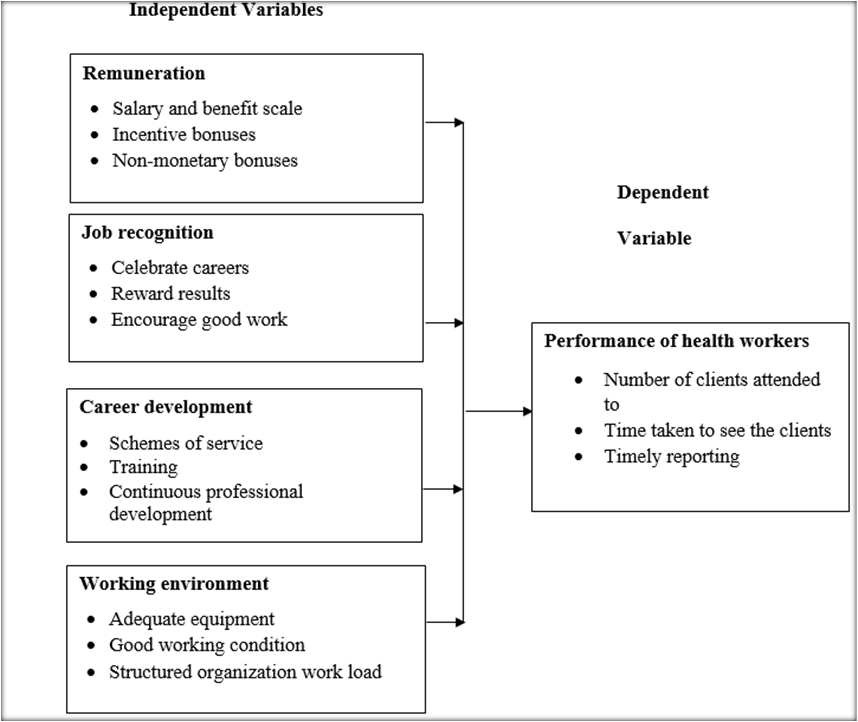
2.2. Empirical ReviewIn this study, employee motivation was hypothesized to influence performance of health care workers in public owned hospitals in Siaya County, Kenya. The dependent variable is performance of health workers and independent variables are remuneration, career development, employees’ recognition and working environment.
Irene 14 studied on the impact of workers' compensation by the Ministry of Health in Mombasa County, Kenya. A descriptive survey design was utilized in this review. Information was gathered, including questionnaires to directors and healthcare providers and patient interview schedules. In this review, we found that compensation packages, performance rates, and enforcement styles are all unacceptable compensation methods and have a significant impact on the execution of civil servants by the Ministry of Health. Lekartiwa, Rintari, and Moguche 15 examined the impact of compensation on turnover of staff at private hospitals in Samburu County. The survey utilized a descriptive survey review survey plan. The subjects of the survey composed of 71 clinical professionals, including the attending physicians, chief nurses, chief pharmacists, and chief clinical technicians of all private emergency clinics in the Samburu area. Seventy-one clinicians were evaluated using regulatory test techniques. Information was collected through a private investigation. Linear regression was used to show the critical level. The review found that there was an important association between this compensation and employees who left the organization. However, current survey seeks to explore the impact of compensation on the execution of health care.
Choge 16 studied the determining factors that impacted the performance of healthcare professionals. The review was addressed to Kenyatta National Hospital. A descriptive survey structure was used. The review was made up of 80 employees. The questionnaire was used to collect information. Pearson's connection was made to determine the relationship. The outcomes show that there is an important positive link between workers' accident compensation (free factor) and typical executions (dependent variable), r (0.581). p-value <0.01. Every organization needs to have a decent reward package to move their representatives forward and increase the efficiency of their organization.
A survey did by Ndirangu 17 on the effect of wages on the workers’ execution in private clinics in Nairobi, Kenya. A descriptive survey plan was utilized. The population targeted include 566 private clinics in Nairobi City and County, and personnel were appointed from each clinic, and a total of 566 HR staff were included in the target population. Sample selection was made using the Krejcie and Morgan table, with a sample size of 226 participants. Attention was paid to targeted research when choosing the sample size. The information set used organized questionnaires. The findings show that all indicator factors (direct compensation, non-monetary compensation, skill-based compensation, and deviant compensation) are clearly associated with the job performance of workers in private clinics.
A review by Atambo, Kabare, Munene, and Nyamwamu 18 on improving worker awareness work towards the evolution of executions. The survey was conducted at Kenyatta National Hospital. In this survey. The information was collected using research and was truly categorized by meaningful measurements using SPSS. The findings show that recognition of worker outcomes by designing career outcomes transforms open doors into more advanced implementations, both at the personal and organizational levels. A survey by Muchai and Benson 19 on the impact of perceptions on labor prices and job performancein the public sector of Kenya. The review was addressed to Nakuru Water and Sanitation Services Company Ltd. Forty-nine workers were sampled using the census sampling configuration. We collected data using a structured questionnaire. The results of the review revealed that agent awareness mediates better association performance. This is confirmed by the way these workers gain a share of the business; has a strong connection and commitment with the association and involved and go beyond their responsibilities.
Bradler, Dur, Neckermann, and Non 20 focus on the link between worker awareness and execution. The review used an exploratory study design. A total of 300 workers were nominated using a simple random sampling method for selecting members. The reviews found that the awards for representatives improved significantly after the performance, especially if only the best entertainers were awarded. Surprisingly, unrecognized workers are primarily responsible for improving their performance. In Ghana, a study by Amoatemaa and Kyeremeh 21 on worker approval as a device to achieve advanced executions. The evaluation was descriptive. Ghana's university administration was involved in the review. As a result of the discovery, the awards for Ghanaian university employees appeared to have taken place during the graduation ceremony, disseminating information about workers' commitments that was clearly communicated to other representatives and the general public. Employees who are recognized as doing great work feel that they are becoming more aware of their identity. These good feelings play an important role in how they see themselves and work with others.
A survey of the association between recognition and workers implementation by Muriuki, Munyua, Musundi, and Rajwais 22. The review was conducted at the Kenyan Government School on the Baringo Campus in Kenya. The review used a follow-up plan. Sample sizes of 23 participants were surveyed across different departments. An organized self-administered polls were utilized to collect the information. The results of the review show that there is a strong link between the approval and enforcement of employees at the Baringo Campus of Kenyan public schools. In addition, executive compensation awareness is linearly related to inspiration, which affect workers’ performance. A study by Ngari, Muathe and Kilika 23 established a link between the job features and performance. This survey was conducted on 25 firms in Nairobi County and census was utilized to hand-picked 210 employees from the firms. This study concluded that motivation had an influence on job performance. The study focussed on job characteristics while this study will look into broader factors of employees motivation.
A study by Wanjiru and Ombui 24 on association between career development and worker performance. The survey was done at Ag Khan University Hospital. The survey employed descriptive research design. From the findings, it was uncovered that there exists a noteworthy correlation between career development and worker performance the Aga Khan University Hospital as presented by β1 = 0.327, P = .041). The study recommends that employees have equal opportunities for training, there is continuous learning and there is enhanced interpersonal and communication skills among the employees. A study by Fernandes, Santinha and Forte 25 on factors health care workers’ attraction focussed on the career development theme. Their findings appreciate that health workers progress in their overall capacity and know-how may contribute to them providing higher quality services and enhances the motivational factors. Health workers appreciate the importance of career development through trainings, mentorship and continuous professional development training. In this study career development will focus on opportunities for continuous professional development (CPD), allocation of the CPD opportunities and linkage to other motivation factors.
Hallo and Obuba 26 studied on evaluation of career development on worker performance. The survey was done in private health sector in Isiolo County. The survey employed descriptive survey design. Standard polls were utilized to collect the information. From the regression analysis, it was established an R squared of 62.1%, which imply that career development influence employees’ performance at high level. However, there are other elements that count 37.9% of workers’ execution of private health sector. Career development plan for employees plays a vital role in building performance which results in the retention of employees. A survey conducted by Shalini 27 on rewards and recognition and employees commitment in banks. The results of the study established that organizations deploy different methods to employees’ engagement methods. A component of the total rewards strategy is career development which is the focus of this survey. In Pakistan, a survey by Iqbal 28 on the influence of rewards and leadership on worker involvement in the normal financial sector of southern Punjab. The survey used a survey plan between segments. The information includes 50 workers from five banks selected from a common financial area. The outcomes show positive effects of compensation and authority on workers’ involvement. Concentrate also said that prizes increase the level of productivity and efficiency of workers in their position and, as a result, increase the progress of the organization. However, the current review seeks to determine the impact on the execution of health care employees.
A survey by James et al., 29 on the reward system framework on healthcare professional productivity in Nigeria utilized a blending technique approach. The review population includes 277 workers. However, using Yamane's formula, the size of the example for 163 participants was shown. The desk survey was used for data on social events. The findings noted a connection in compensation schemes and the execution of health care workers. Reward frames are club achievements or opportunities that meet your business-related needs. To address the holes in the investigation, the current investigation in Kenya clearly points out the execution of health workers in open-owned clinics in Siaya County. A review of the impact of the reward system on worker inspiration conducted by Noor, Nayaz, Solanki, Manoj and Sharma 30 in Oman. Data was collected from 30 participants using an exploratory survey structure. The findings reveal a positive link between the reward framework and typical inspiration. The findings also revealed that the repeated use of rewards and gratitude continuously evolved their presentations, giving them a sense of accomplishment and paving the way for professional development. The review was done in Oman and the present survey will be conducted in Kenya, so there are contextual gaps in the research.
In Tanzania, a survey by Bushiri 13 on the effects of the working environment on worker exposure. The survey was done at the Financial Management Institute in the Dar es Salaam region. A descriptive study design was utilized. They survey employed a simple random strategy to hand-picked 100 participants. The organized survey was used to sort the information. The results of the review show that the working environment affects individuals, taking into account everything that is considered. Good working conditions contribute significantly to employees’ performance because they are satisfied. In Nigeria, a study by Edem, Akpan, and Pepple 31 on the impact of the working environment on worker well-being. The review used a clear research plan. The survey was used to collect information. The findings show that it can be reduced due to the inefficient working environment of workers. The connection between worker well-being, work, and the working environment is very important and is therefore a basic job in itself. Yusefzadeh and Nabilou 32 led an investigation into workplace elements and supplier executions in healthcare facilities. The test was conducted in a developing country. A correlation search configuration was used. The review found a positive link between functional status and the execution of health care workers. Workplace stress causes medical conditions that lead to increased absenteeism and reduced productivity.
A research was conducted in Ethiopia by Solomon 33 on influence of working condition on performance of workers. The survey was conducted at Dashen Bank, Addis Ababa. Both explanatory and descriptive research design were utilized. Structured questionnaires were utilized in gathering data. Regression and correlation analysis were utilized to show the link. The survey's correlational findings demonstrated a substantial and favorable correlation between employee performance at Dashen Bank and the physical work environment, reward components of the job, and work-life balance. The survey also indicated that workers' perceptions of their overall performance at Dashen Bank were significantly influenced by their working conditions. The current study focus on the public health sector.

The conceptual framework depicts how the variables have interacted as shown in Figure 1. This has been informed by the theoretical reviews and relevant literature.
The research has embraced a descriptive survey design. It determines and report on situations in an attempt to present possible behaviours, perspectives, values, attributes, etc. 34. The case study configuration has been used. The case approach helps to reduce a very large field or population group to something that can be effectively investigated, trying to elaborate, contextualize, and present the entity in a comprehensive manner 12, 35. The investigation then considered the case study design useful because the information has been collected at the selected institution.
3.2. Study Context and PopulationThe population for the survey was all the health staff working in public health hospitals in Siaya County. The focus was three key cadres including; doctors, nurses and clinical officers. A census sampling technique was utilized. The researcher used the population census as the population was small and the overall aim was to increases reliability 36. Data was gathered from all unit of the population. The technique is advantageous since it provides in-depth and intensive information covering facets of the research problem.
3.3. Research DataPrimary and secondary data was gathered. A structured questionnaire was used. Closed-end questions have predefined addresses and usually collect quantitative information. Surveys ensured that information can be gathered from many participants in a short period of time, and participants were guaranteed confidentiality so that they can provide relevant data 37. Secondary data was collected by looking at both accurate and fictitious information from books, newspapers, diaries, magazines, and the Internet.
The research outcomes and discussions are displayed in this part. The research examined employees’ motivation and performance of healthcare workers in public owned hospitals in Siaya County, Kenya. The primary and secondary data were utilized in the investigation. Tables and figures were utilized to display the examined data.
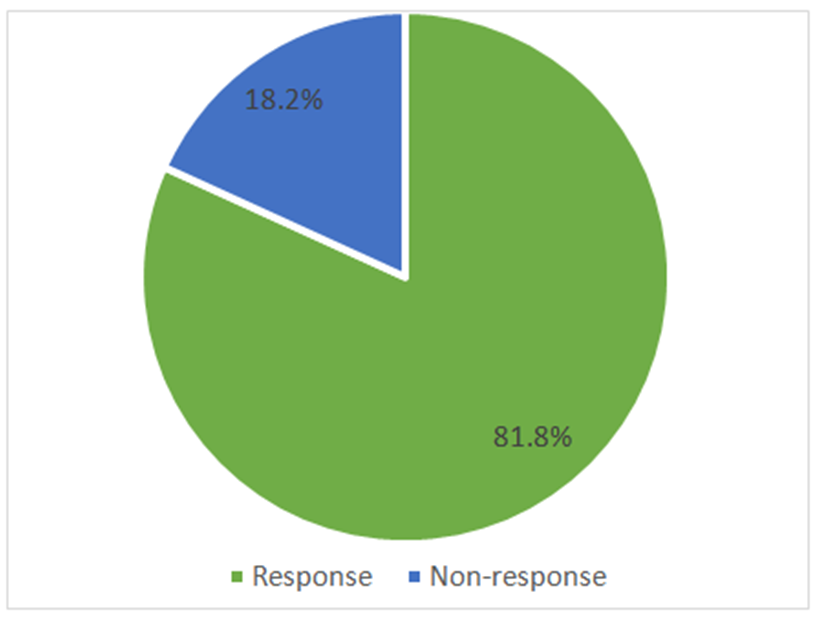
4.1. Response RateThe response rate for questionnaires was 81.8 percent response rate, which is thought to be sufficient for the study. As per the Creswell (2012), a response rate of 50% is suitable, while over 50% is good, and over 70% is very good. Therefore, the response rate was sufficient for the survey to draw pertinent conclusions from the data. The outcomes were displayed in Figure 2.

In order to explore whether the study's participants constitute a representative sample of the population targeted for generalization purposes, participants were requested to provide their demographic information. The outcomes are displayed in the sections that follow.
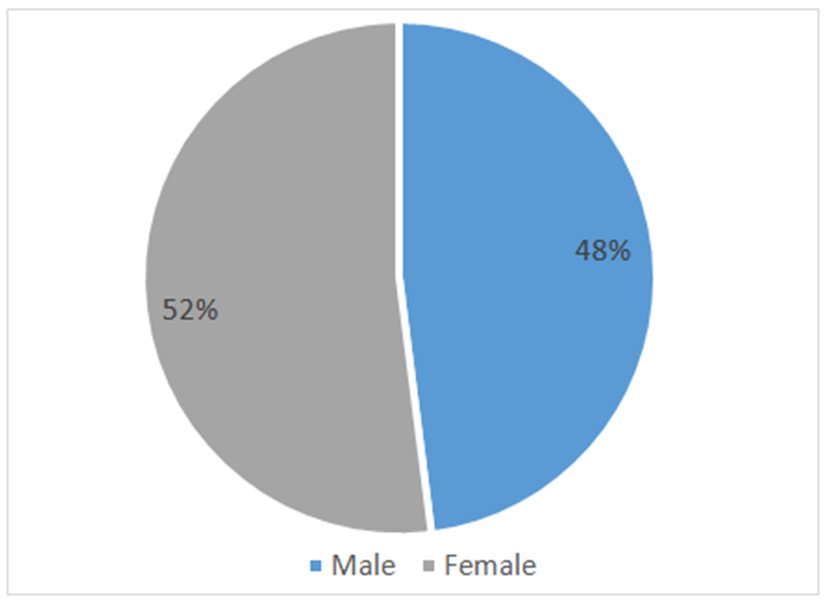
The participants were prompted to identify their genders. Figure 3 presented the outcomes.

As shown by a percentage of 52%, the results in Figure 3 show that the most of participants were women. On the other hand, it was reported that 48% of the responders were men. These findings suggest that there was no bias because both genders were fairly displayed in this survey.
The age of the participants is a crucial factor as it affects one's experience and response to circumstances, the survey aims to explore the age distribution of the participants. Table 1 includes a summary of the results.
According to Table 1's findings, 35.4% of participants were between the ages of 36 and 45, 26.9% were between the ages of 26 and 35, 16.9% were between the ages of 46 and 55, 11.5 percent were between the ages of 18 and 25, and only 9.2 percent were over the age of 55. Thus, based on the age distribution, this clearly shows that all participants were qualified to answer the questions. This demonstrates unequivocally that middle-aged individuals constituted a sizable portion of the workforce in public hospitals in Siaya County.
The educational level achieved by the participants was significant as it is a gauge of their capability to comprehend the motivation practices and therefore be in a position to answer the questions appropriately. The findings were illustrated in Figure 4.

The survey findings are shown in Figure 4, which show that the majority of participants had bachelor’s degree as presented by 42% while 10% participants with a PhD made up the smallest number. However, just 15% of participants had received a diploma, whereas 33% had earned a master's. These results suggest that all participants had the necessary level of literacy to comprehend the data that this investigation was looking for.
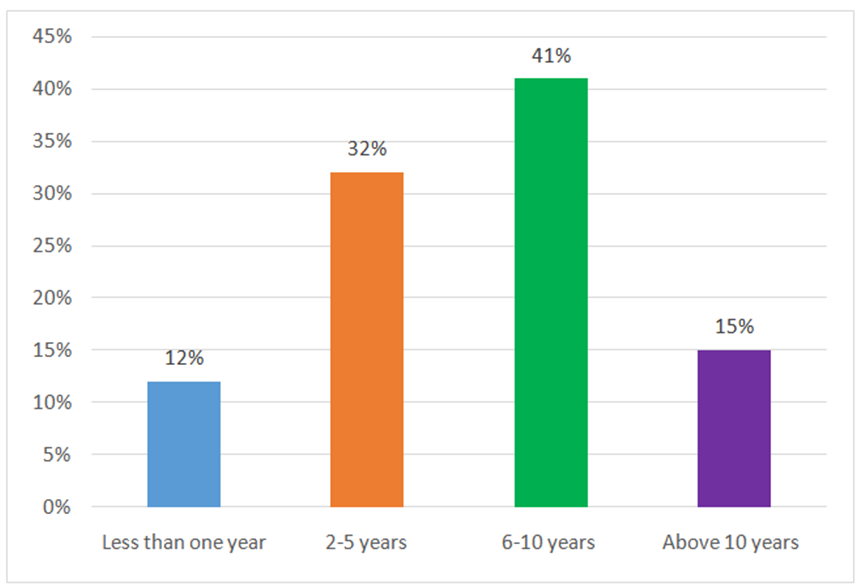
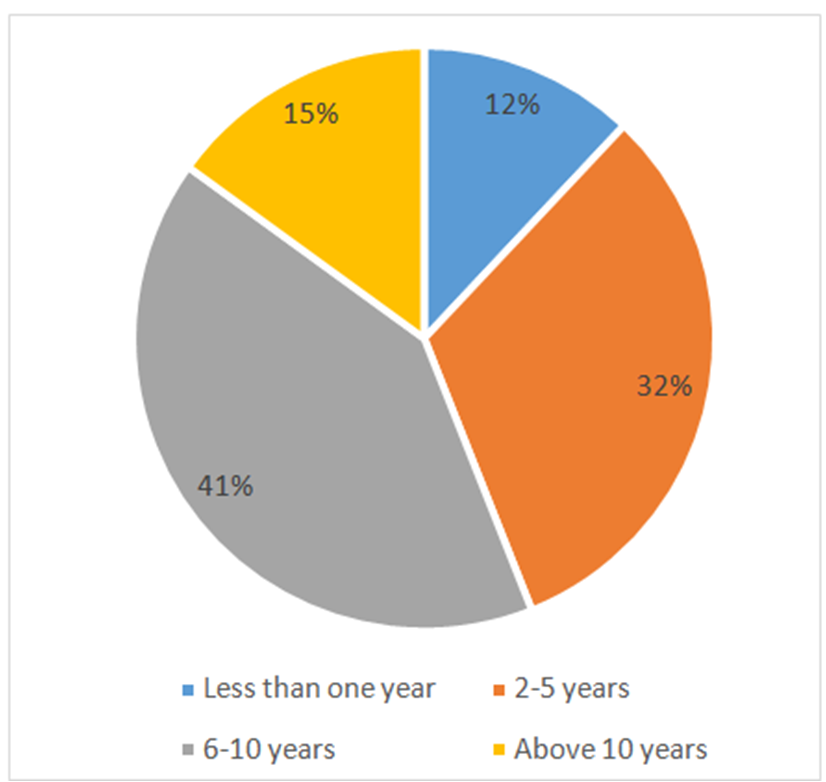
The researcher examined the information gathered on the length of time that the study's participants had worked, as shown in Figure 5.

As per Figure 5, 41% of participants had spent between six and ten years working at public hospitals in Siaya County. 32 percent of the population had worked for between two and five years, though. Furthermore, 12 percent of participants had worked less than a year, while 15% had worked for more than ten years. These outcomes demonstrate that the study's participants had the essential background knowledge to contribute the data that the investigation sought.
4.3. Descriptive StatisticsIn this study, the summary statistics of the sample that was observed were presented through the standard deviation, mean, and coefficient of variation. The data gathered for the variables that made up the study's core were used to analyse descriptive statistics. The fundamental characteristic of the observed sample served as the foundation for this study's quantitative data analysis.
The researcher found a number of statements regarding how remuneration affects healthcare employees' performance at publicly owned facilities. Participants were required to specify their agreement with each statement on compensation and how it has affected healthcare workers' performance. The survey utilized a scale from 1 to 5, where 1 denoted a strong disagreement, 2 a disagree, 3 a neutral opinion, 4 a agree and 5 a strong agreement. Table 2 presented the outcomes.
The outcomes displayed in Table 2 shows a large part of participants agreed that terminal benefits are standardized and in line with performance (mean = 3.56; standard deviation = 0.63). Participants agreed that there is timely paid of health care workers (mean = 3.67; standard deviation = 0.58). Participants agreed that leave allowance enhances your motivation to work (mean = 3.37; standard deviation = 0.62). The participants agreed that there is unbiased annual increment of salaries hence improving workers’ motivation (mean = 3.64; standard deviation = 0.64). Also, participants agreed that overtime pay is essential in attaining organizational goals and objectives (mean = 3.51; standard deviation = 0.55). Every organization needs to have a decent reward package to motivate their employees forward and increase the efficiency of their organization. The outcomes of this survey agrees with a study by Ndirangu 17 who established that direct compensation, non-monetary compensation, skill-based compensation, and deviant compensation are clearly associated with the job performance of workers in private clinics. Also, the findings were supported by Choge 16 who revealed that there is an important positive link between workers' accident compensation (free factor) and typical executions (dependent variable), r (0.581). p-value <0.01. This was additionally upheld by Kuswati 5, who noticed that there was a connection between employees’ execution and pay, and that inside specific positions in open foundations, laborers' degrees of training and experience did not appear to adequately account for variations in wages and salaries, which had an impact on job performance, provided additional support for this.
The researcher found number of statements regarding the impact of career development and performance of healthcare workers in Siaya County. Regarding professional development and how it has affected healthcare workers' performance, the participants were inquired to rate agreement level with each statement. The survey utilized a scale from 1 to 5, where 1 denoted a strong disagreement, 2 a disagree, 3 a neutral opinion, 4 agree and 5 denoted a strong disagreement. The results were summarized in Table 3.
The outcomes displayed in Table 3 revealed numerous participants w career development opportunities are provided through merit (mean = 3.62; standard deviation = 0.57). Participants agreed that career development contribute to performance improvement (mean = 3.59; standard deviation = 0.60). Participants agreed that through career development employees feel recognized (mean = 3.67; standard deviation = 0.63). Participants agreed that career development employees make them feel valued and appreciated (mean = 3.73; standard deviation = 0.61). Additionally, the participants agreed that the anticipation of career development opportunities enhance performance of health care workers (mean = 3.57; standard deviation = 0.65). The employees should have equal opportunities for career development, there is continuous learning and there is enhanced interpersonal and communication skills among the employees. This agrees with the findings by Fernandes, Santinha and Forte 25 who established that health workers progress in their overall capacity and know-how may contribute to them providing higher quality services and enhances the motivational factors. This also agreed with a study by Hallo and Obuba 26 who revealed that career development plan for employees plays a vital role in building performance which results in the retention of employees.
The researcher found a number of statements concerning the effect of job recognition on the performance of healthcare workers in publicly owned hospitals in Siaya County. Participants were inquired to rate how much they agreed or disagreed with each statement on job recognition and how it has impacted healthcare employees' performance. We utilized a scale from 1 to 5, where 1 denoted a strong disagreement, 2 a disagree, 3 a neutral opinion, 4 an agree and 5 denoted a strong agreement. Table 4 includes a summary of the results.
The survey outcomes displayed in Table 4 revealed that large part of participants agreed that workplace recognition provides a sense of accomplishment (mean = 3.51; standard deviation = 0.64). Participants agreed that recognition at work boost individual engagement at work (mean = 3.63; standard deviation = 0.57). Participants agreed that job recognition enhance loyalty to the organization leading to higher retention (mean = 3.65; standard deviation = 0.60). This is backed-up by outcomes of a survey by Bradler (2016) who established that recognition of workers improved performance significantly when the best workers are rewarded. The survey also revealed that numerous participants agreed that employees are praised regularly at work (mean = 3.59; standard deviation = 0.68). Participants agreed that workers get credit for their good work (mean = 3.48; standard deviation = 0.59). This agrees with a survey by Amoatemaa and Kyeremeh 21 who established that employees who are recognized as doing great work feel that they are becoming more aware of their identity. This is also supported by Atambo, Kabare, Munene, and Nyamwamu 18 who established that recognition of workers by employer enhanced the opportunity to advance into personal and organizational levels.
The researcher found a number of statements regarding how the working environment affects the performance of healthcare professionals employed at publicly owned hospitals in Siaya County. Participants were inquired to specify their agreement with each statement about the working environment and how it has impacted healthcare workers' performance. We utilized a scale from 1 to 5, where 1 denoted a strong disagreement, 2 a disagree, 3 a neutral opinion, 4 an agree and 5 denoted a strong agreement. Table 5 presents the results in tabular form.
The results displayed in Table 5 revealed that numerous participants agreed that work supplies and equipment are adequate to deliver the tasks allocated (mean = 3.56; standard deviation = 0.60). Participants agreed that safety of the work environment is regularly assessed in line with performance requirements (mean = 3.63; standard deviation = 0.65). Participants agreed that work environment open and allows me to raise concerns on delivery of the tasks (mean = 3.67; standard deviation = 0.63). The outcomes concur with results of a study by Bushiri 13 who revealed that working environment affects individuals, taking into account everything that is considered. Good working conditions contribute significantly to employees performance because they are satisfied. The participants agreed that they are fully sensitized and updated on the work procedures and standards (mean = 3.62; standard deviation = 0.59). Also, participants agreed that conducive working environments enhanced quality health care (mean = 3.59; standard deviation = 0.54). The outcomes agreed with the results by Solomon 33 who established a positive and significant relationship between the physical work place environment, reward mechanism and work-life balance strategies.
The researcher found a number of statements on the performance of healthcare professionals in publicly owned hospitals in Siaya County. Contestants were inquired to rate how much they agreed or disagreed with each statement on the performance of healthcare professionals. On a scale of 1 to 5, with 1 signifying a strong disagreement, 2 a disagree, 3 a neutral opinion, and 4 agree and 5 a strong agreement was utilized. The outcomes are exhibited in Table 6.
The findings displayed in Table 6 revealed that large part of participants agreed that they are satisfied with my performance (mean = 3.31; a standard deviation = 0.66). Participants agreed that workers are satisfied with remuneration (mean = 3.34; standard deviation = 0.59). The participants agreed that working environment enhance employees performance (mean = 3.48; standard deviation = 0.61). The participants agreed that job recognition enhance employees performance (mean = 3.56; standard deviation = 0.64). Also, participants agreed that rewarding of employees enhance organization performance (mean = 3.64; standard deviation = 0.67). These were in line with findings that employees compensation had a positive effect on employees' performance, and they suggested that in order to promote high performance, organizations should place more emphasis on a variety of remuneration packages including competence-based, result-based payment, organizational incentives, profit-related pay, and merit pay. These were in line with Osibanjo, O. A. et. al 38 findings that employees compensation had a positive effect on employees' performance.
4.4. Inferential StatisticsIn public hospitals in Siaya County, Kenya, the researcher used regression analysis to explore the impact of employees’ motivation on staff performance. The results of the ANOVA, regression coefficients, and model summary are displayed in the sections that follow.
Table 7 exhibited the outcomes of the coefficients of correlation R and corrected determination R2.
The findings showed the variables had a good association, with a coefficient of correlation (R) of 0.924. The results also showed that the coefficient of adjusted R2 was 0.832, or 83.2%. This demonstrates how pay, career advancement, the workplace environment, and job recognition can together account for 83.2% of changes in the performance of healthcare personnel. From the findings, there are other factors not considered in this study that account for 16.8% that could inform further studies.
The results of the 95 percent level of significance ANOVA are presented in Table 8 along with the F Calculated and F Critical values.
Table 8's findings reveal that F Calculated was 2.43 and F Critical was 1.53, indicating that F Calculated > F Critical and thus overall significance of the regression model for the investigation was established. According to the study, the p value was 0.001, which is less than 0.05, and shows that at least one variable significantly affected how well healthcare staff performed. From Table 8, the ANOVA results are significant (p=0.001). Thus, we reject the null hypothesis and conclude that renumeration, career development, job recognition and working environment are significant predictors of employee performance.
The researcher used regression analysis to show how each independent variable had a unique impact on the dependent variables. Results are displayed in Table 9.
The contribution between employees motivation and performance of healthcare professionals at publicly owned hospitals in Siaya County, Kenya, was examined using a multiple regression analysis. The equation (Y= β0+ β1X1+ β2X2 + β3X3 + β4X4+ ε) becomes:
 |
Where Y = Performance of health care workers
REM = Remuneration
CAD = Career Development
JR = Job Recognition
WE = Working Environment.
From Table 9, renumeration, career development, job recognition and working environment are significant predictors of employee performance (all p<0.05). Based on the regression coefficient, renumeration had the highest positive impact on employee performance (β=0.376, p=0.004), followed by career development ((β=0.345, p=0.001) then job recognition (β=0.329, p=0.002 and lastly by working environment (β=0.316, p=0.003). According to the study's findings, employees’ motivation strategies like remuneration, career advancement, a positive work environment, and job recognition have a statistically significant impact on how well healthcare personnel perform. This is consistent with a study by Yusefzadeh and Nabilou 32, which found that extrinsic factors like financial reward, lodging, and transportation also have an impact on the performance of healthcare workers. Job satisfaction, compensation, and a supportive work environment are intrinsic motivating factors that affect performance of healthcare workers. The results concur with findings of a survey by Lekartiwa, Rintari, and Moguche 15 who revealed that there was an important association between this compensation and employees who left the organization. Also repeated use of rewards and gratitude continuously evolved their presentations, giving them a sense of accomplishment and paving the way for professional development.
The study concludes that employees motivating techniques, such as pay, career advancement, working conditions, and job recognition, have an impact on how well healthcare employees perform. Regression analysis results reveal a substantial correlation between health care professionals' performance and their level of motivation. The study shows that sufficient remuneration of health care workers improved performance and quality of healthcare. The study concludes that progressive increase of remuneration package–basic pay, merit adjustments and related allowances have a critical role in health workers’ performance. The survey remarked that career development positively and meaningfully affects performance of health care workers at the public owned hospitals. Several aspects of career development were identified as key including equal opportunities for training, continuous learning, and interpersonal and communications skills achieved through training. The study concludes that working environment in public owned hospitals have been of great concern to health care personnel. Moreover, good working conditions contribute significantly to employees’ performance because they are satisfied. Employees’ job satisfaction is crucial for a good health care system.
The study shows that health care workers recognition at work leads to higher retention which also boost the individual engagement at work. The study concluded there are other factors that affect performance beyond the variables studied that accounted for 16.8% that should form the basis of further studies to inform appropriate interventions.
5.1. Policy ImplicationsThe county public service boards guided by the salaries and remuneration commission put mechanisms to ensure fair compensation and promotion for staff taking into consideration years of service and academic qualifications. The hospital management boards and committees should strengthen career development as a non-financial incentive. It should ensure that employees have equal opportunities for training, there is continuous learning and there is enhanced interpersonal and communication including feedback mechanisms. The national, county, and ministry of health should consider ways to create a safe, healthy working environment and increase incentives for continuing medical education in order to improve working conditions in hospital settings in accordance to the occupational health and safety regulations. The research recommends that Siaya county government develop initiatives that acknowledge employees’ contributions at work. The county administration should acknowledge employees' contributions to the healthcare sector in order to increase job satisfaction.
5.2. Limitations and Future ResearchThe scope of the study focused on Siaya County in Kenya and therefore the study findings cannot be generalized to the rest of the country. Hence a similar study should be carried more other counties for purpose of generalization of the research findings.
| [1] | Save the Children. (2011). No Child Out of Reach: Time to end the Health Worker Crisis. UK: Save the Children. | ||
| In article | |||
| [2] | Kirigia JM, Barry SP. Health challenges in Africa and the way forward. Int Arch Med. 2008 Dec 18;1(1):27. | ||
| In article | View Article PubMed | ||
| [3] | Kiambati, H., Kiio, C., & Towett, J. (2013). Understanding the Labour Market of Human Resources for Health in Kenya. Geneva: World Health Organization. | ||
| In article | |||
| [4] | Sandhu, M. A., Iqbal, J., Ali, W., & Tufail, M. S. (2017). Effect of employees motivation on employees performance. Journal of Business and Social Review in Emerging Economies, 3(1), 85-100. | ||
| In article | View Article | ||
| [5] | Kuswati, Y. (2020). The effect of motivation on employees performance. Budapest International Research and Critics Institute (BIRCI-Journal): Humanities and Social Sciences, 3(2), 995-1002. | ||
| In article | View Article | ||
| [6] | Idowu, A. (2017). Effectiveness of performance appraisal system and its effect on employees motivation. Nile Journal of Business and Economics, 3(5), 15-39. | ||
| In article | View Article | ||
| [7] | Rozi, A., & Sunarsi, D. (2020). The Influence of Motivation and Work Experience on Employees Performance at PT. Yamaha Saka Motor in South Tangerang. Jurnal Office, 5(2), 65-74. | ||
| In article | View Article | ||
| [8] | Peters D. H, Chakraborty S, Mahapatra P, & Steinhardt L. (2010). Job satisfaction and motivation of health workers in public and private sectors: cross-sectional analysis from two Indian states. Human Resources for Health. 2010;8:27. | ||
| In article | View Article PubMed | ||
| [9] | Willis-Shattuck, M., Bidwell, P., & Thomas, S., (2008). Motivation and retention of health workers in developing countries: a systematic review. BMC Health Serv Res 8, 247. | ||
| In article | View Article PubMed | ||
| [10] | Benson, S. & Dundis, P. (2003). Understanding and motivating health care employeess: integrating Maslow's hierarchy of needs, training and technology. Journal of Nursing and management. Vol. 11, Issue 5 | ||
| In article | View Article PubMed | ||
| [11] | Hall, Jay and Martha S. Williams(1986). Work Motivation Inventory.The Woodlands, Texas: Telemetrics International, Inc., 1986. | ||
| In article | |||
| [12] | Dartey-Baah, K. and Amoako, G.K. (2011) Application of Frederick Herzberg’s Two-Factor Theory in Assessing and Understanding Employee Motivation at Work: A Ghanaian Perspective. European Journal of Business and Management, 3, 1-8. | ||
| In article | |||
| [13] | Bushiri, C. P. (2014). The impact of working environment on employeess’ performance, the case of Institute of Finance Management in Dar es Salaam (Doctoral dissertation, The Open University of Tanzania). | ||
| In article | |||
| [14] | Irene, M. N. (2016). Employees remuneration and performance of civil servants in the health ministry in Mombasa County, Kenya. (Masters dissertation, Kenyatta University). | ||
| In article | |||
| [15] | Lekartiwa, H., Rintari, N., & Moguche, A. (2020). Effects of Remuneration on Employees Turnover in Private Hospitals Samburu County. Human Resource and Leadership Journal, 5(1), 15-28. | ||
| In article | View Article | ||
| [16] | Choge, E. J. (2020). Factors affecting employees performance in the health sector: A case of Kenyatta National Hospital (Doctoral dissertation, USIU- University). | ||
| In article | |||
| [17] | Ndirangu, A. M. (2021). Effect of Compensation on Employees Job Satisfaction in Private Hospitals in Nairobi City County, Kenya (Doctoral dissertation, KCA University). | ||
| In article | |||
| [18] | Atambo, W., Kabare, K., Munene, C., & Nyamwamu, W. (2012). Enhancing the role of employees recognition towards improving performance: A survey of Kenyatta National Hospital, Kenya. International Journal of Arts and Commerce, 1(7), 95-109. | ||
| In article | |||
| [19] | Muchai, M. M., & Benson, M. (2014). Effect of Employees Rewards and Recognition on Job Performance in Kenya’s Public Sector, A Case Study of Nakuru Water and Sanitation Services Company Ltd. International Journal of Science and Research, 3(9), 2151-2156. | ||
| In article | |||
| [20] | Bradler, C., Dur, R., Neckermann, S., & Non, A. (2016). Employees recognition and performance: A field experiment. Management Science, 62(11), 3085-3099. | ||
| In article | View Article | ||
| [21] | Amoatemaa, A. S., & Kyeremeh, D. D. (2016). Making Employees Recognition a Tool for Achieving Improved Performance: Implication for Ghanaian Universities. Journal of Education and Practice, 7(34), 46-52. | ||
| In article | |||
| [22] | Muriuki, N. N., Munyua, C., Musundi, L. & Rajwais, B. J. (2018). Relationship of Recognition and Staff Performance in Kenya School of Government Baringo Campus, Kenya. European Journal of Business and Management 10(20). | ||
| In article | |||
| [23] | Ngari E., Muathe S., & Kilika J. (2018). Mediating Effect of Motivation on Employees Performance in Private Equity Firms, Kenya. Journal of Human Resource Management. Vol. 6, No. 2, pp. 78-84. | ||
| In article | View Article | ||
| [24] | Wanjiru, J.N., & Ombui, K. (2021). Effect of career development on employees performance at the Aga Khan University Hospital. Journal of Human Resource and Leadership, 1(1), 17-24. | ||
| In article | |||
| [25] | Fernandes, A., Santinha, G., & Forte, T. (2022). Public Service Motivation and Determining Factors to Attract and Retain Health Professionals in the Public Sector: A Systematic Review. Behav. Sci., 12, 95. | ||
| In article | View Article PubMed | ||
| [26] | Hallo, A.H., & Obuba, R. (2021). Assessment of Career Development on Employees Performance in Private Health Sector in Isiolo County. Asian Journal of Economics, Business and Accounting, 21(21): 1-10. | ||
| In article | View Article | ||
| [27] | Shalini, T. R., (2020). Impact of rewards and recognition on employees commitment-a perspective of the bank employeess. LBS Journal of Management & Research, 18(1), 10-16. | ||
| In article | View Article | ||
| [28] | Iqbal, N. (2015). Impact of rewards and leadership on the employees engagement in conventional banking sector of Southern Punjab. International Letters of Social and Humanistic Sciences, 57, 30-34. | ||
| In article | View Article | ||
| [29] | James, O. E., Ella, R., Nkamare, S. E., Lukpata, F. E., Uwa, S. L., & Mbum, P. A. (2015). Effect of reward system among health care workers performance: a case study of university of Calabar teaching hospital Calabar, Nigeria. Journal of Hospital Administration, 4(3), 45-53. | ||
| In article | View Article | ||
| [30] | Noor, Z., Nayaz, N., Solanki, V., Manoj, A., & Sharma, A. (2020). Impact of Rewards System on Employees Motivation: A Study of a Manufacturing Firm in Oman. International Journal of Business and Management Future, 4(2), 6-16. | ||
| In article | View Article | ||
| [31] | Edem, M. J., Akpan, E. U., & Pepple, N. M. (2017). Impact of workplace environment on health workers. Occup Med Health Aff, 5(2), 1-5. | ||
| In article | |||
| [32] | Yusefzadeh, H., & Nabilou, B. (2020). Work environment factors and provider performance in health houses: a case study of a developing country. BMC research notes, 13(1), 1-6. | ||
| In article | View Article PubMed | ||
| [33] | Solomon, Y. (2021). The effect of working environment on workers’ performance: The case of Dashen Bank in Addis Ababa (Upbulshed doctoral dissertation, ST. Mary’s University). | ||
| In article | |||
| [34] | Creswell. J.W. and Creswell, J.D. (2017) Research Design: Qualitative, Quantitative, and Mixed Methods Approaches. 4th Edition, Sage, Newbury Park. | ||
| In article | |||
| [35] | Orodho, J. A. (2009). Techniques of writing research proposals and reports in education and social sciences. Nairobi. Kanezja publishers. | ||
| In article | |||
| [36] | Mugenda, O.M. and Mugenda, A.G. (2003) Research Methods, Quantitative and Qualitative Approaches. ACT, Nairobi. | ||
| In article | |||
| [37] | Kothari, C.R. (2007) Research Methodology: Methods and Techniques. New Age International (P) Ltd., New Delhi. | ||
| In article | |||
| [38] | Osibanjo, O. A., Adeniji, A. A., Falola, H. O., & Heirsmac, P. T. (2014). Compensation packages: a strategic tool for employees’ performance and retention. Leonardo Journal of Sciences, 25(1), 65-84. | ||
| In article | |||
| [39] | WHO. The World Health Report 2006 – Working together for health Geneva. 2006. [PubMed]. | ||
| In article | |||
| [40] | Ministry of Health Kenya. (2021) Readiness for COVID-19 Response and Continuity of Essential Health Services in Health Facilities. | ||
| In article | |||
Published with license by Science and Education Publishing, Copyright © 2022 Joyce Mosinya Nyaboga and Stephen Makau Muathe
 This work is licensed under a Creative Commons Attribution 4.0 International License. To view a copy of this license, visit
http://creativecommons.org/licenses/by/4.0/
This work is licensed under a Creative Commons Attribution 4.0 International License. To view a copy of this license, visit
http://creativecommons.org/licenses/by/4.0/
| [1] | Save the Children. (2011). No Child Out of Reach: Time to end the Health Worker Crisis. UK: Save the Children. | ||
| In article | |||
| [2] | Kirigia JM, Barry SP. Health challenges in Africa and the way forward. Int Arch Med. 2008 Dec 18;1(1):27. | ||
| In article | View Article PubMed | ||
| [3] | Kiambati, H., Kiio, C., & Towett, J. (2013). Understanding the Labour Market of Human Resources for Health in Kenya. Geneva: World Health Organization. | ||
| In article | |||
| [4] | Sandhu, M. A., Iqbal, J., Ali, W., & Tufail, M. S. (2017). Effect of employees motivation on employees performance. Journal of Business and Social Review in Emerging Economies, 3(1), 85-100. | ||
| In article | View Article | ||
| [5] | Kuswati, Y. (2020). The effect of motivation on employees performance. Budapest International Research and Critics Institute (BIRCI-Journal): Humanities and Social Sciences, 3(2), 995-1002. | ||
| In article | View Article | ||
| [6] | Idowu, A. (2017). Effectiveness of performance appraisal system and its effect on employees motivation. Nile Journal of Business and Economics, 3(5), 15-39. | ||
| In article | View Article | ||
| [7] | Rozi, A., & Sunarsi, D. (2020). The Influence of Motivation and Work Experience on Employees Performance at PT. Yamaha Saka Motor in South Tangerang. Jurnal Office, 5(2), 65-74. | ||
| In article | View Article | ||
| [8] | Peters D. H, Chakraborty S, Mahapatra P, & Steinhardt L. (2010). Job satisfaction and motivation of health workers in public and private sectors: cross-sectional analysis from two Indian states. Human Resources for Health. 2010;8:27. | ||
| In article | View Article PubMed | ||
| [9] | Willis-Shattuck, M., Bidwell, P., & Thomas, S., (2008). Motivation and retention of health workers in developing countries: a systematic review. BMC Health Serv Res 8, 247. | ||
| In article | View Article PubMed | ||
| [10] | Benson, S. & Dundis, P. (2003). Understanding and motivating health care employeess: integrating Maslow's hierarchy of needs, training and technology. Journal of Nursing and management. Vol. 11, Issue 5 | ||
| In article | View Article PubMed | ||
| [11] | Hall, Jay and Martha S. Williams(1986). Work Motivation Inventory.The Woodlands, Texas: Telemetrics International, Inc., 1986. | ||
| In article | |||
| [12] | Dartey-Baah, K. and Amoako, G.K. (2011) Application of Frederick Herzberg’s Two-Factor Theory in Assessing and Understanding Employee Motivation at Work: A Ghanaian Perspective. European Journal of Business and Management, 3, 1-8. | ||
| In article | |||
| [13] | Bushiri, C. P. (2014). The impact of working environment on employeess’ performance, the case of Institute of Finance Management in Dar es Salaam (Doctoral dissertation, The Open University of Tanzania). | ||
| In article | |||
| [14] | Irene, M. N. (2016). Employees remuneration and performance of civil servants in the health ministry in Mombasa County, Kenya. (Masters dissertation, Kenyatta University). | ||
| In article | |||
| [15] | Lekartiwa, H., Rintari, N., & Moguche, A. (2020). Effects of Remuneration on Employees Turnover in Private Hospitals Samburu County. Human Resource and Leadership Journal, 5(1), 15-28. | ||
| In article | View Article | ||
| [16] | Choge, E. J. (2020). Factors affecting employees performance in the health sector: A case of Kenyatta National Hospital (Doctoral dissertation, USIU- University). | ||
| In article | |||
| [17] | Ndirangu, A. M. (2021). Effect of Compensation on Employees Job Satisfaction in Private Hospitals in Nairobi City County, Kenya (Doctoral dissertation, KCA University). | ||
| In article | |||
| [18] | Atambo, W., Kabare, K., Munene, C., & Nyamwamu, W. (2012). Enhancing the role of employees recognition towards improving performance: A survey of Kenyatta National Hospital, Kenya. International Journal of Arts and Commerce, 1(7), 95-109. | ||
| In article | |||
| [19] | Muchai, M. M., & Benson, M. (2014). Effect of Employees Rewards and Recognition on Job Performance in Kenya’s Public Sector, A Case Study of Nakuru Water and Sanitation Services Company Ltd. International Journal of Science and Research, 3(9), 2151-2156. | ||
| In article | |||
| [20] | Bradler, C., Dur, R., Neckermann, S., & Non, A. (2016). Employees recognition and performance: A field experiment. Management Science, 62(11), 3085-3099. | ||
| In article | View Article | ||
| [21] | Amoatemaa, A. S., & Kyeremeh, D. D. (2016). Making Employees Recognition a Tool for Achieving Improved Performance: Implication for Ghanaian Universities. Journal of Education and Practice, 7(34), 46-52. | ||
| In article | |||
| [22] | Muriuki, N. N., Munyua, C., Musundi, L. & Rajwais, B. J. (2018). Relationship of Recognition and Staff Performance in Kenya School of Government Baringo Campus, Kenya. European Journal of Business and Management 10(20). | ||
| In article | |||
| [23] | Ngari E., Muathe S., & Kilika J. (2018). Mediating Effect of Motivation on Employees Performance in Private Equity Firms, Kenya. Journal of Human Resource Management. Vol. 6, No. 2, pp. 78-84. | ||
| In article | View Article | ||
| [24] | Wanjiru, J.N., & Ombui, K. (2021). Effect of career development on employees performance at the Aga Khan University Hospital. Journal of Human Resource and Leadership, 1(1), 17-24. | ||
| In article | |||
| [25] | Fernandes, A., Santinha, G., & Forte, T. (2022). Public Service Motivation and Determining Factors to Attract and Retain Health Professionals in the Public Sector: A Systematic Review. Behav. Sci., 12, 95. | ||
| In article | View Article PubMed | ||
| [26] | Hallo, A.H., & Obuba, R. (2021). Assessment of Career Development on Employees Performance in Private Health Sector in Isiolo County. Asian Journal of Economics, Business and Accounting, 21(21): 1-10. | ||
| In article | View Article | ||
| [27] | Shalini, T. R., (2020). Impact of rewards and recognition on employees commitment-a perspective of the bank employeess. LBS Journal of Management & Research, 18(1), 10-16. | ||
| In article | View Article | ||
| [28] | Iqbal, N. (2015). Impact of rewards and leadership on the employees engagement in conventional banking sector of Southern Punjab. International Letters of Social and Humanistic Sciences, 57, 30-34. | ||
| In article | View Article | ||
| [29] | James, O. E., Ella, R., Nkamare, S. E., Lukpata, F. E., Uwa, S. L., & Mbum, P. A. (2015). Effect of reward system among health care workers performance: a case study of university of Calabar teaching hospital Calabar, Nigeria. Journal of Hospital Administration, 4(3), 45-53. | ||
| In article | View Article | ||
| [30] | Noor, Z., Nayaz, N., Solanki, V., Manoj, A., & Sharma, A. (2020). Impact of Rewards System on Employees Motivation: A Study of a Manufacturing Firm in Oman. International Journal of Business and Management Future, 4(2), 6-16. | ||
| In article | View Article | ||
| [31] | Edem, M. J., Akpan, E. U., & Pepple, N. M. (2017). Impact of workplace environment on health workers. Occup Med Health Aff, 5(2), 1-5. | ||
| In article | |||
| [32] | Yusefzadeh, H., & Nabilou, B. (2020). Work environment factors and provider performance in health houses: a case study of a developing country. BMC research notes, 13(1), 1-6. | ||
| In article | View Article PubMed | ||
| [33] | Solomon, Y. (2021). The effect of working environment on workers’ performance: The case of Dashen Bank in Addis Ababa (Upbulshed doctoral dissertation, ST. Mary’s University). | ||
| In article | |||
| [34] | Creswell. J.W. and Creswell, J.D. (2017) Research Design: Qualitative, Quantitative, and Mixed Methods Approaches. 4th Edition, Sage, Newbury Park. | ||
| In article | |||
| [35] | Orodho, J. A. (2009). Techniques of writing research proposals and reports in education and social sciences. Nairobi. Kanezja publishers. | ||
| In article | |||
| [36] | Mugenda, O.M. and Mugenda, A.G. (2003) Research Methods, Quantitative and Qualitative Approaches. ACT, Nairobi. | ||
| In article | |||
| [37] | Kothari, C.R. (2007) Research Methodology: Methods and Techniques. New Age International (P) Ltd., New Delhi. | ||
| In article | |||
| [38] | Osibanjo, O. A., Adeniji, A. A., Falola, H. O., & Heirsmac, P. T. (2014). Compensation packages: a strategic tool for employees’ performance and retention. Leonardo Journal of Sciences, 25(1), 65-84. | ||
| In article | |||
| [39] | WHO. The World Health Report 2006 – Working together for health Geneva. 2006. [PubMed]. | ||
| In article | |||
| [40] | Ministry of Health Kenya. (2021) Readiness for COVID-19 Response and Continuity of Essential Health Services in Health Facilities. | ||
| In article | |||