 OPEN ACCESS
  PEER-REVIEWED
Biochemical and Molecular Characterization of Pyrene and Anthracene Metabolizing Bacteria Isolated from Oil Contaminated Water and Soil in Malaysia
Akinbankole A.S.1, Tunung R.1, Tennant A.M.1,
1Faculty of Applied Sciences, UCSI University, JalanMenaraGading, UCSI Heights 56000 Cheras, Kuala Lumpur, Malaysia
Abstract
Poly aromatic hydrocarbon (PAH) contamination of soil and water forces the evolution of microorganisms to be able to utilize PAH as a source of carbon. In this study pyrene and anthracene utilizing bacteria were isolated from water and used engine oil contaminated soil from the Strait of Mallaca (Port Dickson) and mechanic workshops in Kedah and Kuala Lumpur, Malaysia, respectively. The samples were enriched in pyrene oranthracene supplemented BSM medium and isolates were characterized using standard biochemical tests and PCR amplification of the 16S rRNA gene followed by sequencing and bioinformatic analysis. Thirteen different species were isolated, including known PAH degrading bacteria Bacillus thuringiensis and Bacillus megaterium, and bacteria with no prior association with PAH degradation, Salmonella enterica and Bacillus toyonesis. Analysis showed that all isolates degraded 99% of the PAH within seven days. Two isolates (KLA1022 and JIP1005) achieved 95% PAH use within two days and also showed a greater increase in growth. The identification of species that hadn’t previously been reported as PAH degraders suggests significant adaptability and potential for further research that can contribute to efforts to clean pollution from the Malaysian environment.
At a glance: Figures
Keywords: PAH, bioremediation, bacteria, pyrene, anthracene, environmental microbiology
Journal of Applied & Environmental Microbiology, 2015 3 (1),
pp 25-30.
DOI: 10.12691/jaem-3-1-5
Received November 21, 2014; Revised January 27, 2015; Accepted March 17, 2015
Copyright © 2015 Science and Education Publishing. All Rights Reserved.Cite this article:
- A.S., Akinbankole, Tunung R., and Tennant A.M.. "Biochemical and Molecular Characterization of Pyrene and Anthracene Metabolizing Bacteria Isolated from Oil Contaminated Water and Soil in Malaysia." Journal of Applied & Environmental Microbiology 3.1 (2015): 25-30.
- A.S., A. , R., T. , & A.M., T. (2015). Biochemical and Molecular Characterization of Pyrene and Anthracene Metabolizing Bacteria Isolated from Oil Contaminated Water and Soil in Malaysia. Journal of Applied & Environmental Microbiology, 3(1), 25-30.
- A.S., Akinbankole, Tunung R., and Tennant A.M.. "Biochemical and Molecular Characterization of Pyrene and Anthracene Metabolizing Bacteria Isolated from Oil Contaminated Water and Soil in Malaysia." Journal of Applied & Environmental Microbiology 3, no. 1 (2015): 25-30.
| Import into BibTeX | Import into EndNote | Import into RefMan | Import into RefWorks |
1. Introduction
Polycyclic aromatic hydrocarbons (PAH) aregenerated naturally and from anthropogenic sources and are found ubiquitously in the environment [1]. PAH are known to contain two or more fused benzene rings which have a melting point higher than room temperature and boiling point higher than water. PAH are divided into high molecular weight PAHs that have four or more fused benzene rings and low molecular weight PAH that consist of two or three fused benzene rings [1]. Urbanization and industrialization have been linked to an increase in the release of PAH into the environment. Discharge of used engine oil on the soil has been linked to increases in the concentrations of high molecular weight polycyclic aromatic hydrocarbon (PAH) in the soil [13]. High concentrations of PAH have also been noticed in the sea due to shipping activities and the location of refineries [25].
The hydrophobic nature and persistence of PAH makes them a potentially hazardous chemical which causes damages to the environment with toxic, mutagenic and carcinogenic effects [19]. This persistence, coupled with an increasing number of environmental contamination events, plays a significant role in the metabolic activation of indigenous microorganisms which utilize PAH as a source of carbon for growth and energy [32]. Isolation of indigenous bacteria from contaminated sites is significant to the removal of the contaminant [26]. Bioremediation of PAH using microorganisms is the most effective approach for removing PAH from the environment in terms of cost and energy expended [2, 6]. In this context, finding a biodegradable approach for PAH removal by using indigenous bacteria isolated from contaminated Malaysian soil and water would be a significant asset to controlling PAH pollution in Malaysia.
2. Method
2.1. Collection of SamplesUsed engine oil contaminated soil samples at a depth of 20cm were collected and stored in a plastic bag from three different mechanic workshops at Alor Star, Kedah (N6 7.5779′, E100 23.603), Jalan Ipoh, Kuala Lumpur (N3 11.4372′, E101 47.8355) and Cheras, Kuala Lumpur (N3 4.7832′, E101 44.5055′). The water sample was collected from the Strait of Melaka, Port Dickson (N2 32.9538, E101 47.8355). All samples were kept at 4C until use.
2.2. Enrichment of SamplesIn different 500ml Erlenmeyer flasks, 5ml of each PAH stock solution (1000mg of pyrene (C16H10) oranthracene (C14H10), dissolved in 50ml dichloromethane to a final concentration of 20mg/ml), was eluted into different flasks and placed in a fume hood to allow the solvent to volatize leaving behind PAH crystals at the bottom of the flasks. After 5 minutes, 150ml of sterile basal salt medium (0.4g K2HPO4, 0.4g KH2PO4, 0.4g (NH4)2SO4, 0.3g NaCl, 1L H20) and samples (5g soil samples/50ml water sample) were added into the flask containing the PAH crystals. The enrichment flasks were plugged with cotton wool and placed in a shaking incubator at 30ºC, and 150rpm, for 4 weeks [4, 7, 15, 18].
2.3. Bacterial IsolationBSM agar (0.4g K2HPO4, 0.4g KH2PO4, 0.4g (NH4)2SO4, 0.3g NaCl, 15g Agar, 1L H20) was prepared to isolate PAH metabolizing bacteria from the enriched medium. 100µl of 10-1and 10-2 serial dilutions of enriched medium were aseptically poured onbasal salt medium agar plates and spread evenly using a sterile glass rod. The inoculated plates were incubated in an inverted position at 30ºC for 24 hours [13]. The plates were observed for bacterial growth after 24 hours and bacteria colonies were sub cultured to obtain pure isolates. The pure bacteria cultures obtained were stored as glycerol stock at -80°C.
2.4. Biochemical Characterization of Anthracene and Pyrene Metabolizing BacteriaAnthracene and pyrene metabolizing bacteria isolated from PAH enriched medium were subjected to the following biochemical tests:glucose fermentation, sucrose fermentation, lactose fermentation, urease, catalase, starch hydrolysis, citrate, methyl red and manitol salt agar tests.
2.5. Molecular Characterization of PAH Metabolizing BacteriaThe genomic DNA of the bacterial isolates was extracted using wizard genomic DNA purification kit. Isolated bacteria DNA wasamplified using the 16SRNA universal primers 27F (AGTTTGATCCTGGCTCAG) and 1492R (ACGGCTACCTTGTTACGACTT) [4, 5, 7]. In a PCR tube, a total volume of 25µl containing 1500kb of template DNA, 2.5µl 10X thermoPol reaction buffer, 0.5µl 10mM dNTPs, 0.5µl 10µM forward primer, 0.5µl 10µM reverse primer, 0.125µl Taq DNA polymerase and 19.8µl nuclease-free water was prepared. The components were mixed together on ice and quickly centrifuged to allow the entire liquid to settle at the bottom of the tube. The PCR tube was transferred from ice into a PCR reaction machine. The PCR amplification conditions were set at an initial denaturation at 95C for 3minutes followed by 30 cycles of denaturation at 95C for 30 seconds, annealing at 50C for 30 seconds, extension at 72C for 1 minutes and a final extension at 72C for 7 minutes before holding and cooling to 4C.
Gel electrophoresis was done to confirm the amplification of the targeted PCR gene. 5µl of PCR product from each sample was mixed with 1µl of 6X loading dye and electrophoresed on a 1.5% agarose gel containing ethidium bromide. The amplified product band was visualized under UV light by using GelDocXR[7]. The PCR product was then sequenced and the resulting sequence was aligned. The resulting aligned sequence was then blasted using NCBI Blast software against microbial databases to find and compare regions of similarity between sequences and also to calculate percentage similarities between matches [4, 9]. The Clustal Omega multiple sequence alignment program was used to align the sequences. The gaps in the alignment were removed. The resulting aligned sequence was then analyzed using thePhyML 3.0 program to generate a phylogenetic relationship between the bacteria.
2.6. Bacterial Degradation of Anthracene and PyreneEach hydrocarbon degrading bacterial isolate was grown for 24 hours in 3ml of nutrient broth at 30ºC with shaking at 150rpm [7]. The overnight cultures were centrifuged at 6000rpm for 15 minutes to collect the cells. The cells obtained were resuspended in 5ml BSM broth and centrifuged twice at 6000rpm for 15 minutes. The cells obtained were further resuspended in fresh 5ml BSM broth to give an absorbance of 0.3 at 600nm [8, 24]. In a sterilized 250ml Erlenmeyer flask, 5ml of each 20mg/ml PAH stock (pyrene oranthracene) was aliquot into a flask in a fume hood to allow the dichloromethane to evaporate leaving behind PAH crystals at the bottom of the flask [11]. 100ml of BSM broth was added into the flask containing the PAH crystals. 5ml bacterial suspension was then added to the BSM broth containing PAH as its sole source of carbon [4, 9]. The flask was plugged with cotton wool and incubated at 150rpm at 30C for 7 days. The isolates ability to degrade PAH was measured using gas chromatography and by checking turbidity of the medium using a UV spectrophotometer at 600nm [2]. Turbidity as a result of cell growth is used as an indirect indicator of the bacteria’s ability to utilize the PAH in the medium.
PAH degradation was measured using an Agilent 7890A gas chromatography (GC) system with a flame ionization detector (FID). A total of 1ml of each sample from the PAH degradation experimentswas filtered with a microsyringe and aliquoted into GC vials and placed into the GC auto-sample rack. The GC was equipped with a capillary column of 30m x 0.25mm and uses hydrogen as its carrier gas with a flow rate of 1.5ml/minutes. The injection volume was 1µl and the injector temperature was set at 250C. The GC injector was held isothermally at 285C with a splitless time of 12 minutes and its detector temperature was set at 330C [17]. The GC was conditioned for 30 minutes before loading PAH analysis method and the run time for each sample is 20minutes. A total of 1ml Pyrene oranthracene standard was used to blank the GC before each run.
3. Results and Discussion
3.1. Isolation of PAH Metabolizing BacteriaThe Basal salt medium used in this study for the isolation of hydrocarbon degrading bacteria is a no-carbon high salt medium amended with PAH as the sole carbon source for the microorganisms to utilize for their growth and multiplication. Many hydrocarbon degrading bacteria were isolated on the BSM agar plates. PAH contamination of water and soil metabolically activates specific microorganism communities that are capable of metabolizing PAH. Contaminants are known to be potential energy and food source for the microorganism because they are metabolically capable of using the contaminant for their survival.
Bacteria are the most active and flexible microorganisms involved in the utilization of PAH while some algae, fungi and yeast are also capable of utilizing of PAH but in a small range. This study agrees with the explanation of Mao et al. [16] that the most important aspect of microbial degradation of PAH is enrichment and isolation of indigenous PAH degraders because the indigenous PAH degrading bacteria are already adapted to utilizing PAH. Pathak et al. [23] argued that enrichment culturing is important for the success of hydrocarbon bioremediation because the process leads to selection of microorganism accustomed to hydrocarbon degradation.
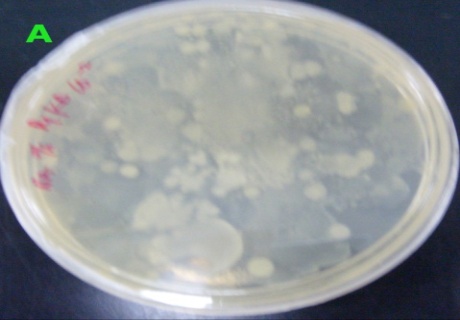
Pyrene and anthracene are one of the PAH found in used engine oil. According to the qualitative analysis of used engine oil carried out by the National Research Council (NRC, USA),analysis shows peaks for flourene, phenanthrene, pyrene, anthracene, 4-5 methylene, 9 methylphennathrene, flouranthrene, 1-methylpyrene, triphenylene, chrysene, BAP, BEP, perylene and dibenz[ac]anthrancene [20]. Many colonies with different colours, shapes and sizes were isolated on the BSM agar plates after incubation for 48 hours as seen in Figure 1. Single colonies of bacteria were purified by sub-streaking from mixed cultures and their purity was checked and confirmed by gram staining [13]. The results of this research agree with the research carried out by El-thani et al. [2], namely that a diverse microbial population can be isolated from hydrocarbon contaminated samples. In agreement with research carried out by Arulazhagan et al., among others [4, 9, 21], bacteria isolated from pyrene and anthracene enriched medium are known to utilize pyrene and anthracene as their sole carbon source for growth and energy.


 PowerPoint Slide
 Larger image(png format)


In agreement with research carried out by Udeani et al. [31], it was found that changes in environmental factors at the contamination sites(mechanic workshops) due to leakages and spillage of used-engine oil on the soil leads to the establishment of specific bacteria which utilize aromatic hydrocarbons as their main source of nutrients. Prevalence of PAH metabolizing isolates from engine oil contaminated soil and water collected across Malaysia may be due to spillage of benzene rich used-engine oil on the soil and increased shipping activities in coastal areas which leads to the establishment of different microbial flora.
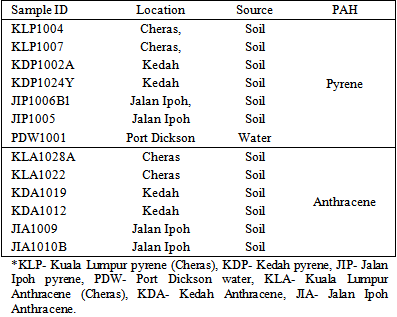
Mechanic workshops in Kedah, Jalan Ipoh and Cheras, Kuala Lumpur, where the used engine-oil contaminated soil samples were collected, have been operating for more than 15 years. The level of soil contamination was able to be visibly observed from the black colour, texture and strong hydrocarbon odour of the soil. Thirteen bacterial colonies from the initial isolates were randomly selected for further study based on the sample location as listed in Table 1.

 PowerPoint Slide
 Larger image(png format)
 View current table in a new window
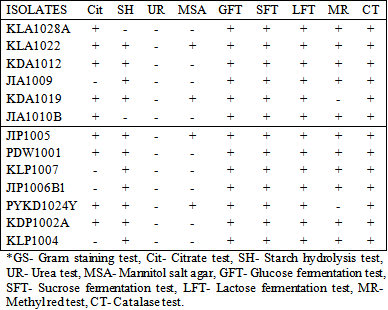
Microorganisms are identified, and their differences elucidated, based on their genotypic and phenotypic characteristics. Biochemical characterization of microorganism involves understanding their metabolic activities by analyzing their enzymatic activities and growth requirements using chemicals, differential media and nutrients to initiate observable changes. Twelve out of the thirteen bacteria were gram positive bacteria while isolate JIP1005 is gram negative. All the 13 bacterial isolates used in this study are rod shaped and arranged singly or in pairs. The results of the biochemical tests are summarized in Table 2.

 PowerPoint Slide
 Larger image(png format)
 View current table in a new window
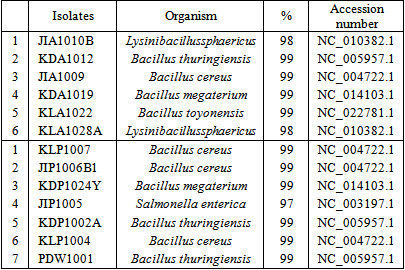
Molecular characterization of bacteria helps in the quantification and detection of their phylogenetic diversity. Molecular identification of bacteria is highly sensitive and specific as compared to a biochemical approach of identification. Molecular characterization of the 16S rRNA gene using polymerase chain reaction (PCR) is a well-known method of identifying a species and genera of bacteria [29]. The genomic DNA extracted from the isolates was used as template DNA for the PCR amplification of the 16S rRNA gene. The PCR products have the molecular weight of 1500bp and were visualized by electrophoresis (Figure 2). The results conform to the work carried out by [9, 26] in which they obtained 1500bp PCR product from isolates isolated from hydrocarbon contaminated sites. The amplified 16S rRNA gene was sequenced to obtain the nucleotide sequence and aligned together using NCBI ALIGN software before being deposited to NCBI BLAST software to find homologous matches with other 16S rRNA sequences in the GenBank database. Similarity percentage and accession number of 16S rRNA sequences of PAH degrading bacterial isolates are listed in Table 3.

 PowerPoint Slide
 Larger image(png format)
 View current table in a new window
 and pyrene (B) degrading bacteria genomic DNA) PowerPoint Slide
PowerPoint Slide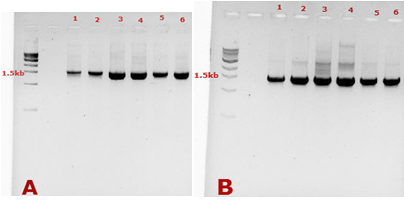 Larger image(png format)
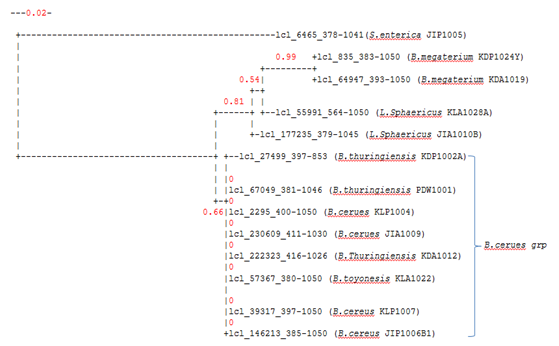
The phylogenetic tree depicts the evolutionary relationship between PAH metabolizing bacteria isolated in this study. Twelve bacterial isolates (KDP1024Y, KDA1019, KLA1028A, JIA1010B, KDP1002A, PDW1001, KLP1004, JIA1009, KDA1012, KLA1012, KLP1007 and JIP1006B1) show the same ancestry as they arise from the same node. JIP1005 (S.enterica) does not share the same ancestor as the other 12 bacteria. JIP1005 is known to be an out-group in the phylogenetic tree as seen in Figure 3.
All 6 bacterial isolates from anthracene enriched medium were assigned to the genus Bacillus while six bacterial isolates from the pyrene enriched medium were assigned to the genus Bacillus except isolate JIP1005 which is assigned to genus Salmonella.B.thuringiensis, B.megaterium and B.cereus were isolated and identified in both pyrene and anthracene enriched medium in this research. This shows that the three bacteria have the metabolic adaptability of utilizing low and high molecular weight PAH. Identification of B.megaterium in this study also conforms to the research done by Janbandhu & Fulekar [9], in which they used molecular characterization to identify B. megaterium from water and soil samples collected from petroleum contaminated areas in Hyderabad, India. Khodadadi et al. [14] phenotypically analyzed and identified B.thuringiensis and B.cereus from diesel contaminated soil. Bahuguna et al. [4] reportedly identified a novel strain of L.sphaericus DMT-7 from diesel contaminated soil by amplification of gene encoding 16S rRNA.

 PowerPoint Slide
 Larger image(png format)
S.enterica(JIP1005)isolated in this study is from the family of Enterobacteriaceae which is known to be pathogenic to animals and humans. The microbial metabolic diversity of Enterobacteriaceae is known to be fully pathogenic but reports of their ability to degrade polycyclic aromatic hydrocarbon are rare [27]. Stenstromet al. [30] proposed the explanation that S.enterica uses the hydrophobic nature of its cell surface to attach to soil particles and is able to undergo morphological changes in harsh environmental conditions and this may contribute to its ability to survive in used-engine oil contaminated soil. B.toyonesis(KLA1022)is a member of the B.cereus family which consists of B.thuringiensis, B.anthracis, B.mycoides, B.pseudomycoides, B.weihenstephanensis, B.cytotoxicus and B.cereus [10]. The presence of B.toyonesis in the soil also conforms to the properties and nature of theB.cereus group assoil borne bacteria.
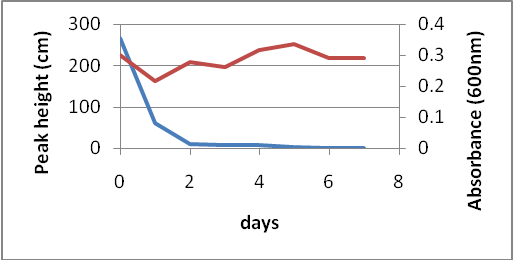
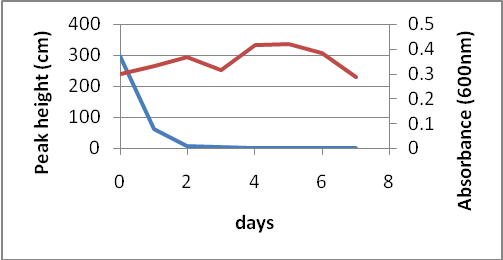
3.4. Degradation of PAH by IsolatesKLA1022 (B.toyonesis) and JIP1005 (S.enterica) were selected as the two most capable metabolisers. KLA1022 metabolizes 99% of anthracene by the 7th day of incubation in non-biostimulation medium while growth rate analysis shows that there was a 12% increase in the amount of KLA1022in the medium until the 5th day of incubation before decreasing due to reduction in the concentration of anthracene as seen in Figure 4. Degradation of pyrene by JIP1005 in non-biostimulation medium shows that the bacteria metabolized 99% of pyrene in the medium by the 7th day of incubation while growth rate analysis of JIP1005 in non-biostimulation medium shows that the amount of JIP1005 in the medium increased by 41% by the 5th day of incubation as seen in Figure 5

 PowerPoint Slide
 Larger image(png format)
 PowerPoint Slide
 Larger image(png format)
The anthracene and pyrene degrading bacteria isolated in this study achieved more than 99% degradation of PAH in non-biostimulation medium. These results show that indigenous PAH utilizing bacteria isolated from contaminated soil and water have PAH degrading potential and do not need biostimulation to achieve efficient PAH degradation.This result was in agreement with the work carried out by Arulazhagan et al. [4] in which bacteria they isolated from contaminated sites degrade over 99% of flourene and anthracene in seven days.Cell growth analysis of anthracene metabolizing bacteria shows that only KLA1022 and JIP1005 utilizeanthracene and pyrene as source of nutrient for their growth because there was an increase in the amount of cells for the both.A reduction in cell amount can be seen as the PAH concentration (sole carbon source) is reduced.
Akpors et al. [3] reveals that the physiochemical characteristic of samples may have an effect on the growth and metabolic activity of bacteria. Saleh et al.[28] compares the growth and exposure of microorganism to hydrocarbon contamination and found that the growth of indigenous microorganism isolated from area of high contamination is higher than the growth of microorganism isolated from area with little or no contamination. In agreement with Spiegelman et al. [28], all the bacteria isolated in this research were isolated from areas with high degree of contamination and their high degradation rates shows that the bacteria have high PAH hydrolytic potential.
In agreement with Al-Thani et al. [2] mineralization and utilization of PAH by each bacteria provides required carbon needed for growth and also provides evidence of PAH degradation. The results obtained from the GC analysis of pyrene and anthracene degradation by the bacteria isolated from contaminated sites shows near complete or total disappearance of pyrene and anthracene in the medium. The disapperance of pyrene and anthracene in the medium indicates that the pyrene and athracene in the medium have been metabolized by the bacteria.
4. Conclusion
This study has identifiedseveral known PAH degrading bacteria species, namely; L.sphaericus, B.thuringiensis, B.cereus and B.megaterium. In addition, bacterial species with no prior association with PAH degradation were also identified in this study, namely; B.toyonensis and S.enterica. These results reinforce the idea that long term PAH contamination of soil and water can give rise to bacteria capable of utilizing PAH as their source of carbon for growth and survival. The results also indicate that there are pools of bacteria, with no prior association with PAH degradation, that are able to adapt to their environment to become preferential PAH degraders, further showing the extreme adaptability of bacteria. This suggests that there are many possible candidates for further study of bioremediation potential.
Acknowledgement
I would like to thank UCSI University Trust for the scholarship that enabled me to continue my study at this institution.
References
| [1] | Abd-Elsalam, H. E., Hafez, E. E., Hussain, A. A., Ali, A. G., El-Hanafy, A.A., 2009. Isolation and dentification of three-ringspolyaromatic hydrocarbons (Anthracene and Phenanthrene) degrading bacteria. American-Eurasian J. Agric. & Environ. Sci, 5(1), 31-38. | ||
 In article In article | |||
| [2] | Al-thani, R.F., Abd-el-haleem, D. A. M., Al-shammri, M., 2009. Isolation and characterization of polyaromatic hydrocarbons-degrading bacteria from different Qatari soils.Journal of Microbiology, 3(11), 761-766. | ||
| In article | |||
| [3] | Akpor, O. B., Igbinosa, O. E., Igbinosa, O. O., 2007. Studies on the effect of petroleum hydrocarbon on the microbial and physico-chemicals characteristics of soil. African Journal of Biotechnology 6 (16), 1939-1943. | ||
| In article | |||
| [4] | Arulazhagan, P., Yeom, I.T, Vasudevan, N., 2011. Biodegradation of polycyclic aromatic hydrocarbon by a halotolerant bacterial consortium isolated from marine environment.International Journal of Environmental Science & Technology, 7(4), 639-652. | ||
| In article | CrossRef | ||
| [5] | Bahuguna, A., Madhuri, K. L., Munjal, A., Singh, R.N., Dangwal, K., 2011. Desulfurization of dibenzothiophene (DBT) by a novel strain Lysinibacillussphaericus DMT-7 isolated from diesel contaminated soil. Journal of Environmental Sciences, 23(6), 975-982. | ||
| In article | CrossRef | ||
| [6] | Balachandran, C.,Duraipandiyan V., Balakrishna K., IgnacimuthuS., 2012. Petroleum and polycyclic aromatic hydrocarbons (PAHs) degradation and naphthalene metabolism in Streptomyces sp. (ERI-CPDA-1) isolated from oil contaminated soil. Bioresource technology, 112, 83-90. | ||
| In article | CrossRef PubMed | ||
| [7] | Coral, G. &Karagöz, S., 2005. Isolation and characterization of phenanthrene-degrading bacteria from a petroleum refinery soil. Annals of Microbiology, 55(4), 255-259. | ||
| In article | |||
| [8] | Hennessee, C.T., Seo, J., Alvarez, A.M., Li, Q.X., 2009. Polycyclic aromatic hydrocarbon-degrading species isolated from Hawaiian soils: Mycobacterium crocinum sp. nov., Mycobacterium pallens sp. nov., Mycobacterium rutilum sp. nov., Mycobacterium rufum sp. nov.and Mycobacterium aromaticivorans sp. nov. International journal of systematic and evolutionary microbiology, 59(2), 378-387. | ||
| In article | CrossRef PubMed | ||
| [9] | Janbandhu, A. & Fulekar, M.H., 2011. Biodegradation of phenanthrene using adapted microbial consortium isolated from petrochemical contaminated environment. Journal of hazardous materials, 187(1-3), 333-340. | ||
| In article | CrossRef PubMed | ||
| [10] | Jiménez, G., Blanch, A.R., Javier T., Ramon R., 2013. Complete Genome Sequence of Bacillus toyonensis BCT-711, the Active Ingredient of the Feed Additive Preparation Toyocerin. Genome Announcements, 1(6), 1-2. | ||
| In article | CrossRef PubMed | ||
| [11] | Johnsen, A.R., Bendixen, K., Karlson, U., 2002. Detection of microbial growth on polycyclic aromatic hydrocarbons in microtiter plates by using the respiration indicator WST-1 detection of microbial growth on polycyclic aromatic hydrocarbons in microtiter plates by using the respiration indicator WST-1. Applied and Environmental Microbiology, 68(6), 2683-2689 | ||
| In article | CrossRef PubMed | ||
| [12] | Jyothi, K.,Surendra, B. K., Nancy C. K, Amita K., 2012. Identification and Isolation of Hydrocarbon Degrading Bacteria by Molecular Characterization. Helix Volume, 2, 105-111. | ||
| In article | |||
| [13] | Khan, J.A. &Rizvi, A., 2011. Isolation and characterization of micro-organism from oil contaminated sites. Advances in Applied Science Research, 2(3), 455-460. | ||
| In article | |||
| [14] | Khodadadi, A., Yousefi, D., Ganjidoust, H., Yari, M., 2011. Bioremediation of diesel-contaminated soil using Bacillus sp. (strain TMY-2) in soil by uniform and non- uniform electro kinetic technology field. Journal of Toxicology and Environmental Health Sciences, 3(15), 376-384. | ||
| In article | |||
| [15] | Latha, R. &Kalaivani, R., 2012. Bacterial Degradation of Crude Oil by Gravimetric Analysis. Advances in Applied Science Research, 3(5), 2789-2795. | ||
| In article | |||
| [16] | Mao, J., Luo, Y., Teng, Y., Li, Z., 2012. Bioremediation of polycyclic aromatic hydrocarbon-contaminated soil by a bacterial consortium and associated microbial community changes. International Biodeterioration& Biodegradation, 70, 141-147. | ||
| In article | CrossRef | ||
| [17] | Milic, J., Vladimir P. B., Mila V. I., Samira a., M. A., Gordana, Đ.G., Miroslav, M. V., 2009. Bioremediation of soil heavily contaminated with crude oil and its products: Composition of the microbial consortium. Journal of the Serbian Chemical Society, 74(4), 455-460. | ||
| In article | CrossRef | ||
| [18] | Maiti, A., Das, S., Bhattacharyya, N., 2012b. Isolation and characterization of a new bacterial strain from petroleum oil contaminated soil, India. Journal of Sciences, 2(2), 103-108. | ||
| In article | |||
| [19] | Moshen, A., Simin, N., Chimezie A., 2009. Biodegradation of polycyclic aromatic hydrocarbons (PAHs) in petroleum contaminated soils. Iran J. Chem. Eng, 2(3), 53-59. | ||
| In article | |||
| [20] | National Research Council, 1983. Polycyclic Aromatic Hydrocarbons: Evaluation of Sources and Effects, Committe on pyrene and selected analogues board on toxicology and environmental health hazard, commisions of life sciences, National Academic press, Washington DC. | ||
| In article | |||
| [21] | Pagnout, C., Frache, G., Poupin, P., Maunit, B., Muller,J., Ferard, J.,2007. Isolation and characterization of a gene cluster involved in PAH degradation in Mycobacterium sp. strain SNP11: expression in Mycobacterium smegmatismc(2)155. Research in microbiology, 158(2), 175-186. | ||
| In article | CrossRef PubMed | ||
| [22] | Pathak, H. &Bhatnagar, K., 2011. Alcaligenes-the 4T engine oil degrader. Journal of Bioremediation and Biodegradation, 2(4), 2-5. | ||
| In article | CrossRef | ||
| [23] | Pinyakong, O.,Kwankeaw, T., Kenichi I., Toshio O., 2012.Isolation of novel phenanthrene-degrading bacteria from seawater and the influence of its physical factors on the degradation of phenanthrene. ScienceAsia, 38, 36-43. | ||
| In article | CrossRef | ||
| [24] | Praveena, M.S., Siraj, S.S., Suleman, A.K., Aris, A.Z., 2011. A brush up on water quality studies of Port Dickson, Malaysia. Research Journal of Environmental Sciences, 5(12), 841-849. | ||
| In article | CrossRef | ||
| [25] | Riccardi, C., Papachinni, M., Mansi, A., Ciervo, A., Petrucca, A., La-Rosa, G., Mirianelli, C., Muscilo, M., Marcelloni, A.M., Spigcaglia, S., 2005. Characterization of bacterial population coming from a soil contaminated by polycyclic aromatic hydrocarbons (PAHs) able to degrade pyrene in slurry phase. Annals of Microbiology, 55(2), 85-90. | ||
| In article | |||
| [26] | Sarma, P.M., Dhruva B., Krishnan, S., Banwari L., 2004. Degradation of polycyclic aromatic hydrocarbons by a newly discovered enteric bacterium, leclerciaadecarboxylata degradation of polycyclic aromatic hydrocarbons by a newly discovered enteric bacterium, leclerciaadecarboxylata. Applied and Environmental Microbiology, 70(5), 3163-3166. | ||
| In article | CrossRef PubMed | ||
| [27] | Saleh, Y., Aziz, N., Partila, A.M., 2013. Isolation of polycyclic aromatic hydrocarbon degrading bacterial strains isolated from indigenous microbial communities of petroleum contaminated soils. World Applied Sciences Journal, 23(4), 554–564. | ||
| In article | |||
| [28] | Spiegelman, D., Whissell, G., Greer, C.W., 2005. A survey of the methods for the characterization of microbial consortia and communities. Can. J. Microbiol, 51, 355-386. | ||
| In article | CrossRef PubMed | ||
| [29] | Srujana, K. and Khan, B. A., 2012. Isolation and characterization of polycyclic aromatic hydrocarbon degrading soil microbes from automobile workshop sediments. Journal of Environmental Science and Technology. 5(1), 74-83. | ||
| In article | CrossRef | ||
| [30] | Stenstrom, T.A., 1989. Bacterial hydrophobicity: an overall parameter for the measurement of adhesion potential to soil particles. Applied and Environmental Microbiology, 55(1), 142-147. | ||
| In article | PubMed | ||
| [31] | Udeani, T.K.C., Obroh, A. A.,Okwuosa, C. N., Achukwu, P. U., Azubike, N., 2009. Isolation of bacteria from mechanic workshops’ soil environment contaminated with used engine oil. African Journal of Biotechnology, 8(22), 6301-6303. | ||
| In article | |||

 CiteULike
 Mendeley
 StumbleUpon
 Delicious
 Facebook
 Twitter
 LinkedIn
 Print
Print