To boost rice production in the Adamawa region of Cameroon using environmentally friendly methods, the responses of rice plants to biological (mycorrhizae) and organic (compost) fertilisers, applied singly or in combination and cowpea in an intercropping system were investigated during the 2023 and 2024 cropping seasons. The experimental design was a completely randomised block with nine treatments, each of which was triplicated: rice-compost (C), rice-compost + mycorrhizae (CM), rice-cowpea + compost (N+C), rice-cowpea (N), cowpea in monoculture (NP), rice-mycorrhizae (M), rice-cowpea + mycorrhizae (NM), rice-no fertiliser (T−), and rice-NPK (T+). plots. When treatments were applied in solely-cowpea of the Bafia variety, results revealed that amending soil with compost benefited plants in height during both cropping seasons, with an average of 62.11 cm compared to 47.95 cm for solely-cowpea system. The number of nodule/plant, as well as the number of pods per plant were significant different (p < 0.05) between sole-cropped cowpea without input and cowpea grown with compost, compared to other treatments. Compost, mycorrhizae, and cowpea (singly or in combination) significantly (p < 0.0001) influenced rice height, tillering, heading, and grain formation. The effects of compost and compost + mycorrhizae treatments were closer to that of the positive control (NPK). Mycorrhization was negatively affected by the application of mineral fertiliser NPK (20-10-10), which almost inhibited and lowered the natural rice mycorrhization frequency to less than 10%. Rice yields per hectare were higher in plots treated with mycorrhizae (2.15 to 0.32 t/ha), mycorrhizae + compost (2.08 to 0.44 t/ha), and cowpea + compost (2.14 to 0.49 t/ha), closely approaching that of the NPK treatment (2.18 to 0.55 t/ha) over the two cropping seasons respectively. As the outcome, applying compost to rice-cowpea in an intercropping system could be recommended as an ecological production strategy to rice producers if high yields of both crops are to be sustainably maintained.
Rice, a staple food for more than half the world’s population, is the second most cultivated and consumed cereal after maize 1. In sub-Saharan Africa, rice consumption is increasing more rapidly than that of any other staple crop due to rapid population growth, urbanisation, and changes in dietary habits 2. Despite its importance, rice production in Cameroon remains insufficient to meet growing demand 3. This shortfall is linked to several challenges, including the lack of adapted varieties to different agro-ecological zones and soil degradation, often caused by excessive use of chemical inputs, soil erosion, intensive land use, deforestation, and climate change. To address this issue, new rice varieties known as New Rice for Africa (Nerica) resulting from a cross between Asian rice (Oryza sativa) and African rice (Oryza glaberrima) was introduced in Africa 4. These varieties were specifically developed as an adaptation to the challenging growing conditions and low soil fertility levels typical to rainfall rice farming in sub-Saharan Africa, which are ideal to smallholder farmers who lack means to irrigate their crops 5. Adopting biological fertilisation technics that can sustainably increase rice yields appears to be an eco-friendly strategy. Several organic fertilisers have currently been under trial, including compost, mycorrhizae, biochar, manure, and have proven to be effective on other cereals such as maize 6, 7, 8. Furthermore, legume–cereal intercropping systems have also been explored to enhance the efficiency of phosphorus (P) and nitrogen (N) used by both crops, which could significantly increase grain yield 9. Such systems could help address the protein deficiency problem in the Cameroon’s Far North Region, taking into consideration that in this part of the country, diet has been reported to be mainly cereal-based and tend to lack protein 10, 11, making supplementary protein intake essential. It is well known that cowpea is considered as one of the most affordable protein sources 12. According to Hinsinger et al. 13, Latati et al. 14, Kherif et al. 15, the nutrient supply to cereals can be enhanced through the symbiotic fixation of atmospheric nitrogen by legumes, facilitated by rhizobacteria involved in various biochemical mechanisms in the rhizosphere. These observations justify investigations on this research, the overall objective being to evaluate the impact of biological fertilisation (mycorrhizae and compost), in association with cowpea, on the agronomic performances of the Nerica 3 rice variety. It is expected that the outcomes could favourably impact the food security in Northern Cameroon.
Experimental Site and Plant Material
The trial was conducted in the Adamawa region of Cameroon, specifically at Beka (2023) and Dang (2024) localities. This area is characterised by an average annual temperature of approximately 22°C and an average relative humidity of 70% 16. The region has a Sudano-Guinean climate, with a rainy season extending from mid-March to mid-November, followed by a dry season from late November to late March. The soil is reddish and slightly ferruginous.
Plant Material
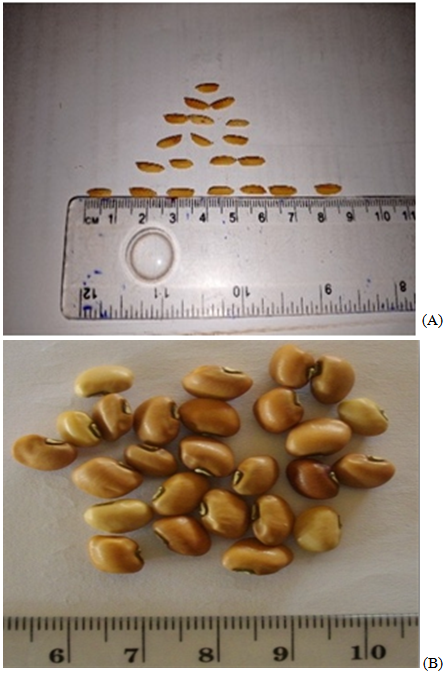
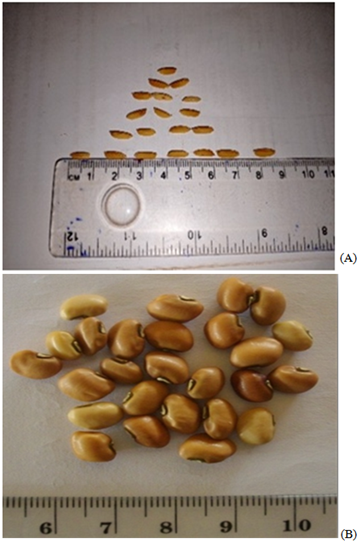
The rice variety used was the Nerica 3 (Figure 1A), with a growing cycle extending 100–110 days with and an average yield potential of 0-4 t/ha. The cowpea Bafia variety (Figure 1B) was used as the companion crop in an intercropping system.
Fertilisation Sources
Chicken manure-based compost was used as an organic fertiliser. This compost was produced over four months using the heap composting method 17. Mycorrhizal inoculum was supplied by the Microbiology Laboratory of the Agricultural Research Institute for Development (IRAD), within the Biopesticides and Biofertilisers Unit. It consisted of a consortium of two mycorrhizal strains (Glomus sp and Gigaspora sp) at a density of 150 spores per gram of substrate. The Bafia cowpea variety was used in the intercropping for its ability to fix atmospheric nitrogen. Chemical fertilisation was carried out using NPK (20-10-10), purchased from a phytosanitary store.
Experimental Design and monitoring of trials
The trial was carried out in a completely randomised block design with nine (09) treatments, each of which was triplicated: rice-compost (C), rice-compost + mycorrhizae (CM), rice-cowpea + compost (N+C), rice-cowpea (N), cowpea in monoculture (NP), rice-mycorrhizae (M), rice-cowpea + mycorrhizae (NM), rice-no fertiliser (T−), and rice-NPK (T+) plots. Land preparation involved clearing existing vegetation over 200 m² area followed by stump removal, debris collection, and ploughing. Individual plots measured 6 m² (2 m x 3 m) and were raised 15 cm above ground level. Plots were 50 cm apart, whereas 40 plants were 30 X 30 cm within and between rows. Compost and mycorrhizal inoculum were applied at sowing (50g of compost and 20g of mycorrhizae) as indicated by (Ngakou et al. 18. Cowpea was interplanted 15 cm between rice plants and sown 15 days after rice.
Assessment of agronomic parameters
Agronomic parameters such, number of tillers and panicles per plant, number of grains per panicle 19, number of pods and nodules per plant were assessed through direct counting 20. The heights of rice and cowpea were measured using a graduated ruler. Yield (Y) at harvest was calculated according to Gandebe et al. 21:
Y = (P × 10000)/n,
where P is the weight of rice harvested from an individual plot, 10000 is the hectare conversion factor, and n is the surface area of a plot.
Evaluation of the mycorrhizal colonization
The mycorrhization rate in rice plants roots was assessed after careful wash, and selection of the youngest that were cut into 1-2 cm length. They were then put in test tubes containing 10 % potash, and heated at 90°C in water bath for 30 min to destroy plant cells content and decolorize tannins in woody roots. Potash was thrown out, followed by filtration of roots in solution that were thereafter rinsed by neutralization with acidified water. The acidified rice root fragments were removed, put in beakers containing 0.01% acid Fuchsin solution as staining agent, heated in a water bath for 15 minutes. The root fragments were subsequently removed and placed in a destained solution of lactic acid-glycerol-water (v/v/v: 5-3- 2) for 24 hours. Root fragments (30 per treatment) were then mounted on a slide and covered with coverslips in groups of 10 and observed under a microscope at magnification 40 22. The estimated parameters for mycorrhization state were evaluated as requested by Sghir et al. 23. The frequency of mycorrhization F (%) was used to assess the percentage of host plant colonization by arbuscular fungi as:
F(%) = 100X(N-N0)/N, where, N is number of fragments observed; N0, the number of non-mycorrhizal fragments.
The intensity of mycorrhization (I%) was evaluated by assigning each root fragment (a sample of 100 fragments)
a class score from between 0 and 5, based on the estimate of the proportion of the colonized root cortex by AMF as follows: 0 = no infection; 1 = trace; 2 = less than 10%; 3 = 10-50%; 4 = 51 to 90%.
I% = (95n5-70n4-30n3 - 5n2 n1)/N, where n5, n4, n3, n2 and n1 are the number of root fragments rated from 1 to 5 23.
Statistical Analysis
Data were collected and entered into Microsoft Excel 2016 for storage and graphical representation. Analysis of variance (ANOVA), multiple comparison tests (LSD), Principal Component Analysis (PCA), and Pearson correlation were performed at a 5% significance level using the 2021 Origin software.
Influence of Treatments on Agronomic Parameters of Cowpea (Plant Height, Number of Nodules, and Number of Pods per Plant)
Plant Height
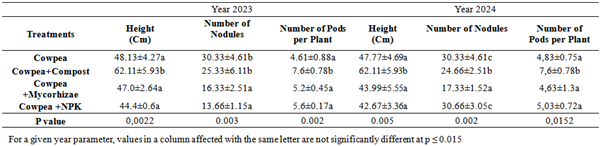
In this study, compost application significantly improved cowpea plant height for both cropping seasons (p = 0.002, p = 0.005), respectively compared to other treatments, with values ranging from between 58.50 and 62.11 cm (Table 1). The lowest heights were recorded in plots treated with chemical fertiliser 44.4 cm and 42.67 cm respectively in the first and second cropping season. The enhanced results obtained under compost treatment could be explained by the fact that, unlike NPK, compost improves soil structure, water retention, and biological activity 24. These benefits within an intercropping system could have been extended into the surrounding rhizosphere. This was in agreement with findings of Nambiar et al. 25. From their observations, although it was only the cereal that received fertiliser in a sorghum-groundnut intercropping system, groundnut plants were able to exploit the inorganic nitrogen due to the reduced spacing between the rows and the proximity of the root systems, thus highlighting the double advantage of an intercropping system.
Number of Nodules
Nodulation, a key factor in cowpea grain yield according to Magulu and Kabambe 26, varied depending on the applied treatments, as previously reported by Kouassi et al. 27. In year one, compost-treated plots (25 nodules/plant) and cowpea monoculture plots (30 nodules/plant), significantly (p = 0.003) stimulated higher nodulation compared to other treatments. This could be attributed to the fact that organic fertilisers enhance soil organic matter, available nitrogen and phosphorus, and microbial communities, thereby increasing nodule formation 28. During the second cropping year, higher nodulation was observed in NPK-treated plots 31 nodules, followed by the cowpea monoculture 30 nodules and compost treatments. This may be due to the stimulating effect of nitrogen fertiliser on plant development and growth, consistent with Razzaque et al. 29, who observed increased nodule numbers in the presence of nitrogen fertiliser.
Number of Pods per Plant
Regarding pod number, a significant difference (p < 0.01) was observed in compost-treated plots compared to other treatments in both years. These results are in agreement with those of Kabore et al. 30, who demonstrated that organic fertilisation significantly improved agronomic parameters of cowpea. The observation that mineral fertilisation resulted in good nodule formation in the second year, but poor pod yield could be explained by the role of phosphorus in root development, which supports nodule formation. However, excessive nitrogen from mineral sources such as NPK (20-10-10) may inhibit nodule activity, making the plant relying on soil nitrogen rather than biologically fixed nitrogen 31, 32.
Effect of treatments on agronomic parameters of Nerica 3 rice variety in Ngaoundéré
Plant Height
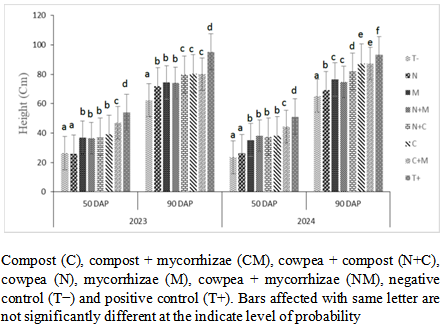
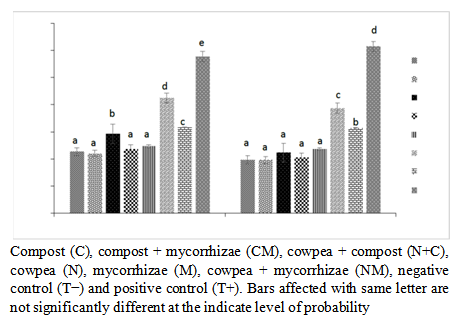
Figure 2 reports the effect of various field-applied treatments on the height of Nerica 3 rice plants at 50 and 90 days after sowing (DAS) during the 2023 and 2024 cropping seasons. Analysis of variance revealed a highly significant difference (p ≤ 0.0001) between treatments for both years. At 50 DAS in 2023, the biological treatment "compost + mycorrhiza" (47.02 cm) closely approaches the NPK treatment (54.19 cm) and was far from the negative control (26.32 cm). At 90 DAS, NPK (95.41 cm) was followed by compost (80.41 cm), compost + mycorrhiza (80.22 cm), and cowpea + compost (80 cm). Similar results were obtained in 2024, indicating that compost, compost + mycorrhiza, and cowpea + compost provided better development of Nerica 3 rice plants. These results support the findings of Fairhurst 33, who noted that organic fertilisers such as compost can create a favourable environment for root development, enhance nutrient uptake, and reduce crop stress due to factors such as soil acidity. Additionally, mycorrhizae can help plants absorb assimilable phosphorus, which is considered as a vital element for intensive rice production 34.

Tillering
Figure 3 illustrates tiller production per rice plant under different applied treatments during the 2023 and 2024 cropping seasons. A highly significant difference was observed (p = 0.003 in 2023, p < 0.0001 in 2024), with NPK (6 tillers/plant) and compost (4 tillers/plant) producing the highest tiller numbers. The lowest tillering accounted for solely-cowpea treatment (2 tillers/plant) and the negative control (2 tillers/plant). The reduced tillering in the rice-cowpea intercropping system could be attributed to competition between plants for nutrients and water, aligning with findings of Dabre et al. 35, who indicated that high plant density (4 plants/pot) in a sorghum-cowpea system led to strong competition and poor growth, compared to lower tiller density (2 plants/pot). However, providing a direct nutrient source (such as compost or NPK) to rice plants mitigated the limitations of the rice-cowpea intercropping system. These findings are in agreement findings of Dabre et al. 35, who reported higher above-ground biomass under a cowpea-sorghum system supplied with both nitrogen and phosphorus. Whereas organic amendments were revealed to stimulate tillering in rice 36, the tiller number/plant and above-ground biomass of rice were also shown to positively influenced by organic inputs, which helped leaching of salts and replaced sodium ions (Na+) with calcium ions (Ca²+), thereby moderating the soil environment 37.
Number of panicles per plant
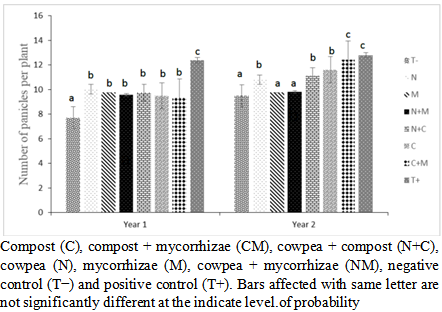
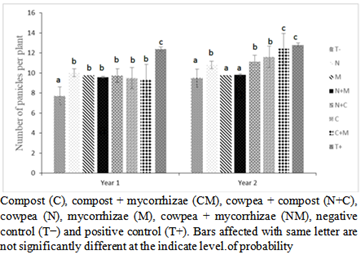
Rice plants applied with NPK produced more panicles in number in 2023 (12) and 2024 (17) than any other treatments (Figure 4). Treatments rice-cowpea + compost, rice-cowpea + mycorrhizae produced (11 and 14), (10 and 14) panicles/plant, respectively during the two consecutive cropping seasons, while the lowest average number was recorded under rice plants not applied with any of the fertilisers. The positive response to mineral fertilization of rice in this study was ascribed to poor soil fertility of the experimental sites, as previously reported by Djogbede et al., 38, who also revealed improved plant growth under organic fertilization than under mineral inputs. The best performances observed with the biological treatments (rice-cowpea + compost, rice-cowpea + mycorrhizae) could be attributed to the synergistic effects of different fertilising elements (mycorrhizae, cowpea, compost), each contributing to better panicle initiation in its own way. Mycorrhizae, for instance, has been reported to increase the root exploration area, thereby enhancing the uptake of nutrients available in the soil 39. Crop legumes on their own are involved in the atmospheric nitrogen fixation through rhizobia, made available to its associated rice plant 40. On the other hand, compost enriches the soil with essential nutrients for plant growth 41. These results were confirmed in the field by Nadjillom et al. 19 for Tox-728-1 and Madjitolngar rice varieties in response to mycorrhizal inoculation in southern Chad, Zadi et al. 42 for upland rice cultivation with straw compost in western Ivory Coast, Diallo et al. 43 for Nerica 3 rice cultivated under organic amendments in Faranah-Guinea, or Sanne et al. 44, who demonstrated the ability of crop legumes to improve the agronomic performance of sorghum in Eastern Burkina Faso.
Number of grains per panicle
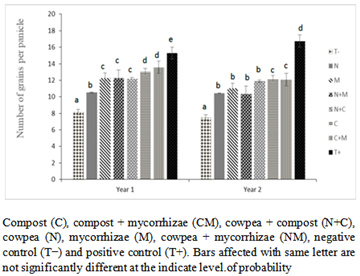
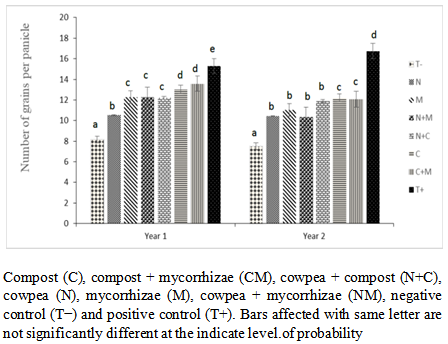
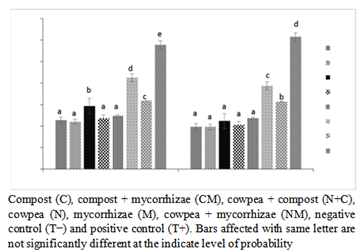
The number of grains per panicle, as shown in the Figure 5, is a key factor for assessing rice agronomic performance in response to field treatments. In the present study, a highly significant difference (p ≤ 0.0001) was observed during both growing seasons (2023, 2024) in the ability of the various treatments to enhance grain formation per panicle. The biological treatments compost + mycorrhizae (14-12), compost alone (13-12), and cowpea + compost (12-11) promoted a better grain formation per panicle, closely approaching that of NPK treatment (15-17), in line with with significant increased number of rice grains/panicle reported under biological treatments 19. However, the number of grains per panicle in this study remained below the 55 grains pointed out by Gnamkoulamba et al. 45. This difference could be attributed to genetic variability, environmental adaptation, sensitivity to abiotic stress, and specific agronomic traits among rice varieties, in agreement with findings of Ngakou et al. 46, who indicated significant differences in agronomic parameters among rice varieties Nerica NL28, Madjitolngar, and Tox-728-1 grown in south-Chad.
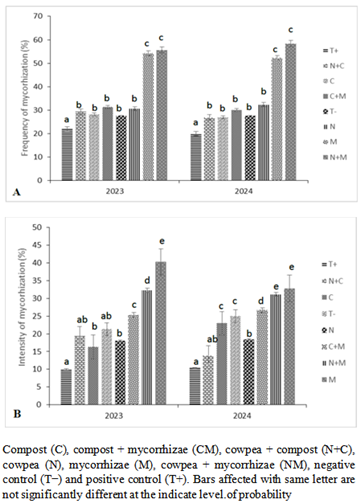
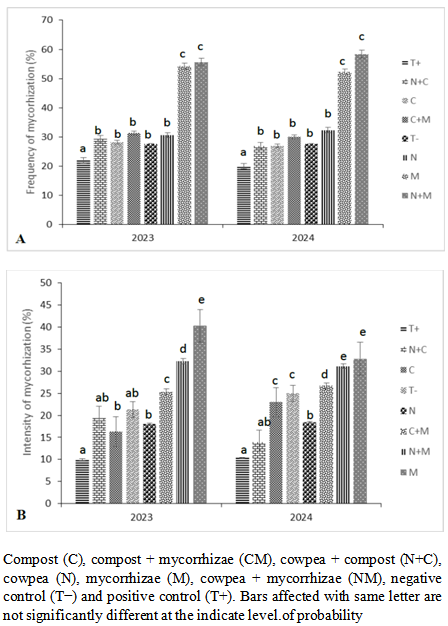
Measuring the frequency of mycorrhization (% of root colonisation) Figure 6A and the intensity of mycorrhization (degree of root colonisation) Figure 6B was crucial in assessing the interaction between fertilisation practices, mycorrhizal symbiosis, and the agronomic performance of rice during the 2023 and 2024 cropping seasons. Data revealed low mycorrhizal activity in rice plants treated with chemical fertilisers NPK, showing only 10% frequency and less than 25% intensity across both years. In contrast, high mycorrhizal activity was recorded in plants treated with mycorrhizae alone or in combination with cowpea, with colonisation frequency exceeding 50% and intensity over 30%. Treatments mycorrhizae and cowpea + mycorrhizae significantly (p ≤ 0.0001) both the mycorrhization frequency and intensity compared to others, in accordance with with findings of Ndonda et al. 47, who revealed elevated mycorrhizal frequency and intensity in cassava grown without fertilizers, suggesting that mineral fertilization negatively impacts the mycorrhization rate. Similarly, high nitrogen and phosphorus content in soils was reported to inhibit mycorrhizal symbiosis 48. In the present study, no treatment resulted in a mycorrhization intensity exceeding 50%, in accordance with linkage of low root colonisation rates to antifungal secretion, or root exudate quality, which could inhibit the establishment of mycorrhizal infection 49.
Yield per hectare
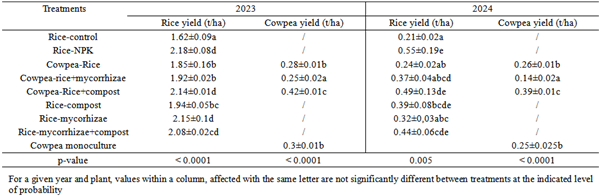
Without fertilisation, rice yields were very low, whereas rice-mineral fertiliser and rice-cowpea + compost treatment yielded the highest rice output, particularly in 2023 (Table 2). A general decline in yields was observed in 2024, likely due to unfavourable climatic conditions. Statistical differences between treatments were highly significant (p ≤ 0.0001), highlighting the importance of organic fertilisation (mycorrhizae and compost) and cowpea-rice intercropping in optimising rice production in the field. These findings are consistent with those of Sagna et al. 50, who reported significant improvement of rice growth and yield parameters under compost amendment. Indeed, Miller et al. 51 stated that compost was a direct nutrient source. According to Jangde 52, mycorrhizae stimulate rice plant growth, especially in nutrient-poor soils, but plants are unable to form mycorrhizal symbiosis when nutrients are readily available 53. However, significant mycorrhization results were observed with mycorrhizae + compost treatments, likely due to the compost’s quality (well-decomposed, rich in organic matter, low in available phosphorus), which improved both soil structure and symbiosis. In the cowpea-rice intercropping system, it is expected that rice benefits from the nitrogen fixed biologically by the cowpea, the improvement of the soil porosity, the reduction of weed pressure by cowpea, and in return, the rice creates a beneficial microclimate for the cowpea particularly in the environmental field conditions where water availability is limited. These observations are in line with research findings of Ayuba et al. 9, who revealed significant grain yields under soybean-sorghum intercropping system.
Relationships between agronomic parameters
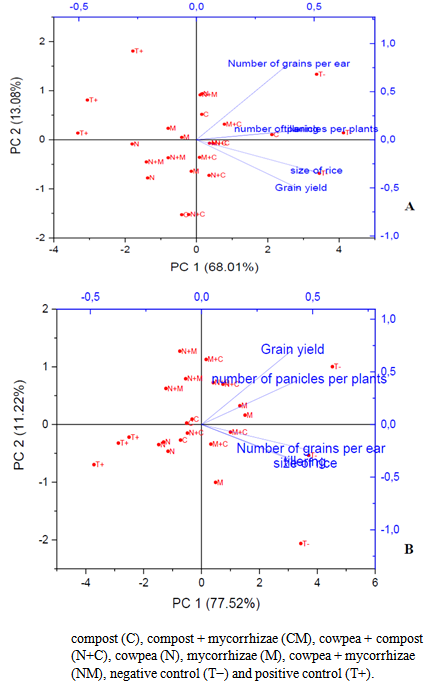
During the 2023 cropping season, the first two principal components accounted for 81.51% of the total variance in the data, with 68.53% for PC1 and 12.98% for PC2 (Figure 7A). In 2024, PCA provided an even better explanation of the data structure, with a cumulative variance of 88.74%, with 77.52% for PC1 and 11.22%) for PC2 (Figure 7B). PC1 grouped the key yield-determining variables (plant height, number of panicles per plant, tillering, and number of grains per panicle), as they were oriented towards the right side of the graph, indicating that treatments (NPK, compost, cowpea + compost, mycorrhiza + compost, and mycorrhizae) in this direction were closely associated to higher yields determination. Conversely, treatments on the left side of the graph were associated with lower yields obtained.
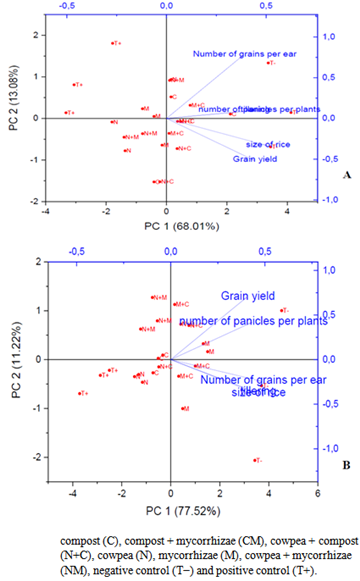
Data from these two experimental years showed consistency in the effect of integrated treatments (mycorrhizae + compost/cowpea in promoting higher yields, which appear to be the best options for sustainably improvement of rice productivity under the experimental conditions, based on the nutritional needs for rice. According to ADRAO 54, nitrogen is the most limiting elemental nutrient factor for rice. Compost and cowpea are known to have the ability to supply nitrogen to plants. Crop legumes such as cowpea, through their association with rhizobia, have the capacity to fix atmospheric nitrogen and make it bioavailable in the rhizosphere 40. Once the fertilizing elements are available in the rhizosphere, their uptake by plants is facilitated through mycorrhizae, which according to Hamza 55, when associated with plant roots, promote better root development and nutrients provision. In this research rice and cowpea were intercropped in such a way that rice benefits from the nitrogen fixed by cowpea.
The outcomes of the investigations on cowpea-rice in an intercropping system that was applied with biological fertilisers (compost, mycorrhizae) have shown that treatment cowpea+compost could be recommended for a sustainable cultivation of Nerica 3 rice variety in the study locality: firstly for its ability to significantly improve the various crop parameters assessed; secondly for have improved the yield of the associated crops. It is expected that these yield could provide farmers with a source of protein (cowpea) and carbohydrates (rice), thereby positively impacting their diets security.
| [1] | FaoStat. Production crops, Food and Agriculture Organization of the United Nation. www.faostat.fao.org. 2014. | ||
| In article | |||
| [2] | Seck, P.A., Toure, A.A., Coulibaly, J.Y., Diagne, A., Wopereis, M.C.S. Africa’s rice economy before and after the 2008 rice crisis. In: Wopereis, M.C.S., Johnson, D.E., Ahmadi, N., Tollens, E., Jalloh, A. editors. Realizing Africa’s rice promise. CABI, UK. pp. 24-34. 2013. | ||
| In article | View Article | ||
| [3] | Mewouko, A., Djoulde, R.D., Misse, A.C., Yakouba, O., Basga, D.S., Kaouvon, P., Njoumoui, A.C. Production constraints of highland rice production in the East region of Cameroon. Cameroon Journal of Experimental Biology, 16(1). 53-60. 2022. | ||
| In article | View Article | ||
| [4] | Akintayo, B., Cisse, L. Zadji, D. Pratical Guide for Nerica rice cultivation in the highland of Cotonou, Benin. Centre for rice in Africa (ADRAO), 36 p. 2008. | ||
| In article | |||
| [5] | Ahmadou, Y.Y.A., Kouebou, C.P., Malaa, D.K. Determination of the appropriate dose input for the highland Nerica 3 rice (Oryza spp) production in the locality of Nassarao in Northern-Cameroon. Afrique Science, 22(1).102-112. 2023. | ||
| In article | |||
| [6] | Abdoullahi, I., Maliki; I.B., Bagari, I.S., Bouba, M.D., Mbassi, L.S., Sounya, J.B., Biyanzi, P., Bobo, D. Optimization of agricultural soil fertilization in Ngaoundere by the utilization of Biochar. Application on maize (Zea mays) cultivation of the ATPSRY variety. Journal of Food Stability, 4(5). 1-14. 2021. | ||
| In article | |||
| [7] | Droh, G., Djekou, M.K., Toure, M., Tuo, S., Zei, P., N’Guetta, A.S-P. Effect of biocompost associated to mycorrhiziae fungi on maize (Zea mays L) yield in the Ivory Coast. Afrique SCIENCE, 21(4). 70-81. 2022. | ||
| In article | |||
| [8] | Bazongo, P., Traore, K., Kiemtore, B., Da, I.A.N., Coulibaly, A. Traore, O. Effects of jatropha curcas L. compost and vulgarized mineral manure on soil chemical properties and maize (Zea mays L) yield in the west of Burkina Faso. Int. J. Biol. Sci,, 17(5). 2025-2036. 2023. | ||
| In article | View Article | ||
| [9] | Ayuba, J., Opera-Obuobi, K., Mohammed, M.A., Yussif, I.J. Influence of rhizobium inoculation pn root length, symbiotic performance and grain yield of soybean (Glycine max) intercropped with sorghum (Sorghum bicolor) with P and K nutrition. African Journal of Agriculture Research, 21(3): 205-213. 2025. | ||
| In article | View Article | ||
| [10] | Watier, B. What a nutritional equilibrium in Africa. Editor Hoffman-La Roche, F. and Cie, N.-S.S., France. 30p. 1982. | ||
| In article | |||
| [11] | Tien, H.H., Hien, T.M., Son, M.T., Herridge, D. Inoculation and N2 fixation of soybean and Mungbean in the Eastern region of south Vietnam. 109e proceeding (ACIAR) Inoculants and Nitrogen at legumes in Vietnam. Edited by Herridge, D. pp. 29-36. 2002. | ||
| In article | |||
| [12] | Bado, V.B. Role of crop legumes on tropical ferruginous soil fertility in the sudano- guinea zones of Burkina Faso. Doctorate Thesis. University of Laval, Québec, Canada. pages 2002. | ||
| In article | |||
| [13] | Hinsinger, P., Brauman, A., Devau, N., Gerard, F., Jourdan, C., Laclau, J.P., Le Cadre, E., Jaillard, B., Plassard, C. Acquisition of phosphorus and other poorly mobile nutrients by roots. Where do plant nutrition models fail? Plant and Soil, 348(1): 29-61. 2011. | ||
| In article | View Article | ||
| [14] | Latati, M., Aouiche, A., Rebou, Y.N., Laouar, M. Modelling the functional role of the micro-organisms in the daily exchanges of carbon and nitrogen in intercropping system under Mediterranean conditions. Agronomy Research, 17(2). 559-573. 2019. | ||
| In article | |||
| [15] | Kherif, O., Keskes, M.I., Pansu, M., Ouaret, W., Rebouh, Y.N., Dokukin, P., Kucher, D. Latati, M. Agroecological modeling of nitrogen and carbon transfers between decomposer microorganisms, plant symbionts, soil and atmosphere in an intercropping system. Ecological Modelling. 440(4).109390. 2021. | ||
| In article | View Article | ||
| [16] | Tchuenguem, F.F-N., Djonwangwe, D., Messi, J., Brucker, D. Exploitation of Entada Africana, Eucalypytus camaldulensis, Psidium guajava and Trichillia emetica flowers by Apis mellifera adansonii at Dang (Ngaoundere, Cameroon). Cameroon Journal of Experimental Biology, 3(2). 50-60. 2007. | ||
| In article | View Article | ||
| [17] | Ngakou, A., Megueni, C., Noubissie, E., Tchuenteu, T.L. Evaluation of the physicochemical properties of cattle and kitchen manures derived composts and their effects on field grown Phaseolus vulgaris L. Int. J. Suitain. Crop Prod., 3(5). 13-22. 2008. | ||
| In article | |||
| [18] | Ngakou, A., Toukam, T.S., Ngo Nkot, L., Tobolbaï, R., Maryamou, I. Appropriate Compost/Soil Ratios for Sustainable Production of Garlic (Allium sativum L.) under Mycorrhization in Pots Experiment. Journal of Plant Science, 15(3). 64-73. 2020. | ||
| In article | View Article | ||
| [19] | Nadjilom, Y., Toukam, S.T., Issa, M., Ngakou, A. Field Evaluation of Growth and Yield of Two Local Rice Varieties (Tox-728-1 and Madjitolngar) in Response to Indogenous Mycorrhizal Inoculation in South-Chad. American Journal of Plant Sciences, 11.1175-1192. 2020. | ||
| In article | View Article | ||
| [20] | Ngakou, A., Nwaga,D., Nebane, C.L.N., Ntonifor, N.N., Tamo, M., Parh A.I. Contribution of Arbuscular mycorrhizal Fungi Rhizobium and Metarhizium anisopliae to cowpea production in Cameroon. Int. J. Agric. Res., 2(9). 754-764. 2007. | ||
| In article | View Article | ||
| [21] | Gandebe, M., Ngakou, A., Tabi, I., Amougou, A.F. Altering the time of intercropping cowpea (Vigna unguiculata (L.) Walp.) antioxidant relative to maize (Zea mays L.): A food production strategy to increase crop yield attributes in Adamawa-Cameroon. World Journal of Agricultural Sciences, 6(5). 473-479. 2010. | ||
| In article | |||
| [22] | Phillips, J.M., Hayman, D.S. Improved procedures for clearing roots and staining parasitic and vesicular-arbuscular mycorrhizal fungi for rapid assessment of infection. Transaction of the British. Mycological Society, 55. 158-160. 1970. | ||
| In article | View Article | ||
| [23] | Sghir, F., chliyeh, M., Kachkouch, W., Touhami, A., Benkirane, R., Douira, A. Mycorrhizal status of Olea europeae spp. Oleaster in Morocco. Journal of Applied Biosciences. 61.4478-4489. 2013. | ||
| In article | View Article | ||
| [24] | Inckel, M., De Smet, P., Tersmette, T., Veldkamp, T. manufacturing and utilization of compost. Agrodok 8. 73p. 2005. | ||
| In article | |||
| [25] | Nambiar, P.T.C., Rao, M.R., Seddy, M.S., Floyd, C.N., Dart, P.J. Willey, R.W. Effect of intercropping on nodulation and N2 fixation by groundnut. Expl Agric., 19. 79-86. 1983. | ||
| In article | View Article | ||
| [26] | Magulu, K., Kabambe. Fodder production, yield and nodulation of some elite cowpea (Vigna unguiculata L. Walp.) lines in central Malawi. African Journal of Agriculture Research, 10(25). 2480-2485, 2015. | ||
| In article | View Article | ||
| [27] | Kouassi, N.D.J., Kouamé, N.G., Ayolie, K., Yao, K.J., Yatty, K.J. Influence of fertilization on nodulation capacity of two crops legume species, vigna radiata L.Wilczek and Vigna unguiculata L.Walp (Fabaceae). Int. J. Biol. Chem. Sci., 13(7). 3079-3086. 2019. | ||
| In article | View Article | ||
| [28] | Dong, W.I., Zhang, X.Y., Dai, X.Q., Fu, X.L., Yang, F.T., Liu, X.Y., Sun, X.M., Wena, X.F., Schaeffer, S. Changes in soil microbial community composition in response to fertilization of paddy soils in subtropical China. Applied Soil Ecology, 84. 140-147. 2014. | ||
| In article | View Article | ||
| [29] | Razzaque, M.A., Haque, M.M., Karim, M.A., Solaiman, A.R.M. Nitrogen fixating ability of mungbean genotypes under different levels of nitrogen application. Bangladesh J. Agril. Res., 41(1). 163-171. 2016. | ||
| In article | View Article | ||
| [30] | Kabore, Z., Kabore, S.A., Ouedraogo, R.F., Kihindo, A.P., Dondasse, E., Silga, A., Bazie, H.R., Dianou, D., Zombre, G. Effects of three organic manures on agro-morphologic parameters of cultivated cowpea in Burkina Faso. International Journal of Innovation and Applied Studies, 41(2). 428-436. 2023. | ||
| In article | |||
| [31] | Ahmed, M., Rauf, M,, Mukhtar, Z., Saeed, N.A. Excessive use of nitrogenous fertilizers: an unawareness causing serious threats to environment and human health. Environ Sci Pollut Res Int.,24(35).26983-26987. 2017. | ||
| In article | View Article PubMed | ||
| [32] | Sabina, R., Paul, J., Sharma, S., Hussain, N. Synthetic Nitrogen Fertilizer Pollution: Global Concerns and Sustainable Mitigating Approaches. In: Hussain, N., Hung, CY., Wang, L. (eds) Agricultural Nutrient Pollution and Climate Change. Springer, Cham. 2025. https://doi.org/10.1007/978-3-031-80912-5_3 | ||
| In article | |||
| [33] | Fairhurst, T. Handbook for integrated soil fertility management. Africa Soil Health Consortium, Nairobi. 7p. 2012. | ||
| In article | View Article | ||
| [34] | Segda, Z., Yameogo, P.L., Mando, A., Kazuki, S., Wopereis, M.C.S., Sedogo, P.M. Does phohphorus limit the intensive production of rice in the Bagre low land of Burkina Faso? International Journal of Biologacal Chemical Sciences, 8(6). 2866-2878. 2014. | ||
| In article | View Article | ||
| [35] | Dabre, A., Hien, E., Some, D., Drevon, J.J. Impacts des pratiques culturales sur la production du sorgho (sorghum bicolor L.,) et du niébé (Vigna unguiculata (L) Walp.) et sur le bilan partiel de l’azote sous niébé au Burkina Faso. Int. J. Biol. Chem.Scie., 10(5). 2215-2230. 2016. | ||
| In article | View Article | ||
| [36] | Camara, B., Dasylva, M., Diouf, N.M., Kane, N.A., Diedhiou, M.A.A., Ngom, D. Effect combined litter foliar of Faidherbia albida (Delile) A. Chev., 1934 and manure on the soils physico-chemical composition, growth and yield of rice in the low Casamance in Senegal. J. Appl. Biosci., 190. 18. 2023. | ||
| In article | View Article | ||
| [37] | Diatta, Y. Diedhiou, S, Goudiaby, A.O.K., Sanga, Y.P., Diallo, M.D., Ndoye, I. Effect organic amendments on the tolerance to salinity of rice (Oryza sativa L.) in the lowland of south-soudanian zone of Senegal. International Formulae Group, 13p. 2019. | ||
| In article | |||
| [38] | Djogbede, A.Z.K., Hinvi, L.C., Fiogbe, E.D. Effects of substitution of chemical inputs by Azolla pinnata in riziculture in the North of Bénin. Int. J. Biol. Chem. Sci., 6(6). 3027-3044. 2012. | ||
| In article | View Article | ||
| [39] | Plassard, C., Robin, A., Le cadre, E., Marsden, C., Trap, J., Hermann, L., Waithaisong, K., Lesueur, D., Blanchard, E., Chapuis-Lardy, L., Hinsinger, P. Improving the biodisponibility of phosphorus: how to valorize the competences of plants and the biological mechanisms of soil? Innovations Agronomiques, 43. 115-138. 2015. | ||
| In article | |||
| [40] | Voisin, A-N., Cellier, P., Jeuffroy, M-H. Functioning of N2 fixingsymbiosis of crop legumes. agronomic impacts and environmental. Innovations Agronomiques, 43. 139-160. 2015. | ||
| In article | |||
| [41] | Sawadogo, J., Coulibaly, P.J.A., Traore, B., Bassole, M.S.D., Savadogo, C.A., Legma, J.B. Effects of biological fertilisers on crop production in the semi-arid zone of Burkina Faso. J. Appl. Biosci., 167. 17375-17390. 2021. | ||
| In article | |||
| [42] | Zadi, F., Bouet, A., Baham, F., Noumouha, G. and Beugre, I. Effect du compost from rice straws on low land rice yield cultivated at the Man CNRA research station, in the west of Ivory Coast. Int. J. Biol. Chem. Sci., 16(6). 2595-2601. 2022. | ||
| In article | View Article | ||
| [43] | Diallo, D., Tamini, Z., Barry, B., Faya, A.O. Effect of organic manure on growth and yield of NERICA 3 rice variety (WAB 450 IBP 28HB) at Faranah. Int. J. Biol. Chem. Sci, 4(6). 2017-2025. 2010. | ||
| In article | View Article | ||
| [44] | Sanna, S., Ouedraogo, M., Yonli, D., Nikiema, M.P., Traore, H., Traore, S., Middendorf, J.B., Stewart, Z.P., Prasad, V.P.V. Effect of cereal-legume crops association, water management and soil fertility for the improvement of agricultural productivity in the East of Burkina Faso. Natureal and Applied Sciences. 41(2). 213-236. 2022. | ||
| In article | |||
| [45] | Gnamkoulamba, A., Tounou, A.K., Tchao, M., Tchabi, A., Adjevi, A.K.M., Batawila, K. Field Evaluation of the Growth and Production Potentials of Rice (Oryza sativa L.) Varieties IR841 inoculated in the Nursery with Four Strains of Arbuscular Mycorrhizal Fungi. European Science Journal, 14. 1857-7881. 2018. | ||
| In article | |||
| [46] | Ngakou, A., Mbaiguinam, M., Nadjilom, Y., Tokam, N.M. Agro-Morphological and Physical Paddy Seed Attributes of Nerica and Local Rice Varieties as Affected by Mycorrhizal Inoculation and Compost Application under Upland Conditions. International Journal of Agricultural Science and Research, 3. 43-62. 2013. | ||
| In article | |||
| [47] | Ndonda, A., Mahungu, N., Moango, A., Yandju, M.C. Effect of arbusculaires mycorrhizae fungi on tropical soil phosphorus and their implication in the biosynthesis of cassava caroténoïds. Journal of Applied Biosciences, 135. 13750-13764. 2019. | ||
| In article | |||
| [48] | Diouf, D., Fall, D., Chaintreuil, C., Ba, A.T., Dreyfus, B., Neyra, M., Ndoye, I., Moulin, L. Phylogenetic analyses of symbiotic genes and characterization of functional traits of Mesorhizobium spp. Strains associated with the promiscuous species Acacia seyal Del. Journal of Applied Miicrobiology, 108(3). 818-830. 2010. | ||
| In article | View Article PubMed | ||
| [49] | Quilambo, O.A. The vesicular-arbuscular mycorrhizal symbiosis. African Journal of Biotechnology, 2(12). 539-546. 2003. | ||
| In article | View Article | ||
| [50] | Sagna, Y.P., Diedhiou, S., Goudiaby, A.O.K., Diatta, Y., Diallo, M.D., Ndoye I. Effect of organic amendments on the development of rice (Oryza sativa L.,) in the sulfato-acidic low land of south-sudanian zone of Senegal. 2p. 2019. | ||
| In article | |||
| [51] | Miller, M.T., Sohi, S.P. Interactions biocharcoal-roots varying with the elemental nutrient content nutritifs of biochar and its impact on the availability on soil nutrients. Journal European Journal of Soil Sciences, 13p. 2013. | ||
| In article | |||
| [52] | Jangde, N. Mycorrhizal study in selected cultivars of rice. Master thesis, The Rajendra Agricultural University, Bihar, Pusa. 111p. 2013. | ||
| In article | |||
| [53] | Haro, H., Sanon, K.B., Diop, I., Kane A., Dianda, M., Houngnandan, P., Neyra, M., Traore, A. Response of four cultivated cowpea [Vigna unguiculata (L.) Walp.] varieties to mycorrhizal inoculation in Burkina Faso and Senegal. International Journal of Biological and Chemical Sciences, 6(5). 2097-2112. 2012. | ||
| In article | View Article | ||
| [54] | ADRAO. Formation in rice production: Manual of trainers, Cotonou. Benin: Centre for rice in Africa (ADRAO). 1995. | ||
| In article | |||
| [55] | Hamza, N. Application of arbuscular mycorrhizae in market gardening culture. Case study of water melon (Citrullus lanatus). Master thesis, University of Ferhat Abbas Sétif 1. 83p. 2014. | ||
| In article | |||
Published with license by Science and Education Publishing, Copyright © 2025 Danmori Idrissou, Nadjilom Yoradi, Rapmo Kononer Serge, Ngongang Nantchouang Jordan, Abdou Bouba Armand and Ngakou Albert
 This work is licensed under a Creative Commons Attribution 4.0 International License. To view a copy of this license, visit
http://creativecommons.org/licenses/by/4.0/
This work is licensed under a Creative Commons Attribution 4.0 International License. To view a copy of this license, visit
http://creativecommons.org/licenses/by/4.0/
| [1] | FaoStat. Production crops, Food and Agriculture Organization of the United Nation. www.faostat.fao.org. 2014. | ||
| In article | |||
| [2] | Seck, P.A., Toure, A.A., Coulibaly, J.Y., Diagne, A., Wopereis, M.C.S. Africa’s rice economy before and after the 2008 rice crisis. In: Wopereis, M.C.S., Johnson, D.E., Ahmadi, N., Tollens, E., Jalloh, A. editors. Realizing Africa’s rice promise. CABI, UK. pp. 24-34. 2013. | ||
| In article | View Article | ||
| [3] | Mewouko, A., Djoulde, R.D., Misse, A.C., Yakouba, O., Basga, D.S., Kaouvon, P., Njoumoui, A.C. Production constraints of highland rice production in the East region of Cameroon. Cameroon Journal of Experimental Biology, 16(1). 53-60. 2022. | ||
| In article | View Article | ||
| [4] | Akintayo, B., Cisse, L. Zadji, D. Pratical Guide for Nerica rice cultivation in the highland of Cotonou, Benin. Centre for rice in Africa (ADRAO), 36 p. 2008. | ||
| In article | |||
| [5] | Ahmadou, Y.Y.A., Kouebou, C.P., Malaa, D.K. Determination of the appropriate dose input for the highland Nerica 3 rice (Oryza spp) production in the locality of Nassarao in Northern-Cameroon. Afrique Science, 22(1).102-112. 2023. | ||
| In article | |||
| [6] | Abdoullahi, I., Maliki; I.B., Bagari, I.S., Bouba, M.D., Mbassi, L.S., Sounya, J.B., Biyanzi, P., Bobo, D. Optimization of agricultural soil fertilization in Ngaoundere by the utilization of Biochar. Application on maize (Zea mays) cultivation of the ATPSRY variety. Journal of Food Stability, 4(5). 1-14. 2021. | ||
| In article | |||
| [7] | Droh, G., Djekou, M.K., Toure, M., Tuo, S., Zei, P., N’Guetta, A.S-P. Effect of biocompost associated to mycorrhiziae fungi on maize (Zea mays L) yield in the Ivory Coast. Afrique SCIENCE, 21(4). 70-81. 2022. | ||
| In article | |||
| [8] | Bazongo, P., Traore, K., Kiemtore, B., Da, I.A.N., Coulibaly, A. Traore, O. Effects of jatropha curcas L. compost and vulgarized mineral manure on soil chemical properties and maize (Zea mays L) yield in the west of Burkina Faso. Int. J. Biol. Sci,, 17(5). 2025-2036. 2023. | ||
| In article | View Article | ||
| [9] | Ayuba, J., Opera-Obuobi, K., Mohammed, M.A., Yussif, I.J. Influence of rhizobium inoculation pn root length, symbiotic performance and grain yield of soybean (Glycine max) intercropped with sorghum (Sorghum bicolor) with P and K nutrition. African Journal of Agriculture Research, 21(3): 205-213. 2025. | ||
| In article | View Article | ||
| [10] | Watier, B. What a nutritional equilibrium in Africa. Editor Hoffman-La Roche, F. and Cie, N.-S.S., France. 30p. 1982. | ||
| In article | |||
| [11] | Tien, H.H., Hien, T.M., Son, M.T., Herridge, D. Inoculation and N2 fixation of soybean and Mungbean in the Eastern region of south Vietnam. 109e proceeding (ACIAR) Inoculants and Nitrogen at legumes in Vietnam. Edited by Herridge, D. pp. 29-36. 2002. | ||
| In article | |||
| [12] | Bado, V.B. Role of crop legumes on tropical ferruginous soil fertility in the sudano- guinea zones of Burkina Faso. Doctorate Thesis. University of Laval, Québec, Canada. pages 2002. | ||
| In article | |||
| [13] | Hinsinger, P., Brauman, A., Devau, N., Gerard, F., Jourdan, C., Laclau, J.P., Le Cadre, E., Jaillard, B., Plassard, C. Acquisition of phosphorus and other poorly mobile nutrients by roots. Where do plant nutrition models fail? Plant and Soil, 348(1): 29-61. 2011. | ||
| In article | View Article | ||
| [14] | Latati, M., Aouiche, A., Rebou, Y.N., Laouar, M. Modelling the functional role of the micro-organisms in the daily exchanges of carbon and nitrogen in intercropping system under Mediterranean conditions. Agronomy Research, 17(2). 559-573. 2019. | ||
| In article | |||
| [15] | Kherif, O., Keskes, M.I., Pansu, M., Ouaret, W., Rebouh, Y.N., Dokukin, P., Kucher, D. Latati, M. Agroecological modeling of nitrogen and carbon transfers between decomposer microorganisms, plant symbionts, soil and atmosphere in an intercropping system. Ecological Modelling. 440(4).109390. 2021. | ||
| In article | View Article | ||
| [16] | Tchuenguem, F.F-N., Djonwangwe, D., Messi, J., Brucker, D. Exploitation of Entada Africana, Eucalypytus camaldulensis, Psidium guajava and Trichillia emetica flowers by Apis mellifera adansonii at Dang (Ngaoundere, Cameroon). Cameroon Journal of Experimental Biology, 3(2). 50-60. 2007. | ||
| In article | View Article | ||
| [17] | Ngakou, A., Megueni, C., Noubissie, E., Tchuenteu, T.L. Evaluation of the physicochemical properties of cattle and kitchen manures derived composts and their effects on field grown Phaseolus vulgaris L. Int. J. Suitain. Crop Prod., 3(5). 13-22. 2008. | ||
| In article | |||
| [18] | Ngakou, A., Toukam, T.S., Ngo Nkot, L., Tobolbaï, R., Maryamou, I. Appropriate Compost/Soil Ratios for Sustainable Production of Garlic (Allium sativum L.) under Mycorrhization in Pots Experiment. Journal of Plant Science, 15(3). 64-73. 2020. | ||
| In article | View Article | ||
| [19] | Nadjilom, Y., Toukam, S.T., Issa, M., Ngakou, A. Field Evaluation of Growth and Yield of Two Local Rice Varieties (Tox-728-1 and Madjitolngar) in Response to Indogenous Mycorrhizal Inoculation in South-Chad. American Journal of Plant Sciences, 11.1175-1192. 2020. | ||
| In article | View Article | ||
| [20] | Ngakou, A., Nwaga,D., Nebane, C.L.N., Ntonifor, N.N., Tamo, M., Parh A.I. Contribution of Arbuscular mycorrhizal Fungi Rhizobium and Metarhizium anisopliae to cowpea production in Cameroon. Int. J. Agric. Res., 2(9). 754-764. 2007. | ||
| In article | View Article | ||
| [21] | Gandebe, M., Ngakou, A., Tabi, I., Amougou, A.F. Altering the time of intercropping cowpea (Vigna unguiculata (L.) Walp.) antioxidant relative to maize (Zea mays L.): A food production strategy to increase crop yield attributes in Adamawa-Cameroon. World Journal of Agricultural Sciences, 6(5). 473-479. 2010. | ||
| In article | |||
| [22] | Phillips, J.M., Hayman, D.S. Improved procedures for clearing roots and staining parasitic and vesicular-arbuscular mycorrhizal fungi for rapid assessment of infection. Transaction of the British. Mycological Society, 55. 158-160. 1970. | ||
| In article | View Article | ||
| [23] | Sghir, F., chliyeh, M., Kachkouch, W., Touhami, A., Benkirane, R., Douira, A. Mycorrhizal status of Olea europeae spp. Oleaster in Morocco. Journal of Applied Biosciences. 61.4478-4489. 2013. | ||
| In article | View Article | ||
| [24] | Inckel, M., De Smet, P., Tersmette, T., Veldkamp, T. manufacturing and utilization of compost. Agrodok 8. 73p. 2005. | ||
| In article | |||
| [25] | Nambiar, P.T.C., Rao, M.R., Seddy, M.S., Floyd, C.N., Dart, P.J. Willey, R.W. Effect of intercropping on nodulation and N2 fixation by groundnut. Expl Agric., 19. 79-86. 1983. | ||
| In article | View Article | ||
| [26] | Magulu, K., Kabambe. Fodder production, yield and nodulation of some elite cowpea (Vigna unguiculata L. Walp.) lines in central Malawi. African Journal of Agriculture Research, 10(25). 2480-2485, 2015. | ||
| In article | View Article | ||
| [27] | Kouassi, N.D.J., Kouamé, N.G., Ayolie, K., Yao, K.J., Yatty, K.J. Influence of fertilization on nodulation capacity of two crops legume species, vigna radiata L.Wilczek and Vigna unguiculata L.Walp (Fabaceae). Int. J. Biol. Chem. Sci., 13(7). 3079-3086. 2019. | ||
| In article | View Article | ||
| [28] | Dong, W.I., Zhang, X.Y., Dai, X.Q., Fu, X.L., Yang, F.T., Liu, X.Y., Sun, X.M., Wena, X.F., Schaeffer, S. Changes in soil microbial community composition in response to fertilization of paddy soils in subtropical China. Applied Soil Ecology, 84. 140-147. 2014. | ||
| In article | View Article | ||
| [29] | Razzaque, M.A., Haque, M.M., Karim, M.A., Solaiman, A.R.M. Nitrogen fixating ability of mungbean genotypes under different levels of nitrogen application. Bangladesh J. Agril. Res., 41(1). 163-171. 2016. | ||
| In article | View Article | ||
| [30] | Kabore, Z., Kabore, S.A., Ouedraogo, R.F., Kihindo, A.P., Dondasse, E., Silga, A., Bazie, H.R., Dianou, D., Zombre, G. Effects of three organic manures on agro-morphologic parameters of cultivated cowpea in Burkina Faso. International Journal of Innovation and Applied Studies, 41(2). 428-436. 2023. | ||
| In article | |||
| [31] | Ahmed, M., Rauf, M,, Mukhtar, Z., Saeed, N.A. Excessive use of nitrogenous fertilizers: an unawareness causing serious threats to environment and human health. Environ Sci Pollut Res Int.,24(35).26983-26987. 2017. | ||
| In article | View Article PubMed | ||
| [32] | Sabina, R., Paul, J., Sharma, S., Hussain, N. Synthetic Nitrogen Fertilizer Pollution: Global Concerns and Sustainable Mitigating Approaches. In: Hussain, N., Hung, CY., Wang, L. (eds) Agricultural Nutrient Pollution and Climate Change. Springer, Cham. 2025. https://doi.org/10.1007/978-3-031-80912-5_3 | ||
| In article | |||
| [33] | Fairhurst, T. Handbook for integrated soil fertility management. Africa Soil Health Consortium, Nairobi. 7p. 2012. | ||
| In article | View Article | ||
| [34] | Segda, Z., Yameogo, P.L., Mando, A., Kazuki, S., Wopereis, M.C.S., Sedogo, P.M. Does phohphorus limit the intensive production of rice in the Bagre low land of Burkina Faso? International Journal of Biologacal Chemical Sciences, 8(6). 2866-2878. 2014. | ||
| In article | View Article | ||
| [35] | Dabre, A., Hien, E., Some, D., Drevon, J.J. Impacts des pratiques culturales sur la production du sorgho (sorghum bicolor L.,) et du niébé (Vigna unguiculata (L) Walp.) et sur le bilan partiel de l’azote sous niébé au Burkina Faso. Int. J. Biol. Chem.Scie., 10(5). 2215-2230. 2016. | ||
| In article | View Article | ||
| [36] | Camara, B., Dasylva, M., Diouf, N.M., Kane, N.A., Diedhiou, M.A.A., Ngom, D. Effect combined litter foliar of Faidherbia albida (Delile) A. Chev., 1934 and manure on the soils physico-chemical composition, growth and yield of rice in the low Casamance in Senegal. J. Appl. Biosci., 190. 18. 2023. | ||
| In article | View Article | ||
| [37] | Diatta, Y. Diedhiou, S, Goudiaby, A.O.K., Sanga, Y.P., Diallo, M.D., Ndoye, I. Effect organic amendments on the tolerance to salinity of rice (Oryza sativa L.) in the lowland of south-soudanian zone of Senegal. International Formulae Group, 13p. 2019. | ||
| In article | |||
| [38] | Djogbede, A.Z.K., Hinvi, L.C., Fiogbe, E.D. Effects of substitution of chemical inputs by Azolla pinnata in riziculture in the North of Bénin. Int. J. Biol. Chem. Sci., 6(6). 3027-3044. 2012. | ||
| In article | View Article | ||
| [39] | Plassard, C., Robin, A., Le cadre, E., Marsden, C., Trap, J., Hermann, L., Waithaisong, K., Lesueur, D., Blanchard, E., Chapuis-Lardy, L., Hinsinger, P. Improving the biodisponibility of phosphorus: how to valorize the competences of plants and the biological mechanisms of soil? Innovations Agronomiques, 43. 115-138. 2015. | ||
| In article | |||
| [40] | Voisin, A-N., Cellier, P., Jeuffroy, M-H. Functioning of N2 fixingsymbiosis of crop legumes. agronomic impacts and environmental. Innovations Agronomiques, 43. 139-160. 2015. | ||
| In article | |||
| [41] | Sawadogo, J., Coulibaly, P.J.A., Traore, B., Bassole, M.S.D., Savadogo, C.A., Legma, J.B. Effects of biological fertilisers on crop production in the semi-arid zone of Burkina Faso. J. Appl. Biosci., 167. 17375-17390. 2021. | ||
| In article | |||
| [42] | Zadi, F., Bouet, A., Baham, F., Noumouha, G. and Beugre, I. Effect du compost from rice straws on low land rice yield cultivated at the Man CNRA research station, in the west of Ivory Coast. Int. J. Biol. Chem. Sci., 16(6). 2595-2601. 2022. | ||
| In article | View Article | ||
| [43] | Diallo, D., Tamini, Z., Barry, B., Faya, A.O. Effect of organic manure on growth and yield of NERICA 3 rice variety (WAB 450 IBP 28HB) at Faranah. Int. J. Biol. Chem. Sci, 4(6). 2017-2025. 2010. | ||
| In article | View Article | ||
| [44] | Sanna, S., Ouedraogo, M., Yonli, D., Nikiema, M.P., Traore, H., Traore, S., Middendorf, J.B., Stewart, Z.P., Prasad, V.P.V. Effect of cereal-legume crops association, water management and soil fertility for the improvement of agricultural productivity in the East of Burkina Faso. Natureal and Applied Sciences. 41(2). 213-236. 2022. | ||
| In article | |||
| [45] | Gnamkoulamba, A., Tounou, A.K., Tchao, M., Tchabi, A., Adjevi, A.K.M., Batawila, K. Field Evaluation of the Growth and Production Potentials of Rice (Oryza sativa L.) Varieties IR841 inoculated in the Nursery with Four Strains of Arbuscular Mycorrhizal Fungi. European Science Journal, 14. 1857-7881. 2018. | ||
| In article | |||
| [46] | Ngakou, A., Mbaiguinam, M., Nadjilom, Y., Tokam, N.M. Agro-Morphological and Physical Paddy Seed Attributes of Nerica and Local Rice Varieties as Affected by Mycorrhizal Inoculation and Compost Application under Upland Conditions. International Journal of Agricultural Science and Research, 3. 43-62. 2013. | ||
| In article | |||
| [47] | Ndonda, A., Mahungu, N., Moango, A., Yandju, M.C. Effect of arbusculaires mycorrhizae fungi on tropical soil phosphorus and their implication in the biosynthesis of cassava caroténoïds. Journal of Applied Biosciences, 135. 13750-13764. 2019. | ||
| In article | |||
| [48] | Diouf, D., Fall, D., Chaintreuil, C., Ba, A.T., Dreyfus, B., Neyra, M., Ndoye, I., Moulin, L. Phylogenetic analyses of symbiotic genes and characterization of functional traits of Mesorhizobium spp. Strains associated with the promiscuous species Acacia seyal Del. Journal of Applied Miicrobiology, 108(3). 818-830. 2010. | ||
| In article | View Article PubMed | ||
| [49] | Quilambo, O.A. The vesicular-arbuscular mycorrhizal symbiosis. African Journal of Biotechnology, 2(12). 539-546. 2003. | ||
| In article | View Article | ||
| [50] | Sagna, Y.P., Diedhiou, S., Goudiaby, A.O.K., Diatta, Y., Diallo, M.D., Ndoye I. Effect of organic amendments on the development of rice (Oryza sativa L.,) in the sulfato-acidic low land of south-sudanian zone of Senegal. 2p. 2019. | ||
| In article | |||
| [51] | Miller, M.T., Sohi, S.P. Interactions biocharcoal-roots varying with the elemental nutrient content nutritifs of biochar and its impact on the availability on soil nutrients. Journal European Journal of Soil Sciences, 13p. 2013. | ||
| In article | |||
| [52] | Jangde, N. Mycorrhizal study in selected cultivars of rice. Master thesis, The Rajendra Agricultural University, Bihar, Pusa. 111p. 2013. | ||
| In article | |||
| [53] | Haro, H., Sanon, K.B., Diop, I., Kane A., Dianda, M., Houngnandan, P., Neyra, M., Traore, A. Response of four cultivated cowpea [Vigna unguiculata (L.) Walp.] varieties to mycorrhizal inoculation in Burkina Faso and Senegal. International Journal of Biological and Chemical Sciences, 6(5). 2097-2112. 2012. | ||
| In article | View Article | ||
| [54] | ADRAO. Formation in rice production: Manual of trainers, Cotonou. Benin: Centre for rice in Africa (ADRAO). 1995. | ||
| In article | |||
| [55] | Hamza, N. Application of arbuscular mycorrhizae in market gardening culture. Case study of water melon (Citrullus lanatus). Master thesis, University of Ferhat Abbas Sétif 1. 83p. 2014. | ||
| In article | |||