Experiments were proposed using classical methods to generate advanced waves and send signals from the current to the past. The experimental methods are to change the impedance of the load and then measure the change in the output power of the power supply. According to the mutual energy theorem, the load will absorb energy from the power supply through advanced waves or advanced potentials, and the change in power supply should occur before the load changes. Therefore, it is possible to send the signal to the past. Communication from current time to the past time should be possible. This article will use three experiments to test it. These experiments are classic experiments that do not use quantum entanglement effects. This article also introduces the magnetic field measurement method using the Hall effect to measure the magnetic field of electromagnetic waves. According to the author's electromagnetic theory: mutual energy theory, the magnetic and electric fields of electromagnetic waves have a phase difference of 90 degrees. According to Maxwell's electromagnetic theory, the phase of the magnetic field and electric field is 0 degrees. The correctness of the two theories can be judged by Hall effect magnetic field measuring instruments. However, measuring instruments with high sensitivity and corresponding high frequency are required. If the phase difference between the magnetic field and electric field of an electromagnetic wave is 90 degrees, it indicates that the author's electromagnetic theory is correct, which can indirectly prove the existence of advanced waves.
Similar to the retarded wave or retarded potential, advanced wave or advanced potential is another solution of Maxwell equations. 1990 Einstein has debated with Ritz about the existence of the advance potential. 1945 Wheeler and Feynman introduced the absorber theory which is based on the existence of advanced potential 1, 2. The absorber theory is further developed to form the transactional interpretation of quantum mechanics, which was done by J. Crammer in 1986 3, 4, 5. In 1978 Wheeler introduced the delayed choice experiment, which implies advanced wave 6. The delayed choice experiment is further developed to the delayed choice quantum eraser experiment 7, and quantum entanglement ghost image and the ghost image clearly offers the advanced wave picture 8. In 2014 John Crammer discussed the possibility of sending a signal to the past by using the quantum entangle effect, but it seems he got negative results 9. In classical electromagnetic theory, W. J Welch introduced the advanced potential to his time-domain reciprocity theorem in 1960 10. The mutual energy theorem was introduced by this author in 1987 11, 12, 13, later this theorem was further developed by introducing the concept of mutual energy, mutual energy current (mutual energy flow) in 2016 19. Mutual energy flow is inner product of the advanced potential emitted from the sink and the retarded potential emitted from the source. In mutual energy theorem there is an important concept that the absorber or the receiver sends advanced potential which is received by the emitter or transmitter [14,15,16,19-29]. The emitter sends out the retarded potential and this potential is received by the receiver. The mutual energy theorem tells us that the advanced potential sucks the energy from the emitter or transmitter. The sucked energy power is equal to the power received by the absorber or the receiver. The mutual energy flow (or flux) through any surface between the emitter and the absorber is also equal to the power sent out by the emitter or the power the absorber received. The mutual energy theorem can be applied to double slits and to explain the details of what happens for the transfer of energy when light goes through the double slits. The mutual energy theorem builds a clear picture of the photon model. Photon is nothing else, it is just the mutual energy flow [19-29]. The Photon is more like an energy package than a particle. This model avoided the wave function collapse and was easy to explain the quantum phenomena like double slits experiments, delayed choice and quantum entangle experiment. Even the advanced potential is so important, most physicists and engineers still don’t accept it because of the simple causality consideration. Hence to show the advanced potential is existent in experiment is very important. This article introduced a few methods to measure the advanced potential. Experiments to produce advanced waves and to send signals from current time to the past time are proposed. The experiment methods are to change the impedance of the load, then the output power of the power source is measured. According to the mutual energy theorem the power changes of the source should happen before the power change of the load.
In addition, the author also introduced the method of measuring the magnetic field of electromagnetic waves using a Hall effect magnetic field measuring instrument. According to the author's mutual energy theory, the magnetic field and electric field of electromagnetic waves maintain a 90 degree phase difference, which is different from Maxwell's classical electromagnetic theory. If it can be proven that the author's theory of mutual energy is correct and Maxwell's electromagnetic theory is incorrect on this point, then it indirectly proves the existence of advanced waves.
Ritz introduced the emission theory 17, 18 and Wheeler and Feynman introduced the absorber theory. According to emission theory, the emitter can send out retarded wave by themselves. According to the absorber theory, the emitter cannot send out the retarded wave unless there are absorber which gives the influences on the emitter and that makes the emitter sent out the waves. The influence of the absorber is far away and in the future. The absorber sends the advanced wave. To experiment with the existence of advanced wave or potential we can test the two theories by the following method.
Build a system with two communication antennas, antenna 1 is a transmitter, antenna 2 is a receiver. Build the two antennas face to face, in this case assume the antenna 2 can receive at least a big amount of energy sent from antenna 1, for example, can receive at least 10%. We measure the impedance of the antenna 1. Assume the antenna 2 can be removed and can be quickly put back. We let antenna 1 send a short time impulse. If the theory of Ritz is correct, the measured impedance between two situations (1) the antenna 2 existent and (2) the antenna does not exist should not have any difference. Since according to emission theory, the absorber can only send reflect waves which is retarded potential and need a time to reach antenna 1. The influence of antenna 2 should not have any immediate influence, hence in the time the wave of antenna 1 sends out there is not any difference whether the antenna 2 existent. On the other hand, if the absorber theory is corrected. The antenna 2 will send the advanced wave back to the antenna 1. This wave is an advanced wave and hence gives an influence on antenna 1 immediately. The signal sent from antenna 1 to antenna 2 is T, the signal sent from antenna 2 to antenna 1 will spend a negative time –T. The total time spent is T+(-T)=0. Antenna 1 should feel there is an immediate difference between the two situations (the antenna 2 is existent or it is not existent). If the absorber theory wins that means the advanced wave is existent.
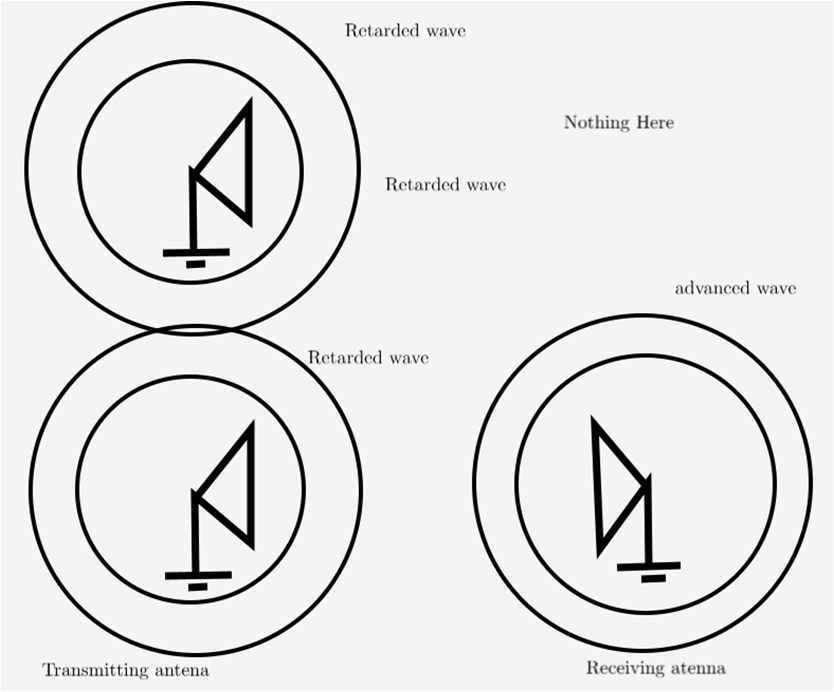
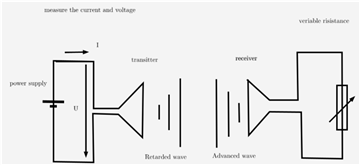
Assume the absorber theory is corrected, then we can measure the transmitter antenna impedance directivity diagram, which shows the future absorber distribution in each direction of the space. The measurement should use a short impulse, this way all the reflected waves still do not have enough time to come back. Figure 1 gives the picture of the experiment system. Figure 1 up-part shows in the system there is only a transmitter, and it sends a short impulse. Figure 1 down-part shows there is a receiver also. The receiver has a load which absorbs the energy sent from the transmitter antenna 1.
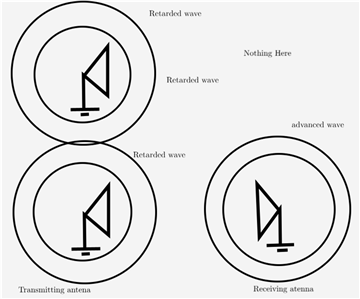
The above antenna system can be replaced as laser light source and detector. We can use the laser source to scan the whole space to find out the angle absorber distribution of corresponding light frequency.
In the following we assume that the absorber theory is correct. Hence the advanced potential is existent. For the mutual energy theorem there is a surface integral, the surface integral vanishes only when the two fields one is retarded, and the other is advanced. Hence in this situation the mutual energy theorem can be applied.
Assume there are two antennas, antenna 1 is a transmitter and antenna 2 is a receiver. They are put in empty space. Assume the electromagnetic field sent by the transmitter is  the electromagnetic field of the receiver is
 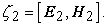 The current of the transmitter is
  , the current of the receiver is
  .
.  is caused by
  . Assume that
 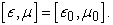 Here
Here  are permittivity and permeability.
  are in in empty space.
According to the mutual energy theorem [11-16,19-29] the sucked energy from the source by the advanced potential sent by the receiver is equal to the received energy i.e.,
 | (1) |
In the mutual energy theorem 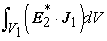 is the received energy of
  , we know that the transmitter or antenna 1 sends out energy hence the received energy of antenna 1 is negative. Hence
 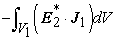 expresses the emitted energy of the transmitter or antenna 1.
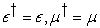
 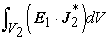 is the received energy of the receiver or antenna 2. The above formula did not consider the loss in the media, that means the media is lossless, i.e.,
 | (2) |
Where 
 . “*” is complex conjugate, “T” is matrix transpose. If Eq.(2) does not satisfy, the media is lossy, the above mutual energy formula need to be modified as 15, 16,
 | (3) |
Where  is the energy loss between the source and the load. According to the mutual energy theorem the
  is the current of the load which will send advanced potential. Hence in the above formula
  is advanced potential. This means the change of
  take place earlier than the change of the current
  . In the Eq.(3) we have considered that the surface integral vanishes,
 | (4) |
Where  is a big sphere surface with infinite radius R. Eq.(4) is the condition that Eq.(3) is established. Eq.(4) is established need the two fields
  and
and  one is retarded potential and another is advanced potential.
We know that, if we open our switch, the light is immediately sent out from the load (assume the load is a light bulb). We also know that the power station is far away from the load, the power station must offer the power a time earlier, then the load can have an immediate light.
Assume there is a source which can be a high frequency generator, or a source of microwave. There is a load. Between the source and load the wave can be transmitted. Assume the energy is transmitted from source by ether through power line, coaxial-cable, or two antennas one is a transmitter, and another is a receiver.
Assume the amount of load can be changed quickly, hence  is changed. That will cause the field
  to be changed, that in turn will course the sucked energy from
  to be changed. The change of
  will cause the output power of source change. We should be able to measure the change of the power of the source.
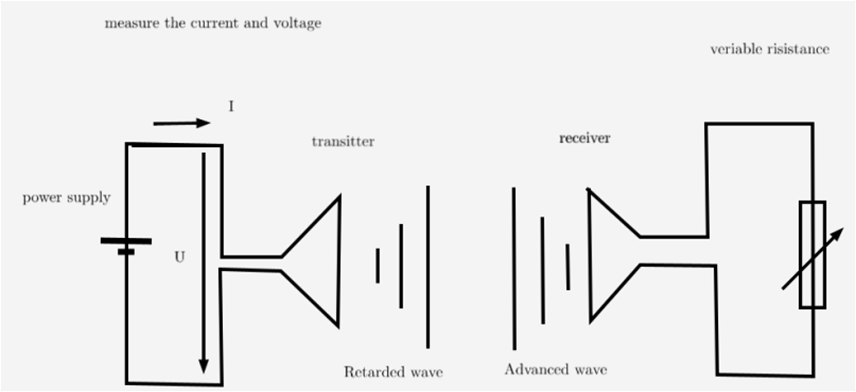
For example, we change the amount of load and measure the changes of the power of the source. If the changes of the source are correlated to the load and happens earlier than the change of the load, that means the signal can be transferred to the past and hence further prove that the advanced potential is existent. The following Figure 2 offers this kind of antenna system.
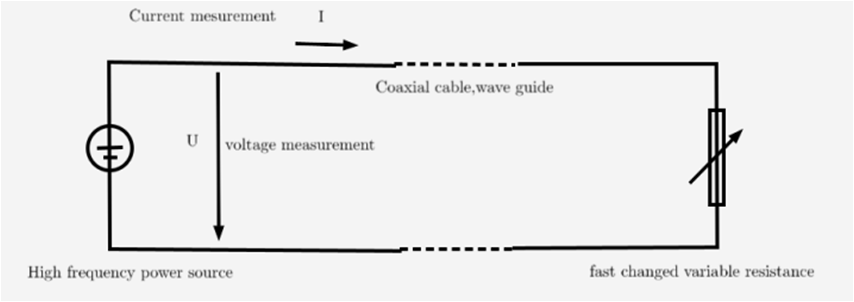
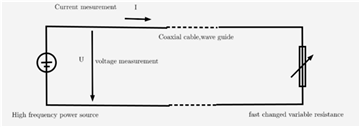
The two-antenna system of Figure 2 can be replaced by power line, coaxial cable, waveguide, or any other electromagnetic wave can be transferred, see Figure 3. The load is at the right end and is a variable resistance which can be changed very fast randomly. There is a high frequency power source on the left. The voltage and current can be measured to tell the output of the power source. Assume the cable has 2.5 miter. The changes of the power of the source should happens 9 ns before the change of the load in the right end. If this is true, The signal is sent to the past and there are advanced waves present.
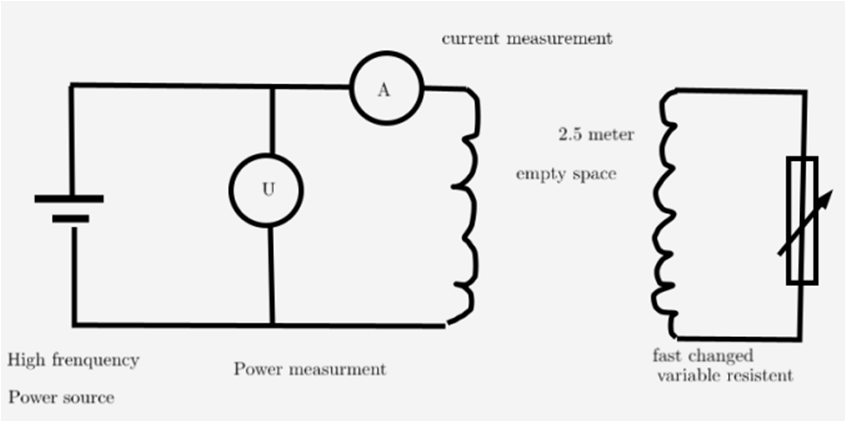
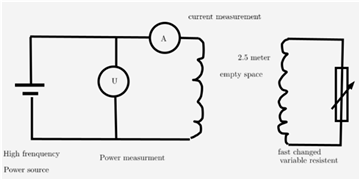
The above coaxial cable or waveguide can also be replaced as a transformer. The primary coil and the secondary coil of the transformer are separated 2.5 meter. We know that the secondary coil sucks the energy from the primary coil, and we know that if the load power in the secondary coil is changed the power of the first coil must be changed. Now the only thing we must do is test whether the source power change happens before the load change. See Figure 4.
The According to the author's electromagnetic field theory [19-29], the author has a new axiom of electromagnetic field theory. Radiation should not overflow the universe. This axiom is self-evident. Actually, nothing can overflow from the universe. Of course, electromagnetic waves cannot overflow the universe. The description of this axiom is:
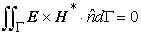 |
among Γ It is a sphere with an infinite radius. Assuming all current elements are near the origin.  ,
,  is the electromagnetic field of these current elements. The superposition principle is,
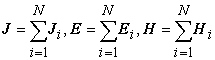 |
The radiation does not overflow the universe axiom is substituted into the above superposition principle to get the following self energy and mutual energy flow can not overflow the universe:
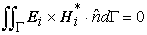 |
 |
The formula of self energy flow not overflowing the universe leads to the corresponding electromagnetic wave  and
and  maintain a phase difference of 90 degrees, which is a reactive power wave. This conclusion conflicts with Maxwell's electromagnetic theory. But this conclusion guarantees the law of conservation of energy flow [19-29],
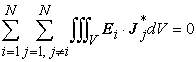 |
establishment. The establishment of this energy law also guarantees the author's theory of mutual energy and further proves the existence of advanced waves. If the electric and magnetic fields of the author's electromagnetic waves maintain a 90 degree phase difference instead of a 0 degree phase difference through experimental verification, it also proves the existence of the advanced wave.
According to the author's theory of electromagnetic field mutual energy, electromagnetic waves are reactive power waves. Therefore, the electric and magnetic fields maintain a phase difference of 90 degrees. We know that according to Maxwell's electromagnetic theory, the phase difference between electromagnetic waves and magnetic fields is 0 degrees, which means they are in phase. We know that under quasi-static conditions, the definition of a magnetic field and the curl of a vector potential are exactly the same. According to Biota's law, we know that the definition of a magnetic field is,
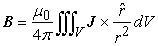 | (5) |
According to the magnetic vector potential,
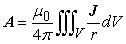 | (6) |
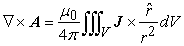 | (7) |
From this, we compared the two formulas (5) and (7) above and found that,
 | (8) |
According to this, Maxwell gave a new definition of magnetic field,
 |
“ ” means defined as, Maxwell uses the curl of the vector potential as the definition of the magnetic field, that is correct for quasi-static electromagnetic field theory. For electromagnetic wave, the vector potential become retarded potential,
 | (9) |
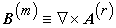 | (10) |
The superscript (m) represents Maxwell. The definition of this magnetic field can be referred to as the Maxwell magnetic field. Actually, there is a difference between the magnetic field defined by Maxwell and the real magnetic field. that is because
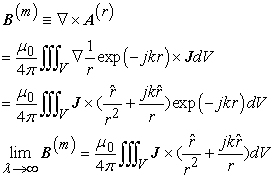 | (11) |
We see the first part
 | (12) |
This part is consistent with the definition of magnetic quasi-static magnetic field. But the second part is completely different from magnetic quasi-static magnetic fields. The author believes that the second part of the magnetic field must be corrected,
 | (13) |
 |
 |
The above formula indicates that correction is necessary for far-field magnetic fields. The correction factor is  The corrected total magnetic field is,
 | (14) |
The above is the author's reasonable magnetic field expression. For plane wave magnetic field,
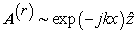 | (15) |
 to be proportional, this symbol is only interested in the direction of the phase and vector direction. For plane wave,
 |
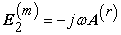 |
So Maxwell electromagnetism can be written as,
 |
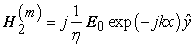 |
The above equation indicates that the magnetic field defined by Maxwell is in phase. After correcting the above electromagnetic field,
 |
 |
The author believes that 
 is the true electromagnetic field, which needs to be corrected using
  to the magnetic field defined by Maxwell. In this way, according to the author's electromagnetic field theory, the magnetic field and electric field maintain a phase difference of 90 degrees. The author believes that the magnetic field defined by the author is a true magnetic field, while the magnetic field defined by Maxwell is actually just the curl of the magnetic vector potential. The curl of a magnetic vector potential is indeed a true magnetic field under magnetic quasi-static or quasi-static conditions, but for a retarded magnetic vector potential that satisfies the Maxwell equation, the curl of a magnetic vector potential is no longer a true magnetic field. For planar electromagnetic waves or far-field magnetic fields of antennas, it is necessary to correct the magnetic field defined by Maxwell using a correction factor
To prove the author's definition of magnetic field is correct. The author believes that the Hall effect magnetic field should be used to measure the magnetic field of electromagnetic waves. The author believes that the magnetic field measured by the Hall effect magnetic field measuring instrument is the true magnetic field. This is because the Hall effect uses Lorentz force to measure magnetic fields, rather than the so-called curl of magnetic vector potential. The author believes that the original definition of a magnetic field is the Lorentz force formula or Biota's law. The curl of a magnetic vector potential as the definition of a magnetic field is an extended definition. This definition only holds for magnetic quasi-static and quasi-static electromagnetic fields. There is an error in the magnetic field of electromagnetic waves! Therefore, the Hall effect has a certain representativeness in the measurement of magnetic fields. The author believes that the magnetic field measured using a magnetic ring corresponds to the magnetic field defined by Maxwell. Because the magnetic field measured by the magnetic ring circuit is related to the curl of the magnetic vector potential A.
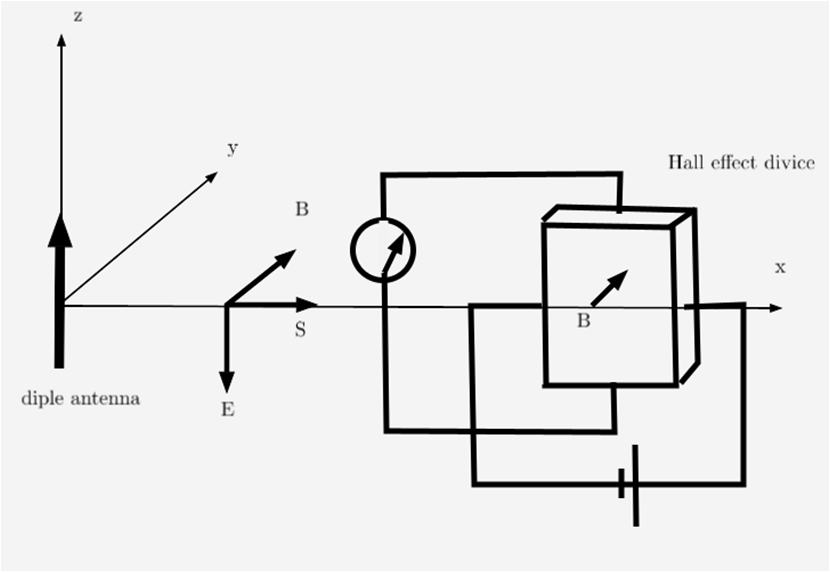
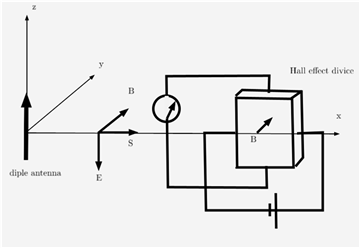
Figure 5 shows a device for measuring the magnetic field of the electromagnetic waves using the Hall effect. This device may be affected by the electric field of the electromagnetic wave, and efforts should be made to counteract the influence of the electric field as much as possible, such as rotating the Hall effect device 90 degrees or finding ways to counteract the influence of the electric field from the circuit.
We should measure three quantities,
(1) The induced electromotive force of a dipole receiving antenna. Assuming that the direction of the dipole antenna is perpendicular to the propagation direction of the electromagnetic wave. The propagation direction is x, and the dipole is in the z direction. The electric field is in the  direction, and the magnetic field is in the y direction.
(2) Measure the magnetic field with a ring coil, with the normal direction of the coil pointing towards the y-axis.
(3) Measure the magnetic field using a Hall effect measuring instrument.
According to the author's judgment, the magnetic field measured by a ring coil and the electric field measured by the dipole antenna electromotive force are in phase. However, the phase of the magnetic field measured using the Hall effect has a phase correction factor of  If the author's judgment is true, then the magnetic field defined by the author is correct. If the opposite is true, then Maxwell's definition of a magnetic field is correct. The author's judgment is incorrect.
For example, we can use electromagnetic waves with a frequency of 1Ghz, which already belong to the far-field region at a distance of one meter (approximately three wavelengths) from the transmitting antenna. The frequency upper limit of the Hall effect magnetic field measurement instrument is approximately 1GHz. The frequency line of dipole antennas and coils can easily exceed 1 GHz. The transmission power can be taken as 1 watt. The average power density at a distance of 1 meter is,
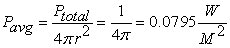 |
We know,
 |
η= 377 is the vacuum impedance, we know
 |
Hence,
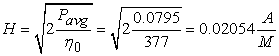 |
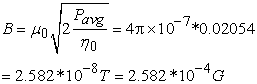 |
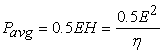 |
 |
There is no problem with measuring the electric field. But the magnetic field is relatively weak. If we increase the emission power to 10000 watts, the magnetic field can be increased by 100 times, and the magnetic field strength is 2.582 * 10 ^ (-2) G. Here G means Gauss.
In addition, we have chosen a frequency of 1GHz, which is also relatively high, making it difficult to measure such a high frequency using the Hall effect. If the frequency is reduced by 100 times, the frequency is 10MHz. The wavelength be increased by 100 times. We must measure at a distance of 100 meters to achieve the far-field. At this point, the average power density  needs to be reduced by 10000 times. This cancels out the effect of increasing power by 10000 times. The magnetic induction intensity B is still
  The measurement of this magnetic field corresponds to the Hall effect, which remains a significant challenge.
If the sensitivity of the Hall effect instrument still cannot meet the requirements, of course, we can also consider placing it in a waveguide, coaxial line, or optical fiber, as there may also be issues with the definition of the magnetic field of electromagnetic waves there.
Some people say that we can use SQUID to measure. The problem is that SQUID measurement is a small ring coil. According to the author's electromagnetic theory, the small ring coil measures the magnetic field defined by Maxwell. Such magnetic field measurements are meaningless. The measurement of SQUID requires shielding of the environmental magnetic field. If the measurement of SQUID is changed from a small coil to a straight wire, according to the author's electromagnetic theory, the magnetic field of electromagnetic waves should be measured using a value wire instead of a small ring coil. But this also involves a new definition of magnetic field. This requires readers to first accept the author's electromagnetic theory. Therefore, the measurement of SQUID may still be undesirable.
At present, the Hall effect is widely recognized for measuring magnetic fields. The Hall effect is a magnetic field defined by the Lorentz force. This is different from the definition of measuring a magnetic field with a small ring coil. The small ring coil measures the curl of the magnetic vector potential.
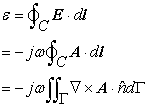 |
Considering 
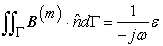 |
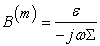 |
Among Σ Is the area of the surface surrounded by the coil. From above, it can be clearly seen that the magnetic field  measured by the small ring coil is defined by the curl of the vector potential. This magnetic field is defined by Maxwell rather than the true magnetic field that the author believes.
If we prove that Maxwell's definition of the magnetic field of electromagnetic waves is incorrect, then it also proves that the author's electromagnetic field theory is correct. This indirectly proves that the author's theory about the existence of advanced waves is also correct.
The author only proposed the idea of these experimental verifications in this article, and did not complete these experimental verifications. The author hopes that qualified readers can complete these experiments.
We have proposed one method which can check whether the absorber theory of Wheeler and Feynman is correct, or the emission theory of Ritz is correct, which in turn can tell us whether advanced waves are existent or not. Assuming the absorber theory is correct, it is possible for us to offer methods to measure the advance wave and send the current signal to the past. The above methods are all classical methods that do not need any complicated entangled quantum effects and hence should be very easy to be tested.
The author introduces a method for measuring the magnetic field of electromagnetic waves. Measure the phase difference between electric field and magnetic field of the electromagnetic waves. According to the author's electromagnetic theory, the phase difference is 90 degrees. According to Maxwell's electromagnetic theory, the phase difference is 0, or in phase. The author hopes to have a very sensitive Hall effect measuring instrument that can measure the magnetic field of electromagnetic waves. If the measurement of magnetic field is based on a small magnetic ring, it is not feasible because the small magnetic ring measures the curl of the magnetic vector potential. The author believes that it is incorrect to define a magnetic field as the curl of a magnetic vector potential for electromagnetic waves. A small magnetic ring measures the curl of a magnetic vector potential. The curl of a magnetic vector potential as a magnetic field is only valid for static electromagnetic theory. for electromagnetic waves, it is incorrect to define the curl of a magnetic vector potential as a magnetic field.
| [1] | J. A. Wheeler and R. P. Feynman, “Interaction with the absorber as the mechanism of radiation,” Rev. Mod. Phys., vol. 17, p. 157, April 1945. | ||
| In article | View Article | ||
| [2] | J. A. Wheeler and R. P. Feynman, “Classical electrodynamics in terms of direct interparticle action,” Rev. Mod. Phys., vol. 21, p. 425, July 1949. | ||
| In article | View Article | ||
| [3] | J. Cramer, “The transactional interpretation of quantum mechanics,” Reviews of Modern Physics, vol. 58, pp. 647-688, 1986. | ||
| In article | View Article | ||
| [4] | J. Cramer, “An overview of the transactional interpretation,” International Journal of Theoretical Physics, vol. 27, p. 227, 1988. | ||
| In article | View Article | ||
| [5] | J. Cramer, “The transactional interpretation of quantum mechanics and quantum nonlocality,” https://arxiv.org/abs/1503.00039, 2015. | ||
| In article | |||
| [6] | Mathematical Foundations of Quantum Theory, edited by A.R. Marlow, Academic Press, 1978. P, 39 lists seven experiments: double slit, microscope, split beam, tilt-teeth, radiation pattern, one-photon polarization, and polarization of paired photons. | ||
| In article | |||
| [7] | Walborn, S. P.; et al. (2002). "Double-Slit Quantum Eraser”. Phys. Rev. A. 65 (3): 033818. arXiv:quant-ph/0106078Freely accessible. Bibcode:2002PhRvA..65c3818W. | ||
| In article | View Article | ||
| [8] | Yaron Bromberg, Ori Katz, Yaron Silberberg, Ghost imaging with a single detector, https://arxiv.org/abs/0812.2633, 2008. | ||
| In article | |||
| [9] | John G. Cramer, Nick Herbert, An Inquiry into the Possibility of Nonlocal Quantum Communication, arXiv:1409.5098, 2015. | ||
| In article | |||
| [10] | W. J. Welch, “Reciprocity theorems for electromagnetic fields whose time dependence is arbitrary,” IRE trans. On Antennas and Propagation, vol. 8, no. 1, pp. 6-73, January 1960. | ||
| In article | View Article | ||
| [11] | S. ren Zhao, “The application of mutual energy theorem in expansion of radiation fields in spherical waves,” ACTA Electronica Sinica, P.R. of China, vol. 15, no. 3, pp. 88-93, 1987. | ||
| In article | |||
| [12] | S. Zhao, “The simplification of formulas of electromagnetic fields by using mutual energy formula,” Journal of Electronics, P.R. of China, vol. 11, no. 1, pp. 73-77, January 1989. | ||
| In article | |||
| [13] | S. Zhao, “The application of mutual energy formula in expansion of plane waves,” Journal of Electronics, P. R. China, vol. 11, no. 2, pp. 204-208, March 1989. | ||
| In article | |||
| [14] | S. ren Zhao, K. Yang, K. Yang, X. Yang, and X. Yang. (2015) The modified poynting theorem and the concept of mutual energy. [Online]. Available: http://arxiv.org/abs/1503.02006. | ||
| In article | |||
| [15] | Shuang-ren Zhao, Kevin Yang, Kang Yang, Xingang Yang, Xintie Yang, The principle of the mutual energy, arXiv:1606.08710, 2016. | ||
| In article | |||
| [16] | Shuang-ren Zhao, Kevin Yang, Kang Yang, Xingang Yang, Xintie Yang, The mutual energy current interpretation for quantum mechanics, arXiv:1608.08055, 2016. | ||
| In article | |||
| [17] | W. Ritz, “Recherches critiques sur l’electrodynamique generale,” Annales de Chimie et de Physique, vol. 13, pp. 145-275, 1908. | ||
| In article | |||
| [18] | W. Ritz, “Recherches critiques sur les theories electrodynamiques de cl. maxwell et de h.-a. lorentz,” Archives des Sciences physiques et naturelles, vol. 36, p. 209, 1908. | ||
| In article | |||
| [19] | Shuang ren Zhao. A new interpretation of quantum physics: Mutual energy flow interpretation. American Journal of Modern Physics and Application, 4(3): 12-23, 2017. | ||
| In article | |||
| [20] | Shuang-ren Zhao, Photon Can Be Described as the Normalized Mutual Energy Flow. Journal of Modern Physics Vol.11 No.5, May 202. https://www.scirp.org/journal/paperinformation.aspx?paperid=100036. | ||
| In article | |||
| [21] | Shuang-ren Zhao, A solution for wave-particle duality using the mutual energy principle corresponding to Schrödinger equation, https://hal.science/hal-02270483v1. | ||
| In article | |||
| [22] | Shuang-ren Zhao, Huygens principle based on mutual energy flow theorem and the comparison to the path integral, Physics Tomorrow Letter, November, 2020. https://hal.science/hal-02270471. | ||
| In article | |||
| [23] | shuang-ren Zhao, Solve the Maxwell's equations and Schrodinger's equation but avoiding the Sommerfeld radiation condition, Theoretical Physics Letters 2022 ° 26(04) ° 10-05. | ||
| In article | |||
| [24] | Shuang-ren Zhao. Mutual stress flow theorem of electromagnetic field and extension of newton's third law. Theoretical Physics Letters, 10(7), 2022. https://hal.science/hal-03221429v1. | ||
| In article | |||
| [25] | Shuang ren Zhao. The paradox that induced electric field has energy in Maxwell theory of classical electromagnetic field is shown and solved. International Journal of Physics, 10(4): 204-217, 2022. | ||
| In article | View Article | ||
| [26] | Shuang ren Zhao. The theory of mutual energy flow proves that macro-scopic electromagnetic waves are composed of photons. International Journal of Physics, 10(5), 2022. http://article.internationaljournalofphysics.com/pdf/ijp-10-4-4.pdf. | ||
| In article | |||
| [27] | Shuang-ren Zhao, The Contradictions in Poynting Theorem and Classical Electromagnetic Field Theory, International Journal of Physics, 2022, Vol. 10, No. 5, 242-251. | ||
| In article | View Article | ||
| [28] | Shuang-ren Zhao, Energy Flow and Photons from Primary Coil to Secondary Coil of Transformer, International Journal of Physics. 2023, 11(1), 24-39. | ||
| In article | View Article | ||
| [29] | Shuang-ren Zhao Energy Conservation Law and Energy Flow Theorem for Transformer, Antenna and Photon International Journal of Physics. 2023, 11(2), 56-66. | ||
| In article | |||
Published with license by Science and Education Publishing, Copyright © 2023 Shuang-ren Zhao
 This work is licensed under a Creative Commons Attribution 4.0 International License. To view a copy of this license, visit
http://creativecommons.org/licenses/by/4.0/
This work is licensed under a Creative Commons Attribution 4.0 International License. To view a copy of this license, visit
http://creativecommons.org/licenses/by/4.0/
| [1] | J. A. Wheeler and R. P. Feynman, “Interaction with the absorber as the mechanism of radiation,” Rev. Mod. Phys., vol. 17, p. 157, April 1945. | ||
| In article | View Article | ||
| [2] | J. A. Wheeler and R. P. Feynman, “Classical electrodynamics in terms of direct interparticle action,” Rev. Mod. Phys., vol. 21, p. 425, July 1949. | ||
| In article | View Article | ||
| [3] | J. Cramer, “The transactional interpretation of quantum mechanics,” Reviews of Modern Physics, vol. 58, pp. 647-688, 1986. | ||
| In article | View Article | ||
| [4] | J. Cramer, “An overview of the transactional interpretation,” International Journal of Theoretical Physics, vol. 27, p. 227, 1988. | ||
| In article | View Article | ||
| [5] | J. Cramer, “The transactional interpretation of quantum mechanics and quantum nonlocality,” https://arxiv.org/abs/1503.00039, 2015. | ||
| In article | |||
| [6] | Mathematical Foundations of Quantum Theory, edited by A.R. Marlow, Academic Press, 1978. P, 39 lists seven experiments: double slit, microscope, split beam, tilt-teeth, radiation pattern, one-photon polarization, and polarization of paired photons. | ||
| In article | |||
| [7] | Walborn, S. P.; et al. (2002). "Double-Slit Quantum Eraser”. Phys. Rev. A. 65 (3): 033818. arXiv:quant-ph/0106078Freely accessible. Bibcode:2002PhRvA..65c3818W. | ||
| In article | View Article | ||
| [8] | Yaron Bromberg, Ori Katz, Yaron Silberberg, Ghost imaging with a single detector, https://arxiv.org/abs/0812.2633, 2008. | ||
| In article | |||
| [9] | John G. Cramer, Nick Herbert, An Inquiry into the Possibility of Nonlocal Quantum Communication, arXiv:1409.5098, 2015. | ||
| In article | |||
| [10] | W. J. Welch, “Reciprocity theorems for electromagnetic fields whose time dependence is arbitrary,” IRE trans. On Antennas and Propagation, vol. 8, no. 1, pp. 6-73, January 1960. | ||
| In article | View Article | ||
| [11] | S. ren Zhao, “The application of mutual energy theorem in expansion of radiation fields in spherical waves,” ACTA Electronica Sinica, P.R. of China, vol. 15, no. 3, pp. 88-93, 1987. | ||
| In article | |||
| [12] | S. Zhao, “The simplification of formulas of electromagnetic fields by using mutual energy formula,” Journal of Electronics, P.R. of China, vol. 11, no. 1, pp. 73-77, January 1989. | ||
| In article | |||
| [13] | S. Zhao, “The application of mutual energy formula in expansion of plane waves,” Journal of Electronics, P. R. China, vol. 11, no. 2, pp. 204-208, March 1989. | ||
| In article | |||
| [14] | S. ren Zhao, K. Yang, K. Yang, X. Yang, and X. Yang. (2015) The modified poynting theorem and the concept of mutual energy. [Online]. Available: http://arxiv.org/abs/1503.02006. | ||
| In article | |||
| [15] | Shuang-ren Zhao, Kevin Yang, Kang Yang, Xingang Yang, Xintie Yang, The principle of the mutual energy, arXiv:1606.08710, 2016. | ||
| In article | |||
| [16] | Shuang-ren Zhao, Kevin Yang, Kang Yang, Xingang Yang, Xintie Yang, The mutual energy current interpretation for quantum mechanics, arXiv:1608.08055, 2016. | ||
| In article | |||
| [17] | W. Ritz, “Recherches critiques sur l’electrodynamique generale,” Annales de Chimie et de Physique, vol. 13, pp. 145-275, 1908. | ||
| In article | |||
| [18] | W. Ritz, “Recherches critiques sur les theories electrodynamiques de cl. maxwell et de h.-a. lorentz,” Archives des Sciences physiques et naturelles, vol. 36, p. 209, 1908. | ||
| In article | |||
| [19] | Shuang ren Zhao. A new interpretation of quantum physics: Mutual energy flow interpretation. American Journal of Modern Physics and Application, 4(3): 12-23, 2017. | ||
| In article | |||
| [20] | Shuang-ren Zhao, Photon Can Be Described as the Normalized Mutual Energy Flow. Journal of Modern Physics Vol.11 No.5, May 202. https://www.scirp.org/journal/paperinformation.aspx?paperid=100036. | ||
| In article | |||
| [21] | Shuang-ren Zhao, A solution for wave-particle duality using the mutual energy principle corresponding to Schrödinger equation, https://hal.science/hal-02270483v1. | ||
| In article | |||
| [22] | Shuang-ren Zhao, Huygens principle based on mutual energy flow theorem and the comparison to the path integral, Physics Tomorrow Letter, November, 2020. https://hal.science/hal-02270471. | ||
| In article | |||
| [23] | shuang-ren Zhao, Solve the Maxwell's equations and Schrodinger's equation but avoiding the Sommerfeld radiation condition, Theoretical Physics Letters 2022 ° 26(04) ° 10-05. | ||
| In article | |||
| [24] | Shuang-ren Zhao. Mutual stress flow theorem of electromagnetic field and extension of newton's third law. Theoretical Physics Letters, 10(7), 2022. https://hal.science/hal-03221429v1. | ||
| In article | |||
| [25] | Shuang ren Zhao. The paradox that induced electric field has energy in Maxwell theory of classical electromagnetic field is shown and solved. International Journal of Physics, 10(4): 204-217, 2022. | ||
| In article | View Article | ||
| [26] | Shuang ren Zhao. The theory of mutual energy flow proves that macro-scopic electromagnetic waves are composed of photons. International Journal of Physics, 10(5), 2022. http://article.internationaljournalofphysics.com/pdf/ijp-10-4-4.pdf. | ||
| In article | |||
| [27] | Shuang-ren Zhao, The Contradictions in Poynting Theorem and Classical Electromagnetic Field Theory, International Journal of Physics, 2022, Vol. 10, No. 5, 242-251. | ||
| In article | View Article | ||
| [28] | Shuang-ren Zhao, Energy Flow and Photons from Primary Coil to Secondary Coil of Transformer, International Journal of Physics. 2023, 11(1), 24-39. | ||
| In article | View Article | ||
| [29] | Shuang-ren Zhao Energy Conservation Law and Energy Flow Theorem for Transformer, Antenna and Photon International Journal of Physics. 2023, 11(2), 56-66. | ||
| In article | |||