Objective: This study's objective was to assess whether halitosis had a psychosocial impact among a sample of the Saudi population. Material and Methods: This cross-sectional survey of 320 randomly selected residents’ adults in Qassim province, Kingdom of Saudi Arabia was conducted using a distributed questionnaire in dense population facilities. Results: Half (50.0%) of the participants in this study expressed concern about halitosis. The participants that expressed concern about halitosis were mostly in the 25- to 27-year-old age group. Halitosis seems to be threatening to friendships, relationships, and marriages. Discussion: Prevalence of oral halitosis was reported by 17% of the male and 16% of the female in this study, which lower than the prevalence of halitosis in other studies. This study reported some obstacle that halitosis patient has: the shyness of speech and inability to meet other people because of this disease. A survey of other studies reported that 34% of halitosis participants had made them hesitant to speak to others, and 12.6% completely avoids others. Conclusion: Halitosis could have a socially crippling effect that could affect people's life. Participants who were affected by the conditions and aware of it most likely will seek treatment.
Halitosis, a common reason for dentist consultation raises a lot of concern among sufferer as it negatively impacts on daily life activities like communication with other persons 1, 2, 3 self-esteem, self-confidence, social and intimate relationship like dating and marriage, employability, and career aspirations. 4, 5 It causes embarrassment, inhibits social interaction, and also decreases quality of life among afflicted individuals. The effect of halitosis extends beyond the afflicted individuals, as it is also a source of embarrassment for relatives and friends of individuals afflicted with halitosis. These effects alongside erroneous beliefs and worldwide spread stand out halitosis and concern about it as a major health issue. 5
The concern about halitosis triggers behavioral reaction namely increased oral self-care, self-consciousness and social isolation, mostly because of social, psychological, and relationship impediments. 4 The fact that oral sources are majorly responsible for bad breath complaints 6 indicates that oral self-care and lifestyle are the main contributors to the onset of this condition and early expected behavioral response would be changes in an individual's oral hygiene practices. Although, there has been established association between inadequate oral hygiene practices and halitosis, 7 the influence of halitosis on the social lifestyle appears not to have been investigated scientifically in the literature.
This study's objective was to assess whether halitosis had a psychosocial impact among a sample of the Saudi population.
This study is a cross-sectional study conducted in the Qassim region. A questionnaire was prepared to assess whether halitosis influences psychosocial life among the Saudi population living in the Qassim region. The questionnaire is self-reported and targeted participants from the age of 20 to 70 years. A cover letter was added to the questionnaire to inform the participants about the survey's objectives—all participants of the study obtained informed consent.
The questionnaire was distributed in three large malls in the city. The first four questionnaires assessed demographic information, including age, gender, qualification, marital status, and region of origin. The remaining 17 questions ended with a dichotomous yes or no response assessed dentist visit, tooth brushing, worry about symptoms of oral diseases, satisfaction with the appearance of teeth, and smoking behaviors. Two questions were assessed if respondents visited the dentist and visited the dentist only when they have a toothache. The eight questions assessed whether they brush their teeth twice-daily or more, whether their gums bleed while brushing, whether they have never being taught the ways to brush their teeth by professionals, their opinion about the status of their despite daily tooth brushing, their feeling about proper tooth brushing about strong brushing strokes, their feeling about the amount of time spent on tooth brushing, their thought about teeth cleaning without toothpaste, and their opinion about prevention of gum disease with tooth brushing alone. Two questions assessed the use of dental floss and mouthwash regularly. Two questions assessed the worry about the color of their gum and teeth. The question that assessed concern about halitosis was as follows: “Do you worry about having bad breath?” One question assessed whether they are satisfied with the appearance of their teeth. One question on smoking was as follows: “Are you a smoker?” The questionnaires were hand-delivered and completed on the parade ground.
Data were analyzed by using statistical packages for the social science version. Data were subjected to descriptive statistics like frequencies, percentages, cross-tabulation, and chi-square statistics with odd ratio (OD) and confidence interval (CI) reported. The higher frequencies were considered an influence in this study. The results were presented in tabular and graphic forms.
450 questionnaires were distributed among male and female participants. 361 were return back with an overall response rate 80%. 45 questionnaires were excluded because of incomplete entries leaving behind 320 questionnaires for final data analysis. Age Analysis. Age interval was divided in this study into five categories (15-20, 20-30,30-40, 40-50 and more than 60 years ) most of the respondents (39.1%) were between age of 20-30. Participants’ detailed demographic characteristics are presented in Table 1.
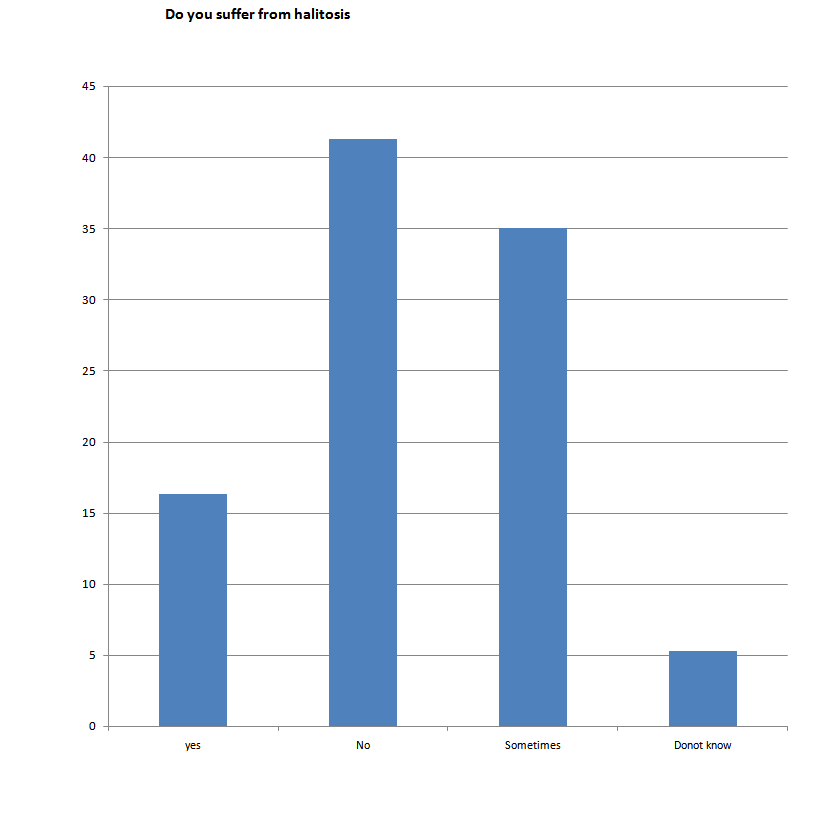
In total, the answers to this question of the husband/wife of respondents who suffered from halitosis were, 10.3% said yes, his/her husband/wives suffered from halitosis, and 19.7% Did not report 13.8% reported sometimes they suffered from halitosis. 12% of the participants said yes, there was an effect in relation due to halitosis, while 29% said no, there wan not affect. One Participant out of 42 in this study had a divorce due to halitosis; 6% have separated from each other due to this condition.
Figure 1 shows a pie chart of the distribution of answers to the effect of halitosis on marriage.

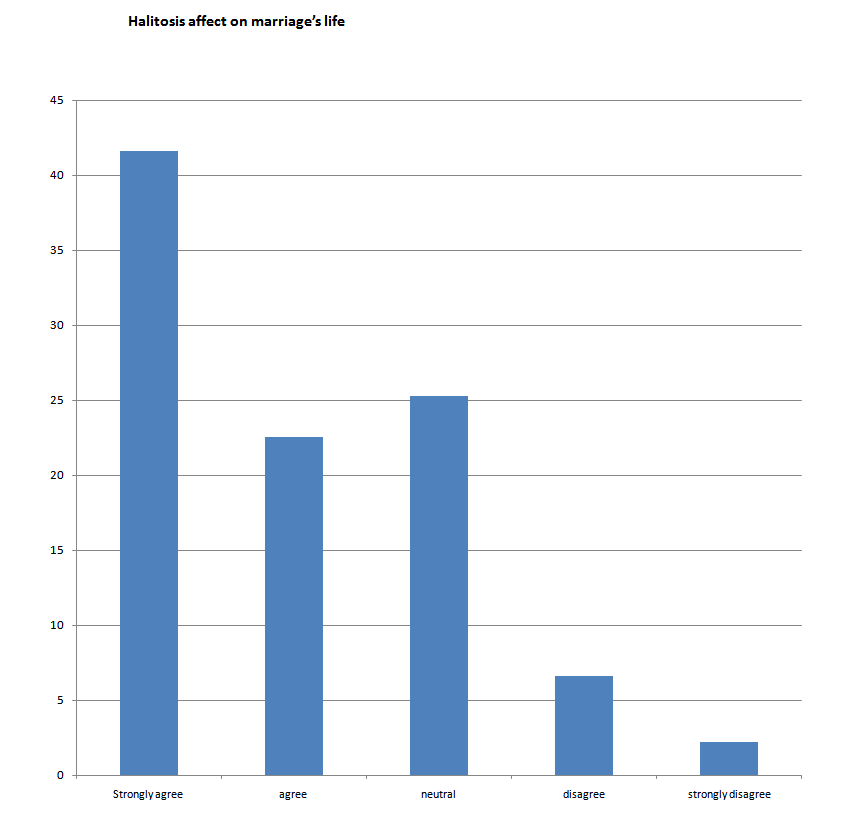
73% of respondents agreed there is a difficulty continuing a conversation with someone who had halitosis, while 19.1% are neutral with the condition, and only 4% of participants do not see it as a problem. When looking at the perception of whether halitosis could affect patient life, 64% Agreed that there is an actual marriage effect, 25.3% were neutral about it, while 9% do not see it as a problem—detailed description in Figure 2.

36% of the respondents knew that they have a terrible breath by themselves, while 64 never realized this problem until they were informed by their friends, families, or doctors.
In exploring the impact of halitosis on psychosocial life, 15.3% of the affected individuals were shy of having halitosis, other 15.3% reported that it indeed problem bothering them while they spoke with others and made avoid facing people, 11% reported it causing a problem with there spouses. Few participants (34%) looked out for help to treat this condition, while the majority of them (65%) were not aware of halitosis treatment. In total, the answers to this question of "If your search about treatment, Is there any improvement after the treatment?" was 320,68(21.3%) said yes was an improvement, 13(4.1%) said no, 38(11.9%) said somewhat, 44(13.8%) said did not go, and the missing answers were 157(49.1%)
Of the participants affected with halitosis condition and went for treatment, 21% of them reported an improvement, 11% were not sure if there is an improvement, while 4% did not see any improvement. Half of the participants in the study, 49%, did seek treatment.
10.3% of the participants have indicated that their spouses has a halitosis and it truly affecting their marriage life. Out of 42 in this study, one participant had a divorce due to halitosis; 6% have separated from each other due to this condition.
Prevalence of oral halitosis was reported by 17% of the male and 16% of the female in this study, which is much lower than the prevalence of halitosis in other studies 13, 14, 16. These studies were based on objective measurement while assessing their oral halitosis, while this study was based on the subjective method.
In this study, some of the respondents knew that they had oral halitosis by themself, 35.9%, while a minority of them has been told by their friends 14.1%, small percent knew from their doctor. Other Study 14 ensure that patient cannot identify his/her halitosis by his/her self because mouth and nose are one structure and he cannot felt that lousy odor by his self except if he does other measurements.
In this study, 54% of the respondents felt some difficulties speaking with somebody with oral halitosis. Clinical experience has proven that halitosis patients have more difficulties in making and maintaining friendships and relationships, making friends begin to move away if not treated 17.
This study reported some obstacle that halitosis patient has: shyness of speech and cannot meet other people because of this disease. A survey of other studies reported that 34% of participants with halitosis had made them hesitant to speak to others, and 12.6% completely avoids others 18. Halitosis can be considered as a crippling social problem 19, a social impediment that causes social disharmony, social embarrassment, and the social barrier between themselves and their friends, relatives, partners, or colleagues at work.
34.1% of the halitosis patient reported that they were seeking a treatment regarding this disease, while 7.2 of them never went to the doctor seeking treatment. Proper treatment of halitosis can give good results, restoring a healthy, confident smile to many patients' faces. Patient's satisfaction with halitosis oral hygiene therapy leads to improvement in social life 20. Ineffective treatment leads to multiple visits to the dentist or going to another doctor, and to ultimately to withdrawal from social activity.21.3% of the halitosis patient in this study felt some improvement after treatment, while a minority of them, 4%, did not felt that.
While asking about halitosis effect on marriage life, most of the participants in this study, 41,6%, agreed that halitosis played an important factor in marriage life. Almost half of the married respondents, 44%, sometimes feel the bad oral breath from their partner, and 12% of them reported that this foul odor would affect their lives as husbands. A small percent of them, 3%, felt that divorce might be a primary reason for halitosis. "In the Talmud" (a collection of ancient rabbinical writings that provide the fundamental underpinnings for the Jewish faith), bad breath is considered a serious disability, particularly regarding spouses: it states that lousy breath is sufficient grounds for divorce! Throughout the world, lousy breath continues to be a significant impediment between couples. Since Israeli divorce law leans on religious courts, having a spouse with bad breath can, to this day, be cited as grounds for divorce 16.
Oral halitosis had a psychosocial impact that could affects friendships, relationships, and marriages. Male is at more chance to be affected with this condition than female. Most of the participant strongly agreed that halitosis is a socially crippling effect. 34.1% of the halitosis patient reported that they were seeking a treatment regarding this disease.
| [1] | Innocent-Ituah I. Halitosis: hindrance or hint. J Miss state Med Assoc 2009 Dec; 50(12): 422-25. | ||
| In article | |||
| [2] | Pramod JR. Textbook of oral Medicine. 2nded. New Delhi: JP Borthers; 2005. P>81-5. | ||
| In article | View Article | ||
| [3] | Van Steenberghe D. Breath malodor: a step-by-step approach. Coppenhagen,Quintessence books, 2004. Scully C, Rosenberg M. Halitosis. Dent Update. 2003 May; 30(4): 205-10. | ||
| In article | View Article PubMed | ||
| [4] | Sanz M, Roldan S, Herrera D. Fundmentals of Breath Malodour. J Contemp DentPract 2001 Nov 15; 2(4): 1-17. | ||
| In article | View Article | ||
| [5] | Haraszthy VI, Zambon JJ, Sreenivasan PK, Zambon MM, Gerber D, Rego R, Parker C.Identification of oral bacterial species associated with halitosis. J Am Dent Assoc. 2007 Aug; 138(8): 1113-20. | ||
| In article | View Article PubMed | ||
| [6] | Ayres KMS, Colquhoum AUK. Halitosis: causes, diagnosis, and Treatment. New Zeal Dent J 1998; 94: 156-60 | ||
| In article | |||
| [7] | Tonzetich J. Production and origin of oral malodor: a review of mechanisms and methods of analysis. J Periodontol. 1977 Jan; 48(1): 13-20. | ||
| In article | View Article PubMed | ||
| [8] | Washio J, Sato T, Koseki T, Takahashi N. Hydrogen sulfide-producing bacteria in tongue biofilm and their relationship with oral malodour. J Med Microbiol. 2005 Sep; 54(Pt 9): 889-95. | ||
| In article | View Article PubMed | ||
| [9] | Yaegaki K, Coil JM.Examination, classification and treatment of halitosis; clinical perspectives. J Can Dent Assoc. 2000; 66: 257-261. | ||
| In article | |||
| [10] | Preti, G Clark L. Non-oral etiologies of malodor and altered chemoensation . J periodontal 1992; 62: 487-9. | ||
| In article | |||
| [11] | Newman MG, Takie HH, Carranza FA. Clinical periodontology 10th ed. Noida: sunders: 2009. P.330-42. | ||
| In article | |||
| [12] | Takashi Zaitsu, Masayuki Ueno, Kayoko Shinada, Fredrick A Wright and Yoko Kawaguchi, Social anxiety disorder in genuine halitosis Patients, 2011; 9: 1-2. | ||
| In article | View Article PubMed | ||
| [13] | Campisi G, Musciotto A, Di Fede O, Di Marco V, Craxì A. Halitosis: could it be more than mere bad breath? Intern Emerg Med. 2011 Aug; 6(4): 315-9. | ||
| In article | View Article PubMed | ||
| [14] | Eldarrat A, Alkhabuli J, Malik A.The Prevalence of Self-Reported Halitosis and Oral Hygiene Practices among Libyan Students and Office Workers. Libyan J Med. 2008 Dec 1; 3(4): 170-6. | ||
| In article | View Article PubMed | ||
| [15] | Almas K, Al-Hawish A, Al-Khamis W. Oral hygiene practices, smoking habit, and self-perceived oral malodor among dental students. J Contemp Dent Pract. 2003; 15: 77-90. | ||
| In article | View Article | ||
| [16] | Shifman A, Orenbuch S, Rosenberg M. Bad Breath [+ or -] A Major Disability According to the Talmud. IMAJ 2002; 4:843-845 | ||
| In article | |||
| [17] | Hine MK. Halitosis. J Am Dent Assoc 1957 July; 55(1): 3746. | ||
| In article | View Article PubMed | ||
| [18] | Ashri N. Self-assessment of halitosis among diabetic Saudi female patients. Official Journal of the Egyptian Dental Association 2007; 53(1.2). | ||
| In article | |||
| [19] | Krespi YP, Shrime MG, Kacker A. The relationship between oral malodour and volatile sulfur compound-producing bacteria. Otolaryngol Head Neck Surg. 2006; 135(5): 671-676. | ||
| In article | View Article PubMed | ||
| [20] | Kishi M, Abe A, Yonemitsu M. Relationship between the SF36 questionnaire and patient's satisfaction following halitosis therapy. Oral Dis. 2005; 11 Suppl 1: 89-91. | ||
| In article | View Article PubMed | ||
Published with license by Science and Education Publishing, Copyright © 2021 Saad Alazmi
 This work is licensed under a Creative Commons Attribution 4.0 International License. To view a copy of this license, visit
http://creativecommons.org/licenses/by/4.0/
This work is licensed under a Creative Commons Attribution 4.0 International License. To view a copy of this license, visit
http://creativecommons.org/licenses/by/4.0/
| [1] | Innocent-Ituah I. Halitosis: hindrance or hint. J Miss state Med Assoc 2009 Dec; 50(12): 422-25. | ||
| In article | |||
| [2] | Pramod JR. Textbook of oral Medicine. 2nded. New Delhi: JP Borthers; 2005. P>81-5. | ||
| In article | View Article | ||
| [3] | Van Steenberghe D. Breath malodor: a step-by-step approach. Coppenhagen,Quintessence books, 2004. Scully C, Rosenberg M. Halitosis. Dent Update. 2003 May; 30(4): 205-10. | ||
| In article | View Article PubMed | ||
| [4] | Sanz M, Roldan S, Herrera D. Fundmentals of Breath Malodour. J Contemp DentPract 2001 Nov 15; 2(4): 1-17. | ||
| In article | View Article | ||
| [5] | Haraszthy VI, Zambon JJ, Sreenivasan PK, Zambon MM, Gerber D, Rego R, Parker C.Identification of oral bacterial species associated with halitosis. J Am Dent Assoc. 2007 Aug; 138(8): 1113-20. | ||
| In article | View Article PubMed | ||
| [6] | Ayres KMS, Colquhoum AUK. Halitosis: causes, diagnosis, and Treatment. New Zeal Dent J 1998; 94: 156-60 | ||
| In article | |||
| [7] | Tonzetich J. Production and origin of oral malodor: a review of mechanisms and methods of analysis. J Periodontol. 1977 Jan; 48(1): 13-20. | ||
| In article | View Article PubMed | ||
| [8] | Washio J, Sato T, Koseki T, Takahashi N. Hydrogen sulfide-producing bacteria in tongue biofilm and their relationship with oral malodour. J Med Microbiol. 2005 Sep; 54(Pt 9): 889-95. | ||
| In article | View Article PubMed | ||
| [9] | Yaegaki K, Coil JM.Examination, classification and treatment of halitosis; clinical perspectives. J Can Dent Assoc. 2000; 66: 257-261. | ||
| In article | |||
| [10] | Preti, G Clark L. Non-oral etiologies of malodor and altered chemoensation . J periodontal 1992; 62: 487-9. | ||
| In article | |||
| [11] | Newman MG, Takie HH, Carranza FA. Clinical periodontology 10th ed. Noida: sunders: 2009. P.330-42. | ||
| In article | |||
| [12] | Takashi Zaitsu, Masayuki Ueno, Kayoko Shinada, Fredrick A Wright and Yoko Kawaguchi, Social anxiety disorder in genuine halitosis Patients, 2011; 9: 1-2. | ||
| In article | View Article PubMed | ||
| [13] | Campisi G, Musciotto A, Di Fede O, Di Marco V, Craxì A. Halitosis: could it be more than mere bad breath? Intern Emerg Med. 2011 Aug; 6(4): 315-9. | ||
| In article | View Article PubMed | ||
| [14] | Eldarrat A, Alkhabuli J, Malik A.The Prevalence of Self-Reported Halitosis and Oral Hygiene Practices among Libyan Students and Office Workers. Libyan J Med. 2008 Dec 1; 3(4): 170-6. | ||
| In article | View Article PubMed | ||
| [15] | Almas K, Al-Hawish A, Al-Khamis W. Oral hygiene practices, smoking habit, and self-perceived oral malodor among dental students. J Contemp Dent Pract. 2003; 15: 77-90. | ||
| In article | View Article | ||
| [16] | Shifman A, Orenbuch S, Rosenberg M. Bad Breath [+ or -] A Major Disability According to the Talmud. IMAJ 2002; 4:843-845 | ||
| In article | |||
| [17] | Hine MK. Halitosis. J Am Dent Assoc 1957 July; 55(1): 3746. | ||
| In article | View Article PubMed | ||
| [18] | Ashri N. Self-assessment of halitosis among diabetic Saudi female patients. Official Journal of the Egyptian Dental Association 2007; 53(1.2). | ||
| In article | |||
| [19] | Krespi YP, Shrime MG, Kacker A. The relationship between oral malodour and volatile sulfur compound-producing bacteria. Otolaryngol Head Neck Surg. 2006; 135(5): 671-676. | ||
| In article | View Article PubMed | ||
| [20] | Kishi M, Abe A, Yonemitsu M. Relationship between the SF36 questionnaire and patient's satisfaction following halitosis therapy. Oral Dis. 2005; 11 Suppl 1: 89-91. | ||
| In article | View Article PubMed | ||