This paper introduces the Cultural Responsivity Online Model (CROM), a framework for fostering Culturally Responsive Teaching (CRT) in online education by integrating third-generation Cultural-Historical Activity Theory (CHAT) and CRT. Using a qualitative case study, we conducted thematic analyses of semi-structured interviews with K-12 teachers and administrators in St. John’s, NL, examining how they fostered cultural responsivity in online classrooms during COVID-19 lockdowns. This sub-study is part of the ADVOST project, which promotes young children's inclusion and agency through culturally relevant arts and digital media. In this study, we analyzed how ‘education collaborators’—including teachers, administrators, families, and community members—worked together, engaging in ‘boundary crossing’ (interactions among diverse groups), to implement cultural responsivity in online environments. Using CHAT’s expansive learning framework (where participants collectively resolve tensions, leading to pedagogical innovation), we examined how contradictions (emergent challenges) within the educational activity system led to transformative agency and new pedagogical adaptations. Findings highlight that boundary crossing, expansive learning, and knotworking (flexible, collaborative problem-solving) were essential mechanisms for developing cultural responsiveness. Additionally, professional development emerged as a key factor in supporting educators’ ability to adapt CRT to digital learning. By developing CROM, this study offers theoretical and practical insights into how expansive learning fosters culturally inclusive online classrooms. The model advances CHAT by demonstrating how contradictions in online education drive pedagogical transformation and extends CRT by illustrating the role of digital boundary-crossing in culturally responsive teaching.
The shift to online education during the COVID-19 pandemic introduced significant challenges for culturally responsive teaching (CRT), as digital platforms limited the direct cultural engagement that is fundamental to inclusive pedagogy. Traditional CRT frameworks emphasize teacher-student relationships, in-person discussions, and culturally embedded learning experiences, but translating these principles into virtual spaces requires new strategies to address digital inequities, lack of community interaction, and family engagement barriers 1, 2. Studies have documented how educators adopted innovative and experimental pedagogical approaches to meet the cultural needs of diverse learners in online settings. For instance, 3 in a qualitative case study explored the inclusive pedagogical strategies that selected teachers in Newfoundland and Labrador adapted during the pandemic-induced online learning. Their research findings found that many teachers experimented pedagogic strategies to adjust CRT to digital spaces, learning through ongoing adaptation rather than structured training. However, despite these efforts, teachers presently continue to face challenges in maintaining cultural engagement, ensuring equitable access, and fostering collaborative learning environments in online education.
To address these challenges, we introduce the Cultural Responsivity Online Model (CROM), a conceptual framework that integrates CRT with third-generation Cultural-Historical Activity Theory (CHAT) to analyze how cultural responsiveness can be fostered in online education. CHAT provides a systemic perspective on learning, emphasizing the role of contradictions, boundary crossing, and expansive learning in transforming educational practices 4, 5. Unlike traditional inclusive frameworks that focus on teacher-student interactions in physical classrooms, CROM extends these principles into digital spaces by addressing digital equity, family engagement, and culturally relevant curriculum design.
The pandemic underscored deep disparities in technological access, disproportionately affecting marginalized communities 6. CROM directly responds to these inequities by embedding cultural inclusivity into all aspects of online learning through three key mechanisms: (1) equitable access to digital tools, (2) professional development for teachers, and (3) strengthening student-teacher-family relationships in culturally responsive virtual classrooms. By incorporating CHAT’s expansive learning framework, our model explains how contradictions in digital education drive innovation in culturally responsive teaching and how boundary crossing facilitates family and community involvement in student learning.
This study explores how educators, administrators, families, and communities collaborated to foster cultural responsivity in online learning environments. Through a qualitative case study involving semi-structured interviews with K-12 teachers and administrators in St. John’s, NL, we examine how expansive learning, boundary crossing, and professional development contributed to CRT implementation in online settings. The findings contribute to theoretical discussions on third-generation CHAT and CRT by demonstrating how cultural responsiveness can be enacted in digital education despite systemic contradictions. Ultimately, CROM provides a structured approach for embedding CRT principles in online pedagogy, ensuring that cultural inclusivity, equity, and engagement remain central in virtual learning spaces.
1.1. Background of the StudyThis study is a sub-study of the broader Socially Innovative Interventions to Foster and Advance Young Children’s Inclusion (ADVOST) project, which aims to promote inclusive, child-centered education through arts-based and culturally responsive teaching strategies. The Canadian component of this project specifically examined CRT approaches in online learning environments in Newfoundland and Labrador, exploring how online education can foster inclusion for culturally diverse learners.
Within this sub study, the present study focuses on how five elementary school teachers and two administrators adapted culturally responsive teaching for online learners during the COVID-19 pandemic. Given the barriers to direct cultural engagement in online education, this sub-study investigates how educators navigated contradictions, boundary crossing, and expansive learning to create culturally inclusive virtual classrooms. The findings from this analysis inform the development of the CROM, which synthesizes third-generation CHAT and CRT to offer a structured approach to digital cultural responsiveness. By examining the pedagogical strategies used to engage culturally diverse learners in online spaces, this study contributes to ongoing discussions on equitable digital learning and systemic support for cultural inclusion in virtual education.
The literature on cultural responsiveness in education has advanced significantly, yet important gaps remain, particularly in online learning environments. While CRT has been widely studied in face-to-face classrooms, its application in virtual learning spaces presents unique challenges that require further exploration [7, 8] 7, 8. This section explores key themes related to fostering CRT in online settings, identifies barriers to equitable implementation, and discusses how CHAT provides a useful framework for understanding and addressing these challenges.
2.1. Digital Learning Environments and Cultural ResponsivenessCRT aims to incorporate students’ cultural backgrounds and lived experiences into pedagogical practices, fostering inclusion and improved learning outcomes 7, 9. Empirical research indicates that students whose cultural identities are affirmed in curriculum design show higher engagement and academic performance 7. For example, 7’s study of U.S. classrooms found that teachers who integrated culturally responsive strategies saw increased student motivation and participation, particularly among marginalized groups. However, much of this research has focused on in-person classroom settings, leaving uncertainty about how CRT can be effectively implemented in online education 1, 2.
Recent studies suggest that online learning environments create new socio-cultural challenges for CRT. To this point, 3, 9 argue that face-to-face interactions are crucial for building trust and fostering cultural engagement, raising concerns about how CRT principles translate into online settings. 10 emphasize the need for teacher training on implementing CRT in digital classrooms, highlighting that educators require new skill sets to navigate culturally responsive pedagogy in virtual spaces. This suggests that existing CRT frameworks need adaptation to address online learning constraints.
2.2. Addressing Digital InequitiesDigital inequities emerged as a significant barrier to CRT implementation during the COVID-19 pandemic 6, 11. Research shows that students from low-income backgrounds, particularly in rural and Indigenous communities, faced challenges accessing reliable internet and digital devices, limiting their participation in online learning 12. For example, 13 found that unequal access to learning technologies disproportionately affects students from culturally diverse backgrounds, reinforcing educational inequities.
Rather than treating digital accessibility as an optional component, culturally responsive frameworks must embed digital equity as a core principle. Our study builds on this approach, integrating digital accessibility into CRT frameworks to ensure that all learners can meaningfully engage with culturally relevant content in online classrooms.
2.3. CHAT and CRT: A Theoretical Intersection for Online LearningCRT and CHAT offer complementary perspectives for analyzing online education, particularly in contexts that serve culturally and linguistically diverse learners. While CRT emphasizes pedagogical approaches that validate and sustain students' cultural identities 7, 9, CHAT provides a systemic framework for examining the relational, technological, and institutional structures that shape learning processes 4. Together, these theories cohesively iterate how educators navigate the challenges of fostering cultural responsiveness in digital environments.
CRT, as developed by Ladson-Billings 12, 13, centers on the need for instructional strategies that affirm students’ cultural backgrounds, foster critical consciousness, and promote academic success. However, the transition to online education has posed significant challenges for implementing CRT, particularly in maintaining relational trust, integrating community-based knowledge, and ensuring equitable participation 8. Studies indicate that many educators struggle to adapt CRT principles to digital environments due to rigid curriculum structures, technological limitations, and a lack of professional development in culturally responsive online pedagogy 14.
Despite these barriers, educators have experimented with innovative strategies to sustain CRT in virtual spaces. For instance, online platforms have been used to facilitate community engagement through virtual storytelling, home-based cultural projects, and multilingual learning supports 13. While such practices reflect the core tenets of CRT, they also introduce new pedagogical complexities that require systemic analysis—an area where CHAT provides valuable insights.
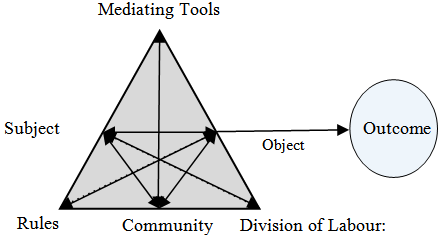
CHAT conceptualizes learning as a socio-cultural process mediated by tools, social interactions, and institutional structures 4 (see Figure 1). Unlike cognitive learning theories that focus on individual knowledge acquisition, CHAT examines how learning unfolds within and across interconnected activity systems. This perspective is particularly relevant to online culturally responsive teaching, where educators, students, families, and digital tools interact dynamically within evolving educational ecosystems.

In third-generation CHAT, learning is conceptualized as a dynamic and multi-systemic process, shaped by interactions among several key components 4. The subject represents the primary actors engaged in the activity, which, in the context of this study, includes educators, students, and families participating in culturally responsive online learning. The object reflects the shared goal of fostering inclusive, equitable, and culturally sustaining virtual learning environments. Mediating tools—such as digital platforms (e.g., Google Classroom, Zoom), culturally relevant instructional content, and collaborative technologies—play a crucial role in facilitating engagement and knowledge construction. Rules establish the norms and expectations governing participation, ensuring ethical and culturally sensitive practices in online teaching. The community encompasses the broader network of educators, families, school administrators, and community stakeholders who contribute to and influence the learning process. Division of labour delineates the roles and responsibilities within the system, positioning teachers as facilitators, students as co-creators of knowledge, and families as cultural contributors. The outcome of this complex interplay is the development of a digitally inclusive, culturally responsive learning model that fosters student engagement, equity, and identity affirmation. By examining these interconnected elements, CHAT provides a comprehensive framework for understanding how contradictions and innovations drive expansive learning in online culturally responsive teaching.
The principles of third-generation CHAT help explain the systemic contradictions that emerge when attempting to implement CRT in online education. Traditional classroom-based CRT relies on in-person dialogue, community-centered knowledge sharing, and hands-on cultural learning experiences, which do not always translate easily into virtual settings. The tensions between existing pedagogical models and digital constraints—such as limited access to technology, diminished relational engagement, and institutional policies that do not account for cultural variability—can hinder educators’ ability to enact CRT effectively. CHAT highlights how such contradictions can serve as catalysts for transformation, leading to the development of new practices and learning structures 15.
While CHAT has been widely applied in studies on professional learning communities, teacher collaboration, and expansive learning 16, its use in analyzing online CRT remains underexplored. This study integrates CHAT and CRT to examine how educators address the systemic challenges of culturally responsive teaching in virtual spaces. By mapping out the digital learning activity system, the study sheds light on the collaborative processes, pedagogical adaptations, and institutional supports that enable (or hinder) culturally inclusive online learning.
2.4. Theoretical Foundations: CHAT Constructs in Online Culturally Responsive TeachingCHAT provides a robust theoretical framework for analyzing the complexities of online learning, particularly in relation to CRT. Third-generation CHAT expands upon its prior generations by recognizing that learning occurs across multiple, interconnected activity systems, rather than within a single, isolated setting 4. This perspective is particularly relevant for understanding online CRT, as educators must navigate contradictions, collaborate flexibly, and bridge diverse learning environments. Thus, three key CHAT constructs—expansive learning, knotworking, and boundary crossing—offer critical insights into how educators adapt CRT to digital spaces.
Expansive learning refers to a process in which individuals or groups develop new ways of working by resolving contradictions within their activity systems 15. Unlike traditional learning contexts, which is often linear and structured, expansive learning is iterative and transformational, requiring participants to experiment, reflect, and co-create solutions. In online education, contradictions emerge when established pedagogical approaches do not align with digital realities, requiring teachers to reimagine their instructional strategies.
In the context of CRT, expansive learning is particularly relevant because culturally responsive strategies developed for face-to-face instruction often do not seamlessly transfer to online settings. For example, 13 highlights how relational teaching—a core CRT practice—becomes more challenging in virtual environments due to the absence of in-person cues. Teachers should, therefore, engage in expansive learning by adopting new methods, such as digital storytelling, asynchronous discussion forums, and virtual cultural exchanges, to sustain culturally responsive engagement in online classrooms.
Empirical research has documented how educators have expanded their pedagogical practices in response to these challenges. For instance, 14 found that many teachers adapted CRT in digital spaces through trial-and-error, learning through ongoing experimentation rather than structured training. Similarly, 17 emphasize that expansive learning is a collective process, often occurring through informal professional networks where educators share strategies for culturally responsive online teaching. These studies suggest that online CRT requires not only individual adaptation but also systemic shifts in pedagogical thinking, reinforcing the need for professional development tailored to the digital context.
Knotworking refers to a dynamic, flexible form of collaboration in which participants from different activity systems come together to solve shared problems without rigid organizational structures 18. Unlike traditional teamwork, which relies on stable hierarchies and predefined roles, knotworking is characterized by spontaneous, need-based cooperation that dissolves once the problem is addressed. In online CRT, knotworking is particularly valuable for addressing cultural engagement challenges, as it enables educators, families, and community members to co-develop solutions in real time.
Research on online education has highlighted the effectiveness of knotworking in fostering digital inclusivity. 19 argues that interdisciplinary collaboration is essential for making online learning more culturally responsive, as it allows educators to draw on diverse expertise, including that of families, community elders, and multilingual specialists. Rather than working in isolation, teachers who embraced knotworking practices leveraged these external networks to co-create culturally relevant digital content. This aligns with 15’s assertion that knotworking is a key mechanism for resolving contradictions within complex educational systems.
Moreover, studies show that knotworking plays a critical role in professional development for online CRT. Teachers often engage in informal digital communities where they exchange culturally responsive strategies, creating a fluid knowledge-sharing network 14. This collaborative model contrasts with conventional professional development, which tends to be top-down and standardized, underscoring the importance of adaptable, context-driven approaches in culturally responsive online education.
Boundary crossing refers to the movement of knowledge, tools, and practices across different activity systems, facilitating the integration of diverse perspectives into learning environments 17. In the context of CRT, boundary crossing occurs when educators, students, and families collaborate across school, home, and digital spaces to create culturally sustaining learning experiences. This process is particularly relevant in online education, where digital platforms serve as boundary objects—tools that mediate interactions across different systems.
Research indicates that boundary crossing enhances cultural responsiveness by allowing students’ home languages, traditions, and lived experiences to be meaningfully incorporated into virtual learning environments. For example, 13 found that when families are engaged as co-educators, students experience deeper cultural validation, which strengthens their academic engagement. Similarly, 20 highlights how digital platforms such as Google Classroom and Padlet have been used as boundary objects, enabling students to share cultural narratives, artifacts, and multilingual content with their peers and teachers.
However, boundary crossing is not without challenges. Contradictions arise when institutional structures fail to support the integration of family and community knowledge into online learning. For instance, teachers may struggle to incorporate culturally relevant materials due to rigid curriculum standards or technological limitations 19. Despite these barriers, research suggests that boundary-crossing practices—such as co-creating digital storytelling projects with families or embedding community knowledge into virtual discussions—offer promising pathways for making online CRT more inclusive and responsive.
By integrating expansive learning, knotworking, and boundary crossing into the analysis of culturally responsive online education, this study builds on existing literature while addressing critical research gaps. Although previous studies have explored elements of CRT in digital spaces, few have systematically examined how educators navigate contradictions, collaborate flexibly, and bridge cultural and digital divides through a CHAT-informed lens. This study contributes to the field by offering empirical insights into how these constructs manifest in practice, ultimately informing the development of the Cultural Responsivity Online Model (CROM).
2.5. Research Gaps and the Cultural Responsivity Online Model (CROM)Despite efforts to promote cultural inclusivity, gaps remain in applying CRT principles to online education. While CHAT has been used to analyze expansive learning and boundary-crossing in digital learning, limited studies explicitly explore how CHAT can support CRT in online classrooms. Additionally, limited research exists on professional development models that prepare teachers to integrate CRT into digital pedagogy 8, 9.
To address these gaps, we propose the Cultural Responsivity Online Model (CROM), which integrates CRT and CHAT to offer a structured framework for culturally responsive teaching in digital spaces. CROM emphasizes digital equity, family and community engagement, and professional development, providing practical strategies for fostering inclusivity in online education 13, 15.
This study employs a qualitative case study approach to examine how school staff in Newfoundland and Labrador fostered cultural responsivity in online education during the COVID-19 pandemic. A case study methodology was selected because it allows for an in-depth, contextually rich exploration of a bounded system—culturally responsive online teaching within specific schools—while integrating multiple data sources to develop a comprehensive understanding of participant experiences 21.
3.1. Data CollectionData were collected through semi-structured interviews conducted via Zoom with five teachers and two administrators from three schools in St. John’s, NL, all of whom were involved in the larger ADVOST project. Participants were purposively selected based on the following criteria:
1. Teaching culturally diverse students in online settings during pandemic lockdowns.
2. Adopting culturally responsive strategies in digital pedagogy.
3. Having experience with the integration of CRT in remote learning environments.
Following institutional ethics approval, participants provided informed consent, and all data were anonymized using pseudonyms. The semi-structured interview format allowed for flexibility, enabling participants to share personal experiences while ensuring alignment with key research themes. Interviews focused on:
• Challenges and successes in implementing CRT online.
• Use of digital tools and family engagement strategies.
• Perceptions of systemic barriers to cultural responsiveness.
Conducting interviews via Zoom facilitated participation from geographically dispersed educators while allowing for screen-sharing and real-time reflection on digital tools used in online teaching. However, consistent with 22, online interviews posed challenges such as limited access for participants with unstable internet connections and a lack of nonverbal cues, which were mitigated through follow-up email clarifications.
3.2. Thematic Analysis Using Atlas.tiData analysis was conducted using thematic analysis 23, an iterative method that identifies, analyzes, and interprets patterns within qualitative data. The following steps were used:
1. Data Familiarization: Interview transcripts were reviewed to gain an initial understanding of emerging themes.
2. Initial Coding: Codes were generated inductively and deductively, aligning with both participant narratives and CHAT’s theoretical constructs.
3. Theme Development: Coded data were grouped into themes, reflecting key aspects of culturally responsive online teaching.
4. Reviewing Themes: Patterns were examined across participants to refine major categories, such as "Digital Accessibility and Equity", which emerged from narratives on technological barriers among marginalized students.
5. Defining and Naming Themes: Each theme was conceptually refined and positioned within the CHAT framework to highlight systemic contradictions and expansive learning opportunities.
3.3. Iterative Integration into a Multi-Systemic ModelWe analyzed each theme within a CHAT-based framework 4, allowing for the identification of contradictions and system-wide transformations. Specifically, our approach followed Engeström’s expansive learning cycle, which emphasizes:
• Identifying contradictions: For example, tensions between traditional pedagogies and digital learning constraints.
• Boundary crossing: Examining how teachers, families, and communities collaborated across systems to support cultural responsivity.
• Knotworking: Analyzing flexible, task-based collaboration among educators to develop new pedagogical approaches in online CRT.
Contradictions—such as inconsistent access to digital resources—were mapped to potential solutions within the multi-systemic model, identifying opportunities for transformative agency in online cultural responsiveness.
3.4. Visual Representation and Collaborative RefinementThe final model was visualized using a second-generation CHAT diagram 4 to simplify the complexity of interrelated activity systems. This visual approach served multiple purposes:
1. Illustrating tensions between traditional and digital CRT implementation.
2. Facilitating engagement from educators, policymakers, and researchers.
3. Encouraging further adaptation of the model in future studies.
Through continuous refinement based on iterative interviews and analysis, CROM was adjusted to incorporate new insights from participants, ensuring that it remains relevant to the evolving needs of online learners and educators.
3.5. Ethical ConsiderationsEthical approval was obtained from the institutional research ethics board, and all participants provided informed consent before participating. To maintain confidentiality:
• Pseudonyms were assigned to all participants.
• Transcribed data were securely stored in encrypted files.
• Interview recordings were anonymized before analysis.
Following best practices in research ethics 24, we ensured that participants could withdraw at any time without consequence.
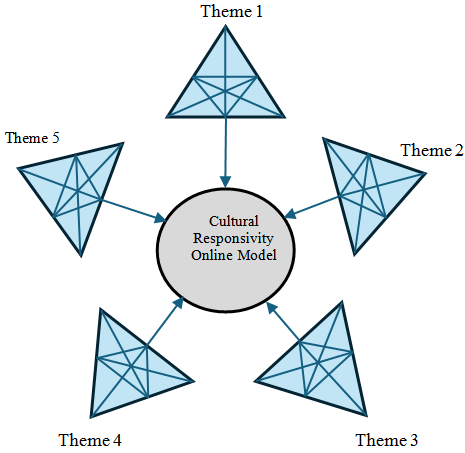
The findings from this study illustrate the complex interplay between digital accessibility, cultural engagement, family involvement, professional development, and systemic contradictions in online culturally responsive teaching. By examining contradictions, boundary crossings, and expansive learning cycles, the study highlights how educators innovated new strategies to uphold CRT principles in virtual learning environments. The following themes emerged from participant interviews, reflecting their lived experiences during the pandemic-driven shift to online teaching.
4.1. Digital Accessibility and EquityDigital accessibility was a foundational issue that shaped educators’ ability to implement CRT. Participants consistently expressed concern with the disparities in students’ access to technology, describing how marginalized students suffered the most from digital inequities. CHAT’s concept of contradictions 15 is evident here, as traditional education structures clashed with digital realities, creating barriers to equitable engagement.
Taylor described the challenges of Wi-Fi accessibility in the school community:
"Another big one for us in the school that I was in were the demographics, the technology, and even Wi-Fi wasn't accessible to all our families. So that was the struggle in itself. So even before we could get started, we had to make sure that these families had what they needed."
Jordan noted how digital inequities directly affected students’ participation:
"Some students had everything—high-speed internet, personal laptops, quiet spaces. Others were trying to do schoolwork on a shared phone with three siblings in the background. How do you create equity in that environment?"
To address these disparities, educators engaged in expansive learning, advocating for institutional interventions such as device distribution programs and asynchronous options for students with unreliable internet.
Riley described how digital learning environments evolved over time:
"I did see some changes. Some were great and some worked. I found some children who really thrived at school didn't really thrive online, they really struggled. The opposite is true as well. Some children who really struggle in school really thrive online."
Despite these efforts, participants acknowledged that structural inequalities persisted, reinforcing the need for policy-driven solutions to digital accessibility in culturally responsive education.
Jordan emphasized the systemic nature of this issue, arguing:
"No matter how much we tried to adapt, the reality is that access to technology is a policy issue. Schools could treat digital access like a basic necessity, just like textbooks."
These findings position digital accessibility as a non-negotiable pillar of culturally responsive online learning, aligning with CRT’s emphasis on equitable educational access 7 and CHAT’s recognition of contradictions as catalysts for change.
4.2. Building Cultural Engagement and TrustCulturally responsive teaching relies on deep engagement and relational trust, yet participants grappled with the loss of in-person interactions in online spaces. The lack of physical presence disrupted student-teacher relationships, making it difficult to foster belonging, cultural expression, and emotional safety—core tenets of CRT 9.
Riley explained the impact of student disengagement in virtual spaces:
"I think culturally responsive classrooms, the key thing about culturally responsive classrooms, is a connection between you and your students, your students and each other, your students and their environment and their beliefs and all that kind of stuff. So, I think that making the online and digital classroom comfortable for them was the most important thing."
Taylor reflected on the invisibility of student struggles:
"One of the harder things was to spread around the same level of support because teachers couldn't always be in two digital spaces. Or they couldn't take learners from two digital spaces as easily as they could take learners or two physical spaces."
Recognizing this contradiction between CRT’s emphasis on relationships and the constraints of online learning, educators developed alternative trust-building strategies.
Jordan described how she adapted her engagement strategies:
"We spoke a lot about our homes and our families. We did daily showings of different artifacts in our homes for discussion. And it was amazing what the kids brought with them."
Riley implemented personalized outreach, explaining:
"I think just making teaching and learning more relatable, meaningful, representative and important to the kids was really important."
Additionally, educators restructured assignments to promote cultural engagement in a digital format.
Taylor described an innovative approach to virtual storytelling:
"We continued using songs and books where children could see themselves, they could identify with, you know, or make comparisons with characters or problems, story problems."
By rethinking engagement through a culturally sustaining lens, participants adapted CRT principles to digital spaces, demonstrating CHAT’s concept of boundary crossing, where educators, students, and families co-constructed learning beyond traditional school settings 17.
4.3. Family and Community EngagementParticipants quickly realized that family involvement became crucial in online learning, particularly for younger students and those from marginalized backgrounds. Unlike traditional classrooms, where families play a secondary role, online education blurred home-school boundaries, making family engagement an essential component of student success.
Jordan described the shift in parental involvement:
"Parents were sitting right beside their kids during lessons. At first, I saw it as interference, but then I realized—it was an opportunity! If we engaged families intentionally, they could help reinforce learning in a way that we never could alone."
Taylor emphasized how parents shaped cultural activities:
"One of my students’ mom came and sang a song for us, and then that started off a whole other ton of people wanting to bring their parents in!"
Riley highlighted a broader impact of family-school partnerships:
"Having those family-school connections, the teacher-student connections, and the student-student connections—all those connections were vital. I don't think we would have been successful had we not made those bonds and those connections at all."
By leveraging family and community resources, participants expanded culturally responsive teaching beyond the classroom, demonstrating how educators, students, and families co-construct learning in a digital space.
4.4. Professional Development for Cultural CompetenceParticipants highlighted the critical role of professional development (PD) in equipping educators with both cultural competence and digital literacy skills. Many teachers felt unprepared to adapt CRT principles to online learning, particularly when faced with technological limitations and student disengagement. This aligns with CHAT’s concept of expansive learning, where contradictions drive professional growth and pedagogical innovation 15.
Taylor reflected on the challenges of integrating cultural responsiveness into online teaching:
"There were some [PD sessions]. We did some trauma-informed sessions, some social-emotional learning PL. Yeah, that was mostly the focus. But most of our PL was on the practicality part of it—how to use the technology, how to use the resources, how to manage scheduling and things like that."
Jordan expressed the lack of structured PD:
"I don't recall in actually receiving too many, but I did a lot of professional learning; I just went into learning mode."
Riley emphasized self-directed learning:
"The online learning that we did, facilitated our own growth. We searched out the things that we needed. We learned what works best for the students and did them there."
Taylor described an approach she wished had been more structured:
"I think I would have put it in for a daily basis, meeting with my students, meeting with my families—just for not even worrying about curriculum, just focusing on keeping the interaction, keeping the connection."
These experiences reflect CHAT’s principle of knotworking, where professionals collaborate dynamically to address complex challenges 4.
Riley connected this learning to CRT:
"Culturally responsive teaching can’t be static. It has to evolve with new contexts. This experience pushed us to rethink what it means to be culturally responsive in an online world."
Ultimately, participants saw professional development as an ongoing process, reinforcing the need for structured yet adaptive PD models that blend CRT with digital literacy.
4.5. Addressing Contradictions in Online CRTParticipants identified the digital divide as a primary contradiction, with disparities in device availability, internet access, and technical support disproportionately impacting marginalized students.
Taylor recounted an instance where a student struggled to participate due to digital barriers:
"Another big one for us in the school that I was in were the demographics, the technology, and even Wi-Fi wasn't accessible to all our families."
To address this, educators advocated for systemic changes, such as school-provided devices and flexible deadlines to accommodate technological constraints.
Riley highlighted a successful intervention:
"We fought for district-wide Chromebook distributions. It wasn’t perfect, but it gave students a fighting chance to participate."
Educators struggled to apply CRT principles in a virtual setting, particularly in fostering discussion, collaborative learning, and cultural expression.
Jordan noted the challenge of engagement without physical interaction:
"I think the biggest thing that I noticed was that the students really got to know each other a lot better."
To resolve these contradictions, educators reimagined participation structures, incorporating asynchronous discussions, multimedia assignments, and family engagement.
Riley described a successful shift:
"I did see some changes. Some were great and some worked. I found some children who really thrived at school didn't really thrive online, they really struggled. The opposite is true as well. Some children who really struggle in school really thrive online."
By expanding the definition of participation, educators transformed CRT into a more adaptable, inclusive practice, reinforcing CHAT’s principle of expansive learning.
Some contradictions extended beyond the classroom, requiring broader institutional changes.
Jordan noted:
"A lot of school policies weren’t designed for online learning. Attendance rules, assessment practices—they didn’t fit the new reality. We had to push for change."
Taylor recalled an instance of educator-led advocacy:
"Never once did we have an optional Google Meet for the families. We had office hours and times they could ask questions, but I think I would have had an optional Google Meet at the beginning to help dispel any anxiousness, any anxiety over it."
Riley emphasized the long-term perspective:
"This wasn’t just about adapting to the pandemic. It was about rethinking education altogether—making it more inclusive, more culturally responsive, and more flexible for the future."
By working collectively to address contradictions, participants contributed to lasting educational reforms, demonstrating the power of CRT and CHAT to shape more equitable learning environments.
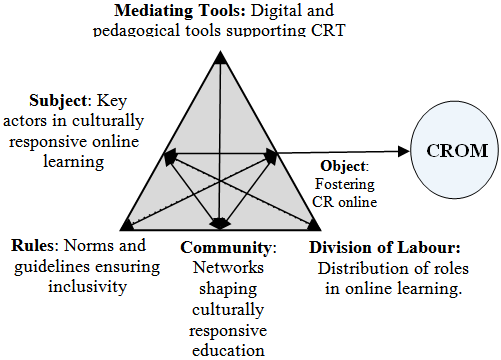
These emergent themes—digital accessibility, cultural engagement, family involvement, professional development, and transformative contradictions—form the foundation of the Cultural Responsivity Online Model (CROM). The model (in Figure 2) acknowledges that culturally responsive teaching must be dynamic, integrating technological realities, educator innovation, and institutional change.
• The findings illustrate how contradictions act as catalysts for growth, prompting expansive learning cycles that drive pedagogical and systemic evolution.
• Family and community engagement emerged as vital counterforces to digital disconnection, reinforcing the need for boundary-crossing practices that extend CRT beyond the classroom.
• Educator collaboration through knotworking filled critical gaps in professional development, highlighting the importance of peer learning networks in sustaining CRT.
By integrating CHAT’s theoretical lens with practitioner-driven insights, this study contributes to a deeper understanding of how CRT can be operationalized in digital learning spaces. The CROM framework provides a pathway for future educators, policymakers, and researchers to continue expanding culturally responsive teaching in virtual environments.

This study explored the complexities of fostering culturally responsive teaching (CRT) in online education by applying Third-Generation Cultural-Historical Activity Theory (CHAT) as an analytical framework. The findings underscore the role of expansive learning, boundary crossing, and contradictions in shaping culturally responsive digital pedagogy. By integrating CRT with CHAT, this study illuminates how educators, students, families, and communities collaboratively navigate online learning environments to sustain cultural engagement, digital equity, and transformative pedagogical practices.
5.1. CROM Development and Conceptual ExpansionThe Cultural Responsivity Online Model (CROM), Figure 2, evolved through iterative engagement with contradictions, boundary crossing, and collaborative problem-solving, reflecting the expansive learning process. The model’s development was shaped by the principles of CRT —cultural inclusivity, family engagement, and equitable access— recontextualized for digital learning.
One key expansion was the role of families as cultural collaborators in online classrooms. Taylor described how virtual sharing circles, initially designed to engage students, expanded to actively involve families, fostering community-driven knowledge-sharing (Taylor, Interview). This shift aligns with CHAT’s concept of boundary crossing, where learning extends beyond the classroom into multiple interconnected social systems 17. Rather than viewing teachers as the sole facilitators of CRT, CROM acknowledges the fluid interplay between students, families, and educators in shaping culturally responsive learning.
Another major development was the use of boundary objects—digital platforms facilitating cultural exchange and knowledge co-construction. Jordan highlighted how Google Classroom evolved from a simple instructional tool into a shared cultural space, where students uploaded cultural artifacts and participated in reflective discussions. This aligns with 4’s expansive learning framework, which posits that contradictions within existing activity systems drive the development of new tools and structures that enhance participation.
The initial challenges of digital equity, disproportionately affecting marginalized students, became catalysts for systemic transformation. Adaptive strategies—such as provisioning technology, redesigning instructional methods, and strengthening school-community partnerships—mirrored the principles of knotworking, where fluid collaboration between educators, families, and students generates innovative solutions to complex educational challenges.

Ultimately, the conceptual expansion of CROM demonstrates how contradictions drive transformation rather than acting as barriers. Initially developed to address digital inequities, CROM evolved into a dynamic model integrating cultural engagement, family involvement, and collaborative teaching strategies, offering new theoretical insights into culturally responsive online education.
The CROM bridges CRT and Third-Generation CHAT by framing online education as a multi-systemic activity where contradictions are resolved through expansive learning. The model highlights how CRT principles can be enacted in virtual settings by fostering collaborative, culturally sustaining pedagogies.
A. Subjects and Object
• Educators, students, families, and community members are central to culturally responsive online learning.
• Their shared objective is to create a digitally inclusive learning experience that acknowledges students’ diverse cultural and linguistic backgrounds.
• The findings revealed that teachers adapted content to students' lived experiences through culturally relevant discussions, digital heritage-sharing activities, and student-led projects incorporating multilingual and multimodal expressions.
B. Tools and Mediating Artifacts
• Digital platforms function as boundary objects, facilitating cultural exchanges between school and home environments 17.
• Teachers used Google Classroom and Padlet to integrate students' home cultures into learning materials, addressing contradictions related to cultural disconnection in digital spaces.
• The study highlighted interactive storytelling, where students co-created digital narratives, as an effective CRT strategy for fostering engagement and inclusivity.
C. Division of Labour and Rules
• The roles of teachers, students, and families were fluid and interdependent, aligning with the concept of knotworking—a flexible, problem-solving collaboration across activity systems 15.
• Educators co-planned lessons with parents and invited cultural experts to virtual classrooms to reinforce community-based knowledge systems.
• Ethical considerations included co-developing digital citizenship guidelines that reflect cultural respect and inclusivity, ensuring that online discussions remained safe and affirming.
D. Community and Outcome
• Strong family-school-community partnerships strengthened student engagement, knowledge-sharing, and cultural validation, reinforcing CRT’s emphasis on collaborative learning ecosystems 7, 8.
• The outcome of these interventions was a culturally responsive online learning model that actively countered digital exclusion and fostered identity-affirming educational spaces.
• The CROM model helped reshape institutional structures by promoting expansive learning cycles where educators continuously adapted CRT for evolving digital landscapes.
This study explored the complexities of fostering culturally responsive teaching (CRT) in online education by applying Third-Generation Cultural-Historical Activity Theory (CHAT) as an analytical framework. The findings underscore the role of expansive learning, boundary crossing, and contradictions in shaping culturally responsive digital pedagogy. By integrating CRT with CHAT, this study illuminates how educators, students, families, and communities collaboratively navigate online learning environments to sustain cultural engagement, digital equity, and transformative pedagogical practices.
6.1. CHAT as a Framework for Understanding Online Cultural ResponsivityThird-generation CHAT offers a multi-systemic lens for analyzing cultural responsiveness in online education, moving beyond individual and isolated classroom interactions. Rather than treating online learning as a unidirectional process between teacher and student, CHAT recognizes that online education involves multiple interacting activity systems, including families, communities, and institutional policies 4. This study found that contradictions between traditional CRT strategies—designed for face-to-face interaction—and the asynchronous, technology-mediated nature of online education required teachers to adopt new methods of engagement.
The application of expansive learning within CHAT was particularly significant in understanding how educators adapted their pedagogical strategies in response to digital constraints. Participants described engaging in iterative cycles of reflection and innovation, identifying gaps in cultural engagement and trust-building and experimenting with strategies such as virtual cultural storytelling, interactive discussion boards, and synchronous video activities that promoted cultural inclusivity. These findings align with research by 15, who argue that expansive learning is triggered when educators collaboratively reconstruct their practices in response to systemic tensions.
The contradictions observed in this study—particularly inequities in digital access, the loss of in-person cultural cues, and the need for sustained community collaboration—were not merely obstacles but catalysts for transformative action. For instance, when students lacked access to stable Internet connections or digital tools, educators worked across boundaries by engaging families and school administrators to advocate for technology provisions; thus, mirroring findings from studies on digital equity in marginalized communities 13, 25. These interventions reflect the contradiction-driven evolution of pedagogical practices within CHAT, reinforcing that sustainable digital CRT requires more than individual teacher adaptations—it necessitates system-wide collaboration.
6.2. Expansive Learning as a Mechanism for Cultural ResponsivityThe study revealed that expansive learning—defined as the process of rethinking and redesigning educational activity systems—was central to fostering cultural responsivity online. Rather than replicating face-to-face CRT strategies in virtual spaces, educators in this study co-constructed new pedagogical approaches with students, families, and fellow teachers While 26 highlights the importance of teacher agency in CRT, the findings of this study extend this concept into the online learning context, where educators engaged in iterative pedagogical adjustments, experimenting with digital tools to sustain culturally meaningful exchanges. Professional development emerged as a key site of expansive learning, where educators collectively problem-solved issues related to cultural invisibility in online curricula and the disconnect between students' lived experiences and digital classroom content. Teachers emphasized that participation in peer-led professional learning communities and collaborative workshops on digital CRT strategies enabled them to expand their cultural competencies—a finding that resonates with 8’s advocacy for critical consciousness in teacher learning. The iterative refinement of digital CRT strategies through professional development mirrors 15’s notion of ascending from the abstract to the concrete, where educators moved beyond theoretical knowledge of cultural responsiveness to practical, technology-mediated applications.
In addition to formal professional development, expansive learning was evident in educator–family partnerships that transformed online classrooms into culturally sustaining spaces. Participants described engaging in boundary-crossing practices, where parents were not only informed about classroom activities but actively involved in co-creating cultural learning experiences. This aligns with 13 work on situated learning, which argues that culturally responsive education is most effective when it emerges from community-embedded practices rather than institutional mandates.
6.3. Boundary Crossing and the Role of Families in Online CRTThis study found that family engagement in online learning environments was not only beneficial but essential for sustaining CRT. The shift to digital education dismantled traditional school-home boundaries, requiring educators to collaborate more directly with families and community organizations. Participants in this study reported that involving parents in virtual sharing circles, cultural storytelling activities, and home-based learning projects helped bridge the disconnect between school-based learning and students’ cultural identities. These findings reflect research by 9, who argues that culturally responsive teaching must extend beyond school walls to include familial and communal cultural knowledge.
CHAT conceptualizes boundary crossing as the interaction between distinct activity systems, where participants negotiate new roles and responsibilities 17. In this study, educators who engaged in boundary crossing redefined their relationships with families, positioning them not as passive observers but as co-educators in students' digital learning journeys. Similarly, the use of technology as a boundary object—such as Google Classroom and culturally relevant digital archives—enabled multidirectional communication between teachers, students, and families, fostering collaborative ownership of learning.
Contradictions between institutional policies and the realities of digital cultural engagement were frequently mitigated through boundary-crossing partnerships, where teachers, parents, and administrators worked collectively to resolve gaps in cultural representation and technology access. These findings expand upon research by 8, reinforcing that CRT is most impactful when enacted through reciprocal, community-driven collaboration rather than top-down mandates.
6.4. Knotworking as a Strategy for Addressing Systemic ContradictionsThe study identified knotworking as a significant mechanism through which educators and families navigated the complexities of online CRT. Knotworking, as described by 4, refers to fluid, problem-solving collaborations that emerge among diverse stakeholders to address pressing systemic challenges. Participants in this study engaged in knotworking by forming teacher support networks, family engagement groups, and cross-institutional collaborations to bridge gaps in digital accessibility, cultural inclusion, and pedagogical adaptation.
Rather than working in isolation, teachers who embraced knotworking practices collaborated with families, community elders, and multilingual specialists to co-develop culturally relevant digital content. This approach aligns with 19, who emphasizes integrating culturally inclusive practices with digital literacy to create equitable and adaptable learning environments. By centering collaborative, dynamic problem-solving, knotworking within online culturally responsive teaching countered the rigid structures of conventional digital education, making learning more responsive, equitable, and culturally sustaining.
6.5. Transformative Implications for Digital CRT and Systemic ChangeThe findings of this study underscore the need for systemic institutional shifts to fully realize CRT in online education. While individual teacher agency played a role in adapting digital CRT strategies, sustainable change requires broader policy interventions. Institutional stakeholders must embed professional development on culturally responsive online pedagogy, expand access to digital resources for marginalized communities, and actively support cross-sector partnerships that connect schools with families and cultural organizations.
Therefore, this study positions Cultural Responsivity Online Model (CROM) as a dynamic, evolving framework that integrates CHAT’s principles of expansive learning, contradictions, and boundary crossing to guide more equitable, culturally sustaining online education practices. By viewing CRT as a multi-systemic process rather than an isolated instructional method, CROM offers a transformative approach to fostering digital cultural inclusivity in contemporary educational landscapes.
The findings of this study offer significant theoretical and practical implications for expansive learning, CRT, and digital education. By integrating CHAT with CRT, this study extends the application of expansive learning to culturally responsive online education, highlighting how contradictions, boundary crossing, and collaborative problem-solving facilitate the development of inclusive digital pedagogy.
7.1. Theoretical Contributions: Expanding CHAT for Digital Cultural ResponsivenessThird-generation CHAT provides a powerful framework for analyzing online learning environments, particularly in how multiple activity systems—schools, families, and communities—interact in fostering culturally responsive education. Traditionally, CRT has focused on in-person settings, emphasizing the role of student-teacher relationships in embedding cultural knowledge within instruction 7, 8. However, in online environments, expansive learning and boundary crossing become essential mechanisms for sustaining cultural engagement. The findings reinforce 4’s argument that contradictions within and between activity systems serve as catalysts for change. In this study, contradictions emerged in multiple forms, including the tension between traditional in-person culturally responsive pedagogy and the limitations of digital instruction, as well as the digital divide that disproportionately impacted students from marginalized backgrounds. Addressing these contradictions through expansive learning enabled educators to rethink their practices, fostering digital CRT in ways that were adaptive, community-driven, and innovative.
Knotworking played a critical role in this transformation by facilitating fluid, collaborative partnerships between teachers, students, families, and community members. The inclusion of families in digital cultural storytelling and virtual learning activities illustrates how boundary crossing expands the possibilities for CRT in online education. The use of digital platforms such as Google Classroom as boundary objects further exemplifies how technological tools mediate cultural engagement and sustain meaningful participation in online learning environments. These findings contribute to the growing body of research on expansive learning by demonstrating how digital tools and collaborative learning structures can support culturally responsive teaching, even in non-traditional learning spaces.
7.2. Practical Contributions: Rethinking Professional Development and Digital EquityThe findings also have direct implications for teacher professional development, institutional policies, and digital equity in online learning. One of the most pressing issues educators faced was translating in-person CRT strategies into digital formats. Professional development played a crucial role in this adaptation, with teachers engaging in peer learning and collaborative knowledge-sharing to navigate the challenges of online culturally responsive pedagogy. Schools and educational institutions must prioritize ongoing professional development that is explicitly designed to address the complexities of digital CRT, equipping teachers with the tools and strategies necessary to sustain cultural engagement in online spaces.
Additionally, this study underscores the need for systemic efforts to address digital inequities, particularly for students from culturally and linguistically diverse backgrounds. The digital divide remains a persistent challenge, limiting access to culturally responsive learning materials and interactive engagement. To mitigate these disparities, policies must ensure equitable access to digital resources, including reliable internet connectivity, culturally relevant digital content, and educator training on inclusive digital pedagogy. By embedding digital equity within CRT frameworks, institutions can ensure that culturally diverse students are not only included but actively engaged in their learning environments.
7.3. Implications for Policy and Future ResearchInstitutional policies should support models of online cultural responsiveness that integrate expansive learning, boundary crossing, and family engagement. Future research should explore how these models can be adapted across different educational contexts, particularly in non-Western settings where cultural diversity manifests in distinct ways. Additionally, research should examine the long-term impact of culturally responsive online models on student engagement, academic performance, and community participation.
The Cultural Responsivity Online Model (CROM) represents a significant step toward integrating CRT and expansive learning in digital education. By addressing contradictions in online learning, fostering boundary-crossing collaborations, and leveraging digital tools as boundary objects, this model offers a replicable framework for educators, policymakers, and researchers seeking to enhance cultural responsiveness in online learning. As the landscape of digital education continues to evolve, sustained research and institutional commitment will be essential in ensuring that culturally diverse students experience inclusive, equitable, and meaningful online learning environments.
This study examined how CRT can be effectively integrated into online education through the lens of Third-Generation CHAT. By analyzing the experiences of elementary school staff navigating culturally responsive pedagogy in digital learning environments, this research identified expansive learning, boundary crossing, contradictions, and knotworking as key mechanisms for fostering inclusive, culturally sustaining online classrooms.
The CROM emerged as a model that reflects the interconnected and evolving nature of digital cultural responsivity. Our findings revealed that digital accessibility, cultural engagement, family and community involvement, ongoing professional development, and the resolution of systemic contradictions are fundamental to bridging the gaps between in-person and online CRT. Educators did not simply transfer traditional CRT practices into the online space; instead, they engaged in iterative cycles of learning and adaptation, aligning with 4’s expansive learning framework.
A major contribution of this study is its demonstration that culturally responsive online education is not an isolated teacher-driven practice but a multi-systemic process requiring collaboration across educators, families, communities, and institutional structures. The study highlights how boundary crossing and knotworking enabled educators to co-create culturally responsive learning experiences with students’ families and communities. By integrating parents as co-educators, leveraging digital tools as boundary objects, and fostering teacher-led collaborative professional development, the findings reinforce the importance of relational, community-driven approaches to online CRT 8.
The contradictions identified in this study—such as digital inequities, lack of cultural representation in online curricula, and the constraints of traditional pedagogical models—underscore the need for systemic transformation. While educators individually adapted their teaching strategies, sustainable change necessitates institutional reforms, including:
• Embedding CRT-focused digital pedagogical training into teacher education and professional development programs.
• Ensuring equitable access to technology to eliminate barriers to participation for marginalized students.
• Supporting cross-sector collaborations between schools, families, and community organizations to sustain culturally inclusive educational ecosystems.
By positioning CROM within a CHAT-informed, multi-voiced framework, this study expands the conceptual and practical applications of CRT in digital education. Future research should further explore how different cultural contexts, technological infrastructures, and policy landscapes shape the effectiveness of online CRT strategies. Additionally, longitudinal studies could examine the long-term impacts of expansive learning and boundary crossing on culturally diverse students’ academic outcomes and sense of belonging.
As digital education continues to evolve post-pandemic, fostering cultural responsivity in online classrooms remains a critical imperative. This study affirms that CRT must be reimagined as a dynamic, collaborative, and multi-systemic endeavour—one that not only addresses immediate instructional challenges but also contributes to the broader goal of educational equity and social justice.
The Cultural Responsivity Online Model (CROM) provides a structured yet adaptable framework that acknowledges the complexities of digital CRT. By recognizing contradictions as opportunities for transformation, positioning families as integral learning partners, and leveraging collaborative innovation through knotworking, CROM presents a sustainable model for building culturally inclusive online learning environments. As educators, policymakers, and researchers continue to grapple with digital inclusivity and equity, this study serves as a call to action for systemic investment in culturally sustaining digital pedagogies that honour and empower all learners.
| [1] | Mahmood, R. (2020, March 31). Online teaching can be culturally responsive. Learning for Justice. https:// www. learningforjustice.org/ magazine/ online-teaching-can-be-culturally-responsive. | ||
| In article | |||
| [2] | Mahani, S. (2023). Applying Culturally Relevant Pedagogy to Online Learning. Cultural and Pedagogical Inquiry, 15(1), 23-34. | ||
| In article | View Article | ||
| [3] | Boison, B., & Burke, A. (2025). Building Trust and Recreating Community in Online Classrooms through Cultural Responsivity. Canadian Journal of Educational and Social Studies, 5(1), 38-63. https://www.cjess.ca/index.php/home/article/view/291. | ||
| In article | View Article | ||
| [4] | Engeström, Y. (2001). Expansive learning at work: Toward an activity theoretical reconceptualization. Journal of Education and Work, 14(1), 133–156. | ||
| In article | View Article | ||
| [5] | Vygotsky, L. S. (1978). Mind in society: The development of higher psychological processes. Harvard University Press.Sdf | ||
| In article | |||
| [6] | Golden, A. R., Srisarajivakul, E. N., Hasselle, A. J., Pfund, R. A., & Knox, J. (2023). What was a gap is now a chasm: Remote schooling, the digital divide, and educational inequities resulting from the COVID-19 pandemic. Current Opinion in Psychology, 52, 101632. https:// pmc.ncbi.nlm.nih.gov/ articles/ PMC10259090/pdf/main.pdf. | ||
| In article | View Article PubMed | ||
| [7] | Gay, G. (2018). Culturally responsive teaching: Theory, research, and practice (3rd ed.). Teachers College Press. | ||
| In article | |||
| [8] | Paris, D., & Alim, H. S. (2017). Culturally sustaining pedagogies: Teaching and learning for justice in a changing world. Teachers College Press. | ||
| In article | |||
| [9] | Hammond, Z. (2015). Culturally responsive teaching and the brain: Promoting authentic engagement and rigor among culturally and linguistically diverse students. Corwin. | ||
| In article | |||
| [10] | Schirmer, B. R., & Lockman, A. S. (2022). Culturally Responsive Teaching in an Undergraduate Online General Education Course. Online Learning, 26(3), 132-148. https:// files.eric.ed.gov/ fulltext/EJ1374269.pdf. | ||
| In article | View Article | ||
| [11] | Hodges, C., Moore, S., Lockee, B., Trust, T., & Bond, A. (2020). The difference between emergency remote teaching and online learning. Educause Review, 27(1), 1–9. https:// vtechworks.lib.vt.edu/ server/api/core/bitstreams/a8e51482-265c-457f-9249-4717908b2022/content. | ||
| In article | |||
| [12] | Ladson-Billings, G. (1995). Toward a theory of culturally relevant pedagogy. American Educational Research Journal, 32(3), 465–491. | ||
| In article | View Article | ||
| [13] | Ladson-Billings, G. (2021, July). Three decades of culturally relevant, responsive, & sustaining pedagogy: What lies ahead?. In The Educational Forum (Vol. 85, No. 4, pp. 351-354). Routledge. | ||
| In article | View Article | ||
| [14] | Pawan, F., Li, B., & Dopwell, M. B. (2023). Culturally and linguistically responsive online teacher learning and professional development. Journal of Online Learning Research, 9(1), 45–62.https://files.eric.ed.gov/fulltext/EJ1412280.pdf. | ||
| In article | |||
| [15] | Engeström, Y., & Sannino, A. (2010). Studies of expansive learning: Foundations, findings and future challenges. Educational Research Review, 5(1), 1–24. | ||
| In article | View Article | ||
| [16] | Miles, R. (2020). Making a case for Cultural Historical Activity Theory: Examples of CHAT in practice. Studies in technology enhanced learning, 1(1). https://stel.pubpub.org/pub/01-01-miles-2020/release/1. | ||
| In article | View Article | ||
| [17] | Akkerman, S. F., & Bakker, A. (2011). Boundary crossing and boundary objects. Review of Educational Research, 81(2), 132–169. | ||
| In article | View Article | ||
| [18] | Engeström, Y. (2008). From teams to knots: Activity-theoretical studies of collaboration and learning at work. Cambridge University Press. | ||
| In article | View Article | ||
| [19] | Armstrong, A. L. (2023, August 7). Blending culturally inclusive practices and digital literacy: Case studies of early ed teacher programs. New America. https://newamerica.org/education-policy/edcentral/blending-culturally-responsive-practices-and-digital-literacy/. | ||
| In article | |||
| [20] | Andrews, D. P. S. (2024). Teacher professional development through knotworking: Facilitating transformational agency through collaboration to overcome constraints to teaching in relation to disruptive events. Professional Development in Education, 50(6), 1176–1191. | ||
| In article | View Article | ||
| [21] | Yin, R. K. (2018). Case study research and applications: Design and methods (6th ed.). SAGE Publications. | ||
| In article | |||
| [22] | Archibald, M. M., Ambagtsheer, R. C., Casey, M. G., & Lawless, M. (2019). Using Zoom videoconferencing for qualitative data collection: Perceptions and experiences of researchers and participants. International Journal of Qualitative Methods, 18, 1–8. | ||
| In article | View Article | ||
| [23] | Braun, V., & Clarke, V. (2006). Using thematic analysis in psychology. Qualitative Research in Psychology, 3(2), 77–101. | ||
| In article | View Article | ||
| [24] | Orb, A., Eisenhauer, L., & Wynaden, D. (2001). Ethics in qualitative research. Journal of Nursing Scholarship, 33(1), 93–96. | ||
| In article | View Article PubMed | ||
| [25] | Li, C., & Lalani, F. (2020). The COVID-19 pandemic has changed education forever: This is how. World Economic Forum. https://www.weforum.org/stories/2020/04/coronavirus-education-global-covid19-online-digital-learning/. | ||
| In article | |||
| [26] | Sleeter, C. E. (2011). An agenda to strengthen culturally responsive pedagogy. English teaching: Practice and critique, 10(2), 7-23. https://files.eric.ed.gov/fulltext/EJ944889.pdf. | ||
| In article | |||
Published with license by Science and Education Publishing, Copyright © 2025 Benjamin Boison and Anne Burke
 This work is licensed under a Creative Commons Attribution 4.0 International License. To view a copy of this license, visit
http://creativecommons.org/licenses/by/4.0/
This work is licensed under a Creative Commons Attribution 4.0 International License. To view a copy of this license, visit
http://creativecommons.org/licenses/by/4.0/
| [1] | Mahmood, R. (2020, March 31). Online teaching can be culturally responsive. Learning for Justice. https:// www. learningforjustice.org/ magazine/ online-teaching-can-be-culturally-responsive. | ||
| In article | |||
| [2] | Mahani, S. (2023). Applying Culturally Relevant Pedagogy to Online Learning. Cultural and Pedagogical Inquiry, 15(1), 23-34. | ||
| In article | View Article | ||
| [3] | Boison, B., & Burke, A. (2025). Building Trust and Recreating Community in Online Classrooms through Cultural Responsivity. Canadian Journal of Educational and Social Studies, 5(1), 38-63. https://www.cjess.ca/index.php/home/article/view/291. | ||
| In article | View Article | ||
| [4] | Engeström, Y. (2001). Expansive learning at work: Toward an activity theoretical reconceptualization. Journal of Education and Work, 14(1), 133–156. | ||
| In article | View Article | ||
| [5] | Vygotsky, L. S. (1978). Mind in society: The development of higher psychological processes. Harvard University Press.Sdf | ||
| In article | |||
| [6] | Golden, A. R., Srisarajivakul, E. N., Hasselle, A. J., Pfund, R. A., & Knox, J. (2023). What was a gap is now a chasm: Remote schooling, the digital divide, and educational inequities resulting from the COVID-19 pandemic. Current Opinion in Psychology, 52, 101632. https:// pmc.ncbi.nlm.nih.gov/ articles/ PMC10259090/pdf/main.pdf. | ||
| In article | View Article PubMed | ||
| [7] | Gay, G. (2018). Culturally responsive teaching: Theory, research, and practice (3rd ed.). Teachers College Press. | ||
| In article | |||
| [8] | Paris, D., & Alim, H. S. (2017). Culturally sustaining pedagogies: Teaching and learning for justice in a changing world. Teachers College Press. | ||
| In article | |||
| [9] | Hammond, Z. (2015). Culturally responsive teaching and the brain: Promoting authentic engagement and rigor among culturally and linguistically diverse students. Corwin. | ||
| In article | |||
| [10] | Schirmer, B. R., & Lockman, A. S. (2022). Culturally Responsive Teaching in an Undergraduate Online General Education Course. Online Learning, 26(3), 132-148. https:// files.eric.ed.gov/ fulltext/EJ1374269.pdf. | ||
| In article | View Article | ||
| [11] | Hodges, C., Moore, S., Lockee, B., Trust, T., & Bond, A. (2020). The difference between emergency remote teaching and online learning. Educause Review, 27(1), 1–9. https:// vtechworks.lib.vt.edu/ server/api/core/bitstreams/a8e51482-265c-457f-9249-4717908b2022/content. | ||
| In article | |||
| [12] | Ladson-Billings, G. (1995). Toward a theory of culturally relevant pedagogy. American Educational Research Journal, 32(3), 465–491. | ||
| In article | View Article | ||
| [13] | Ladson-Billings, G. (2021, July). Three decades of culturally relevant, responsive, & sustaining pedagogy: What lies ahead?. In The Educational Forum (Vol. 85, No. 4, pp. 351-354). Routledge. | ||
| In article | View Article | ||
| [14] | Pawan, F., Li, B., & Dopwell, M. B. (2023). Culturally and linguistically responsive online teacher learning and professional development. Journal of Online Learning Research, 9(1), 45–62.https://files.eric.ed.gov/fulltext/EJ1412280.pdf. | ||
| In article | |||
| [15] | Engeström, Y., & Sannino, A. (2010). Studies of expansive learning: Foundations, findings and future challenges. Educational Research Review, 5(1), 1–24. | ||
| In article | View Article | ||
| [16] | Miles, R. (2020). Making a case for Cultural Historical Activity Theory: Examples of CHAT in practice. Studies in technology enhanced learning, 1(1). https://stel.pubpub.org/pub/01-01-miles-2020/release/1. | ||
| In article | View Article | ||
| [17] | Akkerman, S. F., & Bakker, A. (2011). Boundary crossing and boundary objects. Review of Educational Research, 81(2), 132–169. | ||
| In article | View Article | ||
| [18] | Engeström, Y. (2008). From teams to knots: Activity-theoretical studies of collaboration and learning at work. Cambridge University Press. | ||
| In article | View Article | ||
| [19] | Armstrong, A. L. (2023, August 7). Blending culturally inclusive practices and digital literacy: Case studies of early ed teacher programs. New America. https://newamerica.org/education-policy/edcentral/blending-culturally-responsive-practices-and-digital-literacy/. | ||
| In article | |||
| [20] | Andrews, D. P. S. (2024). Teacher professional development through knotworking: Facilitating transformational agency through collaboration to overcome constraints to teaching in relation to disruptive events. Professional Development in Education, 50(6), 1176–1191. | ||
| In article | View Article | ||
| [21] | Yin, R. K. (2018). Case study research and applications: Design and methods (6th ed.). SAGE Publications. | ||
| In article | |||
| [22] | Archibald, M. M., Ambagtsheer, R. C., Casey, M. G., & Lawless, M. (2019). Using Zoom videoconferencing for qualitative data collection: Perceptions and experiences of researchers and participants. International Journal of Qualitative Methods, 18, 1–8. | ||
| In article | View Article | ||
| [23] | Braun, V., & Clarke, V. (2006). Using thematic analysis in psychology. Qualitative Research in Psychology, 3(2), 77–101. | ||
| In article | View Article | ||
| [24] | Orb, A., Eisenhauer, L., & Wynaden, D. (2001). Ethics in qualitative research. Journal of Nursing Scholarship, 33(1), 93–96. | ||
| In article | View Article PubMed | ||
| [25] | Li, C., & Lalani, F. (2020). The COVID-19 pandemic has changed education forever: This is how. World Economic Forum. https://www.weforum.org/stories/2020/04/coronavirus-education-global-covid19-online-digital-learning/. | ||
| In article | |||
| [26] | Sleeter, C. E. (2011). An agenda to strengthen culturally responsive pedagogy. English teaching: Practice and critique, 10(2), 7-23. https://files.eric.ed.gov/fulltext/EJ944889.pdf. | ||
| In article | |||