This work aims to highlight the value of an aromatic and medicinal plant from the Errachidia region, Anethum graveolens. This study evaluates the inhibitory effect of essential oil extracted from the seeds of this plant on the corrosion of C38 steel in 1M HCl medium. The essential oil was extracted from seeds using a Clevenger apparatus, achieving an average yield of 3.5% via hydrodistillation. Characterization by chromatography (GC/FID and GC/MS) identified 12 constituents representing 98% of the oil's global composition, with carvone (43.5%), dillapiol (26.7%), and limonene (15.4%) being the main components. Gravimetric tests revealed a remarkable inhibitory effect on steel corrosion, with increased concentration and temperature achieving an inhibition efficiency of 82.54% at 0.5 g/L and 338 K. Thermodynamic parameters determined show that the inhibitor's adsorption on the metallic surface follows the Langmuir model. The results indicate a mixed adsorption behavior of this essential oil. DFT calculations correlate the inhibitory activity with the electronic properties of the main constituents of the essential oil.
Corrosion, a natural phenomenon that degrades metallic materials, is a major challenge for industry 1. Steel, a material widely used in numerous sectors, is particularly sensitive to acidic corrosion, especially in hydrochloric acid environments. To mitigate the economic and environmental impacts of this phenomenon, corrosion inhibitors are commonly employed. While synthetic inhibitors are known for their effectiveness 2, 3, 4, 5, 6, 7, their environmental and health impacts drive the search for more sustainable alternatives. Natural products, such as plant extracts, show great potential as corrosion inhibitors due to their low toxicity and biodegradability.
Numerous studies have highlighted the potential of natural substances as alternatives to synthetic corrosion inhibitors. Previous research conducted within our research team has already demonstrated the efficacy of these natural substances. For instance, studies by Cissé et al. 8, 9 revealed that Arabic gum effectively protects S235 steel in corrosive environments. Their results demonstrated 83% efficiency at an optimal concentration of 0.3% in a 1M HCl medium and 88% inhibition in a 1M perchloric acid (HClO₄) solution. Similarly, Gassama et al. 10, 11 explored the inhibitory properties of clay materials for E400 reinforcing steel. Their studies showed optimal inhibitory efficiencies of up to 70% for volcanic clay tuffs and 62% for montmorillonite.
In this same vein, a growing interest in the use of vegetable and essential oils as corrosion inhibitors has been observed in the literature. Numerous studies have investigated various essential oils, such as those from Eucalyptus camaldulensis, Cyperus rotundus, chamomile, Mentha spicata L., clove, fennel (Foeniculum vulgare), Aaronsohnia pubescens, Santolina pectinata, tea-tree, and Carum carvi L. 12, 13, 14, 15, 16, 17, 18, 19. An exhaustive review of the literature conducted by our team confirmed the increasing interest in these natural substances as eco-friendly alternatives to conventional corrosion inhibitors 20.
Our previous works align with this trend. Notably, we evaluated the inhibitory action of Eucalyptus globulus essential oil and clove essential oil using electrochemical methods on C24 steel in a 1M HCl medium. We also studied the inhibitory efficacy of Eucalyptus globulus essential oil on carbon steel XC38 in a 1M HCl medium using gravimetric methods, obtaining highly encouraging results 21, 22, 23. These studies revealed inhibition efficiencies exceeding 80% for both essential oils, thereby confirming their potential to replace more polluting synthetic inhibitors.
The present study aims to evaluate the efficacy of essential oil extracted from A. graveolens seeds as a corrosion inhibitor for C38 steel in a hydrochloric acid medium. By combining experimental gravimetric measurements and theoretical quantum chemistry calculations, we seek to establish a correlation between the molecular structure of the main components of the essential oil and their corrosion inhibition capacity. This interdisciplinary approach will provide a better understanding of the action mechanism of this natural inhibitor and identify the most active compounds.
The plant material used for extracting our inhibitor comes from A. graveolens seeds, harvested in the wild in the Errachidia region, southeastern Morocco. The botanical identification was confirmed by the Biology Department of the Faculty of Sciences and Techniques of Errachidia, where a reference sample is preserved. After harvest, the seeds were cleaned, sorted, and dried for ten days away from light to preserve their aromatic compounds. Once dried, the seeds were ground using a mill and prepared for the extraction step.
The essential oil was extracted via hydrodistillation using a Clevenger-type apparatus, following the method described in the European Pharmacopoeia 24. The dried and ground plant material was subjected to steam distillation, allowing the volatilization of aromatic compounds. These volatile compounds were then condensed and collected. A distillation duration of three hours was chosen to optimize the essential oil yield.
2.2. Characterization of the Essential OilTo determine the precise composition of the essential oil extracted from A. graveolens seeds, detailed chromatographic analysis was conducted. Two complementary techniques were employed: gas chromatography (GC) and gas chromatography coupled with mass spectrometry (GC/MS).
The GC analysis, performed on a PerkinElmer Autosystem GC XL chromatograph equipped with polar (Rtx-Wax) and nonpolar (Rtx-1) columns, allowed the separation and identification of various compounds based on their polarity. The operating conditions, optimized for effective separation, were strictly controlled. The parameters were as follows:
• Injector and detector temperatures: 280°C
• Oven program: Temperature ramp from 60°C to 230°C at 2°C/min, followed by an isothermal phase at 230°C for 35 minutes.
• Carrier gas: Helium at a flow rate of 1 mL/min.
• Injection mode: Split (1:50), with an injection volume of 0.2 μL.
Polar (Ir p) and nonpolar (Ir a) retention indices of the compounds were calculated by referencing a series of n-alkanes using the Total Chrom Navigator software. These indices were then compared with literature data for compound identification.
To confirm identifications and obtain additional structural information, samples were analyzed via GC/MS using the same capillary columns. Operating conditions were similar to GC, with the addition of a PerkinElmer TurboMass mass detector. Mass spectra obtained by electron impact covered a mass range of 35 to 350 Da. These spectra were compared with reference databases, enabling precise identification of the compounds present in the essential oil.
The identification of compounds was achieved by comparing retention indices obtained on both capillary columns with those referenced or reported in the literature 25. Moreover, the mass spectra were cross-referenced with commercial and personal libraries available 26 and a reference manual 27.
The relative percentages of the compounds were determined by calculating the areas of the chromatographic peaks obtained on the Rtx-1 and Rtx-Wax columns, without applying correction factors. These values were then compared with data from reference products, whether available in the laboratory or reported in the literature.
2.3. Corrosion TestTo study the inhibitory effect of A. graveolens essential oil, corrosion tests were conducted on C38 carbon steel samples. The chemical composition of this steel, excluding iron, is as follows:
These samples were immersed in an aqueous 1M hydrochloric acid (HCl) solution, prepared by diluting a commercial concentrated solution. The commercial HCl has a density of 1.19, a molar mass of 36.46 g/mol, and a mass percentage of 37%, diluted with distilled water.
Before each test, the steel sample surfaces were carefully prepared by mechanical abrasion using sandpapers of decreasing grit size (400, 600, 1200) to obtain a clean and reproducible metal surface. The samples were then rinsed with double-distilled water, air-dried, and weighed precisely before immersion in 50 mL of corrosive solution. The tests were conducted both in the absence and presence of various essential oil concentrations (125 to 500 mg/L) at a temperature of 298 K. The immersion duration was set to 6 hours.
After each corrosion test, the steel plates were thoroughly washed with double-distilled water, degreased with ethanol, air-dried, and weighed again using a high-precision balance.
To evaluate the temperature effect on the inhibitory properties of A. graveolens essential oil, a gravimetric study was performed in a temperature range from 298 K to 338 K. The experimental conditions were similar to those of the concentration tests: the plates followed the same preparation process before immersion in 50 mL of corrosive solution. The immersion duration for each temperature was maintained at 6 hours, and measurements were performed in the absence and presence of the essential oil.
2.4. Quantum Chemical Calculations Using the Density Functional Theory (DFT) MethodTo deepen the understanding of the adsorption mechanism of the inhibitor on the steel surface at the molecular level, quantum chemical calculations were performed. These calculations analyze electronic parameters that provide crucial information about the inhibitor's propensity to interact with the metal. This capability largely depends on the electronic distribution of the inhibitor.
The Density Functional Theory (DFT) method was employed to establish a link between the molecular structure of the main constituents of the essential oil (EO) and their inhibitory efficacy. Calculations were carried out using Gaussian 03 software.
The geometry of the molecules studied was optimized using the DFT method with the B3LYP functional (Becke 3-parameter Lee-Yang-Parr) and a 6-31G (d, p) basis set. This approach provides an accurate description of the electronic and structural properties, facilitating the interpretation of interactions between the EO compounds and the metallic surface.
The seeds of A. graveolens produced a colorless essential oil with a strong odor, yielding approximately 3.5% (v/m) relative to the dry plant material mass. This yield is significant and potentially profitable on an industrial scale. Compared to the literature, our yield aligns with results obtained for seeds collected in China (3.8%) 28 and Uzbekistan (4.2%) 29.
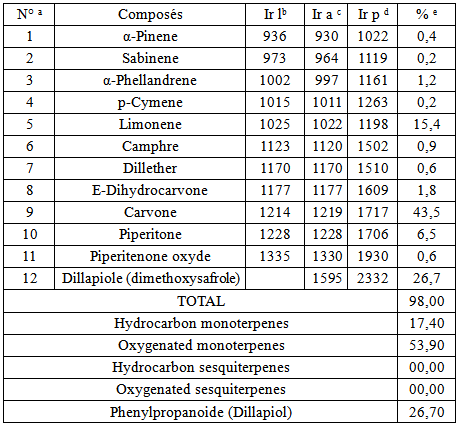
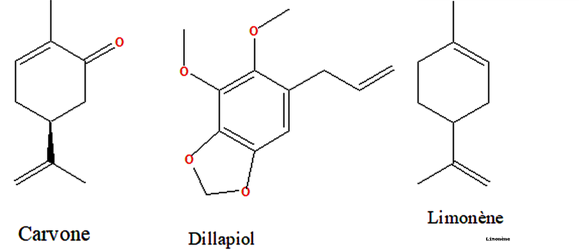
3.2. Chemical Composition of the Essential Oil of Anethum graveolensThe compounds in the essential oil (EO) from A. graveolens seeds were characterized using gas chromatography coupled with mass spectrometry (GC/MS) and flame ionization detection (GC/FID). Twelve compounds, representing 98% of the oil, were identified by comparing their mass spectra and retention indices with those of authentic standards (Table 2).
Compound numbering refers to the order of elution on the apolar column (Rtx-1).
Explanations of Retention Indices Used:
• Ir: Literature retention index on a nonpolar column (Rtx-1).
• Irₐ: Experimental retention index on a nonpolar column (Rtx-1).
• Ir: Experimental retention index on a polar column (Rtx-Wax).
The relative percentages of constituents (%) were calculated from the peak areas of the chromatograms measured on the nonpolar column (Rtx-1).
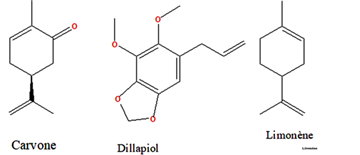
The analysis reveals that the EO from A. graveolens seeds is primarily composed of monoterpenes (71.3%), with a majority being oxygenated compounds (53.9%) and a smaller proportion being hydrocarbons (17.4%). The phenylpropanoid dillapiol is also present in significant quantities. The absence of sesquiterpenes is notable.
The major constituents identified in this EO are:
• Carvone: 43.5%
• Dillapiol: 26.7%
• Limonene: 15.4%
These results are illustrated in Figure 1.
The chemical profile of our essential oil presents similarities with those described in the literature. However, qualitative and quantitative differences were observed. Referring to studies by Soltanie et al. 30, our sample stands out with a higher carvone content and a lower dillapiol content compared to their findings. These variations may be explained by factors such as ecological conditions, the plant's developmental stage, genotype, and climatic and geographical conditions.
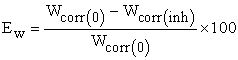
3.3. Gravimetric MeasurementsTo evaluate the inhibitory effect of the essential oil, mass loss experiments were conducted by immersing C38 steel samples in 1M HCl solutions containing different essential oil concentrations (125 to 500 mg/L) at 298 K for 6 hours. Corrosion rates (Wcorr), inhibition efficiencies (Ew %), and surface coverage rates (θ) were calculated based on the measured mass losses using the equations below:
 | (1) |
 | (2) |
 | (3) |
Where:
Δm : Mass difference of the steel in mg before and after immersion in the corrosive solution.
S: Steel surface area in cm².
t: Immersion time in hours.
Wcorr(0) and Wcorr(inh) Corrosion rates in the absence and presence of the inhibitor, respectively, expressed in mg/h.cm².
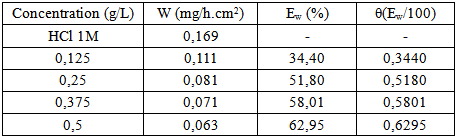
The results of these experiments are summarized in Table 3:
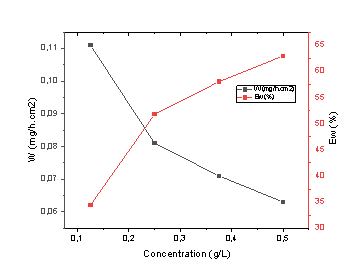
The variation of corrosion rate (Wcorr) of the steel in 1M HCl and the corresponding inhibition efficiency (Ew%) as a function of the different EO concentrations is shown in Figure 2.
The data presented in Table 3 and Figure 2 show a notable variation in the corrosion rate and the inhibition efficiency of the essential oil (EO) depending on its concentration. It is evident that the corrosion rate of steel significantly decreases as the EO concentration increases. This phenomenon can be attributed to the physical and/or chemical adsorption mechanism of the EO molecules on the metallic surface. By attaching to the active sites of the steel, these molecules form a protective barrier that prevents corrosive ions from reaching the metal.
The inhibition efficiency of the EO increases proportionally with its concentration, reaching 62.95% at the maximum concentration studied. This progressive increase in efficiency supports the hypothesis that denser adsorption of EO molecules on the metallic surface occurs as the concentration increases. This adsorption leads to the formation of an increasingly thick and compact protective film, thereby enhancing the inhibitory effect 31. The numerical data show that adding 125 mg/L of A. graveolens seed essential oil to the corrosive medium reduces the corrosion rate by 34.4%, reaching a maximum of 62.95% at 500 mg/L.
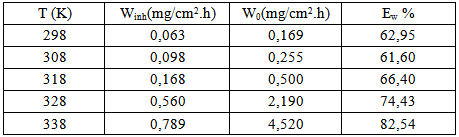
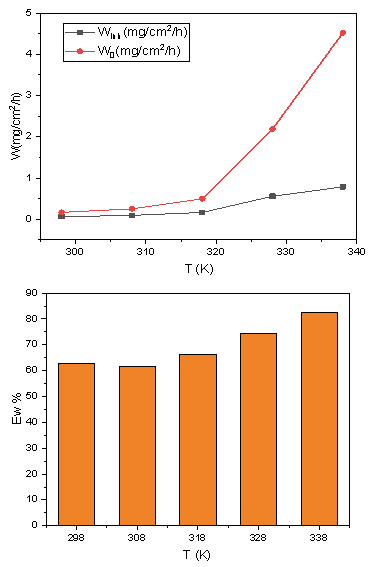
Temperature has a considerable influence on the efficiency of corrosion inhibitors, as evidenced by numerous studies 22. In this study, the impact of temperature on the inhibitory power of A. graveolens seed essential oil was evaluated using the gravimetric method. C38 steel samples were immersed for 6 hours in a 1M hydrochloric acid solution at different temperatures ranging from 298 K to 338 K, both in the absence and presence of a 0.5 g/L EO concentration. A controlled water bath (Memmert model WNE 22) was used to regulate the temperature. The corrosion rates and corresponding inhibition efficiencies are presented in Table 4.
These data are graphically represented in Figure 3.
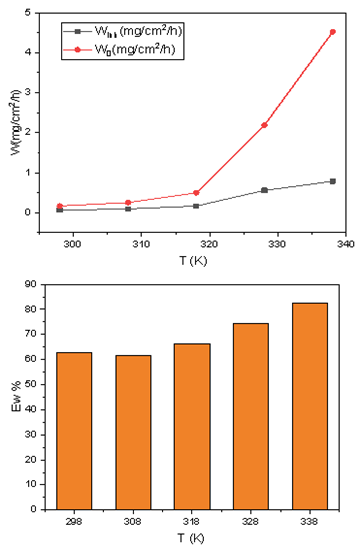
The experimental results highlight a positive correlation between temperature and corrosion rate, both in the absence and presence of the essential oil (EO). This behavior is consistent with electrochemical principles, where increasing temperature generally enhances corrosion reactions.
In the pure corrosive solution (1M HCl), higher temperatures induce a rapid and regular increase in the corrosion rate, indicating accelerated metal dissolution. This phenomenon is explained by the increased thermal agitation of particles, which facilitates electrochemical reactions at the metal/solution interface.
In the presence of EO, the increase in temperature also leads to a rise in the corrosion rate but to a much lesser extent than in the absence of the inhibitor. This result confirms the inhibitory nature of the EO over the entire temperature range studied. Furthermore, the inhibition efficiency (Ew%) exhibits a particular behavior: it increases with temperature, reaching a maximum value of 82.54% at 338 K.
Several mechanisms can explain the evolution of inhibition efficiency with temperature:
• Adsorption: Higher temperatures generally promote the adsorption of EO molecules on the metallic surface. Studies by Ammar and El Khorafi 32 suggest that this adsorption is linked to specific interactions between the inhibitor and the substrate.
• Electron Density: Singh et al. 33 propose that increasing temperature enhances the electron density around adsorption sites, strengthening the bonds between the inhibitor and the metal.
• Surface Coverage: Putilova et al. 34 argue that higher temperatures favor increased surface coverage by the inhibitor, leading to more effective protection.
• Nature of Adsorption: Ivanov 35 indicates that the mode of adsorption of the inhibitor evolves with temperature: physisorption dominates at lower temperatures, while chemisorption is favored at higher temperatures.
To better understand the adsorption mechanism of the inhibitor on the metal surface, the thermodynamic parameters of the corrosion process were determined. Specifically, the apparent activation energy (Ea) was evaluated at different temperatures, both in the presence and absence of the optimal inhibitor concentration.
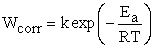
The Arrhenius equation, which describes the influence of temperature on the rate of a chemical reaction, was used 36:
 | (4) |
where  is the corrosion rate of the steel in (mm/yr),
  is the activation energy (kJ.mol-1), R is the perfect gas constant (8,32 ·-1·mol-1), k is a pre-exponential factor, T is the absolute temperature in K.
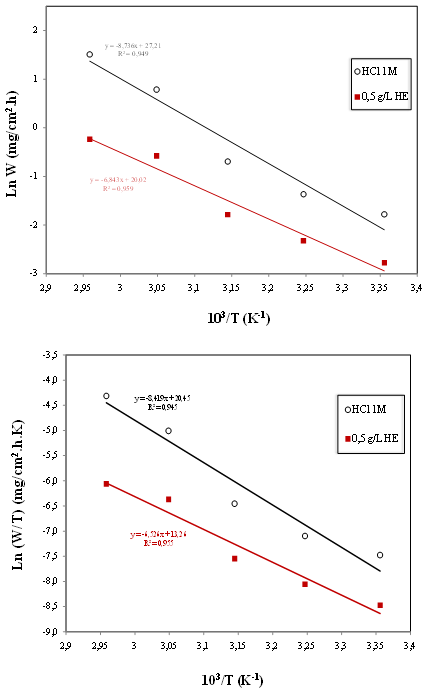
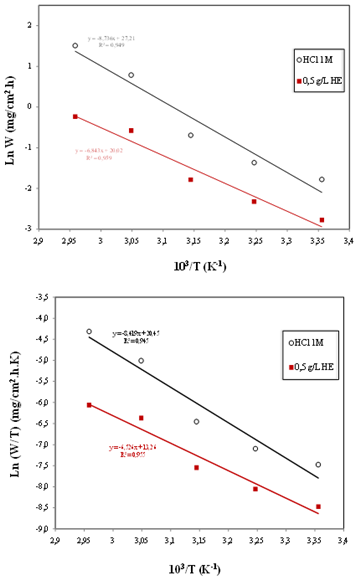
By plotting the natural logarithm of the corrosion rate as a function of the inverse of the absolute temperature [ln (W)= f (1/T)], we have drawn Arrhenius diagrams (Figure 4-a) and determined apparent activation energy values from the slopes of these lines. This energy represents the minimum energy barrier that must be crossed for the corrosion reaction to occur.
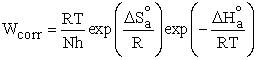
In addition, applying the state transition equation, we calculated the activation enthalpy (ΔHa°) and activation entropy (ΔSa°) from the same experimental data, representing transition state diagrams [ln (V/T) = f (1/T)]. For these calculations, we used the Arrhenius transition equation or the activated complex equation 37:
 | (5) |
where h is Plank's constant (6.63 ×10⁻³⁴ J.s), N is Avogadro's number (6.02×10²³ mol-1), R/N = Kb = 1.38×10⁻²³J⋅K-1 is Boltzmann's constant.
Figure 4-b shows the variation of Ln (W/T) as a function of (1/T) with a slope equal to (-Δ /R) and a coordinate at the origin equal to [Ln (Kb/h) +
  /R]. The values of the activation enthalpies (ΔHa°) and activation entropies (ΔSa°) are given in Table 5.
These parameters, represented in the transition state diagrams (Figure 4-b), provide additional information on the reaction mechanism. The enthalpy of activation is related to the change in internal energy during the formation of the activated complex, while the entropy of activation is associated with the degree of order or disorder of the system during the transition from the initial to the activated state.
The results in Table 5 clearly show a decrease in activation energy (Ea) in the presence of the essential oil at a concentration of 0.5 g/L. This decrease, coupled with the increase in inhibition efficiency with temperature, suggests strong adsorption of the inhibitor molecules on the metallic surface. Radovici (1965) previously emphasized that such a decrease in Ea is characteristic of a chemisorption process 38.
Moreover, the positive values of activation enthalpy (ΔHa∘) indicate an endothermic dissolution process of the steel. The simultaneous decrease in ΔSa∘ and ΔHa∘ in the presence of the inhibitor can be attributed to a change in the reaction mechanism induced by the inhibitor. Specifically, as highlighted by Noor et al. 39, the inhibitor preferentially acts on a specific step of the corrosion process, either slowing it down or completely inhibiting it, leading to an overall decrease in activation energy.
The negative values of the activation entropy (ΔSa∘) suggest a decrease in disorder during the formation of the activated complex, indicating an increased organization of the species involved in the rate-determining step. This observation aligns with the formation of a more structured activated complex in the presence of the inhibitor, attributed to the formation of bonds between the inhibitor molecules and the metallic surface 40, 41, 42, 43, 44.
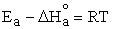
In addition, it is important to note that the activation energy and activation enthalpy vary similarly as a function of inhibitor concentration, which verifies the thermodynamic relationship linking Ea and ΔHa°, as described in: 45
 | (6) |
R is the perfect gas constant (8.32 J-K-1-mol-1), T is the absolute temperature in K
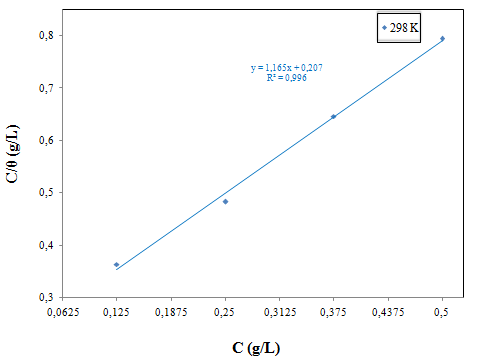
To better understand the adsorption mechanism of A. graveolens seed essential oil on the steel surface and quantify its effectiveness, the experimental data were fitted to various adsorption isotherm models 46 (Langmuir, Frumkin, Temkin, and Freundlich). These models establish a relationship between the surface coverage (θ) by the inhibitor molecules and their concentration in the solution.
Our results demonstrate that the Langmuir isotherm provides the best description of the adsorption of our essential oil. The graphical representation of C/θ versus C (Figure 5) exhibits excellent linearity, confirmed by a correlation coefficient (R² = 0,996) and a slope (1.165) very close to 1.
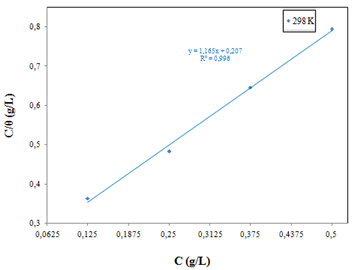
The excellent fit of our experimental data to the Langmuir isotherm suggests monolayer and homogeneous adsorption of the essential oil molecules on the steel surface, with negligible lateral interactions between adsorbed molecules 47.
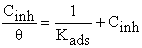
The Langmuir isotherm equation is expressed as follows 48:
 | (7) |
The Langmuir isotherm equation, presented in equation 7, is used to determine the adsorption equilibrium constant (Kads). This constant is directly related to the standard free energy of adsorption (ΔG°ads) by the following relationship:
 | (8) |
The value 55.5 represents the concentration of water in mol/L (1000 g/L), and R is the perfect gas constant. We then calculated the value of the standard free energy of adsorption ΔG°ads which characterizes the interactions between the inhibitor molecules and the metal surface. The results are summarized in the following Table 6:
The values of the standard free energy of adsorption (ΔG°ads) tell us about the nature of the interactions between the inhibitor molecules and the metal surface. Generally speaking, for ΔG°ads values close to -20 kJ/mol or less negative, the type of adsorption involved is physisorption. This means that the inhibitory action is due to electrostatic interactions between the charged molecules and the metal charge. In contrast, values close to -40 kJ/mol or more negative are associated with chemisorption, where there is electron sharing or transfer from the inhibitor molecules to the metal surface to form covalent or coordination bonds. However, determining the type of adsorption when ΔG°ads is between -20 and -40 kJ/mol remains complex. It can be assumed that adsorption may simultaneously involve physisorption and chemisorption, a situation often referred to as mixed adsorption 34, 49, 50.
The negative value of ΔG°ads at 298 K indicates that the adsorption process is spontaneous and that the adsorbed layer on the steel surface is stable 33. Furthermore, a ΔG°ads value close to -20 kJ/mol suggests that the inhibitory action of the studied EO is primarily due to electrostatic interactions between its components and the steel surface, corresponding to physical adsorption (physisorption).
However, the increase in inhibition efficiency with temperature suggests the presence of chemisorption processes as well, involving the formation of chemical bonds between the inhibitor and the metal. This observation aligns with the findings of Ivanov 35 and Putilova et al. 34, who demonstrated that the nature of adsorption can evolve with temperature, transitioning from physisorption at lower temperatures to chemisorption at higher temperatures.
Thus, our results suggest a combined adsorption mechanism, involving both physical and chemical interactions. This mixed adsorption behavior is common when ΔG°ads falls within an intermediate range (-20 to -40 kJ/mol). It is important to note that fitting experimental data to an isotherm model alone cannot definitively determine the adsorption mechanism. Additional experimental techniques, such as infrared spectroscopy, electron microscopy, or surface studies, may be necessary to confirm the exact nature of interactions at the metal/inhibitor interface 51.
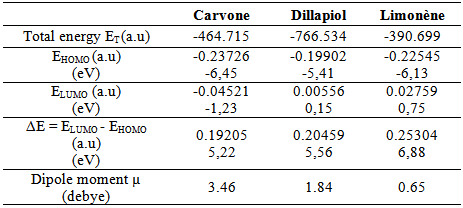
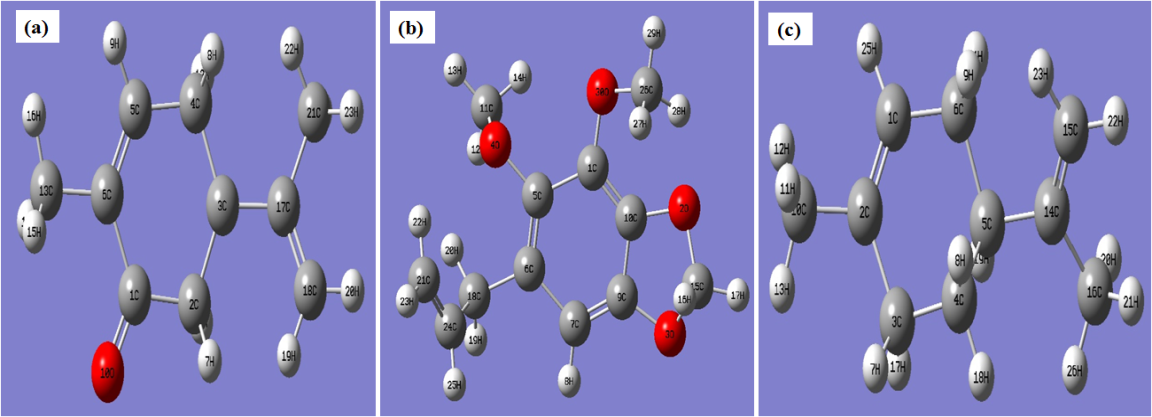
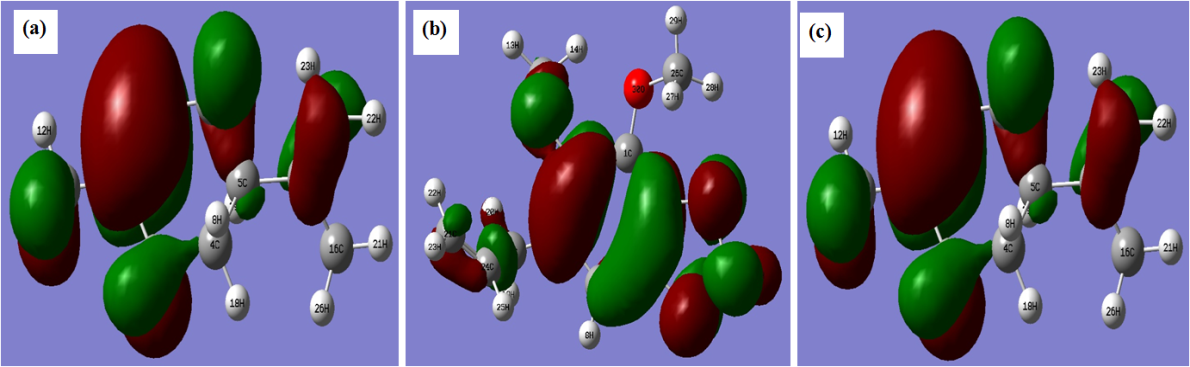
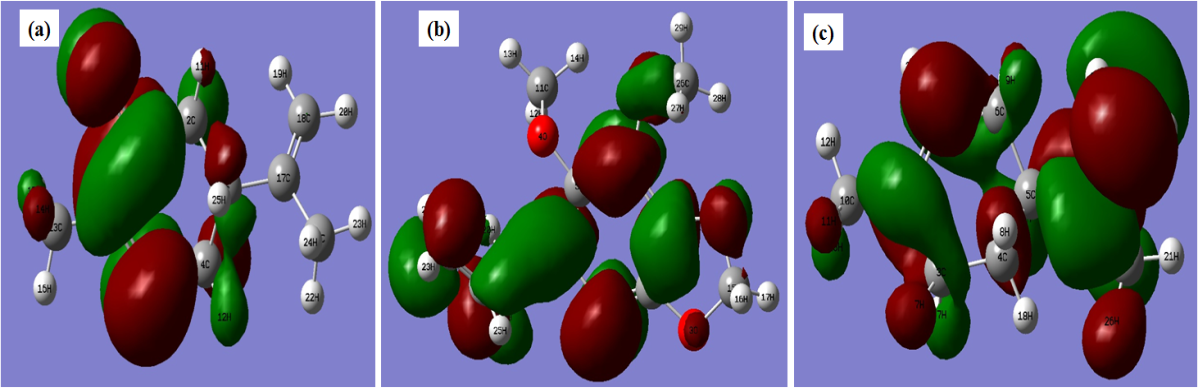
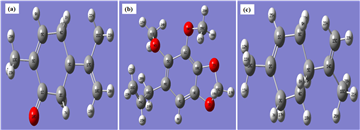
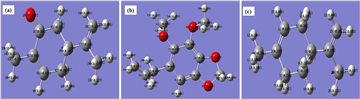
3.4. Correlation Between the Molecular Structure of the Three Main EO Compounds and Their Corrosion Inhibition EffectThe essential oil (EO) of A. graveolens, a complex mixture of 12 components primarily comprising carvone, dillapiol, and limonene, was extensively studied through quantum chemical calculations. These simulations modeled the interaction of these molecules with the C38 steel surface, offering insights into their corrosion inhibition mechanism. The results, presented in Figures 6, 7, and 8 and Table 7, detail the adsorption structures, electronic distributions, and quantum chemical properties of these compounds, including EHOMO, ELUMO, ΔE, dipole moment (μ), and the total energy of the three main components in their neutral form. These properties reveal their potential to form bonds with the metal and inhibit corrosive reactions.
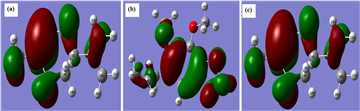
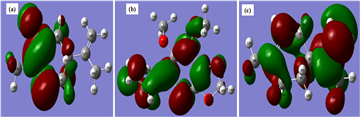
As shown in Figure 7, the frontier molecular orbitals (HOMO) of carvone and limonene exhibit high electron density in the conjugated systems of the cyclohexenone ring and propylene fragments, while that of dillapiol is concentrated on its safrole motif. These high electron-density regions, which are likely to interact with electrophilic sites on the metallic surface, constitute preferred adsorption sites.
The analysis of the LUMO orbitals (Figure 8) reveals a more diffuse distribution for limonene, whereas those of carvone and dillapiol are localized on specific regions of the molecule (the conjugated system of the cyclohexenone ring).
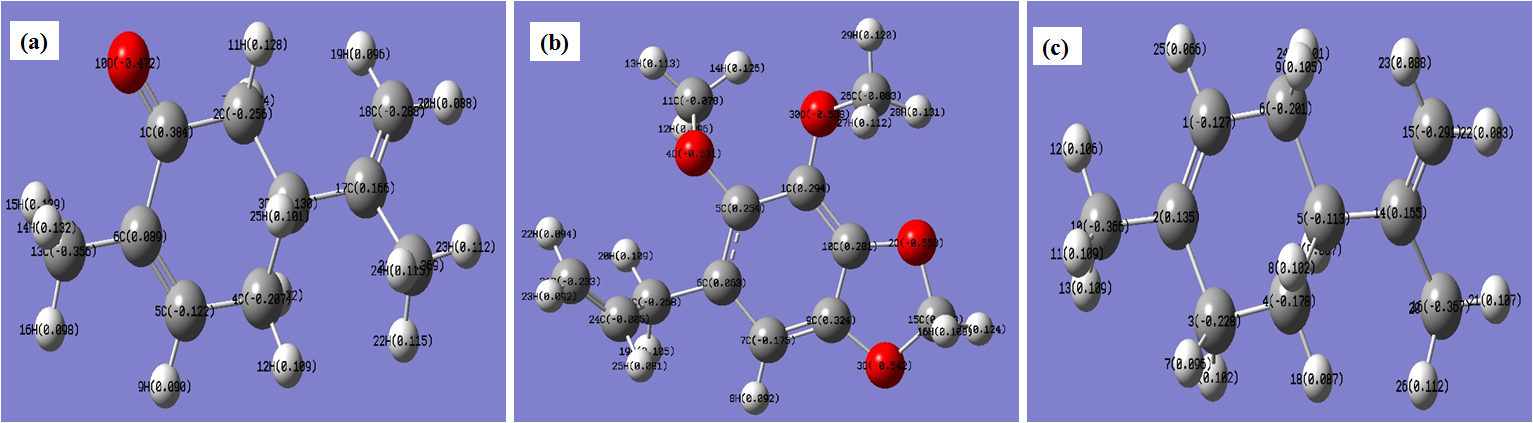
In addition, Mulliken analysis (Figure 9) is a means of estimating inhibitor adsorption centers by calculating the charge distribution over the entire molecule skeleton 52. This analysis makes it possible to identify atoms carrying partial negative charges, likely to form bonds with the metal surface via a donor-acceptor mechanism 53. The combination of this information makes it possible to propose a model for the adsorption of molecules on the surface of C38 steel, thus explaining their inhibiting effect.
The Mulliken charge density analysis (Figure 9) shows that the oxygen atoms in carvone and dillapiol are the most likely sites to interact with the metallic surface due to their high electron density. In contrast, for limonene, the adsorption-active sites are the carbons in positions 3, 4, 5, 6, 15, and 16.
The calculated electronic properties (Table 7) indicate that the three molecules can act as electron donors to the vacant orbitals of the metallic surface due to their low differences in EHOMO values 54. However, carvone, with its low ELUMO and small ΔE, proves to be a more effective electron acceptor, thus favoring the formation of a bond with iron. Additionally, its high dipole moment suggests a strong interaction with the metallic surface.
Theoretical calculations (Table 7) demonstrate that the three molecules exhibit a similar capacity to donate electrons to the metallic surface, as evidenced by the small differences between their HOMO energies 55. This small energy difference (ΔE) leads to an increased inhibitory efficiency of the molecule, as the excitation energy required to remove an electron from the last occupied orbital is low 56.
Moreover, carvone, with its lowest ELUMO value and smallest ΔE, emerges as the best electron acceptor among the three molecules, promoting the formation of a stable [Fe-carvone] complex on the metal surface 57. Its high dipole moment (μ=3.46 Debye), which exceeds that of water (μ=1.84 Debye), also suggests preferential adsorption on the metallic surface via a substitution mechanism with adsorbed water molecules 56. Considering all calculated parameters and molecular structures, carvone appears to significantly contribute to the inhibitory performance of A. graveolens essential oil.
It is important to note that the relative efficiency of each molecule may vary depending on experimental conditions. The calculations presented here concern isolated molecules in the gas phase and do not account for solvent effects or protonation.
Theoretical calculations, combined with experimental results, allow us to deduce the following inhibition mechanism: the essential oil of A. graveolens, rich in carvone, dillapiol, and limonene, owes its inhibitory activity to the presence of active sites such as oxygen atoms, functional groups, and π-electrons, which are characteristic of classical corrosion inhibitors. These three compounds, representing 85.6% of the oil's overall composition, can adsorb onto the C38 steel surface via various mechanisms.
In acidic environments, neutral molecules can form bonds with the metallic surface through electron sharing or transfer (chemisorption mechanism), while protonated forms may be attracted to the negatively charged surface (due to the presence of Cl⁻ anions near the interface) via electrostatic interactions, i.e., a physisorption mechanism. It is also possible that minor components of the essential oil play a role, either synergistically or competitively, with the three major compounds.
The gravimetric study conducted on C38 steel in a 1M hydrochloric acid medium highlighted the significant inhibitory effect of essential oil extracted from Anethum graveolens seeds. The results demonstrate a notable reduction in the corrosion rate in the presence of the inhibitor, with a maximum efficiency of 62.95% achieved at 298 K with a concentration of 0.5 g/L. Thus, A. graveolens essential oil proves to be an excellent inhibitor in a 1M HCl medium.
The effect of temperature in the presence of 0.5 g/L of the oil was studied within the range of 298 to 338 K, revealing that increasing temperature enhances inhibitory activity, reaching 82.54% at 338 K. Furthermore, the various tested isotherms (Langmuir, Temkin, and Frumkin) demonstrated that the adsorption of the essential oil follows the Langmuir isotherm model.
Thermodynamic parameters calculated from Arrhenius plots and the Langmuir isotherm suggest a mixed adsorption mechanism, combining physical (physisorption) and chemical (chemisorption) interactions of the essential oil molecules with the steel surface.
Density Functional Theory (DFT) calculations confirmed this hypothesis by identifying oxygen atoms and π-electrons in the main constituents of the essential oil as the active sites responsible for adsorption on the metallic surface. The formation of coordination bonds, involving charge transfer between the heteroatoms of the inhibitor and the vacant orbitals of the metal, is the favored adsorption mechanism. This process also involves the displacement of water molecules from the C38 steel surface. Additionally, electrostatic interactions between the inhibitor cations and chloride anions present near the metallic surface contribute to the stability of the adsorbed film.
| [1] | International Organization for Standardization (ISO). (1999). ISO 8044 Corrosion of Metals and Alloys-Basic Terms and Definitions, Trilingual version. | ||
| In article | |||
| [2] | Nahlé A., Abu-Abdoun I. I., Abdel-Rahman I. (2012). Effect of temperature on the corrosion inhibition of trans-4-hydroxy-4′-stilbazole on mild steel in HCl solution. International Journal of Corrosion, 2012, 1–7. | ||
| In article | View Article | ||
| [3] | Outirite M., Lagrenée M., Lebrini M., Traisnel M., Jama C., Vezin H., Bentiss F. (2010). Electrochimica Acta, 55, 1670. | ||
| In article | View Article | ||
| [4] | Bouhrira K., Ouahiba F., Zerouali D., Hammouti B., Zertoubi M., Benchat N. (2010). The Inhibitive Effect of 2-Phenyl-3-nitroso-imidazo [1, 2-a] pyridine on the Corrosion of Steel in 0.5 M HCl Acid Solution E-Journal of Chemistry, 7, S35. | ||
| In article | View Article | ||
| [5] | Abboud Y., Abourriche A., Tanane O., Hammouti B., Saffaj T., Ainane T., Berrada M., Charrouf M., BennamaraA. (2009). Corrosion inhibition of carbon steel in acidic media by Bifurcaria bifurcata extract, Chem. Eng. Comm. 196 N°7, 788-800. | ||
| In article | View Article | ||
| [6] | Zerga B., Attayibat A., Sfaira M., Taleb M., Hammouti B., Ebn Touhami M., Radi S., Rais Z. (2010). Effect of Some Tripodal Bipyrazolic Compounds on C38 Steel Corrosion in Hydrochloric Acid Solution. Journal of Applied Electrochemistry, 40, 1575. | ||
| In article | View Article | ||
| [7] | Kertit S., Es-Soufi H., Hammouti B., Benkaddour M. (1998). 1-Phenyl-5-mercapto-1,2,3,4-tétrazole (PMT): un nouvel inhibiteur de corrosion de l'alliage Cu-Zn efficace à très faible concentration. Journal de Chimie Physique, 95(9), 2070-2082. | ||
| In article | View Article | ||
| [8] | Cissé K. (2020). Electrochemical studies of Arabic gum as a corrosion inhibitor for metallic structure steel in a hydrochloric acid solution. Current Trends in Technology and Sciences, ISSN 2279-0535. | ||
| In article | |||
| [9] | Cissé, K., Gassama, D., Diagne, A. A., & Badji, M. (2020). Influence of the inhibition of corrosion of S235 steel in a solution of perchloric acid by gum Arabic. American Journal of Materials Science and Engineering, 8(1), 17–21. | ||
| In article | |||
| [10] | Gassama D., Seck S. M., Yade I., Fall M., Diop M. B. (2014). Valorisation des tufs volcaniques argileux de Bafoundou comme inhibiteurs de corrosion du fer à béton Fe E400. Journal de la Société Ouest-Africaine de Chimie, 038, 64–72. | ||
| In article | |||
| [11] | Gassama D., Fall M., Yade I., Seck S. M., Diagne M., Diop M. B. (2016). Clays valorization as corrosion inhibitors for E400 reinforcing steel. Ovidius University Annals of Chemistry, 27(1), 28–35. | ||
| In article | View Article | ||
| [12] | Cissé K., Gassama D., Thiam A., Ndiaye E. H. B., Gueye M. T., Fall M. (2021). Comparative study of S235 steel corrosion inhibition by Eucalyptus camaldulensis and Cyperus rotundus essential oils in hydrochloric acid solution. American Journal of Physical Chemistry, 10(1), 6-15. | ||
| In article | View Article | ||
| [13] | Ben Hmamou D., Salghi, R., Zarrouk A., Hammouti B., Al-Deyab S. S., Bazzi Lh., Zarrok H., Chakir A., Bammou L. (2012). Corrosion inhibition of steel in 1 M hydrochloric acid medium by chamomile essential oils. International Journal of Electrochemical Science, 7(3), 2361-2373. | ||
| In article | View Article | ||
| [14] | Manssouri M., Lakbaibi Z., Znini M., El Ouadi Y., Jaafar A., Majidi L. (2020). Impact of Aaronsohnia pubescens essential oil to prevent against the corrosion of mild steel in 1.0 M HCl: Experimental and computational modeling studies. Journal of Failure Analysis and Prevention, 20(6), 1939-1953. | ||
| In article | View Article | ||
| [15] | Saxena A., Sharma A., Saxena D. (2012). E-Journal of Chemistry, 9, 2044-205. | ||
| In article | View Article | ||
| [16] | Znini M., Bouklah M., Majidi L., Kharchouf S., Aouniti A., Bouyanzer A., Hammouti B., Costa J., Al-Deyab S. S. (2011). International Journal of Electrochemical Science, 6, 691–704. | ||
| In article | View Article | ||
| [17] | Manssouri M., Lakbaibi Z., Znini M., El Ouadi Y. E., Jaafar A., Majidi L. (2020). Impact of Aaronsohnia pubescens essential oil to prevent against the corrosion of mild steel in 1.0 M HCl: Experimental and computational modeling studies. Journal of Failure Analysis and Prevention, 20(6), 1939–1953. | ||
| In article | View Article | ||
| [18] | Lazrak J., Arrousse N., Ech-Chihbi E., El Atki Y., Taroq A., Abdellaoui A., El-hajjaji F., Taleb M., Nahlé A. (2021). Valorization of cinnamon essential oil as eco-friendly corrosion inhibitor for mild steel in 1.0 M hydrochloric acid solution. Surface Engineering and Applied Electrochemistry, 57(3), 360-373. | ||
| In article | View Article | ||
| [19] | Lahhit N., Bouyanzer A., Desjobert J.-M., Hammouti B., Salghi R., Costa J., Jama C., Bentiss F., Majidi L. (2011). Fennel (Foeniculum vulgare) essential oil as green corrosion inhibitor of carbon steel in hydrochloric acid solution. Portugaliae Electrochimica Acta, 29. | ||
| In article | View Article | ||
| [20] | Bathily M., Ngom B., Gassama D., Tamba S. (2021). Review on essential oils and their corrosion-inhibiting properties. American Journal of Applied Chemistry, 9(3), 65-73. | ||
| In article | View Article | ||
| [21] | Bathily M., Ngom B., Mbengue M., Gassama D. (2023). Evaluation of the inhibitory action of essential oil from Eucalyptus globulus leaves on the corrosion of mild carbon steel in 1 M HCl medium. Ovidius University Annals of Chemistry, 34(1), 1-7. | ||
| In article | View Article | ||
| [22] | Bathily M., Cissé K., Youssef Y., Ou-ani O., Lahcen O., Ngom B., Znini M., Gassama D., Costa J. (2023). Evaluation of the Inhibiting Power of Essential Oil Extracted from Cloves (Syzygium Aromaticum) on Corrosion of Steel C24 In Medium HCl 1M. Analytical and Bioanalytical Electrochemistry, 15(10), 891-913. | ||
| In article | |||
| [23] | Bathily M., Cissé K., Youssefi Y., Ou-ani O., Oucheikh L., Ngom B., Znini M., Gassama D., Costa J. (2024) Assessment of the Corrosion Inhibition Ability of Eucalyptus globulus Leaf Extract Essential Oil on C24 Steel in a 1M HCl Environment, Mor. J. Chem., 12(4), 1596-1620. | ||
| In article | |||
| [24] | Council of Europe. (2010). European pharmacopoeia (7th ed., Vol. 1). Strasbourg, France: Council of Europe. | ||
| In article | |||
| [25] | Joulain D., König W. A. (1998). The atlas of spectral data of sesquiterpene hydrocarbons. Hamburg, Germany: EbVerlag. | ||
| In article | |||
| [26] | Hochmuth D., Joulain D., König W. A. (2001). Terpenoids and related constituents of essential oils. Library of MassFinder 2. Hamburg, Germany: University of Hamburg, Institute of Organic Chemistry. | ||
| In article | |||
| [27] | Adams R.P. (2007). Identification of essential oil components by gas chromatography/mass spectrometry. Allured Publishing Corporation, Carol Stream, IL. | ||
| In article | |||
| [28] | Yili, A., Yimamu, H., Maksimov, V.V., et al. Chemical composition of essential oil from seeds of Anethum graveolens cultivated in China. Chem Nat Compd 42, 491–492 (2006). | ||
| In article | View Article | ||
| [29] | Yili, A., Aisa, H.A., Maksimov, V.V., et al. Chemical composition and antimicrobial activity of essential oil from seeds of Anethum graveolens growing in Uzbekistan. Chem Nat Compd 45, 280–281 (2009). | ||
| In article | View Article | ||
| [30] | Soltani, R., Ktari, R., Barhoumi, L., & Chouaibi, M. H. (2024). Chemical composition and bio-insecticidal activity of the dill, Anethum graveolens, essential oils against the red flour beetle Tribolium castaneum. Tunisian Journal of Plant Protection, 19(1), 27–42. | ||
| In article | View Article | ||
| [31] | El Moussaoui, A., Kadiri, M., Bourhia, M., Agour, A., Salamatullah, A., Alzahrani, A., Alyahya, H., Albadr, N., Chedadi, M., Sfaira, M., & Bari, A. (2021). Promising antioxidant and anticorrosion activities of mild steel in 1.0 M hydrochloric solution acid of Withania frutescens L. essential oil. Frontiers in Chemistry, 9, 739273. | ||
| In article | View Article PubMed | ||
| [32] | Ammar, I. A., & El Khorafi, F. M. (1973). Adsorbability of thiourea on iron cathodes. Materials and corrosion, 24(8), 702-707. | ||
| In article | View Article | ||
| [33] | Singh, D.D.N., Chaudhary, R.S., Prakash, B., & Agarwal, C.V. (1979). Inhibitive Efficiency of Some Substituted Thioureas for the Corrosion of Aluminium in Nitric Acid. British Corrosion Journal, 14(4), 235-239. | ||
| In article | View Article | ||
| [34] | Putilova, L.N., Balezin, S.A., & Barannik, V.P. (1960). Metallic Corrosion Inhibitors. Pergamon Press, New York, p. 196. | ||
| In article | |||
| [35] | Ivanov, E.S. (1986). Inhibitors for Metal Corrosion in Acid Media. Metallurgy, Moscow. | ||
| In article | |||
| [36] | Sakunthala, P., Vivekananthan, S., Mayakrishnan, G., Sulochana, N., & Vincent, A. (2012). Spectroscopic Investigations of Physicochemical Interactions on Mild Steel in an Acidic Medium by Environmentally Friendly Green Inhibitors. Journal of Surfactants and Detergents, 16. | ||
| In article | View Article | ||
| [37] | Shukla, S.K., & Quraishi, M.A. (2010). The effects of pharmaceutically active compound doxycycline on the corrosion of mild steel in hydrochloric acid solution. Corrosion Science, 52(2), 314-321. | ||
| In article | View Article | ||
| [38] | Radovici, O. (1965). Proceedings of the Second European Symposium on Corrosion Inhibitors, p. 178, Ferrara. | ||
| In article | |||
| [39] | Noor, E. A., & Al-Moubaraki, A. H. (2008). Thermodynamic study of metal corrosion and inhibitor adsorption processes in mild steel/1-methyl-4[4′(-X)-styryl pyridinium iodides/hydrochloric acid systems. Materials Chemistry and Physics, 110(1), 145-154. | ||
| In article | View Article | ||
| [40] | Bentiss F., Lebrini M., Vezin H., Chai F., Traisnel M., Lagrené M. (2009). Enhanced Corrosion Resistance of Mild Steel in Normal Sulphuric Acid Medium by Some Macrocyclic Polyether Compounds Containing a 1,3,4-Thiadiazole Moiety: A SC Impedance and Computational Studies. Corrosion Science, 51, 2165-2173. | ||
| In article | View Article | ||
| [41] | Schmid G. M., Huang H. J. (1980). Spectro-electrochemical studies of the inhibition effect of 4, 7-diphenyl -1, 10-phenanthroline on the corrosion of 304 stainless steel. Corrosion Science, 20, 1041-1057. | ||
| In article | View Article | ||
| [42] | Elachouri M., Hajji M. S., Salem M., Kertit S., Aride J., Coudert R., Essassi E. (1996). Some nonionic surfactants as inhibitors of the corrosion of iron in acid chloride solutions. Corrosion, 52(2), 103–108. | ||
| In article | View Article | ||
| [43] | Hussin M. H., Rahim A. A., Mohamad Ibrahim M. N., Brosse N. (2016). The capability of ultrafiltered alkaline and organosolv oil palm (Elaeis guineensis) fronds lignin as a green corrosion inhibitor for mild steel in 0.5 M HCl solution. Measurement, 78, 90–103. | ||
| In article | View Article | ||
| [44] | Abboud Y., Tanane O., El Bouari A., Salghi R., Hammouti B., Chetouani A., Jodeh S. (2016). Corrosion inhibition of carbon steel in hydrochloric acid solution using pomegranate leaf extracts. Corrosion Engineering, Science and Technology, 51(8), 557–565. | ||
| In article | View Article | ||
| [45] | Gomma G. K., Wahdan M. H. (1995). Materials Chemistry and Physics, 39, 211 | ||
| In article | View Article | ||
| [46] | He J., Li Q., Li X., An J., Chen G., Zhao L., Li W. (2020). Insight into the anti-corrosion mechanism of 2-aminobenzenethiol as the inhibitor for copper in acid environment. Journal of Molecular Liquids, 320, 114494. | ||
| In article | View Article | ||
| [47] | Morad MS (2008). Inhibition of iron corrosion in acid solutions by Cefatrexyl: behaviour near and at the corrosion potential. Corros Sci 50(2):436–448. | ||
| In article | View Article | ||
| [48] | Langmuir, I. (1917). The Constitution and Fundamental Properties of Solids and Liquids. II. Liquids. 1. Journal of the American Chemical Society, 39(9), 1848-1906. | ||
| In article | View Article | ||
| [49] | Ammar, I.A., & El-Khorafi, F.M. (1973). Adsorbability of thiourea on iron cathodes. Werkst. Korros., 24, 702-707 | ||
| In article | View Article | ||
| [50] | Singh D.D.N., Chaudhary R.S., Prakash B., Agarwal C.V. (1979). Inhibitive efficiency of some substituted thioureas for the corrosion of aluminium in nitric acid. British Corrosion Journal, 14(4), 235-239. | ||
| In article | View Article | ||
| [51] | Youssefi, Y.; Ansari, A.; Ou-ani, O.; Oucheikh, L.; Oubair, A.; Lgaz, H.; Hammouti, B.; Chaouiki, A.; Ko, Y.G.; Znini, M. Insights into the Corrosion Inhibition Performance of Three 2-Isoxazoline-γ-Lactones for Carbon Steel in Acidic Medium: Linking Molecular and Experimental-Level Information with Microscopic-Scale Modeling. Lubricants 2023, 11, 141. | ||
| In article | View Article | ||
| [52] | Özcan, F., Karadağ, I., & Dehri, I. (2008). Étude sur les propriétés anticorrosion. Acta Physico-Chimica Sinica, 24(8), 1387–1392. | ||
| In article | View Article | ||
| [53] | Obot, I. B., & Obi-Egbedi, N. O. (2010). Adsorption properties and inhibition of mild steel corrosion in sulphuric acid solution by ketoconazole: Experimental and theoretical investigation. Corrosion Science, 52(1), 198–204. | ||
| In article | View Article | ||
| [54] | Rodríguez-Valdez, L. M., Villamizar, W., Casales, M., González-Rodríguez, J., Martínez-Villafañe, A., Martínez, L., & Glossman-Mitnik, D. (2006). Computational simulations of the molecular structure and corrosion properties of amidoethyl, aminoethyl, and hydroxyethyl imidazolines inhibitors. Corrosion Science, 48(12), 4053–4064. | ||
| In article | View Article | ||
| [55] | Rodríguez-Valdez, L. M., Martínez-Villafañe, A., & Glossman-Mitnik, D. (2005). CHIH-DFT theoretical study of isomeric thiatriazoles and their potential activity as corrosion inhibitors. Journal of Molecular Structure: THEOCHEM, 716(1–3), 61–65. | ||
| In article | View Article | ||
| [56] | Gece, G. (2008). The use of quantum chemical methods in corrosion inhibitor studies. Corrosion Science, 50(11), 2981–2992. | ||
| In article | View Article | ||
| [57] | Oguzie, E. E., Enenebeaku, C. K., Akalezi, C. O., Okoro, S. C., Ayuk, A. A., & Ejike, E. N. (2010). Adsorption and corrosion-inhibiting effect of Dacryodis edulis extract on low-carbon-steel corrosion in acidic media. Journal of Colloid and Interface Science, 349(1), 283–292. | ||
| In article | View Article PubMed | ||
Published with license by Science and Education Publishing, Copyright © 2025 Malick Bathily, Khaly Cissé, Baba Ngom, Mohamed Znini and Diadioly Gassama
 This work is licensed under a Creative Commons Attribution 4.0 International License. To view a copy of this license, visit
http://creativecommons.org/licenses/by/4.0/
This work is licensed under a Creative Commons Attribution 4.0 International License. To view a copy of this license, visit
http://creativecommons.org/licenses/by/4.0/
| [1] | International Organization for Standardization (ISO). (1999). ISO 8044 Corrosion of Metals and Alloys-Basic Terms and Definitions, Trilingual version. | ||
| In article | |||
| [2] | Nahlé A., Abu-Abdoun I. I., Abdel-Rahman I. (2012). Effect of temperature on the corrosion inhibition of trans-4-hydroxy-4′-stilbazole on mild steel in HCl solution. International Journal of Corrosion, 2012, 1–7. | ||
| In article | View Article | ||
| [3] | Outirite M., Lagrenée M., Lebrini M., Traisnel M., Jama C., Vezin H., Bentiss F. (2010). Electrochimica Acta, 55, 1670. | ||
| In article | View Article | ||
| [4] | Bouhrira K., Ouahiba F., Zerouali D., Hammouti B., Zertoubi M., Benchat N. (2010). The Inhibitive Effect of 2-Phenyl-3-nitroso-imidazo [1, 2-a] pyridine on the Corrosion of Steel in 0.5 M HCl Acid Solution E-Journal of Chemistry, 7, S35. | ||
| In article | View Article | ||
| [5] | Abboud Y., Abourriche A., Tanane O., Hammouti B., Saffaj T., Ainane T., Berrada M., Charrouf M., BennamaraA. (2009). Corrosion inhibition of carbon steel in acidic media by Bifurcaria bifurcata extract, Chem. Eng. Comm. 196 N°7, 788-800. | ||
| In article | View Article | ||
| [6] | Zerga B., Attayibat A., Sfaira M., Taleb M., Hammouti B., Ebn Touhami M., Radi S., Rais Z. (2010). Effect of Some Tripodal Bipyrazolic Compounds on C38 Steel Corrosion in Hydrochloric Acid Solution. Journal of Applied Electrochemistry, 40, 1575. | ||
| In article | View Article | ||
| [7] | Kertit S., Es-Soufi H., Hammouti B., Benkaddour M. (1998). 1-Phenyl-5-mercapto-1,2,3,4-tétrazole (PMT): un nouvel inhibiteur de corrosion de l'alliage Cu-Zn efficace à très faible concentration. Journal de Chimie Physique, 95(9), 2070-2082. | ||
| In article | View Article | ||
| [8] | Cissé K. (2020). Electrochemical studies of Arabic gum as a corrosion inhibitor for metallic structure steel in a hydrochloric acid solution. Current Trends in Technology and Sciences, ISSN 2279-0535. | ||
| In article | |||
| [9] | Cissé, K., Gassama, D., Diagne, A. A., & Badji, M. (2020). Influence of the inhibition of corrosion of S235 steel in a solution of perchloric acid by gum Arabic. American Journal of Materials Science and Engineering, 8(1), 17–21. | ||
| In article | |||
| [10] | Gassama D., Seck S. M., Yade I., Fall M., Diop M. B. (2014). Valorisation des tufs volcaniques argileux de Bafoundou comme inhibiteurs de corrosion du fer à béton Fe E400. Journal de la Société Ouest-Africaine de Chimie, 038, 64–72. | ||
| In article | |||
| [11] | Gassama D., Fall M., Yade I., Seck S. M., Diagne M., Diop M. B. (2016). Clays valorization as corrosion inhibitors for E400 reinforcing steel. Ovidius University Annals of Chemistry, 27(1), 28–35. | ||
| In article | View Article | ||
| [12] | Cissé K., Gassama D., Thiam A., Ndiaye E. H. B., Gueye M. T., Fall M. (2021). Comparative study of S235 steel corrosion inhibition by Eucalyptus camaldulensis and Cyperus rotundus essential oils in hydrochloric acid solution. American Journal of Physical Chemistry, 10(1), 6-15. | ||
| In article | View Article | ||
| [13] | Ben Hmamou D., Salghi, R., Zarrouk A., Hammouti B., Al-Deyab S. S., Bazzi Lh., Zarrok H., Chakir A., Bammou L. (2012). Corrosion inhibition of steel in 1 M hydrochloric acid medium by chamomile essential oils. International Journal of Electrochemical Science, 7(3), 2361-2373. | ||
| In article | View Article | ||
| [14] | Manssouri M., Lakbaibi Z., Znini M., El Ouadi Y., Jaafar A., Majidi L. (2020). Impact of Aaronsohnia pubescens essential oil to prevent against the corrosion of mild steel in 1.0 M HCl: Experimental and computational modeling studies. Journal of Failure Analysis and Prevention, 20(6), 1939-1953. | ||
| In article | View Article | ||
| [15] | Saxena A., Sharma A., Saxena D. (2012). E-Journal of Chemistry, 9, 2044-205. | ||
| In article | View Article | ||
| [16] | Znini M., Bouklah M., Majidi L., Kharchouf S., Aouniti A., Bouyanzer A., Hammouti B., Costa J., Al-Deyab S. S. (2011). International Journal of Electrochemical Science, 6, 691–704. | ||
| In article | View Article | ||
| [17] | Manssouri M., Lakbaibi Z., Znini M., El Ouadi Y. E., Jaafar A., Majidi L. (2020). Impact of Aaronsohnia pubescens essential oil to prevent against the corrosion of mild steel in 1.0 M HCl: Experimental and computational modeling studies. Journal of Failure Analysis and Prevention, 20(6), 1939–1953. | ||
| In article | View Article | ||
| [18] | Lazrak J., Arrousse N., Ech-Chihbi E., El Atki Y., Taroq A., Abdellaoui A., El-hajjaji F., Taleb M., Nahlé A. (2021). Valorization of cinnamon essential oil as eco-friendly corrosion inhibitor for mild steel in 1.0 M hydrochloric acid solution. Surface Engineering and Applied Electrochemistry, 57(3), 360-373. | ||
| In article | View Article | ||
| [19] | Lahhit N., Bouyanzer A., Desjobert J.-M., Hammouti B., Salghi R., Costa J., Jama C., Bentiss F., Majidi L. (2011). Fennel (Foeniculum vulgare) essential oil as green corrosion inhibitor of carbon steel in hydrochloric acid solution. Portugaliae Electrochimica Acta, 29. | ||
| In article | View Article | ||
| [20] | Bathily M., Ngom B., Gassama D., Tamba S. (2021). Review on essential oils and their corrosion-inhibiting properties. American Journal of Applied Chemistry, 9(3), 65-73. | ||
| In article | View Article | ||
| [21] | Bathily M., Ngom B., Mbengue M., Gassama D. (2023). Evaluation of the inhibitory action of essential oil from Eucalyptus globulus leaves on the corrosion of mild carbon steel in 1 M HCl medium. Ovidius University Annals of Chemistry, 34(1), 1-7. | ||
| In article | View Article | ||
| [22] | Bathily M., Cissé K., Youssef Y., Ou-ani O., Lahcen O., Ngom B., Znini M., Gassama D., Costa J. (2023). Evaluation of the Inhibiting Power of Essential Oil Extracted from Cloves (Syzygium Aromaticum) on Corrosion of Steel C24 In Medium HCl 1M. Analytical and Bioanalytical Electrochemistry, 15(10), 891-913. | ||
| In article | |||
| [23] | Bathily M., Cissé K., Youssefi Y., Ou-ani O., Oucheikh L., Ngom B., Znini M., Gassama D., Costa J. (2024) Assessment of the Corrosion Inhibition Ability of Eucalyptus globulus Leaf Extract Essential Oil on C24 Steel in a 1M HCl Environment, Mor. J. Chem., 12(4), 1596-1620. | ||
| In article | |||
| [24] | Council of Europe. (2010). European pharmacopoeia (7th ed., Vol. 1). Strasbourg, France: Council of Europe. | ||
| In article | |||
| [25] | Joulain D., König W. A. (1998). The atlas of spectral data of sesquiterpene hydrocarbons. Hamburg, Germany: EbVerlag. | ||
| In article | |||
| [26] | Hochmuth D., Joulain D., König W. A. (2001). Terpenoids and related constituents of essential oils. Library of MassFinder 2. Hamburg, Germany: University of Hamburg, Institute of Organic Chemistry. | ||
| In article | |||
| [27] | Adams R.P. (2007). Identification of essential oil components by gas chromatography/mass spectrometry. Allured Publishing Corporation, Carol Stream, IL. | ||
| In article | |||
| [28] | Yili, A., Yimamu, H., Maksimov, V.V., et al. Chemical composition of essential oil from seeds of Anethum graveolens cultivated in China. Chem Nat Compd 42, 491–492 (2006). | ||
| In article | View Article | ||
| [29] | Yili, A., Aisa, H.A., Maksimov, V.V., et al. Chemical composition and antimicrobial activity of essential oil from seeds of Anethum graveolens growing in Uzbekistan. Chem Nat Compd 45, 280–281 (2009). | ||
| In article | View Article | ||
| [30] | Soltani, R., Ktari, R., Barhoumi, L., & Chouaibi, M. H. (2024). Chemical composition and bio-insecticidal activity of the dill, Anethum graveolens, essential oils against the red flour beetle Tribolium castaneum. Tunisian Journal of Plant Protection, 19(1), 27–42. | ||
| In article | View Article | ||
| [31] | El Moussaoui, A., Kadiri, M., Bourhia, M., Agour, A., Salamatullah, A., Alzahrani, A., Alyahya, H., Albadr, N., Chedadi, M., Sfaira, M., & Bari, A. (2021). Promising antioxidant and anticorrosion activities of mild steel in 1.0 M hydrochloric solution acid of Withania frutescens L. essential oil. Frontiers in Chemistry, 9, 739273. | ||
| In article | View Article PubMed | ||
| [32] | Ammar, I. A., & El Khorafi, F. M. (1973). Adsorbability of thiourea on iron cathodes. Materials and corrosion, 24(8), 702-707. | ||
| In article | View Article | ||
| [33] | Singh, D.D.N., Chaudhary, R.S., Prakash, B., & Agarwal, C.V. (1979). Inhibitive Efficiency of Some Substituted Thioureas for the Corrosion of Aluminium in Nitric Acid. British Corrosion Journal, 14(4), 235-239. | ||
| In article | View Article | ||
| [34] | Putilova, L.N., Balezin, S.A., & Barannik, V.P. (1960). Metallic Corrosion Inhibitors. Pergamon Press, New York, p. 196. | ||
| In article | |||
| [35] | Ivanov, E.S. (1986). Inhibitors for Metal Corrosion in Acid Media. Metallurgy, Moscow. | ||
| In article | |||
| [36] | Sakunthala, P., Vivekananthan, S., Mayakrishnan, G., Sulochana, N., & Vincent, A. (2012). Spectroscopic Investigations of Physicochemical Interactions on Mild Steel in an Acidic Medium by Environmentally Friendly Green Inhibitors. Journal of Surfactants and Detergents, 16. | ||
| In article | View Article | ||
| [37] | Shukla, S.K., & Quraishi, M.A. (2010). The effects of pharmaceutically active compound doxycycline on the corrosion of mild steel in hydrochloric acid solution. Corrosion Science, 52(2), 314-321. | ||
| In article | View Article | ||
| [38] | Radovici, O. (1965). Proceedings of the Second European Symposium on Corrosion Inhibitors, p. 178, Ferrara. | ||
| In article | |||
| [39] | Noor, E. A., & Al-Moubaraki, A. H. (2008). Thermodynamic study of metal corrosion and inhibitor adsorption processes in mild steel/1-methyl-4[4′(-X)-styryl pyridinium iodides/hydrochloric acid systems. Materials Chemistry and Physics, 110(1), 145-154. | ||
| In article | View Article | ||
| [40] | Bentiss F., Lebrini M., Vezin H., Chai F., Traisnel M., Lagrené M. (2009). Enhanced Corrosion Resistance of Mild Steel in Normal Sulphuric Acid Medium by Some Macrocyclic Polyether Compounds Containing a 1,3,4-Thiadiazole Moiety: A SC Impedance and Computational Studies. Corrosion Science, 51, 2165-2173. | ||
| In article | View Article | ||
| [41] | Schmid G. M., Huang H. J. (1980). Spectro-electrochemical studies of the inhibition effect of 4, 7-diphenyl -1, 10-phenanthroline on the corrosion of 304 stainless steel. Corrosion Science, 20, 1041-1057. | ||
| In article | View Article | ||
| [42] | Elachouri M., Hajji M. S., Salem M., Kertit S., Aride J., Coudert R., Essassi E. (1996). Some nonionic surfactants as inhibitors of the corrosion of iron in acid chloride solutions. Corrosion, 52(2), 103–108. | ||
| In article | View Article | ||
| [43] | Hussin M. H., Rahim A. A., Mohamad Ibrahim M. N., Brosse N. (2016). The capability of ultrafiltered alkaline and organosolv oil palm (Elaeis guineensis) fronds lignin as a green corrosion inhibitor for mild steel in 0.5 M HCl solution. Measurement, 78, 90–103. | ||
| In article | View Article | ||
| [44] | Abboud Y., Tanane O., El Bouari A., Salghi R., Hammouti B., Chetouani A., Jodeh S. (2016). Corrosion inhibition of carbon steel in hydrochloric acid solution using pomegranate leaf extracts. Corrosion Engineering, Science and Technology, 51(8), 557–565. | ||
| In article | View Article | ||
| [45] | Gomma G. K., Wahdan M. H. (1995). Materials Chemistry and Physics, 39, 211 | ||
| In article | View Article | ||
| [46] | He J., Li Q., Li X., An J., Chen G., Zhao L., Li W. (2020). Insight into the anti-corrosion mechanism of 2-aminobenzenethiol as the inhibitor for copper in acid environment. Journal of Molecular Liquids, 320, 114494. | ||
| In article | View Article | ||
| [47] | Morad MS (2008). Inhibition of iron corrosion in acid solutions by Cefatrexyl: behaviour near and at the corrosion potential. Corros Sci 50(2):436–448. | ||
| In article | View Article | ||
| [48] | Langmuir, I. (1917). The Constitution and Fundamental Properties of Solids and Liquids. II. Liquids. 1. Journal of the American Chemical Society, 39(9), 1848-1906. | ||
| In article | View Article | ||
| [49] | Ammar, I.A., & El-Khorafi, F.M. (1973). Adsorbability of thiourea on iron cathodes. Werkst. Korros., 24, 702-707 | ||
| In article | View Article | ||
| [50] | Singh D.D.N., Chaudhary R.S., Prakash B., Agarwal C.V. (1979). Inhibitive efficiency of some substituted thioureas for the corrosion of aluminium in nitric acid. British Corrosion Journal, 14(4), 235-239. | ||
| In article | View Article | ||
| [51] | Youssefi, Y.; Ansari, A.; Ou-ani, O.; Oucheikh, L.; Oubair, A.; Lgaz, H.; Hammouti, B.; Chaouiki, A.; Ko, Y.G.; Znini, M. Insights into the Corrosion Inhibition Performance of Three 2-Isoxazoline-γ-Lactones for Carbon Steel in Acidic Medium: Linking Molecular and Experimental-Level Information with Microscopic-Scale Modeling. Lubricants 2023, 11, 141. | ||
| In article | View Article | ||
| [52] | Özcan, F., Karadağ, I., & Dehri, I. (2008). Étude sur les propriétés anticorrosion. Acta Physico-Chimica Sinica, 24(8), 1387–1392. | ||
| In article | View Article | ||
| [53] | Obot, I. B., & Obi-Egbedi, N. O. (2010). Adsorption properties and inhibition of mild steel corrosion in sulphuric acid solution by ketoconazole: Experimental and theoretical investigation. Corrosion Science, 52(1), 198–204. | ||
| In article | View Article | ||
| [54] | Rodríguez-Valdez, L. M., Villamizar, W., Casales, M., González-Rodríguez, J., Martínez-Villafañe, A., Martínez, L., & Glossman-Mitnik, D. (2006). Computational simulations of the molecular structure and corrosion properties of amidoethyl, aminoethyl, and hydroxyethyl imidazolines inhibitors. Corrosion Science, 48(12), 4053–4064. | ||
| In article | View Article | ||
| [55] | Rodríguez-Valdez, L. M., Martínez-Villafañe, A., & Glossman-Mitnik, D. (2005). CHIH-DFT theoretical study of isomeric thiatriazoles and their potential activity as corrosion inhibitors. Journal of Molecular Structure: THEOCHEM, 716(1–3), 61–65. | ||
| In article | View Article | ||
| [56] | Gece, G. (2008). The use of quantum chemical methods in corrosion inhibitor studies. Corrosion Science, 50(11), 2981–2992. | ||
| In article | View Article | ||
| [57] | Oguzie, E. E., Enenebeaku, C. K., Akalezi, C. O., Okoro, S. C., Ayuk, A. A., & Ejike, E. N. (2010). Adsorption and corrosion-inhibiting effect of Dacryodis edulis extract on low-carbon-steel corrosion in acidic media. Journal of Colloid and Interface Science, 349(1), 283–292. | ||
| In article | View Article PubMed | ||