sciepub.com
 Quick Submission

Concrete Batch Process Quality Control Using Controller Self Parameter Tuning
Hatem A. Elaydi1, , Said I. Abu Al-Roos2
1Electrical Engineering, Islamic University of Gaza, Gaza, Palestine
2Engineering Department, Palestine Technical College, Deir Elbalah, Palestine
Abstract
Controlling the quality of the concrete product during the manufacturing phase depends mainly on reducing the weighting errors. Integrating computer in industrial manufacturing control ensures continuous monitoring and tracking and provides the necessary data for: the production process progress, the ingredients ratio used in each production batch and statistical data of the changes that may occur in the composition of the products. This paper presents an advanced and practical control system for the automated filling of aggregate in concrete batching process. The aggregate mixture which account for 60 to 75 percent of the total volume of concrete must be filled precisely and quickly in order to improve the productivity and quality of concrete batching plant. It is shown that the proposed algorithm can improve the quality control and system performance and offer effective parameter self-tuning control technique for the practical batching and weighting system.
Keywords: batching process, automation, quality control, weighing systems
Copyright © 2017 Science and Education Publishing. All Rights Reserved.Cite this article:
- Hatem A. Elaydi, Said I. Abu Al-Roos. Concrete Batch Process Quality Control Using Controller Self Parameter Tuning. Journal of Automation and Control. Vol. 5, No. 1, 2017, pp 7-15. http://pubs.sciepub.com/automation/5/1/2
- Elaydi, Hatem A., and Said I. Abu Al-Roos. "Concrete Batch Process Quality Control Using Controller Self Parameter Tuning." Journal of Automation and Control 5.1 (2017): 7-15.
- Elaydi, H. A. , & Al-Roos, S. I. A. (2017). Concrete Batch Process Quality Control Using Controller Self Parameter Tuning. Journal of Automation and Control, 5(1), 7-15.
- Elaydi, Hatem A., and Said I. Abu Al-Roos. "Concrete Batch Process Quality Control Using Controller Self Parameter Tuning." Journal of Automation and Control 5, no. 1 (2017): 7-15.
| Import into BibTeX | Import into EndNote | Import into RefMan | Import into RefWorks |
At a glance: Figures
1. Introduction
Concrete industries makes substantial contributions to sustainable developments in Gaza Strip by creating and adopting technologies that can meet international quality standards. According to the Palestinian Central Bureau of Statistics, 24000 people worked in the construction industry in 2013 while only 6,800 people worked in the industry in 2015 [1]. Thus, by simple calculation, we can see that more than 17,000 lost their construction jobs due to the lack of building materials such as cement, gravel, steel and concrete [2].
After three wars and several invasions, Gaza Strip suffered greatly from housing and infrastructure destruction. Building materials are urgently required in response to extensive destruction and damage to buildings across all economic sectors of the Gaza Strip, including: estimated 18,000 housing units destroyed or severely damaged, and 44,300 housing units damaged, 26 schools destroyed and 122 damaged, 15 hospitals and 45 primary health centres damaged, 247 factories and 300 commercial establishments fully or partially destroyed [2].
Cement is a key material in the construction industry while concrete is the most widely used cement-based material which is made from cement, fine aggregate (sand), coarse aggregate (gravel) and water [3]. For mixing precise quantities, proportions are measured by weight; therefore, any measurement errors will cause degradation in the quality of concrete. Mix designs also specify the water-cement ratio. Excess water reduces the strength of concrete, so the quantity of water is kept to a minimum [3].
When wet concrete is cast in its final position, it is called In-situ concrete. However, the demands for large quantities and exact mix ratio require building concrete factories. Reinforced concrete elements can be precast, then delivered to the construction site ready for assembly.
Traditional methods [4] to control the quality of the product are inadequate and inappropriate; they need to be changed to keep pace with the huge development in the field of industrial automation, control systems, industrial quality and computer technology. The concrete batching plant has different batch processing subsystems, but the aggregate batching process has the greatest impact on product quality, unfortunately, this industrial process is poorly automated, in most plants in Gaza strip, the traditional control or even the manual control is still common which leads to uneven mixtures and inconsistent product quality subject to several disturbances.
The objective of this paper is designing, simulating and implementing a SCADA based automation system with improved online quality control. The designed system reads product quality and related data from a PLC, and analyze this data to tune the controller parameters to achieve optimized process control for better quality standards such as: derive and present the system model of the batching process, simulate the industrial batch process system model using Matlab, and design a SCADA system to monitor and control the selected process.
This paper presents a completely designed PLC system for fully-automated concrete plant, with new aggregate weighing and batching algorithm implemented for adaptive flow rate and feeding speed control. The aggregate weighting can be expanded to the other intergradient completing the total system. This paper is organized as follow: section 2 talks about concrete batching, section 3 states the investigated problem and reviews related work, section 4 explains the aggregate batching process, section 5 gives a practical example, and section 6 concludes this research.
2. Concrete Batching
Concrete mixing can be divided into four parts: gravel feed, cement feed, water feed. system initialization process, including recipe number, grade concrete slump, producers, etc. Concrete plants vary in structure and functions however, they have basic parts such as: mixers that are considered the center of the concrete batching, cement batchers, aggregate batchers, conveyors, radial stackers, aggregate bins, cement bins, cement silos, and batch plant controls [5].
The quality of concrete is very important and has a very direct effect on the strength and durability of the structure [6]. Ready Mixed Concrete (RMC) is defined such as the concrete delivered in plastic condition that requires no further treatment before being placed in position in which it is to set and harden. Quality control of RMC is divided into three categories: forward control, immediate control and retrospective control [7, 8].
Forward control covers materials storage, quality of materials, modification of mix design, Plant maintenance, calibration of equipment and plant and transit mixer condition. Immediate control is concerned with weighing – correct reading of batch data and accurate weighing, visual observation and testing of concrete during production and delivery and making adjustments at the plant automatically to allow for changes in materials or concrete qualities. Retrospective control primarily deals with the quality control procedures after production [8]. In this paper, we deal with immediate control and more specifically weighting.
Concrete quality control improves performance, reduces time and costs, and lowers environmental footprint of concrete. Reviewing batching records continuously by concrete production companies ensures that batch weights of all the ingredients of concrete are within the standard batching accuracy requirements. This leads to frequently tuning and adjusted concrete plants if necessary. Mishandling batch weighting leads to type of errors: over-batching materials which is defined such as giving material away and increasing cost per produced cubic meter, under-batching which results in under yield causing customer complaints [9].
Variations in batch ingredients weights lead to significant variations in yield, strength and other performance characteristics of concrete. It also results in poor inventory control of ingredient materials at the plant such as over-batching causing financial losses and may cause the plant to fail. To solve this problem constant monitoring and constant preventive maintenance is required [10].
Improving batching accuracy reduces over-batching; thus, reducing material costs per cubic meter produced. It also reduces material under-batching; thus, building better customer relations and satisfactions.
The intangible benefits of improving batching accuracy are also considerable. Constant tracking of material batching makes it easier to quickly detect plants that have just had a breakdown or about to have one.
3. Problem Statement & Related Work
Most industries during manufacturing stage suffer from errors in batching and weighting process due to changes in industrial environment or material specifications. This led to local industries to seek consultation services from the local universities to provide solutions to overcome the weighting errors. Conventional or manual control is not suited to handle this type of errors and cause financial loses and degradation in quality [11].
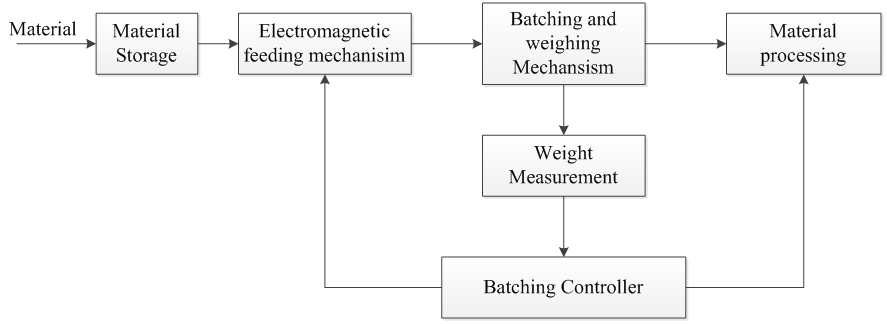
3.1. Problem StatementFigure 1 shows a closed loop batching control system where the feeding speed is calculated from the weight instrument, then it is fed back to a batching controller. An electromagnetic device uses regulated pulse duration and frequency to control the feeding mechanism in addition to manually tuning some parameters [12].

 Download as

Conventional control system uses amplitude to decrease the feeding speed, to set value of feeding speed, Vset, and to increment the control variable, u(k). It also utilizes the threshold to shut down the electromagnetic mechanism in advance, to shut down valve, to predict the material remaining in air, and to drop it into the collecting box to be used later as initial values for the amplitude and frequency of electromagnetic mechanism u(0) ,etc.
 Download as
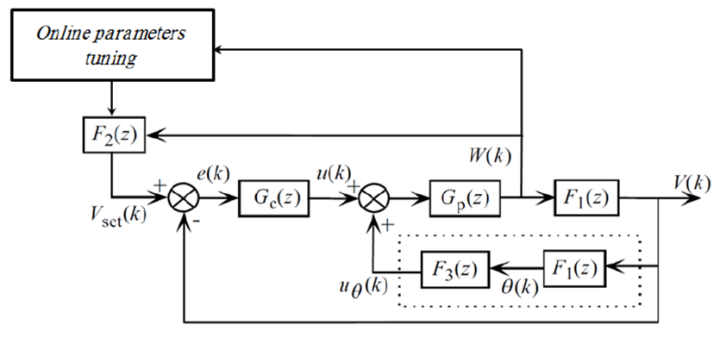
Figure 2 shows the speed setting for control of batching system where Gc(z) is the transfer function of a PI controller, Gp(z) is the generalized transfer function of entire batching process containing electromagnetic/pneumatic bin gate control and belt scale transport device. F1(z), F2(z) and F3(z) are the computational function blocks, where F1(z) = (1 − z−1)/T is the differential element, T is the sampling interval, F2(z) and F3(z) are the blocks of speed setting value and nonlinearity compensation, respectively. F2(z) updates the next speed setting value Vset(k) adaptively with respect to the weight at current instant by using the relation between feeding speed and material Weight. It is performed as follows. Firstly, the ideal feeding speed V(k) is calculated from the weight W(k) [13]. Let k1 be a relative start instant, and the variable d be the shift of instant from k1, then the following expression holds
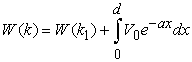 | (1) |
Then the input and output of the computational function block F2(z) are the weight W(k) and the feeding speed setting value Vset(k) at the next instant respectively. For the contrast, the setting value at the first operation is fixed by V0. It is clear that the feeding speed given by (1) is in accordance with the current batching weight and can compensate the tracking error up to the current instant, so it can be considered as an optimal setting.
3.2. Related WorkThe topic of product quality control in industrial plants is a very important issue; however, there is a lack of documented research in this area. Industrial companies that work in this field don't disclose their problems and solutions. However, some related work that tackled the issue of quality control is listed here.
Concrete Quality series [3, 7] presented a series of articles discussing good measures and benchmarks of concrete quality. Variability associated with materials, production and testing, are major factors with big impact on the industry. Controlling accuracy of batching of concrete material ingredients other than water were discussed by Obla in [14].
A new conceptual design of an intelligent SCADA with a decentralized, flexible, and intelligent approach, was proposed by Vale et al [15]. The proposed SCADA model that was used to support the engineering resource management undertaken by a distribution network operator. Otani et al [16] proposed a SCADA system using mobile agents for flexibility. In addition, they shown two types of communication protocols that made agent migration more fault-tolerant, and performed experiments where the SCADA system executed earth fault protection within the required time. Roshan et al [17] mainly focused on proper coordination of heater and supporting components in order to reduce its energy consumption and optimize power for specific input parameters. They implemented PLC based controller to handle any type of high and medium capacity heater system.
Lakshmi et al [18] presented the experimental validation procedure of a simple cascade control system through number of architectures, such as SCADA, PLC and internet. The performance and effectiveness of individual architecture is evaluated on the basis of data rate, rise time, peak time and settling time. Marie et. Al. [19] proposed a wireless SCADA control system for a cement factory to keep the factory with international standards in terms of product quality and environmental regulations.
Tao and Gaoshan [11] discussed SPC (Statistical Process Control) technology which is the principal method used in process quality control and then analyzes the feasibility of combining computer technology with mathematical statistics theories like SPC. It also pointed out the management contents of process quality control system.
Bailin, et al. [20] proposed an adaptive Control Scheme to tune the parameters of the Industrial Batching and Weighting Controller.
Cheek and Self [21] conducted a case study on paper mill plant and they showed how simple statistical techniques can be used to determine which variables in an on-line monitoring process required adjustment. A method for tuning the variables was suggested. While the calculations were relatively simple; they required a considerable amount of computing power to deal with the large amount of data and its organization and manipulation.
Velasquez and D'Souza [22] reviewed the evolution of quality control solutions in a manufacturing plant and presented how the modern automation techniques can be utilized to improve Quality Control in manufacturing plant.
Aumi, et al. [23] addressed the problem of driving a batch process to a specified product quality using model predictive control (MPC) with data-driven models. They proposed a predictive control design for batch systems designed to drive the batch to a specified quality by batch termination, the linear quality model predicted the quality, more accurately. This, in turn, led to more effective control action. Cetinceviz, and Bayindir [24] designed and implemented an internet based controlling and monitoring system with wireless field bus communications technologies for process automation.
Hachicha., et al. [25] proposed a new integrated SPC/EPC system that applied in batch process. The integration is performed continually in two successive phases: (1) Active SPC for the batch making advance, and (2)run to run (RTR) control action between batches. Wang [26] investigated the possibilities and benefits of a SPC monitoring model of time delayed feedback controlled process. Yu, et al. [27] presented a new SPC model that can overcome the shortness of current SPC methods. The model features emphasized on the quality-oriented process control model specified the desired process.
The previous literature review presents quality control techniques that were applied in various industries and presents SPC and EPC methods to tune parameters. Our paper utilizes SCADA, PLC and SPC in the proposed aggregate weighting system.
4. Aggregate Batching Process
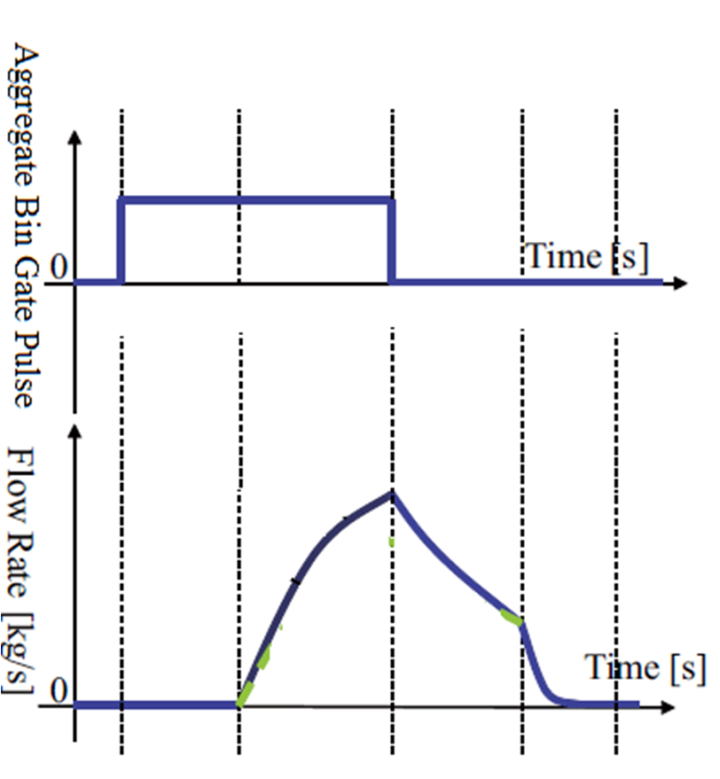
The control in the aggregate batching process, the controller of the active aggregate material with specific flow rate of the required aggregate type, sends a variable duration pulse to control the gate of the aggregate bin. Figure 3 shows the duration of this pulse that specifies the flow rate of the aggregate with the dead time delay of the process. As the flow rate of the aggregate increases after a delay time, it reaches its maximum peak when the gate is fully open, then decreases when the gate starts to close.
 Download as
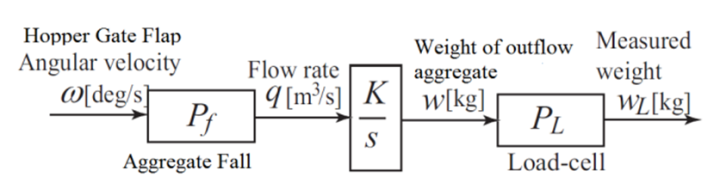
The automatic batching system of the aggregate process acts when the piston receives an input signal to trigger opening the aggregate bin, then aggregate in the hopper is poured freely through the bin gate. The weight of the outflow aggregate is measured by a suitably mounted load-cell. The outflow aggregate is poured and accumulated over the weighing conveyor belt. Figure 4 shows the filling process where the model has the hopper gate flap with angular velocity as its input and the measured weight as the output. Pf represents the aggregate fall block, PL represent the load –cell block and the middle block is an integrator [14].
 Download as
The flow rate of the aggregate can be calculated using Beverloo equations
 | (2) |
Where W represents the discharge rate (kg/sec), ρb represents the bulk density (kg/m3), g is the gravitational constant (9.81 m/s), B represents the outlet size (m), k is a constant (typically 1.4), and dp represents the particle size (m).
4.1. Aggregate Flow Rate EstimationThe aggregate mix consists of four different granular solids each with different particle size, and with different flow rate factor. When the control system is installed for a certain plant, the flow rate of each aggregate bin material is obtained empirically. Then, the PLC controller sends predefined pulses with known time duration to each aggregate bin gate piston. After each pulse, the weight obtained is stored in the memory, and the flow rate is calculated using the following formula.
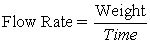 | (3) |
The same formula is also used by the controller to estimate the required time pulse based on the flow rate of certain aggregate.
 | (4) |
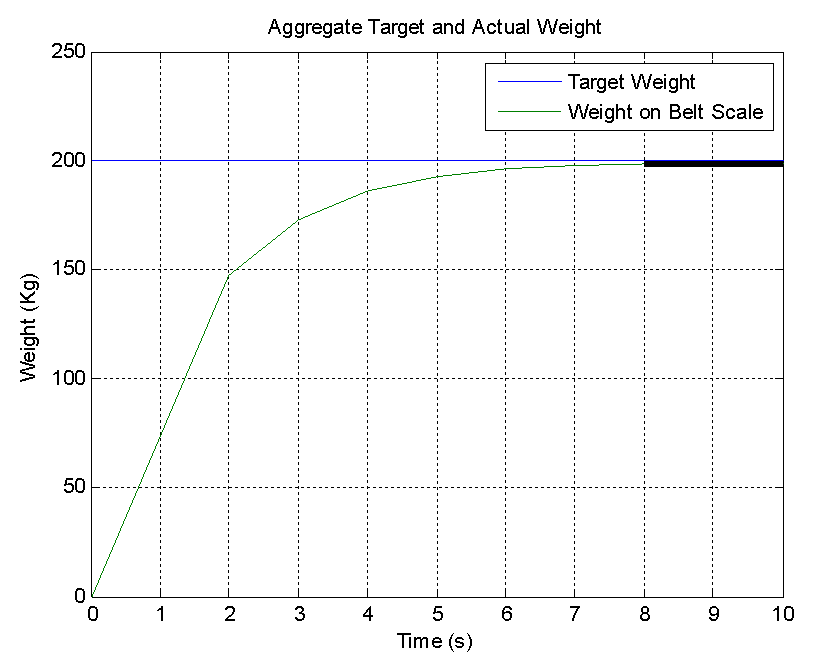
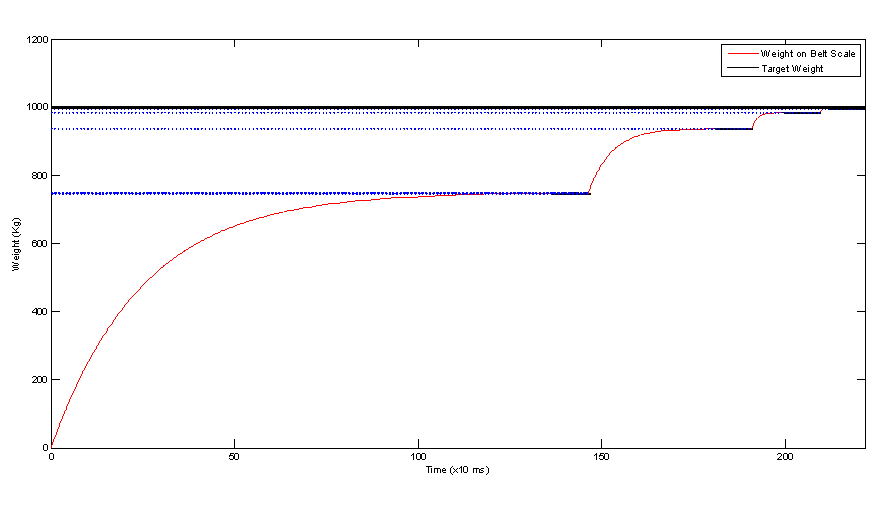
The flow rate is a very important factor in the weighing batch process; it directly affects the feeding speed of the aggregate, and the final weight accumulated on the belt scale. If the estimated flow rate is equal to the actual flow rate, the weighing process will take a single cycle to reach the target weight, with a very low error within the allowed tolerance as shown in Figure 5.
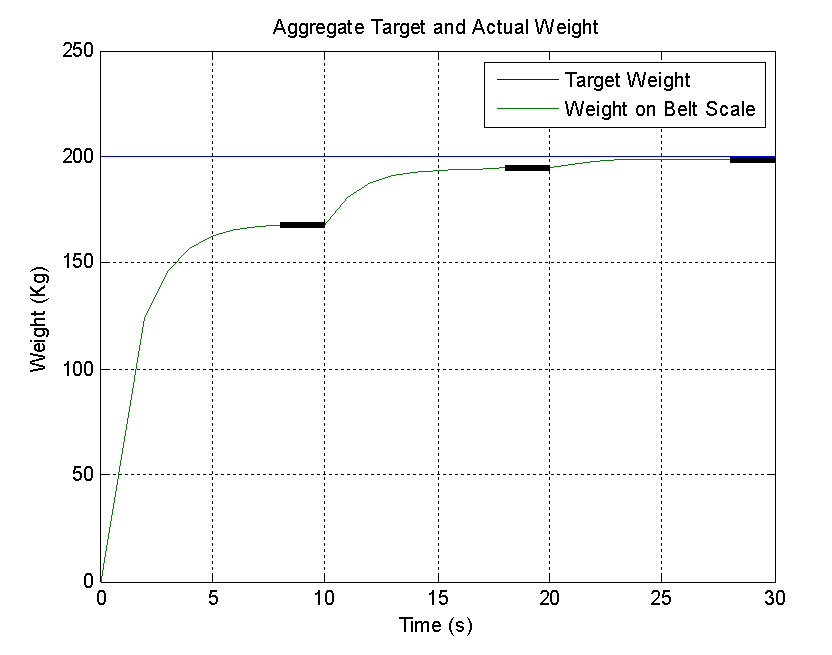
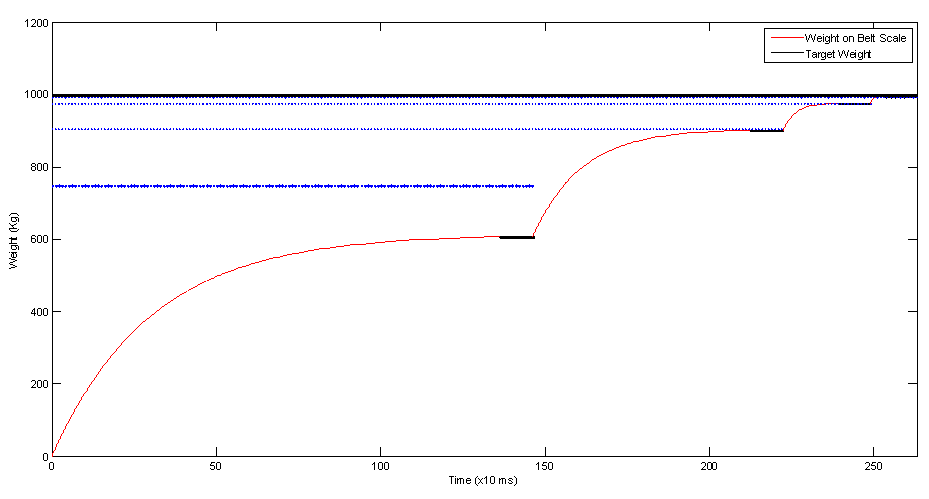
If the estimated flow rate is lower than the actual flow rate, the feeding speed will drop and it will take several cycles to reach the target weight depending on the difference between the estimated flow rate and the actual flow rate as shown in Figure 6.
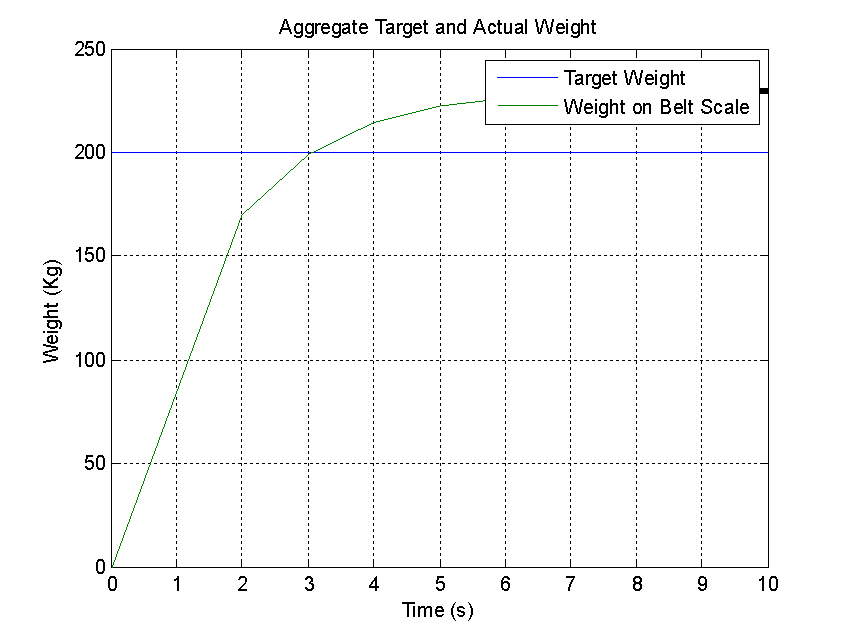
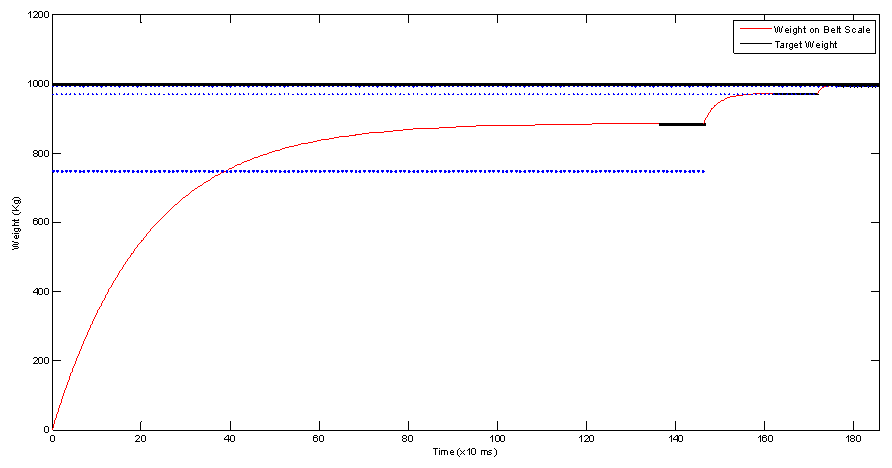
If the estimated flow rate is higher than the actual flow rate, the feeding speed will increase beyond the required value and the actual weight will pass the target weight causing an excess weight error which depends on the difference between actual and estimated flow rate as shown in Figure 7.
 Download as
 Download as
 Download as
To solve this problem, the monitoring program must track changes in actual flow rate and adjust the system parameters to avoid the low speed filling or the overshoot problems.
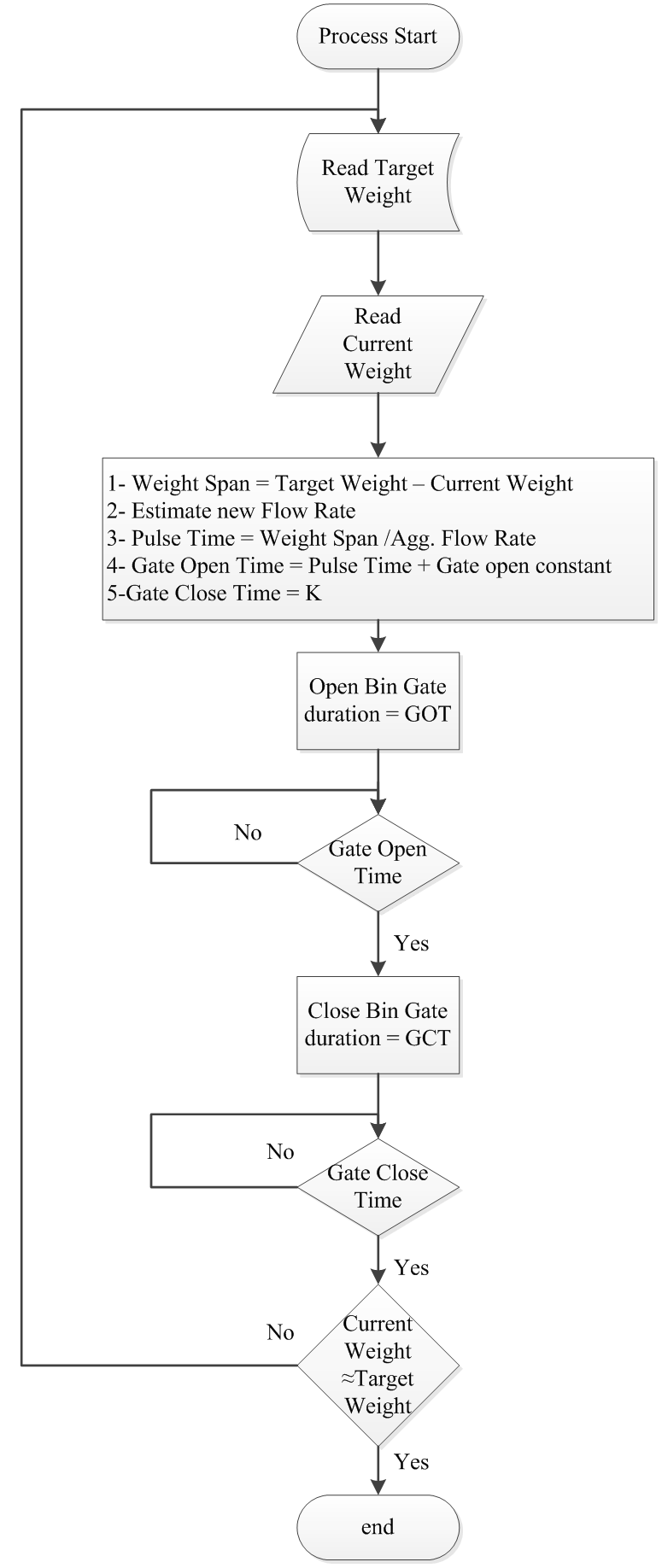
4.2. Aggregate Batching Program and OperationThe aggregate batching control systems use PLC or PID control technology [9, 10] to regulate the material feeding speed. PLC switches the speed between levels only, from quick to slow levels, which are determined by weight measurement of the collected aggregate logically. The aggregate feeding speed is fed back into PLC for control. The final batching accuracy is only adjusted through shutting down the material feeding device. The aggregate batching process starts by reading the target weight of the first aggregate material from the specified register of the PLC memory. This value is stored by a SCADA system, then it finds the difference between current weight and the selected set-point (weight span). In order to predict the time duration to open the aggregate bin gate, this weight span value is divided by the estimated flow rate of the current aggregate material [15]. Then, this time duration is added to the gate initial time.
The PLC opens the first aggregate bin and starts a timer (Gate Open Time). When this timers ends, the PLC closes the gate for a time duration (Gate Close Time). During this time the cycle repeats by finding the weight difference between the new weight on the belt scale and the target weight and so on. A flowchart of the batch process is illustrated in Figure 8.
 Download as
5. Practical Example
To better understand the operation of the batching algorithm, we show an example with three scenarios. In Figure 8- Figure 10, the x—axis represents the time in seconds, the y-axis represents the weight, red line represents the actual filling weight, the dotted lines represent the measured weight, and the black line represents the target weight. The goal was to drop 1000 kg of aggregate into the batch through the aggregate gate. The weighting operation will run through four cycles, and the estimated aggregate flow rate is about 550 kg/s. After each run the control compute the remaining weight and set the time to open the gate as shown in Table 1- Table 3. In each case, the system keeps adjusting its parameters to ensure delivering the specified weight.
Case 1: Estimated aggregate flow rate = actual aggregate flow rate.
Figure 9 shows the simulation of the four cycle runs. It is clear that the filling weight never crossed the target weight for each cycle. Table 1 shows the parameters adjustment, actual weight, estimated weight and the during time for gate opening.
Case 2: Estimated aggregate flow rate > actual aggregate flow rate.
After the first cycle the PLC reads the weight accumulated on the scale and calculates the actual flow rate based on the last pulse duration. The algorithm detects that the flow rate is greater than required and needs to be decreased by 1.05 kg/s. The simulation run is shown in Figure 10. Table 2 shows the parameters adjustment, actual weight, estimated weight and the during time for gate opening.
Case 3: Estimated aggregate flow rate < actual aggregate flow rate.
After the first cycle, the PLC reads the weight accumulated on the scale and calculates the actual flow rate based on the last pulse duration. The algorithm detects that the flow rate is lower than required; thus, needs to be increased by 0.99 kg/s. The simulation run is shown in Figure 11. Table 3 shows the parameters adjustment, actual weight, estimated weight and the during time for gate opening. There were no forth cycle in this simulation.
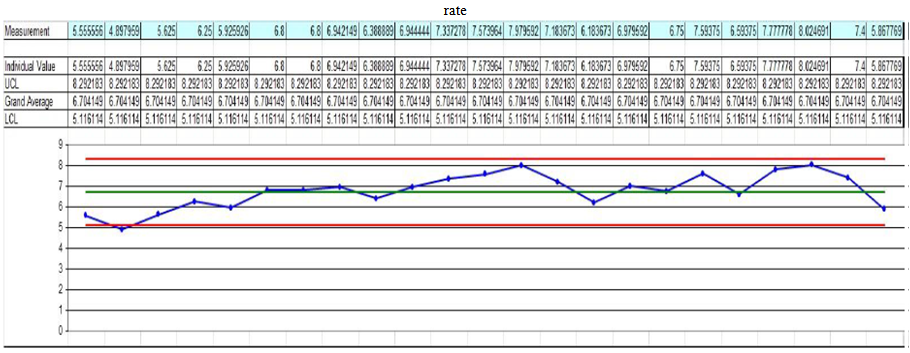
Control Charts, also known as Shewhart charts or process-behavior charts, are the most common tool used under SPC. Standard control charts are produced by calculating the average result for a time series of data, plotting this as the central line, then calculating control limits on either side of this mean. These control limits are usually set at plus and minus three standard deviations from the central line. This range will account for approximately 99.7% of all natural, ‘common cause’, variation.
Figure 12 shows the control chart with a central line, upper and lower control limits. In the aggregate batch process control, two key variables were used to determine
As an outcome of this research, we were able to design and implement several automated weighting systems in Gaza Strip at: several local concrete factories, Palestine Flour Mill, several natural gas filling stations.
 Download as





 Download as





 Download as




 Download as
6. Conclusion
The application of Industrial Batch Process Quality Control through Controller Self Parameter Tuning parameter self-tuning based batching control scheme has been investigated. The proposed algorithm has improved the robustness and effectiveness to various industrial environments, made the batching accuracy fulfill the requirement of industrial production.
A future work can focus on detailed system modeling of pneumatic control devices to take into account the variation caused by change in air pressure. In addition, the moisture in the aggregate material can be measured using special sensors to compensate for water ratio in the mixture.
References
| [1] | Palestinian Central Bureau of Statistics (2017). Accessed Jan 15, 2017. http://www.pcbs.gov.ps/Portals/_pcbs/populati/pop16.aspx | ||
 In article In article | |||
| [2] | Palestinian Ministry of National Economy (2015). Concrete Plants Distribution in Palestine, January 2015. | ||
| In article | |||
| [3] | K. Obla (2014), Improving Concrete Quality, CRC Press, 2014 | ||
| In article | |||
| [4] | G. Franklin, J. Powell, and A. Emani-Naeini (2005), Feedback Control of Dynamic Systems, Prentice Hall. | ||
| In article | |||
| [5] | Z. Yuan, B. Hang, and W. Zhang (2000), “Development of batching and weighting system,” World Rubber Industry, vol. 27, no 2, 2000, pp. 20-23. | ||
| In article | |||
| [6] | S. A. Joheh (2007), “Quality of Ready mix Concrete,” Qatar Construction Standards (QCS 2007), Qatar. | ||
| In article | |||
| [7] | K. Obla(2010), “Sources of Concrete Strength Variation – Part II of Concrete Quality Series”, Concrete InFocus, Vol. 9, No. 4, NRMCA, July-August 2010, pp. 21-23. | ||
| In article | |||
| [8] | H. P. Naiknavare, S. D. Deshpande, and R. D. Padhye (2009), “Model Chart of Quality Control Process for Ready Mixed Concrete Plants,” IOSR Journal of Mechanical and Civil Engineering (IOSR-JMCE), Second International Conference on Emerging Trends in Engineering (SICETE) PP: 50-54. | ||
| In article | |||
| [9] | ASTM C94-11 (2011), “Standard Specification for Ready Mixed Concrete”, Annual Book of ASTM Standards, American Society of Testing Materials, Volume 4.02, Concrete and Aggregates, ASTM International, West Conshohocken, PA, www.astm.org. | ||
| In article | |||
| [10] | G. Daniel (2006), “Batch record data compilation and summary”, submitted to the RMC Research & Education Foundation, 2006. | ||
| In article | |||
| [11] | Y. Tao and W. Gaoshan (2008), “Research of on-line process quality control system,” IEEE International Conference on Automation and Logistics, 2008. ICAL 2008, pp. 351-356. | ||
| In article | View Article | ||
| [12] | B. Hang, Z. Yuan, and Y. Gao (2001), “Automatic control of feeding speed in batching system,” Rubber/Plastics Technology & Equipment, vol. 27 no. 2, pp. 35-36. | ||
| In article | |||
| [13] | Y. Noda and K. Terashima (2008), “Predictive filling weight sequence control in automatic pouring system,” in Industrial Electronics, IECON 2008. 34th Annual Conference of IEEE, pp. 1527-1532. | ||
| In article | View Article | ||
| [14] | K Obla (2012), “Variation in Concrete: Part 8 of Concrete Quality Series,” Concrete InFocus, Jan-Feb 2012, Vol. 11, No. 1, NRMCA, pp. 1-10. | ||
| In article | |||
| [15] | Z. Vale, H. Morais and C. Ramos (2013), “Distribution system operation supported by contextual energy resource management based on intelligent SCADA,” Elsevier, Journal of Renewable Energy, Vol.52, pp.143-153. | ||
| In article | View Article | ||
| [16] | T. Otani and H. Kobayashi (2013), “A SCADA system using mobile agents for a next generation distribution system,” IEEE Transaction on power Delivery, Vol.28, Issue 1, pp.47-53. | ||
| In article | View Article | ||
| [17] | B. Roshan, and K. Pravin (2012), “Optimization of energy for industrial heater using PLC and SCADA,” International Journal of Computer Technology and Electronic Engineering, Vol.2, Issue 1, pp. 200-204. | ||
| In article | |||
| [18] | A. Lakshmi, B. Naveenkumar, A. Balji and N. Bharathi, (2012), “Experimental validation of PID based cascade control system through SCADA-PLC-OPC and internet architecture,” Elsevier, Journal of measurements, Vol.45, Iss.4, pp. 643-649. | ||
| In article | |||
| [19] | M. J. Marie, G. A. AL-Suhail, and H. T. Kadhim, “Developing Al-Najaf Cement Plant using Wireless SCADA System,” International Journal of Computer Applications, Vol. 64, no.13, February 2013. 17-23. | ||
| In article | |||
| [20] | H. Bailin, J. Lijuan, and S. Lianming, (2007), “Parameter Self-Tuning Based Industrial Batching and Weighting Control System,” Second International Conference on Innovative Computing, Information and Control, 2007. ICICIC '07, pp. 542-542. | ||
| In article | PubMed | ||
| [21] | P. Cheek and A. Self (1990), “Tuning a paper mill SCADA system using quality control data,” Second International Conference on Integrating Information and Material Flow, pp. 212-213. | ||
| In article | |||
| [22] | L. Velasquez and F. D'Souza (2008), “Automation to Improve Quality Control,” in Cement Industry Technical Conference Record, 2008 IEEE, pp. 144-154. | ||
| In article | View Article | ||
| [23] | S. Aumi, B. Corbett, and P. Mhaskar (2012), “Model predictive quality control of batch processes,” in American Control Conference (ACC), pp. 5646-5651. | ||
| In article | View Article | ||
| [24] | Y. Cetinceviz, and R. Bayindir (2012), “Design and implementation of an internet based effective controlling and monitoring system with wireless field bus communications technologies for process automation- an experimental study,” Elsevier, Journal of ISA Transaction , Vol.51 Iss.3, pp. 461-470. | ||
| In article | View Article PubMed | ||
| [25] | W. Hachicha., I. Moussa., and R. Kolsi (2012), “ Integration of Statistical and Engineering Process Control in a Batch Processes Monitoring: Case of Alkyd Polymerization Reactor,” International Journal of Control and Automation, vol. 5, p. 7. | ||
| In article | View Article | ||
| [26] | H.Y. Wang (2009) “Statistical process control on time delay feedback controlled processes,” in Management Science and Engineering, ICMSE 2009. International Conference on, pp. 207-212. | ||
| In article | View Article | ||
| [27] | Z. Yu, Y. Musheng, and J. Zhimin (2008), “Process monitoring via quality-oriented SPC under information-based manufacturing,” in Automation and Logistics, ICAL 2008. IEEE International Conference on, pp. 1769-1774. | ||
| In article | |||
 CiteULike
 Mendeley
 StumbleUpon
 Delicious
 Facebook
 Twitter
 LinkedIn